Loading summary
Transcript80 lines
- [00:00]
Ekta
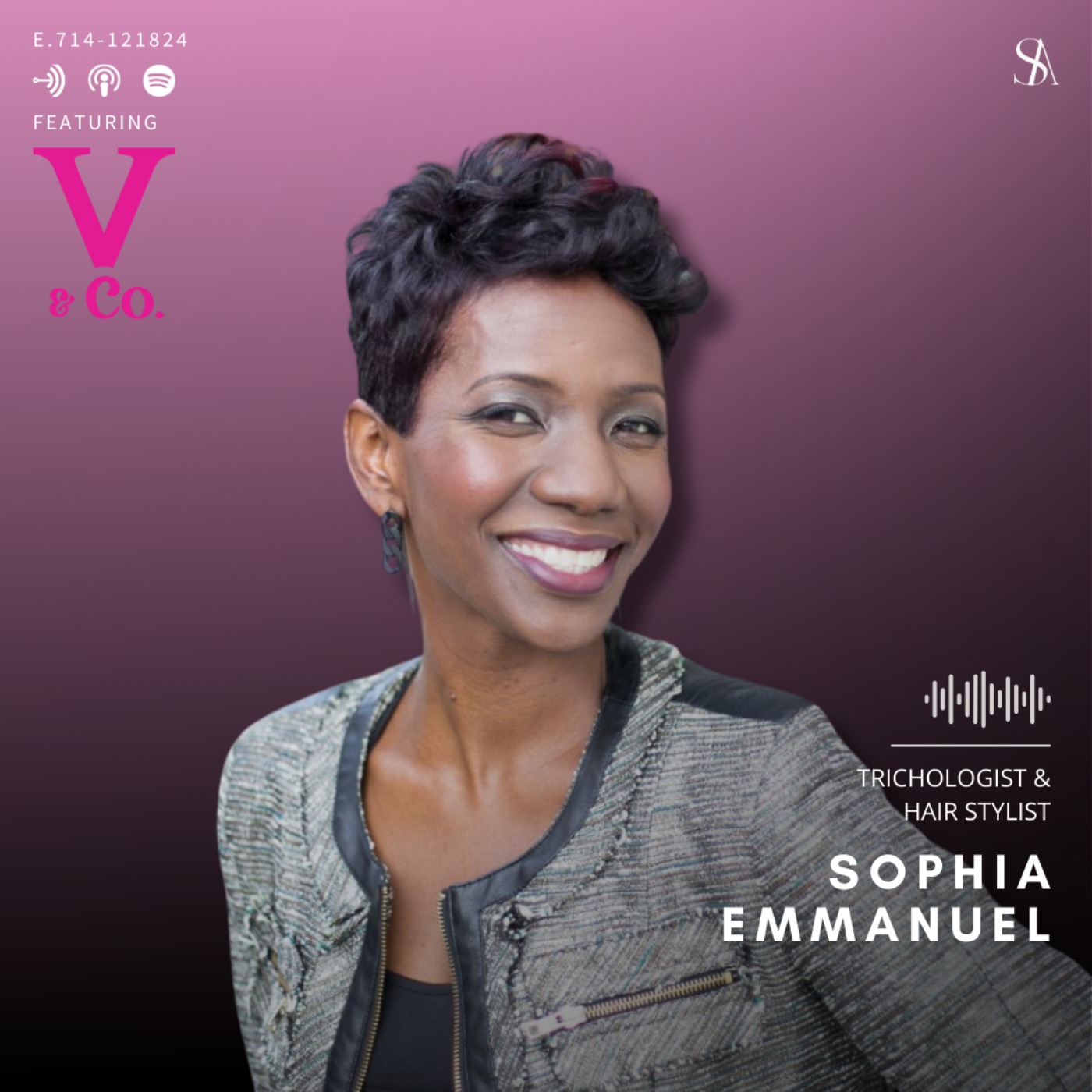
Hey, guys. Welcome back to another episode of Skin Anarchy. This is Ekta, and I'm really excited about the brand we're gonna be introducing you guys to today, because I feel like in the world of hair care especially, we don't have enough options. And if we do have options, they're kind of limited in terms of who they're serving, and the diversity is just feel like it's always lacking. So this is why this brand specifically stands out to me, because they're really catering to everyone's hair needs. There's something here for everybody. And, you know, just in terms of understanding what your hair type truly is, I think going off, you know, texture, like, whether it's straight, wavy, curly, that helps a lot when we're making consumer decisions. So without further ado, I would love to introduce you guys to the brand ambassador, the beauty brand ambassador of VN co, Sophia Emmanuel, who is also a trichologist and a hair stylist. So welcome, Sophia. I'm so excited to be hosting you.
- [00:51]
Sophia Emmanuel
Hello. Thank you so much for having me. I appreciate it. Thank you.
- [00:54]
Ekta
No, it's an honor to host you, and I'd love to learn from you today. I can't wait to dive in, but I would love to learn about your journey first, if you could share that with us. I mean, what got you involved with the brand Brand and initially inspired you?
- [01:06]
Sophia Emmanuel
Yeah, so I've been a hairstylist, a cosmetologist for some time. I've always had a passion for doing hair, and I was able to get my cosmetology license when I went to high school. I went to a vocational high school. And then during my years of doing hair, I just started noticing different issues that my clients were having with their hair. And a lot of them I wasn't able to address until I started to do a little bit of research, and I found, you know, the science of the hair and scalp, which is trichology. And I decided to dive deeper into that topic so that it will be able to help my clients more who are. Who are experiencing, you know, different types of hair problems, scalp problems, just to give them, you know, the help that they needed. So that's how I got into the trichology space.
- [01:54]
Ekta
That's pretty cool. I mean, I love that you did that, because I feel like now hair is such a different conversation than it used to be. You know, it's like, no longer about just a great cut. It's really about scalp health, you know, and hair health and all these different things that come up. So that's very interesting. I know that they're really a leader in peptide infused hair care. You know, what drew you to partner with them?
- [02:17]
Sophia Emmanuel
V and Co, basically. You said, what drew me to the brand? Yeah, it was basically the peptide technology. That's what that was the main thing. Because most of the times when you see peptides, you see peptides for a lot of, like, skin care, but you rarely see it for hair care or for scalp care. So that was what really drew me to the brand. The fact that they have like a peptide technology that basically brings nutrients to the hair and also the scalp. So when people see that word peptide, it's not just for your hair, for strengthening your hair or taking care of your hair, but it's also benefiting your scalp as well by just rebuilding the skin, by encouraging skin cells to grow healthy so that you could produce healthier strands of hair. Really don't see hair care companies focusing on peptides that way.
- [03:03]
Ekta
Yeah, no, I haven't seen any either. Honestly, this is like, this was the first brand that I think really put it front and center for me as well, you know, as a consumer. Yeah.
- [03:11]
Sophia Emmanuel
Yes, very.
- [03:12]
Ekta
It's very fascinating. And you know what's interesting is we learn about peptides a lot. I mean, I talk a lot about skincare on the podcast and the oftentimes we talk about things like, you know, they work as signaling molecules. And there's a lot of different factors that play in when you're working with peptides. In terms of, you know, with hair, I think, you know, the growth cycle, a cell or a follicle.
- [03:32]
Sophia Emmanuel
Right.
- [03:33]
Ekta
So I'd love to talk about that. And if you could explain the different phases of hair growth.
- [03:37]
Sophia Emmanuel
There's three different phases of hair growth. So you have the first phase, which is the hair growth phase. That's the antigen phase. Right. And that phase could last anywhere from two to seven years. Now, during this phase, that's when your hair is. Your follicles are the most active. That's when they're producing the strand that you actually see with your eye that protrudes out of your skin, out of your follicle, and grows as long as it can. Right now, different things influence this phase. It can be genetics. It can also be your health. So like hormones, nutritional issues can all play a role in the length of hair or how long your hair stays in this phase. The longer your hair stays in this phase, the longer your hair grows. So at any given time, 85 to 90% of your hair is your hair follicles. Are in this phase. Right. And then after this phase, the antigen phase, which is like I said before the growth phase, we go into what is the catagen phase. Now the catagen phase is the transition phase. That's when your hair is going to be in this phase for about two to three weeks. And it's preparing to begin to fall so that new hairs can, you know, grow in. So the hair at this point, it begins to detach from the hair follicle, from the dermal papilla, and it starts to kind of like remove any like nourishment from the hair follicle as well. And it shrinks up as it prepares to go into the next phase, which is the telogen phase. Now, during the telogen phase, your hair is just kind of like resting, preparing to fall. And then that phase, that, that cycle starts all over again.
- [05:12]
Ekta
In terms of the anagen phase, we want to be, I guess, nourishing our hair as much as possible.
- [05:18]
Sophia Emmanuel
Yeah, or nourishing our bodies as much as possible. Right. Because like I said before, certain things like, like I said, genetics plays a role, your health plays a role, stress plays a role. So those are the things that you want to be considering internally that can aff. Affect the antigen phase, the growth phase. Right. That's the growth cycle. So if there are health issues going on, if you're taking certain medications, if you're living a very high stress life, if you're not eating properly, all those things can affect the antigen phase. Right. Now, when you're speaking of like taking care of your hair, that's more on the external side. We also have to be. Be cautious of those things as well. But really for our hair to really be healthy, we need to really focus on our internal health as well, which people tend to forget about.
- [06:04]
Ekta
Yeah, that makes a lot of sense, actually. You know, I think that this whole concept of like inside out beauty is something that we really need to focus more on, you know. Yeah, the topical solutions only, so. Yeah, that's very fascinating. So I would love for you to talk to us about some common misconceptions people might have about hair growth and the role of the scalp in maintaining hair, healthy hair.
- [06:28]
Sophia Emmanuel
I think a lot of it is that because people are looking for like a fast solution when it comes to taking care of their hair. Hair. So I would say that's a big misconception. Right now on the Internet, you see a lot of stuff where it's like, oh, you can get your hair to grow in seven days by taking these supplements or by, you know, using this hair oil when the reality is that your hair growth really depends on like what we talked about earlier, the growth cycle. So just for people to understand that there's nothing that you could do to speed up your growth, but there are things that you can do to encourage healthy growth. So that means taking care of yourself, making sure that you're eating well, making sure that you're keeping your stress levels down, down, making sure that you do use really good hair products like V and Co Beauty, which has ingredients in there that really are going to, you know, promote hair health, that are going to kind of like work as a supplementation. But it's not going to be like, you know, hair products again are not going to be like the end all be all solution for you to speed up hair growth or even to like recover from hair loss. There's other things that you have to do as well for your hair to just be overall healthy.
- [07:33]
Ekta
I want to actually ask with V&CO, like, I feel like there's so many options, you know, and I love that about the brand. I think that that is like, I don't think there should be any, you know, other option at this point. You know, there should be like tailored products with different hair types and like, in terms of like just the different offerings the brand has. I mean, what are some differences? I don't know if you know, off the top of your head, like, or.
- [07:58]
Sophia Emmanuel
Yeah, yeah. Okay.
- [08:00]
Ekta
So.
- [08:00]
Sophia Emmanuel
So they have different lines depending on your hair type, which makes it very easy for you when you go into like Target or Walmart where the products are sold. So basically, let's say if you have curly hair, they have a line for curly hair and that's going to focus more on like hydration as well as strengthening. So that peptide technology that you see on the bottle, that's really there to encourage your hair to be stronger for your hair to shed less. Also, not just for your hair as well, also for your scalp as well. So rebuilding the skin, rebuilding, you know, healthy skin layers so that your hair, your fear, your follic, grow healthy hair as well. And then they have the wavy line. The wavy line is going to do the same thing. It's going to help with hydration, it's going to help to strengthen and also reduce frizz. They have the line that's for straight hair, that's going to be more for smoothing out any hair, you know, smoothing out your hair as well. It also has aloe juice, which is really good for like reducing oil. If you have like, you know, if your hair feels a little bit limp or not as, you know, as bouncy as you would like it, the aloe juice is going to help with that as well. And what I really like about the lines, all of the lines, is that, like I said, they combine both strengthening the hair and hydration as well, which you need both in order for your hair to be healthy, you need a combination of both strengthening, which is more like protein as well as hydration. You. When you're using Veo Beauty products, you're going to be using it not only for your hair, but for your scalp as well. So you're getting like two for the price of one, which is really great.
- [09:34]
Ekta
That is great. Yeah. And I love that there are different ingredients for different hair types, because, you know, I won't lie. The first, when I first heard of the brand, I love the wavy category because I was like, I've never seen that. You know what I mean? Like, there's no. I mean, people do curly or straight, like.
- [09:50]
Sophia Emmanuel
Right, Exactly. Yeah.
- [09:52]
Ekta
The wavy hair just kind of is there, right?
- [09:55]
Sophia Emmanuel
Yeah. They don't really get their own line of products. And then it's true, some of the stuff that's in other product lines can be a little bit too he heavy for wavy hair. So with. Yeah. So every single hair type has its own product, which is really great. When you go to the store, you'll be able to identify which one is best for you based on, you know, the label on the bottle, which is really cool as well. So, you know, it takes a guesswork out of it because not everybody's a hair person. Some people just want to know what they got to go get and go get it. And you could get overwhelmed in the stores. You know, there's so many products to choose from. So I really like that this line really labels for who they. Who are they? For who they're serving, you know, so whether you. Curly, straight, looking for something to thicken, to thicken your hair, there is a product there for you for all types, which is great.
- [10:42]
Ekta
I love that. Yeah, I love that. And I love taking the guesswork out. I mean, that's something that. I mean, I can't tell you how many hours I've spent literally trying to find the best shampoo and conditioner, you know. Right. I have that hair type. I don't know if anyone listening can relate, but it's like I have straight hair, but then I have wavy hair, and I.
- [10:59]
Sophia Emmanuel
Right. Different textures.
- [11:00]
Ekta
Yeah. It's just like a mix kind of. And I.
- [11:03]
Sophia Emmanuel
Right.
- [11:03]
Ekta
I'm always looking for options, you know.
- [11:06]
Sophia Emmanuel
Yes, I understand. And what's good about that is that what's good about the Vancouver beauty lines of products is that, let's say you have, like you said, you have a mixture, you could use any one of those products and it will still give you great results because like I said before, they really focus on porosity, they focus on hydration. They. They focus on both strengthening and hydration. So your hair is never going to. It's always going to be a nice balance. You're never going to get too much of anything with the products, which is really good.
- [11:33]
Ekta
Yeah, yeah, no, I agree. I think they're. And they're phenomenal products. I mean, I've used them and I've tried quite a few of the options. You know, the wavy hair and straight hair, I've definitely tried, you know, and they're really great. And I think at the end of the day, you know, when you look at just hair care from, from my standpoint as a consumer, I feel like the category is. It is growing, but it's. There's still a lot lacking here in terms of exclusivity, you know, and feeling like you can find what you need and, you know, at first sight. So that thing that's. Is really, the brand is adding great value to the industry overall in that way. Yes.
- [12:08]
Sophia Emmanuel
And one thing about minimizing frizz, I would add too, is that a lot of products say that, but they really don't do that. With V and Co, the minute that you put one of the conditioners on your hair, it really does minimize the frizz. Once you rinse the product off, you notice a total difference with the frizz reduction, which is really great too, as well. And people don't realize. Realize that a lot of times when your hair is frizzy, it's a problem with the porosity. And that goes back to, again, balancing the protein, you know, the peptides, all of those nutrients as well as hydrations.
- [12:38]
Ekta
Yeah, that's really nice to have that in your initial, like, you know, shampoo conditioning steps so that you don't have to overload. I mean, I think, correct me if I'm wrong, but isn't there, like some sort of a link between using too many styling products and just having, like, more hair fall or something?
- [12:53]
Sophia Emmanuel
Yeah, yeah. Oh, well, it could be more clogged follicles, so, like more clogged skin, you know. So, like, even if you were to like our face, we won't. We wouldn't want to put too much skin care products on our skin or oils because that will cause a lot of buildup. So it's the same concept with our hair, with our scalp, is that if you overload it with too many styling products, it definitely can cause issues with the scalp, some of that being itching, some clogged follicles. And then that could also impact hair growth as well because the hair is not able to absorb the nutrients from the conditioners. When you do wash your hair because it's overloaded with product and congested.
- [13:28]
Ekta
It's congested.
- [13:29]
Sophia Emmanuel
Yes, it's congested. That's the right word. Yes, exactly.
- [13:32]
Ekta
In terms of hair falling out, I mean, I think this is a pretty important topic. You know, alopecia, you know, especially traction alopecia. It's a very growing concern. If you could share with us, you know, some early warning signs to watch out for something that, you know, maybe even some hairstyles that might be affecting people who are prone to developing the condition.
- [13:53]
Sophia Emmanuel
Yes. So, yeah, so first we could talk about the hairstyles, because I think that's important. A lot of hairstyles like that, people don't even consider that can cause traction. Let's. Let's first talk about what traction alopecia is, just in case some people don't know. So traction alopecia is basically hair loss that is caused by tight hairstyles or tension of the scalp. So some of these styles can include like braids, wearing extensions, you know, ponytails, buns, any kind of hairstyle that puts a lot of tension on the scalp and pulls the scalp, scalp will cause, at some point, traction alopecia. Now some warning signs. Signs would include pimples around the hairline, right? Sometimes pain. Sometimes your skin might be a little bit red, so you might see some inflammation present on the skin. And then as we go further along, after some time of wearing that hairstyle and maybe not taking that tight hairstyle out or wearing that same hairstyle for too long, you'll start to notice a receding hairline. Your hairline looks a little bit thinner. It doesn't look as full in the hair in the front area. Those are some warning signs that you need to look out for. But a lot of it is how your scalp feels. A lot of times you'll know that this, the style is too tight because you'll feel it. And anytime you feel that a hairstyle is tight or pulling, that's a sign that you need to take that style out immediately because it will cause some type of hair loss. And sometimes that hair loss is not reversible.
- [15:18]
Ekta
It's so crazy to think about how over time we've evolved as humans. You know, we used to always have our hair down. You know, men used to have longer hair. And now we've come into the society where everyone's trying to like, put it up or slick it back or, you know, just kind of add that tension to it.
- [15:32]
Sophia Emmanuel
That's right, like protect it. There's a lot of, there's a lot of that word protective hairstyles. Now when a lot of these styles are not really protecting, you know, they're causing more harm than good. A lot of times I, and I understand where it comes from. I understand the concept of protective styling, which is more like you put your hair away for a period of time so that you don't mess with it. You don't, you don't comb it or brush it too much in an effort to not damage it. But that can also cause the adverse effect by putting your hair away sometimes or using hairstyles that are supposed to be protective. Let's say it's a braided hairstyle or it's extensions. If those styles are too tight, they can do, you know, more damage.
- [16:10]
Ekta
Just curious. So if you, for example, if you get hairstyle, you know, that, you know, can cause traction, alopecia, or it is bad for your hair for the long term. I mean, what are some rules that we can kind of abide by in terms of like, timing, like, okay, only have your braids in for this long or only wear a ponytail for, you know, however amount of time. Anything you can recommend there?
- [16:31]
Sophia Emmanuel
Yeah, yeah, that's. I like that question a lot. Yeah. So I would say first thing is that if you're experiencing any kind of hairstyle, then you're not a candidate for braids. But in terms of like, preventing further hair sty, further hair loss, if you already experiencing any kind of hair loss, then you should not be braiding or wearing any kind of hairstyle that's going to put any kind of like tension on your scalp. So that would be extensions, that would be braids, that will be twists. You need to stay away from those hairstyles altogether. Now, if you're a person who doesn't have any hair loss and you want to wear these types of hairstyles, four weeks is max. After four weeks, the style starts to get a little bit, it gets loose and it starts to put more tension on your scalp because the style starts to like, pull at the roots at the new Growth area. And that's when tension starts to take place as well. So after that four week mark, you want to be able to take that hairstyle out and just wear your own hair and give your follicles a chance to rest. Right. So any protective hairstyle or any hairstyle with added hair, you want to wear that for about four weeks and then you want to take it out. So that's the best thing to do. Now with ponytails, a lot of times people wear ponytails every day. I would say you want to wear your hair down sometimes too, in between the week. So maybe instead of wearing a ponytail every day, you wear it twice a week instead. And not back to back. Maybe you split it up. So every other day or something like that, where the ponytail is not the main hairstyle that you're wearing all the time, or the bun, because again, that's starts to cause that thinning around the hairline or that breakage. Sometimes you won't get thinning, but you'll just notice some hair breakage all around the perimeter of your head. And that's a sign that you've been wearing that ponytail for too long.
- [18:12]
Ekta
We, I mean, ponytails especially, I feel.
- [18:14]
Sophia Emmanuel
Like everyone's always, yeah, it's convenient. It is, yeah, yeah. And they can be worn, but in moderation.
- [18:20]
Ekta
Kind of like letting your scalp breathe too, for a minute, you know. You know, speaking about the scalp, I would love to get, you know, your insight in this because I know that, you know, I mentioned this earlier in the episode where the hairspace has grown a lot. What are some of the significant changes or innovations that you've observed, you know, in the hair care industry, especially around scalp focused treatments?
- [18:45]
Sophia Emmanuel
So right now a really big one is going to be stem cells. So the use of stem cells to help with like repairing tissue damage is really big right now. So some of the ways that stem cells have been able to help with hair growth or encourage hair, basically what stem cells do is that they are responsible for tissue repair, tissue damage. So many types of hair loss. There is going to be some inflammation present in the hair follicle. And whenever there's inflammation present in the hair follicle, what can happen to the hair follicle is that it can, it can close up for good. Now when the hair follicle closes up for good, hair can no longer grow. So the purpose of the stem cells is to prevent that from happening. So we want to prevent scar tissue from developing on the scalp. And one ways that that can be done is by using stem cells so stem cells, they may come in the form of like a scalp, a scalp serum that you could rub on your scalp or you can have something called PRP done through a dermatologist. And PRP uses actual stem cells from your plasma, from your blood plasma, and that is also used or injected into the skin, into the scalp to also help, help as well. Just heal the tissue, repair the tissue to prevent inflammation so that the hair can grow healthily. That's, that's, that's a big one right now. So stem cell technology is really big. Peptides, that's a big thing right now as well. You, I feel like we're going to start to see that more peptides for scalp care as well, just like we have it for skin care. I feel like we're going to start to see it more in like serums and different types of scalp treatments. The last one would be bond builders. So bond builders, although they're not really catered to the scalp, they are very popular right now for the hair. Those are designed more for strengthening the hair as well. Similar to peptides. They're there to help with the structure of the hair, help, you know, fortify the structure of the hair. So those are the main things that are very, you know, prominent right now in the hair world.
- [20:51]
Ekta
I mean, technology is really catching up, you know, with these options. That's, that's great. I mean, I think that, you know, in terms of at home care though, I really Love V&CO's, you know, the whole peptide driven approach. And I would love to just, you know, get a clearer understanding. If you could explain how peptides and amino acids, also proteins, how they all work together to really transform hair health.
- [21:15]
Sophia Emmanuel
First, with amino acids, they're like the building blocks of proteins. Right? So our hair is made up of protein, which is keratin. So the amino acids, they basically are the building blocks of that. So when you think of amino acids, you're going to think of, of keratin. So amino acids create keratin. Now peptides, peptides are like the messengers of the hair follicles. So what peptides do is they send messages to other cells telling them what to do. So like, that will be like, it'll tell a cell, like, you know, build more collagen or reduce inflammation. So peptides, like in the V and Co products, what they're going to do is they're going to like reduce inflammation. They're going to also bring blood flow to the scalp. So those are all important things for growing healthy hair of our hair is Made up of keratin. Right? So products should have some sort of keratin in them, some type of protein in them. And again, that's what going back to what I said earlier about with V and Co, what they have is a balance of both. So also with peptides, like I said before, what they're going to do, they're going to bring, they're going to slow down inflammation and they're also going to create a nice blood flow to the scalp, which is very important as well, making sure that. That all of the cells of the follicle are receiving nutrients. Right. And that's important as well for healthy hair. Being co thickening line, what it can do is also enhance the volume of your hair as well as make sure even if you have thick hair, it also, it will also help, you know, with thicker hair as well. So it does both. One thing that it does is it can help with clients who have thicker hair, enhance their thickness. Or if you're looking for a line to just boost volume, boost strength, length, it will help with that as well. That the B and Co thickening line. So that's a very good line that you can use if you're looking to like, just rebuild the structure of your hair, strengthen your hair as well as add volume. You will, you will use the VN CO beauty thickening line to do that also.
- [23:13]
Ekta
Because I'm just curious, Sophia, because, you know, I know growing up, like, I couldn't use certain brands. And one of them, I'll just be honest, I've said it before on the show is, was Pantene. You know, I couldn't use it because one for me, my skin would react to it, you know, so I could use that, their products. But also because my hair stylist, I remember I was in high school at the time, and she told me, she said, you know, there are just some products that add this buildup, you know, on your hair strands. And a lot of them at that time were like protein, you know, just straight protein. And I would love to understand, you know, like what, like, just so our listeners know, like, what is the difference here from. Because what you're explaining is very, like, it's very innovative. You know, this is like much better technology compared to like the older solutions that had these proteins in the products, you know, that would coat your hair strands and then, you know, cause I guess, I don't know, damage or, or whatever they did. Could you explain that a little bit, maybe?
- [24:08]
Sophia Emmanuel
Yeah, I think a lot of it is also too, like some of it could, I'm not sure of all the ingredients that's in the, the Pantene product he was using, but a lot of that is also silicon based too. So the other good thing about, about the proteins that, that are in the V and Co line are the proteins that are basically just going to go in wherever there is any structural damage. They're going to go in there and they're just going to kind of like heal that damage or kind of like almost like a top coat, like when you put on a top coat for nail polish, it's just going to go in there and fill in the cracks. But it doesn't weigh the hair down. Pink co is also like paraben free, sulfate free. It doesn't have all of those heavy duty ingredients that sometimes can build up on the hair strand, which is also important as well. Now going back to the protein, though, the protein is not a protein that is going to wear your hair down. And like I said before, a lot of that is silicone that does that. The silicones found in a lot of the products is what really causes the hair to lay down flat and, you know, not have that body that it's supposed to have. The protein is not the problem, it's really the silicones that's the problem. When it comes to weighing your hair down. As long as you have a product that has that, that balance, you don't need to worry so much about using protein. Because I know there's a lot of people who are afraid to use protein or peptides, but you don't have to be afraid because they don't leave that heavy weight down, you know, residue on your hair, so it's fine.
- [25:37]
Ekta
Exactly, exactly. Yeah. That's what I was really wondering. That residue is what I was wondering about.
- [25:42]
Sophia Emmanuel
Exactly, yes.
- [25:43]
Ekta
Because then you have to go in. Because I remember, like my hairstylist at that time, she had recommended, well, you need, need a great clarifying shampoo, you know, because it'll help get all that off. And I was just like, oh God, I wish it wouldn't even exist, you know.
- [25:55]
Sophia Emmanuel
Right, yeah, right. And another good thing about the V and Co shampoos is that they all cleanse the hair really well. So you, you, you won't have to worry about that buildup because when you shampoo your hair, your hair is going to feel clean, but it won't feel stripped, which is also great as well.
- [26:11]
Ekta
Yeah, I've noticed that. Actually. I love it. You know, I love the products because I have very thick hair. It's very Heavy. And you know, right now I'm really growing it out. Winter. I like longer hair and it's always a struggle because I end up using half a shampoo bottle.
- [26:25]
Sophia Emmanuel
Right. The key to that is just making sure that the products that the conditioners that you're using have that nice balance, you know, so that you're not having to worry about that weigh down effect that you're talking about. And also I would say people need to shampoo their hair more often. So if you're noticing that your hair is weighed down and limp and doesn't have body, it probably means that you just need to do an extra shampoo when you shampoo your hair or that you're not doing it enough up. The silicons, you know, the heavy oils, the synthetic oils, those are the things that you need to be on the lookout for.
- [26:58]
Ekta
Yeah, no, I'm glad you're mentioning this because I know I, I see this a lot with the younger generation where everyone's like, well, I'm down to one hair day. Like, I'm like, how? Right, yeah.
- [27:10]
Sophia Emmanuel
Yes.
- [27:10]
Ekta
And so it's, it's kind of wild to see that. But I mean, I'm glad you brought up that people need to, you need to wash your hair. Like, you actually need to like, like get rid of the buildup, you know. Yes. A certain period of time. So.
- [27:21]
Sophia Emmanuel
And that protein and peptides aren't bad for your hair. They're not.
- [27:24]
Ekta
I think VN Co's approach is just, it's really great and I've really enjoyed the products thus far. I've been using them like I said. And even for my hair type, you know, the thicker hair type where you do end up needing. It's I, I don't have to use half a bottle.
- [27:38]
Sophia Emmanuel
It's, it's just, yeah, they're very rich.
- [27:41]
Ekta
They're very rich and they're very, very like nourishing. You know, I definitely see the effect that you mentioned where once you shampoo and condition, you don' Frizz. You know, I'll be honest, for me as a consumer, I use any styling products I use are going to be frizz oriented, you know, straighter hair. So like I noticed that definitely that I'm not using as much styling products. I'm not really, I don't need them. You know, even if I air dry my hair, it looks great loose and.
- [28:08]
Sophia Emmanuel
Frizz starts when you shampoo your hair. So the, the key to that is finding products like these, like the V and Co beauty products that are going to help with that at the beginning, when you're first shampooing and conditioning your hair on wash day. And it makes it a lot easier, like I said earlier, to style your hair later on. You won't have to use heavy products. You don't have to use a ton of stuff because the frizz is already under control when you washed your hair.
- [28:33]
Ekta
I mean, I think for anyone listening out there, if you guys are looking for, you know, great new options for your hair care. And, I mean, I know that there's a lot of styling products out there, which is. I mean, that's great to have options, but it really does, you know, like Sophia said, you got to start from the very beginning of your hair care routine. And that's that shampoo, and that's that conditioning and making sure we're starting off strong, you know, so that we're not having to overcompensate later on with styling products. Yeah.
- [29:00]
Sophia Emmanuel
Because then you end up making your hair kind of, like, dirty again by adding all these other products, all these other oils, and all these other styling, you know, heavy products to get your hair to look the way you want it to look.
- [29:11]
Ekta
Exactly. And, you know, I do. I experience that as well. And I'm glad you said that, because sometimes I does feel like that. That, like, I'll wash and condition my hair, dry it, and then if I add any styling products before it completely dries, I notice that it's like I didn't even wash my hair. Or it's. Or it doesn't look right. You know, it's like it just doesn't give it the look that I want. So I think just to avoid that, just start from the beginning. Make sure you're using quality products for.
- [29:36]
Sophia Emmanuel
The price of the product. You really getting great results. And a lot of times, as we all know as women, we spend a ton of money on hair products, skin products. Right. And a lot of times they don't work. But this one for the price point is really good. It gets the job done, and it's not a bad price. So I think that's another plus.
- [29:52]
Ekta
You got to check out the whole line. I mean, there definitely is something here for everybody. It's so well thought out, and it's crystal clear which options are for you, the products really speak to. I think when you try them, you'll. You'll feel it. You also, I wanted to say you guys provide quite a bit of product, you know, and. And that's important.
- [30:11]
Sophia Emmanuel
Yeah.
- [30:11]
Ekta
I feel like now I. I'm not even lying. Like, the other day, I saw. Saw, like, a hair care product. It was a shampoo. And I was like, I can't even use this twice.
- [30:19]
Sophia Emmanuel
I know. Especially. Yup, you're right. That's a problem, too.
- [30:23]
Ekta
No, I know. I've done it way too many times. I know exactly what you're talking about. Yes. It's crazy in today's economy, like, no one has the money to be, like, wasting half a bottle of shampoo because it didn't come out, you know, like, right.
- [30:35]
Sophia Emmanuel
Yes. And spending, like, 25 for a bottle of conditioner and you only get to use it twice is crazy.
- [30:40]
Ekta
It's insane.
- [30:41]
Sophia Emmanuel
I know.
- [30:42]
Ekta
I completely agree. Yeah. But, Sophia, thank you so much. This has been so fun, and I've learned so much from you. I really appreciate you.
- [30:49]
Sophia Emmanuel
Yes. Thank you for having me.
- [30:50]
Ekta
No, it was an honor, and I hope everyone learned as much as I did. And definitely check out the brand. We're going to be linking all of the. The website and all the information you guys need in the show notes for this episode. So definitely check that out, you guys. And chime in if you guys have tried the line. If you love it, let us know. Let us know your thoughts about hair care in general. And I'll be back next time. Thank you so much.
- [31:10]
Sophia Emmanuel
Yes.