← Skin Anarchy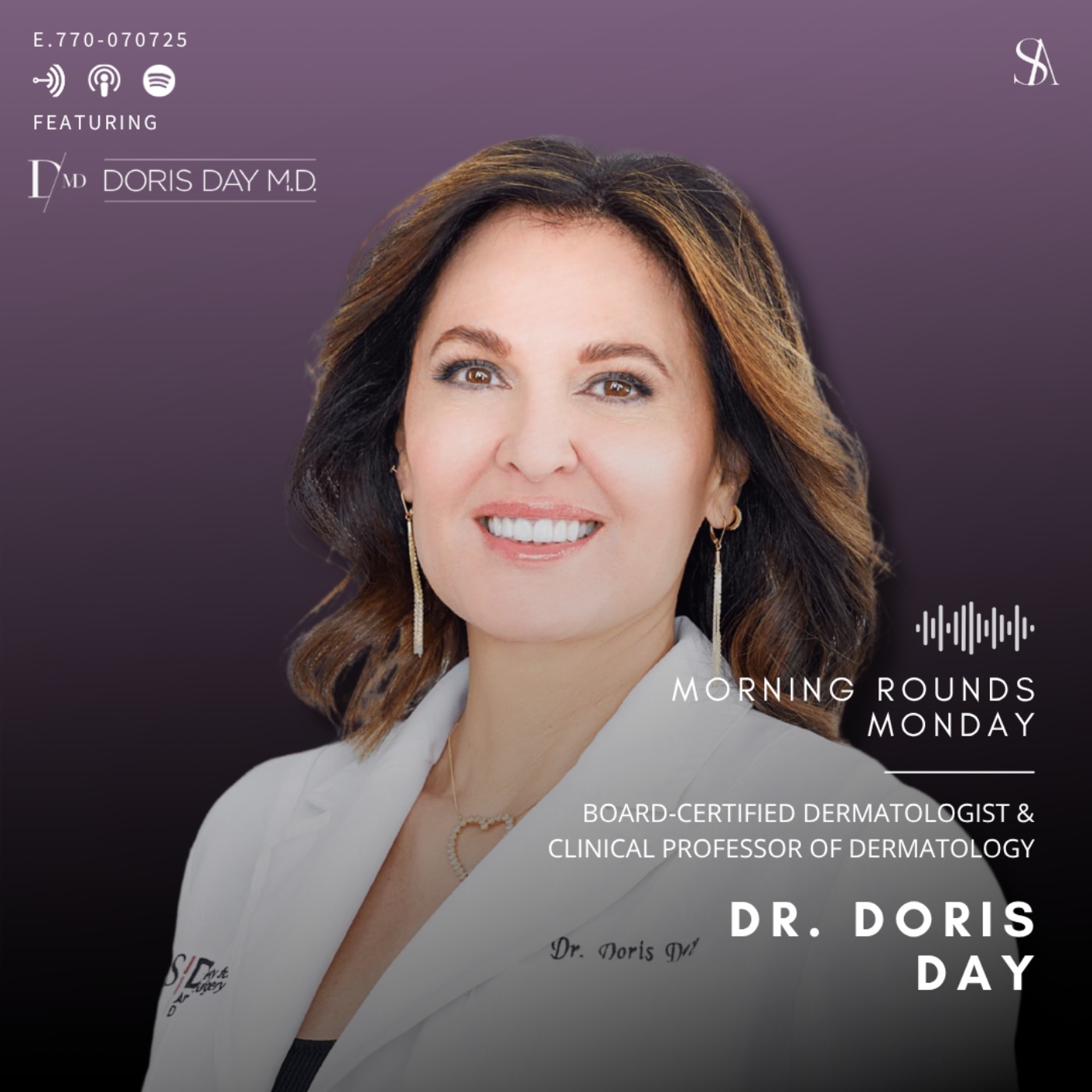
Skin Anarchy
Understanding Your Skin as an Organ, Not a Trend with Dr. Doris Day
00:36:52
Morning Rounds Monday
Loading summary
Transcript57 lines
- [00:00]
Thumbtack Ad
Avoiding your unfinished home projects because you're not sure where to start. Thumbtack knows home, so you don't have to don't know the difference between matte, paint, finish and satin or what that clunking sound from your dryer is. With Thumbtack, you don't have to be a home pro, you just have to hire one. You can hire top rated pros, see price estimates and read reviews all on the app. Download today.
- [00:21]
AllTrails Ad
We all belong outside. We're drawn to nature. Whether it's the recorded sounds of the ocean we doze off to or the succulents that adorn our homes, nature makes all of our lives, well, better. Despite all this, we often go about our busy lives removed from it, but the outdoors is closer than we realize. With alltrails, you can discover trails nearby and explore confidently with offline maps and on trail navigation. Download the free app today.
- [00:51]
Shopify Ad
When you're starting off with something new, it seems like your to do list keeps growing. Finding the right tool helps. And that tool is Shopify. Shopify is the commerce platform behind millions of businesses around the world and 10 of us e commerce. And best yet, Shopify is your commerce expert with world class expertise in everything from managing inventory to international shipping. If you're ready to sell, you're ready for Shopify. Sign up for your $1 per month trial at shopify.com retail. Go to shopify.com retail.
- [01:24]
Host
Hey guys, welcome back to Skin Anarchy. I have such a special guest with us today. She's truly, truly an expert in the field of dermatology and everything related to aesthet. You know, she's probably the most well qualified dermatologist and medical professional in the space that I know of personally. She is the author of multiple best selling books on Amazon and I'm sure a lot of you have seen her social media presence and so many experts refer to her and come to her for her guidance in dermatology, understanding what it means to truly have beautiful healthy skin and what skin health really means. So without further ado, please welcome Dr. Dorsday. Welcome Dr. Day. I'm so honored to host you and to learn from you today.
- [02:03]
Dr. Dorsday
Thanks for having me today. I'm so excited to be on with you.
- [02:06]
Host
Yeah, I'm really excited to kind of, you know, dive in and really ask you so many questions that I have about obviously dermatology and aesthetics but also longevity. You know, it's like so buzzy right now and everyone's talking about it, but I'd want to learn more about you what made you go into dermatology?
- [02:23]
Dr. Dorsday
That's a great question. I kind of always liked dermatology because when I was a medical reporter, so after college, I did all my pre med courses, and then I had a gap. So I went to this journalism school that focused on medical writing, medical reporting. And that was in the 80s, and HIV was the thing in the 80s. It was the disease du jour, and it was just coming up, and I call it the disease du jour. It was the tragedy of the time, really. And so a lot of the findings in HIV at the time was something called kaposi sarcoma, which are these purple patches. It's a cancer that occurs in the skin and typically would happen in older Mediterranean men, but now is happening to all the. These young gay men. And so I covered a lot of the meetings. So I learned about dermatology because so much of what I covered was around dermatology. So when I went to medical school, I already had an awareness of dermatology. And then even after medical school, I did internal medicine. We all do internal medicine, but I did extra years of it. And I realized that if I tell somebody, you should quit smoking, you know, risk of emphysema and lung disease and lung cancer, they're like, meh, that's okay. But if I tell someone, you should quit smoking, you will have better skin quality, and you won't have those upper lip lines like, oh, okay, I'll quit smoking. If I tell someone, eat less salt, because you won't lower your risk of high blood pressure and heart disease and stroke. They're like, nah, I don't know. But if I said, you'll have less puffiness around the eyes, they all quit. You know, they'll lower their salt or focus on their. Their hydration. So I realized that through this skin, you can help somebody be healthier, more beautiful, and you change somebody's whole life by helping them appreciate their appearance. So as a dermatologist, yes, I focus on esthetics, and I focus on appearance in many ways, but it's really my tool to help patients understand longevity. And my dad, who was a physician, would tell me from a very young age, his line was always, we should all die young at an old age. And the idea of that is that it's about longevity and health span. And he really lived it. We had all the harvest fruits when they were in season, pomegranates and persimmons, and he'd make harvest stew out of all the harvest vegetables, vegetables every year. And we would Intermittent fast because he was an anesthesiologist. So we ate dinner early because he would pre round and then we wouldn't eat till the next day. And he always said, Never eat after 8 o' clock at night, but really 6 o' clock at night until he had all of these things that really were the original longevity ideas. He said, you know, diet is one thing and exercise is separate. You don't exercise to lose weight, you eat healthy to be a healthy weight, but you exercise for health. And when you think about what exercise does, it's really not a weight control mechanism as much as it is a longevity mechanism. Muscle is the currency of youth. And the better toned you are and the more muscular you are, we now know it improves the collagen in your skin. So all of these things are interconnected. And my goal as a dermatologist is to point it out to my patients. How a healthy diet, getting enough sleep, managing your stress, all these hallmarks of aging. When I look at the skin, I can see when someone is in that balance and is aging well on the inside from their organs to their brain, and I can help guide them and their skin will reflect that and affect that. And it's, it's a great position to be in. So I love having the appearance perspective, but also knowing that I'm helping them in a way that is way more than surface.
- [06:01]
Host
It's such a novel concept, you know, now because I think when I look out into the world of just, you know, what people are doing, right? Especially with social media now, everyone kind of posts about all the treatments that they get and everything that they have had done. It really makes you question, like, is anyone really advising them on what should be done, you know, to have true beauty, right, what that means and what what that entails for overall health. I mean, what's your opinion about that in terms of jumping the gun and going and getting injectables or getting procedures done rather than focusing on maybe that nutrition aspect or something else internally.
- [06:38]
Dr. Dorsday
So I injection treatments all day, but at the same time, like for example, I had a patient this morning who came in and she was concerned that she had forehead lines. And when I look at her, what I tried to help her understand, and she said, you know, I've been around the block, I've been to a bunch of doctors and the reason said around the block is because there's like 30 dermatologists on my block. So she comes in and she's complaining about forehead lines, but saying that everybody was happy to just freeze her forehead. And. And what she didn't realize is how much that was damaging her. But when I looked at her, what I could see was that her resting expression was perfect. Her brows were elevated, they were arched, they were positioned well. Her problem was that her eyelids were heavy. And because her eyelids themselves were heavy, that's called a lid ptosis. And it was genetic in her case that she raises her brows when she starts to animate to. And even the way she holds her head to try to see around her heavy eyelids. But she had no idea she was doing this. And no one looked at her and said, where are those forehead lines coming from? Why are they happening? And trying to correct the source. But instead, now her forehead is flatter, the muscle has atrophied, it is thinned out because she hasn't used it in so long, but. And her skin is thinner, but. And now her lines are worse. So sometimes if you just treat the lines, but you don't understand the source of what's driving those lines, you can make somebody age faster and you can make the problem worse. So instead, I gave her an eye drop, called up neek, that can actually contract that eyelid muscle and help her eyes open. And I referred her to a surgeon who can actually tighten that muscle if she doesn't want to use the drops or if she wants a more permanent solution. And that will help her forehead lines get better. And then we're doing other things to help her skin quality. But when somebody comes in, just because they say this bothers me, they're not, in my view, they're not telling me what to do. They're telling me what they see and the effect it's having on them. My job as the esthetic physician with experience is to assess and analyze, help them understand why they're seeing what they're seeing, where it's coming from, and the best ways to approach it, whether it's by fillers, with looking at the vectors of where the volume loss is coming from so that you can create the right balance, or if it's using devices or a neuromodulator like Botox, or a combination of those, or if it's going for plastic surgery. So it's all of those things that come together. It's not as simple as, I don't like this line. I'm going to fill this line, and then I'm going to go. And in that, we have a whole conversation around sleep and stress and menopause, hormone therapy and diet and supplements and everything else, because I think I always Tell my patients I want you to stay healthy so I can keep you beautiful. And when you put that together, you end up with a patient who not just looks better, they feel better, they make better life choices, they live longer and they live happier for longer. And that is what makes a difference between a physician versus a technician. And I want to be the physician and the healer. Not just a technician and certainly not just a drug and product pusher. I want to use as little of products and have my patients have the best results.
- [10:06]
Host
Yeah, no, that makes so much sense honestly because a lot of the conversation that I see that just people having about, you know, you brought up Botox, I'd love to use that as an example is people say you either get nothing done or there's other people who are saying more is better. So where is that balance with Botox? I mean I'd love for you to talk about Botox in general because I just think people have a misunderstanding around like the use and the real purpose purpose of this.
- [10:32]
Dr. Dorsday
Well, I think the neuromodulators. So there's Botox, Dysport, Xeomin, Daxify, Juvo and now Letbo. So we have six products currently available and I think Galderma has another one coming that's a pre mixed one. So that's going to be seven products. They're all the same active ingredients of botulinum toxin type A. And now you know, I see all these things on social media that this is a poison and it's a neuro something other. But the reality is that it's in my view the safest drug known to mankind. And it is the most reliable, most fantastic rejuvenator when it's used correctly. And it, it's a, it's a no brainer. It's, it's for the right candidate done. Well it is I think quite magical. But the problem is, is that when a drug gets an FDA approval, they have to use so much of it to make a two grade improvement, which means you go from wrinkles to essentially no wrinkles. And that's considered efficacy. And the FDA will use that standard to, to give the approval. But in the real world they have to market it that way because that's the way they have the FDA approval. So when you get an FDA approval, when you market something, whatever number of units or however it was done is how you have to market it. But when I use the products and when I think physicians who understand anatomy and movement use products, we know that you don't do it just the on label, fd FDA approved way you do it, a nuanced way to help your patients. And that's the finesse of it. So when you use a neuromodulator correctly, any one of those products, and they're all a little bit different, so you'll pick the right one for the, for the patient. And I have all of them, I use all of them differently and sometimes different ones in different parts of the face of the same person. The goal is to generally to lift and to even out the brows still be able to move. And, and I think of success of these products is not looking at the patient when they come back and saying how much they can move, but I see success as looking at their resting facial expression. Kind of what I explained earlier about. There's the three expressions. There's your resting expression, which is using muscles actually to hold your face in that resting position. Then there's the natural animation. When you start to talk and animate, you move slightly differently and often unevenly on the left and right. And then the third is the animation on command. When we say lift your brows or furrow or smile on command, then you move completely differently. So people often test the Botox results. We'll just say Botox for ease to count for all of them. They say, well, I can still do this. And the reality is it doesn't matter if you can move on command, you actually should be able to move on command. So if you try to lift your browser furrow and you try really hard, you should be able to move because that makes you authentic and alive. It's your resting expression that really counts. Where your face positioning is sitting at rest, it's really hard to get that right. And also your natural animation should be more even. And people don't pay attention to that. They just look in the mirror and go, oh, I can still do this. The hardest part of my job is helping patients see that. But I will tell you that the patients who have stayed with me over the 20, 30 years of practice, which, thank God has been a good number, is they age better. They get it. And sometimes somebody will go someplace else and then they'll say, oh, I, I get it now. They'll come back and they'll go, yeah, there is a difference between being frozen and being properly treated where I can still move but I look better. And yeah, and that's the nuance that I think it's hard to convey and it's hard to teach.
- [14:17]
Host
Yeah, no, that, that makes a lot of sense. And honestly, when I A big part of me, when I first was approaching like aesthetics, I was like scared to death, honestly, because I did not want that frozen face. Look, you know what, I didn't want anything that was going to cause that. But it really is about that patient education component because we were not educated about this, you know, and it's really hard to find. Especially now I feel like everyone's got like a med clinic or something, you know, that they're popping up everywhere. So it gets very confusing for consumers, you know, to understand, like, what. What should I really be expecting from any injectable. Right. Whether it's filler or whatever it might be, like, what are the real expectations? That's very fascinating.
- [14:55]
Dr. Dorsday
Well, these products get so commoditized because people go in, they go, I'll just pop in, I'll get this done. It' they make the mistake of thinking the product is doing the work when reality, the product is a tool and it's how it's placed. So sometimes people will ask, how many units did you use? And I'll always say just enough. Like, I use what you need for where you need it. And I actually don't even count units. I don't charge by units. It's not how I work because I'm not a. I'm not a salesperson and a delivery man. I'm a physician providing a specific treatment. So it's, it's really the idea that you cannot or should not commoditize these products where it's not like going out and buying a sandwich. It's. Or even if it was, it's like how that sandwich is made. They're not all the same. So yeah, it's, it's just the nuance of it that I think is really important to take into account.
- [15:44]
Host
Absolutely. Now I want to ask you about GLP1 and the impact it's had on the aesthetics world. Because as I'm sure you've seen, everyone's been talking about ozempic face and like all of these terms, you know, thrown around. What do we really need to know when it comes to like facial balancing or having our face to look normal? If we are on of these medications and you know we're losing weight very rapidly, what is something that we should know?
- [16:09]
Dr. Dorsday
Yes, you have to be careful. One of the. So what, when I have patients who start on those journeys, I will tell them one is they have to make sure they get enough protein and they need to start resistance training to try to not lose muscle because you'll, when you lose Muscle, even in the face, you can end up looking very gaunt. It's not a good look. We also will sometimes start doing things like Soft wave, which builds skin quality and helps keep your face balanced as you lose weight. Right when they start the GLP1 so I want them to feel encouraged to keep with using it and keep on their weight loss journey and their health journey. But at the same time I don't want them to lose the volume in their face and not like that and then get discouraged. So we'll do that and sometimes we'll add in a bio stimulator filler, something like Sculptra or Radiesse and that will help also keep their face in balance as they lose the weight. And those last a long time. They improve skin quality, they help them look better. It's really quite a nice treatment. So they keep looking in the mirror, liking what they see. Hopefully that motivates them to work out more and eat healthier. But I do have a conversation with them about diet and exercise and then in office treatments and sun protection in order to make sure that they keep looking great as they lose weight and they don't lose it all on their face.
- [17:30]
Host
That makes sense. Yeah. I mean, honestly it's very confusing for me because when people get the hollowed out look, I mean is it, is it really just that they're losing more muscle or is it because the, it's like specific fat pads and stuff are shrinking? I mean what's really going on with that?
- [17:46]
Dr. Dorsday
It's some of both. Unfortunately there are some effects we're learning more that are, that are skin issues where you can have some loss of fat. I know I had a colleague who did it and in a week she looked like she aged 10 years and she went off it and it doesn't come right back. So you, you, you have to be careful and, and one is go slow and, and lose weight in a reasonable way. And two is consider doing, setting up a schedule with your dermatologist to do treatments to help maintain your skin volume as you lose weight so you can be proactive about it.
- [18:21]
Host
I'm really curious, like what are your thoughts on. Because right now what I'm seeing, a lot of like people are kind of really buzzing about K Beauty right now and it's not just like skincare but they're really talking about the aesthetics treatments that are going on in Korea and you know, thing where people are doing multiple treatments in a day. You know, they have this whole menu thing going on where they, they opt in for like six treatments in one day. I'm just curious, what are your thoughts on that? Is that something that you think is a good idea or, I mean, can we really do that to our, to our face or our skin? I mean, how does that work?
- [18:52]
Dr. Dorsday
No, you can, I mean, well, I'm always weary of trends. I'm not usually the first adopter of most new things because I wait to see what really works. And these things go in, in phases of popularity. Will study everything. I will. When something new comes out, I'll look at the data and how it got FDA approved, and then I'll make a decision. But most of the time, I will wait till other people use it. I'll see what works and what doesn't, and sort of learn from other people's mistakes rather than have my patients go through it. So K Beauty has been here for a long time. I think there's some value to some of it, and some of it is hype and some of it is trendy, but, you know, it's neither here nor there. I, I, I think that you can do more than one thing in a day for sure, but it's all about having a proper assessment, knowing what you're getting from each thing you're doing and doing what's right for your skin and having somebody be able to tell you and make a calendar for you of, like, how to approach things so that you age well, not just do stuff to do it. So some people are like, oh, my God, everyone should have buccal fat removal. Then it's like, nobody should have buccal fat removal. Everyone should have a deep, plain face. Like, all these things become this all or none proposition when they're, they're not that there's nuance and there's, there's, it's good for some people, not good for everybody.
- [20:07]
Host
Right, right. No, that makes a lot of sense. You know, and I think that it's interesting because we don't really get a lot of the science behind how this works. I mean, I think that when people talk about things like, okay, facial balancing and you should get this removed or, you know, this injected, it doesn't make sense, right, because you don't really, we don't have context. So when you're seeing something online, you might think, oh, this person looks amazing on their Instagram or whatever, but that is a totally different, they have totally different needs. So this whole custom aspect, I'd love for you to speak a little bit on this because I think we all need to better understand, like, what should the steps be when you're considering going and getting something like, you know, facial balancing, or you really want that dramatic improvement in the way you look? You know, whether that's skin tightening, whatever it is for you. Like, what should our approach be really to aesthetics as consumers?
- [20:57]
Dr. Dorsday
Well, it should be that you see somebody who is reputable, that you get a proper assessment. Well, also that you look in the mirror and sort of see what you like about yourself. Like, not just look in the mirror and criticize, but look and see what your best pictures are. What are you trying to highlight and celebrate? And we can all look in the mirror and complain about how we look. I mean, that's, that's unfortunately too common. But if you could see someone who can help give you a proper assessment, help you understand both from, structurally, from all the way down to the bones, how you're aging and how that's affecting what you see. You know, there's a reason why when you're 20, you don't look like you're 12, right? Your whole bone structure, everything has changed. And then when you hit your 50s and 60s, your bone structure is changing again. You can't look like you're 20 or 30, no matter what. So I have patients who come in and they're so, they're having such a hard time accepting the aging process that they think that if they overfill their skin and get rid of all their lines and wrinkles, they can get away with looking younger and competing with what a 30 year old looks like, when in reality you just simply cannot. But if you get over that and you say, okay, I'm going to have, have a different type of beauty that's even more beautiful in so many ways because I've also lived a life and I have, I've, I've survived so much because we all have stories. Then you, your, your actual beauty comes through. And then with the treatments we do, whether it's laser resurfacing or softwave to improve skin quality, or the creams or the fillers or the neuromodulators or combinations of those, you come into balance. Then you look in the mirror and you accept the aging part, but you see the beauty and the beauty really quite spectacular.
- [22:40]
Host
Yeah, no, I, I like that. And I, you know, it's interesting because with all the technology right now, I'm just curious because you've worked with, I mean, you've worked with so many reputable brands and you've really advised so many companies. I mean, what do you think is truly a white space in the industry. You know, whether that's on the medical side with aesthetics or even in the skincare space. Any white spaces that you see?
- [23:01]
Dr. Dorsday
No, I, I think that there's a lot of great products that are available drugstore and from your doctor that, that I think do a really, really good job of helping with evening out skin tone, helping with skin aging issues. But it's sometimes it's a combination and honestly sometimes it's just needing plastic surgery like if, if that's really what you want. So there's limits to what can be done with all of these modalities. But yeah, I love doing all the consulting with companies and I actually helped co found a new company that, that we have a novel molecule I'm super, super excited about that is hopefully going to be available in the fall. We're doing the clinicals now but we've done so much basic science research for it and now we're doing the clinical. So that's something we can have another conversation about when it's out. But it's really, truly longevity skin care that's very special.
- [23:59]
AllTrails Ad
Epic views, waterfall, mists, summit, sunsets. It's all better outside and with alltrails you can discover the best of n with over 450,000 trails around the world. Download the free app today and find.
- [24:11]
Thumbtack Ad
Your next adventure avoiding your unfinished home projects because you're not sure where to start. Thumbtack knows home so you don't have to, don't know the difference between matte paint finish and satin or what that clunking sound from your dryer is. With Thumbtack, you don't have to be a home pro, you just have to hire one. You can hire top rated pros, see price estimates and read reviews all on the app download today.
- [24:36]
Dr. Dorsday
Sure.
- [24:36]
Host
Yeah. No, it sounds really exciting. I'm, I'm curious to see what you're creating because I think this is a very interesting space right now. You know, when I look into the longevity space especially, there's a lot of buzz around things like different I think molecular markers. Right. That's what everybody's kind of talking about right now. And I'm, I'm always curious, you know, how are we going to deliver through the skin barrier? You know, how are we going to get through the skin and get this to actual deeper tissue? And so I mean, what are your thoughts on that? I know there's, there's some great products. I know there's also a lot of buzz. I mean, what's your general viewpoint on all of this in terms of true delivery of product, it's really hard.
- [25:10]
Dr. Dorsday
And I don't think a lot of the over the counter products really test for that. The one I'm working on, we actually do test for where it's going in the skin. So we know exactly where it is in the skin. But it is very, I mean the skin is designed not to let things in, but to let certain things in. So it's working with that barrier of how to either get product through or help it with signaling to get product through or even just to help the barrier so that the skin can do what it needs to on its. But I think yes, skin care has come a very long way. And then we've learned that when we do treatments, whether it's lasers or microneedling or ultrasound or other things, that we can drive those elements, those actives, whether they're exosomes or platelet derived growth factors or other nourishing elements into the skin to really have an impact. And one of the things that I've been studying through this new product that I've been developing is understanding the role of, of the cell called the fibroblast. The fibroblast is a cell that makes collagen and when we hyperstimulate it, whether using retinoic acid every day, or getting UV rays every day, or too much sun, all of those things hyperstimulate the fibroblast. And that fibroblast, that's like being a mom who has two young children. Like a single mom with two little kids. You're running around all day, you have a full time job, you come home, you have to cook, clean, do the laundry, put the kids to bed, do all that stuff. Stuff. There's no time for self care or self repair. That's the hyper stimulated fibroblast model where that poor fibroblast that's trying to build collagen is being hyper stimulated, whether it's by treatments or products or exposures or stressors or other things, that shortens the life of that fibroblast. Then you have to go to your stem cells to make more fibroblast and your stem cells get exhausted. They don't have an endless supply of being able to make fibroblast fibroblast. So what I'm trying to do is create models where I can protect that fibroblast and create fibroblast longevity so that that fibroblast can repair. And instead of having to go and make new ones because it's been knocked out, you can help it self care, self repair and it will last longer and that protects your stem cells and that's what keeps you looking younger at an older age. So I'm really looking at the molecular model of what happens to your skin and why older skin gets thinner and is harder to laser and repair. Because I've seen women who are in their 70s who have sun damage, super thin, estrogen depleted skin, they have this laser resurfacing all this downtime. But on the other side, their skin doesn't look much better because they don't have the resources and the tools for that skin to actually get the benefits of those treatments. And that's why even plastic surgeons say the facelifts are so much better when you're younger. It's because the skin can take it better when you're younger. All the elements can take it better. So if I can help with improving the quality of the cells that build skin and make skin, the skin will actually self repair and that will preserve the skin.
- [28:10]
Host
That's brilliant. Yeah, I really like that actually because no one really talks about like true, like cellular targeting. You know, when it comes to anything in this area. I haven't really seen anything very promising. And I know there was a lot of buzz around like NAD plus for a while and I'm, I mean they're still talking about it and people are injecting, injecting it into their veins. What do you think about these treatments? You know we were talking about, we talked about longevity a little. I feel like longevity is the slippery slope, you know what I mean? Like when I look at it and it's kind of scary to me that people are going to clinics and injecting things like nad. I mean, what are your thoughts around that?
- [28:41]
Dr. Dorsday
Well, it's become unfortunately a trend and a buzz term and, and I, I'm not a fan of it for the most part. I mean there's always special cases. But I do think that taking some supplements like NMN or NMR can be good. There's Mito pure, I think is a good one. That's urolith. Yeah. Magnesium glycinate and L threonate is good. DHEA is good, Creatine is good. So there are some supplements that are. Vitamin D with K is really good. So I think there's basic things that people can take that are good and helpful. But for the most part the, the IV drips, I'm, I don't see the value in it or long term benefits. Glutathione is another One that people are doing. But you can take NS cysteine and get the glutathione effect from that. So yeah, there's a lot you can do. It's about mitochondrial support, it's about overall health. But people go to with these and they kind of get sold into stuff and I, I don't like that.
- [29:34]
Host
Yeah. Have you seen the methylene blue?
- [29:36]
Dr. Dorsday
Yeah, I think that's good too, but not every day. So a lot of these things should be cycled. I do think methylene blue is good, but not every day.
- [29:43]
Host
Yeah, yeah. It's really fascinating though the fact that, I mean, I'm glad these are coming up. Like, don't get me wrong, like I, I'm glad people are talking more about like drug repurposing, you know, in a lot of ways because you know, these things have been around for a long time. Right. But we can now see their benefit. But at the same time, like you said, I mean we need a lot more data, I think like around the stuff. I mean longevity, the way it's happening from what I see is like, it's like a train, you know, and everyone's like hopping on board and I love that. But at the same time, a lot of this stuff hasn't been truly tested, you know, in, in rigorous trials yet.
- [30:14]
Dr. Dorsday
So I'm absolutely. There's no testing and it's all marketing.
- [30:18]
Host
Yeah, yeah, exactly, exactly. Now I'm curious, where do you see longevity going? And especially in like the beauty and dermatology space. I mean, what's the frontier for that?
- [30:26]
Dr. Dorsday
Well, I just co directed a meeting this past weekend in Fort Lauderdale on longevity and regenerative aesthet and it was really, really well attended. It was our second meeting and it was even better than the first. The first was a huge hit, so we sold out twice. And the conversation was very, very scientific and also very actionable. So there is a demand for evidence based medicine and high quality studies. And I was so impressed with the level of data and research and conversation around this space. So there's a lot of good, but there's also a lot of hype and a lot of snake. I think it's really right now. Buyer beware. Follow people who will give you good advice. Vet everything, don't believe everything that you see and make sure that you get gentle treatments, small tweaks over time and obviously use sunscreen, get enough sleep, things like that, that are just basic, simple. And then the longevity comes. That rest is icing on the cake. Once you've optimized Diet and exercise and a couple of supplements, then everything else is icing on. But people go to the E treatment, but they don't do the stuff that have control over and wonder why it doesn't really help. There's no shortcuts to this longevity. You have to be in it for the long game.
- [31:44]
Host
Yeah, yeah, no, I agree. I agree. I think that's really very valid what you're saying because a lot of people are hopping on this trend of like, I just need more supplements. I mean, I know that with Dave Asprey, I mean, he talks about how he takes like 60 pills a day. Right. And it's just kind of like, well, what about the toxicity linked to all of that? You know, I mean, no one really discusses that in terms of, okay, if you take like 15 supplements, like, what's that doing with all the other things that are inside of those supplements to your body? So I think there's definitely, like a lack of knowledge. But I'm, I'm glad that you're, you're having these conversations. Like, we need more people, you know, such as yourself, to actually educate about this stuff. So it's very, very exciting.
- [32:22]
Dr. Dorsday
And there's a real problem. These being contaminated.
- [32:26]
Host
Yeah. Like lead. Yeah. Lead levels are ridiculous in some of these things. Like, it's, it's kind of wild, you know, I don't know. I. I think that the supplement space in general is kind of scary. I mean, what do you, how do you feel about, like, skin supplements? Like, I know there's those are. They've been around for a while, but I feel like more brands are coming out with skin supplements now more than ever.
- [32:43]
Dr. Dorsday
Yeah, I think it's trendy. I think some are better than others. But I think collagen supplements, the hydrolyzed collagen can be good, and some. At some other supplements are good generally, but they can have a focus on the skin.
- [32:55]
Host
I want to ask you if you could remove one over the counter myth that you see is hurting patients and their skin health, what do you think that would be?
- [33:03]
Dr. Dorsday
I think over exfoliation. Oh, wow. Yeah. So people. Or, or that sunscreen is dangerous for your skin and for your body.
- [33:11]
Host
What is this whole thing about sunscreen? Because there's a lot of. I mean, people have been talking about it recently, about this whole, like, you know, mineral versus chemical and like, can you really trust your sunscreens in terms of their, you know, the SPF factory? What is all of that? I mean, what should we know about sunscreen at the end of the day.
- [33:26]
Dr. Dorsday
That it these are approved by the fda. And the FDA consumes safe and hasn't set any further updates about it. And that we know that the sun can do harm. You just have to be sun smart. It's sunscreen, sun protective clothing using SPF 30 or higher. But we know, we see all day long how sun damages skin. So yeah, sunscreens are a good idea and they should be reup early, especially on the face and neck. I love when people are outdoors and in the sun and having fun. It's all good. But if you're tanning and burning, you're doing more harm than you're doing good. And you your the sun not the problem. It's the excessive sun exposure.
- [34:07]
Host
Yeah, I'm glad we're away from the tanning bed era. You know, like I grew up in that when I was in high school, everyone was in a tanning bed. So I'm glad we moved out of that, you know, so that's a, that's a good thing. But yeah, I think a lot of people still don't wear sunscreen. Honestly, as much marketing as we see, there's still so many that. But I want to talk about your line, actually. I love your, your range of products that you've created. You know, and I'm just curious because a lot of them are, I love that they're grounded in just like the fundamentals. I'd love for you to speak a little bit about that in terms of like what are some fundamental ingredients or just products that we should be using in our daily skincare routine.
- [34:43]
Dr. Dorsday
It's both about the ingredients and then the overall formula. And one of the things I have like my desk is full of product. There's so many products and choices and a lot of things that people can use. But one of the things that I find is that a product has to be cosmetically elegant. You have to like using it. So I, I've, over the years I've consulted for so many companies, I still do and I'm able to basically curate and pull together things that I really like. So for example, the body retinol, it has such a great combination of ingredients and a great hydrator that's not silicone based, but it has a high powered retinol, has a little bit of salicylic acid, which is a humectant and also gentle exfoliant, has peptides and vitamin C and a great hydrator. So it's helping to firm the skin, reduces, helps reduce crepiness, helps reduce the appearance of dark spots. And there's so many great things for the skin and you can use it even in the summer. And the same thing with the retinols. I have some retinols that also have added antioxidants and I like, for women, especially when they hit their 40s and 50s, to use less of the prescription and more of the precursors, the retinols and the retinoids, and combine those with antioxidants and hydrators because it's better tolerated, it's less stress on those fibroblasts and it helps with that longevity component and helps even out skin tone and firms the skin. And I have a great retinol eye product, that one, and I have a great peptide eye product. But the retinol eye has that same high powered retinol, vitamin C, vitamin E, and it's just so hydrating, smoothening, depuffing for the eye. So I do like an eye cream around the eye. And of course you always want to be gentle when applying anything and sort of pat it on the area, don't rub it. And I always like putting what you put around the eye on the upper lip as well. Well, so the, the range is meant to be additive to products that are available and to work with what people already have, but to add extra value, both in cosmetic elegance and in quality and sourcing of ingredients. And I'm, I'm so happy that people who get it will write to me and tell me that they like it and it's made such a big difference in their skin. And sometimes it, it brings in friends of patients who say, yeah, my friend's using this. I want to know what's right for me. And, and I'll often combine stuff I have with other brands or even drugstore brands. So it's not all about one line, one brand. It's about having things that work for your skin and things that, that help you reach the goals that you want for your skin. So I, I love having the line. I'm still growing it. I have a new oxygen moisturizer that's amazing that helps hydrate and add oxygen to the skin, that helps with healing and inflammation. So there's a lot of lot that that is out there that I'm looking at to always add something better that's going to improve skin quality, skin health, skin longevity and also be fun to use.
- [37:24]
Host
Absolutely. By the way, I love the, I love the body serum, the retinoid. You're right. It's like one of the best body serums I've used. It's Very, very sulky. And it goes on so nicely and you can't even really feel it actually when it goes on. I love it. A lot of body products are like super, super heavy. I feel like, you know, with body, like especially like any serum I've used, they're really heavy. And so I, I don't like the heavy feeling, but this is really great. But I want to, I want to ask, how do you see the future of aesthetics evolving? I mean, I just love to get your insights on, you know, what you think is something we should be focusing on in the future and, you know, what we should be looking forward to in the coming years in the field.
- [38:00]
Dr. Dorsday
I think the future is really around longevity and authentic beauty. Yeah, it's around celebrating your best features and, and what you love about yourself, but improving skin quality and overall health, not just having this illusion of creating like a make makeup like effect where you're trying to recreate a beauty of the past, but it's actually an enhanced beauty of celebrating your best self. So it's authentic, it's genuine, it's longevity based, it's true health and it's, and it's lasting beauty.
- [38:34]
Host
Well, I, I love this Dr. Day. Thank you so much for all of your wisdom and all the knowledge. It's been such an hon host to you and, you know, for everyone listening. I hope you guys learned as much as I did, but this was wonderful. I'd love to have you back for the new launch of the line that you were talking about earlier.
- [38:47]
Dr. Dorsday
Yeah, well, definitely.
- [38:50]
Host
No, we have to make that happen.
- [38:53]
Dr. Dorsday
Thanks. Bye.
- [38:57]
Quint Ad
Who says luxury has to come with a steep price tag? Quint brings you hotel quality sheets and linens without the markup. From breathable bamboo bedding to spa worthy bath towels, Quint makes every corner of your home look and feel luxur. And by partnering directly with top artisans and ethical factories, Quint delivers premium quality at half the cost of similar brands. Upgrade your home for less at quints. Go to quince.com homeupgrade for free shipping and 365 day returns. Quince.com homeupgrade hey Tinsley, why don't we.
- [39:32]
Thumbtack Ad
Use EasyKiter to order food for staff lunches?
- [39:34]
Dr. Dorsday
Because my 46 page acronym system is so easy. I just have to sew salad. Stay alert to late arriving deliveries. Pie, put in expenses and guga pie. Go out and get everyone's preferences and allergy information. That's supposed to be simple. No, simple is Stephen, Irma and Margie prefer lasagna and empanadas. Omg. No need to make work life more complicated. Just use EasyCater.
- [39:58]
Shopify Ad
The easy way to get food for work.
- [40:03]
Host
Hey guys, so I hope you loved that episode. Please make sure to hit subscribe if you're tuning in to us on any podcast platform. We are available on so many different platforms, so wherever it is that you're tuning in, just go hit subscribe. You'll be immediately notified when we publish new episodes. This way you're able to tune in to amazing insights from experts, brand founders, industry leaders, authors, all the wonderful people that we host. And that's very important for me because I love to hear from you guys and really understand what you love and what you want to hear more of. Also, make sure to give us a follow on all of our social media outlets. We're available on Instagram, TikTok X, you name it, we're there. We also have a blog on Medium, so if you're a reader and you love Medium blogs, check us out on Medium. We publish some really great articles on there that do deeper dives than just what's available on the podcast, and it's really a great place for all of you science geeks out there that want to learn a little bit more. We go above and beyond with our research and making sure we're bringing you information that you usually probably won't hear about in other outlets. So check us out, leave us a comment, leave us a review, and we'll be back next time with another episode. Thank you.