Loading summary
Transcript39 lines
- [00:00]
Adam Grant
What makes a great pair of glasses? At Warby Parker, it's all the invisible extras without the extra cost. Their designer quality frames start at $95 including prescription lenses plus scratch resistant, smudge resistant and anti reflective coatings and UV protection and free adjustments for life. To find your next pair of glasses, sunglasses or contact lenses, or to find the Warby Parker store nearest you, head over to warbyparker.com that's warbyparker.com hi. Who here loves when their nails are perfectly done? Me. I'm Sarah Gibson Tuttle and I started Olive in June because let's be real, we all deserve to have gorgeous nails. But who wants to spend a fortune or half their day at the salon? And that's why I created the Mani system. So you can have that salon perfect manicure right at home. And guess what? The best part? Even each mani only costs two dollars. Yup, you heard me, two dollars. No more 30, 40, $50 salon trips that eat up your day. Now you can paint your nails whenever you want, wherever you want. And trust me, you're gonna be obsessed with your nails and everyone is gonna ask you where did you get your nails done? And here's a little something extra. Head over to oliveandjune.com and get 20% off your first mani system with code perfectmanny20@oliveandjune.com perfectmanny20. That's code perfectmanny20 for 20% off@oliveandje.com perfect manny20. You're all set for a nail glow up. Let's get those nails looking fabulous, shall we?
- [01:31]
Elise Hu
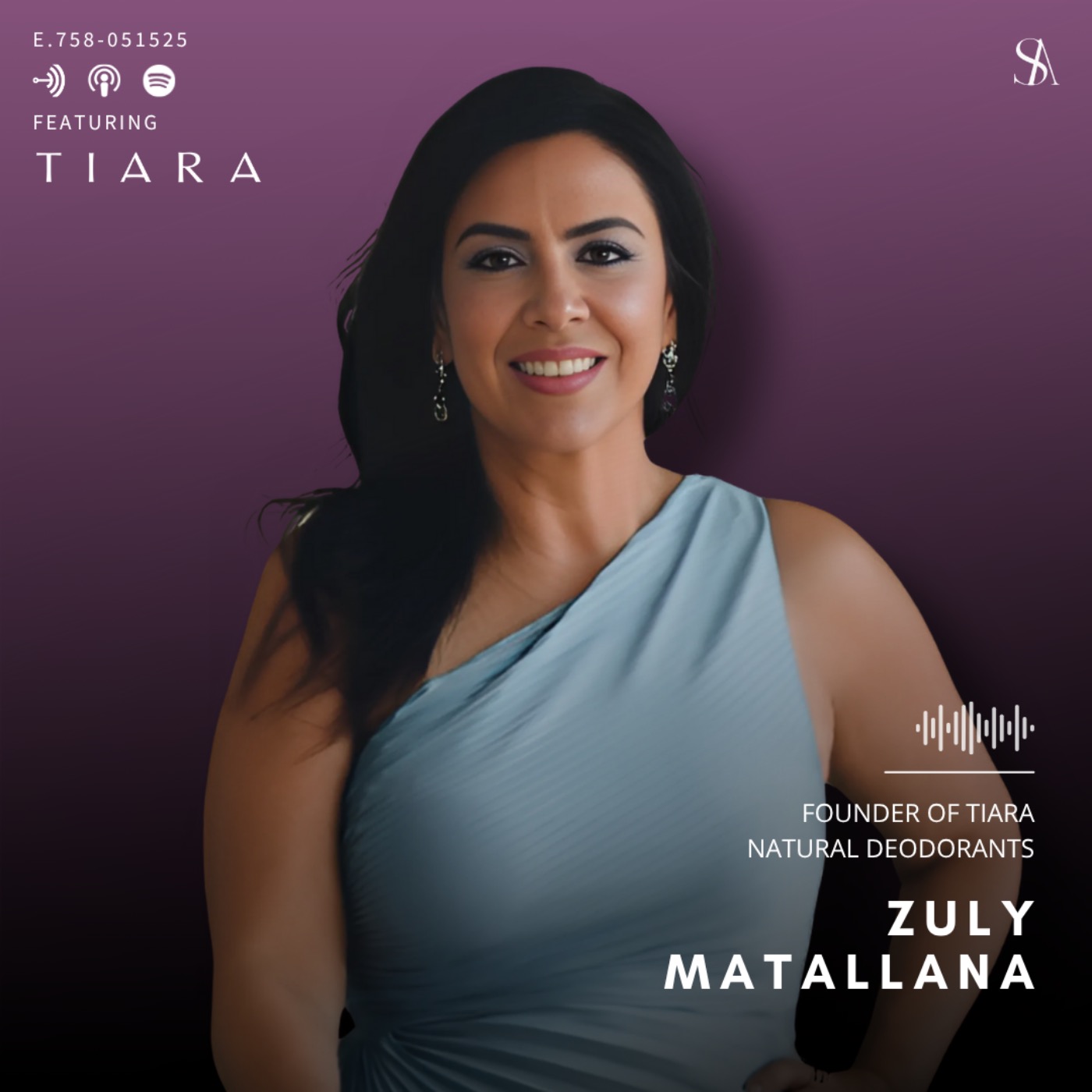
Hey, I'm Elise Hu, host of the podcast Ted Talks Daily. For more than 20 years, Paylocity has been leading the way with cutting edge work solutions like on demand payment, which offers employees access to wages prior to payday, flexible time tracking features which enable staff to clock in and out through their mobile device and numerous other cutting edge solutions that simplify collaboration across hr, finance and it. Learn more about how Paylocity can help streamline work and enhance business outcomes for your organization@paylocity.com Simplified hey guys, welcome back. I'm so excited about introducing you guys to this brand that we're hosting today because I feel like in the world of, you know, body care, especially when it comes to deodorants, there are not enough options and the few that are there are either misleading us or it's very hard to really come down to what is actually truly clean and like, good for you when it comes to this category, I don't Know why? But I always find it to be extremely confusing, you know, when I'm deciding between which deodorant I want to use, like for the long haul. Right. Something that I can really count on. So without further ado, I want to introduce you guys to the founder of the brand Tiara, the Zuli Matayana. So welcome Zuli. I'm excited to chat with you today.
- [02:53]
Zuli Matayana
Thank you so much, Edka. I'm so excited to connect with you today and to speak to your audience. I have a huge mission in life and I'm so proud that my dealers are winning awards. And thank you for being that light for others because people are looking for something they can trust.
- [03:11]
Elise Hu
Yeah, no, I, I really love that you're so grounded in this idea of like, you don't want any BS in your products. Like you've really tried to create. That's not only, you know, a great product, but it's going to be a long term solution for consumers. You know that when they want something that they can reach for without worrying about all of these ingredients that I feel like that list keeps growing every day, you know, of like what we should and should not have in our products. Let's first start with you. I would love to learn about you and like, you know, what led you to creating a brand and like, did you know that you wanted to go into like the body care space when you first started walking down memory lane? Yeah.
- [03:48]
Zuli Matayana
Thank you. So basically I'm a journalist. I love, you know, I love researching and I love to create things. You know, I have been speaking to creators and I think that we all have the power to create new things and to make things better for others. So I started with my sustainable shower caps because I, I had a brain surgery and I almost died. So when I had my brain surgery, I was in a hospital for three months and I actually lost the ability to walk or to run. And it gave me a lot of perspective in life. Right. It gave me feeling of, you know, I'm very little, Very, very little. I felt like a piece of, you know, like a, a piece of a very small, you know, particle of sand close to an ocean. And, and you know, like I then connected to a spiritual level that I cannot explain, but I understand that we are all connected and what we're creating and all this situation is allowing us to grow. So even the worst, anything that is happening in the world is helping us to learn. So here comes. I actually start traveling the world. After I recover from that surgery, I recover my ability to walk. And to run and to smell and to taste. So, you know, little things that we don't value right in life. And I, you know, I value life and I value the importance of integrity and values. Again, I will never do anything just for money, right? I. I change. It's a different perspective. So when I. When I went into Puerto Rico, I was part of a campaign called Yo Olympia Puerto Rico. I cleaned Puerto Rico. So I learned so much about sustainability. I actually went to school and taught kids about recycling. And that helped me understand the importance of creating sustainable products. So I actually worked for another organization in Colombia that I find the joy of helping people. So it was really good connecting to social causes. So I work with subsidiary in Colombia, an organization that helps poor families. And I created programs for them like education, health, little things like how to teach kids to learn about art, learn about how to learn English, right? Like, because we Spanish in our country. So I was very successful. But unfortunately, I was pushed to leave my country because I was target of, you know, I was a potential target of kidnapping. That changed my life completely. You know, sometimes challenges pushes you, you know, to. To go into another place. So I was pushed and I applied and I Canada. And when I came to Canada, I worked in different organizations, and it was wonderful, but I didn't feel connected. So I, you know, I had an idea about a product a long time ago, and then I did extensive research, and I found that a lot of people were looking for the perfect shower cap. So I started with that. But in the background, I had my grandma and my aunt who died from breast cancer. So I was in a different journey. While I was creating the shower cups, I was also in the journey of. Of finding a natural deodorant that worked for me because I truly stink. You know, like, my body is really, really stinky. So I couldn't find anything, right? Like, so I created the shower caps. The shower caps were a success, right? Like, I met with a lot of women. Even my shower caps were featured with Good Morning Makeup. To this day, like, we went on a promotion for Earth Day. My shower cups are truly sustainable. They last from four to seven years. So I was, you know, I was very happy to create a product that is sustainable and that is very functional. So that was awesome. And in the background, I was looking to find a lab where I can, you know, develop my natural deodorants. So I found the lab and we created, you know, like, it took me two years of testing back and forth. In the. During that time, I was learning a lot about ingredients. So I asked the lab to help me, you know, also to work. So it was a joint venture, working towards creating something really powerful and effective. So, and then, you know, again, as I, as I mentioned it like few minutes ago before starting the podcast, I put the hands of God into this. I believe in the power of the universe. I believe in the power of God, any kind of God that you call. I believe there is something on top of us. I truly believe that my deodorants are the most powerful and most effective in the market right now. And people actually see it and feel it. And you told me your brother loves it. So I am. Yeah, I'm blessed. You know, a lot of men love my deodorants. And you know, I'm talking about breast cancer, cancer prevention, because you know that the amount of toxins that you put every day when you use deodorants, like normal deodorants is crazy. So, you know, let alone, I mean, it's just, it's just unbelievable, right? In the, in North America, only 9% of families use natural deodorants. Rest still use aluminum based deodorants. And this situation not only happens in North America, it's global. Right. A lot of people don't want to smell. They're, they, they have fear of smelling and they gave natural deodorants a chance, but natural deodorants weren't powerful. So now here I come with a huge mission in life that now I realize, you know, I learned how to serve the community through my work before in my different positions that I was working on. But now I understand what was I meant to do in life. My mission is a mission of connection with families. My mission is a mission of explaining the importance of not using aluminum, but not only aluminum. Right. And this is the discovery, discovery, you know, that families are getting into when they reach out to me or when they hear my speeches or when they read my article.
- [10:14]
Elise Hu
A really good place to like, talk about the ingredients that are in deodorant that we don't want to see there. You know, I think aluminum is a huge one. I am still confused as to why the FDA has not flagged this ingredient in the use of deodorants. I think that everybody is aware that, you know, aluminum free is the way to go at this point. But like, what are some other ones that you noticed when you were researching this category and trying to figure out, like, like truly what's non toxic versus what is actually beneficial for deodorant?
- [10:43]
Zuli Matayana
Yes. So basically, deodorants contain not only aluminum. Correct. I mean they contain many, many ingredients. So when you look at a deodorant, you have to look at, you know, like some of the deodorants contain bhd. This is a, you know, like most of the deodorants in the market contain potential cancer causing ingredients and endocrine disruptors. So it's not only one ingredient, it's a thousand. You know, it's a lot of ingredients and toxins that you put in your body every day. Top of that, they use synthetic fragrances. Right. So it's not natural fragrance. So that is all the pharmacies that actually are potential cancer causing ingredients. So list of ingredients I can, I can talk about some like bhd, the parabens, the phylates. The potentialum potentially is in all natural deodorants that claim to be natural. So brands like Crystal, they contain potentialum. That's the main ingredient in those deodorants. Potash alum is a form of aluminum. So people, you know, when they read natural, they don't really look at the actual, you know, list of ingredients. They believe in the brand. They, you know, it's like it's, it's wild.
- [11:56]
Elise Hu
You know, there are certain categories in the beauty industry and I've noticed this. Like we, we tend to hyper focus on ingredient lists for things like facial skin care, you know, makeup. Recently Mac went through that whole thing where they reformulated with, you know, without talc and that kind of thing. But we don't focus on a lot of body care when it comes to ingredient safety, you know, and that always confuses me. That's where the largest surface area is for, you know, potential harm to occur, like is our body. So when I think of something like deodorant, it's something we use every day. Most consumers utilize it literally daily, if not multiple times a day. We don't know what's in our products. Right. So we know about aluminum. But then exactly what you said. There are others. Like you know, for example, phthalates. I mean never, I've never been as passionate about not having something like phthalates and in products than I am about something similar to deodorant. Phthalates are huge. Like there are huge, huge thing that I would love to see completely gone, you know, from the body care industry.
- [13:00]
Zuli Matayana
Yes. And then you know, like, you know, there are other ingredients and I'm going to be very like now, you know, like, okay, we have the propylene glycol, we have the, you know, like all the the tall they try close and I mean they put anything in, in a deodorant to make it work. And one of the facts I actually found doing the research is that the deodorant meant for women are more harmful to the deodorants made for men. Don't get me wrong, the deodorants made for men still harmful, but not as harmful as that the other made for women because our microbiome is different. So my deodorants were tested on me. So it worked effectively on men, but it works amazing on women too, right? So, so it's kind of incredible, right? It's incredible that we are getting into this stage and then let's go to the natural ingredients. So there is an ingredient called corn starch. When I buy a product, I just don't want to have anything that is questionable, right. Like I just, I just want to have something that gives me peace of mind and that's what I'm trying to do, right? Like giving peace of mind with my products. So cornstarch was, has been used in the all technology natural deodorants like brands like humble brands like Routine here in Canada contain that ingredient, right? So that is an ingredient that was modified. So corn was modified in 1996 and became a pesticide. So you don't want to put corn in your body? Not any kind of corn, right. Like I think it was modified many years ago. Also I created my deodorants being vegan, right? So some of the brands contain beeswax beef tallow, that those are not vegan, right? So those are animal based ingredients that actually, you know, when, when in touch with your body start operating in a different way that it could create different cells, right? So why, why do we play? I mean I'm, you know, I understand that a lot of people love beef tallow. I'm not a fan, right? Like I have to be strong enough to decide what goes in my deodorants. So I decided not to put the tado. Then people find cheap ingredients and then they promote it to make money. So I put expensive ingredients in my products, you know, so we are sure that what we're using is right. So you know, like I just don't want to give anything, anything, you know, like wrong to the, to the families out there and to their kids. Because in the end I'm doing this for the kids. You know, like a lot of people are developing breast cancer. I actually had a conversation with one of the bachelor ladies, Katie Thurston. She got breast cancer. She's in stage four. I'm completely torn. She's a wonderful woman who didn't know anything about deodorants. I actually connected with her and she said, yeah, my doctor, after she got the diagnosed, her doctor told her to be careful with the deodorants. But how come this is happening after the fact that this is just a.
- [16:05]
Elise Hu
Hard truth, that medicine doesn't catch up till something really bad happens at the end of the day? You know, everyone's known about deodorant safety I think for a long time, subconsciously, we've all heard about it. It's somewhere in the back of our minds constantly that there are certain products. I think not just certain products, all of our products. You have to be careful to some degree. But then there's also this greenwashing thing going on, right, in the industry where it's like people are also lying about that. So it's not just that we need clean products, we need non toxic products. Of course we do. But then we also have people just complete bullshitting us out here, you know what I mean? Like beef tallow is not something that's a replacement for a proper in, like a proper ingredient that's made with thought behind it. The consumerism that's in body care is very different than buying a $300 face cream. You know what I mean? Once a year. Like these are products that you purchase time and time again. Like how many times do you go through a deodorant? I mean think about it for everyone listening.
- [17:06]
Zuli Matayana
And, and so my mission is not only selling products, my mission is also educating the market, right? So I'm talking to the retailers that in the end are selling these products to the consumers. And I'm asking them, why are you selling this deodorant? This contains a potential cancer causing ingredient. And they tell me because it sells, right? Like they're concerned about mine not selling. So I'm creating this movement of educating families, creating awareness and educating families towards using a better product and stop buying the ones that are so popular by marketing. It's just marketing and marketing that actually is not going to pay the bill for your hospital when you get sick, right? So a lot of families getting sick, a lot of women getting breast cancer and nobody is stopping this. So because I lost the ability to walk or run, now I'm running with purpose and I'm running with purpose with my deodorants in hand, inviting families to learn about my deodorants, inviting families about learning about ingredients and inviting families to support my cost. You know, a cause coming from a single mom. I'm a single mom right now and you know, like I put all the money to create all these myself. I'm bootstrapping. I haven't received any grants, so I just actually won the Entrepreneur 100 award. And that is really huge because this is a community of educated women and actually one of the top, the creators of Entrepreneista, she really loves my deodorant, right. So I'm connecting with the heads of the organization just like you, right? Like you're using my deodorant, you're supporting it. And it happens that I applied to your awards and you learn about my brand, right? So, you know, I believe that that is the, the high level connection that I need in order to access the next level. I'm, I'm actually being connected to one of the, the top heads at Costco right now. Costco is selling other kind of deodorant, you know, Dove Secret, even, even native. And those deodorants don't contain the right ingredients. So, you know, it's really hard, you know, for me to knock the doors of Costco because they're huge, right? And they expect me to be a millionaire. But I can, you know, if I get an order from Costco, I definitely will get a bank that is going to back me up and make them, you know, thousands of the deodorants they want is. So it's possible. I see it as possible. So it's just a matter of connecting the dots. I hope that, you know, like my dreams of not only doing natural deodorants, but I want to do more products, you know, and products that care about sustainability, products that care about, you know, farms and the people behind that pay well. You know, like it's not going to be really cheap products, but they're not going to be also super expensive. So it has to be something in the middle that offers quality, that offers platform for, for families to be, you know, pay well and so fair trade and great ingredients. I mean, that's, that's all we can ask for, right?
- [20:27]
Elise Hu
No, I agree. And I would love to talk about what makes, you know, what was, what was the special ingredient for you when you were creating your formula? Like what was something that you realized? Like this is the, this is the special combination. I mean, what was your goal? Let's start there, you know, with like in terms of performance of the, so.
- [20:49]
Zuli Matayana
The performance of the products is really hydrating your skin. So it's not as hard. You know, my deodorants are not hard like other natural deodorants that you actually put them. And you have to really. I was struggling with that. And, you know, like, I created my deodorants in recycled plastic containers because the paper containers, actually, paper absorbs the oil in the deodorants and that. That's why the deodorants become hard. Right. So I don't think it's a good idea to use paper for deodorants because deodorants are in the bathroom, they're going to be getting wet and it's going to lose the. You know, I want the deodorants to last. My deodorant last from four to six months in your bathroom. I mean, it all depends how, how many, you know, how many times you use it. But normally it lasts longer. Then that's why it's sustainable in terms of ingredients. I use sunflower, sea wax. So some flowers don't need a lot of water to grow. And this ingredient is sustainable. So that's the part of sustainability. So instead of me using cornstarch, I decided to go with an ingredient that is sustainable and it glides really easily. So when you use the deodorant glides and it feels very natural when you see it. It feels very natural and it's very natural, but it's very powerful. So it works. It's the combination of ingredients. I put a little amount of baking soda, although I'm allergic to B soda. Baking soda is the number one deodorizer of the world. So let's. Let's be honest, right? Other brands are coming with magnesium, which I find magnesium having a lot of sulfates. So I decided not to go with magnesium. I decided to continue with baking soda. So it's working.
- [22:33]
Elise Hu
Yeah, no, that's really good. And I think that, you know, I'm just. For me, I think with the deodorant world, I mean, it becomes very easy when you can find something that works for you. Because for me, when I shop for deodorant, it's, you know, I get what I get, you know, what I've been using for a very long time or something. I don't experiment too much in the category, is my point. You know, it's. Because I think it's one of those products that we are always looking for the one that works. And when it works, that's what we stick to. And I think that's a big, big factor for when you are looking at this category. Right. Because it really does come down to performance. And that's why I asked you, you know, my brother, I had mentioned this to you before we started chatting, like my brother loves your products and he's an athlete. You know, he's been an athlete his whole life. He, you know, has used products that were, I guess, you know, you could say maximum strength or whatever they label, right in the marketing world like they label deodorants with all these different, you know, I don't know, subcategories that they fall in. And even he said this, he was like, I don't want to keep putting something on my skin that I just have a feeling that it's not good for me and I don't think for me to be using every day of my life, you know. And so when I introduced him to your brand, I was like, try these, you know, try. They're really good products for daily use. And he was like, he loves them, you know, he absolutely loves them because he can use them every day, he doesn't have to worry about anything. And they're really great for just maintenance, everyday use. It's not something that, you know, you put it on and it's like, okay, every five minutes I have to like, you know, check on my deodorant.
- [24:10]
Zuli Matayana
And even last, like I'm, I'm now trying to develop a roll on base deodorant but it doesn't cover the whole time. So you know, I find that the, the stick works really well. You know, while I'm trying to create something very powerful in the roll on market, still struggling and working with another lab that knows how to create this. Now we're talking about regenerative products, right? So I want to create something that comes from a very well curated form and beautiful things, the same thing as the other deodorants but in the roll on version. So it's a whole challenge. I won't stop. But the mission is huge, converting families. So now I'm becoming a speaker and I'm talking about my life. I'm a brain surgery survivor. I lost my grandma, my aunt to breast cancer. And I'm here to tell you, please don't use aluminum based deodorant but also be careful about all these ingredients that could be harmful and you know, potential endocrine disruptors and potential cancer causing ingredients that you don't know. Yesterday I was at an event at a women's summit and after I finished talking the line of people coming to buy my deodorant increase. So I definitely think I have a winner. The thing is that, you know, how do I market, how do I get into this big? You know, Amazon wants a lot of money for me to promote it. And you will see the reviews on Amazon. People are saying this, this deodorant is amazing. I love it. But, you know, like, the question here is how do we connect with the big corporations who really want to help people? How? You know, I'm happy to talk to them. I'm happy to, you know, to interact with, with these companies who are really looking. I mean, how many deodorant brands are in the market? So it's time to actually create. You know, I, I can't wait to see quality deodorants in the market. So families have peace of mind, you know, and, and deodorants are, it's a product that we use every day, no matter what. I know cream. Sometimes we forget to use cream and that's fine, right? Like, we don't, we don't care. But if we stop using deodorant, that day is not the same because we smell. So I think we're, we're, we're set to use deodorants and the deodorants that we're using right now are really toxic. So the time to switch to an, you know, free of aluminum and good ingredients, deodorant is now.
- [26:45]
Elise Hu
I agree. And I think a big thing I want to also bring up just for our listeners is like this idea of fragrance. I think I've seen all a lot of deodorant brands take off because people loved the scent. You know, like, I know a few of them were tick tock viral. I'm not going to name any names, but, you know, there were a few that were very minimalistic packaging, but they were like, known for the fragrance. And there's nothing wrong with that. I'm, I'm all for it. You know, if you love a great fragrance and that brand really is, you know, giving you that, it's like a, it's a way to add to your fragrance profile for the day. That's fine. But we should understand, I think there's a difference between utilizing those products, products for the use of like, you know, scent and like, you know, that kind of thing rather than health. You know, there's two different ways to look at this. And so I think for consumers, it's important to consider that component. You know, when you're utilizing something every single day, like I said earlier, on your skin, we're exposing ourselves to greater, you know, probability of absorption of certain ingredients, certain chemicals. And that can go Systemically. So, you know, it really does require more attention, I think, you know, just because of the sheer volume of consumers that are out there utilizing these products on a daily basis. So when we're using something for say, a fragrance reason, you start to wonder like, well, what's that doing to your skin? It's causing inflammation over time. You know, eventually that inflammation becomes constant, you know, and then you get something called inflamma aging. And even though it's like, you know, your axillary area, you know, the armpit region, it's still skin, you know, so skin health is skin health no matter where it is. And we have to.
- [28:23]
Zuli Matayana
Lymph nodes, I mean.
- [28:25]
Elise Hu
Yeah, lymph nodes, yeah. And it's, it's a big thing. Lymphatics and blood vessels run together. That's another thing. I think it's important. You know, when you look at the human body, there are certain structures that are always together. Lymphatics follow the vessels. So when, wherever your blood vessels go, that's where your lymphatics are going to be found, the nodes and, you know, the whole, you know, piping for that system. Same with the nervous system, you know, a lot of products, and we never talk about this, but like aluminum, for example, can actually interfere with your nervous system, peripheral nerves. And it's a really scary thing to think about. And I don't, I'm not going to make any claims here because there's certain things we're not discussing, you know what I mean, in terms of concentration and deposition and all those, those components. But I will say that there is room to take caution in that way. You know, it's not fear mongering, it's just knowledge, right? We have to understand. So when you think about that, the deodorant categories then becomes very interesting all of a sudden, right? Because it's like, okay, now I really have to come, come from this health angle into this, you know, because like you had mentioned this earlier, breast cancer, that's a really big, that's a really, really big topic. You know, and the big thing with breast cancer is it's a very sensitive cancer. So, you know, you hear about, for example, like estrogen positive breast cancer or you know, like certain markers, right. That are related to different kinds of breast cancers. And the big thing to know is that, you know, a lot of these ingredients, when we say things like endocrine disruption, we're talking about hormone regulation. So if your estrogen goes up and you're susceptible or you have, have an ongoing cancer that's estrogen positive. That's going to make that worse. So these are really, you know, they're real health things. They're concepts that are very much rooted in science and we're not talking about them on a mass scale. So it's very fascinating, you know, in that way.
- [30:22]
Zuli Matayana
Yeah. And I would like to, you know, I would like to, to say some, some facts, you know, to, to mention some facts in Europe. Europe is far ahead when it comes to ingredient safety and transparency in the UA. The EU has banned over 1300 cosmetic ingredients, so they're banned in Europe, while in the US we only have less than 50. So it's quite interesting. I have been trying. I actually wrote to the Environmental Working group about oxokarite, which is an ingredient that is in salt and stone, native and lumi. And that ingredient is a petrolatum and it's a mineral oil that contains a potential cancer, you know, potential cancer causing ingredients based on, you know, it has to be refined in order to be made. But, you know, why are we putting that ingredient? So that's what I'm asking, I'm asking companies to, you know, to reformulate if that is the case, you know, use your ingredients. I mean these ingredients already a potential, you know, a potential cancer causing ingredients. So why should we use that ingredient? Or you know, like, and to be more vigilant, like we don't need any kind of ingredient. That is weird. In terms of the fragrance, my. So I understand people like fragrance, right? Like they like to smell and they like something that smells really well. So when I chose the fragrances, we actually asked to follow the ISO 9235 standard. So that is a standard that actually secures that the fragrance is pure, natural. You know, it's either from essential oils or natural extracts. And in the future there is going to be more transparency about fragrances.
- [32:16]
Elise Hu
I mean, there has to be. Yeah, I agree. I think there's just a lot to unpack with fragrance and there's a lot to really reconsider. You know, I think fragrances are not meant, they were never meant to be put into products that are going to be constantly on your skin. It's one thing to spritz a perfume on. It's a whole different thing to be like applying that to your skin, allowing your skin to like interact with it for prolonged periods of time. You know, that's a totally different thing. And so, yeah, I have my own thoughts, you know, about the fragrance, the use of fragrance.
- [32:47]
Zuli Matayana
Yeah. In the future. Yeah, we have, I Mean, it's easy. I mean, it's the formulation without fragrance. Imagine it's the easiest version of tiara, right?
- [32:55]
Elise Hu
It should be like that. It should be like that. Because the idea is that, you know, when it comes to. And I'm going to come back to body care here, you know, and this for all of our listeners out there that are now starting to invest in body care, like, I'll. I'm gonna urge you guys, you know, that. To really look for products without fragrance in them, for real. Because the thing is the surface area that you're utilizing these products on, you know, like, that's most of skin that you're using them on. You got to be careful with what you're putting on there. And that's the thing is, like, I think we're going backwards. You know, when I look at. Honestly, Zuli, when I look at body care products, deodorants, obviously, but then also even other categories, right? Body lotion, oils, whatever it might be. I'm so worried because I feel like we're going backwards in time. You know, like, with facial skin care, we keep trying to push the envelope and we keep trying to say things like, well, we can't have this ingredient. We can't have this kind of combination. This, this, this, and this, right? But then with body care, all of that gets thrown out the window, and we have these, like, really harsh soaps, body washes, you know, these things that are really just not good for you. You know, they're on the market, and they're available at cvs, and they're available at Target, and everywhere people shop, so they're constantly in our face. It's like we have to do the homework all over again. You know what I mean? Like, that's what it feels like.
- [34:17]
Zuli Matayana
It's true, you know, like, and unfortunately, there was no leadership in either the big corporations. It was just something that you make and you produce and you just chip, right? Like, nobody put their head or their mind towards health, right? Like, so this is a new movement, and I'm part of this movement, and I'm creating the revolution, and I'm talking to families, and I think my voice is very powerful, is very powerful. I feel that I have that mission in life, and it's happening, right? Like, people are switching. People are thanking me for creating this. And, you know, like, it's not only me, right? Like, it's. It's everyone, right? Like, everybody's awakened. Like, everybody's like, it's time for everybody to actually open their eyes and start Using better products. Because if we don't do that, our health is being impacted it and we can change that. I see, you know, the cases of, you know, breast cancer since 1970 is increasing by 50%.
- [35:21]
Elise Hu
Because we have so much now in our environment that is just so bad. Like, you know, I'm telling you, like the personal care industries now, I mean, we have a lot of work to do when it comes to cleaning up the mess that we've created, you know, and it's a lot. And it's a lot of products that are being utilized on a daily basis without any caution. And, and that's the big. That's what I meant earlier. What I was saying was, you know, there's almost like this backpedaling that we have to do at this point in these industries to figure out where did we go wrong. You know, like, look at the women in the south that have fibroids, you know, like, that were exposed to those hair products and they ended up developing fibroids. And to this day, you know, it's a, it's a problem, it's a situation women, women everywhere that are dealing with like, you know, really crazy perimenopausal symptoms, right? Like, you hear about this stuff all the time, but we always sit there like confused as consumers because we're like, what happened? Our parents or our grandparents, they weren't dealing with this. We're dealing with this now, you know, and so it's, it's a scary world. And so, I don't know, I just, I love the way you're doing it. I think that your mindset and your goals and your vision that you have for your brand are so beautifully aligned with what is good for humanity. And I really applaud you for that. You know, I think it takes a lot of guts to go against the system in that way and say, listen, yep, I'm not doing it like everybody else. I'm gonna do it right. You know, and that's. I really applaud you and I think that your products are phenomenal. I love them. I think the deodorants are beautiful for everybody. Even if you have, you know, younger, like consumers out there, like, I would even recommend this to you guys. They're just great deodorants. They work, work. They, you know, you don't have to think about it. It's safe, it's non toxic. These are the kind of products that I really urge our community and our listeners to invest in. You know, like, really, guys, vote with your dollars. You know, push for Things that work, you know, that are good for you, and then hopefully we'll see a change, you know, in the industry. So, yeah. Zuli, thank you so much. This was.
- [37:33]
Zuli Matayana
I want to close with something very, very interesting. And, you know, so we are women, we lead companies, we lead families, we lead communities, and we make thousands of decisions every day. But the most powerful decision is choosing what protects our health. And guess what? Protecting your body is a form of power. So I invite you to take that power. Take that power and choose what is right for you. Because. Because nobody should tell you what is good for you. And you need to do the research. And we're here. I mean, I'm grateful for you, Edka, because you are helping families to learn and to understand what is good and what is bad. I believe that your job is helping a lot of families to potentially prevent cancer, which is my mission. Cancer prevention is one of my missions in life. With that, I'm so grateful to be here. I'm so grateful that I was able to share my message. And if you are a donor, if you are somebody who cares about cancer prevention, please reach out. Connect with me on LinkedIn, connect with me on Instagram, and let's create change for families globally.
- [38:52]
Elise Hu
I love that. And really, you guys definitely do that. And reach out to us if you have any questions about Tiara. If you can't find it, we'll be linking the website and all of the links are relevant in the show notes. So if you're tuning in right now, make sure you scroll down in the show notes to find all of those links and more information. But thank you so much, Zuli. This was so lovely chatting with you. I really, really just wish you the very best with growing Tiara and, and spreading your message to the world. I think it's just so important. So thank you, thank you, thank you.
- [39:23]
Zuli Matayana
Thank you so much. Have a wonderful day.
- [39:25]
Elise Hu
You too.
- [39:25]
Zuli Matayana
And let's continue this journey.
- [39:30]
Adam Grant
Hi, I'm Adam Grant, host of the podcast Work Life. For over 20 years, Paylocity has been simplifying work with innovative solutions that teams love.
- [39:38]
Elise Hu
Like on demand payment, which offers employees.
- [39:41]
Adam Grant
Access to wages prior to payday. Flexible time tracking features which enable staff.
- [39:46]
Elise Hu
To clock in and out through their mobile device and numerous other cutting edge solutions that simplify collaboration across hr, finance and it.
- [39:55]
Adam Grant
Learn more about how Paylocity can help streamline work and enhance business outcomes for your organization@paylocity.com Simplified. Every idea starts with a problem. Warby Parker's was simple. Glasses are too expensive, so they set out to change that. By designing glasses in house and selling directly to customers, they're able to offer prescription eyewear that's expertly crafted and unexpectedly affordable. Warby Parker glasses are made from premium material like impact resistant polycarbonate and custom acetate, and they start at just $95, including prescription lenses. Get glasses made from the good stuff. Stop by a Warby Parker store near you.
- [40:33]
Elise Hu
Summer might scream, but there's way more.
- [40:36]
Adam Grant
To pour with firstleaf. Go beyond the usual First Leaf brings fresh reds, sparkling whites, and crisp blends that are perfect for warm days. To get started, just take First Leaf's.
- [40:46]
Elise Hu
Quick quiz and they'll match wines to.
- [40:47]
Adam Grant
Your your taste and deliver them to your door. No wine owl stress, no second guessing. Find your new warm weather favorite at try firstleaf.com summertime and get your first six bottles for just $44.95. Try firstleaf.com summertime.
- [41:05]
Elise Hu
Hey guys, so I hope you love that episode. Please make sure to hit subscribe if you're tuning in to us on any podcast platform. We are available on so many different platforms, so wherever it is that you're tuning in, just go hit subscribe. You'll be immediately notified when we publish new episodes. This way you're able to tune in to amazing insights from experts, brand founders, industry leaders, authors, all the wonderful people that we host. And that's very important for me because I love to hear from you guys and really understand what you love and what you want to hear more of. Also, make sure to give us a follow on all of our social media outlets. We're available on Instagram, TikTok, X, you name it, we're there. We also have a blog on Medium, so if you're a reader and you love Medium blogs, check us out on Medium. We publish some really great articles on there that do deeper dives than just what's available on the podcast. And it's really a great place for all of you science geeks out there that want to learn a little bit more. We go above and beyond with our research and making sure we're bringing you information that you usually probably won't hear about in other outlets. So check us out, leave us a comment, leave us a review, and we'll be back next time with another episode. Thank you.