← Skin Anarchy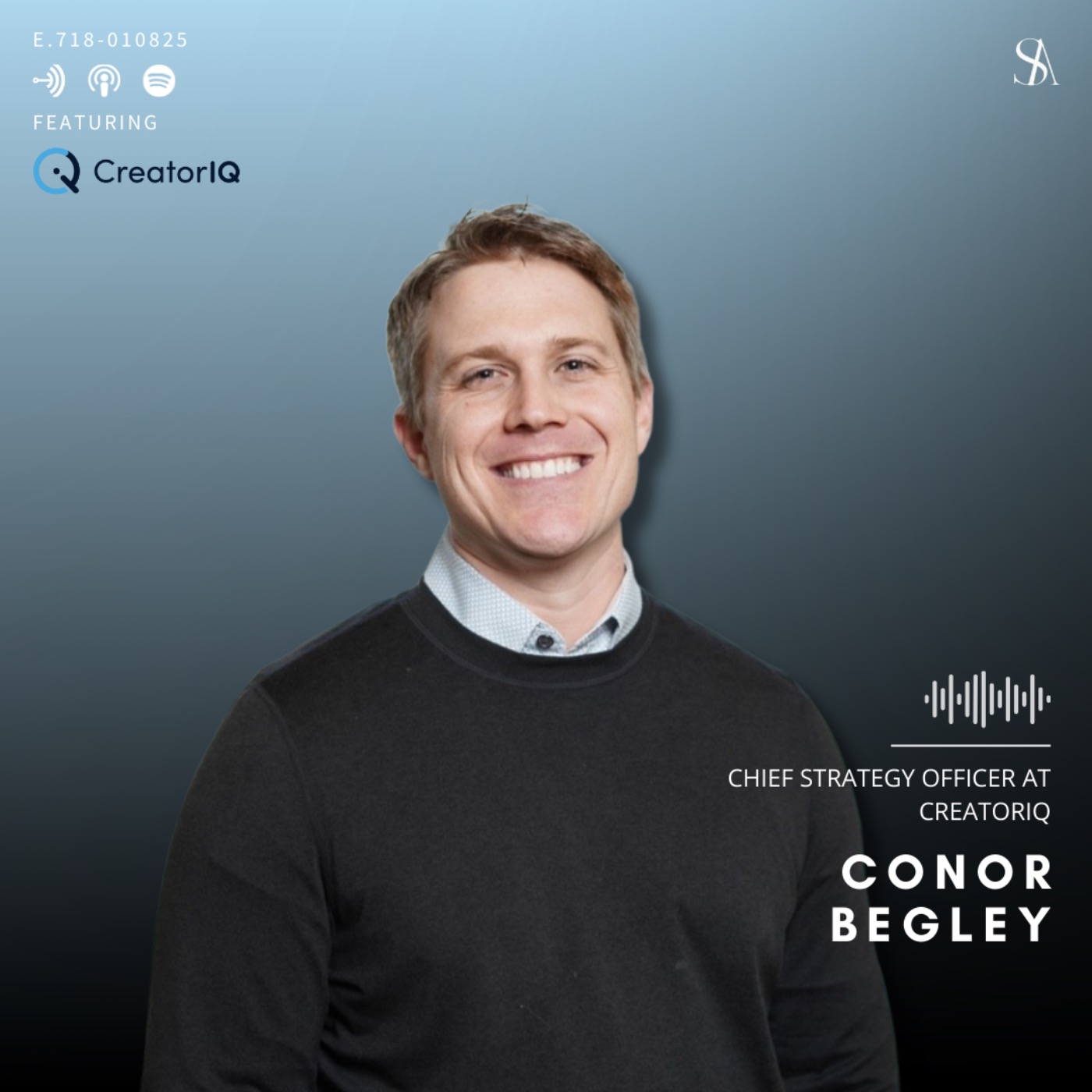
Skin Anarchy
Why Authenticity is The Key to Influencer Marketing Success in Beauty with CreatorIQ
00:23:15
Loading summary
Transcript30 lines
- [00:02]
A
Hey, guys, welcome back to another episode of Skin Anarchy. This is your host, Ekta, and I'm really excited to be introducing our guest today because he is truly a well of knowledge when it comes to the creator industry. And also just how the creator industry is interacting with the different industries that we talk a lot about on this podcast. You know, whether that's skin care, wellness, beauty. I mean, it's just so integrated and with how many creators there are out there and what they're doing for propelling this industry forward. So without me ranting too much, I would love to introduce you guys to Connor Beagley, who is the Chief Strategy Officer at Creator iq. So welcome, Connor. I'm so excited to host you and to talk to you today.
- [00:41]
B
Oh, thanks. I'm. I'm excited to do it and love to watch this podcast kind of rise up and, you know, obviously we've got our own podcast too, so I, I like supporting people with podcasts. So, yeah, excited to chat.
- [00:54]
A
That's awesome. Yeah, no, I've been watching your work as well. I always follow you on LinkedIn. You always have cool stuff that you're posting, you know, so very intriguing. And I love the work that you guys are doing. I'd love to learn about it, but first, I want. I would love to learn about you, actually. What got you into, you know, in. In this field? I mean, what led to the creation of Creator IQ and your involvement?
- [01:14]
B
Totally. So I started a company called Tribe Dynamics. Tribe was, you know, we started in 2012 and, you know, built that up and then sold it to Creator IQ in 2021. And then now I'm on the exec team and the board at Creator IQ and we're, you know, 40% of the revenue of the company, something like that. And so in terms of the inspiration behind it, I was actually working at a bre back in, like, 2011. I was, you know, I was 23 at the time, 22. And I was realizing, you know, hey, all the bars for us, right? The places where we sold the beer, you know, they are, you know, they were becoming influencers, right? And they're becoming publishers. And this was before Instagram. And I was like, it's just really weird. Like, everybody's becoming a publisher. Like, brands, people, retailers, you know, because. And so, you know, I was talking to a friend of mine who was in software, and. And I was like, you know, this is really weird. Like, I feel like this is going to be a really big deal, the fact that everybody's going to be a publisher moving Forward. And so, yeah, and so that was our start. And then we really focused on the beauty industry first. That was our first core segment. And there's a lot of value in being, like, hyper focused at the beginning. From there, we kind of kept going, had our ups and downs and lefts and rights, but, you know, kind of added more categories, added more growth, and then, you know, ultimately sold the business.
- [02:31]
A
That's pretty cool. And I like that you, you mentioned about, you know, beauty and stuff, because I'm very interested in this space and how influencers really play a role. You know, obviously we see a lot of people that recommend products and, you know, there's a. I mean, I'm one of them. I, I always look at those recommendations that they influence my purchasing decisions. So what, I mean, I want to ask you, you know, what are some of the, you know, things that you noticed in the very beginning with the interactions that were happening, you know, between the creator space and the beauty space that really sparked your interest? I mean, what was that Dyn dynamic like, that you noticed from the beginning?
- [03:05]
B
Yeah, well, I mean, again, I think early on we just started reaching out to different brands to see, like, who would be interested in chatting with us. And the beauty brands were the first ones. So it was like, okay, there was some signal there, like, these are the people who actually want to talk to us.
- [03:17]
A
Yeah.
- [03:17]
B
And then again, you know, we were really early on very centered on metrics. Right. Numbers. EMV was the one that we got to be well known for. And, and yeah, and I, you know, the thought was like, well, if we can make this a standard of measurement in this category. Right. Then we have lasting power. Right. It's not just about the software. It also becomes like a common language. Right. Everybody knows what it is, and maybe you disagree with it or you like this part and you don't like that part, but everybody generally knows what it means and where they rank and they have opinions and they can see how they're doing versus other people. And so we really zoned in and said, okay, well, let's make this the standard in this category. Now, again, what I'll say is today, beauty is still our largest. Even when we combine with creator iq, both revenue streams, streams together, beauty's still our largest segment. Right. Beauty is going to be 35% of our revenue. Fashion's like 10 to 15, entertainment's about 10 to 15. So it's like Disney, Netflix, MLB, etc. Food and Bev, Coke, Pepsi, Nestle, CS, etc, 10 to 15, all in that range. But beauty's our biggest. And that's because I think influencers have the biggest impact in that category. It's a category where you see it having the biggest impact. And so that's why that's where we make, you know, biggest chunk of our money. And so in terms of what it looked like in the rise, you know, early on we started tracking all the data and we said, hey, you know, this brand Nyx is really standing out right in our numbers. And then fast forward, Nick gets acquired for a half billion dollars by L'Oreal. And we got a lot of attention. So they reached out and were like, hey, you guys were the only ones who had data that showed this. And then we saw the same patterns with Too Faced when they got acquired for a billion and a half by Este, and same patterns with Anastasia Beverly Hills when she was lighting the world on fire. And then, you know, you started seeing it in skin care with Tatcha for 500 million, Drunk Elephant for 850 more recently with pharmacy, Youth to the people, etc and then in hair care too, right? K18 Olaplex whey you saw these same patterns, right? And so what we did, we said, well, let's go look at these brands and see what they're doing, right? Talk to them like, what are you doing that's different than what everybody else is doing? Because clearly you're doing something that's different. And then that really formed the thesis for how we built out the company and how we built out the, you know, the product and how we, you know, helped people, right? Because we said, well, clearly whatever they're doing is different and other people should be doing it this way. So let's teach them how to do it and help enable them to do it using the software. And then what you found, so what you found that was consistent across those groups was one, it was always an in house program. So they were might use an agency, but like they were managing the relationships direct between the brand and the influencer. Two, they weren't working with one or two, right? They were hundreds, maybe thousands of influencers. And they were starting with them when they were really small, right? So they wouldn't wait for them to become Kim Kardashian. They'd start working with them when they had, you know, 5,000, 2,000, 10,000 fans. And then fourth, they treated it a lot more like PR rather than media buying. So at that time the prevailing wisdom was, okay, I find an influencer, I pay them, you know, I give them a discount code to drive Sales to my website and I track how many impressions that drove. And that was the ROI, right? When the reality is that 96% of the content created by brands in the beauty space, by influencers, 96%, meaning 19 out of 20 pieces of content, is organic, it's not paid. Question becomes, how do you fit into the organic side of things? How do you get coverage in the same way that you would get coverage in a magazine or on tv? Like, how do you get them to talk about you? And so that was probably our most important kind of market insight.
- [06:58]
A
That's really intriguing what you just said, because I have never really considered that in the sense that I know that we always see products like either sitting on a shelf or like, you know, somebody uses it like, you know, in passing or something like that, right? Like a gesture is, is done in a video, whether it's on Tick Tock, wherever. But you don't really, I mean, I've always wondered like, what got them to use that product, you know, was that something that was put into their hand? Was it something that was suggested to them? Hey, make sure this is like organic kind of post that you're making about this. I mean, does that, does that happen? I'm just curious, like, can you tell influencers, like, hey, listen, you know, we want you to create this like as from a brand perspective, but we want you to do it in a more organic way. I mean, is that such a thing? Or there's.
- [07:43]
B
So there's a really simple way to think about an influencer, right? You have to think about them like a publisher, like a magazine. So how does Glamour magazine work? Well, Glamour magazine publishes a magazine. Then there's going to be a mixture of editorial content and paid ads, right? There's those two things you flip through. There's an article you read and then every four or five pages there's an ad, right? And so influencers are the same thing, right? They're doing a mixture of editorial content which is telling people about their lives, where they shop, what they do, what they like, what they don't like, what their opinions are on this particular product category. And then they do ads, right? They do sponsored content in the same way that there's ads in a magazine. Now if you bought a magazine and every page was an ad, be really shitty magazine. Nobody's going to read that, right? Influencer, the same thing. Like if you followed an influencer and every post they did was a sponsored post, you never actually follow them, right? And so, and so the reality is that, you know, Suzy, the Instagrammer competes very directly with Glamour magazine. Right? Glamour magazine has an Instagram account. They're doing a mixture of editorial content on their Instagram account, telling you about, hey, what's your favorite hyaluronic acid product? Blah, blah, blah, right? As well as, you know, ads where they actually make money. And so in the same way that you would go and pitch Glamour magazine, like, hey, I've got this great new product. These are the benefits. These are the founders. This is our story. And you hope that they want to write an article about you or publish you on Instagram. Same exact principles hold true here for influencers, Right? So you treat them in the exact same way, essentially. So let's say we wanted to get coverage from an influencer. What we do is let's find the people that are talking about our category. Like, let's find the equivalent of Glamour magazine. Okay, great. These are all the people talking about Tatcha. And Tatcha is a really highly aligned brand with mine. Let's go reach out to them. Hey, saw you talked about Tacha. If you like Tatcha, you're really going to like us. Let me send you some product. Here's our story. Whatever. And then, you know, people will respond. You'll get about half those people that respond, on average. You send them product, they like the product, they'll talk about it. About half the people you send product to will actually talk about it. And then from there, those are the people that you want to lean into. Right? Like, lean into those relationships. So, yeah, so that's the idea.
- [09:52]
A
Yeah, that was very helpful. And, you know, I'm really curious. Sorry, I'm just thinking about this because it's fascinating to me, especially now, because we've evolved so much. I mean, back in the day, we all read magazines, you know, I'm glad you brought up that analogy. And that was kind of the go to, you know. But then also for me, I think with my generation, I'm millennial. So, like, you know, we saw this transition happen. And now for me, as a consumer, I look at a lot of influencers, and it's become almost tainted. You know, in some ways, I'm not gonna lie, you know, because every time I see an influencer post, I'm really thinking to myself, well, who paid you? Because, like, you know, everyone's trying to make a buck these days, right? So how do you get around that? Like, I just want to. But if you. If I'm a brand and I come to you and I say, I want to get around that stigma. You know, I want to get around this idea of, well, you know, I gave this person my product and that's why they're talking about it. I want it to be genuine and all that stuff. You know, how do you really measure things beyond just like likes and shares and hey, shop it in my cart or all that stuff that they do, you know?
- [10:55]
B
Yeah. So I think there's two questions in there, right? So one is, you know, how do they maintain trust and authenticity? Right?
- [11:02]
A
Yeah.
- [11:02]
B
And then the second one is, you know, how do I measure whether or not it's working? And so the first question in terms of measuring trust or in terms of maintaining trust and authenticity is, you know, for probably everybody here has taken like it's taking economics at some point, right? And like in a market where there's infinite competition, it kind of holds everybody honest, right? So, you know, if I'm an influencer and I'm just shilling whoever will pay me the money, people won't follow me, right? Like if I'm shilling shitty products and if I'm giving bad advice, nobody's going to listen to me. And there is infinite competition, right? Like if I'm following you and I start to really not trust you, I'm just going to unfollow you, I'm going to follow somebody else that I do trust. And so very quickly over time, what happens is the kind of cream rises to the top, right? The people that have the most trust and the most authenticity, where people really can feel confident taking their advice, tend to be the ones that perform best. And if you start to do, to really, you know, pull the wool over people's eyes or not be truthful or not be honest, like you just won't get followed, right? And so in a lot of ways it just self regulates very quickly, right? And so that's the first thing. And the second thing is the, in terms of the how do you actually measure it? So there's a few things to think about here that are important. The first thing is there's a natural time lag between buzz and sales. So like I've heard about the Sphere in Las Vegas 47 times. I haven't gone and actually spent any money at the Sphere, right? Or I've heard about summer Fridays 32 times, but I haven't been to Sephora in three months or six months. But the next time I go there, I'm a little bit more likely to try it, right? Or if I see it in my friend's bathroom, maybe I Check it out, right? And use it.
- [12:47]
A
Yeah.
- [12:47]
B
And so that. That takes time for that to occur. And so where people get really. Get this really, really, really wrong is they say, hey, you know, I got a bunch of influencers to talk about me. And nothing happened. Revenue didn't go up or was small. It's like, well, that's not how it works, right? And it's also not like nobody buys anything the first time they hear about it, right? You got to hear about it from your friend. You got to hear about it a few times online. You got to see it in person, right? Like, it takes time and multiple touch points to make things happen. And so what you're really trying to do is hit people over the head with it 50 to 100 times over the course of a couple years before you're actually convert them. And so the way that you measure it, though, like the best possible way that we have found to measure this, and this is how every major strategic organization. Organization measures this, is you have to look at what is my share of the conversation. So when people are talking about a brand, are they talking about it a lot? Are they not talking about it a lot? So, like Rare Beauty 2022 was the number one brand we tracked in embarrassment, right. In buzz. But they were like number 10 in sales, right? So their buzz was in far excess of their sales. This term has been around for a long time. It's referred to as excess share of voice. Right. Is my share of voice in excess of my market share? And if it is, you are very likely to grow in the future, right? You're very likely to gain market share because again, buzz precedes sales.
- [14:17]
A
It's like a lag time.
- [14:19]
B
Yeah, there's a lag time. And so. And it's the inverse is true as well, right? Like, I won't say the brand name, but there's a brand name that's like the number one brand or one of the top few brands in sales in, you know, by market share. But, you know, and this is not. There's not one brand, there's a lot that are like this, like, top in market share, but they're like number 10 in share voice, right? Like, they've got a lot of buzz, but it's not as much as it should be. Right. They're underperforming. There's not as many people talking about them as buying them. Very likely to decline. Right. And this is like, very accurate. Like, we can. We. I already know today what brands are going to grow or decline in market share. Next year they already know it's already baked largely. And so anyways, so that's the way to measure it is like, what is my share of the conversation versus my competitive set? And then is that over indexing or is that under indexing? That's the most important measure of success.
- [15:11]
A
That is so fascinating, you know, especially with this whole change that we're kind of coming upon with TikTok. Right. I mean, TikTok's people are saying it's going to be phased out. Obviously the government has spoken on it. I mean, how do you think that's going to impact the creator economy?
- [15:27]
B
Well, I think it's still really early. Right. So I think that, you know, like the judge just agreed to hear TikTok's arguments. Right. Which God knows how that Supreme Court is hearing their arguments. So God knows how long that's going to take. I mean, I don't know, I'm not a legal scholar, but it's like the Supreme Court doesn't make decisions overnight. Right? So is that three months, is that six months, is that a year? I have no idea. And this is like a very important precedent to set, right? Like, yeah. You know, and obviously from a, you know, China doesn't allow any of the apps in the US to be in China for a reason. Right. And it's not like, it's not just to be a dick and just to like try and make yours better. The thing that people screw up about this and this is not anti TikTok. I love TikTok, I use it all the time. And they're super important to our brands. This is not, not, not a problem against that. It's just that as a channel, you got privacy concerns. But I actually think privacy is not the big deal. Privacy is whatever the thing that actually matters is. It's just, it's a way to control the narrative. Right. The typical would be referred to as propaganda. Like, how do we know that what's being shown is representative of the people? How do we know that there aren't levers being pulled in the background that like support one issue a little bit more than another issue? Right. And this, I'm not saying this is happening, I have no idea whether this is happening or not. But like, that' that's ultimately what people are nervous about. Right. And what gets people concerned. And so I would imagine over time that it will be something that is forced to divest, but that probably isn't going to happen in the next two weeks. Like, it's probably something that's more likely to happen over the next year or two years, because, again, this is like a really important legal case that will be used for all future social networks, that will be used in all disagreements internationally around, you know, policy for media and social networks, which, you know, we've got the biggest social networks in the world, and, like, you know, they're not just in the US or all over the world. So it's a very, very, very, very important decision. That's why it's gotten to the Supreme Court, and I expect that it won't be resolved quickly.
- [17:33]
A
So, yeah, I mean, that makes total sense and I agree with you and I think for me, more. So, you know, what we were discussing is I'm curious how this dynamic will play out in terms of the way that TikTok functions as an. As a platform, in terms of creators and influencers getting people to have access to the products that they're recommending quickly. You know, with a TikTok shop, I think it's a lot easier, right, as a consumer to be like, okay, well, yeah, I kind of like that product. And, oh, look, it's linked right here. You know, let me go click on it and buy it right there and then that. I mean, obviously the TikTok shop has been a huge contributor to just people seeing an uptick in sales. I mean, correct me if I'm wrong, but it really definitely changed the game, I think, compared to the other outlets, like, Instagram has been around forever, you know, so I'm just curious now with the way that influencers are going to be able to actually influence, you know, and that. And that speed at which that turnaround is going to happen between somebody talking about a product and then somebody buying a product. That's why I asked you about TikTok, because I think it does make a difference in that way, you know, totally.
- [18:39]
B
I mean, there's two things I think about, right? One, TikTok shop is succeeding in a place where pretty much everybody else has failed, Right? So all the other social networks have tried to make shopping integrated, and it just hasn't worked, frankly. And I think that you, you know, there's a lot of rationale as to why that may have happened or not happened. You know, my theory on it was it was more cultural than it was technology, which is just like, you know, we all got burnt out by infomercials a long time ago. And like, you know, I think the American, and more broadly, like the Western consumer wants to be seduced, not sold to, right. Where it's like, you know, I want to hear about it, check it out, read something about it, whatever, and then buy it. Right when it feels like it's being sold, there's just a taint to it. And so, and I think in a lot of ways, you know, as big as TikTok shops is, it's still going to be a very small percentage of the overall content consumed around brands on TikTok, like low single digits again. But they are certainly succeeding where others have failed. Like it is pretty remarkable to watch what they've done. And I think they have made massive investments in the infrastructure and tech, technology to support that and even the like, logistics, offline logistics to do that as well as the ecosystem. And so they are, you know, they and Instagram are the two far most. YouTube too are the most forward leaning kind of creator companies. Right. Like that's what they are. So it's big. I would check it out. I think it's very interesting. They don't charge as much as nearly as much as I would expect them to, which is cool. So it's like relatively low cost relative to retail distribution and I think they've made it a much easier user experience. So I think the TikTok shop thing is fascinating. I'm certainly watching it very, very closely.
- [20:23]
A
Absolutely. Now I want to ask you, you know, kind of to help all the brand founders that might be listening in. How can they work with creator IQ if they're interested in, you know, really working with you guys and, and leveraging this, you know, your technology to help them?
- [20:37]
B
Yeah, well, I mean, so the thing that we've learned over time, like we only want people to join if they're going to be really successful. Right. So we don't want, you know, people that come and spend money with us and be like, oh, that wasn't worth it, you know. And so the thing that we found is the people that we are most successful for are people that, you know, have a certain level of investment in infrastructure around working with influencers. So like, you know, people are just getting started. You don't need like hardcore measurement and due diligence, vetting and contracts and it's just not something you need when you're just getting started. You just need people to talk about you, right?
- [21:12]
A
Yeah.
- [21:12]
B
And so, you know, what we found is, the simplest way to think about it is, is once you break about 50,000 followers on Instagram or even TikTok, like that's when you should start thinking about us. Right? Like that's the right, the right group to work with and Then your point about how you, how you leverage us, you know, we're used by the teams that run these influencer programs and by the CMOs that want to measure them. Right. So if you're the person that, like, you know, you don't want to take screenshots of Instagram stories on the weekends, and you don't want to have to, you know, track every. Every campaign you're doing, and you want to be able to understand how you're doing versus your competitor, and you want to be able to send a brief and vet an influencer for safety and do all this kind of stuff. That's the technology that we help with. And then. And then separately, you know, because we work with everybody that's good at this, we can give you guidance on, like, how to do it. Like, stuff like I'm talking about right now, like, what. What is the right approach? What works? So that's the way that we, we help.
- [22:11]
A
Yeah. That's really awesome. I like that. I love that you're doing this. And, you know, I feel like there's so much gray area, you know, I can't imagine being a brand founder and trying to get my brand off the ground, you know, and trying to figure out and navigate influencer marketing or anything related to it. So creator iq, I mean, it seems like, you know, it's something that you should definitely look into if you're a brand founder and you are at that point, you know, I really recommend that people check it out. If we have a lot of people who tune in who do have small brands, you know, so. But thank you so much, Connor. Great talking to you.
- [22:41]
B
Totally. And what I'll say is, for any brand founders that are just getting started, I can send you lists of thousands of influencers for free. So if you want to know every influencer that's ever talked about, Tatcha, I can give that to you. Just email me connor c nreator iq.com and we'll do that for free. So happy to help the little guys too. Just don't want you.
- [22:59]
A
Oh, that's great. Thank you so much. That's really cool of you, Connor. I appreciate that. And we'll definitely put that in the show notes as well, guys. So scroll down in the show notes to. To get that email if you need to. But thank you so much and this has been such a pleasure hosting and learning from you. Of course.
- [23:13]
B
Thanks for having me. Bye.