Loading summary
Transcript173 lines
- [00:00]
Mangesha Tikalu
This is an I heart podcast. Guaranteed human.
- [00:05]
Bethenny Frankel
This is Bethenny Frankel from Just Be with Bethenny Frankel. Let me be blunt. Most dog food is junk. It just is. And I'm not feeding junk to Biggie and Smalls. That is why they eat just food for dogs. It's real, 100% human grade food with ingredients I actually recognize. Not mystery pellets pretending to be healthy. And once I switched, the difference was obvious. Better digestion, better skin, more energy. Dogs who actually feel good instead of just surviving dinner. Here's the thing. You care about quality. You make an intentional choice to be healthy. So why are you gambling with your dog's health? So let's think about our furry babies. Go to justfoodfordogs.com right now and get 50% off your first box. No code. Just try it. Because once you see the difference, you're not going back.
- [00:51]
Land.com Advertiser
You ever get the feeling? The city walls closing in, the concrete jungle suffocating your soul? You crave wide open spaces, the chance to connect with nature. Many maybe chase some elk, fish a private stream. Well, listen up. There's a whole world out there. And finding your own piece of it just got easier. Head over to land.com. they've got ranches, forest, mountains, you name it. Search by acreage, location, the kind of hunting or fishing you dream of. Land.com. it's where the adventure begins. Kaleidoscope.
- [01:35]
Will Pearson
This is Will Pearson, Mango's co host on Part Time Genius, here with a quick warning before you listen to the episode. Despite Mango's grandmother's greatest wish, he is 100% not a doctor and nothing in this episode should count as medical advice. Also, as I mentioned, being the co host of Part Time Genius, I'm a little insulted I wasn't asked to be this episode's quiz master. But I'm sure with time, I'll get over that. With that said, enjoy.
- [02:17]
Mangesha Tikalu
I could have been a doctor. I could have been a lawyer. But I chose to sing. Now is an unseen telephone that continues to. Ooh, ring. Well, if the bee has one sting, why am I still stuck here thinking about all the people I could have been could.
- [02:38]
Mary Philip Sandy
Question.
- [02:47]
Mangesha Tikalu
Oh, you wonderful animals, thank you so much for coming back. We are just about to start our Live Forever trivia show. So everyone get out your pencils and papers and live. Let's begin. Mary, go ahead and kick us off question one.
- [03:03]
Mary Philip Sandy
The topic is jellyfish. If you know about jellyfish, this will be easy. What type of jellyfish can revert to a baby polyp stage and live its life over again into infinity.
- [03:14]
Unidentified Assistant or Side Speaker
Psst.
- [03:15]
Mangesha Tikalu
It's the immortal jellyfish. And the truth is, nobody knows why it has that superpower. It is just a sack of goo less than a quarter inch in diameter, and it may hold the secret to eternal life. Next question, please.
- [03:29]
Mary Philip Sandy
What legendary American comedy troupe sang, if you're too old for dancing, get yourself a monkey gland?
- [03:36]
Mangesha Tikalu
Answer the Marx Brothers. Back in the 1920s, a French surgeon named Serge Voronoff began implanting slices of monkey testicles onto human testicles, which he called rejuvenating by grafting. Hype spread fast.
- [03:49]
Unidentified Assistant or Side Speaker
B.E.
- [03:50]
Mangesha Tikalu
cummings wrote verses about it, and so did Irving Berlin.
- [03:54]
Mary Philip Sandy
Question three. This one's tricky. What sports hero turned mangesh off of longevity, possibly forever?
- [04:02]
Mangesha Tikalu
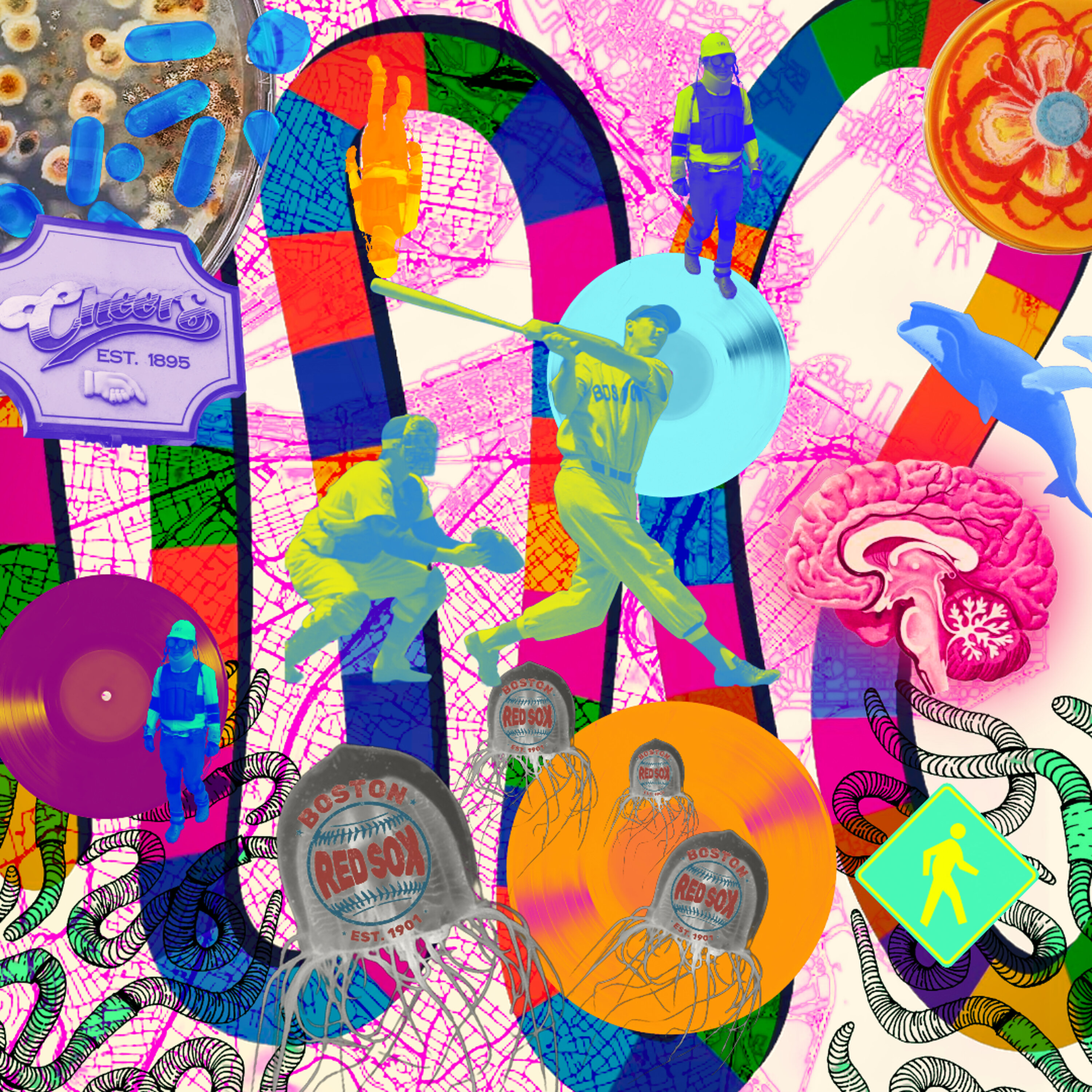
I don't know why anyone would know this, but bonus points if you answered Ted Williams, because it is Red Sox legend Ted Williams. And Fenway park, the home of the Red Sox, is actually where I'm headed right now. I'm in a cab because I want to visit the giant bronze statue of Ted Williams, AKA the splendid splinter Boston legend. Though I guess my cabbie could use a reminder. He was president. He was a baseball player for the Red Sox. There are only two things most people know about Ted Williams. First, he had a season high batting average of.406, A Red Sox record that still hasn't been broken. I'm not a baseball guy, and even I know that's bananas. The second thing people know about Ted Williams, he's a punchline.
- [05:10]
Dr. Lenny Guaranty
You might want to be cremated or be frozen like Ted Williams head.
- [05:15]
Sheba Cat Food Advertiser
You get freezer burn in the plane.
- [05:17]
Mangesha Tikalu
Ted's got freezer burn. That's right, because Ted Williams had his body frozen after he died by a company who holds dead bodies in stasis in case they can someday be reanimated. It's the ultimate plan B for longevity heads. The company Alcor actually launched in the 1970s with the idea of freezing people after death as this insurance policy for the future in the off chance science could get to a place where being dead and frozen was a reversible condition. And to me, cryonics has always seemed like a bet made by science fiction fans who didn't get science. But also, it would be one thing if they had just frozen Ted's body. What Alcor did was way worse. According to a Sports Illustrated investigation, Ted was supposed to be preserved in full. But when his corpse arrived, an eager beaver at Alcor started severing his head. But by the time the error was discovered, a Technician was already mid slice. They debated what to do. Leave him like a human Pez dispenser or finish the job. So they finished the job and froze his head and body in separate tanks. Not a great start. Then in 2003, a cryo whistleblower came forward accusing the company of various atrocities, including mishandling Ted's remains. And Larry Johnson wasn't just some employee blabbing to cbs. He was a former paramedic who had actually been Alcor's coo. Johnson said it all started when they wanted to move Ted's frozen head to another container.
- [06:56]
Unidentified Male Speaker (possibly a cabbie or commentator)
Obviously the head's round, it's not going to sit upright. So they got a tuna fish can. They set the head on top of the can and then fill the vessel with liquid nitrogen. Well, obviously after two or three days of being in that state, when they pull you out, that can is stuck to the top of the head.
- [07:12]
Mangesha Tikalu
Obviously. But even if you're a cryonics buff, what happened to Ted Williams was particularly off putting.
- [07:20]
Unidentified Male Speaker (possibly a cabbie or commentator)
A technician grabbed a ranch, a monkey ranch. Took a swing at the can, missed it, missed the can, hit the head, draw back again, A second swing hit the can, send it flying across the room.
- [07:37]
Mangesha Tikalu
The company denied the allegations immediately, but the damage was done. Ted Williams became a laughingstock and my excuse to keep disbelieving. And I'm not alone, Please need. Here's an idea.
- [07:50]
Dr. William Mayer
Just bury you.
- [07:50]
Unidentified Male Speaker (possibly a cabbie or commentator)
It's over.
- [07:51]
Mangesha Tikalu
There you go. Who wants to come back to this mess? It's a fucking mess. Just die already. Ted's not the only reason I'm in Boston though. This place is the heart of some of the most cutting edge longevity science. That sexy supplement nad first got its start here. It's home to huge leaps in gene editing. And human trials are going on here that could reverse glaucoma. There are over a thousand biotech startups between Boston and Cambridge. And if there's one thing a life in trivia has taught me, it's that you gotta check the facts. So I'm here to see for myself. From Kaleidoscope and iHeart podcast, I am Mangesha Tikalu. This is Skyline Drive. How to Live Forever. Chapter one suiting up.
- [09:15]
Mary Philip Sandy
Before Biotech, what were people in Cambridge busy making Candy.
- [09:21]
Mangesha Tikalu
Cambridge used to be the center of American candy manufacturing. Main street was dubbed Confectioner's Row. And just a few of the products invented here include Necco Wafers, Charleston Chews, Sugar Daddies, and Junior Mints. I wish I was here on a candy taste test. Mission, but I'm almost as excited about what I am here to do to get turned into an 80 year old.
- [09:50]
Joe Coughlin
So bungee is going from the waist to behind your hamstrings, your ankle. And this is again like reducing that range of motion. And the next thing we get at is some stiffness in the joints. So we have braces that go on your elbows that we'll do first. We'll do your knees and then also a neck brace.
- [10:08]
Mangesha Tikalu
So you'll feel a little bit restricted with this. I've come to the MIT Age Lab because I'd heard that Dr. Joe Coughlin and his team have invented a so called aging suit. In my head I was picturing some futuristic spacesuit where you dial up the gear on the age you want to be, but it turns out it's more like a bag full of bands and weights that you wear under a bulky jumpsuit. The weights weren't enough.
- [10:35]
Joe Coughlin
Next we have these weighted gloves. So again we're thinking about joint stiffness, maybe some arthritis in the hands.
- [10:42]
Unidentified Assistant or Side Speaker
Uh huh.
- [10:43]
Mangesha Tikalu
Joe and his team call it agnes, an acronym for age Gain now empathy system. And the idea started from this is
- [10:51]
Joe Coughlin
a very MIT thing play.
- [10:54]
Mangesha Tikalu
Joe and his team were trying to get a better understanding of how the aging body works. So after some pizza and discussion, they all put on myriad restrictive bands and stood around a mat to play Twister.
- [11:06]
Joe Coughlin
And so we had my students, my
- [11:09]
Mangesha Tikalu
staff with engineers falling over one another on red, yellow, green and blue blue dots was transformative. The team understood on a bizarre firsthand basis how the elderly move. And since then they've helped create better designs for seniors, including how to get in and out of a new car. And those few bands got upgraded to become the bag of empathy that is Agnes. And now it's my turn to play. In 10 minutes of putting on hand weights and ankle weights and arm weights and standing in modified Crocs on uneven foam blocks and having bungees and belts tied from my limbs to a helmet. I went from 47 to.
- [11:52]
Joe Coughlin
Well, Agnes, you're almost there.
- [11:55]
Dr. Lenny Guaranty
Not quite.
- [11:56]
Mangesha Tikalu
So what age am I at right now?
- [12:01]
Joe Coughlin
This is not necessarily the healthiest older adult. Like we're getting at a couple of unmanaged chronic conditions. You might think late 70s, early 80s, but again, yeah, really varies from person to person.
- [12:13]
Unidentified Male Speaker (possibly a cabbie or commentator)
Got it.
- [12:14]
Mangesha Tikalu
I've put on some glasses that blur my sight considerably. I have no peripheral vision and my body feels bound up. But I set forth to conquer the world, or at least this floor. I'm not consciously like trying to walk slower Just trying to, you know, trying to balance. If the process of growing older and feeling your body deteriorate is like boiling a frog, a gradual change that slips past awareness, then putting on Agnes is the feeling of diving into that scalding pot and understanding instantly what hot is. That's actually the purpose of the age lab. There are warmly decorated rooms set up as test living rooms and kitchens. There's even a cherry red Volkswagen Bug named Miss Daisy, which feels like a less fun version of Mario Kart, where you're trying to drive on ice and snow with the reflexes of an old person. It's all built to help us understand how the elderly navigate this world and improving quality of life for everyone. Joe tells me, you know, whether or
- [13:22]
Joe Coughlin
not we can get mice to live 200 years, and therefore we get to live 150, that's great. That's folks down the street here that are doing that.
- [13:29]
Mangesha Tikalu
Joe's saying he isn't one of the scientists in wet labs at MIT and Harvard. He's on a different mission.
- [13:35]
Joe Coughlin
I want to be able to make sure that you're happy with those hundred years that you have already.
- [13:40]
Mangesha Tikalu
Honestly, that's what I want, too. Not necessarily living longer, but living better. In the years I do have, as Joe puts it, we already have 30 to 40 years of longevity greater than we did in 1900.
- [13:53]
Joe Coughlin
The fastest growing part of the population is 85 plus older. Age is the greatest achievement of humankind, and yet we still look at it as a problem. I'm hoping that increasingly people are starting to see this as an opportunity rather than a problem to be solved.
- [14:14]
Mangesha Tikalu
I wander around in the suit. It is a strange feeling. Not just the weight of it and slowing down to this degree, but also I have such little awareness. As I move around the floor, I realize I'm treating it like a workout class. My minders are giving me simple challenges, and I am panting along just trying to keep form. The idea of wearing this for a day is just crazy.
- [14:40]
Joe Coughlin
I wouldn't recommend that. Yeah, it's a little bit different than the body you're used to.
- [14:45]
Mangesha Tikalu
Yeah, I feel like Batman. Not the superhero part of Batman, just the fact that he can't turn his head without turning his whole body. Everything about this suit is labored.
- [14:57]
Joe Coughlin
I noticed you're, like, looking at the ground, maybe taking shorter strides then.
- [15:02]
Mangesha Tikalu
This isn't how I normally walk. My minder sent me to the coffee machine, one of those fancy machines with lots of pictures of options on a screen. I mean, I guess that the top left one was just a regular coffee, but I really couldn't read it. Yeah, everything is a series of educated guesses here. I assume black coffee is at the top left, but I can barely see anything, so I'll drink whatever it serves me. But honestly, choosing the coffee isn't even the hard part. It's all the mechanics. Pulling the cup out of the sleeve, trying to balance while sitting on a
- [15:40]
Joe Coughlin
stool that you reached back to kind of ease your way into the chair.
- [15:44]
Mangesha Tikalu
Yeah, I both want to take the coffee and I'm afraid at some point I'm going to split. I have never thought about how hard it is to sit on a stool before, but you have to have some awareness of where the stool is behind you. You have to know how to lower yourself at the right speed. It is hard to do with a cup of coffee in your hand. So in the end, I placed the coffee on the table and then used my hands as reference points. One on the table, one on the stool to lower myself gently. And I stick the landing. But there is no standing ovation for what feels like a very gymnastic feat.
- [16:27]
Unidentified Assistant or Side Speaker
Well,
- [16:29]
Dr. Lenny Guaranty
shouldn't be winded from taking a
- [16:31]
Mangesha Tikalu
lap around an office. And finally, the piece de resistance. Take the stairs down and take Agnes to the streets. My God, the stairs. That first step is a leap of faith. I'm so conscious of where that first stair is, hoping that I can land it square on these foam padded shoes. And gripping the banister poorly with both my arthritis induced hands until my foot touches down. It feels like forever. I slowly get more confident, but never really enough to not be clutching the handrail for dear life. When we finally get downstairs and out the door, I am so grateful for the cold December air because I'm drenched in sweat. I'm trying to regain balance as we slowly do a loop around the building. But it turns out balance isn't the only thing I lost my sense of. It is funny that my first. I don't know. How long have I been wearing this? Like 10 minutes?
- [17:51]
Joe Coughlin
Much longer.
- [17:52]
Mangesha Tikalu
Oh really?
- [17:53]
Dr. Li Wei Tsai
A little past 11.
- [17:54]
Mangesha Tikalu
Oh, wow. I'd been wearing the suit for nearly an hour and I'd lost track of time.
- [18:01]
Joe Coughlin
Sometimes we have folks put the suit on and they're thinking about someone in particular in their life, like a family member or someone they work with and feeling like, wow, I can kind of understand a little bit of what they might be experiencing. So I'm wondering like if this is making you think of anybody, you know?
- [18:23]
Mangesha Tikalu
I feel like a jerk when I think about it, about how impatient I can be with people moving slowly on New York sidewalks or even sometimes with my mom not understanding why she's anxious about little things. But I can see now that even just sitting or tackling things around the house is so much harder than I ever imagined. Wearing Agnes, immediately you understand just how inadequate this world is, how it's not designed for people to age or have different abilities. Joe tells me that the crosswalk sign and countdowns in cities are based on the time that a college sophomore should be able to cross the street. Think about how many people that leaves out.
- [19:10]
Joe Coughlin
We need to think about how do we make environments. Whether it's our homes, our cars, our streets, our stores, our hospitals age ready. So I'm trying to think about how to make our kitchen age ready. If we remodel the bathroom, I have to tell you the door jamb that we have is too narrow. And God forbid that either I or my wife have to use a walker or a wheelchair. We're not going to be able to get in there. Can't use the bathroom. Congratulations. Welcome to senior housing. So it's kind of given me a wake up call that's perhaps driving my spouse nutty. But it's also I like where I live. I want to be able to build it to stay where I live.
- [20:02]
Bethenny Frankel
This is Bethany Frankel from Just Be with Bethany Frankel. Most dog food is marketing, not nutrition. That is why Biggie and Smalls eat Eat. Just food for dogs. Real 100% human grade food with ingredients I actually recognize. And yes, I do see the difference. Better digestion, healthier skin, more energy, dogs that feel better. My babies. If you've been on the fence about switching, stop overthinking it. What's more important than your furry babies and their health? Go to justfoodfordogs.com right now and get 50% off your first box. No code needed. Just try it.
- [20:39]
Land.com Advertiser
You ever get the feeling? The city walls closing in the concrete jungle suffocating your soul? You crave wide open spaces, the chance to connect with nature, maybe chase some elk, fish, a private stream. Well, listen up. There's a whole world out there. And finding your own piece of it just got easier. Head over to land.com they've got ranches, forests, mountains, you name it. Search by acreage, location, the kind of hunting or fishing you dream of. Land.com it's where the adventure begins.
- [21:23]
Mangesha Tikalu
Chapter 2 the Hallmarks of Aging. We keep talking about aging, but what even is it? We know what it looks like. Your hair grows gray, your skin sags you add candles to the cake. But what is actually happening? I asked our science producer, Mark Allen, and he said simply, everything wears out. For me, the best way to understand that is to do my dad's favorite activity lie back, preferably in a recliner, and listen to music. My dad didn't care about fancy clothes or name brands, but he was a total audiophile. When he passed, he left me his vintage Macintosh receiver and his Altec Lansing Valencia speakers, the first things he saved money to buy in America. As soon as an album peeks out from its packaging, it's vulnerable. Purists clean the albums like a ritual, before and after playing them. They know how dust and dirt and the oil seeping from our fingertips slowly affect a record's play. They keep their collections out of sunlight and away from radiators and also too much moisture and too little moisture. And even with all that care, the integrity of a record will eventually warp or scratch or break down, lasting just a human lifetime, but rarely more. In 2013, four longevity scientists published a landmark paper that gave us an answer to that question. What is aging? That we're still using and refining today? They identified what drives aging, both at the cellular and molecular levels, and they called these drivers the hallmarks of aging. At first, they named nine hallmarks. Today, scientists say there are 12. By the time this comes out, there may be more. What's stunning is that we start the aging process in the womb, and over time, no matter how healthy you try to be, more and more goes wrong. That's what the hallmarks are trying to track. There's telomere attrition, where the tiny caps at the ends of your chromosomes begin to fray so much that your cells stop dividing, and suddenly heart disease and blood clotting and liver disease enter the picture.
- [24:00]
Unidentified Assistant or Side Speaker
Then there's loss of proteostasis, the quality control. When you're young, every misfolded protein gets cut like bad takes in a studio. But over time, the system loses its ear. Glitches and warp notes stack up until the whole mix gets muddy, and boom, you've got Alzheimer's. And that's just two. There's 10 more. Genomic instability, epigenetic alteration, chronic inflammation, mitochondrial dysfunction, gut microbiome disabled, micro autoficiv regulated, nutrient sensitive, and cell exhaustion, ultra intracellular communication and cellular senescence. Can you hear this? What's happening? It's happening in your body, too. There are so many ways your body starts to go wrong. And the hope is, the more scientists understand, the more they'll be able to Counter the deterioration. But until then, we'll just have to deal with the natural wear and tear of living, accepting the quiet ways our bodies break down until the music stops.
- [25:02]
Mary Philip Sandy
What longevity influencer is 60ft long and weighs 100 tons?
- [25:07]
Mangesha Tikalu
Answer. The bowhead whale. In 2007, a group of native Alaskan whalers found a harpoon tip in the neck of a bowhead whale dated back to the Victorian era. Which means that whale lived over 200 years. 211, actually. Chapter three, men in black.
- [25:54]
Dr. Lenny Guaranty
So when you get tenure, you no longer have to worry about not getting tenure. Okay? So it's a real liberating situation. So I thought, well, what would be good to work on now?
- [26:08]
Mangesha Tikalu
That's Dr. Lenny Guaranty, a professor at MIT and a pioneer of longevity science. He laid the foundation for several hallmarks of aging. And also, he sells longevity supplements. Lenny is in his 70s. He's fit, bald. He tells people he's biologically six years younger than he should be. Also, he's kind of a character. He thinks white T shirts are dorky, so he only wears black ones. He'll tell you all the reasons Beethoven's 7th Symphony is superior to the 5th. So he's got takes. And just like everyone who got into studying aging before it was fashionable, he was considered fringe.
- [26:51]
Dr. Lenny Guaranty
I was walking down the hallway one day, and my department chairman walked by, and he said, what's new? And I said, I think I'm going to shift my lab to working on aging. And he does double take, goes, you're going to what?
- [27:09]
Mangesha Tikalu
But after playing with yeast. Yes, yeast. He discovered what seemed like a real breakthrough. They found a protein called SIR2 that played a key role in yeast longevity. But don't get too excited about SIR2, because that's not what this story is about. Instead, we're focusing on an ingredient sir2 uses to affect longevity. A little molecule called NAD. That's the real star here.
- [27:36]
Dr. Lenny Guaranty
And NAD been known for over 100 years. It's involved in metabolism in cells. It's involved in mitochondrial function.
- [27:45]
Mangesha Tikalu
Eventually, Lenny shows that by boosting the NAD levels, he can lengthen the lifespan of not just yeast.
- [27:52]
Dr. Lenny Guaranty
I said, geez, we just did a simple intervention in worms and made them live longer. And this chap, he says, just what the world needs. Long live worms.
- [28:03]
Mangesha Tikalu
But over the next 10 years, he starts moving up the food chain, first
- [28:08]
Dr. Lenny Guaranty
in worms and then in mice. And at that point, I was really interested in turning attention to humans.
- [28:17]
Mangesha Tikalu
Yeast, definitely. Worms, sure. Mice, maybe, but humans, that's a kind of expensive. That takes a higher level of backing.
- [28:26]
Dr. Lenny Guaranty
And I got a cold call from someone from the business world at a company called Sequoia.
- [28:35]
Mangesha Tikalu
And this is where we get into the supplements. The Sequoia he's talking about is Sequoia Capital, the famed VC firm that backed such little known companies as Apple and Google. Now they're backing Lenny's use for nad, which he's figured out how to harness effectively for anti aging.
- [28:54]
Dr. Lenny Guaranty
So that was the product that was launched and the company, which is called Elysium Health.
- [29:01]
Mangesha Tikalu
But money really changes what you can do and what you have to do. Now Lenny could finally run tests on humans and he figured out a way to restore NAD levels in the 60 set. But Lenny also had to make money for Sequoia. It's not like walking around MIT telling your department chair you're going to make worms live longer. So Elysium goes to market and it feels lux, like the $800 a year baby Apple and Goop never had.
- [29:33]
Dr. Lenny Guaranty
From the beginning, we've had customer feedback, and the most common feedback is that their fingernails grow faster. And people report a lot of things that are not so verifiable, like they feel better, they have more energy. But the fingernails, when you see it, you have to believe it. It's right there in front of you.
- [29:57]
Mangesha Tikalu
That's the frustrating thing about longevity science. You won't actually be able to tell if you've lengthened the user's lifespans until you wait out their expected lifetimes. And also people are really interested in anything that might do something which can lead to a certain kind of flooded market.
- [30:15]
Dr. Lenny Guaranty
Part of the reason when I got into aging, that my department head was less than enthused is because the field had been riven with snake oil salesmen up to that point. That's the history of the aging field. I guess I'm responsible for the craze that we're now seeing, which still seems to be in exponential phase of growth.
- [30:41]
Mangesha Tikalu
So here we are in the supplements gold rush, where as Lenny says, sometimes people don't get it quite right. It can mean taking something that has no real effect, but it dashes your hopes and waste your money. It could be a small inconvenience, like a tummy ache, or could give you salmonella through a green powder that was eventually recalled, or it could kill you, which is what happened with a cholesterol supplement that led to 80 deaths. Those both happened in the last two years. And I don't have the energy or intel to read up on what advisory board each little Bottle on the shelf has. So I guess I'm back to judging by the label.
- [31:32]
Unidentified Male Speaker (possibly a cabbie or commentator)
Hey, Quiz guy, you taking nad?
- [31:35]
Bethenny Frankel
Huh?
- [31:36]
Mangesha Tikalu
Skeptic. Uh, not nad. Dr. Primus actually didn't mention it in his mountain of advice, but since you asked. Curcumin C3 complex, mega D3 and MK7, folic acid, B12, megacioQ10, ubiquinol. Immune to vent spills, which have zinc and elderberry fish oil, omega 3. Oh, and there's a green powder I mix into a glass of water and drink most mornings.
- [32:04]
Mary Philip Sandy
And how do you feel?
- [32:05]
Mangesha Tikalu
Pretty much the same. But I feel like I'm doing something. Chapter four. A worm welcome.
- [32:27]
Dr. William Mayer
You have a thousand identical worms. You give them the same environment, everything's the same. You feed them the same food. One can die in 10 days of old age. One dies in 20 days of old age.
- [32:37]
Mary Philip Sandy
Age.
- [32:37]
Dr. William Mayer
That's not luck. That's not random. There's something, and we can understand that.
- [32:43]
Mangesha Tikalu
That's Dr. William Mayer, the director of Harvard's Healthy Aging Initiative. When I meet him in his office, I can't get over how young he looks. He's tall, lean, dressed smartly in skinny jeans and cool kicks. But he's a tenured professor running his own research lab at the most prestigious public health school in the country, so he has a lot going on. But the thing he really wants to talk to me about is worms. Specifically a minuscule worm about the size of a comma called C. Elegans. Mayer is studying the way the body and brain sense and react to nutrients, like how we're affected by intermittent fasting.
- [33:22]
Dr. William Mayer
The first studies where we'd really taken nematode worms that always lived two weeks and changed one gene, and now they lived sort of like five weeks. This was revolutionary. At the time, this kind of went against all theory of evolutionary biology. You could do one thing and change the whole way an animal interacted with time.
- [33:37]
Mangesha Tikalu
But the reason worms like these are such special test subjects, he tells me, is that they only have about 300 neurons. And that makes them like tiny computers, really easy to genetically reprogram.
- [33:50]
Dr. William Mayer
There's a bit of a debate in the field whether it's 300 or 302. This is how nerdy we are about this.
- [33:54]
Mangesha Tikalu
We've moved to this.
- [33:55]
Dr. William Mayer
But we can take the energy sensor, which senses low energy and is turned on when you don't eat, and make that constitutively on. And now, even if it eats a lot of food, it doesn't realize it's having a lot of food. And it lives a long time. It has the lifespan of a diet restricted animal. And we could even show, we can map that down to two neurons in the brain and we could flip it on and off and get back this longevity. So there's this huge interaction.
- [34:19]
Mangesha Tikalu
But Mayor has room in his heart for more than one kind of worm. He also loves to work with the loa loa. The loa loa is basically the same roundworm as the C. Elegan but they have very different lifespans. And when I ask them why.
- [34:33]
Dr. William Mayer
So Rhettsielagans live in the soil, crawling around, they have a really dangerous life. They probably live two days in the wild. So there's no evolutionary reason, there's no adaptive reason for those animals to evolve the capacity to maintain their bodies for 18 years because they're only going to see three days. So natural selection is just a math problem. Everything is governed to make the animal live fast, die young. Loa loa is a parasite, so it lives inside bodies of us, actually super protected environment.
- [35:00]
Mangesha Tikalu
These loa loas are extremely cosseted. Think gated living for worms. Just in this case the human body is the worm's McMansion because loa loas live under our skin.
- [35:12]
Dr. William Mayer
Now suddenly mutations or natural selection which make the animal live longer have an advantage, right? That's why you tend to see long live animals on islands where there's low predation, in places where there's low stress.
- [35:23]
Mangesha Tikalu
I love that roundworms have found the blue zones, the world inside our bodies. And then Dr. Merrir goes somewhere I wasn't expecting.
- [35:32]
Dr. William Mayer
In the wild we have good examples of one population of animals that split and one stays on the, say the mainland and one goes onto an island. So suddenly you separate them to a hazardous environment and a safe one. When that happens, the one in the safe environment, they become longer lived because it's now worth it. And so will this happen to us? No idea.
- [35:49]
Mangesha Tikalu
But you know, intellectually maybe will it happen to us? Will we turn into two species? It is a thing I can't stop thinking about.
- [36:02]
Mary Philip Sandy
According to the New England Centenarian Study at Boston University, which state has the Highest proportion of 100 plus year olds?
- [36:11]
Mangesha Tikalu
Answer. Hawaii. It's gotta be beaches, right?
- [36:15]
Mary Philip Sandy
Of the following countries, which rates lowest for life expectancy? Cyprus, Slovenia, Lebanon, Nicaragua or the United States?
- [36:25]
Mangesha Tikalu
It's the United States. According to the World Health organization, Cyprus ranks 16th worldwide, Slovenia 26th, Lebanon 35th, Nicaragua 40th and the USA 41st. Experts say key factors in America's ranking are income inequality, Social isolation and lack of access to health care. While Mair is working on what helps humans live longer, he also knows that's only one piece of the longevity puzzle.
- [36:56]
Dr. William Mayer
The other piece of my job is, you know, why is it that if you're born in Dorchester, your body ages faster, potentially, than it would if you were born in Cambridge?
- [37:03]
Mangesha Tikalu
Recent studies show that there's roughly two decades separating the life expectancy in Cambridge and the nearby Boston neighborhood of Dorchester. The median family income in Cambridge is $175,000, and average life expectancy is 92. In Dorchester, a community that has some of the highest poverty rates in the state, average lifespan is much, much lower around 72. Joe Coughlin told me, we humans have 20 plus years of life that we can't enjoy yet, but people in communities like Dorchester don't even have those 20 years. And it's not a mystery why.
- [37:43]
Dr. William Mayer
I think that, you know, healthy aging is a human right. If wealth is the biggest driver of how well you live and how long you live, it's not just luck. It's not just the genetics of the wealthy.
- [37:57]
Mangesha Tikalu
Look, Will Maier is in the longevity space. He knows that general excitement in the field is good for business.
- [38:04]
Dr. William Mayer
Twenty years ago, no one was talking about this, and now everybody's talking about it. And that is super exciting. Maybe dangerous.
- [38:11]
Mangesha Tikalu
Too dangerous, perhaps, because as the government has continued to slash NIH funding and grants for institutions, Mayor worries that we have taken public health for granted. I'm worried about that, too. It's like we as a people don't realize that public health is the reason that we have those 20 extra years or why infant mortality rates have changed so drastically in the US in 1900, 1 in 10 babies used to die before hitting age 1. Now that's 1 in 200. Mayer started his center for Healthy Aging specifically to do the type of interdisciplinary research that will bring aid to the most possible people. But in the excitement over extreme longevity by the rich and fast for the rich, he's worried we're hastening the division of our species.
- [39:02]
Dr. William Mayer
We have such differences across different populations. Even if you look at the gains we had in the 20th century in America, it was like we added 30 years of life expectancy. If you look at the lowest earners, they didn't get those gains at all.
- [39:15]
Mangesha Tikalu
Hearing Mayor talk about these two worms reminds me of a story that my family in India told me about Brian Johnson. And it's kind of the story of one set of worms visiting another. So Johnson flies on this private jet to Bombay for The sole purpose of being interviewed by this superstar podcaster, Nikhil Comet. One minute he's talking about turning his home into a blue zone and then he asks, is it okay if I put a mask on?
- [39:41]
Dr. Lenny Guaranty
Yeah.
- [39:42]
Mangesha Tikalu
Yeah, okay.
- [39:43]
Dr. Lenny Guaranty
Is that okay?
- [39:43]
Mangesha Tikalu
Yeah, yeah, yeah, sure.
- [39:44]
Dr. William Mayer
Yeah.
- [39:45]
Mangesha Tikalu
A little awkward, right? And Cometh's team is really confused. They're indoors. You feel better? Were you feeling something or. This is more precautionary. I mean, I feel it. It burns my lungs, it burns my throat. And then I also just know, like these level of pollutants, it really does wreak havoc on the body. He stays around for a while with the mask on, but then he abruptly ends the interview and hops on a flight home.
- [40:15]
Dr. Li Wei Tsai
Brian had to leave.
- [40:17]
Mangesha Tikalu
Air quality in Bombay is not up to. I'm actually surprised that the air quality
- [40:23]
Dr. Li Wei Tsai
affected him that much.
- [40:26]
Mangesha Tikalu
That laugh, that's kind of what my family felt. They saw it as performative and silly. Like, sure, he might live to 150, but what's the point if you can only live like some hot house flower in a tiny, perfect terrarium?
- [40:49]
Bethenny Frankel
This is Bethany Frankel from Just Be with Bethany Frankel. Most dog food is marketing, not nutrition. That is why Biggie and Smalls eat just food for dogs. Real, 100% human grade food with ingredients I actually recognize. And yes, I do see the difference. Better digestion, healthier skin, more energy, dogs that feel better. My babies, if you've been on the fence about switching, stop overthinking it. What's more important than your furry babies and their health? Go to justfoodfordogs.com right now and get 50% off your first box. No code needed. Just try it.
- [41:26]
Land.com Advertiser
You ever get the feeling? The city walls closing in the concrete jungle suffocating your soul? You crave wide open spaces, the chance to connect with nature, maybe chase some elk, fish a private stream. Well, listen up. There's a whole world out there. And finding your own piece of it just got easier. Head over to land.com. they've got ranches, forest, mountains, you name it. Search by acreage, location, the kind of hunting or fishing you dream of. Land.com. it's where the adventure begins.
- [42:01]
Mangesha Tikalu
Chapter 5 Brains and dishes. When we were downstairs, there's a video of a mouse. It felt like he was at a dance party or something.
- [42:31]
Dr. Li Wei Tsai
Yeah, yeah, yeah. That is, you know, amazing.
- [42:35]
Mangesha Tikalu
MIT's Peccauer Institute for Learning and Memory is impressive the way most buildings are impressive. It's got a giant white staircase and art and portraits on the wall. But the thing I couldn't stop staring at was a video on loop of white mice running around a little cubicle looking like they're three hours in to the world's tiniest RA. I'm here at the lab to visit with Dr. Li Wei Tsai, the director of the Tsai lab, which is at the absolute cutting edge of neurodegeneration and Alzheimer's research. Dr. Tsai is soft spoken, elegant. Instead of wearing a lab coat, she's got a shawl around her shoulders. But also she is intimidating. Still, I kind of got to ask her, why is she throwing dance parties for mice?
- [43:27]
Dr. Li Wei Tsai
We show that initially in Alzheimer's, even in a very young age, the power of the gamma wave is compromised already.
- [43:37]
Mangesha Tikalu
Gamma waves are brain frequencies that show up in higher order work. Like when your brain is concentrating intensely or solving problems or retrieving and forming memories. But as they looked at patients with Alzheimer's, they noticed that those gamma waves were dysregulated.
- [43:53]
Dr. Li Wei Tsai
So we did a very simple experiment. What if we can boost these gamma
- [43:57]
Mangesha Tikalu
waves in 2016, Tsai's team thought, what if we blast LED lights at mice? Cue the strobe lights.
- [44:06]
Dr. Li Wei Tsai
You know, anywhere between 30 to 60 hertz of frequency. That usually is the most active when we are actively engaging in higher order cognitive functions. So we saw that some of the pathological features of Alzheimer's disease reduced quite drastically.
- [44:26]
Mangesha Tikalu
And then Sai noticed that as blood circulation in the brain increased, it let spinal fluid in to help clear metabolic waste. And it increased the efficiency of those higher order brain processes. It was a huge step forward. Then they added a few more non invasive stimuli to the mix. Things like tactile vibrations and sound pulses. And eventually they found they could transfer the results to humans. Now there's a commercial version that sounds like one of those red light masks they're always hawking on Insta. Is it like a mask?
- [45:00]
Dr. Li Wei Tsai
So it's more like goggles, like. And also earphones.
- [45:05]
Mangesha Tikalu
They're in stage three trials now with a wider population. And if all goes well, it'll go to market. I'm odd that such a simple application of light and sound can fend off Alzheimer's. It feels too easy. But also beautifully futuristic. Okay, I need to level with you. I'm not just here to see the tiny dance party. I'm really here because I'm worried about my own brain. When you grow up a scrawny nerdy kid like I did, your brain is your superpower. My creativity comes from making strange connections between little facts and details. I remember the specifics of conversations even three or four decades later. And a sharp brain. That's what seemed to keep my grandfather, the writer, and my great grandmom, the 103 year old, going. But I've also seen family and friends lose their memories and their sense of self. And right now that's been on my mind because I can feel my memory slipping a little bit. And I worry it'll be the way Ernest Hemingway described how people go bankrupt gradually and then all at once. Dr. Tsai clarifies that what's happening to me is pretty typical.
- [46:25]
Dr. Li Wei Tsai
So about by mid-40s, things start to change.
- [46:30]
Mangesha Tikalu
So for me right now, oh, really?
- [46:33]
Dr. Li Wei Tsai
I mean, okay, just on average, they are extreme, but on average, by the mid-40s, you start to forget words, you start to forget names, like, you know, you want to refer to someone, you just cannot think of the right name. And then after age of 65, people start to develop different kinds of dementia. So, yeah, that's a life cycle.
- [47:04]
Mangesha Tikalu
What's the point of living to 100 or 150 if you don't have a healthy, functioning brain? Like wearing Agnes was hard, but manageable. But I worry about what it means if I'm carrying forward without my memories or my ability to learn or even a grasp of who I am. Luckily, Dr. Tsai has a solution. Hiding in the back, Behind a door we're not allowed to walk through, we spot a team of students in a wet lab, because inside that's where they're growing clones of human brains in petri dishes. That's right. Dr. Tsai has figured out how to take skin cells and basically model your brain in a dish. It's not a full brain. It's a simplified organoid that reprograms stem cells into six types of brain cells, and then it helps them form structures until they're firing neurons. And it's infinitely replicable. She can do it so many times. It's going to be a massive game changer for personalized medicine today. The migraines, as she calls them, are basically focused on people with APOE4, the Alzheimer's gene. But it allows her to test medicines and interventions that would work specifically for you.
- [48:30]
Dr. Li Wei Tsai
It really allows us to just create a model in the petri dish from anybody's somatic cells.
- [48:43]
Mangesha Tikalu
So you have a testable brain essentially in a petri dish.
- [48:46]
Dr. Li Wei Tsai
Right. And that's just very, very convenient because this is very modular. We can actually mix and match, you know, cells from different genotypes. We can mix APOE4 nerve cells with APOE2 or 3 glial cells and then see whether a certain pathology will still develop and so on. And we can also use this migraine to test different drugs. And the best thing is I think this has the potential for personalized treatment because I can take your skin cells to make a brain for you. And then if you develop any disease, we can test what drug is the best for your brain as opposed to his brain.
- [49:46]
Mangesha Tikalu
The whole my brain concept blows me away. And I want to see one so badly, but we are not allowed. I tried to find out how much of a cost to make me a migraine. I asked multiple times for the current price tag. I even tried being a little cheeky to get a very, very rough estimate. But Dr. Asad does not want to reveal the cost.
- [50:09]
Dr. Li Wei Tsai
It's expensive. Yeah, it's expensive. Right now everything is very boutique.
- [50:16]
Mangesha Tikalu
I can only imagine how many zeros she's talking about. But that's how moonshot science works. And if everything goes right, maybe worms like us will be able to use it someday too. Before I go, I decided to ask Dr. Tsai about Ted Williams. If she can recreate my brain in a petri dish and run tests on it, can she possibly recreate Ted's and figure out how to reanimate it? I have to ask. You have Ted Williams here, the baseball star? His brain is frozen at all core. Like, what do you make of all of that? That space?
- [50:54]
Dr. Li Wei Tsai
I don't want to get myself into trouble. Let me just say out loud, okay, I do believe in healthy aging because I think our society cannot sustain with so many people having dementia. It's a huge loss for the society. So I think if we can really promote healthy aging of the brain, I think that would do very good thing to the society. But all this other stuff I think are just. I just don't want to get myself in some trouble.
- [51:36]
Mangesha Tikalu
It's comforting to think that Dr. Tsai has unlocked something magical. The very real hope that our brains could stay healthy as long as our bodies do.
- [51:49]
Mary Philip Sandy
What animal lives on a geriatric island near Boston Harbor?
- [51:54]
Mangesha Tikalu
The answer. Millennial rockhopper penguins. The New England Aquarium noticed that they had a bunch of penguins who were in their early 30s and had several conditions that required closer monitoring, just like human seniors require. God, who cares about penguins?
- [52:12]
Unidentified Male Speaker (possibly a cabbie or commentator)
Why are you so obsessed with Ted Williams head, huh?
- [52:15]
Mangesha Tikalu
I know, I know, I know. I mean, part of it is that in a 10 minute cab ride in this tiny metropolis, I have been pinballed from a statue of a man who had his head cut off and stuffed into a freezer. His long shot chance at immortality. To a scientist who in the decades since has figured out how to grow a working copy of your brain in a petri dish, that chasm blows my mind. But also, I think it's the mystery of it. Like for people skeptical about cryonics, Ted Williams has been the punchline. But I'm still tripped up on whether Ted even wanted to be frozen. He didn't leave a diary. His kids have all passed. And frankly, so much of his story is murky. Like, consider what was written in his will. Ted wanted to be cremated and scattered in the Florida Keys in his favorite fishing hole. I mean, a simple cremation and being scattered in warm waters feels like the opposite of being frozen. Then there's what his kid said. His two youngest claimed they'd all signed a pact to go into biostasis together. Though the evidence was more than a little dubious. A piece of scrap paper stained with motor oil founded the trunk of his son's car. Also, the paper wasn't signed the way he signed official documents with his full name. It was signed the way he signed his autographs. Plus, Ted never actually signed Alcor's consent forms. Ted's son, John Henry, had signed them all after his dad had died. So I guess the question becomes, why do this to your dad? It turned into a messy family drama, and we'll never really know the answer. But then there's this. In 2014, Ted's younger daughter, Claudia, agreed to a rare on camera interview with a local Boston news station. She insisted that after a lifetime of being a distant, disengaged father in his later years, Ted Williams made a real effort to connect with his kids. That this was the reason he was interested in cryonics.
- [54:28]
Unidentified Male Speaker (possibly a cabbie or commentator)
Outside Fenway, Claudia looks up at that statue of her dad differently now. She understands her father better. And she wants all of us to understand the decision behind having her dad's body frozen, ridiculed by so many. The punchline of joke after joke.
- [54:42]
Dr. Li Wei Tsai
It was a promise.
- [54:44]
Mangesha Tikalu
It was a pact.
- [54:45]
Dr. Li Wei Tsai
But it also was a hope that maybe, just maybe, what if?
- [54:51]
Mangesha Tikalu
What if? It's kind of sad and human, but also I find myself struck by the optimism. Because sure, cryonics is not viable now, or maybe ever, but science is and always has been a story of what if? What if we could harness Zeus, most potent weapon, and deliver it as electricity through outlets in every home? What if we could dream like Icarus and transport ourselves by sailing the skies? What if there's truth in the myths, the stories that we pass down generation after generation. The ones about living better and longer. It's an idea that had me pulled over on the side of the road on my way to o' Hare in the middle of winter trying to fill a jug with magic water. That's next time on how to Live Forever.
- [55:58]
Bethenny Frankel
Sa.
- [56:30]
Mangesha Tikalu
That was fun. Thank you so much for listening and for sticking around for the credits. How to Live Forever is a production of Kaleidoscope and iHeart podcast. This show is hosted and written badly by me, Mangesha. Together then all of these talented humans sweep in and make it so much better. Starting with Mary Philip Sandy, our supervisor producer who could do absolutely everything except drink milk. Please don't offer her milk, give it to a cat instead. The show is EP'd by my superstar wife Lizzie Jacobs, who is well known in podcasting but better known in my house for her famous elementary school story the Sun Also Sets. Skyline is story edited by Mark Lotto, a story savant and also a closet basketball fan. Who knew Our science producer is marked Stephen Allen. Mark, thank you for taking me to Boston and to see the world's tiniest mouse rave. I want to thank Anna from Computer City Productions for mixing this episode and for working overtime to make it so beautiful. Thank you Anna. Thank you to Botany Azadi Records and Bliss Samsa for the stunning music. If you want to hear more we made you a mixtape. Just check out the show notes, research, support from Lucasfilm Riley and Matt Riddle, both of who told me lots and lots of secrets about living forever. I will share them with you next episode. This show is executive produced from Iheart by my good friends Ally Perry and Katrina Norvell. It would not have happened without my pals at Kaleidoscope, including Os Volition and Costas Linus. Thank you both. Thank you so much to Julia Nutter, David Weisbord and Sheena Ozaki for lending us your ears and for for bearing with early versions of the show the very best lawyer and person, Rachel Strom. I cannot recommend her enough. Thank you for your counsel and also for taking my kid to Pride night at a Liberty game. That was the cherry on top. Also, Christy L. Viney, thank you for the beautiful marketing work you've done for the show. I am really bad at this so if I missed you, please text me. Special thanks to all the kiddos. Henry, Ruby, Julian Grendel, Lou Rema, Enzo, Pearl, Baby Leon. How could I forget you, Baby Leon? All my friends at iHeart, including Bob Connell, Carrie, Nikki, Anna Jason, Jerry and more. My Delaware crew, my New York crew, my Atlanta crew. There are too many to name. Also Shanta and Saurabh, My family in India, my family in the States. That voice at the top was my good friend and basically family, Will Pearson, who you may recognize from the COVID of Sport magazine. Thank you for quitting baseball and starting a trivia magazine with me instead, Will. And as always, this show is for my dad and for my Amma, both of whom I thank my lucky stars for.
- [59:27]
Sheba Cat Food Advertiser
Here's the truth. You could literally be adored by everyone and then come home and still get completely ignored by your own cat. It's classic cat behavior, but new Shiba Premium Puree is a lickable treat that changes all that. They're protein rich, made with bone broth and have the smooth, creamy texture cats go crazy for, especially when it's hand fed. Yeah, it's more than a treat. It's a fast pass to favorite human status. So feed your cat Sheba and go from totally ignored to truly adored in just 12 days guaranteed or your money back. Learn more@shiba.com you ever get the feeling
- [60:02]
Land.com Advertiser
the city walls closing in the concrete jungle suffocating your soul? You crave wide open spaces, the chance to connect with nature, maybe chase some elk, fish a private stream. Well, listen up. There's a whole world out there and finding your own piece of it just got easier. Head over to land.com they've got ranches, forests, mountains, you name it. Search by acreage, location, the kind of hunting or fishing you dream of. Land.
- [60:30]
Unidentified Male Speaker (possibly a cabbie or commentator)
Com.
- [60:30]
Land.com Advertiser
It's where the adventure begins.
- [60:34]
Mangesha Tikalu
This is an Iheart podcast. Guaranteed human.