Podcast
Sleeping Barber - A Marketing Podcast
Hosted by Sleeping Barber · EN
Ready to rethink business strategy and supercharge your marketing game?
Join hosts Marc Binkley and Vassilis Douros as they break down big questions at the crossroads of strategy, marketing effectiveness, and creative impact.
From real-world case studies to hot-off-the-press business news, each episode dives deep into how modern companies navigate complexity. Plus, interviews with global thought leaders bring you fresh insights and actionable strategies to drive growth and build unforgettable customer experiences.
This is your backstage pass to smarter thinking and better business results.
45episodes
Episodes
Newest firstAll episodes
SBP 221: The PostPod - Lessons from Ty Heath. B2B Marketing is Playing the Game on Hard Mode.
2w ago00:23:36Tap to summarizeTy Heath has a way of making complex marketing ideas feel deceptively simple.After our latest conversation with the former LinkedIn B2B Institute leader, we sat down to unpack the biggest ideas that stayed with us—from why B2B is simply "marketing on hard mode," to why confidence may be the true outcome of great B2B marketing.Along the way we explore:Why the same marketing principles apply across B2B and B2CBuying committees and why complexity changes execution—not human behaviourWhy the best B2B brands build ecosystems instead of campaignsThe power of contrarian thinkingWhy strategy should outlast trendsConfidence, memory and long-term brand buildingIf you've ever wondered whether B2B marketing really plays by different rules, this conversation may change your mind.00:00 - Welcome Back & First Reactions01:15 - Why B2B Is "Marketing on Hard Mode"02:15 - The B2B Institute as a Marketing Cheat Code03:30 - Buying Committees and What Makes B2B Different06:10 - Are B2B and B2C Actually That Different?07:15 - Has B2B Creativity Finally Matured?09:35 - Campaigns vs. Ecosystems12:00 - Why Event Marketing Builds Memory13:30 - The Contrarian Marketer15:10 - Chasing Trends vs. Building Strategy17:30 - Objectives Before Tactics18:10 ⚡ Quick Fire Begins18:35 - Best Quote19:15 - Most Surprising Insight20:20 - Biggest Missed Question21:45 - Most Practical Takeaway22:15 - Challenge for Marketers23:10 - Closing Thoughts
Transcribe →
SBP 220: SBP Interview - B2B Marketing is Playing the Game on Hard Mode. With Tyrona Heath.
2w ago00:40:58Tap to summarizeB2B marketing isn't playing a different game. It's playing the same game on hard mode.In this episode, we're joined by Ty Heath, Global Director of Thought Leadership Go-to-Market at LinkedIn and co-founder of the B2B Institute.Fresh off serving as Jury President for the Creative B2B Lions at Cannes, Ty shares what separated the best work from the rest—and why B2B creativity is entering a new era.We discuss:What won at Cannes B2B LionsWhy B2B creativity has maturedThe role of emotion in B2BBuying committees and "viability"Why ecosystems beat campaignsThe origin story of the B2B InstituteLong-term thinking inside LinkedInWhy B2B marketers are playing the game on "hard mode"Whether you work in B2B, B2C, media, or brand strategy, this conversation offers practical lessons on creativity, leadership and marketing effectiveness.Chapters:00:00 - Welcome Back, Tyronna Heath00:38 - Tyronna’s New Role at LinkedIn01:11 - Winning an Effie for “Only on LinkedIn”02:58 - Becoming Jury President for the Creative B2B Lions05:24 - Reviewing 355 Cannes Entries07:20 - Has B2B Creativity Finally Matured?09:14 - What Effective B2B Creativity Looks Like12:00 - Why the Best Ideas Can Be Explained in One Sentence13:24 - What Is Still Missing from B2B Creative?16:01 - Why Ecosystems Can Be More Powerful Than Campaigns18:09 - The Role of Emotion in B2B Decision-Making18:23 - Cannes as a B2B Brand Experience21:37 - The Origin Story of the B2B Institute25:25 - How the B2B Institute Built Its Influence28:05 - Thought Leadership and Betting on What Won’t Change31:09 - Human Behaviour as the Enduring Marketing Truth32:43 - Where B2B Creativity Goes Next34:15 - Why B2B Marketing Is “Hard Mode”37:07 - LinkedIn’s Long-Term B2B Playbook38:01 - Building Authority, Credibility and Confidence39:10 - The B2B Institute as a Marketing Cheat Code40:05 - Where to Follow Tyronna and the B2B Institute
Transcribe →
SBP 219: The Sharp Cut - How Advertising Really Works
3w ago00:27:48Tap to summarizeWhat if almost everything we've been taught about advertising is built on a sales model from 1904?In this Sharp Cut, we unpack six of marketing's most persistent myths—from "digital has no waste" to "last-click attribution tells us what works"—before rebuilding a simpler, evidence-based explanation of how advertising actually works.Rather than relying on theory, we challenge these ideas using our own careers, practical examples, and decades of marketing science from Byron Sharp, Les Binet, James Hurman, Orlando Wood and others.In this episodeWhy digital isn't actually waste-freeWhy targeting isn't enoughWhy advertising isn't salesWhy creative matters more than many marketers believeWhy personalization has been oversoldWhy ROAS isn't telling the full storyWhy advertising is better understood as planting and harvestingIf you've ever struggled to explain marketing to your CFO—or even to yourself—this episode is for you.Chapters:00:00 Welcome to Sharp Cut00:15 Why Most Companies Misunderstand Advertising02:13 Myth #1: Digital Has No Waste06:36 Myth #2: Target High-Intent Audiences09:36 Myth #3: Advertising Is Sales Done Over Media11:03 Myth #4: Creative Is Just Decoration12:34 Myth #5: Personalization Is The Future14:29 Myth #6: Last-Click Attribution Tells Us What Works17:10 How Advertising Actually Works18:04 Why We're Still Using a Sales Model from 190419:55 Advertising Is a Weak Force20:47 The Two Jobs of Advertising21:39 Plant vs. Harvest: A Better Mental Model22:04 The McCain Case Study23:59 Why Most Companies Still Think Like Salespeople25:12 Becoming Experts in Our Own Trade26:20 Les Binet's One-Slide Explanation27:29 Final Thoughts: Start PlantingSupporting Links:Binkley, M., & Douros, V. (Hosts). (n.d.). What marketers still get wrong with Prof. Byron Sharp (No. 215) [Audio podcast episode]. The Sleeping Barber Podcast.Hurman, J. (2026). Future demand. https://futuredemand.comIwamoto, A. (2024). The origin of AIDA: Who invented and formulated the AIDA model? Japan Marketing History Review, 3(2), 150-166. https://doi.org/10.51102/jmhr.3.2_53Mulroney, R. (2024). McCain: When the chips are down, margins matter. How a focus on long-term emotional brand-building reduced price elasticity and increased profits for McCain [IPA Effectiveness Awards case study]. WARC. https://www.warc.com/content/article/mccain-when-the-chips-are-down-margins-matter-how-a-focus-on-long-term-emotional-brand-building-reduced-price-elasticity-and-increased-profits-for-mccain/156769WARC. (2026). The multiplier playbook: The CMO's guide to integrating brand and performance. WARC.Foundational sources (optional, for show notes)Binet, L., & Field, P. (2013). The long and the short of it: Balancing short and long-term marketing strategies. Institute of Practitioners in Advertising.Sharp, B. (2010). How brands grow: What marketers don't know. Oxford University Press.To confirm before air: Hurman subtitle and publisher; the exact platform and date of Binet's How Advertising Really Works video (candidate: the Cannes Lions Advertising 101 course); the publication date of SBP episode 215; and a direct URL for the WARC Multiplier Playbook (produced with Analytic Partners, BERA.ai, Prophet, System1 and the ANA).
Transcribe →
SBP 218: The Barber's Brief - The Shelf Life of Competitive Advantage
3w ago00:25:16Tap to summarizeWhat do Netflix, Reddit, AI, M&M's and Lyft have in common?More than you might think.In this episode of The Barber's Brief, Marc Binkley and Vassilis Douros unpack one of the biggest strategic lessons in modern marketing: competitive advantages don't last forever.From Netflix reconsidering binge watching, to Reddit fighting AI generated spam, to the explosion of Martech tools and one of the year's smartest advertising campaigns from Lyft, this episode explores why the brands that continue to grow are the ones willing to challenge yesterday's assumptions.Topics include:Netflix's changing release strategyAI spam and Reddit's responseAre marketers buying too many AI tools?Why one M&M mascot was bannedLyft's brilliant "Save the Money" campaignWhy great advertising dramatizes problems instead of explaining benefitsIf you enjoy evidence-based marketing, creative effectiveness and challenging conventional wisdom, subscribe for new episodes every week.Chapters00:00 Introduction01:00 Netflix and the Innovator's Dilemma05:30 Reddit vs AI Spam10:05 AI Tool Overload15:30 The M&M Mascot Ban19:45 Ad of the Week — Lyft23:20 Coming Next: How Advertising Really WorksNews Links:Did Netflix Break the Habit It Created? - https://techcrunch.com/2026/07/06/netflix-invented-binge-watching-now-it-may-have-outgrown-it/ Reddit Is Cracking Down on AI Marketing Slop - https://finance.yahoo.com/technology/ai/articles/reddit-cracking-down-ai-marketing-115000368.html5 questions to ask AI vendors before buying a tool -https://searchengineland.com/ai-vendor-questions-481765M&M’s brand character gets ad banned under unhealthy food rules - https://www.marketingweek.com/mms-brand-character-lhf-ad-rules/Lyft. Save the Money - https://youtu.be/7KARBlOzx8E?si=a4ummQl8NvYFmPO8
Transcribe →
SBP 217: The PostPod - Lessons from James Hurman. Ads Don't Persuade People to Buy.
4w ago00:25:17Tap to summarizeWhat if marketing's biggest challenge isn't proving its value—but explaining it? Following our conversation with James Hurman, we reflect on one of the most practical frameworks we've encountered in years: Future Demand.Rather than revisiting every topic from the interview, this Post-Pod explores what the ideas actually mean for marketers trying to influence leadership, defend budgets, and build long-term growth inside their organizations.In this episode:Why "future demand" may be better language than "brand awareness"Why leadership teams naturally prioritize demand captureThe role of marketing during recessions - Why great campaigns wear in—not outWhy dashboards often tell an incomplete storyObjective truth vs. personal truth in marketingHow evidence-based marketing becomes repeatable inside organizationsIf you've already listened to our interview with James Hurman, this conversation helps connect the dots between marketing theory and day-to-day practice.Enjoy the show!Chapters:00:00 Welcome to the Post-Pod00:45 James Hurman’s Core Idea: Advertising Creates Future Demand01:40 Demand Creation vs. Demand Capture03:55 Future Demand as a Leadership Conversation05:00 The Smartphone Example and the 95/5 Rule07:55 Market Dynamics and Performance Marketing Bias08:50 Why Brand Matters Most in Recessions11:05 Campaigns Wear In, Not Out12:40 The Problem with Platform Metrics15:15 Objective Truth vs. Personal and Political Truth17:20 Why Future Demand Is Easier to Sell Internally19:15 Evidence-Based Marketing and Organizational Buy-In21:50 Why Repeatability Matters24:20 Final Reflections on James Hurman’s Book
Transcribe →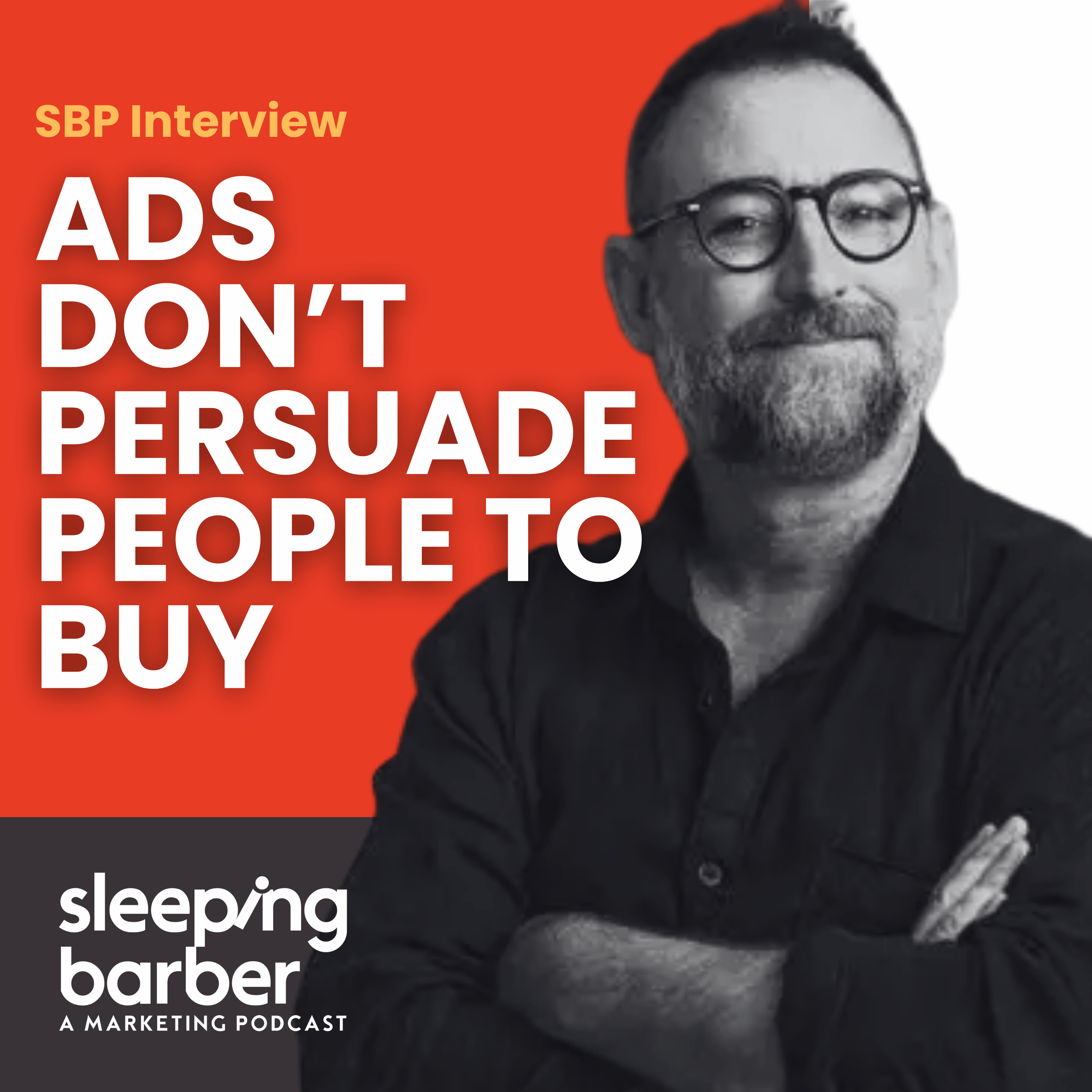
SBP 216: SBP Interview - Ads Don’t Persuade People to Buy. With James Hurman.
4w ago01:06:19Tap to summarizeAdvertising doesn't work by persuading people to buy. It works by creating future demand. James Hurman returns to unpack his new book: why the funnel is the wrong model, how the biggest group of buyers isn't in the market yet, why green dashboards can hide a dying brand, and how to make the case for brand spend to a CFO who only sees this year.There are two types of demand in any market: the small group ready to buy now, and the much larger group who will come in later. Most advertising pours everything into the first group, watches the dashboards turn green, and wonders why the business numbers stay red. James Hurman returns to The Sleeping Barber to explain the fix at the heart of his new book, Future Demand.Marc, V, and James work through the two-part funnel that replaces the old model, the myth that great companies don't advertise, why Volvo's Epic Split kept paying off for a decade, and why ads wear in rather than wear out. They get practical on the boardroom case: share of voice, the five to ten percent rule, and how to reframe brand as future cash flow for a finance team. They close on AI: the book's Pocket Advisor app, and how language models lean on brand signals when they choose what to recommend.Enjoy the show.Show note links:Future Demand (book, ebook, audiobook, Pocket Advisor app, community): https://futuredemand.comFuture Demand community: https://community.futuredemand.comJames Hurman (website): https://www.jameshurman.comTracksuit (brand tracking): https://www.gotracksuit.comThe Creative Effectiveness Ladder (Hurman & Peter Field, WARC / Cannes Lions): https://www.warc.comVolvo Trucks: Epic Split feat. Jean-Claude Van Damme (2013): https://www.youtube.com/watch?v=M7FIvfx5J10Guest Social:LinkedIn: https://www.linkedin.com/in/jameshurman/Substack: https://substack.com/@jameshurmanWebsite: https://www.jameshurman.comBook / app / community: https://futuredemand.comChapters:00:00 - The two types of demand, and why James rewrote the book06:25 - Brand isn't a big-company luxury: the 18-month payoff09:42 - Two types of demand, made visual14:14 - Why the funnel is the wrong model16:03 - The great-companies-don't-advertise myth22:30 - Target tight for now, broad for later26:32 - Volvo's Epic Split and the milk paradox31:35 - Ads wear in, they don't wear out37:21 - Boats and tides: why green dashboards lie43:30 - The boardroom case: share of voice, budgets, and the CFO52:51 - Recessions: cut performance, protect brand56:40 - AI: the Pocket Advisor and how models pick brands
Transcribe →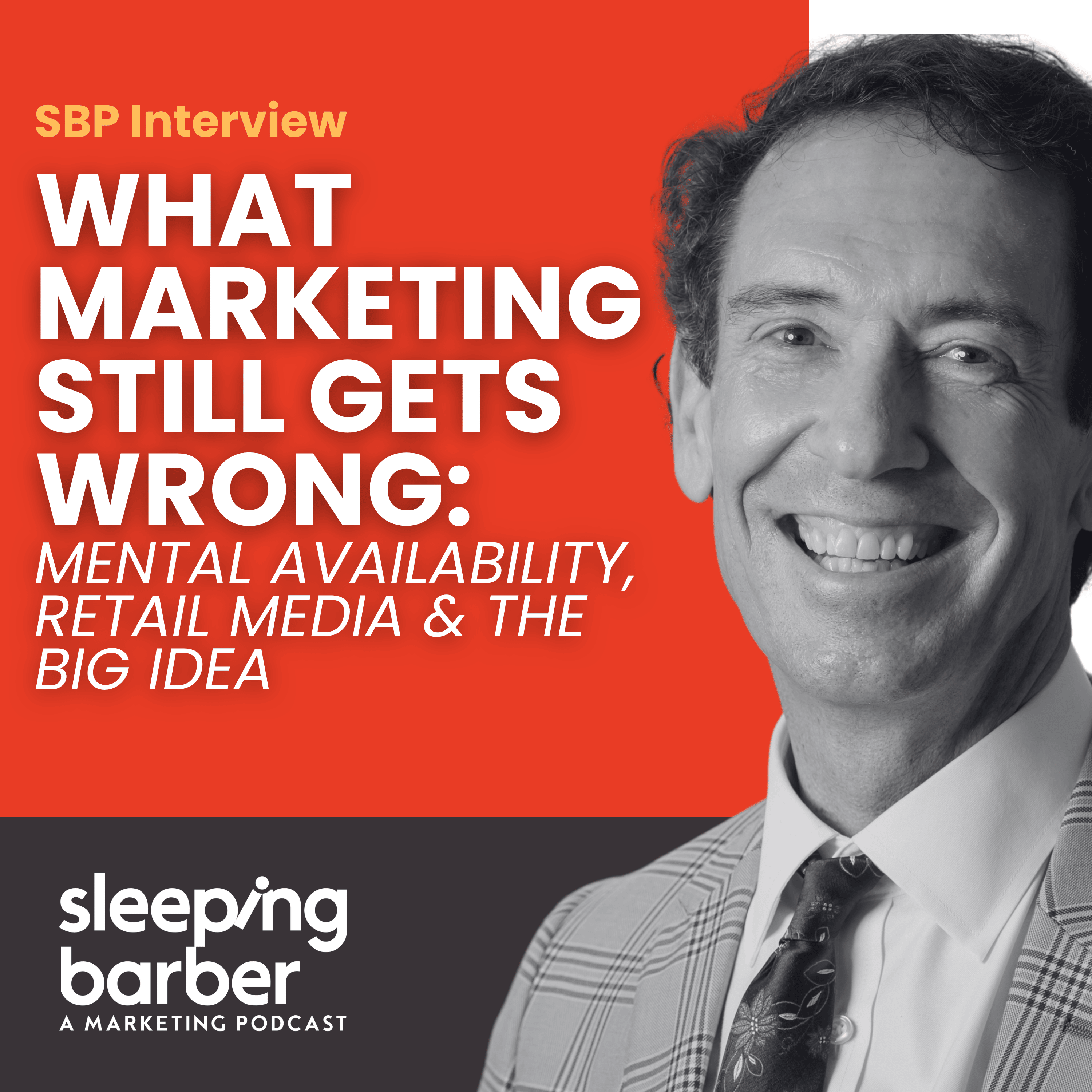
SBP 215: What Marketers Still Get Wrong. With Prof. Byron Sharp.
Jul 200:26:00Tap to summarizeByron Sharp — Professor of Marketing Science, Director of the Ehrenberg-Bass Institute at the University of Adelaide, and author of How Brands Grow — joins us at Cannes fresh off his sold-out Bassey Theatre session with Mark Ritson (a thousand people queued to get in).We dig into the five fundamentals he and Ritson agreed on and, more usefully, where the industry keeps getting them wrong. Byron explains why mental availability is not the same as brand awareness, why “search advertising” was a branding con that confuses purchase availability with memory-building, and why your media metrics are lying to you about reach.Along the way: the retail-media gold rush (sorry, Marriott Media), the AI hype bubble he expects to pop, why Elsa buried every other Disney princess, and the “non-artificial intelligence” agent Ehrenberg-Bass is building to stop corporate AI from breaking marketing’s laws of physics.A masterclass in thinking clearly about what your marketing money is actually supposed to do.Chapters:00:00 - Welcome: Byron Sharp at Cannes, and why impact (not academic prestige) drives Ehrenberg-Bass01:39 - The “two festivals” of Cannes: creativity awards vs. the serious fringe; the sold-out Ritson session04:03 - What’s being sold to marketers on the Croisette — and the retail-media land grab (Marriott Media)05:26 - Fragmentation, monetizing inventory, and why ~80% of this year’s AI vendors will be gone07:02 -The five things Byron agreed with Ritson on10:21 - #1 Mental availability — and the critical mistake of confusing it with awareness12:27 - “You overestimate your reach”: fleeting exposures and inflated media metrics14:19 - Why calling it “search advertising” was a disservice: purchase vs. mental availability15:27 - #2 Distinctive brand assets — why a logo checkbox isn’t enough17:46 - #3 Consistency — everyone agrees, nobody does it18:50 - The “big idea,” category entry points, and the Frozen/Elsa problem21:42 - Inside the How Brands Grow executive program23:46 - “Non-artificial intelligence”: the AI agent Ehrenberg-Bass is building25:20 - WrapLinks:Ehrenberg-Bass Institute: https://marketingscience.info/Professor Byron Sharp: https://www.linkedin.com/in/professorbyronsharp/How Brands Grow Live: https://marketingscience.info/learn-with-us/learning-opportunities/how-brands-grow-live-for-executives
Transcribe →
SBP 214: The Cannes Cut - The Gap Between Knowing and Doing: Day 5 Reflections. Featuring David Tiltman.
Jun 3000:58:32Tap to summarizeAfter five days, dozens of interviews, countless presentations, and conversations with some of marketing's brightest minds, one thing became clear:The future of marketing isn't about more technology. It's about better thinking.Throughout Cannes Lions 2026, we spoke with leaders from System1, WARC, Ehrenberg-Bass, Amazon Ads, Pinterest, and many of the industry's leading creative and effectiveness thinkers.In this final Cannes Cut, we reflect on the biggest themes that emerged throughout the week, including:Why simplicity continues to outperform complexityHow AI is settling into its rightful role as a tool—not a strategyThe growing danger of the efficiency trapWhy creativity remains one of the strongest commercial advantages a brand can buildThe return of long-term thinking, brand building, and strategic disciplineWe also sit down with David Tiltman (WARC) to discuss the Multiplier Effect Playbook, organisational barriers to effectiveness, why strategy is becoming more important than ever, and how marketers can bridge the gap between knowing what works and actually doing it.To close out the series, we head back onto the Croisette for one final edition of The Buzz Cut, featuring conversations with:Aaron Starkman (Rethink)Brendan Christie (Strategy Magazine)Ruxandra Papuc (AIN'T)Presented by System1.If you've enjoyed following our Cannes journey, thank you for joining us throughout the week.Chapters:00:00 - Introduction02:15 - Reflecting on an Incredible Week06:30 - Simplicity Wins11:05 - AI Finds Its Place16:10 - The Efficiency Trap21:45 - Why Brand Experience Matters26:10 - Is This the Best Time to Be a Marketer?30:30 - Interview: David Tiltman52:30 - Final Buzz Cut58:15 - Wrapping Up Cannes
Transcribe →
SBP 213: The Cannes Cut - Dull Ads Are A System, Not A Symptom. With Orlando Wood.
Jun 2600:53:20Tap to summarizeDay 4 on the Croisette, and the Cannes Festival of Creativity is in full swing. The Cannes Cut series is proudly presented by System1.Vanessa Chin, VP Marketing at System1, opens with a live field dispatch: which campaigns are actually scoring at Cannes, what the new Creator Effectiveness Playbook says about briefing for emotional impact, and why Dunkin' took gold while Kit Kat posted one of the highest out-of-home scores System1 has ever recorded.She also tackles the question the industry keeps circling - is AI the creative revolution everyone promised, or just a better production tool?Then the feature interview.Orlando Wood, Chief Creative Officer at System1, argues that dull advertising is structural, not incidental.Media fragmentation, measurement frameworks calibrated for the wrong school of advertising, and rules-based creative thinking all work against artistry before a single brief is written. Drawing on advertising history from Toulouse-Lautrec to Bernbach, and neuroscience from Ian McGilchrist, Orlando maps the war between showmanship and salesmanship - and explains why applying one school's measurement philosophy to the other destroys the work.The episode closes with the Buzz Cut: the sights and sounds from the attendees. Ty Heath from LinkedIn shared her perspective on life inside the B2B Lions jury room, WARC APAC's Rica Facundo on the three ceilings of social, Hannah Riberdhal from Brand Marketing Sweden on what this year's Cannes sounds like compared to four years ago, and two Young Lions competitors fresh off a 24-hour brief.Timestamps0:00 Opening - Vanessa Chin (System1) on Cannes testing, AI, and the Creator Effectiveness Playbook12:23 Feature interview - Orlando Wood on why dull advertising is structural, not a talent problem23:06 Fluent devices, coherence vs consistency, and the living brand33:08 The history of showmanship and salesmanship - and why creators may be bringing artistry back37:11 Measuring creative: why salesmanship measurement destroys showmanship work40:10 Post Pod debrief41:18 Buzz Cut - Ty Heath (LinkedIn B2B Institute), Rica Facundo (WARC APAC), Hannah (Brand Marketing Sweden), Young LionsReferencesSystem1 https://system1group.com/Advertising Principles Explained (course with Sir John Hegarty) https://advertisingprinciplesexplained.com/System1 Creative Dividend Report https://system1group.com/the-creative-dividendSystem1 Creator Effectiveness Playbook https://system1group.com/the-creator-effectiveness-playbookLemon: How the Advertising Brain Turned Sour - Orlando Wood (book) https://system1group.com/lemonThanks for keeping us in your ears, stay sharp everyone.
Transcribe →
SBP 212: The Cannes Cut - Brand Fit Beats Follower Count: Day 3 Reflections
Jun 2500:49:20Tap to summarizeDay three at Cannes Lions revealed something unexpected.Coming into the festival, many predicted AI would dominate every conversation.Instead, another topic has quietly taken centre stage:Creators.Not creator hype. Not influencer marketing. Creator effectiveness.Presented by System1, today's Cannes Cut explores one of the biggest conversations happening across the Croisette. Marc and Vassilis reflect on another packed day at Cannes, including the System1 Stars of the Show event featuring Andrew Tindall, Orlando Wood, Mark Ritson, Les Binet, Adam Morgan and many of the industry's leading thinkers.The featured interview is with Andrew Tindall, Chief Growth Officer at System1, who joins us to discuss the new Creator Effectiveness Playbook, developed in partnership with WPP and TikTok.One insight stood above the rest:Most creator campaigns aren't driving meaningful brand growth. A small "brilliant minority" are responsible for the majority of the impact.The conversation has evolved beyond follower counts and engagement rates. Instead, marketers are asking better questions:Does this creator genuinely fit the brand?How do creators build memory, not just engagement?Why does emotion still outperform optimisation?What role do distinctive brand assets play in creator content?And how do we stop treating creator marketing like a casino?We also bring back another edition of The Buzz Cut, hearing directly from marketers around the world, including Lauren Anderson (Amazon Ads), David Tiltman (WARC), Reno from Nikkei, and Vinnie from Leo São Paulo, sharing what's capturing their attention halfway through Cannes.In this episode:Highlights from System1's Stars of the ShowAndrew Tindall on the Creator Effectiveness PlaybookWhy only a small minority of creator campaigns drive real growthWhy brand fit matters more than follower countPinterest's positioning around quality engagementWhy AI feels more like infrastructure than the headline storyThe latest perspectives from marketers across the CroisetteThe rosé can wait. Our questions can't.Chapters00:00 Introduction03:04 Insights from System1's Baoli Event05:54 The Role of Creators in Sports09:01 Pinterest's Marketing Strategy and Insights11:50 The Current State of Creative Effectiveness14:55 The Importance of Emotion in Advertising18:11 The Evolving Role of Content Creators21:03 Key Findings from the Creator Effectiveness Playbook25:21 The Role of Emotion in Branding29:08 Effective Briefing for Creators30:34 Understanding Distinctive Brand Assets32:17 Leveraging Social Devices in Marketing35:08 Insights from Amazon's Brand Activation38:35 The Evolution of Cannes Lions Festival43:11 Creative Impact and Effectiveness47:13 The Value of Attending Cannes Lions
Transcribe →