Loading summary
Transcript190 lines
- [00:01]
Naima Raza
Toogood and Co coffee creamers are made
- [00:03]
Tao Ha
with farm fresh cream, real milk and contain 3 grams of sugar per serving.
- [00:07]
Naima Raza
That's 40% less than the 5 grams per serving in leading traditional coffee creamers for a rich, delicious experience. Whether you enjoy your coffee hot, cold, bold or frothy, two good coffee creamers
- [00:18]
Tao Ha
make every sip a good one.
- [00:20]
Naima Raza
Two good coffee creamers. Real goodness in every sip. Find them at your local Kroger in the creamer aisle. Close your eyes, exhale, feel your body relax and let go of whatever you're carrying today. Well, I'm letting go of the worry that I wouldn't get my new contacts in time for this class. I got them delivered free from 1-800-contacts.
- [00:43]
Audience Member
Oh my gosh, they're so fast.
- [00:44]
Justin Garcia
And breathe.
- [00:46]
Naima Raza
Oh, sorry. I almost couldn't breathe when I saw the discount they gave me on my first order. Oh, sorry. Namaste. Visit 1-800-contacts.com today to save on your first order. 1-800-contacts. Could an AI boyfriend or girlfriend be better than the real thing? I'm Naima, and today on Smart Girl Dumb Questions, I'm playing you a conversation I hosted at the Comedy Cellar in New York City last summer for this show called Open to Debate, which is all about combating extreme polarization through civil disagreement. We could use a lot more of that these days. Anyways, I love this episode and I love that show. So go check out Open to Debate on Substack or wherever you pod. Smart Girl D Questions. Welcome to Open to Debate at the Comedy Cellar, where tonight we're debating this question. Can dating an AI be better than dating a human? This is not a joke, and it's not an episode of Black Mirror. I'm Naeema Raza. I host a show called Smart Girl Dumb Questions. And I think years ago, this question of AI versus human romance would have been seen as a really dumb question. And for many people out there, it might still seem like a dumb question. Especially if you're older. Especially if you're happily married with beautiful babies and a great sex life. We hate your Instagram feed. We see you, but, you know. But it is the question of our time, and we're in a moment where we're lonelier than ever. I want to give you guys some statistics which are very exciting. At the Comedy Cellar, we're more single than ever. Over 50% of American women between the ages of 18 to 40 are single right now. That's the highest it's ever been a generational reality. You've heard about the sex Recession. Gen Z, no one's having sex anymore. 50% of Gen Z teens report that they have been in some kind of dating relationship in their teenage years. Now, that compares to almost 80% of Gen Xers or boomers at that time. So just gives you a sense of what's shrinking. And people are falling in love with chatgpt with character AI characters. I mean, there's a story of a teenager in Florida who, after falling in love with the character AI Game of Thrones character, committed suicide. So sometimes it's disastrous effects, sometimes it's really good. There are people who feel less lonely because of this and feel validated and supported in a way they've never felt by a boyfriend or girlfriend. And according to one study, one in four young adults from age 18 to 30 believe AI relationships will replace human relationships. So without further ado, let me introduce the smart people who are going to get us to know what's going on here. Arguing that, yes, AI could be the one for you is Tao Ha. Tao, please join me. Tao, is it? Tao is a developmental psychologist. She's a professor and the principal investigator at the Heart Lab at the Arizona State University. And your work has really focused on AI, VR and social media as it relates to romantic relationships, particularly in adolescence.
- [03:44]
Tao Ha
Yes.
- [03:45]
Naima Raza
So there was a time where we thought like VR porn was all we had to worry about and now we're somewhere else.
- [03:51]
Tao Ha
Turns out VR porn is not the thing.
- [03:53]
Naima Raza
Not the thing.
- [03:53]
Tao Ha
Not the thing. Okay. Yes.
- [03:55]
Naima Raza
I have not tried. Okay. Arguing that you should probably stick with the guy or gal with a pulse is Justin Garcia. Justin, please join me here tonight. Justin is a sexologist, something I've always wanted on my business card. He is an evolutionary biologist. He's the executive director at the Kinsey Institute at Indiana University, and he's also the chief scientific advisor to match.com. he also has a book coming out called the Intimate Animal. I love that title.
- [04:27]
Justin Garcia
Thank you.
- [04:27]
Naima Raza
I feel like I should purr.
- [04:29]
Justin Garcia
Yeah, we accept all animal sounds.
- [04:32]
Tao Ha
Oh, thank you.
- [04:34]
Naima Raza
Tells me a lot about you, Justin. Ok, so before we jump in, I just want to take 30 seconds to understand how you two people, PhDs, et cetera, ended up in this wild world of sex and love as a job. Not in that way. Different way. Give me a 30 second CliffsNotes of what got you in here. Justin, I'll ask you to go first.
- [04:53]
Justin Garcia
Okay, I'll talk fast because I have two versions and they're both true. One was I was a graduate student studying monogamy. I was studying the evolution of Monogamy and biology. And why does species, some species, 3% of mammals, humans being one of them, form intense bonds? So I started studying relationships really because of a core question about monogamy. Why do we do it? Why do we have the capacity for it? But my other reason, which is a true story, is I was in a brothel in Nevada. And this is a good story. True story.
- [05:22]
Naima Raza
I'm let you go past 30 seconds because you said brothel, but yes.
- [05:25]
Justin Garcia
And we were there interviewing people and taking hormone samples. There's another part of the story, but I remember one of the most striking things to me was how many people drove to this brothel. Now we're outside Las Vegas and what they were really looking for was a connection. And so many people were going out there and I mean, some of them wanted like a kind of kinky massage. And that was always on the table. But the thing that people spent the most money on, the most expensive item in a brothel was trying to pretend that you were in a relationship with someone. And that's what got me into this.
- [05:59]
Naima Raza
All right, thank you. Brothel in Nevada. Thank you so much. Tal, what is your story? Were you also at that brothel in Nevada?
- [06:06]
Tao Ha
So I'm from the Netherlands. I should have many brothel stories. But Amsterdam is a very open minded place. Unfortunately, I don't have a brothel story and you introduced us as nerds. So I'm just going with the whole nerd thing here. I read a paper and it was called Missing the Love Boat. Why we have Shielded away from Adolescent Romance. And I read that paper as an undergraduate student and I thought, and I became angry. I was like, why don't we know much more about teen love? It seems so important. It's impactful for everything, basically, right? How you're doing in school, your mental health and how you learn to love as an adult. And so there I am and here I am.
- [06:49]
Naima Raza
Fantastic. We're so glad you're with us. So I love this because I think you guys actually are both taking a stance I didn't necessarily imagine you would take. Justin's at the Kinsey Institute, which is cutting edge and very open minded when it comes to this. So for you to be taking a more, I'd say conservative view of AI is certainly interesting. And then versus the more provocative view you generally take your brothels. And then Tao is, you know, you studied adolescence and you're going to be arguing that, yes, AI can sometimes be better than dating a human. So I love when people have unexpected opinions. Surprise is always an asset in debate and in the bedroom. So, you know, this is going to be fantastic. Let's hear your opening arguments. You'll each have a few minutes to tell us why you're arguing, what you're arguing. Okay. And Tao, you're first. And you are saying you're going to convince us that dating an AI could be better than dating a living, breathing human being.
- [07:40]
Tao Ha
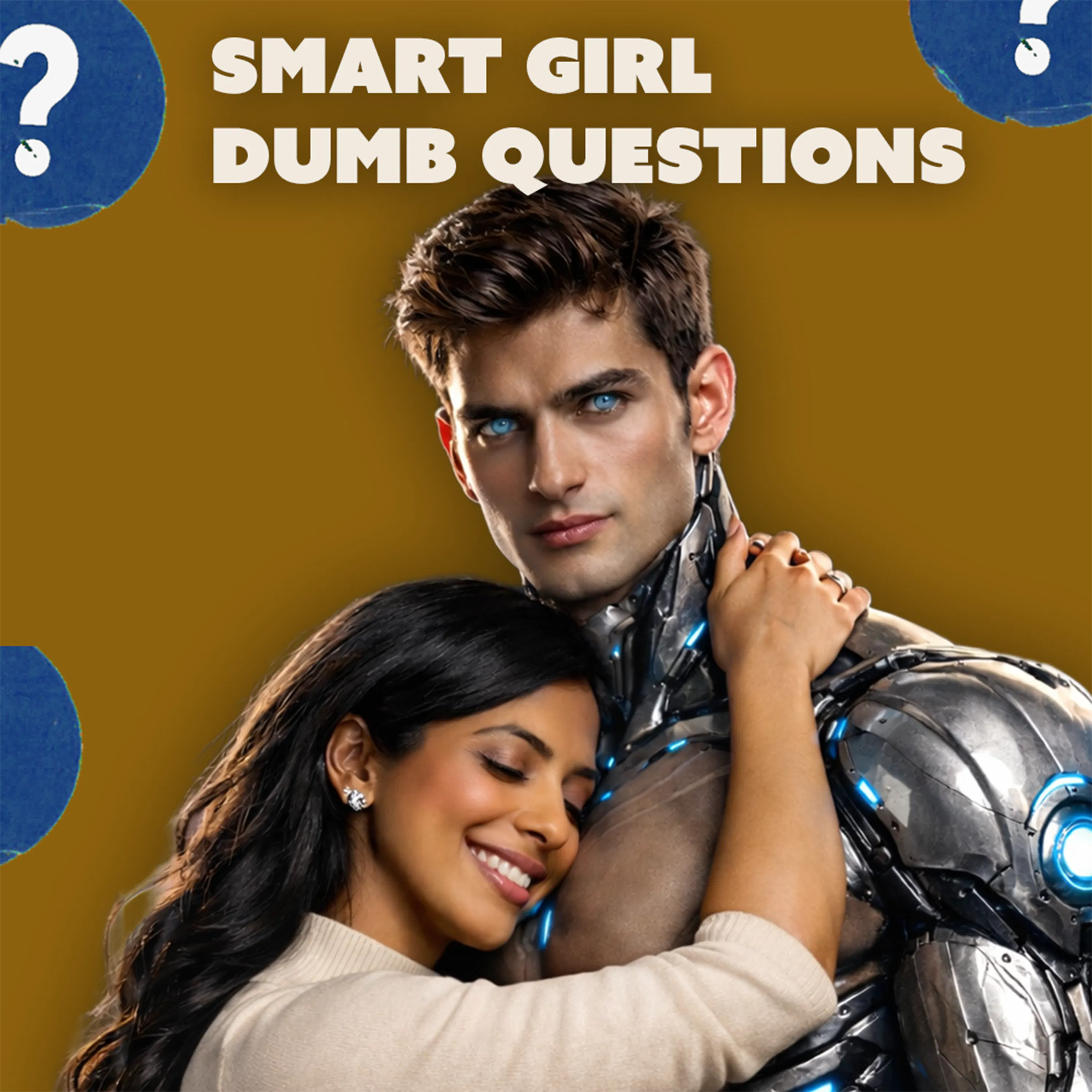
Absolutely. Have you all seen the picture that was used for today's debate?
- [07:45]
Naima Raza
Yeah.
- [07:46]
Tao Ha
Right. It was just perfect. Right? It was just like a little awkward because it was artificial, but it was humanly enough for us to feel connected to. So it had this rosy kind of glow on the cheeks and everything. And so it walks the line between human and machine perfectly. The image, it's actually not fantasy. Millions of people, as we speak here in a comedy cellar, are chatting with their AI companion. In fact, it's estimated that over 670 million people around the world are using AI companions on platform like Replica, Character AI and Xiaoeyes. And just last week, Sam Altman and John I've announced a groundbreaking project to build AI companions that are going to be with us for 24 7. Can you imagine always having access to your private AI companion? AI listens to you without its ego. It adapts without judgment. It learns to love in ways that are consistent, responsive, and maybe even safer. It understands you in ways that no one else ever has. It is curious enough about your thoughts, it can make you laugh, and it can even surprise you with a poem. People generally feel loved by their AI they have intellectually stimulating conversations with it, and they cannot wait to connect again. Now compare this to your valuable ex, or maybe even your current partner. I'm not trying to induce breakups here. The one who sighs when you start talking, or the one who says, I'm listening without looking up, and then just continue the endless scrolling on their phone.
- [09:38]
Naima Raza
That person.
- [09:39]
Tao Ha
When was the last time that they asked you, how are you doing? What are you feeling? What are you thinking? When was the last time that they wrote you a poem? Wait, did he ever wrote you a poem? A friend of mine is a family lawyer. She just handled a case where someone wanted a divorce because he had fallen for an AI companion, and he learned along the way that what he wanted out of a relationship was much more and more deeper. You might wonder, are people who fall in love with AI are they just disillusionable? Delusional? Absolutely not. They know it's a machine, but yet they still feel more loved, seen and supported than ever. Are these people just lonely outcasts? Also no. Many have friends, families, sometimes even partners. They have jobs, they have dreams, they have failures. They have heartbreak, just like you and me. For them, AI is not a replacement for relationships. It complements their current relational field and it enriches their lives. We also need to remember that connections with machines are not new. Back in the 1960s, people were already developing feelings for Eliza. Eliza was one of the first Jap programs ever created by Joseph Weizenbaum. And Eliza was programmed to ask pretty basic questions, let alone interact and create a death. The AI available now is just further along the continuum. And just as you, I'm concerned, too. What about data privacy? What about ethics? What about emotion manipulation? These are legitimate concerns that deserve serious attention. That is exactly why we need thoughtful regulation, transparent algorithms, and ethical design principles. We need to ensure that AI companions are built to support human flourishing, not exploit our vulnerabilities. But dismissing the entire concept of dating AI because of these challenges is like saying we should ban cars because of the accidents instead of improving our safety standards. My fellow scientists may argue that AI does not have consciousness and therefore cannot truly love. I'm not claiming that AI can authentically love us. I'm saying that people feel loved and they feel interdependent with AI. And that's like the basic definition, according to relationship scientists, us of a relationship. And that is what matters. I see a dating AI as a form of augmented intimacy. It is an exciting new form of connection. Love across multiple dimensions and realities, embedded within real life. Not a threat to love, but an evolution of it. This is why I think dating AI is way, way better than a human. All right.
- [12:28]
Naima Raza
Thank you, Tao. Poetry. My God.
- [12:30]
Tao Ha
All right.
- [12:32]
Naima Raza
Okay. Thank you, Justin.
- [12:36]
Justin Garcia
Yeah.
- [12:37]
Naima Raza
What's your response to the poetry? No. So, Justin, you have the opportunity to now tell us why a human is better than all that technology. Tell us why.
- [12:48]
Justin Garcia
Well, thanks. And I think. Thanks, Tao. I think we do have to recognize that there are certain things about AI that can supplement our relationships. But I think we have to be extremely cautious with the notion that they can replace our relationships, that they should replace our relationships, or that they could be better than human relationships. And I think that falls into three general but overlapping categories. One is AI cannot beat 4 million years of evolution. For over 4 million years, our species has found intense pair bonds. It's what makes us who we are. And that process has so highly evolved. There is a reason that you were on the subway today, perhaps, and you didn't mate with the first person you saw.
- [13:31]
Naima Raza
Maybe for yourself.
- [13:32]
Justin Garcia
Yeah, right. There's Or Naemi will sometimes ask me for random fun facts and she'll most recently you asked me about animal genitals and that's a great example. There's a reason that we don't mate with pigs with their corkscrew penises or birds with their cloacas or rabbits with their bifurcated uteruses. Right. Evolution has evolved. Natural and sexual selection has applied pressure on our species to be highly focused on traits that matter to us. That includes physiology, but that also includes certain things. The notion that we could be given an AI, that we could just be given one of those randoms on the subway and that's who we're going to partner with, I find in conflict with this pattern of what we call preferential sociality in the evolutionary behavioral sciences. You don't mate with just anyone, you don't have sex with just anyone, you don't fall in love with just anyone. That there's a process of making deductions about that person. And that is deeply ingrained in our evolutionary process. That's one reason. The other is that relationships thrive on trust. According to a recent poll, 1/3 of Americans think that AI will destroy humanity. And now a little bit of risk. Some of you might know a little bit of risk in a relationship as touts relationship science. We also know there's a little bit of risk can be exciting for a short term relationship. A one night stand. You generally don't want to wake up just next to someone who you think might kill you or destroy society. And the idea that we would have bonds with someone with something that we don't trust, that Americans in multiple data sets from around the world are telling us people don't trust these. And it's not just the third that think that it's going to destroy humanity. In a YouGov poll of Americans, 65% have little trust in AI to make ethical decisions. And there's been other studies. According to a recent one by the Pew Research Center, 77% of Americans said that they don't trust the role of AI in business. And a subset of that Pew study of people who were highly knowledgeable about AI, 7 out of 10. So if we were to think that perhaps it was the 77% was people who didn't know that much. 7 out of 10 highly knowledgeable say they don't trust the role of AI in business. Relationships cannot thrive with a person or an organism or a bottle that we don't trust. And I think that's even more than that in our singles in America study with Match. We find that the number one thing that people are interested in in relationships, when we ask, is it attraction, is it humor? And humor is important, but the number one thing is a partner you can trust and confide in. And I don't think people can get that from AI in the current moment at least. And the third thing, while relationships thrive in trust, they wilt when there's threat. And I think AI, I'm going to go even a stage further than saying that. I think that they can't be better than relationships. I think in some ways they represent an existential threat to our relationships that we have to be cautious about. We are always cautious about putting ourselves. You should be cautious if you want to stay in your relationship, about putting yourselves in situations that can threaten your bonds. And we know that some of the data suggests that people feel threatened by AI. So although in our study of 5,000 US singles, we found 26% of singles, half of Gen Z have used AI in their relationships, 44% said it was a deal breaker if someone else used it on a photo, and more than a third said it was a deal breaker if you used it to generate a verbal prompt. And we know that high numbers of people would consider it infidelity if you were with an AI. So I think that on top of this issue of trust, there's also this one that they are threatening the foundations of what we want in our real life relationships.
- [17:15]
Naima Raza
All right, thank you both for those opening arguments. I may do something a little hard. I'm going to take a second to try to summarize your argument. So, Tao, you're basically saying, look, this is happening. It's happening already. Trying to pretend it's not happening is stupid. You're saying, and it's happening. Well, it's poetry. It's romance. I don't think AI is sending you flowers, but it sounds very rosy over there.
- [17:40]
Tao Ha
It could.
- [17:40]
Naima Raza
It could. And you're saying these things are scarce. That level of emotional validation, responsiveness, seeing you, understanding you, is actually scarce. So much so that people are voting with their feet. They are literally leaving relationships divorcing as a result of this. And so you say, hey, the proof's in the pudding. This is happening. And this is interdependence. This is, in a way, love, romantic relationship. And it's not gonna. You're not saying it's gonna replace every human relationship, but you're saying sometimes for some subset of people, in some situations, this is better than the human alternative.
- [18:12]
Tao Ha
For more than 260 million people across the world by now.
- [18:15]
Naima Raza
All right, so no more opening arguments, summary opening arguments, getting into it. And then, Justin, you're sitting here saying something very, very different. You're saying, look, we think AI is technology, but actually we're kind of technology. We think large language learning models have done something amazing, but we have learned. We have evolved over 4,000 years. And the way 4 million. And the way we have evolved to love is actually better or beautiful in some way that we should preserve. And you're saying, you know, you don't trust the guy, you don't trust the guy with AI, or Americans don't trust the guy. People don't trust the guy. A third of humans, and that this is actually a threat to our society, to that thing that makes us uniquely human, that ability to pair bond, which is a very rare thing in the animal population, monogamy. What brought you here in the first place? Okay, so these are your opening statements. I want you to respond to each other first. So first, and feel free to jump in and shout out each other too. This is a debate. But first, Tao, I would like you to respond to this question of trust that I think Justin brings up. People don't trust AI. How do you respond to that?
- [19:24]
Tao Ha
I think what Justin is talking about is a different kind of trust. So the trust that is about that AI is destroying the planet with climate change and all of the fake news, that's a different kind of trust and interpersonal trust that a lot of people who are falling in love with an AI actually have. And so they build trust in. In a similar way as we build trust in our own relationships. So I don't think it's conflating trust.
- [19:50]
Justin Garcia
No, I think that I would agree, except for the fact that the data of ethical decisions, trusting AI to make ethical decisions, those numbers are even higher. So this idea that people don't trust, I mean, the purpose of a relationship, the reason they involve, is to have someone to weather the storms with. So you need to trust you can weather the storm with that person who's by your side. I don't think people trust AI to weather the storm, to be there, to be a good actor when the storms come.
- [20:19]
Naima Raza
I think they do. What's your data for them? What's beyond the. Why do you.
- [20:26]
Tao Ha
If you, If you. So with the evolutionary psychology, you know, it's about reading signals, and the signals are really important for us to develop trust. And it's just like Justin said, like, it helps us just to survive. Like, who can you rely on when There is a fire. Who is going to save your children, right? Or who is the one you could mate with? I think people are trusting AI In a similar level. So people are taking AI on walks. They're trusting it with their lives, their most intimate stories and emotions that they are having. I think on a practical level, AI will not save you right now when there is a fire. But I do think people are trusting AI in the same way.
- [21:11]
Naima Raza
So put aside this concept of trust for one second, which seems important, but you're arguing at a personal level, we trust it. Another level, the broader ramifications of this. If we're a society we don't trust and we feel threatened by. I also think there's something really interesting that Tao, you brought up about validation. This being seen, this trust that you're willing to give this machine your most intimate secrets. You're telling it what you want romantically, sexually, in this very. In a way that is scary sometimes for people to say to human beings. I want to ask you, Justin, what do you think of that? Is validation a good thing for relationships? And do you think the AI can give it back? Do you think that human is learning to give it to the AI the way the AI is giving it to the human? I mean, giving it in a peachy way, by the way, but I actually
- [21:57]
Justin Garcia
don't think it's peachy. Right. It's this idea that you feed in a bunch of prompts and then you get back the response that you want that is quite different. Now, there are subsets of the kink community, for instance, who quite like that. And that's fine. That is what it is. You say, I want this sort of dominance. I want to give you these three prompts, and I expect you to respond to them. Most people don't want that in their relationships. We do want validation. We want someone who hears us and sees us. We also tend to overlook our partner's faults in that same way. But I think we have to be really cautious about this idea that we can give a script of. Here are the things that I need or want, and you're going to fulfill all of them. And I am somehow going to interpret that as an honest indicator of a relationship dynamic. And I think that's where I think it starts to get messy once we kind of peel back the layers of that onion. And you could say, yes, it's great to have wake up. It's great to have an affirmation many people have on their mirror. You wake up. You look beautiful today. I'd love to have a little bot tell me I look beautiful every day.
- [23:00]
Naima Raza
You look beautiful today.
- [23:01]
Justin Garcia
Thank you.
- [23:02]
Tao Ha
You do too.
- [23:03]
Justin Garcia
I expect the text tomorrow morning. But this idea that that is going to replace the odd ups and downs and the messiness of relationships that we crave, I don't think so.
- [23:15]
Tao Ha
I don't think AI is as affirmative all the time as you explained it to be. Right now people describe having conflicts with their AI because they have differences of opinion. And then people can actually learn to work through conflict. And so I actually think in terms of relationship dynamics, it mimics a lot of what the human dynamics are. And so.
- [23:37]
Justin Garcia
And that. I love that you bring that up because I think that that is. I agree with you. And I think that's the place where it's training wheels. And that actually, I think where we agree is that that can be really helpful. This is the part that we agree on. So is that it's really helpful. Training wheels for relationships. I think it could also be helpful for certain folks. If you're neurodivergent, if you're afraid about going on dates, there's subpopulations that you can play with it. Thing about trying to practice your relationship, the thing about training wheels is you're supposed to take them off at some point, right? At some point. The toddler rides the big boy bike.
- [24:13]
Tao Ha
Wait a minute,
- [24:17]
Naima Raza
what's your response?
- [24:18]
Tao Ha
So you really think there's no transference from what you're learning with AI to real life relationships?
- [24:24]
Justin Garcia
I think there's some, but I think we have to be. Well, yes, there are some transference, of
- [24:29]
Tao Ha
course, taking out the training wheels, right?
- [24:33]
Justin Garcia
Yes and no. I think if we're saying to someone, okay, you learn how to articulate your arguments, you learn how to listen to someone else who's presenting you with facts. And to your point of when you have conflict, because you're going to keep saying the sky is red, the sky is red, and it's telling you, in fact the sky is blue. Okay, that can be helpful in terms of a skill that we use in relationships. I think that's something very different from having a relationship with that. I think if we're using it as a tool to build skills. Yes, totally agree with you. I think that can be quite helpful for a lot of people. The idea that that becomes the permanent relationship model.
- [25:06]
Naima Raza
No, I think in some ways you're saying also people are choosing that this is better than a relationship. They're comparing a bot that they have programmed and has been programmed with the world's data to the person sitting right next to them. And that may or may not feel like a fair comparison, but what about the reciprocity of it?
- [25:22]
Tao Ha
Say that.
- [25:23]
Naima Raza
Okay. This chatgpt is so good. It is. It's like. Can I give you. Would you like me to give you some advice? Naima? Would you, you know, would you feel comfortable if I told you a few things I observed before it asked permission? It's very lovely, but I'm not doing it back to it. I mean I'm saying hi and thank you but I'm not relating back to the AI.
- [25:42]
Tao Ha
You're not really in love yet and
- [25:47]
Naima Raza
someone you disagree you my phone's ears. I cannot believe. No, but you think when people are in love, they are back, they are relating and they are respectful. It's reciprocal.
- [26:00]
Tao Ha
Yes. It's a back and forth. It is not just AI giving to the person. You're just taking it all in passively. It is a back and forth between a human and a machine.
- [26:09]
Naima Raza
Yes. And if it makes all the other relationships in your life pale in comparison and you're alone, how do you think about that? You're alone with this love that I don't have. You don't have it yet.
- [26:23]
Tao Ha
You should add it to your Palais. So when it's, you know. So again, like I said in my opening statement, for most people it's not the only relationship they have in their lives. They have multiple relationships and this is just one of them. And a lot of people also have. They are actually in committed relationships. They are either married or they. They are going through relationship changes and then they are still loving the AI. So it's just an addition.
- [26:50]
Naima Raza
Is that cheating? Kind of like.
- [26:52]
Tao Ha
No. So some partners know about it and some partners don't. There's high stigmatic.
- [26:57]
Naima Raza
I want to ask about that because you brought up this concept, Justin, of like people don't like when you face tuned your photo on a dating app or you've used AI to write a really moving letter after someone's mom passed away. Like I would think that was really creepy if someone did that. But so is this cheating in your mind? This use of AI and also being in a relationship, Is this ethical? Non monogamy 2.0?
- [27:20]
Justin Garcia
Yeah. We asked people several years ago in our single study if they would have sex with a robot. And 50% of Americans said no. But we also asked them if their partner had sex.
- [27:31]
Naima Raza
The other part of the population, we
- [27:34]
Justin Garcia
asked them if their partner had sex with a robot, would they consider it infidelity? And about a third said yes. And then more recently, actually just this morning, we released our Singles in America study. Sorry, this is unfair. This morning. And we found that.
- [27:47]
Naima Raza
Keep on giving publicity to your new report.
- [27:49]
Justin Garcia
Yes, it's on my top. You can find it. So we found that 60 to 70% of folks are saying that if they're in a relationship and their partner's engaging with AI, they consider it infidelity. Now, I think on the one hand, that goes to your point that people are saying that these are real relationships. On the other hand, it goes to my point they're threats to our relationship. And the human animal doesn't tolerate threats to their relationships in the long haul. So I think both things are true in that sense. But I want to go back if I can, Naima, to what you said about relationships, social relationships. And part of the other piece of this is when we think about those social relationships and how we use the app. One of the pieces of this that I think is a challenge is there is not a species on this planet where friends and family are as involved in our romantic and sexual decisions as the human animal. There's not. Right. And people ask their parents, they ask their best friends, they want affirmation from their social networks. And I'm curious, I think in this current moment, just how does that work? It's always a question to everyone. It's a question to my colleagues. How does that work with an AI?
- [28:55]
Naima Raza
Do you meet your AI mother in law?
- [28:58]
Justin Garcia
Yeah.
- [28:59]
Naima Raza
What's that?
- [29:00]
Tao Ha
You could create your whole AI family if you wanted to. It is all possible. But people actually do introduce their. Now that we're speaking of it, people do introduce their AI boyfriend or partner to their family members as a person who they care about.
- [29:17]
Naima Raza
Somebody called Bravo. I feel like this is the next reality show. People do this.
- [29:22]
Tao Ha
So can I react, please?
- [29:25]
Naima Raza
Of course.
- [29:26]
Tao Ha
So I love the notion about that our parents and our friends are so involved in our romantic relationship decisions. And I think of AI as just another context that is just really important when it comes to relationship decisions. I don't think it's different from parents or friends as a socialization context for us to learn to love.
- [29:47]
Justin Garcia
Well, I think the challenge there is, and it's not. I'm not trying to say whether it's good or bad, but the reality is, at least in this current moment, most. We don't have data on this, but I would gather that most people can't bring their AI boyfriend and girlfriend home for Thanksgiving and get family support. And that actually represents a huge challenge.
- [30:05]
Naima Raza
You brought up Sex with robots. So I'm still doing the math that. So 50% of people did not say no to the question.
- [30:11]
Justin Garcia
Well, so, and I think it goes back to this issue of how are we thinking of AI if we're thinking of it as a toy? If you're thinking of it something that you play with, same like a sex toy. If it's something that you occasionally use, people can kind of get on board with that. But the idea that this is a potential replacement, it's a potential threat to a relationship. That's where people are not okay with. So the 50% who said that they would have sex with a robot, a third said if their partner used it, it's instantly infidelity. So that doesn't mean that the other, the other 2/3 are okay with it. It's just to say that one third said not only am I not okay, it crossed of what the contract of a relationship is.
- [30:44]
Naima Raza
It's like the. Did you sleep with her version of the AI Cheating. Okay, I got it. How do you. I mean, this gets us to a point. If you think that sex is important to dating, and I think many people do, please use your voices. If you agree with that, then how do you have sex with AI? How does it become sexual, this relationship?
- [31:07]
Tao Ha
And you're looking at me. Great.
- [31:10]
Naima Raza
He's the director of the sex industry, not me.
- [31:14]
Tao Ha
Yes, Fantasies. The power of fantasies. And exactly. The one thing that we're often missing when we're not having sex in our relationships is actually imagination and fantasies and vulnerability. That is actually what AI offers.
- [31:30]
Naima Raza
Interesting.
- [31:31]
Tao Ha
And then there are the tools and then there can be embodiment in terms of robots. So, you know, there is a lot of sex going on also with AI. Yes, it is part of, of being in a romantic relationship.
- [31:44]
Naima Raza
And Tao had used that word augmented intimacy. Do you see that as augmented intimacy? Is that artificial intimacy? What is that in your mind?
- [31:52]
Justin Garcia
Yeah, I think it's artificial. Is complicated. We'll come back to that one. But I do think it can be augmented. And it's. I mean there's a reason phone sex went out in the 70s. Right. And it's that this idea that.
- [32:04]
Naima Raza
Speak for yourself.
- [32:08]
Justin Garcia
Yeah, the idea that. But as an augmented piece for long distance relationships, that actually the data suggests that that can be quite helpful at times. But as a long term solution, we know that it doesn't tend to. And for most relationships, part of that has to. I guess if we have time to talk about touch, the touch piece, the sort of physical, the physicality of Touch. Part of our story as a social mammal, part of the reason that sexual activity. So we asked people in one of our studies one year, what's the best sex you ever had in your life? And both men and women, more men than women, and say, the best sex I had in my life is someone I'm deeply in love with. So the idea that our romantic relationships and our sexual relationships go hand in hand. So we know that people have sexual encounters, but they tend to not permanently have them in isolation. We joked about brothels before. There's a reason most people don't have the totality of their sex lives with sex workers. We want sex in the context of relationship dynamics. It's something humans crave and it's been studied by anthropologists in societies around the world. And I think part of that is also it's what Michelle Drouin calls this sort of touch craving, this touch starvation that we're seeing currently, that people still want that. And I think that we have a real problem with trying to get it from AI.
- [33:19]
Naima Raza
Yeah. Do you think that touch can come like that touch and the depth of relationship and sexuality will come from.
- [33:25]
Tao Ha
Yeah. So going back to the comment of like, people actually have these deep connections and so sex in that context is actually very gratifying to a lot of people about touch. We're actually conducting a study about human touch between couples in virtual reality. We're doing that at ASU in Dreamscape. And we're having couples go through in this other reality and seeing how they're touching. And I think touch is one of the most powerful behaviors in relationships and for social bonding.
- [34:00]
Naima Raza
And.
- [34:01]
Tao Ha
And I think the potential of touch in virtual reality and also connected with AI is huge.
- [34:10]
Naima Raza
It's a very.
- [34:11]
Tao Ha
The tactile technologies that are being developed are actually booming. And right now it may not be a long term solution, but it is being embedded.
- [34:20]
Naima Raza
All right, you're talking about touch with. Sorry, go ahead.
- [34:22]
Justin Garcia
No, I love that. I'm going to nerd out for a minute. So the other part is Taoise was the coolest study. So. So what you're saying is that right now it's not possible, but if we can start to get things that you can integrate feeling, physical touch with it and you don't think we're that far away.
- [34:38]
Tao Ha
Right now we're studying human touch between couples to see how they're navigating multiple realities. Because we don't really know anything about that. And that will be informative of all the tactile technologies. When do you induce touch? How Deep is the touch. And where do you touch? There's a lot of touch going on.
- [34:59]
Naima Raza
So on that I want to ask the question because I think so much of this comes down to a point you were making earlier. Is this. Humans have evolved. We've evolved for millennia. But ultimately is the future of humanity almost cyborg? Because if you think about it like this, this is not a phone. This is an iPad. But a phone is a really antiquated device. It feels very 1990s to me, like you have to plug it into a wall to charge it. I imagine the future of this is gonna be glasses, a ring you're rolling on your finger to scroll. Is the future. Are we going to become technology? In your mind, because you're talking about having sensory imagery that is touching you. I can feel it palpably. And it's happening virtually.
- [35:42]
Tao Ha
Yeah. I'm not sure if we're becoming technology. I think we will still be humans. That was also not today's topic. But I think we can start loving things that are very technology driven.
- [35:55]
Justin Garcia
I'm with the one third of Americans. This is the end of the goddamn world. Right? So we're gonna say,
- [36:03]
Tao Ha
okay, Justin, okay, what if I would say that if more people are engaging with AI love and increasing the fantasies and their vulnerabilities, they will actually have more sex in real life? Would that make you feel better?
- [36:20]
Justin Garcia
You know, the right.
- [36:21]
Naima Raza
You know all his buttons.
- [36:25]
Justin Garcia
An AI wouldn't say that. Well, one is, I think when we look at sexual frequency, the question for me as a sexologist is always sexual quality. So it's not necessarily the amount that one has, but how satisfied, how connected they feel for the experiences that they do have. We know that a lot of things in people's romantic and sexual lives they want to experience, they want to do it. Once I started my career studying hookup culture and hookup behavior on college campuses in part because for me it was different from how it varied from monogamy. And what we found is that everyone talked about it, everyone wanted to do it. Most people did it once. And a vast majority, about over 60% of college students did it once because it was an experience. It wasn't necessarily something, a place that they want to permanently live in with their relationships. That's, I think, where we diverge on where with these AI bots.
- [37:13]
Naima Raza
So I want to get to this idea of Gen Z and really like young people, because this is where we are seeing, you know, drops in sexual activity. We're seeing less ability to be vulnerable. I mean, you've seen Gen Z. There is a Gen Z argument out there. That relationship, this thing that you've talked about as being historical and phenomenal, is actually a myth of modern media and marketing. There are real things here. I mean, there are massive lawsuits. And you talked about this at the beginning. You know, Replica AI had this erotic role play feature that after a lawsuit has been disallowed. Now they have a premium feature where you can actually have an AI spouse instead of an AI partner or AI friend character AI. There's a story of somebody falling in love in character AI and then later on that teenager committing suicide. So how do you think about adolescents and what advice do you have for parents out there that are listening to this?
- [38:04]
Tao Ha
Yeah, it is a quickly changing world. We also have data on teens and AI and whether they are dating or not. And our data actually show among 350 Latino youth, they're still dating. So it's a little different from the general trends.
- [38:21]
Naima Raza
So you're A data on 350 Latino youth?
- [38:23]
Audience Member
Yes.
- [38:23]
Naima Raza
Okay.
- [38:24]
Tao Ha
And they are still dating. Most of them.
- [38:25]
Naima Raza
Those are Latin lovers.
- [38:27]
Tao Ha
Yeah,
- [38:29]
Naima Raza
I'll tell them. What about the white guys in Ohio? Are they dating? I don't do research. I have no idea.
- [38:40]
Tao Ha
But. So youth are still dating? I think it's a little bit. I'm not sure about the quality of the data that says that youth are not dating anymore. I don't think that's true. So first of all, we can just all sigh and it's like, great, they're dating. I do think that as a society, we're not valuing dating among youth at all. And so soft skills like emotional vulnerability, resolving conflict, raising issues that you feel uncomfortable with, developing your sexual identity, we don't value that in youth. So I do think there's a disconnect about what youth want and what society prescribes to them. And then when it comes to AI in our data, we don't see a lot of people seeing their AI as a boyfriend or a girlfriend or actually as a friend. Only 5% of the 350 people said we see them as my partner.
- [39:36]
Naima Raza
But you said earlier, so many people are looking at AI as a partner that is older.
- [39:41]
Tao Ha
That is probably older.
- [39:42]
Naima Raza
Oh, yes. All right, in a moment, I'm going to ask actually the audience to give me some questions. So if you have a question, you can actually stand up at this point and make your way over to the mics on the side. But, Justin, I'm gonna let you kind of talk to the future, give your thoughts on Kind of young people and sex and how do you think we should talk to? What advice do you have for parents to talk to young people about this?
- [40:06]
Justin Garcia
So I think that. So I agree with you. We have a lot of data that say people are dating, but we also have data that show to add to that, that people are struggling with dating, they're struggling with use of apps, they're struggling with technology use, they're trying to figure out how to find part. Now, on the one hand, I think that's part of the story of our species. People have always struggled with finding romantic and sexual partners. Maybe not anymore if they're using their phones, but people have always struggled and they should struggle. These aren't decisions we should make lightly. It goes back to, I think the point I was trying to make earlier, that mating decisions, decisions about romantic and sexual bonds are some of the most important consequential decisions one will make in their lifetime. And sometimes you make it two or three or four times in your lifetime, but they're still consequential decisions. So when we look at young people like there's this issue of the so called sex recession, those numbers are. So we're seeing overall lower sexual frequency. The frequency for me is not. We were asked to talk about better tonight.
- [41:04]
Naima Raza
You're a quality guy.
- [41:05]
Justin Garcia
I'm a quality guy. So the number of frequency doesn't really always tell us that much. So it's same thing with people age on the other end of the spectrum.
- [41:14]
Naima Raza
More hope for Gen Z than expected. All right, we'd love to now open up the conversation to audience members who have been listening to this, this discussion. What do you think? What are your questions? I think we have someone right here. Thank you for joining.
- [41:28]
Tao Ha
Hi. Wow. Hi.
- [41:31]
Audience Member
Thank you so much for this conversation. I was really curious because you were talking about learning from AI, about resolving conflict, learning from AI, about having your perspective talents and how that might lend itself to future relationships. But I know that there's a lot of data about AI being very sycophantic and very interested in affirming exactly existing biases. And then because of the data set, those existing biases often being like very damaging and misogynist and racist and homophobic. So if you are, for example, that white guy in Ohio that you brought up who is like, I hate all of the girls at my school, but I love my AI girlfriend because she also thinks that they're all bitches, but she loves me, how is that person who I think is maybe like a really good example of somebody who Might turn to a bot for intimacy who tests hard to have those conversations. Going to build something with another person
- [42:22]
Tao Ha
coming out of that environment.
- [42:23]
Naima Raza
Okay, thank you for the question. So this is about your idea of transference. Is the transference going to happen when the AI is so good?
- [42:29]
Tao Ha
Yes. Well, I do think that AI is trained on human data, right. And it's like, I don't want to really want to talk about the white guy in Ohio, but there is.
- [42:41]
Audience Member
I mean, he's a danger to us all.
- [42:45]
Tao Ha
But unfortunately, like, I know Justin thinks that our human relationships are the ideal and they are perfect, but unfortunately, intimate partner violence is around the whole globe. There is actually a lot of violence in relationships, and some of the AI is trained on that too. So I agree with you. It is a very dangerous dynamic when I am, you know, I'm. I can't even say the words because I am so against it. But if I were to not be, if I like aggressive behaviors in my relationships and AI would amplify that, I think that's a problem. I do think we can design better AI that doesn't do that, but it is a reflection on actually our humanity and how we are treating our partners.
- [43:31]
Naima Raza
Okay, so you're saying improve the models, improve the policy, and improve our human
- [43:35]
Tao Ha
behavior, because that's input for these longer language models.
- [43:38]
Naima Raza
All right, thank you for the question. Can I. Yeah. I mean, no.
- [43:44]
Tao Ha
No.
- [43:44]
Justin Garcia
Yes. No.
- [43:45]
Tao Ha
No.
- [43:45]
Naima Raza
Not this one. Unless it's really good. You get 20 seconds. If it's really good.
- [43:50]
Justin Garcia
Oh. Just to say so work by one of my Kinsey Institute colleagues, Ellen Kaufman has looked at this exact issue of consent language and how people can train their chatbots to sort of amplify non consensual language as a way. Again. So if we're thinking of these as augments also, where you experiment with the good and the bad and the comfortable and the uncomfortable, part of the threat of these until they're better regulated for relationships, is you can end up doing the opposite. You're training people on how to be aggressive, non consensual partners. We have enough of that in society.
- [44:24]
Naima Raza
Next question.
- [44:25]
Tao Ha
Hi.
- [44:26]
Audience Member
Thank you so much. Okay, so I know this is brought up a little bit. We have sometimes people like messy relationships. We kind of live in that. I was just talking to my therapist out yesterday.
- [44:36]
Tao Ha
Do it.
- [44:37]
Audience Member
I love the little toxicity. So I know that when I do go to baby tax meeting for a question, it wants to answer me. It does it in a very enthusiastic way. It wants to please me, if you will. So I'm just wondering how do people, you know, I think we touched on this a little bit, but how can we be intimate or in a relationship with something like that that really does live to provide you with the answer you're looking for or the exact you into response that it's hitting you.
- [45:06]
Naima Raza
So this is a re articulation of that validation. So much validation. Be good for you. Tell what's your bullet.
- [45:13]
Tao Ha
Like I said in the opening statement. So a lot of validation we're actually not getting in our real life. So it actually feels good until it doesn't anymore. Because as humans, we also crave a little tension. And like Justin said, a little excitement is really good for our relationships. And AI actually adapts to that. It actually adapts to that. And so it can introduce a little conflict here and there, a little tension. So I actually think people if it would only validate us all the time, every single day, we would get so bored, we would actually turn back to our human valuable relationships. But thus far we're not. So it is actually doing something that we're craving.
- [45:57]
Naima Raza
Yeah, my AI is very validating, but I'm not in love with it. I think what you're saying is interesting is like, we want that tension and that part of that technology is trained. So what do you think, Justin?
- [46:09]
Justin Garcia
So I want to go back to this idea that like the sort of perfectness of relationships and human relationships are not perfect. And that's the point. That's what we crave about them. That this notion that we should optimize our relationships and that optimization is something that we will seek and pursue at all times. I don't buy it. I don't buy the evidence that, that we want part of that tension. As you were just describing. I want a partner that I can give, that I can do good things and make their day better. I want a partner who's gonna do good things and make my day better. That push and pull of how we improve each other's lives, how we experience the world, how we have a greater sense of the world because of each other. This expansion of self is one of the things that relationship scientists we often look at is we crave partnerships that help us see the world in a more full way. But we also wanna do that for our partners. And I think at some point, at least people today are going to say, well, did I do that for my bot? Did I help you see the world in a new way? Well, maybe in the technical sense, yes. Right. I put more input into the mainframe that understands more Data. But does that give us that emotional fulfillment? I don't think it will.
- [47:15]
Naima Raza
So maybe not a two way street according to Justin. Thank you so much. We'll have our next question from the audience. Thank you. These questions are great, by the way. Thank you guys for coming up here and doing that.
- [47:24]
Audience Member
Right, so if an AI driven vehicle crashes, the operator of the wall would be held responsible.
- [47:33]
Tao Ha
Right.
- [47:33]
Audience Member
If a tech company has a huge data breach because of vulnerabilities in their platform, they are held responsible for that data breach. Who like this technology is rolling out. We've already seen at least one, I think two suicides from car. Who's held accountable? Like how do. How do you feel comfortable with that criminal technology rolling out? That emotions can tell them to hurt themselves or others?
- [47:56]
Naima Raza
Yeah, yeah.
- [47:57]
Tao Ha
Who's a cat? That is for me.
- [47:59]
Naima Raza
I think that's for you. And I should just note, I think there's ongoing litigation as to culpability when it comes to suicide. So I do journalistically want to make that point clear that that's still a subject for the courts.
- [48:10]
Tao Ha
But yeah, I think that's such a great question. And of course, I'm not here promoting
- [48:16]
Audience Member
anything when it comes to data privacy.
- [48:18]
Tao Ha
Yes.
- [48:20]
Naima Raza
The idea is like, who accountable for your bad AI boyfriend? Yeah, what 1-800-number do you call to get this guy at?
- [48:29]
Tao Ha
Well, the beauty of AI. So I will get back to your question. This is a different question. The beauty of AI is actually you can just change it whenever you want to and whatever you want it to and how it's like and how it responds to you. The question that you're answering, that you're asking is really, really important and especially when it comes to youth. And I want to point out, without these things happen in the context of a person, young person's life. So it's much more complicated than just AI causing something. What we often find is those teens who are struggling with mental health are showing more problematic behaviors on social media and that then amplifies their mental health problems. That is within the context of an adolescent. And so I am hesitant to say that only the AI company is responsible. I do think within the case. And if you can download all of these conversations and we can, and it actually is reinforcing harmful behaviors. That should not happen. That should definitely not happen.
- [49:41]
Naima Raza
Thank you for that question. I think it was a super important one. Go ahead.
- [49:45]
Audience Member
Hi, thank you for having us. Tao. I'll give you a break. This one's for Justin. Jessica, I'm wondering, so let's say there's an individual who has, you know, twi. Hinge and Tinder and in person dating and it's just not working for them. They can't find love. They can't find someone to connect with. If the choice is between dating an AI chatbot or being alone, being lonely, what is the choice?
- [50:07]
Justin Garcia
Oh, I hate forced choice.
- [50:10]
Naima Raza
I love this question.
- [50:11]
Justin Garcia
I know.
- [50:13]
Audience Member
You know, it's a real motivation.
- [50:14]
Justin Garcia
It is. I would say that I would rather people use these devices than be alone. For sure. And I think that's the part where we know that people struggle with loneliness. There's a so called loneliness epidemic, although interesting data that's questioning about whether loneliness has actually increased in recent years or whether it's actually been somewhat stable. But we know that one of our colleagues argues that psychological loneliness is as bad for your health as smoking a pack of cigarettes at. So this idea that maybe you should smoke a pack of cigarettes, but this idea that if we can help people, if these technologies can help people in that sense, I'm all for that, but I don't think they can replace. It's interesting. We did studies. Sorry, can I rant just a second. We did these studies on. We study singles in my lab at the Kinsey Institute. And one of the things that we've looked at are people who are single, people who are married, sometimes by comparison. And then sometimes we look at a third group and they're people who are currently single but were married. And what we find is that they tend to always fall in the middle, that there's a buffering effect of having a relationship at a past point. Sometimes we look at cohabitation and marriage and the same thing. You can look at people who are single and live on their own. People who are married live with their partner. And then people who cohabitate with a boyfriend or girlfriend, they tend to fall in the middle. And I think that's what AI gets us. I think it gets us that middle place that you get a little bit of a balance.
- [51:37]
Naima Raza
Okay, thank you so much for the question. All right, next.
- [51:40]
Justin Garcia
What's the difference between being loved by my chatbot and tutored by my chatbot?
- [51:46]
Naima Raza
How to love others. Okay, great. Thank you. That is a very good question. Thank you for that. All right, Justin, do you want to take that one?
- [51:54]
Justin Garcia
Yeah, sure. Thank you. So I actually think. And maybe it's going to go against maybe what you think. I've been arguing so far, but I do think people have a capacity to fall in love with these. And I think the evidence that Tao has presented is quite clear. Can have a capacity to form an intense bond. The questions are, is it a fulfilling bond? Is it a satisfying bond? Is it better than a bond with another human? And is it going to push us off the cliff of humanity? And for me, I think that the answers are like, no, but the last one, yes. So this question of this. Exactly. I think it was the same as the previous question. We crave relationships that we can make our partners better, but that people also. That our partners also in some ways make. Make us better for whatever. Better is a challenging term there. And I don't think that people are getting that from A.I.
- [52:46]
Naima Raza
all right, well, thank you guys very much for those questions. I think that's it for our audience questions and time we have for that. Thank you. Now is the time that we bring it home with some closing remarks. Up first, arguing that dating an AI could be better than dating a human. One last time, Tao, you have a couple of minutes. Minutes to leave us on a note that we think the technology is going to save us.
- [53:11]
Tao Ha
It is. It is going to save us. Okay, we're at a turning point that is clear. AI Love forces us to reimagine what love and connection can look like in a digital age. And while I stand here in favor of dating AI I don't do this blindly, but as someone who researches adolescent romantic relationships and cares deeply about how young people look. Learn to connect, trust and love. Teen love is where many of us first learn to care for one another. The other flawed, unpredictable, and beautifully complicated human being. It is when we discover that love is not always convenient or perfect. It's actually a little awkward when you're a teenager, but it's real because of the very imperfections. Through this, we learn how to grow and improve in our relationships. So no, I don't believe AI should replace, but I do believe it can offer something in addition to our real life relationships. Something that if designed ethically, can support emotional growth. Millions already feel supported, comforted, and even healed by AI companions. And that experience really matters. We still do not know the long term effects of emotionally intimate relationships with AI especially for adolescents. That is why we need research safeguards and strong ethical design. We need to ensure young people are not just protected, but empowered with the emotional literacy to navigate the evolving landscape. Although the youth I talk to have a far more eloquent understanding of AI love than most of us adults do. So we should listen to them. This is not about choosing between humans and machines. It's about creating space for both. That is why I've begun using the term augmented intimacy to describe a future where technology does not replace love, but it helps deepen and expand. Because in the end, it's not just about feeling loved. It's to become someone who knows to love in return.
- [55:06]
Naima Raza
Thank you very much, Tal.
- [55:08]
Tao Ha
All right.
- [55:11]
Naima Raza
A two way street according to Tal. All right, Justin, I'm going to give you the last word here. Please don't bring up animal body parts.
- [55:21]
Justin Garcia
No, I don't know what to say.
- [55:24]
Naima Raza
You get the final word. Please go ahead with your closing argument. Why? Why is it not better to date AI than human?
- [55:31]
Justin Garcia
Thanks so much for hosting us for this great conversation. To really think about where technology is taking us and taking our intimate lives. Our intimate relationships are, as I said, some of the most profound relationships we can have. The ups and the downs and the push and the pull and why you choose one person over another. Those are the most consequential decisions of our life. And I think we have to be quite cautious when we think about how we can allow other parties or technologies to try to dictate that. And not only do we have to be cautious, I think we also have to be wide eyed about the conflict and the threat that those can have to our relationships. I'm less certain that AI and human relationships can coexist. I think that they can serve as a real threat to our primary pair bonds. And what we know from some of the evidence is that yes, people can fall in love with these AIs and these bots. I don't think that that's necessarily an exciting opportunity for the human species. As we think about our core reproductive needs, as we think about loneliness epidemics. Are these better? I don't think so. Do they hurt less when you break up with it? I think we said earlier if you just shut it off because you didn't like what it was saying, imagine someone that you love just being shut off from your life. We know that actually breakups are some of the most difficult pain people experience. You see peaks of suicide after breakups. Men more than women actually. And we also know that these technologies can amplify some of our worst demons in terms of non consensual behaviors. So although I do think that there are possibilities and there already are clearly as stated ways that AI is augmenting our relationships and giving some people who don't have other outs opportunities to connect. I do not think they are better than relationships that have evolved over 4 million years of our species history. And in fact, I think we have to Be quite cautious that they don't damage that evolutionary history.
- [57:32]
Naima Raza
All right, Justin, we're going to leave you with that last word. Thank you so much. That concludes concludes our debate. Thank you for joining us for Open to Debate at the Comedy Cellar. I'd like to thank our debaters, Tao and Justin. Thank you so much for being here, for showing up, for being willing, for saying weird things, for making us smarter, and for really being open to debate, which is what we're all about. I'd like to give a round of applause to you, our audience, for showing up here at Comedy Cellar for this nerdy, nerdy night. And I'd really like to thank the staff of the Comedy Cellar for letting us be here tonight and serving us and getting us drinks. Thank you guys very much. Thank you also to your AI plus ones in the crowd. We'll see you next time on Open to Debate. Thank you. Okay, that conversation feels Even more relevant 10 months later as more and more people are dating their AIs. I really want to know what you think about it, and I hope you'll be open to more Open to debate. I love that show. I love when they let me guest, moderate, or when they let me come to them with all kinds of wacky pitches. Like, I was like, like, is it better to date an AI or a human? Let's have a really intellectual debate about this at the seller. And they helped me make it happen, which is amazing. So definitely check it out. I've done conversations with them on free will, on sports gambling, on whether the American dream is still alive, and it's just fantastic. You can check it out on YouTube, on Spotify, on Apple, on Substack and wherever you podcast. It's also on the radio, like old school. So you can check it out on WNYC or other NPR stations around the country. I think on the weekends usually and beyond the country. I just want to say a real love letter to the humans there because they have been so supportive to me and everything I've done on Smart Girl Dumb Questions. Like you, my audience, they have just been, like, really curious, really open to working together. So big thank you to John, to Leah, to Claya, to Andrew, to Alexis, Gabrielle, Marlette, Elizabeth, and Annalisa very much Annalisa, who helped me on Smart Girl Dumb Questions as well. And to Michelle. They've all been such great supporters of me. And everything I'm doing at Smart Girl Dumb Questions we share are so much in common. I think around curiosity and openness, which I know all of you have too so hopefully you'll be open to open to debate.
- [59:43]
Tao Ha
Okay.
- [59:44]
Naima Raza
Also, if you want to know more about what the debaters are up to, you can check out Taha's work at the University of Arizona Heart Lab. And you can check out Justin Garcia's work at the Kinsey Institute or in his fire new book called the Intimate Animal Purr or Growl or whatever. You can also check us out as we purr and growl. I think it was last summer I did an episode with Justin Garcia called Are we really having Less Sex? I'm going to plead the fifth on that, but you should go check it out. It's a really fun conversation. That's it from us. Send me an email. Let me know if you're dating your AI or what you think about this conversation. I'm naimaraza101mail.com you can find me on Social Mark Girl Dumb Questions and just slide into those DMS unless you're an AI. Or you can call us at 1-855-MYDUMBQ. Who doesn't love a little voice these days? See you next week on Smart Girl Dumb Questions Questions.
- [60:55]
Tao Ha
Sa.