Loading summary
Transcript208 lines
- [00:00]
A
This is like a smuggling operation. We have Francisco in, like, a friend of mine's office in Culver City. We have Joanna with her crib in the background.
- [00:08]
B
Oh, yeah, I had a baby. And now we're all collectively living through a mental health crisis.
- [00:15]
A
We don't know where Mariana is.
- [00:17]
C
Naima's, like, in some chalet in Davos, by the way.
- [00:20]
A
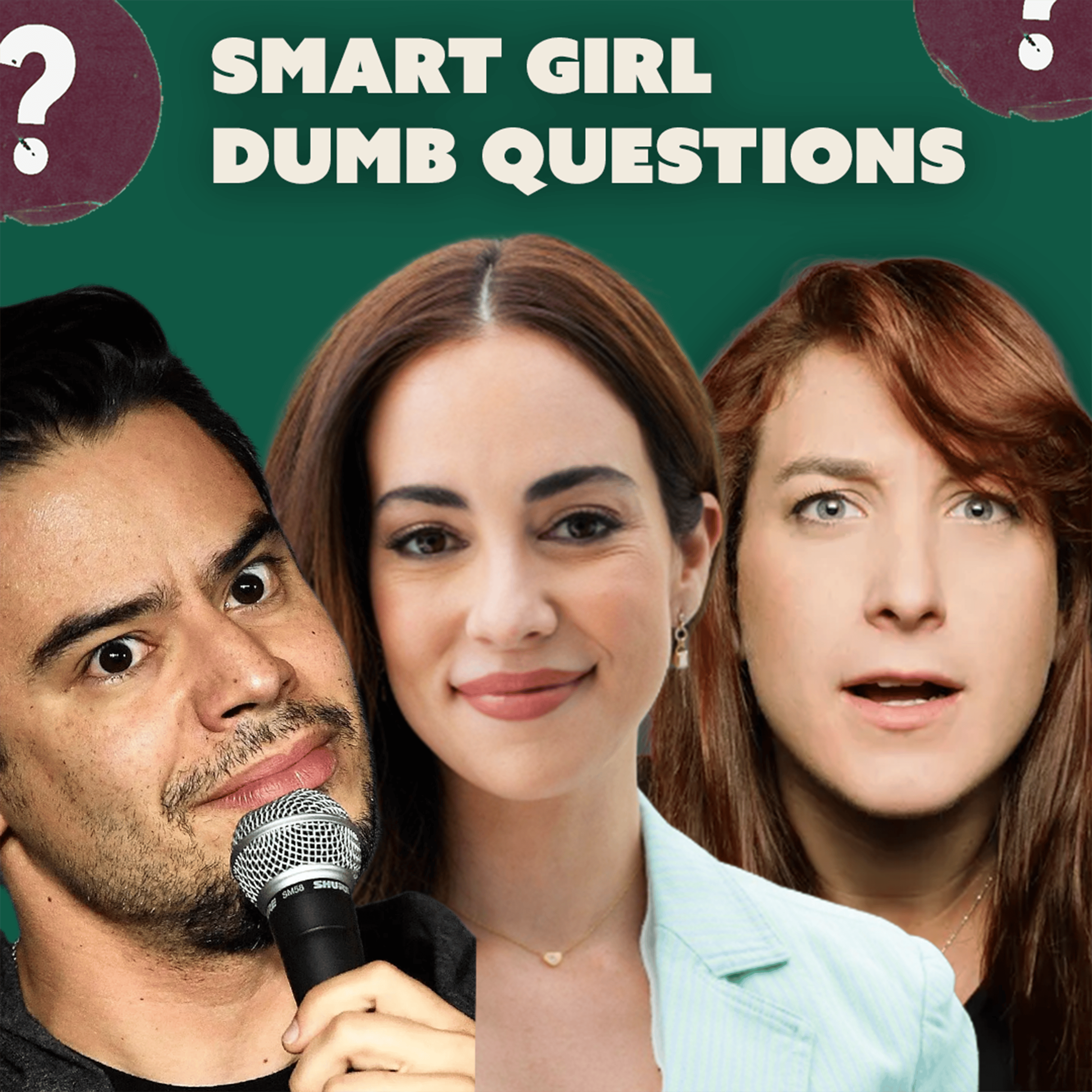
Just not yet. Tomorrow, just, you know, just going to meet my boyfriend, Mohammed bin Salman. Don't worry. Smart Girl, Dumb Questions. It's been a couple of weeks since the US Took over Venezuela or liberated it, or started running it, or started seeking to drill oil there. I'm Naima Raza, host of Smart Girl, Dumb Questions. And joining me today are three of my favorite Venezuelan Americans to help make sense of this moment. Author and journalist Mariana Atencio, comedian and TV writer Joanna Hausman, and stand up comedian and actor Francisco Ramos. Welcome, guys.
- [00:52]
B
Thank you. What other Venezuelan Americans are your, like, fourth and fifth favorite? Just out of curiosity?
- [00:59]
D
I know that's what I want to know.
- [01:01]
A
What inspired this conversation is that I wanted to have, like, a dumb question dinner party and didn't want to serve you guys food to understand how Venezuelan Americans are negotiating the nuance of this moment and trying to make sense of what this means for Venezuela, how this is seen in the prism of America, and really hear from you guys.
- [01:19]
B
Okay? Wow. Not a lofty undertaking.
- [01:22]
D
Wow. A lot of pressure. Not even in some arepas to.
- [01:25]
C
Not even a glass of wine. Naima. How dare you.
- [01:28]
A
Everyone has done it after. So I want to start with each of you for three words. And one, I want you to tell me how you felt a month ago about the state of things in Venezuela. Then I want you to tell me how you felt on January 3rd when you learned the news of Maduro's capture. And then how you feel right now. Joanna.
- [01:44]
B
How I felt a month ago. I. I truly did feel hopeless. How I felt during Maduro's capture, I think I felt. And I'm gonna. I'm sorry. I know that it's. It has to be one word, but I'm gonna. I'm gonna cheat. I'm gonna say, like, cautiously optimistic. And how I feel now is anxious. Really, really, really anxious. I haven't slept in nights. My therapist gets texts from me every 30 minutes, so that's where I'm at.
- [02:17]
A
I hope she's not charging you by the text, the room I'm at, but I appreciate that. And I want to unpack what's happening and where that anxiety is Coming from maybe. Mariana, tell us your 3.
- [02:31]
C
A month ago, I felt impatient because of this whole Caribbean buildup. And it's like, what is it leading to? On January 3rd, I felt vindicated, and now I feel nervous, especially for the people down there.
- [02:52]
A
Yeah, okay, Francisco.
- [02:56]
D
Yeah. A month ago, I felt nothing because nothing ever happens. So I felt like I was like, well, it's the same talk, and nothing happens. January 3rd, I felt happy and scared, you know, like that meme of like, huh, huh? Like, what's going? Like, oh, this is good. But, like, what's happening? And now it's. Yeah, it's a mixture of anxiousness and nervousness and just like, what's gonna happen? Something changed, but a lot of things need to change in order to have the venison that we want.
- [03:25]
A
I think a lot of people look at this moment. This was certainly like the Daily show portrayal of it. It's like when you say words like cautiously optimistic or the meme of or vindicated, it the question, of course, becomes, have any of you seen a movie called Iraq 2003 and do you want to be the sequel? How do you respond to that?
- [03:43]
B
Well, I mean, I think that comparing Venezuela to Iraq is very simplistic and not accurate, in my opinion. I mean, I would hope that maybe the comparison might be more leaning towards Panama and when Noriega was captured, and that's what we hope it will be like. But I also feel. And what I've been feeling for a while, Venezuela is this sort of overarching and very predominant form of. And hold on for a second with me, but like, imperialism. And by imperialism, I mean, like, narrative imperialism, which is very different than the imperialism that people love to, like, sling around on the Twitters and stuff. It's a. It's a narrative imperialism where I feel like people are unable to see countries without the scope of us, of the US Involvement, US History. And it's exhausting as a Venezuelan, because it doesn't take into account the nuances of our history, of our politics. And it's actually, I think, been the most frustrating element of the past few days.
- [04:48]
A
I think that will resonate for a lot of people listening. And the imperialism of. Here's what you should feel, here's what you should think. Why don't you feel this way?
- [04:55]
B
Right?
- [04:55]
A
Are you guys getting a lot of that or feeling a lot of that?
- [04:59]
C
Yeah, a lot of that. I even hear it from non Venezuelans who are booked on shows to talk about. Like, this is how all Venezuelans are feeling. So not even Saying like, this is how you should be feeling. But speaking for us, which is why I appreciate you actually booking Venezuelan voices on this show, I totally agree with what Joanna is saying. It's not even the you should not be feeling elated, et cetera. It's also viewing it from their lens. As in, if I agree with the administration, then you should be seeing it through this lens. If you don't agree with the administration, then you should be seeing it through this lens instead of actually trying to see it from our lens.
- [05:42]
A
So there's a sense here, if you support this intervention in Venezuela, then you support Donald Trump. So maybe Francisco, how do you see that?
- [05:52]
D
I posted, you know, stand up clips about what's going on, about the whole army thing, when it happened, the capture, that was their whole call of duty fucking thing. You know what I mean? And then people are going like, oh, now you're a Trump supporter? And I'm like, no, I'm just. Cause that's the thing about what's happening right now. It's so complex. But it's also, just because you're happy because one thing happened doesn't make you. Now you're a Republican, a Trumper.
- [06:18]
A
What do you get the sense that the perspective of Donald Trump is right now in Venezuela? Is he seen as like heroic liberator or useful idiot or.
- [06:27]
B
That's an interesting question. Actually, it depends on who you ask. Right? Because I think there's a really big history in Venezuela and a lot of Latin American countries of Caldigismo, this like idealization of a savior that comes and it's a strong man that comes and sets the record straight, you know, And I think there are some Venezuelans that are feeling this way and understandably so a lot of, you know, Venezuelans are hostage to an oppressive government and someone extending a hand of potential hope. You have to be empathetic to them. Feeling, feeling relief. However, there's another lens, which is there was a lot of fear after Trump's first press conference because the conversation wasn't around freedom and liberation and the oppression of the Venezuelan people and the right of the Venezuelan people to a democracy. The conversation was around multiple other things.
- [07:18]
A
The restaurants are open, there's oil.
- [07:20]
D
Yeah, yeah. He's like, we got Maduro. And I was like, oh, great. And then he's like, but we're going to run Venezuela. I'm like, hey, what the, what's going on here? And like, it's like, hey, you know, because to me, like, I get, and I get how the outside perspective of somebody that's not from Venezuela, that doesn't. That goes like, oh, the US is going to do the same thing, you know, because it's kind of like your house is on fire and you call the fire department and then the fire department saves you. And then the fire department's like, well, now it's my house. I'm like, why? Why?
- [07:48]
C
Yeah, I think there's a word here that many Venezuelans are feeling that we haven't mentioned, which is I think that a lot of us, I also speak for me, are thankful. I think we are thankful that he. That Trump actually took the step that nobody had dared taken before. And I know that may sound crazy to Americans listening, but after 25 years of a regime that pretty much hijacked our country and committed some of the worst human rights atrocities and led to 7 million people fleeing a country, we welcome it. And I honestly thought we were all waiting for this press conference right after this like stunning Hollywood esque capture. And nobody knew what he was going to say. And there was a part of me that thought that he was going to say like, mission accomplished. Like, we're done and done. Because a lot of the narrative before had been placed around we need to get rid of Maduro. Maduro's the bad guy. And I was like, what if they just like remove him? He gets his headline and then they're done over there. I actually welcomed the continued involvement, whatever you want to call it. I continue the Secretary of State Marco Rubio's continued involvement. I think that he, out of all people, continues to give me trust that he knows who the bad actors are. Ultimately what he wants is also for Cuba to feel the repercussions of this move. And he's invested 20 years of his career into this. So I welcome the continued attention and surveillance and the buildup still being there and the regime having to yield to conditions, even though now we know that they're not meeting them. And I would love to talk about some of that as well. But I actually welcome some of the comments during the press conference, even if it was about the oil. But it's just like this viral comment, Naima, that was posted on the Internet of this Venezuelan guy saying, like, why do you think the Russians and the Chinese were here? For the arepas recipe.
- [09:52]
A
Yeah. Before we dive deeper into this, I just want to establish like, who you guys are a little bit, how you came to America and your connection to Venezuela right now. And I promise I'm not ice. Maybe Francisco, you can go first. When did your Family move here.
- [10:06]
D
We moved to the U.S. to actually D.C. washington, D.C. in 94, my mom got a job at the Pan American Health organization. I was 12 when I moved there. I lived here all my life. But I was very. You know, I would go back to Venezuela all the time to visit family and friends. So it was always very continuous in my life.
- [10:24]
C
So. So francico. Pre. Pre.
- [10:27]
D
Pre. Chavez preach. Yes. So that's why I tell people, like, I didn't live through that at all.
- [10:32]
A
But your mom is still there.
- [10:33]
D
My mom would back that she's there. And I have, you know, cousins and aunts and uncles, and so I have still a lot of family there in Venezuela right now directly. Yeah.
- [10:41]
A
And, Joanna, you were actually in high school in the 2000s in Caracas, so during the Chavez era.
- [10:47]
B
I was there during the Chavez era also. I come from a very outspoken politically. So not only was I there during the protests and the marches and the this and the that, but, like, you know, my family would get threats and uber travelers would go on TV and start talking about my dad. And then, you know, it got to a point where it's just too dangerous for me to even consider going back to visit my family that's there, which is my extended family. And members of my extended family have been imprisoned, including journalist Rodrigo Hotar, who disappeared after making. Planning to make statements on the radio against Nicolas Maduro and spent many years in jail. So, you know, and, you know, I'm a privileged Venezuelan, and the. And the oppression has hit me. So just let that sort of, you know, color your view of how Venezuelans are surviving this regime.
- [11:44]
A
Thank you.
- [11:45]
C
Thank you for mentioning that, Joanna. Yeah, she hit the nail on the head. We're all privileged Naima. And if we're talking like this, imagine the people that are down there that, you know, just. Just don't even have, like, basic health insurance and are struggling to find food, you know, every day for families.
- [12:03]
A
And Mariana.
- [12:04]
B
Yeah. You.
- [12:05]
A
Yeah. You actually recently became an American.
- [12:08]
C
Yes. I came to the US at 24. So I studied not only high school, but also undergrad. I decided to study communications and journalism down there. And that was right around the time when Chavez shut down the biggest and oldest television station at the time. So I was part of the student movement protests, and, you know, we. We got tear gas in the streets, and I saw many of my classmates go on to become political leaders. And it was right around that time when I was graduating 2008, that I was like, what kind of journalism am I gonna do here? And I Actually, just. I remember I had a job at Glouce Young, which, like, a job, an internship, actually, at Glouce Young, which was one of, like, the. The sole opposition channel that was left there at the time. And I was like, maybe I should start thinking about leaving. And I applied to scholarships to journalism schools abroad, and I. I got a scholarship to go to Columbia. So I took that as a message from God as to, like you, you should leave. And. And I just vowed to build platforms here where I could tell the stories of what was happening down there. And I did so at Univision and at NBC and now doing my independent journalism on my socials, which is fantastic.
- [13:26]
A
And you wrote this piece, Mariana, that I really appreciated on your substack called Venezuelans Are Prepared to Pay the Invoice. And, you know, as I hear you three talking right now, you're Venezuelan and you're also American. And I wonder if there's any concerns about. There's a lot of talk about, well, the Trump regime is, you know, behaving in ways that are amassing power, is. That are autocratic, that are, you know, going beyond. He didn't consult Congress in this war. Is there any part of you that, as an American is concerned about paying the invoice?
- [13:56]
B
I mean, 100%, you know, but at the same time, my overriding emotion is I think that if Venezuela is democratic and stable, I think it's the best case scenario for this hemisphere and for the US as well. Like, I want to go out and say, like, I think Trump has autocratic tendencies, and I. I am afraid of many of the things that he is doing, and I'm hesitant to sort of trust him at all. At all.
- [14:32]
A
Do you feel, though, the word that Mariana used, that gratitude, thankful.
- [14:38]
B
It's so weird for me to say that. And it's like, you know, a lot of my American friends, I'm, like, afraid to express that to them because they have the. The privilege of being from one place, while Venezuelans, we don't have the privilege of being picky about what happens. I wish it. I wish it was under another presidency that this happened. I don't think it would have happened. And so that's a really complicated place to be as a. As a. As a democratic American and as a Venezuelan. To live in this nuanced space is honestly quite impossible because I hear my American friends and I say, I understand where you're coming from, but do you see where I'm coming from? And usually it's like, no. And I don't expect Them to. But I wish they would listen.
- [15:26]
C
I will add, and I know you're Jewish, Joe. Some of the people that have best understood me are Jewish Americans, Israeli Americans, who are like he did, you know, with the hostage situation in Israel, like, did manage to deliver for us, even though we may not agree with some of the other things I have found in them. People that understand sort of this nuanced place where we exist right now.
- [15:52]
D
And I think that's where we are right now. Because I feel like you can't say one thing because then that makes you completely okay now you support Trump and stuff like that. It's like you can't give credit for something that most presidents did and then doesn't mean that you. You're not okay with the other stuff that's going on as well.
- [16:10]
A
Exactly.
- [16:11]
C
And I think that this idea of, like, two things can't be true at the same time. And I just, I. I really dislike the fact that we're living in a time in America and in the world where, yeah, two things can't be true at the same time. You can be happy, tyrant is out. You can be thankful. And at the same time, you can say, like, I don't agree with, like, members of the regime being left down there who are possibly worse than him. And.
- [16:35]
D
Right.
- [16:35]
C
You know, I don't agree.
- [16:36]
A
Or his immigration policies here.
- [16:38]
C
100% affected 600,000 Venezuelans that applied to a TPS process that was legal at the time, and now they're being kicked out to the same regime.
- [16:49]
D
Oh, the same thing, I think, in Venezuela with people going, like, why did people go. And you're okay with invading. It's like, you never. It's like we tried everything. You know, Venezuela tried everything. They tried protests, they tried elections, they tried everything, and nothing happened. So the fact that somebody came in and helped us, it's like, you got to give credit to that because nobody did. Nobody was doing anything.
- [17:08]
C
And final point on that, when we talk about the gratitude and when we talk about this kind of ugly middle, that's what I also titled one of my recent subset columns, It's Ugly Middle. Where We Are. You also have to understand the stakes. In my case, my mom is still down there. My dad passed away during the humanitarian crisis in 2018 over, like, some flu. And because there was no medicine at the private hospitals, you know, part of my team that helps me continue to post on socials and do the work is down there. So we're talking about life and death here. And when. When the stakes are that High. Nothing else matters.
- [17:49]
B
Precisely. Yeah.
- [17:51]
A
I think that this is. It's such an important conversation. Like, I think people listening. Even if you are not deeply interested in Venezuela, even if you think it doesn't affect you, I think this is such an important reckoning with our culture where we're just pinned to, like, black and white positions of things. This is an important opportunity to understand, like, the nuance and the multitudes that. I mean, everyone on this call is a hyphen in maybe even professionally and also personally and their identity. But I think all individuals are. And I really appreciate, Joanna, you saying it's hard for you to tell your closest friends, and now you're telling, you know, millions of people on a podcast. I'm gonna pretend millions of people listen to this podcast.
- [18:25]
B
Millions of people are listening right now.
- [18:29]
A
Francisco, you said something interesting, which is like you were having this back and forth with some people in Venezuela who are questioning, you know, why you're celebrating. I actually tried to extend this dinner party invite to find some Venezuelans who were, like, very vehemently opposed to this. Like, opposed to this in the way that some of my friends on, like, the Upper east side of New York are so opposed, who have no connection. I'm curious.
- [18:49]
B
I don't know where they are. Sorry for.
- [18:51]
A
Have they been kidnapped too?
- [18:54]
D
I think it's like, again, you could be the least anti us, anti Trump and stuff like that, but if you're a Venezuelan and you know what's been happening this whole time, you. I mean, you're going to be okay with it. You're going to be happy with that, at least with that part. So I don't think it's. I think it. And it's fine to say that.
- [19:11]
A
Also, one thing, Mariana, I'm curious what your reporting has shown on it, because I think there's like the cultural feeling on it and. Versus your reporting. Yeah, no, that.
- [19:18]
C
That's what I was going to mention as the journalist, along with my email in this conversation, I actually have one of the first polls that I've seen from down there which reveals that. That 80% of Venezuelans see this as a positive, but over 60% fear more repression to come. So I think that's how people down there are feeling.
- [19:41]
D
And I think that's why there are no celebrations or nothing, because they are.
- [19:45]
C
Literally, my mom today bought a dummy phone because people are having to erase all of their WhatsApp chats, all of their imessages, with all of these newsletters celebrating or coming out of the US about what Trump did. People are being stopped in simple, like traffic stops and are. And their phones are being searched and.
- [20:04]
A
Because they're seen as traitors or they're seen as security risks by an administration that really hasn't changed at home.
- [20:10]
C
They're seeing us traitors. And think about it, think about this. Maduro's inner circle, namely the interim president, was the person who turned them in. So now they're all like, pointing fingers at each other, like, was it you? Was it me? We need to find some scapegoats to show the country that we still rule down here. So that's what they're doing with regular people.
- [20:28]
A
Secretary of State Marco Rubio has said that we're in the stabilization phase. The first phase. He called it the stabilization phase. Joanna, you. I think you have a lot of friends and family, as you said, in the country right now. What are you hearing or learning? Is it stable?
- [20:41]
B
It's absolutely not stable in the sense that, like, it feels like business as usual. In not the good sense, in the sense where, you know, we expected this feeling of freedom. And what we have is sort of the same feeling, but just a slightly different circumstance. And because of this, I want to make a very clear point, which is people that are like, hands off Venezuela. We need to, like, not be involved. That's psychotic to me because if you just leave the country as it is right now, you are literally murdering people. So I don't know what I need to say to be like, actually hands on democracy. We need to, like, move. We need help in creating a sovereign nation because people that are also like, oh, my God, the sovereignty.
- [21:30]
A
What is it?
- [21:30]
B
Sovereignty. Sovereignty of Venezuela. I'm like, we don't have sovereignty. We haven't had sovereignty for years. The will of the people, which is what sovereignty is, has not been the case for years. We need our sovereignty back. And if the US just like, yeets out of there, like, we're. I'm even more afraid for my family. So what needs to happen is we need help in the transition. We need help in transition towards a demise. Democracy, though, not. Not for the US to run the country. We don't want the US to run the country. We want to run our freaking country.
- [21:59]
D
A lot of people are saying too, like, oh, you're. Why are you. Why are you not so happy? It's like, yeah, because you're happy that they got Maduro, but that doesn't change anything because that. That whole inner circle is actually the. Even worse than Maduro. So it's like, if they're done, gone. Then it doesn't do. And it's gonna, like Joanna said, then it's going to be worse because then they're gonna go and kind of like retaliate of what happened and then they're gonna take it to the people that have nothing to do with it. You know what I mean?
- [22:26]
C
Well, at this point, we need the Trump administration at this point to finish the job. We need the Secretary of State to finish the job. The job is not finished in Venezuela with this regime still in place.
- [22:36]
A
At the end of this, by the way, I wanna know if what it would take for you guys to get back home. And Joanna, it sounds like there's some real security questions there for you. And I do think some people see a distinction between democracy and sovereignty, but that's not for us to litigate here. I'm curious, like, Mariana Maduro is in a federal bunk here in New York. Del C. Rodriguez was sworn in as the acting president. Has anything really changed? Is this a big LinkedIn shuffle? And maybe here you did such a good job explaining to me the power dynamics of like the gang of four of Venezuela. So just give us a bit of like, what is the political situation right now in the country?
- [23:08]
C
So right now we took away the face Nicolas Maduro, but he was really the puppet. The puppeteers are still in place and they are four power brokers. Who are the Rodriguez brothers? Del Rodriguez, the interim president, she controls the oil company and is now of course leading the whole thing. Her brother Jorge, who is like the head of propaganda. And they too, they, both of them are believed to have turned, turned in Maduro. Then you have the ca, who's the enforcer and was Chavez's natural successor. He's seen patrolling the streets, like putting on like this kind of like, like brave face. People are terrified of him. And basically a, a n C, a, a, a battle between these, a clash between. Thank you, Joe. A clash between these two groups is one of the things that, that could be the outcome in the short to medium term that people fear down there. Yozdao doesn't really love that the Rodriguez brothers are in charge, but Yozdo does control the urban militias that are out kind of terrorizing the population. And then you have the actual man who runs the military, who's Padrino Lopez. So all of these forces down there, as Joanna said, if the US Takes its eyes off of Venezuela and quote, unquote, hands off of Venezuela, these, these people, I mean, it could wreak havoc down there for folks.
- [24:31]
A
And who's the dude that got passed over for the job.
- [24:35]
C
When Maduro's now he's the one that controls the urban militias. He's seen out, like, out and about like GI Joe with like his little, you know, walkie talkie being like the streets are safe, you know, at 11pm at night, driving around with a, with a caravan of like 20 cars. And people believe that a clash between him and the Rodriguez is, is one of the scenarios we could be looking at here in the medium term.
- [25:00]
A
Is there a lesser of two evils? Like Joanna, like your family, Would they have seen one of these camps? The. The Rodriguez brothers versus the Seattle? Like one of them better than the other. Okay, bro, all bad girlfriends.
- [25:12]
B
All. All horri. There is not. There's like, when people are like, well, maybe there's someone in the Chavismo that can. And I'm like, I. What? How? No, like that's, that's like if someone came into your house and like beat and stole from you and it's like, which one of these four robbers would you like, vibe with? Like, it's like no one. Like, I don't know what to tell you. Like, I don't trust this. I don't think that they're. The interest for them is the stability of Venezuela. I think there's. They have. Are full of self interest and it's. Yeah, I think this needs to be a transition to a completely different government that represents the people.
- [25:53]
A
So. And Francisco, when I saw you did a great stand up after January 3rd, it seemed like your interpretation was like, everybody was like, this is a sacrificial lamb.
- [26:03]
D
You could even see the support of the Maduro military. I mean, they weren't even there because I don't think they did. They were in like as soon as the US got there, which by the way, was like a Amazon prime delivery extraction. I think Trump was like, can I get Maduro in three hours or less. And then the US Went in and did it. But the US army went in and the Venezuelan army didn't do nothing. I think they started going like Maduro's. He's over there. He's over there. He's right there. The one wearing the Nike suit, by the way.
- [26:30]
C
Naim, I just. I'm gonna add that all of these four people have charges in the US as well. Some are included in the same arraignment. Some also have like the $25 million bounties on their head. So they are as bad, to Joanna's point, if not worse, because they're also smarter than Maduro.
- [26:48]
B
I feel like. I feel like it's. If you've watched the Sopranos, imagine the Sopranos, but without good character development where everyone's just straight up bad. It's like you get rid of one character, it's like, well, will. Will this stop them from being mafia people? It's like, no, they're just gonna have a power struggle and they, A couple other people along the way, and then the, the, you know.
- [27:10]
A
So no one's in therapy in this Sopranos. No one's going to therapy?
- [27:14]
B
Yes, in this Sopranos, no one's gone to therapy. Naima.
- [27:18]
A
Oh, you're paying the invoice for all of their therapy. That's what we've learned in this conversation.
- [27:23]
C
And we must mention the fact that this whole regime came about because Fiel Castro way back when was like, russia's not giving us money anymore. How about we grab this group of Venezuelans and impose this ideology on this country? We cannot underestimate the, the. Just the, the. The level at which the Cubans are heavily involved in this because their livelihood depends on it. They are involved in security, they are involved in. I actually did an investigation into this at Univision. They were involved in real estate, they're involved in the ballot box, they're involved in the oil. So every strategic sort of aspect of society they are involved with. So these are going, like, looking forward. This is a cancer that has spread, Naima, throughout our entire society. So, ev. So there's. There's so many people that have had to. Because this is a centrist government, right? And oil is controlled right, by the government. So there's so many people that have had to work with the government being cahoots with the government to. And I'm not excusing them, but just to even like, like feed their families down there. So how do you clean a whole. Like, how do you drain that swamp? You know what I mean?
- [28:36]
A
I have to say, I used to work in Libya, and Libya now is even worse. After the intervention there and the exit of Gaddafi, there are. Sometimes there's chaotic situations where it takes that strongman to hold this thing in power. Right now you go to Libya, there's a slave trade, there's an arms trade. It has not been the centrality of the oil and how that country was consolidated worked better, sadly, in the aughts than it did right now. It might have worked even better had Gaddafi never been in power. But that isn't even a counterfactual we can consider. Right? So do you fear that for Venezuela. Do you fear that this is just like generations of bad.
- [29:12]
D
My only hope, my only thing that I see difference is that it's like, as Marianna mentioned, the proximity to the us how close. It's a strategic point. It's like, I think the US benefits with having a stable government in Venezuela, and especially if they want to go in there and get all the oil, you know, they need to have. I mean, even Exxon and all those. They were saying, like, well, we can't invest in a country that's not stable. So I don't think the US wants an Afghanistan or a Libya kind of situation.
- [29:43]
B
Then also we have an organized opposition that won the election by a landslide last time, and we have a democratically elected leader that has not been able to be in power. And.
- [29:55]
A
Okay, so let's talk about this, because right now in the country, I mean, there's a sensibility of like. Like, what's really changed? Because as you're saying, it's the Gang of Four, you know, it's. The puppeteers are still in charge. Political prisoners are not being released, like 100 out of 800.
- [30:07]
C
But it is important, Naima, to say, like, where we are now versus where we were 10, 12 days ago, it's huge. Because they have shown themselves to be vulnerable. The US has. I mean, people were doubting whether Trump was gonna act or not. People were claiming taco. And meanwhile, they were doing. They were practicing, like the fortetuna, you know, entrance, like multiple times.
- [30:30]
D
They've been the mod, literally.
- [30:32]
C
So I think we're in a. We're in a. We're in a completely different situation where the puppeteers are still there, but they are, pardon my French, scared shitless and trying to see, you know, what chess pieces they can move in order to survive. Because at this point, they know that practically no other country is going to take them, that they're going to be charged for human rights abuses, that they're going to be charged for narco terrorism. I mean, I think. I think we also need to put in perspective what Maduro's being charged for. His charges are worse than El Chapo Guzman. El Chapo Guzman was charged with running a cartel. Maduro's charged, along with Delsey and many other people down there, of turning a nation into a cartel. So just the. Let's have the gravity of that sinking.
- [31:13]
A
There is a lot of back and forth in American media about, like, were there drugs on the boats? Were there not drugs on the boats? Is there fentanyl? Is there not fentanyl? There's no fentanyl, but there is no fentanyl. I think we can say factually correct, Mariana. There is no fentanyl.
- [31:25]
C
There was cocaine. There was cocaine. Fentanyl comes from China. Does it?
- [31:29]
A
Yes, exactly. So does that matter? Are these, like, distinctions without a difference to you? Because the greater good is it actually.
- [31:36]
C
It infuriates me because where was the outrage over 8 million people that had to flee, A thousand political prisoners down there, Americans that were detained down there, you know, kids going to bed hungry, a health insurance system that was in shambles. Like, where was that? Where was the outrage, Democrats? Where was the outrage over what was happening down there? So now you want to make a whole thing about the fishermen who were clearly transporting drugs. It's because they have it out for Hegseth. And I don't think that Venezuela should be used as a pawn in that discussion, honestly.
- [32:10]
B
And when people are like, oh, they, you know, the U.S. wow, they really just want the oil. Look at what Mariana just said. This country is not functioning. Its people are. Are below the poverty line. There's a refugee crisis. Where the hell's the oil? I mean, with the oil boom, Venezuela should be one of the richest countries in the world. It is one of the poorest because of the mismanagement and the corruption. So. So what the. Like, I don't know. Like, if you're telling me that, like, wow, you know, Americans are like, you really should be concerned. He's after your oil. It's like, yeah, no, maybe. Maybe some of the oil money could go to repair the country to Venezuela.
- [32:48]
A
Yeah, that's the thing.
- [32:49]
D
The oil has been taken by the government, by China, by Russia, by Cuba. So the oil is not there. The oil is. That's the thing. So if the US can come in and give some of that oil money to Venezuela, that'd be awesome.
- [33:02]
C
To Francisco's point, one of the vessels that was just seized was linked to Iran. So it's not even the oil not benefiting us. It's like your oil. Your oil is being used to commit human rights abuses elsewhere also.
- [33:14]
A
Well, now Donald Trump is saying it's always, it's American oil, and they invested in it. It's American oil, and they're going to get the 30 to 50 million. And you're saying it's an invoice that Venezuelans. It sounds like.
- [33:23]
C
We welcome them coming in, Naima. We welcome them coming in and repairing this industry. That was. That was. That really crumbled to the ground under their regime.
- [33:31]
A
So you did have A democratic election. You do have a democratically elected leader. Maria Corina Machal, someone I think you've interviewed. Mariana.
- [33:39]
C
Yes. And I do have to say that she unfortunately was not able to be democratically elected herself. She was prohibited from running after winning the primary down there. So she had to pretty much, like, have a deputy, Edmundo Gonzalez Urrutia, and she is obviously his right hand.
- [33:58]
A
Right. So their party won, and she is the leader of that party, but was not able to participate in the actual election.
- [34:04]
C
Imagine if she had been the democratically elected leader. I think there would even be more pressure on the Trump administration to more readily involve her in the transition. But we have to think about the regime, made sure that she wouldn't be in a place where she could actually take over.
- [34:20]
A
Well, now, I mean, at the time we're taping this, it's Tuesday evening. On Thursday, President Trump is meant to meet with Machado. There has been this on again, off again, J. Lo, Ben Affleck love affair between them. You know, she dedicated the Nobel Prize to him, then he tossed her aside. He was asked recently if she gives you the prize, and he's like, we'll see what happens. So what do you assess? Does she have a role in the future of Venezuela?
- [34:43]
D
I'm just gonna say something quickly about. I don't know if Mariana can confirm, but I think the reason that they're not putting her is because she doesn't have the support of the army, the respect they said. I think it would be very tough.
- [34:58]
C
For her to be the leader.
- [34:58]
D
She doesn't have the support within or the respect within the country. She's a very nice woman, but she doesn't have the respect to be the leader. When they won last year, the army would have been like, all right, no, she won, but they didn't do nothing. So, I mean, I think that's why they're not. They can't go with her and put her in there. They have to work with these people that are right there.
- [35:17]
C
So. And I think that 100%, Francisco. But just to correct what he said, Naima. She does have the respect. It's the. She does have the trust.
- [35:26]
A
It's not. Not correct, what she does.
- [35:29]
C
What Donald Trump said. Yeah, no, she does have the respect. She does have the trust. She gave us hopes when we were, like, most down in the dumps, where, like, nobody was even, like, thinking about Venezuela. We're talking, like, last year, this woman was apprehended, and she doesn't have the control of the institutions, the oil or the military, because this has been a structure that has been in power, controlled by the Cubans for 25 years.
- [35:50]
A
There's an incentive to exclude her, you're saying?
- [35:53]
C
I think that they have thought this out better than we thought initially with that Trump presser and said if we give her power immediately, then and we want this transition to stick and in order to do that, we may have to negotiate with the devil for a little bit. I think that. And I'm going to give you some Venezuelan history here. All of us remember 2002. Naima. In 2002, Chavez was actually deposed in a coup d' etat by an opposition leader named Carmona Estanga. And in like 24 hours, they changed the constitution. They got the military people, like out of command. They switched them to new ones. And the people that have been in power were like, whoa, whoa, whoa. If you're like kicking us out this way, we're actually going to bring Chavez back. And that resulted in like decades and decades of us having Chavez. So we also remember what it's like if these things are done too quickly and like, the transition is not ensured. I do think that it is critical for the Trump administration and namely Marco Rubio, to move toward this democratic transition having these opposition figures, Edmundo Maria Corina, be able to come back into the country, hold free and fair elections. And I think that when he expressed his three phase plan for Venezuela, he did talk about that, which gave me great relief. And I will add, the relationship between Trump and Maria Corina is more like an IDM do relationship because they actually haven't met. They have not met in person yet. That is going to happen.
- [37:29]
A
So they're not JLO and Ben Affleck.
- [37:32]
C
No, they are just sliding into each other's DMs. Exactly. So I think that this is a woman who's incredibly strategic. She knows how to speak Trump and I think that he is going to greatly respect her when they finally do get to meet in person. And again, having Rubio in the picture gives me great relief and peace of mind.
- [37:52]
A
So I want to do two things here. I know that Joanna, you have to run. So I want to ask you guys a question for all of you. And then I want to take a quick break with the audience and we'll come back and we'll do some of what to look for, what to look ahead to, what's coming up in the news with Mariana, you and Francisco as you guys stay on. But I'm curious what it would take for each of you to go Back. Joanna, you said earlier on, you know, you can't just abandon Venezuela right now. People think that doesn't have anything to do with them. We have to participate in moving this country to a democratic sovereignty. Can you be part of that, given your family's history? Do you want to be? You just had a baby.
- [38:30]
B
I would love to be part of that. You know, the moment I gave birth, it was a complex set of emotions because a country that lives so deeply inside me, I wonder if my daughter will ever meet, will ever be able to visit. And that was a really confronting feeling, because no matter how American I feel, the Venezuelan is deep in me. And I think I represent many Venezuelans who are itching to get back and rebuild the country that was taken away from them. And in order to get there, what we need are rights. Before we talk about oil, before we talk about this, before we talk about anything. Rights leads to economic development. Rights leads to investment. Rights leads to property. Like rights are at the center of all of this. So as soon as Venezuelans get their rights back, I am ready to hop on a plane and have help, I don't know, build a comedy theater. Because that's what we need.
- [39:25]
A
That's what they need. They need that. That is what they actually probably need.
- [39:28]
B
Right now, an improv theater.
- [39:30]
C
Joanna's gonna crush it with that improv theater. We need to give it a name right now on this show, Jo, it's.
- [39:35]
A
Gonna be, are you gonna franchise ucb?
- [39:37]
C
Are you?
- [39:38]
B
Yeah. Or you know what? How about, like, solo dc? Just say yes.
- [39:44]
A
Just say yes. We love it. Is there any red line for you, Dwena? Like, something. If you saw it happening, you would think, okay, you know what I'm gonna take, because you seem like you're politically quite charged as an American and opposed to what the administration is doing at home. Is there any red line for you where you would say, whether you see it in Venezuela, whether you see it here with these ICE raids or other things that you would say, you know what? I just can't contain these two thoughts in my head at the same.
- [40:14]
C
Time.
- [40:16]
B
You mean the two thoughts being like, I am glad about what's happening in Venezuela and I'm cautiously optimistic, but also, this guy's not sane.
- [40:25]
A
I'm grateful to Donald Trump, but I don't support him at home. Can you? I mean, is there any way you just move so pulled in one part of the weight or seesaw in your head?
- [40:37]
B
You know, I'm there every day is the thing. Because every day there's A new news item that really pulls me. I mean, the issue in Minnesota happened only days after Mauro was captured, and that destroyed me. I mean, it was so difficult to see. And it's very scary to see and observe. I don't know if there's a red line because what we've been having in this conversation is sort of realizing that a binary thought, binary thoughts are really hurting Venezuelans and hurting Iranians, for example, as well, and hurting a lot of international issues. And I don't want to think in a binary because I think it oversimplifies very complex situations.
- [41:20]
A
Thank you so much, Joanna. We're going to let you go. We're going to keep the conversation going after the audience. Don't leave us. Thank you so much, Joana. And we'll be back with Mariana Atencio and Francisco Ramos right after this break. Guys, today's sponsor, Dumb Question is from me. I'm going to take the next minute to tell you a little bit about Smart girl Dumb Questions and to ask you for your help in continuing to make independent, fact based and curious journalism. No, I'm not going to ask you for money. Here's what I need. I would love you to tell 10 of your friends about the show or 100, I don't know, blast that reunion group that you muted. And definitely tell your mom and tell your mom to tell her friends, too, even if you don't like the show and you're just like, hate watching it or listening to it. Tell 10 of your friends to hate watch it, too. Numbers are numbers, people. Francisco, what about you? I mean, you left Venezuela in the early 90s, I think yesterday I, I dropped the news to you that you are not a core millennial, but maybe on the verge of being Gen X.
- [42:18]
D
I thought I was.
- [42:20]
C
How old are you, Francisco? What year were you born in?
- [42:23]
D
Oh, yeah, 81. I'm 44.
- [42:25]
C
Oh, I don't know. But he makes the cut. Isn't it, people born in 1980?
- [42:28]
A
Yeah, I think he barely makes a cut.
- [42:31]
C
But also, look at those Venezuelan jeans. He looks like he's like 25.
- [42:35]
B
I know.
- [42:36]
A
I feel like he could be selling me baby food, this guy. Okay, so, Francisco, what would it take for you to move back in with your mother in Venezuela? Maybe you're not gonna move in with your mother?
- [42:51]
D
No, no, no, no, no, no. Not at this time. But no, I think, look, I don't. I mean, move back to Venezuela just even like the fact of just going to visit right now without being scared, I think that's what Joanna mentioned. I just haven't rights. Cause I'm scared to just even go and get, you know. Cause if you get. I get stopped in the airport or whatever. When I used to go back to Vene, I was scared just to get robbed. I want to go back to those times where I was just getting. Just being like, I'm scared to get, but not to get in prison because I have something in my phone or whatever. You know what I mean?
- [43:25]
A
Light robbery, not heavy. Political prisoner.
- [43:28]
D
Exactly, exactly. Exactly.
- [43:29]
A
I'm from Karachi. I understand. Yeah. And do you have a desire, Francisco? I mean, you want to go there, not live with your mother, get robbed A little bit. But do you have a desire to be part of what's new politically? Or is that just something that's not in life, your. Your nature or desire set?
- [43:48]
D
No, I mean, I think it's not just not politically, it's just what would make Venezuela better country or a country that we were. I think anything that I could do to help that, that I would love that. I would love that. I just. I think yesterday I just want to do the shot. I saw this movie called the Shadow of the Sun, La Sombra del Sol, by this Venezuelan director, Miguel Angel Ferrer. And it's a very beautiful movie. It takes place in a carrigua, which is down or a big town in Venezuela. But it just shows a lot of the Venezuelan people and how what people do, the miracles that people do with nothing in Venezuela. And that was what really kind of resonated with me, because that would be my thing, go back and give those people, people more tools because they're already doing so many things with nothing. Imagine all that things and all the talent that's over there, that's not being, you know, used because there's no water, there's no electricity or nothing. So like, for me, whether it's political or not political or anything like that, if I can make Venezuelan and that hope that Venezuela is like, hey, I can do this. I can. I can become, you know, stand up. I can become, you know, a reporter. I can become, you know, know something, you know, just. That's. That would be my thing.
- [45:07]
A
I'm going to watch that film. It sounds beautiful. Mariana, what about you? What would it take for you to return to the country? Do you have that desire and pull right now?
- [45:17]
C
I do. I haven't been back in about three years. I used to go back, by the way, every year for reporting. I used to do on the ground reporting. I was there for Univision for ABC News for NBC. After my dad passed away, it's been hard because it felt he was such a believer in Venezuela. Like, he would, like, when all of us are Morales really down, he would be the one that was like, we need to continue to protest, kids. Like, he was just like, this time it's different. We're like, no, dad, it's the same. When he passed away, I felt that a piece, a piece of me died there with him. And that's really tough to reconcile with. But I really have to hand it to my mom, you know, she has been so resilient. She has, like, really built a life for herself there. 90%, Naima, 90% of my friends from school are there raising their kids, like doing the thing, working, whether it's in, in the food industry, in, like, there are entrepreneurs I mentioned some of my team members are down there. So as Francisco said, like going down there and helping them and inspiring them and being able to do like cross border journalism in the States. And there is something that I'm 100% called for. And I don't take the opportunity that this country gave me lightly. You know, it took me 15 years to become like, officially become an American, and I treasure that so much. Like, I hold that passport, like this.
- [46:56]
A
Gem, but I also hold that close.
- [46:58]
C
Yeah, but I also have my Venezuelan passport, and that's a privilege as well. So I think in this time, what we need more of are these kinds of conversations and people like Francisco, Joanna and myself that can be bridges between both countries. And if I can contribute to that, I would welcome the opportunity.
- [47:16]
A
Do you worry that if the Trump administration makes a deal with the devil, as you described it, and it's going to be one of the gang of puppeteers that stays in place, will there be consequences to your reporting? I mean, there are literally journalists being taken in right now, right?
- [47:33]
C
Oh, 100%. I've been told by my loved ones to not go there. Thankfully, I've always worked internationally and, you know, it's awful to say, but they've really gone after the journalists that have been working domestically down there for years. So, yeah, I would, I would, I would be afraid of that because I've been so vocal outside of the country.
- [47:57]
A
So I want to do a lightning round of some of the things that are ahead right now. So maybe, Mariana, you can tell us, like, in terms of the legal case that we're looking at, first of all, who is Celia Flores? Is she actually, like, really, you know, is she facing the same. People are having these debates about Is she just the wife or is she a, you know, she's facing the same.
- [48:17]
C
This, she has some of the same charges. She was, he was the puppet for the puppeteers are down there. The other puppeteer is her. She is his mastermind. She was heavily involved with Chavez long before Nicolas Maduro even came into the picture. And I really believe that Chavez anointed Maduro also because of, because of the weight that Celia has in this partnership and in this relationship. So she's as responsible as he is. Some of the things to be looking out for. The second court appearance is set for March 17, so we're going to be looking out for that. And you know, we already know that he has chosen his lawyers and lawyered up. Well, the guy who represented Assange is representing him. So, you know, the eyes of the world are going to be in that courtroom on March 17th. Meanwhile, down there, we're going to be looking at whether Dios Dao de Rodriguez, Espadino Lopez, you know, how all of these different factions behave. And then super, super important, besides the Maria Corina Mattel meeting with Trump, Trump is the release of the political prisoners Nagima. So one of the conditions that Trump and Rubio placed on the regime is not only the oil, but you have to release the political prisoners. We're talking about roughly a thousand people. As of today, Tuesday evening, when we are recording this, around like 5% have been released and they've been released under horrible, horrible conditions. Like they can't speak to the media, they can't be photographed. They still need to like be surveyed. So these are conditional releases and there's a lot of fear on the ground about why aren't they releasing the rest of them? Where are they?
- [50:02]
A
We probably know why. Exactly, exactly, exactly. But I mean, These individuals, these 800 plus individuals that are political prisoners that remain are people that would be important in the next Venezuela that you guys are imagining the democratic sovereign and organically loud.
- [50:19]
C
And it's going to be important in terms of, you know, I don't know that these wounds will ever heal, but it's going to be important in terms of how do we heal from this horrific 25 year chapter.
- [50:32]
A
Okay, that's very heavy. On a lighter side, Francisco, it is reported that Maduro is in the same jail as Diddy and Luigi of United Healthcare shooting fame. I'm curious. I want to do a version of Fuck, Marry, Kill, Jail Edition. I'm gonna call it. Like, you can keep one of them and you can have life in prison for one punish one Severely. And pardon one. So Luigi Diddy and Nikki Nicky Maduro.
- [51:03]
B
Damn.
- [51:04]
D
All right, Francisco, pardon. Luigi.
- [51:08]
A
Is it because he's hot?
- [51:10]
D
Yes, it's because he's hot. Yes, yes. No, because he also is younger. He has more to live. And then what was the other ones? Did he Diddy?
- [51:18]
C
Did he, did he.
- [51:21]
A
Punished severely.
- [51:21]
D
What are the options?
- [51:22]
A
Punished severely or life in prison?
- [51:24]
D
Punished severely. Oh, wow. I think I won just because of the whole Venezuelan thing. Maduro be life in prison and then punish Diddy severely. Because, you know, at least, hey, at least if they're doing the same thing. I think P. Diddy also asked Maduro if he's got any oil in him too, when they got to the. Any baby oil.
- [51:46]
A
30 to 50 million barrels of baby oil. Mariana.
- [51:50]
C
I'm going to put the fifth on that one. I do want them joined by the Ozau Padrino and the Rodriguez brothers as cellmates. That would be like my dream cast of the new reality show right from the. From the Bronx Metropolitan Center. From the Brooklyn Metropolitan center, rather.
- [52:07]
A
Okay, one more thing. In terms of looking ahead, there's a lot of talk about what this means for, for electoral politics in the United States. There's rumors that Marco Rubio will be running for president in the year 2028. The Latino vote has been extremely important in the United States and something that Republicans and Democrats have fought over. Do you feel like this is relevant to that vote, particularly in the younger generations? And what does the reporting say, Mariana?
- [52:36]
C
So the reporting says part of the New York Times, who has not done a very good job covering Venezuela, they still keep calling Mauro president. And they did kind of like this. It's like a glam photo shoot with Del C calling her a moderate. So I really have to call them out. Per the New York Times. It's not going to make that big a difference because Venezuelans only make like. I think we make like 3% of the Latino vote. And we're heavily. We're heavily concentrated here in Florida as well as in Texas. The majority of Latino vote is made in up of Mexican Americans. I, as someone who is not only a Latino voter, but has been. I've been covering these voters for 15 years, especially at Univision, which is our bread and butter, and we cover them in Spanish coast to coast. The solidarity from other Latinos around like what we have lived and what Maduro represented, because all of us, like, remember, either from us or our parents, like these, these tyrants that have taken over our countries for so long. I walk here in Miami, I Walk into the gym. Mexican Americans are like, thank you. Oh, my God, Thank God he's out. No, no, no, Seriously, seriously. I will finish by saying this, though. I am such a voter. Like, I am a registered independent. I will not say who I voted for last elections, but this will weigh heavily on how I vote in the midterms and in the presidential election. Like, heavily.
- [54:05]
A
Capital A.
- [54:07]
C
And I now understand Cubans and their long voting history in terms of, like, why they vote around geopolitics. And I wouldn't be surprised if this really impacts the Latino vote.
- [54:18]
A
Francisco, what is the first building that will be named after Donald Trump in Venezuela? Is he going to rebrand? Is it going to be the presidential palace? Is going to be the.
- [54:26]
D
I think it's going to be La Cassona.
- [54:29]
A
La Cassona.
- [54:29]
C
I see La Cassona.
- [54:31]
D
It's going to be Lacassona, because it's the White House over there. So it's going to be like. Like a sonnet room. But I don't know, like something like. But yeah, I think that's going to be the first one.
- [54:40]
A
Okay.
- [54:41]
D
We're going to make remodels about it, too. It's going to.
- [54:44]
A
We end every episode of Smart Girl. Dumb questions. Asking our guests, like, one thing that they are dumb about that they've been embarrassed to ask out loud. And before she took off, I asked Joanna as well, what does she not know? And of course she said, oh, my.
- [54:54]
B
God, I am so dumb at so many different things. Yeah, I. Here's the thing. It's not really a question. It's just. I'm going to be honest. I don't understand credit scores. I don't understand what they mean, understand how it goes up, how it goes down. I get emails saying that it went up. I'm like, I literally just did nothing. How did it go up? I think it's government conspiracy. I don't know what's going on here, and I feel dumb as fuck.
- [55:18]
A
What is your credit score, girl?
- [55:22]
B
I don't know. I think it's bad.
- [55:27]
A
Thank you. Okay, it's two. Francisco, what are. What is this something that you don't know? What's the question you have that we could help answer for for you?
- [55:36]
D
Well, I mean, I also don't know a lot of things, but I think even the stuff that we're talking, I still don't understand the whole. Which millennial, Gen Z, X, all that stuff. I'm still. People ask me and I'm like, I don't know. I can give you my age and then you can figure it out. So I know. No, I'm always confused of which one makes who or whatever.
- [55:54]
A
You can pick a side. I think you're Gen Z with a little Gen X. That's what you are. That's how. What I'm feeling through the screen. Okay, Mariana, I am dumb at many.
- [56:03]
C
Things, one of which is actually like, is I can't find my way around a kitchen. So I. If I am ever your dinner guest, I will be like, can I put the cellophane in the microwave like I am. I will make. Yeah.
- [56:18]
A
I'm so glad I didn't house an actual dinner party.
- [56:21]
C
Pouring the wine, making margaritas, and just keep me in the clean cleanup crew through.
- [56:26]
A
Perfect. And where can people find you? Mariana.
- [56:28]
C
So at Mariana Atencio with the double A. Yeah. Instagram.
- [56:36]
A
And her great new substack where you can read several pieces. Yes.
- [56:39]
C
Thank you for the shout out Nadima. That's where I'm writing longer thought pieces with context that can't really fit on a TikTok. But also leadership and trust. That's what I keynote about in conferences around the world, some of which which I've been on stage for with the amazing Naima. So, as I help folks like navigate geopolitics and disruption, like we did in this conversation, I also help do that with companies. And if you're interested, please hit me up.
- [57:08]
A
Francisco, how can people find you?
- [57:10]
D
They can find me on social media, Instagram, Framoscomedy, and that's all my TikTok and all that stuff. You can also go Google Francisco Ramos comedy. And also I'm in a movie that's out right now produced by Kev Smith. You can. It's called the Unexpected and you can stream it on Apple TV and Amazon Prime. So check it out.
- [57:31]
A
And we asked Joanna where you can find her as well. And this is what Joanna said.
- [57:34]
B
Yes. No, please follow me on Instagram. Joe House. J O H A U S And honestly, if you look for Joanna and Venezuela on Google, I pop up because there's not a lot of. Not a lot of Joanna's from Venezuela, I guess. Fun fact. I don't know. And check out Phineas and Verb. I write on it. That's a little fun fact as well.
- [57:51]
A
Yeah. And your new Venezuelan improv theater that you check out the website that you'll be building.
- [57:56]
B
Oh, yeah, I'm already building the website.
- [57:58]
D
Yeah.
- [57:59]
A
Thank you guys so much for being here. You are really the best. I appreciate all the nuance you bring to it and just how great you are. Thank you so much, Mariana. Thank you, Francisco. Thank you, Joanna. And you can find them follow their content. We'll have all the links below. Thanks guys.
- [58:11]
C
Thank you.
- [58:16]
A
I'm so grateful that Mariana and Francisco and Joanna made the time to sit with me today and experience explain this to me because I really came in with this dumb question of why would anyone want a foreigner running their country? Why would you ever want a foreign incursion of your state? And you know, I grew up a strong believer in state sovereignty and kind of an anti interventionist. I grew up in other countries, so I had that perspective of not wanting kind of a foreign point of view imposed. And then my experience was kind of cemented, having lived in the Middle east in the late 2000s and seeing the fallen out of the American intervention there. So I'm leaving this conversation a lot smarter, a lot more empathetic and having been able to ask a lot of the questions that were top of my mind and I hope top of mind for many of you. And I want to know what you thought of that conversation. Did the nuance challenge your perspective? More than anything, I appreciated that. The ability to kind of wrestle with and untangle the complicated experience of being a Venezuelan and an American in, in this moment of coming with a particular history, a particular perspective and having to explain that in a world where you're not fully understood, perhaps either in Venezuela or in the United States. I thought, you know, Joanna and Mariana and Francisco did a great job of just explaining that. Anyways, I hope you enjoyed this conversation. I want to hear what you think. You can drop me a comment wherever you're listening to or watching this show. I do read and reply to them. You can drop me an email@naimaraza101mail.com or you can call me at 1-855-MYDUMBQ. I won't actually pick up, but it's a voicemail. You can leave a message and I will listen to them. Oh, and also let me know what you think of this format. I'm thinking of doing it more, bringing in friends from different countries, different world experiences to talk about big international events of the day. That's it for today's episode of Smart Girl Dumb Questions. Today's episode was produced with Dana Boloute and Dusta Wonder. It was edited by Darlena Chiem and mixed by Johnny Simon. Our theme music is by David Khan and I'm your host, Naima Raza, who is definitely not dating mbs. See you next week on Smart Girl Dumb questions.
- [60:30]
C
Sam.