← NerdWallet's Smart Money Podcast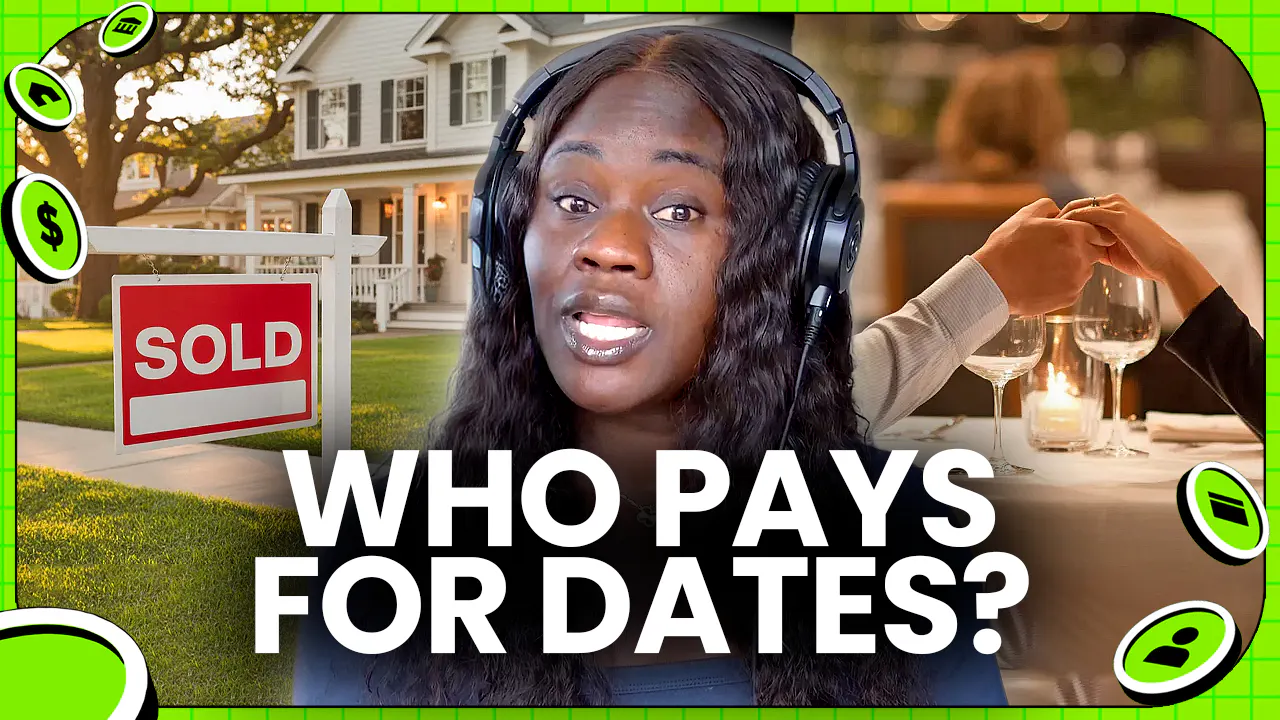
NerdWallet's Smart Money Podcast
Are Corporate Investors Wrecking Housing? Plus How to Date Without Wrecking Your Budget
00:34:50
Loading summary
Transcript122 lines
- [00:01]
Ana Helhosky
So good, so good, so good.
- [00:03]
Nordstrom Rack Advertiser
Spring styles are at Nordstrom Rack stores now and they're up to 60% off. Stock up and save on Rag and Bone, Madewell, Vince, All Saints, and more of your favorites.
- [00:12]
Maybelline Advertiser
How did I not know Rack has Adidas?
- [00:14]
Elizabeth Ayola
Why do we rack for the hottest?
- [00:16]
UPS Store Advertiser
Still just so many good brands.
- [00:18]
Nordstrom Rack Advertiser
Join the Nordy Club to unlock exclusive discounts. Shop new arrivals first and more. Plus, buy online and pick up at your favorite Rack store for free. Great brands, great prices. That's why you rack.
- [00:33]
Maybelline Advertiser
New Maybelline Serum lipstick Maybe it's not just lipstick. It's lush color with endless possibilities. It's serum infused with a hyaluronic acid and oil blend for eight hour, plumping moisture in tone, enhancing shades. It's more than the shade, it's who's wearing it.
- [00:55]
Ana Helhosky
You.
- [00:56]
Maybelline Advertiser
New Maybelline Serum lipstick.
- [00:58]
Elizabeth Ayola
Maybe it's Maybelline.
- [01:00]
Sean Pyles
All right, who's paying You? Me? Does it depend on which date we're on first or third? What about who's paying what? When we're in a real relationship, money plus love equals vexing questions. But we're here to help answer them. Welcome to NerdWallet's Smart Money podcast, where you send us your money questions and we answer them with the help of our genius nerds. I'm Sean Pyles.
- [01:24]
Elizabeth Ayola
And I'm Elizabeth Ayola. Even though it's way past Valentine's Day, although it's always Valentine's Day in my house, we are answering a listener's question about money and romance. But first of all, our weekly Money news roundup, where we break down the latest in the world of finance to help you be smarter with your money. Now our newest colleague, Ana Helhosky is back.
- [01:45]
Ana Helhosky
Hey.
- [01:45]
Elizabeth Ayola
On a. Hey.
- [01:46]
Ana Helhosky
Hey, Elizabeth. Sean. Yeah. If you've been following the housing market or even just scrolling certain corners of social media, you've probably seen a lot of frustration about large investors buying up single family homes. And it's become a political flashpoint, with some lawmakers proposing limits on big institutional investors in an effort to make housing more affordable. But how big a role do those investors actually play? And would restricting them make a meaningful difference? Today, we're joined by mortgage writers Abby Badak Doyle and Kate Wood to break it down. Welcome back, both of you.
- [02:19]
Abby Badak Doyle
Thanks for having us.
- [02:20]
Kate Wood
Good to be here.
- [02:21]
Ana Helhosky
It's always convenient to cast Wall street as a villain, and most people don't have a problem with that. And at the moment, corporate home buyers really seem to be the bad guys in the housing. Can you Explain a little bit about that.
- [02:31]
Kate Wood
Sure. It really taps into how frustrated a lot of buyers feel. Home prices are high and inventory is tight and buyers just kind of feel like they're competing against forces that they can't control. And this is an explanation that resonates to sum up the issue. The concern is when real estate companies come in and buy up lower priced homes, sometimes paying cash or outbidding local buyers. And then what would have been a starter home owned by someone local is now a rental property owned by a corporation with no real connection to the neighborhood.
- [03:02]
Abby Badak Doyle
She doesn't even go here.
- [03:03]
Kate Wood
Exactly. And in a story that I reported for NerdWallet last year, one first time home buyer in Pittsburgh told me that she would keep seeing this happen. Like a good listing would pop up, she'd get excited and then it would sell quickly and she'd see it on the market, you know, in a couple weeks, flipped as a rental. And it always had that same look, right? The gray floors, the gray walls, everything like very gray washed.
- [03:27]
Abby Badak Doyle
Thank you, hgtv. Just shout out for making house flippers think that that is what everybody wants.
- [03:33]
Kate Wood
It's frustrating, right? Like if you've been house hunting for a year or more, it can feel like the goalposts just keep getting pushed back. And it's only human to want something to blame. And corporate investors are an easy target.
- [03:45]
Ana Helhosky
So how widespread is the narrative that big investors are buying up all the homes? It seems like a pretty classic populist message that resonates across the political spectrum.
- [03:55]
Abby Badak Doyle
So this is really popular with voters. And you're absolutely right, Ana, all across the board. So last fall in September, the left leaning think tank, the Searchlight Institute did a survey looking at voter sentiment around the housing market. They found that nearly half of respondents, so 48% of voters believe that investors using housing for profit is a primary driver of high home prices. So this is something that a lot of folks out there feel, feel pretty strongly about.
- [04:23]
Ana Helhosky
And why is it resonating at this moment? You know, this idea that corporate investors are buying up housing isn't exactly new.
- [04:29]
Abby Badak Doyle
It's not new. What's also not exactly new is that the housing market is not especially buyer friendly. And so, you know, a couple years of just housing market fatigue in, you're really looking for a punching bag. But why we're really hearing a lot about this right now is because investor owned housing has become this political talking point. Back in January, President Trump signed an executive order that was specifically aimed at limiting large institutional investors from buying single Family homes. At that time it was pretty vague. We didn't really have any numbers or how that was going to work. But since then it's become a lot more crystallized. That's because this so called investor ban is now being debated as part of the 21st century road to Housing Act. So this is a major bipartisan housing bill that's been working its way through Congress for a while, but it passed the Senate, it's now with the House. The investor ban wasn't part of the original bill, but Trump had made clear that he was not going to sign off on this bill if the investor ban was not included. So all of a sudden the investor ban is back and it's actually been getting even more play recently than when it was initially floated back in January.
- [05:35]
Ana Helhosky
All right, well, we've established that corporate investors are getting a lot of attention in the housing debate. But what does the data actually say about their role in the market?
- [05:44]
Abby Badak Doyle
So when you dig into property data in the US Institutional investors role is much smaller than people might expect. So first let's zoom all the way out.
- [05:54]
Elizabeth Ayola
Right.
- [05:54]
Abby Badak Doyle
If we're looking at all single family properties across the U.S. we'll just, we're ignoring multifamily for right now. I'm sorry guys. So overall single family properties, about 18% are owned by investors, period. So investors of any size. It's about one in five homes. When we had that original executive order, it didn't define institutional investors like how many homes until you're institutional. The Road to Housing act actually has put in a threshold and it's 350 or more properties. So last year in 2025, investors who owned 350 or more properties accounted for 7.5% of all investor purchases. So this is according to data from realtor.com really need to underscore 7.5% of all investor purchases. So this isn't all home purchases, it's just purchases where the buyer was an investor. So if it's not the big guys, who's buying all these houses? Well, if you're looking at who owns investor owned properties, the vast majority of investor owned properties are held by folks with portfolios of one to five properties. As of Q4, 2025, these folks with one to five properties made up 92% of that investor owned pie. And if you add in the folks who have six to 10 properties, so they're still pretty small time players, that goes up to 96%. And these numbers are coming from batch data, which is an investor focused real estate Data platform tldr. If we are looking at who owns investor owned properties in the U.S. these small timers piece of the pie is so big that they pretty much own the whole pie. At least you know, numerically. When you're looking at it from that other perspective, particularly the perspective of a homeowner, this is something where when people have that opportunity, it's like, oh, passive income stream. People don't think about how hard it is to be a landlord or like what a pain it's going to be. But the whole idea of like, wait, you could just like have this business is so big. When I sold my home, people were in like disbelief that I wanted to sell and that I didn't want to retain it as a rental.
- [08:03]
Kate Wood
Right, exactly. And to be clear, owning an investment property is not a bad thing. Right? And we've written that advice here at NerdWallet about how buying a duplex or a multifamily home can really be a path to financial stability for folks, especially for single buyers.
- [08:19]
Ana Helhosky
So to sum it all up, the image of the Goliath Wall street firm buying up entire neighborhoods and pricing out local buyers is not actually typically what's happening.
- [08:28]
Abby Badak Doyle
This generally isn't the case. So I really tend to explain this to people as a full on Scooby Doo scenario. Because we are out here, we are chasing this monster, this big institutional investor, this Wall street fat cat, right? But we finally catch them. Fred pulls off the mask. It's someone we've already met, okay? It is a regular everyday person. It's not a monster. It's your friends, it's your neighbors, it's a family member. These are regular people who maybe, you know, for different reasons came into owning a separate property, liked it, maybe bought another one. But they don't own, you know, these massive portfolios and don't really have a, like hidden agenda for the country or the city or even the neighborhood. They're kind of just trying to make money.
- [09:12]
Ana Helhosky
So the proposal among lawmakers would restrict large investors, but would that actually make homes any more affordable?
- [09:18]
Kate Wood
It could make a difference in certain local markets where investors are really concentrated. But nationally, an investor ban really wouldn't be a magic bullet. Like the bigger issue here is supply, right? Like we still don't have enough homes for sale, especially at that entry level price point. So demand from everyday buyers still outpaces what's listed for sale. So even if you reduced the role of institutional investors, it wouldn't suddenly flood the market with homes or bring prices down dramatically.
- [09:49]
Ana Helhosky
Okay, Is There anything else that listeners should understand about how corporate investors are fitting into the housing market right now?
- [09:55]
Abby Badak Doyle
Sure. So to build on what Abby just said and also to add a little more nuance to my, you know, Scooby Doo metaphor, one thing is to understand that, you know, we are again, talking at the national level, so this might look really different depending on where you live. Institutional investors are relatively concentrated and you tend to see the most institutionally owned homes in your Sunbelt cities. So think places like Dallas, Houston, Atlanta, Charlotte. These are places where the housing stock tends to be newer and more standardized. So it's a lot more large investor friendly. Needless to say, where I live in New England, institutional investors barely have a foothold. And again, sort of your devil's advocate point is that investors are just like part of that overall housing market, you know, ecosystem. Yes. On one hand, these are not, you know, family owned homes. They're owned by another person or by an entity, but they are providing rental housing and rental housing is a significant portion of the sort of overall American housing ecosystem. So when we're talking about affordability, again, the bigger lever is going to be building more homes rather than focusing on who is buying the homes.
- [11:02]
Kate Wood
Totally. And that's why I've been following this housing bill as it's moving through Congress. And if it becomes law, it could spark some real change about maybe making it faster to build homes, easier to build homes, and more supply is really what moves the needle on affordability rather than limiting institutional investors alone.
- [11:19]
Ana Helhosky
All right, any final thoughts from either of you?
- [11:21]
Abby Badak Doyle
I would say it is really easy to feel overwhelmed when you're house hunting because so much of the market is out of your control. There are just a ton of factors that you don't really have a hand in. So it's really important to focus on the aspects that you can control. These are things like your budget, your financing, making sure every part of your financial picture is strong and in place so that you are a strong candidate. When you are ready to apply for a mortgage, you're able to make an offer that will be competitive in your market. And you know, when the right home does come along, you will just be ready to pounce and move forward with that sale.
- [11:59]
Kate Wood
This is the time of year that we start to see more inventory coming on the market too. And all it takes is one house. So if it's felt hopeless for a little while, there's still hope ahead in the springtime.
- [12:09]
Ana Helhosky
Abby and Kate, thanks so much for joining us.
- [12:11]
Abby Badak Doyle
Oh, thank you for having us.
- [12:13]
Elizabeth Ayola
And thank you, Ana. I mean, my biggest takeaway here is that I'll be blaming my family and friends for the inaffordability of the housing. And Sean, if you buy another house, I'll be blaming you too.
- [12:23]
Sean Pyles
Okay, you're looking at me. I am fully a landlord and Garrett and I are looking into buying a duplex. So I'm happy to put on my Scooby Doo Max anytime.
- [12:29]
Elizabeth Ayola
It's all your fault. It's all your fault, Sean. Just kidding. All right, up next, we answer listeners question about money and love and who is spending what. But before we get into that, we want to remind you all to send us your money questions. If you are struggling to get into the housing market yourself, then please send us questions about how you can get into the market with your budget. If you have a question about budgeting or anything else under the sun, we are here to help you. Leave us a voicemail or text us on the Nerd hotline at 901-730-6373. Again, that's 9017-30-N E R D. We also see all of your lovely comments on Spotify. Keep them coming and you can also pop your money questions in the comments section there too.
- [13:13]
Sean Pyles
You can also send us an email to podcastnerdwallet.com we're back in a moment. Stay with us.
- [13:23]
Elizabeth Ayola
Today's episode is sponsored by Spectrum Business.
- [13:26]
Sean Pyles
Picture this. You're running a business and the Internet drops during business hours. Your to do list instantly 1 panic 2 stare at the router like you're
- [13:35]
Elizabeth Ayola
negotiating with it and three start offering customers a brief moment of mindfulness while the checkout screen loads.
- [13:42]
Sean Pyles
For business owners, being connected isn't a perk. It's how you take payments, talk to clients and keep things moving.
- [13:48]
Elizabeth Ayola
Spectrum Business keeps businesses connected seamlessly with fast, reliable Internet and advanced WI fi, plus phone, TV and mobile services if you need them.
- [13:57]
Sean Pyles
And Spectrum Business offers 100% US based customer support 24. 7 to help you stay up and running. That means you get actual help, not submit a ticket and hope for the best.
- [14:07]
Elizabeth Ayola
Our colleague Carrie is a Spectrum customer shout out to our social media team and she told us that she chose Spectrum because people online kept recommending it as a reliable and affordable option for Internet and phone service.
- [14:19]
Sean Pyles
Carrie told us she was actually a little hesitant to switch at first because she'd been using a different service for a while, but after a year with Spectrum, she's had a really good experience. Her phone gets strong, reliable service and it automatically connects to Spectrum WI Fi
- [14:31]
Elizabeth Ayola
everywhere Join the millions who rely on Spectrum Business. Visit spectrum.combusiness to learn more one more time. That's spectrum.com business restrictions apply.
- [14:42]
Sean Pyles
Services not available in all areas.
- [14:45]
Maybelline Advertiser
Planning a wedding shouldn't feel overwhelming. The Knot brings everything together in one place. Vendors who get your vibe, a custom planning checklist, guest list tools, and a free wedding website that syncs with it all. So instead of juggling a dozen apps and spreadsheets, you can actually enjoy getting married. Get started@theknot.com audio the knot let's plan your wedding together.
- [15:10]
Sean Pyles
We're back and answering your money questions to help you make smarter financial decisions. This episode's question comes from a listener's Spotify comment. Hey nerds. Wondering if there's any tips and tricks for dating while maintaining financial goals and budget? I have some more traditional values. I pay for all the dates as the man want to show her I care for her and value her, but also don't want to build in bad habits of going out all the time and potentially overspending. Thanks.
- [15:35]
Elizabeth Ayola
All right, Shawn and I are going to answer this listener's juicy, very, very juicy question ourselves. Are you ready, Sean, to get into it? I have a feeling we might disagree at some point.
- [15:44]
Sean Pyles
I am so ready and frankly, I hope we disagree. But we'll see. So one of the first things I'm thinking about with this question, because there's so much to dig into here, is really how to maintain financial goals while dating and where dating fits into your budget. In my mind, dating is going to come from the wants category. It's a discretionary expense and it can vary so much, what you're spending on a date, how you're spending on dates, who's spending what on dates. But I do think it should come from that wants category. What do you think?
- [16:15]
Elizabeth Ayola
I agree with you there, Sean. However, honestly, I don't spend much on dates, so it's not a big lineup. In my budget, I'm being taken out, so I'm not spending much on dating. But wait, are we including getting cute for the date? I mean, you know, hair, lashes, when I want to waste money. Are we talking about things like that or just paying for the actual date?
- [16:36]
Sean Pyles
Well, our listener seems like they're talking about paying for the event itself. But what you're getting to is that there's a lot that can be paid for before the date. Like what are your clothes that you're wearing? You mentioned your hair. But yeah, there's a lot that that can be spent on a date itself. And I Think that it's important to understand how that's going to fit into other financial priorities. So with our listener here, what else do they want to be spending their money on? What else do they want to be doing in their life? So are they saving for retirement? I would say that might be more important than going out to an expensive date. Are they saving for their emergency fund? Do they have their necessities covered in their budget, too? All of these essentials should be, I think, taking precedent over just going out on a date.
- [17:15]
Elizabeth Ayola
I agree. And like you said, I think it could just be baked into your fun money. For people like you, Sean, who have a fun money sinking fund or bucket, I think the money can be baked into there. And my boyfriend gives me a lot of flack for saying this and other people may as well, but I don't know if people should be dating. If they don't have enough money in their budget to date, maybe it shouldn't be a priority.
- [17:36]
Sean Pyles
Yeah, but I think this speaks to how you don't necessarily have to spend a lot of money to be dating. You can find creative, inexpensive ways to go out and still have that romantic need fulfilled.
- [17:48]
Elizabeth Ayola
I agree. However, this is where this thought comes from. And I, I mean this for both people, not just for one party, whatever way that you identify yourself in terms of genders. So when I first moved back to the States, I had just gotten a divorce and I decided it was time to start dating again and getting my feet wet, as they say. I was really broke when I first moved back here and I barely had enough money to do anything, to be quite honest. And I said to myself, you know what, if I go on a date, because I have this rule for myself that I will not go on a date if I can't afford to pay for the meal that I order. So, you know, heavens forbid, the other person says, hey, I'm not paying for the food or goes to the bathroom, never comes back, I should be able to pay for my food. And I feel like if I can't do that, then I probably shouldn't be prioritizing dating. This is obviously extreme circumstance, but if I can't fill my gas tank, for example, to go to and from the date, then I probably shouldn't be going on it. So those are just the rules that I set for myself. And that's why I say if you, you can afford the basics, just the basics of going out on a date, then maybe you shouldn't be dating. But that's just my two cents, my
- [18:51]
Sean Pyles
twist on that is adjust the date to make sure that if your date does leave you in the middle of the date to, you know, secret, run off to the bathroom and never come back, that you would still be covered. So in that case, maybe it's doing something like going for a walk in the park, having a nice picnic. You don't have to go out to an expensive meal. And I think a lot of people who maybe have a more traditional mindset around dating can get caught in this loop of what a date should be looking like, where you bring flowers and you take them out and you're driving them around. I don't think a lot of people necessarily expect that. And if they do, it makes me wonder what the priority really is in dating. Is it to get to know someone who could be a partner, or is it to be treated. And, you know, I guess sometimes it can be nice to be treated for sure. But, yeah, it comes down to what you want out of the relationship.
- [19:39]
Elizabeth Ayola
Sean, I love that you bring that up, because the answer to your question depends on what side of social media that you're on. Did you ever see that viral video about the Cheese Factory?
- [19:49]
Sean Pyles
No.
- [19:49]
Elizabeth Ayola
The lady who left, okay, this lady who, you know, went on camera and said that she wasn't going on a date, you know, she got all dressed up, got to the front of the Cheesecake Factory. She didn't realize that's where her date was taking her, and she refused to go inside because she's like, I'm not going on a cheap date to the Cheesecake Factory. And of course it created this. Yes.
- [20:09]
Sean Pyles
Okay, so look, sorry to interrupt you, Elizabeth. 1. A Cheesecake Factory date might be cheesy pun intended there, but it's not cheap. That place is expensive.
- [20:19]
Elizabeth Ayola
But this is the times we're living in. Depending on what side of social media you're on, where people are saying Cheesecake Factory is a cheap date. There's also a side of the Internet that says people are not going on a coffee date for the first date. Many people I see online are attaching the cost of the date to how much the person taking them out on the date values them. And I'm finding that interesting.
- [20:37]
Sean Pyles
Our listener is basically saying that I can only show that I care for her and value her if they're putting money toward that date. When to me, that's just so not how I approach relationships. For me, time spent together or words of affirmation are more kind of my love language and how I show people that I love that I do love them. And money is not really a factor in that.
- [21:01]
Elizabeth Ayola
I feel the same. And it also makes me think about. The listener didn't specify, but what stage of dating that they're in. Right. Because I think when you're first getting to know someone, the first couple of dates are very different from you've been dating maybe for six months. And I think the nature of your dates can also evolve in addition to how much you spend. There was a time I had an extremely traditional mindset and was like, look, if I'm putting on my makeup and leaving my house, it can't be, you know, a Starbucks or, I don't know, a coffee date. I would like to go out and eat a nice dinner. But then I have to take a step back and kind of think about what you're saying, Sean, which is especially when you first meet someone. I don't even know this person. I don't know if I'm going to like them. And then now I'm stuck at some dinner with someone that I don't even know. So I do think it's more important to see if there's a connection first, to see if you actually even like the person. And, yeah, you can do that in a variety of ways. One of my most memorable first dates was a walk on the beach. And that didn't cost much money, did it? Maybe we grabbed a pizza. It was an incredible date. We got to talk. I got to know the person, learn a little bit about their values, and we didn't have to spend so much to do that.
- [22:00]
Sean Pyles
Yeah, some of the best dates are ones where you can actually see how the person views the world and engages with the world around them. And going for a walk on the beach is a good example of that. I would say sitting down at a restaurant and having an expensive meal isn't really a great way to get to know someone, except for maybe how they treat wait staff, which is very important, I will say. And hopefully you can get a glimpse of how well they're tipping, too, because that's an important thing to me. But it's such a narrow slice of who they are as a person. And then if you don't like them or if they're really boring, then you're stuck at this table with them, which sounds really miserable. Something we keep kind of circling around is these traditional gender notions of who's dating and who's paying for dates. And all of this is really confined to what I see as sort of more typical heterosexual forms of dating, because in gay relationships, I've Never even had had to deal with this, because I've always approached it kind of 50, 50, like, we are coming to this in a really equal footing. And I'm okay splitting the cost of whatever, because, look, we're both making money here. We both want to be on this date together. And it just never felt to me like something where I needed to, you know, expect for someone to pay for something, or me being expected to pay for something either. Unless I say, oh, I'm going to treat you tonight. So do you find that you still are falling into these kind of traditional heterosexual gender dating norms in your relationships, Elizabeth? Because it seems like our listener is really steeped in that traditional way of thinking.
- [23:25]
Elizabeth Ayola
In my current relationship, it is. It is pretty traditional. So my boyfriend pays for most of the dates, but it doesn't mean I don't pay for any dates. So there are times where I take him out and I pay for the date. Of course, I treat him and do things for him as well. But I think that's just the pace that we've set for ourselves. That's my personal preference. But I will say, ultimately, these kind of conversations always spark so much debate, and I don't understand why. And the reason I don't understand why is because it's based on your personal values, and everyone's values are different. So if you have values where you like to split it down the middle and go Dutch and you want to do 50, 50, there's nothing wrong with that. If both of you are okay with, you know, one person paying predominantly for the dates, there's nothing wrong with that. So I think it all goes down to your values and your personal preference. At the end of the day, I
- [24:08]
Sean Pyles
think people get up in arms about this because if they're presented with another way of living their life, it threatens their concept of how to have these dynamics that are often really fragile and maybe could benefit from a shaking up, too. So I think there's nothing wrong with, like, the woman in this straight relationship saying, hey, I'm gonna take you out, and I'm paying for this date.
- [24:28]
Elizabeth Ayola
I love what you said about maybe people getting defensive when these arguments are brought up because they don't want to challenge their own maybe norms around dating. Because sometimes it feels like you have to be either or, right? That you have to have these traditional values or you have to have more progressive or liberal values. But I find that sometimes I'm somewhere in the middle, and that's okay. So sometimes my beliefs are a little contradictory around gender roles and I'm okay with that. I'm still working through them, is what I'm saying.
- [24:53]
Sean Pyles
And what I find more interesting, beyond even the dynamic of gender norms and heterosexual or gay relationships or queer relationships, is really what might be more fair or equitable for any kind of couple, regardless of. Of who they are. And for me, a lot of that comes down to who's making how much money, because there can be a huge imbalance in finances and relationships. Someone I know is doing pretty well in their career. They have a nice salary. They're dating an artist who isn't bringing in as much. And even though you look at this couple, you would think, oh, the artist is maybe more in the traditional role of being more seasoned in their career because they aren't bringing in as much. It's on the other person more often to pay for dates or do things like that, because they just have more resources to do so. And that feels more equitable to me.
- [25:45]
Elizabeth Ayola
In this relationship, I think ultimately, if you make more, it's only equitable, like you said, that you pay a little bit more.
- [25:51]
Sean Pyles
Yeah. And you don't have to have it dialed in down to the penny. But I think some loose understanding of, oh, I'm making $70,000 more than you a year. Let me put some of that toward our own enjoyment as a couple and not sweat every single penny, because where's the. And that.
- [26:06]
Elizabeth Ayola
Exactly. And then, Sean, as we're talking about this, I'm wondering how many people actually, interestingly, have conversations with their partner about maybe them wanting to change the dynamic. So it sounds like the listener says he's traditional. Right. And pays for all the dates. But what if they had a change of heart and wanted their partner to start maybe chipping in more for the dates budget? How do you approach that kind of conversation? It feels awkward.
- [26:30]
Sean Pyles
That doesn't seem like the first conversation you have about money with your partner. This may be like the third or fourth one. But that really speaks to how it's important to start having financial conversations somewhat early on when you're dating a person. Maybe not your first date, but I would say a few months in, as you're beginning to understand, oh, yeah, I'm going to maybe pay for a weekend away for us. What does that look like for each of your finances? And how are you going to split up some of these costs? Then later on you can say, hey, we've been having our finances balanced in this way for a little bit of time. I want to check in with you and see if you feel okay. Or if maybe you actually feel uncomfortable with me paying for all of this stuff. Because I know sometimes people can feel a little bit of pressure or obligation to return the favor in some way to do that if someone is paying for all of their dates. And that can create a power dynamic that can be a little bit unhealthy, too. But talking about this and having room to reevaluate how this is structured, I think can make it, again, more equitable for everyone involved.
- [27:29]
Elizabeth Ayola
That's right. And then you just mentioned when is the right time to have this conversation. Not every date has appreciated it, but I like to get all the difficult conversations out as quickly as possible. I do.
- [27:41]
Sean Pyles
So you're the first date saying, what's your credit score?
- [27:43]
Abby Badak Doyle
Yes.
- [27:44]
Elizabeth Ayola
Me and my boyfriend were having a conversation, and the kind of questions he reminded me I was asking, I said I asked that on a first date.
- [27:50]
Sean Pyles
What, like what, what are you asking?
- [27:52]
Elizabeth Ayola
Very intense questions like, you know what? Actually, when guys try to talk to me, sometimes I'll say, if you want my number, tell me what your top three values are in life. Life. Love it. And most of them can't even answer that question. I'm like, well, if I see you again next time, maybe I'll give you my numbers. I like to ask questions like that.
- [28:07]
Sean Pyles
So funny.
- [28:09]
Elizabeth Ayola
Yeah. So I like to get straight to the values. I'm not a huge small talk girl. I'm not going to ask you how much you earn, but I might ask you, like I ask on the show, if you had a hundred thousand dollars, how would you spend it? You know, what are your money values? I like to ask questions like that because why are we wasting time going on six dates if our values don't align? You know, let's just cut it off at 1 or 2 and cut our losses.
- [28:30]
Sean Pyles
Yes. I love that. And I mean, even thinking about how they spend their money now, which you can ask in kind of roundabout ways by thinking, how do you spend your time now? Are you going out to bars all the time? Are you going out to parks, to museums? Where you spend your time is essentially where you're spending your money a lot of the time. So that can be another way to understand where people's money values lie.
- [28:52]
Elizabeth Ayola
Absolutely. I think I asked the question once, which was like, if I looked at, I don't know, your shopping history, what would be your most recurring expense? So what, what do you spend the most money on? What do you buy the most? And again, that gives me kind of insight into what their values are and how they like to spend.
- [29:07]
Sean Pyles
Yeah. And also how they respond to that question can be so telling as to whether they're going to be open and honest or are comfortable talking about money. Which is hugely important to you.
- [29:17]
Elizabeth Ayola
So important. And I'm not gonna lie, I'm still a little uncomfortable talking about personal finances when I say personal. Not broadly, but personal finances with partners. Because it's not something that I've historically done, but I know it's a necessity and something that you should do. I know in my marriage I had no, no idea how much my ex husband was making.
- [29:38]
Sean Pyles
When you were married.
- [29:39]
Elizabeth Ayola
Yes, that. Yeah.
- [29:41]
Sean Pyles
Is that part of why he's your ex husband now?
- [29:44]
Elizabeth Ayola
Well, well, I definitely am trying to have a more transparent approach and present relationship. As awkward as it is, it's really important to have that conversation. And the more you do it, like you say, Sean, the bet, the easier it becomes. Right?
- [29:56]
Abby Badak Doyle
Yeah.
- [29:57]
Sean Pyles
Something else that stood out to me in our listeners question is the idea of avoiding building bad habits like going out all the time and overspending. Reading between the lines of what they wrote to us, it almost seems like they're already building a bad habit. Maybe one they can't sustain by paying for all of these dates. And now, before they get too deep into dating whoever or, or whomever, however many people they're dating, now might be the time to really evaluate how much they're spending on a monthly basis. Is this really sustainable for their finances along with the other goals that they have so that they don't get too deep down this road? And six months, along with dating someone, they're still paying for every single date.
- [30:35]
Elizabeth Ayola
The nature of the date matters as well. And something that I have found nosing around on social media is sometimes how you start can set an expectation for the person. So for example, if you're dating someone who enjoys fine dining all the time, and maybe you've been dating them for six months and set that expectation that you're gonna go find dining regularly and suddenly you're saying, hey, I need a budget or I have a financial goal to pivot to. That doesn't always sit well with the other person. Right. Because maybe that's how they feel loved, that's how they feel valued. And I think again, that can, can show a misalignment.
- [31:07]
Sean Pyles
Right.
- [31:07]
Elizabeth Ayola
That maybe you're not aligned if you're not willing to go on a walking date or hey, let's go to the gym or go exercise instead, even just stay home and do arts and crafts.
- [31:15]
Sean Pyles
Some of the best times I'VE ever had dating people is just sitting around the house watching a TV show together. That's how you really get to know someone. Can you binge watch a show in a weekend? Like, let's put on heated rivalry and watch every episode in a single day. And if I don't have an amazing time doing that with you, it's not gonna work.
- [31:33]
Elizabeth Ayola
Absolutely. Sean, what's the most sentimental and, I guess, cheapest date that you've been on?
- [31:37]
Sean Pyles
It has to be an early Valentine's Day date that Garrett and I had. And we typically haven't done a lot for Valentine's Day because we've kind of viewed it as like a straight person's holiday. No offense, because we show our love every day in our own way. But one of our first years dating, we just made a really nice meal at home. I got some scallops. We made some mashed potatoes and some green beans. It was like a simple but beautifully done meal that was just for us. And you know how wild restaurants get on Valentine's Day. So to be able to have the solitude of our apartment and just hang out, be together, eat a really nice meal was one of the best times that we had together. And it also was so formative in our early dating life, too. So I really. We look back so fondly on that. And then just this past Valentine's Day, since it was our first Valentine's Day since getting married, we actually recreated that meal, and it was so nice. What about you, Elizabeth?
- [32:29]
Elizabeth Ayola
I have quite a few. I'm a sentimental girl, so I love just doing random things. It doesn't necessarily have to be going out, spending money, but let me see, two come to mind. One is very, very random. We went for a long walk in a park, and we played on the jungle gym. And then, well, it was kind of embarrassing, but it broke the ice. But my wig fell off as I
- [32:51]
Sean Pyles
was swinging, like, swinging upside down. Your wig just falls right off.
- [32:53]
Abby Badak Doyle
Yeah, yeah.
- [32:54]
Elizabeth Ayola
And it was like, oh, no. And then he was just so sweet about it. Right. We just kept walking and held hands and listened to music. So it was very simple, free and cheap. I'm a simple girl. I'm all about the conversation and the connection. I can do literally anything with you if I like you as a person,
- [33:09]
Sean Pyles
that doesn't cost anything at all. All I love that. I think our listener can consider a lot of these options and how they're dating people. It doesn't always have to be, again, chocolates and flowers and expensive meals. It's really the time spent together that is way more valuable than any amount of money you'll be spending on them.
- [33:26]
Elizabeth Ayola
Yeah, and I want to say to the listener as well, have a conversation with your partner, if you haven't already, about cheaper dates that you guys can do. Assuming that your dates are not cheap, you know, this can be a chance to explore their interest and maybe you learn about things that they like or hobbies that you can partake in. They're inexpensive that you guys can to your date night rotation.
- [33:44]
Sean Pyles
Yeah, and for anyone listening, I would love to hear your ideas for having cheaper or more creative dates. Leave us a comment on Spotify or YouTube or send us an email. We would love to hear them. And that's all we have for this episode listeners. In case you didn't know it, we are all in a big polyamorous relationship together and we're kind of dating each other because we have this thing going on that I can't even put words to. It's so beautiful. So we want to hear from you. Send us your questions. You can leave us a voicemail or text us on the nerd hotline at 901-730-6373. That's 901730, nerd. You can also email us at podcastnerdwallet.com or leave us a comment on Spotify
- [34:20]
Elizabeth Ayola
or YouTube and come have a cheap date with us next time we're going to be talking about leasing a car and whether it's a smart financial decision in today's market. Follow Smart Money on your favorite podcast app. That's Spotify, Apple Podcasts and iHeartRadio to automatically download new episodes.
- [34:38]
Sean Pyles
Here's our brief disclaimer. We are not your financial or investment advisors. This nerdy info is provided for general educational and entertainment purposes and may not apply to your specific circumstances.
- [34:48]
Elizabeth Ayola
This episode was produced by Tess Viglund. Hilary Georgie, help with editing. Nick Karisimi and Eve Krogman helm our audio and video production. And a big thank you to nerdwallis editors for their help.
- [34:59]
Sean Pyles
And with that said, until next time, turn to the Nerds.
- [35:07]
UPS Store Advertiser
The UPS Store is making packing and shipping Easter gifts quicker than ever this year with UPS Air.
- [35:12]
Nordstrom Rack Advertiser
How quick?
- [35:12]
UPS Store Advertiser
Quicker than a walk around the park? Quicker than eating all the Easter candies. Quicker than finding a golden egg that you know is stuffed with cash. When you ship UPS Air at the UPS Store, your items arrive on time or your money back, guaranteed at no extra cost. Exclusively at the UPS Store US retail locations. Send Easter Joy on time at the UPS Store. Visit the upsstore.com air guarantee for full details. Terms and conditions apply.