← NerdWallet's Smart Money Podcast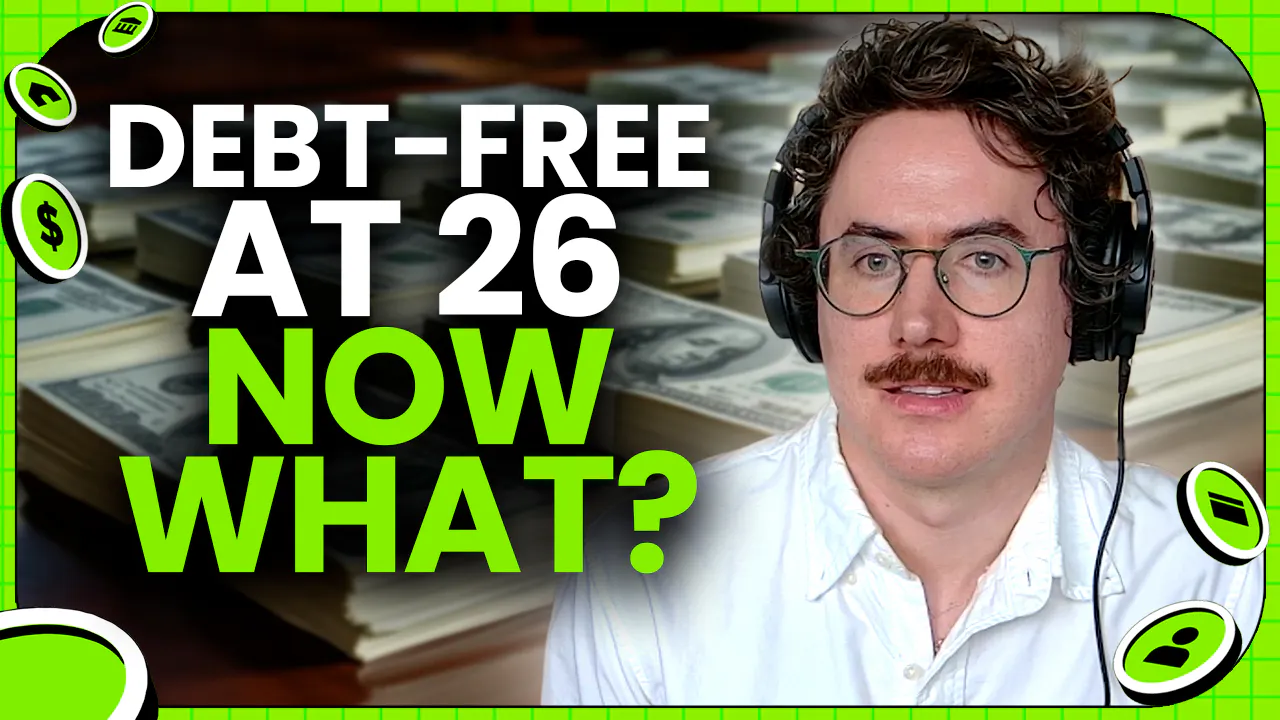
NerdWallet's Smart Money Podcast
Budget Rehab: How to Optimize Your Savings Goals When You've Already Paid Off All Your Debt
00:33:22
Loading summary
Transcript157 lines
- [00:01]
A
Today's episode is sponsored by Quint's.
- [00:03]
B
I've been doing a little spring reset with my closet lately, focusing more on quality over quantity. Just building a wardrobe of pieces that are well made, versatile, and also easy to reach for every day. That's why I keep coming back to Quince. The fabrics feel elevated, the fits are thoughtful, and the pricing actually makes sense.
- [00:21]
A
Quince makes beautiful everyday pieces using premium materials like 100% European linen, 100 organic cotton and super soft denim with styles starting around $50. Their spring pieces are lightweight, breathable and effortless. The kind of things you can throw on and instantly look put together.
- [00:38]
B
And that same focus on materials carries over into their accessories, like the leather bags, which are made from 100% hand woven Italian leather. And honestly, they look way more expensive than they are.
- [00:49]
A
Quint works directly with ethical factories and cuts out the middlemen. So you're paying for quality, not brand markup.
- [00:55]
B
My latest buy on Quint was three different swimsuits. I know it's only spring, but summer is coming. The pool is opening up near my house and I want to look amazing in my swimsuits.
- [01:06]
A
On my end. I recently picked up a European linen sheet set. I'm a really warm sleeper, so as we get into warmer months, I'm just excited to have these breathable sheets to keep me cool when I'm sleeping at night.
- [01:16]
B
Refresh your spring wardrobe with quince. Go to quince.com smartmoney for free shipping and 365 day returns.
- [01:24]
A
Now available in Canada too. Go to Q U I n c e.com SmartMoney for free shipping and 365 day returns. Quints.com SmartMoney K Pop Demon Hunters Sucha Boy's Breakfast Meal and Hunt Tricks Meal have just dropped at McDonald's. They're calling this a battle for the fans.
- [01:42]
B
What do you say to that, Rumi?
- [01:43]
C
It's not a battle. So glad the Saja boys could take
- [01:46]
B
breakfast and give our meal the rest of the day.
- [01:48]
D
It is an honor to share. No, it's our honor. It is a larger honor.
- [01:54]
B
No, really stop. You can really feel the respect in this battle.
- [01:59]
A
Pick a meal to pick a side
- [02:02]
D
and participate in McDonald's while supplies last.
- [02:04]
B
Sean, so let's say that I decide out of the kindness of my heart to pay you $1,000 every month so you have an extra thousand dollars in your budget. What are you gonna do with that surplus?
- [02:16]
A
Well, first I'm gonna say thank you. I might take you out to a nice meal cause that's so generous of you. And then, you know, my needs are pretty much met, so. So I'm just going to invest the rest of that for my future. What would you do with that money? The whole thing after a nice meal. So maybe let's say we have $800 to invest. Yeah.
- [02:32]
B
Okay. Well, I'm probably going to invest maybe, like, 700, and then I'm going to spend the 300 to live my best life, because, you know, you got to do both.
- [02:40]
A
There you go. I love that. Well, today we're going to be talking with a listener about what to do with an extra thousand dollars in their budget. Welcome to NerdWallet's Smart Money podcast, where you send us your money questions and we answer them with the help of our genius nerds. I'm Sean Pyles.
- [02:57]
B
And I'm Elizabeth Ayola. Today we are joined by a listener named Manny who had a question about how to spend an extra thousand dollars. We decided to make this a budget rehab episode, and for that reason, we have Manny here with us today. Hello. Hello, Manny.
- [03:15]
A
Manny. Welcome to Smart Money.
- [03:16]
D
Thank you, Sean. Thank you, Elizabeth. It's good to be here.
- [03:18]
B
I am going to start with an icebreaker. I'm going to dig into my hat with all my questions for my icebreakers, and the one I'm going to pull out is describe 2026 so far with one word, Manny.
- [03:31]
D
Lemons, I would say, is my one word. And I know you're probably wondering why.
- [03:35]
B
Yes.
- [03:36]
D
You know, there's an old homage. When life gives you lemons, you make lemonade. But it feels honestly like every day in 2026, we're just being pounded by lemons. This year has been particularly, you know, hard. But it's also, like, lemons are really a beautiful thing. There's. There's so much you can make from it, whether it's like lemon. I love making, you know, homemade lemon chicken pasta. But it seems like we're getting a lot of lemons recently, and I think it's hard to keep up with that amount of them. So that's my year, at least this year.
- [04:04]
A
Yeah, I feel that. Do you think that you're still in the lemon accumulation phase, or are you turning that into lemon chicken, pasta, or lemonade, whatever you want.
- [04:12]
B
I gotta spill that.
- [04:13]
D
I think I'm still accumulating lemons, and I just hope that they don't go bad in my fridge, you know, that awful vegetable door at the bottom, you know?
- [04:20]
B
Well, hopefully your finances aren't full of lemons, too. So let's learn a little bit about you. Tell us about what you do for a living, Manny.
- [04:28]
D
I work at the Ohio State University, so I live in Columbus, Ohio. I work with our downtown commissioners, our downtown city council, and just really work to understand what policies are affecting higher education.
- [04:40]
A
Given changes in higher education at the federal level. I imagine that's a big part of why you're getting lots of lemons nowadays.
- [04:46]
D
I'm very thankful to be on my local government affairs team. Local government is still, of course, affected by everything that's going on, but much, much different policy wise than federal or state regulations.
- [04:58]
A
It sounds like a really fascinating job. Does it pay you well? What are you earning?
- [05:02]
D
I'm very, very blessed to earn a nice paycheck. I take home about $47,000 a month.
- [05:08]
A
$47,000 a month?
- [05:10]
D
Oh, no, sorry. 44,700. Do you want to say? I want that to. No, Gosh, no.
- [05:15]
A
That's pretty good. And remind me, how old are you?
- [05:17]
D
I'm 26.
- [05:19]
A
Okay, so that's a solid salary for
- [05:21]
D
your age and living in Ohio. I think the medium wage is 62,000. So I know I'm doing really well. My family grew up with a relatively poor understanding of savings and financial responsibility. I grew up not really understanding how money works, but at the same time, I also didn't really know how to stretch a dollar. And so I don't have a lot of expenses. I only spend about $36,000 a year. And so I'm able to save a large amount of my income. And I think that's a problem I've been running into.
- [05:53]
B
Well, Manny, how would you say your upbringing and how your parents or family manage money has impacted how you manage your money.
- [06:00]
D
Now, I've seen some of the worst things that not having, you know, adequate income can do to a family. And I've known I don't want that for me whatsoever. And so I think I've really aggressively saved my own money from that. I never want to see a repo person at my door or anything like that. And so my emergency savings, you know, I know it's like you save three to six months, and I think I have a year saved because I'm like, I don't want any reason to ever experience that.
- [06:28]
B
That's very impressive. And when did you start saving? At what age did you decide I'm going to start saving? And also, how did you start learning about how to save or finances?
- [06:36]
D
My last year of college, I was working about 25 hours to 32 hours a week. So not a full time job, but quite a lot of hours. I think I was earning minimum wage, so it wasn't a lot of money, but it was enough to get by. And I had a relatively low rent payment after I graduated and got my first full time job. And during that time I looked at all my, my expenses and you know, of course the largest one was rent. And then after that, you know, I still had student loan payments and I had credit card payments actually, because I had, you know, I think bulked up $1,800 in credit card payment. I thought, okay, I need to get out of this because this is really dangerous. You know, again, from, from childhood, no one ever told me how dangerous credit cards can be. If it's a 27% interest rate and I'm paying the minimum, and then you see your, the amount you owe go up every month. And that was insane. You know, like the first big paycheck you get when you get your first job. I took it towards debt and I, I learned about the snowball method from podcasts like this, and I just slowly dug my way out. At the same time, I became a house director for a fraternity at osu because you get free rent and I, I don't do that anymore. It's a lot of energy. But it gave me free rent for about three years and that actually allowed me to save a lot, lot more. And during that time, I, of course, developed my own skills to work my way up in my own career. But looking at how to put that money away first, I had to dig myself out of debt. You know, in 2022, to answer your question, I really, from the get go, said I want to get rid of this debt. I want to start saving as soon as possible.
- [08:12]
A
Well, congratulations on getting out of that debt. That's a tough lesson that a lot of us learned at that early age in our life where suddenly we have access to credit. We don't know how expensive it is and how hard it can be to get out of it. Many people don't get out of it as well or as diligently as you did. So you should really appreciate that because that's not easy. I want to hear how you manage your money on a regular basis. What's your budgeting style? From what you initially sent us over email, I get the feeling that it's very detailed.
- [08:39]
D
It is very detailed. Kind of like a lemon chicken recipe.
- [08:42]
A
Right?
- [08:42]
D
You know, you have to know all the, all the aspects of it. It's probably too time consuming. Honestly, But I like to track everything I spend. I used to just have the one checking account and it broke out all the things automatically for me through their app. And I really like that. It's like, this is how much you're spending on this. And this percentage after I paid down my, my one credit card, I thought, oh, I can actually get other credit cards and get points. And I learned more about that and, you know, I was like, might as well get a credit card that gives me 2%, 3% back. But the problem with that is they didn't track it like my bank did. And so I thought at that time, I'm going to make a spreadsheet. And so then I started tracking it daily and I broke my expenses into seven categories and, and just track them. And then each month I made average. And I've done that for about four years now.
- [09:29]
B
How much time would you say that takes you in a week or a day?
- [09:32]
D
Normally during lunch, I take 10 minutes. I think probably now there's some days, you know, at the end of the month when I'm doing all the averages and whatnot, that probably takes 20 minutes.
- [09:40]
B
All right, well, Manny, we are going to go into your budget now. You sent us your budget. Thank you so much for filling that out. Before we get started, if anyone listening wants us to help you optimize your budget, fill out the budget rehab form in the episode description. Now, based on the original question that you sent Manny, it seems like you're doing zero based budgeting. And that's also based on our conversation. You like to know where every single dollar is going and it also seems to work with your personality type. Am I right there?
- [10:08]
D
I think so, yeah.
- [10:09]
B
Now, just to make your budget easy to follow for listeners, we're going to use the 50, 30, 20 framework to go through your numbers. So your after tax monthly income is about $4,700. Let's first look at your must haves or your needs.
- [10:25]
A
Manny, it looks like your needs are taking up about 30% of your budget. And you know, with a 50, 30, 20 framework, that should be typically around 50%. So you have a good amount of wiggle room with your debt and savings and wants there. And a big part of this is because your rent looks to be pretty affordable. I'm seeing just around $1,000. So tell us about your living situation and do you rent or are you a homeowner?
- [10:49]
D
I rent. I live, you know, of course, near my work. So I get to walk to work as well, which is really nice. But we've also seen apartments going up, so that's something I'm wary of because I really am worried that that could easily be in a heavy increase in a year or two.
- [11:03]
A
Okay. And I'm also seeing that your car insurance is pretty low and you don't have a car payment. So you've paid off your car, I imagine.
- [11:11]
D
Yeah. Actually, last fall, I went 12 weeks without a car because I was trying to see if I could make it work. But unfortunately, Columbus, Ohio, is not far enough along for public transit to be adequate enough, which I really hate. I bit the bullet and I bought it. Bought a used car. And I was debating all the, you know, the options of, like, oh, if I get a low interest rate, I'm technically earning more than inflation, yada yada, you know, And I decided just to buy it straight out. And I don't drive a lot. I drive to see family in Cincinnati and, you know, maybe occasionally across the state here and there, but really that's it, because again, I walk to work and I can take the bus downtown, and so I don't need a car.
- [11:53]
A
Really big parts of how your life is set up allow you to save a lot of money. You're not living in a dorm anymore, but you have what I would consider very affordable rent. You don't have a car payment. You're able to walk to work. It sounds like you make your lunch and bring it in. All of these things are adding up and helping you have this need score that is, you know, well under 50%.
- [12:13]
D
Yes.
- [12:13]
A
Okay. And then one thing that really stood out to me is that I'm seeing you're spending $175 a month on food that is very conservative. So are you eating lots of rice and beans or how are you managing that? Because I'm spending for myself and my husband. We're spending around $100 ish each week on our grocery pickup.
- [12:33]
D
I think this is where, again, my upbringing really comes into play. I had a big family. There were six of us. And so if you make a pot of. Yeah, yeah. So if you make a pot of chili, you know, you're feeding all these people. And I'm really good at making a large soup or roast and then just freezing it and eating it throughout the week or the next week. But my average is about 175. But I think on this spreadsheet, you'll notice that my restaurant, which I put over, I think, on the side just because I wanted to note it is like 400. I also do make a decent amount of Money. So I, I allow myself to go out to eat at restaurants with friends and, and my girlfriend, so.
- [13:11]
A
Good.
- [13:12]
B
Now let's move on, Manny, to your savings, the fun part. You have a relatively high savings rate here. Your savings score is over 51%, almost 52%. Congratulations. Can you tell us about how much you are contributing to your retirement accounts at the moment?
- [13:30]
D
The nice thing about working for OSU is we have a system called opers, which is like the state retirement fund. And so it's a really great program. And OSU will put 14% in it and I'll put 10% in, which is just a phenomenal match. And so I put that in every month because there's, I'd be silly not to.
- [13:48]
B
Okay, and then what other types of savings are you doing? I know that you mentioned earlier that you have quite a chunky amount saved for rainy days.
- [13:56]
D
I have a high yield savings account and I put instantly 20% of my paycheck into that. So I don't, I don't have to see it. When I first started saving, one of the first things I did was make a 12 step ladder every month. I had a CD that expires on the month with a thousand dollars. That way, if I ever, I don't know, you know, worst case scenario, I have a thousand dollars. And that took forever to set up because to save a thousand dollars and then have it on the right month where I could say, you know, push this aside and put it in the, the cd, that was really hard. But now those are all set up and so now I just really have the high yield savings. And then recently I opened a. I don't even know the term for it, but it's a, it's a house saving account which gives me about like a 6.7% interest rate from a credit union. Now I have to buy a house within five years. But that's a good goal, I think.
- [14:45]
A
Say more about this account. It's a house account that's set up specifically by this credit union for the purpose of eventually you buying a house. I am not familiar with this.
- [14:54]
D
It's through the local credit union here in Columbus. And I don't know if it's a. I think it's a state program. Yeah, it's 6.7% interest. And it's one of those weird things because, like, how heavily can they mandate that you buy a house? You know, I don't know. I don't know what happens to your money if I don't buy a house. And maybe I Should look more into it.
- [15:11]
A
That'd be good to find out.
- [15:12]
D
Yeah. Now you're in a higher interest. And hopefully I can buy a house soon.
- [15:16]
A
That's a great goal. So how many accounts do you have total for your savings? It seems like you're doing what I love, which is a savings sinking fund, savings bucket strategy.
- [15:25]
D
I often hear you and Elizabeth talk about this and how she pokes fun about you. And I'm like, oh, that's me.
- [15:32]
B
I saw.
- [15:32]
A
I think we're on the right side of things, Manny. Don't worry about it.
- [15:35]
B
Oh, oh, please.
- [15:36]
D
I think I have 19 accounts, give or take.
- [15:38]
B
Whoa, whoa, no, wait, Sean, how many do you have again?
- [15:41]
A
I mean, in terms of checking accounts, right now I'm using eight currently, so fewer than I was using before.
- [15:49]
B
Manny beat you. Manny, how do you manage all these accounts?
- [15:52]
D
12 of them, again, are CDs that I don't even look at anymore after I set them up. And so the other, you know, seven are really just so. In reality, I'd argue I only have
- [16:00]
A
seven, you know, but yeah, that seems fair. More reasonable.
- [16:04]
B
Something else I notice is that you have so much cash. So when you wrote to us and sent us your numbers, it seems like you have over $36,000 in cash and almost 50k total in assets at the age of 26. Again, well done. And then I'm just wondering, Manny, what is your motivation to save so aggressively? And then when will you feel safe? Like, when will you be like, okay, you know what? I feel secure with how much emergency savings I have. I have enough cash. What's going to get you there?
- [16:32]
D
I think that's a really good question too. And I'm familiar with the fire, folks. I don't know if that's my goal. I love working, you know, but I think that's also the problem with, with my budgeting is because, you know, I am on track to save for a house. I'm on track to potentially start a business in a couple of years. These are goals that I have. But at the same time, you know, if magically tomorrow I got a hundred thousand dollar raise, which I'm not going to, I don't know what I'd do with it, you know, which is a really great problem to have. But I also want to be so cosmic of that because, you know, I don't want to waste my money by any means. I do work hard and I want this to be. I want that to reflect my goals. But I think I'm running out of goals.
- [17:11]
A
You're young still. So, you know, you are understanding what your adult life is really looking like and what you want to spend your time doing. Have you spent time thinking about that and how you might want to have your life structured, say, five, ten years down the road? It looks like you're planning to buy a home within five years because of this home savings account. What else do you want from your life?
- [17:34]
D
I have some. Several friends that are in the entrepreneur realm. And again, I work at a public university. I really enjoy my work, and it's really safe at the end of the day. I get insurance, I get a paycheck. You don't get that when you start a business. And if I were to take that leap, I think I'd want a lot in savings to make sure that, you know, so many businesses fail. There's no guarantee there. I don't think I'd want that without having something to fall back on.
- [18:00]
B
That's smart. What is your motivation to start a business? And have you thought about the type of business you'd like to start? Because some people start a business because they just want to earn extra income. Some people start it because they have a passion project or they're trying to make the world better.
- [18:13]
D
What's your driver to have a different stream of income? So ideally, I'd be still able to do my own job, too, but that'd be nearly impossible without hiring someone else, I think. But at the end of day two, if I ever do get to retire young, I want to use my money for something good. I want to. I want to start a nonprofit. I want to make endowments, and I just want to make sure I can live a decent life while doing that. And if I can't, then I'll just continue working.
- [18:37]
B
I do have a question, though, for you, Manny, so that we can kind of tee up your budget and then go into your goals. Your want score is again, very impressive at just 19%. That's how much of your budget that you're spending on wants. What exactly do you see spend your money on? I guess that has nothing to do with your savings goals. That brings you joy. That is maybe a little irresponsible. That is fun. What do you spend on?
- [19:00]
D
I really love doing carpentry work. My grandfather was a carpenter. Yeah. And so when I need new furniture, I like to build it, which is never cheaper than buying furniture. I really indulge in artwork and buying local artwork as well as, you know, making artwork. I'm an amateur photographer, so I like to take photos and then Print them out. And that's. And those are so expensive, too. I don't have a lot of material stuff that I really need. I'm really happy. So I like to spend money on my friends. And like you said at the beginning, you know, take. Take them out to dinner. I think that. I wish I did that more, I suppose.
- [19:37]
A
Yeah. Yeah. I mean, Elizabeth, you described the 19% want score as you said. I think you said, impressive. I found it maybe a little worrisome because I see that and I'm thinking, oh, is Manny not spending enough on things that bring them joy or that could expand what they're doing in their life? So if you could branch out. You mentioned taking your friends out to eat. What else do you think you would spend money on to bring more fulfillment to your life besides saving?
- [20:05]
D
I suppose I haven't really thought about that. I really like making things last, and maybe that's to get my upbringing. My curtains in my bedroom do not match my bedspread, and I'm a little ocd. And I'm like, oh, I would love these to match. But I'm always like, well, they. They work. And. And the same with a lot of my clothes. Look, sometimes I'm like, oh, this is getting a little dingy. But, like, it still works and it's still fine, but unless I rip that shirt up, I'm not going to buy a new shirt yet. And I think that's. That is one of my mindsets where I could probably improve on that a lot.
- [20:35]
A
Well, we're going to take a quick break, and after that, we'll be back with more of this conversation around. What to do with your thousand dollars, Manny. So everyone stay with us. We'll be right back. Today's episode is sponsored by Shopify. I remember years ago when I started the Smart Money podcast. I had no idea if it was going to be a success. Now, years later, the show is, if I can say, a huge success. And I'm so glad that I believed in myself when I launched this podcast. Now I do know I was right in believing in myself launching this show despite all of my fears and hesitations. But it also helps when you have a partner like Shopify on your side to help.
- [21:14]
B
Shopify is the commerce platform behind millions of businesses around the world and 10% of all e commerce in the US from household names like Gymshark, Aloyoga to Heinz to brands just getting started.
- [21:27]
A
Get started with your own design studio. With hundreds of ready to use templates, Shopify helps you build a beautiful online store that matches your brand style.
- [21:35]
B
Accelerate your efficiency. Whether you're uploading new products or trying to improve existing ones, Shopify is packed with helpful AI tools that write product descriptions, page headlines, and even enhance your product photography.
- [21:48]
A
It's time to turn those what ifs into with Shopify today.
- [21:52]
B
Sign up for your $1 per month trial today at shopify.com smart money.
- [21:58]
A
Go to shopify.com smartmoney that's shopify.com smartmoney the following is a paid sponsorship, not an endorsement by Nerdwald's editorial team. Today's episode is sponsored by Bilt.
- [22:12]
B
You've heard me talk about BILT as the loyalty program that lets you earn points on rent wherever you live, and they just leveled up even more. As of 2026, renters and homeowners can also earn up to 1.25x points on their housing payments.
- [22:29]
A
This is thanks to Bilt's three new credit cards, the Palladium Card, Obsidian Card, and Blue Card. All three turn your housing payments, rent or mortgage into flexible rewards so you can choose the card that fits your lifestyle without missing out on points and exclusive benefits.
- [22:44]
B
Built Points can be redeemed at top airlines and hotels, Amazon.com purchases, future rent payments, and more. Built Points have also been ranked by top publications as the industry's most valuable point currency.
- [22:58]
A
Your housing payment is most likely your biggest expense. Make it your most rewarding. Find the card that fits your lifestyle and apply today@joinbuilt.com smartmoney that's J O I N B I L T.com smartmoney make sure to use our URL so they know we sent you. Terms and limitations apply subject to approval and eligibility.
- [23:20]
B
BILT cards are issued by column NA member FDIC pursuant to license from MasterCard International Incident.
- [23:30]
A
Okay, we're back and we're going to dive into the core of your question, Manny, which is around what to do with this extra thousand dollars in your budget. Do you have an initial idea of where it might be best directed?
- [23:43]
D
So I've had a few conversations with a few of my friends that are a little bit older, not by much, only about, you know, four or five years, but at least they have, you know, idea with with savings, I suppose. But we've talked about a health Savings account and 529. I don't even know if I'm going to have children or if that's even my future. But I know that'd be a really great use of those funds to set them up on like generational wealth I could also just really increase the amount that I'm putting towards the house and my future business or maybe a mix of all of these things. That's where I kind of just had a loss, I suppose.
- [24:13]
A
Yeah. I want to talk more about your house fund. How much are you putting in there on a regular basis, and what is your potential timeline for actually buying a house? Since you do have this account?
- [24:21]
D
I have a goal to put about $4,000 a year into it. And with that 6% interest, that'd be. It'd be. It'd be a hefty little sum and an average house price that's. You're gonna need about 20 to 30,000 for a down payment in this area.
- [24:33]
A
You could use part of this thousand dollars to up that amount so you have a little extra cushion. Home buying is expensive, and there are all sorts of fees that you have to pay at the very end of the process. I know from experience. So it's never a bad idea to have a little extra there, especially since you'll then be moving into this house and furnishing it as much as you would want yourself. You might just want to get some things quickly to fill out the space. Something I haven't heard you talk about is travel. Do you travel much?
- [25:01]
D
I do. Every month I put $400 into a travel account. I love going to one international trip a year. And then, you know, I have three sisters, of course, and one lives in California. Two live in California. Sorry. One lives in New Jersey. And so going anywhere is always like $40. And the nice thing is I can always stay with them, but it's really hard to go anywhere in the US because they're always like, oh, come visit me.
- [25:21]
B
Do you ever feel guilty when you spend money on things like this? Manny on just enjoy enjoying yourself?
- [25:26]
D
I think so. You know, I hate going over my budget. I've thought about creating, like, a shopping fund, because I think if I had, you know, a thousand dollars in a shopping fund that I, you know, once a year, I then just use that as my money to spend on myself. Otherwise, I think I probably would feel guilty.
- [25:44]
A
The word guilt has come up a lot in this conversation, and I get the impression that you carry a scarcity mindset around your finances with you, from your upbringing. And I'm wondering back to Elizabeth's question earlier about what it might take for you to feel more secure and more relaxed around your finances so you can enjoy spending it a little more. I know the structure provides a lot of security, and that's part of why you have everything so laid out and detailed the way you do. So would maybe having a fun money account help? Or again, it might help you to think about what would be a specific number. And once you're there, you can say, okay, I can maybe stop clenching my teeth and, like, lower my shoulders and think, feel a little better about my finances.
- [26:27]
D
I think it'd probably be three times my living expenses, which would be about a hundred thousand.
- [26:32]
B
In cash, you mean?
- [26:33]
D
Yeah, yeah.
- [26:33]
B
Or invested or anywhere.
- [26:35]
D
Well, yeah, I think, yeah.
- [26:36]
A
Just net worth, I suppose, then in investment and not. Not just cash.
- [26:39]
D
Yeah, it could be a mix of both.
- [26:41]
A
I think my worry is that you could actually be saving too much in cash, and you would be doing that at the expense of the growth opportunity of investing. So that's always a fine balance, too.
- [26:52]
B
Just to expand on that, Manny, have you thought about what your retirement number is? So I know you said that you would like three times of your income. Why did you choose that number? Why will three times your income make you feel secure? And does that have anything to do with going towards your retirement savings?
- [27:08]
D
In my mind, if I have three times my. My expenses worst come, you know, I don't have a job for three years, I'd be fine. But at the same time, when, you know, when it comes to retirement, for the longest time I was told, you know, I need a million dollars to retire. And I've done the math, you know, without any compounding interest and all that, the amount I'm saving per month, I'd be 81 years old, I think, and I'm saving a great amount, but I'd be 81. To just get a million dollars without any interest. Without any.
- [27:35]
B
But why. But why did you say without interest? Why.
- [27:37]
D
Why not compounding the formulas that take, you know, compounding interest into account. I can't easily do without a lot more time allocated towards this. But what I will say, you know, I think with compounding interest, I could be. I think it's like 46 or something like that, which is. That'd be really cool.
- [27:52]
A
And I'll say you need to factor in compounding interest when you're doing these calculations. NerdWallet has an excellent retirement calculator that can give you an accurate picture of how your retirement investments can grow over time. You can change the rate of return. You could maybe choose 6%, which is what a lot of investors are thinking would be a solid expected return in future years. So please play with that so you can get, I would say, a more realistic understanding of how your savings could really grow. Because you're not going to have to work until you're 80 with your current savings rate with compound interest.
- [28:23]
D
I hope not.
- [28:24]
B
And then I just want to daydream with you a little bit, Manny. This is one of my favorite things to do. What does financial security or financial independence look like for you? Let's say you have enough. You have enough based on whatever the numbers are. How are you spending your time? How do you feel? Talk me through that.
- [28:41]
D
The work I would do, it'd probably still be in the same realm, but I don't know If I'd work 40 hours a week. You know, I think I'd be a consultant and I'd just get to work when I want to, I suppose. Like I said, I love to cook, I love to write, I love to read. I think I'd spend more time living, you know, and I think that'd be really vital to me.
- [28:59]
B
Now let's take it back to the present. This thousand dollars that you want to spend, let's say that you are not allowed to spend it on saving. Not saying that you shouldn't. Very responsible of you to want to. What would you spend the money on?
- [29:10]
D
I think I'd get a new closet. I think I deserve that. And I think I'd probably buy my mom something really nice.
- [29:17]
B
That's kind. You're a giver and there's nothing wrong with that. One of your goals we can quickly talk through. And I was curious about this because you said you wanted to potentially contribute to a health savings account. Do you have any money in a health savings account at the moment?
- [29:32]
D
I do not. And my health insurance costs are relatively low. I'm also relatively healthy, so I appreciate all of these things. There may be a day when I have to get a surgery of some sort and I'd rather that come out of a health savings account, I assume than my own.
- [29:45]
A
My own investments with high deductible healthcare plans. That's your key to HSAs. Unfortunately, given our tax structure, you can't use an HSA unless you have a high deductible healthcare plan. So you might want to look into whether you are on one of those plans because again that opens the door to using this type of account. Otherwise, when you look at your benefits going into next year, you might want to explore if that's an option for you.
- [30:10]
D
I think that's a great point. Like I said, I'm only 26, I just got off my parents insurance, so that's a whole new World to me, unfortunately.
- [30:17]
B
Well, if you are eligible for a high deductible healthcare plan, as you're already thinking, I feel like, Manny, you could educate us on what to do with our finances because you're so well read on the topic. But I'm sure you've done some reading into Health Savings Accounts, and they can be such a great way to invest for the future because we, including me and you, are relatively young and healthy now. But we don't know where our health is going to be in the future. So it can be always nice to pad away extra dollars for health care costs. I came across Fidelity's annual retiree health care cost estimate, and it found that 65 year olds retiring in 2025 could expect to spend an average of $172,500 in healthcare and medical expenses. And obviously, once we retire, that number is likely to be higher. So the good thing about Health Savings Accounts is that you can invest that money and it can grow for many years to come. And then you have those triple tax benefits. So just because you're 26, as you're already thinking, it doesn't mean it's too early to start. So maybe depending on what you decide to do with that money, you could max out that HSA for the year. That would be $4,400 as a single person that you can contribute to that account. And then guess what? You still have some dollars left over that can go towards one of your other goals.
- [31:28]
A
Okay, so, Manny, we've talked through a few different options around how you could spend this money. What are your current thoughts if you had to choose maybe one to three different areas to allocate this $1,000, I
- [31:40]
D
would like to amp up my, you know, like a car maintenance account. Just because I did buy a used car that will probably need some more work in the future. And I think a shopping fund would really do me well. Even though I have the money allocated in my monthly budget to go shopping, I don't. So I think it'd be really, really healthy for me to do that.
- [32:00]
B
How you spend your money is related to your personal value. So that looks different for everyone. I know some people. Yeah. Who don't care much for material things and they don't buy them. Right. And they would rather spend their money on travel or like you said, a hobby. So there's nothing wrong with how you spend your money. It's just about making sure it aligns with your personal values.
- [32:17]
D
I agree with that.
- [32:18]
A
Well, Manny, I would encourage you to spend some time Thinking about how you could maybe have some unstructured money to enjoy and what you might do with that. Maybe it is more meals out with your friends or taking your girlfriend on a nice date or buying something for your mom. Just to push yourself a little bit, to break your habits and realize that you have tremendous security from everything you've described so far. And you're on a really good path. And from what I have learned about you in this conversation, it seems like you're just the type to keep building your security. And I think you can find ways to loosen up and just appreciate all that you're working so hard to build.
- [32:51]
B
Do you feel like you're doing a good job, Manny?
- [32:53]
D
Some days I think comparison is the thief of joy. I hope I can do the best I can here, and I just try to take it one day at a time. I need to think more about what does the end goal look like, because I want to at least be working towards something. Yeah, I don't know. Honestly, I don't know.
- [33:09]
B
Well, I'm here to tell you you are doing a good job. And if you're into all these kind of things, a little exercise I did that really helped me give myself more pats on the back and spend a little more is journaling. Journaling about my money values, about my experiences around money. There's so many really good books out there around financial values. And I'm not saying you have any, but for people who have financial trauma, I had a little bit of it I had to work through that really, really helped me to have a bit of a looser relationship with money because I used to feel terrible when I spent money and I would feel like I'm not doing enough and I would constantly look for more jobs and overwork myself so that I could save more money. But looking at how far I had come from to where I was now, like you said, comparison is a thief of joy. And I'd be like, well, I could save more. This person has more. But what do I have now? And you know, what have I achieved and how can I celebrate where I am on this journey? And also remembering Manny, you know, I could walk outside and get hit by a car or a truck tomorrow, crossing my fingers and knocking wood that I don't. But what will all my saving matter if, you know, I die tomorrow and I didn't enjoy any of it? So finding that balance, that balance is going to look different for everyone is definitely key. But I'm here to tell you you're doing a great job. And I'm proud of you.
- [34:19]
A
You really are.
- [34:20]
D
Thank you both.
- [34:21]
A
Please keep us posted on where you land with this and how your finances pan out over time. We love continuing to hear from our listeners too, and thank you for coming on.
- [34:29]
D
My pleasure.
- [34:29]
A
And that's all we have for this episode. If you're struggling to figure out your budgeting system, read our article on how to choose one in the episode description. NerdWallet also has a budgeting app that you can test run if you haven't already.
- [34:40]
B
All right, Manny, we would love you
- [34:41]
D
to read us out to have the nerds answer your money questions. Call or text us your questions on the Nerd hotline at 901-730-6373. That's 901-730-N E R D. You can also email us at podcasterdwallet.com follow Smart
- [34:59]
B
Money on your favorite podcast app that includes Spotify, Apple Podcasts and iHeartRadio to automatically download new episodes.
- [35:07]
A
And here's our brief disclaimer. We are not your financial or investment advisors. This nerdy info is provided for general educational and entertainment purposes and may not apply to your specific circumstances.
- [35:18]
B
This episode was produced by Tess Figland. Hilary Georgi help with editing Nick Karisimi and Eve Krogman Hellmar Audio and Video Production. A big, big, big thank you to NerdWallet's editors for all their help.
- [35:29]
A
And with that said, until next time, turn to the nerds.
- [35:37]
C
Think Verizon is expensive? Think again. Anyone can bring their AT and T or T mobile bill to a Verizon store today and we'll give you a better deal. So bring us your bill. Walk in, run in, pogo sticking teleport if you can ride on the back of a rollerblading yak or flying on the wings of a majestic falcon. Any way you can bring your AT and T or T mobile bill to a Verizon store today and we'll give you a better deal on on the best network based on root metrics Best Overall Mobile Network Performance US Second Half 2025 all rights reserved. Must provide very recent postpaid consumer mobile bill in the name of the person redeeming the deal. Additional terms, conditions and restriction supply.