← NerdWallet's Smart Money Podcast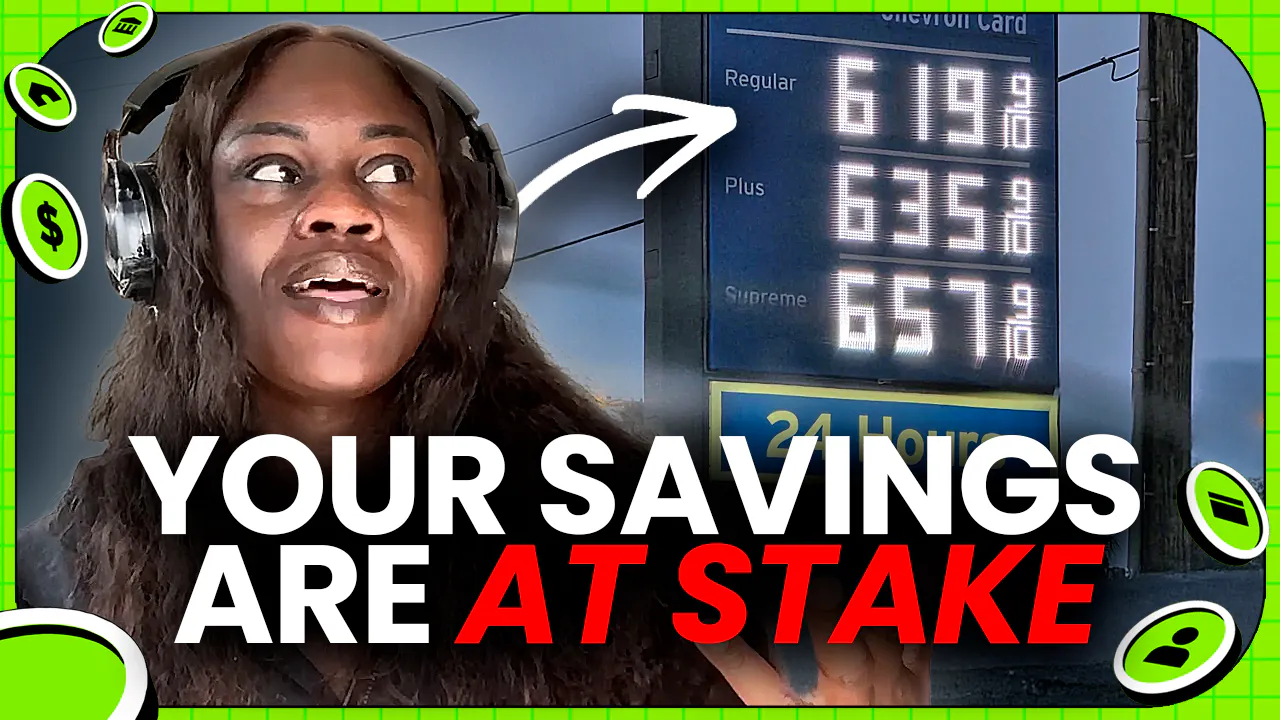
NerdWallet's Smart Money Podcast
What Warflation Costs You and Whether a Short-Term Rental Beats Investing Your Home Sale Proceeds
00:39:26
Loading summary
Transcript134 lines
- [00:01]
A
The following is a paid sponsorship, not an endorsement by Nerdwall's editorial team. Today's episode is sponsored by Bilt.
- [00:07]
B
You've heard me talk about Bilt as the loyalty program that lets you earn points on rent wherever you live, and they just leveled up even more. As of 2026, renters and homeowners can also earn up to 1.25x points on their housing payments.
- [00:24]
A
This is thanks to Bilt's three new credit cards, the the Palladium Card, Obsidian card and Blue Card. All three turn your housing payments, rent or mortgage into flexible rewards so you can choose the card that fits your lifestyle without missing out on points and exclusive benefits.
- [00:39]
B
Built Points can be redeemed at top airlines and hotels, Amazon.com purchases, future rent payments and more. Built Points have also been ranked by top publications as the industry's most valuable point currency.
- [00:53]
A
Your housing payment is most likely your biggest expense. Make it your most rewarding. Find the card that fits your lifestyle and Apply today at joinbuilt.com smartmoney that's J-O-I N B I L T.com smartmoney make sure to use our URL so they know we sent you. Terms and limitations apply subject to approval and eligibility.
- [01:15]
B
BILT cards are issued by column NA member FDIC pursuant to license from MasterCard International Income.
- [01:24]
A
Today's episode is sponsored by Quints.
- [01:26]
B
I've been doing a little spring reset with my closet lately, focusing more on quality over quantity, just building a wardrobe of pieces that are well made, versatile and also easy to reach for every day. That's why I keep coming back to Quince. The fabrics feel elevated, the fits are thoughtful and the pricing actually makes sense.
- [01:44]
A
Quince makes beautiful everyday pieces using premium materials like 100% European linen, 100 organic cotton and super soft denim with styles starting around $50. Their spring pieces are lightweight, breathable and effortless, the kind of things you can throw on and instantly look put together.
- [02:01]
B
And that same focus on materials carries over into their accessories like the leather bags which are made from 100% hand woven Italian leather. And honestly, they look way more expensive than they are.
- [02:12]
A
Quint works directly with ethical factories and cuts out the middlemen so you're paying for quality, not brand markup.
- [02:18]
B
My latest buy on Quint was three different swimsuits. I know it's only spring, but summer is coming, the pool is opening up near my house and I want to look amazing in my swimsuits.
- [02:29]
A
On my end, I recently picked up a European linen sheet set. I'm a really warm sleeper. So as we get into warmer months, I'm just excited to have these breathable sheets to keep me cool when I'm sleeping at night.
- [02:39]
B
Refresh your spring wardrobe with quints. Go to quince.com smartmoney for free shipping and 365 day returns.
- [02:47]
A
Now available in Canada too. Go to q u I-n c e.com smartmoney for free shipping 365 day returns. Quince.com smartmoney it's part of the American dream, owning a little piece of the planet, owning a little piece of land and the home that sits on it. And sometimes it's a home that you don't live in, someone else does. Today we're looking at investment properties and what it takes to make it work. Welcome to NerdWallet's Smart Money podcast where you send us your money questions and we answer them with the help of our genius nerds. I'm Sean Pyles.
- [03:22]
B
And I'm Elizabeth Ayola. Later this episode, we'll be looking at the risks and the benefits of owning investment properties. But first, we must have our weekly MONEY News roundup where we break down the latest in the world of finance to help you be smarter with your money. Our news colleague Anna Helhosky is here to talk about rising prices and how the Iran war could make them jump in even higher. I personally have been feeling very anxious and heavy with all of the war talk. It's terrible to see people potentially losing their lives and just how unsettling the whole situation is.
- [03:58]
A
Yeah, it's been a stressful week, to say the least. We were staring down the barrel of a potential wipeout of a civilization a couple of days ago and it feels like so much is still up in the air, including prices of seemingly everything. It's just been really difficult to navigate. So hopefully we can provide some clarity at least on the finance side of things today. So with that, Anna, hey, good to talk with you, I suppose.
- [04:22]
C
Yeah, both of you as well. Unsettled, I think, is the right way to frame this. I recently did a deep dive into warflation and that's war induced inflation. Analysts say that thanks to supply chain disruptions, if you're driving it, wearing it, eating it, or using it in your everyday life, you're probably going to feel the pinch from higher prices eventually.
- [04:44]
A
Great. So that's exactly what we need to hear, Anna. I mean, so far we've been seeing gas prices on the rise. I'm paying about $5.60 a gallon here in Oregon. But everything else seems decently stable for now, at least. I mean, it seems like prices aren't going up any faster than they already were with tariffs in place.
- [05:03]
C
Yeah, we'll have more data actually tomorrow. But tariffs were already pushing up prices for things like electronics, clothing, appliances, cars. And now higher energy and shipping costs are being layered on top of that. And analysts again say that inflation could rise. Some economists are even warning that if oil prices spike high enough, it could slow the economy and even push the US Toward a recession. Now, more on that in a minute, but let's back up and do a quick overview of how we got here. Now, on February 28, the US and Israel launched strikes on Iran and the war began. In response, Iran closed the Strait of Hormuz, and that's one of the most critical shipping routes in the world. Since then, oil prices have skyrocketed. Before the war, the price of Brent crude, that's the benchmark for the global oil market, was trading around $80 per barrel. Since then, it's hit more than $100 per barrel. And that's for the first time since Russia invaded Ukraine. That massive jump is why we've seen gas prices rise roughly 43% since the war began. The latest national average is above $4, and that's the highest in summer 2022.
- [06:10]
B
43% is an incredibly high jump, I just have to point out. Yeah, we saw tensions rise earlier this week, but it resulted in a ceasefire. Can you walk us through that, Ana?
- [06:21]
C
Yeah. In the last week, President Trump escalated threats to bomb Iran's power plants and bridges, effectively, quote, wiping out an entire civilization. Fortunately, at the 11th hour on Tuesday, he announced that the two nations had come to a two week, six ceasefire agreement. Now, Trump had posted on Truth Social that the ceasefire is contingent on the, quote, complete, immediate and safe opening of the Strait of Hormuz. Iran agreed to the ceasefire, and the Strait has begun opening. In response, the price of oil dropped below $95 per barrel, falling below $100 per barrel for the first time in more than a week.
- [06:56]
B
Well, it sounds like the markets are relieved, but the real question is, will it last?
- [07:02]
C
It's unlikely. There's still a lot of uncertainty about how this will all unfold, and a great deal of unrest persists in the Middle East. Yesterday, just hours after the temporary truce, an Iranian drone hit a pumping station along Saudi Arabia's critical East west oil pipeline, which carries 7 million barrels of crude per day. It's been a key route to bypass the strait, so damage could worsen the energy crisis, it's safe to say that the economic pain from this conflict is far from finished.
- [07:29]
A
So, Ana, how do higher oil prices spread through the rest of the economy?
- [07:34]
C
Yeah, as I mentioned before, most everything you use daily, your food, electronics, and even the plastic containers that they come in, all of it starts with oil and natural gas. Trucks and planes run on diesel and jet fuel, while factories need petrochemicals to make the goods themselves. If those chemicals can't go through the straits, suddenly factories can't keep up and prices start climbing.
- [07:54]
B
Well, let's talk about what people really want to know, Ana. What's likely to get more expensive?
- [07:59]
C
Right now, I mentioned diesel. Well, it powers trucks and other freight vehicles, construction equipment, farm equipment, and marine vessels. When it's more expensive to power these vehicles, the cost will be added to prices for shipping, transportation, and all kinds of the materials I mentioned that are used in manufacturing production.
- [08:17]
B
So basically, almost everything.
- [08:19]
C
Yeah, exactly. Diesel prices are up 50% since the war began. As of recording, they averaged $5.67 per gallon, according to AAA.
- [08:28]
A
All right, well, let's turn to travel now, because we have seen prices already begin to rise on things like airplane tickets.
- [08:34]
C
Yeah, we have. Air travel's really sensitive to fuel costs because planes run on jet fuel. So in some cases, airlines are raising their ticket prices or cutting the number of flights altogether in order to save fuel. Fewer flights, higher fuel costs, that usually means more expensive tickets.
- [08:50]
A
Okay. And I imagine food is also going to get more expensive, what we're seeing at the grocery store, right?
- [08:54]
C
Oh, yeah. Food is getting hit from all sides. I mentioned that farm equipment and food delivery both run on diesel, so that's one factor. But the bigger issue is actually fertilizer. Fertilizers depend heavily on natural gas and other petrochemicals like urea and ammonium. It's spring planting season in the US and if fertilizers are in short supply, crops suffer. Staples like wheat, corn, rice, and fruit all rely on them. About a third of the world's seaborne fertilizers pass through the strait. So any disruptions there can push food prices higher. But we're actually probably not gonna see it in the grocery store for months.
- [09:29]
B
That gives me some time to budget. You mentioned plastics, Ana, and that covers a lot of the everyday household items that we use.
- [09:37]
C
Yeah, plastics and packaging is a big one. Plastics are made from oil and natural gas in the form of methanol and glycol. Roughly 85% of Middle Eastern polyethylene exports move through the Strait. So raw materials used for plastic will get more expensive and in turn raise consumer prices for, you know, you name it. Water bottles, food containers, packaging, furniture, et cetera.
- [10:00]
A
Another plastic product that comes to mind is clothing. A lot of clothing is made from synthetic fibers.
- [10:05]
C
Yeah, that's right. So think polyester, nylon, spandex, fleece. They're all made from petrochemicals.
- [10:12]
B
Then what about electronics?
- [10:14]
C
Yeah. Electronics and tech products could also see price increases because supply chains for materials used in batteries, semiconductors, and fiber optics can be disrupted. So things that might get more expensive are smartphones, laptops, EVs, but also energy storage systems and diagnostic medical equipment like MRI machines.
- [10:33]
B
Cars have been expensive in recent years, but prices were starting to ease, no?
- [10:38]
C
Yeah, that could change. Cars are affected by everything all at once. Plastics, aluminum, shipping costs, and the global supply chains. Of course, if production slows or materials get expensive, both new and used car prices could rise.
- [10:51]
A
Okay, and you mentioned aluminum. That's a pretty important material that's in everything from our phones to computers and soda cans, all of that. That's going to get more expensive too, right?
- [11:01]
C
Yeah. Aluminum is key for constructing buildings, cars, airplanes, appliances, and some everyday uses.
- [11:09]
B
So this war essentially touches almost everything people buy.
- [11:13]
C
You've got it. The important thing to understand is that these price increases don't happen overnight. The timeline usually happens in stages. So first energy prices go up, then shipping costs, then consumer goods, and eventually some services. I spoke with an economist who told me it's likely to take around 6 to 12 months to start showing up. Beyond gas prices and air travel, well,
- [11:34]
B
how much could inflation rise then?
- [11:36]
C
It's really hard to say. But a recent report by the Organization for Economic Cooperation and Development, or oecd, projected that the war in Iran could cause inflation to average around 4.2% in 2026. Now, for context, inflation has stayed roughly between 2.3% and 3% over the last year.
- [11:55]
A
All right, so we're currently in a ceasefire as of this recording. Let's hope it holds, I suppose. But that means the war isn't over. This is just a pause. And President Trump has suggested that US Gas prices would drop once the strait opens. But that's not typically the case. I've heard that gas prices tend to rise like a rocket and fall like a feather. So what do you think we're really in store for here?
- [12:17]
C
Yeah, that's the saying. Now, I'm no geopolitical expert, but the economist I spoke with said that the flow of shipping through the strait is unlikely to immediately return to business as usual whenever it opens more permanently, and gas prices won't necessarily drop. Iran still has leverage to influence how much oil flows through the strait, which would keep global and domestic fuel oil elevated. The US May produce its own oil, but it's not immune to global oil market volatility and price shocks. So really, the big takeaway here is that gas prices are probably just the beginning.
- [12:50]
A
Well, thank you, Ana. I think it's also worth acknowledging how fast things are moving right now in a volatile environment. Your financial strategy should focus most on what you can control, like your own spending habits and saving strategies.
- [13:03]
B
Yeah, that's right, Sean. Rather than reacting to every headline, keep a long term perspective for weathering uncertainty.
- [13:09]
A
Up next, we answer a listener's question about investment properties. But before we get into that listener, you know the deal. You probably have all sorts of financial questions about how this war might affect your finances. Like is it still a good year to buy a home? What about an upcoming car purchase? And should you still take out that credit card that you've been looking at for your travel coming up this summer? Whatever your money question, leave us a voicemail or text us on the Nerd Hotline at 901-730-6373. That's 901730, NERD. You can also email us at podcastnerdwallet.com or leave us a comment on Spotify or YouTube. And you can also subscribe to our show on YouTube as well.
- [13:45]
B
More in a moment. Stay with us.
- [13:50]
A
The following is a paid sponsorship, not an endorsement by Nerdwald's editorial team. Today's episode is sponsored by Bilt.
- [13:57]
B
You've heard me talk about Bilt as the loyalty program that lets you earn points on rent wherever you live. And they just leveled up even more. As of 2026, renters and homeowners can also earn up to 1.25x points on their housing payments.
- [14:13]
A
This is thanks to Bilt's three new credit cards, the Palladium Card, Obsidian Card, and Blue Card. All three turn your housing payments, rent or mortgage, and into flexible rewards so you can choose the card that fits your lifestyle without missing out on points and exclusive benefits.
- [14:28]
B
Built Points can be redeemed at top airlines and hotels, Amazon.com purchases, future rent payments, and more. Built Points have also been ranked by top publications as the industry's most valuable point currency.
- [14:43]
A
Your housing payment is most likely your biggest expense. Make it your most rewarding. Find the card that fits your lifestyle and apply today at joinbuilt.com smartmoney that's J-O-I-N B I-L-T.com smartmoney make sure to use our URL so they know we sent you. Terms and limitations apply, subject to approval and eligibility.
- [15:05]
B
BILT cards are issued by column N, a member FDIC pursuant to license from MasterCard International, Inc. Today's episode is sponsored by Shopify.
- [15:15]
A
I remember years ago when I started the Smart Money podcast. I had no idea if it was going to be a success. Now, years later, the show is, if I can say, a huge success. And I'm so glad that I believed in myself when I launched this podcast. Now I do know I was right in believing in myself launching this show despite all of my fears and hesitations. But it also helps when you have a partner like Shopify on your side to help.
- [15:38]
B
Shopify is the commerce platform behind millions of businesses around the world and 10% of all e commerce in the US from household names like Gymshark, Alo Yoga to Heinz to brands Just getting started.
- [15:51]
A
Get started with your own design studio. With hundreds of ready to use templates, Shopify helps you build a beautiful online store that matches your brand style.
- [15:59]
B
Accelerate your efficiency. Whether you're uploading new products or trying to improve existing ones, Shopify is packed with helpful AI tools that write product descriptions, page headlines, and even enhance your product photography.
- [16:12]
A
It's time to turn those what ifs into with Shopify today.
- [16:16]
B
Sign up for your $1 per month trial today at shopify shopify.com smart money
- [16:22]
A
go to shopify.com smart money that's shopify.com
- [16:27]
B
smartmoney
- [16:31]
A
we're back and answering your money questions to help you make smarter financial decisions. This episode's question comes from Becca who emailed us their question. Hi Sean and Elizabeth. My boyfriend and I are selling our condo in California to move to Texas. I think I prefer to rent when we move to Texas and my boyfriend and I have been discussing what to do with the net proceeds from selling our California home. He likes the idea of buying land in Utah. I love the mountains and building a mountain chalet that we can visit throughout the year and have as an investment property when we are not using it Airbnb style. He is excited about the idea of designing and constructing, but I have hesitations about the cost to build as well as the complications of managing the property from several states away. The alternative we are evaluating is simply to invest the proceeds from our California home sale. Our question for you is would you consider having real estate and a short term rental a strong diversification of my portfolio or is it more of a risk? Thank you Becca.
- [17:28]
B
Becca and partner, welcome in advance to Texas, where I am now located. Now, to help us answer Becca's question on this episode of the podcast, we are joined by our go to nerd whenever we talk about managing rental properties. Lisa Green. Welcome back to Smart Money. Lisa.
- [17:45]
D
Well, thank you Elizabeth. I'm so glad to be here.
- [17:47]
A
Hey Lisa, good to talk with you again. I want to start by talking about how much cash Becca and their boyfriend might net from selling their condo. And the truth is that we just don't know what those numbers are because we don't know how much they bought their condo for. That we don't know how much they might sell their condo for. But there is some good news when it comes to selling property, which is that you can likely pocket your gains. You might be able to keep up to $250,000 in capital gains tax free. That's $500,000 if you are married, filing jointly, which is pretty nice. But here's the thing about condos. They have a reputation for accruing value more slowly than something like a single family home. So Becca and their boyfriend's first step should be to see how much they might be working with after selling their house and then they can think about how much they would really be playing with when it comes to either investing or buying or building something. Now, assuming they do have some cash to work with, let's explore these different options that Becca is presenting. First, buying land in a different state and building a mountain chalet, which sounds frankly extremely fabulous, although very complicated and maybe expensive. And then again, the other option is simply investing the proceeds from their sale. And I assume they just mean investing in the stock market. Here I get the impression that Becca and their boyfriend are first time landlords, which is also something to consider. So Lisa, what's your take on this entire situation and the potential options that they're proposing?
- [19:09]
D
You know, Utah is just such a beautiful state. I love visiting there and I understand the appeal of wanting to have a chalet there. That would be awesome. I am also generally a fan of real estate investing. I've been doing it for more than 20 years. However, in this case, I would suggest approaching it with some caution. You need the right real estate investments to make it work for you. And at a distance, it can be very, very important to have a good property manager who lives in that area and could take care of the property while you're not there.
- [19:47]
B
As Sean was reading, the question it took me back to a couple years ago when I was leaving Florida. I was renting a condo and the landlord wanted to get rid of it and they wanted to sell it to me. And as I was doing my research, because I was like, maybe this is a good opportunity for me to get into real estate and rent it out. Exactly what you said, Sean. The value can apprec pretty slowly. So that was a risk that I wasn't willing to take. Lisa, what would you say are some risks that you see with this option that Becca wants to take? One of the options?
- [20:17]
D
Well, Elizabeth, I would say one big risk is the possibility of negative cash flow, which means that you're just not getting enough rent coming in to cover the expenses going out. And so you end up having to pay some of those expenses out of your own pocket during those times. So are you able to dig into your pocket to cover those costs if you have some unexpected large expenses or if your occupancy is lower than what you had hoped?
- [20:54]
A
Something I'm thinking about as well is again, we don't know how much Becca and their boyfriend might net from this condo sale, but it's not like they're going to be able. Or maybe they shouldn't be using all of the proceeds to construct the chalet or to buy rental property or just invest it. They should likely be pocketing some just for savings for a rainy day, especially if they're going the rental route.
- [21:14]
D
Very good point. Another risk I see is just wear and tear. There are very few renters who would take care of your property the way you would take care of it if you were living there yourself.
- [21:27]
B
Can I count myself as one of those renters? Minus IO?
- [21:31]
A
Yeah. You and your son are tearing apart your apartment. We know that.
- [21:35]
B
The blinds, I find scissor cuts in them. I don't know how that happened, but I will be having to replace the blind.
- [21:41]
A
Say goodbye to your security deposit?
- [21:43]
D
No. Well, with a short term rental, wear and tear doesn't just affect, like the building, the property itself. When you have a short term rental, you also have furnishings in it. You have furniture, appliances, linens, glassware, all of these things that you provide for your guests. And so those things experience wear and tear as well. You know, some of those furnishings might just accidentally make their way into a tenant's suitcase and walk right out the door with them.
- [22:16]
A
Yeah.
- [22:18]
D
Or again, they don't necessarily treat your home the way you would treat it. We once had a renter who like checked out and left and left water running in A stopped up bathroom sink. It was like very fortunate that we caught it in time because that could have really caused a big disaster.
- [22:38]
A
Yeah. It's important to think about who might be staying at your rental property and what their intent would be. If it's a long term renter, that's going to be their home, they want a cozy place to stay. If it's an Airbnb, that could just be a party pad and they might not really care about what they do or how they leave the place at the end.
- [22:53]
D
And then another issue I think that particularly applies to short term rentals is local ordinances. You know, some communities have had what they consider negative experiences with Airbnb type rentals. And so they've started to restrict those rentals because neighbors have complained about the noise or the traffic or whatever. And so this is true in the area where I live. It's also true in the area where my son lives several states away. So it may be somewhat widespread. And so if you already are set up and, and renting your house on a short term basis before these ordinances go into place, you might be able to continue. They might let you continue since you were already set up, but they might not. So I think it's worth considering what would you do if you were no longer allowed to use your property that way?
- [23:51]
A
And it's really on the person owning the property to be aware of all these various ordinances. You need to be proactive because a city doesn't care. If you didn't know about a rule and violated it, they're still going to charge you. There was just an issue in the Portland area where a number of Airbnb type renters didn't know they were violating various ordinances. And I heard about one man who was charged $20,000 because he violated an ordinance that he wasn't aware of. And this was an older gentleman, he didn't have a lot of money and it's putting a lot of strain on people. There's been, of course, some backlash to this, but you can really get into trouble if you don't follow the rules to the letter.
- [24:25]
B
And I'm just curious, since you are both property owners and renting out, where do you find or stay up to date on those kind of resources?
- [24:33]
D
Well, where I live there are some like, associations of, you know, folks who do this type of real estate investing. And so you can hear a lot there or you can follow the local news. Sometimes it's in the local news when the city is about to change an ordinance. If you are actively like registered as a short term property rental owner, then the city itself might send you notifications when things happen.
- [25:03]
A
And for me, I'm not doing short term rentals, so I just read up on my local city's ordinances for having a long term rental and I trust my property manager to ensure that we're all in accordance to that. And yeah, it's pretty straightforward for me, fortunately.
- [25:18]
B
Now here's the big thing that you need to keep in mind when you're deciding between real estate investing and also stock market investing. Now, investing in the stock market is so much more straightforward. With investing in the stock market, you choose the account you want to invest in, you can choose your investment and then hopefully you can watch your money grow over time. Now, I want to put out there, of course there are plenty of risks when it comes to investing in the stock market. If you have looked at your portfolio lately, then you will be able to relate to that. But it can be a less hands on affair than building and managing a property. Now, in Becca's case, they're asking whether real estate would provide good diversification for their investments or if it's more of a risk. And the answer is, Becca, yes, possibly real estate could provide good diversification. Of course, we don't know the exact makeup of their portfolio and there are plenty of risks that come with that. But Lisa, can you speak to how you view your real estate investments in the broader context of your portfolio and then how do you compare their risk to that of your stock investments?
- [26:22]
D
Yeah, I think with the stock market you typically make a choice. You're either investing for growth, like the appreciation of the value of your stock over time and you don't really realize that growth until you sell the investment, or you're investing for income where it throws off cash that you can spend as you go along and you make a choice. With real estate, I think that you have the potential to do both at once because you can get growth as your real estate increases in value. And if you have invested for positive cash flow, you can also get an income stream when the rent that you are receiving exceeds your expenses as you go along. And that's like a great situation to be in. Also, your real estate doesn't necessarily move in tandem with stocks. So when the stock market falls, your real estate might still be doing fine and vice versa. So in that sense, I do think it can be good diversification. Now, in my own case, my real estate investments over the years have pretty typically outperformed the stock market But I used a really different style of real estate investing for the most part than what Becca is considering. I bought fixer uppers or foreclosures, properties that essentially gave me immediate equity in them. And then on top of that, we did a lot of the physical work on them ourselves in order to save money and make them a little bit more profitable, especially in the early years. So, you know, that was helpful in our generating better returns. Becca is talking about something a little different.
- [28:19]
A
Yeah, they're talking about potentially building a chalet from scratch. How does that change the calculus about whether this could be a risky or potentially lucrative venture for them?
- [28:29]
D
I mean, I think that's something really important to consider. The outcome could be different for new construction. Building materials are really expensive these days. Labor costs are really high. So, you know, I would kind of go back to something that you mentioned earlier, Sean. This may not be an all or nothing decision for choosing between stocks or real estate. You could potentially do some of both. You could use part of your cash toward a property in Utah and then get a mortgage for the rest of the cost of that property. Then you still have part of your cash for other uses. That could be stock market investments. It could be having cash reserves to help cover any unexpected expenses. Now, there is a caveat around taking a mortgage for this property. This will make cash flow a bigger challenge because you're going to have a mortgage payment to make. But it does help you diversify, and it also prevents you from having a lot of what we call trapped equity in a paid off property. Because if you have this property that's sitting there completely paid off and you're in a financial bind and you need access to some of that value of that property. Stocks are more liquid than real estate. It would be easier to tap the money that you need by selling stocks than by trying to go out and sell the property or get a, you know, mortgage on the property after the fact.
- [30:06]
A
Right. I want to go back to your note about cash flow being an issue, because if they do have a mortgage on their potential chalet, I assume they would also be paying rent in Texas, too. So that's a good amount of money each month going towards covering housing expenses. And one would be a place that they're not even living. So they'd have to be really clear on how much money they have coming in. Again, beefing up their savings, hopefully, and just being confident that they do have enough liquidity on an ongoing basis to cover all of the myriad expenses from their rental property. They'd be Living in and a chalet states away from where they are. Another thing I'm thinking about is whether real estate is a good investment for Becca and their partner right now is going to come down to a lot of personal factors like what their lifestyle is like and whether they have sufficient cash and access to capital to cover these building costs. And I assume some semi frequent trips from Texas to Utah. Lisa, can you speak to the lifestyle and time commitments of managing rental properties?
- [30:59]
D
Yes. You know, lifestyle is a big factor here. Becca and her boyfriend love Utah and they want to spend time there. So this is not purely an investment decision for them. So while you are analyzing the best financial move, you're also thinking about what will give you the life that you want to live. And I have faced a decision like this twice and I made opposite decisions each time. The first time was when my son moved thousands of miles away to a beautiful location where we knew we would want to visit a lot. So we considered doing something very similar to what Becca is considering. We thought about buying a house there and using it as a short term rental when we were not there. Ultimately we decided against it because we didn't want property maintenance to dominate every visit we made. When we go there to visit our son. We want to visit our son, enjoy the beautiful location and not spend all of our time trying to deal with the deferred maintenance on this house that tenants have been in and possibly messed up.
- [32:21]
A
Yeah. Even though you could have possibly written off some of those trips. Correct. If you were going.
- [32:25]
D
That is true. That is, yeah. Yeah. And we also did not want the hassle and the cost of maintaining a property long distance in a very expensive location. We would have had to hire the property manager. We would be paying for someone else to do all of this maintenance every month while we were not there, whether it was occupied or not. And so we ultimately decided to rent when we visited there. This has been the right decision for our lifestyle and we think probably for our pocketbook as well. Although we know that we did miss out on the gains we might have made from home, appreciate home values appreciating in that area. And. And of course, as you mentioned, Sean, possible tax write offs that we could have had from our trips there.
- [33:20]
A
Yeah. So with this first situation, do you think it was really more the lifestyle choice that won out over the dollars and cents opportunity that you just didn't want to fuss with having to manage a property and you said the money just isn't worth it.
- [33:32]
D
Exactly. It was more of a lifestyle decision because there are other options for investments.
- [33:37]
A
Yeah. And you want to go hang out with your son. You don't want to be worried about managing some property that's far, far away from where you're living or wherever you are.
- [33:45]
D
Yeah. It is very stressful to get that phone call that something has gone badly wrong with your property when you're thousands of miles away and you've got to try to figure out how to deal with it at a distance. And we just really did not want that for ourselves.
- [34:00]
A
I live about three hours from my rental property and I've been renting it out for just about a year now. And I still dread that inevitable call that I know is coming, which is why I continue to just sock away a decent amount of money each month just to cover whatever is going to happen to my house.
- [34:16]
B
Lisa, tell us about the second time where you made the opposite decision. What did you decide that time around and what lifestyle choice influenced that decision? Yes.
- [34:24]
D
Well, the second time was when we left a home that we really loved. We needed to move to be closer to family members who needed help. But we were, we owned this kind of unique property that we really loved and we thought that we might want to move back into it someday. So we didn't want to sell it. We knew it would be difficult to replace if we sold it, so we turned that one into a short term rental. Now, again, this was not a purely financial decision. This is one of those situations where lifestyle plays a factor and it may not have been a wise financial decision. We do not have positive cash flow from this property. We are losing money on it. The occupancy for short term rental has been lower than we had hoped. We had to spend quite a bit of money on furnishings and linens and glassware. And the tenants have already damaged some of these things. And we do have local ordinances that restrict how we are allowed to market the property. But we do still own the house. We can move back into it whenever we want. It's only a half an hour away from where we're living right now, so it's easy to keep tabs on it. We can write off the losses against our other rental income and we still will benefit from the appreciating home values. And we also preserve that sweet, sweet 2.75% mortgage from a few years.
- [36:11]
B
Jealous?
- [36:12]
D
We're not gonna can't replace that.
- [36:14]
A
No.
- [36:15]
D
So even though in this case we made the opposite decision, this, it appears to be right for our lifestyle and I know we'll be very glad of it. If we decide to that we want to move back to that house.
- [36:26]
A
Yeah. Hearing that description, it sounds like the short term rental aspect is kind of a drag on your lifestyle because of just the various pains around like marketing restrictions and fixing glasses and buying random things for the house. Do you think you would ever convert that to a longer term rental or do you just like having one short term rental in your mix?
- [36:45]
D
In our personal experience, I found long term rentals to be easier to manage and easier to use. Now, in Becca's situation, a long term rental doesn't really accomplish her lifestyle goals. Yeah, because they want to be able to go and stay in that property for a vacation home. So if someone's living there full time, you not really have the opportunity to say, hey, can you like go somewhere else for a week? Because we want to stay in this property that we own. In this particular case with the house that we decided to use as a short term rental, it just was that particular property was not well suited for a long term rental or else that's probably what we would have chosen instead. And it was our first time to try short term rentals. There are many people who say that they can make a lot more profit on a short term rental than if they had the same property as a long term rental. And I'm sure if the circumstances are right, that's probably true. But the circumstances have to be right. And in our particular case, I think they were not.
- [37:55]
B
That reminds me of, you know, I love a Facebook group. And I was poking around in one and someone had asked like, you know, people who make over six figures, what do you do? And I was so intrigued to see so many travel nurses who had rental properties that they were renting out short term rentals and making tons of money from for nurse to other travel nurses who were coming to the city and only needed to stay for short periods and they would make thousands of dollars off of those short term rentals. Now obviously, I don't know, like you guys say the losses they were facing or the challenges or the late night calls that they had, but I know that they did find it profitable.
- [38:30]
A
Yeah, yeah. I think a lot of it comes down to knowing your market or maybe finding a niche in that case that you just described. Elizabeth.
- [38:36]
B
Yeah, but I think what I'm hearing you guys say mostly from this conversation is that, you know, just because it's profitable, it doesn't mean it's the right thing for you to do. So you really need to make sure that it also fits into your lifestyle and how you want to live your life, you know, it's not always about just making extra money.
- [38:53]
A
Yeah. And that really comes down to what Becca and their boyfriend's long term financial goals are. Do they want to maybe get a solid return through investing in the stock market? Do they want to be able to have access to a house in Utah? It seems like the Utah home is their greater priority than just returns or potential income from stocks. But there'll be a lot more to sacrifice and other logistics to coordinate when it comes to actually building a chalet in Utah.
- [39:18]
B
Yeah.
- [39:19]
A
Okay. So, Lisa, if you could leave our listener Becca and everyone else listening with some advice in 30 seconds to do just maybe one thing, what would that be?
- [39:28]
D
Well, I would say the very first thing is to look closely at whether you can achieve your lifestyle goals by renting when you visit Utah rather than owning there. And then if you decide that owning is the path you want to take, then do your due diligence as you would for starting any business, because that's essentially what you're doing. You're starting a business. And there are many, many questions to consider from the going rates for short term rentals into the area. Like what, what's the demand? Like, is it seasonal? If so, how much vacancy are you going to have in the off season and how are you going to cover the expenses of that? And during the prime season, that's probably when you can get the most tenants, but that may also be when you want to go yourself. So how much of that prime time are you going to be using rather than renting? And then, and then of course, all of the other factors that we have already discussed, like your ordinances, your local ordinances, the cost of the new construction. Again, just like treat it as a business. Think of it as like writing your business plan. How is this going to work for you? And that can kind of help you make a decision.
- [40:51]
A
Yeah, it sounds like they have a lot of research to do before they start this venture if they are going to go the chalet route.
- [40:58]
D
Yeah.
- [40:59]
A
Okay. Well, Lisa, thank you so much for coming on and talking about rentals with us. It's always so fun to chat.
- [41:04]
D
Well, thank you for having me. I think that Becca is already asking smart questions and so I wish them the very best of luck in whatever they decide.
- [41:13]
A
Likewise. And Becca, please let us know what you and your boyfriend decide. We'd love to hear from you. Okay. And that's all we have for this episode. Remember, listener, that we are here to answer your money questions. So send them our way. You can turn to the Nerds and call or text us your questions at 901-730-6373. That's 901-730-NERD. You can also email us your questions to podcastnerdwallet.com or leave us a comment on Spotify or YouTube.
- [41:39]
B
Come hang out with us next time where we will go deep into Reddit. We love Reddit over here. To see what people are sharing about their personal finances and also whether they're actually getting good advice. Follow Smart Money on your favorite podcast app that includes Spotify, Apple Podcasts and iHeartRadio to automatically download new episodes.
- [41:59]
A
Here's our brief disclaimer. We are not your financial or investment or rental advisors. This nerdy info is provided for general educational and entertainment purposes and may not apply to your specific circumstances.
- [42:10]
B
This episode was produced by Tess Viglund, Hilary Georgie help with editing, Nick Karisami and Eve Krogman Helmar Audio and our video production.
- [42:19]
A
Huge.
- [42:19]
B
Humongous, Gigantic. Thank you to NerdWallet's editors for all their help.
- [42:24]
A
And with that said, until next time, turn to the Nerds. Hey smart Money listeners. We have a brand new email newsletter and it's completely worth signing up for, especially since it's free.
- [42:41]
B
Every issue has clips from recent episodes, links to stories you might have missed, and also behind the scenes commentary from me, Sean and our producer.
- [42:50]
A
Some of it is stuff that doesn't make it into the episodes, the context, the moments, the takes we didn't plan on sharing.
- [42:56]
B
You can think of it as the group chat for Smart Money fans. I'm gonna be sharing inside details about parenting and money. Yes, I'll be sharing all the juicy
- [43:05]
A
stuff and I'll have loads of tips about what I'm doing in my garden. So if you wanna putz around your garden like I do, sign up for the newsletter. And also, you know, we have money, tips and all that kind of stuff. So head to NerdWallet.com podcast to sign up. Again, it's free.
- [43:19]
B
That's NerdWallet. Com podcast. We'll see you in your inbox.