← Snap Judgment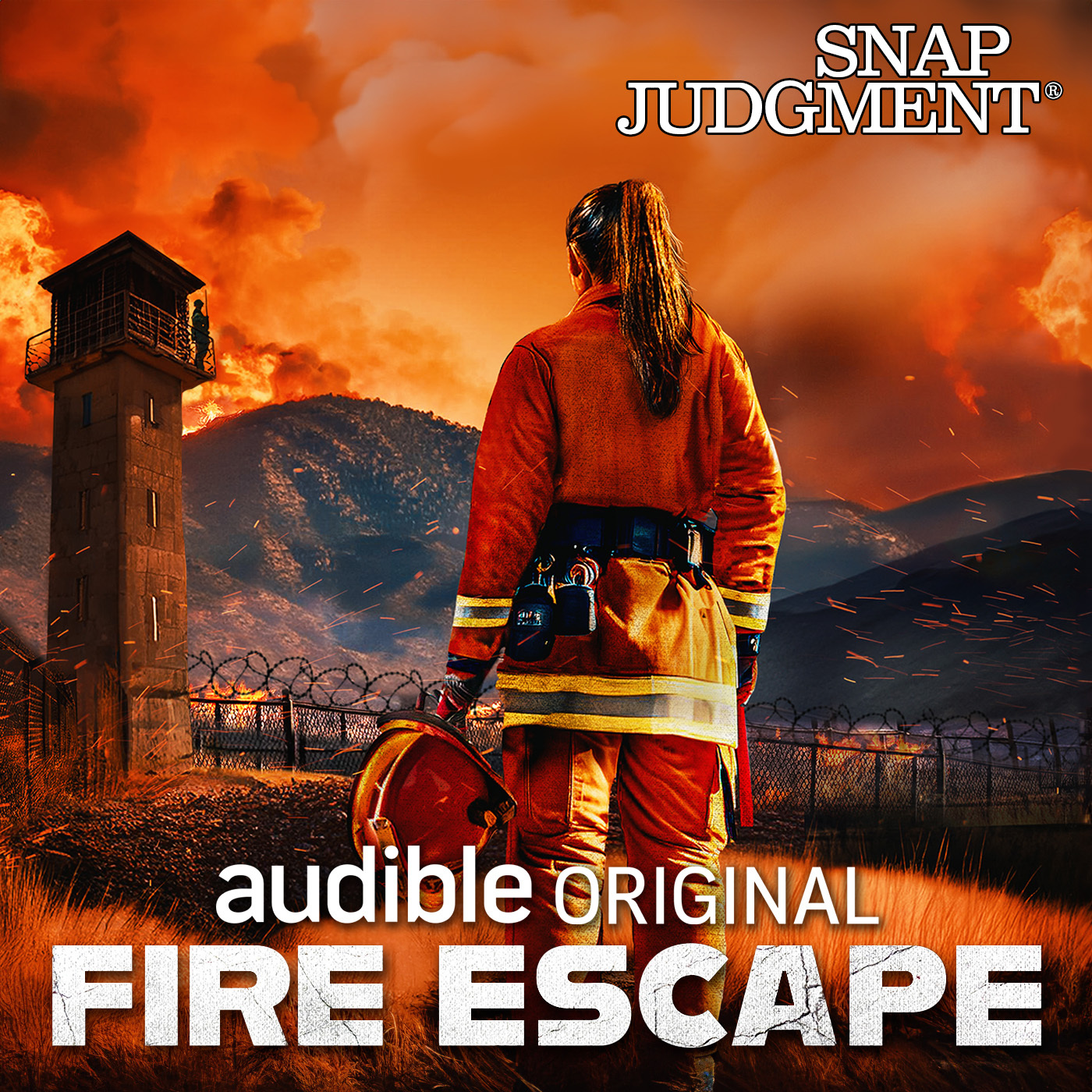
Snap Judgment
Fire Escape: Release EP5
00:33:20
As wildland fires burn hotter and stronger across California, Amika and the incarcerated firefighters are put in extreme danger. At a massive, out of control fire, Amika must defy orders for the sake of the women on her crew.
Loading summary
Transcript101 lines
- [00:03]
Snap Studios Host
Snap Studios. Okay, if you're a billionaire, you can skip this part. But if you're not, if you don't appreciate putting your paycheck into a bank only to see it immediately zapped with fees for this, with fee for that and the fee on the fee, you should know that Chime is changing the way real people bank fee free and smarter banking built for you. Because Chime isn't just another banking app. They unlock smarter banking for everyday people with products like MyPay giving you access to up to $500 of your paycheck anytime and getting paid up to two days early with direct deposit. Some banks still don't do this. And yes, I wish the younger me would have learned about this a long time ago. Chime is not just smarter banking. It is the most rewarding way to bank join the millions who are already banking fee free today. It just takes a few minutes to sign up. Head to chime.com snap that's chime.com snap
- [01:07]
Narrator (Anna Sussman)
Chime is a financial technology company, not a bank. Banking services and the secured Chime Visa credit card are provided by the Bancorp Bank NA or Stride bank na. Optional services and products may have fees or charges. See chime.com feesinfo terms apply. Limited time only. Must open the new account and complete qualifying activities to earn rewards. Advertised annual percentage yield with Chime plus status only. Otherwise, 1% APY applies. No minimum balance required. Chimecard on time payment may have a positive impact on your credit score. Results may vary. See chime.com for details on applicable terms.
- [01:38]
Snap Studios Host
Today on Snap Judgment, we're bringing you episode five of our fire Escape series. Sensitive listeners are advised.
- [01:52]
Narrator (Anna Sussman)
On Christmas Eve, Ameca and the incarcerated firefighting crew were called a house fire. And they found a home fully engulfed in smoke and made their way inside.
- [02:04]
Amika Mota
It's like a haze. We, you know, we all are fully geared up, which means we've got our scba. So we're breathing through our masks of air, right? So everything we see, it's smoky, it's hazy, it's dark. You know, the sounds are really muffled because we're all up in our gear. And yeah, visibility is not real good. And obviously like, you know, on a house fire, all the electric is out. So we're pretty much in the dark, working with our lights.
- [02:39]
Narrator (Anna Sussman)
There were multiple crews on the scene. Amica's crew got to work removing the gifts from under the tree to save them from the water and the smoke. And as they were working, a corrections officer pulled into the driveway. It was his house. And he saw a bunch of incarcerated women removing Christmas gifts from his living room.
- [03:02]
Amika Mota
Like, kind of. I think he was shocked to see us pulling all of the presents out of the house. And it felt like his first assumption was that we were doing something wrong. And so that, you know, he kind of came with that energy, like, what are y' all doing? What's going on? What's happening? Like, why are you touching my shit? Your house is on fire. We're trying to save your shit.
- [03:28]
Narrator (Anna Sussman)
The scene was kind of chaotic and also quiet. Amika says she watched the CO try to piece it all together.
- [03:36]
Amika Mota
He was watching us and what we were doing, and then he saw the pile of gifts and photos, and that shifted him, you know, it was like, oh, you know, wow, thank you.
- [03:50]
Narrator (Anna Sussman)
It was a big house fire. Everything was smoked out or wet.
- [03:53]
Amika Mota
There is another crew working on the fire. There's, I think, multiple engines on site at this time. And so it's actually. It is absolutely other crews that are working on hitting the fire on the roof right where we are in the front, just protecting property, basically. We go through and we're doing kind of like a final sweep before we wrap up to head out and. And, yeah, I mean, we just do a walkthrough. We feel real good about everything. We've gotten all the gifts. Like, a lot of the electronics we knew are expensive, all that stuff, because
- [04:29]
Narrator (Anna Sussman)
other five writers were going to continue to hose it down.
- [04:32]
Amika Mota
They were staying on the work, and I don't know why that was. Usually we're the ones that stay the longest and do the most of the grunt work. And I don't know. I don't know why that happened, but we did. We did head out from there feeling like we had wrapped up, we'd done our job. Everything was clear. I remember being kind of hyped about it leaving because it felt like we're actually, like, saving property. And then it was a CO's house. It's not necessarily, like, pride for saving a CO, but there was just something about that dynamic. We felt proud. We were, you know, we had done our best. We had kind of saved Christmas for this family, and we were proud of ourselves.
- [05:26]
Narrator (Anna Sussman)
The firefighters drove home through the Central California Christmas Eve night. They washed down the truck and went to sleep on the bunks that lined the walls of the bunk room. The next morning when they woke up, they heard the captain. He was on the phone inside his office. He was talking to the CO from the house they had tended to the night before.
- [05:47]
Amika Mota
The CO cussed out Our captain and was like, you ain't shit. This is a fake ass fire department. Like my house rekindled
- [06:01]
Narrator (Anna Sussman)
that night after all the firefighters either went home or back to the prison. The fire at the CO's house had rekindled in the attic and the house kept burning.
- [06:11]
Amika Mota
That's like a bad look for any fire department.
- [06:15]
Narrator (Anna Sussman)
There had been a few firefighting teams at the scene that night and another team had been responsible for putting out the flames.
- [06:23]
Amika Mota
And so we were getting the blame for this fire reigniting, yet we weren't the ones up on the attic. The, the sentiment of the call was like, y' all fucked up, sloppy ass firefighters. Because we were the incarcerated firefighters that responded to the call that apparently were not good enough for this correctional officer. I knew there would be some people that knew who I was as a human being. And then there's gonna be this other half of them population, I don't know, that just sees me as a piece of shit, you know, and just sees me as my crime.
- [07:18]
Narrator (Anna Sussman)
From Wondery and SNAP studios at kqed. I'm Anna Sussman and this is Fire Escape. The story of a woman whose world burned down. And then she learned to fight fire from behind bars. This is episode five, Release. Before she was incarcerated, before she was called an inmate, Amika was used to being someone who was endowed with trust, even more trust than your average free person because of her work. And when something unexpected happened in her work as a midwife, the family she worked with tended to see not evil or failure or crime, but a natural part of life. Because of this level of trust she enjoyed.
- [08:04]
Amika Mota
There's a few births that come to mind. One of them was Baby Danisha. So there was a couple we were working with and they were just like the sweetest. They came to every prenatal visit. She just would always be in kind of the full garb of.
- [08:30]
Narrator (Anna Sussman)
They were from a nearby traditional religious community.
- [08:34]
Amika Mota
And she always wore kind of the long skirts and little bonnet and just was always really covered up and modest. Just this really, really sweet couple. And we knew that they lived on a farm. Oh. The other thing about this couple was that they were. One thing that they really wanted was at their birth was they wanted us to be singing hymns. And I was like, shoot, I don't know any hymns. And at that point in my life, I was definitely not Christian. And I was like, you know, I didn't know any hymns for damn sure, but I was gonna do it for sure, like fully respect them. And I would always get down like that. Like, whatever families wanted, I could do. And one of her very last prenatal visits, she came in with a clear water bottle, and it looked like there was tea in her water. And we asked her if she was drinking tea, and she said, no, this is our well water. So that I remember kind of being a little taken aback by the color of their well water at that prenatal. But, you know, just that was it. I just remember that moment. And they also really didn't want to do sonograms or any of the additional testing.
- [09:44]
Narrator (Anna Sussman)
When she would visit, Amika would listen to the baby's heart rate, measure the mother's bel. And when the mother went into labor, Amica and another midwife met her at a small wooden house.
- [09:55]
Amika Mota
This is a little birth cottage on this woman's property. And so we were at their birth when Danisha was born. Her little head came out. Could see her little face. And she was, like, looking up. Posterior baby. And then she slipped on out. And she did not have arms or legs. She had, like, three little fingers on, like, her. Her little hands looked like wings, but they were kind of, you know, attached right to, like, where her shoulder would be. And she also did not have legs. And so when she was born, it was a total shock to all of us, but Danisha was born in Mama's arms, and we all busted out in a hymn at that moment, How Great Thou Art. And it was crazy because I did not study those hymns, but I just knew every word to that hymn somehow. And I remember that Papa kind of looked at Mama and kissed her, and it was like that music was taking that empty space of this shock. And like, oh, my God, is my child. You know, like, everything that a mother is processing at this moment. Yeah, the room was just filled with us singing. And so I think it was. It carried her a little bit in that moment. So, yeah, that's one of those ones I will never forget, because it was a. Because it was everything in one. It was the shock of, you know, just being with the family when they go through that.
- [11:50]
Narrator (Anna Sussman)
She was bound in a circle of trust, a circle she found herself in all the time as a midwife. And then when she was imprisoned, that circle disappeared. Amica and I talked about the concept of trust more than 40 times in our conversations, how almost impossible she felt it was to ever be trusted again. And then she found firefighting.
- [12:17]
Amika Mota
Part of me, like, embodying this firefighter Persona. And this whole, like, new version of me had a lot to do with that trust that Was given to me inherently by anybody that we were responding on a call to. Right. Like, they looked to us to take care of them well, and they trusted us. So it was very similar in some ways to that kind of to what it was like to be a midwife.
- [12:51]
Narrator (Anna Sussman)
Amica had now been working as an incarcerated first responder for almost two years. And during her time in prison, during her time as an incarcerated firefighter, Something was happening in California that impacted every firefighter us.
- [13:07]
Amika Mota
Wildfire season is off to its worst start in a decade, Especially out in California, where fires have already scorched three times more land.
- [13:15]
Megan Peebles
I just checked in with cal fire
- [13:17]
Narrator (Anna Sussman)
to take a look at the numbers, and right now we are seeing more acreage burned.
- [13:22]
Megan Peebles
Apocalyptic fire scenes are appearing more and more across the world.
- [13:26]
Narrator (Anna Sussman)
A dangerous fire climate was getting worse and worse every year. Wildfires were breaking out all over the state. Forests were going up in flames. Entire towns were burning down. And the state of california was calling up hundreds of incarcerated people to help fight the fires.
- [13:46]
Amika Mota
They rely on incarcerated firefighters to make up, you know, almost half of the labor force in California that is fighting wildland fires. I think it's between 30 and 40% of incarcerated firefighters that are actually on the front lines fighting those fires.
- [14:06]
Narrator (Anna Sussman)
And what are those firefighters doing the
- [14:09]
Amika Mota
most dangerous work of all. We're on the front lines, cutting line or all up in the fire. Yet the most dangerous work.
- [14:21]
Narrator (Anna Sussman)
By using incarcerated firefighters, the state saves millions of dollars a year. The firefighters at Station 5 didn't go out into the forests and stay at camps to fight wildfires, but they did respond to huge tinder fires that would break out in the valley.
- [14:38]
Amika Mota
It's hot as hell in chowchilla. We didn't have a lot of rain. There was a lot of kind of easy tinder, and it was scary. The biggest fires were the slough fires. Those were often the ones that were just massive in the way they looked and were also the hardest to contain.
- [14:56]
Narrator (Anna Sussman)
So a slough fire is a kind of agricultural wildfire. They ignite in the big ditches that crisscross California Central valley. So one day, when namika was lead engineer in charge of the engine and the hoses and the safety of her crew, she pulled up at what looked like a pretty, pretty big slough fire. She jumped down from the truck and started pulling hoses.
- [15:22]
Amika Mota
I hope and pray my skills are good enough to get the job done. Like, I hope I remember the pattern I need to spray my nozzle at when I hit this type of fire. A slough fire. Can then spread. You know, there's the surrounding kind of like wildland areas and farmland, and then you have the trees above. And so there's like so many different ways that it just could really, really spread.
- [15:49]
Megan Peebles
That's the nature of fire. You can't really. We're not in control of it. We're trying to control it, but we can't. We pulled up and the smoke, like, different fires have different smoke. And you're trying to just figure out, like, what do you need to do and what do you need to do to help?
- [16:08]
Narrator (Anna Sussman)
And this is Megan Peebles. She was a nozzle operator on Ameca's crew at this slough fire.
- [16:14]
Megan Peebles
I think that was my first time that I realized that things could change super drastically.
- [16:27]
Narrator (Anna Sussman)
The ditch itself was full of smoldering debris, but Ameca's firefighters had to cross the slough to some trees on the other side. So the captain, the correctional officer in charge of them, directed the women to lay their hoses across the hot ditch.
- [16:46]
Amika Mota
I remember knowing that, like, that's a textbook. No, no. We clearly have read and in our training as firefighters, even incarcerated firefighters that just study these books to get on the truck. Like, we know that's a textbook. No, no, you don't bring your hoses across. Active burn. So it was like a red flag trigger. Like, I knew seemed a little bit off, right?
- [17:15]
Megan Peebles
I think I was still really new and I just was. Whatever they told me to do, I did.
- [17:24]
Narrator (Anna Sussman)
Amica was hesitant to tell her team to put these hoses across the slough. Like her captain was telling her. She was getting close to her release date and she didn't want to make any trouble, but she knew this was a faulty order. Don't go anywhere. The story continues right after this break.
- [17:54]
Snap Studios Host
Family reunions happening. I love getting to see the oldsters. Makes me think about my own small branch of the family tree. How do I protect everything that we've built? Because planning for the future cannot wait. That's why finding the right insurance policy is straightforward with policy genius. Because when the OGs ask me, hey, are you handling your business, taking care of the family? Their family? I can look them in the eye and say, no worries. Because the policygenius, their licensed team, prioritizes your needs instead of one size fits all and helps you find your most affordable policy for you. With Policygenius, you can see if you can find 20 year life insurance policies starting at just $276 a year for $1 million in coverage. Head to Policygenius.com to compare life insurance quotes from top companies and see how much you could save. That's policygenius.com.
- [18:58]
Narrator (Anna Sussman)
Welcome back to Snap Judgment. This is Fire Escape, the story of a woman whose world burned down. And then she learned to fight fire from behind bars. Amika was hesitant to tell her team to put these hoses across the slough. Like her captain was telling her she was getting close to her release date and she didn't want to make any trouble, but she knew this was a faulty order.
- [19:27]
Amika Mota
Flames are literally above the treetops at this point. And this is your only defense against the flames is your hose. We knew that we were kind of being told to do something that didn't make sense, but we had to do it. Was our captain giving us orders?
- [19:49]
Megan Peebles
I think that all of us looked at it as for sure, we don't have the authority to question a captain or the chief, but were we in the position to say anything? Ultimately, we are incarcerated individuals. It's not like we could go or do anything without our captain or a chief with us.
- [20:17]
Narrator (Anna Sussman)
So Ameca instructed her crew to pull the hoses across the Hot Emperors.
- [20:23]
Amika Mota
I could see all of this unfolding right in front of me and then the fire come sweeping through. The fire kind of did this boom there and the trees caught the next trees and it's coming across the bank. All of it is so fast. The hoses are drawn out across the slough. You know, the girls are going to lose their equipment. So I'm thinking of the girls. I'm thinking about protecting the truck and our water source. I'm thinking about our shitty ass radios that we can't like communicate well on.
- [20:58]
Narrator (Anna Sussman)
And then Amika looks at the smoldering debris in the ditch and sees smoke
- [21:04]
Amika Mota
and flame in the area of where the hoses had been dragged across the slough.
- [21:09]
Narrator (Anna Sussman)
She realizes the hoses are burning up.
- [21:12]
Amika Mota
That means that my sisters and firefighters on the other side of the slough had now no protection. And so in the moment of like a captain that didn't know what he was doing and a dangerous situation, like in all of that, like all of the other shit kind of goes away. And in the moment, it's just about protecting our people. Like we have each other to protect each other. That's it.
- [21:36]
Narrator (Anna Sussman)
Because the hoses burnt up in the
- [21:38]
Megan Peebles
slough, I thought I understood how fire traveled. And then I realized that I had no idea the flames were. They were over the fire truck for sure. I would say probably 50 to 100, 100ft.
- [21:57]
Amika Mota
I was hearing different pieces of, of radio Traffic. And they were hearing different pieces. But I'm screaming at them and hollering and, you know, like, we're trying to get other firefighters to realize what just happened. And now there's fire coming towards the truck. I was like, I'm losing vision. I cannot see the girls anymore. Smoky, hot. You know, we're in our wildland fire gear with just a bandana covering our mouth and goggles and so. But still, that smoke seeps through the goggles in your bandana, and you can barely breathe. Eyes pouring, snot pouring. And then not seeing them anymore was so scary because there's not much you can do either. And, you know, they're on the other side. They have each other. But I'm here, and we can't hear each other anymore. We can't see each other anymore. Yeah, and they shouldn't have been there in the first place.
- [22:58]
Narrator (Anna Sussman)
Then Amica saw the fire coming directly for the fire engine.
- [23:03]
Amika Mota
I mean, after we lost hoses and the fire was coming, it was clearly headed towards the engine. And, you know, our hoses are burned up now. This is all we got, which is the only thing that has water left on it. And so it's literally like our lifeline. If we don't have our truck, we. We have no water. We have no defense.
- [23:22]
Narrator (Anna Sussman)
She climbed in the truck and tried to move it out of the path of the fire.
- [23:27]
Amika Mota
To be rolling in that truck as our nicest fire engine on a fire, that was kind of unheard of. So it was a really big deal.
- [23:35]
Narrator (Anna Sussman)
And then she tried again to radio the women behind the fire line.
- [23:40]
Amika Mota
I answered to a correctional officer and a captain, but I also had people that I was responsible for.
- [23:47]
Megan Peebles
Being an engineer for a fire crew, you're taking on the lives of four to five other people, and you're directing them and telling them what to do.
- [23:57]
Amika Mota
I had to just override this captain and do what was safest for the crew.
- [24:03]
Narrator (Anna Sussman)
She called the women back from the front lines.
- [24:06]
Amika Mota
I mean, the reality of, like, overriding a captain on a fire ground is that you could get sent back in.
- [24:14]
Megan Peebles
That's why she was an engineer. She had that ability to direct and see situations and take control of them. I mean, I looked up to her for it.
- [24:26]
Amika Mota
So, like, fuck the captain and what he's saying. Cause that shit don't make no sense. And just as clearly and methodically and carefully as we can make decisions that will get us home safe. That's what. That's what that moment at the Slough fire was. So, like, informally, we Were in charge. It's this. This dance that I have danced the whole time I was incarcerated. Like, we did it anyway, in spite of all of the circumstances and the way things didn't line up for us or, you know, but we did it anyway.
- [25:13]
Narrator (Anna Sussman)
Ameca and the women had gotten themselves and their trucks out of the line of the fire and also helped to stop the spread of the fire. Then they safely handed off to the next crew.
- [25:26]
Amika Mota
We are at the back of the fire truck where we could sit on the kind of gate, and we stripped off half our gear. The Gatorade is a little too sweet and makes you sick, but the water was the best. Yeah, I mean, there's nothing like that ice chest after a fire. We are covered in soot and ash, Eyes burning, red, nose pouring everything kind of running from the smoke. Like your eyes and your nose.
- [25:59]
Megan Peebles
You want to follow her because you know that she's. You know, she's. I would have followed her into any fire.
- [26:10]
Amika Mota
We handled that call like bosses. We did. And, you know, all the labels we have. Addicts fucking, I don't know, shitty mothers, criminals not worthy of being part of society, kicked out of the world. That was who we were. But who we were that day is badasses. We were a badass team of female firefighters that handled business. Nobody can touch it, Nobody can claim it. It's like that was ours. That's ours.
- [26:55]
Narrator (Anna Sussman)
When they got back to the fire station, nobody said anything. No reports were filed because it would have made the captain look bad.
- [27:04]
Amika Mota
They are not going to write up an area where they went wrong for sure. And if they did, it would not be in that. That's not how it would get written up.
- [27:12]
Narrator (Anna Sussman)
So was that like a tacit acknowledgement that you all did the right thing and we're just going to keep moving 100%? When the year countdown began to Ameca's freedom, she started clicking off milestones. Her last birthday in prison, her last Thanksgiving in prison. As her release date drew closer, I knew it.
- [27:32]
Amika Mota
It was March 15th. That date had been in my mind for years. And, you know, creeping up to that date, you're going through a million different things
- [27:45]
Narrator (Anna Sussman)
when you were getting ready to be released, Were you scared about being alone out there?
- [27:54]
Amika Mota
Yes. I mean, well, what I was mostly afraid about, I wouldn't say alone in a relationship context initially, but it was. I had lived with women. I had always had eight people in a cell with me or, you know, I always had people around me I was worried about being lonely, you know, but the. There was a man that I was in love with. Right. And he was incarcerated as well.
- [28:24]
Narrator (Anna Sussman)
His name was Jose. And they'd met before each of them went to prison. They'd been writing back and forth the whole time she'd been incarcerated.
- [28:33]
Amika Mota
I think that the conversations that I really had with him, like, gearing up towards me coming home, were really about telling him where I was at, you know, which is, this is what I want for my future. This is what I want moving forward. And I wasn't fully sure if he was there or not. I just was really skeptical because I feel like all of that, it's like, even on my end, it's like jail talk. I mean, you hear that all the time. Like, you. Oh, that's just jail talk. Right. Like, you kind of don't know until you are out there living a real life with somebody to figure out what their priorities are. Yeah.
- [29:12]
Narrator (Anna Sussman)
That's interesting. So part of you knew. Oh, everybody thinks they're gonna be a certain person when they get out. And it might. It might not be. It might not work.
- [29:21]
Amika Mota
Oh, 100%. Because at the time, it's like, everything that I tell myself, it's a story, and it's from one lens and one perspective in this container of a cage. It's literally that, like, you don't know until you're out there.
- [29:36]
Narrator (Anna Sussman)
But you knew. You didn't know.
- [29:37]
Amika Mota
I knew I didn't know. And I knew that all the plans in the world, like, were just. That they were just, you know. But I would face it all when I got home.
- [29:49]
Narrator (Anna Sussman)
His release date was a year later than hers. They didn't know what their life might look like together. There were so many unknowns, but they knew they were going to try to make it work. And he was going to call her as often as he could. But as she neared her release date, all sorts of fears of living outside the wall started to creep in.
- [30:09]
Amika Mota
The idea of who I had been before was, like, wiped out. It was wiped out. And I actually, you know, like, remember thinking about the crime scene, and when you see pictures of the crime scene, it's like my truck basically blown up with, like, my whole. My family photos scattered across the ground, like, lost. And it felt so symbolic because it was like, that's literally like, what happened. Like, that moment wiped out everything before then.
- [30:56]
Narrator (Anna Sussman)
What were you hoping for in your relationship with your mom when you got home?
- [30:59]
Amika Mota
I felt a lot more love for my mom than I had in the years previously when I was in prison and when I was coming home over
- [31:11]
Narrator (Anna Sussman)
Amica's time in prison. Her mom Joni had always, year after year, sent her articles about re entry, brought her visitors who worked in criminal justice reform. She was laying the groundwork for her transition to the free world
- [31:28]
Amika Mota
because my mom had showed up for me in a way that reminded me how much I love my mom. And we had had a really hard, like years and years of really hard relationship.
- [31:42]
Narrator (Anna Sussman)
The plan was to live on the patio attached to her dad's garage until she got a job. And she knew she was going to have to be a mom to three growing kids who she hadn't lived with for years.
- [31:54]
Amika Mota
I also knew that they weren't going to trust me, you know, that I would come home and that they were always going to be wondering if I was gonna leave again or if I was gonna get high again because I had two strikes. And so my kids were walking around this fear of like, God forbid, mom does something else and strikes out.
- [32:15]
Narrator (Anna Sussman)
The accident gave her two strikes, gross bodily harm and manslaughter. A third strike would be a mandatory life sentence.
- [32:23]
Amika Mota
My 9 year old and my 12 year old are discussing these things like we have to leave this state because what if mom fucks up again? And so I think that I just had to get ready. I had to get ready for all of it. I think this one's from Blossom. And this was one when I was in the firehouse. This is 2012. Hi, my beautiful mama. I miss you so much and I want you to come out already. I want to know exactly what you had for your birthday dinner and Thanksgiving dinner inside. I think we're going to see you in two weeks. When I was writing this letter, I was listening to I'm Coming home. Love, Blossom. I used to play that song a lot.
- [33:24]
Narrator (Anna Sussman)
She'd have been gone the better half of a decade and her release date was just a few months away. She had no career, no money, no house, and she was terrified of being a mother to her soon to be 13 year old.
- [33:41]
Amika Mota
You know, when I think about it, what comes to mind is like all the things that we would talk about when she was inside, like all of our plans that we had when she was gonna get out. Like mom and daughter things. Painting our nails together, going on trips together, watching movies, showing her music, listening to music together. I wanted a mom. But what happened when she came home, I didn't expect.
- [34:34]
Narrator (Anna Sussman)
Fire Escape is a production of Snap Studios and Wondry. This series was created, written and produced by me, Anna Sussman. And I want to thank Amika Mota for her help and generosity in sharing her story with us. For SNAP Studios. Our senior Story Editors are Marked Ristich and Nancy Lopez. Marissa Dodge is our Director of Production Original music by Renzo Gorio and Doug Stewart. Doug Stewart also created our theme song. Sound design and engineering by Miles Lassie for Wondry. Our Senior Story Editor is Phyllis Fletcher. Our Development Producer is Eliza Mills. Claire Chambers, Lauren D And Mandy Gorenstein are our Senior producers and Sarah Mathis is our Managing Producer. Our Executive Producers for Snap Studios are Glenn Washington and Mark Risich. Executive Producers for Wondry are Marshall Louie, Morgan Jones, George Lavender and Jen Sargent. On Team snap, the union represented producers, artists, editors and engineers are members of the national association of Broadcast Employees and Technicians, Communication workers of America, AFL CIO Local 51 fire escape. The full six part series is dropping weekly on the Snap Judgment feed. You can listen to wherever you get your podcasts and on our website snapjudgment.org.