← Snap Judgment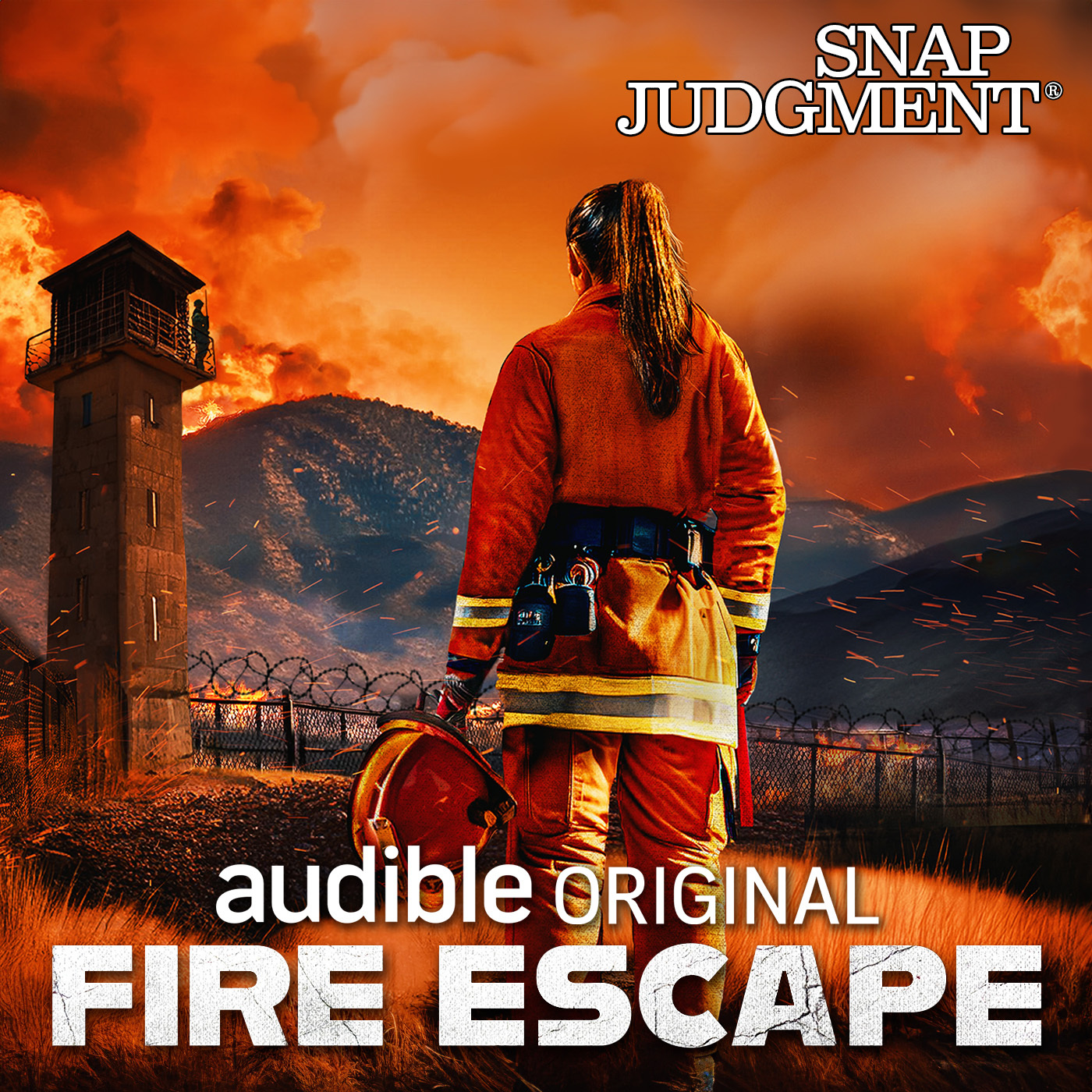
Snap Judgment
Fire Escape: The Crash EP1
00:33:53
How did Amika Mota go from a midwife and mother of three to a prisoner inside one of the largest women's prisons on Earth?
Loading summary
Transcript86 lines
- [00:03]
Anna Sussman
SNAP Studios Snap Judgment is brought to you by Progressive Insurance. Fiscally responsible financial geniuses, monetary magicians. These are things people say about drivers who switch their car insurance to Progressive and save hundreds. Visit progressive.com to see if you could save Progressive Casualty Insurance Company and affiliates. Potential savings will vary. Not not available in all states or situations. Okay, if you're a billionaire you can skip this part. But if you're not, if you don't appreciate putting your paycheck into a bank only to see it immediately zapped with fees for this, with fee for that and the fee on the fee, you should know that Chime is changing the way real people bank Fee free and smarter banking built for you Because Chime isn't just another banking app. They unlock smarter banking for everyday people with products like MyPay giving you access to up to $500 of your paycheck anytime and getting paid up to two days early with direct deposit. Some banks still don't do this. And yes, I wish the younger me would have learned about this a long time ago. Chime is not just smarter banking. It is the most rewarding way to bank Join the millions who are already banking fee free today. It just takes a few minutes to sign up. Head to chime to.com snap that's chime.com
- [01:30]
Narrator
snap Chime is a financial technology company, not a bank. Banking services and the secured Chime Visa credit card are provided by the Bancorp Bank NA or Stride bank na. Optional services and products may have fees or charges. See chime.com feesinfo terms apply. Limited time only. Must open the new account and complete qualifying activities to earn rewards. Advertised annual percentage yield with Chime plus status only. Otherwise, 1% APY applies. No minimum balance required. Chime card on time. Payment history may have a positive impact on your credit score. Results may vary. See chime.com for details on applicable terms.
- [01:53]
Anna Sussman
Snap Nation I am so proud to finally bring you a Snap Judgment storytelling event. It's a journey that brings us behind the walls of one of the largest women's prisons on earth and into the passenger seat of an all female fire crew as they respond to real emergencies. It's a story of death, birth, and of a woman who stands at the gates to both. And it's a story that asks the question, what if we took society's villains and made them society's heroes? Sensitive listeners are advised.
- [02:31]
Narrator
Okay, let's start with Tell me everything you remember about your first call.
- [02:41]
Amika Mota
It was fall, during the really foggy, foggy season. And so the fog Was really, really heavy. And so, you know, in the fire engine on the way to the call, we could hardly see, the fog was so thick. And we had heard that there was a cotton truck involved. It was like a four lane highway, and it was a cotton truck that had been rear ended by somebody else and kind of spun out and the cotton bales fell off onto the freeway.
- [03:18]
Narrator
911, what's your emergency? The call came in to Madeira County Station 5. It sits in the flatlands of California's central valley, lined with rows and rows of aging almond trees. The firefighters at Station 5 were the closest to the scene.
- [03:37]
Amika Mota
You know, the routine is it comes in over. The call comes in over dispatch, and you get suited and booted real quick. So you get your. Your full turnout gear on. It's your real heavy gear. And then we all jump in the engine. And I was nervous. It was my first, you know, car accident. And I know the captains and the chief were a little bit nervous about me coming to this scene too.
- [04:05]
Narrator
Driving down the highway, Ameca and the other women on the engine were quiet, lined up, four on each side of the truck, knees touching in the middle with their helmets on their laps. The equipment on the engine was rattling, and they strained to hear the information over the radio from what they heard. It was a very fragile scene.
- [04:27]
Amika Mota
I was just talking to God, like, please let me be able to handle this. Please give me the strength to maintain some composure.
- [04:41]
Narrator
And did you have the feeling of, like, feeling eyes on you?
- [04:43]
Amika Mota
Oh, yeah, absolutely. They were definitely like, you know, checking in with me on the way. And I remember chief looking at me at one point, and he's like, honey, you look like a deer in the headlights. You know, we roll on scene and I can see a man's. And he already had that look of death, which is just that color, the shade of gray to his face. My heart is pounding at this point. It's like, okay, we don't. I don't know what else I'm gonna see.
- [05:22]
Narrator
The other fire stations around the town were also called and their fire crews were starting to show up.
- [05:29]
Amika Mota
There's other engines on scene that have rolled up now and firefighters that have been on the job for 20 years. And this was such a bad SC that there was a couple of the firefighters, the old head, experienced firefighters that were sick on the side of the road. Literally sick. And so we're watching them. But our job as the first engine on scene and as the girls that do the dirty work is pulling the bodies. That's our job. So I approach with the captains and the other firefighters, and I can see in the back seat two more bodies. I'm praying because I don't know what to do to kind of. I feel like we have to keep some reverence to this moment, too, because it's so intense. As this whole family that has passed.
- [06:36]
Narrator
Amika and the other firefighters cut open the car. Inside was a family of three, all adults. Carefully, they removed their bodies and placed them on the grass and covered them with yellow sheets.
- [06:50]
Amika Mota
I wasn't prepared for that, being the beginning of my experience at the firehouse. And so at that point, it was like, I'm a baby firefighter, and I just. My first car accident was a triple fatality. We don't quite know how to take care of ourselves. We don't quite know how to get home and tell the other crew about what we just saw. It's just kind of a really silent ride home.
- [07:23]
Narrator
The place Amica and the other firefighters call home is actually inside a prison. It's called Madeir County Station 5 CCWF. And it's a little brick firehouse with two engines and a handful of rolled hoses, a bunk room with 12 neatly made cots, a little open kitchen, and a captain's office. And there, 12 incarcerated women train and work out, wash fire trucks, and go to sleep all inside the barbed wire fence of one of the largest women's prisons in the world, the Central California Women's Facility. Ccwf.
- [07:58]
Amika Mota
We're firefighters, but we're incarcerated, you know, and we lived with correctional officers. Still, we were not free. And our view into the prison gates reminded us of that, like, every day. You know what I mean? We couldn't look outside without seeing the towers and the barbed wire.
- [08:25]
Narrator
Is there a moment when they kind of lock you in?
- [08:29]
Amika Mota
Yeah. So count time. We get counted the same as everybody else on the inside. And so count time is when the sergeant comes through and everybody needs to be on their bunk and accounted for, basically.
- [08:44]
Narrator
What Was your number?
- [08:45]
Amika Mota
X32168.
- [08:57]
Narrator
From Wondry and Snap Studios at kqed. I'm Anna Sussman, and this is Fire Escape, the story of a woman whose world burned down, and then she learned to fight fire from behind bars. This is episode one, the Crash. There were nearly 2,000 women locked inside the Central California Women's Facility at the time Amika entered. Women at all custody levels. Women serving sentences for crimes ranging from embezzlement to homicide to possession of drugs. And when I first began interviewing women here about 20 years ago, they would each always tell me the same thing about the shame they endured as women prisoners. They had let down their families, their parents, their children. They felt they had failed as women. It's something corrections officers taunt them about, something their kids, friends, parents make comments about. I remember interviewing a woman under the shadow of the high prison wall and her saying casually, where women were not supposed to commit crimes, were not supposed to be here. And that comment meant so many things about women who are convicted of crimes and imprisoned and what everyone thinks of them forever. When I first met Amika, it was clear she was very aware of this narrative.
- [10:45]
Amika Mota
You broke the social contract with the whole world when you went to prison and left your kids. Like, that is the most real thing ever. Like, once you break this social contract, that's it. Like, that's just how it's perceived right from the world and by us when we internalize this. And regardless of all of the ways they feel about me, it's like, there's no going back. There's none. I can only move forward.
- [11:16]
Narrator
When Amica talked about the calls she responded to as an incarcerated first responder, it seemed hers was a story of defying a system intent on burying her under the weight of her worst moment. Out on the fire trucks, Amika and the other women are basically heroes. Pulling children out of crumpled cars, climbing into burning homes with a hose and an axe, picking up elderly folks who had fallen in their kitchens, saving the lives of their jailers and their families. When they ride past schoolyards with fire truck lights spinning, kids cheer, and then they drive into the prison gates. Before amica was inmate X32168, she lived in the mountains of Kern County, California, in a three bedroom house.
- [12:07]
Amika Mota
The front thing was a whole porch all the way around the front, like a wraparound porch. Yeah, it was really beautiful. I loved that house. It was kind of a dream house.
- [12:19]
Narrator
Amika was 29 years old, and she had three kids. And she had just moved to the countryside to try to slow down and focus on her kids and focus on being a mom.
- [12:29]
Amika Mota
Yeah. So Tehachapi is just these high desert mountains, a lot of rolling hills, really beautiful. You can see the shadows on the hills from the clouds.
- [12:42]
Narrator
She'd walk her older kids to the school bus every morning, and on weekends, they'd go hunt for snakes or go to her son's football games.
- [12:51]
Amika Mota
I had big dreams of, like, taking care of the home and having a garden and having nice meals, and I tried. I liked the idea of It. I did. I had idealized the idea of living in a small town, taking care of my kids, taking care of my house.
- [13:12]
Narrator
And then on a warm night in October 2008, driving down Lincoln Avenue in Cypress, California, everything changed.
- [13:23]
Amika Mota
I do remember approaching the light that I ran and, like, seeing the light. I don't remember if I saw it red, but I just. I. Like I was gonna burn through it. And it. I didn't see any other vehicles. And then that was when I hit Mr.
- [13:42]
Anna Sussman
Car.
- [13:45]
Amika Mota
It's like glimpses. I remember glimpses of coming into the hospital and, like, waking up in between the surgery and, like, seeing. I rem. I remember the families I would see in the hallway. And I remember waking up and that's like, handcuffed to the bed. So there was sheriff deputies on, you know, one side of the bed and outside the door. So you could see two outside the door and one right next to me. And he let me know that I was. That I was under arrest and that I had killed somebody in this accident. And I didn't believe him. Like, I remember just not. It just didn't register. None of it felt real. It didn't feel true. It didn't like, what do you mean, I killed somebody? Like, that just sounded so crazy to me. And that was when it starts unfolding.
- [14:41]
Narrator
Amica had a broken pelvis, a lacerated liver, and a punctured lung from the hospital. After multiple surgeries, she was led into a sheriff's van and taken to the Orange County Jail.
- [14:55]
Amika Mota
And, you know, the deputies just kind of tossed me around. I was pushed into the shower and so fell to my knees because I couldn't stand. I remember the shower coming on. I had chunks of glass still stuck in my scalp, and as I was showering, those chunks were coming out of my hand. So that moment of showering was also this intense. I just. I was realizing all of it moment by moment.
- [15:41]
Narrator
She was put into an isolation cell, and isolation.
- [15:46]
Amika Mota
It was room 13. I won't forget that. The wing I was in, I could hear people screaming through the vents. My body was just in so much pain that it was, you know, on a thin mat, curled up with my wool blanket and just shivering.
- [16:14]
Narrator
Over the next days and weeks in the Orange County Jail, she was moved into a medical unit to recover from the accident and the surgeries. And from there she was moved to a two person cell. She was allowed into a day room for two hours where she could read the newspaper and shower. And then she was returned to her small cell. Eventually, she was Given a public defender and told more details about the case against her, she could be convicted of second degree murder. She waited in the county jail month after month. The only way she could have seen her kids would have been in a visiting room separated by a thick glass window.
- [16:51]
Amika Mota
You know, like, I couldn't imagine looking at my little 6 year old that was already, like, could not make sense of where I was or why her mom was sitting in a box like that. And then, like, I mean, I would, like, envision her, like, trying to touch me or, you know, like, no, that shit was not gonna happen. Like, it felt. It felt more harmful. Like I would be harming them more
- [17:17]
Narrator
than not seeing them.
- [17:18]
Amika Mota
Than not seeing them.
- [17:20]
Narrator
She wrote letters home to her kids. This one was after she'd been locked up for six months waiting for her trial.
- [17:27]
Amika Mota
There was one. This one was like, when I got sentenced, that was intense to read. Yeah, it's. This is to all three of them. So as far as I go, I pled guilty to the charges against me last Friday. I could have kept fighting them, but it felt like it was the right choice. Now there's what's called an open sentence. The judge gets to decide how much time to give me. The most time that I would do is 13 years and eight months with good time credit. It's actually just over 10 years. And that's the worst case scenario. He could choose to give me less time. He chooses that on May 8th. That's the day I'm sentenced to. It's a big day, and it won't be a lot clearer after that, what the future holds for us. But either way, I'll be going to state prison, which is a whole different ballpark than county jail. And then at the end of the summer, you guys should be able to come and visit for a weekend trip. I can't wait to hug all three of you. That sounds like heaven to me. So for that reason alone, I'm excited that I get to go to prison. Anyway, that's the scoop. May 8th is the big day. I love you so much.
- [19:02]
Narrator
More Fire Escape after the break. Stay tuned. Welcome back to Snap Judgment. My name is Anna Sussman. Today we're listening to our series Fire Escape already in progress. On May 8, she was led to the courthouse one final time for her sentencing.
- [19:33]
Amika Mota
During the sentencing in Orange county, they, you know, I was shackled and sitting in a cage off the side of the judge, and so I could see his family. I could see my family, but it was through a glass panel and bars
- [19:51]
Narrator
we won't be using the victim's name in the story to protect his identity.
- [19:55]
Amika Mota
His wife was in the courtroom, and I remember them talking about, you know, who he was. He was a pilot and flew in the Air Force here. So he'd done all this amazing stuff in his life. And. I remember his wife, you know, saying that he was just about to retire and that they were going to have that. She was so excited to have some time with her husband because he worked so hard his whole life. He was like a grandfather, a father, and I could relate to that. You know, like, he had done his life. He put in his dues, he daily grind, day in, day out, taking care of his family, and he was just about to reap those rewards. You know, I had taken their whole life from them, basically. And so, I mean, that sitting in the courtroom, it was like, I took their life and, you know, and I did the same to my family. It was like I wiped out two families completely. So it was a really fucked up feeling. I knew that sentencing was about what I was going to walk away with, but I knew that that was their opportunity to address me. And so that was the most important piece of that, was allowing them to address me and make sure I looked them in the eye because I didn't want them to feel like I wasn't hearing them or taking what they were saying. I don't think they wanted to look at me much. You know, they shook their head and discussed often, like, didn't really want to look at me, but I felt like I owed it to them. Maybe. I don't know if that was the right thing to do. Yeah, I think I addressed the court at some point, too. And then that is like, what do you even say? What do you say? Because it feels like at that point, it's some performance, like you're supposed to say something that sounds like this and like none of it is even. It's like, I don't even know. So I don't remember what I said
- [22:39]
Narrator
amica's words to the court that day with this. I've never had the chance to express how sorry I am to Mr. Family. No words will heal your hurt and bring back your father and your grandfather. But from the deepest part of my soul, I am so very sorry.
- [22:59]
Amika Mota
At that point, I was hated. They were disgusted by me. And so that there was no room for me to think about that either. To think about when, to think about any making of amends that I could do with the family or reaching. I mean, actually, I Remember, like, asking my attorney at one point, like, can I reach out to them or. And he was like, absolutely not.
- [23:29]
Narrator
Amica waited for her sentence in the Orange County Jail. She talked to her God, she talked to her kids on the phone, tell them she didn't know when she'd be home. She'd talk to her victim. So what would you say?
- [23:44]
Amika Mota
I would thank him, you know, for a chance, another shot. I still haven't talked about this. I mean, I felt very grateful to be alive. And I feel like. Like, I don't know, like I felt like I was allowed to live at the. At the sake of his life.
- [24:13]
Narrator
Amica was convicted of vehicular manslaughter. She was sentenced to nine years and eight months in California State Prison.
- [24:26]
Amika Mota
The thing that I, that always will stick with me is the judge just talking about, you know, letting me know that this was not about rehabilitation, this was about punishment. It wasn't like there was no hope, but kind of like that, like, it felt like there was a message in there that I was not redeemable coming back from sentencing. I was walked through the jail and when I was brought into my unit, you know, there was about 32 other women that I'd been with for that last year. So I walked in, everybody was waiting to see what had happened. And I fell to my knees and I screamed and, you know, 10 years, in just 10 years. 10 years. 10 years, This one. I have so much to say to each of you, but I can't put it all on paper now. I'm waiting for the prison bus. They come every Sunday to pick up the girls that are waiting to go to prison. So any Sunday now, I could go. I'll have a new address and a new prisoner number. Every day now is a day closer to seeing you all. That's what keeps me going. Every day I feel strong and I know we will all be okay.
- [26:00]
Narrator
Amika began serving her 10 year sentence in the polka dot moo moo women are dressed in when they go over the wall.
- [26:08]
Amika Mota
Over the wall is what they call it. And it's just going over the wall to the main yard. In prison.
- [26:15]
Narrator
The prison was over capacity. Some women were pregnant, some were living with hiv, some were in need of psych care or methadone. And people were triple bunked, some even housed in boiler rooms. Amika was walked to her dorm shackled at the legs and the wrist and the waist, and handed a blanket and some clothes. One of the first things she did when she got there was she took a little paper Envelope of pictures of her kids, Milo, Soleil and Blossom. And she took a tube of toothpaste and put a little dot of toothpaste on the back of each picture and hung them up in her locker where she could see them all the time.
- [26:53]
Amika Mota
I could see their face. I'd see their faces, I could smell them. I could like feel their skin and their hair. That's what I would miss, you know.
- [27:03]
Narrator
Sometimes she would take the pictures out of her locker and lie on her
- [27:06]
Amika Mota
bunk and just hold them on my bunk, headphoned up. There was a picture of my youngest. It was like a close up shot of her face and just all her little freckles on her nose and like, I would just, you know, kiss that picture and like stare at her little freckles.
- [27:30]
Narrator
She could finally have a contact visit. She'd been locked up for almost a year, and now that she was out of county jail and in state prison, she could visit them without a pane of glass in between them.
- [27:42]
Amika Mota
I knew I was really close to being able to see my kids and hold them and hug them in person.
- [27:53]
Narrator
Amica's papa was going to bring the kids for a visit, all three of them. They'd been living with him at the time. And he booked a flight and packed their bags. And Amika thought she could hold on just a little bit longer and wait it out until she got that visit. But waiting it out was harder than she realized. What Amica didn't yet understand was that inside prison, there's an invisible and changing set of rules predicated often on the whims of the guards.
- [28:22]
Amika Mota
Like in a month period of time, I managed to get three write ups. And I didn't feel like I was acting out in the yard or acting crazy. I just really. It didn't feel that way.
- [28:36]
Narrator
A write up is a punishment for breaking a rule, she said. It was as if the COs were everywhere.
- [28:42]
Amika Mota
Like, you can't just go be. You can't just be. It's always they want something like, nah, fuck you, you can't get your wash slot today cause you looked at me funny. Or no, you can't get your phone call today because you didn't flirt back. You know, it's like every green suit wasn't human. He was part of this prison machine.
- [29:09]
Narrator
She calls them green cops because they wore green uniforms. She says there were a few in particular she knew to avoid.
- [29:16]
Amika Mota
There was one guy on the yard that was, you know, one of those ones that he was, he was not horrible, but he was just really Kind of a dick. Buy the book.
- [29:26]
Narrator
She knew him as the stickler. He had this graying hair, and he was older, like in his mid-60s.
- [29:31]
Amika Mota
Uh, don't engage at all. Just kind of look at you like a piece of shit. Wouldn't make eye contact when you walked by.
- [29:39]
Narrator
Amika tried to navigate around him, keeping her head low. She'd go to the mess hall and the law library. Her work assignment, the yard, and back to her cell. But she kept getting in trouble everywhere. And every time she'd get written up, the punishments would escalate. And then one time, a few weeks in, she saw this thing happening in front of her, and she felt she had no choice but to get involved.
- [30:06]
Amika Mota
I was getting ready to go in the shower, so I had my shower shoes on and a moo moo. There was this old woman that was a porter.
- [30:19]
Narrator
Porter is one of the jobs for incarcerated women. A porter would clean up after people.
- [30:25]
Amika Mota
And she was very old, like probably 70 something years. Just very, like, old and frail, and it's, like, hard to even watch her work in prison. So she had taken my sidecar's towel from the shared showers.
- [30:43]
Narrator
And your sidecar is the person who sleeps in the bunk next to you.
- [30:47]
Amika Mota
And so, yeah, my sidecar flipped out and started cussing out this old woman. And I was like, what?
- [30:58]
Narrator
And that's when Amika and her sidecar got into a fight, a big fight.
- [31:05]
Amika Mota
Throwing punches in the day room was like, the worst place you could fight because you're basically in front of the cop shop.
- [31:16]
Narrator
And it was after the fight died down in her cell that a cop, a prison guard, came to take Amica away.
- [31:22]
Amika Mota
Some cop came to the door and basically was like, roll it up. I was classified as a failure to program. And I ended up being, you know, put in isolation.
- [31:33]
Narrator
She was given 40 days in solitary confinement. And as the green cop marched her across the yard towards the isolation unit, he casually mentioned, there goes your contact visit with your kids. They can still come down to the prison, but no contact. He said she'd have to look at them through a glass window.
- [31:56]
Amika Mota
We had a date. We had a date on the calendar of when they were coming. And it was. It was like, you know, every call, I get to see you, mama. You know, I get to see you in a few weeks. Oh, it's. We're all counting down. I asked the sergeant to please let me call my kids or my papa. I had to call papa and tell him that I couldn't visit.
- [32:26]
Narrator
Amica still felt it would do more harm than good to have her kids visit through a pane of glass. It had been a year and a half. There would be no in person visit. She wouldn't get to see her kids. They wouldn't be able to touch her or hug her.
- [32:45]
Amika Mota
I mean there became a point when I realized that being the type of mom I wanted to be to my kids from the inside was impossible. So it was very much like this reckoning for me of who I was as a human being. I had gone inside as a mama, someone that had integrity and now I had taken someone's life and it was a new version of me that I had to figure out who I was. Now
- [33:43]
Narrator
if she was ever going to be able to figure that out, she'd need to find some way over that wall.
- [33:49]
Amika Mota
I always wondered what it was like on that side because we knew they live right outside the gate. And so it's kind of this other world. It just is. Imagine it's like where are they? What are they doing? Just gave me this picture of what it would look like and I wanted it.
- [34:26]
Narrator
Fire Escape is a production of Snap Studios and Wondry. This series was created, written and produced by me, Anna Sussman and I want to thank Amika Mota for her help and generosity in sharing her story with us for Snap Studios. Our senior story editors are Mark Ristich and Nancy Lopez. Marissa Dodge is our director of production, Original music by Renzo Gorio and Doug Stewart. Doug Stewart also created our theme song, Sound design and engineering by Miles Lassie. Our senior story editor is Phyllis Fletcher. Our development producer is Eliza Mills, Claire Chambers, Lauren D and Mandy Gorenstein are our senior producers and Sarah Mathis is our managing producer. Our executive producers for Snap Studios are Glenn Washington and Mark Risich. Executive producers for Wondry are Marshall Louie, Morgan Jones, George Lavender and Jen Sargent. Special thanks to Adeza Egan, Catherine Steyer Martinez Pat Mesita Miller and the San Francisco Fire Department. On Team snap, the union represented producers, artists, editors and engineers are members of the national association of Broadcast Employees and Technicians, Communication workers of America, AFL CIO Local 51 fire escape. The full six part series is dropping weekly on the Snap Judgment feed. You can listen wherever you get your podcasts and on our website snapjudgment.org.