← Snap Judgment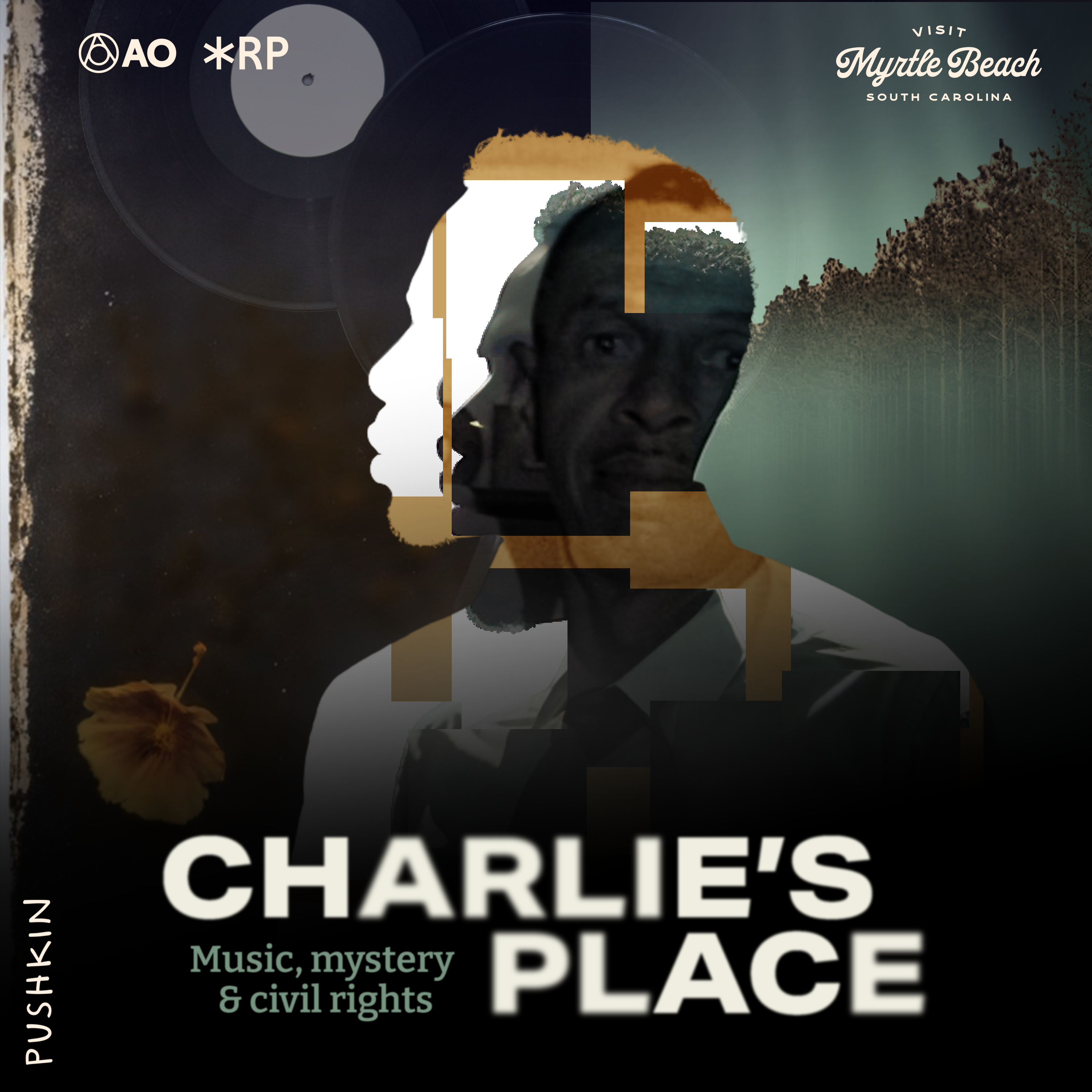
Snap Judgment
Introducing Charlie’s Place: A Cultural Haven That Brought People Together Through Music
00:34:04
How did a Black man in the 1940s Jim Crow South open a club where Black and white people danced together?
Loading summary
Transcript124 lines
- [00:03]
Glenn
Snap Studios did you know there's a cannabis company that ships federally legal THC right to your door? I'm talking about Mood.com's incredible line of functional gummies and you can get 20% off your first order@mood.com with promo code Snap. Whether you're looking for help with focus, cramps or even intimacy, Mood has a gummy for that. Best of all, not only is every Mood product backed by a 100 day satisfaction guarantee, but as I mentioned, listeners get 20% off their first order with code SNAP. So head to Mood.com, find the functional gummy that matches exactly what you're looking for and let Mood help you discover your perfect mood. And don't forget to use Promo code Snap when you check out to save 20% on your first order. Summer is here and 365 Whole Food Market's house brand has everything you need for delicious summer fun for less no matter who is coming over. And the Snap tip is to look for hundreds of yellow low priced signs that help you save without compromising the quality you expect from Whole Foods Market. Find them on meats, boneless chicken breasts, more all nobiotics ever. You can find great low prices in store and online shop Whole Foods Market for everyday high quality low priced items. Terms apply there. There are so many ways to save on summer grilling favorites at Whole Foods Market. Hey, it's Glenn here and I've got something special to share. It's a preview of a new podcast, Charlie's Place, that tells the story of an iconic music venue that united a community divided by racial segregation. Segregation was the law in the 1940s and 50s, but Charlie's place had its own rules. Black and white people were welcome to enjoy some of the greatest musicians of our time. Little Richard, Ray Charles, Duke Ellington, Lena Horne. Many, many more. Charlie Fitzgerald, a revolutionary but mysterious black businessman, was the club's founder. Charlie's Place was a Myrtle beach cultural hub that defied the racial barriers with time, but it sparked intense resistance from segregationists, leading to a raid by Ku Klux Klan members and profound chains that reverberated through the community, interspersing interviews with historians, cultural experts and Carolinians who share firsthand accounts of growing up during the height of Charlie's Place. Host Rean Giese tells this tale of triumph and tragedy, of resilience and joy of a place where music did more than entertain. It changed lives and shaped a movement. Enjoy this preview if you want to hear more, find Charlie's Place wherever you get your Podcasts.
- [03:02]
Reem Gise
Pushkin. A quick warning. Some of the language and imagery used to describe this period of time may be upsetting. Please take care while listening.
- [03:20]
Historian
I was interviewing a gentleman about his participation in student demonstrations in 1960. He stopped me and he said, you know, I'm from South Carolina. Have you ever heard of Charlie Fitzgerald? He mentioned specifically knowing Charlie Fitzgerald, knowing his wife, and then relaying to me what he remembered happening in 1950. Charlie Fitzgerald was notorious. That's a good adjective for him. He was constantly having makeovers, seemingly always reinventing himself. He was a roving entrepreneur who was beloved and respected by some and despised and ridiculed by others. Traitor, turncoat, folk hero, defiant. The atmosphere is thick with this vehement rhetoric of white supremacy. Here was a black man who thumbed his nose at laws and customs, and that is why he's a threat. What happened to Charlie Fitzgerald was almost, I guess it would be an Emmett Till moment. It would be a Pearl harbor moment. People remember it vividly. An ordinary person would say, the hell with it. I'm going to the promised land. I'm going elsewhere. But Charlie was not ordinary.
- [05:32]
Reem Gise
I came to Myrtle Beach, South Carolina, in search of a folk hero. A man who died in 1955, a man who's almost forgotten, but whose name is still in the air. He was the mythic proprietor of a mythic space, a place that sounded like a mirage, but it did exist. On a Saturday night in 1940, in the seaside town of Myrtle Beach, South Carolina. The smell of salty air and perfume. A night out on the town. Everyone is filing into a nightclub. The sound of Count Basie's orchestra carries into the night. Jim Crow laws are in full effect. It would still be decades before black and white people were allowed to even eat together in a restaurant. But something surprising is happening inside the club, something the laws were designed to prevent. Throughout the south, black and white people dance together. They partner, press against each other, swing and sway to the music. It doesn't feel dangerous. It feels joyous. Nothing else seems to matter. The lines on the outside don't exist. This was Charlie's place. It doesn't seem real, but a few people still remember. I heard a phrase on one of my visits to Myrtle beach about Charlie's place.
- [07:17]
Local Resident
Segregation in the day, integration at night.
- [07:21]
Reem Gise
Segregation by day, integration by night. The people who lived it even have a hard time explaining it, how this nightclub existed when it did, for as long as it did from 1937 to 1966. But they say it had everything to do with Charlie Fitzgerald. Things just went that way with Charlie. He blurred the lines. The rules just didn't seem to apply to him. And when I asked why, it just led to more questions.
- [07:52]
Local Resident
Charlie was big question mark. A lot of people knew him, but.
- [07:57]
Glenn
Didn'T really know him.
- [07:58]
Ms. Pat
He always had an aura about him, and people used to say he was a serious man. I took that to mean that he could be a dangerous man.
- [08:10]
Leroy Brunson
He carried two pistols. He had a.45 on one side and a.38 on the other side. And he carried those guns with him all the time. The rumor was spread that Charlie was.
- [08:23]
Reem Gise
Running a prostitution ring over there. Charlie was a source of constant speculation and misinformation. I got to work separating rumors from the facts. Now, as far as businesses go, what we learned about Charlie was he had gambling in the back.
- [08:41]
Local Resident
Yes. Yes, he did.
- [08:43]
Reem Gise
And some other businesses.
- [08:48]
Local Resident
Yeah. But I can't disclose that.
- [08:52]
Reem Gise
When I came to Myrtle beach, these questions were sometimes met with a guarded attitude. There was something here people were complaining, compelled to protect. I was on a mission to find out what that was. I'm Reem Gise, and this is Charlie's Place. Episode 1 Whispering Pines I had to prepare to go back to the South, a place I've rarely been since I was a girl in Louisiana. I usually wear my hair natural, but for the trip to Myrtle Beach, I straightened it. My parents and I first moved to the south when I was 12 years old. We came here from the Ivory Coast. I didn't speak English, and I still remember what my teacher told me while I learned the language. She said, listen, things we do not talk about. Sex, religion, politics. Do not touch those subjects. That never made sense to me as a kid. What else is there to talk about? That stuck with me. And this story, it turns out, would touch on all the things that you don't talk about in polite conversation in the South. Coaxing out the truth would be delicate. I had one shot to get this right, and I didn't have a lot of time because most of the people who really knew the story were well into their 80s. There weren't a lot of people left. But there was Ms. Pat. But Ms. Pat, I was curious. Do you still stay in contact with everybody you grew up with? That's still, you know, here?
- [10:49]
Leroy Brunson
Come on.
- [10:50]
Reem Gise
You do. Yeah.
- [10:51]
Ms. Pat
The most of them, if I can find them, I can stay in contact with them.
- [10:54]
Reem Gise
Yeah.
- [10:55]
Ms. Pat
Mm. But so many of em younger than me did.
- [10:59]
Reem Gise
Yeah.
- [10:59]
Ms. Pat
And it bothers me. I get nervous. I'm not ready to go yet. Mm.
- [11:06]
Leroy Brunson
Mm.
- [11:07]
Reem Gise
Yeah. Ms. Pat has a wheelchair ramp leading into her house because she has very limited mobility. She had a heart attack recently and can't leave her home. She says most everyone who worked dry cleaners in Myrtle beach in the 50s like she did ended up with either cancer or heart trouble because of the cleaning fluids they used. Each time I walked up to her house, she'd spot me first and call out through the screen door from her lazy boy, hey, baby. And each time, it was good to be reminded of the warmth in her voice.
- [11:39]
Ms. Pat
Charlie Fitzgerald was a good man to the whole neighborhood, the town, everywhere. And you either respect him or you hate him. And see, I respect him because, see, he didn't mind putting something on you. That's the way Mr. Charlie was to us. You respect him.
- [12:00]
Reem Gise
Not many folks really knew him, and I would come to believe that maybe that was intentional on Charlie's part. But Ms. Pat knew Charlie, and everyone that sent me her way described her as a mess. I knew exactly what that meant. A mess in the south is someone who talks a lot.
- [12:18]
Ms. Pat
Now you stop me. Cause I don't know. In the hush.
- [12:22]
Reem Gise
A mess was exactly what I needed.
- [12:26]
Ms. Pat
Now what do you want me to talk about? How I was raised on Myrtle beach on Carver Street.
- [12:33]
Reem Gise
Ms. Pat helped me understand the setting around Charlie's club. In the 1940s, before integration, Carver street was the center of black life in Myrtle Beach. There were shops, restaurants, clubs, juke joints, all owned by black people. For black people.
- [12:50]
Ms. Pat
Carver street was the only street that we could sell anything, open up a business. We weren't allowed on Oak street at all back then.
- [13:01]
Reem Gise
There were boundaries around where black people lived and where they were allowed to move freely. In Myrtle beach, this neighborhood was known as the Hill, made up of several streets, including Carver, set a few blocks back from the ocean. Ms. Pat was born on the hill in 1943. By the time she was two years old, her mother and two sisters died from tuberculosis. She was raised by her grandmother. They survived by knowing where to find cracks in the system. They existed between broken rules and abandoned materials. During this time of extreme segregation, Ms. Pat's grandmother was resourceful. Black people weren't allowed to buy coal in town, so they collected fragments that fell off the coal train. They dug tar out of the street before it dried to patch their roof. They worked at night to avoid the police.
- [13:53]
Ms. Pat
We sure did.
- [13:55]
Reem Gise
The first gas stove her family owned was fished out of the ocean after.
- [13:58]
Ms. Pat
Hurricane Hazel and dried it out for three weeks before we could put it together.
- [14:03]
Reem Gise
They kept pigs, grew their own Fruits and vegetables, sold corn liquor and did laundry for tourists.
- [14:09]
Ms. Pat
Oh, God. There's some nasty girls coming to Myrtle Beach. Oh, my God. I wouldn't touch the clothes. I said, no, no. I don't want the germs. Clean your clothes. The girls, the men's was all right, but them girl. Oh, my God.
- [14:26]
Reem Gise
She shared her vivid memories with me. Revealing them as kind of a mental map. Geographically, her world was small. But the details she shared conveyed something much bigger. It helped me understand what the community on the hill was made of. And what it took for Ms. Pat to survive. To live out an entire life here. It was almost freedom. As long as she stayed in the lines. Outside the hill, Ms. Pat was barely allowed to exist. Because outside the hill, she couldn't eat inside restaurants. Outside the hill, she couldn't wear shorts on the boardwalk along the ocean. Outside the hill, she couldn't step barefoot on the sand, let alone touch the water.
- [15:09]
Ms. Pat
Myrl beach was a good place if you stay in your place. I put it like that. We couldn't go to the ocean. We couldn't go in none of the water.
- [15:21]
Reem Gise
Until the late 1960s, it was forbidden for black people to swim in the ocean in Myrtle Beach.
- [15:27]
Ms. Pat
Because they say the dirt would come off and go in the water. That's why we couldn't go, to recontaminate the water. But other than that, it was all right. I love family. My family was the biggest thing that ever happened to me.
- [16:06]
Reem Gise
When Ms. Pat wasn't helping her grandmother, she was hanging out at her grandfather's barbershop.
- [16:11]
Ms. Pat
My granddaddy was something nobody ever had a granddaddy like mine. And he would call me to cut his hair and say if I cut him, he gonna shoot me and shoot and show me how to shoot the gun, the pistol and the shotgun.
- [16:28]
Reem Gise
How old were you?
- [16:29]
Ms. Pat
15.
- [16:31]
Reem Gise
Everything happened in her grandfather's yard behind the barbershop. It's where she learned how to shoot a gun. How to shave her granddad's head with a straight razor without cutting him. And where she learned how to dance and dance.
- [16:45]
Ms. Pat
Oh, my God. We dance in the yard. We didn't worry about what went on outside. But we dance all we want. I love to dance more than I did anything else. Didn't drink, didn't hang out. But, honey, I dance. Anybody want to dance? I was ready.
- [17:04]
Reem Gise
When Ms. Pat says we didn't worry about what went on on the outside. She means outside of the hill. That world didn't matter. What mattered was who she was on the hill. And on the hill. Ms. Pat was known as one of the best dancers in Myrtle Beach. Dance was everything. And right on Carver, in the center of all the action. Was the best place to dance. Charlie Fitzgerald's nightclub, Charlie's Place. The insiders know that before it was Charlie's Place, everyone knew it as Whispering Pines. They called it that because of a legend once. Billie Holiday and Count Basie came and played two nights in a row. The locals say Billie Holiday's voice lingered like a whisper through those pine trees.
- [17:56]
Ms. Pat
And that's why they call it Whispering Pines. Cause when the wind blow those trees, oh, my God, it was beautiful.
- [18:05]
Reem Gise
Whispering Pines was run by a married couple, two black entrepreneurs, Charlie and Sarah Fitzgerald. According to the people who lived on the Hill. Charlie and Sarah were forces of nature. Two outsiders who came to town in 1937. When I asked people, where did Charlie come from? I thought it was a simple question with a simple answer.
- [18:27]
Local Resident
Some said he was from Georgia. I think Charlie was from New York somewhere.
- [18:30]
Reem Gise
So I think he came from Jamaica or someplace.
- [18:32]
Ms. Pat
And he came from up north. Nobody knew exactly where. Nobody talked about where he came from.
- [18:38]
Reem Gise
So, yeah, not so simple. But wherever Sarah and Charlie came from, they ended up in Myrtle Beach. When they opened their club in 1937, it drew entertainers and visitors from all over the country. On Saturday night, cars would line Carver Street. Women emerged in evening gowns and men in white tuxes. The crowd felt enormous. And they were all there for the music. And not just any music. It was the best music.
- [19:13]
Ms. Pat
Oh, yes. God. Ruth Brown. Jane Brown. Girl, I see so many people up in there.
- [19:19]
Local Resident
Ben, Richard. You ever heard of him?
- [19:21]
Ms. Pat
Oh, my God. They don't talk about Wilson Pickett. They don't talk about them directly from the country. Love you, baby.
- [19:30]
Local Resident
Roy Hamilton. Johnny Ace. My favorite. The Drifters. Fats Dominoes.
- [19:35]
Ms. Pat
Johnny Taylor. Rossi Clark Curtis Mayfield. The Impressions.
- [19:40]
Local Resident
Marvin Gaye was here. Marvin Gaye used to come to the barbershop, get his hair cut.
- [19:47]
Ms. Pat
The last concert that I attended here with Otis Redding. We were having such a good time that the floor was really caving in. It was crowded. People from all over South Carolina said it was here. And Charlie Fitzhugh Place, Charlie's Place, or.
- [20:03]
Reem Gise
Whispering Pines, was a stop on the chitlin circuit. Safe venues for black entertainment in the Jim Crow South. These clubs and juke joints launched artists careers. And Charlie's Place contributed to that. I wanted to know what it felt like to be inside that history. Most people I interviewed, their memories are of a specific era. At Charlie's place. Maybe a few remember the late 40s. And a lot like Ms. Pat, remember the 50s and 60s. I would have loved to be a fly on the wall.
- [20:31]
Ms. Pat
It was like stepping in another world. And they had these black and white squares on the floor. You'd never see nothing like that. All you see is a wood floor. I mean, it was so pretty and so different.
- [20:47]
Reem Gise
Charlie and Sarah kept tabs on the kids and let them in to dance while the acts warmed up. As long as you were out of there by 9:30. Ms. Pat took advantage of that. She put on a dress and went to see all the artists who came through.
- [20:59]
Ms. Pat
You couldn't wear no pants, no slacks at all. And my oldest sister went out with slacks on her. He marched right back home. That's right. And you had to be out of there by 9:30. He just was strict when it come down to children. He didn't allow children to be in grown people company.
- [21:15]
Reem Gise
The more time I spent in Myrtle beach, the more people turned up with something to share about Charlie's place. The club isn't there anymore, but I heard many stories about what it looked like inside. I'd sketch as I listened and tried to capture it in as much detail as possible, pieced together from people's distant memories. Roddy Brown's family ran Club Bamboo next door to Charlie's Place. He says Charlie's Place was always packed.
- [21:40]
Local Resident
Okay, you got a huge building here and you could seat maybe 1,500 people in here.
- [21:49]
Reem Gise
1,500.
- [21:50]
Local Resident
That's 1,500.
- [21:52]
Reem Gise
See, we have no pictures.
- [21:54]
Local Resident
You need to get some Aunt Daddy pictures because there got to be some pictures of Charlie's.
- [21:58]
Reem Gise
There aren't any other than that.
- [22:00]
Local Resident
No interior pictures?
- [22:01]
Reem Gise
No. What I can gather is when you stepped inside, there was a big bar in front and towards the back there were a set of folding tables and chairs. They were in clear view of the front door. Ms. Pat says she always found her dad there with his girlfriends. If his wife walked in the door, he'd have time to spot her and move the girlfriend out of view.
- [22:22]
Ms. Pat
I didn't care what he done as long as he didn't bother me. I didn't like my daddy too good.
- [22:28]
Reem Gise
Further behind the tables was Charlie's back room. As a kid, you'd be in trouble if Charlie caught you trying to sneak in there.
- [22:36]
Ms. Pat
But you're never allowed to go in that back room. But Mr. Charlie will let you know. I'll get you tomorrow if I don't get you today.
- [22:44]
Reem Gise
Ms. Pat says that didn't stop kids trying to get back there to rob him. That's where the money was in the back room where the grownups gambled. On the right side was a patio. That's where the musicians performed. It was sort of a makeshift enclosure made from old signs and a big green canvas curtain so you couldn't watch the music from outside.
- [23:05]
Local Resident
I used to listen in my bed. I used to slip out of my bed to slip around the Charlies and see the performers. I was 12 years old.
- [23:15]
Reem Gise
Roddy and his friends climbed the trees outside to try to catch a glimpse of the performers. Of course, Charlie, the man of mystery, didn't make it easy for him.
- [23:23]
Local Resident
He had curtains, big military curtains to block off the view. I don't know where Charlie got those curtains. Those things were so big you'd take a whole day to put them up.
- [23:38]
Reem Gise
Everything happened at Charlie's place. The dancing, the music, yes, but it was also a place where people came to blow off steam. And that could look like a lot of things. Roddy remembers being there in the daytime and seeing something that would stick with him. In broad daylight in Charlie's club, Roddy saw a man get shot right in front of him. He said a guy he knew named Nathan pulled the trigger. As Roddy puts it, he witnessed an almost killing.
- [24:11]
Local Resident
Looking at it, almost a killing, all kinds of things. We were so terrified, you know. So this was during the day, these guys getting drunk, getting ready for the dance and starting some foolishness. Charlie came up and said, boy, Nathan, put that gun up. Nathan went on cussing and all that, but it was a time, you see, we were living in an age. It's totally different from this atmosphere, totally carnal. Sin City.
- [24:41]
Reem Gise
But Charlie was prepared for anything. He always carried two pistols. Everyone knew they were there under his coat. If the hill was one big family, Charlie and Sarah were the matriarch and patriarch to many who lived there. They were Ms. Pat's neighbors and they looked out for her.
- [25:03]
Ms. Pat
And Mr. Charlie is a good looking man. He was real tall and his wife was kind of halfway short and she had real curly hair, but she was so pretty. And she would make hot dog the best hot dog you ever had on Myrtle Beach.
- [25:16]
Reem Gise
The Fitzgeralds also owned a motel next to the club. The building bent around in a horseshoe. In the center of the horseshoe was the house where the Fitzgeralds lived. They ran a supper club out of it and sometimes invited the kids in for hot dogs and candy.
- [25:30]
Ms. Pat
Charlie was a good man.
- [25:32]
Reem Gise
Charlie made sure Ms. Pat got her share.
- [25:35]
Ms. Pat
What he said he meant it. And he said, patricia, I was real skinny. He said, if you don't get in here and get the candy, all the candy, if you're going, you too little to let them take all the candy. And Ms. Sarah will give me my hot dog first so I can gain weight. My other sister was big and I was little. A little skinny. But they were some nice people.
- [25:56]
Reem Gise
They were kind, but they were more than that. They had standards everyone learned to maintain.
- [26:02]
Ms. Pat
And Ms. Sarah was a sweetheart. She was a pretty woman, but she was very strict. You didn't go in her house any kind of way. You come to the side.
- [26:12]
Reem Gise
Ms. Pat says the Fitzgeralds were big on education before there was an integrated school in Myrtle Beach. The kids on the hill had to ride a bus to Conway, 14 miles away. And they never knew when it was going to come. And when it did, it got stuck. Stuck on a hill, heading out of town. The bus would start to roll backwards and the kids would have to jump out and push it over every time. But Sarah made sure Ms. Pat got to school.
- [26:40]
Ms. Pat
We missed that school bus. She'd fuss all the way to Conway, 14 miles. Why did you miss the school bus? Was the bus too early or was you lazy or you couldn't get up? What was the problem? Oh, my God. Long as you wasn't involved in it. Doing wrong, she would take you to school and wouldn't see nothing. But if it was your fault, you didn't get up on time. Oh, honey. She fussed the whole time. Uh huh. And fix your breakfast.
- [27:09]
Reem Gise
That sounds brutal. But also very loving.
- [27:12]
Ms. Pat
It is. She was.
- [27:14]
Reem Gise
And since the kids on the hill couldn't go to the beach, Ms. Pat says the Fitzgeralds put a kiddie pool in the back. But another neighbor, Leroy Brunson, mainly recalls the great lengths Ms. Sarah took to keep the kids out of it. So she wasn't always sweet.
- [27:29]
Leroy Brunson
Well, Ms. Fitzgerald was. She had a temper. She didn't care for kids.
- [27:40]
Reem Gise
The way Leroy tells it, instead of a guard dog, the Fitzgeralds had a guard monkey. A spider monkey. Leroy remembers Ms. Sarah kept a monkey near the pool, tied to a tree.
- [27:52]
Leroy Brunson
She took the monkey and she put a longer line on him so he could reach all the way to the front of the pool. So my little niece and my son, he told us that don't go around the pool. That monkey back there. Excuse me. She went anyway. She tried to run and the monkey caught onto her shirt. And he was holding her, man. So Miss Sarah came out there and she got the monkey off her and told her, I told you kids don't come around yet. So get off around here and don't come around here anymore.
- [28:37]
Reem Gise
That's so funny. I didn't hear anything about a monkey.
- [28:40]
Leroy Brunson
And she had. Out front used to be the little palm trees with the little fruits on them, the little orange type fruits on the palm of the tree. And the kids used to come in and pick them. And they would eat them because they were really sweet. And she went out there and she chopped them down.
- [28:57]
Reem Gise
It's hard to tell if she was a contradiction all along or changed over the years. But Ms. Sarah lived into her 90s, so people in town have much more vivid memories of her. Either way, people remember Sarah and Charlie's kindness.
- [29:12]
Ms. Pat
He would allow the children to come over there for Christmas. He'd give everybody a child who could walk, who could crawl, who could dance, who could do anything. He gave everybody child a gift.
- [29:23]
Leroy Brunson
He'd get all the kids on Christmas come out there. And he would have a bucket with dollar bills. I mean, maybe. I don't know, back there, probably $100. And all the kids line up and he would throw him up in the air. Boy, we would. We would tussle for that money.
- [29:41]
Reem Gise
It always seemed like the Fitzgeralds had cash to spare and spread around to neighbors. And Leroy said something about that money when I first met him that stuck in the back of my mind. He told me Charlie went to New York a lot.
- [29:54]
Leroy Brunson
He'd go to New York about once a month. He would go to New York. And we thought maybe Charlie was, you know, with the big boys, you know. I'm not saying that he was, you know.
- [30:08]
Reem Gise
Others would mention potential ties to organized crime, too. Charlie did spend time in New York, but that's about all I could verify. It was hard to find anything concrete about Charlie. I could only find two photographs of him. People that knew him told me he didn't like to get his picture taken. In fact, there's a book about Myrtle beach with a picture of a man labeled Charlie Fitzgerald. And it's clearly not him. For such an important figure, someone larger than life, who shaped the attitudes and culture in Myrtle beach and beyond, this is bizarre and honestly, kind of shocking. Charlie is someone everyone knew. How does that knowledge get lost? Has it been lost? It's clear Charlie was going to be hard to pin down. Despite Ms. Sarah's help with getting to school, Ms. Pat dropped out when she was 16. She says it was because she was mad at her dad. He spent the money she'd saved for her Graduation cap and gown. So she just quit and started working full time. And there weren't many jobs. Ms. Pat didn't like cooking, slapping the hogs. But she loved working at the dry cleaners the best, even though it paid the worst.
- [31:26]
Ms. Pat
I love to see clothes nice and fresh and them pants creased down to the max. I love that.
- [31:33]
Reem Gise
And for the most part, she liked taking care of the kids of white families, even though it brought her into the lion's den. There was a family in town she babysat for. Often in the summer, she took the little girl to the beach. Ms. Pat was careful to never let the waves lap at her feet and get her socks wet. If she came back with wet socks, the parents would know she had touched that water and she could get fired. But Ms. Pat says they were a nice family. Nice enough. One day while babysitting, she saw something laid out on a bed. It looked like a white dress. Then she saw it had a hood. She knew exactly what it was.
- [32:16]
Ms. Pat
And you had them in the cleaners all the time? Because I work in the cleaners all the time. You just go ahead and do it.
- [32:22]
Reem Gise
You washed and ironed the white KKK suit?
- [32:26]
Ms. Pat
Mm.
- [32:28]
Reem Gise
Although her friends and family had a good life on the hill, they knew that the Klu Klux Klan was everywhere. White clad ghosts that threatened all their lives. And here it was again in the house of the white family. She babysat for a KKK robe. As she looked at the clan uniform laid out on the bed, the little girl she was watching turned and threatened her.
- [32:55]
Ms. Pat
She said, you see this as a yes? She said, if you don't do what I tell you to do, my daddy will put this back on and he'll do you like he did Mr. Charlie. And I just let it go.
- [33:37]
Reem Gise
Coming up on Charlie's Place. It is a feeling that says you belong.
- [33:44]
Historian
This is home.
- [33:45]
Leroy Brunson
The slop. And then there was the bump. Boogie. Boogie.
- [33:48]
Ms. Pat
Yeah, the. The shag. That's the main thing.
- [33:54]
Leroy Brunson
Charlie was an example of power. No one told him what to do, what he wanted to do. That's what he did.
- [34:03]
Ms. Pat
When you come in here and stir up trouble, you're gonna be trouble. When you think somebody making more money than you make, they're gonna stir up trouble.
- [34:10]
Local Resident
We was in trees and in the.
- [34:13]
Ms. Pat
Woods on Culver street, waiting on them to come.
- [34:27]
Reem Gise
Charlie's Place is a production of Atlas Obscura and Rococo Punch in partnership with Pushkin Industries and presented by Visit Myrtle Beach. It's written and produced by Emily Foreman, our story editor is Erica Lance. Our team at Atlas Obscura is Doug Baldinger, Chris Naka, Johanna Mayer, Linda Lobel, and Emily Yates. You can follow us on Instagram lassobscura. Please head to charliesplacesshow.com for more information about the locations mentioned in the series and how you can visit yourself. I'm Reem Gise. Thanks for listening.
- [35:13]
Glenn
I hope you enjoyed this preview of Charlie's Place. Find Charlie's Place wherever you get your podcast. If you want the full story right now you can binge Charlie's Place ad free with a Pushkin plus subscription. Sign up on the Charlie's Place Apple show page or at Pushkin FM plus.