← Snap Judgment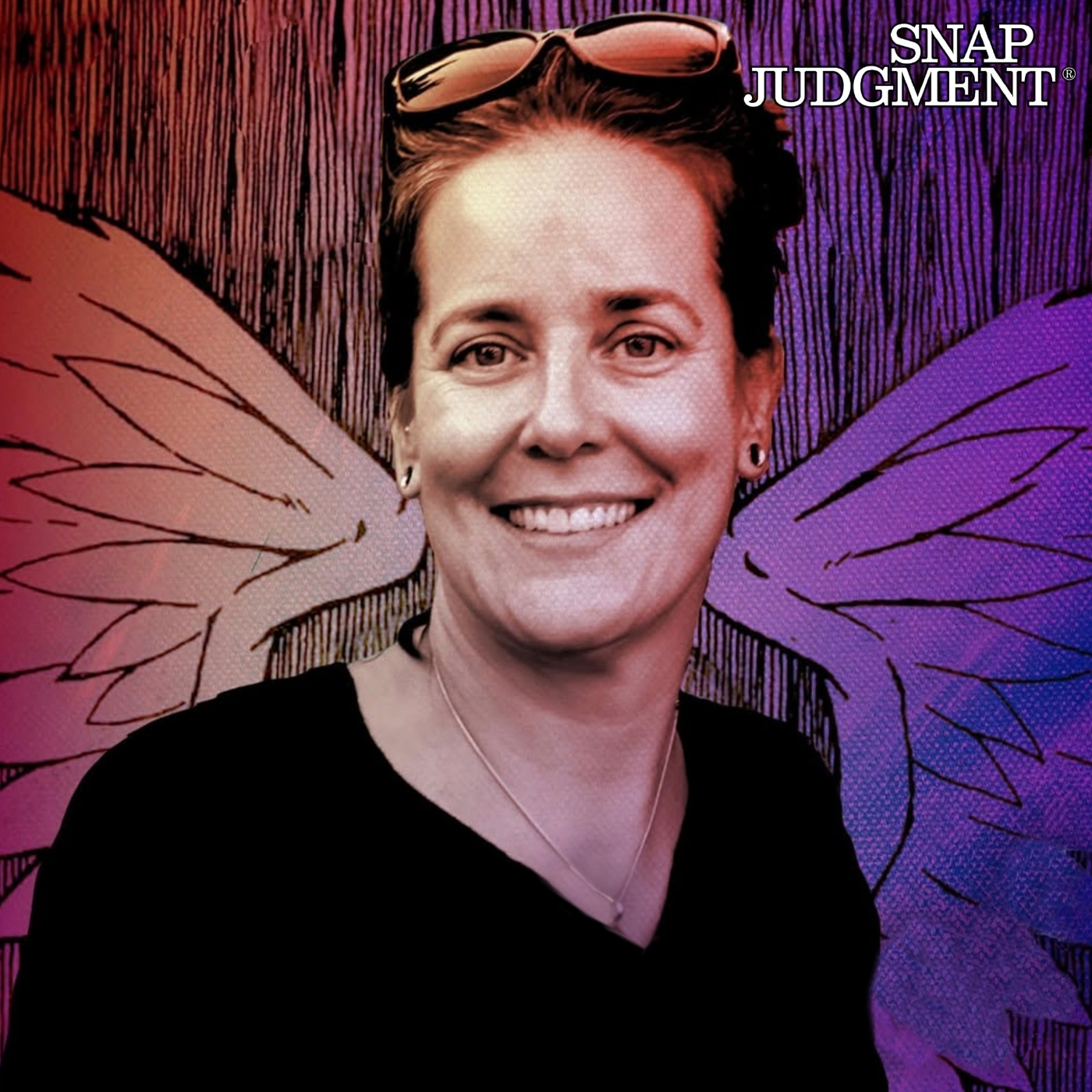
Snap Judgment
Jen Angel
00:49:09
Jen Angel is a beloved cupcake baker whose life was taken in a smash and grab gone wrong. Now a young man accused of the crime has his future hanging in the balance. Cries for justice, retribution and reason all collide as everyone tries to figure out “What Would Jen Do?”
Loading summary
Transcript167 lines
- [00:03]
A
Snap Studios. How about some good news for a change? Because there's a cannabis company that ships federally legal THC right to your door. And not just any thc. Fast acting gummies designed to target specific moods and needs. I'm talking about Mood.com's incredible line of functional gummies. And you can get 20% off your first order at Mood.com with promo code SNAP. So head to Mood.com, find the functional gummy that matches exactly what you're looking for and let Mood help you discover your perfect mood. And don't forget to use the promo code SNAP when you check out to save 20% on your first order. Snap judgment is brought to you by Progressive Insurance. You chose to hit play on this podcast today. Smart choice. Make another smart choice with with Auto Quote Explorer to compare rates from multiple car insurance companies all at once. Try it@progressive.com Progressive Casualty Insurance Company and affiliates not available in all states or situations. Prices vary based on how you buy. Sampas. Today's episode was crafted with a lot of love. It's a story from right here, from our hometown, our backyard, Oakland, California. And you may have even seen the headlines because they went international. And as I discovered personally, if you live here in the Bay, you're likely only a degree or two removed from the people you're gonna hear from today. It might be your neighbors, your friends. And this episode does contain graphic imagery, strong language, descriptions of violence and death. And we want you to take care because when two families were thrown into extraordinary circumstances, for months they wrestled with an impossible question. What do you do when you get the worst news possible? Our story begins on a foggy August morning in the heart of Oakland. Emily Harris, take it away.
- [02:20]
B
Mostly I feel like lots of anxiety and I feel feelings pulled in a million directions and kind of just want to go. I'd be in my bed, but. Yeah, my chest is really tight. It's like I feel like I'm just like protecting my heart.
- [02:42]
C
It's summertime. Emily Harris is speaking to me outside a courthouse in Oakland. A bright gold pendant is looped around her neck. It's hard to miss, especially against the serious tones of her pants and blazer. In a few minutes, Emily will go inside, up to the seventh floor, department 11. Today's an important day. People will fill the gallery awaiting a judge's final decision.
- [03:12]
B
There's a judge that's hearing a series of cases. At some point we'll be called, probably more in the afternoon, maybe we don't know Exactly. Like after 11, there's a recession.
- [03:25]
C
There are hundreds of courtrooms across America that look just like Department 11. The same high ceilings and washed out fluorescent lighting. The same odd collection of attorneys in power suits and defendants in jeans. But what will take place today inside Department 11 is different. It's something Emily has been pouring her heart into for over a year. And the outcome will be unusual for her and for a lot of people. The judge will say so herself. This all began with what happened 18 months earlier to Emily's dear friend, a woman named Jen Angel.
- [04:13]
D
I got a text message from her that wasn't from her. It was like, from her phone. It was this auto generated thing that said something like, the vehicle associated with this phone has registered an accident and the police have been called or something like that.
- [04:27]
C
Osha Motley told me he was working at his office when he got that text. It came from the phone of Jen angel, his fiance.
- [04:35]
D
So I called her, and the phone just rang and rang. It didn't go to voicemail, which was a little bit weird.
- [04:40]
C
He then got a call from one of Jen's best friends. She told him she heard that Jen had been in some kind of accident.
- [04:47]
D
I'm gonna go see what the car looks like because I want to see how bad that is to kind of prepare me for what I'm gonna expect in the hospital. And I got there, and it was the most bizarre thing. Like, there was police tape blocking off the whole block. But even from a half a block away, I could see her car was in the parking lot of the bank and it looked fine. And that's when I was like, what is going on? The police were still there. The primary witness who saw it was still there. And I was able to talk to them. And that's when I heard that there had been an attempted robbery and that she tried to chase them and was dragged with the car.
- [05:22]
C
It was midday. Two guys had tried to rob Jen in the parking lot of a bank just a few blocks from Oakland City Hall. Jen was sitting in her car when someone pulled up, blocking her in. The witness told Ocean that one guy jumped out, broke Jen's passenger window, grabbed her stuff off the front seat, and made a quick dash back to a getaway vehicle. Jen got out and ran after him on foot and somehow got caught in the door of the escaping car. She was dragged 50ft along the ground, badly injuring her head. Now the police were searching for the two suspects. So Ocean got back on his motorcycle and headed for the hospital. Nurses guided him to the icu.
- [06:15]
D
And then I Went in, and I saw Jen.
- [06:18]
C
And there she lay. The woman who obsessed over gritty punk music in one breath and expensive Italian wine in the next. The woman who had the chutzpah to rewrite her own name. Why stick with Engel with an E when angel was right there and rewrote it along with every other would be rule in her life. That woman wasn't moving.
- [06:45]
D
I was just in so much shock, and all I could think about was whether Jen was gonna live or die.
- [06:56]
C
The doctors told Ocean that Jen's face and skull were broken. Her hands were swollen, almost obscuring a tattoo on the inside of her wrist. It was of an ampersand, the symbol for the word.
- [07:10]
D
And otherwise she looked okay, but there was just this strange sense of something about it. The first thing I said was, you know, I'm not generally a pessimist, but I don't think she's gonna make it.
- [07:25]
C
On the other side of the door and down several hallways, people who knew Jen began to gather in the waiting room. A few here, a few there. And then a flood. One of the emergency contacts in her phone got a notification and so immediately called me. A mutual friend and I went to the gym in the morning. And I think as we were saying goodbye, she was like, oh, did you hear about Jen?
- [07:54]
B
I just was like, I can't go to work. I don't know what happened. So we kind of were on standby and then brought food to the hospital.
- [08:02]
C
These were Jen's people. They'd eaten at her table, marched alongside her at rallies, borrowed her stilettos. They were more than friends. They were part of her family. So as Tobias, Moira, and Emily waited for Jen to wake up, cell phones buzzed and rang nonstop across the Bay Area. Ocean called Jen's mom, who lived in Ohio, and told her to get on the next plane. Moira launched the GoFundMe. Someone even set up a Slack channel.
- [08:37]
D
I think everyone immediately thought about the bakery.
- [08:40]
C
Jen was the owner of Angel Cakes, a cupcake shop in a whimsical West Oakland building called the Gingerbread House. Her staff and her customers were emailing and calling, and she wasn't responding. Jen had really put a lot of thought into preparing for her death. For most relatively young, healthy people, death planning doesn't go beyond the 30 seconds it takes to register as an organ donor at the dmv. But Jen had experienced the chaos that followed a friend's unexpected passing. And so she was determined to do something different.
- [09:25]
A
Every year, she would send an email to a group of people and say.
- [09:29]
C
You'Re some of my closest people, and if I pass away, I would like for you all to work together and care for each other as a group. That first stretch of days at the hospital, every day we were meeting in.
- [09:44]
D
The courtyard there and committed to making.
- [09:49]
A
Decisions in a way that would honor Jen's wishes.
- [09:54]
D
In my mind, she wasn't dead yet. I was like, people come back. Like, it's still possible. So it's just this long week of waiting and hoping that somehow she would start breathing on her own. But she did not.
- [10:11]
C
On February 9, 2023, doctors call the time of death. 5:48. Jen angel was 48 years old. Yeah, definitely still have moments where I'm like, where I think I could call her up or something.
- [10:31]
D
You know, I had hundreds of emails and text messages like, it was like too much at first because it was in the news, so everybody knew it.
- [10:39]
C
I still can't believe it. Still can't believe how much care people showed, how much people wanted, needed to show up. But outside the hospital, a narrative about the robbery was already beginning to take shape. A white woman attacked in broad daylight in the middle of the city. It all played into existing stories about race, crime, Oakland and justice. Reports from local news stations and youtubers had a lot to say. I have never felt so insecure or threatened in this industry.
- [11:21]
D
Working in Oakland, San Francisco is the same thing.
- [11:24]
C
You go out there, you're more than.
- [11:26]
D
Likely gonna get murdered or get Oakland pd. Go out and chase those down. And it's too bad we don't have public hangings anymore. Just a quick plug.
- [11:36]
C
Jen's detailed instructions for her passing didn't map out exactly how her loved one should respond in the case of her death from violence. But they did feel sure that Jen would have rejected this narrative. On the floor of the hospital waiting room, Moira and a few of Jen's people opened their laptops and began to work through a statement, weighing everything they knew about how Jen had chosen to live her life. She was a proud activist who had been at Occupy Oakland and the Oscar grant protests against police brutality. She'd created decades of boundary pushing zines and that ampersand tattoo on her wrist, the symbol for the word, and pointed to her belief in alternatives, complexity, the idea that there's more than one way. So as I researched Jen and her activism, I would come across little pieces of information that filled in this picture of what she cared about. Like this clip from a radio interview Jen did a few years back about DIY culture. It Seemed to apply to so much about how she viewed the world.
- [12:47]
D
World Squat Radio airs live every Monday.
- [12:49]
C
From 6 to 7pm on WRCT, 88.3 FM in Pittsburgh, Pennsylvania.
- [12:53]
D
Spoke to Jen Angel, Klammer co founder and publisher, about Do It Yourself culture.
- [12:58]
E
Being exposed to these different ideas and.
- [13:00]
C
Having the opportunity to know that there was a different way of doing things was really important to me. So Jen's loved ones, who had soon referred to themselves as the estate of Jen angel, wrote that statement about what she believed, rewriting the narrative. Sort of like how Jen Jen had rewritten her own name. Then they shared it with the press. Quote, jen did not believe in state violence, carceral punishment or incarceration as an effective or just solution to social violence and inequity. End quote. Hours after her tragic death was announced, friends and family of Jen angel released a plea that if the people responsible for her death were caught, they are not to be locked up, but to be offered restorative justice.
- [13:50]
B
Now, certainly it's a request. We don't hear often from the loved ones of crime victims. ABC7 News.
- [13:56]
C
If you've caused harm like you don't just get off scot free. This is Moira, who set up the GoFundMe. There has to be accountability and that doesn't mean that like putting you in a cage is the way to do that. Everyone agreed that that's the kind of approach that Jen would want. We really tried to stress in those statements that this is an expression of Jen's values as we understood them. Restorative justice. So in general, it's about trying to find alternatives to the way we traditionally punish people. It's usually rooted in community dialogue, people getting together and talking things through. It gives everyone involved, even the person who committed the harm, a voice. It is also about accountability for the person who committed the harm. So Jen's estate put forth that radical yet pretty unified public statement. But among the people in the estate, there were differences of opinions and feelings here and there. It was hard for everyone. Ocean had lost his fiance.
- [15:06]
D
I was very angry and I wanted to hurt the people who were involved. I don't think, you know, beating them up was going to do anything either. I was just angry and I wanted to do something and I had this rage in me. And that was the only thing that I thought of at the time, honestly, that I wanted to have happen.
- [15:29]
E
Dang, I'm getting tongue twisted.
- [15:31]
C
So nervous. Oh, it's okay.
- [15:32]
E
We can relax.
- [15:34]
D
Relax.
- [15:35]
C
You want to pray? Yeah. Yeah. This is Ashanthi and her mom, Sandra.
- [15:41]
E
Is it okay if we pray?
- [15:42]
C
Absolutely. Awesome.
- [15:45]
E
Father God, we thank you. We thank you for bringing us here today. We thank you for this platform that you have provided us for our voices to be heard in creating an atmosphere that brings change to our community. Father God, we ask that you be in this room, that you lead us in our words, that you lead us in our thoughts, that we speak what is on our hearts, and that you.
- [16:07]
C
Give us confidence and integrity and just the will to do your work.
- [16:12]
E
In Jesus name, Amen. Amen.
- [16:18]
C
Ashanthi and her boyfriend Ishmael Burch had been together for a little while. They first connected when they were 17 and in high school we met through Instagram.
- [16:29]
E
I was like, I want to talk to somebody from the city. Because if I want somebody from the.
- [16:32]
C
City, your face, I mean, that's your.
- [16:35]
E
Guys way of meeting people.
- [16:36]
C
Yeah. They lived on opposite sides of the bay with Ishmael in San Francisco. In person, Ishmael didn't take up a lot of space. He and Ashanti were close to the same height, and he met Ashanti's bubbly energy with a somewhat taciturn awkwardness. But Ashanti had already fallen for his intelligence, his generosity. He gifted her a pair of sneakers just days after they met. The care he took with things, even down to the punctuation in his frequent.
- [17:07]
E
Texts to her, like, you don't text like everybody else. Like, you use the punctuation, like you're using the right words for the right meaning. Like, you know, you. You got a little brain, you know, he's very observant. Like he just pays attention to everything.
- [17:25]
C
One night, when Jen was still in the hospital, Ashanti waited for Ishmael to pick her up from work. When he arrived, he's just quiet.
- [17:34]
E
And Isha's always been a person where he really doesn't like, open up to me because he doesn't want me to worry about a lot. And he's just been like that with everybody. He will keep everything in, but I don't know. I read people very well, so I'm already knowing something's off. I just couldn't like, really put my finger on it.
- [17:56]
A
When we return, Ashanthee finds out what's weighing on her boyfriend's mind. Stay tuned. Welcome back to Snap Judgment, the Gin angel episode from last We Left. Ashanti's boyfriend Ishmael had just picked her up from work and he was quiet. Uncharacteristically so. And yes, this story does contain graphic imagery, strong language, descriptions of violence and Death Ashanti. She couldn't quite figure out what's going on with Ishmael.
- [18:33]
C
It's not judgment, she says the strange behavior continued for weeks. Ishmael seemed withdrawn, even for him. On June 2, four months after Jen Angel's death, Ishmael was arrested in San Francisco.
- [18:49]
E
I was at his mom's house, and we thought he was getting out. We had the bail money and everything ready, and he just didn't call for hours.
- [18:57]
C
And then the phone rang, and I.
- [19:00]
E
Could tell by the room that he was in a room by himself. And I could hear his voice that something was wrong. I was like, what Ish? And he was like, they just booked me in for murder.
- [19:11]
C
According to news reports, police had used cell data and surveillance footage as probable cause to arrest Ishmael for killing Jen. They believed he'd been driving the getaway car.
- [19:24]
E
My whole heart, like, crushed, and I'm like, ish, you gotta tell your mom. I can't tell her. She took the phone and he told her. And she just dropped to the floor and started screaming and yelling.
- [19:46]
C
So bad.
- [19:53]
E
And he just kept saying that he loved us and it's going to be okay.
- [20:00]
C
The Oakland Police Department contacted Ocean and told him that they had taken a suspect into custody.
- [20:07]
D
I was really processing her death. Like, that was the only thing that mattered to me. She's dead and she's not coming back. Like, that's what I needed to come to terms with. And it. The wound, the emotional wound, like the scabs had just begun to, like, start covering up. And I was, like, trying to figure out how to function and just get through day to day. And then when I heard that they arrested somebody, just kind of tore that off. It's like, okay, here we go. Now we got this whole other thing to deal with.
- [20:32]
C
But Ocean had to deal with it. Ready or not, he would have to put his own feelings to the side if he was going to fulfill Jen's wishes. And what's really interesting about this crazy position Ocean ended up in, he's actually a defense attorney. And Jen's close friend Emily had worked for years as an advocate for people in prison. So these two already knew the Oakland justice system.
- [20:59]
B
I immediately got in touch with people in the DA's office and got a meeting with Ocean and I with some of the, like. I think it was like the head of Victim Services and the head of Restorative Justice.
- [21:14]
C
To be clear, restorative justice programs usually focus on juvenile court and lower level offenses. What Jen's estate was attempting to pursue in this case went much further and was pretty rare.
- [21:27]
B
We were like, we want to get ahead of, like, what you're charging. Like, let's start talking now.
- [21:35]
C
The DA's office told them who they had in custody. A young man named Ishmael Burch. Soon after Ishmael was due in court for his arraignment, Ashanthi and Ishmael's mom walked into the courtroom.
- [21:51]
E
It wasn't really, like, full in the courtroom, and they were just doing, like, handling other cases. Other inmates were coming up and getting their seats, sentencing or hearing their next court date and things like that. I just remember feeling, like, numb, like, not knowing what to expect, but expecting for the best, but preparing for the worst. That's, like, the best way to put it, how I felt back then. But when I seen him come out, it broke me. Like, this is real. That's when it hit.
- [22:22]
D
I went with a few of Jen's friends and community members. It was really hard when I saw Ishmael for the first time, because I wanted it to be this, like, big, mean, angry person, you know, that I could, like, project my anger onto and feel righteous about wanting to hurt this person. And I'm like, oh, my God, this is. He looks like a child. I mean, he was 19 years old the first time I saw him. Like five, eight, maybe like 145 pounds. And he just. It was just so hard to be angry, you know, angry at him. It was particularly hard because his family was there.
- [23:00]
E
Those little three minutes while we were in the courthouse. I just kept crying. I was looking at him, and then he did, like, a little heart to me, and it just broke me down so bad. And I just walked out and I got in. I left my cousin. I left his mom. I walked out and I was just outside. I was just like, why? I just kept asking why. God.
- [23:19]
C
The DA's office said that Ishmael was driving the getaway car while his partner smashed Jen's window and tried to grab her things. While they might not have intended to kill Jen, there's a special kind of charge in the books for these types of cases. It's called felony murder.
- [23:38]
D
If you are committing a felony and someone dies, it's the same as first degree murder.
- [23:43]
C
But to Ocean, it didn't feel like the same. Same thing at all.
- [23:47]
D
I knew more about the facts, and I knew that, you know, he hadn't tried to kill her and was running.
- [23:50]
C
Away from her still. The DA's office went ahead and leveled multiple charges at Ishmael, including two Counts of second degree robbery and one count of murder under a felony murder theory. Prosecutors also said that Ishmael had been on probation at the time of Jen's robbery and made reference to a juvenile criminal history. Ishmael was looking at the possibility of a life in prison.
- [24:18]
E
I could feel how scared he was. I could feel all of it. And I just felt like I was dealing with all of it. So it just really, like, literally felt like a ton of bricks.
- [24:31]
D
And I just saw them, you know, weeping for him and just seeing how much they loved him and knew what he was about to experience. Just knowing what it's like to be in a cell day after day. I myself am a convicted felon. I've been incarcerated, so I've seen the system from inside and out.
- [24:56]
C
Ocean had been almost the same age as Ishmael when he was locked up for selling drugs.
- [25:02]
D
You're not a person, you're an animal. I mean, you technically have rights, but, you know, the people who are holding you captive, you know, they have guns, and if they don't like what you're doing, they can kill you at any. They can do anything they want to you. Nobody's gonna do anything or say anything or know anything. You're just at the mercy of people who you don't even know and who probably don't like you. As much as I, you know, may have wanted to fight him, I certainly didn't want to see him go to prison for this.
- [25:28]
C
Ocean left the courthouse with a lot on his mind. He later called up Emily to debrief. Just because they were sure they didn't want Ishmael locked up forever didn't mean they were clear on what should happen to him instead.
- [25:42]
B
Where's this kid gonna go? Who's gonna take care of him? Who's gonna prevent him from causing harm? How do we, like, put forward a concise plan?
- [25:52]
C
And even if they did come up with that plan, they would need the buy in of the da, the judge, and of course, Ishmael.
- [25:59]
D
All I know is that it's Ishmael versus the state of California.
- [26:04]
C
It's impossible odds, and it wasn't up to them. US courts don't allow victims to mete out justice according to their wishes. I mean, that wish often sounds like vengeance. That's why the state always steps in as a neutralizing intermediary. The people versus the defendant instead of the bereaved victim. That's pretty much the way it's gone for hundreds of years. So why would the courts make an exception for Them.
- [26:34]
B
The system is so much bigger than us. It's so much more powerful than us. There was a hopelessness of, like, what. What can you even influence.
- [26:44]
C
From the Santa Rita jail, Ishmael had told Ashanti the name of the woman he'd been charged with killing.
- [26:52]
E
I did my research about it. I'm like, ish. This woman believed in restorative justice. Like, this family don't want you to go to jail.
- [27:01]
C
We have the victim's family that is working with the system to try to keep Ishmael out of jail. Like, this incredible thing. It's also a group of white people who are using their influence to affect what happens to a black person. Did you ever feel like. Like any tension around that?
- [27:29]
E
Yes. I felt like at first, it was a feeling like, what are their true intentions? Like, what is this all about, you know?
- [27:38]
C
Ashanti, Ishmael's mom, Ocean and Emily were almost always at Ishmael's monthly court appearances. They knew each other's faces. They sat in the same room, often on opposite sides of an aisle. They never said a word. Emily and Ocean didn't quite know how to influence the situation. Then one day outside the courtroom, they were talking to Ishmael's lawyer and the DA's lawyer, and suddenly Emily heard the words plea deal. She saw a chance.
- [28:18]
B
And I just kind of, like, inserted myself, and I just was like, would it be helpful if we drafted, like, our recommendations of what happens in the case?
- [28:30]
C
By recommendations, Emily meant specific examples of accountability for Ishmael. They'd been brainstorming possibilities for months. Ishmael's attorney, Annie Belous, of course, welcomed the idea. But the surprising part is, so did the representative from the DA's office. There was a new district attorney for Alameda county named Pamela Price, and she wanted to reform the county's approach to criminal justice. Like, listen to this statement she gave. We are looking for alternatives to incarceration when it's appropriate, because we know that we can't solve our problems by locking people up forever. And keeping young people out of the justice system, especially benefits us all. So Emily went home and immediately began drafting those recommendations in consultation with Ocean and the rest of Jen's estate. On one side was Ocean, who wanted Ishmael to be released immediately with time served. And on the other was Jen's mom, who did not.
- [29:35]
D
She was not on board with the restorative Chesa Sangol. And I can understand that. I mean, Jen has heard, daughter, you're not supposed to bury your children. She's very Close to Jen. She always talked about Jen being her best friend. And I think she's devastated. And I totally get that. That's her right to be against that and to have those feelings. And I certainly understand them. I don't agree with them, and neither did Jen.
- [29:59]
C
Survivor needs are a key part of restorative justice processes. But what should happen when everyone's needs just. Just can't be met? I did reach out to Jen's mom a few times, but I didn't get a response. But in the end, Ocean didn't get what he wanted either. Neither of them signed on to the recommendations that were hammered out in a letter Created by almost 20 of Jen's close friends, including Emily. Their list included no felony murder charge and a minimum two year stay at a residential program. There's one in San Francisco near Ishmael's home.
- [30:42]
B
It would be structured. It would come with training and all of the, like, you know, people, like, want people to have, like, real career and job skills.
- [30:50]
C
And they did want something from Ishmael, too. His voluntary participation in a formal restorative justice program where they and Ishmael would meet and talk.
- [31:02]
B
I mean, I want a space to tell Ishmael that I'm pissed at him, that I'm super angry and hurt. And, yeah, that's vulnerable, but also there's maybe something liberating in it. And I think that's what I want for myself and for other people. Something honest that doesn't feel like. Isn't coerced. I think, like, for a while, I struggled with, do I fight for this kid who his actions, like, killed my friend over and over again? I feel like I've leaned on the strength of who I know Jen is. And also just like, what Jen would say to me about doing it. You know, I can, like, see her.
- [31:49]
C
I don't know.
- [31:49]
B
I've had a lot of conversations with her in my head.
- [31:53]
C
At the end of February, the letter was signed and sealed. Emily sent it to belous and the DA's office, crossing her fingers for as little prison time as possible and the opportunity to talk to Ishmael herself.
- [32:11]
A
Will Emily's efforts actually move the needle in Ishmael's case? Find out after the break. When last we left, the loved ones of Jen angel had just poured their energy into a letter they hoped could save Ishmael from a lifetime prison sentence. But would it make any difference at all? Snap judgment.
- [32:37]
E
I started to open up my heart to the situation. Like, this is real, Shani. White people are able to do this without even knowing ill intentions. Like, it's okay. Like, let's take color out of it right now. Let's just look at people for who they are in their heart and the humanity that they carry. As time went on, I realized, oh, they're pure.
- [32:56]
C
But not everyone thought so. One day, Emily went to the store. She had wanted to buy plates for her kitchen.
- [33:04]
B
And they're like wrapping it. They like open up the newspaper. It's Jen's face.
- [33:11]
C
It was a story that Emily was quoted.
- [33:14]
B
It was like just a random stack of newspapers, like months and months old. And I was like, that's my friend and I'm in that story. And then she was like, do you want the maids? I was like, yes. And then she wrapped it in something else and I just was like. I think I remember just feeling really exposed.
- [33:30]
C
Emily left with the plates and the newspaper. When she was inside her car, she opened up the newspaper and re read the article. It was about the thing she and Jen's estate were trying to do. Restorative justice. A lot of people were really in their feelings.
- [33:50]
D
She obviously didn't care about her friend very much.
- [33:54]
A
Just obviously not.
- [33:55]
D
She cares about her own narcissistic self.
- [33:58]
A
Presentation more than she does about her friend's murder.
- [34:02]
C
We're gonna sit down and talk to you. We're gonna come to agreement so that.
- [34:05]
E
You don't do this again.
- [34:08]
C
These people live in LA LA world, man. Today, ideology trumps safety and creates a parade of victims, but also a parade of idiots. After I came across some particularly harsh comments on an Oakland online forum, I called up Emily to get her take. Ocean had told me, don't make the mistake of looking at comments on these stories. And you know, of course I have to. People are just so angry about what you all have tried to do with this case with Ishmael. Yeah.
- [34:45]
B
What are they angry about?
- [34:47]
C
I see a lot of comments of people saying things like, you know, he doesn't deserve this. A lot of people throwing out the word monster. And, you know, Jen ran after them to get her stuff back. Like, maybe she didn't want this.
- [35:04]
B
I know deeply that nothing about how they're responding, how the, like how the state and the system responds actually gets at that prevention. You might like, temporarily prevent this one person from being able to like, do these kind of robberies in the future, but you're actually not changing any underlying conditions. And I think that's the stuff I want to talk about. Not just like, how do we punish them? But I want to be like, how do I actually stop this from happening to somebody else's friend?
- [35:36]
C
In the early days of summer, almost a year and a half after Jen's death, Ocean was at home on his computer, checked his email, and there it was. A message from Bellis. Ishmael and the DA's office had agreed to a plea deal.
- [35:58]
D
I had to take a moment and kind of breathe and like, we're not looking at 25 to life. We're not looking at decades. I knew I wasn't going to get what I wanted. And it was the best possible deal or outcome that could have happened.
- [36:12]
C
Ishmael had been facing the possibility of life in prison. He could now plead no contest to one count of second degree robbery, one count of voluntary manslaughter, and if the judge agreed, received seven years in state prison, he could come home before he was 25.
- [36:32]
D
Now the issue is, will the judge sign off on it?
- [36:35]
C
But even if the judge agreed, the plea deal completely ignored all the other requests in the letter. People involved with the case explained to me that for a judge to put things like conversations and re entry programs in an actual sentencing for a murder felt foreign, a bridge too far outside the known language of years in prison.
- [37:00]
B
Nothing about the deal addressed any of our asks about doing something restorative. It felt just like it was about how much time he gets as opposed to, how do we stop this from happening in the future?
- [37:19]
C
And there was nothing in the deal about their one big ask, the conversation they wanted to have with Ishmael to tell him about the person Jen had been.
- [37:29]
D
They talk about. Forgiveness isn't about the other person. It's for myself, you know, and that's a lot of it. It's just wanting to understand, wanting to be able to see the humanity in this other person for my own sake.
- [37:41]
C
I mean, is this forgiveness? Do you forgive him?
- [37:46]
D
That's a good question. I don't know. I empathize with him and I recognize that he had no intent to hurt Jen. That's the place that I'm at right now.
- [38:03]
C
He could say, you know, no, I don't really want to take part in the restorative justice process. And that would be okay with you?
- [38:11]
B
Yeah, it would be hard. It would hurt. And I think I could be able to be like, I hope you circle back and I hope you think about this. We're in this long journey with each other.
- [38:26]
D
If he doesn't want to meet, he doesn't want to meet. You know, maybe build a relationship with his mother or other people in his community. And maybe we don't. Maybe we don't ever get to speak again. But all I can do is show up and see what happens.
- [38:39]
C
The day before Ishmael's sentencing hearing, Ashanthi was having a hard time.
- [38:45]
E
It was too much to hold. So I was at a point where I just was like, at the sentencing, I didn't want anything to do with him.
- [38:55]
C
Thinking of not going to the sentencing?
- [38:57]
E
Yeah, I was like, I'm not going. I have work. Like, I'm not going. But the day of the sentencing, it was like, shawnee, like, you didn't go through all of this for no reason. So it was just like, I can't hold this grudge to him. Like, it's okay. God is teaching you patient. Be patient with him. Good morning.
- [39:15]
D
How are you?
- [39:15]
C
Okay. How are you?
- [39:16]
E
How are you? Good, thanks.
- [39:18]
B
Just some tea, boost, lemon, ginger. Okay. That'll be better for my anxiety.
- [39:27]
C
So here we are. It's summertime. I'm standing with Emily outside the courthouse about an hour before the hearing. A bright gold pendant is looped around her neck. It's hard to miss, especially against the serious tones of her pants and blazer. Emily talks about what could happen today. She has no idea if the judge will accept Ishmael's plea deal.
- [39:52]
B
I think some of my fears are that it just feels mechanical, that there's this, you know, Ishmael's family on one side and the rest of us on the other side. And we're not even supposed to, like, make eye contact.
- [40:06]
C
Okay, I'm gonna hang back and let you guys walk in.
- [40:20]
A
Seventh floor.
- [40:25]
C
The court denied my request to record the hearing, but I was able to sit in the gallery, and I can tell you what I saw, what I know. A judge wearing glasses in black robes sits on an elevated platform in front of a massive American flag that stretches to the ceiling. She eyes a calendar on a wall and calls out name after name after name. A woman who says her daughter's father has been murdered sits in the wooden seat next to me. Two minutes later, someone else takes her place. At one point, every person in the gallery, the accused, the families, the friends, every single one of us is either black or brown. And then it gets quiet. Fifteen people from Jen's community, including Ocean, Emily, and Tobias, and six people from Ishmael's family, including Ashanti and Ishmael's mom, shuffle into the gallery and sit down. A few of Jen's people are wearing the gifts they gave out at her celebration of life. Bright gold pendants Same as the one around Emily's neck. Ampersands like Jen's tattoo. Ishmael stands in a yellow jumpsuit on the far side of the room, almost out of sight. Someone passes around a green box of tissues and it begins. The People versus Burch. Emily gets to speak. Later she'll tell me she was shaking as she held the microphone and said Jen would have wanted this case to set an example for how Oakland can respond to violence beyond punishment and imprisonment. A woman reads a statement on behalf of Jen's mom, Pat Engel. It's the only time I hear her thoughts on the case. I want to make my stance perfectly clear. I am vehemently against any form of restorative justice, early parole, or any reduction in sentencing. Jen was robbed of her future. ISHMAEL if you had stopped the car so Jen could have been untangled, this nightmare would be over. Jen could have continued on with her life of service to others. The world would have been a better place. Ishmael looks at the judge and his lawyer, Annie Belous. He's not allowed to look at us, but we can see him wiping his face with the front of his jumpsuit. The judge lets more of Jen's friends stand and speak. They ask her to support the plea deal. Bellis addresses the judge and the gallery, saying she's never seen this level of compassion and love for humanity in her 25 years of practice. Then she passes the microphone to Ishmael and for the first time ever, a judge allows Ishmael to make eye contact with Jen's family and friends. He reads his statement in a steady voice. Words can't explain how sorry I am for putting us all through this. And truth be told, I don't want words to be able to explain my remorse. I want my actions after incarceration to explain my remorse. The judge calls the plea deal unusual. She says she had to bring both lawyers into her chambers before the hearing to have them explain why she was looking at such a light sentence. Bellis, Ishmael's lawyer, asked her to read all of the statements that Jen's family and friends had submitted. It's overwhelming, the judge says. The compassion and generosity of spirit she's witnessing in this courtroom. She'll agree to the plea deal. She turns to Ishmael. You're going to serve some time when you get out. Don't let these people down. Don't let them down. Ocean and Ishmael's mom cry throughout the hearing. They know each other's faces. They sit shoulder to shoulder. They barely say a word. They just hold hands. Being exposed to these different ideas and having the opportunity to know that there was a different way of doing things was really important to me.
- [45:49]
A
Thank you. Thank you, thank you, thank you. To Ocean. To Ashanti, Emily, Moira, Tobias, Sandra. People from our community right here in Oakland opened their hearts to share their story with snap. This is real life. The aftermath is not a tiny story. District Attorney Pamela Price, she was recalled. Supporters of the recall say she was too soft on crime. Ismail and all have been in touch but have yet to sit down with each other. They're working with an organization to facilitate that meeting. We also reached out to Ismail. He said he's willing to talk to us but wants to do so in person. If that happens, we'll update you. Meanwhile, Jenangel's cupcake shop lives on as a worker owned cooperative. And to celebrate, they threw an all you can eat cupcake. A palooza for the community eating cupcakes.
- [46:49]
B
We have so many cupcakes.
- [46:51]
C
We have more than this. Get that sugar rush going. Have fun.
- [46:58]
A
And lastly, on a sunny day just a few weeks ago, Ocean, Moira and Julie, another member of Jen's estate, decided to do something special to honor Jin. Spread some of her ashes and the surprisingly scenic waters right next to San Quentin Prison.
- [47:16]
D
Feels good to be out here in the water so close to the prison, feeling so much life inside and outside. Just come out here and jump in the water felt right. I'm excited for the possibility of him getting out pretty soon, 2028. I mean, I know that soon doesn't seem like a lot in three years, but he's a young man, so it feels like he's still got a chance to have a life ahead of him.
- [47:39]
C
There was a hummingbird that was really just hanging out with us. It kept kind of like flying around and perching on the barbed wire and on the fence. And I really felt like that. Was Jen with us? Jen was a hummingbird with us.
- [48:06]
A
Special thanks to Jameela, the estate of Jim angel, including Julie, Dana, Megan, Ryan and Elle, and the entire team at Angel Cakes. Additional field recording for this was done by David Exime. Expert consultation by Suki Lewis. Special thanks to KQED Legal. The original score was by Dirk Schwartzhoff. This piece was edited by Anna Sussman and was produced by Regina Bediaco. Now, if you missed even a moment, go back. Go back to the beginning. We really want you to hear this. It's super easy. Just type snap judgment into any podcast platform or look for the Jen angel episode Keck UD in San Francisco is Snap Judgment's Orbiting hall of justice and no Snap Judgment Studio's content may be used for training, testing or developing machine learning or AI systems without prior written permission. On Team snap, the union representative, producers, artists, editors and engineers are members of the national association of Broadcast Employees and Technicians, Communications Workers of America, AFL CIO Local 51. Staff is brought to you by the team that gives hugs. Lots of them, even the uber producer, Mr. Mark Ristich. Hugs Nancy Lopez, Pat Mesiti, Miller, Anna Sussman, Renzo Goriot, John Facil, Shayna Shealy, Tao Dakot, Flo Wylie Bo Walsh Marissa Dodge, David Exume Regina Berriaco My name is Glenn Washington and this is NOT the news. No waste this news. In fact, if you ever need a reason to justify enjoying eating cupcakes, stop. Stop. Just enjoy eating cupcakes and you would still not be as far away from the news as this is. But this is pr PA.
- [50:13]
C
Foreign. When it's time to scale your business.
- [50:23]
B
It'S time for Shopify.
- [50:25]
C
Get everything you need to grow the way you want.
- [50:28]
B
Like all the way. Stack more sales with the best converting checkout on the planet.
- [50:36]
C
Track your cha chings from every channel.
- [50:38]
B
Right in one spot and turn real time reporting into big time opportunities.
- [50:42]
C
Take your business to a whole new level.
- [50:45]
B
Switch to Shopify.
- [50:46]
C
Start your free trial today.