← Snap Judgment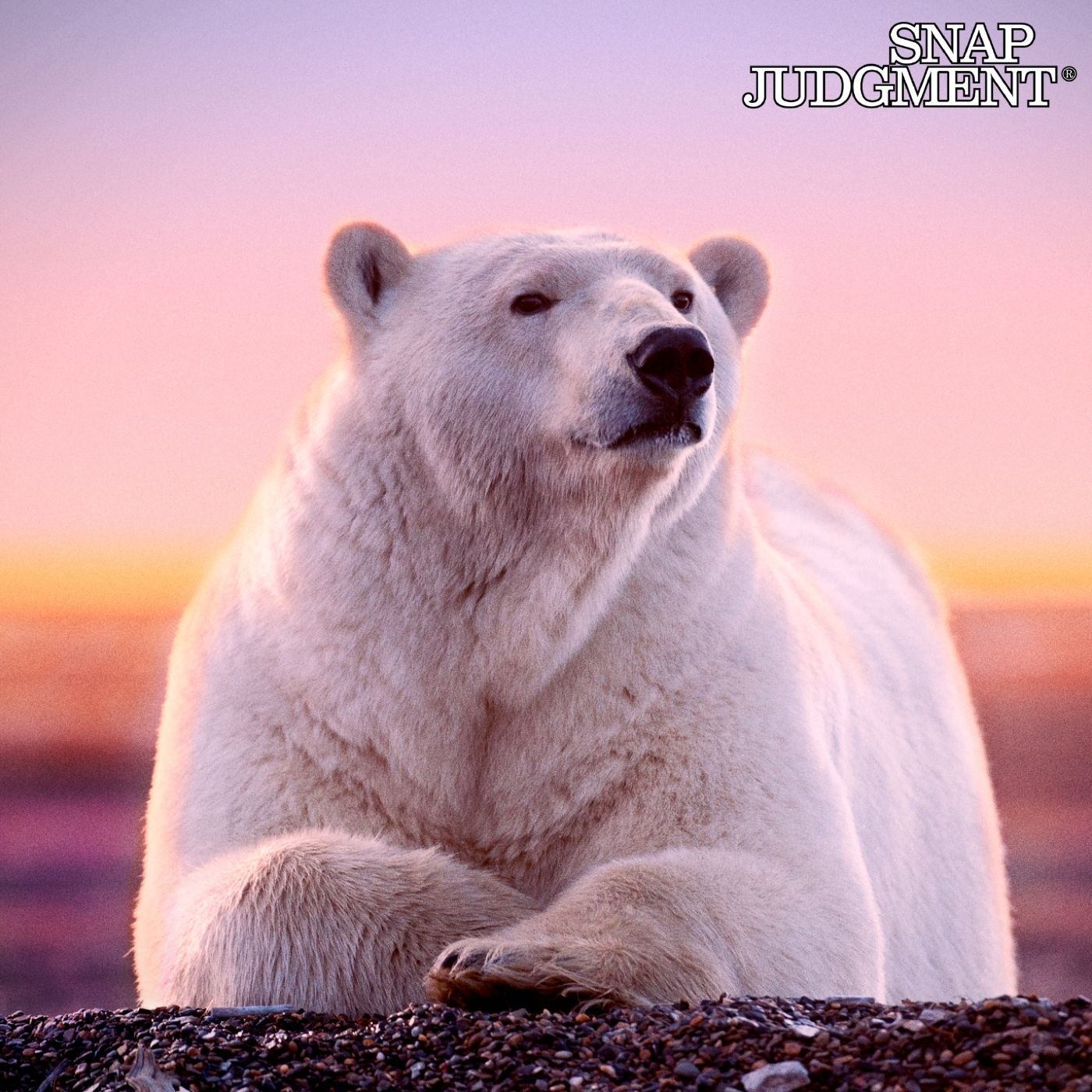
Snap Judgment
Not So Tiny Dancer - Snap Classic
00:49:40
On the frozen tundra, a polar bear guide wakes up to a loud THUMP on the side of his ice buggy. It’s his 1,000 pound buddy, Dancer. And he wants a cup of coffee.
Loading summary
Transcript69 lines
- [00:03]
A
Snap Studios hands down. No question. My favorite meal of the year is Thanksgiving. And here's your pro tip. Whole Foods Market has great everyday prices on Thanksgiving essentials. And that includes friendsgiving celebrations as well. 365 brand has all the must haves to complete your Thanksgiving spread with. The mashed potatoes, the organic baking spices, the whatever else you need. Yes, they have the appetizers, the quiche, the butterfly shrimp, the breaded calamari. So much. Just add family and friends. What are you waiting for? Enjoy. So many ways to save on your Thanksgiving spread at Whole Foods Market. How about some good news for a change? Because there's a cannabis company that ships federally legal THC right to your door. And not just any thc. Fast acting gummies designed to target specific moods and needs. I'm talking about Mood.com's incredible line of functional gummies. And you can get 20% off your first order at Mood.com with promo code SNAP. So head to Mood.com, find the functional gummy that matches exactly what you're looking for and let mood help you discover your perfect mood. And don't forget to use the promo code SNAP when you check out to save 20% off on your first order. Okay, so in one of my favorite books of ever American Gods, the magical Neil Gaiman takes us to a place where every year in the winter, after the temperature drops below zero, the lake freezes into an ice sheet. And the locals, they drag a junkyard car, haul it to the middle of the lake, and then they raise money for a local charity by rattling off tickets, each ticket detailing a precise time that in the spring that car is going to break the ice and sink beneath the water. Whoever calls it closest gets the big prize. Now, I'm from Michigan, and this is a real thing. In places I grew up, it's how the PTA raises money for the high school basketball uniforms or maybe a new roof for the firehouse. In fact, people have been known to make sure they're holding the winning ticket was a sticker to a well placed dynamite so that the car sinks when it's supposed to. But this past year, in my old stomping grounds, they couldn't have the contest. No raffle for after school programs, no sticks of dynamite, because for the first time in living memory, the lake didn't freeze over. And being from this place, it's hard to adequately express the surprise, the shock, our connection to the cold. We revel in it. We fetishize it. We play and work and roll and sleep and Run and fish in it. This is not just a thing to reckon with out there. This is the thing that touches the soul. And in the book, a deity arrives to maybe set things right, but to damn Snap Judgment. No. God's magic answers from the sky instead. Instead, I know a guy. Snap Judgment proudly presents not so Tiny Dancer. My name is Glenn Washington. Bundle up. Winter is still coming. When you're listening to Snap Judgment, We begin even further north than Michigan. The banks of the Hudson Bay in the middle of Canada, where in the 1970s, a young kid named Dennis Camperi. Dennis would play in the streets with his friends. Snap Judgment.
- [04:56]
B
It was a happy place to grow up in. There wasn't many rules or regulations for a young kid. We could play, you know, road hockey until we dropped dead. Just about all winter, there was no street lights or anything like that. So when it got dark, we played road hockey with the northern lights shining up over us. And it really did help increase your visibility, which is pretty cool. It was, I don't know how many hundreds of thousands tons of gravel they crushed to lay the foundation down for the town. But there was. Being that far north, there was no lawns or greenery like you would see further south. As a kid growing up in Churchill, you know, our boogeyman, you know, our bad guy, was always the polar bear.
- [05:46]
C
The bears did come ambling through the town of Churchill. They'd walk by the school, the airport, and if they were hungry, bears would.
- [05:55]
B
Take dogs off the chains for sure. And they're still doing it. You know, bears were always in the back of our mind.
- [06:05]
C
Can you describe what would happen in the town if there was a polar bear coming through?
- [06:11]
B
There was a telephone system. The phone would ring and it would let you know. But the main way of knowing if there was a bear in town was the dogs acted up. You know, as soon as one dog smelt, the bear noticed that there was a bear around. There was a kind of a specific dog howl because most of the dogs were huskies that every dog in town would pick up. And you knew it was time to get the hell home or, you know, or figure out what you're gonna do, you know, the houses we lived in in Churchill at that time were not very well built. They're basically shacks. My father would kill me for saying this, but, you know, the walls were thin. And, you know, in the dead of winter, when you crawl into your bed at night, if the wind was howling and there was a lot of thumps or whatever on your house, you were worried it Was a bear coming to get you? People were dead scared to death of bears back in the day. They figured if the bear could see you through the window, he's going to come for you. So you just turned the lights off. And my father would haul out his rifle and make sure it was loaded and put it by the door just in case. I constantly had nightmares about polar bears. I mean that was. That was the demons you had to fight.
- [07:35]
C
And what was it the same polar bear in your nightmares or was it just different ones?
- [07:39]
B
No, it was the same guy. He was called the bear.
- [07:45]
C
Did you tell your parents that you or did you tell anybody?
- [07:50]
B
No, no, you know, I didn't. I wouldn't dare tell my dad about my nightmares. He's throw me out in the snow bank and make me work through it. But no, nothing much was said about that. One time I was out playing road hockey till all hours of the night and the dog howl come up and I thought, well, I gotta get going home. It was pitch black. So I started going for the house and the dogs got louder and louder and you know, I was running for dear life home. So already my heart was pounding a thousand miles and each side of the road was long ditches. So you're going down into a ditch and up on the road and down into a ditch. And our house was just across the road from this ditch. I could see the light in mom's kitchen. Right there on the road right in front of me was this big old bear. And he was huge. And he just, he just stood still, didn't move, just like a statue. He had these watery looking eyes, you know, the head slung low and he was kind of looking at me through these ancient eyes. And so I thought my life was over. You know, this is how I'm going to end. My legs were starting to give out, but I thought, well, I can't stop. And something just lifted me up and carried me up over onto the road and just crossing right in front of the bear. And I was carrying my hockey stick and I just held my stick out. When I finally got to our porch and I didn't go into the house, I just stood there stunned for a second. Then I looked back at the bear. We locked eyes for about three or four seconds and that was absolutely amazing. And because he was an older bear, there was. His muzzle was showed black because the hairs on his head was kind of thin. And then I swear to God, he just huffed and turned his head away and just ambled down the road.
- [10:02]
C
For many generations, Dennis and the rest of the town of Churchill had lived their lives avoiding the bears. But as the 70s turned into the 80s, polar bears became an object of fascination for the rest of the world. An opportunity started to develop in the town. The business of taking tourists out onto the ice to see these massive creatures. How did you, from being a kid who was so scared of bears, how did you end up in this business?
- [10:30]
B
Well, the guy who built the buggies, my friend Len, needed a driver and I said, sure, this sounds like fun, so let's go. I mean, I wasn't, I wasn't walking out on the land looking for bears. I was inside a, a tin can with tires on it, you know, so it was relatively safe in my mind.
- [10:48]
C
So this tin can that he would be driving was an invention of his and his friend Len's. It was kind of a monster truck tour bus that they built to take out on the ice.
- [10:59]
B
Well, you take the chassis of a 5 ton fire truck and you take a bunch of great big tires off farm equipment and you put them in.
- [11:07]
C
They got an old engine, 12 seats from a school bus, a little platform for a propane heater with a chimney cut through the roof.
- [11:14]
B
And across from the propane heater was a cutout seat and a five gallon bucket for the, you know, for the toilet. And away you went. That was buggy one. That's how, that's how we went to see the bears.
- [11:28]
C
You were going to be the first driver of this buggy?
- [11:31]
B
I was the first driver, yeah.
- [11:33]
C
How did that, were you nervous? How did that feel?
- [11:36]
B
Well, like anything else, you can't let them see you sweat, right? You just jump in and go. And you had unsuspecting paying guests there who didn't have a clue. And more often than not, because the original buggy was not 100%, you know, doable, so to speak, there was often breakdowns and we didn't even have a radio system back there. So if a breakdown occurred, I just turned up the propane heater and grabbed my shotgun and walked back to where there was a phone and phoned Len to come and rescue us.
- [12:11]
C
Dennis led tundra buggy tours further and further out onto the ice to Cape Churchill to try and see more polar bears in their natural habitat. Hunting for seals, wrestling on the snow, raising their young. One afternoon, a family of polar bears came ambling by and got very close to the buggy.
- [12:31]
B
This mother in two cubs start walking towards the buggy. And The Cubs were 11 years old, 11 months old at that time. And usually they Just pass us by without any. Without anything at all. But as they went by, the last little guy, he took a look my way, and he seen me, and he took an interest in me. And he kind of, you know, rambled over to where I was and was having a good look at me. And I thought this was pretty cool. He didn't heed his mother when she stopped to call him. He just stayed there, trying to figure out who I was. But finally the mother got his attention. Away he went. So the next day, we went back to the same area. Sure enough, we found that mother and two cubs again resting that time. But when we got close, that same cub took up another interest in me. And he come to the back. And at that point I said, this is kind of cool. So I played a little game with him where I'd duck down behind the wall on the deck and he couldn't see me anymore. And then I'd pop up and, you know, he took great delight in that. And then I ducked down again. And because he couldn't see me, he would stand up on his back legs and walk backwards, you know, to get a better look. And when I popped up again, it. I burst out laughing. It looked like he was trying to dance. It was the most comical thing. So we would do this every time we found each other out at Cape Churchill for the next three weeks. He was smart bear, and we got this kind of connection together.
- [14:07]
C
Dennis named the baby bear Dancer because of the peekaboo dance he would do. And at the end of that polar bear season, Dennis went back home to Churchill and didn't see Dancer again through the spring and the summer. The next year, when the ice returned and it was time to fire up the buggy again, Dennis went back out to the Cape.
- [14:26]
B
And the next year, sure enough, I went back. And sure enough, he found us again. This time he was 2 years old, and we played that same game. I talked to him and this and that and get a kick out of him. He was a pretty cool bear. You know, when an animal. When a wild animal kind of takes an interest in you, it's a special thing. You feel kind of privileged. And so, you know, you're looking forward to those encounters again the next year.
- [14:57]
C
And the next year when Dennis would take out the buggy in the winter season after the ice froze over to take Taurus out, Dancer would somehow find him.
- [15:05]
B
And we did that for the next three or four years as it got bigger.
- [15:09]
C
But then Dennis stopped driving all the way out to Cape Churchill. The polar bear Business was getting fancier and more buttoned up. It got new owners. They didn't want a scruffy guy like Tim driving tourists for days out onto the ice. He says he was more deadhead, and the industry had become more bank manager, so they had him doing work closer to town.
- [15:30]
B
I never went back to the cape for about five or six years.
- [15:34]
C
Five or six years. And after those five or six years, Dennis really wanted to get back out to the cape. He wanted to find a way to get there on his own without a school bus full of tourists.
- [15:47]
B
I was on the computer, and of course, I'm interested in animals. And all of a sudden, I clicked into this thing called africam where they had live cameras at these watering holes in Kruger national park in South Africa. So I emailed. The guy, said, listen, you guys want to switch things up and do polar bears? Not. Not thinking anything would ever become of it. So the next morning, when I opened up my mail, there was a message. He said, yeah, let's do it. Let's get this thing going. And sure enough, three months later, three guys from South Africa landed in Churchill with enough equipment for me to set up a live cam for polar bears.
- [16:29]
C
He asked if he could set up the webcam in old buggy one, his first love. He made the argument that it would drive customers to the business.
- [16:38]
B
When I took over buggy one to go do the webcam, Buge one was in the garbage heap. It was done. His day was over. So I resurrected it, I rebuilt it. I tore out the seats on the inside and built myself a bed and made room for the camera gear and this and that.
- [16:58]
C
But Dennis couldn't drive back out to the same spot on the cape with where he'd seen Dancer years before because the ice had changed. There wasn't enough ice to drive out there anymore. It just wasn't accessible. He was gonna have to go to a different area.
- [17:13]
B
For us to get to cape Churchill, the ice, you had to have landfast ice, which is ice that forms on the land and grows out first. And we traveled on that to get to the cape. But that wasn't happening anymore.
- [17:29]
C
So this was going to be a new adventure, taking a different route. And he probably wouldn't see dancer.
- [17:34]
B
I didn't think it was going to happen. I always hoped it happened because I knew there the. I know they're smart bears and this and that, and I knew there was a bit of change in the ice formation and this and that. I didn't think it was a probability. I never seen him for about six or seven years.
- [17:59]
C
So Dennis drove the new route out to the cape, plugged in his webcam.
- [18:03]
A
And sat alone in the buggy watching and wait. Oh, yes, you're going to want to hear what happens next to Dennis and his makeshift bus on the edge of the frozen Hudson Bay. Stay tuned. Welcome back to Snap Judgment, the not so tiny Dancer episode. When we left Dennis, he had set up his webcam and was quietly hoping to see his old pal Dancer one more time.
- [19:07]
B
It was around the first week of November, and I'll always remember these dates. I woke up early, as I always do, with the binoculars, and trained the camera on whatever I could find. I put the binoculars down and was drinking my coffee, and all of a sudden there was a big whomp on the buggy. Something shook the buggy, and I thought, oh, my Lord, what the hell's going on here? It was pretty, pretty harsh. It rocked the hell out of the buggy and spilt my coffee. I said, well, my Lord, what's going on? The window was frosted up. So I took a scraper and I scraped a patch of the windows that I could look out of. And when I looked out, there was this great big bloody bear staring at me in the face. And when he seen me, he got up and walked backwards. It was Dancer. He found me after six years, so I just about dropped to the floor. So there was my old buddy who I'd never seen for six or seven years, and he's 50 kilometers away from where we usually met. He searched me out, and there I was.
- [20:11]
C
How'd you know it was him?
- [20:13]
B
Oh, my God. Nobody could dance like him. Come on. How many dancing bears do you think there is out there? Of course that was him. And he did have some telltale scars on his nose, you know, and stuff like that, from way back in the day. So, yeah, no, and he had a special shape and a special walk to him, and he was very animated and very goofy. You know, I instantly knew it was him. He was a bear's bear. He was, you know, he was just packed with muscle everywhere, and he had this comical expression on him. You know, a lot of the bears, they have a concerned look, you know, where am I going to get my next meal? Am I going to get into a fight? This or that? But Dancer never. He never looked like that. He looked like he was always content and always, always had a bit of an amused look on his face, like he was chuckling to a. Some kind of a long joke. So that's. That's what really intrigued me about him, that he didn't seem to have a care in the world. You know, I think I mentioned before that a bear's behind, the size of a bear's behind tells if if he's a good hunter or not. You know, the more, the more bigs behind is more of a warrior this bear was. And Dancer had a huge behind. So every year for the next five or six years after that, around the first week of November, he would find me again. Didn't matter where I was along that coast. He would wake me up for depends on the time of the day with a big wallop the side of the buggy and I slide the window open and he would stick his big head in there. And you know, bears, they gather all their information through their nose and take a big whiff. And he could just cause a small hurricane inside the buggy. And we'd visit each other for the next two or three weeks until the bay froze over and away. He went to hunt and it got pretty intimate. You know, I could scratch behind the ear and this and that. You know, the buggy I was in was, was very small and they had sliding, sliding windows on a bus that slid sideways. So he would. He could take his claw and he could push the window open anytime he wanted to and stick his head in and have a visit. He loves the smell of coffee. You could tell he had that twinkle in his eye that, you know, he's. I'm sure he was almost as happy to see me as I was to see him. I never felt threatened one bit from Dancer and in fact I used to get on the ground with him. So that was probably the stupidest thing to do ever. But I felt secure enough during those moments when nobody was around that I could go ahead and do it.
- [23:04]
C
Dennis would park buggy one at the edge of the Hudson Bay. During freeze up, there was no vegetation around, just short red willows and tundra moss.
- [23:13]
B
To everybody else in the world, there's absolutely nothing there. And it's stark as stark can be. But being born and raised in Churchill and having used to the land, it's quite beautiful. It's a different realm, if I can put it that way. You like step out of one dimension into another. You're right. It's very desolate and with the wind makes it more eerie. And the slow pace of the bears and this and that can really play with your senses. I don't know how many people in this world have lived through a Arctic winter, you know, like 40 mile an hour winds and minus 30 below and everything's howling and creaking and, you know, you can't see too far out the windows. It's an eerie feeling to begin with and it brings on, you know, some melancholy and maybe even a little bit of apprehension or fear that, you know, the furnace is going to go out and you're going to freeze to death in your own little buggy.
- [24:29]
C
Some nights it would feel cozy and beautiful and some nights it would feel alone. And there was one night where it felt particularly alone.
- [24:39]
B
So that night it was about 2 in the morning and kind of a slump, I guess is what you call it. A little bit of depression and this and that and, you know, wondering what you're doing out there in a freezing cold night like this. You know, my mind wandering across wide open spaces. There is a trickle of cold air on the back of my neck. I turned around and there was my pal Dancer. He had his head fully in the window and was just looking at me, you know, without making any sound. He was completely quiet. I was a bit confused about it because usually he's rambunctious as hell when he sticks his nose in the buggy. He loved the smells in there. But he was so quiet this time, you know, he. It dawned on me that he's, you know, he was intuitive. He could pick up on my melancholy in my silence, in my, you know, my stillness. And yeah, he kind of. He kind of absorbed that energy I was going through. And it really. It really, you know, it makes you think, doesn't it?
- [26:05]
C
But as desolate and isolated as it sometimes was, it was never long before there were people around, people wanting to get close to the bears.
- [26:16]
B
The business of polar bears in Churchill just took off like a rocket. I mean, in a matter of years there was one buggy, the original buggy, one that I drove. And like 10, 11 years later, there was 18 buggies going to the same area. So, you know, it was most of the time the buggies were circling the bears. I think for the most part, some people are respectful and kept the noise down and stuff like that. But then you get. I know you guys are going to kill me down there, but you get these Mid America farmers with John Deere hats on, sticking their head out the window, going, here, Sui, Sui. You know, like, it just irked the hell out of me because he, you know, they just. They're acting like the bears were like a pig or a cow or, you know, they're just calling them this and that. And it pissed me off, you know, the word got out that there was this crazy guy out along the coast who had this pet bear living beside him. And it's quite the thing to see. So the tourists and the buggies would make a point of dropping by where I was, had the camera buggy and yell out the window, make them stand up and this and that.
- [27:33]
C
And this would happen often that Dennis would be interacting with Dancer in some way. And a tourist bus would pull up and then another and another. And sometimes they'd ask him to call him over or play peekaboo with him. And then one time, Dennis noticed a small change in Dancer. During one of those interactions, there was.
- [27:52]
B
Two or three buggies around and Dancer was laying outside by my window and they were asking, you know, make him stand up and this and that. And he was looking at me. And so I went into this, the routine. Come on, Dancer, get up, Dancer, come and see me, come and see me. And he just gave me a long look and he just put his head down and didn't move. And I thought, good, good for you. So I just shrugged my shoulders to the other people and said, no, it's not gonna happen today. So they left. And after they left, I stuck my head back out the window and they said, hey, Dancer, what's wrong with you, man? And he just. Denny popped up and come to the window and stood up for a scratch. So what happened is I never. I've never seen Dancer.
- [28:40]
C
For a while, Dennis was back and forth to town managing the webcam. And occasionally he'd still take out groups of photographers and documentary filmmakers. And this one winter, it had been a long time since he'd seen Dancer.
- [28:56]
B
I got hired from a film company out of Britain. Anyway, so off we went. And at the end of the day, about 3 o', clock, way in the distance on the ice, there was this bear walking. And I recognized the walk the gate. And I knew instantly it was Dancer. So I told the crew, I said, get your cameras ready, we're not finished yet. And I stuck my head out the window and I called him. I said, come on, Dancer, let's go. Come on, Dancer. And he was a good half mile away. And I have a very high pitched squealy voice that I'm not too proud of. But anyway, he picked up on it and he kind of just stopped dead in his tracks and looked toward the voice come. And then he just come towards me. Took him a long time to get to where we were. He was slow walking guy, he was cautious, but he recognized the voice. And when he got to the buggy, I was at the window and, you know, he recognized me right away. And I gave it about one or two minutes and then I stuck my head out, said, come on, Dancer, come on. And then he got up and jumped up into the window and I gave him a big nose scratch. And, you know, that was good. Me, it was a very, you know, it was quite the meeting for me. And I just had a quiet conversation with him out the window and he was my old friend again. Almost brought me to my knees, but. But I'm not going that. That was the last time I was close to him. I seen him after that, but I didn't want to bring any attention to him anymore. He's not. He's not a clown, clown bear. He's a honest to goodness bear. And he. He's not going to do that anymore. So I seen him in the distance, but we never, you know, interacted. I didn't want to call him over or do that whole thing. It was too hard on me and he didn't deserve that anymore.
- [31:00]
C
What do you mean it was too hard on you?
- [31:03]
B
Well, you know, I mean, it's hard to say goodbye. I know I'm being a bit silly here about the whole thing, but truthfully, you know, it's quite emotional, you know, when you find your old buddy bear again and you can't interact with them, oh, God, you're going to make me tear up now. But one of the guys stuck out the back and he shot it from on the deck where actually he got the footage of Dancer jumping up and me scratching him on the nose. I knew that this would be our last encounter and I would never do it again. He just ambled away after, you know, I just closed the window on him. And usually when I close the window, our visits are over. And he, because he wasn't, he was on a mission to begin with. He was going somewhere. When I called him over, he just continued going, going. We watched him disappear out into the ice.
- [32:30]
A
Big thanks to Dennis Camperi for sharing your story with the snap. And if you want more information on Dennis work to help the polar bears, check out our website, snapjudgment.org Special thanks as well to Yorick Berenson, Lyra Silvertong for securing access, and to Lee Scoresby for his help with aerial footage. The original score for this story was by Dirk Sorchoff. It was produced by Anna Sussman. After the break. You know, these big stars think they are so Special to the 8. Stay tuned. From Snap Judgment's underground lair. Welcome back to Snap Judgment. My name is Glenn Washington and yes, you are in for a treat. The lights, the cameras, a sold out San Francisco crowd. And I saved a seat for you, front and center. Snap Judgment live in San Francisco. Now then, next up, I am so excited. Before there was a snap, right? When it was a twinkle, a twinkle, a tinkle twinkle. When it was a twinkle in our eyes. Marcus. We wanted to get this guy and call him up. He's like, fellas, look at the time.
- [34:38]
D
Appreciate it.
- [34:39]
A
But we finally courted him in a dark alley and made him an offer he can't refuse. Ladies and gentlemen, Oakland's master storyteller, Mr. Don Reed.
- [35:12]
B
Hello, everyone.
- [35:12]
D
Clap for you, clap for you. Here we go. Pimps, Pimps, pimps out. Our pimps be stomping their hills on east 14. Our pimps be sliding in caddies down east 14. Pimps be spitting that game on east 14. Our pimps Be living the life on east 14. A plot cat, cat, cat out, out. Ooh, ow, owt out. I grew up on East 14 in Oakland, California. Out, out. Ooh ow, ow, ow, oh ow. In the 70s, when I was like 10 or 12 years old, my mother and father divorced and my mother remarried. She married a guy who made us be in that religion where they knock on your door at 7 o' clock in the morning. You know that religion when they knock on your door at 7 o' clock in the morning? The one they knock on your door at 7 o' clock in the morning? The one that knock on your door at 7 o' clock in the damn morning? The one that rhymes with Jehovah sicknesses. You know what I'm talking about with the no birthdays, no Christmas, and definitely no pepper earring. You definitely could not do the pepper earring in that religion at all. And as a teenager, all I could think about is doing the pepper. To somebody. So at age 16, I got tired of all the rules and the regulations and I decided to move from the kind of middle class area with the. And the picket fences to the other end of East 14th to go live with my real father. I think I went too far. See, I had gone to the other extreme. My older half brothers already lived there. One older brother was a player, a ladies man. My other brother wanted to be a lady, but no, he did. He was uber gay. He was extra gay. Other gay people go, ah, don't be that gay. And my father, my dear old dad, he just so happened to be a pimp. But I didn't know it. I just thought he was really into hats. So set your watches back to 1970 something and come with me down to East 14th. A true tale of a reluctant player. When I was like nine years old, everybody called me Blinky because I used to bat my eyes like crazy. Bling, bling, bling, bling, bling, bling, bling, bling, bling, bling, bling, bling, bling, bling, bling, bling, bling, bling, bling, bling, bling, bling, bling, bling. And I did that all the way up into my teen years. So my teen years, I'm knocking on doors 100 hours a month, spreading the word, blinking. Just a nervous mess, right? A power nerd. I was a power nerd. So by the time I moved over my father's house, my older brother, Darrell Player, had plenty, plenty girlfriends. He walked up to me one day, he was like, yo, yo, yo, yo, yo, yo, yo, yo, yo, yo, yo, yo, yo, yo, yo, yo, yo, yo. You know what, man? You ain't cool at all. We need to work on you. We need to get you right, set you straight. You know what the main thing we need to do? We need to fix your hair. My brother's trying to convince me because I had a nice size afro at the time that I needed to part my hair down the center and permit to what was called our Lord Jesus.
- [39:21]
B
Cut.
- [39:24]
D
Part my hair down the center and permit to what was called a Lord Jesus cut. But I was a little reluctant to do it because my friend named Donnell had done it and it didn't turn out too good. Donnell was a nice black, like, black black, like National Geographic black, right? And Donnell had experimented and put some blonde highlights in his hair. Dark skin, blonde hair, he looked like a water buffalo. Didn't look good at all. I finally did mine and it turned out great. No blonde highlights at all though, right? So one day my brother walks in. Yo, yo, yo, yo, yo, yo, yo, yo, yo, yo, yo, yo, yo, yo, yo, yo. Check this out. Today we gonna go roller skating and we gonna meet at some girls down at the lake. Now you gotta understand what Lake Merritt was like in the 1970s. In the middle of our diverse concrete jungle was the oasis Lake Merritt, where people met on sunny, sunny Sundays to roller skate and dance, roller skate and drink, roller skate and to hit on each other all day long. And we were gonna go, but we couldn't find any hair care products anywhere in the house. Gotta find nothing to do our Lord Jesus with. So my brother's like, look, I found a little bit of something to do my hair with. You find something, you catch the bus and you took off. I gotta catch the bus. I gotta catch the bus. But I'm going, I'm going roller skating. I'm gonna meet me some girls. After the last thing I do today, I'm a roller skate and meet some girls. I looked all over the house for something to do my hair with. Every drawer, every shelter, looked at every room, every place. And I finally found something in the kitchen. Some butter. That's greasy, ain't it? So I swear to God, I got a big gob of butter. And I went in the bathroom mirror and I started rubbing it into that Lord Jesus hairstyle. And at first it kinda, it kinda, it kinda looked like I had some damn butter in my hair. Cause that's what it was, right? But I kept working on it until it got a nice sheen and you couldn't tell it was butter at all. And I was ready to go roller skating at the lake.
- [41:52]
B
Yeah.
- [41:54]
D
Ow, ow, ow, ow, ow. I'm walking down the street to the bus stop and I stop along the way to check my hair in a side view mirror in the car. And the sun is melting it. It's looking even sheer. I was like, yeah, I kind of miss Jezlo how long the walk was going to be down to the bus stop. It was getting kind of hot. I'm like, it's getting hot. Trying to keep my enthusiasm. I checked my hair and another side view mirror along the way and I realized I was sweating a little butter down just like that, like a little butter river. I'm like, that's not good at all. But I kept going because I want to go roller skating. So I'm walking and it's getting hotter and hotter. Finally get down to the bus stop, the bus shows up, The door's open, and that cool air conditioning wafted and walked it upon me. I'm like, yeah, that feels good. I paid my money, I walked towards the back. I sat in that seat near the back by that bulbous mirror. You know that bulbous mirror back there where the bus driver watches, you know, bad kids trying to sneak, sneak on her old ladies getting off safely. I sat back there by that bulbous mirror and about 15 minutes into the ride, I was feeling cool and rejuvenated. Like, yeah, Another 15 minutes into the ride, at some point I caught my reflection in that bulbous mirror. Apparently the air conditioning on the bus had acted as some kind of refrigeration unit. And my hair turned stark white. Dark skin, white hair. I looked like a water buffalo. I got off the bus, People like, damn, he looked like a water buffalo. What's going on? Why is his hair white? Is he an old man? What the hell's going on with him, right? But I remembered heat, heat. I remembered heat, heat, heat. So off the bus, I got back into another side view mirror off a car. I got it back to sheen. I worked on it, I got it back. I said, that's what warmth of sheen it up. Okay, I got it back to sheen. And you couldn't tell it was butter at all. I was ready to roller skate and meet me some girls.
- [44:30]
A
Yeah.
- [44:36]
D
I went over to where they rent the roller skates and I saw this girl named Latana. I said, hey, Latana, how you doing? You know the look somebody's giving you when they looking you right in the eyes or 2 inches up at your new messed up hairstyle? She's like, ah, ah, ah, ah, ah, ah, ah, ah, ah, ah, ah, ah, ah, ah, ah, ah, ah. But I don't know why she would be doing that because I just remelted it and it should look good. I was about to find out. I said, hey, Latana, did you wrench his skates or did you. Did you wrench a skates or do you own. About 300 gnats and two flies? I said, eureka. This brother to want some butter in his hair down to the lake. Bon appetit.
- [45:33]
B
Right?
- [45:35]
D
And I remember trying to play it off. I'm like, look at all these gnats and flies all over the place. He's like, no, no, no, no, no. They ain't all over the place. They just right over your head right there. Like a black cloud. They congregated. I see him, I see you. I see him, I see him, I see him. I said, latana, I'll talk to you later. Okay? I'll talk to you later. I'm gonna skate with you later. So I went like 150, 200 yards away from everybody and everything by myself down to the edge of the lake to make sure it was me and the butter that was causing such a commotion. It was definitely me. It was definitely me. I started heading home. My brother called out from way across the way. He's like, yo, yo, yo, yo, yo, yo, yo, yo, yo, yo, yo, yo, yo, yo, yo, yo. Where are you going? There's a whole bunch of girls over here. I said, there's a whole bunch of gnats and flies over here. I'm taking my ass home. I remember sitting at the bus stop, seeing those commercials for Africa with those poor children having to deal with all those damn flies. But they don't. They have higher priorities and shooing away flies. So they just sitting there doing like this and they're like, if I shoo one away, another one's just going to come right back. So I'm sitting there dealing with that, they're doing figure eights on my face. I'm like, this is not good at all. And I was like.
- [47:09]
A
Forget it.
- [47:13]
D
A little later, my father, the pimp, the same one who pushed me to go to finish high school, go to ucla, he came to me around that time. He said, you know what, baby? The reason why things ain't working out for you is you're trying to be something you ain't. Alright? All you need to do is be yourself. All you gotta do is just be your damn self. And to that I say, thank you, daddy. Thank you guys.
- [48:17]
A
Don Reed that story was performed at Snap Judgment Live in San Francisco by Don Reed. Music composed by Alex Mandel, performed by the Snap Judgment Players, Alex Mandel, David Brandt and Tim Frick. And I heard a rumor. I heard a rumor. Look out for for the live concert film shoot of Don's One Man Show, East 14th Street. It's directed by Robert Townsend. Robert Townshend. See the full video of this performance in all of its technicolor glory, along with countless other amazing performances of Snap on the live Stage on our YouTube channel at Snap Judgment Films. Around the world in less than an hour. Are you kidding me? Yes. More journeys await. More movies of the mind. More cinema of sound. All available for free right now. Now if you act right now, before the billionaires take it all for themselves, it's a tragedy you can prevent by subscribing to the Snap Judgment podcast. Snaps on the Twitter, the Instagram, the Facebook. Snap is brought to you by the team that hasn't discovered the secret for playing outside in the snow. Except of course for the uberuser, Mr. Mark Rischic. See, he's from Michigan, so of course he knows that thermal underwear are a gift from the gods. There's Nancy Lopez, Pat Mercedes Miller, Anna Sussman, Renzo Goriot, John Facile, Shayla Shealy, Teo da Cott, Bo Walsh, Flo Wiley, Marissa Dodge, David Exume, Regina Bediaco, Annie Nguyen and Zara Norbash. Now then, no matter what you hear on these streets, don't let them fool you. This is not the news. No way. Is this the news? In fact, you could dip yourself in delicious gravy, then try to run butt naked through the middle of a polar bear convention, and you would still still not be as far away from the news as this is. But this is pr, Sam.