← Snap Judgment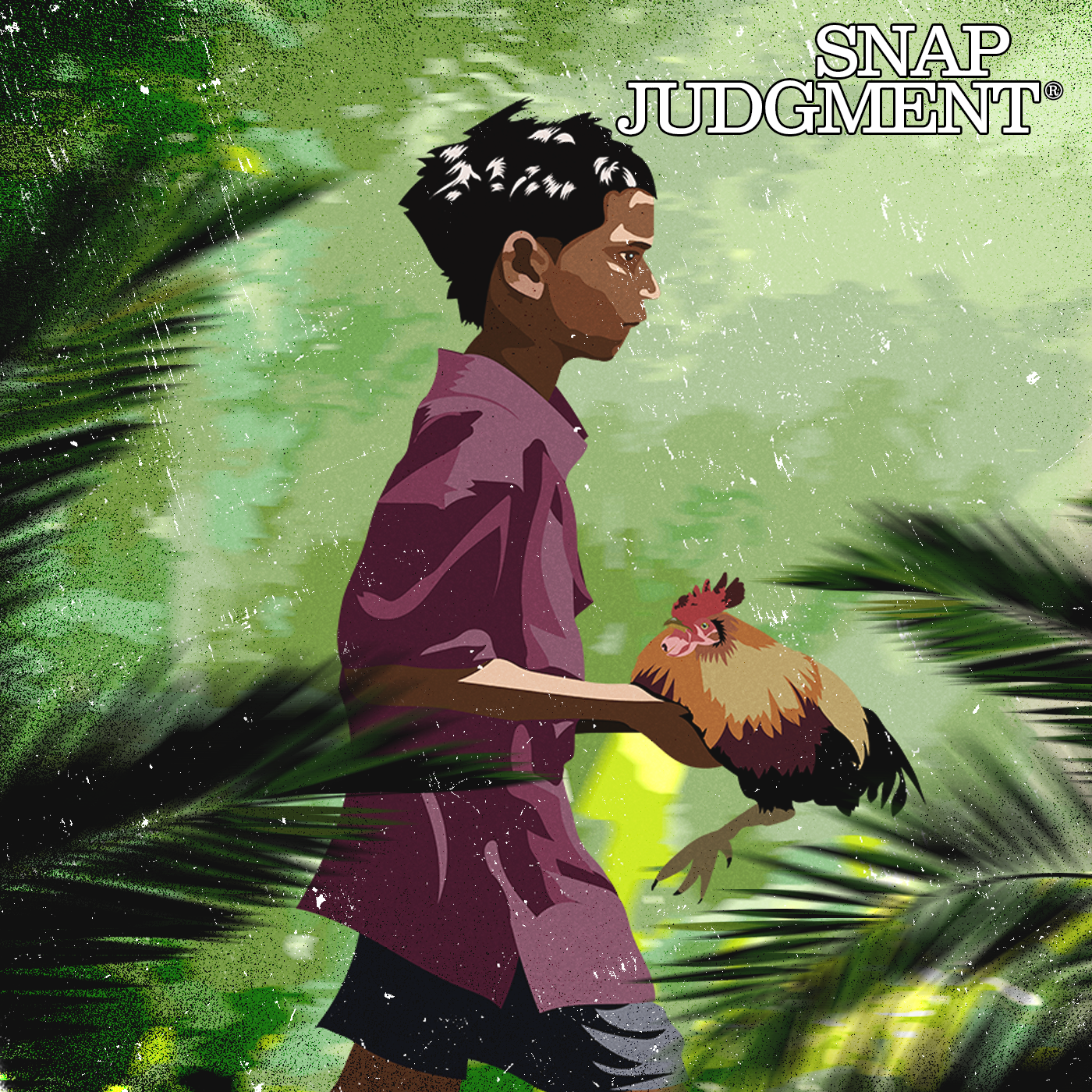
Snap Judgment
The Cloak of Good Fortune - Snap Classic
00:48:48
Sieu is a young boy living in the big city of Phnom Penh, but he misses his old life in the Cambodian countryside. The air, the farms, but mostly… the animals. When the Khmer Rouge promises a return to the land, Sieu has no idea how far he and his family will have to go.
Loading summary
Transcript74 lines
- [00:03]
Glenn Washington
Snap Studios.
- [00:08]
Sue
Harvard is the oldest and.
- [00:10]
Narrator
Richest university in America. But when a social media fueled fight.
- [00:16]
Sue
Over Harvard and its new president broke.
- [00:18]
Narrator
Out last fall, that was no protection.
- [00:20]
Sue
Claudine Gay is now gone. We've exposed the DEI regime and there's much more to come.
- [00:26]
Narrator
This is the Harvard Plan, a special series from the Boston Globe and WNYC's on the Media To Listen subscribe to to on the Media wherever you get your podcasts.
- [00:37]
Glenn Washington
Apple Card is the perfect card for your holiday shopping. You can apply on your iPhone in minutes and start using it right away. You earn up to 3% daily cash back on every purchase, including products at Apple like a new iPhone 16 or Apple Watch Ultra. Start holiday shopping for your friends and family today with Apple Card subject to credit approval. Apple Card issued by Goldman Sachs Bank USA Salt Lake City Branch terms and more at applecard.com Sterling Cuneo was sentenced to life without parole as a teenager. Decades later, his fate lies in the hands of the parole board. Can people really change? PRX presents Cell Blocks to Mountaintops, a podcast and video series that examines how America addresses violence and seeks accountability, told through one man's relentless pursuit of redemption. Reviewers have raved I was on the edge of my seat. I could not stop listening. Binge the entire series now. Wherever you get your podcast, visit cellblockstomountentops.com for more information. My mother and I, ever since I was a teenager, we haven't really been on the same page about religion, values, relationships, nothing really. We haven't been able to close this circle. And that's why a story that a friend of mine, she told a little while ago, why it was such a gift to me a long time ago, before Uber, before everybody had a cell. My friend, she was flying into Detroit and couldn't get ahold of me. I was at my mama's place for some reason. So she called my mother, she asked if I was gonna come pick her up from the airport. And my mama said, I have no idea, baby, I don't know what that boy's up to. And my friend's like, oh no, he said he was gonna pick me up. And then my mom's was like, oh, honey, if he said he was gonna do it, that's different. You ain't got nothing to worry about. It's already done. He gonna meet you wherever he said he gonna meet you. Believe that. Cause that boy, that boy's a blessing. And when my friend told me this story, I had to stop her. Wait a minute. My mother said I was a Blessing. Are you sure that's the word she used? Because that word means something very specific to my mama. I told you, she said you were a blessing. Then I had to be quiet for a while and sit with that because I never had any notion she thought of our relationship as anything other than a challenge, an obstacle, maybe even a burden. But she views our situation very differently as a blessing to her. And since then, I've tried to use her word for our quarrels, for our misunderstandings, even for our silences. A blessing. I've tried to use it in all sorts of situations. And it turns out that I am wrapped in more blessings than I ever imagined. Today on Snap Judgment, one story from one person who counts his own blessings in a way I never would have imagined. We proudly present the Cloak of Good Fortune. My name is Glenn Washington, and I will not pick you up from the airport when you're listening to Snap Judgment. We began in the capital of Cambodia, where a young boy is just starting to see the effects of a simmering conflict. And know that this journey recounts aspects of the Khmer Rouge civil war that have been erased from history. The tortures, the deaths, the sacrifices. And while sensitive listeners should be advised about this very real backdrop, please understand that at its heart, today's story is about a kid trying to make his way Snap Judgment.
- [05:53]
Narrator
We begin to see people gathering on the street and then carrying their belongings. So my mom stopped them and asked, what's going on? And they told us that they escaped to the city for their safety. The rumor was that there was a war going on in the countryside.
- [06:19]
Sue
Su had grown up in a village in the Cambodian countryside, and if he'd had any choice in the matter, he'd still be there.
- [06:26]
Narrator
Where I grew up in Kampung Spu at that time, me and my brother was running, laughing, swimming, and catching fish and shrimps at the river and dugging clams at the hot sands. And we have so much fun. I just miss that so much. And I don't really like the city life at all.
- [06:51]
Sue
Sue's parents were well educated. They spoke multiple languages and wanted even more for their four kids. So they moved the family to Phnom Penh, the capital of Cambodia. There, Su had private tutors learning French, Chinese and Cambodian. He even went to three different schools.
- [07:09]
Narrator
So one afternoon after school on the way back home, I passed by a store and I saw hatching baby ducklings. It was amazing to see all those living beings coming out. So sweet. And I stood by the window and looked at the store and no One was there, but only the baby duck was like, you know, running in the tray. And then I heard something peep, peep, peep, something like that. And then I thought, wait a minute. I thought, the ducklings are in the tray in the room inside the store. How could I hear something?
- [07:52]
Sue
Outside in the alley beside the shop, sue saw a large trash can. And it was overflowing with hundreds of crushed, gooey eggshells.
- [08:01]
Narrator
I hate the smell because it's so dirty. But I heard that sound come from that can. So I was curious that something must be going on in this trash can. And so I stepped forward to remove the COVID and I looked carefully. Then I saw something was moving. I decided to put my hand inside the trash can. And I never do this before because I don't like dirty things. And it was yellow color.
- [08:31]
Sue
So half buried in that trash was a little peeping duckling, and it was still alive.
- [08:38]
Narrator
At first, I didn't see the duck's face. Carefully, I only see the body was still moving. And I thought, oh, my God, that was a baby duck. It's just like about the size of my thumbs. And all my thought is about helping this little creature to make sure that he's safe and alive. I don't want him to die, but when I look carefully, oh, my God, his biggest. It's deformed. It's not normal. And there was bubble coming out from his nose. I was worried that he was choking. Then I immediately peel out all the shells and all the slimy saliva or something. I just wash it away with my hand to make sure that he could breathe. He was trembling and shaking, and I was putting him against my chest with my two hands wrapping around him, and I ran straight home. So the moment my mom saw it, she like, oh, my God, he's so ugly. And I told my mom, he's just a little duck. Please don't say that he's ugly. I just told my mom like that. And so my mom said, okay, okay, so what do you want me to do for this little baby duck? I was so worried that she's going to reject me to take care of this little duckling. I said, mom, I promise you, please, I promise you, I won't bother you. I will take care of him myself. And all I need is just a little box and give him some food to make him stay healthy. I decided to name him Curly Big because his beak on the top is curly like this open. So it's hard for him to eat, you know, So I have to nurse Him I have to feed him. So I got like a syringe and I pumped some rice juice and I injected into his mouth three times a day as a meal for him.
- [10:47]
Sue
Each day that sue fed him, Curly Beak got bigger and got stronger, and soon he was running around on his own.
- [10:54]
Narrator
Whenever I look at he know that this is the time that he can get food. So he always like speeding up toward me. And sometime I let him jump to my lap and sit down so I can pet him. So I love Kerli Big very much. And I feel like we both have the same fate, because the day I was born, there was a lot of chaos.
- [11:22]
Sue
Like Curly Beak sue almost wasn't. The day he was born, nothing was according to plan. The taxi somehow showed up and got a flat tire and didn't have a spare in sight. And there was no local doctor that could make it to their small house in time. So his grandmother was just rushing around the street trying to find anyone to help.
- [11:41]
Narrator
And finally she found a midwife, and she brought her to my mom and helped her delivery. And she pulled me out from my mother's womb. And because I was still encaged in the amniotic sect, my grandmother declared I was born with a cloak of good fortune.
- [12:07]
Sue
And growing up, he actually learned to believe that.
- [12:10]
Narrator
I have a feeling like wherever I go, I'm not starving at all. I'm not afraid of getting harmed because I feel like I was born protected.
- [12:25]
Sue
So he went all over, wandering the streets of Phnom Penh, sometimes by himself and other times with a friend.
- [12:32]
Narrator
Chaplain is a special friend of mine. He's very artistic. He draw cartoon, very special. He draw beautiful pictures. So he said, sue, let's go to my house. I have lots of pictures I want to show you. And that was after school. It was around like, 3:30. And we were walking back to his home near a theater called Kim Hong. That theater is very well known in our city. And so on the way back, the street was very crowded and bicycling. It was like, people get off from school, parents pick up kids. You know, it's very crowded. And I was very happy talking and laughing. I was very excited. As soon as we passed by the Kim Hong theater, suddenly it was like, boom, boom, like that, and chubli. And I was like, oh, my God, what's going on here? And we heard a dow say, lay down, lay down flat on the ground. And I realized, oh, my God, that was bomb. And then we saw people rush out from the theater and people screaming. There Was blood all over the body and the whole neighborhood was in a chaos. I was trembling. I said, we have to go home. So I just jumped and ran home. The war has been raging for the past many years. But then this time, as I'm running home, I realized that the war is now here in the city.
- [14:04]
Sue
He ran through the smoke and the debris, stumbling over abandoned bicycles and bodies as he made his way home.
- [14:13]
Narrator
My mom was standing at the door waiting for me to come home and she gave me a hug right away.
- [14:18]
Sue
There he was, home safe. But the bombs kept coming. They all hid in their house and sue stopped going out to school. Then there was this one morning in spring where something felt different.
- [14:33]
Narrator
So one day, no more bomb explosion. We saw soldiers wearing black pants and shirts and wearing red towel Crema and holding AK47. And they were our hero. And we were so happy we were running out on the street. We clap our hands, we scream, shouting, cheering Jayo, Jayo. Jay. Yo is like bravo, Bravo. S're pip. S're pip. Like peace, peace. Some people calling in French la paix, la paix. And welcome them as they march into our city. And then I look around like, wow, this is so beautiful. The country has no more war. I was like, I was almost in tears that people are so yearning for peace for so many years. Now it's really come. Our dream is coming true. Now I can go back to school. I can get my normal life again. I can live a normal life again without any worry about the war.
- [15:40]
Sue
The Khmer Rouge soldiers had secured the capital and their trucks and armaments rolled in.
- [15:48]
Narrator
We saw soldiers were all over in our neighborhoods and we were still happy. And one of the soldiers put a megaphone at his mouth. People are Phnom Penh, our capital city has been liberated by our courageous soldiers. You must all leave home right now. The American people is going to drop bombs. You don't need to take your belongings. You will come back home in three days. Long live Kampuchea. Long live Kombucha. Long live Kampuchea. Suddenly everybody became chaotic on the street and I didn't know what happened so I just. I began to run home.
- [16:39]
Glenn Washington
Don't go anywhere, Snappers. When return, find out what happens to sue, his family and the capital of Phnom Penh. Stay tuned. Snap Judgment is brought to you by Progressive Insurance. Do you ever think about switching insurance companies to see if you could save some cash? Progressive makes it easy to see if you could save when you bundle your home and auto policies. Try it@progressive.com Progressive Casualty Insurance Company and affiliates. Potential savings will vary. Not available in all states. Welcome back to Snap Judgment, the Cloak of Good Fortune Episode. Sensitive listeners should note the following segment does include depictions of war, including the death of animals and people. At last we left. Su had just heard the order to evacuate the city from the Khmer Rouge.
- [17:39]
Narrator
Suddenly, everybody became chaotic on the street and I didn't know what happened, so I just. I began to run home.
- [17:49]
Sue
When sue got back to his house, his family was already scrambling.
- [17:54]
Narrator
I didn't know what to take. But then mom said, hey, sue, get your white striped shirt and one for your brother, too. Those shirts can protect you from mosquito bite and the sunburn. And so I ran there, too, into my closet and grabbed two striped shirts, one for my brother Chen, and one for me.
- [18:12]
Sue
He packed 10 sardine cans and his favorite pair of sandals. He also tried to grab his two favorite chickens, but once he actually held them in his hands, he knew he wouldn't be able to carry them.
- [18:23]
Narrator
And so I went down to my kitchen, I grabbed a lot of rice and I took it upstairs and I threw a lot of rice in the cage for them to eat. Usually I don't feed them like that. I want to make sure that three days is enough for them to eat. So I say goodbye to them and they seem to understand something is going wrong.
- [18:43]
Sue
He left his house and he and his family joined the throng of people walking towards the Montivan Bridge. It would carry them out of the city and back into the countryside.
- [18:54]
Narrator
And so we marched along the road with thousands and thousands of people. The street, the street, there was no space for you to sit down. Everyone was just like, move forward toward the countryside. And Mama and Papa keep telling me that you have to look around for someone. Look around for our relative, for your grandma, for your uncle, if you find them. You know, everybody screaming and shouting on the street, looking for their loved one. And I saw kids, like, get lost on the street, like five or six years old, crying, screaming. The whole scene was just unbelievable.
- [19:37]
Sue
The Khmer Rouge soldiers were surrounding them, funneling them over the bridge.
- [19:42]
Narrator
As we walked by them, I was holding my grandfather's hand and their AK47 pointing at us, holding their megaphone, shouting at us, keep going. No, stop. Keep going. No, stop. As the night began to get darker, we were all stopped on the road and we sat on the black asphalt. Everybody was jammed on the street. There was no place for us to stretch our body. We have to sit and cuddle each other. And my mom and My father told us that don't worry, we just hang in there we can make it. We will return home in three days I was startled awake by a loud noise. It's time to move forward, keep going forward. America is going to drop bombs so we have no choice. We keep moving forward.
- [21:00]
Sue
They stayed on the road, marching, stopping only to eat their ration of rice.
- [21:04]
Narrator
Gruelling only a little bit of rice and full of water to lay down and try and sleep I couldn't walk anymore. I was trembling and all along the.
- [21:16]
Sue
Way they would run into the Khmer Rouge who would force them to gather for re education the first meeting we.
- [21:23]
Narrator
Had with the Khmer Rouge soldiers was at the temple There was a bonfire we were there with a couple Khmer soldiers standing there and telling us that we have to think to Angka we must think to anger we have won the war but we must work harder. There's a lot to be done because cutting a wheat is not enough it must be pulled up by the roots. We have to rebuild our country.
- [21:59]
Sue
The Khmer Rouge had a plan to erase all the trappings of the society the culture, the music and especially any outside influence they were going to make the country start again at year zero.
- [22:12]
Narrator
Remember, the land is our school the soil is our paper the plough is our pen we will write our history in our blood and sweat. Revolutionary Army Long live Kombucha. Long live Kampuchea.
- [22:30]
Sue
Even though they were always hungry and utterly exhausted they shouted along out of fear because if their revolutionary spirit wasn't.
- [22:38]
Narrator
Strong enough a Khmeru soldier came to look for someone in your family and they told you that you have to go with me that means that that person will be killed or never returned. One day it was my lucky day I was feeling very tired and exhausted as I walked to the river to fetch the water and I saw a little piglet run by me and I was so happy. I know that, oh my God, I'm going to have a big meal because I was so starving. And so I chased this little piglet and he was running, he was about like, I would say ten pounds, you know, speeding pass by I grabbed his leg and then his other leg was kicking me and I fell down on the ground and then I stood up and I chased him again until we reached to the river so I kind of like blocking him so lure him toward the water. Then the piglet decided like okay, he's going to jump into the water and swim and then I realized that he cannot swim anymore he gets stuck in the water and the Torrent was like keep hitting him so making him move very slow. And I grabbed him and suddenly I was like, I was in shock, like what I'm holding was a living being in my arm. He was looking at me and his tear came out from his eyes and I heard his heartbeat like boom boom, boom against my chest. And I felt like that was not me. What's wrong with me? And I suddenly forgot all the food, all the tasty food that I'm about to eat him. And I decided to let him go. I said, I'm so sorry. And the little piglet just ran straight, didn't look back. And I was very afraid of myself at that time. How could I do this? That was not me.
- [24:56]
Sue
They kept getting shuffled around with no fixed end in sight until they were finally told the place they would call home. It was called Jatil Village. And to their surprise, it sounded a lot like what the Khmer Rouge had always promised. And his whole family was overjoyed. It was going to be like going back to that same village that sue grew up in.
- [25:17]
Narrator
The moment I heard that we were allowed to move into Chateau Village, I looked at my grandfather and I told him that we no longer worry about food. Grandpa, I can grow papaya, sugar cans, beans and guava. We all smile. We know that we are no longer starving. When we first moved in to Chitiel Village, I got so excited. I said, grandpa, we're going to live in there that those houses there and we can grow something. But my heart suddenly dropped when I saw the huts that we were about to live in were just like holes and the roof was detached and we were surrounded by hundred and hundred of termite hills. It was nothing, the same like Kampung Spur where I grew up. Daily life at Chitiel was like this. We woke up at 5am before the daybreak. The Khmer Rouge bell would bang bang, bang, bang bang. And there was a broadcasting radio. You have to work if you want to leave. Those who refuse to work and make sacrifices will be crushed by the will of the revolution. Long live. En garde. Long live revolution. And then they would play revolutionary songs. Then the whole time we were working and the Khmer Rouge song kept playing.
- [27:26]
Sue
That song, roughly translated, goes like, we are the group of young girls who help transport food supplies and ammunition to the front lines as American imperialism melts away and is completely destroyed. Su and his older brother Chen would work all day from sunup to sundown with two breaks for rice gruel. And every night they went to their forced reeducation meeting it's where they'd be coerced into snitching on their family and their neighbors and sometimes made to watch torture.
- [28:01]
Narrator
The scariest part of the meeting. One time, Uncle Chuan stole the rice from the Khmer Rouge warehouse and he got caught. They tied a rope on his neck and pulled him to the ground. And Uncle Chuan was begging for mercy. He kept screaming and saying that he would never do that again. He promised. And the Khmer roost. He shouted at us and he said, you all look at this. This is the consequence of the punishment. And Uncle Chuan's body was covered with a lot of blood and bruises. And I would say that up to these days, he's screaming and crying, still live with me.
- [29:08]
Sue
Uncle Chuan had stolen the rice because they weren't actually allowed to eat the food they grew that was being shipped off to soldiers on the front lines, or that's what they were told. Sue's family was desperate. And then one day he heard about a cassava field the Khmer Rouge had just harvested. He went in search of it for scraps and leftovers. There he found an old man sitting near the field smoking a cigarette.
- [29:32]
Narrator
And I asked him politely, can I get into the field to collect some cassava scraps? He nod his head and he threw the cigarette away. And he walked away. And I thought he was a nice guy. I entered the field. My God, I found so many leftover cassava that is a treasure to me because we were starving. How could this be? Lots of cassava still there. Big or small is still there. So I was wearing my white striped shirt and I pulling them out to make them as a bag so I can put all the cassava against my belly. And I hold it. I got a lot, plenty of them. Suddenly someone behind me said, steve, don't run. I'm going to shoot you. Stay still. Stay still. I turned around and looked. There was a Khmer Rouge with a gun in his hand. So my whole body was trembling and I was like. I didn't know what to do. These are so treasured to me, these potatoes. I'm starving. I want to take it home. Then I didn't listen to him. I just started running. Then I trapped and I fell down. I couldn't stand up because my body was trembling like this. And my cassava was spread all over on the ground. And I tried very hard to stand up. I told myself, I don't want to die. Then I stood up and I started running and running. And I heard bang, bang, bang from behind. I hide myself behind a big tree. Then I heard the footstep with the step on the crunchy leaf, dry leaf. And I heard that stepping. I heard bang, bang, bang, bang.
- [31:24]
Sue
The soldier was trying to scare him out of hiding, but sue waited him out until all he could hear was the chirping of the birds and the silence.
- [31:34]
Narrator
I thought it was okay now, so I began to come out. And then as I'm running toward the village, I saw the guy was standing there in the middle of the road with a rifle and pointing at me.
- [31:50]
Sue
He began running, zigzagging across the field, desperately trying to make it to his house without being hit.
- [31:57]
Narrator
The moment I stepped into the cottage, I didn't want him to recognize my shirt, so I took off my striped shirt and I changed the green shirt on and I started looking through the bamboo hole of the cottage and I saw the guy keep coming with the gun ready in his hand. So I decided to jump out of the cottage through the front door. I was so scared, I didn't want to look back. And I ran away from the cottage so that he may not know that I was the one that he was after. So a few hours later, I came back home. I just like, oh, my God, it's a big relief. This guy couldn't get me. I'm so happy. So I stepped into the cottage and I asked, grandpa, where is everybody? Oh. They were pulled to a meeting urgently. He said, don't go. If you can stay home, you don't have to go. I said, no, Grandpa, I want to see what happened to the meeting. So then in the darkness, I walked into the meeting at the edge of the village, and There was about 200 people surrounded the bonfire. It was a big flame in the middle of the meeting, and there was three Khmer soldier. One of them was holding a gun and stood next to Brother Chen. My mother was running toward the fire and she asked for mercy that my son is still young. Please forgive him. Please forgive him. And it took me for a while to realize that Brother Chen was wearing a striped shirt like mine.
- [34:03]
Glenn Washington
When we return, find out what happens to Brother Chen. Stay tuned. Welcome back to Snap Judgment, the cloak of good Fortune episode. My name is Glenn Washington, and sensitive listeners should know the following segment does include depictions of war, including the death of animals and people. When last we left, we had just learned that sue had gotten away from the Khmer Rouge, but his brother had been mistakenly caught and was now about to be tried Snap judgment.
- [35:08]
Narrator
And it was a big flame in the middle of the meeting. And there was three Khmer soldier One of them was holding a gun and stood next to brother Chen. My mother was running toward the fire and she asked for mercy that my son is still young. Please forgive him. Please forgive him. I was. I was relieved at first I thought that I was out of this danger. But then when I saw my brother was arrested I wanted to turn myself in and I want to admit that was me. That my brother was innocent and he got caught for no reason. But I don't want to make the situation worse. I don't want them to look stupid. That young kids outsmarted them because they may kill the whole family. My mom and my dad kneeled down and backing the Khmer rules that Please let my son go. He doesn't know anything. He's still young. But I promised you that he wouldn't steal again. I know something bad is going to happen to Brother Chen and I could no longer watch it. So I run back home and I hid myself in the backyard. So the moment my father stepped into the house, my father yelled at me Shouting at me that you must be the one who stole the cassava. But as soon as I tried to explain to my father, he said Shut up, don't say anything. And then later my father covered his face and he said oh God, I don't know what to do. He was covering his face and cried.
- [37:18]
Sue
Brother Chen was spared. But now their family knew they had drawn the attention of the Khmer Rouge and spies began to follow them.
- [37:28]
Narrator
I was in tears. Yes, I was scared at that time. But I was happy that she didn't die. So one day after the meeting, Khmer Rouge announced that all the villagers had to move to a new location to open a new land, open a new jungle. Except our family were told to stay behind. That morning we said goodbye to all the villagers. They stood in line and marching slowly. The Khmer Roos accompanied them with their rifle in their hand. And then we were warned by the Khmer Roos that you cannot go anywhere. You stay here. Wait until two weeks later when I come back I will tell you where you have to go. So my father already know something is not right. Something is badly will happen to us. That same night I hear the sound of bicycle come in. I saw a soldier with a rifle under the moonlight. I thought that's it, they come to kill us. The next thing I heard was a man's voice calling my father's. He called Hong Hong. Zhou Mao. Zhou Mao. Come down. Come down. Then I realized that that was Uncle Ban's. That was the voice of Uncle Ban he's coming. Uncle Ban was my father's childhood's friend. Now he's a Khmer Rouge. And they whispered to each other. And right after my father said, okay, it's time to pack and we have to leave right away. There's no time to think about anything because otherwise the Khmer Rouge will execute our family.
- [39:28]
Sue
That is why they'd been left behind and now they'd have to make a break for it.
- [39:34]
Narrator
He quickly found a stick and he threw the map on the ground. He told my father that we have to reach the Diamond Village on time. There was a group of Vietnamese villagers on their way to Vietnam. That was our last chance to survive.
- [39:59]
Sue
He told them to hurry but to be careful. Once they got to the border, it was there that the Khmer Rouge had planted a field of landmines.
- [40:07]
Narrator
And then Uncle Ban said goodbye. My father lead us across the wood and during the day we hid ourselves under the big tree, sometimes under the foliage. And then nighttime, we mostly rely on the moonlight. Whenever we see some flashlight or something like flashing, we have to really lie flat on the ground until that light is gone. And then my father would tell us, okay, now we're ready to move on. It was very hard, but we tried, we tried to fight the trail to keep going. There's no time to think about anything. We have no other choice.
- [40:55]
Sue
Eventually they reached a group of war torn cottages.
- [40:58]
Narrator
And my father told me and Brother Chen and Grandpa to sleep separately. So just in case if they capture one group, the other would get away. After Grandpa, Brother Chen and I settled, I walked to the back of the building. And just as I was about to relieve myself, I heard a wiggling sound in the trees. I thought, the Khmer roost is hiding somewhere around here. Then under the moonlight, I saw a giant rooster landing on the top of the trees. A beautiful rooster. This is the kind of rooster that I wanted to show it to my friends. That was the rooster that I really love and would keep it as a pet for myself. But I was so hungry. And I slowly inch forward, I snatch it and I pull it down off the tree. And the rooster was struggling to get free from me and with his claws scratching my body and I was like holding it very tight. And then the rooster stopped moving and his arm went limp so I dropped it to the ground. After I pick it up, I hold it carefully and run toward my father. Papa, Papa. And my father was smiling. I have never seen his smile so happy. My father dig the ground and make a hole. And he cooked the chicken under the ground. For us. I kept chewing it for a long time. I didn't want to swallow it. And I was so happy to see everyone having a good meal. I felt like I was a hero. But right after the dinner, I gradually feel pain, you know, scratch in my body that was very painful. And then I began to think about how could I kill this living being who was trying to hide himself for his safety in the tree. And I took his life. That was not who I am just because of the food. That's how I have to do something, to kill something in order to survive. I have learned during the Khmer rules is that no matter how hard we try to to be a good person, the value of our life can be turned upside down in no time. We arrived at the Rocky diamond village around noon. No one was there. The whole village was empty. And I see my mother's face looked so worried. And she asked papa, what happened if we miss this Vietnamese group? My father kept quiet for a second and he said, just wait and see. They will be here. As we were about to go to sleep, then we heard from the distance the cowbells. Clock long clock clong clock long from the distance. My father was so happy, he jumped up. He said, they are here. They are here.
- [45:07]
Sue
The Vietnamese farmers had special permission to cross over the border back into Vietnam. When Su's father asked if they could join them, the farmers agreed.
- [45:17]
Narrator
We stayed on the road for a few days. We walked through the heat of the sun and the rainstorms and finally we reached the point where we can see the Vietnamese flag on the other side of the border. My father was jumping and shouting that we are here. We make it, we make it. And I was so happy. Yeah, I was holding my grandfather's hand and we were all cheerful.
- [45:57]
Sue
The border was only two miles away.
- [46:00]
Narrator
We were about to reach to the Vietnamese border. Suddenly there was two robbers dressed in black holding rifle, pointing at us and said, give me your goal. I'm going to shoot you. Give me your goal. And people behind us didn't know what happened. They thought that the Khmer Rouge come and arrest us and going to kill us. And they just like run toward different direction trying to escape. And suddenly a bomb exploded. Boom. And some people run toward right and other people run left. At that chaotic moment, I hear my father say, follow me, follow me. And my father and my mom are holding my younger brother and sister. And I grabbed my grandfather and my father said, don't stop, keep coming, keep running, keep running. The bomb constantly went off and the explosion was hot. The air was nasty and the soil was dropping like rain falling upon us. We kept running and running. The bomb explosion died down. We saw the Vietnamese flag hanging in the border. We were so fearful that they are going to get us but finally we just put our feet into the land of Vietnam. We were all relieved and I can see my mom's some smile on her face face but at the same time she turned around and smile at the same time she bust in tear and looking back to land of Cambodia, our country, our beloved country and she waved her hand and say goodbye to Cambodia. I never forget that.
- [47:59]
Glenn Washington
That's a very very big thank you to Su do for sharing his story with the Snap. He and his family, they settled in Vietnam where they tried to find a sense of normalcy while also grieving for the dozens of family members that perish under the Khmer Rouge. There is so much of this story we were not able to share with you about sue and his family's incredible journey, but if you want to know more, please check out his book A Cloak of Good Fortune you can find the link at our website snapjudgment.org the original score for this story was by Renzo Gorio, who was produced by Nika Singh. It happened again and we got here together. If you missed even a moment of today's show, know that there is so much more incredible storytelling, incredible worlds waiting for you to explore. Subscribe to the Snap Judgment podcast wherever you get your podcast because it might just change your life. Snap is brought to you by the team that always acts respectfully when entering someone's home. Except for the uber producer, Mr. Mark Versich. He insists upon singing random songs at the top of his lungs. There's Pat, Mercedes Miller, Anna Sussman, Renzel Gorio, John Fasile, Shayna Shealy, Marissa Dodge, Nika Singh, Teo Dakot, Leon Morimoto, Flo Wiley, Nancy Lopez, and Regina Betiaco. And this is not the news. No way is this the news. In fact, you could see that one guy from high school and he could see you and you could look at each other real hard and then keep on walking by without saying a word and you would still still not be as far away from the news as this is. But this is prx.