← Snap Judgment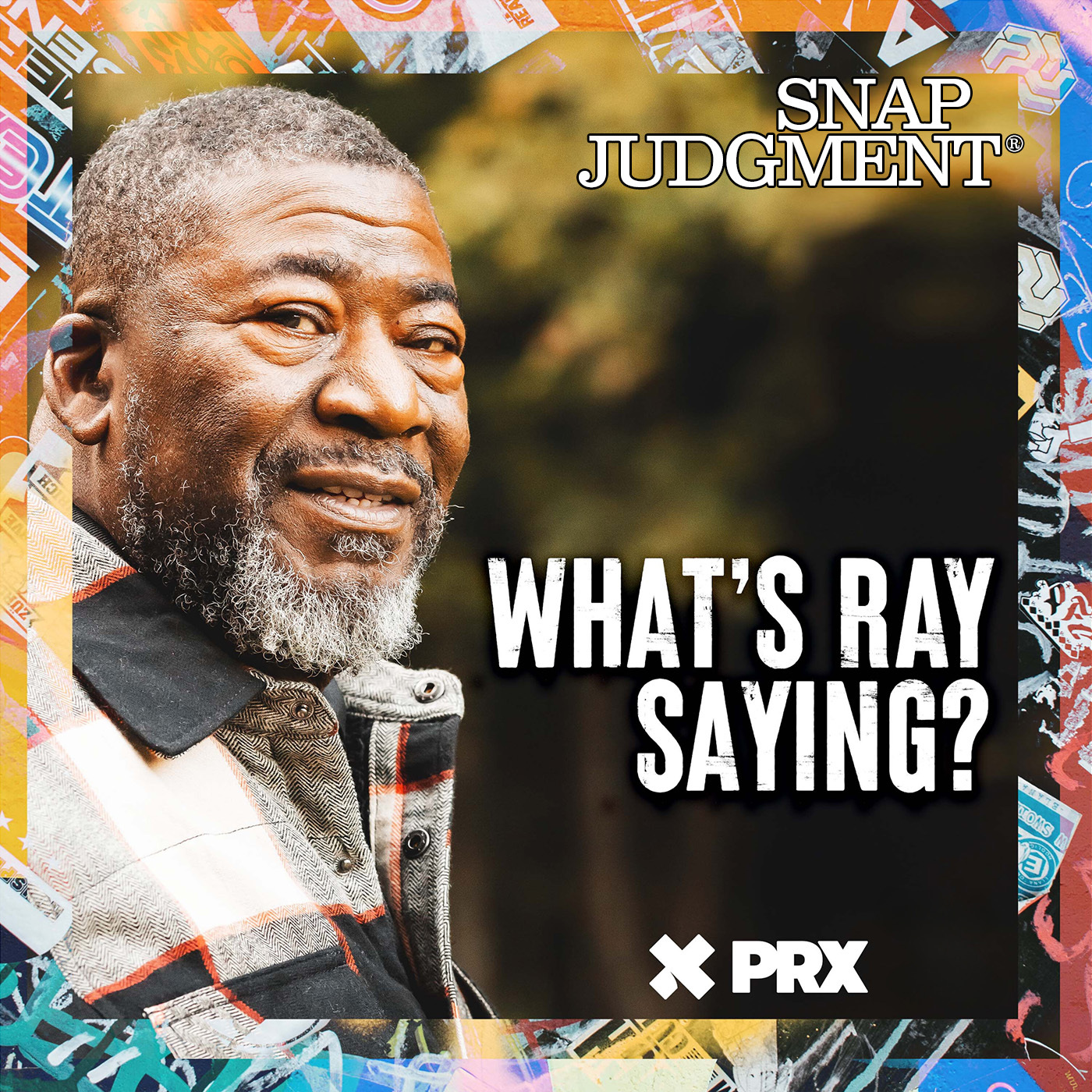
Snap Judgment
What’s Ray Saying? “Black in the Military”
00:31:05
Ray looks back on his decision to join the army, unraveling a complicated history of Black military service and reflecting on the surprising changes the armed forces made in his life.
Loading summary
Transcript50 lines
- [00:03]
Progressive Insurance Ad
Snap Studios Snap Judgment is brought to you by Progressive Insurance. You chose to hit play on this podcast today. Smart Choice make another smart choice with Auto Quote Explorer to compare rates from multiple car insurance companies all at once. Try it@progressive.com Progressive Casualty Insurance Company and affiliates. Not available in all states or situations. Prices vary based based on how you buy. This message is brought to you by Apple Card Apple Card is everything a credit card should be. It's easy to manage, built to be secure, and gives users up to 3% daily cash back on every purchase. The best part about Apple Card is applying is quick and easy. Apply in the Wallet app on iPhone and see your credit limit offer in minutes. Subject to credit approval. Apple Card by Goldman Sachs Bank USA Salt Lake City Branch Member FDIC terms and more at applecard.com snappers snap Special Correspondent of the surreal Dr. Raymond Christian. You've heard him jump out of an airplane while on an acid trip. You felt his elation stuck in burning man mud. And you've walked with Ray up creaky stairs in search of the unknown. But did you know the good doctor has his own podcast? It's called what's Ray Saying? Available on all podcast platforms. And to close out Black History Month, we want to visit Ray and hear about one of the most pivotal decisions of his entire life, joining the military. Now this story does contain explicit language. Sensitive listeners are advised. What's Ray Saying?
- [01:56]
Ray Christian
I should have known better. I should have known better than to own a car meant for the Autobahn in the damn mountains of western North Carolina. All right, big dog, big dog, come on. How many rims have I broken? Twice? I have no reason driving my BMW on the bumpy ass roads around my house. This was the third visit to my mechanic in 18 months because of a rim repair. It looks like we may have repaired that one before. Yeah, is that the same one? The car was my wife's idea. She felt I deserved it, felt I should treat myself. But my mechanics have been doing their best to convince me to give up this money pit on four wheels. Yeah, I do. But that's old man. See. No, I want a car that I could get in, program the direction and just take them. Now I've been driving for about 40 years at this point and I've driven just about every four wheeler, four Runner or four door you can think of. But the first vehicle I can remember driving driving was a Jeep and not anywhere near these bumpy ass mountains of western North Carolina. No, this was a green four wheeler that I tore up on different patches of earth, the mud, ditches, brush, piles and hills and slopes of Fort Dix. I was 18 years old and I was in basic training in the Army. Owning or even driving a car is not something I had ever really imagined, let alone having someone else fix it. Getting anything fixed was an incredible luxury when I was younger, a value system that wasn't part of my world until I joined the Army. I often find myself reflecting on the status symbols of life, both the practical and the purely symbolic. The army was a stepping stone that went on to become an island, like how many careers often start out? And at some point it was my life and the method by which I was able to provide for my family. It makes me think of what I took away from reading Catcher in the Rye. You get older and you become pragmatic. A big question I still ask myself, what would you do to change your station in life? Well, I've got my own answers. And who is this voice from the rural Audubon? Well, I'm not defined with a singular salutation. Some might call me a ghetto kid or a Southern black gentleman, a retired army paratrooper or a doctor of education, a teller of stories, a student of the past or the source of all black knowledge. A voice ready to explore and talk with you about it. From prx I'm Ray Christian and this is what's Ray saying in Today's episode. From 20 years of military service to demanding good service, we take a look at this soldier's story. My time in the army must have started with seeing those old pictures in the front room, hanging on the walls. Old pictures of people I knew in uniform. My father, uncle and aunt served in World War II. Then came the younger guys who were recently home from training or Vietnam. Hearing these guys talk about their adventures, I remember wanting the same things they experienced. A life far away from Virginia. I wanted to get started. Started on what? I'm unsure. My only quest? Searching for excitement or anything new. It was the same thing for John. Good.
- [05:57]
John
Do people ever say to you, like, you seem so nice and I can't imagine you were ever in the military. Like people like, I can't believe you were ever in the Marines. I like, I can't believe it either.
- [06:09]
Ray Christian
John is a writer, poet, fellow storyteller and Richmond native. He's also a veteran. John's time in his service was spent as a Marine. I'm always curious to hear from fellow black veterans, especially folks from my hometown, whether our experiences align. And nine times out of 10, they do, starting with the Military legacy. In my family, John also came from a line of black veterans.
- [06:35]
John
My brother went into the Army. Me and my oldest sister, they both went into the army, and my dad was also in the army. But I think they also thought the opportunity lay in the military.
- [06:47]
Ray Christian
John's goal was college. Me. I didn't have a plan, but I was open. I just wanted to start something. And that's something people who haven't been in the military misunderstand about why guys like John and I join.
- [07:03]
John
One of the first things I usually get is, did you kill anybody? That's one of the first questions I get. Oh, you're in the Marine Corps. Did you kill anybody?
- [07:14]
Ray Christian
I've gotten questions about if the military prevented me from a life of crime or whether I joined because I wanted to get into the action or blow things up to the common misunderstanding from more conservative voices about whether I was following a patriotic duty. Nope, none of the above. For me and many other black soldiers, we just wanted to get our lives started. For black Americans, the individual and community motivations for serving in the military are probably as similar as that of white soldiers, but have the extra burden of equal treatment and respect for honorable service. What do you think people misunderstand about black enlistment people when they think about.
- [08:00]
John
Black people joining the military. One of the things they think is that you are dumb because you're fighting for a country that will not fight for you. You are laying down your life for a country that if they could, they would just take your life. And so it seems like a Faustian bargain that you've struck. But they don't know what your motivations are, what it is you need to achieve.
- [08:24]
Ray Christian
When you look at it, the historical reasons black Americans have entered the military has always been a complicated thing.
- [08:33]
Unknown Speaker
America loves black heroes. The General Service Engineer regiment is composed.
- [08:38]
Ray Christian
Of negro enlisted men.
- [08:40]
Unknown Speaker
He represents a new generation of black soldiers. It really should be a voluntary basis for a black man, if he's feeling.
- [08:47]
Ray Christian
Love himself, that he should want to go fight for this country, he should be allowed to.
- [08:51]
Unknown Speaker
His bag is black power, black pride and black togetherness.
- [08:56]
Ray Christian
I'm in the military as a black man.
- [08:59]
John
One other thing got freedom.
- [09:00]
Ray Christian
Ain't none of us got freedom. I carry myself as a black man.
- [09:03]
Unknown Speaker
You know, America loves to have black heroes because it tells America that we're.
- [09:08]
Ray Christian
Fair and that the doors are open. This complex relationship between black Americans and the military can be traced all the way back during the American Revolution. Some blacks and slaves were involuntarily put into service to help the colonies beat the British. Some were recruited, others signed up. Why? The possibility of freedom for courageous service. At the same time, the British offered free blacks greater rights and protections and freedom. The American side convinced 5,000 blacks to serve. And how many signed up? For the hated British, tens of thousands. Freedom, not loyalty, was the goal. And not surprisingly, the defeat of the British would result in the overall mistrust for blacks in military service and withdrawal of promises made during the Civil War. The Union army initially deemed blacks as unfit for military service and used that lack of military service to justify why blacks were not afforded all rights, claiming they did not have to put up and sacrifice as much as white people. But with the incredible number of casualties on the Union side and the absolute necessity for additional manpower, the Union army decided to utilize black men in direct combat roles. For many black soldiers, it was challenging the beliefs about their capabilities and not patriotism. That made more than 200,000 free black men and former slaves serve by World War I. Black. When white enlistment became low, the black community was heavily solicited by the government to join the fight. This time, promoting enlistment and contribution to the nation's fight would be an uplift for the entire black community. This, not patriotism, brought black enlistment to its highest numbers ever, closer to a half a million. You think I knew any of this when I joined the army way back in 1978? Nope. I just wanted to get started. I thought that's why anybody wanted to join the army. But regardless of what I thought, there were the preachers and black leaders throughout my childhood that were against the military.
- [11:36]
Unknown Speaker
That will praise you when you say be non violent toward Jim Clark, but will curse and damn you when you say be non violent toward little brown Vietnamese children. There's something wrong with that press.
- [11:50]
Ray Christian
You won't even stand up for me.
- [11:51]
Unknown Speaker
In America, for my religious police, and.
- [11:54]
Ray Christian
You want me to go somewhere and fight, but you won't even stand up for me here at home. Other middle class blacks, like our school teachers, were strictly against the military and military service of any kind. For blacks. They viewed voluntary service as opposed to being drafted as unintelligent, A last chance for social misfits and degenerates.
- [12:23]
John
I heard a lot of that. It felt like after I joined, I heard more of that. People being like, you joined the military? What are you, an idiot? Like, what are you doing?
- [12:32]
Ray Christian
I took on the general attitude that most of my peers did. We all understood this is how people with good education, money and opportunities would always see the military and they could because they were speaking from a place with means. But as I came to find out, most of us poor grunts came to the army with the same idea in mind. I joined so I could get started.
- [12:58]
John
I know several people who absolutely, positively, they didn't want to go work in the factory. You know, they didn't want to go dig ditches. And they knew that this is a way to get out. This is a way to elevate myself to the point where I can actually come out of here. And there is a chance I can do some of the things that I want to do. That's why some people strike the deal. And it's not all wrapped up in quite what they might imagine.
- [13:25]
Ray Christian
Again, I can't exactly tell you what that was. How do you know what steps to take or what to learn when it wasn't modeled for you? During my first years in the army, my values would start shifting, and it had more to do with what I was eating and how I was living than just patriotic duty and learning how to use a rifle. When I'm out and I can't get back home in time, my favorite place to eat lunch is at the Waffle House on Blowing Rock Road. Let me get the two egg breakfast. Can I get grits? I ordered the two egg breakfast with country ham, hash browns smothered and covered with fried eggs, and a hard black coffee with splinter. I started regimented meals in the army during that initial training. Meals were highly structured activities. We had to get in and out three square meals a day from all the food groups. Some things in those groups I never saw before, but we ate it all up. John still remembers the first thing he ate when he left boot camp.
- [14:35]
John
I went to the local neighborhood burger shop and got, like, burgers and fries. Like food that I wanted, that I ate on the schedule. I wanted to eat them.
- [14:46]
Ray Christian
In the army, you get initial training in marching, physical fitness, cleaning, and marksmanship. But one of the biggest game changers in my life had nothing to do with any of those disciplines. It was lunch. When I was growing up, if you weren't in school, lunch was a luxury. And the first place I experienced this change was in the army. I can almost taste my mess hall lunches when I think of it. Mainly the potatoes and milk at every meal. And inadvertently, that's the first thing I learned about what the middle class entailed. You eat lunch, middle class people eat lunch. The next value shift I had in the army was learning the power of having new sheets on your bed. I don't think I ever thought about that one before I ever joined. They forced that as a thing, and I thought, that's what middle class people do. They change their sheets. And if you saw me at the time, I was like a kid in the candy store. Of all these changes, one of the biggest moments happened when I was 20, standing in a long line near where I was stationed down in Fayetteville, North Carolina. I was nervous. There were lots of questions about credit references, something about having a blank check. And then it was done. I had a phone line for the first time in my life. I had to pick out my phone and extra cords. I was living off base and went home to show that I was calling from home. I could have just given everyone the damn phone number. Instead, I was dialing folks saying, guess where I'm calling you from. It seems so silly now, but you can't imagine how excited and proud I was. Even in the later years when I became a staff sergeant, I can remember giving some of my soldiers time off whenever they got a phone installed. I saw it as an important rite of passage. Now you introduce these small damn changes into a life like mine, and there was no going back. I hadn't even experienced life abroad yet. I was still only a few hundred miles from where I grew up. And it's the experience of going abroad that really changed things for black soldiers like me. Whether I knew it or not, there's a song that became a bit of a standard around the First World War. It very simply points to the cultural sea change that was happening to many soldiers, regardless of race, after returning home from the war. How you gonna keep them down on the farm after they seen Perry? How you gonna keep them down on the farm after they've seen Perry? Before World War I and World War II, the majority of black soldiers spent their enlisted time in North America. All of a sudden, a generation of black men went to Europe and got to sit at tables with white people, drink with white people, have relationships with white people, be awarded by white people, to be hugged, loved, admired.
- [18:05]
Unknown Speaker
First American troops to receive the Croix de Guerre, the 369th, and for action above and beyond the call of duty. Many received honored medals. When they cleaned up in France, the boys came marching home.
- [18:24]
Ray Christian
And when they returned home, to paraphrase the words of Gil Scott Heron, home was where the hatred was. These soldiers wanted more. And how dare they? How dare these grandchildren of slaves come back with some attitude, ambition and agency? Some soldiers were doing some things they weren't supposed to do. They fought back. Not only that, they passed these stories and experiences down to the younger generations. When some black soldiers decided to fight against the harassment and segregation they faced before they left, many were court martialed, many sentenced to death. It wouldn't be until the 1980s and 90s that a majority of these soldiers had their records corrected and the charges erased. But the genie was out of the bottle. To some. Enlistment promised a social mobility unheard of for most blacks in the United States. And then came something called the GI Bill.
- [19:31]
Unknown Speaker
And it's here the ex soldier goes if he wants to continue his education under the GI Bill of Rights.
- [19:36]
Ray Christian
For some, this was the golden ticket into the middle class offering free college tuition for the first time, even though black soldiers were discouraged to sign up or take advantage of those that did. From World War II to Vietnam to beyond, had their lives turned around.
- [19:55]
Unknown Speaker
Trade school, college, university.
- [19:59]
Ray Christian
They got the education, they got the loans for housing. Black veterans could move into the suburbs.
- [20:06]
Unknown Speaker
Homes for those who want something better, new homes which we can expect to be the best products of the new scientific age and at the lowest possible cost.
- [20:17]
Ray Christian
All of this because of the GI Bill. Even to this day, the promise of it brings in new recruits. John, good again.
- [20:27]
John
The thing for me was, how am I going to pay for college? Because my parents, you know, they work these jobs, but still they don't have money or generational wealth in such a way that they can pay for you to go to college. As you full well know, you know, the military recruiters, they sing that song, you know, they were like, hey, you want to go to college? There's this thing called the GI Bill. Send you to college. All you got to do is, you know, join up and give so many years and maybe die, you don't know. And then, yeah, we put you through college.
- [21:00]
Ray Christian
This isn't to say that it was a universal experience for most black soldiers. They didn't get these benefits because the Veterans Administration wouldn't let them, or they didn't know they had advantages available to them. Could be that some veterans were barely literate or they didn't understand, you know, the big words of the bureaucratic process. And you can imagine how the VA administration located in any of the Southern states were responding to black veterans coming back during the Jim Crow era, wearing a uniform and trying to act like a white man. Soldiers would routinely have their applications rejected. And while there was a big policy initiative that required these organizations the duty to assist these soldiers in their queries, many black veterans left the military and came back to where they were from.
- [21:48]
John
A study by Brandeis University projects, based.
- [21:51]
Ray Christian
On limited available data from the VA, that descendants of World War II veterans lost $80,000 in economic opportunity. In practice, African Americans had very, very little opportunity to use the GI benefits that the GI Bill provided throughout the South. And that was enough for me growing up, seeing these veterans come back from World War II, from Vietnam. And what you coming back here after everything you experienced, uh, that wasn't going to happen to me. In the first years, yeah, I ate a lot of lunches. I learned to change my sheets. But I also bought my first car. I a Country Squire station wagon with that damn wood paneling on the side of it. The guy I bought it from said he wanted $300. Then he said, man, give me 200. I should have known better, but I didn't know how to ask for good service yet. What a piece of shit that car was. But it was a car. The first of many. Then I went on to have an apartment on base, to have an apartment off base, having a home on base, learning to mow the lawn because the army requires that shit. There were moves from Washington State to Korea, North Carolina to Germany, Egypt for six months, Panama, places unknown in Central and South America. Lots of places to call temporary homes. Until I came back to Fayetteville, North Carolina and bought my first house. A first not just for me, but for the Christian family. And that was a brag fest. I had my sisters and them coming and telling everyone about it. I had people sleeping all over the damn place. Took everyone around in my car. But to have my mama come see me in my own damn house. If it was all for one person, it was for my mama. I would do anything to show her that side of life, to show her it wasn't just out there, but she too could ask for it. And maybe the biggest sign that my values had shifted was during a visit from my mama and stepdad. I took them out to eat at a restaurant. My mama ordered fried rice. And when they brought her order, it was regular rice. And I said, mama, I thought you wanted fried rice. And she said, don't say nothing. It's fine, it's fine. Even my stepdaddy said, no, don't make no big deal out of that. I said, that's not what you ordered. When she comes back, I'm going to tell her to exchange it for you. And Mama was panicky when the waitress came back and I said, my mama wanted fried rice. And the lady was like, oh, I'm sorry, and exchanged looked like my mama thought she would die thinking I was stepping out of my social status and they were going to throw us out. Even before this happened, I had already been noticing some distance from my previous life in Richmond with my old friends and family. It wasn't just the lifestyle changes. You could throw out the three meals a day in car ownership. It was my awareness that really caused the distance. It was a requirement of the military to focus on current events, to consume a lot of news. My awareness of stuff became bigger than the people I was talking to. I'd say there's been an uprising in Germany. Or what do you think about the hostages that got kidnapped in Iran? Where'd you get that? I'd say it's on the news. It's not a secret. None of my friends and family were interested in that. I began thinking, if I'm having conversations, it's going to be with my peers. I eventually landed in the mountains of North Carolina. John Good made his way to Atlanta.
- [25:58]
John
Friends of mine deliver Richmond. They'll be like, man, you really did it, man. You moved down to Atlanta. I'm like, you don't need a passport, you don't need a visa. 85 runs south all day and night. They'll let anybody in. Like, you can move to Atlanta. You could do it. You don't have to stay in Richmond. You're not a tree, you're not rooted to the ground.
- [26:16]
Ray Christian
But the biggest marker of change wasn't the home ownership. It was that moment in the restaurant. Somebody brought this up to me once that you've arrived in the middle class, if you demand and expect good service. And I couldn't go back. Not to Richmond, not to walking everywhere, not to keep quiet when something needs to be fixed. I suppose this could come off the way other things are misinterpreted from a veteran's experience. Well, look at Ray Christian. He joined the military and look at everything it gave him. Yeah, I'm grateful and thankful, but that doesn't mean I'm not aware of the ripple effects of my 20 year career. I was expected to work sick and beat up regardless of what was happening in my life. Not once, but every day for decades. Let alone the emotional and physical damage of being a combat veteran. That's the consequences that I don't think people see. The military comes with a price to pay to survive, you need to thrive. John remembers the first time this happened for him as a recruit.
- [27:25]
John
I was in this thing called a combat replacement platoon. And I asked the instructor there, I said, well, what is a combat replacement platoon. He says, what it is, son, is that someone got their brains blown out, and then someone wiped their brains out the seat and they sat down until someone blew their brains out. And then what you're gonna do is you're gonna wipe their brains out the seat and sit down till someone blows your brains out, and then someone's gonna wipe your brains out the seat, and then they're gonna sit down. And so I was like, oh, we're here to die. Okay, I get it. So I just remember, for the first time in my life, I used to sit on, like, grassy hills and just look at the trees and the clouds and like, appreciate kind of nature in life in a way that I had never done it before. And it was clear to me that really having to stare down your mortality in the military helps you really, really grasp and appreciate life.
- [28:28]
Ray Christian
All this to say that there was pain and sadness with disconnected from home. I miss the lack of formality that came from being a Richmond kid. I miss not having to be 100% right. I miss being loose and flexible about how I respond to things and not being rigid. I mean, maybe that's just part of being an adult, when you're feeling bad and things aren't going right that you want to drive to go home, be around the familiar. But I never did.
- [28:59]
John
You know the old phrase, you can never go home again? The thing is, is that once you leave, you're changing and the community is changing. The thing that you're coming back to doesn't actually exist in the way that you knew it. So it's always going to feel different. And it should be. It shouldn't be the same.
- [29:20]
Ray Christian
I spent 20 years in the army, and I've heard every soldier's story. The most common reason I just wanted to get started. I did, too. And starting this podcast is also part of that decision.
- [29:51]
Tiffany Christian
You have just finished another episode of what's Ray Saying? This podcast was created, hosted and written by Ray Christian and was recorded in the great state of North Carolina. Mark Pagan is the senior producer. Jonathan Cabral is the associate producer. Story editing by Mark Pagan with development support from the Moth. Sound design by Rebecca Seidel. Photos for the show come from Samantha J. Massey. Original music comes from our son, our RJ Christian, with additional music from Blue Dot sessions. What's Ray Saying is derived from Ray's personal life, thoughts, and research. His views, opinions, and perceptions of the world and history are completely his own. But hey, get in touch if you want to debate. To find out more about what's Ray Saying? Head to Facebook and Twitter saying or our website whatsraysaying.com Ray builds this podcast with mountain spring water, deep fried fatback sunshine and cracklin bread. In turn, he enjoys the love and appreciation you give in the form of comments and 5 star reviews in Apple Podcasts and Spotify. To find out more about what's Ray Saying, head to Facebook and twitter @whatsraysaying or our website whatsraysaying.com this series is supported by PRX the Moth and listeners just like you. If you would like to translate your enjoyment and support into dollars, go to whatsraysayin.com and click on Donate. I'm Tiffany Christian, the woman who had his babies and finds his keys saying goodbye to you from our magical home in Boone, North Carolina. Y'all take care and we'll be saying hey again soon in the next episode episode of what's Ray Saying?
- [31:59]
Progressive Insurance Ad
Stories from the life of Dr. Raymond Christian. What's Ray Saying? On podcast platforms everywhere.