← So to Speak: The Free Speech Podcast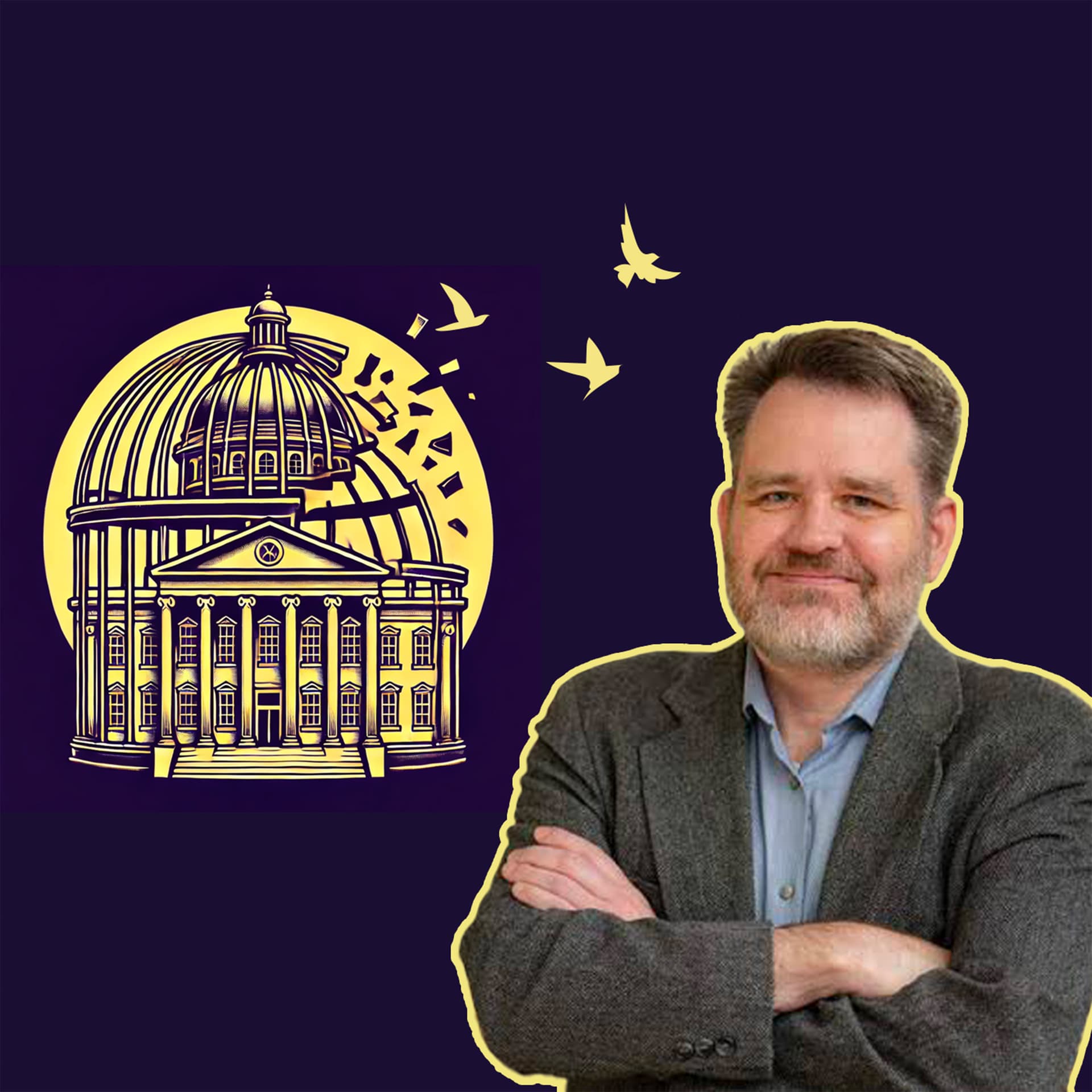
So to Speak: The Free Speech Podcast
Ep. 231: What is academic freedom? With Keith Whittington
01:07:00
“Who controls what is taught in American universities — professors or politicians?” Yale Law professor Keith Whittington answers this timely question and more in his new book, “You Can’t Teach That! The Battle over University Classrooms.”...
Loading summary
Transcript129 lines
- [00:01]
Nico Perino
Part of me likes a college university environment where you have faculty who are kind of quirky and are doing all sorts of interesting, weird things.
- [00:07]
Keith Whittington
Yeah. And I think it's. Unfortunately, universities generally probably make less space for quirky faculty than they used to. It used to be, I think definitely.
- [00:16]
Nico Perino
Used to be known. Like if you were a professor, you're quirky.
- [00:19]
Keith Whittington
That is exactly right. That was the nature of being a professor. Not only did you have some quirky ideas, but you also engaged in quirky behavior and you were often sort of countercultural in your basic attitude toward life. And not everybody, obviously there are lots of very straight laced college professors all the time. But there are also going to be people on campus that are way out there in terms of how they live their lives somewhere. I read of the freedom of Speech.
- [00:43]
Nico Perino
You're listening to so to Speak, the Free Speech podcast brought to you by fire, the foundation for Individual Rights and Expression. Welcome back to so to Speak, the Free Speech Podcast where every other week we we take an uncensored look at the world of free expression through personal stories and candid conversations. I am your host, Nico Perino. Today we're in our Philadelphia office, not in our DC Podcast studio. It's because we have our board of directors meeting and our advisory council meeting. And we are joined by one of fire's board of director members today, Keith Whittington. Keith is the David Boyes professor of Law at Yale Law School, also the director of Yale Law School's new Center for Academic Freedom and Free Speech. Keith spent most of his career at Princeton University, where he served as the William Nelson Cromwell professor of politics from 2006 until 2024, was the founding chair of the Academic Freedom Alliance's academic Committee, the author of a number of books. Keith was just telling me before this, he has another book coming out, but the two that are most relevant to the free speech arena are Speak why Universities Must Defend Free Speech, which we have over here on the bookshelf behind us, and his newest book, which is going to be the topic of our conversation today. You Can't Teach the Battle Over University Classrooms. Keith, welcome onto the show.
- [02:00]
Keith Whittington
Thanks for having me. I appreciate it.
- [02:01]
Nico Perino
So let's talk first about what you have going on at Yale. What's this new center about?
- [02:04]
Keith Whittington
Its initial focus, at least, will be on free speech and academic freedom issues in a university and campus context. In particular, it might over time expand and be thinking about free speech issues outside of campus context. But most immediately, there's certainly a lot of difficult activity occurring surrounding Both academic freedom and free expressions, student protesting and the like on campuses. And so the center is going to focus its attention partially on trying to support scholarship and public discussion around those principles and issues, and part trying to think about policy solutions and sort of best practices and universities model policies universities can adopt affecting free expression and the like, thinking some about what kinds of public policy responses are percolating relative to universities and which ones might be decent ideas and which ones might be terrible ideas. So hopefully we can contribute to sort of informing better policymaking and sort of direct people onto the right path.
- [03:09]
Nico Perino
So these new centers, you're getting a lot of them at colleges and universities across the country. What was Yale's motivation?
- [03:17]
Keith Whittington
Well, partially my arrival. So part of my conversation about trying to think about moving to law school was the possibility of launching a center. I've been increasingly working in this free speech space that's occupying a lot of my time and attention generally. And part of my interest in moving to a law school was the sort of practicalities of thinking about how to design better free speech policies and academic freedom policies and doctrine. And so a law school environment seemed like a particularly good one for trying to develop that work generally. And a center that was focused on it seemed important. I thought it was partially useful for Yale itself just to plant a flag on these issues and indicate that it both cared about free speech issues on that campus, but also wanted to help lead the charge as universities continue to recommit themselves to thinking about free speech issues. I was really happy that when I first suggested, they were enthusiastic about the prospect and thought that they could do good things there, and they were very encouraging about it. There are other colleagues there in the law school in particular who have free speech and academic freedom interests. And so I think it's a particularly natural place to try to build some real synergies and get some things going.
- [04:40]
Nico Perino
Well, congratulations on the new role and the new center. I want to talk now about this book. You can't teach that. Anyone who's listening to the show or has followed free speech issues across the country for the past couple of years knows that the topic of speech in the classroom is one that has captured headlines. Was there a misconception surrounding what speech in the classroom is that you felt needed to be rectified with this book?
- [05:05]
Keith Whittington
Well, I think they're both misconceptions about what the scope of freedom is in a classroom context. There's also questions about why we should care about the kind of freedom that we have enjoyed over the last several decades at least in university teaching. And I think there are real challenges in an environment in which state legislatures in particular, are getting involved with statutory changes affecting classroom speech, that then in turn is going to create litigation, which FIRE has been involved with, as well as other organizations. And that's going to put real pressure on judges to try to think through what kinds of academic freedom protections are really built into the First Amendment, how to encapsulate those kind of protections in doctrine. And so there's a real need, I think, to think through that process very carefully now. And so the book, in part, is an effort both to try to explain why academic freedom and freedom of teaching in classrooms matters and what kind of appropriate limitations are there on that kind of freedom, but also try to think about if we're going to institutionalize it, including through constitutional law, how do we do that in a way that doesn't create more problems than it solves?
- [06:19]
Nico Perino
So you have the First Amendment, Congress shall make no law abridging the freedom of speech. You have academic freedom, this concept, which is often conflated or seem to be the same thing as the First Amendment. And then you have classroom speech, which involves some aspect of academic freedom. So you have three different buckets here. What is the difference between the three, if any?
- [06:49]
Keith Whittington
Yeah, well, I think that's one of the real challenges is trying to think through what those differences are. And part of what I urge in the book is that as judges think about what kind of First Amendment grounding might academic freedom have, part of what they need to do is not simply refer to standard free speech doctrine, how we think about free speech in lots of other contexts, but think specifically about a university context, specifically about a classroom context, and in which case they ought to be borrowing more from the kind of professional standards and norms that have been developed in academia about how that ought to operate.
- [07:20]
Nico Perino
Well, norms is a good word there, because the First Amendment only applies to the government, and academic freedom standards often apply at private college and university campuses too.
- [07:30]
Keith Whittington
Freely adopted in the early 20th century, the American association of University Professors gets organized in order to advocate on behalf of academic freedom principles in the United States, partially trying to bring over a set of principles that had first been articulated primarily in German higher education in the 19th century. And so they get organized and start trying to pressure American universities to adopt some new commitments to protecting scholarship and classroom teaching of controversial ideas. And eventually, by the mid 20th century, they become quite successful in getting universities voluntarily to adopt a set of policies and standards relating to both protections for classroom teaching, but also Protections for scholarship, and then somewhat separately, protections for faculty engaged in speech in the public sphere more broadly. A little bit later, the Supreme Court winds up saying that there's some First Amendment interest in those academic freedom issues as well. And that starts getting courts into the mix of trying to think through what those things might actually look like. But the longer history of academic freedom in particular is one of faculty talking to universities and trying to develop a set of professional norms among academics about what the proper scope is of teaching in classrooms. How much should outsiders, including university officials and trustees and the like, intervene in that kind of classroom teaching? And that has mostly been a function of partially contracts in private university settings and partially norms around professional activities. And now we're sort of seeing more constitutional law in play as we think about, okay, as those norms and contracts are getting overridden by state legislatures. Is there some kind of backstop there that the Constitution says, okay, well, there's a limit as to how far legislatures can go in displacing these kind of practices that have been developed earlier.
- [09:30]
Nico Perino
When thinking about the First Amendment rights that faculty might have, I think it's helpful to think about it in the classroom or academic context versus the extramural or outside of class context, because the First Amendment considerations are different. I think we probably have greater clarity surrounding what they are outside of the classroom. And you had mentioned the American association of University Professors. They also delineate between in class or academic work and non academic work in their 1915 Declaration of Principles and then their 1940 Statement of Principles on Academic Freedom and Tenure. So what are the First Amendment applications, or at least how has the Court looked at them for? We're talking here about public college and university faculty outside the classroom and then in the classroom or within the research and scholarship.
- [10:17]
Keith Whittington
Yeah, outside the classroom and sort of the public sphere is in some ways the most straightforward and easiest, although it was the most controversial. Oddly for the aaup, when it's first thinking, thinking about what kinds of principles should they be advocating for in order to protect faculty speech in general? Because they're essentially thinking in the first place that what we need is to protect a great deal of freedom for professors to be teaching and researching controversial ideas without intervention by trustees and donors and the like who might try to suppress those ideas. More difficult for them was to settle on the idea, should professors also be able to go out in public and engage in political activities or talk about politics without worrying about any repercussions on the job? That sort of latter component, this ability to go out in public and talk about politics, whether in their time in the early 20th century, you're primarily thinking about newspaper op eds or public speeches at rallies and the like. Now, of course, social media and other kinds of venues occupy similar kinds of space, which often gets characterized in the academic freedom literature's extramural speech, that is speech off campus, outside the gates. Right. And one feature of that speech is it looks just like first Amendment protected speech in general, that you're engaged in political speech in the public sphere. And then the question is, can your employer, in this case, university employers punish you for engaging in that kind of speech if it turns out to be controversial? And generally speaking, the same kinds of basic rules that we think about free speech broadly apply in that context as well. The more challenging and nuanced issue is what kind of freedom do faculty have, particularly in a classroom context? There's some issues about a scholarly context as well, and sort of what you do in your scholarly research and publications. And there's certainly concern that the AUP is concerned with, especially in the early 20th century, of there are genuine instances of university presidents censoring and suppressing research. Research activities by faculty when they were engaged in controversial research or state legislatures.
- [12:19]
Nico Perino
I went to Indiana University, which has the famous Kinsey Institute.
- [12:23]
Keith Whittington
That's right.
- [12:23]
Nico Perino
And Alfred Kinsey often was caught in the crosshairs of Alfred Kinsey, for those who don't know, was the big sexual researcher in the middle part of the 20th century and in a conservative state, Indiana University, that sometimes didn't like the research that he was conducting. And so they've made a movie about him called Kinsey, which. And it's celebrated how the university and Herman B. Wells, then the president, stood up for his academic freedom rights.
- [12:50]
Keith Whittington
But the more challenging, in some ways, area of speech activities faculty engage in on a routine basis is classroom teaching and broader teaching activities we can think of also including not only what happened in the classroom, but maybe advising and mentoring activities and the like. And part of the challenge of free speech in that kind of classroom environment is you are empowering faculty to be in a classroom, to speak to a captive audience. And they're there for specific professional purposes. They're supposed to be conveying a curriculum, conveying professionally competent information to students in that environment. And that also imposes some responsibilities then on faculty as to what they ought to be doing in that classroom environment, which are part of the norms and boundaries that surround these expectations about academic freedom. They're built in these policies and norms that are developed outside the context of Constitutional law. So part of what I emphasize for judges who are coming to this somewhat fresh and trying to think about, okay, what are the speech rights of faculty in a classroom context? Is to emphasize that we don't tend to think faculties can have a full freedom to just say whatever they want in a classroom context. There are some responsibilities and boundaries on their speech as well. And those boundaries are particularly a function of question of 1. What I characterize is germaneness. So is what they're saying in the classroom relevant to the subject matter that they're teaching? So you don't want your chemistry professor taking up half your class time talking about what happened in the election. Sure. That's not the job of the chemistry professor. It's not what you signed up for. And the university has a proper interest in making sure that when they hire a chemistry professor or teach chemistry and students sign up for chemistry class, they're getting chemistry and they're not getting something else. So there's a germaneness expectation that you're sort of sticking to the subject matter that you're supposed to be teaching. Likewise, there's a competence expectation that if you are hiring somebody to teach chemistry, that they're competently teaching chemistry and that they're not incompetently teaching it. And the university has a proper interest in patrolling that boundary and reining in faculty who might be engaging in teaching of something that they call chemistry, but in fact is incompetent by their professional standards of their particular discipline. And of course, that's going to be much more controversial in some disciplines than it's likely to be.
- [15:13]
Nico Perino
Yeah. Like, what about Flat Earther? Is that protected under academic freedom if you're teaching a geography course?
- [15:20]
Keith Whittington
So when we think about sort of the professional competence requirements of teaching and the responsibilities and boundaries of teaching, it's easiest in some ways to think about the natural sciences, because they have the sort of clearest standards in some ways. Right. So if you are teaching a civil engineering class, you need a professional competence that allows you to teach students how to build bridges that are going to stay up as opposed to building bridges that are going to fall down. Right.
- [15:48]
Nico Perino
It would be very bad if they taught.
- [15:50]
Keith Whittington
It would be very bad if they fall down. And universities have a legitimate interest in making sure that the faculty who are in that classroom are teaching students in a proper way, such that the buildings are not going to fall down, the bridges are not going to fall down.
- [16:00]
Nico Perino
Because it would be protected under the First Amendment theoretically, for advocating a theory building. That was dumb. No that's right.
- [16:07]
Keith Whittington
So if I had a podcast or a blog and I wanted to write all kinds of stuff on my own personal theory about how you build bridges, and it's all completely incompetent garbage, and if anyone followed that lead, their bridges would all fall down. I have a perfect First Amendment right to convey that right. But universities don't need to provide me a classroom context in a civil engineering class in order to teach it. The challenge, though, is how do we identify when that's occurring? And how do you allow space for faculty to introduce ideas that are controversial, not just in society more generally, but even controversial within their own disciplines, for example? And part of that responsibility is to be able to convey accurately to students that the ideas that they're being exposed to are not necessarily widely accepted, even within their own discipline. So, for example, if you had a genuine flat earther teaching flat earth theory in a science class, generally speaking, I would say you're certainly walking on the fine line of not being professionally competent. But there may be ways of expressing it or explaining to students that, look, there used to be a theory that this was true, or here's the logic that would lead you to this conclusion, but if you are instead conveying to students, this is the truth, here's where all the evidence is and it tells us that the earth is flat, then that's certainly something the university can properly step in and say, look, you can't do that. That's not what we hired you to teach. We don't want to develop any First Amendment doctrines surrounding academic freedom that would somehow insulate faculty from that kind of proper university intervention in the case of them engaging in speech that's professionally incompetent, for example.
- [17:48]
Nico Perino
So the First Amendment applies to faculty members more wholly or as we popularly conceive of the First Amendment in their extramural off campus work. But on campus, there are these kind of gray areas. But we know from court doctrine that the First Amendment does apply at public college and university campus. Now, I think what the critics are going to say and what you're seeing some state legislatures say is that why isn't this government speech? Why can't the state legislatures tell their employees what they can or can't teach or can or can't say in the classroom? Most popularly, of course, the state of Florida did this with its Stop Woke Act. Fire's suing over that. The state attorneys are arguing in court that it's government speech, that the expansive view of academic freedom that Fire's arguing is not consistent with how a public college and university system should operate. You also see the state's attorneys in Indiana, for example, surrounding their intellectual diversity law. ACLU sued over that law. And you have the state's attorney general there arguing that faculty members are just speakers on behalf of the government. And then you had famously, Indiana University and Purdue University sign on to that brief. They later clarified their signing on after there was backlash from their faculty, who said, wait, no, we just aren't mouthpieces for the government. But you can see how this line of argument might be appealing to just the public that doesn't understand the philosophy and the law surrounding academic freedom.
- [19:16]
Keith Whittington
Well, no question, not only, I think, is it a compelling idea for the general public, but it's not obvious, even from the perspective of constitutional law, how this ought to work or what the boundaries are. So the Court winds up saying in the late 1960s that there is some First Amendment interest in academic freedom, and partially they're concerned precisely with the possibility that comes out of Cold war anti subversive legislation.
- [19:41]
Nico Perino
Yeah, they say that our society will stagnate and die if we don't have it.
- [19:45]
Keith Whittington
Lots of flowery language, in particular by former law professors like Felix Frankfurter on the Court and Justice William O. Douglas on the Court. But eventually the Court as a whole winds up adopting this notion that there are some constitutional limitations there on how much the government can penetrate into university teaching, for example, because you don't want to suppress controversial ideas that may in fact be crucial to the advancement of civilization as a whole. So they say that, but then they don't really say much more about what does that look like in practice? What are the rules surrounding that? What kind of framework should you apply? They sort of leave it to the lower courts, and the Supreme Court has never revisited it subsequently. You get the Court then increasingly focused on a separate line of doctrine, thinking about government speech. In part, the Court carves out some doctrine saying, well, look, when the government's conveying its own message, it gets a free hand here. There are not First Amendment constraints on that. And likewise, the Court winds up developing out what's known as government employee speech doctrine. So under what circumstances do government employees generally have speech rights, and what are the limitations and constraints on those kinds of speech rights? As those later doctrines have been developed, it's created lots of space for government to control their own employees and people that they hire to convey their messages in order to get them to convey messages that are consistent with what the government's trying to do more generally. And so now those Lines of doctrine are all now going to be in some tension with one another. Our professors really just hired hands, no different than public relations people for the government, our comms directors for government officials. And the expectation is they're just going to go out and tell students whatever it is the governor wants them to say.
- [21:31]
Nico Perino
It's amazing that you have the Supreme Court doctrine going back decades that says there are First Amendment considerations with regard to academic freedom in public colleges and universities, but it hasn't really been clarified in a way that we feel confident we can articulate what the guardrails are. And maybe it's because the AAUP and other academic freedom groups like fire, for example, have done a pretty good job of getting these standards voluntarily adopted. But now we're seeing those voluntary standards come under attack. And I don't even know how that you can get. Like one Supreme Court case, for example, that's going to clarify it, because you have a bunch of different ways that you can cut faculty expression. One is determining what the curriculum is in the first place. Right. Do colleges and universities have a freer hand to determine what courses are taught? This is one of the things, or what departments exist. This is what you're seeing at New College, for example, in Florida. And then beyond that, there's what they can say in the classroom, and then there's what they can do in their research. And you can see how the courts and academic freedom standards are going to draw different limits surrounding each one of those categories.
- [22:31]
Keith Whittington
I think that's right.
- [22:32]
Nico Perino
And it's all coming to a head sort of right now, as there is this popular backlash against what's being taught in schools, first starting in the K through 12 environment, but now kind of percolating up to the collegiate environment, mostly surrounding what's popularly termed Wokeism. That's why you have the Stop Woke app, for example. So how do you think it's going to turn out?
- [22:53]
Keith Whittington
Well, I think we're going to get different answers to some of these different kinds of policy interventions, because in part, they don't all, I think, raise the same kinds of problems and issues. And I think they need to each be thought of in their own terms and think through the particular implications of how specific policies got written. So the Florida stopwoke Act, for example, is one of the early wave of these kinds of policy interventions. And it's really designed to say that there are certain kinds of ideas you can't properly teach or advocate in a public university classroom. And that's one kind of intervention. And I think it runs sort of headlong against these academic freedom norms and potentially against any kind of first Amendment interest in those academic freedom norms as well.
- [23:41]
Nico Perino
There was in the briefing the state arguing that or conceding the point that if Justice Sonia Sotomayor wanted to come to a public college or university campus and read her opinion in the affirmative action case, which was a dissent, you couldn't do it under the plain language of the law. At least the state would be justified under the law in preventing her from doing so. That is, if a faculty member invited her, or even a faculty member reading the opinion and saying, I happen to agree with this.
- [24:10]
Keith Whittington
Right, no, exactly right.
- [24:12]
Nico Perino
And so I think you put it like that. You say, oh, wow, even if you agree with the idea that this is government speech, you say, well, that's not really how a university should operate.
- [24:21]
Keith Whittington
No, that's right. I mean, that kind of so called anti critical race theory legislation or divisive concepts legislation is quite dramatic and its potential implications and certainly the principle being established by it is extremely dramatic. Right. So even if you think, okay, look, there are some very specific ideas that shouldn't properly be taught in classrooms. And so part of Florida's argument is that some of these ideas are themselves racist, for example, and there are civil rights concerns with advocating certain kinds of ideas in the classroom. The principle on which you justify the state making these kinds of inventions is a very sweeping one that Florida in court is now arguing of simply saying, look, everything that happens in a university classroom is just an extension of Florida's own policy and views. And as a consequence, we get complete control over what gets said. And so whether it's these really extreme ideas that maybe are extremely unpopular in the general public, or even very mainstream ideas that might be widely accepted, we can control it all in that sense. And so you can easily imagine a whole long laundry list of additional ideas that get put on the table and say, well, now that's also politically unpopular. We don't think you should teach that. And of course, the answer may be very different in California than in Florida as to which ideas are the extreme ones that we shouldn't be teaching. And so if you embrace Florida's logic as to what the scope of the constitutional authority here is of the legislature to intervene in university classrooms, it really puts university teaching under the direct supervision of government officials. And then the only question is, how active do those government officials really want to be in monitoring that speech and micromanaging that speech? And we have a bit of a model of what that might look like, which is K through 12 education. We recognize far fewer protections for classroom speech by public school teachers in A K through 12 environment. And we really do think in that context that what happens in the classroom is controlled by the government, an extension of the government, and it's the government's message.
- [26:37]
Nico Perino
Why is that? Is it because it involves minors? It's compulsory? Because it doesn't participate in the knowledge generation process in the same way college and universities does. It's rather a knowledge and parting process.
- [26:47]
Keith Whittington
I think it's all those things. And so in part, it's, I think, very important that it involves minors and that they are in there on a compulsory basis. One consequence of that is that there's a real tension between the states interest here and the parents interest. And so if you authorize, for example, a K through 12 teacher to have fairly robust First Amendment style academic freedom protections in the classroom, then you're potentially saying, okay, a middle school teacher can now make quite controversial decisions about what sex education, for example, ought to look like in seventh grade in ways that not only might the general public and the school board be unhappy with, but maybe the parents who are sending their kids to that class be very unhappy with as well. And so one way in which we reconcile the fact that we're telling parents, you got to send your kids to public schools is by saying, and we're going to have some democratic control over what happens in those public schools so that you're not just going to have individual teachers freelancing what they think the kids ought to know. We're going to make some community based decisions.
- [28:00]
Nico Perino
This is where you get the school boards that are democratically.
- [28:02]
Keith Whittington
School boards are going to be democratically elected. They in fact, are quite detailed about what curriculum they're providing. And so the whole sensibility about how we organize and manage public schools at A K through 12 level look radically different than what we expect at a public university level. A big chunk of that is the fact that what we're talking about are minors as the students involved. And so we shouldn't lose sight of the fact that when we're talking about college students, we are talking about adults. And for the court, that was also an important transition of thinking about what student speech rights existed on the college campus is that we should not continue to treat college students as if they were children with no real constitutional rights on a university campus such that they can have their own speech suppressed by universities to the extent universities want to. Instead, we recognize that they're adults, they're voluntarily there, they've made choices about being there. And under that environment, then we ought to expand not only, I think, a lot of free speech rights on the public square on a college campus, but also recognize when adults sign up for a class in which they're going to be exposed to controversial content, that's a very different ballgame than 12 year olds being forced into a class in which they're going to be exposed to.
- [29:14]
Nico Perino
So you got faculty at public colleges and universities that have First Amendment rights. The court needs to do more to clarify what those actually mean. You have students who have First Amendment rights on public colleges and university campuses, probably where you get the most clarity. And then in the K12 environment, you have students who have some First Amendment rights. Right. Going back to the Tinker v. Des Moines case. But in the K12 teaching context, faculty have almost no First Amendment rights.
- [29:40]
Keith Whittington
That's right. And even less right when we're talking about engaging in public speech more generally. And so if you're a middle school teacher who is posting things on social media, for example, you're going to fall within the confines of, as I mentioned before, government employee speech doctrine, which recognizes some real governmental interest in saying even what you're saying in your private life may have implications for your job performance. And courts have been somewhat deferential to school boards and superintendents who want to say, well, look, sometimes things teachers might say in public have implications for how well they're going to be able to perform their jobs as K12 teachers. So they have very limited speech rights actually in the classroom performing their job.
- [30:29]
Nico Perino
To the extent they have any at all.
- [30:30]
Keith Whittington
If they have any at all. And it's very modest, and then even somewhat limited rights to the extent to which they're engaged in public activities outside the job.
- [30:40]
Nico Perino
What about military academies?
- [30:43]
Keith Whittington
So military academies, I think, are in a somewhat different situation, in part because the purpose of the institution is different.
- [30:51]
Nico Perino
It's indoctrination.
- [30:52]
Keith Whittington
It is in that sense different. And so I think if there's a constitutional difference, though, between the two, and the courts certainly have not told us. Right. So we're sort of out beyond where any doctrine really lies at this point. We're trying to conceptually think it through.
- [31:06]
Nico Perino
And I'd be really reluctant to bring that case.
- [31:08]
Keith Whittington
No, I'd be very reluctant to bring that case.
- [31:10]
Nico Perino
So let's talk about some recent controversies. Amy Wax at the University of Pennsylvania. There are so many different ways we can go with this. Amy Wax has been under the spotlight there at the University of Pennsylvania for years, seven, eight years, maybe even Longer. But the one thing I do want to focus on is her in class speech. And one of the things she was recently suspended, one of the things that was in the letter that kind of spelled out her list of wrongs was that she invited Jared Taylor, who's a alleged white nationalist white supremacist, invited him to a mandatory lecture for her law school course. And I believe there was also some sort of lunch that was associated with it. I'm not sure if that was mandatory, protected under academic freedom standards.
- [31:54]
Keith Whittington
I think it probably is. So one thing to note about the Wax case is that Penn put together a set of accusations that included an extraordinarily wide range of different kinds of SPEEC activities by Professor Wax that they then wanted to punish her for, most of which are in this category of extramural speech. So what did she say on podcasts? What did she say on op eds.
- [32:17]
Nico Perino
That say things like, there should be fewer Asian immigrants in the United States?
- [32:20]
Keith Whittington
So, like I said, that's the space where, in fact, faculty rights are most robust and most protected in this regard under traditional academic freedom style policies, including university policies. And I think Penn would have been on much safer grounds if they just cut all that stuff out and focused on these kinds of questions about what is she doing in the classroom, what is she doing on campus? But those are very much smaller set of examples.
- [32:43]
Nico Perino
Or what is she saying about her students? She had said in the aggregate, for example, that her black students hadn't performed well as her white students. I don't think she named a specific black student, but those are the sorts of things that got folks on campus really up in arms.
- [32:56]
Keith Whittington
So one of the examples then of things that happen in her on campus activities is the inviting of controversial speaker to speak in her classroom. There are plenty of contexts in which you'd say that's clearly unprotected by academic freedom principles. For the faculty involved. I think the crucial question is one of germaneness. So as I said before, right, the boundaries on faculty freedom in the classroom is partially defined by Germanness and partially by professional competence. Now, presumably you're not presenting the white supremacist speaker as somehow conveying professionally competent ideas to the students. You're not holding them up, as here's a scholar correctly telling you this particular body of information. And so instead, the claim is, here's somebody who works in this public space dealing with the kinds of ideas we're talking about in the classroom, and I want to bring them to bear for you to be exposed to these Sets of controversial ideas.
- [33:55]
Nico Perino
And you have some classes that are devoted precisely to this, where they find the most controversial or marginal thinkers. And they said, let's bring them to the classroom and let's have it out and let's have a debate.
- [34:02]
Keith Whittington
And I think that's exactly the right way of thinking about it. Right. So my understanding of the particular class that she was teaching is it was about conservative ideas in America, broadly, in which case this guy's within the ballpark of those kinds of ideas and as a consequence germane to the subject matter of the class if she was teaching torts or contracts or constitutional law. Easier to say this person doesn't belong anywhere near that classroom, has nothing contribute to the particulars of what she's supposed to be teaching. But given my understanding at least of what the content of that class was, a speaker like that at least would be germane to the subject matter of the class. And in that sense, then the speaker, I think, is no fundamentally different than if she were showing a movie, if she was assigning a book, if she was inviting other controversial speakers to speak in that class. She's exposing students to controversial ideas that are germane to the content of the class. And that's core academic freedom protected activity at heart. So we recently had a case, for example, at Princeton University in which a professor assigned a book that was denounced as anti Semitic in content to a class on Middle Eastern studies and politics. And government officials, including members of Congress and members of the Israeli government, were writing Princeton University putting pressure on the university to intervene to prevent this professor from being able to sign this book in class because. Because of its alleged anti Semitic content. And Princeton's president quite rightly responded to that in saying, this is a matter for the decision making of the individual faculty member, not for the university. The book is relevant to the content of the class that she was teaching. And she then has the authority to make choices about what content she wants to introduce that's germane to that class.
- [35:46]
Nico Perino
So college or university of controversial things. So the college or university under academic freedom standards could look at the content of a course to determine whether it wants the course taught in the first place. Yes, you go downstream from that. My understanding is that a lot of departments sign off on syllabi and then what's underneath that syllabi? I mean, the further you go down that funnel, the more authority the individual faculty member has to make judgment calls.
- [36:10]
Keith Whittington
And there's more often variation in universities as to how much freedom you give individual faculty in some of these contexts. And one of the things I think that's not very well worked out within academic freedom norms is how to think about collective judgments of the faculty versus individual judgments of individual faculty members. So, for example, not uncommon for in a professional school environment like Yale Law School, to decide, okay, we have a bunch of faculty teaching constitutional law classes, and we'd like them all to teach out of the same book because we want students to have a common experience regardless of which section they're going to do.
- [36:46]
Nico Perino
Or save thousands of dollars.
- [36:47]
Keith Whittington
Right, and save thousands of dollars or what. So the faculty are collectively going to decide, we're all going to use this book. And then individual faculty members then are not going to have the freedom to be able to depart from that and say, no, no, I don't want to use that casebook. I want to use a different casebook instead. Now, of course, Yale doesn't do that because it's Yale, but other places you can easily imagine doing that. And I don't think that's outside the bounds of academic freedom for the faculty to decide. There's some collective decisions we're going to make about what the curriculum looks like and even, for example, what kinds of materials we're going to use within the class. What I think would be outside the bounds, even in that context, is to say, and you're not allowed to depart from a script about what that looks like, so you're not allowed to introduce supplemental material to the casebook we've all decided we're going to use. You have to present the cases in a particular way rather than other kind of way that would clearly be intruding on what we think of as very much the individual's right to make choices about how to present it. And so that goes to some of this stuff in the Stop Woke act as well. The question that the legislature is saying is we are allowed to talk about certain subject matter in the classroom. You're just not allowed to talk about it from certain perspectives. And that's exactly the kind of viewpoint discrimination that the First Amendment generally disfavors. And it also tends to be disfavored. I think in the academic freedom context, where you want to say, okay, we'll look outside. University officials say, university president can't say, okay, you're allowed to teach a class on evolution, but you're not allowed to talk about human evolution, or you're not allowed to say, human evolution is a real theory that we're going to squelch. At one point, that was a deeply controversial issue within the university Context that had both university officials intervening in individual classrooms, but also even legislatures intervening in university classrooms saying, it's okay to talk about biology, it's okay to talk about evolution, but you can't talk about human evolution in particular. You have to worry that if you go down this road of saying it's okay for state legislatures to make this determination that you shouldn't have faculty advocating for certain kinds of controversial ideas regarding race, that they also are now opening the door to saying state legislatures get to make that decision about can university faculty be talking about human evolution or various other kinds of ideas as well?
- [39:04]
Nico Perino
Let's go to the heartland now. University of Kansas, Philip Locock. This is a case that you had some disagreements with fire on. So it'd be interesting to hear your thoughts on the case. This is a professor who in class ahead of the election says to the class, if you think guys are smarter than girls, you've got some serious problems. That's what frustrates me. There are going to be some males in our society that will refuse to vote for a particular potential female president because they don't think females are smart enough to be president. We could line all those guys up and shoot them. They clearly don't understand the way the world works. Then after that he says, did I say that? Scratch that from the recording. I don't want the deans hearing that I said that.
- [39:40]
Keith Whittington
Right? Yeah. So look, if we were talking about that kind of speech in a public arena, it's clearly first member protected more generally.
- [39:49]
Nico Perino
Right.
- [39:49]
Keith Whittington
If he were to say it's not a true threat, it's not a true threat, for example. And I think there was some rhetoric around the case and we people suggested, oh, this is some kind of threat, but right. First Amendment has very narrow boundaries that draws around the idea of what's a genuine true threat in order to separate out violent political rhetoric from you're actually threatening to shoot somebody, for example, and he's clearly engaged in violent political rhetoric, not a true threat. The question is, is that kind of speech that is totally protective, it occurs in social media posts or on the public quad, likewise protected if you bring it into a university classroom environment. And part of the question there again goes to questions about germaneness. I think fundamentally now in this case he teaches health sports in general, but we don't know a lot about the context in which this little 30 second snip of video takes place.
- [40:41]
Nico Perino
Could have been asked by a student.
- [40:42]
Keith Whittington
Could have been asked by a student. It could be conversations between students and faculty before the class actually starts. He's clearly in a classroom, there are clearly students sitting in the lecture hall, et cetera. But we don't know if it's in the middle of a class, we don't know what the content of the class is more generally, et cetera. And so there may be circumstances in which I think that we'd want to give space for that. And moreover, I think even if you think, okay, that was inappropriate, he really shouldn't have been doing that in the class that he's teaching. I don't think it's a fireball offense fundamentally as well either. I think you have to make some space for faculty, even if they're saying things that are not germane to the class from a subject matter perspective, might nonetheless be part of how you build rapport with students and sort of jokes and asides and the like. I think faculty have a real responsibility, even when they're doing that kind of thing, not to be introducing deeply controversial ideas and materials into, oh, I'm just joking and having fun with the students as I teach my chemistry class.
- [41:42]
Nico Perino
And I should say he was. He's no longer at the university. It's unclear whether he was fired or whether he resigned. But I think that to your point, the germaneness and the joking, I think from fire's perspective, we want to leave breathing room for fleeting remarks, even if they're non germane. And there is a question as to whether it was a joke. We don't have the entire context, and so we're going to argue kind of more maximalist.
- [42:05]
Keith Whittington
There's a jokey element to it regardless, I think, in some ways, but. Right, but exactly what the larger context is hard to say. I think that's right. You definitely want to allow some breathing room there. I think the question is, what's the right principles that we all bring to bear to think about cases like that. The university in this case issued a statement saying, well, there's no space in university classrooms for people to engage in this kind of violent discourse. But you can imagine context in which in fact, similar kinds of rhetoric is in fact remain to the class and relevant to what people are doing. And so I don't think that's the right way of thinking about the problem in front of us. And so instead, really what we need is information about how much of the class was like this, and is this consistent with the class, what's the content of the class, where is this taking place within the context of the class? But it's important, I think, to as you say provide some breathing room for faculty to be able to engage in fleeting remarks. On the other hand, I think faculty do have a real responsibility not to say, well, I'm just joking around and engaging in fleeting remarks. And it turns out that every day I have fleeting remarks about how terrible President Trump is in my chemistry class. And I think students quite appropriately can say, look, that's not what we're here for. And so it's fine to joke around a little bit and have some breathing space, but maybe you need to find a different subject matter for your jokes.
- [43:33]
Nico Perino
Yeah. And that's what we asked for in our letter to the University of Kansas is more information about the context surrounding these remarks to understand what led this professor to leave the university. You had mentioned speech posted on social media.
- [43:45]
Keith Whittington
Yeah.
- [43:46]
Nico Perino
Mara Finkelstein at Muhlenberg College was fired and the big headline grabbing expression that seems to have led to her firing was, I think, a repost on Instagram. The Post said this. Do not cower to Zionists. Shame them. Do not welcome them in your spaces. Do not make them feel comfortable. Why should those genocide loving fascists be treated any different than any other? Flat out racist. Don't normalize Zionism. Don't normalize Zionists taking up space. Pretty caustic. Not classroom speech, something done on social media. Presumably she agrees with it, otherwise she wouldn't have reshared the post. And she did have some previous incidents involving the Israeli Palestinian conflict on campus that she had to work out with her administration. And that seemed to have been worked out voluntarily on her part. But the college was under investigation for Title 6 violations. And there seems to be some suggestion that Mara Finkelstein was something her speech was considered in those investigations and that led to her firing. So what do you think about that case?
- [44:57]
Keith Whittington
So I think it's a tricky case in part. Again, there's a lot of context. We don't know enough about her behavior more generally. But trying to think about the larger principles at play here, it's certainly the case that we want to protect faculty who engage in expressing very controversial ideas, including very extreme ideas about matters of ongoing dispute, including the war in the Middle east, for example, and how we ought to think about the continued existence of Israel and people who support Israel more broadly. In this case, the content is not just about those public policy issues, but also how should we treat people who are on the other side of these issues. And you can imagine that playing out in all kinds of contexts.
- [45:43]
Nico Perino
Right.
- [45:43]
Keith Whittington
How should we treat people who voted for Donald Trump? How should we treat people on the other side of me on all kinds of public issues more broadly?
- [45:50]
Nico Perino
Because the suggestion here is do not welcome Zionists into your space. And her space is a classroom space.
- [45:53]
Keith Whittington
Her space happens to be a classroom space. Right. And so then the question, and I think I'd really want to ask her as a university administrator, is there any evidence whatsoever that she's putting those ideas into practice in her professional activities?
- [46:04]
Nico Perino
And that was the question with Amy Wax.
- [46:06]
Keith Whittington
And I think it's the exact same question we ought to be asking about Amy Wax as well as other faculty who find themselves in this, because we are very quick in our current environment to leap to conclusions that people who are saying things about racial identity or political identity, religious identity, various kinds of things, that it somehow makes people unsafe or unwelcome in their professional environments. And that has been an extremely powerful tool that people have used to try to suppress speech on university campuses, in particular speech by faculty. And I think the question that ought to always be in play in those contexts is, is there any evidence of actual discriminatory activity occurring in the professional behavior of that person? Are they treating people differently in the classroom? Are they in fact making people unwelcome in their classroom conduct and behavior? And if there's not, and instead, all we have is evidence of them saying things that people don't like on social media? That's a very different question. People ought to be protected to be able to engage in that kind of speech.
- [47:04]
Nico Perino
Joe Gao at the University of Wisconsin Lacrosse, who had this side hobby of doing porn with his wife, what was it? Sexy happy couple Was. I think their channel fire has provided Joe Gao with an attorney pro bono extramural speech. But the argument on the other side is that this could have impacts on his classroom teaching as well. Presumably, students should go seek out and see their professor naked. Right?
- [47:32]
Keith Whittington
Right. So it's an interesting case. Right.
- [47:36]
Nico Perino
It's one of the more interesting ones we've ever heard before.
- [47:38]
Keith Whittington
And it's interesting in various ways.
- [47:39]
Nico Perino
Right?
- [47:39]
Keith Whittington
I mean, so among the things that's interesting is. So we think of this as protected expressive activity to be making these kinds of videos. And you can imagine a world in which that's not the right characterization even of the activity he's engaged in. I think that's the right way of thinking about what he's engaged in when he's making sexy time videos with his wife and putting them on video porn.
- [48:01]
Nico Perino
Channels, and he does these vegan cooking things as part of it.
- [48:07]
Keith Whittington
So let's at least Assume for the sake of argument that this is constitutionally protected expressive activity.
- [48:13]
Nico Perino
More generally, porn is protected under the First Amendment.
- [48:16]
Keith Whittington
Porn is obscene.
- [48:17]
Nico Perino
There's no suggestion that this was obscene.
- [48:19]
Keith Whittington
Certainly falls within those kind of categories. And so although. But it's not the traditional kind of expression that we're most concerned about protecting, even with extramural speech context, for example. Right. So it's not I'm posting social media post about some political thing. Instead, it's I'm engaged in a certain kind of activity in video format, and it's entertainment, and it's entertainment. Right. In that sense. And so. So it's a kind of expressive activity, but not central to what we normally are worried about. So let's assume it's protected in that sense, or it falls in that kind of category, and so we ought to bundle it with other kinds of things. Then there's, of course, the thing to know about GAO is he is at the time the chancellor of the university when he's initially producing this. And so then there are questions about, okay, what kinds of speech protections should university presidents have to engage in?
- [49:08]
Nico Perino
That or any university leaders or university.
- [49:10]
Keith Whittington
Leaders, whether provost or deans. So I think there's a thing category, not entirely clear how big that category is, but nonetheless a category of senior university officials, including academic figures, so people with faculty appointments as well, but they're serving in the role of president university, for example. I think their speech rights are pretty minimal in that context, precisely for those kind of reasons that we would identify within a government employee speech context of saying, you can engage in totally protected speech about controversial ideas, but it negatively affects your capacity to perform that particular job. You cannot be a functional university president having engaged in certain kinds of speech, whether it's radical political speech of various sorts, or speech of this sort, or expressive activities.
- [49:54]
Nico Perino
And he was chancellor, and he was fired for that.
- [49:55]
Keith Whittington
And he was fired for that. Then he drops down to being, okay, now I'm a faculty member, and now I'm now a tenure. Right now I have tenure protections, but I also have traditional academic freedom protections even if I didn't have tenure, although in this case he does have tenure protections in particular, and the university fires them from that too. Then the further question is, okay, is that outside the protected speech for a normal faculty member? And then the question, I think fundamentally has to be one of, does it have some kind of negative consequences for your ability to perform your job? Specifically, again, it goes back to this question about how would we think about K12 teachers, for example, in this Context. And there's certainly been instances in which we would say if you had a seventh grade teacher, public school teacher, who made similar kinds of videos, would it have negative consequences for their ability to effectively function and perform their job? And I think the answer is probably yes, because I'm sure those cases exist. Those cases do exist. And so unfortunately, I think there's a good argument to be made that if you're a seventh grade teacher, you can't as effectively perform your job duties once this is out in the world. Again, the fact with university professors, you're dealing with adult students. And I just don't think it's the same ballgame to make that kind of argument to say if you are a university professor teaching adult students, is it similarly the case that you can't perform your job, function as a professor, and teach them as if what you're teaching is a bunch of 12 year old kids? I think we have to think that 22 year olds are different than 12 year olds and they're capable of thinking about their professors in a different way and dealing as adults with the fact that their professors in their off time do controversial, entertaining activities.
- [51:46]
Nico Perino
Part of me likes a college university environment where you have faculty who are kind of quirky and are doing all sorts of interesting weird things. But the University of Wisconsin system did not think the same and fired him after he went through this sort of process because he was a tenured faculty member.
- [52:02]
Keith Whittington
Yeah, and I think it's. Unfortunately, universities generally probably make less space for quirky faculty than they used to. It used to be.
- [52:11]
Nico Perino
I think it used to be like if you were a professor, you're quirky.
- [52:15]
Keith Whittington
That is exactly right. That was the nature of being a professor. Not only did you have some quirky ideas, but you also engaged in quirky behavior and you were often sort of countercultural in your basic attitude toward life. And not everybody. Obviously there are lots of very straight laced college professors all the time. But there are also going to be people on campus that are way out there in terms of how they live their lives and what they look like. And that used to be part of the excitement and interest about universities. It's part of what made them intriguing places. Because there were not only controversial intellectual and scholarly ideas that were being talked about, but also ideas about how one ought to live more broadly, including what kind of art and literature ought to take place and alternative ways of living socially, for example. So you can imagine can't think of cases like this earlier in the 20th century, for example, but you could have Imagined professors not advocating that they're part of the beat generation and advocating sort of countercultural expression in that regard, but also that they were nudists and advocates of nudism, for example, and in their private lives they were active nudists. Well, they don't show up on campus nude and they aren't teaching their classes in the nude, but they are engaged in advocating for nudism on the side. And they go to nudists or retreats and the like. I think traditionally we would have understood, look, that's just their business and that's part of the weird, quirky life of university campuses. And that is totally acceptable and fine. And that we are capable of distinguishing people's private lives from what they're doing professionally. And as long as the faculty understand that they also have to be able to draw some boundaries between how they conduct themselves personally and how they conduct themselves professionally, then we're all going to be. And I worry that decisions like this is part of a broader effort to sort of say, no, no, we don't want quirkiness on our university campuses. We're not going to distinguish between people's private lives and their professional lives. We want them to be just as straight laced in their private life as we expect them to be in a classroom environment. And I think we'll be the worse for it. Not only is it a larger society and culture, but because we're not going to be very tolerant of the range of ways in which people live and express themselves, but also specifically in the intellectual environment of a university. I think universities are going to be less effective at doing what they ought to be doing if we try to patrol those boundaries in that kind of way.
- [54:50]
Nico Perino
Arthur Butts, you familiar with this guy? Oh, yes, Northwestern. He's a Holocaust denier. And I think I feel pretty confident in saying that because the book he authored is called the hoax of the 20th the case against the Presumed Extermination of European Jewelry. So he's an associate professor of electrical and computer engineering. He got his tenure in 1974. He published this book called the Hoax of the 20th Century in 1976, although I had a hard time finding the precise dates, either 1976 or 1975. But it was after he got his tenure and there have been calls ever since for him to be fired. I believe the college even made some changes to what classes he teaches, although I could be wrong about that. This is the sort of margin case or the test case or the theoretical case that you're always going to draw to when you're trying to figure out the boundaries of anything. So a Holocaust denier was a professor at a college or university?
- [55:46]
Keith Whittington
Yeah, well, importantly, in his case, he's a Holocaust denier in an engineering department. Right. And so the Holocaust denial is clearly a side gig for him. So this is his hobby.
- [55:57]
Nico Perino
He doesn't do porn, he does Holocaust denial.
- [55:58]
Keith Whittington
He does Holocaust dental. And so this is his personal political, expressive activity, not part of his professional profile as such, not part of what he teaches, not part of his scholarly expertise. And as a consequence, then it's fully within that space of this is just pure extramural speech, like any other controversial political view that he might hold and express. And we want to give, again, very extensive and robust protections to that kind of speech. Now, in this case, with Holocaust denial, maybe we'd worry that if he's really committed to that, does it have implications for how he conducts himself in the classroom? Is he discriminatory towards some of the students and the like?
- [56:39]
Nico Perino
That goes back to the earlier question.
- [56:40]
Keith Whittington
It goes back to the earlier question, Right. So you want to know what does the professional conduct look like? And that's a separate question from what kinds of ideas does he have? And he expresses outside the question is, how does he conduct himself professionally? If he conducts himself fine, that's one thing. The other issue is he'd be in a different boat if he were an instructor of 20th century European history, for example, because then it would go to his professional competence and expertise. Here. It has nothing to do with his competence as an engineer. He may be a perfectly fine engineer, even if he has crazy ideas about 20th century European history. On the other hand, if you had a 20th century European history professor who has crazy ideas about 20th century European history, that's a problem from a professional competence perspective, such that if he's publishing and he says, oh, these are just on the side, I'm publishing my Holocaust denial books, we start worrying, okay, is that undermined then his actual expertise and his scholarly credentials and his competence, and certainly has immediate concerns about, okay, is that leaking into his classroom and how is he teaching 20th century European history if these are the ideas he expresses in public? But it may also have consequences about how we view his scholarly competence more generally, even if it turns out his classroom is perfectly normal.
- [57:56]
Nico Perino
A final question here going to whether there's actually discriminatory conduct happening in the classroom or on behalf of their judgment of the students. Amy Wax, you had black students, Asian students, saying, even if she's not grading us poorly, and I think At Penn, they even have blind grading, so she couldn't even determine who's whose stuff she was grading. Anyway, they're saying, I don't feel comfortable in her class or with Maura Finkelstein. You'll have Jewish students who are saying, I don't feel comfortable in her class. You might have the same, obviously, with Arthur, but saying, he's never discriminated against me, but I know what he thinks of me.
- [58:33]
Keith Whittington
Yeah, no, exactly.
- [58:34]
Nico Perino
So how can you litigate that? Because it becomes a slippery slope after a while. Right. It's because then you're having to investigate the conscience of a faculty member without any concrete evidence that they're being discriminatory.
- [58:50]
Keith Whittington
No, I think that's right. So. And I think, moreover, we ought to recognize two big problems here. One of those problems is exactly this, one of saying, now you're saying we have, on an evidence free basis, we're going to just assert that you cannot treat people fairly despite the fact we have no evidence you've ever treated anyone unfairly because you've expressed these ideas. And people are concerned that maybe at some point in the unknown future you will treat somebody unfairly.
- [59:16]
Nico Perino
But the evidence you do have is that the students are uncomfortable.
- [59:19]
Keith Whittington
You have that. Which leads to, I think, the second big concern we have this kind of argument, which is, say this is a claim about I am subjectively uncomfortable because of ideas the professor has expressed is something that is extraordinarily easily weaponized across an extraordinary range of. And so going back again to University of Florida, and it's concerned about critical race theory, so called. You can easily have white students making exactly the same kind of concerns about faculty who advocate certain kinds of scholarly ideas associated with critical race theory and say, I'm not going to be comfortable in a classroom in which I have a professor who believes those ideas about race that I think express a kind of hostility and animus toward that I'm.
- [60:03]
Nico Perino
An oppressor just by the nature of being white.
- [60:04]
Keith Whittington
I'm an oppressor by the nature of being white. For example, I participate in a system of oppression as a consequence of my race. I bear some guilt as a consequence of my race for things that occurred in the past. For example, how can I possibly feel comfortable and think I'm getting a fair shake in the classroom from a professor who thinks that. Or we've had plenty of faculty who in their extramural comments will say things like, people who vote for Donald Trump are conservatives, are extraordinarily dumb and have fascistic tendencies and the like. And if I'm a conservative student and I read that my professor had said something like that on social media, can I now think, well, I can't get a fair shake and be treated fairly in a classroom because the professor thinks.
- [60:47]
Nico Perino
That you're seeing some of those questions raised in the wake of the presidential election where you had faculty members cancel their classes and write these emails about the trauma that the election, recognizing the traffic trauma that students are feeling as a part of the election, you have to ask yourself if you're a conservative student, like, am I a bad person because I voted for Donald Trump?
- [61:06]
Keith Whittington
So I think so. Anytime we think about these kind of free speech rules and practices in general, it's critical that we think about, how does this generalize, how would we apply it across the wide range of different ideas and views that get expressed? And think not only about, well, here's a particular set of ideas I really dislike, or a particular kind of animus that even that somebody is expressing that I find particularly distasteful. But also, what's the list of all the other ideas? What's the list of all the other students who might feel uncomfortable as a consequence of something a faculty member has said? And are we going to apply that same rule to that whole list? And universities really just can't function if they were to apply that rule as sweepingly as that principle would suggest. And so the consequence is they either need to abandon it, which I think is the correct answer, or they're going to apply it in a very double standard way. And we're just going to pick and choose which particular faculty members we care about. When students say, you've made me uncomfortable and which times we're going to tell the students, bucket up, and we don't care that you're being made uncomfortable. And it's part of the complaint that Jewish students had on Watson University campuses in the last year that said, we've been getting this messaging from universities for years saying if students are made uncomfortable, they have legitimate complaints be made about the kind of speech activities that are occurring on campuses, including speech activities by faculty. And yet here we have universities telling Jewish students, sorry, this is just free speech. Buck it up.
- [62:33]
Nico Perino
Like Harvard with Ronald Sullivan, who was on Harvey Weinstein's defense team. Students said they felt uncomfortable because he had represented Harvey Weinstein, which is something that attorneys happen to do in their line of work, defend unpopular clients. Nevertheless, the university capitulated. And that's what you get, is you get all these double standards where you have Harvard have a mandatory Title IX course that said fatphobia as a form of violence. Meanwhile, from the river to the sea is fair game. You can see why students would be complaining about that. As I think the free press put it, no double standards, just free speech standards.
- [63:05]
Keith Whittington
Yeah, no, I think that's right.
- [63:06]
Nico Perino
It makes their job easier, too.
- [63:08]
Keith Whittington
It would make their job fundamentally easier. But it will require a cultural shift on your university campuses. It will require explaining to students what the expectations are. It will require explaining to administrators what the expectations are and making them adhere to that in a consistent fashion. And it will require some real adjustment on university campuses, both in terms of what the practices look like, but also resetting how people think about what to expect on campus. Because right now we're in a world in which students are being incentivized, encouraged to file complaints against faculty. And you mentioned the Indiana statute, for example, and I have a law review article coming out trying to examine some of the issues associated with that. But the Indiana, which is a sort of pitches intellectual diversity mandate for classes, in part, requires state universities in Indiana to develop a system in which students can file complaints against faculty because they think that the teaching in their classes is not sufficiently intellectually diverse. The faculty don't offer a sufficiently wide range of views and perspectives in the materials and ideas they're teaching in the particular class. And then some university official is going to have to evaluate, is this a valid complaint? And should the faculty member be punished as a consequence of not being sufficiently diverse in the ideas they're expressing in the classroom? These are systems. They're very easily weaponized and brought to bear in a way that will not lead to better scholarship or better teaching or better education, but instead will stifle a set of ideas and lead people to be very tentative about how they try to approach ideas and teaching in the classroom more generally. But the Indiana statute fundamentally is just building on an administrative regime and set of cultural expectations that are just pervasive in universities. It's just applying it to a new space and content and from a more conservative perspective. And so I've been warning people on the left on university campuses for years that if you go down this path, it's just going to be a matter of time before conservatives realize they can play this game as well. And they deploy the exact same arguments and exact same practices in ways you're not going to enjoy. And that is now increasingly what we're seeing.
- [65:21]
Nico Perino
Well, I'm so glad they listened to you.
- [65:22]
Keith Whittington
Yeah, if only they listened to me, things would be much better. This. This is the story of my life. But unfortunately I think the chickens really are coming home at a roost and hopefully then some people will finally learn some real lessons about this and will adjust in a way that becomes more free speech protective. But I worry that instead we're going to go down the opposite path and just say, okay, how can we just pile on more and more of these things in order to make sure that every possible stakeholder, every possible constituency feels like their own particular concerns are being adequately addressed through an aggressive surveillance and suppression regime?
- [65:58]
Nico Perino
Yeah. Well folks, the book is you Can't Teach the Battle Over University Classrooms and the author is Keith Winnington, now a Yale Law Professor. Keith, thanks for coming on the show.
- [66:09]
Keith Whittington
Thank you. Appreciate it.
- [66:10]
Nico Perino
I am Nico Perino and this podcast is recorded and edited by a rotating roster of my Fyre colleagues including Aaron Reese and Chris Maltby, and co professional produced by my colleague Sam Lee. To learn more about so to Speak, you can subscribe to our YouTube channel or our Substack page, both of which feature video versions of this conversation. We also post a video to X and you can search for our handle there by going to Free Speech Talk. You can also find us on Facebook and send us feedback@sotospeakire.org Again, that is sotospeakthefire.org and the one thing that you can do to really help the show if you enjoyed this episode is to go to Apple Podcasts or Spotify and leave us a review. Reviews help us attract new listeners to the show, help new folks find us. And until next time, I thank you all again for listening.