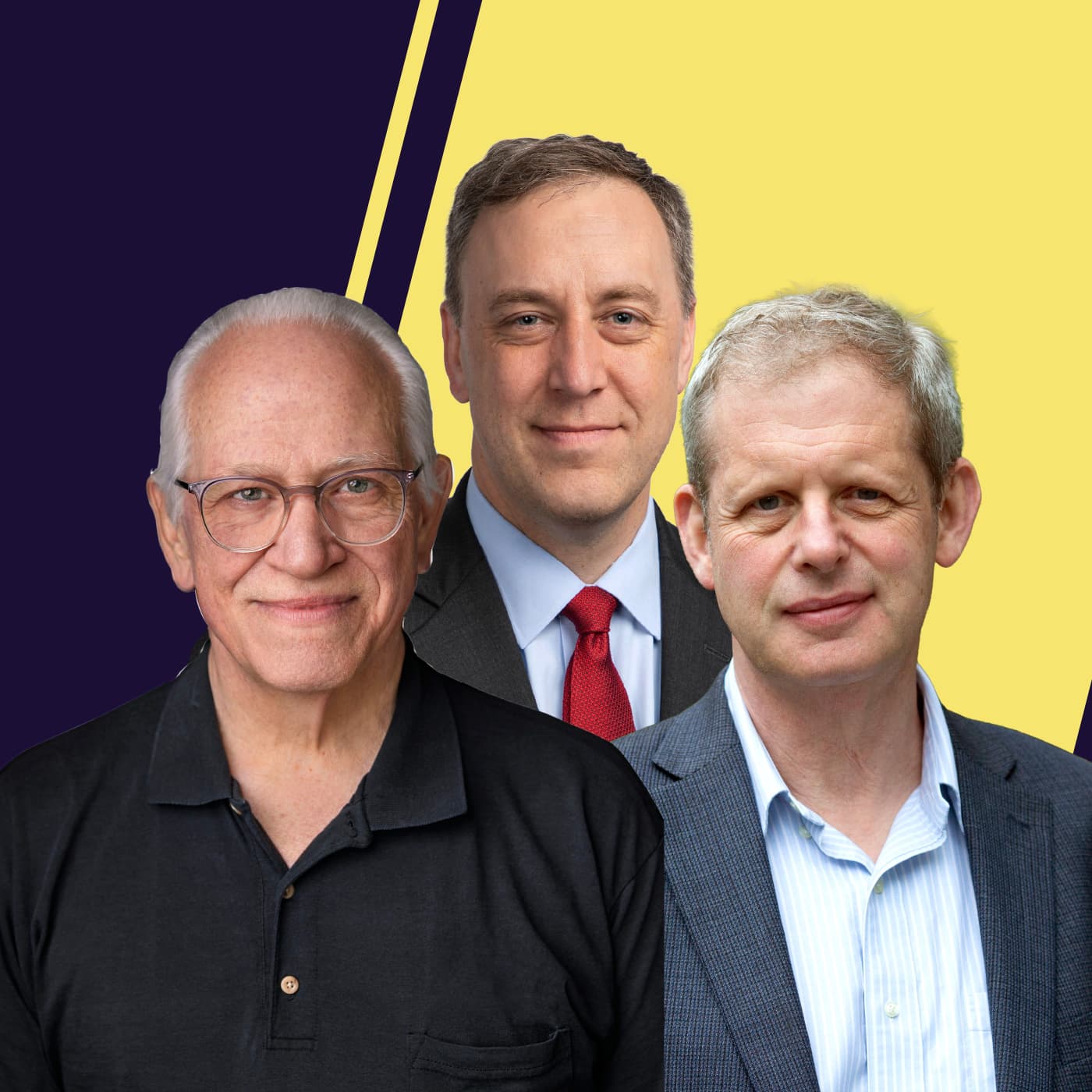
Podcast Summary: So to Speak: The Free Speech Podcast
Episode: Ep. 248: The State of Commercial Speech
Release Date: August 6, 2025
Host: Nico Perino
Guest Speakers: Aaron Reese, Justin Pearson, Eugene Volok, Bob Korn Revere
Introduction
In Episode 248 of So to Speak: The Free Speech Podcast, host Nico Perino, representing FIRE—the Foundation for Individual Rights and Expression—delves into the intricate world of commercial speech. The episode, produced by longtime editor Aaron Reese, explores the legal frameworks, historical contexts, and modern implications of commercial speech under the First Amendment.
Understanding Commercial Speech
Aaron Reese begins by defining commercial speech as "speech proposing a commercial transaction" (02:47) and distinguishes it from other forms of speech. He emphasizes that not all commercial activities fall under this category—selling a product, for instance, doesn't automatically equate to commercial speech unless it involves a transaction proposal.
Justin Pearson, a constitutional lawyer at FIRE, elaborates:
"Commercial speech is speech proposing a commercial transaction. So I think sometimes people get confused. I think anything involving money is commercial, but that's not what we're talking about here." (05:12)
Historical Context and Legal Precedents
The discussion traces back to early attempts at regulating commercial speech, highlighting pivotal cases that shaped its current standing.
-
Valentine v. Crestenson (1942): The Supreme Court ruled that commercial advertising was not protected by the First Amendment, categorizing it as conduct rather than speech (16:00). Justice Owen J. Roberts stated:
"The Constitution imposes no restraint on government as respects purely commercial advertising." (18:53)
-
Bigelow v. Virginia (1975) and Virginia Pharmacy Board v. Virginia Consumers Council (1976): These cases marked a shift, granting a degree of protection to commercial speech. The Court recognized that while commercial speech is protected, it does not enjoy the same level of protection as political or other forms of speech.
Bob Korn Revere, FIRE’s chief counsel and a seasoned First Amendment expert, provides insights into these developments:
"Commercial advertising... can be more restricted than other kinds of speech." (08:32)
Regulating Commercial Speech
Commercial speech occupies an "intermediate zone" in First Amendment law, receiving more protection than unprotected categories like obscenity or defamation but less than political speech (22:32).
Eugene Volok, a professor at UCLA School of Law, discusses the rationale behind this differentiated protection:
"The interests in protecting commercial speech... are not quite the same as other kinds of speech, like political speech, because... false commercial speech could be seen as a form of fraud." (21:45)
Case Studies and Practical Applications
Mary Lou Wesselhoft's Case: Ocheesi Creamery vs. Florida Regulations
A highlight of the episode is Justin Pearson’s recounting of representing Mary Lou Wesselhoft, owner of Ocheesi Creamery, against Florida's stringent milk labeling laws. The state mandated that skim milk must contain artificial vitamin additives, forcing Mary Lou to label her additive-free skim milk as "imitation skim milk."
-
Initial Challenge: Mary Lou faced enforcement from Florida authorities, leading her to seek FIRE's legal assistance.
-
Legal Journey: Although initially losing in the trial court, Pearson successfully argued on appeal that:
"The government can't impose definitions that ban honest, non-misleading descriptions of products." (34:13)
-
Impact: This case set a precedent aiding not only small businesses like Mary Lou’s but also vegan and plant-based companies challenging restrictive labeling laws.
Oil Express Case: Tire Engineers Misconception
Another significant example is the Oil Express case from Mississippi, where small businesses referred to their employees as "tire engineers." The Mississippi Engineering Board argued this was misleading, but the Fifth Circuit Court ruled in favor of the businesses, emphasizing the importance of context in determining whether speech is misleading (41:22).
Challenges and Future Implications
Government Overreach and Redefinition of Speech
Eugene Volok warns about the potential for government overreach in classifying various forms of speech as commercial to evade stringent scrutiny:
"Governments... are trying to redefine what it's talking about... to pull a fast one in the courts." (48:13)
Right of Publicity: Tom Waits vs. Frito Lay
The episode also touches upon the right of publicity through the case of Tom Waits, who sued Frito Lay for using a voice similar to his in a commercial without permission. The court ruled in favor of Waits, emphasizing the limited protection of commercial speech in such contexts:
"Commercial advertising is less protected. It's less valuable," (44:40) but also recognizing the balance with First Amendment rights.
Contemporary Issues and Regulations
Impact of Technological Advancements
With the rise of social media and artificial intelligence, the regulation of commercial speech faces new frontiers. Governments are increasingly attempting to regulate online speech under the guise of commercial speech, aiming to lower the judicial bar for justification.
Bob Korn Revere underscores the necessity for defenders of free speech to stay vigilant:
"It is incumbent upon us... to maintain the strong standards for speech overall when we defend in various areas." (48:13)
Conclusion and Takeaways
The episode concludes by reinforcing the critical role of commercial speech in the broader landscape of free expression. Through historical analysis and contemporary case studies, listeners gain a comprehensive understanding of how commercial speech is uniquely positioned within First Amendment protections. The discussions highlight the ongoing tension between regulating commercial interests and preserving fundamental speech rights, emphasizing the need for consistent and principled advocacy to safeguard these liberties.
Notable Quotes
-
Justin Pearson:
"Commercial speech is speech proposing a commercial transaction... it's only speech proposing a transaction." (05:12)
-
Bob Korn Revere:
"Commercial advertising... can be more restricted than other kinds of speech." (08:32)
-
Eugene Volok:
"The Constitution imposes no restraint on government as respects purely commercial advertising." (18:53)
-
Justin Pearson:
"You have to be philosophically consistent... precedent you create for one will be used for the other one tomorrow." (37:05)
Upcoming Episodes and Additional Information
Nico Perino announces an upcoming live recording on August 11th featuring Larry Summers and Greg Lukianoff to discuss the Trump administration's influence on elite universities and its implications for free speech and academic freedom.
Stay Connected:
- Subscribe on Substack or YouTube for video versions and live streams.
- Follow on X (@FreeSpeechTalk) for updates and interactions.
- Feedback and Questions: Reach out via so to speak@fire.org.
Support the Podcast:
Leave a review on Apple Podcasts or Spotify to help attract new listeners.
This detailed exploration of commercial speech sheds light on its complexities, historical battles, and ongoing relevance in today's rapidly evolving communication landscape. Whether you're a legal professional, business owner, or free speech advocate, this episode provides valuable insights into the delicate balance between regulation and expression.