← So to Speak: The Free Speech Podcast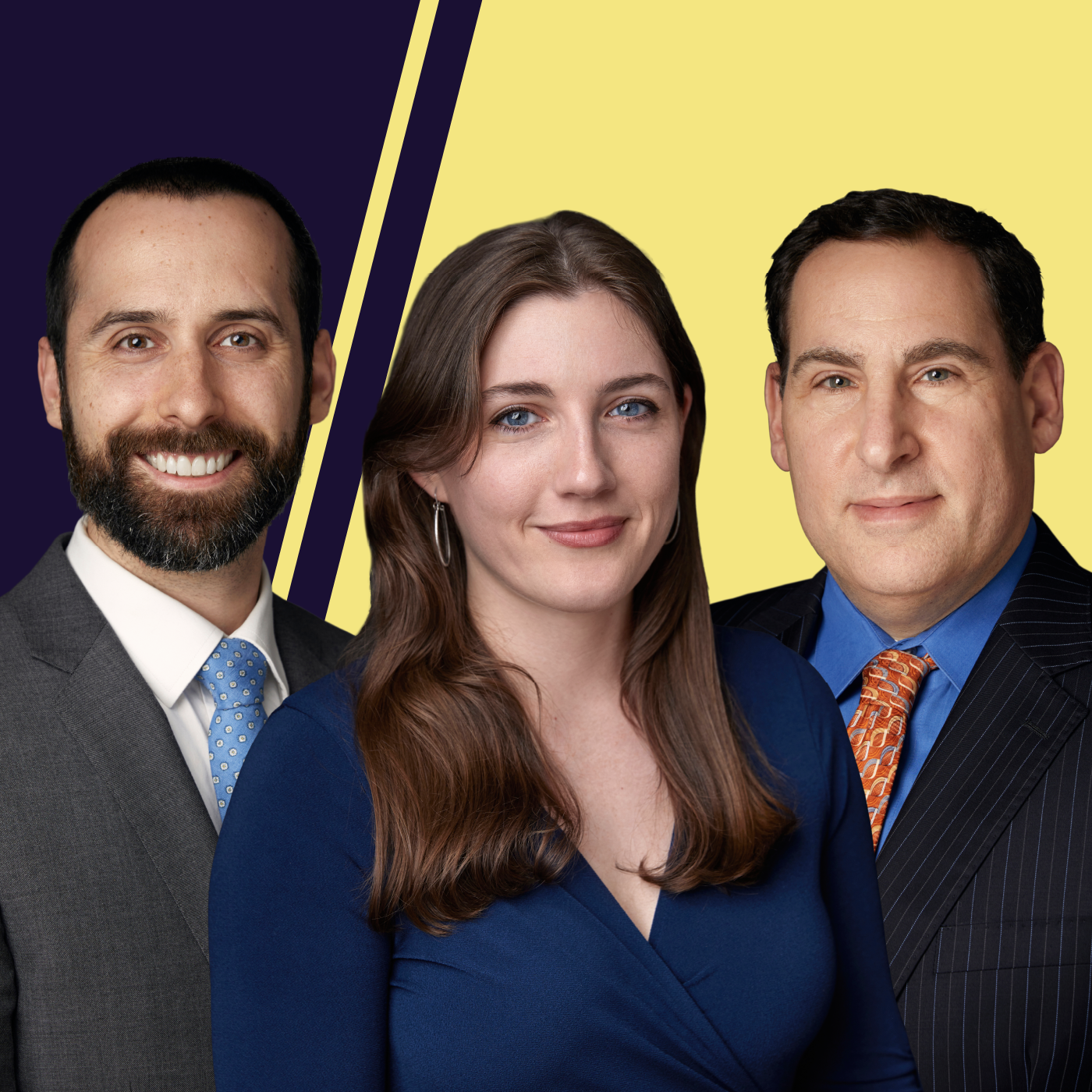
So to Speak: The Free Speech Podcast
Ep. 253: Pam Bondi says hate speech is not free speech — is she right?
01:05:16
FIRE staff also take your questions on Charlie Kirk's assassination, President Trump's lawsuit against The New York Times, cancel culture, and more. Timestamps: 00:00 Intro 01:42 Attorney General Pam Bondi's comments that "hate speech" is distinct...
Loading summary
Transcript110 lines
- [00:00]
A
All right, I think we can get started here. Thanks, everyone, for joining this edition of Fire Reacts. It's something we decided to pull together this morning after we got together as a team and discussed Pam Bondi's remarks about hate speech not being free speech. Last night we thought some of our followers, some of our members, might have questions about hate speech and its treatment under the First Amendment, as well as some questions about everything that's happened over the past week. Free speech has very much been in the news, so we figured we'd hop on and answer whatever questions you all have. So those of you who have been on these FYR Reacts calls before know how they work. Please, by all means, go to the bottom of your screen and go to the Q and A button and type in any questions you have. We try to get into as many questions as we can over the course of the next hour. Anything we have left over we'll try and respond to after the fact. But we can't promise we'll get to every question. So I'd ask my panelists here, who I'm about to introduce, to just kind of keep it as brief as possible so we have time to get as to many as questions as possible. I'm joined by Sarah McLaughlin, who is Fire Senior Scholar for Global Expression, also the author of a new book, Sarah. Right. Authoritarians in the Academy.
- [01:09]
B
It's very subtly placed here, you can say.
- [01:12]
A
Also have my colleague Ronald Ronnie London, who is our general counsel, a regular appear on these Fire Reacts and FIRE member calls. Ronnie, welcome.
- [01:20]
C
Hi. Thanks.
- [01:21]
A
And Aaron Terror, fresh back from vacation, thrown into the deep end. Right.
- [01:28]
D
Did I miss anything?
- [01:29]
A
Director of Public Advocacy. Aaron, thanks for coming again. If you have questions that you want us to answer about hate speech or anything that's happened over the last week, start putting them in the Q A at the bottom of the screen. But to get us started, I. I'm assuming folks, if they have signed up for this and they're here, are familiar with Attorney General Pam Bondi's comments from last night. But just in case you're not, let's play him. Malvi.
- [01:54]
B
There's free speech and then there's hate speech. And there is no place, especially now, especially after what happened to Charlie in our society. Do you see more law enforcement going after these groups who are using hate speech and putting cuffs on people? So we show them that some action is better than no action. We will absolutely take target you go after you if you are targeting anyone with hate speech, anything, and that's across the aisle.
- [02:26]
A
So Ronnie, let's start with you. Hate speech. Is it okay for the Department of Justice to target people for their hate speech?
- [02:34]
C
Well, before I can answer that question, I think I need you to tell me what hate speech is. Right? I mean, really more of a rhetorical question than anything else. But, you know, every time I hear someone use that term, hate speech, that's. That's my question. What do you mean by ha. Speech? It's a non. Legal term. It's a non category of speech. I mean, we have specific categories of unprotected speech. It's not one of them. And ultimately, the problem with, you know, the government enforcing anything with respect to hate speech is that whether something is hate speech is in the eye of the beholder.
- [03:05]
A
But I think we have a sense that there are things that people can say that are hateful. I mean, hate is a word in the English language, right, Aaron, Why is it not defined in law?
- [03:15]
D
I mean, do we have a sense or. We live in a country of about over 300 million people of different backgrounds, values, beliefs, political beliefs, religious beliefs, ideologies. I don't think there is a lot of consensus on what is considered hateful. And I think we have plenty of experience seeing that the way that people define hate speech is often just to target the sorts of view, political views or other beliefs that they personally consider offensive or offensive to their own personal sensibilities or to what they believe. And so, for example, that, you know, if you take the Israeli Palestinian debate, you have people on each side accusing the other of hate speech, whether it's expressing support for Israel's war effort in Gaza or, you know, or it's. Or it's criticizing Hamas or Palestinians. It's. It's easy to characterize those things as hate speech when you. When you're on the other side of it. And so that's why we don't. Our legal regime doesn't have. There isn't a legal category for hate speech. It's not something that the government can punish without running afoul of the First Amendment. And instead, we have more narrow categories for things like true threats and incitement to immediate violence that cause a direct and immediate objective type of harm, rather than speech that people simply consider beyond the pale.
- [04:40]
A
Yeah, the Supreme Court. Go ahead, Ronnie.
- [04:42]
C
I was just about to go to the Supreme Court, and you can find a perfect example of the eye of the beholder phenomenon in the Supreme Court's recent pronouncements, where the Supreme Court has said one of the proudest boasts of our Free speech traditions is freedom for the thought that we hate. And that comes out of Mattel vs Tam, where the court said the Trademark act provision prohibiting registration for, you know, marks that are disparaging of individual groups of people could not withstand scrutiny because it was viewpoint based. And in that case, this. The mark was Slants. The name of the band was the Slants. They wanted to trademark the band name, and as far as they were concerned, they were reclaiming it. It was a proud use of the name to describe themselves and to put their music out into the world.
- [05:28]
A
And slants is a pejorative used against Asian people, right?
- [05:32]
C
That's right. And I was, you know, just about to say there are plenty of people out there who would take offense at the use of a term like that because it is a pejorative against a group of people.
- [05:41]
A
Sarah, we have a real time case study in how hate speech codes and hate speech laws play out overseas. Right. And you've been tracking this closely. How has that been playing out? What should Americans worry about with a Department of justice that seems to think it has the power to go after hate speech?
- [05:58]
B
Well, what we've been warning about for a long time is the potential for hate speech restrictions to be essentially a free for all for a government censorship of political speech. There is plenty and plenty of evidence showing that that's the case. Across the uk, France, Germany, Asia, all around the world, this is happening. But what's even more notable, and I think an argument we've been making here a lot at fire, is that you're going to see government officials using hate speech laws and hate speech restrictions as a way to cover up people that maybe just don't like those politicians. Specifically, there was a shocking arrest. I think it may have been a pre dawn raid in Germany over a man who tweeted, you are such a penis at a politician. These are the kinds of things that we risk seeing under hate speech restrictions. In Turkey, Erdogan accused someone who called him, I think, a fascist or something of hate speech against Erdogan. And I don't want to, you know, queue up the next part of this too much, but there was a comment from President Trump today that sort of explicitly gets at the notion that the kind of hate speech that politicians might be most worried about is speech that they think is hateful to them politically. And so I don't know if we want to move into that.
- [07:19]
A
Let's do it. Malvi, can you queue up? This is President Trump's response to Pam Bondi's remarks when he was asked about those remarks by an ABC News reporter.
- [07:28]
B
And what do you think Pam Bondi saying she's going to go out for hate speech?
- [07:32]
C
Is that, I mean, a lot of people, a lot of your allies, they.
- [07:35]
B
Hate speech is free speech.
- [07:36]
D
They probably go after people like you.
- [07:38]
C
Because you treat me so unfairly.
- [07:40]
D
It's hate. You have a lot of hate in your heart.
- [07:42]
C
Maybe they'll come after ABC.
- [07:44]
D
Well, ABC paid me $16 million recently.
- [07:47]
B
For a form of hate speech.
- [07:49]
C
Right.
- [07:50]
D
Your company paid me $16 million for.
- [07:53]
B
A form of hate speech.
- [07:54]
D
So maybe they'll have to go after you.
- [07:59]
A
Ronnie.
- [08:01]
C
Well, I mean, that just illustrates that hate speech can be whatever you want it to be. What he's referring to is his defamation suit against ABC for the way they characterize the charges against him involving sexual impropriety. And they used the wrong term of art. They didn't use the right, you know, new term of art under New York State law. And they wound up settling that case. So according to, you know, President Trump there, if you engage in defamation or alleged defamation against him, that's hate speech. On the other hand, I'm already seeing in the comments questions about, well, what's the difference between hate speech and fighting words? And, you know, fighting words is another category of unprotected speech we might have in the questions here. I've certainly seen them in the commentary. More generally, you know, what about incitement? So we do have these defined categories of unprotected speech. And the reason folks are always trying to say, oh, well, this is this defamation is hate speech or this incitement is hate speech is because hate speech is not an unprotected category. It's kind of a one size fits all that you can, you know, trot out and use whenever you don't like what people are saying about you. And as Sarah pointed out, if it's politically disadvantageous to you, it's therefore hate speech. I mean, President Trump just filed another lawsuit, this one against the New York Times and Penguin for things that they published against him that he thinks are hateful. I guess he would call that hate speech as well. But, but that's why we can't allow the government to punish or sanction hate speech, because it just gives them a blank check.
- [09:31]
A
Well, one of the problems we have, right, is that people try to import this category of hate speech onto existing categories of unprotected speech or separate them from existing categories of unprotected speech, Right? So we, as you note, Ronnie, we have unprotected categories of speech, true threats, incitement, imminent lawless action, defamation. But merely saying those words does not make any speech fall within their legal definitions. Right. Like incitement to imminent lawless action is means speech that's directed to inciting or producing imminent lawless action and is likely to incite or produce such action. It's a very high bar. And true threats, you know, if you go back to Virginia v. Black, it's statements where the speaker means to communicate a serious expression of an intent to commit an act of unlawful violence to a particular individual or group of individuals. And, you know, you can't just say that something is a true threat or something is incitement, imminent lawless action, without connecting it to the actual legal standards for these things, which in the United States are very high. And I think over the last 24 hours, given Pam Bondi's remarks and Donald Trump's $15 billion lawsuit against the New York Times, we've seen just the risks of having lower standards for things like hate speech or for defamation of a public official, for example. Now, Sarah, you were going to say something?
- [11:00]
B
Yeah, I think we were trying to see, or seeing Pam Bundy try to paper over her hate speech comments by drawing attention to those unprotected categories of speech. I think in a tweet this morning, she put, but she didn't do a very good job of explaining that or papering it over. And she also introduced, you know, potentially something the department could prosecute things like doxing conservatives, which, you know, I know this has been Aaron's focus for some time, but we've seen, you know, a major broadening of the concept of doxing to be essentially meaningless.
- [11:38]
D
To be clear, I don't, I'm not doxxing conservatives. That's not my, that's not my focus. But yeah, it's.
- [11:46]
A
Yeah, Talk about this concept a little bit, because what Pam Bondi is trying to do here, as Sarah says, is paper over this free speech, hate speech distinction that she made last night. And to kind of the credit of everyone across the political and ideological spectrum, people are rejecting, they say this, you know, even conservatives, Republicans are saying this isn't what we voted for. We voted for free speech, but that you can't just call free speech hate speech. Right, Aaron?
- [12:15]
D
Right. And I, I, I think Bondi's attempted clarification, honestly, if anything, just kind of, it made more misstatements of the law and introduced more uncertainty and confusion, which I think is not going to cure whatever chilling effect her original statement might have had. And like, like Sarah noted, she, you know, she, she gave as an example, doxxing people. You know, doxxing is another term that is not. Doesn't really have an objective legal definition. It's sort of like hate speech. Like, people just use it to mean all sorts of different things, some of which may be legal and, and some of which may not be. But I am not inclined to give this administration the benefit of the doubt when he uses that term because it already has used it in many contexts to describe speech that is entirely protected by the First Amendment, in particular speech about ICE and ICE activities. So for instance, people have gone on social media to say that they've seen ICE agents in their neighborhood walking around or conducting operations. And then you have someone in the administration come out and say to threaten to prosecute these people for, for doxing ICE agents or for, you know, putting them in harm's way or something. But so that's just, that's one example of how again, they use these kind of vague terms and sort of loosely associate them with, with the type of, with speech or conduct that would be illegal. But to describe things, examples of conduct that. And speech that actually isn't illegal, such as simply noting that you saw law enforcement outside in a public area, which.
- [14:01]
A
My ways in Google Apps, by the way, tell me every time I pull them up to drive into work right now.
- [14:07]
D
Now, like, you can imagine a situation where maybe someone is with like a crowd of armed people, like near an ICE agent and one of them says, like, get him, like, attack that guy. Like, that could be incitement. Right.
- [14:21]
A
It could be directed at an inciting imminent lawless action.
- [14:23]
D
Right, right. Or, you know, and I got a lot of pushback. I got a lot of pushback on this by people saying, well, you can't aid in the bad criminal activity like illegal immigrants. But, but that would only apply again to like when you're working with a specific person to carry out a specific unlawful act. So if you're like acting as a lookout during a bank robbery, like. Right. That. That is illegal. That can be prosecuted.
- [14:46]
B
Wait, that's illegal?
- [14:47]
D
Yeah, sorry, you should really stop doing that. But, but if you're, but if you're just posting online, you know, like. Another amazing example was AOC put out a webinar that was to inform people about their constitutional rights when interacting with ice. And the, the border czar, Tom Homan asked the DOJ to investigate that for, for was either like obstructing justice or aiding abetting illegal activity, just informing people about their constitutional rights.
- [15:16]
A
Let's go to a question now from an anonymous attendee. If someone responds to a social media post about the assassination of a political figure and says, quote, bout damn time now, do Trump close quote, is that protected by free speech? And are institutions of higher ed setting themselves up for potential legal action if they take a student through student conduct for a comment like that? This is the Watts case, right, Ronnie?
- [15:39]
C
Yeah, that's exactly right. I mean, when we were talking about Pam Bondi's statement, she says, you know, you can't call for assassinations, you can't call for the murder of other people. And yet that's exactly where our truth doctrine originates, is if they put a rifle in my hands, the first person I'm going to put in my sights is President Johnson. Right. I'm paraphrasing here. And they tried to prosecute that as a threat against the president, but it's conditional and it's not an imminent threat. It's not intended to be a threat of serious harm to a person. It's talking rhetorically or hyperbolically. And the same thing here, here would be true in this kind of example. You know, suggesting that someone should go after the president, you know, it's probably not a, a nice thing to do, but, you know, without hitting all of the, the elements of a true threat or hitting all of the elements of incitement, if there was other hearers nearby, like Aaron was discussing, that is, you know, that is not actionable. And if the question is, are schools setting themselves up for problems? First of all, let's make the distinction between private schools and public schools. Private schools are not bound by the Constitution and the First Amendment, but they should, and we have argued they are bound by any free speech promises they make. But certainly public schools, which are government actors, if they are punishing students or faculty for protected speech, then there is the potential for liability there.
- [17:05]
A
And the Watts case is a case. Right, Ronnie? From 1969, I believe.
- [17:10]
C
Yeah, Vietnam War.
- [17:11]
A
Yeah, Vietnam War. And the court held that the language of the political arena is often vituperative, abusive, and inexact. Thus, considering the context and regarding the expressly conditional nature of the statement and the reaction of the listeners, the court ruled that the statements were not a true threat. Aaron, can you talk about the importance, again, you've kind of noted this already of context. We've had this challenge in all of our First Amendment work throughout the years that it's hard when you're talking about exceptions to the First Amendment to make Blanket statements. Because every case is going to be different. The context matters, to use a phrase from December 2023, when the presidents were testifying in front of Congress. But facts and context do matter in determining whether a statement falls outside of First Amendment protection.
- [18:00]
D
Yeah, absolutely. And, and so, for example, with true threats, you have to. The government would have to show that the person was expressing a serious intent to physically harm a specific person. Right. And, and so the type of heated political rhetoric at issue in the Watts case just doesn't qualify because we don't want to give the government a more expansive power to kind of go at any type of speech or language that it thinks might inspire violence. Right. Or, or that has sort of violence, the idea of violence associated with it, because then that could just get out of, out of hand very quickly. And it's funny, you know, you bring up the, the example of the, the hearing with the college presidents, and that was all about whether or not colleges should allow people to advocate genocide. Right. That was like one of the, the, the questions that got in that hearing that got, that got so much attention in part because the president, the college presidents, didn't do a particularly great job of answering it. But the fact of the matter is, again, you, you do have to look at the details, and there is no exception for abstract advocacy of violence. Right. You have to be making a direct threat at somebody. Right. Or you have to be inciting, intentionally saying something that is intended to, and likely to incite immediate violence. And the idea there is that we've now found ourselves in a situation where there is an immediate threat to people's physical safety and there's no longer time, time for the type of discussion and debate that the First Amendment protects and that we normally rely on to push back against bad ideas and speech that we think might cause harm. When you loosen that standard to just speech that might inspire violence at some undefined point in the future that in practice is going to give the government license to go after all sorts of political speech that it is opposed to. You know, it can argue that BLM protests are going to inspire violence against police officers or that pro life protests and advocacy might inspire violence against abortion doctors, for example. Right. So the idea here is that the exceptions are made so narrow so that we don't give the government that expansive power to just go after a whole range of political speech that, that it wants to suppress.
- [20:27]
A
So Andrew here asks, or says just speak to the irony, given that Charlie Kirk was against hate speech laws. He was accused of hate speech. So Charlie Kirk here, we've seen this been going around social media over the past 24 hours. Last year, on May 2, he said hate speech does not exist legally in America. There's ugly speech, there's gross speech, there's evil speech, and all of it is protected by the First Ameri First Amendment, keep America free. And I had posted something on social media earlier this morning and said it's kind of a really sad situation. This sensorial punitive campaign, to my mind, is only kind of distracting from the larger tragedy and Kirk's legacy. But that's a lesson, right, that we've learned, learned over the centuries and that's forgotten and then repeated is that as soon as you try and use censorship to control the narrative, it has a way of backfiring and platforming the very ideas you're trying to eliminate or eradicate. We have another question here from Guzan. What's your analysis of Stephen Miller's recent comments regarding hate speech? Does anyone, is anyone familiar with Stephen Miller's recent comments on hate speech? I haven't seen them. Okay.
- [21:45]
D
I haven't seen it.
- [21:46]
A
Yeah, Goose. And if you want to respond with those comments, we'll take a look and can follow up here. We have another question from Erica. Can you speak to the multiple terminations of K through 12 and university faculty for their statements made on their personal social media when they were not at work and did not draw any connections to their work as educators? Does anyone want to take this?
- [22:08]
B
Well, I've been reading through some notes on what's happening at Clemson and I think, you know, we can. There's frankly too many of these to discuss all of them at once. I know my colleagues and our campus race team are very overwhelmed right now with the number of these stories rolling in. But so for Clemson, for example, I haven't even quite figured out exactly what the professors in question have said, but at least two professors have been fired by the university. They're holding. The university is holding an emergency closed door meeting today among the trustees. There have been comments from Senator Lindsey Graham, Representative Virginia Fox, Nancy Mace, probably a dozen legislators here at minimum, who have called on the university to fire. I've seen speech about it or I've seen comments that the speech has been vile, offensive, hurtful, insulting. There's one word that I haven't seen though, which is claims that the speech has been unprotected. So essentially what we have here is public university that may indeed be firing faculty members for just offensive speech. And the statement from Clemson said they have dismissed Two faculty members following a thorough investigation of inappropriate social media content in response to the assassination of Charlie Kirk. So, again, inappropriate. So, from what I can tell, these faculty members have engaged in protected speech and are being targeted by the university because a number of legislators are demanding that they be fired. And this is the case for, is it fair to say, dozens of universities at this point?
- [23:49]
A
Yeah, I'd say we're approaching that. It's hard to keep track, as you noted, Sarah. But, Ronnie, what's the problem here? Some of the arguments I'm seeing on social media and elsewhere is, well, these are educators, and if they are celebrating Charlie Kirk's murder, that calls into question their professional capabilities to teach students. Now, I want to caution that and say that context and facts matter in all of these analysis, as always. And sometimes things are characterized as celebrating someone's murder, as we've seen in a couple of these examples, when really they're actually condemning the violence, but saying Charlie Kirk wasn't a good guy or not admirable in some way. Ronnie?
- [24:28]
C
Yeah, so, you know, when it comes to public employers, you know, they are allowed to operate as business and conduct the business they are providing. And in the case of education, you're talking about college universities and K through 12 schools. And you should also understand, you know, there's a difference there between college and universities. You are dealing with, you know, exclusively adults, you know, K through 12. You're dealing with minors. But the general test in both of those settings is the one that applies also to all public employee settings. And that is if someone is speaking as a private citizen on a matter of public concern, then the government employer can't punish them unless they show that there is a substantial enough disruption or interference with the ability to conduct the business that the government is providing. And when you're talking about something that, say, a paramilitary organization like a police force, where you are literally putting your life in your fellow officer's hands and comments might sow doubt, then that is, you know, one set of circumstance where you're talking about a professor, you know, talking to his class and, you know, just kind of, I don't want to say philosophizing or hypothesizing, but says something that, you know, might be unkind about Charlie Kirk or anyone else, you know, does that render them unfit to teach other adults who will have their own opinions and are entitled to and empowered to push back and enter into a dialogue with the professor? But that's kind of the general test when you're talking about someone teaching very Young kids, the calculus might be different from somebody teaching high school students, but the right of individuals, even when they work for the government, to be able to engage in public discourse on the events of the day is something that our tradition and the First Amendment protects pretty closely and dearly.
- [26:18]
A
It wasn't one of these core cases around the public employee speech doctrine, the Garcetti visa bios case, and didn't it specifically say there might be a higher standard for, in a footnote, albeit for professors at public colleges and universities? Or am I misremembering the cases?
- [26:38]
D
Yeah. So Garcetti was the case that essentially held that public employees speech aren't protect. Isn't protected by the First Amendment when they are speaking as part of their official job duties. So if you imagine like a police chief, police officer in a press conference in uniform giving a statement on behalf of the department, he can be disciplined if he says something that the department doesn't approve of in that context. But the, the exception, so called Garcetti exception that you're noting was a part of the decision that said, we are not deciding today how this standard might apply in the context of a public university professor because of the concept of academic freedom, which gives professors wide leeway to speak based on their expertise, even when they are performing their job duties, that is when they are teaching in the classroom or performing research. So they're kind of a different type of public employee in that sense. So the court reserved that, that question and then multiple, now multiple federal courts of appeals to address the question have said that there is an exception to Garcetti for public university professors and that the First Amendment protects them even when they're performing their duties in the classroom or in the laboratory. Right.
- [27:56]
C
And the net net of that is that, you know, all public employees other than university professors, when speaking in the course of their duties, that is basically, I won't call it unprotected speech because we have specific categories, but, you know, you can be, you know, punished or fired for, you know, speech that your employer thinks is inappropriate in the line of duty. Public university professors, not public university professors in that case, get the same balancing test, whether they are speaking in the course of their duties or whether they are speaking as a private citizen on a matter of public concern, which is the same test that every other government employee gets when they are not speaking as part of their job duties. One of those quadrants. Right.
- [28:41]
A
One anonymous attendee asks, is there an ordinary law that might apply to the discord friends who knew that Tyler Robinson had threatened Charlie Kirk and uploaded ominous posts about it ahead of time. Do we know of any law that might implicate the people on the Discord server, so to speak, knew that Tyler Robinson, the accused killer here, had threatened Charlie Kirk or made ominous posts about him?
- [29:07]
C
Not without more. I mean, our standards for aiding and abetting or conspiracy are actually pretty high. There was a Supreme Court case a couple of terms ago called Tamina where they tried to hold the social media platforms responsible for terrorist use of the platforms to communicate with each other and to recruit and to plan. And the court didn't even get to the First Amendment question, didn't even get to the Section 230 immunity question and simply said that in order to be have aided and abetted, you know, criminal offenses such as terrorism, such as, you know, murder, there has to be more active participation, not just foreknowledge that it might happen, not just foreknowledge that speech about it is happening, but rather, you know, there is a more affirmative participation that is required. So yes, there's a body of law for that. And I think, at least as I understand the hypo, as it's presented, or the facts is presented, it sounds like it doesn't reach that level. But again, I don't know enough of the very specific facts to know for sure.
- [30:06]
A
Here's one of the questions I always like. This is from another anonymous attendee. Doesn't speech in the category of incitement to a violence assume that the people who are incited have no agency?
- [30:18]
C
Well, you know, Nico, we've done a bit on my feelings about the categories of unprotected speech and the problems with categorically unprotected speech and with each of the categories. And this is one of my criticisms of incitement as a category.
- [30:32]
A
That and fighting words. Right. It presumes that the people hearing these words have no ability to think from themselves. The speaker can cast a magical spell over them and force them to take action in some direction.
- [30:43]
C
And more importantly, it puts the incentives in the wrong place. Right, so you're saying I say something that is either going to make someone else go off and do something violent or I say something that's going to make someone do something violent towards me. That's incitement and fighting words, respectively, respectively. And the incentive should be for me not to speak as opposed to the other parties who hear my words to control themselves. That's always been my criticism of incitement.
- [31:08]
A
Okay, what else do we have here? We have a question about foreigners. So Al asks, please explain in detail the legal distinctions, if any, between, on the one hand, free speech rights for Americans, no matter where they are, and non Americans within the United States, and on the other hand, the rights of non citizens who speak freely against America for from abroad. Does the United States government have the right to prevent those who verbally propose the destruction of the United states government, democracy, etc. From entering the United States once they are legally here? What is the standard, etc. Etc, etc. Sarah, do you want to take a crack at this?
- [31:45]
B
Sure. Well, you know, as a preliminary matter, we believe that if you are in the United States, you have First Amendment protection to speak freely. So, you know, I know there has been a lot of discussion, discussion the past few days specifically about targeting people here on visas who engage in speech that is negative about Charlie Kirk's death. I'm not sure if you want to weigh in here, Ronnie, about our Rubio suit, but there's obviously some relevance here, right?
- [32:14]
C
This, this is just another iteration of what's been happening with the administration targeting people who are lawfully in the United States for engaging in speech that say is pro Hamas and or anti Israel and marking them for deportation. And most of those cases have gone to court. We have participated as amici in those cases. And it was decided back in, shoot, what was it, the mid-40s with Bridges versus Wixon, that those lawfully present in the United States have the same free speech rights as citizens. And so, you know, whether you're targeting someone for saying something anti Semitic or whether you're targeting something for saying something that is, you know, anti Charlie Kirk, I guess it's the same analysis, right? You don't, you don't get to deport or punish people, even if they are here on a visa or a green card or anything else, because you don't like what they're saying. The First Amendment protects against that.
- [33:09]
A
It's interesting, some of this has come up in the context of Graham Linehan, the comedian, and I think he's made a TV show or something who is in the uk he engages on trans issues, is often used as controversial, and actually left England to come to the United States because of its First Amendment free speech protections. And then you might recall in the headlines he traveled back to England and after he stepped off the plane, was arrested. And so if you propose that the United States doesn't offer First Amendment free speech protections to those lawfully within the United States, you know, a Biden or an AOC administration, if it decides it doesn't like anti trans activists like Grant Linehan. They could just deport them at will under some of the provisions that that fire is challenging. So I think we within FIRE, and I think we within the United States should foster a broader culture of free expression that those here and subject to our laws and jurisdictions receive the freedom of speech. We believe that we should be free to be who we are and talk across lines of difference.
- [34:18]
B
Yeah. One thing I'd like to add on there, a number of comments I've seen, you know, defending the administration on this has been, you know, foreigners that want to speak freely don't have to do it here. They can go home to do it. Have you looked at the rest of the world? They very likely can't speak freely when they return home. You know, most of the world lives under, you know, something ranging from mild to fully severe censorship. So the idea that people can just go home if they want to speak is, A, inaccurate and B, I think, harmful to some of the things that are most wonderful about the United States. The way that we have long seen the US As a place of refuge for people who want, for the first time in their lives, the ability to speak freely. And so I think that's a positive thing. It's something to preserve, not something that we cast off because it's politically useful right now.
- [35:10]
A
Well, Sarah, I've never asked. I've never asked you this question, and I know you're coming on my podcast, so to speak, later this month to talk about your book, but, you know, you've been critical of the. The Chinese government. Right. You're critical of the Chinese government in the book. I have to imagine if you ever had the opportunity to travel to China, you land in China, you might be fearful about what might happen to you, given what you have said. I. I don't know. Is that true?
- [35:35]
B
I'm sorry. Specifically, am most troubled by Hong Kong's National Security Law. There are now two national security laws in Hong Kong, but it's essentially written to apply on a global scale to anyone at any time, no matter where they're a citizen, no matter where they're speaking. And so I. I do think I probably have violated Hong Kong's National Security Law, and I think I probably could be arrested for that. I'm not sure that, you know, I would be on anyone's radar specifically, but it's enough that I personally don't intend to go to Hong Kong or China because I do believe that I have violated that law. And I don't quite think I Want to take that, that risk? Minor.
- [36:22]
A
We have a question here from Philip. The most recent Donald Trump court filings versus press and authors was filed by him as an individual. Does this open him up to being deposed across a wide range of his behaviors and actions referenced in the reporting to which he objects? Can he refuse to answer questions in the deposition that would explode, expose his claims that are not true and would undermine positions that he has taken and claims he wants his followers to believe? Ronnie, you're the litigator on this call. How does this all work? And this is in reference to the new lawsuit that he filed last night, $15 billion defamation lawsuit against the New York Times, its reporters, and Penguin, the publisher, which published, I believe, two of the reporters books.
- [37:03]
C
Yeah, yeah. Well, I mean, I certainly don't think that you can, whether you're the President or anyone else, file a lawsuit and then throughout the duration of the lawsuit simply say, I can't be deposed because I'm the President. I don't think you get to do that. Whether that means the suit has to, you know, be put off until after he's no longer in office or dealt with, otherwise that's fine. But you, I mean, you can't simply make yourself the subject of the lawsuit, say that claims against you or statements published about you are untrue, and then if there are questions of fact that go to whether they are true or not, somehow managed to duck that simply by invoking executive privilege.
- [37:42]
A
Israel asks somewhat of a follow up question here. Yes. Can you talk about the Trump administration's legal strategy, which seems to be the investigation and just the legal filing will get them the win, he says, example CBS and abc. The legal costs will be too much to take to court. Question mark. So here it's, it's not just the legal filing. Right, Ronnie? He's also kind of leveraging the power of the state to bring about a settlement, as we saw in the CBS 60 Minutes. I think it was like a deceptive trade practices claim out of Texas. That's the lawsuit he filed. And he told his, his FCC commissioner, Federal Communications Commissioner Brendan Carr in a true social post to levy maximum fines and penalties on cbs.
- [38:29]
C
Yeah, I think the question answers itself by pointing to ABC and cbs. I mean, there's always that possibility. There's also always the possibility that the defendants will stand up for themselves, just like in the Iowa case involving Gannett and Ann Selzer. We're defending Anselsr on that. Gannett has their own counsel and that case is being hotly contested. So you know, I can't speculate to what the Times and Penguin are going to do. The complaint itself does make reference that they sent a letter pre claim, as you have to do, I believe in Florida, if I remember correctly, to Penguin and their vice president and associate general counsel wrote back and said, we don't believe that this is defamatory or the statements that you've identified are, are actionable. And so, you know, we'll see whether what kind of defense gets mounted.
- [39:21]
A
We have a question from an anonymous attendee. What is Fire doing about all the public and private employees, especially journalists, who are losing their jobs because they post things Charlie Kirk actually said or mock or satirize him? I know people who have lost jobs over statements that were within the bounds of protected speech. Even when the First Amendment doesn't apply, like private employees. Is Fire going to take a stand to the Trump administration and his massive cancel culture swinging at progressives? Aaron, we've talked about public university employees here, but can you talk more broadly about this concept of cancel culture? It's kind of a challenging one to navigate because it's culture. Right. It's not the law.
- [40:04]
D
Right. So yeah, when you're talking about a private business parting ways with an employee, they have often will have their own First Amendment right of free association to do that. But yeah, the cultural argument is different from the legal argument, but it's an important argument, I think, because free speech, we often say, is a broader concept than just the First Amendment. We don't just want to have restraints on the government. We want to live in a society that is broadly supportive of the idea of free expression and the idea that you can honestly express your opinion on a range of issues without it having devastating consequences for your life, like not being able to be gainfully employed. Because when that's the case, then what's going to happen is you're going to have a lot of people who do shrink from contributing to public debate, who are hesitant to share their actual opinions on issues. And then that makes our public discourse poorer. It makes us less knowledgeable about what our fellow citizens citizens actually think and believe, which is, as our FIRE president Craig Lukianov likes, often likes to argue, is itself maybe one of the most important benefits of free speech, knowing, knowing the world as it actually is, including what people believe. And so the idea is just that we show broad tolerance for speech, that we aren't quick to kind of have these knee jerk reactions to people who say things that we find offensive and try to ruin their life for it. And I think the other reason why the cultural arguments are so important and the idea of there being broad consensus that free speech is valuable is that if we lose faith in it as a cultural value, it probably will not be long after that that we also start to wonder, well, why should we even enshrine it as a legal protection? Because many of the arguments that be made for why someone should be punished in the private sphere for saying something supposedly offensive or wrongheaded might turn into arguments for why the government should be able to punish that speech too, if it's so harmful. So it's. I think it's something that's important that we can't lose sight of and that we will continue to. To speak out about.
- [42:25]
A
I've written about this before. I think one of the. My biggest concerns with Cancel Culture writ large is that it seems to encourage this first instinct in response to speech to try and figure out a way to ruin someone's life or get them fired from their job, as opposed to adding kind of more speech to the narrative. It's like grabbing the digital pitchforks, right? And going to the person's house and figuring out. Or going to their employer's house in this case and figuring out how to fire them from their job. And it happens in sometimes bizarre context. It has a way of kind of building upon itself to go after, to go after people who don't do the things that was the approximate cause of the Cancel Culture campaign in the first place. In this case, the celebration of Charlie Kirk's murder quickly snowballed into going after Texas roadhouse owners business because his wife posted something insensitive on social media. Or going after Chase Banks because they didn't put their flags at half staff in the wake of Charlie Kirk's murder. Or going after NFL football teams because they didn't have a moment for. Of silence for Charlie Kirk. It just has this way of, as mobs often do, snowballing and becoming something greater than what it was originally intended to. And I use greater in kind of the pejorative sense here. But as we're seeing right now, over the last 12 hours, it has snowballed and becomes an effort to implement and prosecute hate speech in this country.
- [43:54]
D
Yeah. Oh, sorry. Go ahead, Ronnie.
- [43:56]
C
No, go ahead, finish up. You finish your answer.
- [43:58]
D
I was just. I was going to agree with all that and just say the slippery slope is real here. Once censors get a taste for blood, their appetite for it does only grow. And the other thing I just want to mention, which Nico, you sort of alluded to is a lot of this stems from like we should acknowledge that there may be some instances in which a private employer, their employee says something that is just so. Causes such a disruption to their business or so out of alignment with the company's values or just something that they, that someone that they don't want to work with. That sure they might make a considered decision to part ways with that employee. But that's a lot different from simply succumbing to this mob, this external mob pressure that like, like you say is just. They're going around with pitchforks trying to punish anyone who says someone that they think gets out of line. And I think that dynamic is much more disturbing and scarier when you have sort of a minority of people forming these mobs that dictate the bounds of acceptable discourse rather than businesses making their own good faith considered decisions about, you know, whether whether or not to discipline an employee, whether to have a conversation with them about what they said. So it does kind of result in this really unhealthy dynamic that I think does, does have a serious chilling effect.
- [45:18]
C
And it's particularly problematic where the impetus for some of that is, you know, government actors, whether they are people in governor's offices or, you know, state legislatures or federal legislatures, you know, leaning on certain businesses. We know we call that job owning, whether it's to have someone fired or whether it's to have a social media platform not, you know, no longer post or publish something. So that's particularly problematic. And in terms of, you know, what fire is doing, in addition to reinforcing the culture of free speech, as you know, Aaron and Nico were just talking about, which ultimately is the root of all of this. Because if you have a society that believes in free speech and believes in tolerance, some of these problems, you know, go away or don't form in the first place. But beyond reinforcing and preaching the culture of free speech, no Fire is fielding quite a number of inquiries, as you might expect. And we are keeping track of quite a number of other instances that are happening out there in the wild, so to speak. And we've got our campus rights advocacy group handling the higher ed stuff. We've got Aaron's public advocacy group handling some in the litigation group, is looking very carefully at them. So we've got a variety of tools in our tool belt, not to mention we also have a legal network, we have the faculty legal defense fund. So we have all kinds of tools at our disposal that, you know, we can bring to bear on these things. And by the way, for anybody listening who is aware of, you know, any of these types of issues or, you know, someone, you know, feel free to direct them our way. It's, you know, the fire.org alarm.
- [46:47]
A
We have a question from an anonymous attendee who directs a question directly to me, says Nico. He or she says Nico. You said Pam Bondi's comments on hate speech distracts from Charlie Kirk's legacy. Do you believe Charlie Kirk was a coherent defender of free speech even when it criticizes President Trump and maga? When I was making those comments, I was more just talking generally about his legacy, not just his. His free speech legacy, which I do think is complicated because on the one hand, he is going to colleges and universities and doing exactly what we advocate for every day here at fire. He is expressing his views and creating a platform in so doing for others to express theirs. I can't claim to have any deep knowledge of all the Charlie Kirk videos and debates that are out there, but what I have seen is the sort of thing that we want to protect and encourage on college campuses. At the same time, Turning Point USA also had its professors watch list, which was a big driver of getting faculty targeted and fired on public and private university campuses. I think you can have a mixed legacy on free speech. I think actually probably most Americans do have mixed positions, mixed legacies, mixed thoughts on freedom of speech that aren't totally consistent with ours. But the point I was trying to make there in that comment is that if you are trying to memorialize Charlie Kirk for whatever reason, whether it's his free speech legacy, his political legacy, or his legacy as a father and husband, you're distracting from that legacy by trying to go after people who do not agree with your opinion about that legacy and trying to figure out ways to punish or censor them, including through the use of the power of the state.
- [48:32]
C
Yeah, and that's a really important distinction you make, Nico. I mean, the distinction between the substance of Charlie Kirk's speech, which you may agree with, disagree with, have whatever feelings you have about it, and the process, right, the going from campus to campus and actually literally debating people face to face, letting them have their say in response to whatever it is they don't like about what he's saying, or to agree with it, for that matter. I mean, to under. To get a feel for why this in particular has, you know, has the resonance it does, particularly in the free speech advocacy sphere when, you know, people say they always want to do. What about, you know, what about when, you know, Nancy Pelosi's husband was hit with a hat. What about the politicians who was killed? All of that is awful. Of course, all of that's terrible. Never should happen. But we're talking here about the quintessential speaker in the public square on the college quad, engaging in conversation on disputed issues of public concern and being murdered in the course of doing it. And that resonates in a way within the free speech community that I think other things haven't driven home quite the same way.
- [49:41]
A
Yeah, he literally sits there with a sign behind him that says, prove me wrong. He's inviting people to come up and prove him wrong. I think we were all a little bit shocked and horrified by what happened last Wednesday because it was an attack on free speech on campus. And FIRE was founded as a free speech advocacy organization. Okay. Anonymous attendee asks. As a former provost, I counseled my deans who have tenured professor backup positions that they are not protected by academic freedom either on or off campus. They therefore needed to be vigilant of their conversations in the public as they are public figures in their communities, as at WILL employees. They consequently had no protected speech either on their job or in public settings. Do you agree and would you advise provosts and presidents differently? So this gets speaking to the differences between a perhaps tenured faculty member and a non tenured or adjunct or at will faculty member. Ronnie, I see you're a little confused.
- [50:41]
C
I really hope that's coming from a private institution because, you know, at a public institution, you know, the First Amendment does protect you and you are entitled to at the very least comment on matters of public concern as a private citizen. And that actually is the test you get even when you're speaking in the capacity as a professor at a public university. And you, you know, you might not always win the balancing test that that gets you. But, you know, I wouldn't go so far as to say, you know, there's no protection, you have no right to speak. I mean, that seems like a little far field.
- [51:16]
A
Well, with tenure, right, you get these sort of contractual protections as well. Often if there's going to be disciplinary action that is taken against you, it goes to your peers. There's usually a faculty body that helps to adjudicate it. That isn't often the case in some of these more adjunct or at will or contract positions.
- [51:35]
C
Right? Well, it should. Right. There should be due process. You know, you mentioned our 25 year history in defending individual rights in higher education. We know that those two process rights are afforded as much in the Breach as in not. They are not always honored, unfortunately. And that by itself is its own offense. But, you know, just the idea that, you know, that sounds. That sounds very much to me like a watch what you say message.
- [52:03]
A
We've got a number of questions, this one from an anonymous attendee as well, about the Supreme Court. Does fire actually trust the Supreme Court to protect free speech rights when it is departing from precedent in so many areas in so many ways? Like the age gating decision that accomplished conservative ends by finding that there are less protected kinds of speech irrespective of content or viewpoint discrimination, or the tick tock decision. The question goes on, but we've gotten a number of these questions about the Supreme Court. I think people hearing America's chief law enforcement officer say there's a difference between free speech and hate speech, are saying, boy, I hope there's a backstop at the Supreme Court. Is there?
- [52:42]
C
Well, I want to Tam was a.
- [52:45]
A
90 decision, right, Ronnie?
- [52:46]
C
Yeah, yeah, I want to answer that question. Yes, it's a little more difficult when they flag the two most recent, more First Amendment problematic decisions of the court in framing the question. But by and large, the court has been and continues to be good on free speech. The Free Speech Coalition versus Paxton decision, to which the question alludes, is probably not consistent with that tradition of being good on free speech. They invented new tests. They, you know, decided what is essentially the same case that was presented in 1999 and 2004 on grounds that certainly would have been available at those times, but they decided it an opposite way. The best thing I can say about that is that if it's applied with discipline and with principle, that case will involve literally nothing but content that is obscene as to minors. That is the only category of speech out there that is protected as to minors, but protected as to adults. TikTok. It was a rushed decision, allegedly on an emergency basis. I think that in the wake of that decision, the fact that TikTok continues to operate kind of sheds a new light on the efficacy of that decision. I wish it would have been done on full briefing. But by and large, putting aside the two examples that the question puts out there, the court has been pretty good on free speech, even in its most recent terms.
- [54:12]
A
And I should note there's some recent news on TikTok. Apparently there's a deal in the works. But all of the delays in the implementation of the law that President Trump, through executive order has put forward are not considered by the law. It's actually outside of the law. He shouldn't be able to delay it as much as he, he has been. And I, and I should say, you know, for me personally, I opposed the Supreme Court's decision in the Tick Tock case, but I am deeply concerned about the kind of rule of law and the ability to just kind of ignore laws that Congress passes and that the Supreme Court stamps out on, even as I disagree with the Supreme Court's decision in the case.
- [54:52]
C
And President Trump has even gone so far as to say recently that the dangers posed by TikTok aren't all that they were made out to be. Which, you know, it was not the prior administration's position. It was, you know, it was not the administration's position in arguing the case. You know, I think the best thing I can say about TikTok is, you know, while on the one hand it's a very uncomfortable kind of repudiation of the Pentagon Papers case and what the government has to put on the table to show, to show actual threat of that kind of harm, I think when the next case comes around and the government says this is an emergency, we have to shut down, we have to engage in this prior restraint, you don't understand, it's going to be awful. I think people will be able to look back at the TikTok case and say, hey, court, remember the last time you did this? And then for however many months afterwards, TikTok was able to operate because the government didn't shut it down in, in compliance with the law. I mean, at least it will have, hopefully a legacy that will have a positive result should push come to shove in the court again in the future.
- [55:56]
A
I think we have time for two more questions. This one I'll put out to the group. Ronnie, you might have the most expertise on it. I know you've been speaking a lot lately, but I know I've been.
- [56:05]
C
I feel like all the oxygen here.
- [56:07]
A
But the last one I know at least Aaron will have some comments on how can we prevent capitulation by the New York Times. Ronnie, I think there's this broader concern that you see ABC capitulate, that you see CBS capitulate, we saw at the start of the Trump administration, meta and X capitulate and settle with President Trump over his personal lawsuits. Each of those industries, right, whether you're talking about broadcast, where you have broadcast licensees that are distributed and regulated by the fcc, or even the Internet space where it has some intermingling with the government, there are levers that the government can pull to make a company's life miserable. Right. Even if it isn't saying it's doing it because the President is filing a lawsuit in his personal capacity. There's often pretext there that can be assumed. The New York Times, I don't know if it has broadcast licenses, but presumably there are fewer levers that the administration can pull to make their life miserable and to force them into a settlement.
- [57:07]
C
I mean, what, what can we do to stop them from capitulating? You know, we can, whether it's fire or Reporters Committee or any other advocacy group or just the, the citizenry in general, they can, you know, speak out firmly and kind of give a spine stiffener to the paper. I mean, they're going to be ably represented, no doubt, certainly the opportunity to file amicus briefs should this thing actually get litigated. But before it gets litigated, just kind of encouraging the New York Times that its legacy might be on the table here in terms of whether they're going to defend this or not. I mean, honestly, I would have said, you know, a year ago, two years ago, if you asked me about, you know, would 60 Minutes and CBS, the Tiffany network, would they have capitulated to something like that? It would have seemed very far fetched to me. And yet, you know, you had, like you say, the sky dance, the Skydance merger pending, and you needed FCC approval and there's that lever to pull. You know, I think all we can do is, you know, make the press, you know, well, one thing we can do, by the way, is stop castigating the press as fake news and denigrating them and really go back to appreciating them as the press as a whole. Not specific members of the press necessarily, but as the fourth estate as having an important role in our, in our system of self governance. I mean, you have to have an informed citizenry in order to really engage in self governance. And we need to, you know, remind the press and, and you know, remember where they, you know, where they come from as an institution. But in terms of what can we actually do if, you know, a defendant decides it's in their best interest to settle for whatever reason, I mean, there's not much right, you can do to stop them.
- [58:54]
A
Yeah. Okay, so let's wrap up here with maybe kind of a compound question that I'm seeing from two attendees here, but before I do, there is one person who says, unfortunately, I was just able to join. Well, we get a recording if you subscribe to so to Speak, the Free Speech podcast, which is the podcast that I host, we should hopefully Have a recording of this conversation out later in the day, so be sure to subscribe to that wherever you get your podcasts. We have two questions here that I think everyone can speak to, albeit briefly, please. One is, I think the beauty of Charlie's platform is that everyone can express their opinions and the masses can lay their own judgment upon that individual. This questioner says there is no need to censor anyone. The problem is, how can we as students, faculty, professionals, and members of our communities safely express our opinions without fear of backlash from both extremes? We have another question slash comment from an anonymous attendee. Social media can be such an angry place. I would love to see high profile figures take the Obama beer summit approach more often. How do we, as ordinary people with only the power of our social media views and engagement, support and encourage civil discourse and the algorithms of the platforms we use? So on the one hand, you have social media, that's very angry place. I don't think that's a very controversial statement, depending on what platform you're talking about. And then on the other hand, you have a questioner saying, you know, how can we safely express our opinions without fear of bash glash from both extremes? Maybe. Sarah, do you, do you want to share some of your thoughts? Again, let's keep it short here because we're already over time.
- [60:25]
B
You know, just as a quick comment, I, you know, I don't think we can control what kind of backlash we get to a certain extent, but I do think we can control, you know, how much courage we have over it and how willing we are to take on that kind of backlash to a certain extent. So I think we can look at it and say, you know, I believe my beliefs are strong enough that I'm willing to take this kind of criticism. And, you know, by doing so, we might help give other people courage to do the same. And I think it kind of requires a lot of us to be willing to say, you know, I'm going to go out and speak my mind in public, even though I understand that it's going to make a lot of people angry. But, you know, I do understand that, you know, people are freaked out right now and, you know, after seeing someone be assassinated on a campus for speaking, people are understandably fearful about speaking their mind right now. So I understand that.
- [61:24]
A
But Aaron, you know, we have here that people are going to be angry, right? Which it's again, a benign statement about the Internet. But you also have this cancel culture aspect of it. You know, you say something, you don't think it's controversial. You're condemning violence but saying, man, I didn't really think Charlie Kirk was the good guy that everyone says he is. And now you've lost your job. And this is kind of where this culture of free expression comes in, right?
- [61:46]
D
Yeah. And ultimately everyone does just have to make their own personal calculation about. About whether, you know, the, the costs and benefits of being able to go out there and say your piece and accept that there is. There is unfortunately always going to be some risk that you'll suffer some sort of backlash in response to speaking publicly on a controversial issue. But it. The. The more that we. I think one thing that's helpful is, like, the more people that come out and defend free speech like we. Like we do, like fire does on a nonpartisan basis. On basis to show that you're not just defending your own right to say things, things that might be controversial, but you're also defending other people when they come under fire, even though they don't agree with you. And it's been hardening to see a lot of people come out and say that even though they personally didn't. Didn't agree with Charlie Kirk, what happened to him was absolutely unacceptable and absolutely despicable and should never happen in our society. And I think that we just. The more people do that, I think maybe the more will have faith in our fellow citizens that they're not just being opportunists or they're not just trying to protect rights for themselves, but they're truly trying to protect them for everybody. So that when they themselves are in the hot seat, they might also get the benefit of other people coming to their defense who don't necessarily agree with them. And the other thing I'd say about social media is just I try my best on there to. To model productive good discourse, to not take the debate. Yeah. And I will admit there are many moments when people come at me really angry and disagree with me, and I want to just get into the muck with them and be a dick back. But I, I do my best to restrain myself. I think I do a pretty good job of that generally and, and try to keep it civil and, and try to keep the discussion focused on ideas and not personal insults or just assuming the worst in. In other people.
- [63:34]
A
Well, I think you do a very good job.
- [63:36]
C
All right, guys, if I can add one point to that briefly, it should absolutely not be necessary in a perfectly healthy free spe to resort to it. But at the same time, in the current culture and in general, I would note that not only do you have a First Amendment right to speak, you have a First Amendment right to speak anonymously. And that dates all the way back, of course, to the Federalist Papers where our founders were speaking anonymously for good reason. Again, you shouldn't have to resort to it. If things were perfect, things are almost always going to be less than perfect. You can avail yourself of that right as well.
- [64:10]
D
Good note.
- [64:12]
A
All right, folks, I think we have to wrap it up there. Sarah, I know you wanted to say something. Can you do it in 15 seconds?
- [64:17]
B
Yes. I would also just add to know your rights if you are a student or faculty member at a public university or if you're a private university. It protects free speech promises to know that before you speak because you know know what to do if people do try to get you expelled or fired over a tweet.
- [64:34]
A
We have a number of people here again asking where this conversation can be found. Again, it'll be so to Speak, the Free Speech podcast, which you can find on any of your podcasts apps. Link to it on our website. Malvi just shared in the chat there, one person says, is there a way to share the questions with the podcast video or at least the questions you responded to? Usually we do. Usually in the podcast show notes you will see timestamps with each question asked. But our producer Sam Lee is out of the office today, so if we want to turn this around quickly, we might not be able to do timestamps show notes. I'll see what we can make happen. But we will share the podcast on the so to Speak feed, hopefully before the end of the day here. And so stay on the lookout for that. And thanks everyone for joining.