← So to Speak: The Free Speech Podcast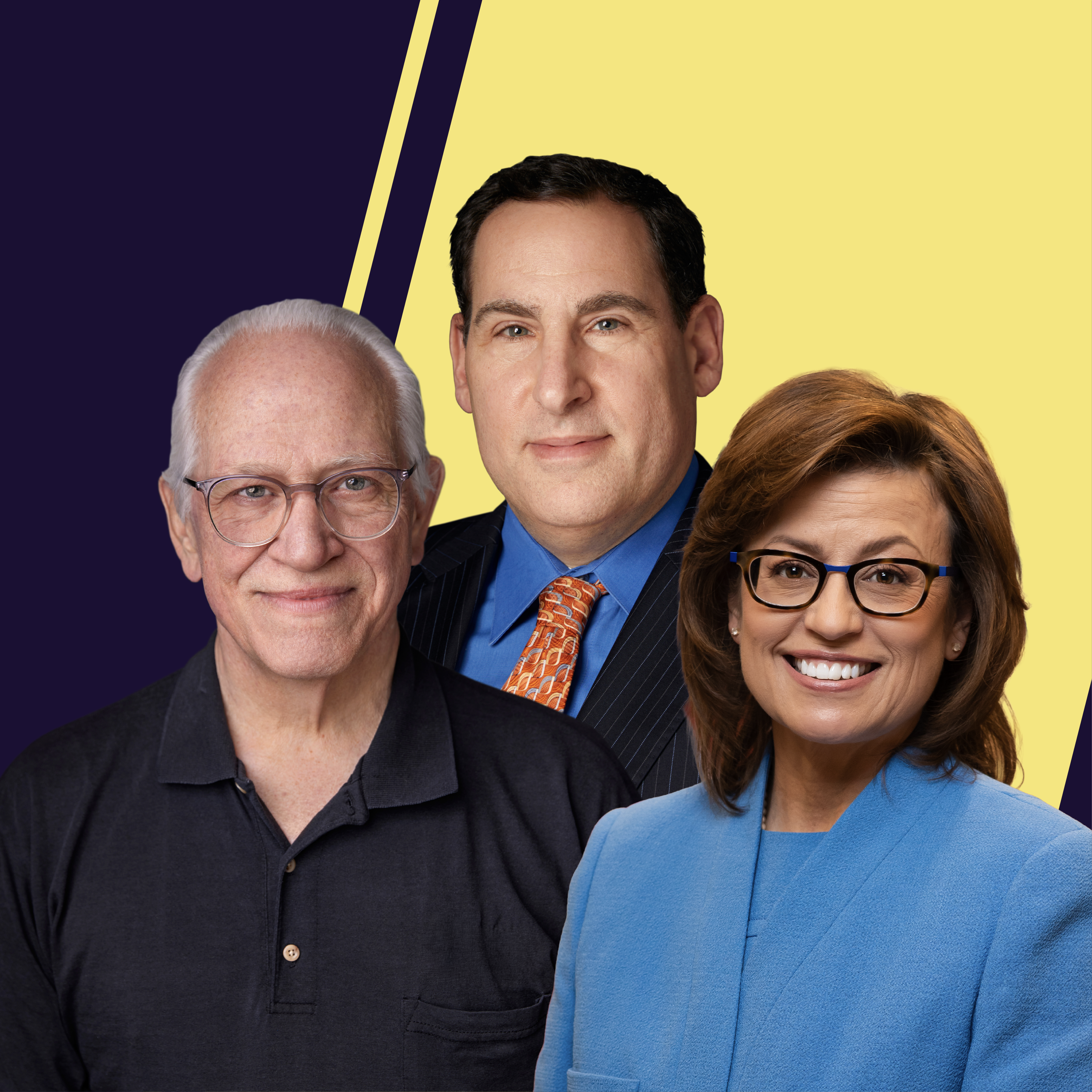
So to Speak: The Free Speech Podcast
Ep. 254: What is going on with the FCC?
00:48:04
What is the Federal Communications Commission, and why does its chairman think the agency can regulate Jimmy Kimmel’s jokes? Note: Shortly after recording this episode, Nexstar and Sinclair announced they would return “Jimmy Kimmel Live!” to...
Loading summary
Transcript149 lines
- [00:01]
A
Somewhere I read of the freedom of speech.
- [00:04]
B
You're listening to so to Speak, the free speech podcast brought to you by fire, the foundation for individual rights and expression. All right. Welcome back to so to Speak, the free speech podcast, where every other week we take an uncensored look at the world of free expression through the law, philosophy, and stories that define your right to free speech. I am, as always, your host, Nico Perino. So it's been a very busy two weeks for us here at fire, and consequently for Free speech in America. As our listeners will know, it began with the assassination of Charlie Kirk on a college campus, and then that inevitably shifted to an effort to punish people who said insensitive things about the assassination, sometimes at the government's behest. If you're a free speech advocate like we are, you know, this happens after every tragedy, whether it's 9, 11, October 7, the death of Queen Elizabeth, or even Rush Limbaugh. As my colleague Adam Goldstein said on our website, this is the, quote, cancel culture part of the tragedy cycle. But that's not where it ended. It continued. It wasn't long until America's top law enforcement officer, Attorney General Pam Bondi, said the DoJ would target people who espoused hate speech, which listeners of this show should know is is not a category of speech exempted from the First Amendment's protection. And then President Trump doubled down on Bondi's comments, suggesting she should investigate the television network ABC for hate speech. And then, of course, there was the Jimmy Kimmel fiasco. So on September 15, Jimmy Kimmel said in the opening monologue to his show, we hit some new lows over the.
- [01:42]
A
Weekend with the MAGA gang desperately trying to characterize the this kid who murdered Charlie Kirk is anything other than one of them and doing everything they can to score political points from it.
- [01:53]
B
Brendan Carr then went on conservative commentator Benny Johnson's show. Two days later at 1:01pm our colleague Tyler Tone timestamped it for us.
- [02:03]
C
Frankly, when you see stuff like this, I mean, look, we can do this the easy way or the hard way. These companies can find ways to change conduct to take action, frankly, on Kimmel or, you know, there's going to be additional work for the FCC ahead. It's, it's really sort of past time that a lot of these licensed broadcasters themselves push back on Comcast and Disney and say, listen, we are going to preempt. We are not going to run Kimmel anymore until you straighten this out. Because we, we licensed broadcaster, are running the possibility of fines or License revocation from the fcc. If we continue to run content that ends up being a pattern of news distortion.
- [02:44]
B
Now, as we know hours later, ABC broadcast affiliate nexstar, which has an acquisition deal before the FCC announced it would do exactly what Carr recommended and preempt Kimmel show. Minutes after nextstar's announcement, Disney announced it was pulling Kimmel's show. And then Sinclair, another network affiliate, made its preemption announcement less than a half an hour later. And between Nexstar and Sinclair, they account for somewhere around 23% of of ABC affiliates nationwide. Carr then went on to say, I want to thank nexstar for doing the right thing. I hope that other broadcasters follow Nexstar's lead. Then Kimmel returns to the air on September 23rd and Trump condemns this, accusing ABC of making a, quote, major illegal campaign contribution, close quote. By returning Kimmel to the air, he said, I think we're going to test ABC on this. Let's see how we do. Last time I went after them, they gave me $16 million. This one sounds even more lucrative. A true bunch of losers. He continued, let Jimmy Kimmel rot in his bad ratings. So it's a lot. But today I want to take a step back and not necessarily talk about the nitty gritty of the Kimmel situation per se that's been covered elsewhere, including by us. But rather I want to take a broader look at the FCC and its authority to regulate broadcast communications and how those authorities may or may not apply to the Kimmel situation. Call it an FCC explainer if you will. And who better to do this with than Anna Gomez, who is an FCC Commissioner since September 2023. She has 30 years of experience in domestic and international communications, law and policy. Anna, welcome onto the show.
- [04:24]
D
Oh, thank you for having me.
- [04:25]
B
And then of course we also have Ronnie London fire general counsel. Ronnie, welcome back onto the show.
- [04:32]
E
Thanks, Nico.
- [04:32]
B
And Bob Korn Revere fires chief counsel who also happened to serve as legal advisor and later chief counsel to a Federal Communications Commission chairman. Bob, welcome onto the show.
- [04:45]
A
Nico, always glad to be here.
- [04:46]
B
So let's start with the basics. Anna, I want to turn to you. What is the Federal Communications Commission?
- [04:52]
D
Well, the Federal Communications Commission is the nation's communications regulator. What do we do? We besides regulating broadcasters, which really means we provide them the spectrum that they need in order to broadcast and then have some rules around that. We also ensure that everyone across the United States is connected to telecommunications. We license satellites and space systems commercial.
- [05:22]
B
So like SpaceX's satellites, for example, would.
- [05:24]
D
That be you as yes, SpaceX and Amazon Kuiper, for example. We also field complaints from consumers and help solve them. We try to address telecommunications fraud issues, for example, through robocalls and robotexts. And we ensure that public safety has what it needs from a communications perspective in order to serve their communities and that communities have the information that they need in order to respond to emergencies. And finally, we participate internationally to get the spectrum that this country needs for all of the new and innovative services and its existing services through international fora. So we have kind of a boring portfolio.
- [06:13]
B
Doesn't seem like that right now, does it? But two clarifying questions for our listeners. Right. You said it is the nation's communications regulator. You're not regulating this conversation though, right? It's certain communications.
- [06:25]
D
Yeah. When I'm talking about communications, I'm talking about the mode of communications, whether it's your cell phones or your satellite phones or your televisions mode of communications.
- [06:38]
B
Okay, so and this is like that uses a spectrum also if we're talking about broadcast communications. So cable television wouldn't be within your guys's purview.
- [06:47]
D
We regulate more from a technical perspective, some of cable, but definitely not content.
- [06:54]
B
During the Kimmel situation, everyone was kind of looking at the FCC's website or maybe just looking at X and saying look at the FCC has authority to do this and that. And this is why they can go after Disney or the network affiliates like they nexstar and Sinclair. They say there are certain conditions if you're going to receive access to the spectrum that you must abide by if you are going to have that spectrum license. Bob, what's like the general framework for regulating the spectrum? Like what? What do these broadcasters have to abide by?
- [07:33]
A
Well, first of all, it's a general mandate. The public interest standard is part of the Communications act, has been since 1934 or 1927 if you go back to the radio. And basically it says that those who receive federal licenses are required to provide service to the public. Now within that there are very limited ways in which the federal government can regulate content. And that's been recognized from the beginning. The public interest standard isn't this blank check that regulators can use to go after content they don't like. And so what has been conflated in all of this discussion since the Kimmel incident, and before then too, but especially since then, is that somehow people believe that the FCC's mandate empowers it somehow to be the nation's speech police. And it was never designed to be.
- [08:25]
B
But it can police some speech, right? Like, for example, we know pornography is protected by the First Amendment. Can an ABC affiliate, for example, broadcast porn? Or we know the Pacifica case, right. George Carlin, Seven Dirty Words. So I'm going on social media and people are like, oh, the First Amendment applies to broadcast communications. What about pornography? What about George Carlin's Seven Dirty Words? So how do we think about that?
- [08:47]
A
Well, that's right. Even that is limited, though, right? Because there's a general First Amendment protection for sexually oriented speech until it crosses the obscenity line. But indecency is a specialized category that applies to broadcasting, but not to other media. But even that is limited. And the Supreme Court recognized that. In the Pacifica case, which involved George Cloud and Seven Dirty Words, it said that the FCC cannot ban these words. It can only channel them to later at night. And what is defined as indecency is also. Well, it's supposed to be very narrow. The FCC has a checkered history on that, as I could go into in some detail, but won't. And those limited areas of regulation are not as expansive as everyone. The Twitter mobs are saying. Certainly not. And not as expansive as the current chairman of the FCC is saying.
- [09:41]
B
This concept, Ronnie, of indecency. Ira Glasser, who used to run the aclu, somewhat of a mentor of mine, when I was talking to him about the efforts to regulate the Internet in the 1990s, which the ACLU was kind of leading on, had this line. He said, early law is like cement. If you let it sit to law, it hardens. And my understanding is they tried to apply these indecency standards to the Internet.
- [10:05]
A
That's exactly.
- [10:06]
B
And said that you can't. So how does it get that you can regulate indecency on broadcast communication? And it's like the only mode of communications where this is an exception to the First Amendment putting obscenity to the side.
- [10:16]
E
Well, let's be clear. Let's not treat the Internet as something special in that regard. They tried to regulate indecency on the phone line, style of porn. Supreme Court held it was unconstitutional. Tried to regulate indecency on cable. Supreme Court held it was unconstitutional. Next thing that came around was the Internet tried to regulate it there. Supreme Court held it was unconstitutional. And that's the thing to remember, that indecency is fully protected speech. And the thing about the broadcast medium is that, as Anna said, you have a license to use public airwaves. There have been, I would say, varying rationales for why there can be content controls on broadcasting. At some point, it was the scarcity rationale. At another point, it was the scarcity rationale.
- [11:02]
B
This is the rationale that there's limited spectrum.
- [11:04]
E
Right. Okay. Another was it comes unbidden into your home as if you're picking it up on your fillings and you don't have to buy a TV or a radio and tune into a given station. But put that aside. Another one is you're using a public good, and therefore you take on certain obligations in using the public good. Whatever you think of those various rationales, they are certainly unique to broadcasting. And that's how you get certain content regulations. And it's not just in decency regulations. There are other obligations, equal time. At one point, the Fairness Doctrine. That never would have.
- [11:34]
B
We'll get into those.
- [11:35]
E
Yeah, but they never would have flown on any other medium. And the Supreme Court has actually held in cases like Tornillo that, you know, the things that you might require broadcasters, you can't require another medium.
- [11:46]
B
So, Bob, you brought up this public interest standard, and this is something that Brendan Carr brought up also. He said, I want to thank nexstar for doing the right thing. Local broadcasters have an obligation to serve the public interest. While this may be an unprecedented decision, it is important for broadcasters to push back on Disney programming that they determine falls short of community values. I hope that other broadcasters follow nextstar's lead. Anna, this idea of representing the community, these affiliates, how does that intertwine with this public interest standard?
- [12:19]
D
It doesn't. I mean, it doesn't. It doesn't. So we have what I call three pillars of our broadcast policy. Localism, which is serving your community, but it doesn't mean censoring content to serve the public interest. Competition and diversity of viewpoints. And I agree with Bob when he says the public interest is not some flexible thing where we can just say, well, I don't like that content. And so therefore, it's against the public interest for us to show it or send it to listeners. And so I think this misuse of the public interest standard is really kind of a misdirection and an excuse to be able to stop certain types of content. And that's what we keep saying, and it's really problematic. The one thing that you said that I don't agree with you is there is no exception to the First Amendment.
- [13:25]
B
I said exemption when we were talking about hate speech.
- [13:30]
D
Now we're getting to our public interest exception to the First Amendment for licensed broadcasters. Now, there are some regulations that have been found constitutional. For example, for the Protection of children. But it's not a general exception that the First Amendment doesn't apply because we have a public interest standard in the Communications Act. That's not how it works.
- [13:50]
E
Yeah, I mean, we've talked before in other podcasts about the idea of unprotected speech versus regulable speech. Just because speech that doesn't fall into a category of unprotected speech can be restricted or prohibited in circumstances doesn't turn it into unprotected speech. It just means that the government has met the relevant standard. Applicable, usually strict scrutiny if it's content based, but they've met the relevant standard in order to regulate it in that circumstance, but it's still protected speech.
- [14:16]
B
Got it, got it. Okay, so that's the public interest standard.
- [14:20]
A
Right.
- [14:21]
B
What about this Fairness Doctrine idea? Equal time opportunity. So President Trump said that Jimmy Kimmel and all these late night hosts, for example, pretty much only have liberals or Democrats on as guests. They're all kind of of the same political persuasion. And his suggestion, at least from his true social post, is that therefore they're pretty much in the bag for the Democratic National Committee. They're partisans. And I guess then they're in violation, presumably of equal time opportunity rule. He used the word illegal campaign contribution. But, like, what's the responsibility here of broadcasters? Here's the problem.
- [14:59]
A
All you're hearing from either the President or Vice President Vance or from Chairman Carr is sort of a mashup of various concepts that don't add up to anything. The public interest standard was really drawn from railroad regulation when it was adopted in the Communications Act. And that was because they wanted to have some standard for line extensions for railroads. And so they simply borrowed that standard. It's an umbrella standard. And then it's operationalized through various rules, some of which you've just mentioned, to regulate content. But again, the public interest standard has always been interpreted by the courts as requiring a sensitivity to First Amendment values. Section 326 of the Communications act specifically deprives the FCC of any power of censorship. And so when you see from time to time various policies that touch on content, whether it's the Fairness Doctrine, we can talk more about that, or the news distortion policy, which really, for all intents and purposes doesn't exist until recently, then all of those have to be applied very narrowly, very carefully, and it's not just some random tweet that the Chairman gets to put out there what he would prefer broadcasters to air on their stations.
- [16:16]
B
But hold on, let me just clarify something. You said it, the Communications act itself prohibits censorship. But we already said that there are certain compelling interests here in this context or the irony where they can censor. I mean, let's not pretend that they can't, at least based on current case law and some of these rules that we're discussing. Right. It's just, how do you draw those lines and why are they so unique to broadcast?
- [16:39]
A
Well, but the examples in history are really the exceptions rather than the rule. The rule is no censorship as part of the overall public interest mandates.
- [16:49]
B
So we start from that premise.
- [16:50]
A
You start from that premise, and then you look at particular policies. You mentioned indecency. And again, you cannot prohibit speech. You can simply, you can require it, if it falls into that category, to be at certain times of the broadcast day. But the general rule still is no censorship. And then there are certain policies, and we can talk about them individually if you'd like. Whether it was the Fairness Doctrine, which was repealed in 1987.
- [17:13]
B
What is the Fairness Doctrine?
- [17:14]
A
The Fairness Doctrine was an obligation that was articulated by the commission in 1946 that required broadcasters to air reports on controversial issues of public importance and to do so in a balanced way. It existed between 1946 until the mid-1980s, when a principled Republican chairman of the FCC, Mark Fowler, decided that it was in conflict with the First Amendment and set the Commission on a path toward repealing it. It took several years to do it, but they did. All of these other policies that come from that, like the news distortion policy, are simply vestiges and holdovers that don't justify the kinds of regulation that it's being presented as.
- [17:56]
B
Well, let me. Hold on. So is there a difference between the Fairness Doctrine and then this? Equal time and opportunity?
- [18:01]
A
Yes, that's part of the communications Act. Section 315 of the act requires that if broadcasters are going to have candidates for public office on that they.
- [18:11]
B
And it's just candidates for public office. Okay.
- [18:13]
A
Yes. Which is one of the reasons why I said this is a mash up. The way these things, these concepts are being thrown around. It only applies to candidates for public office. If a station allows a use by a candidate, then it's required to allow the opportunity for equivalent time. Equal time is a sort of a misnomer. But.
- [18:32]
B
But opportunity. So is that. That's, that's what came up when Kamala Harris went on snl.
- [18:37]
A
That's right.
- [18:37]
B
Right. And then they made good on that by giving Trump free ad space. It was like a NASCAR event during a NASCAR event. Right.
- [18:42]
A
So there was never a Violation of the rule. There was simply an allegation that the rule had been violated. The complaint was properly dismissed and then brought back from the grave by Chairman Carr as one of his first acts upon becoming chairman.
- [18:55]
E
And to be clear, it generally involves having to have an actual appearance of the candidate on the programming. Right.
- [19:02]
B
And that would have happened during snl.
- [19:04]
E
Yes. And the commission has always maintained some fairly broad exceptions to the rule for things like news broadcasting, documentaries and things like that, which talk shows even like, not to denigrate it, but even like Jimmy Kimmel would fall under, typically the biography series on A and E. I mean they were very, very solicitous towards making sure that being able to talk about candidates and to show the candidates while you're talking about them, if you're talking about them for commentary purposes, isn't going to automatically trigger an opportunity for the candidate to say, okay, I get this amount of time, you know, at the same. At roughly the same time on an equivalent broadcast.
- [19:44]
A
Right. So even a show like the Howard Stern show is considered to be an exempt news interview under that policy. Under that section of the app.
- [19:52]
B
Anna, just some nitty gritty on how the FCC actually works. Right. There needs to be a complaint for the FCC to take action, Is that correct?
- [20:01]
D
No, we can self initiate complaints.
- [20:04]
B
Okay.
- [20:04]
D
But we do respond to complaints because.
- [20:07]
B
Some of these complaints around like the Kamala Harris interview, what was that? Was that cbs? That was filed by the center for your Rights. Yes. Okay, but. But you guys can self initiate complaints as well?
- [20:21]
D
Yes, we can. But we do have a complaint. And I think it's very important also to note, by the way, with the equal time rule, that the candidate that wants to take advantage of the equal time rule actually has to ask for that equal time.
- [20:35]
B
Interesting.
- [20:35]
D
Unlike the fairness doctrine where the broadcaster is the one that has to ensure that it presents all sides of the issues and that used to lead to having both sides represented and reminds me of SNL skits back in the day. They have to ask for it. And one of the reasons why it's so ridiculous that the FCC reinitiated the investigation on the SNL skit is as you noted, NBC gave the equivalent time and it wasn't just nascar. It was two programs that they gave. And I can't remember what the other one was. So they went overboard to make sure that they addressed that. But when they complain about this, it's because they just want to complain about bias. Bias in this administration means anyone we don't agree with getting any kind of coverage I call it Viewpoints.
- [21:30]
B
Well, so is it the networks themselves that you're taking action against? So is it abc, is it NBC, is it cbs? Or is it these local affiliates that are run or owned by nexstar and Sinclair?
- [21:42]
D
That's exactly the right question to ask because we don't regulate the networks. Our regulations stem from the licensing of the local broadcast stations.
- [21:52]
B
So these are the people who own.
- [21:53]
D
The spectrum, Whether they are owned. Yes. Whether they're owned by nexstar or Sinclair or wholly owned affiliates of the networks, we only regulate. And that's really important, particularly when you're talking about the news distortion rule, because it is such a limited. It's not a rule, sorry, the news distortion policy, it is very limited. You have to show intentionality to mislead or distort the news by the licensee. And it's really the leadership of the licensee. It is very difficult to show news distortion for a good reason. So every time we get thrown out that something is a violation of the news distortion rule, I cringe a little because it does not really meet the standard for news distortion.
- [22:43]
B
I was struck by an exchange that I saw on CNN between Brad Todd and Abby Phillips. We're gonna play it here now. I mean, why does he have to.
- [22:53]
E
Why does it have to be like equal opportunity for jokes?
- [22:57]
B
I mean, why can't he just tell.
- [22:58]
E
Whatever jokes he wants to talk? Well, he can say whatever he wants, but the stations that carry him operate with a public interest obligation. They only get to hold those frequencies if they're working in the public interest. Their news programs on those stations have to give equal time to both sides.
- [23:12]
B
So this kind of summarizes the two topics that we've talked about, public interest and equal time. I'm assuming from what I've heard Brad Todd is wrong.
- [23:21]
A
There's no way to start. There's nothing about what he said that was right. Even the punctuation is wrong. I mean, to say that there has to be some kind of equal time or fairness doctrine for jokes is, on its face absurd. And you saw that in Brendon Carr's comment in the Benny Johnson clip where he says that the local stations have to decide whether or not this is in the public interest because this could be news distortion. I'm sorry, late night monologues have nothing to do with news distortion. They're not News. And the FCC's regulations simply don't extend to them. And their policies have nothing to do with them. Which is why I say that this is all being presented as just sort of a mashup of concepts as if they've been thrown into a blender and then spit out as some sort of justification to use federal clout to put pressure on the networks.
- [24:11]
B
So. Yep, go ahead, Ronnie.
- [24:13]
E
I mean, and it's particularly important, I think especially now to pay attention to what is specifically provided for in the Communications act by statute and what's a rule and what's a policy. I mean, on some levels you have to feel a little bit of sympathy for Chairman Carr, cuz he's kind of like the kid who showed up at the party after all the beer was gone, right? I mean he's the first chairman post Loper bright, right? There's no more agency deference anymore. So now he doesn't have the benefit of all his previous chairman of getting some degree of deference in the courts. The courts are gonna look to the statute specifically to see what the statute allows. And P.S. in the statute it says in section 326, the Commission shall have no power of censorship over broadcast programming and can't regulate broadcast programming other than a specifically provided for in the act. So it'll be interesting to see the first FCC case that gets up to a circuit court that involves broadcast or any other programming for that matter and what the courts do with that.
- [25:14]
B
I want to turn now to another kind of confusing regulation rule guidance. I don't know ethereal, I don't know what it is, but there was something being thrown around on social media in the wake of the Kimmel stuff about a broadcast hoax rule. And I want to read some of what people were throwing around. It says the Commission's prohibition against the broadcast of hoaxes is set forth at section 73.1217 of the Commission's rules. And then, you know, 47 CFR 73.1217. This rule prohibits broadcast licensees or permittees from broadcasting false information concerning a crime or a catastrophe. If 1 the licensee knows this information is false, 2 it is foreseeable that the broadcast of the information will cause substantial public harm and 3 broadcast of the information does in fact directly cause substantial public harm, continues any programming accompanied by a disclaimer will be presumed not to pose foreseeable harm if the disclaimer clearly characterizes the program as a fiction and is presented in a way that is reasonable under the circumstances. And for purposes of this rule, quote, public harm must begin immediately and cause direct and actual damage to property or to the health or safety of the general public or diversion of law enforcement or other public health and safety authorities from their duties. This is what people were saying. Jimmy Kimmel's joke implicated.
- [26:39]
A
I mean, I either want to just laugh or for my head to explode. This has absolutely nothing to do with a late night monologue. This is one of those holdovers, as you mentioned. If you let bad ideas start on long enough, they're like concrete and they harden. This is something that was a vestige of the 1938 War of the Worlds broadcast from Orson Welles, where a lot of people panicked over a fictional newscast style that was.
- [27:09]
B
An alien invasion. Right.
- [27:11]
A
An alien invasion based on H.G. wells book, but updated for radio and done on Halloween night. And so some people took it as real and panicked. And so naturally, the FCC adopted a rule. It's been used.
- [27:26]
B
It was decades later, I think.
- [27:28]
A
Yeah. But eventually it was used as the inspiration for that. And it was. It's maybe been applied once or twice. It's kind of like a Bigfoot sighting to see whether or not this applies. And it has absolutely nothing to do with any of these current events.
- [27:42]
E
The attempt to use that language in the current circumstance is in some ways kind of this outgrowth that we've seen on college campuses for years. Here at fire, where you have these speech codes and they talk about harm or the health. Here it's the health or safety of the general public. And that gets bastardized into having your feelings hurt by a viewpoint that you don't like. I mean, that's really kind of what's going on here in revoking the rule, because as Bob says, if you read it and as you just read it, there's no way it begins to apply to anything like this.
- [28:12]
B
Well, yeah, I'm reading it, and it seems to essentially articulate a Brandenburg standard, more or less pretty much, which is the exception to the First Amendment for incitement to imminent lawless action. It must begin immediately and cause direct and actual damage to property or to the health or safety of the general public.
- [28:27]
A
Well, yeah, and part of this is that so much of this discourse is taking place in, you know, social media exchanges. And so you get a word that's taken from a policy and you throw it in with whatever your attitude is, and that's how this debate is proceeding. There's no actual rigor or nuance to any of this discussion about what the actual law is.
- [28:51]
B
Okay, so that's the broadcast hoax rule we've mentioned a few times. News distortion. Brendan Carr said at the Concordia summit in New York on the 22nd, I think this is after or just before Jimmy Kimmel went back on the air, he said, what I spoke about last.
- [29:08]
C
Week was that when concerns are raised about news distortion, there's a way, there's an easy way for parties to address that and work that out. And in the main, that takes place between local television stations that are licensed by the FCC and what we call national programmers like Disney. They work that out, and there doesn't need to be any involvement of the fcc. Now, if they don't, there's a way that's not as easy, which is someone can file a complaint at the fcc, and then the fcc, by law, as set up by Congress, has to adjudicate that complaint. And what I've been very clear in the context of the Kimmel episode is the FCC and myself in particular have expressed no view on the ultimate merits.
- [29:48]
B
Anna, what is the news distortion rule, or is it a rule at all? I'm very confused about what's a rule, what's guidance, what's not, what's.
- [29:56]
D
You know, it's a policy.
- [29:57]
B
It's a policy.
- [29:58]
D
Okay, it's a policy. But I have to admit, I slip into calling it the news distortion rule because that's just what people call it.
- [30:04]
B
Colloquial.
- [30:04]
D
Yeah, colloquially, it's colloquial, Yes. I don't remember the exact language of what the FCC rules say, but as I said, it involves, first of all, a matter of. I can't remember the exact phrasing, a significant news event and the deliberate distortion of a matter of a significant news event by. And this I'm paraphrasing because I don't remember the exact language by the management of the broadcaster, the station that is licensed.
- [30:44]
A
It's a policy that emerged in the late 1960s and early 1970s, and it was adopted in response to coverage of the 1968 Democratic National Convention Convention. It was essentially articulated as something of a corollary of the Fairness Doctrine. But even then, the fcc, at the height of its regulatory powers in this area, when it was articulating the rules, said, this is not to give us supervision over the news. The most liberal FCC commissioner who has ever sat in that agency, Nicholas Johnson, was on the commission at that time, along with one of the more conservative FCC chairmans in history, Dean Burch, who had been chairman of the Republican National Committee. The two men hated each other, but there was one thing they agreed on, and it said, you cannot use this policy to police whether or not newscasters are editing their shows in the right way. Precisely the kind of misuse of the news distortion policy that this FCC did with 60 Minutes and, and which is being used as sort of a club hanging over broadcasters heads, even over talk show monologues. It's absurd.
- [31:57]
B
And it seems as though under the first Trump administration the FCC understood this. Now, there was a complaint from Free Press. I believe looking at the letter here, the complaint was with regard to the public interest authority and broadcast hoaxes, but it seems to suggest that there was some sort of distortion or false speech around COVID 19. And in the response letter, the FCC said, at best the petition rests on a fundamental misunderstanding of the commission's limited role in regulating broadcast journalism. And at worst, the petition is a brazen attempt to pressure broadcasters to squelch their coverage of a president the Free Press dislikes and silence other commentators with whom Free Press disagrees. Free Press asserts that the commission, quote, has a duty to rein in broadcasters that seed confusion with lies and disinformation. Close quote. But the commission does not and cannot, it continues and will not act as a self appointed free roving arbiter of truth in journalism. That seems to be pretty definitive on how you look at this stuff. And now I know it mixes broadcast, hoax and news, but it all seems to be kind of a one piece.
- [33:11]
A
But it's definitive and it's exactly right. And you know, shame on Free Press for having filed that.
- [33:18]
B
I don't know who this isn't like Barry Weiss is the Free Press. This is something different.
- [33:21]
A
No, no, no, this is something different. They're an advocacy organization. But it's the one thing that Brendan Carr has said that makes sense in a way when he says, I'm just doing what Democrats did, I'm just doing what others who advocated for the public interest to be used in this way to use it. Now in this context. The problem is at the time Commissioner Carr condemned petitions like that one and complaints like that one saying they were a violation of the First Amendment. So at best he's merely a hypocrite, and at worst, he has simply chosen to violate his oath of office to uphold the law and the Constitution.
- [34:03]
E
So you know, at the time they adopted the policy, this is what the commission said. In this democracy, no government agency can authenticate the news or should it try to. We will therefore eschew the censor's role, including efforts to establish news distortions in situations where government intervention would constitute a worse danger than the possible rigging itself that's upon the policy's adoption. Okay, now currently it still says right now if you go to the FCC's webpage on news. It says its authority to take action on the accuracy or bias of news stations, network stations, reporters or commentators and how they cover the events is narrow. The FCC is prohibited by law from engaging in censorship or infringing on First Amendment rights of the press, which include, but are not limited to, a broadcaster's presentation of news or commentary. That seems pretty straightforward to me at the beginning and now.
- [34:56]
A
And by the way, even that narrow authority rested on the premises that existed under the Fairness Doctrine. It's an offshoot of that. And the Fairness Doctrine hasn't existed in decades.
- [35:08]
B
To Brendan Carr's comments at the Concordia Summit, he said he has expressed no view on the ultimate merits of some of the claims that have been made. It's kind of hard to believe because it seemed like he was celebrating posting memes on social media.
- [35:22]
A
It's not that. Not just hard to believe. It's impossible to believe. It's like the old Groucho Marx line, who are you going to believe, me or your own two eyes?
- [35:32]
B
Let's close here by talking about the role of affiliates and the role of networks. So as of this recording, it might change. Sinclair and nexstar are preempting. I think that's industry lingo for not showing Jimmy Kimmel's broadcast every night. I saw somewhere that they can't do this for long because often in the contractual relationships between affiliates and networks, you can only preempt so many times, and it only allows for preemption because there's maybe some sort of significant news breaking and you. So you want to cut into the news, or maybe there's like, I don't know, state funeral or something, I don't know. But this sort of ongoing saying, we're just not going to show this programming because we don't like it ideologically that. Anna, is that something that is usually foreclosed by these contracts?
- [36:23]
D
Yes. This is a private contractual matter now.
- [36:26]
B
Yes.
- [36:27]
D
You know, and I want to make that clear, because forced speech is also censorship. So the FCC can't tell Sinclair and nexstar that they have to carry this content. So, yes, it is a matter of their contracts with Disney.
- [36:40]
B
But I don't think people, a lot of people understand that perhaps in these contracts, these, these agreements exist. And so I think most in the general public, I think nexstar and Sinclair will just continue to not show Kimmel indefinitely until the network does something about that. But then they potentially risk losing, like, football broadcasts. Right. Like, it opens up some possibilities for these networks to Maybe give the life, give the affiliate, like a different affiliate, I don't know, access to the programming.
- [37:10]
A
Well, it does open up some possibilities. I mean, there's a reason why local stations can affiliate with networks. That's where the programming is. That's where the attractive programming is. It's what makes their stations more valuable. And so a decision to preempt broadcasting or preempt a particular show is something they have a limited right to do. And it's, as Anna points out, it is enshrined in the contracts between affiliates and the networks. But how long do you think a local station is going to want to put on Family Feud instead of, you know, for example, the Kimmel show or something else? They are going to, in the longer term, lose money. And preemptions like this have been specialized, isolated events in the past. So, for example, in earlier years, there were some Southern stations, Southern affiliates that would not run network shows that had, say, black characters. And they would say that we're serving the needs of our local community. Or, for example, in 19 or 2004 or 5, I'm trying to remember which Sinclair preempted Nightline because it had a show where they were reading the slain veterans in the Gulf War. And Sinclair didn't want to do that for those Nightline broadcasts. But this is a blanket preemption saying, we don't like this show because of things that he said. And that is extremely unusual.
- [38:31]
E
Yeah, I seem to remember when NYPD Blue premiered, there were a handful of ABC affiliates that objected to the first bare butt on broadcast television and they refused to carry the show. And I think that lasted like, what, a couple of episodes?
- [38:47]
A
Yeah, something like that. I think it was three Texas stations or something like that.
- [38:51]
D
When we talk about local broadcasters, we're not talking about mom and pop shops that are really run by their local communities, that we have corporate behemoths that own them. And what you are seeing is they're imposing their values on these local broadcasters, which is their right. But that is why diversity of viewpoints is one of our goals. And that's why we have this danger of further consolidation. Because what you will have is the imposition of one point of view on stations that are owned by these broadcasters or broadcasting behemoths.
- [39:32]
B
Well, that's a really interesting point, because when we learned that nexstar and Sinclair were going to continue to preempt when Jimmy Kimmel came back on, I asked Ronnie. I was like, oh, well, you know, let's watch Kimmel tonight. And then, then we were like, wait, is Nextar and Sinclair, like, do they own the D.C. area affiliate? And Ronnie goes to WJLA. They do. And it's hard to believe, given the way this community votes, that they're representing the community values by not broadcasting Kimmel.
- [40:04]
E
You know where I ultimately had to watch the monologue on crack.com the next morning. That's what it's come to.
- [40:10]
D
I don't know what that is.
- [40:11]
E
Remember Mad magazine?
- [40:12]
D
Yeah.
- [40:13]
A
Oh, yeah.
- [40:13]
E
Cracked was the poor man's Mad magazine.
- [40:15]
A
This was the knockoff version of Mad.
- [40:16]
E
Right. And it went off and it stopped in print a long time ago. Once the Internet came on it, it just exists as a website. That's where I saw the amalgama.
- [40:23]
B
You talk about their corporate behemoths, Right. One of the things that's floating in the background here is my understanding that nexstar is asking for an acquisition that would give it more than like, what.
- [40:34]
A
39% up to 80% of reaching US households.
- [40:39]
B
US households, which the current Commission rules, if I understand correctly, wasn't allowed for. So they're asking for an exemption here.
- [40:46]
A
Right.
- [40:46]
B
This would be a huge behemoth.
- [40:48]
A
And the commission's going to begin to address this next week in the quadrennial review of the FCC's ownership rules. But again, it is an indication of the kinds of regulatory leverage that the FCC has over these kinds of business judgments. So when the FCC chairman talks about what kinds of affiliate choices he would like to see, then those who are beholden to the FCC tend to listen.
- [41:16]
B
So I want to talk about what's next here, kind of wrap up. There are three points I want to hit. One, you kind of brought up, Anna, I know there are some congressional inquiries into some of these affiliates. Does that raise compelled speech concerns with you as well, that they're looking into this? They're trying to put pressure on these affiliates, maybe to bring Kimmel back.
- [41:35]
D
Well, so I often hear that, well, they do it, too. So therefore I should, I guess, commit the wrong also. And I see what Congress does as oversight. They don't have the regulatory authority to pull a license or to try to find them. So you can say that that pressure is inappropriate. And in fact, maybe you guys are the First Amendment experts. It may be more important to ask you guys.
- [42:06]
B
Well, the congressional oversight question's interesting, right? From a First Amendment perspective, because you have jawboning, which I want to talk about next. Yes, but you also. The purpose of Congress is to provide oversight. So where's that line between the two.
- [42:17]
A
Well, it is to provide oversight, but it's oversight of the government operation of the agency. And so I think the appropriate role for oversight is to find out what the hell Brendan Carr thinks he's up to when he thinks he can threaten broadcast stations and find out what communications he has initiated and he has had with various industry players. That's the proper function of oversight.
- [42:40]
E
Yeah, I mean, you know, the idea that they should bring ABC in to ask them what made you make the decision you made, what were your communications with the commissioners like the. Ask the commission. You guys hold their purse strings and their statutory authority.
- [42:52]
A
That's like saying to abc, you should have known better than to wear that short skirt.
- [42:56]
B
Well, Ronnie, on the jawboning question, so this is the idea that the government kind of says, you have to do this or else, or we can do this the easy way or the hard way. To put it another way, what sort of First Amendment implications stem from perhaps what Brendan Carr had said just before nextstar pulled or preempted Kimmel and then Disney pulled the broadcast?
- [43:20]
E
Yeah, no, if only we had a recent Supreme Court case that dealt with exactly this kind of scenario.
- [43:26]
B
And if only it was nine. Oh, so it was just clear this is what the law was.
- [43:29]
E
I mean, so. So NRA Vullo, the Supreme Court held that New York's Insurance and Financial Services Commissioner, by leaning on insurance companies that did business with the NRA because she didn't like the NRA's pro gun message, would violate the First Amendment under bantam Books and its progeny. I mean, this is almost a direct recasting of that. Right. You've got Brendan Carr in the Vulo role, you've got ABC in the insurer's role, and you've got Jimmy Kimmel in the NRA's role. And you've got the regulator who doesn't like what the nra, the speaker, Jimmy Kimmel is speaking. So you lean on someone who they do business with in order to get them silenced. I mean, I don't know if it could be clearer.
- [44:16]
B
Last question here before we wrap up. So I read a headline from Pirate Wires, which is this kind of tech online publication, and the headline read, broadcast TV is obsolete. Let's auction the public airwaves.
- [44:31]
E
Which justice asked us that at the indecency.
- [44:33]
A
Alito.
- [44:34]
E
Alito, yes.
- [44:35]
A
Basically, why do I have to decide this? Why can't we wait until this industry dies? I mean, there's a reason why the framers of the Constitution basically didn't want a licensed press because they saw what had happened in Britain under that, that regime. And so with broadcasting, because it was a new technology, we decided to try and ignore what the framers said and say, let's have put the government in charge of this. What could possibly go wrong? Well, a lot, as it turns out. And that could be the subject of a whole nother podcast. But if you do provide for ownership of spectrum, then you would avoid these problems.
- [45:11]
B
I don't know, Anna, if I want to put you on the spot or if you're willing to talk. I mean, what is your perspective on that question?
- [45:16]
D
I think that over the air broadcasting still serves a very important public interest. I'm sorry to say that, uh. Oh, but no, there's plenty of parts of this country that actually don't have broadband access, for example, and they can't get streaming or cable. And they really do rely on broadcasting. A lot of them rely on public broadcasting, which we have not talked about. The fact that this administration seems intent on shutting that down as well. And it's really important during times of emergencies that people can get access to information so that they can know what to do in case there is, for example, a tsunami that's going to hit Hawaii. Possibly it didn't happen, but it was the public broadcaster that gave people information they needed to know to go to higher, higher ground.
- [46:06]
B
It's funny you say that. I recently bought one of those crank radios. So if you don't have electricity in times of emergency, I could still get the emergency communications over the radio.
- [46:14]
A
But Anna made exactly the right point. The entire purpose of the FCC back when it was created, was to make sure that the entire country was served with free over the air radio services. And that really is the public interest. The public interest isn't the whim of a particular regulator about what kind of programming he'd like to see. It's to make sure that people can get service. And if there's a justification for licensing, maybe that would be it that you. The deal is you get this use of the electromagnetic spectrum without having to pay a fee for it, and in return you provide free service to the public. That's the end of the government's interest.
- [46:55]
D
And what worries me is we are losing our civic engagement when we nationalize the news. We really need communities to be informed of what's happening to them in their communities. So this is my defense of local broadcasting in particular. We're losing newspapers. Everyone's getting their news through TikTok. And by the way, a lot of the news that they get through TikTok was originated by journalists from broadcasting stations, so it's important that we continue that.
- [47:23]
B
We're going to leave it there, folks. That was FCC Commissioner Anna Gomez and Fires Ronnie London and Bob Korn Revere. I am Nico Perino and this podcast is recorded and edited by a rotating roster of my Fire colleagues, including Sam Lee, and it is produced by Sam Lee. To learn more about so to Speak, you can subscribe to our YouTube channel or substack pages, both of which feature video versions of this conversation. We're also on X by surprising searching for the handle Free Speech Talk, and you can send us feedback at Sotospeak at the Fire. Org. Please leave us a review on Apple Podcasts, Spotify, or wherever else you get your podcasts. They help us attract new listeners to the show. And until next time, thanks again for listening.