Loading summary
Transcript203 lines
- [00:00]
Nadine Strossen
Oh, you defend free speech because you take the ridiculous position that words can cause no harm. No, no, no. We acknowledge that words can do harm, but you never, you pro censorship people, never acknowledge the greater harm that giving the government greater sensorial power will do.
- [00:24]
Greg Lukianoff
Somewhere I read of the freedom of speech.
- [00:27]
Nico Perino
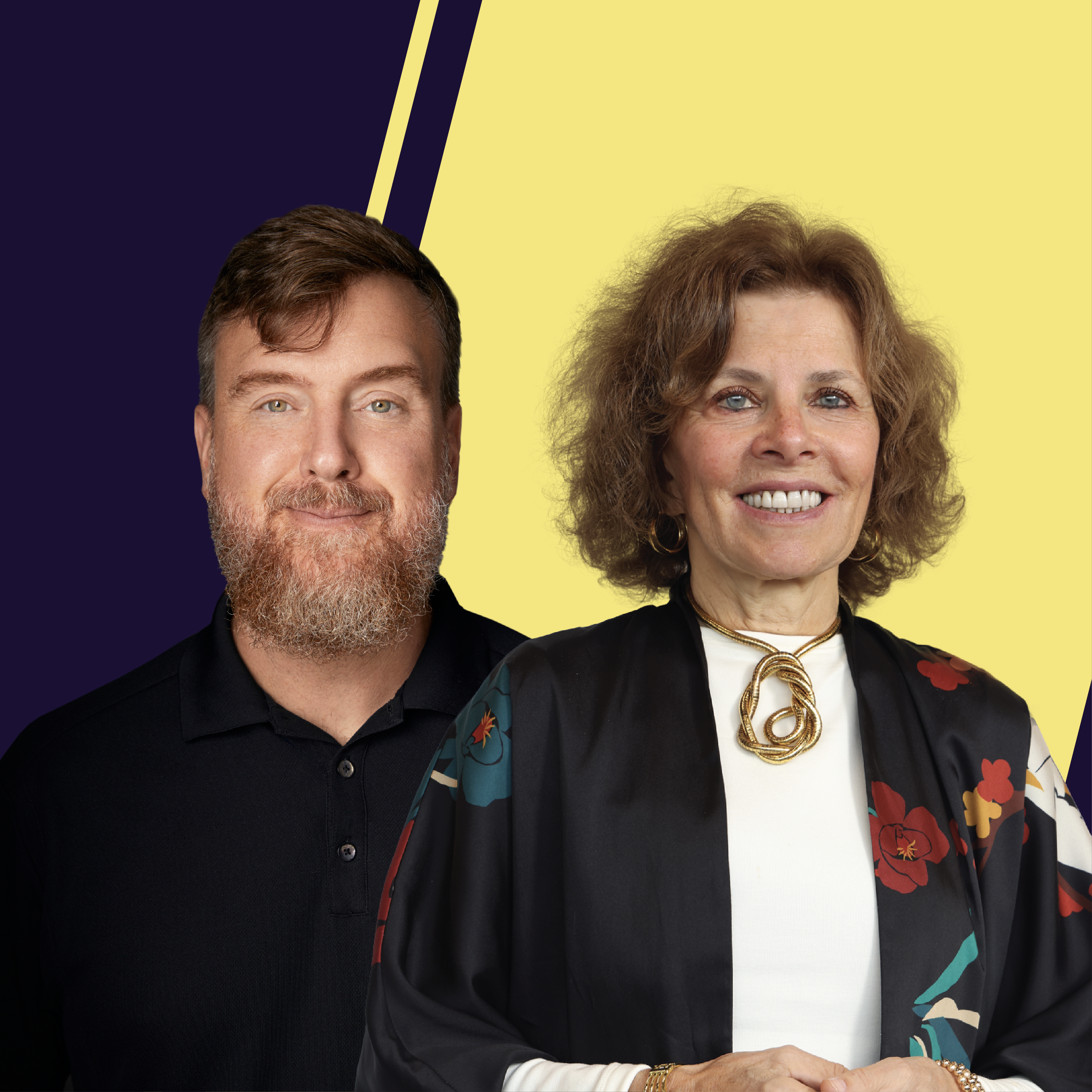
You're listening to so to Speak, the Free Speech podcast brought to you by fire, the foundation for individual rights and expression. Welcome back to so to Speak, the free speech podcast, where every other week we take an uncensored look at the world of free expression through the law, philosophy, and stories that define your right to free speech. I am your host, Nico Perino. Today we're doing another book conversation. I think this is like the third book that we've discussed on the podcast in as many episodes, but it's a great book. The war on words. 10 arguments against free Speech and why they Fail. And it's a great book, not just because what's in it, but because it's written by two of my FIRE colleagues, of course, Greg Lucianoff, FIRE President and CEO, and Nadine Strossen, who is a senior fellow here at FIRE and the former president of the aclu. Greg and Nadine, welcome back onto the show, both of you.
- [01:16]
Nadine Strossen
Delighted to be here, Nadine.
- [01:17]
Greg Lukianoff
It's good to be back.
- [01:18]
Nico Perino
So what's the origin of this book?
- [01:20]
Greg Lukianoff
That's an excellent question.
- [01:21]
Nico Perino
It started as a blog, right? Or blog posts.
- [01:24]
Greg Lukianoff
It actually started originally as Iona Italia, who now works at. She used to work at a magazine called Aereo that no longer exists, and she now works for Quillet. She asked me to do an article, and I didn't really have time to do an article. So I was like, why not? I could just throw together answers to the arguments that I'm tired of having to answer against freedom of speech. And so I did it really fast, as sometimes your best work comes out when you do something really fast and cranked it out. And I was pretty pleased with the result. It did pretty well. Nadine read it and her point was that we come to the same conclusions, but we get there very differently. So what about doing a series where we both answer these questions together? And I was like, right with you, Nadine. Of course, I'd love that.
- [02:15]
Nadine Strossen
And I had already started doing it. Oh, that's right. That's right. I remember. What for? I think probably I was planning on incorporating these arguments into a book or something, but I had already, in fact, drafted quite a few and noted the overlapping conclusions. But differing paths to reaching those conclusions.
- [02:35]
Nico Perino
Well, I have Two questions about that one. Nadine, you're on the road all the time, right? Like, how many days out of the year are you on the road?
- [02:42]
Nadine Strossen
I give about 200 public presentations per year, and I'm usually traveling an average of three to four days a week.
- [02:49]
Nico Perino
Okay, so you have status on whatever airline you fly?
- [02:52]
Nadine Strossen
I'm assuming a double million miler on all the major airlines.
- [02:56]
Greg Lukianoff
How do you not get sick all the time? Because, like, that's the problem I'm having lately.
- [03:00]
Nadine Strossen
Maybe I'm building up immunity all the time.
- [03:03]
Nico Perino
Is that what it is?
- [03:04]
Greg Lukianoff
I just. I'm gonna feel run ragged at this moment.
- [03:06]
Nico Perino
Well, one of the reasons I asked you that is. Cause I'm assuming a lot of your speeches are on college campuses, and presumably you're getting asked some of these very questions constantly.
- [03:15]
Nadine Strossen
And I know Greg was joking when he said I was tired of answering them. We obviously, we never get tired of answering them. And it's exciting and exhilarating, and you have to. The arguments, I think it's important and exhilarating to make them in a retail fashion, face to face. But I had reached the conclusion that it would also be efficient to have a wholesale option, a written version of the most common arguments. And, you know, I think it's interesting that we independently came up with our list of what the repeated arguments were. We ended up on the blog, on Greg's blog, Eternally radical idea, answering, I think about 16. And we still had some more in the can when this book idea came along. Then we had to reduce it to 10, and we each independently ranked of the 16 which were the most important and ranked those, as did our editor. And I pause on that point, Nico, because the argument, number one, has become more salient than ever with the assassination of Charlie Kirk. And it is words are violence that we independently determined was the most pervasive and the most pernicious argument. Because obviously if words are violence, then violence is justified, as fire surveys have shown. I'm putting justified in scare quotes as a response to words that you do not like.
- [04:55]
Nico Perino
Yeah. Do people actually believe, though, that words are the same thing as. Or is it more of a rhetorical technique?
- [05:02]
Nadine Strossen
I think it's become much more of a deep seated belief and much less of a trope. And I've seen that in another context as well. I recently wrote a new preface for my very old book, Defending Free Speech, Sex and the Fight for Women's rights. And NYU Press had asked me to republish it as part of their classic series. It was Originally published in 1995. And that process of rereading the book and recognizing that the so called radical feminist argument for censoring pornography that was Advanced by Katharine MacKinnon and Andrea Dworkin had lost badly in the courts of law, but has taken over campuses and Beyond. When Katharine MacKinnon said pornography is rape, everybody understood that to be a trope, a metaphor, rhetorical hyperbole. But students nowadays take that quite literally. I One manifestation is students telling law professors at Harvard Law School, such as Jeannie Sue Gerson, that she may not. They don't want to be taught about rape law because that is injuring them, harming them, it's causing violence to them as much as an actual physical assault.
- [06:27]
Nico Perino
You write in here, Nadine, that sticks and stones directly cause harm through their own force, but words at most can potentially contribute to harm. Whether particular words actually do cause harm depends on how individual listeners perceive and respond to them, which in turn is influenced by the listener's personalities and circumstances, including innumerable other factors that also potentially influence their psyches and behavior. And because we don't have anyone who actually believes these arguments to sit in on this podcast with us, I'm going to do my best to kind of press you guys on them. So the argument here is similar to that argument that you responded to in the Atlantic a while back, that words can contribute to stress and prolonged stress can have physiological effects in an individual. So what I guess I'm trying to get my head around is, is it so much a trope, or is it the idea that there are downstream effects from speech that can result in meaningful harm? Now, for the purposes of the Constitution and how we treat speech, we want to create a clear distinction, but sometimes that distinction isn't always quite clear.
- [07:37]
Greg Lukianoff
Yeah, I mean, I think it's helpful to look at the. One of the attempts to make this more this argument that words are akin to violence, more scientific, was an article by Lisa Feldman Barrett, that's her name. Yes, in the New York Times, I think, in 2017.
- [07:52]
Nico Perino
Yeah. And you and Jonathan Haidt responded to it in the Atlantic Press.
- [07:55]
Greg Lukianoff
We responded to it, and the argument was essentially that you can't really draw a bright line distinction between speech and violence, because just like violence can actually cause a physiological response, so can words. And I always give the example of, you know, I don't love you anymore, or like as being like. Are there more devastating words that you can imagine? And yes, it is true that in some ways your brain doesn't know a physical threat from a. From Something that feels more relational. But I do think that. And I have a couple different responses to this. Well, there's one that's more emotional and there's one that's more logical. I do think the point that Nadine is making about there being an intermediate area between your emotions and your and interactions, you know, like there's not much of an intermediary. If I punch you, like that's immediate experience of pain. But the what is it that no one can offend me or no one.
- [08:51]
Nadine Strossen
Can hurt me unless I give them permission? Eleanor Roosevelt.
- [08:55]
Nico Perino
Eleanor Roosevelt.
- [08:56]
Greg Lukianoff
No one can hurt me with my consent. But it's a very sophisticated idea and it's central to ideas of stoicism. Buddhism inspired modalities like cognitive behavioral therapy is all about getting in between your thoughts. So you're not simply just being pulled by your teeth through life. And that's more the logical response that essentially it's just not true. If you actually learn how to practice things like sticks and stones will break my bones and names will never hurt me, and everyone's entitled to their opinion. Basically, you can actually teach yourself to have make a distinction between these two.
- [09:30]
Nadine Strossen
May I interject a point here? Because what Greg is implicitly making a point that I think is worth making explicitly, many people will dismissively say, oh, that's so ridiculous that words can never hurt me. That's factually false. But that is not purporting to be a factually descriptive statement. Is it intending to be an aspirational admonition? We should not allow words to hurt us. Right. That's why our parents were telling us.
- [10:00]
Greg Lukianoff
That, oh yeah, I'll spend a little more time on that because that one was really one of my big bugaboos. Sticks and stones will break my bones, but names will never hurt me is a mantra you teach to children. So words hurt less. And as someone who grew up with that, it makes a difference, essentially. Like the idea that I have a dignity that no one can take away from me. How much that helped me as a weird little grade schooler. That really does help you in a lot of ways. But when people started alighting that into the idea that it actually means words don't hurt, it's like, that's idiotic. I mean, like to be not nice about it. If words didn't hurt, the saying would make no sense. It would be kind of like, you know, water is wet. It's like, okay, great. Of course they don't hurt. It only makes sense to teach kids that if it's a mantra. But then I was going to get to the kind of emotional content of the idea that words are violence. And in my TED Talk, I talk a lot about, like, one of my friends getting stabbed in front of me.
- [10:59]
Nadine Strossen
And if you haven't watched the TED Talk yet, do so. And if you haven't watched it again, do so. It is truly great.
- [11:06]
Greg Lukianoff
Greg really worked real hard on it.
- [11:08]
Nico Perino
Yes, he did.
- [11:10]
Greg Lukianoff
But he used to stop right here. You know, there was blood all over him. And that is always what I think of when people say words are akin to violence. I'm like, they're just not. And people have experienced real physical, particularly if it's potentially deadly violence. It just feels like an insult to everybody who survived something horrible to say that. And I'm speaking at. I don't know when this is going to air, but I'm speaking at Utah Valley University the day after tomorrow. And to me, particularly in the light of watching the gruesome murder of someone who went to campus in order to argue with people, went to that cap.
- [11:45]
Nico Perino
Charlie Kernker was at Utah Valley University.
- [11:47]
Greg Lukianoff
Went to Utah Valley University to argue with people. I mean, how horrible that must sound to anybody who was there. It's like, no, that's not the same thing.
- [11:56]
Nico Perino
Yeah. The quote I always like to hearken back to is the Sigmund Freud quote might be apocryphal, but it's attributed to him that civilization was started the day man first cast a word instead of a stone. So even if there are, he did.
- [12:08]
Greg Lukianoff
Actually write that when I went, yeah.
- [12:10]
Nico Perino
But it might have been attributed to someone else.
- [12:11]
Greg Lukianoff
I guess he said there was an English author, and we don't know who the English author is. And some people think it's Thomas Carlyle.
- [12:17]
Nadine Strossen
But, you know, this is making me think that any one of the arguments that we respond to could be the basis for discussing all of free speech law seriously and philosophy. Because really, in law, the major debate comes down to how tight and direct the connection must be between the speech and. And the potential harm. In fact, that was literally the statement that was made by Zechariah Chaffee, a Harvard Law School professor who wrote, to my knowledge, the very first treatise about free speech law in the early 20th century. And he made a statement which was the epigraph to my hate speech book. And he said, all First Amendment free speech debates come down to this question how close the connection must be between the speech and the harm. And when the United States. United States adopted a strong speech, protective version of the First Amendment what it boiled down to in legal terms was getting rid of the so called bad tendency test. Any speech that had a tendency to possibly lead to something bad, including violence, could be punished or restricted instead substituting a rigorous version of what used to be called clear and present danger. But that was never enforced. Rigorous. So now we talk about either the emergency principle or strict scrutiny. That speech has to directly cause or imminently threaten great harm. And so that fact that speech may lead to violence, that may be true, but it doesn't lead you to the conclusion that is being advocated, therefore speech should be restricted.
- [14:08]
Greg Lukianoff
So Nadine, your book, hate speech, why we should respond to it with speech.
- [14:12]
Nadine Strossen
Not why we should resist it with free speech, not censorship.
- [14:16]
Greg Lukianoff
Awesome book. Thank you. Love it, thank you. And you talk about it as the emergency principle, which is not a term I was all that familiar with, to be honest. Could you explain more to that?
- [14:26]
Nadine Strossen
Sure. And I use that term. It's not commonly bandied about, but to me it was the most apt summary.
- [14:35]
Greg Lukianoff
It's simple and clear.
- [14:36]
Nadine Strossen
I like it. And it comes from Louis Brandeis great so called concurring opinion in Whitney in 1923, which reads more like a dissent in which he said it was in that great passage where he says, you know, just fearing that speech could cause harm is not a sufficient justification for censoring it. Men feared witches and burned women. And he then goes on to say, only an emergency can justify repression. And so to me that was a clearer way of conveying the idea that is now conveyed most mostly through so called strict scrutiny analysis. And you know, it's just a different way of conveying the same idea. One focuses on the harm that is directly or immediately caused by speech. It poses an emergency and therefore the only way to reliably protect against the harm is through repression, through restriction.
- [15:39]
Greg Lukianoff
I've actually got a question from the absolutely brilliant Whitney concurrence. Do you think like I sometimes when I read that I'm kind of like, are these guys showboating at this point? Like is this Brandeis trying to be like, oh, Oliver Wendell Holmes isn't the only great writer here, I'm going to one up him because if you haven't read the Whitney concurrence, it is a masterpiece.
- [15:57]
Nico Perino
The exceptions to the First Amendment that free speech advocates are most uneasy with are the ones that do not have that sort of emergency characteristic to it. So obscenity, for example, that's the only example? Well, defamation as well, in a certain respect.
- [16:14]
Nadine Strossen
I don't think so. If you, I mean so let me explain further that in addition to the emergency principle, we also have to consider the corresponding, what the Supreme Court has called the bedrock principle. So you may justify restrictions on speech if necessary to prevent imminent harm, specific harm or direct harm that's caused by the speech, but the harm may not be that you dislike the idea or are offended by the idea. That is the so called viewpoint neutrality principle. And there is only one exception to the viewpoint neutrality principle, where speech is allowed to be punished solely because of community disapproval of the idea. That's the obscenity exception. Defamation, you know, improperly defined and enforced is speech that directly causes specific harm to somebody's reputation. And even under the tort law standards, you have to be able to show demonstrable harm to some business interest or some economic interest, not just that your feelings are hurt.
- [17:28]
Nico Perino
But some folks, like Nat Hentoff, for example, argue that that harm can be rectified in the marketplace of ideas in a way that inciting someone to burn down someone else's house can't. And so there is this sort of opportunity to correct a falsehood.
- [17:46]
Nadine Strossen
Well, you know, we could argue about that, and I think that's an important argument, but to me that's distinct. So maybe I should put it this way, that the obscenity exception is the only instance in current jurisprudence where speech may be punished solely because of disapproval of the idea. When the supreme court, by a 5 to 4 vote many years ago in the Paris adult theater case in 1973, has not revisited that exception since then. And in the intervening years, the Court has become more and more strongly and consistently enforcing the viewpoint neutrality principle. Back in 1973, the court said, we recognize that there is no evidence that there is any harm to the community, but we can presume that there's a negative impact on the moral tone of the community. Because by the same token that reading great literature has an uplifting impact, we can presume that reading abstinence, and so that is just such an outlier. You know, you can disagree with the details about some of the others, but they are not based on conception of morally offensive or unpopular expression.
- [19:09]
Nico Perino
But to Greg's point earlier about the words are violence trope and his idea that there's an intermediary between the harm and the speech, which is the person and how they interpret the speech. That same argument can be applied to, for example, fighting words or incitement to imminent lawless action. So you have a speaker here saying something inciting to you, whether it's inciting you to go engage in unlawful activity or inciting you to punch them in the face. Those are subjective determinations, kind of, you know, one person's fighting words might be someone else's moment to laugh the words off.
- [19:40]
Nadine Strossen
But that's why the Supreme Court correctly insists on an objective so called reasonable person definition. So to the extent that the fighting words doctrine exists at all, it's. But you could possibly justify it as a specific example of intentional incitement to imminent violence when the words are addressed to somebody who is likely to respond with a punch in the face. I still think it's unjustified because the person should not, you know, and of course the person who punches will be subject to punishment. But it's an objective standard, not a subjective one.
- [20:23]
Nico Perino
Well, we could spend probably an hour on this first argument, but we've got nine more arguments to go. The second one is kind of a corollary to the first one. It's that words are dangerous. How is this distinct different from the words are violence? Is it just a different form of danger?
- [20:40]
Nadine Strossen
Do you want to go? I feel like I've been talking too much.
- [20:44]
Greg Lukianoff
I am suddenly realizing that I probably should have reread the book. I am wondering, like, how did.
- [20:51]
Nico Perino
Well, no, I think, I think if.
- [20:52]
Nadine Strossen
I did segue into it, I think it was other folks.
- [20:54]
Nico Perino
Well, one argument can be that there are people who put forward dangerous ideas that don't necessarily equate to necessarily violence. But like you could argue someone is advocating for a system of government that would make certain people subservient to other people. Like, you know, like America did.
- [21:14]
Nadine Strossen
From. I think the subtitles refresh my recollection, Greg, of what the arguments are. So the subtitle to this one is Free Speech rests on the faulty notion that words are harmless.
- [21:27]
Greg Lukianoff
Oh yeah. Which is. That's one of those arguments that both of us are kind of like, okay, I guess we'll address this because it's just a crazy assertion to make in the first place.
- [21:36]
Nadine Strossen
But it's made all the time.
- [21:38]
Greg Lukianoff
But it is made all the time, to be clear. And one of the things that I always try to point out is that, and it's very much related to the violence argument is that words and argumentation are the best alternative to violence we've ever invented. So no kidding, if we're fighting things out about life or death matters in a democratic society, or even not part of our discussions, they lead to things that decide who lives and dies, who gets health care, who we go to war with. These are incredibly weighty things. But we've decided the legitimate way to handle them is through discussion. But the idea that that means that this is saying that words are harmless is almost to say that they're. They're powerless, which is like, there'd be no point in protecting them if they were powerless.
- [22:25]
Nico Perino
What's the word from the Supreme Court? You know, words have the power to stir us to anger.
- [22:30]
Nadine Strossen
Anger.
- [22:31]
Nico Perino
I forget exactly what decision.
- [22:33]
Nadine Strossen
Yeah, it's Terminello versus Chicago.
- [22:36]
Nico Perino
I'm always, like, essentially saying words are powerful, recognizing that words are powerful, and.
- [22:40]
Nadine Strossen
That'S exactly why we protect them.
- [22:42]
Greg Lukianoff
It actually took Will to remind me that this one's not immediately clear to everybody what it actually means. But my favorite line is, and I think this is Brandeis again, too. Every idea is an incitement.
- [22:52]
Nadine Strossen
Yes, I think that was Holmes, but. Yeah.
- [22:53]
Greg Lukianoff
Is that Holmes?
- [22:54]
Nadine Strossen
Yeah.
- [22:57]
Greg Lukianoff
But every idea is an incitement because it's just sort of. But it's not making the point that, like, every idea should be shut down. It's saying that basically, yeah, like, everything can, like, stir you to, like, some amount of feeling. That's all the more reason to protect it as a legitimate way of making these huge decisions. So, yeah, it's based on a faulty premise in the first place.
- [23:16]
Nadine Strossen
And if I can add two things. In 2011, in Snyder vs Phelps, which involved the Westboro Baptist Church, the www.godhatesfags.org organization that was exercising their free speech rights as the Supreme Court held to demonstrate and picket outside the funerals of slain military service members. And they were basically engaging in hate speech not only against gay people, but also Catholics and other religious believers, basically anybody who wasn't a member of their chur church. The Supreme Court strongly upheld their free speech rights and acknowledged. And this goes back to the first argument, they're all. They'll. They're all interconnected, that somebody claimed that he had been. Suffered emotional distress from knowing about this expression. And the Supreme Court did not, you know, it expressly cited the testimony that he had to see a psychologist and he was suffering some physiological adverse impacts. And the court said, words are powerful and we protect them not despite that fact, but because of that fact, because the power can do great good as well as great harm. But the other point I'd like to make. So the reason that this argument is always trotted forward is to present a straw person version of the defense of free speech. Oh, you defend free speech because you take the ridiculous position that words can cause no harm. No, no, no. We acknowledge that words can do harm. But you never, you pro censorship people never acknowledge the greater harm that giving the government greater sensorial power will do.
- [25:11]
Nico Perino
Argument three is hate speeches and free speech. And we were talking about your earlier book Hate Nadine, why we should defeat it with free speech, not censorship.
- [25:19]
Nadine Strossen
So this is the Read the book, folks.
- [25:22]
Nico Perino
We talked about it on the podc.
- [25:25]
Nadine Strossen
Now, if I had to summarize it in a soundbite, I would say the single most important point is that the concept of hate speech is irreducibly subjective. Therefore, whoever has the power to enforce it is given essentially unfettered discretion to pick and choose which views are hated, which views are hateful. And therefore, throughout history, around the world, including in the United States before we had a speech protective jurisprudence, these laws are disproportionately enforced against whatever speech is upsetting to those in power, whether it be political dissonance, racial minorities, religious minorities. And what I found when I wrote my book about hate speech is that human rights advocates in countries all over the world oppose censoring hate speech not because it violates the free speech principles in their own countries, it does not. But because these laws, no matter how well intended, end up doing more harm than good. It is the very disenfranchised, marginalized minorities who are hoped to be protected under the laws that suffer the brunt of the censorship.
- [26:40]
Nico Perino
In your book, you use the example that I think Aryeh Nair also talks about in his book, in his book Defending My Enemy, whereby the National Union of Students in England wanted to pass a hate speech code in the 1970s and it enlisted the support of this national Zionist organization in that country. And it was like a year or two later that the National Union decided that Zionism was a form of hate speech and banned Zionist speakers from speaking on English campus.
- [27:10]
Greg Lukianoff
Who could have seen that guy?
- [27:11]
Nadine Strossen
And recently when Pam Bondi, the Attorney General, said that he hate speech should be censored, Donald Trump said, oh yeah, you know, basically anybody who's criticizing me, that's hate speech.
- [27:21]
Nico Perino
Yeah, that's a true border. Yeah. He said he told Pam he suggested that Pam Bondi target ABC News for hate speech because the question about it came from ABC News. And we know of course that at the time there was the whole kerfuffle over the Jimmy Kimmel.
- [27:39]
Greg Lukianoff
I think I surprise people sometimes by my primary argument against hate speech is grounded in the bedrock principle, but it comes from a point of view of diversity because a lot of people tend to think hate speech is this thing that you're going to put in place to protect diversity and protect disempowered minorities. And it's like, I don't know what neighborhood you grew up in, but I grew up in a neighborhood where nobody's two parents could really agree on what was offensive because my dad's Russian, my mother's British. I grew up in a neighborhood with a lot of kids from. From Asia and from South America and from also different parts of the country where they have very different ideas of what's offensive. There's nothing more culturally subjective than what's offensive. And it certainly. And one thing I definitely think everyone should understand and probably do, if they've had this experience wildly different according to what economic class you come from, but also what region, what religion, et cetera. So anytime you. Actually, one of the reasons why these have been so successful in Europe, for example, is there's a little bit more of a sense that there's a John Bull. There's like a modal British person, for example, who can be a standard for the country. And of course, they are offended by what they would deem to be Islamophobia, like, for example. But then, of course, their definition of it ends up being something that tends to be kind of like an upper class idea of what ideas you should and shouldn't have respect for. And we're seeing them as actually trying to enforce it right now, and they're arresting dozens of people a day. It is. But they're doing it in this false belief that they're somehow protecting the diversity of the country, not coincidentally, by shutting up everybody who disagrees with the ruling class on what's offensive.
- [29:19]
Nico Perino
The moral principles aside, in America, there is no hate speech exception to the First Amendment, right?
- [29:25]
Nadine Strossen
That's correct. The Supreme Court has never, in contrast to obscenity, which it has said, just because the content satisfies a certain definition and therefore can be excluded for. From First Amendment protection, it has refused to do the same for a hateful message. And it's done that in case after case after case, including this case about the Westboro Baptist Church. But that said, to illustrate the subjectivity of the concept of hate speech, I heard this astounding interview by one of the former members and leaders of that church. She was being interviewed on npr. Maggie of Phelps Roper. Yeah, Phelps Roper, right. I didn't know that was her nickname. And I was really. I felt so embarrassed because I think it was Terry Gross said, referred casually to their speech as hate speech. And she said that motto, God hates fags. And she said, wait a minute, that's not hate speech. We never said we hate gay people. We really believed that we were the only ones who loved them because we since have a sincere religious belief that God hates them and is gonna damn them to eternal torture in hell unless they recant. And we're trying to save their everlasting souls. And I thought, oh, my goodness. You know, I still profoundly disagree with that. But you can't say it's coming from a motivation of, hey, yeah, I wish.
- [31:01]
Greg Lukianoff
I heard that interview. She was also the host of the.
- [31:04]
Nico Perino
The Witch Trials JK round.
- [31:06]
Greg Lukianoff
Yeah. Which, if you haven't checked it out, pretty excellent.
- [31:09]
Nico Perino
Argument four is about shout downs. The argument is that shout downs are an exercise of speech rights, not censorship. Where do they get this one wrong?
- [31:18]
Greg Lukianoff
Yeah, this is more proof that I'm grumpier than Nadine. This one drives me nuts because I feel like I've been putting up with this argument for. For so long. And it's so obvious to me, like, the idea, like, you show up and there's like 100 people in the audience who came to hear a speaker, and I decide, or I show up, I decide that you guys can't hear this person because I disapprove of them. So I brought the following 10 people to shout them down to make sure you cannot hear this person, because I don't like them and I don't think you should hear them either. Obviously, that is mob censorship. And it takes a special kind of blinkered point of view, at least in my opinion, to actually live in an environment in which you're so used to thinking of the people doing the shout downs, at least having their heart in the right place to actually get to a point where, what is it now? 70% of students say that, at least in rare cases, shout downs are okay on campus. So shout downs are mob censorship. The people in power have a duty to allow speakers to speak and prevent them from having to succumb to the heckler's veto, whether that be a threat of violence or simply making. Making impossible for anyone to hear them out. And it's one of these things where I think it would be so clarifying for some of the people who think they support shout downs to have the experience of going to a speaker they want to hear and having other people show up and say that you cannot hear them.
- [32:44]
Nadine Strossen
You know, the more we go through this, the more I realize they're just. It's all one interwoven web. Because this is really another facet of this, the misconception that words are violence or that those of us who defend free speech say words can do no harm because you have to look at the speech in the overall context. Yes, you have a right to protest. You have a right to express your disagreement with a speaker. But if in that particular context you are, and this to me would satisfy the emergency press, right, the speech can be restricted because it is directly causing harm, namely interfering with or destroying other people's not only right to speak, but the audience member's right to hear the speech. And so this ties into another major free speech principle. Thank you for allowing me to wear my con law professor hat that viewpoint neutral neutral regulations are appropriate so they can be viewpoint neutral when they are due to some other harm other than disliking the viewpoint. I already talked about that. But they're also viewpoint neutral if they are enforcing time, place and manner regulations. Not what you say, but when, where and how you say it. So you can take those screaming protests, you know, and go far away from the audience so that you're not interfering. And in fact, that's exactly what they should do do take their loud protest elsewhere on campus or silently protest.
- [34:20]
Greg Lukianoff
We'd be on their side in that case.
- [34:22]
Nico Perino
How much of this is a property rights concern? So you talk about time, place and manner. It can be context specific. So if we're outside the Democratic National Convention, for example, and you've got supporters of the Democratic Party on one side of the street and opponents of the Democratic Party on the other side of the street, they can shout at each other, right? And often they're shouting over each other and trying to be louder than the other other side to make their message heard. That wouldn't be a form of mob censorship, would it?
- [34:52]
Nadine Strossen
No, it wouldn't. And this unfortunately is what we have on campus on the Israel Palestine issue recently instead of more rational discourse.
- [35:03]
Nico Perino
So when you're. So you're saying on campus, you have the campus quad, the two sides are shouting over each other.
- [35:08]
Nadine Strossen
But if you were an invited forum or a lecture where a speaker has been invited specifically to address an audience, and this could happen on a quad. For example, universities do sometimes give permission on a first come first serve basis to have a speaker. In that case, it would be inappropriate even in a quad for opponents to interfere with the speaker being able to deliver the message. They could in a non disruptive, quiet way voice their opposition, but not in a way that prevented the message from being communicated.
- [35:45]
Nico Perino
How do you feel about heckling? So let's say the speaker doesn't get shouted down but someone stands up, they heckle for maybe five to 10 seconds. The hosts of the event don't like it, they don't want it, they think it's distracting. It. It conflicts with the tenor of the event that they were hoping to hold. Would the hosts be justified in removing this heckler?
- [36:09]
Greg Lukianoff
I do actually think there is some private property argument, like, essentially, if you're showing Hamilton or something like that, and there's a heckler in the crowd, you can just get rid of them because they're loud. But that's kind of the same thing as a time, place and manner restriction rationale. It's essentially like, yeah, we kick anybody.
- [36:24]
Nico Perino
Out who interrupts the freaking show.
- [36:26]
Nadine Strossen
And at some point, that's a judgment call. So the universities have debated about, well, what if the protesters stop the speaker from speaking for the first five minutes or. Or what about the first 10 minutes and then they leave and it becomes a judgment call. My own sensibility, but I know it's only personal, and I would defend people who take a different approach, is to have, you know, brief booing and hissing is fine.
- [36:52]
Greg Lukianoff
I think you should tolerate it. But like, for example, if you're a.
- [36:54]
Nico Perino
Theater owner, you don't necessarily have a political speech. Maybe that makes sense.
- [36:59]
Greg Lukianoff
So, like, when we've seen cases where people, you know, students have been back and they might boo and hiss or like, hold, you know, hold up signs in the back, we're like, yeah, you should, like, if you're a university, you should allow that. But if it goes beyond that and you're actually trying to make sure the speech can't go on, then by all means, you know, you have a duty to get rid of them as a threat to everybody else's right to hear the speaker and for the speaker to speak.
- [37:20]
Nico Perino
Argument five. Free speech is outdated. The arguments for freedom of speech are outdated. In the age of the Internet, it's time for new thinking. So this is the concept that the First Amendment was ratified in, what, 1798? A lot has happened since then. We're not just talking about Benjamin Franklin standing above his printing press anymore. We're talking about social media. We're talking about artificial intelligence. Why should those same principles that these founders enshrined in the Bill of Rights way back when apply to new technologies today with different contexts and allegedly different harms?
- [37:52]
Greg Lukianoff
Well, first of all, I mean, like, you know, just from a First Amendment standpoint, I'm definitely very much with Eugene Volok, and I just think everyone else is wrong on this one, that when they said the press. In the First Amendment, they meant the technology of the press. There are some people who say, no, they meant something more like journalism. And I'm like. Like, I'm pretty persuaded that they actually meant the technology of dissemination known as the printing press is what they meant by freedom of the press, which was.
- [38:16]
Nadine Strossen
The only technology for dissemination that existed at the time.
- [38:19]
Greg Lukianoff
Bingo. Exactly. So they were handling first technology issues from the very beginning. I mean, it's kind of cool to go back and read some of the old. For a nerd, but it's kind of cool to go back and read some of the stuff. And how thoughtful the founders were about things like path patent and intellectual property. They were really thinking about this stuff a lot back then. So it wasn't an unsophisticated idea to begin with. And they were dealing with the most disruptive communications technology ever invented was the printing press. It doomed Europe to 150 years of religious war. Was it ultimately worth it for humankind? Yeah, I think so. Scientific revolution, enlightenment, democratic revolutions, rights revolutions, none of these are possible without technologies to disseminate information. But also when people say it's outmoded, it's like, yeah, and good thing that a lot of First Amendment law comes from 1925 on up, when we're actually starting to have these technologies introduced. And I will always point to show that same kind of US Chauvinism when I speak abroad, to be like, no, I actually think that we've had some of the best minds in the US thinking about how you have freedom of speech in the real world in the form of Supreme Court jurisprudence and other American jurisprudence over the First Amendment. And we figured out ways to apply general principles to different contexts, including the various communication technologies, keeping in mind some of their strengths and weaknesses. But time and time again, every morning at Fire, we're looking at cases of new attempts to regulate technology in particular. And time and time again, a lot of these principles that might have been developed for a public park or for newspapers or for the radio, less so for the radio, because the fcc, the podcast, almost lost hope with them. But how often these principles actually do fit the current technology pretty well. And the thing is, and if they don't, if actually new technology presents some issues that are entirely novel, I do think we still have the principles in place to actually figure out a way to think about it.
- [40:28]
Nico Perino
If the press was meant to protect the technology, if the press clause of the First Amendment was meant to protect the technology, what was the speech clause meant to protect? Was it meant to Protect? I mean, does it almost encompass everything that you might consider to be enshrined in the press clause?
- [40:43]
Greg Lukianoff
Well, I mean, I'm definitely.
- [40:44]
Nico Perino
What I'm trying to get at is can you get to these new technologies through the speech clause, or do you.
- [40:48]
Greg Lukianoff
Oh, I think so.
- [40:49]
Nadine Strossen
Yeah, absolutely. And, you know, I think the argument was that free speech is outmoded or the arguments for free speech are outmoded. I think that that argument is outmoded. It has been recirculated every single time there is a new technology, starting with the printing press, but probably, you know, going back to earlier technologies, the transition from speaking to writing, we also encountered a great deal of opposition, to take an even earlier example, and in our own country. I think it's important to note that the Supreme Court has made some missteps. When it first ruled on films, it said, no, they're not protected by the First Amendment. And it took several decades.
- [41:39]
Nico Perino
Yeah, it was 1915 to 1952 to overturn that.
- [41:43]
Nadine Strossen
And so certainly if a particular technology for factual reasons made it easier to satisfy the emergency test, then we still have the same principle. But viewpoint based restrictions should still not be allowed, nor should any restriction that's based on a vague fear as opposed to demonstrated evidence of an imminent and direct harm.
- [42:11]
Nico Perino
And that argument still holds for artificial intelligence, which could enslave us.
- [42:16]
Greg Lukianoff
You know, we spent a lot of time thinking about this at fire, and we have this partnership that we're doing with the Cosmos Institute to try to think about AI for truth seeking to make sure that it actually is optimized for that. I mean, AI is a game changer in so many different ways.
- [42:34]
Nico Perino
Well, some people say it's an existential threat to humanity.
- [42:37]
Greg Lukianoff
Yeah. And when it comes to those kind of threats, you know, like, that is also something that we deal with in the First Amendment. I mean, there's like the, you know, there's case law about, like, what you can do to disseminate information about how to build a nuclear bomb. I mean, like, these are all things we have thought about. And I'm not claiming we've always gotten it right, but I do think that we have the intellectual tools there within it to help us think these through. Because I do think people underestimate how deep the philosophy behind freedom of speech is, how deep how it's embedded in the law. But also, I say this a lot, but First Amendment people are all epistemologists, whether we know it or not. And so the highest potential of AI is potentially such a huge boon for us.
- [43:21]
Nico Perino
Curing cancer.
- [43:23]
Greg Lukianoff
You know, like I always make the point that essentially the way we know things is subtractive, that essentially we don't really establish what is true. We tend to establish a cloud around what might be true by slashing away at all the stuff that is actually false. And I think that AI has such potential for truth seeking, but can it potentially be used as a tool of tyranny or of chaos or all these kind of things then yes. And every, you know, every day we're looking through different kinds of legislation to figure out like what kind of harm it's getting at. And a lot of times when they think they're kind of like creating things anew, the harms that they're getting at are things that are already illegal under existing law. But do I think it's going to pose some interesting questions as the technology progresses that are probably not exactly perfectly novel, but are going to require a deep knowledge of existing philosophy and law. On this I, but then I want.
- [44:20]
Nadine Strossen
To come back to my eternal question, which is not only in order to justify a restriction, we have to assess not only the potential harm of the expression, but also the inevitable harm of entrusting, empowering government to create and enforce restrictions and which is the lesser of the two evils.
- [44:43]
Greg Lukianoff
And that's one of the reasons why I mentioned tyranny and because like there's something as far as like one of the most basic basic things. I don't know if we directly say it in the book, but it is weird to me the extent to which I still run into from even people older than me, the idea that if we just pass a law it'll fix the problem. And I'm like, you do remember laws, at least for now, are enforced by people, right? Because it's never going to work out to be the law as you the idealized form of how you think it's going to work. Even that's not going to be great, but it's going to be enforced by the biases of actual people.
- [45:20]
Nico Perino
Yeah, well, if the First Amendment didn't apply for artificial intelligence, theoretically the government could go to OpenAI or Anthropic and force them to manipulate the generative AI content that's produced for users to only say nice things about Donald Trump or during the Biden administration only say never tried that.
- [45:38]
Greg Lukianoff
That's so cynical. No country would do that.
- [45:43]
Nico Perino
That's just wacky argument. Six is free speech is right wing. Free speech is nothing but a conservative talking point. We've heard this a lot in recent years.
- [45:52]
Greg Lukianoff
Less so this year. We don't know why.
- [45:56]
Nico Perino
But there was an era where folks were talking about how conservatives were weaponizing free speech. For example, the 303 Creative case was one case in which people saw, oh, we're just, you know, using free speech to strike down anti discrimination laws now. Nadine, how do you respond to this when you're talking to left wing students on campus?
- [46:15]
Nadine Strossen
Well, free speech is a tool that is invoked by those whose speech is suppressed. So if you are in a campus environment where all surveys show that on the vast majority of campuses, the vast majority of students, faculty members and and administrators have left wing viewpoints, the speech that is endangered and fires data and case files demonstrate this. The speech that is endangered is speech that is to the right of center. But what is being upheld is the same neutral principle that will redound to the benefit of people all across the the ideological spectrum. But to equate the right with those who are exercising it in a particular case is nonsensical. I mean, I don't think that people believe that the ACLU became a white supremacist organization when we defended the free speech rights of neo Nazis to demonstrate in Skokie, Illinois. And by the way, when I was ACLU president, I constantly had to respond to attacks from the other side that, that said, well, the ACLU has defended free speech for communists. You must be a communist organization. So a silver lining to the terrible cloud of the Trump administration and many state and local governments increasing censorship of speech from the left end of the political spectrum is that we are suddenly seeing those on the left acknowledging that free speech is a really important right, that censorship is a really danger, and being very grateful to fire in particular for coming neutrally and effectively to the defense of free speech. Also, the ACLU a couple of years ago, over the great dismay of many of its members and a couple of its state based affiliates, defended free speech for the nra, the National Rifle Association. People said, how can you do that, you know, right wing organization? And that created the major precedent that is now being used by not right wing universities and law firms to resist censorship by the Trump administration.
- [48:43]
Greg Lukianoff
And I did want to add, because I think this bears repeating after doing this job for 24 years as of October 2nd, by the way, congratulations, 24 years doing this. That actually what's funny is when it comes to, because campuses are left dominated spaces, just, you know, like that's not even contra. Well, that's not controversial with anybody other than the AUP at this point. But anyway, the, but it is funny because, like, I actually do think that you were saying that kind of like it's not surprising that the target's largely right of center. I would say in most of my experience, the target is usually center left. Because that's.
- [49:24]
Nico Perino
Because those are the apostates.
- [49:25]
Greg Lukianoff
Yeah, exactly. Those are the ones you really. Because like far right is just kind of treated like, like taboo conservatives. There just aren't that many of them, at least among the professorate, a lot of the most. And center left at this point also means, by the way, left liberals. So I just recorded four hours with the New York Times daily and I kept on coming back to this idea. I think when it comes to we're a multi party country with two parties and I think that sometimes when it comes to the left side of the spectrum that left left progressives and left liberals kind of think of themselves almost on the same team. But I think particularly when it comes to issues like speech, particularly as it breaks down on campus, they're really, really different. And I've definitely seen people who are just old fashioned by every definition, left liberals get in trouble routinely on college campuses.
- [50:17]
Nico Perino
Argument seven, I think you guys cheated. So it says about that crowded theater and the marketplace of ideas. So this is the. Yeah, falsely shouting fire in a crowded theater. Of course, that famous line used by Justice Oliver Wendell Holmes to say that free speech would never reach or could not reach this idea that falsely shouting fire in a crowded theater and stars in a panic would be protected.
- [50:44]
Nadine Strossen
But Nikki, you got it right. And 99% of the time people leave out that crucial word falsely. Right. And I think that's so important because if the theater were on fire, it save lives for people to shout it. So it really underscores requiring that insertion of falsely and causing a panic as part of the sort of emergency to create the emergency.
- [51:11]
Nico Perino
And I think, well, Justice Oliver Wendell Holmes stole the line from one of the attorneys who was working the case who included it in their briefing.
- [51:19]
Greg Lukianoff
I didn't know that.
- [51:20]
Nico Perino
Yeah. And we think it's harkened back to this Italian hall incident that occurred in Michigan where there was this Christmas party and someone shouted fire and it caused a panic and people were trampled and killed as a result. That would not be protected speech or could, it could be prosecuted as unprotected speech. But where this line becomes frustrating to free speech advocates is that it's used as a justification to censor all sorts of speech. That has nothing to do with that. So someone says that they don't like a particular form of speech because they call it hate speech. And then they'll say, well, free speech doesn't mean you can falsely shout fire in a crowd.
- [52:01]
Greg Lukianoff
They always drop the falsehood. You can't shout fire in a crowded theater. That's right. And the thing is. And even people who sometimes are otherwise good on free speech, like, fall back on that one. And it just breaks the heart of every First Amendment lawyer in the country.
- [52:13]
Nico Perino
So the problem is that it's just not used correctly.
- [52:16]
Greg Lukianoff
But it's also like, is there a case on point, though, where specifically that thing happened? Because I always give the example of Rosencrantz and Guildensharen are dead in which they shout fire at their crowd.
- [52:27]
Nadine Strossen
I forgot that.
- [52:28]
Greg Lukianoff
And it's one of my favorite plays. It's Tom Stoppard. It's probably been done tens of thousands of years.
- [52:32]
Nadine Strossen
And you thought they were calling for you to represent them. Fire.
- [52:36]
Nico Perino
Well, at the start of Christopher Hemichin's famous speech on free speech in Canada about two decades ago, he begins it by shouting, fire, fire, fire in a crowded theater. I mean, he was saying it falsely. There was no fire in that theater. But everyone knew it was kind of. It was a joke. It was a rhetorical device, and it did not cause a panic. Panic. But yes, free speech advocates are become frustrated with this line.
- [52:59]
Greg Lukianoff
We also get mad because it was used by Oliver Wendell Holm when he was still Holmes, when he was still a bad guy on freedom of speech before he had the big change of.
- [53:06]
Nico Perino
Heart, like six months later. It's that line and the suicide pact line that most.
- [53:13]
Greg Lukianoff
For us, maybe.
- [53:14]
Nico Perino
So those are the two that people use to justify.
- [53:16]
Greg Lukianoff
It's such a shame America committed suicide back in the 50s.
- [53:20]
Nico Perino
And that comes from. From Robert Jackson, dissenting on the Terminello case that we were discussing earlier, who said that we need that we should be smarter about free speech because the Constitution isn't a suicide pact. Well, I'd argue if you violate your constitutional principles when it's convenient, what are you doing if not committing national suicide? If you're a country founded on ideas.
- [53:39]
Nadine Strossen
We have to have our own. We have to have our own counter quotes. Right. And my favorite would be it's attributed to Ben Franklin. I don't know if he actually said it. That those who would give up a little liberty for a little safety will deserve neither and lose both.
- [53:55]
Nico Perino
Yes.
- [53:56]
Greg Lukianoff
Clever guy.
- [53:57]
Nico Perino
So the marketplace of ideas idea that's mashed together with the crowded theater idea in argument seven. Greg, this hearkens back to something that you're constantly talking about.
- [54:08]
Greg Lukianoff
I'm talking about this all the time. I actually love, to be clear, I love the marketplace of ideas metaphor. I just think it's. I think it's not quite inadequate, it's incomplete.
- [54:18]
Nico Perino
Yeah. Because people will say that, well, sometimes bad ideas do win out.
- [54:22]
Greg Lukianoff
Right, Exactly.
- [54:23]
Nico Perino
I'd say that they don't always. They usually don't win out in the long term. But in the short term, I think it's not a controversial statement to say.
- [54:28]
Greg Lukianoff
We got an hour and a half for me to explain all my thinking about this. Right.
- [54:32]
Nico Perino
Give us the informational theory.
- [54:33]
Nadine Strossen
Can I say something first to put it in context? This is another one of those straw person arguments, Samir. Oh, your defense of free speech rests on the false assumptions that speech does no harm. And this is similar. Your defense of free speech rests on the notion that the truth will always win in the marketplace of ideas.
- [54:54]
Greg Lukianoff
Yeah. All you have to do is sit back.
- [54:55]
Nadine Strossen
And that's never been the argument either on the marketplace itself, nor has it been the only rationale.
- [55:00]
Greg Lukianoff
I watch the straw man argument so often where it's kind of like all you have to do is sit back and just have free speech and everything will work out fine. And I keep on saying free speech is necessary but not sufficient for truth seeking. But it is absolutely true.
- [55:10]
Nadine Strossen
And there are other rationales. And Greg has a fantastic, fantastic one.
- [55:13]
Greg Lukianoff
Yeah. So the marketplace of ideas. I do think it's funny that the marketplace of ideas, the one place where the marketplace of ideas metaphor makes the absolute most sense is higher ed. And it's probably the place where it's most hated. And in higher ed. Yeah. It is supposed to be something where essentially you're supposed to be battling or purchasing or depending on whatever metaphor you want to use in order to get to better ideas. But my point is that most speech is not actually about truth seeking. Most of what we talk about, honestly, is like expression of preference. It's, I don't like this person. I don't like that wine. I love that show. Like, a lot of what we talk about has nothing to do with like, let's divine the objective truth. And the point that I keep on trying to make is that, and I call it the pure informational theory of free speech, or the Lab in the Looking Glass, when I'm feeling a little literary. And basically my point is that if our goal is to understand the world as it is, you cannot understand the world as it is without knowing what people really think, really think. And you need a very high level of free speech protections for people to be completely honest with each other. And you need it, by the way, not just in the law, you need it in the culture, that we actually believe that we all are entitled to our opinions, because otherwise you're dealing with a situation where people are hiding their opinions, they're engaging in preference falsification, as Timur Koran would say it. And that even when people are wildly wrong about things, that is incredibly important information to have. So, like again, referencing my TED talk, and this is the example I always give, no lizard people who live under the Denver airport do not control the world. But knowing that your future husband thinks they do, or your congressman thinks they do, or everyone currently in your living room thinks they do is very important information to have. And yes, precisely because it's false and precisely because it will lead to all these things. So I do actually think that we have a vast interest in people feeling free to say what they really think, not just because they're always right, but often, even more importantly, because we're often.
- [57:27]
Nadine Strossen
Wrong on the preference falsification. Today I got across my Transom Fires latest report, which is fantastic and very sobering about the extent to which faculty members left, right and center are. Well, those who have suffered from efforts to silence them or punish them for their controversial speech have had their suffering compounded by the failure of absence of support from their colleagues or from the broader public. But what's really distressing is the contrast between and we've all known this anecdotally, but fire has put a lot of numerical substance to the generalization that many, many more people, including tenured faculty members, will privately and anonymously convey support for the free speech rights or the academic freedom rights of the embattled colleague, but will not do so publicly. But if they all knew how broad the support was, that would. And of course, this is the theory of Steven Pinker's new book, yeah, Commonology.
- [58:40]
Greg Lukianoff
It's even worse than that in some cases, whereas people have literally signed the petition against the professor and behind the scenes, wrote the professor to say, and by the way, I'm not saying a particular name of a professor because this is happening lots of times in our experience, saying, I'm so sorry this is happening to you. And it's like you didn't have the moral courage to say, first of all, not to say anything to support your friend. But then, worst of all, you sign the petition and then have the lack of shame to ask for forgiveness so you feel better.
- [59:19]
Nadine Strossen
But. So this is a really important example Directly connected to free speech, where knowing what people really think would be really, really helpful.
- [59:27]
Greg Lukianoff
Absolutely.
- [59:28]
Nico Perino
I want to skip argument eight and come back to it to go to argument nine, which I think connects well with this last argument, mis and disinformation, that free speech's core purpose is to promote democracy, but mis and disinformation undermine democracy.
- [59:42]
Greg Lukianoff
Yeah, I mean the simple fact. And people have been. I've been getting grilled a lot about this lately, particularly related to foreign misinformation and actually. Sorry, foreign disinformation, like attempts to actually mis. Educate the public.
- [59:56]
Nico Perino
Yeah, Misinformation is false information that's maybe not put out deliberately because it is false disinformation typically involves a coordinated campaign to purposely put out false information to sow discontent or to destabilize a country, for example.
- [60:10]
Greg Lukianoff
And talking about like. And do I believe. And as far as like, things that. I just think Americans are naive if they don't get this. Do I believe that Iran, China, Russia are engaged in large scale disinformation efforts? Yeah, of course they are. You know, like, no kidding. And of course, like America engaged in some of these campaigns against countries ourselves. Yes. Although we did actually have the benefit of being a free society that we could also have things like Voice of America where I also just could say things that were true that sounded. That made us look good because comparatively we were. But anyway. But here's the thing, here's the remedy to a situation of inevitable falsehoods which is unavoidable. But in deliberate falsehoods, what you need is authority you can trust. And unfortunately, and this is a point that I made a lot in canceling of the American Mind, my book with Ricky Schlott, our expert class has done a lot to undermine people's trust in it. And I think about at this point thousands of cases where if you see an expert getting in trouble for being on the wrong side of any of the hot button issues, and I've seen the. On every single hot button issue in the United States, they're not going to trust you to be objective anymore. If you have situations like we were just talking about where people are signing petitions against a scholar for their findings while at the same time behind the scenes going, I'm so sorry this is happening to you, they're not going to trust you. So right now what we're seeing is a problem of having authorities that we don't really particularly trust because that's really the only protection that you have from misinformation disinformation campaigns which to a degree are inevitable. People are going to try to manipulate you. The only thing you can have are having higher integrity sources of knowledge. And so there are other people make the point that there's been this campaign to undermine our expert class. And I don't deny that that's happening as well, but I'm very much on the side as well of the. And they've done a lot to undermine their own credibility too.
- [62:12]
Nadine Strossen
And Jonathan Rauch, our colleague, writes about that so brilliantly in the Constitution of Knowledge. So that the best response against a clear potential danger and harm is not government censorship, but we really have to bolster our civil society institutions to genuinely pursue the scientific method and the pursuit of truth and not be subject to cancellation pressures. Or now we have to be concerned that they're not subject to government pressures either.
- [62:46]
Nico Perino
Yeah. The alternative is a government ministry of truth in a.
- [62:50]
Greg Lukianoff
What could go wrong with that?
- [62:51]
Nico Perino
You're right, Nadine. If government were permitted to determine which ideas should be punishable or as false, the most vulnerable would be ideas that challenge government policy. I'm just thinking right now we have a big controversy over the Ronald Reagan ad that Canada put out about tariffs where you right now have President Trump's administration saying that Ronald Reagan was in support of tariffs, which I think any honest observer would say was not true.
- [63:15]
Greg Lukianoff
No.
- [63:15]
Nico Perino
And. And they're now levying 10% tariffs on Canada as a result of this ad that they say is a falsehood.
- [63:23]
Nadine Strossen
You know, I have found in the last few years that so called online disinformation has overtaken hate speech as the category of speech that most people on the left, which means most people on campus are most afraid of and most want to censor. And I can again come back to that problem about hate speech that the inherent subjectivity by just saying two words. Oh yeah, you want to censor fake news.
- [63:54]
Nico Perino
Let's go to, let's do the last argument very quickly here. Argument 8 is free speech protects power. Free speech is the tool, the powerful, not the powerless. Yeah, we've been hearing about this lately from some scholars who are writing books and whatnot.
- [64:08]
Greg Lukianoff
Yeah, I always talk about like, and I noticed this about 15 years ago as people were increasingly, you know, getting to college and making the argument that free speech is the argument of the bully, the bigot and the robber baron. And I just explained, I'm sorry, this is just bad history. And by robber baron, I mean the rich and powerful. And I always have to make the point, by the way, historically, rich and powerful do great guess why they're rich and powerful. Different forms of representative government started from kings going to the merchant classes to ask for money. So the rich and powerful, like, they're able to defend themselves through their wealth and power. But by the time you start getting into democratic republics and democratic societies, then you start having, if you're asking about the bully and the bigot, as long as they have a majority or sufficient numbers of votes, they get to call the shots no matter what. So really, for the First Amendment, all you're talking about, protecting, all you need to protect, attack that isn't protected by politics. And this is something the founders took very seriously, because James Madison was initially skeptical of the idea of us needing a bill of rights. He said, who are we protecting other than us from ourselves? Then he realized, oh, actually, yes, that's what we need to do, because we don't want it to be a seesaw of one side gets to censor and imprison the other each time they're in power, just like we actually immediately tried to do with the alien institution.
- [65:31]
Nico Perino
Well, he also thought the government didn't have any enumerated powers to censor in the first place, right?
- [65:36]
Greg Lukianoff
Oh, that too. Yeah, exactly. And so you really only need a special First Amendment for two types of people, People who are unpopular with power and people who are unpopular with the majority. You only actually get into a situation where you can actually have sympathy for hate speech restrictions, by the way, after they've reached the point that people in power aren't sufficiently hostile to them and the majority isn't sufficiently hostile to them, which by that time, the problem has largely pass.
- [66:08]
Nico Perino
Yes, but there's also this idea that if you're rich and powerful enough, then you have more means to communicate your ideas. You can take out more ads on tv. You could buy a social media platform called Twitter.
- [66:21]
Greg Lukianoff
Right.
- [66:21]
Nadine Strossen
Well, social media actually have democratized access to mass audiences in a way that just did not exist in the form of broadcast era. I think people now forget it, but Barack Obama was lauded for being the first significant campaign, that political campaign that took advantage of social media and was able to reach young people. And then in the ensuing years, we saw just a spate of candidates who were younger and didn't have major party backing. Were female members of various racial and religious minorities really able to make a dent? And same thing with campaigns that had previously existed but didn't gain traction until they were able to take advantage of this relatively cheap and accessible new medium. The Black Lives matter movement, the MeToo movement, are examples of it. So I think those of us who champion free speech are always saying we need a First Amendment law that's protective, that's necessary, but not sufficient. We also have to encourage the development and deployment of technology and resources and education that can make it possible for people generally to be able to take advantage of their legal rights to free speech.
- [67:45]
Nico Perino
Well, artificial intelligence is going to democratize communication and cheapen it in many different ways. I mean, it'd be easier to create movies, to create images, to create video games. I mean, before those things would have taken tens, if not hundreds of thousands of dollars to do. And now all you need is what, a chatgpt?
- [68:00]
Nadine Strossen
So this loops back to that earlier argument. Free speech is not outmoded.
- [68:05]
Greg Lukianoff
And I do want to make a point here that I don't get to make very often, which is that I believe strongly in a multipolar society, which means that you want power to reside in multiple different places that are not simply government. Because the founding fathers were rightfully and sometimes have been criticized as being. Well, they seem to be obsessed with tyranny. I'm like, pretty good thing to be obsessed with, in fact, because actually tyranny destroys everything. And I think that if you had a society, for example, if you could say, well, these fat cats, they shouldn't be able to have their own newspapers or social media things, so we're going to make sure that, that this class of people don't exist anymore. It's like, okay, so that leaves one area of power then at that point, government. And I don't want a society in which the only locus of power actually resides with government. You want different aspects, different associations, even different individuals who have some power to exert, particularly in the case of tyranny or to prevent tyranny in the first place.
- [69:14]
Nadine Strossen
It's a checking and balancing concept.
- [69:16]
Greg Lukianoff
Yeah, exactly.
- [69:17]
Nico Perino
That's an argument some people make in support of capitalism too, is that in countries without capitalism, the only place where you can gain power is in government, and in capitalism, you can gain power in industry and technology and a whole different scope here. It's an outlet for ambition. That isn't government, so to speak. The last argument, Nadine, I'll turn to you on this one. This is argument 10 about the Holocaust and the Rwandan genocide, the rise of Hitler and Nazism and in Germany and the Rwandan genocide epitomize why we should censor hateful and extremist speech. And Nadine, this is personal for you in some ways.
- [69:49]
Nadine Strossen
Your father was a Holocaust survivor and our joint hero. I'M signaling all of us. Aryeh Nyer was executive director of the ACLU when it famously or infamously defended freedom of speech for neo Nazis. He himself was a Holocaust survivor. And in his wonderful book On Point, which Fire was just instrumental in republishing Nico, you played a particularly instrumental role. Aryeh says, you know, I love free speech, but as much as I love free speech, I loathe the Nazis even more than I love free speech. So if I believed that censoring them would have prevented their rise to power in Germany, I would have been all in favor of it. But the historical record is the opposite, that during the Weimar Republic, when Hitler rose to power, there were very strict anti hate speech laws that were strictly enforced, including against leading Nazis. Hitler himself was banned from speaking in Bavaria for a substantial period. And the Nazis actually welcomed the prosecutions that they encountered. These became propaganda platforms for them from. From which they gained attention and sympathy they otherwise would not have gained. The problem with the Nazis was that they got away with murder, quite literally, of physically assaulting and killing their political opponents, Jews and others. The Rwandan genocide. Do you want to take that one, Greg? Since I.
- [71:21]
Greg Lukianoff
The Rwandan genocide. And it's interesting, and one of the reasons why we had to talk about this is that particularly for one of the people who. Who's very prominent in the campus speech codes movement, Richard Delgado and his wife, Jean Stefanik, they rest their argument to a large degree on hate speech would have stopped the Nazis and it would have stopped the Rwandan genocide. Hate speech codes, sorry, hate speech laws against hate speech, which I debated him at Williams back in 2003, and I kind of couldn't believe this argument because I was like, okay, well, first of all, it's bad history. In the Weimar Republic, they did have hate speech codes. Nazis were punished, and shock upon shock, it didn't work. And then the Nazis were handed this mechanism for censorship that were already in existence that they obviously used fully to their own abuse. But when it comes to Rwanda, they're talking about a situation in which there's not a country in the world that what they're watching, Rwandan government, and what the Rwandan radio stations and what the Rwandan genocide mob actually did together isn't illegal. Including the United States, there is no clearer definition of Brandenburg incitement than getting on the radio and saying, this is where these people live. Go kill them with your machetes. That is not protected here. And the idea that they needed. And then of course, there's also like. And who exactly do you think, coming back to another theory, who exactly do you think are enforcing these laws? Because when it came to Weimar and eventually Germany. Yeah, you're talking about a population that eventually about one third of them voted for Nazis. So ultimately the Nazis were gonna be the ones enforcing the hate speech codes. And in the case of Rwanda, if they had hate speech codes there, and who knows, maybe the Rwanda law did it might have, but the people who are gonna be enforcing it would have been some of the same people who are highly sympathetic to butchering their neighbors during that genocide. So it's a foolish, simplistic argument that's designed to emotionally manipulate.
- [73:26]
Nico Perino
Okay. The book is the war on 10 arguments against free Speech and why they Fail. Greg and Nadine, thanks as always for coming on the show.
- [73:34]
Nadine Strossen
Thank you so much.
- [73:34]
Greg Lukianoff
Thanks for having me.
- [73:35]
Nadine Strossen
I didn't think we would get through all 10.
- [73:37]
Nico Perino
We managed to do it. It took us about an hour and 15 minutes, but we did it. I am Nico Perino and this podcast podcast is recorded and edited by a rotating roster of my Fire colleagues, including Bruce Jones. To learn more about so to Speak, you can subscribe to our YouTube channel or substack page, both of which feature video versions of this conversation. You can follow us on X by searching for the handle Free Speech Talk, and you can also send us feedback by sending emails to Sotospeak, the fire.org please just send one email if you have feedback. Again, that email is so to speak@the fire.org and if you enjoyed this episode, please leave us a review on Apple Podcasts or Spotify. They help us attract new listeners to the show. And until next time, thanks again for listening.