Loading summary
Transcript123 lines
- [00:00]
A
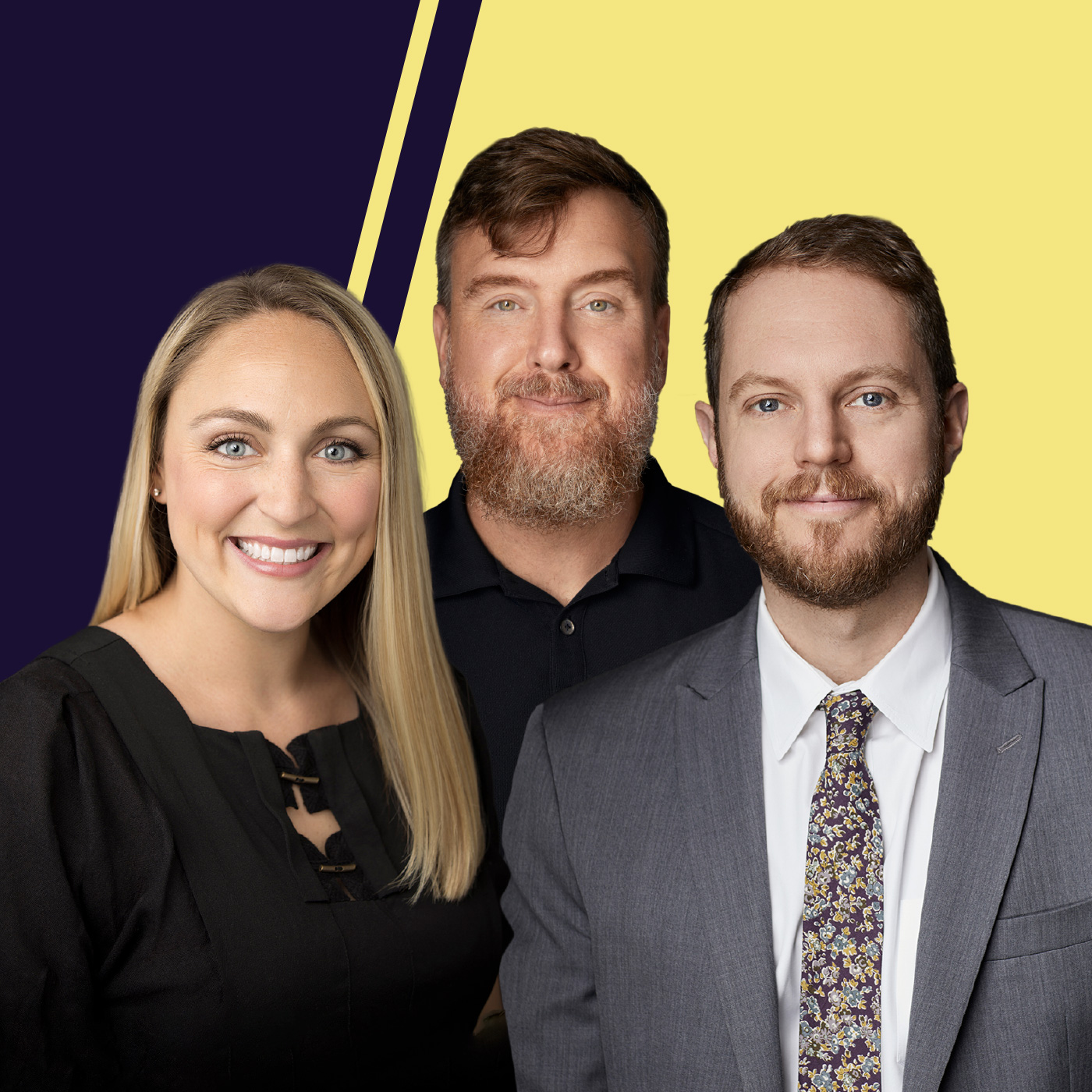
Welcome to fire's monthly webinar. Typically, these are open only to members of fire with a $25 donation, but this month we are opening it up to a wider audience of people. So if you are not an existing FIRE member and you want to be invited to other monthly webinars, please donate to fyre. It's the end of the year. It's a time when FYRE raises most of its money throughout the year to support the admission, and we greatly appreciate all the supporters and members that we do have. Before I introduce my colleagues here on the call with me, I want to talk about how this is going to work for those who haven't been at a monthly webinar before. It's largely question driven. So please, as you come into the webinar, go and down to the Q and A button at the bottom of your screen. A window should pop up and in that window you can type in your questions and we will get to as many questions as we can over the course of the next hour. So without further ado, I want to introduce my colleagues who are joining me today. I've been at fire for 13 years, and all of my colleagues on this call have been at FIRE longer than I have. So I'm the newbie on the call. Alicia Glennon is FIRE's chief operate operating officer. Will Creely is FIRE's legal director. And Greg Lukianoff, of course, is FIRE's president and CEO. Alicia. Will, Greg, welcome to the monthly webinar.
- [01:27]
B
Hey, Nico, glad you're back.
- [01:29]
A
I'm not quite back yet. Alicia's referencing a book I'm writing. I put the ink, not quite ink because I'm typing it on a computer, of course, but I put the last word on the page for the first draft and now I'm going through the process of editing it. So hopefully it will be done here soon and I can return to these monthly webinars on a more frequent basis.
- [01:49]
C
And if you're wondering, it's Taylor Swift fan fiction.
- [01:53]
A
Yes, yes. I've been to a Taylor Swift concert before. I am a Swiftie. We are the same age, so we kind of came of age together. Although I'm a bigger fan of her country music.
- [02:02]
Before we hopped on, we had a couple of members submit questions ahead of time. I want to address one of them to get started. As people are submitting their questions in the Q A box, one member asked, does freedom of the press apply only to corporations or organizations such as university publications? At the time the First Amendment was drafted, people didn't have what is the equivalent of a printing press in their homes, as we do today, put in parentheses here, meaning a computer printer and quantities of ink. Greg, what does the press clause of the First Amendment mean and who does it apply to?
- [02:35]
C
It's a great question. I mean, I'm definitely. A lot of us come from, like, a journalism background that was part of my undergrad major and I was a student journalist. But the press clause, what it actually means is surprisingly undeveloped. I definitely fall more into the camp of people who think that I want the speech clause to be interpreted as strongly as possible that also benefit the press. But there's also an interesting kind of side discussion about what the press clause actually meant in the first place. And I'm very much on the side of people like, I believe, Eugene Volek, who makes the argument that essentially they really were thinking about the physical machine, the technology of the press, much more so than they were thinking about the institution of the press, because it didn't quite exist, actually. It certainly didn't exist in any way like it would 150 years later for, you know, for example. But I think that's helpful to think about. And also, you know, another factual thing people really did, in some cases, wealthier people really did have printing presses, like in their basements and shops and that kind of stuff. They were private. They were privately owned, sometimes by one or two or just a family of people.
- [03:39]
But I do think that there's room for exploring more what the press clause could mean as additional protection. But right now, like our.
- [03:49]
Citizen journalists, pretty well protected by the Speech Clause Act. Absolutely. But when they're not in cases like the Via Ral case, which we've been involved in for some time, which that will can talk a little bit more about when it's not respected sufficiently, you know, Fire's there to. To argue that every citizen journalist has the. As the right as an American, as an American to engage in citizen journalism.
- [04:15]
A
So will if that. That. Does that mean that if I am at some public event and I report on that public event and posting about it live, tweeting about it on social media, that the press clause should theoretically protect me because I'm engaged in activities that the press is engaged in, even though I'm not a member of or a reporter for the New York Times?
- [04:35]
D
That's right. Your First Amendment rights don't depend on some credential. And in fact, Fire has been involved in cases where those credentials have been denied to folks on the basis of viewpoint. Thinking about a case involving conservative Commentators at the Gateway Pundit who are covering the Maricopa County Board of elections following the 2020 election. There were some changes in their admissions in response to their disagreements with the viewpoints espoused by the Gateway Pundit. Fire participators and amicus there. We've participated likewise on cases on the other side of the ideological spectrum. I don't think that any reading of the press clause that renders your rights contingent upon a vocation or some kind of credential is at all credible. To Greg's point about Volek's argument about the technology of the press, I would only add that folks who are interested in the subject should check out Matt Schaefer's response to Volek. Kind of challenging the understanding advanced by Volk. It's a really interesting debate between the two of them. Schaeffer's article is called the Press quote unquote, a response to Professor Volek. And you can find it just with a simple Google search and read the back and forth. It's fun.
- [05:50]
A
Will, I want to stay with you. We have another question from Robert. Robert asked what position has or wood fire take in regards to the Oklahoma student who was failed on a paper recently when she cited scripture and scripture only in her paper she is claiming this as an infringement. Is it?
- [06:06]
D
Yeah. Let me start out by saying traditionally fire and still not like traditionally as in we used to do it and now we don't. But traditionally, like we still don't do it. We don't get involved in grading disputes and that's for good reason. We are academic freedom and First Amendment freedom of expression experts. We're not, say, biology professors. But I do think that it's important to think about this case and others like it, this controversy and others like it by Remembering that the AUP's guidelines warn against indoctrination of students to treat controversial matter in a way that does not dictate answers to students. So if a student were to cite the Bible or any other document in support of an argument and then was failed again absent any other considerations like don't cite the Bible, you know, only cite X works, whatever, if you just had a vacuum where there was a punishment based on that kind of citation and there had been no request not to use those kinds of citations, yeah, I think that would be noteworthy. Whether or not it applies in this case, I think is probably a little tricky because I don't know and I asked my colleagues before we got on this call if they knew more about it. We don't know the exact grading standards. So we'll kind of keep an eye on it. We've reached out, and we'll be in touch. But long story short, if you're punishing students with a bad grade because they cited a source that you don't like, that may be indicative of a pedagogical choice that you might want to revisit. You know, I. I think that there's.
- [07:46]
A
Probably.
- [07:49]
D
Ways in which you want to run a class that doesn't allow folks to cite the Bible, and there's probably ways in which you want to run a class that allows folks to cite the Bible or any other text.
- [07:57]
C
Yeah. I mean, for me, like, one of the frustrating things is that pedagogical questions generally, like in sort of like, academic freedom theory, are supposed to, in an ideal world, be left to departments, you know, to decide if it was considered a good pedagogy. But after doing this for 24 years, I've been like, wow, that's not working out so great. So. And in terms of. And I don't have a good answer for what is exactly, you know, should happen if the argument is essentially that this person is engaging in, you know, an unscholarly approach to grading. And I don't have a great answer for it, but generally, that's one of the reasons why we stayed out of grading disputes.
- [08:37]
A
At the top of this webinar, I had mentioned that it's the end of the year. It's big fundraising season for fire. It's when we raise most of our revenue. I encourage all those who, again, are attending this and who aren't already FHIR members to go to thefire.org and become a FHIR member. But, Alicia, we have a question here from Bradley Boyer, who asks, besides money, what does FIRE need the most from members?
- [08:59]
B
That's a great question. We need to find more of our people. We need the message to. We need our message spread. And so I would ask everyone who cares about FIRE whether you can contribute financially or not. Spread the good word about what we're doing. Share our content with your friends, read our arguments, and then use those arguments in conversation. Practice what we preach, where we try to talk across lines of differences. We try to strongman the other person's argument. Actually live a life where you're embracing free speech and free speech culture. Attend our events. There's a lot of email us for volunteer opportunities. There's a lot of things that we can do besides financial support, because we're trying to build a movement here. Right. So we can't do it with just 137 people at fire. We need to have an army of free speechers behind us championing our work, especially when we're trying to put pressure on people in charge. If we're trying to do a campaign at a school to win a case or we're trying to go after a government official who's censoring their constituents, take action. We have opportunities where we have petitions where you can sign on to them. And again, really, I think sharing our content and encouraging other people to embrace this value and, you know, join this movement that we're building.
- [10:12]
A
Yeah, and embrace the value regardless of whether you agree with the speaker. I think so much of what we see today is people rising up and expressing opposition to censorship when it's someone on their side who is being censored and relative quiescence when it's someone on the other side who is being censored. Free speech can only prevail if it's applied equally to all speakers in America. So I think the thing that's unique about the community that we're trying to create at FIRE is that we are trying to create a principled community that's going to be there for this value regardless of whether we agree with the speaker. Because we know at some point the speakers that we do agree with will be the target of censorship. The pendulum swings back and forth as we've seen throughout American history.
- [10:55]
C
Yeah, and I did want to add there just both Alicia and I have been traveling the country like crazy people in part because it is harder to be a genuinely nonpartisan organization. We've always known that if you tack hard right or hard left, there's a built in constituency to give you money and won't even pay attention to that much even what you do. But we've always chosen to go the much harder way and that requires actually finding those individuals. And I think of our Kurt Jaggers, the head of our board and one thing that I love about him, among many things is that I would talk to him about cases in which I know he was completely opinion wise on the other side of it and the visible delight in his face in the situation, like you defend them. There was no second guessing it. He believes in this as a principle and those people you have to identify individually. But we have an amazing group of supporters already and we just want to grow the family.
- [11:56]
B
Melvi could post in for our viewers today. Greg's recent article, an eternally radical idea. A bad business model.
- [12:05]
C
Said lovingly about us.
- [12:07]
B
Said lovingly about us. About Fire has such a bad business model because we're just always pissing everybody off and we don't have any one kind of constituency that's always going to have our back, except for those free speechers out there. And so that's who we're really looking for. But I think our members today will really value that article if we can paste it.
- [12:27]
A
We're fighting against human instinct here. There was an editorial writer many decades ago who said that censorship was the strongest human drive, with sex being a distant second. And so it's really hard when you have that strong drive to shut up those with whom you disagree to convince people that, no, that's shortsighted. And Greg, you were recently the subject of an episode of the daily podcast from the New York Times. And to give folks a sense of how big this podcast is, on any given day, it's usually the number one podcast in the country. And they recently had an episode that kind of speaks to this theme that we're talking about right now. And Regina Dickens, one of our members, says, thank you, Greg, for your podcast. I heard earlier this week about the loneliness of being an advocate for free speech and the First Amendment. And the title of that podcast was, I think, something like the Lonely Life of a Free Speech Advocate. So it was really cool to see that sort of thing highlighted. And Greg, did you get a lot of good feedback about the episode? You got pretty personal in it.
- [13:24]
C
I did. There's like entire constituencies of people who don't know anything. I do, but they only read like the New York Times and the New Yorker who suddenly are coming out of the woodworks and be like, that was great. And I'm like, great.
- [13:35]
A
Okay, good.
- [13:36]
C
Now, I appreciate that. I was really anxious about that recording because I recorded for over four hours for that thing. And first it was a two and a half hour, sort of breathless, awesome conversation with Natalie, the person at the interview who I love. And then a couple weeks later, I had to come back and do another hour and. And then an additional half an hour on top of that that included kind of like, well, don't you feel responsible for Trump? And it's like, but the good news is my answer there was like, we've been like, I've been warning about, like, if you don't actually fix the free speech situation on campus, there's, in addition to that being bad all by itself, you're going to have a right wing backlash, obviously. So you don't really blame the person who was actually warning you about something that could have avoided It. But I was honestly, I was kind of moved by. I really felt like with that much rope, they could have hung me if they wanted to, because that's a lot of meat yammering on. So I was really pleased with how it came out and how a lot of people though, have been writing me and saying, well, why don't you talk about this thing? I'm like, I did, but it was over four hours of interviews that they tried to squish into about 45 minutes of me talking. But overall it was a great experience.
- [14:50]
A
And don't invite Greg to a baseball game. And if you want to know what that's a reference to, you have to listen to the podcast. Sorry, Alicia.
- [14:56]
B
It was the only part of the podcast that I didn't like.
- [15:00]
C
Perry told me. And I'm thinking about actually writing a post. What I mean by that, I think you should.
- [15:05]
B
I think you should. All I was going to say was that I thought it was heartening that you got feedback from people old and young. You even had like high schoolers write you about what should I try to do in college so I can follow in your footsteps and defend free speech. And so it shows the extent that the daily is listened to, but also how people were moved to reach out to us and ask more about our work and about Greg. So it was a great opportunity and I hope you all listen.
- [15:29]
A
I think, Greg, you did say on the podcast that you were somewhat of a juvenile delinquent, so don't follow in those footsteps necessarily.
- [15:37]
C
I got more specific about that, by the way, in the ERI post. And angel took it, took out the. My confessing to things essentially. And one of my best friends from high school was like, why didn't you mention that thing?
- [15:49]
A
And I'm like, I tried to. So it was a big deal for us, big platform for people to become acquainted with our work and hopefully join the movement to free speech that we were just talking about. But Greg, I want to stay with you. We have another question from Nabil Muhammad, who asks who says Iowa State rose significantly in fire's latest free speech rankings this year, signaling positive institutional movement. At the same time, we recently saw a case where an ISU employee was dismissed after posting provocative comments online after a controversial public figures death. How should we interpret tension between macro level improvements and micro level punitive incidents? So I'm imagining that incident, if it involved a faculty or a student, wouldn't be reflected in the latest free speech rankings. But these are things that evolve year over year. And so I guess to zoom out, what. What can you take from the college free speech ranking in any given year? And what does, you know, an incident like that signal?
- [16:44]
C
I first want to say that's. That's a terrifically formulated question. Like, just.
- [16:48]
A
Just.
- [16:48]
C
Just really thoughtful. So, yeah, the first point is, the one that Nico already made is that if there was an incident involving free speech, that. That might have affected student perception of free speech on that campus or harmed a student or faculty member, that probably happened too late to be included in last year's data, either in perception or to have something in scholars under fire or students under fire. If it's a staffer that gets more complicated, staffers don't have the same kind of free speech rights as.
- [17:23]
As students and faculty. And that's one of those interesting things. And honestly, in a lot of cases, we're opposing.
- [17:31]
Administrative overreach, but when it comes to.
- [17:37]
The gap in perception in that, I am very proud. There's no such thing as a perfect survey, but the amount of data we crunch.
- [17:47]
In the free speech survey is, I think, just amazing. It always includes the biggest survey ever done of student opinions on freedom of speech and the largest database that exists ever made of faculty getting punished, students being threatened with punishment, speech codes, and deplatforming. There's never been anything even vaguely close to it before fire started doing this. And when you factor those things together, I do think you tend to get a pretty accurate picture of what it's like around the edges.
- [18:19]
Could there be cases that we never hear about that were horrible? Absolutely. But I do think that what you're picking up there, and I assume this is related to the murder of Charlie Kirk, is that the opportunistic, frankly, backlash? Because I want to be really clear, I was horrified by the murder of Charlie Kirk. I disagreed with him on any number of things, but I just thought it was a horrible moment for free speech as well, because I think it's pretty clear he was killed for his point of view. But the backlash to it led to an absolute spike in people getting in trouble for, in some cases, saying things like, you know, more or less, he had it coming. But there are also people saying things almost as tame as I just said, which is essentially, I disagree with them on a lot of things. And so that was, you know, something we're going to be looking back. It was so bad, it's like, of historic significance. Like, this was something I wrote about in the New York Times about a case that we're involved in where a former former cop got 37 days in jail for a meme that you can look up which is really more critical of Trump than it is of Charlie Kirk. So I think what you're talking about is a massive national backlash that we have been fighting non stop for a long time. But it's an ugly and sad sign about the state of free speech nationally.
- [19:42]
A
Let's stay in Iowa. We've got a question from Rich, who asks what's the latest with the Ann Seltzer case? For those of you who aren't familiar with this case, this involves the Iowa pollster Ann Seltzer, who had a poll before the 2024 election that predicted Vice President Kamala Harris winning. And ultimately, of course, President Trump won the state of Iowa and subsequently President Trump sued Ann Seltzer in the Des Moines Register for consumer fraud in that state, essentially for getting a poll wrong. Where will, assuming that I got the facts of that case right, where does it stand currently?
- [20:15]
D
Well, there are two cases, so I'll take my turn. And thanks, Rich, for joining us. Good to hear from you. There's the case filed by the president directly against Seltzer and the Des Moines Register, and that one is now in state court.
- [20:32]
Then there's the suit, kind of a copycat suit filed, styled as a class action against same defendants Seltzer and the Register making the same argument. It's kind of just another bite at the apple. And the first one is proceeding the Trump suit. The second one, we just got a good victory last month where the court here, federal district court, found that the allegation that Seltzer's getting a poll wrong with somehow actionable consumer fraud under state law was completely baseless. And I'll just quote to you some of the very satisfying words from the court. Court held the plaintiff had, quote, no factual allegations to support his claim, instead, quote, invoking mere buzzwords and speculation. So we're really happy about that. The results of an opinion poll are not an actionable false representation merely because the anticipated results differ from the, well, from what eventually occurred. Maybe most satisfying of all, the court said, quote, there is no free pass around the First Amendment. So we were very gratified to see that result. It was exactly right. And we're hopeful for a similar result in the president's case.
- [21:53]
A
Will, I see that there are a number of questions that you said you were going to answer live here?
- [21:57]
D
Yeah, I've been jumping in. Folks are asking a lot of good ones. It's been hard to not just want.
- [22:02]
A
Me to pick one for you or do you have one that you want to go with now?
- [22:05]
C
You got to stop asking good questions, people.
- [22:07]
D
Let's spin the wheel. Whatever you got.
- [22:09]
A
All right, let's go with Bill. Bill says I'm publisher of the Gateway Journalism Review, formerly the St. Louis Journalism Review, where we've written a lot about the Gateway pundit, which is a publication or poster that you had referenced earlier.
- [22:23]
C
Yep.
- [22:24]
A
What do you think about his arrival in the Pentagon press room under the new press regulations? I'm assuming that means the Gateway pundits one person. I don't know that, but I'm assuming the question more broadly is about the new Pentagon press room regulations.
- [22:38]
D
Well, let me say a couple things off the top. Number one, and this is important, probably bears repeating every time we're speaking to new folks, Fire takes no position on the merits of the speech we're defending. What happened in Maricopa county with the case I was referring to earlier was the use of viewpoint based rules to define who can and can't gain access to a press space. That strikes us as inherently problematic in the same way, on the opposite side of the ideological spectrum, that the president's anger with the Associated Press about their decision to continue calling that particular body of water the Gulf of Mexico rather than the Gulf of America was equally problematic. So just make that clear at first. With regard to that, does that feel.
- [23:22]
B
Like that was like 10 years ago?
- [23:25]
D
It feels about 4,000 years ago.
- [23:28]
But to Bill's good question, what do you think about the new Pentagon press room? And I guess I did not know the Gateway pundit was in there, but, but that checks out. I think what happened with the Pentagon press rules is ridiculous. Our colleague Adam Goldstein has written at some length about the various First Amendment problems presented by, and just the normative problems presented by the Pentagon's new rules for the press rules that the.
- [23:56]
Organizations and institutional press members that have been there before, to their good credit, I think collectively refused to accede to. And so now you've got other folks in there instead. I will refer folks, may I throw a link in to Adam's good post? But to summarize briefly, those rules really require the press to self censor, to disregard its journalistic function, to just kind of play patsy to the government and accept the party line. I don't care who's in office. That's the exact wrong thing to ask of our free press, which is one of the cornerstones of our.
- [24:38]
Of our system of government. You know, you can't have an informed electorate without a press that's willing to ask hard questions and not just receive spoon fed answers. So it makes me mad as hell. Bill, to answer your good question, Alicia.
- [24:51]
A
There are two questions that can probably be taken together here that are similar to the one that we addressed earlier, but different in other ways. What is the value of a small dollar donation? Ballpark, 25 to 1 donation. Do smaller donors help you unlock bigger donors? And then Lorna also asks, how do we find ways to volunteer?
- [25:09]
B
I'll take the last one first. They can email me. Alicia. Oh, that's interesting. We actually changed our email addresses recently, guys. So our email addresses are now@justire.org instead of the fire, we got that four letter URL.
- [25:27]
A
That was a decade long odyssey that we had to try and kind of pull that URL away from some fire suppression company in Montana.
- [25:35]
B
Nico would put it on his calendar every year to reach out to fire.org to see if they're ready to talk with us about possibly getting it. And we finally did. So it's aliciaire.org and we don't have any mass volunteer opportunities like stuffing envelopes, but we talk to people and figure out what their strengths are, what their skills are, what they're interested in. And if we have something here we could use your help with, we work with them individually. We're also going to have a huge conference next year. Soapbox will be here in Philadelphia. There'll be volunteer opportunities there. So if you reach out to me, we can talk and see if there's something available. As far as the question about small dollar donations, well, they're valuable for a bunch of reasons, but I want people to remember that while fire does have some major donors that are giving, you know, six figures here, we rely on the tens of thousands of donors that are giving us small dollar donations. So last year we brought in 22,000 gifts. Every single dollar helps. And it really does add up. As someone who isn't a major donor to other organizations, but I am a donor. I know that my, my contributions are making a difference because of the position I get here at FIRE because I can see your donations making a difference, even if they're 25, 50, $100. Some people just donate $10 a month. But to answer your question more directly, it actually does help us unlock other, bigger gifts. Because what we want to show and what we want because it's true, is that we are having an influence. We are changing the conversation. We are bringing people in, we are attracting Americans to this work. So if I can go to maybe a major foundation and say, hey, look, this year 30,000Americans pledge support to FIRE. That shows that FIRE is having an impact and an influence into the free speech conversation. So it helps in lots of ways. Even if you can only contribute $25 or less, please do. We would deeply appreciate it. Every dollar counts.
- [27:31]
C
Yeah. And I really want to stress that the and it's definitely also something we realized pretty early on is that the health of a civil liberties organization is in many ways how many small dollar donors do you have because you don't want to be the organization that's dependent on a handful of people who might, you know, when the political winds turn, decide they don't like you anymore. I do think that the fact that we do get 22,000 gifts a year is a sign of health, but I want it to be bigger. And something that actually really does help as well is when you get up to a level where you can get like a FIRE T shirt or Fire polo or just go to the swag store and buy one.
- [28:13]
People just seeing our name out there makes makes a difference. And being a card carrying member of FIRE is pretty. Is pretty cool. I have my card in my wallet, although it doesn't say 2001, which it should.
- [28:25]
The But I do think all that stuff matters.
- [28:28]
A
And there is a link at the top of our website if people want to check out our swag store. I know it is the holiday season and people are considering gifts, so give the gift of free speech, which you can do at the top of fire's website. We've got an anonymous attendee asking how do I join the chat? And is there a way to save the transcript? The chat, just as a reminder, if you want to ask a question is at the bottom of your screen. You can click the Q A button. Also, this will run as a so to Speak podcast. So to Speak, the Free Speech Podcast is the podcast I've run here at FIRE for the last decade. You can get it wherever you get your podcasts, including subscribing to the podcast on Substack. So if you want to listen to this down the line, you can do so. And we usually post a transcript of each episode a couple of days after. It takes a couple days to get a professional transcript as opposed to an AI transcript, which is less good to use bad grammar than some of the professional ones that we get. So that's one way to find it. I want to answer a question from Mark Schneider who said, isn't Indiana playing in the football championship a good opportunity for us to publicize Fire through Indiana's dismal rankings.
- [29:32]
B
Was that. Was. Is he a plant? That question is so perfect that I feel like, Mark, you had to know, Nico, I know you want this one.
- [29:41]
A
Well, I do want this one. Mark's recognizing here that Indiana University Bloomington was the last ranked public school in our college free speech rankings for free speech. It's had just a litany of censorship incidents over the past couple of years. Placing snipers on the top of the student union, overlooking student protests, implementing speech codes, deplatforming an art exhibit at its art museum because it had a pro Palestinian artist sanctioning faculty members. The list just goes on and on and on. I am an Indiana University alum. I loved my time at Indiana University. And in fact, one of the things I loved most about being an Indiana University alum was its tradition of defending academic freedom. Over the years back in the 1940s or 50s, there was this famous sex researcher, Alfred Kinsey, who kind of invented the field of sex research, who was repeatedly under pressure from the state legislature to shut down his research institute. And Herman B. Wells, the chancellor and president of the university at the time, repeatedly rebuffed those efforts. And they even made a movie about this starring Liam Neeson called Kinsey, which I recommend you all check out. Fast forward to today and you are getting some of the similar pressure from the state legislature. But the administration at Indiana University doesn't have the backbone that Herman B. Wells had half a century ago or more than half a century ago to rebuff those efforts. And we are doing a lot to push back on the censorship at Indiana University. We took out billboards around the community. So when you're coming in and out of campus, you can see messages criticizing the university for its censorship. And at the Big Ten playoff game at the Big Ten championship, I should say last weekend, where Indiana University beat, I should say Ohio State, we had a plane fly around. A big banner says that Indiana University hates free speech with a link to folks can lose more. Now. The game was played in a dome stadium, but we flew it around during the tailgate in the hours preceding the game. And they actually had a kind of a no fly zone during the game. So we couldn't fly it during the game even if we wanted to. But we were looking, looking for every creative opportunity we can to put pressure on the administration. And we're starting to see some movement. The university just announced that it was going to investigate adopting the Chicago Statement on Free Speech, which is the 2015 statement adopted by the University of Chicago that we have called the gold standard for protecting free speech on a college and university in policy. So hopefully there will be some movement there. And I will just say, as a non free speech note, the fact that Indiana University is the number one football team in the country is incredible. If you would. I was an Indiana University student. I ran track there. Indiana University football was a laughingstock. The games were a tailgating opportunity and nothing more. If you would. If I had the opportunity to put $100,000 on the idea that Indiana University would never make it to the college football playoffs in the next hundred years, I would have taken that bet without a thought in 2012. But here we are and they are in the college football playoffs. But my beloved Notre Dame got screwed out of it. So don't let me go long on that one. I think we'll just pivot now to the next question.
- [32:54]
B
Can I just say something really quickly? I think that that is a great demonstration of fire's ability to take cases that don't. That we don't necessarily need to always litigate. When I was looking at a recent board report, we have 33 active litigation cases and 300 active advocacy cases which we can fight in so many different ways. Obviously the IU one is a very creative way to try to get our way, but we have whole teams here at FIRE that that's what they do. That's what they think of. How can we put pressure on these schools? How can we put pressure on those in charge to do the right thing? And it doesn't always have to be with filing a litigation suit. But the fact that we can file suits and win helps in all of our advocacy cases because they know that there's teeth in what we're doing. And so having multiple tools can help us do a lot more advocacy than we would be able to do if we only had one or two.
- [33:46]
A
We have a question from William here. Do you believe us courts are trending in a more speech protective direction, Will, or a more speech restrictive one over the last few years? And are there any patterns in recent cases that stand out to you? William did not address it to the other Will on this call, but I'm sending it in your direction anyway. Will.
- [34:05]
D
I'm happy to feel that it's a great question. You're catching me on a somewhat pessimistic morning, so I'm going to give you a somewhat pessimistic answer. I think there are real threats to First Amendment jurisprudence right now. I think there is a troubling willingness to re examine what had been considered bedrock foundational decisions of the past 60 and 70 years, and to revisit those bedrock foundational decisions in ways that that would result in greater hand to the government to restrict free speech. But let me put it like this. Regardless of how I'm feeling at this particular moment, I always tell my attorneys that we are blessed to do this job with a great deal of outstanding precedent. Not only is the United States the most, I think, speech protective nation in the world, which is a hell of an inheritance, but we have a good 70 years of very solid case law enshrining our rights with sufficient particularity and flexibility to withstand a variety of threats from all corners of the ideological spectrum and all branches of government. So first of all, national park rule, do no harm, leave it as nice as you found it. So a lot of the work that FIRE does in our litigation department and our public advocacy department and in our campus rights advocacy is to keep the starch, so to speak, in First Amendment standards to make sure that those rights don't just exist on paper or in dusty precedent, but they are used and still viable and still useful to protect what we have already on the books. That's number one. Number two, what do I think about right now? I think the court, this current court, has gotten a lot of big First Amendment questions, right? We had three very solid rulings from the Supreme Court last term about jawboning, for example. That's the abuse of government power to shut up disfavored speech from private entities about social media laws that would have required social media companies to punish or platform certain speech. That would have been a big problem. And about the use of government accounts to comment on social media and what rules should govern those. So we've got some good rulings from the court, but we also have some disappointing rulings as well and some missed opportunities. I'm thinking particularly of a case called Free Speech Coalition v. Paxton regarding age verification online, which is the kind of example of this revisiting of settled precedent that makes me very nervous. And we've seen some disappointing decisions not to get involved in cases recently that, that I could go along on as well. But let me, let me just answer your question in sum briefly by. There's a hell of a lot worth fighting for, and that's what we're trying to do here every day. Is it perfect? No. But that's why we exist, and that's why my colleagues and I get after it 24 hours, just about seven days a week.
- [36:58]
A
We've got 49 unanswered questions. So we're going to try and move at a pretty good clip here in the 20 plus minutes that we have remaining. Greg, this is a question from another William Was there not legitimate cause in at least some cases for discharging people from their employment, for publicly celebrating the assassination of Charlie Kirk, for instance, if there was good reason for the principles of a business firm to suppose that retaining. And then the question cuts off. But I think you get the gist. So how should like a business think about someone who's on staff and is saying things that makes doing the business hard or violates the principles of that business?
- [37:37]
C
So the frustrating part for a lot of people on the subject of cancel culture is essentially that it's about culture, unavoidably so it's never going to have the same kind of precision as law, nor would you want it to. And I think this is one of the reasons why it drives some people with legal backgrounds kind of literally insane. They hate the idea that it's just law and there's no such thing as cancel culture. It's like, well, that's nonsense. Where did our law come from? It came from our culture. And I try to get people to think about it in aggregate that essentially if you have a situation in which the boss or the, or the HR committee gets to decide what political opinions you can say publicly at every job in the country, you're not going to have a lot in the way of free speech anymore, at least for anybody who works for a private company. And that's a bad outcome when it comes to the individual calls from companies to be like, listen. And the law reflects this as well. There's a lot of wisdom inherent in the law. So like Garcetti v. Seballos, for example, is, you know, like if you're in a front facing or for that matter, like a spokesperson type job for a job, and suddenly you say something that makes nobody want to listen to you anymore, that's understandable consideration. The court recognized that in that case. However, I also think in that case they had a narrower case way to decide it and they decided to have much wider.
- [38:57]
Vaguer language. And we've been suffering from that for a long time. So do I try to make the call that someone shouldn't be fired in an individual case? In a lot of cases I just, you just have to, you know, weigh cultural concerns and point out how this could be a bad trend and that we shouldn't want to live in a country where you can have a job and an opinion or both will not.
- [39:20]
A
Both will. There's a question here from Bill. If a campus speaker at a public university criticizes Israeli war policy in Gaza, is that speech protected by the First Amendment? Even though some Jewish organizations could consider it by definition anti Semitism? It seems that the Trump enforcement actions rely heavily on equating anti Israeli speech as creation of a hostile educational environment. I should say we have a separate question. I'm having a hard time finding it within the 48 open questions, but the question was, effectively, you have Zionists and anti Zionists both claiming hostile environment because of speakers on the other side of the question on campus. How do you sort through this, these hostile environment claims? What does hostile environment actually mean under the First Amendment?
- [40:05]
D
That. That. There are a number of good questions on this front. Let me see how quickly I can do this. Title six is a federal anti discrimination law that prohibits schools from discriminating on the basis of race, color, national origin, or shared ethnic ancestry. It's been interpreted by administrations from both Democratic administrations, Republic administrations, to include discrimination that would reach.
- [40:34]
Shared ethnic ancestry in a Muslim country or a Jewish country like Israel. That's the basics. To constitute discriminatory harassment, you have to have conduct that is so severe, pervasive, and objectively, objectively offensive that it prevents a student from obtaining an educational opportunity or benefit. Now, that's a high bar. And it has to be because in response to another good question I saw, what does fire think about hate speech? Well, the vast majority of hateful speech is, first of all, it's subjectively defined. My understanding of hate speech might be entirely different from yours, but second of all, it's protected by the First Amendment. That's the unique commitment to free expression we have in this country. We've chosen, to paraphrase the Chief Justice, a different path to tolerate words that may inflict serious emotional pain on folks in order to preserve the widest possible realm for debate and discussion. So, long story short, if the student is just, you know, on campus saying, you know, objecting to Israel or saying, from the river to the sea, Palestine will be free, entirely, protected expression. And we've been on that point for a long time making the argument that speech alone is not enough. Now, if that same person is protesting, and let's say, I don't know, how ridiculous do you want to get here brandishing a knife or maybe not ridiculous, cornering somebody and refusing to let them leave or a room or a place or taking over a building? Now you're starting to talk about differences where it's not just expression, there's also actionable conduct involved. And those things universities can and we would argue must prevent and punish. But pure expression alone, entirely protected. You'd have to concoct some kind of scenario where the person is doing more than just speaking to render it punishable by university. And let me just quickly add that we've got a lot more of this information on our website. I wrote a post, maybe I'll throw in a link here identifying the exceptions to the First Amendment. Because there are exceptions. They're narrow and they're well defined and we fight to make sure they stay that way for any number of important reasons. But I wrote about those exceptions and what we've seen on campus post October 7th and in the protests that followed.
- [42:47]
C
Yeah, and I do want to just add that there's such a widespread misconception that hate speech is unprotected speech in the United States and it's just not true. I do think of hate speech as being probably the most successful PR campaign for censorship in my lifetime. And it, and it has been, you know, it is the reason why they're arresting 12,000 people a year now in the UK. Basically, when people looked at it, it's like, oh my God, like you'd have to arrest people on a massive scale if you actually enforce these across the board. And now we get to see in the uk. Yeah, that's exactly right.
- [43:23]
B
And it's not just cabin to one side or people that, you know, younger people who should know this. We saw both Tim Walls and Pam Bondi within months of each other. Both say hate speech wasn't protected speech. And so another thing that fires there to be like, no, Tim, you're wrong. No, Pam Bondi, you're wrong. We have a bunch more information about that on our site as well.
- [43:45]
C
So it's not just the Youngs.
- [43:46]
B
Right? Right.
- [43:48]
A
Will, a follow up question from Chuck Coleman here. He wonders about globalize the Intifada, which seems to him like incitement to violence. What does the First Amendment have to say about that?
- [43:59]
D
Incitement to violence is speech that is directed to and likely to result in imminent lawless action. So you'd have to be saying.
- [44:09]
You know, mere advocacy for violence at some unspecified future time is entirely protected by the First Amendment, whether you're saying, you know, globalize the intifada or it's exact opposite.
- [44:21]
We had a case, I think, involving a professor who said something like, every member of Hamas should be executed and was punished for that. And we also had a case where somebody Said something like kill Zionists. And we were defending both of those because neither case, that speech. In neither case did the speech meet that narrow definition of incitement. Again, we give speech the widest possible range in order to allow folks to make up their own minds without the government saying, yes, you can or no, you can't, as Greg put it. I'll paraphrase you here, Greg. Widest possible range of opinions, least possible, tolerance for violence. And you have to keep that distinction absolutely front and center. So I hope that answers the question. I'm. So I'm working. Sherry, if you're on there, I'm working on answering your good question about the rankings over here.
- [45:06]
A
In the meantime, Craig asks, how does Flyer distinguish between free speech online and misinformation online? Craig says he's from Fort Wayne, Indiana. Go Hoosiers. Like that. Craig, thank you. Solidarity here as we come into the College Football Playoff season. So the First Amendment, and I hope my colleagues will correct me if I'm wrong, doesn't create any sort of distinction between misinformation and free speech. Indeed, Justice Anthony Kennedy, in his majority opinion in the Alvarez case back from 2012, said that our constitutional tradition stands against the idea that we need Oceana's Ministry of Truth. And that's a reference, of course, to George Orwell's 1984, where the Ministry of Truth was a government institution that decided for the rest of its citizens what was true and what was not true, and it could only distribute what was true according to the government's narrative. So there's no distinction here under the First Amendment unless it would fit one of the narrow categories under the First Amendment that are exempted from the First Amendment. So that would be fraud, defamation, for example, incitement to imminent lawless action. But I see Greg raising his hand here because I know this is a particular point of contention with him.
- [46:16]
C
Did I hear epistemology? I'm so excited. Yeah. I mean, this is kind of like the central kind of philosophy of my whole, like, reason for being a First Amendment person. The first place is that one of the great revelations in human history is that the world is hard to understand and know what's even happening in any given moment. This doesn't come intuitively to us. We're designed for it not to come intuitively to us. But it is hard to know what is true.
- [46:46]
On a daily basis and all the time. And the only cure for misinformation, disinformation, are authorities not coerced by power that people can respect and trust. And can double check. And one of the things that I was screaming my head off in coddling the American mind and canceling of the American mind even more. So two of my books is that when you create a situation in which people believe the expert class is actually not saying what they really think because they're afraid they're going to get in trouble, nobody will trust them anymore. So the cure for misinformation disinformation is structured friction. It's expertise that we can trust, but it is all the premises embodied in academic freedom and free speech respected to a huge degree that they simply haven't been. So there's no easy solution to misinformation disinformation other than giving power more power than power should ever have.
- [47:42]
A
Yeah. And with the advent of every new communication technology, there's also the accusation that it spreads more misinformation and calls for more government involvement to police that alleged misinformation. I think it even happened with the Telegraph, for example. So we have a question here from Bill. I'm trying to initiate an alumni and friends group for a major public research university to support free speech, freedom of academic inquiry, etc. But I'm having great difficulty getting any traction either with alumni or members of the academic community. Does FIRE have any ability to assist with such efforts as this? Does FIRE have any experience working on this sort of thing? Alicia, do we have any experience? We do start alumni groups.
- [48:20]
B
We do. We currently have helped START alumni, 30 of them across the country. We have dedicated staffers here at FIRE who. That's what they do. They organize alumni of different schools. We get them together. We send them information. We have events with them. We give them the tools that they need to go and advocate for free speech and academic freedom on their own campuses. We've even helped them set up websites, get their administrative, you know, the administrative work out of the way so they can do the real work. And we'd be happy to help anybody on this call. Just reach out to us. There you go. Thank you. Melvi.
- [48:55]
A
Interesting question here from Lisa. I teach intellectual property law classes at the University of San Diego School of Law and write about how trademark rights can potentially conflict with free speech. What does FIRE think is the best approach to protecting free speech rights with regard to the training and use of artificially intelligent computer programs to create new text or images, which some argued violates copyright and trademark rights? I have strong opinions on this.
- [49:22]
D
Why don't you go first? I'm not sure we have an exact institutional position. There's Something we debate pretty regularly internally. But I don't know if Fire. Yes, Fire. Has an organizational position. Go ahead, Nico.
- [49:33]
A
Yeah, we play with some ideas here. I mean, my position is not necessarily unique. Others have put it forward. But if I can go into a library and survey someone's copyrighted materials, research their copyrighted materials and produce a new work based on those copyrighted materials and the learnings I get from them, then I think artificial intelligence should be able to do so as well. Assuming, of course, that the. The use of those materials is publicly available on the Internet and doesn't require some sort of subscription that the intelligence is trying to. To circumvent. If I look at a Mark Mark Rotho paint, Rothko painting, which is copyrighted and I'm inspired by it and create a new work, I think that that that should be protected or fair use. If I look at a John Hughes film and I'm inspired by it and create another film that's kind of in its likings, I think that should be protected as well. In all these cases, I'm learning from copyrighted materials as Greg has a window washer washing his window behind him. So I think artificial intelligence is just a tool to research and learn, much in the way hiring a research assistant to go into a library and research in a copyrighted material is a tool as well. And I don't think that we would say you can't do that, but there are many nuances to this conversation that I know I am glossing over and that complicate it. But will, what do you think?
- [50:51]
D
I'm going to leave it there. Can I answer the question about Hazelwood v. Kohlmeier?
- [50:56]
C
Actually, can I chime in? I'm a former IP lawyer. Like that's what I actually did for the year before firewalls, looking for a First Amendment job.
- [51:04]
A
That's awesome.
- [51:05]
C
And yeah, the obvious tensions between IP law and the First Amendment is one of the things that made me even more powerful passionate about finding a job in the First Amendment. I do think you can balance the two, but there's always going to be a necessary tension. And it's been interesting to see how companies are going to. Are going to navigate it. But it can be used very cynically. We just wrote about, I just wrote on X like an hour ago about attempt to use trademark law from the cease from China to silence a group in the United States on a US server that tries to show repression in China. So it is something that can be a very dangerous weapon and misused to go after core political speech.
- [51:49]
A
All right, Will you want to talk about student journalism?
- [51:52]
D
I just want to do like a speed round in these last seven minutes. Bill writes, we've written about the college newspaper censorship dispute at Indiana University. Do you think that university officials can rely on Hazelwood v. Kohlmeier when putting strictures on the IDS paper? I've written that Hazelwood is one of the most limiting First Amendment decisions of the past half century. Do you agree or am I exaggerating? And would it apply at the college level? For folks who don't know Hazelwood, it is a 1980s ruling from the Supreme Court about a high school paper and a principal who censored the high school paper and the court, to their lasting shame and discredit, got it wrong and said that that censorship did not violate the First Amendment rights of the student newspaper editors because it was part of a legitimate pedagogical.
- [52:39]
Activity at the rv. Sorry. Legitimate pedagogical reasons for taking the steps to censor the paper. And we've seen and fought for damn near 20 years now the bleed of Hazelwood into not only other K12 student speech cases, but to the college setting as well. And we have fought against it in letters via friend of the court filings, in our lobbying work work. We're strong supporters of the Student Press Law Center's New Voices act, which is designed to reverse Hazelwood and to protect against it at the state level. It's now been passed by, I want to say, 26 something states. And we've been very supportive of that. So, no, Bill, you're not wrong. And thanks for letting me vent about Hazelwood.
- [53:23]
A
Alicia, Sarah asks, how do you stay hopeful in this time when the sides are so divided and are having such trouble recognizing their own hypocrisy?
- [53:30]
B
Hard to answer that one rapidly. I feel you honestly, like I. Sometimes I do feel like, oh, gosh, everything's gone crazy, what's happening. But what makes me feel hopeful is getting to put my hands to work every day. I would really encourage people to find something meaningful where they feel like they can make a difference. It feels good to be active. I saw someone, a donor, say, in a meeting yesterday, fire isn't a think tank. We're a do tank. And so I'm hopeful by getting to do the work. And in doing the work, I get to talk to lots of people who really, truly get it. I also am hopeful because I know when it comes to free speech and the First Amendment, that fire will always be there to be a watchdog no matter who is in power, no matter who is a hypocrite, we'll be there to call the balls and strikes. Also hopeful, because I've gotten the opportunity to get to work with our younger students, interns, people who, the high schoolers that come to our camp. I see them, I see them wanting to have free speech. I see them wanting to have artistic freedom and be authentic. And I think there's opportunity there. I'm not going to pretend that it's all flowers and butterflies. This is really hard work. There's a lot of serious threats going on and sometimes you can feel down about it when it's coming from all directions. But my biggest advice is to.
- [54:46]
Understand that what we're actually working for, what the American experiment is all about, is worth it. We are lucky that we get to do this fight, that we get to do this work, that we get to champion something that, that no other country in the world is doing like we are. We're unique in that way, and it's something special. So I find hope in knowing that there's a group of people, civil libertarians, of people who love liberty and freedom, that are going to come together, be the watchdog that we need and, you know, no matter who's in charge, be the ones that are securing our rights. And I get to do that. I get to go to the events and meet the people. So that's what brings me hope and I hope for you all on this call who don't get to work at fire, but being part of this, you get to put your hands to work a little bit too. Doing this work and that will make you feel a little better.
- [55:33]
A
Greg, we have a question from Bruce. Earlier in the conversation here, he asks or says the EU has been in the news recently on speech. A report indicates almost a quote, lowest common denominator, close quote approach. For example, if Spain deems it can restrict certain speech, then that speech can must be censored on any large platform. Think X effectively, it's claimed, preventing someone in, say, Tennessee access to this certain speech, pretty daunting, it seems. How do we handle these sort of situations where we have globalized speech platforms like X and you have certain countries that do not abide by First Amendment standards. And to tailor the speech standards in any individual country for any individual company is very costly. And we're, I should add, just kind of as an addendum here, we're sort of seeing this in the United States with, with artificial intelligence. In the moment you have state by state regulation of artificial Intelligence. And that's why you see the Trump administration advocating for a so called AI State regulation moratorium, for example, just becomes difficult in a globalized world to police speech in localities.
- [56:39]
C
Yeah, you can actually, if you follow me right now on X, you can see that I'm, I'm in a bit of a food fight about censorship in the European Union. And it's very funny watching people respond to, you know, my overall skepticism of the eu, like the recent massive proposed fines against X. You know, like, I'm sorry, like X is just trying to bring everyone to heel. I mean, sorry, the European Union is trying to bring everyone to heal. They can. Like I've looked at the situation for free speech in the European Union and also outside of it in places like the UK and it's disastrous and it's getting worse. I think that we are deeply aware at fire of the potential threats from foreign illiberal regimes, whether they're Western or not.
- [57:25]
We want to make sure that that doesn't harm free speech here. But I do actually think you have to start making an argument for free speech as a global human rights norm because we can see serious threats to free speech in the United States if we just think our little prejudice towards free speech is just our little peculiarities. Americans and everybody else can censor as much as they want with no harm to the rest of them us. That's nonsense. So I'm pretty animated about this particular topic. I think that the threats from China are bad enough by themselves, but when you add to it Russia, Iran and terrible ideas consistently coming out of the European Union and a lot of the Anglosphere, we've got to regain some ground and not give an inch on free speech. As a ethical and deep philosopher.
- [58:15]
A
Alicia, you want to help answering this one? We have a question from Harvey here. Can you sketch out a Venn diagram comparing FIRE with the aclu? We get this question quite a bit, right?
- [58:24]
B
Sure.
- [58:24]
A
One obvious difference is fire. The ACLU works on many more issues.
- [58:27]
B
I think the part in the middle is we both defend First Amendment rights and both defend free speech. And we work with a lot of the state and local chapters often to do that. I would say the biggest differences are we have one issue area, one issue area only, free speech. The ACLU I think at this point has 19. The other difference is we don't comment on the nature of the speech that we defend. We don't say, well, you know, do any throat clearing and say, well, we don't agree with the speaker. Or while we think this is Bad. We're going to defend it anyway. That's not a practice that the ACLU engages in.
- [59:00]
And we're smaller.
- [59:03]
They have hundreds of thousands of members somewhere. That could be a goal of ours, where we want to be. But I think we are truly nonpartisan. Our staff is very diverse. Our plaintiffs are diverse, our donors are diverse. That's obviously a difference between the two organizations. And I think, you know, I work here for a reason. I think that is a superpower of ours and makes us better for it.
- [59:23]
A
So, yeah, and the ACLU does have a 75 year head start on us. They're founded in 1920. We were founded in 1999. But folks, that is the end of our hour together. I saw there are a couple of questions about whether FHIR has a substack. We've referenced a couple of substacks during this call. Greg has one called the Eternally Radical Idea. We have a substack for my podcast, so to speak, the Free Speech Podcast. And we also have an institutional substack called Expression, all of which you can find on our website or just by googling for it. Or you can email us. Remember to email us@fire.org not hefire.org, although emails to hefire.org will also go to us. And we can point you in the right direction. A couple of reminders as well. End of the year, if you're not a FIRE member, please consider being a Fire member. Consider going to our store at the top of the website and becoming a billboard for free speech by buying one of our shirts or hoodies or our hats. And Will, I saw you leaning in there. Was there something you wanted to get in here at the end?
- [60:20]
D
The Seltzer case wasn't just for branding. We took it on because we're seeing folks across the country start to argue that speech should be treated like a product and that it should be considered like a used car that doesn't have the right mileage. Like getting a poll wrong is something that that can be actionable as consumer fraud. So not only is it a good opportunity for us to introduce ourselves and to make clear that we're here to defend speech, no matter who's challenging it, seeking to censor it from the president on down, but also to check a growing threat to First Amendment rights. Thank you for letting me get that off my chest.
- [60:52]
A
Yeah, we had 39 open questions and I tried my damn Wells cross. So he comes in at the end here.
- [60:58]
C
We were all enthusiastic about that case.
- [60:59]
B
I have to say. Maybe I can get the last word, if you don't mind. But of course we want people to become members. But I really want to thank everybody who already members, who are already donors. You're the people who make all of our work possible. Everything we talked about today, all the links on our website, we cannot do this without you. From the bottom of our hearts, we are deeply grateful for your support. So thank you so much.
- [61:18]
A
And maybe one day we do an extra long members webinar. Maybe like two or three hours. We get in at 9am we go until noon, and maybe that will be the only time we get to every question that is answered, asked.
- [61:29]
C
Nine hours.
- [61:31]
A
Yeah, marathon. We'll do one of those filibuster things, right?
- [61:33]
D
It's kind of what the job is anyway. This is just doing it in real time, you know, not all that different.
- [61:38]
A
All right, folks, we're signing off for Greg Lukianoff, Alicia Glenn, and Will Creeley. I am Nico Perino, and we will talk to you all next month. Have a good holidays and happy New Year.