Podcast
Software Huddle
Hosted by Software Huddle · EN
Join us in insightful and in-depth interviews with tech experts, covering software development, entrepreneurship, and technology trends.
For more on Software Huddle, visit softwarehuddle.com or contact team@softwarehuddle.com.
10episodes
Episodes
Newest firstAll episodes

AI and Proactive Reliability with Kolton Andrus
Apr 800:55:11Tap to summarizeToday we're talking with Kolton Andrus, the Founder and CEO of Gremlin, about what happens to reliability when AI is writing most of the code. Kolton helped build the Chaos Engineering practice of both Amazon and Netflix before starting Gremlin. In our conversation we talk about scar tissue, the intuition engineers develop from being woken up at 3:00 AM to fix production outages and how AI doesn't have any of it. It generates code in an afternoon that maybe took a team previously weeks to build, but none of those painful lessons come along for the ride. We dig into why 10x more code might mean 10x more failures. The concept of reliability guardrails, think ethical guardrails, but for keeping your systems up. Why you still have to test in production no matter how good your staging environment is? How Gremlin is rethinking their product for the world where agents, not engineers, are essentially the primary users.And why we're entering a painful, narrow part of the hourglass before AI gets good enough to handle all of this on its own.
Transcribe →
Making Data Agent Ready with Andre Elizondo
Mar 2700:51:49Tap to summarizeToday we are talking with Andre Elizondo, the Director of Innovation at Mezmo about their open source agentic harness for SREs called AURA. Mezmo got their start handling observability data at scale. Logs, traces, metrics, the usual stuff. AURA is their answer to a growing problem, as system complexity outpaces humans' ability to make sense of all that data, how do you actually make it actionable for AI agents? We get into their approach to context engineering, essentially making data agent ready before it hits the model. Why they built their own orchestrator in Rust? How they handle memory and self-correction in agent loops? Their take on MCP and where it fits versus Skills and code sandboxing and how the SRE role is evolving as agents become trusted teammates. Visit mezmo.com/aura
Transcribe →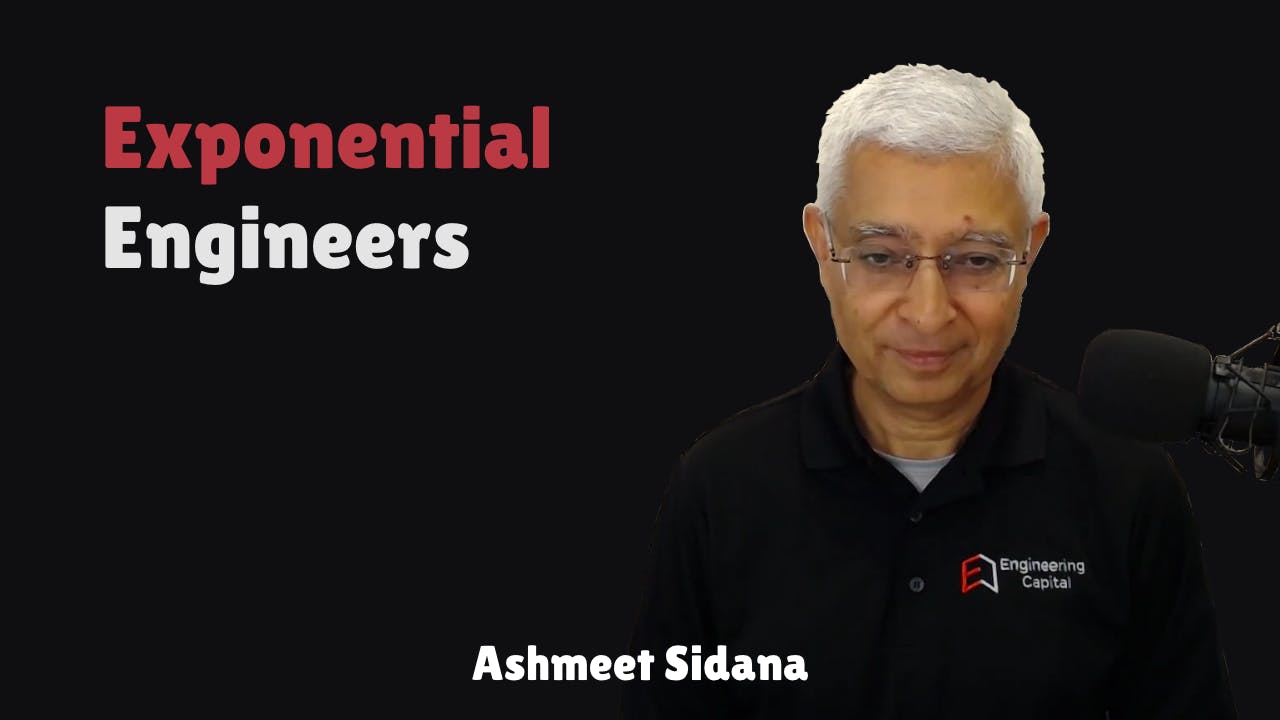
Exponential Engineers with Ashmeet Sidana
Jan 900:53:20Tap to summarizeToday on the show, we have a special guest — Ashmeet Sidana, the founder of Engineering Capital. Ashmeet started his career as an engineer at some great companies like Hewlett-Packard and Silicon Graphics before founding his own company, getting it acquired, and eventually starting his venture capital firm, Engineering Capital. With his strong engineering background, Ashmeet looks for startups that have a technical insight — something unique that gives them an edge over their competitors. This focus on technical insight sets Engineering Capital apart from other VC firms that often emphasize market insight or distribution insight or some other kind of advantage. We talked about AI, Exponential Engineers, Entrepreneurship, and had a lot of fun.
Transcribe →Powered by Neurons with Ewelina Kurtys
Sep 1600:42:33Tap to summarizeToday we have Dr. Ewelina Kurtys on the show. Ewelina has a background in Neuroscience and is currently working at FinalSpark. FinalSpark is using live Neurons for computations instead of traditional electric CPUs. The advantage is that live Neurons are significantly more energy efficient than traditional computing, and given all the energy concerns right now with regards to running AI workloads and data centers, this seems quite relevant, even though bioprocessors are still very much in the research phase.
Transcribe →Lessons from Building AI Agents with Rafal Wilinski
Aug 12, 202501:08:51Tap to summarizeToday we're talking with one of our favorite engineers, Rafal Wilinski. Rafal has been on the cutting edge of AI development in the last few years as he has led AI teams at Zapier and Vendr. Rafal walks us through the hard-won lessons about actually integrating AI tools into the applications you're building. One of the hardest things in integrating these AI tools is how to ensure you're getting better and not regressing as you improve your prompts and upgrade your models. He shows how using evals is one part of the story along with deeply investigating customer signals to see how they are or aren't succeeding with AI. Along the way, we also talk about RAG, his favorite models, his AI development toolset, and why Poland has been killing it lately. Check it out and be sure to follow Rafal if you want to learn more on building with AI.
Transcribe →Building a High-Ownership Engineering Culture with Matt Watson
Aug 5, 202500:51:37Tap to summarizeIf you’ve ever felt like engineering teams are stuck in execution mode—heads down, building what they’re told—then today’s episode is for you. We're talking about what it really takes to build high ownership engineering cultures where devs aren't simply just shipping code, but they're helping shape the product. And our guest this week is Matt Watson. He's a long time founder, engineer, and now the CEO of Full Scale, a company that helps startups and scale ups, grow their engineering teams with top talent from the Philippines. Matt's also the author of a book called Product Driven that shows how engineers can build with more clarity, purpose, customer focus and we get into some of the details in that book during this podcast. So in this episode, we get into everything from the downsides of specialization to the importance of empathy, to why code shipped isn't the same as value delivered. We hope you enjoy it.
Transcribe →Building CI for the age of AI Agents with Aayush Shah
Jul 22, 202501:04:02Tap to summarizeToday's episode is with Aayush Shah. Aayush is one of the co-founders of Blacksmith, which is a CI compute platform. Basically, Blacksmith will run your GitHub Actions jobs faster and with more visibility with the standard GitHub Actions CI runners. The founding team has a fun background doing systems work at Cockroach and Faire, and they're taking on a big problem in running this massive CI fleet. The explosion in AI agents has really changed the CI world. CI is more useful than ever, as you want to be sure the changes from your agents aren't breaking your existing functionality. At the same time, there's a huge increase in demand and spikiness of CI workloads as developers can fire off multiple agents to work in parallel, each needing to run the CI suite before merging. Aayush talked about how they're handling this load and facilitating visibility into test failures. We also covered cloud economics. Aayush said the traditional cloud-based storage options don't work for them -- EBS and locally attached SSDs are too expensive for their workloads where they don't need the standard durability guarantees. He walks us through building their own fleet outside the hyperscalers and the plans going forward, along with some of the economics of multi-tenancy that Blacksmith has previously written about.
Transcribe →Valkey After the Fork: A Conversation with Madelyn Olson
Jul 16, 202501:21:14Tap to summarizeToday, we're talking Valkey, Redis, and all things caching. Our guest is Madelyn Olson, who is a principal engineer at AWS working on Elasticache and is one of the most well-known people in the caching community. She was a core maintainer of Redis prior to the fork and was one of the creators of Valkey, an open-source fork of Redis. In this episode, we talk about Madelyn's road to becoming a Redis maintainer and how she found out about the March 2024 license change. Then, Madelyn shares the story of Valkey being created, philosophical differences between the projects, and her reaction to re-relicensing of Redis in May 2025. Next, we dive into the performance improvements of recent Valkey releases, including the I/O threads improvements and the new hash table layout. Along the way, Madelyn dispels the notion that the single-threaded nature of Redis / Valkey is that big of a hindrance for most workloads. Finally, she compares some of the Valkey improvements to some of the other recent cache competitors in the space.
Transcribe →Operational Excellence Is the Moat with Sam Lambert
Jul 15, 202501:06:12Tap to summarizeToday, Sam Lambert from Planetscale is back for a third time. Planetscale just announced Planetscale Postgres, so we had to get Sam back to tell us how and why they decided to add support for Postgres. It's always great to have Sam on -- he brings great stories about real customers and honest insight about the state of the database industry. In this episode, we talk about the road to Postgres and how operational excellence is the only true advantage in database providers. Sam walks us through the current Planetscale Postgres offering, along with details on Nova, a new sharded Postgres project that Planetscale is working on. Along the way, we get updates on Planetscale Metal, how demand has been for Planetscale Postgres, and future plans for Planetscale.
Transcribe →Lessons from Transcribing and Indexing 3.5 Million Podcasts with Arvid Kahl
Jul 8, 202501:18:00Tap to summarizeBig time guest today as Arvid Kahl joins us. Arvid is my favorite type of guest -- a deeply technical founder that can talk about both the technical and business challenges of a startup. Lots to enjoy from this episode. Arvid is known as the Bootstrapped Founder and has documented his path to selling Feedback Panda back in 2019. He's now building Podscan and sharing his journey as he goes. Podscan is a fascinating project. It's making the content of *every* podcast episode around the world fully searchable. He currently has 3.5 million episodes transcribed and adds another 30,000 - 50,000 episodes every day. This involves a ton of technical challenges, including how to get the best transcription results from the latest LLMs, whether you should use APIs from public providers or run your own LLMs, and how to efficiently provide full-text search across terabytes of transcription data. Arvid shares the lessons he's learned and the various strategies he's tried over the years. But there are also unique business challenges. For most technical businesses, your infrastructure costs grow in line with your customers. More customers == more data == more servers. With Podscan, Arvid has to index the entire podcast ecosystem regardless of his customers. This means a lot of upfront investment as he looks to grow his customer base. Arvid tells us how he's optimized his infrastructure to account for this unique challenge.
Transcribe →