Loading summary
Transcript145 lines
- [00:00]
A
Marshall's buyers are hustling hard to get amazing new gifts into stores right up to the last minute. Like a designer perfume for that friend who never RSVP'd wishlist topping toys for her kids who came too. Belgian chocolates for the neighbor, a cozy scarf for your boss, and a wool jacket for your husband that you definitely did not Almost forget. Marshalls. We get the deals. You gift the good stuff even at the last minute. Find a Marshall's near you with Venmo Stash. A taco on one hand and ordering.
- [00:32]
B
A ride in the other means you're.
- [00:34]
C
Stacking cash back with Venmo Stash.
- [00:36]
B
Get up to 5% cash back when.
- [00:37]
A
You pick a bundle of your favorite brands. Earn more cash when you do more with Stash.
- [00:41]
C
Venmo Stash terms and exclusions apply. Matt's $100 cash back per month. See terms of Venmo Me Stashterherms.
- [00:48]
A
Hi, it's Emily. Today we're bringing you a special episode of Sold A Story. It's coming to you while we're hard on season two. I'm at the National Archives in Maryland.
- [01:02]
C
All right, I am going to start.
- [01:03]
B
Calling some of these students from 2003.
- [01:07]
A
And we're thinking we might find some answers in these boxes of documents. I found something kind of interesting. Are we recording the zoom?
- [01:15]
C
We want to just make sure that.
- [01:16]
A
We understand what happened in the investigation. What's that? It's a microphone. I'm listening to you. Learn.
- [01:26]
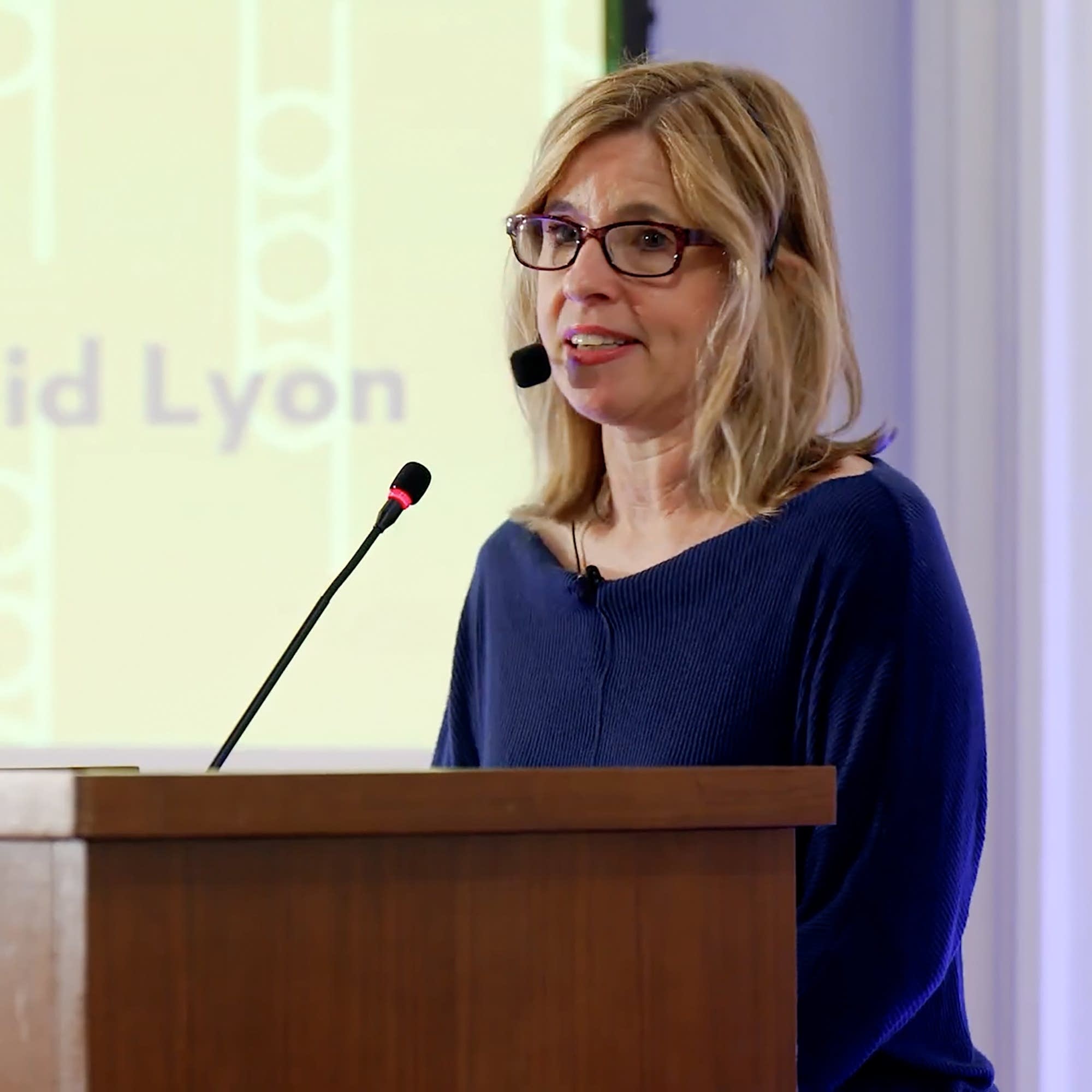
Season two is a whole new story about how learning and why research about learning often doesn't make it into classrooms. I think you're going to love it. In the meantime, we wanted to share an event I hosted at Planet Word in Washington, dc. Planet Word is a museum all about words and language. This fall, I sat down with two people who have been really important in my reporting on reading for years. Margaret Goldberg first emailed me in June 2018. She told me about her work as a literacy coach in California and the heartbreak of seeing so many students struggle to read. You might remember Margaret if you've listened to my audio documentary At a Loss for Words, which you can find in the Sol to Story feed. Margaret has become one of my most trusted advisors on all things literacy. She is co founder of the Write to Read Project, and she also helped us create a series of discussion guides for Soul to Story. Reid Lyon is a neuroscientist. He used to be the chief of Child development and behavior at the National Institute of Child Health and Human Development. He was one of the architects of reading first, the massive federal effort to try to get the science of reading into schools 20 years ago. You met him in episode two of Solda's story and have heard from him many times since. Reid, Margaret and I got together on stage at Planet Word to talk about what teachers and scientists can learn from each other. We also discussed why past efforts to get the science of reading into schools didn't work and what can be learned from that. By the way, you'll hear one or two references to the slides we showed during our conversation. If you want to see them for yourself, there's a link in the show notes. Here's our discussion.
- [03:22]
When I'm reporting, I always want to know people's origin stories, like, why do they do what they do? And so, Reid, I want you to first tell us how and why you became a neuroscientist interested in reading. Take us back to the beginning.
- [03:37]
B
Well, in the beginning, I think a lot of my interest in reading was because I struggled with reading as a kid. I hated school.
- [03:48]
And, you know, it wasn't until later, when I was trying to understand why that was, that it dawned on me that it was a humiliating and embarrassing circumstance. So my goal from the third grade was to get through school, get the heck out. I never thought about college. My favorite subjects were chemistry and biology because I like to dissect frogs.
- [04:16]
A
But.
- [04:16]
B
I could get my hands around that. And so after high school, you know, there weren't very many options. I graduated in 1966. As many of you will recall, the war in Vietnam was heating up. I knew I was going to be drafted. So I thought the bright idea was that I would find training that was rigorous, that would allow me to survive. And so I became a paratrooper and a reconnaissance team member. And I spent 15 months in combat in Vietnam. And.
- [04:58]
You know, that still didn't prompt me to go to college until when I came home from my tour, I visited a couple of guys in the hospital who were on my team and who had both sustained head injuries in different areas of the brain. And again, I'm naive about all of this, but what really took me aback was that both of them had lost the ability to read. But that really.
- [05:30]
Stimulated my brain and trying to understand, you know, how it is that the nervous system can function in ways that complex things like reading and language actually take place. And so that was my beginning into brain, behavior, relationships, the neuroscience of reading.
- [05:55]
A
Okay. And so you mentioned how you liked science when you were younger, because it was like hands on. And you could dissect dead animals, but talk a little bit more about why you became a scientist. Scientist. Like, what was it about science that was interested you in terms of a way of knowing things?
- [06:11]
B
Good mentorship. I mean, as usual, good teachers. Good teachers. Researchers who could explain to me in clear terms what science was about. What I particularly.
- [06:27]
Enjoyed as a scientist was knowing my job was to always prove myself wrong.
- [06:34]
That is, to falsify the hypothesis for those in the audience that are familiar with this kind of stuff. And I thought that was great. I thought it was really a noble thing to try to find out if you're wrong or not. So my mentors and I learned to design studies and experiments to always figure out if A causes B. Let's say if reading difficulties cause or if brain systems or difficulties therein cause reading difficulties. If X causes Y, there's a whole bunch of stuff that comes between X and Y that can also influence Y. And that complexity fascinated me. Unfortunately, as we'll learn, it didn't help me understand that teachers saw that complexity all the time.
- [07:30]
A
Okay, well, we'll come back to that. But now I want to turn to Margaret. So we know a little bit about Reid's backstory and about why he became a scientist. And I think that's so interesting, the interest in proving yourself wrong. But. So, Margaret, tell us a little bit about your origin story. What was your experience learning to read as a child?
- [07:49]
C
So when I started kindergarten, it was not a good situation. I needed to learn how to sit still, still. I needed to learn how to wait my turn to talk, stand in line. I had to form the letters correctly because I had an old school teacher who wanted to make sure that I was school ready. And I hated it. I went into first grade and I had a brand new teacher. It was her first year teaching and I loved her. It was love at first sight. And she had been trained in whole language. So she did not teach me what to do with the letters that I had been taught to form. She did expose me to lots of good books. We did all sorts of fun activities, but it wasn't clicking for me. We got to write in journals and our teacher would write back to us, which was amazing. And I actually thought it was kind of a special privilege that she would call me up to her desk to ask me to read out loud what I had written. I didn't realize it was because what I had written made no sense. I thought I just got like one on one time with the teacher. And I still have this Journal. And I can see over the course of the year, I became a more standard speller, more standard writer, despite the lack of instruction. And I did eventually learn how to read by the end of first grade, which my parents were very relieved about. But that other picture there, those are my first students.
- [09:14]
A
There's a really cute photo up on the screen. It's Margaret when she was a first grader. She's curled up under a blanket, pointing at a notebook that's propped against her bed frame, while a pair of fuzzy creatures look on.
- [09:27]
C
That's rusty and shaggy. My guinea pigs. And the time that I was teaching them, I didn't know how to read. I was teaching them how to read, and I didn't know how. So it's like, those who can't do teach guinea pigs. But that's. You can see the Alphabet is there. And I knew it was important that they know the letters of the Alphabet, but I didn't actually know why. And I think this will come into play a lot when I actually talk a little bit later about what it was like to become a teacher.
- [09:57]
A
Okay, so, yeah, so Reed just told us why he wanted to be a scientist. So why did you want to be a teacher? What was it about teaching that interested you? All the way back then?
- [10:06]
C
I just realized how big a difference having a teacher who you like and who likes you makes to the learning process. So I remember I had a rough time in third grade, too. And I, like, came home and I was complaining to my mom about the massive amount of worksheets that we had to do and how boring they were. My mom was like, if you think you can do better, you probably should. And so I then, starting from third grade on, would sit in class and would watch the teacher and think to myself, like, is that a thing that I would do if I were a teacher? Is that how I would approach this? And so I was critiquing teaching my whole career in school, and I knew that I wanted to do it and stick with it. Like, I knew that it wasn't going to be a thing that I was going to do for a couple years. I was going to try to figure out a way to make a career out of it, despite the fact that 50% of teachers were quitting in their first four years. So I think it was this fierce determination.
- [11:03]
A
Okay, so let's get into reading a little bit more here. When you eventually became a teacher, what did you know about how children learned to read when you started teaching?
- [11:13]
C
Oh, yeah. So I wanted to go to like, the most rigorous training program that I could. So I went to a two year credentialing program that had a ton of student teaching. It had a mission statement that completely aligned with what I wanted to do. The Developmental Teacher Education program at UC Berkeley was dedicated to improving the quality of classroom learning by educating elementary teachers to create equitable classrooms for linguistically and culturally diverse learners in urban settings. I was like, that is my calling. But actually, when we got there, we didn't learn how to teach reading at all. We sang a lot of songs. We got a lot of really good children's books. We debated, like, the colonialism in where the Wild Things Are. We literally knitted, like, we learned how to do finger knitting and stuff. And the idea was that we were going to make a really rich, artistic classroom that was going to allow kids to be able to bring their whole selves to school and to be inspired to learn along with us.
- [12:19]
A
This was the. Yeah.
- [12:20]
C
Oh, gosh. Reid and I have talked about this. This work of art was two years in the making. My philosophy of education, they made us revise it class after class. What ended up coming out of it? Like, I think you asked me at one time, what does this mean? And I was like, I don't know.
- [12:43]
I had all the jargon in it, though. I really did. But when I look back at key keywords and phrases, it's clear to me that I knew nothing about how learning happens. I knew nothing about how reading occurs. I knew nothing about what kind of instruction would actually make it possible for kids to be able to realize their potential.
- [13:05]
A
Okay. And so let's talk a little bit about what you knew about Reading first at this point. Because when you started as a teacher, Reading first was going on, right?
- [13:13]
B
Yeah.
- [13:14]
C
Interestingly, I didn't know anything about Reading First. Even though Oakland Unified was the district right next door to where I was getting my credential. I only knew about no Child Left Behind. So I knew about nclb. And in my teacher credentialing program, we called it no Child Left a Mind. And it was like the big governmental effort to take professionalism away from teachers. And so the way that I saw it was that I was being taught in my credentialing program how to write my own rich lessons, how to create these units where kids were going to be able to explore interesting concepts. I was being taught the importance of writing lesson plans that were individualized for the children in my classroom. And my impression of no Child Left behind was that it was this program that was being brought into teachers. They were taking away books from kids. They were taking away teacher autonomy and saying that we needed to follow a script. And it just felt like.
- [14:18]
A demoralizing time to become a teacher. And so even though I had intended to go into Oakland to teach, I ended up deciding, like, that wasn't what I was trained to do. So I went into a higher performing school district to wait it out because they were not part of Reading First. And it wasn't until years later that I learned about Reading first as a grant that local school districts had applied for. And they won money to be able to help teachers learn how to do the thing that I had wanted to learn how to do.
- [14:51]
A
Interesting. Okay, so here's the architect of Reading First. And so you were a scientist who had become involved in policymaking. So you just heard what Margaret said. But what were you hoping Reading first was gonna do? What was the goal? And here's a picture for you of you with the Bushes. So tell us a little bit about Reading first and the hopes you had for it.
- [15:14]
B
Right. First, I want to say I'm sorry.
- [15:20]
It was all common sense to me. By the early 90s, we had already developed a converging body of evidence. We had a number, many studies replicating each other, telling us how reading develops. We had very good information about what gets in the way for kids who struggle. And we had information coming in every day about the conditions under which kids learn to read and the types of instruction that's most beneficial to them. So Reading first was actually a little bit down the pike. I'm at NIH. I'm a scientist. So in 1992, 93, 94, I was called down to Capitol Hill to brief different congressional members. What was surprising is they got along. They actually worked together.
- [16:22]
And one of those individuals, Bill Goodling from Pennsylvania, was blown away. He said, my state, there's 50% of the kids can't read. And here I'm listening to this information from NIH and something's off. And he asked Bob Sweet and I. Bob was one of his staffers, senior staffers, wonderful, brilliant guy, to sit down and think about how we could travel that research into practice. My bright idea was tie money to it. If states need money, then they can have the money. If in fact, they use it to implement programs, professional development and so on. That had a scientific foundation.
- [17:11]
What I called back then scientifically based reading research.
- [17:16]
We were able to write that into the legislation. And we knew if we did that way back then that we could travel that concept in future. Legislation. So I wrote the language for the national reading panel that led the way to Reading first under the Bush administration. And President Bush and his wife, not being a political person, I found to be extraordinarily genuine and concerned about kids, and they provided myself with.
- [17:56]
The wherewithal to try to really develop scientifically based reading research. So it's simple. If you're going to be teaching kids or training teachers, base it on what we know works. It's that simple. No big deal.
- [18:15]
A
Yeah. Okay. So. So. And you were sort of surprised that teachers didn't love this.
- [18:21]
B
I did. I thought that if we could explain, which I didn't do well, we could explain that we have information that can make your job easier. That, you know, the kids that are struggling now, if they receive this kind of instruction and you guys get professional development of a certain kind, well, I think you'll. You'll be relieved with that.
- [18:47]
A
Okay, so you realize that. But you sort of thought it was going to be okay. Do you want to. You told us a little bit why teachers didn't like it. Do you want to respond at all to what he said?
- [18:55]
B
Yeah.
- [18:55]
C
Well, what's interesting is you're not wrong. It was just more complicated than that. So, like, for me, I took the training that I was given, and I went to a district where I would have autonomy, and I created all my own lesson plans, and I did that path. But one of my friends in my credentialing program went the other direction, and she was teaching in a school during Reading first, at a time when they had this program so badly named Open Court, because that's what you want to do with second graders. Anyway, so she was teaching Open Court, and she admitted to me years later that she felt kind of ashamed of how much she got from the curriculum, that it taught her the things that she hadn't been taught how to do in our teacher preparation program. It gave her a series of steps to follow in a logical sequence, and that she was doing it and her kids were learning. And she didn't want to admit that because we had been trained to think that that's not what good teachers do. And so she talked about how she was seeing me go home and stress out and trying to craft these lessons and do all this work. And she's like, I just read the manual. And then I showed up and I did it, and it worked. And it was years later, when the program was dropped and she was teaching second grade, that she realized the proficiency at our school had gone from 2/3 proficient to 1/3, and realizing how beneficial it had been to have an organization to the instruction that was happening at her school. But that was in some ways shameful. Like what we had been taught to believe was that that kind of instruction shouldn't work because the personalized instruction that only we could do, knowing our students best, would be the thing that would take root.
- [20:37]
A
Okay. Yeah. And I think that's interesting because one of the things you've said to me many times is that you actually felt like ultimately the deepest resistance came from the colleges of education. And I think what you're referring to is sort of what you were taught to believe about teaching that maybe came from the colleges of education. So what was the resistance you got from the colleges of ed?
- [20:57]
B
Well, you know, I don't want to overgeneralize, but most colleges of ed felt that their freedom would be taken away. How they were preparing their teachers. And nobody wants to hear that they may have been doing the wrong thing, you know, so I had compassion for people looking at possibly a new way of teaching reading and so on. But what surprised me in science, people do get angry at each other. There's no doubt about it in education they get ballistic.
- [21:37]
You know, it's surprise, it surprised me. You know, from Pulp Fiction, that line, you know, they get medieval on you.
- [21:46]
Is the truth. I mean, I was called every name in the book from the Lion King to the Fornicator.
- [21:56]
Which, which brings me back to the fact that they always polarized whole language versus phonics. And in all the research we've done, we've seen phonics as absolutely necessary, non negotiable, but it's only one part of many elements that teachers have to teach. And this dichotomization of phonics versus whole language is where the college faculty really tried to beat us up with, you know, you're killing drill phonics, you're, you know, a redneck, you're whatever it may be. And I was unable to explain well enough to say, you know, when kids are learning to read, they have to know the Alphabet, the sound structure, they have to have vocabulary, they have to have reading fluency, blah, blah, blah. And that's what the national Reading panel showed. Reading is a multi componential task. You don't just teach one skill, particularly phonics, because it's generalizability. It's an on road, you know, it gives you the on road into more fluent reading and stuff. So to answer your question.
- [23:18]
You know, I had people come up to me at conferences and you know.
- [23:24]
The one Thing that helped me is I said, well, at least they're not shooting at me. And that's the way I was able to handle it, basically.
- [23:34]
A
Okay, so reading first fell apart. Long story. But by 2008, 2009, it was dead. And so that was good news for you.
- [23:46]
So tell me what. Okay, so first, Margaret, when did you begin to take seriously this body of research? Like, when did you decide to be like, oh, I'll take more of a peek at that.
- [23:58]
C
After no Child Left behind ended and things were, in my mind, were kind of opening up where there was more freedom to be able to teach in the way that you would want to teach in large urban districts, Oakland Unified dropped open court. And they were starting a new initiative. And I wanted to be part of it because it was the kind of instruction that I knew. So it was a balanced literacy initiative. I never had that word attached to it before, but I understood the practices that were in it. I moved to that district, joined as a literacy coach and as a reading interventionist. And I remembered that I had wanted to work in a hard to staff school. So I decided to work in Oakland's lowest performing school, where there were 2 to 3% of students were proficient in reading. And I was kind of comforted myself. I told myself, I'm a good teacher. I know how to set things up in a way that will make this place a really lovely spot for kids to learn to read. And failed miserably. And I remember at one point I was doing all of these tests on students. They were supposed to read level text out loud to me so I could determine their reading level and they couldn't read. And I just kept trying. And at one point I pulled a little girl to come and read with me. And at some point she was just like, it's really hard. And I asked her, what's so hard about it? And she said the words. And I realized that was the thing I didn't know how to help her with. And I had told myself through teacher credentialing and then through the first 10 years of my career that my first grade writing journal was evidence that something magic happens, that kids just sort of understand how to make sense of the letters on the page and learn how to pronounce those words. Because it happened for me. It happens for most people. It must just unfold in this way. That's natural. And then I was looking at my school and I was like, it's not happening naturally and there's something wrong here. So I'm a little embarrassed to admit that I ended up googling what percentage of kids can be taught how to read? Because I really didn't know. I knew 2 to 3% wasn't reasonable, but what was reasonable? What should I be shooting for? And I found this publication, Teaching Reading is Rocket Science, in which Dr. Louisa Moats said 95% of students can be taught to read at a level limited only by their listening comprehension. And like 95% just floored me. That wasn't even what was happening at my high performing school.
- [26:41]
So I knew I needed to try to figure something out. And I read the citations at the bottom of the article and I was like, okay, I'm downloading every single one of those that I can find. I'll read those articles and then read the citations in those articles. And I was trying to make sense of things. And I realized that the instruction that I had been doing was rooted in whole language. And I hadn't realized that because we were teaching phonics, we just weren't doing it in a systematic way.
- [27:06]
And I think now when I look back on it, it was really hard to get that information. I kept hitting a lot of paywalls, like, teachers don't have access to scientific publications. There was no reading link at that time. There was no soul to story at that time. There was no support for teachers in trying to make sense of it. So I needed to try to sift through it on my own. And what was most helpful was being able to see. See what was being described in the research in my students. I could see them like, what was unfolding in their reading was exactly what had been described by researchers as these stages or phases of development.
- [27:42]
A
Interesting. So how did the two of you meet?
- [27:48]
C
I was working on an article with Claude Goldenberg, and we were writing about.
- [27:55]
Like, the conflict that was happening. And at some point in time, I said to him, like, well, we don't want another reading first if the government gets involved. And he was like, why not? And at some point it became very clear to me that I did not know what reading first was because Claude was like, what do you think about trying to get a hold of Reid? We'll zoom with him and you can ask him your questions and stuff, and we can learn whether or not reading first is a thing that we would want to have replicated. And I was kind of nervous, but I figured, sure, let's do it. And I expected to be talked at, to be told all of the things that I didn't understand and why or for there to be.
- [28:39]
Frustration about this initiative that I had been so resistant to. And that wasn't how the conversation unfolded at all. What do you remember?
- [28:49]
B
Well, I do remember Claude and Margaret calling, and Margaret had great questions and I was listening hard to her and just noticing how conscientious, how dedicated she was. She really seriously wanted to know, for example, what Reading first was about. She wanted to know whether or not it was implemented well in some cases. And I think I asked her, you know, what was it about Reading first or NCOB that was problematic for you? And, you know, she kind of blew me away because she said, you know, teachers were not involved in any of the planning for any of these legislative initiatives. They're the ones in the classrooms. And I began to think, did I involve any teachers? Bring them into nih, get their points of view, ask them what questions they would like to see answered. I didn't do that with leaders, building level leaders, state superintendents, and I didn't do that with College of Ed faculty. And so there was this very large lacuna between what I thought would help teachers, not having the.
- [30:21]
Wherewithal to know that I wasn't investing them at all in what we were trying to do. And it comes back to something Margaret and I talk about all the time, and that is we don't have a common language in education.
- [30:39]
So that, you know, I am continually, and I think Margaret is too, talking with people about how to read and how do you teach reading? We're using a vocabulary based on science. But colleges of education still prepare teachers devoid of that knowledge and for any profession. And I think we'll talk about this later, the one hallmark of problem solving in a profession as a common professional language and shared knowledge. How was Margaret supposed to share the knowledge if I did not ask teachers to let me know what it was? That's difficult in their teaching. What would they like to see answered? And how in the world will they take this research and implement it in chaotic environments in the real world?
- [31:41]
C
I remember one of the things that I asked you was was Reading first actually all about trying to get three cueing out of our curriculum and out of our classroom instruction? And you said yes. And I was like, well, then why didn't you just tell us that? And do you remember what you said?
- [32:01]
B
Yeah, I think I said I didn't feel comfortable telling teachers that what they were doing was wrong, that I thought they, once they heard about the research, then they would pick it up.
- [32:14]
C
Something like that, yeah. And it was just this idea that you didn't tell us what we were doing wasn't working because that would be disrespectful, because you wanted to have us come to this realization that if we do something more effective, then we'll just let those old practices. And I think one of the things that was so striking to me about my perception of reading first and of no Child Left behind was its disrespect for teachers. And then to realize actually there was a lack of clear messaging because of respect for teachers.
- [32:44]
A
So interesting. Yeah, yeah. I mean, as I think you know what three cueing refers to. But that's sort of what's at the core of Soul to Story is. I think it's so admirable and interesting that your assumption was if we put good information out there, that will be taken up and we won't have to tell people they're doing something wrong, because that will be disrespectful. And instead, all this barrage of information was seen as, what are they doing? They're taking away their professional identity and not willing to say, oh, there was something inaccurate here at the core. And that was what I saw with help from Margaret. And then I was like, well, we need to reveal that in this podcast, because maybe if we can reveal that, we can get to the good information. And I do think some of that's happening. Although there still is this question, I think, of professional shared knowledge, and I still think this is.
- [33:37]
At the core of things that are still controversial and difficult. So I want to just talk about a few terms, and then we'll talk a little bit about where we are now, and then we'll turn it over for questions. But one term that I see used a lot is experienced. Explicit. Explicit teaching. Explicit instruction. And I'm really curious, what is a teacher's view? Or what was your view? Like, what does that mean to a teacher? What does it mean to a scientist? And where's the difference?
- [34:02]
C
Well, so what it used to mean to me was that the ideal version of teaching is you give kids the opportunity to discover things on their own. They are constructing their own knowledge through their own experience. Experience in the classroom and outside in the world. And so in order to make that constructivist view happen, the teacher needs to talk as little as possible. We were taught to believe, like the sage on the stage, looking at where we are right now, that's a bad thing. And so what I had understood of explicit instruction is if you tell kids something directly, if you say something like, if there's an e at the end of the word, the vowel often Is long that that was explicit instruction because it was telling kids something up front. They weren't getting the opportunity to discover that on their own. And what I had been trained in was like you want to minimize that telling as much as possible so that authentic learning can happen.
- [35:03]
A
And I think one of the things you said to me too is it's like you give good, clear directions and then you set the kids off to do their, like make it very clear what they're supposed to do and then they go do it. Yes, yes.
- [35:13]
C
So that was previously what I had thought explicit meant. That is not accurate.
- [35:18]
A
Yeah. What did you mean by it?
- [35:20]
B
Well, Joe Torgerson at Florida State wrote a great line. He said explicit instruction is leaving nothing to chance. Don't leave anything to chance. Even if you think some things will be picked up automatically, everything needs to be pinpointed. For the youngster, well defined, what you'd like the child to do, the kind of responses that you would like the child to indicate what they're learning. Again, it's kind of common sense.
- [35:54]
To be able to teach. And I this is teacher directed rather than child directed. And the teacher is setting the very clear steps for the youngster. And as they watch the child master or have difficulty with those steps, they come back and reteach and they're measuring every step of the way. Does the youngster understand? Are they applying it to the next concept? If any one of you has ever taken algebra and been just overwhelmed by the the complexity of algebra. All my algebra teachers were whole language algebra teachers. I was lost. I would have loved explicit direct instruction. So our studies importantly were showing that it was a no brainer. In our clinical trials we were showing that direct systematic instruction where the content is presented clearly and in smaller segments, reviewed for proficiency, retaught if necessary, and moved on. Now it sounds like a lockstep kind of thing, but it's really not that this is where we get into the complexity of what a teacher has to do. And when you're looking at explicit instruction, it's not that they go, here's A, here's B, here's C, here's D. It's that they teach all of the concepts and integrate as they go along. You know, it's not rote or whatever. It's clear. You're making things clear for these youngsters. But it's a lot more than just phonics, phonemic awareness, vocabulary and all of that kind of stuff.
- [37:51]
A
Check, check, check. It'll all come together.
- [37:53]
B
Yeah, it doesn't happen so we'll talk a little bit about that.
- [37:56]
A
Okay. So yeah, what I want to do is just give them an opportunity to tell you a little bit about what they each do in their life to try to do this now, get research into practice, and then we're going to turn over for your questions. So Margaret, I mentioned has this thing called the Right to Read project. So tell us a little bit about what it is and what you do.
- [38:12]
C
So the idea is that if we can get researchers and teachers and activists together to be able to figure out how to be of use to one another, then we can continue moving things down the road in a better direction. One of the things that I had gotten really interested in was I got pretty good at teaching foundational skills. Lot of evidence based, lot of good tests, a lot of things that I knew how to do with explicit instruction. But the big question for me, if we go Back to the 95% of kids can be taught to read at a level limited only by their language comprehension. Well, how do I make sure that I or limit is as high as possible? How do I teach vocabulary? How do I teach writing? How do I teach academic discussion? All of those things. So I partnered with a researcher out of Massachusetts General Hospital, Tiffany Hogan, and we have a research to practice partnership where again, I realized something that I should have known about that I didn't was this huge governmental investment in the Reading for Understanding initiative. And I think Jimmy Kim had done that.
- [39:15]
A
Yeah, he was our last speaker in the series. You can watch him on YouTube. Yep.
- [39:19]
C
I knew all about the science of reading, I thought, and somehow did not know about that. So she was explaining to me about the research that they had conducted and that one of the results of it was actually curriculum.
- [39:32]
So we started implementing that curriculum at my school. And again, just as we're talking about where things fall apart from her perspective as a researcher, was if we create really great lesson plans that allow kids to be able to learn language effectively, teachers are going to be clamoring for this. We'll put it up on a website, open access for all teachers to find. And none of us found it.
- [39:56]
A
So. Yes.
- [39:57]
C
So we're working on trying to implement evidence based language and writing instruction.
- [40:03]
A
Okay. And so, Reid, let's talk a little bit about what you're doing now.
- [40:07]
B
Well, I've been trying to figure out, and I get a great deal from Margaret in figuring this out is what are the conditions that have to be in place to put effective programs in classrooms to teach kids to read the one word that pops up in my mind is it's complex. It's extremely complex. And we have to take in that reality.
- [40:38]
Nothing really sticks well and implements well. If the leadership in the district has a different language of instruction than his or her teachers. Leaders and teachers, as we're designing new programs need to be trained together in many ways. And, and Margaret has great examples of her principle. In addition to leadership, that leader has to be compassionate. A lot of his teachers are going to feel bad about having to change their programs. So a leader has to know their stuff, has to be technically astute, has to have the deep knowledge and has to have the common language with which to communicate with their teachers, with their parents, and so on. Now all of this obviously says, whoa, we've got to prepare people differently. We've got to create awareness at higher ed levels and professional development that drives home this fact that any profession has this common language and collaborative foundation. Any of them. We don't.
- [42:00]
As a profession.
- [42:02]
A
Who's we? Scientists or education? Education.
- [42:06]
B
And that's what makes it difficult. And you know, the thing is that.
- [42:14]
It'S going to take a large amount of courage.
- [42:20]
And stamina and brains to bring this around. So if Emily says, do we know? Or Margaret already knows, what are the critical conditions? We have a good handle on those. But it will require the revamping of preparation of teachers, preparation of leaders. It will require different emphases. It will require the building of a profession.
- [42:50]
A
After a break, we'll be back to take questions from the audience.
- [42:56]
Marshall's buyers are hustling hard to get amazing new gifts into stores right up to the last minute. Like a designer perfume for that friend who never RSVP'd wishlist topping toys for her kids who came too. Belgian chocolates for the neighbor, a cozy scarf for your boss and a wool jacket for your husband that you definitely did not almost forget. Marshalls. We get the deals, you give the good stuff, even at the last minute. Find a Marshall's near you. This is the exclusive table with the view. This is your name on the list. This is three times points on dining with Chase Sapphire reserve and a $300 dining credit chase Sapphire Reserve. Now even more rewarding.
- [43:36]
C
Learn more@chase.com Sapphire Reserve cards issued by JPMorgan Chase bank and a member FDIC.
- [43:40]
A
Subject to credit approval.
- [43:41]
C
Dermatologists have long highlighted the benefits of indoor humidity for healthy, glowing skin. Dry air can damaging your skin in just 30 minutes. That's where canopy humidifier comes in. Recommended by leading dermatologists, the canopy humidifier is a completely reimagined humidifier with invisible clean moisture. The best kind for your skin. Go to GetCanopy Co to save $25 on your purchase today with Canopy's filter subscription. Even better, use Code Serious to save an additional 10% off your canopy purchase. Your skin will thank you Is it.
- [44:11]
B
Just me or has watching TV gotten way too complicated?
- [44:16]
A
There's a million different services and just too many bills to keep track of. Thankfully, there's Philo a better way to TV.
- [44:23]
B
For as low as 33 bucks a.
- [44:25]
A
Month, I get the channels I love. MTV, BET, Food Network, you name it. Plus everything that AMC has to offer. And guess what? They've added access to hbo, Max Basic with Ads, plan and Discovery plus so I can enjoy all the best TV with one subscription. There are no contracts, no surprise fees, just one low price and their DVR is awesome too. I can save everything I love on Philo for up to a year and skip the ads when I rewatch them. A total game changer. I signed up directly at Philo tv. That's P H I L O TV so I could lock in the best price around. Philo's the easiest decision I've ever made. Now the hard one is trying to decide what to binge next.
- [45:11]
Now here's the Q and A. Our first question came from an attorney. It was about reading instruction for middle and high school students who are still struggling.
- [45:21]
C
I have a special education law firm and we tend to get clients that bring their children in middle school and high school when they're no longer learning to read, but they're reading to learn and the children are having school refusal, school anxiety, depression anxiety. Oftentimes the IEP teams do not want to teach reading in middle school and high school. They don't have reading classes and so they want to accommodate instead of teach. Do you have a good evidence based response for an IEP team that wants to accommodate and instead of teaching to read?
- [46:06]
B
Well, let's just take the first question. Is there evidence based information that looks at older kids high school, junior high, high school to read? Yes, there's a substantial amount of information that older kids can master all of the fundamental principles of learning how to read. But then we are in an environment that has to prioritize some things. We're in environments where status quo has always said it's much more important to focus on everybody receiving all the content information that is in the state standards, for instance. So Margaret knows more about this than I do. I'll just say that the evidence if we want Older kids to learn to read or adults to learn to read. We know how to do that.
- [47:07]
C
I would just add to it that often what's coming as resistance is a lack of belief that it's possible and not having somebody who's available to deliver those services. And the oldest struggling readers that I've taught were in sixth grade. And I remember at one point one of the kids was like, oh, why didn't they just tell us this?
- [47:31]
Yeah, it's just what the relief is when you realize like, oh, some information was withheld from me. Maybe not on purpose, like people didn't know to give it to me, but now that I know it, I can actually apply it and go through the laborious process of trying to make sense of this code. But you really have to have the champion teacher who wants to deliver that instruction and is capable of doing it in order for the system to say, we'll allow the minutes for it.
- [47:57]
A
I mean, you can really see the dilemma because the argument that they need access to the content is a very good argument. And so I think the question there becomes, as Margaret said, who's going to deliver their instruction at what time of the day with what materials or program or something? Is it going to be done well or is it going to be a waste of the kids time? I mean, you know, and so obviously I think what we know is that kids can learn to read and be taught to read that there's also a real priority on making sure that all kids are in grade level work. And there are really good reasons for that. But I was actually just interviewing someone the other day who I was talking to about this and she's like, you know, if I have a fifth grader who can't read, I'm not actually going to put them in grade level work yet because it's unethical that they can't read. And I'm going to teach them how to read first and then we're going to get them caught up in the grade level work. But it's just whether or not you can do that. I think many schools have failed at that. So anyway, we need to go on to the next person who has the mic. Okay, thank you so much.
- [48:53]
C
This whole story is really fascinating me because where I work mostly in developing countries, we have proliferation of research based practices, emerging practices, and listening to what happened in the US comes with fear and also anxiety and shock too, that it makes me think like maybe in the space where we work, we may not successfully diagnose where the core problems may Exist. I want to understand in retrospect what was happening in the space and what become the triggering point for people to start, admit and see, hey, something is not right. Let's look at this all together. I'm asking this because in places where I work, I think we may also going through the same problems.
- [49:46]
A
The evidence is out there, but is it being used? Is it understood?
- [49:49]
C
Yeah, I really understand the dynamics. So how we can avoid the mistake that happened in this space elsewhere?
- [49:58]
B
Great questions, by the way. Everybody.
- [50:03]
We know how to take care of that problem in ideal settings.
- [50:11]
Early identification and early intervention is extremely important. Many schools don't have that. When assessments are done in whatever grade and you're looking at Tier 1 instruction, the types of instruction provided there must be aligned with the instruction from any intervention, from any curriculum. Kids go from one way of understanding certain concepts, being taught another way in another classroom. That's what the Science of Reading tries to do, is provide equity so kids get the same expert instruction and the right content, no matter what class or teacher they have. And it does not have to be that way.
- [51:01]
C
I do feel like we need to be clear on what the goal is, because for a lot of teachers, the goal is I need to provide the best 180 days of instruction I can do on my own in my classroom with my door closed and the kids who are in front of me and any teacher who's approaching it that way probably is doing that as the result of receiving training that has told them that that's the best thing to do. But if we rethink our profession as being part of a coherent experience, experience for kids. So if I'm a second grade teacher, I need to build on the instruction of kinder and first and get them ready for third grade. Then all of a sudden I need to be in alignment with my colleagues, which means my school needs to be in alignment. And then my school has a lot of kids who come and go. We lose between 21 and 26% of our students each year. So that means we need all of the schools around us to have similar instruction so that if a kid's coming or going, they don't lose any time. And so then you start looking at it as like we need a second systems approach. And that's very different than each teacher taking care of their own business and their own small section of that piece. It's hard to convince teachers to be willing to take that broader perspective because we've been failed by a dysfunctional system so many times that we want to control Just the parts that we can control.
- [52:14]
A
And it's so overwhelming because think of how big you're in the state of California, which is like its own country. I mean, just think about the. Just the levels here of like trying to get teachers in a school to do the same thing. A school district, a state, a country, given what's going on.
- [52:33]
B
And that's impossible unless the.
- [52:36]
A
Unless.
- [52:37]
C
Unless.
- [52:38]
B
Unless the leadership, the teachers, all the specialists are on the same page and understand what it takes to learn to read. And they can explain it to you. What goes wrong when some of these kids aren't learning to read and explain that to you and how can we prevent it and explain that to you and then how we can remediate it.
- [53:05]
A
But I think partly at the core of your question is how do you convince everyone that that is what we should be doing? How do you get everyone to agree like we are going to. To agree to agree on how we are doing all of this so we can save time with everyone, just the evidence being out there and people taking it up? Maybe, or maybe not or whatever. Okay, I think we have time for one more question in the back.
- [53:28]
B
Thank you for a wonderful conversation.
- [53:31]
A
I'd love to hear how you both.
- [53:34]
B
Think about the balance or tension between standardization and personalization. So if you think of children's brains.
- [53:42]
C
And classrooms and environments, there'll be some features that are common and some features that vary.
- [53:47]
B
Or is personalization a luxury given the real world tensions that you've just been.
- [53:52]
C
Talking about from the teacher's perspective? I think too often the push is fidelity to a program, and so you are supposed to do that program to fidelity, and then somehow it stops there. And any teacher will tell you that doesn't work for all kids. You need to be able to tailor it a bit.
- [54:11]
But what we need to strive for is to be able to know the program so well that we know what the incessant ingredients are so that we can then tailor it for the kids who need more. So more explicit instruction, more opportunities for practice, more support with integration of the things that we're teaching. So I think one of the things that is important is figuring out how we can use effective programs as the baseline. And then we're using our professional judgment to go beyond that to make sure that no kid slips through the cracks. But what's your perspective on it?
- [54:42]
B
Right. I think if we have conditions in place where teachers have been provided the support to look at each kid individually, to be able to assess in real time how that youngster is responding to elements of the program to then have the technical and professional knowledge to adjust the instruction as Margaret does and talks about. Then I think you can be individualized for children, but also have the consistency built into scientifically based instruction.
- [55:24]
C
One of the things that struck me as we were looking at my embarrassing philosophy of education was that it had a thing about every child learns differently. And I think that that's a misconception that a lot of teachers have where we think every child needs individualized instruction, when in fact we could do something that would help almost all kids. And then we need to individualize from there. Actually makes the teacher's job much easier when you realize that human brains are more similar to each other than they are different. And therefore we don't have to create these tailored lesson plans to every single one of the kids for every single thing.
- [55:58]
A
But I do think that that gets at a very central tension that's been there for a long time, this idea that we need to personalize it for every kid. And few people push back about that you're somehow evil. Like, you wouldn't want my child to have personalized instruction. And I think a really important distinction here is every child is different. They're all different little human beings, but their brains are more alike than they are not alike. And it's an impossible task to think we are making teaching an impossible profession. If you have 25 students and you have to individualize instruction for all of them, that's not doable and it's not necessary. To wrap up our conversation, I asked Reid and Margaret if they feel hopeful about the next chapter of teaching reading in America.
- [56:38]
B
One of the things that's giving me hope is that individual states are taking the leadership in putting in place legislation, something that I was initially opposed to, But I'm looking at states with that legislation really taking advantage of the expertise of their teachers, of their own talents, and then of the science. And you know, what these states are realizing is that everything is in alignment.
- [57:16]
From the legislature down. Everything being recommended is understood at every level. And I think that's why these states are really producing gains in reading. I always am hesitant about states getting the wrong information.
- [57:39]
Or people going back to this phonics balance literacy nonsense.
- [57:44]
A
But you've got your five states where things are working. But then there's a lot of states that have just passed a law. And maybe a lot of like. One of the things that's very clear from your answer is it's about a lot more than passing a law. There's a lot of other things that have to take place. And as we learned from Carrie Wright in Mississippi, they changed their law several times. And then you're in the state of California, which is a whole story of its own. So what's your thought on where we are, Margaret? Are you hopeful?
- [58:09]
C
Sometimes I'm really hopeful because I think to myself, like, we've already invested the first billion dollars into this problem. We've actually learned a whole lot. There's a lot of institutions, institutional wisdom, historical knowledge about what has worked and hasn't worked in previous initiatives. So when I'm feeling optimistic, I look at that glass and I think it's pretty full. And then there's other times when I think, like, I don't know how we're going to span this last mile, if that's what you want to call it, without a deep commitment to science and without a deep focus on implementation. And I worry that the cuts to science that are happening now, I worry about the, like, fights that are going to happen with teachers unions getting riled up because autonomy is going to get taken away, that this political environment is so inflamed. What I hope for is for us to be able to figure out we are almost there, what is it going to take to get all the way there? And it's going to take a whole lot of fiercely determined people to do that. Thank you for coming out of retirement to try to help us with this. We need you.
- [59:17]
A
Yeah. Reid had retired from all of this because this is bruising work, but he came back and here he is. So thank you and then mostly thank all of you.
- [59:29]
There's more to come on Sold A Story. As I mentioned at the beginning of this episode, we're working on season two right now. It goes beyond reading and touches on a lot of things we've discussed in this episode. Keep following Solda's story in your podcast app so you don't miss it. This episode was recorded live at Planet Word, a museum in Washington, dc. It's part of the Eyes on Reading series. There are a bunch of other events in this series and there are videos available on the Planet Word YouTube channel. You can also find links@soldastory.org this episode was was produced by Olivia Cilcote and edited by Curtis Gilbert. Our digital editor is Andy Cruise. Final mastering by Derek Ramirez. Our theme music is by Wonderly. Our executive editor is Jane Helmke. Special thanks to Margaret Goldberg and Reid Lyon. I'm Emily Hanford. Leadership support for Sold A Story comes from Hollyhock foundation and Oak foundation support also comes from Ibis Group, Esther A. And Joseph Klingenstein Fund, Kenneth Raynen Foundation, Wendy and Stephen Gaul, and the listeners of American Public Media. This is the exclusive table with the View. This is your name on the list. This is three times points on dining with Chase Sapphire reserve and a $300 dining credit chase Sapphire Reserve now even more rewarding.
- [60:56]
C
Learn more@chase.com SapphireReserve cards issued by JPMorgan.
- [60:59]
A
Chase bank and a member FDIC, subject to credit approval.