← Somebody Knows Something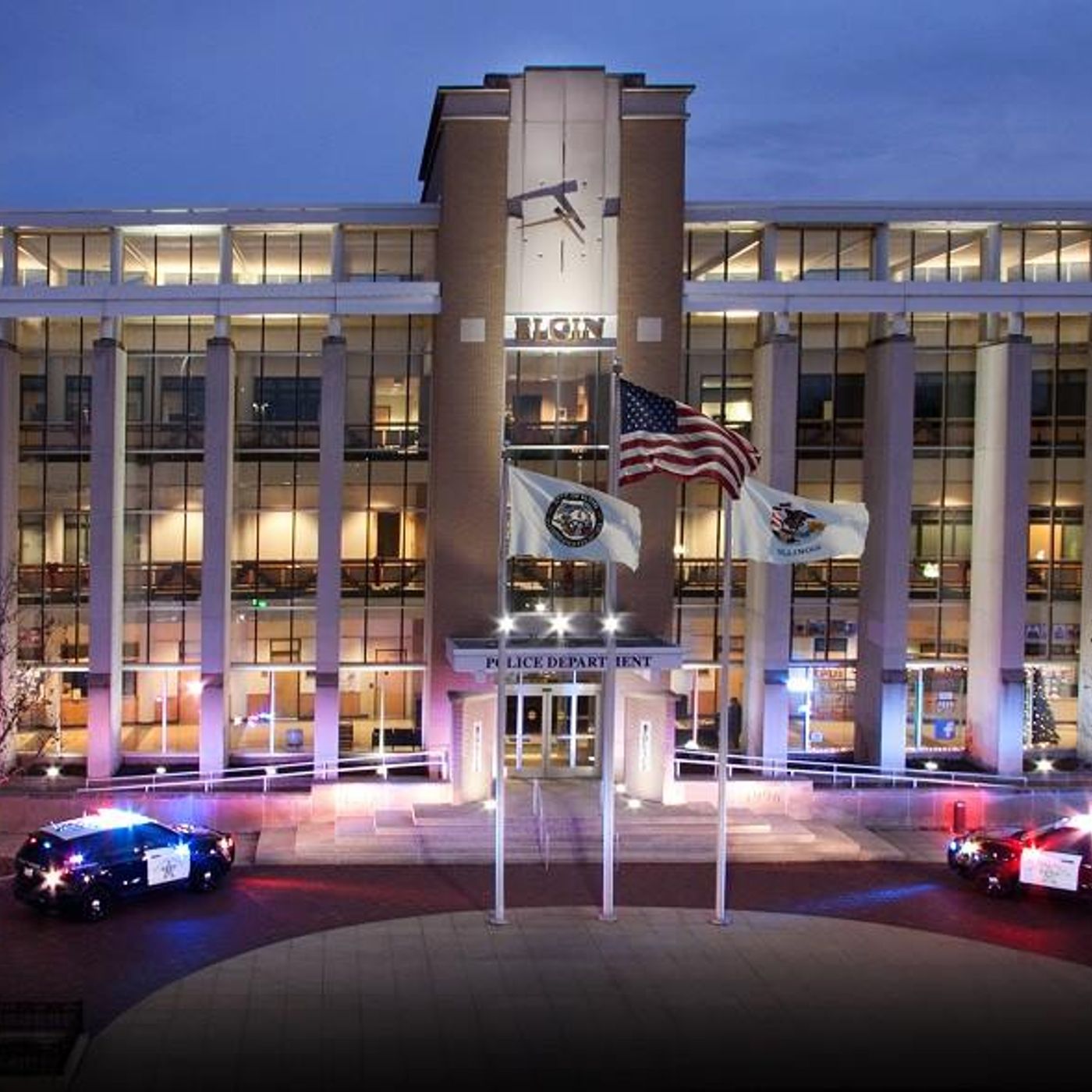
Somebody Knows Something
Episode 0 - Creating A Cold Case Unit
00:24:13
In May of 2024, Chief Ana Lalley created the Elgin Police Department Cold Case Unit to review cold case homicides, missing persons, sexual assaults, and unidentified remains cases in Elgin, Illinois. In this episode, Chief Lalley provides some...
Loading summary
Transcript33 lines
- [00:00]
Narrator
This podcast is based on information sourced primarily from police and media reports, but certain names and other identifying details may have been changed or altered for privacy and security reasons. While the events and cases discussed are based on real investigations, some aspects may be simplified for time and for narrative purposes. Voice actors have been used to read from statements or documents. All information presented is intended solely to inform and raise awareness. Hosts may discuss theories regarding the cases examined in this podcast, but such discussions are not intended to and should not be considered by the listener to be legal. Conclusions all persons discussed are considered innocent until proven guilty in a court of law. Listener discretion is advised.
- [01:02]
Chief Anna Lally
This is Chief Anna Lally. Welcome to Somebody Knows Something, a podcast from the Elgin Police Department's Cold Case Unit. In this podcast we will shed new light on cold cases in the city of Elgin by sharing untold details and by encouraging anyone with information to come forward. You will come along with real cold case detectives as they investigate active cold cases in real time and seek justice for the victims and closure for their families. We believe that the Elgin Police Department and our community can work together to bring closure to cold cases because we know that in these cases, somebody knows something. Elgin as a whole, it's just a great community. It's about 115, 116,000 people. We like to call ourselves the city in the suburbs with about 50% Latin population. So it's a very diverse community and so there's always something going on in terms of events or activities. But it's a small enough city where you still have that personal connection with people and you still get to know people and know their first names. So it's a really unique city and a really a great place to live. The Elgin Police Department, I will tell you, we pride ourselves on being dedicated to our community, educating our community, being engaged with our community, and most importantly, being progressive. Progressive in how we police. We like to be the first, whether that's our body worn camera program or creating our collaborative crisis services unit, pairing mental health professionals with police officers for a co response model. We love to be the first. One of the things that we started looking at were cold. You know, there have been cold cases in the past, you know, national cold cases where somebody comes forward, it's one little piece of information that maybe they were hesitant to give, they were afraid to give, they weren't ready to give. You know, that that piece of information solved a case that was, you know, for 20 or 30 years where people, the question is always there. It's always a question what happened. Hopefully through this Podcast. There is somebody out there who has that little piece of information to the puzzle that gives us what we need to solve that case. A lot of times the victims are the forgotten people in the criminal justice system, and then as a byproduct of that, their family. So you have family members who are still thinking about something that happened 10, 15, 20 years ago. It was important to me that at least from the perspective of the case and the police department, that we find a way to dedicate resources, time, money to ensure that our community who have suffered something very tragic, that we do everything we can to give them a sense of peace and a sense of closure. So it was time to bring it to the, to the forefront and it was time to, you know, really invest some time and energy and effort. The detectives that work in our major investigations divisions are very busy. You know, we would kind of ad hoc, just look and, and see. Can we maybe do something on this cold case starting this unit? This is something 10, 15 years from now that Detective Andrew Houghton and Detective Matt Vartanian, that they are going to be the two pioneers in terms of starting this unit. It's important that you get people who are dedicated, who are enthusiastic, who are tenacious and focused on solving a case and being able to provide that closure to a family or a loved one.
- [04:50]
Detective Andrew Houghton
My name is Andrew Houghton and I'm a detective with the Elgin Police Department's cold case unit. I've been a police officer here in the state of Illinois since 2007 and I started my career as a patrol officer and then an evidence technician. As an evidence technician, I processed a number of homicide scenes before I became a detective here in Elgin in 2013. And during my time as a detective in the major investigations division, I spent the majority of my time working on crimes against children cases. And I've also worked on numerous homicide investigations. I am a state certified lead homicide investigator and I have worked with the Kane County Major Crimes Task Force on major cases here in Kane county since 2021.
- [05:29]
Detective Matt Vartanian
My name is Matt Varatainian. I'm also a detective with the Elgin Police Department's cold case unit. I was also an evidence technician and processed numerous crime scenes, including homicides. As an evidence technician, I've been a police officer here in Elgin since 2008. I spent the last 12 years in our department's gang crimes unit. My first eight years was as a TAC officer and then the last four years was as a gang detective. And then during that period, I was also an operator on our SWAT team for about Six and a half years. In my time in the gang unit, I worked on numerous homicides. And I'm also a state certified lead homicide investigator with the State of Illinois. I also have extensive training in historical cell site analysis and currently assist our Major Investigations Division and our Special Investigations Group with digital forensic analysis for major cases, while also being assigned to the Cold case unit. So there are a few criteria that make a case a cold case. So first of all, it has to be at least three years old. Cases under three years old are actively investigated by a detective in our Major Investigations Division. But typically in Illin, Illinois, with some exceptions, the statute of limitations on a criminal case is three years. Now, there are certain cases where that statute of limitations is extended and that is where we come in as the cold case unit.
- [06:49]
Detective Andrew Houghton
Yeah. So felonies have that three year statute of limitations. But we also are going to look at certain cases under a specific criteria for cold case. And there's four different categories. So our categories are homicide cases, long term missing persons, sexual assaults, and any unidentified human remains. Currently, we have 41 homicides that span back from 1971 to 2021, and five of them are in warrant status. That means we have warrants issued and charges approved on offenders from those cases. We just don't know where they are. So that leaves us with 36 active cold cases that are unsolved and not in warrant status. So our task is to kind of go back through those different cases and potentially reinvestigate those cases.
- [07:34]
Detective Matt Vartanian
Yeah, so we're actively working to locate those wanted offenders on our warrant status cases. So we encourage anybody that's listening to check our website and provide any information that you might have regarding the location of these suspects in any of our cases, including those that are wanted on these warrants. I mean, one of the big things is we believe that several of these suspects in these cases that they've actually fled the country. So we're working with the local Kane County State's Attorney's Office and then our federal partners to kind of track down these offenders both here in the US and then abroad. Yeah.
- [08:05]
Detective Andrew Houghton
And regarding long term missing person cases, we currently have six. They span from 1982 to 2021. The first season of this podcast is going to be specifically about one of those cases. It's going to be a missing person case from 1983.
- [08:19]
Detective Matt Vartanian
Yeah. And then on top of that, we have 26 cold case sex assaults that actually have sex assault kits with some sort of potential leads that are associated with them. And then these cases go back to 1996. So we are working to kind of review these cases in addition to the missing persons and the homicide cases too.
- [08:38]
Detective Andrew Houghton
That last category, the unidentified human remains, luckily we don't have any of those right now, but certainly there's a possibility that we could have a case like that. So if some human remains were recovered at some point and we didn't identify that person for three years, those cases would come onto our caseload. Having a background in evidence is something that the majority of our different detectives have. And looking at these cases from that other perspective is really useful. It also helps us look back at these cases with a fresh set of eyes and see things that we can see in retrospect were maybe not necessarily missed, but could be investigated differently now.
- [09:10]
Detective Matt Vartanian
Yeah. And as the time passes, the hope is that there, in some of these cases, there's somebody that knows something and is willing to come forward now, even after all this time. I mean, with any cold case, missing person or a homicide, it's not just the victim or the missing person that's affected. I mean, there are families, there's friends, there's co workers, and even kids who are victimized as well when they lose a loved one. Reviewing these cases kind of gives us the opportunity to really kind of focus our resources on these certain subset of cases to just try to bring some justice and closure for the victims and the families.
- [09:44]
Detective Andrew Houghton
There are definitely some unique challenges with cold cases. For instance. Obviously the big thing people are going to think about is technology. It's certainly changed over the decades. While we have blood or physical evidence from some of these cases going back 20, 30, even 40, 50 years, we have to determine what state it's in, is it viable, is their DNA still viable, what's the status of that evidence, things like that. So there have been a number of technological advances over the past few decades, especially with DNA. DNA was not something that police were really aware of, really before the 1990s. So in a lot of these cases, we have items of evidence that were never tested for the presence of DNA.
- [10:23]
Detective Matt Vartanian
Yeah. So Andrew and I were both evidence technicians. So we have a background in the collection and processing of physical evidence like blood spatter, fingerprints, DNA and ballistics. I think that looking into these cases with that perspective is very useful if we have to spend a lot of time going case by case so we can kind of see, like, where the evidence takes us. Some of these cases were investigated by multiple agencies back then. So nowadays, for example, we basically handle all of our cases here in town. But if you look back, like in the 1970s, for example, the Illinois State Police, the Kane County Sheriff's Office, the Cook County Sheriff's Office, and other local, federal, county, state agencies were all involved more than they would be today. That means that some of the evidence that might have been collected back then could actually be held by, like, one agency. A suspect may have been interviewed by a different agency, and then Elgin might have taken the kind of, like, the overarching approach for everything. So you kind of have stuff that's kind of pieced out everywhere. So. So we are kind of like, looking for physical items of evidence that might be housed elsewhere instead of here in our, you know, evidence collection area or a housing area. And also, like, reports, too. It's trying to find out where all these reports have gone. Yeah.
- [11:33]
Detective Andrew Houghton
The thing that people have to think about with these reports, you know, nowadays all of our things are digital. All of our reports are digitized. These reports we're talking about oftentimes handwritten paper reports, carbon paper, things like that. And we have been able to digitize a lot of those physical paper files. But even reviewing them is really difficult, and it can be really time consuming because the quality isn't great, the clarity isn't great, it's hard to read, different handwriting, things like that. So, I mean, I think Matt would remember we started this unit, we took probably, what, four dozen boxes of different records up to an office and kind of went through those and categorized everything, separate our cases out. We have to go through every scrap of that paper for a case. So we have some cases that have hundreds or thousands of handwritten paper files associated with it that we have to digitize. And then we have to go back and make sure that we have compared what we digitized to what we have physically. Because there could be one report or one piece of paper that's really important that we have to know we have it right. And if we prosecute a case, we have to turn all that over for discovery for the defense and for the prosecutors to have a full case file.
- [12:39]
Detective Matt Vartanian
Yeah, yeah. And beyond, just like the reports and the evidence, people also really have to kind of understand the difference, again, in the technology. Like I was saying before, I'm responsible for processing, like, all the historical cell site information on cases that we work. So that means, like, I map cell phone records, basically what it is. So any records that we get from companies like AT&T T Mobile, Verizon, we can also map location data that's physically recovered from a device like a cell phone. This kind of Just really helps us to understand like the area or the location of where a device physically was used. So nowadays, for example, like if we have a missing person, we can work in conjunction with a cell phone provider like an AT&T or T mobile to receive like that location data, whether it's historical or real time data, in order to basically locate a person that's missing. So that technology, it just, it didn't exist in the past. I mean, even in this first case that Andrew was just talking about, if that person had made a phone call back in 1973. I'm sorry, 1983, you know, it's very well could kind of give us a focus of like where that individual was at the time of that person's disappearance.
- [13:46]
Detective Andrew Houghton
In addition to cell phone records and physical devices like cell phones, I spent 10 years handling cases that were involving social media, child exploitation, Internet crimes, things like that. And social media is another huge investigative lead that we use today. In almost every case. It could be a robbery, it could be a sex assault, it could be a retail theft. A lot of times we're getting social media data to place people, different places to see what types of messages they transmitted. Different people. People are, you know, deciding, this is the action I'm going to take. We're going to coordinate what we're going to do. It's all over social media. So we have the ability to sometimes pull some of those records back. Then that's just not the case. I mean, we don't have the ability to look at cell phone pictures from the party that this person was at in 1983, for example. There's no videos or selfies of them at the party. There's no cell phone calls that she would have made or any type of social media posts that she would have made about the party. So all of those things would be things that we would use now where we probably wouldn't be investigating this case or we would investigate it very differently if it happened in 2023 versus 1983. The technology and like real time location data is just completely different.
- [14:54]
Detective Matt Vartanian
Yeah, and the other thing that I would add is like in a lot of these older cases, a lot of the people that were involved are dead. I mean, that's just kind of the truth of it. I mean, whether it's somebody that investigated the case, if it's, you know, a crucial witness, a family member, you know, maybe even a potential suspect they might have passed down by now, that means that we have to kind of rely on all these written reports that we find in whatever condition they may be in, you know, to kind of figure out what people said and did at the time of the incident.
- [15:21]
Detective Andrew Houghton
Yeah. And you're looking back in these cases. I mean, we're talking 30, 40, 50 years ago. Not only are some of these people dead, we're trying to go back and find people that are still alive and track them down. You go through some of these cases and the common scenario today would be matter. I would interview somebody, we would take their name, their date of birth, maybe their driver's license number, some other identifying information like that. Back then, a lot of these reports are, hey, here's this John Smith guy and this is the phone number we had for him, and that's it. So you're trying to track down who is this John Smith from 1983 or 1992 based on a phone number, and it's pre area code. So it's a seven digit phone number that some of those companies may not even exist anymore. We can't go back and just plug in this number and say, well, hey, who had this phone number in 1985? We just don't have the ability to do that. So part of the hope with a podcast like this is putting out information where people recognize names, people recognize people, people recognize information that they can give us and say, hey, I know you've been saying you're trying to track down this person. I know that person, I went to high school with them. Or I am still friends with that person. So we can try to track those people down. Because our ability to track somebody down from 1980 or 1970 based on just a name and a phone number, or even a name and a date of birth can be really difficult.
- [16:41]
Detective Matt Vartanian
Yeah.
- [16:42]
Detective Andrew Houghton
First and foremost, I think with this podcast, the whole purpose is really to try to solve cases. So in the case of Karen Shepers, that's the case we're going to discuss this season. We want to recover her, whether she's alive or dead. The likelihood that she's still alive is not very great, but if she is, we would like to locate her. And if she's not, we'd still like to locate her because we want to find answers to what happened in her case and all these other cases. When you're talking about 41 murders, six missing persons, the goal would be to identify and recover as many of those missing persons as possible and also identify an offender and prosecute an offender in as many of those homicides as possible.
- [17:20]
Detective Matt Vartanian
Yeah, I mean, we really want to use this platform to just to highlight you Know, Karen's case and then the other cold cases that we have here in Elgin and the surrounding area. Because we just. I mean, quite frankly, we need help. We need help from people that aren't here. You know, people around the country, around the city.
- [17:33]
Narrator
Yeah.
- [17:33]
Detective Andrew Houghton
I mean, Matt and I can go back through these cases. We can interview people, we can go through physical evidence, we can talk to the state lab or private labs. But somebody knows something about these different cases. That's just the reality. Someone told someone something, someone saw something, or in some of these cases, someone did something. And maybe those people now, as time passes, are willing to talk to us. No, information is too little. Like, we would take any information people have on any of these cases, and we need people to come forward so we can keep these cases kind of in the limelight, cases like Karen's case, so that people are interested in giving us information and helping us track down people. A lot of these cases are going to be solved more by the public than they are by matter.
- [18:13]
Detective Matt Vartanian
I.
- [18:13]
Detective Andrew Houghton
It's going to be people coming forward and talking to us.
- [18:16]
Detective Matt Vartanian
I mean, podcasts, they're, as a median, they're just huge. I mean, we're kind of hoping that we reach obviously just outside the city of Belgium, because as time goes on, I mean, people. People move, Right. They go outside of Elgin, outside of the state of Illinois, outside of the US Even sometimes. Our hope is that maybe there's somebody out there in New York or Colorado that is hearing us talk about this case, and that triggers something in their mind where 41 years later, they decide to come forward and say, oh, I remember this. And that's a tip that could break open a case. Yeah.
- [18:45]
Detective Andrew Houghton
And we've talked to people out of state on some of these cases, but trying to track those people down has been sometimes difficult. So if we can get someone that maybe we don't even know about that somehow hears about this podcast or hears that we're doing this and listen to it, say, oh, you know what? I live in Florida now, but in 1992, I did live in Elgin, and I have this information that's sort of our hope to try to go as broadly as we can to try to pull those people in. This podcast, I think will be unique in the fact that, you know, Matt and I both listen to a lot of podcasts, just like millions of other people do every day. But I know there's different agencies that will put out an episode here, an episode there about one case and ask for information. We're going to do it A little bit differently. So for us, we're going to dive into this case extensively and just one case at a time, and we're going to do multiple episodes about a single case. And we're also going to do it as we're actively investigating the case. So our hope is to kind of, in some regard, take the listeners along with us while we're actively investigating a case and trying to resolve it sort of in real time. And I think that that's kind of a unique thing that you don't see or hear on other podcasts.
- [19:58]
Detective Matt Vartanian
So we're starting with a missing persons case from 1983. It's about a 23 year old woman named Karen Sheepers from Elgin who disappeared on April 16th of 1983. She was at a local area bar and neither her or her vehicle have ever been seen or heard from again since that. Since that date. During the investigation, both the Illinois State Police and the Elgin Police Department have over time, periodically reviewed this case. But we wanted to take a fresh look at it.
- [20:25]
Detective Andrew Houghton
And Karen's case is a good case for us to start with, we think, because a lot of the people that are associated with that case, they're still local, they're still in the area, a lot of people are still alive. And not only that, family members, friends, coworkers, have been really open to the idea of being interviewed on a podcast. Whereas some other cases, witnesses in homicide or victims of family members of a homicide might not be interested in doing that. They really are, which helps us kind of put this information out there. You know, even 42 years later, we have people that are more than happy to pick up the phone and meet with us and talk about this case.
- [21:02]
Detective Matt Vartanian
Yeah, there's been, I mean, really, truly like a lot of great support from people in the community about this case. I think that there's a lot of local people that still remember this case. And one of our hopes here is just kind of reviewing this to kind of start off. This podcast will kind of not only highlight the fact that this unit exists. We're here, we have a cold case unit, but also kind of drive people to check out our website and think, hey, maybe I know something about this case or another case. It goes right to our Elgin Police Department transparency page. And there's going to be links on there where you can actually click to add a tip if you want to. We have an email set up, we'll have a phone number as well. So really, like Andrew said earlier, it's any tip. I mean, we're going to run with it. I mean, there's nothing that's too small, you know, that we can kind of focus on. And it's just a way to just kind of get more people involved. And I think that this is just a really, a great way to do it.
- [21:50]
Detective Andrew Houghton
People can give us information a couple different ways. One of them is going to be an email that we set up. It's called cold casetipslgenil.gov or you can also call a dedicated tip line we have that is 847289 cold. Cold, which is 847-289-2653.
- [22:09]
Detective Matt Vartanian
Yeah. And you can also visit our website, which is linked on the Elgin Police Department's transparency page. So when you click on the Cold Case unit page, you'll find details about each cold case, pictures of the victims and suspects, and a link to this podcast which then you could share with friends and family.
- [22:25]
Detective Andrew Houghton
All these different options are going to have information and links on the podcast itself. So if you scroll down when you're looking at our podcast, we're going to have our contact information, our transparency site information, things like that as well. So we're hoping people will see those when they're listening to the podcast and take a look at it. Well, now that we've introduced ourselves to our listeners, we hope you will come along with us as we investigate the disappearance of Karen Shepers. Karen was a vibrant 23 year old woman who lived in Elgin, worked at a company called first, and went out with multiple co workers to a bar called p.m. bentley's in Carpentersville, Illinois on April 15, 1983. In the early morning hours of April 16, she simply disappeared along with her vehicle and she was never seen again. In our next episode, we will walk through the hours leading up to Karen's disappearance, hear from several of her co workers and introduce our listeners to the six theories we have about what could have happened to Karen. We're hoping that with your help we can can finally find the answer to the question where is Karen?
- [23:30]
Chief Anna Lally
If you or anyone you know has information about this case or any other cold case in Elgin, please contact the Elgin Police Department cold case email@coldcasetipselginil.gov or the cold case tip line at 847289 cold. You can also review cold case information on the Elgin Police Department's Transparency Hub by going to elginil.gov and navigating to the Elgin Police Department's Transparency Hub where every cold case, homicide and missing persons case is listed with photographs and information about each case.