← Somebody Knows Something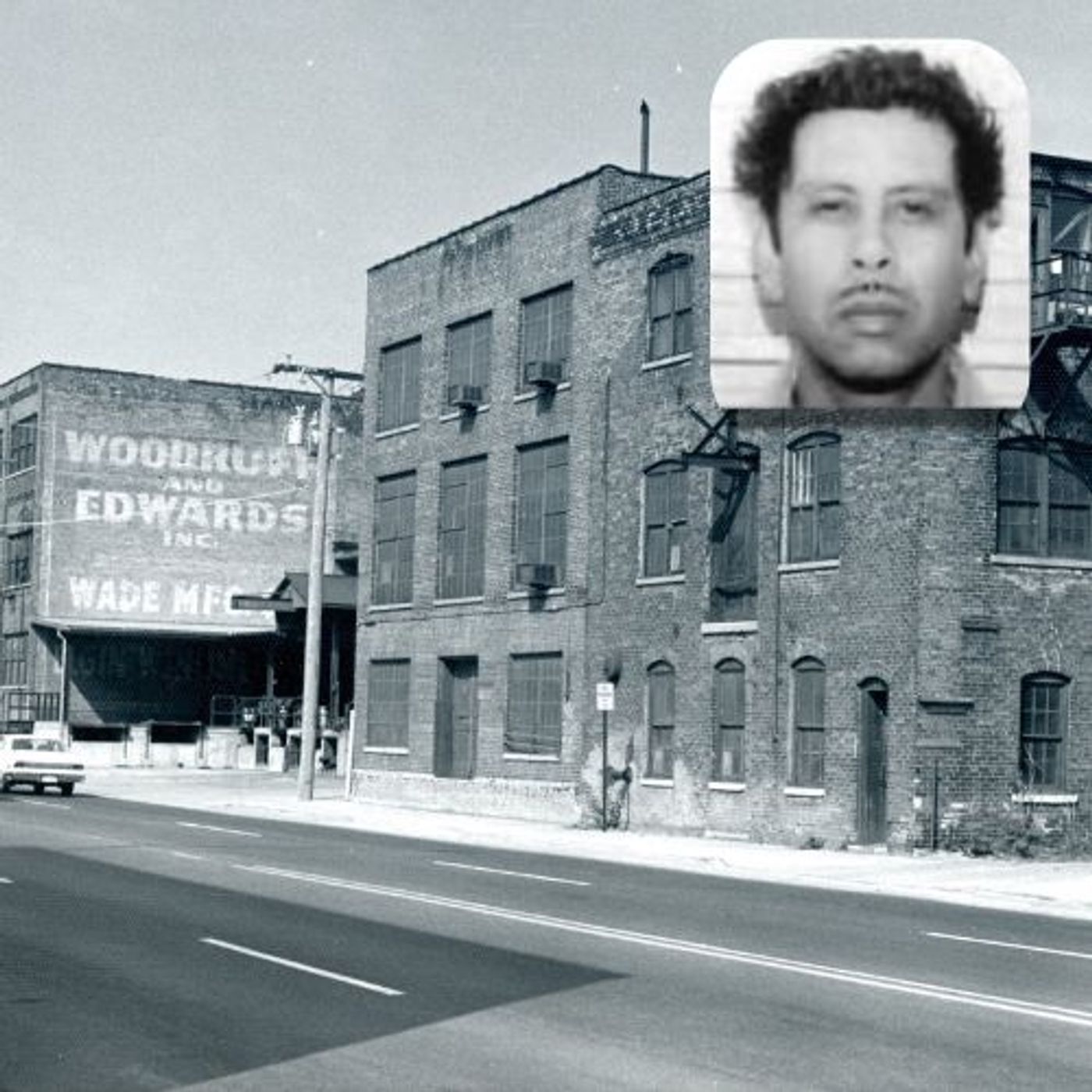
Somebody Knows Something
S2E1: Murder at the Foundry (1971)
00:22:32
On June 30, 1971, a 35-year-old foreman at the Woodruff and Edwards Foundry, Guadalupe Alanis, was murdered while working in downtown Elgin. Detectives Andrew Houghton and Chris Hall of the Elgin Police Department Cold Case Unit review Guadalupe’s...
Loading summary
Transcript48 lines
- [00:00]
Detective Andrew Houghton
Too fast, Trevor. Too fast.
- [00:02]
Detective Matt Vartanian
Here at the Zebra, research shows people would rather teach their kids to drive than search for auto and home insurance.
- [00:07]
Detective Andrew Houghton
I know what I'm doing, Mom.
- [00:09]
Detective Matt Vartanian
Or attend a corporate team building workshop.
- [00:11]
Detective Chris Hall
Go team.
- [00:12]
Detective Matt Vartanian
Feel that synergy. Or be regaled by Uncle Frank's conspiracy theories. They're listening to us right now. That's why the zebra searches for you. Comparing over 100 insurance companies to find savings no one else can Compare today@thezebra.com we do the searching, you do the saving.
- [00:29]
Detective Andrew Houghton
Shh. They're here.
- [00:30]
Detective Matt Vartanian
Most people would rather remove a nest of irate hornets than search for auto and home insurance. That's why the zebra searches for you. Comparing over 100 insurance companies to find savings no one else can Compare. Today@thezebra.com I think I'll wait inside this.
- [00:46]
Chief Anna Lally
Podcast is based on information sourced primarily from police and media reports. But certain names and other identifying details may have been changed or altered or for privacy and security reasons. While the events and cases discussed are based on real investigations, some aspects may be simplified for time and for narrative purposes. Voice actors have been used to read from statements or documents. All information presented is intended solely to inform and raise awareness. Hosts may discuss theories regarding the cases examined in this podcast, but such discussions are not intended to and should not be considered by the listener to be legal. Conclusions all persons discussed are considered innocent until proven guilty in a court of law. Listener discretion is advised.
- [01:48]
This is Chief Anna Lally. Welcome to Somebody Knows Something, a podcast from the Elgin Police Department's Cold Case Unit. In this podcast, we will shed new light on cold cases in the City of Elgin by sharing untold details and by encouraging anyone with information to come forward. You will come along with real cold case detectives as they investigate active cold cases in real time and seek justice for the victims and closure for their families. We believe that the Elgin Police Department and our community can work together to bring closure to cold cases because we know that in these cases, somebody knows something.
- [02:31]
Detective Andrew Houghton
Hello and welcome to season two of Somebody Knows Something, the Elgin Police Cold Case Podcast. My name is Detective Andrew Houghton. Last season, Detective Matt Bartanian and I took our listeners along as we investigated the 1983 disappearance of 23 year old Karen sheepers. We spent 11 episodes on Karen's case and then aired a bonus episode, reflecting on season one and looking forward to some changes for season two. One big change is our staffing. Detective Matt Vartanian is now Sergeant Matt Vartanian. He was recently promoted and is working in our patrol division. So I'M pleased to introduce my new partner and the new co host for season two, Detective Chris Hall.
- [03:09]
Detective Chris Hall
Thanks, Andrew. Hello, I'm Detective Chris Hall. Like you said, I'll be replacing Matt in the unit as a co host for this podcast for season two. I'm really honored to have the chance to work on these cold case homicides and missing persons cases because I think they are really important and these victims deserve to be remembered and they deserve justice. I'm also excited to dive into these cases and work for the victims and their families as we continue the great work that is being done in the Cold Case unit.
- [03:33]
Detective Andrew Houghton
Yeah, I'm really looking forward to working with you on this podcast and on the cases we've selected outside of it. One thing I learned during Karen's investigation in season one is that doing a deep dive on a single case for a podcast like this is very difficult and time consuming. And as I said, Chris and I are currently working several cold case homicides that are not appropriate for this venue. So while we're preparing for season three, where we hope to dive back into a single case over multiple episodes, that process takes a lot of time and preparation. We wanted to keep the focus on our unsolved cases and victims in the interim. So as we continue our work on this unit, we launched season two where we're going to look at a couple different cases.
- [04:10]
Detective Chris Hall
Yeah, season two is an abbreviated season and we plan to air six episodes over the next three months. Season two is simply titled the 1970s and in it we will highlight five cold case homicides between 1970 and 1979. They include the 1971 shooting of Guadalupe Alanis, the 1975 shooting of Maynard Holly, the 1976 murder of a 16 year old Laurie Bulger, the 1977 stabbing of Casey Kyles, and and the 1979 murder of Rene Tovar. Five homicides with five victims, all in the 1970s here in Elgin.
- [04:45]
Detective Andrew Houghton
We will also revisit the disappearance of 14 year old Barbara Glueckert from 1976. While that case is technically not an Elgin case, it has some links to Karen Sheper's case from season one. And Matt and I even met with a retired detective from Mount Prospect during that season, but we never aired any episodes about it. So we're going to air some information about that interview in season two because it is a 1970s case and it has a bunch of different ties to Elgin. Hopefully we can use this podcast to highlight the victims in all these cases, keep their cases in the spotlight as we seek justice for Them and their families. And as we look for missing persons on our other cold cases. Chris, before we dive into the cases, I think it might be helpful for us to talk a little bit about what Elgin was like during the 1970s. Kind of set the stage for this season.
- [05:32]
Detective Chris Hall
Yeah, absolutely, Andrew. That's a great idea. So in the 1970s, Elgin was a very different city than it is today. For one, ELGIN in the 1970s, crime rate was significantly higher than the current day Elgin standards. According to the FBI statistics, Elgin had 2,659 violent crimes reported in 1972, with a population of only 55,000. In contrast, Elgin experienced 1293 violent crimes in 2021 with. With a population of just under 115,000. These numbers reflect a 49% decrease in violent offenses between 1972 to 2021.
- [06:10]
Detective Andrew Houghton
Yeah, and when you look at crime rates, you have to really dig into the change in population even deeper to get a real understanding of what that actually means. So, as you said, Elgin was a much smaller city in the 1970s. When you look at the actual crime rate per 100,000 residents and compare that from 1972 to the numbers we have from 2021, it's vastly different. In fact, the violent crime rate in Elgin in 1972 was almost 77% higher than it is today. That is a huge difference, and it creates unique challenges for law enforcement in the 1970s. The number of sworn officers back then is nowhere near the authorized 195 that we have today. So those officers and detectives were dealing with a much higher crime rate. More violent crime and less officers.
- [06:50]
Detective Chris Hall
Yeah, absolutely. Plus, as both you and Matt discussed in season one, technology was vastly different in the 1970s of Elgin as well. There was no video surveillance, no cell phones, no social media, and no easily accessible databases. Police couldn't simply just call the FBI or another agency and get information back on people instantly, like we can today. The Elgin police certainly coordinated with federal partners like the FBI and other area agencies as well in the 1970s. But it was just a very different relationship. Fifty plus years ago, it could take days and or even weeks to get back information on people from other states. And in some of our cases, like the first case, other countries, like Mexico back in the 70s and 80s, police were basically out in the street talking to people, building cases that relied heavily on statements and corroboration of those statements. And they were spending vast amounts of time working to get basic information back on people who came here from Mexico and other states, because that instant technology just wasn't there?
- [07:49]
Detective Andrew Houghton
Yeah, that's right. And DNA wasn't something police really knew about either. Police collected items of evidence like fingerprints, ballistics, and blood. They didn't have the ability to test for DNA confirmation back in the 70s. They could determine blood type, so they could, for example, see if blood in a car or on a weapon matched the blood type of a victim. But they were decades away from any direct DNA comparisons that could identify someone. And codis, the combined DNA index system, well, that didn't exist in any form until 1990, and even then it was just a pilot program that wasn't available nationwide until 1998 because they were only using blood typing and things like that in the 1970s and 1980s. Many of the items that police tested back then were only tested if they had obvious blood on them, not other items that had potential DNA. Today, we can get DNA profiles from a bunch of different sources, something like sweat, saliva, hairs, semen, and obviously blood. That's why it's really important to review these cases and see if there's items that could yield new forensic evidence, like DNA. With today's forensic practices, unfortunately, that type of advanced testing can be expensive because the evidence in these cases is 30, 40, or sometimes 50 years old.
- [08:57]
Detective Chris Hall
Yeah, even with technology, the Elgin Police Department did a really great job on homicide cases in the 1970s. Elgin had 27 people murdered between 1970 and 1979, and only five of those cases remain unsolved to this day. That's an 81% clearance rate on the homicides that Elgin experienced during the decade. And that is a very good clearance rate when you look at the clearance rates across the decade and even today.
- [09:21]
Detective Andrew Houghton
Yeah, it certainly is. According to the FBI's Criminal Justice Information Services, the national homicide clearance rate in 1970 was just above 85%. But by 1979, it had fallen to just above 70. So Elgin generally maintained a higher than average clearance rate on our homicides over the decade. I'd also add that the national clearance rate has fallen over the past few decades to just about 58% in 2024, which means that full time cold case units will certainly be something that law enforcement need to think about. Unfortunately, given this trend, it's likely that more and more cases are going to continue to move into a cold case status nationally. So agencies have to figure out how to meet that need. We are lucky in that regard, since the chief started this unit in 2024. But listeners in other jurisdictions should consider this trend and that a full time cold case unit is the best way to clear those mounting piles of cold case homicides and missing persons.
- [10:13]
Detective Chris Hall
Yeah, needless to say, cases still can go cold and here in Elgin, five of them did between 1970 and 1979. So we want to take the season to highlight those cases in hopes that people with new information come forward. Because we know that in all these cases, somebody does know something.
- [10:34]
Detective Andrew Houghton
Our first case of this season is the murder of 35 year old Guadalupe Alanis, who also used the alias Ricardo Medina. Guadalupe was a Hispanic man who was born in Mishawakan, Mexico and came to America for a better life. He was married to his wife Eliza and lived in the 600 block of Raymond Street. In 1971 when he was murdered, Guadalupe.
- [10:53]
Detective Chris Hall
Worked as the assistant foreman at the Woodruff and Edwards Foundry in the 100 block of South State street along the Fox River. The foundry originally opened in 1867, making bicycle parts and later making propellers and other equipment for the United States military during World War II.
- [11:08]
Darren Marler
Hi, I'm Darren Marler, host of the Weird Darkness Podcast. I want to talk about the most important tool in my podcast belt. Spreaker is the all in one platform that makes it easy to record, host and distribute your show everywhere from Apple Podcasts to Spotify. But the real game changer for me was Spreaker's monetization. Spreaker offers dynamic ad insertion. That means you can automatically insert ads into your episodes, no editing required. And with Spreaker's programmatic ads, they'll bring the ads to you and you get paid for every download. This turned my podcasting hobby into a full time career. Spreaker also has a premium subscription model where your most dedicated listeners can pay for bonus content or early access, adding another revenue stream to what you're already doing. And the best part? Spreaker grows with you. Whether you're just starting out or running a full blown podcast network, Spreaker's powerful tools set up scale effortlessly as your show grows. So if you're ready to podcast like a pro and get paid while doing it, check out spreaker.com that's s p r e a K-E-R.com at its peak.
- [12:09]
Detective Chris Hall
The business employed over 400 workers and poured 12 tons of iron per hour. Working at the foundry was hard. It was manual labor. Guadalupe spent much of the time driving forklifts and performing other manual labor tasks, often overnight.
- [12:23]
Detective Andrew Houghton
The Woodruff and Edwards foundry closed in 1987 and it was torn down in 1990. The property is now a large park called Foundry park, situated along the west bank of the Fox river along Illinois Route 31 between Kimball street and Chicago Street. That change is another thing that makes these cold cases more difficult. Right, Chris? I mean, we can't actually visit the homicide site because it doesn't exist anymore.
- [12:46]
Detective Chris Hall
Yeah, it definitely poses a challenge to us. And we simply have to rely upon a handful of crime scene photos, statements that people gave in the case, and old photographs from places like the Elgin Historical Society, the Elgin History Museum, and the Gail Borden Library. The building hasn't existed for 35 years, but we have been able to track down some old photographs of the property to at least get an idea of the layout and what the site actually looked like in the 1970s. And we do have a few photographs of the homicide scene itself within our case file. We want to thank the Elgin History Museum for helping us track down these photographs at the site and for helping us learn more history of the location. They also provided the background for these episodes cover art, so we wanted to thank them for that.
- [13:28]
Detective Andrew Houghton
The unfortunate reality is that for this case, we actually have to go back before the 1970s, because Guadalupe Alanis was not the first person to be murdered on the grounds of the Woodruff and Edwards foundry.
- [13:45]
Detective Chris Hall
In the 1960s and 1970s, the Woodruff and Edwards Foundry employed multiple Hispanic men, some of whom were temporary workers or illegally in the United States. In reviewing cases from that time period, there were apparently some very serious disputes within the groups of men working at the business. The first case that we tracked down for the property was a battery case on February 1, 1969. That case involved a large fight with nine men, including our victim, Guadalupe Alanis.
- [14:11]
Detective Andrew Houghton
Police responded to the foundry for a large scale fight between multiple men at the business. Guadalupe Alanis, who was the foreman on duty that night, told the police there was no fight and everything was fine. However, another man on scene reported that three subjects, including Guadalupe, had attacked him. All nine of the men were transported to the Elgin Police Department, but Guadalupe was later released.
- [14:31]
Detective Chris Hall
Then, just under five months later, on June 27, 1969, Lucas Garcia, a worker at the foundry, vanished. A little over a week later, his body was found chained and weighed down in a water raceway on the foundry's property. Police reports and newspaper reports documented that Lucas had been shot in the head with a.38 caliber weapon. Lucas Garcia was a 48 year old married father with 10 children when he was murdered. And his murder also remains unsolved. Problem is, we don't have photographs or a physical case file for that 1969 murder. The only files that we've tracked down for that case. Are simply contained in Guadalupe's murder case file. Again, here's another problem with cold cases. Some of the original files or photographs from Those cases are 50 to 60 years old, and they're just gone.
- [15:20]
Detective Andrew Houghton
In the portions of the 1969 homicide file that we do have, which are copies. In the 1971 murder, witnesses reported that Guadalupe had made threats toward Lucas Garcia, Allegedly even threatening to kill him. The case file also indicated that Guadalupe was reportedly running a scam at the business. In which he would punch employee punch cards for men who had been deported. Guadalupe would then allegedly take the men's earnings for himself. One of Lucas family members reportedly confronted Guadalupe about this practice. So our victim in this case was allegedly stealing money from the business. And several witnesses reported that he was forging documents for illegal immigrants. On top of that, the Garcia family and their friends told the police that they believed he was involved in Lucas's murder in 1969.
- [16:04]
Detective Chris Hall
Yeah, and they had other reasons besides the reported threat towards Lucas and members of his family to back up their own suspicions. Guadalupe had purchased a.38 caliber firearm prior to Lucas's murder. Police later seized that firearm, but it was never conclusively linked to Lucas murder. Needless to say, the family certainly knew about Guadalupe's threats, His firearm, and even some of his own statements. Guadalupe himself actually admitted in interviews with the police. That the Garcias and another family were enemies to him.
- [16:35]
Detective Andrew Houghton
It seems to me, and I know we were both evidence technicians. That it's likely the reason the police couldn't conclusively link Guadalupe's.38 to Lucas's murder was that there was probably no shell casing to compare it to. Or the projectile that actually struck Lucas was either damaged or. Or to a point where comparison just wasn't possible at that time. Or maybe it wasn't even recovered. Either way, it was a pretty circumstantial case. That police just couldn't charge back in 1969. In reading the case, though, a lot of people back then felt that Guadalupe was involved in Lucas murder. And that might be a motive for someone to kill him.
- [17:08]
Detective Chris Hall
And now I think it's a great time to mention that victims in homicide cases. Sometimes are involved in criminal activity or, frankly, risky lifestyles. While we cannot confirm the allegations against Guadalupe Alanis, even if they are true, it doesn't mean that he isn't a victim as well. Our victim in this case was murdered. And while he may have been involved in some type of criminal activity, that doesn't take away the fact that he was murdered.
- [17:33]
Detective Andrew Houghton
When we take a look at our cold cases, especially from the 1990s and the 2000s, a number of our victims are somehow affiliated with criminal activity, including gang activity or drug activity. But those victims still matter. Unfortunately, in many homicide cases, it's the people on the fringes of society that are victimized. It's homeless individuals, prostitutes, gang members, habitual drug users, and other people involved in some type of criminal activity. But they were still people with lives, with families, with friends. Every homicide is a tragedy, and every victim deserves justice in their case.
- [18:06]
Detective Chris Hall
Yeah. Sadly, Lucas Garcia's family was victimized again several months later when someone used a pipe bomb to blow up part of their home. Then, in November 1970, someone also threw Molotov cocktails into an occupied home on South State street where employees from the foundry also lived. That employee and his family also had serious conflicts with Guadalupe, based on witness statements. In fact, it was the same family name that Guadalupe included in his list of enemies in his statement during the Lucas Garcia murder investigation. Plus, there were additional shootings and batteries, all involving a bunch of the same people, but from the foundry throughout 1970-1971, with Guadalupe right in the middle of it.
- [18:47]
Detective Andrew Houghton
Yeah, and as for that Molotov cocktail attack, the witnesses reported that two Spanish speaking men threw Molotov cocktails into an occupied residence in November. But only one suspect, Luis Cervantes, also known as Raul Juarez, was charged. Luis went to trial and he was acquitted on June 28, 1971. And that was two days before Guadalupe was murdered. Again, that incident could be related to this homicide, but we don't know for sure.
- [19:14]
Detective Chris Hall
Yeah, Andrew. But we do know that Guadalupe certainly was following that case. He had reportedly been in the courtroom at one point during the trial, and he actually had newspaper clippings in his locker at work when he was murdered that referenced not only the pipe bombing at the Garcia house, but also Luis's acquittal. Now, that doesn't mean that Luis was involved in the homicide, but it does show us that there were some different groups that were, for lack of a better term, at war with one another between 1969 and 1971. And our victim was right in the middle of all of it. We had a shooting, multiple batteries, a pipe bombing, a Molotov cocktail attack, and a murder with the body concealed on the foundry property. Then Guadalupe's murder. That's a ton of violent activity that all revolved around the foundry and a bunch of the same people.
- [20:03]
Detective Andrew Houghton
Yeah, for sure.
- [20:04]
Detective Chris Hall
I do Want to mention one more thing about Lucas Garcia's murder? Oddly enough, he was reported missing on June 29, 1969. And that Guadalupe Alanis was murdered at 12:47am on June 30, 1971. So just an hour before that, it was the two year anniversary of the family reporting Lucas's disappearance. That could be significant, right?
- [20:24]
Detective Andrew Houghton
Absolutely. If someone felt that Guadalupe was involved in that murder, the two year anniversary date that they reported him missing to the police would certainly be something we would take into consideration. And as we said, the fact that Luis was acquitted just two days before the murder is also an interesting piece of the case. Especially when you know that Guadalupe had these news clippings. And both the Garcia's family's house was bombed and another family's house had these Molotov cocktail attacks.
- [20:47]
Detective Chris Hall
Well, there was one eyewitness to Guadalupe's murder who we haven't talked about yet. His name was Joseph Garcia. And again, another member of the Garcia family. Joseph was also murdered five months after Guadalupe in November of 1971. Was someone cleaning up loose ends? Was someone retaliating against Joseph Garcia because they believed that he actually had some information or involvement in Guadalupe's murder? It's just really hard to say for certain. But one thing is clear. The Woodruff and Edwards Foundry was somehow linked to three different murders and multiple other incidents between 1969 and 1971.
- [21:23]
Detective Andrew Houghton
Joseph Garcia's murder is not a cold case homicide. In fact, police later identified a suspect in that murder and his name was Vincente Zamorano. Zamorano was involved in a shootout with Elgin police and then was later arrested and convicted for murdering Joseph Garcia. He was incarcerated in the Illinois Department of Corrections, but has since been released after serving his sentence for his case. At this time, we cannot confirm if he is related to Guadalupe Alanis's murder. But he did murder the eyewitness for that case.
- [21:55]
Detective Chris Hall
Guadalupe's family returned him to Mexico and buried him in a cemetery in Michigan. But he was murdered here in Elgin in 1971. This case is 54 years old. And we've had a lot of trouble tracking down family and friends for Guadalupe, if they're even still in the area. So this is where we're going to ask for your help. If you knew Guadalupe Alanis or worked at the Woodruff and Edwards foundry between 1969 and 1971, please contact us. We would like to hear more details about him, his family, as well as the working conditions and the series of violent incidents that were happening in the area. During that time period. Also, if you have any information at all about Guadalupe Alanis's murder in 1971 or Lucas Garcia's murder in 1969, we would love to talk to you. As we recently learned in some training courses, most cold case homicides are solved due to changes in relationships. So it really is on our listeners who could potentially help us solve the oldest cold case homicide in our caseload.
- [22:57]
Detective Andrew Houghton
Next time on Somebody Knows Something, we jump ahead four years to February 18th of 1975. It was a frigid winter night when Maynard chester Holley, a 47 year old dispatcher for the Yellow Cab Company, reported to work at the company's office located at 215 W. Chicago St. Later that evening, as he dispatched calls, someone entered the business and executed him. We will remember Maynard Holley and revisit his senseless murder in 1975 as we continue our journey through 1970's Elgin. Here on season two of Somebody Knows Something.
- [23:35]
Chief Anna Lally
If you or anyone you know has information about this case or any other cold case case in Elgin, please contact the Elgin Police Department Cold case email@coldcasetipselginil.gov or the cold case tip line at 847289 cold. You can also review cold case information on the Elgin Police Department's Transparency Hub by going to Elginil.gov and navigating to the Elgin Police Department's Transparency hub where every cold case, homicide and missing persons case is listed with photographs and information about each case.