← Somebody Knows Something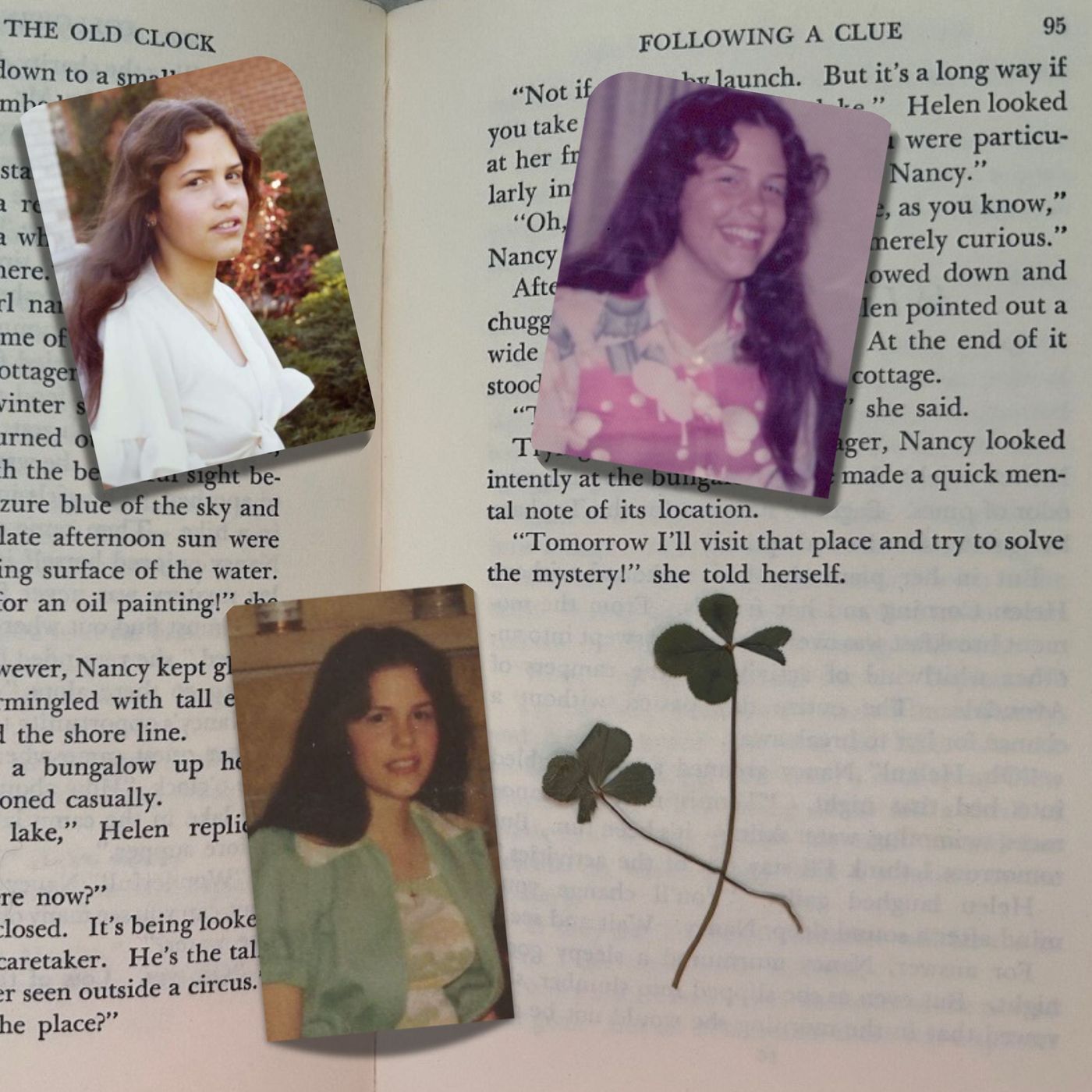
Somebody Knows Something
S2E4: Missing In Kane County (1976) – Part 1
00:37:17
During “Season One: Where Is Karen?” Detectives Andrew Houghton and Matt Vartanian researched the previous tenant of Karen Schepers’ apartment, Thomas Urlacher. They found that while he was not involved in Karen’s disappearance, he was the prime...
Loading summary
Transcript67 lines
- [00:00]
A
This podcast is based on information sourced primarily from police and media reports, but certain names and other identifying details may have been changed or altered for privacy and security reasons. While the events and cases discussed are based on real investigations, some aspects may be simplified for time and for narrative purposes. Voice actors have been used to read from statements or documents. All information presented is intended solely to inform and raise awareness. Hosts may discuss theories regarding the cases examined in this podcast, but such discussions are not intended to and should not be considered by the listener to be legal. Conclusions all persons discussed are considered innocent until proven guilty in a court of law. Listener discretion is advised.
- [01:02]
B
This is Chief Anna Lally. Welcome to Somebody Knows Something, a podcast from the Elgin Police Department's Cold Case Unit. In this podcast, we will shed new light on cold cases in the City of Elgin by sharing untold details and by encouraging anyone with information to come forward. You will come along with real cold case detectives as they investigate active cold cases in real time and seek justice for the victims and closure for their families. We believe that the Elgin Police Department and our community can work together to bring closure to cold cases because we know that in these cases, somebody knows something.
- [01:45]
C
Hello and welcome to the Elgin Police Department Cold Case Podcast. Somebody Knows Something My name is Detective.
- [01:50]
D
Andrew Houghton and I'm Detective Chris Hall. For this episode, we are moving forward in time, just two short months after Laurie Bulger's murder to discuss the disappearance of 14 year old Barbara Gluer on August 21, 1976. Originally, we planned to spend one episode on Barbara's case, but as we met with the investigators, family and several other people related to her case, we decided that it was best that we need to split Barbara's case into two separate episodes. So this episode is part one of Missing in Kane County, 1976 the disappearance of Barbara Gluckert.
- [02:26]
C
If you've listened to season one of this podcast, you know that our first season followed along as Sergeant Matt Vartanian and I investigated the disappearance of 23 year old Karen Shepers from April 16, 1983. As we worked through Karen's case, we investigated six different theories about what could have happened to her, and one of our theories was that Karen made it home and something happened at her house. What we never really got to explain to our listeners is that we had some really good reasons to consider that theory as a viable option.
- [02:54]
D
During the season, Matt and Andrew discovered that Brian Dugan, an area serial killer at the time, had followed women home and approached them, even reportedly abducting and sexually assaulting victims in that manner, they also learned that the downstairs tenant in her building, a man named James, had a criminal history for indecent exposure, had lived at a nudist camp, and was and was involved in both pornography and drugs.
- [03:17]
C
On top of that, James was friends with a man named Thomas Erlacher. He even let Erlacher rent the upstairs apartment of 311 Lovell street, the exact same apartment that Karen later rented. And Thomas Erlacher, well, he was and remains the sole suspect in the disappearance of Barbara Gluec.
- [03:49]
D
For part one, we want to spend some time talking about who Barbara was and how her disappearance impacted not only her family, but an entire community. We feel that it's very important for people to understand the victims in these cases. We also feel that is equally important that we both honor their memory and respect their families. For our first three episodes, families ask that we not use their voices in this podcast. Every family is at a different point in this grieving process, and we respect that. We want to thank each and every person who has met with us to talk about the victims in our cases, whether they've appeared in an episode or not. The information we get from friends and family is valuable and helps us honor these victims and really describe who they were in life and not just in death.
- [04:30]
C
In this episode, for the first time this season, you will hear actual interviews with one of Barbara's brothers and her niece as we seek to give her a voice in this case. But before we hear from the family, we want to talk a little bit about Thomas Erlacher and Barbara's case to give our listeners a structure of this investigation. Then, in part two, you will hear from a retired detective who worked on her case, as well as people who knew or had interactions with Thomas Erlacher. Hopefully, by releasing this information and remembering Barbara, we can generate new tips in her case and honor her memory.
- [05:17]
D
Okay, Andrew, so let's talk a little bit about how we got here in the first place and why we're talking about Barbara's case, because technically, it's not an Elgin case.
- [05:24]
C
Yeah. Okay.
- [05:25]
D
I know that for season one, you and Matt visited Karen's apartment and her childhood home, spent countless hours going through her old belongings, including letters, personal papers, yearbooks, utility bills, and a dresser. You guys also interviewed people regarding her apartment, but we never aired any of that information or those interviews in any episodes.
- [05:43]
C
Yeah, that's right.
- [05:44]
D
You also learned that Karen moved into her apartment in August or September of 1978, and that shortly before that, Thomas Erlacher moved out, reportedly keeping his Key to the apartment?
- [05:54]
C
Yeah, we did. And so we started digging into Thomas Erlacher and his background. Obviously, we learned about Barbara's case, but we also learned that Barbara was not the only victim associated with Thomas Erlacher. He had an extensive criminal history that included a kidnapping conviction, as well as some sexual assault cases and weapons offenses in the early 1970s. Plus, when he moved out of Karen's apartment in 1978 and moved to Oregon, two things happened almost immediately. He was arrested for the sexual assault of an 18 year old woman in July of 1978. And he also became the suspect in a double murder after two bodies of women, 18 and 19 years old, were found in a wooded area by a group out looking for Christmas trees in December of 1978. Police later determined that those women were likely killed in the spring and possibly before he arrived in the area. And Erlacher was basically removed as a suspect. As for his rape case, he was acquitted at trial and moved again from Oregon to Colorado, where he was arrested 14 more times between 1983 and 2001 for a number of different offenses.
- [06:54]
D
Based on his background and his association with not only the other tenants in Karen's building, but also her actual apartment. Obviously you considered that Erlacher could have been involved in Karen's case. So, um, had obtained numerous records for his movements in the 1980s in Colorado, which he was living at the time.
- [07:11]
C
Yeah, and some of those records we gathered included some arrest records and court records, including an arrest in Larimer County, Colorado on January 11, 1983, almost exactly three months before Karen disappeared. While we were able to determine that Erlacher was originally set to appear for a trial on that case on April 18, 1983, coincidentally the same day that Karen was reported missing, that case was continued into the summer. While we couldn't conclusively say if Erlacher was in Illinois or not in April, it appeared unlikely because he had these ongoing legal issues out the of in Colorado. Nevertheless, that lead was something we were looking at until we found Karen's car in the Fox river here in Elgin in March of 2025 and effectively eliminated him as a suspect in her case.
- [07:52]
D
Even though we ruled out Urlacher as being involved in Karen's case, the goal of the podcast has always been to gather information and generate tips and community interests in our cold cases. So because we had already done a ton of work looking into Erlacher, we decided that we could potentially highlight Barbara's case in an effort to put it back in the spotlight. Plus, the suspect in her case lived in Elgin, had a criminal history in Elgin, and her remains are more than likely somewhere in Kane County. With that in mind, this summer, we reached out to the Mount Prospect Police Department, who handled her case, and to Barbara's family to ask if they would allow us to cover this case. And they agreed. So we're using this podcast to discuss Barbara and her case, to remember her, to honor her, and to hopefully generate new leads in her case.
- [08:44]
C
Barbara Glueckert was born on September 7, 1961, to Robert and Gail Glueckert. She had two brothers, Mark and Bob, and was living in the 600 block of Russell street in Mount Prospect. In the summer of 1976, Barbara and her family attended mass at St. Raymond's Catholic Church, and she was about to start her freshman year at Prospect High School, a school that she would sadly Never attend.
- [09:07]
D
On August 21, 1976, Barbara met a man later identified as Thomas Erlacher. She and a friend agreed to go with him to an outdoor concert in Huntley, Illinois. And after that concert, Barbara was never seen again. It's been nearly 50 years since her disappearance, but Barbara has never been found, and she remains missing here in Kane county.
- [09:33]
C
Barbara was 5 foot 4 inches tall. She weighed about 120 pounds and had long dark brown hair and brown eyes when she disappeared on August 21st of 1976, she was last seen wearing a green T shirt, blue corduroy jeans, a rope belt with a large metal buckle, tan earth shoes, and a leather necklace with some beads. Several pictures, courtesy of the Glueckert family, are included with this episode, and you can find out more information about Barbara and her case on places online like the Charlie Project and namus. But Barbara was so much more than just a photograph and some statistics. Here is Barbara's older brother, Bob, who was just 15 years old when she disappeared, talking about his little sister.
- [10:15]
E
It was 1976, you know, so in the early 70s, you know, everything was blooming in every direction. And Barbara certainly as a young woman, was blooming. You know, she went from kind of being the, you know, a little bit of a, I don't want to say ugly duckling, but kind of as a little bit of an outcast, she suddenly bloomed out of the blue into this, like, amazing, beautiful looking woman, you know, and along with that bloom came her confidence. You know, she was, when she was young, she was a stamp collector and would sit there putting her stamps in, you know, and you know, her, you know, who was the one that sang I'm So sorry, Uncle Albert. Nicole. That was one of her favorite songs, or Wildfire. Those were the songs that were playing back then. But, yeah, always going to neighbor's houses, always sleeping over. You know, she had just registered for her freshman year at Prospect High School. She had done that just a week or two before she disappeared. I ended up carrying those books back.
- [11:28]
C
Chris. I know. After talking to Bob, we both went back and listened to some of the music that he mentioned, just to get an idea of what Barbara enjoyed. Uncle Albert is a song by Paul and Linda McCartney that came out a few years before Barbara disappeared back in 1971. And Wildfire, that's a 1975 song by Michael Martin Murphy. Ironically, Wildfire is about a girl who disappears while she's out searching for her runaway pony that she named Wildfire. Both songs have that quintessential 70s sound to them. And knowing that she liked these kind of songs really puts you in a place where you can absolutely imagine her sitting on the floor and listening to some vinyl records in the summer of 1976.
- [12:04]
D
Bob went on to tell us that because she took her yearbook photo shortly before her disappearance, Barbara's photo actually appeared in the Prospect High school yearbook in 1977. I can't even imagine how difficult that must have been for the family and the friends to see that photograph from just days before her disappearance, knowing full well that she was gone and never actually attended her freshman year.
- [12:26]
C
For her part, Bob's daughter Nicole never got to meet her Aunt Barbara. But pictures like that yearbook photo and other family photos from the 70s paint a vivid picture of the young girl that Barbara was. Even now, nearly 50 years later, all.
- [12:40]
F
The pictures we have of her, she's like. Looks exactly like you would think of, like a caricature of the 70s, like a, like, flower child. Like the bottoms she had, like the ve and the necklaces and the bell bottoms and the long, straight hair, she just. She just, like, embodied. That time was really kind of. It's cool to see, like, her style. She also collected Nancy Drew books. And I have the whole point, because I have the whole collection now. And it was funny. She used to. Ironically, she found four leaf clovers all the time. And I have a poetry book and the Nancy Drew books, and they. Every once in a while, when I open one of them, like, she used to press the four leaf clovers in the pages so they'll, like, pour out, which is kind of cool. But really co. She just. She was smart, I think, from. From. From the stories that we've heard. And just bright.
- [13:27]
D
So Bob agreed that Barbara was very bright. Bob also described his relationship with her and her really close relationship with her younger brother, Mark.
- [13:37]
E
We were only a year apart. My birthday is the 3rd of September. Hers was the 7th. So we celebrated every birthday together, obviously every holiday together. I have a brother that's six years younger than I am. She was very close with him, you know, constantly playing, you know, teacher and student. And, you know, and he loved that and she loved that. You know, it was the big brother against the two others all the time. You know, she was always protecting Mark. She, she always protected Mark.
- [14:10]
D
Bob went on to describe family trips to a cabin in the Wisconsin Dells and a family that sounds like was living your average suburban life. They attended church, the kids played sports, and they had hobbies. And by all accounts, they were the quintessential Catholic family living in the Chicago suburbs in the 1970s. But Barbara's disappearance in the summer of 1976 changed everything.
- [14:34]
E
You probably hear this all the time, but, you know, in Mount Prospect in the 70s, I don't remember locking our back door when we went to bed at night. It was when we started locking the doors. But there were lots of. Seems like there were lots of stories that were happening or maybe we were more in tune to listening to them. But all of a sudden these, these kind of tragic stories, just every time I turned around, there was a, there was another, you know, there was, there was another one that you, that you would hear about.
- [15:05]
C
There certainly were a number of cases now that you look back and I'm sure for someone like Bob, suddenly you're in tune with that. Laurie Bulger was murdered two months before Barbara. And there are a number of other cases in the Chicagoland area in the 1970s. It's something that I would imagine as a 15 year old kid you probably don't pay much attention to until it happens to you and your family. Then you see the world in a totally different way.
- [15:28]
D
Yeah, it's really just a earth shattering event. I know we described Barbara and what she was wearing before she disappeared, but for Bob, that description isn't just some words on a missing person website. It's his sister. Her long dark hair ran down past her shoulders. And as he said, she was growing up, she was involved in basketball and other social circles and she attended mass with her family and her friends, and she was starting to spend time with those friends like any other teenage girl. That Saturday night was no different. And Bob still remembers that night when he was 15 years old and saw his sister one last time.
- [16:08]
E
I could still see her walking out that night. My dad was out of town. He was in California on business. My mom and I and my brother were at the house. Our hot water heater had cracked a leak in the basement, and I was helping the neighbor's husband turn around and replace our hot water heater. Used to do that kind of stuff back then, you know, and he's helping us. And I remember it was at the end of the day, it was a mess cleaning up the basement and, you know, know, she and her girlfriend heading out the front door and my mom saying, now you're going to be back by midnight, right? No later, you know. Yeah, yeah, yeah. And. And, you know, and they, and they never came back, you know, and they never came back. And life changed forever that night.
- [16:57]
D
As Bob had said, life changed forever for the Gluecurt family that Saturday night. Barbara's disappearance took a toll on Bob, his brother, and his parents. After losing his daughter, Barbara's father wanted to protect his wife, his two sons, and the entire family from having to talk about Barbara's case and relive it. And he worked tirelessly to try to do just that. But it also took a toll on him.
- [17:20]
E
My dad was building his business. He was very busy. You know, if it wasn't for the help of a partner that he had during that time frame, my dad would have gone bankrupt trying to. With all of his assets, trying to find some type of a solution to all this. He was deter. He believed in the United States. He believed in the court systems. He believed in all that stuff. And he, and he believed in God. You know, he was bound and determined to see that there was justice done here. And it just, it, it never. It was his, his partner, only business partner that ultimately turned around and, you know, and, and, and helped this thing float, flow through. You know, my dad would. My dad at Saint. We attended church at St. Raymond's every, every Sunday. My dad would write a little prayer card on a little index card, and he'd set it into a little box that they'd carry up to the altar every morning along with everybody else's prayer card. He, he never stopped trying. He never stopped, you know, but then as he got sick and older, he was weak and he, he just, he didn't have the physical strength to turn around and, and, and fight that cause anymore, you know, and when it reopened 20 years ago, he was, if that's how long it was, now he was adamant that we not participate in anything because he felt as the patriarch, that he was the one that needed to stand up and speak and that he was too sick and ill to do it. And he didn't want, you know, my mom, who was sick, trying to do it. And he was also trying to protect me, my brother. And down the road, he would have probably not wanted to have had Nicole sitting in a meeting here about this. You know, two generations later, you know, he was protecting his family. He didn't. He. He tried everything humanly possible.
- [19:16]
C
There are lots of old newspaper articles from the 70s that include photographs of Robert Gluert. At different sites, when detectives did searches, he would make coffee, help search, and do anything he could to try to find his daughter. Robert C. Gluckert was a Navy veteran who proudly served his country during World War II aboard the USS Antietam. He built a business and a family in Mount Prospect, Illinois. And on August 21, 1976, he lost his only daughter. Sadly, Robert passed away on November 16, 2014, never getting a true answer in his daughter's case.
- [19:51]
D
Obviously, Barbara's disappearance also deeply impacted her mother, Gail. That impact really hit home with Bob when, decades after Barbara's disappearance, his mother was invited to attend what would have been a reunion for Barbara's class at St. Raymond's Bob attended that reunion with his mother and told us this about that experience.
- [20:09]
E
She went to St. Raymond's as I did in Mount Prospect, and we were invited to probably her 20th or her 25th reunion from St. Raymond's and my mom was sick at the time. She. She died at 68 of ovarian and. But she was. We had received the invitation, and my mom wanted to go, and so I took her. We went to this mass, and the two of us. And she was pretty old, and the two of us were standing there so quiet, and, you know, and we're looking around the church and we're looking at these girls, and we're recognizing who they were. And I leaned to her and I said, do you notice what I noticed? And she said, said. She said, they've all grown up.
- [20:51]
D
Bob went on to talk about how difficult it was to see that these other classmates of Barbara had grown old, while his sister never got that opportunity. He also talked about what it was like to stand in Barbara's school and see all of her friends. Years later, it really helped him realize that all those classmates still remembered Barbara. And it made him see how much her disappearance affected them as well.
- [21:13]
E
For us, my mom was always worried about whether or not anybody would remember that she existed. And, you know, we also. All these girls were in and out of our houses for years. Barbara was popular. She played on the base basketball team at St. Raymond. She, you know, she was, you know, kind of a flower that all of a sudden just bloomed and went crazy. You know, she was popular not only with the St. Raymond's kids, but also with the. With the public school kids. She knew everybody. She was going, you know, I was the conservative, geeky one, and she was the one that was so into everything that was. That was going on. You know, friends like there was no tomorrow. You know, we were always bringing someone different up to a summer cabin that my parents had up in the Dells. You know, those girls were just in and out of there constantly. But my point is, is that my mom and I stood there in that thing, and we. We realized that our relationships or memories of all these girls froze at that same time in 1976. And suddenly we're sitting there in this room, and these women are full grown with families. And what was even more significant about it was that all of them remembered. And I guess that's really what I'm trying to tell you. One by one, these girls came up to us and introduced themselves again or reintroduced themselves, and then told us how their lives were affected as a result of losing one of their best friends. How they would turn around and tell her.
- [22:56]
F
Sorry, take a breath, you're good.
- [22:58]
E
It's okay. How they would tell their own children as they were growing up, their own girls, that something as stupid as kind of saying a little white lie saying we're going to go off and do this, and they have plans to do something like this could backfire in a really bad way. And we had a girl. We. I had a best friend. That happened, too.
- [23:18]
C
A few years after that reunion, Gail Glueckert passed away on June 16, 2007. And she, just like her husband, never got an answer in her only daughter's case. But the impact on the Glueckert family doesn't stop there. Even family members that never met Barbara are impacted by her disappearance. Her niece Nicole had this to say about her life growing up in the shadow of a case like this.
- [23:42]
F
As soon as I got to that age, like 14, 15, 16, and I started wanting to, like, leave the neighborhood or, like, do other things. I think that's when Barbara's disappearance impacted our lives as a family. I think more so just because my dad and my mom were both very, very concerned. They wanted to know where I was going, who I was meeting, meeting up with, how I was Getting home, those were very constant concerns. And a lot of times I would just. I used to get so mad at my dad, but it would. I wasn't allowed to go. Like, he just didn't know enough about the parents or didn't know how I was going to get back or whatever. And I would just be. I used to get so mad. But now that I'm in my late 30s, I. I get it. I understand why, why we were that way.
- [24:24]
D
Now, Andrea, I know we both have kids, and it certainly makes sense that Bob would be that much more protective of his daughter. After living through that experience, I can't even imagine how I would react.
- [24:34]
C
Yeah, me either.
- [24:35]
D
And, you know, another group that is impacted in these cases that people often forget about are the officers and detectives involved. And according to Bob, this case had a huge effect on those Mount Prospect detectives who worked Barbara's case also would.
- [24:49]
E
Like to turn around and, you know, you hear so much positive or negative for the police force. And here we're sitting next to. There were some amazing, original detectives that were on that, on that, on that. And they all had young children at this, the same age that Barbara was. And even years later, while my mom and dad were still living out at the lake, Nicole, you know, in Lake Villa, you know, those men would periodically come out there. You know, I remember one time they brought some. A ring and some clothes that they had used as part of the investigation, and they, you know, they felt they wanted to make sure it made it back to them, to my mom and dad, you know, and they talked about how impacted their own lives were as. As men, as fathers of kids that were exactly the same age. You know, it was a. It was a. It was a tough one. It was a tough one for sure.
- [25:48]
C
Bob and his family also have a ton of respect for retired Mount Prospect detective Mike Nelson. Mike grew up with Barbara and later worked on her case as a detective. Our listeners are going to hear from him in part two. But Bob has known Mike for years. He even knew him before Barbara went missing.
- [26:05]
E
Mike grew up on the. We were in the 600 block of Russell, and Mike was on the 400 or 500 block of Russell. It was a block away, and they were. They were schoolmates together. And Mike dedicated his entire career to turning around and carrying that torch and trying to resolve it.
- [26:23]
D
People like Mike are dedicated public servants. They work these cases and they bring them home with them and they carry them with them throughout life. These cases affect detectives who care that much more about the families and the victims. Mike is one of those detectives that truly cares, and so Barbara's case has certainly impacted him. Bob attended Mike's retirement ceremony, and he told us this about Mike's dedication to Barbara's case.
- [26:48]
E
My mom grabbed. I remember watching her grab Mike by the shoulders and say, you know, this is. We appreciate all you have to do, but I want to make sure that your life isn't destroyed like ours has been affected as a result of all this going on. So fast forward 20 years later, they're not around anymore, and I'm at this retirement thing, and I really. The only thing that I said was I walked up to Mike, I gave him a hug, and I whispered it is. He's telling me that he's going to continue this fight and he's going to continue to make sure that the next generation is going this. And truthfully, I whispered it as here, it's time to let it go. You know, I got this amazing. I don't know if gentlemen are married or not. I got this amazing letter from his wife, you know, that basically said, thank you. You gave us our. You gave my son. You know, you let him go, like.
- [27:44]
F
Set him free from it.
- [27:46]
E
Yeah.
- [27:47]
C
You know, Chris, I know we both talked to Mike a number of times as we look through the case, and he's always quick to send a text or take a call or do really anything he can for this case. I think our hope with this podcast is that the current generation of active detectives, whether it's in Mount Prospect or here in Elgin or anywhere else around the area, can be that new group that pick up the torch that he carried for so long. And hopefully our listeners out there can help us carry Barbara's case forward, too, to show that she is not forgotten.
- [28:21]
D
As we reviewed this case over these two episodes, we also want to be cognizant of the fact that every time we go over a case like this, the family is essentially revictimized. So we hope that as we talk about Barbara and her family and the impact she had in life as well as in death, makes her listeners understand that these families relive these tragedies over and over. Bob had this to say about the constant media attention to cases like Barbara's.
- [28:47]
E
We talk about closure with family. Sometimes it gets me mad when out of the blue, then an article pops up on a Friday as I've got a group of people here, we're about ready to take off for a weekend somewhere. And then it's just like. It's just like taking a sucker punch where you didn't know it was coming at you, you know, if you have a little bit of it. And I know this podcast is coming and I'll be prepared for it and whatever the results are. But it is hard when, you know, sometimes journalism steps in there and they kind of throw this out. You know, next year will be 50 years is, you know, hopefully you'll be successful. And it's 49 years and resolved. But if it's not at the 50 year anniversary, am I going to be back on the front page or is she going to be back on the front page of the Herald because it sells newspapers? It's very, very, very hard as a family, as you're trying to juggle this feeling internally, this loss, this miss. And then all of a sudden, you.
- [29:42]
C
Know, Nicole echoed something similar. When she was in high school, Barbara's case was reopened and there was a lot of media buzz around it. Even though she wasn't even alive when the case happened, she still felt the ripple effects of that media attention. And this case still impacts her and the younger generation of the Gluer family.
- [30:02]
F
It's been interesting experiencing it. I obviously wasn't there, but experiencing it generationally and seeing how that one thing that happened, that one night in 1976 has impacted now the future for us. I mean, I. It impacted my life. And especially when they reopened the case in 2008, I was, we lived in Gurney, so growing up, and I went to Warren High School. And even in a school that big, our last name is not common. It's Glucard is one that you hear and like your teachers who read the paper when that case got reopened, it was like headlines in. And I remember, like being in school and teachers pulling me aside, being like, here, are you related to this? Is this your family? And I was like, yeah, like, it's just, it's crazy that it rippled down for so long and so far out each time it reopened and that kind of thing. So I think if I were to say anything to anybody who knew something or had information in, in my mind, I think it's worth reminding that this has clearly had a generational ripple effect. Right. It's not just about my grandparents, although obviously that's a huge component. We're a spiritual family, so we very much believe in spirits and that kind of thing. And I think we would like to bring that honor and closure to them, even though they've passed. But I think more tangibly in today's day and age, this affects me and my brother and my younger Cousins who are around as well, and then my aunt and uncle, my father. I think it. It passes further beyond. And all of her friends, and I'm. I'm sure her childhood friends have kids of their own who they may also be going through the same thing as those kids want to spread their wings and get their driver's licenses and stuff. It's. You worry that that effect has just gone so far. And I think that having some closure would maybe put an end to a little bit of that ongoing ripple that continues to kind of make its way. Because it's those questions we have that make it so much scarier. You know, that what happened and that kind of thing. So.
- [32:06]
C
Nicole said it best. These cases have generational ripple effects. And I know we've said it before, but as we reopen these cases, we want to try to be really cautious and respectful to the families and to these cases. It's really hard for them to listen to us and talk about it. It's really a balancing act. We have to balance our obligation to the victim and our obligations to the family and their friends. But I think we can do that while still respecting the families in these cases and do our best not to re. Victimize them as we go through this process.
- [32:33]
D
For Bob, the fact that Barbara is gone and that she went off to a party with her friend and Thomas Herlacher is something that is still very raw. He feels robbed of his sister, and he wants people to know that he does not blame the two young teenage girls for sneaking off to go to a concert. It's something that young kids have done for generations. Bob was very clear that he also wants Barbara's friend from that night to remember that this is not her fault. And his thoughts and sympathies lie with her as well.
- [33:00]
E
What got stolen from me was the opportunity to become. To have that sister and have that best friend. You know, we never worked through all of that childhood stuff that you guys may have experienced with your own siblings. I don't know how close they were or weren't with you, but it took a lot of years to turn around and kind of put that one to bed and silent in Lee. In my. In my head. Turn around and say that I love you, you know, I forgive you. You know, wasn't your fault. It isn't. Wasn't your fault. I blamed her for years, you know, for making a stupid mistake that turned everybody's lives upside down. You know what. What I do know is that I don't hate anyone. I'm not angry at these girls, you know, or the, you know, that her friend that went out, you know, I just have compassion and love for that. She got caught in a really bad situation too, and maybe her life was affected and it, I wish it never had been.
- [34:06]
C
Anytime we listen to a family member recount stories of their lost loved ones, it reminds you that they're still grieving, even nearly 50 years later. Barbara was only 14 years old when she disappeared on Saturday, August 21, 1976, and her disappearance left an empty space. She wasn't there at the bedside when either of her parents passed away, and she wasn't there for her brother's wedding or the birth of their children. The younger members of the Glueckert family, like Nicole, will never be able to meet that cool aunt who loved vinyl records and Nancy Drew and pressed four leaf clovers between the pages of her books. Barbara never came home on August 21st, and even today, she still isn't home. Our hope is that with this podcast and with your help, we can change that.
- [35:01]
D
The final thing we asked Bob was what message he wanted to give to our listeners and anyone out there who might have information about Barbara and her case. This is what Bob had to say.
- [35:13]
E
All I can say to what you asked me is that I, you know, a personal request. If there is anybody that does know anything out there that can help my mom and dad bring one of their. Bring one of their final wishes, which is to put their daughter to rest once and for all. Bring her home. That's what my mom said.
- [35:50]
D
Hearing about who Barbara was helps us remember her and hopefully makes people think that much more about providing information if they have any. Barbara could be your daughter, your sister, or even a friend. So if you have any information that might bring her home, please contact us. Our next episode is part two of Barbara's Story. You will hear about Barbara's case directly from retired Mount Prospect Detective Mike Nelson, who spent years working to try to bring her home. And you will hear interviews of people who knew Thomas Erlacher, including one woman who was nearly another victim of him and Elgin in the early 1970s.
- [36:35]
B
If you or anyone you know has information about this case or any other cold case in Elgin, please contact the Elgin Police Department Cold case email@coldcasetipselginil.gov or the cold case tip line at 847289 cold. You can also review cold case information on the Elgin Police Department's Transparency Hub by going to elginil.gov and navigating to the Elgin Police Department's Transparency Hub. Where every cold case, homicide and missing persons case is listed with photographs and information about each case.