← Somebody Knows Something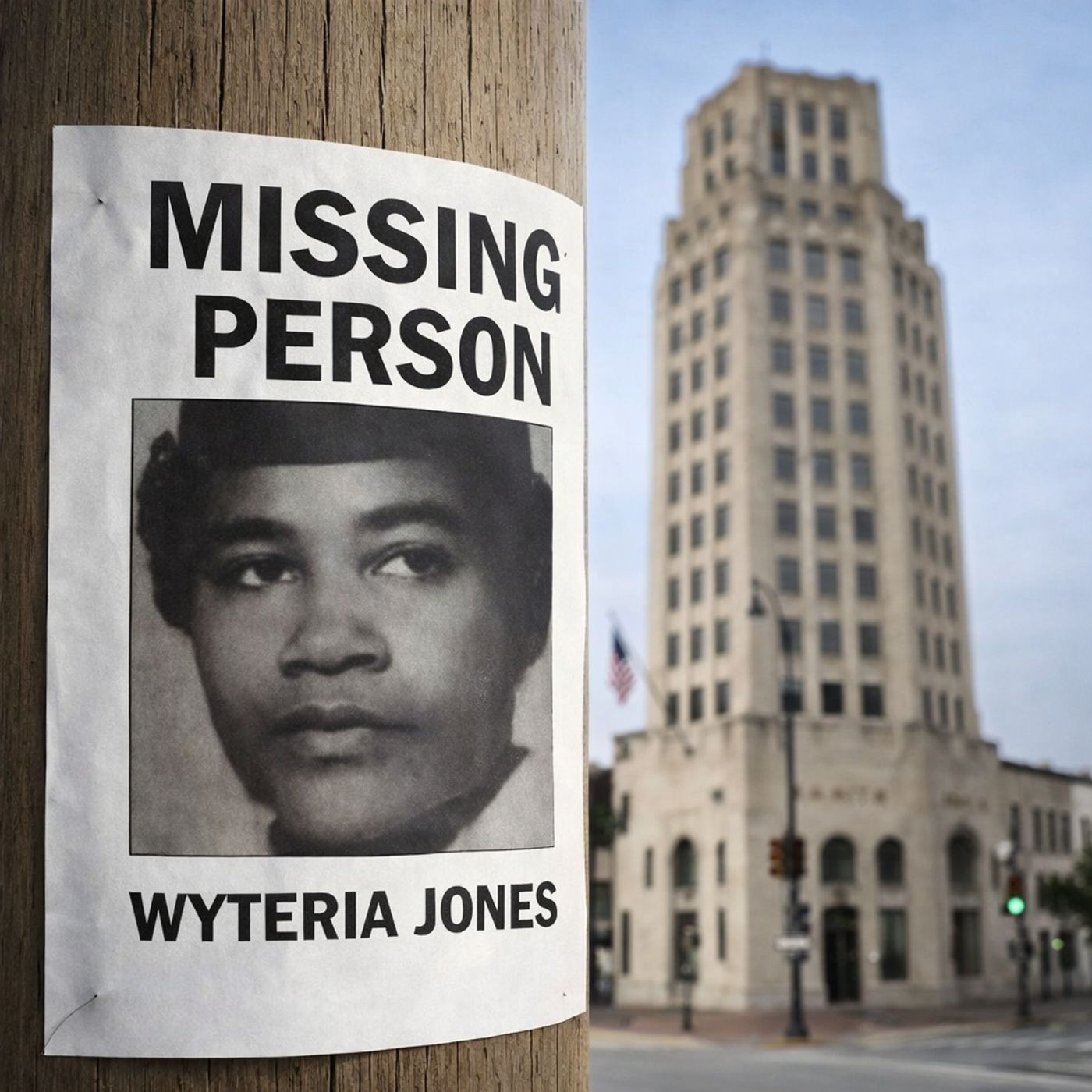
Somebody Knows Something
S3E1: Wyteria Is Missing
00:30:36
Season 3 of Somebody Knows Something — the Elgin Police Department's Cold Case Podcast — opens a brand new case: the 1982 disappearance of Wyteria Jones. Detectives Andrew Houghton and Chris Hall introduce listeners to Wyteria, a Black woman from...
Loading summary
Transcript64 lines
- [00:01]
A
The Bleacher Report app is your destination for sports right now. The NBA is heating up, March Madness is here, and MLB is almost back. Every day there's a new headline, a new highlight, a new moment you've got to see for yourself. That's why I stay locked in with the Bleacher Report app. For me, it's about staying connected to my sports. I can follow the teams I care about, get real time scores, breaking news and highlights all in one place. Download the Bleacher Report app today so you never miss a moment.
- [00:30]
B
This podcast is based on information sourced primarily from police and media reports, but certain names and other identifying details may have been changed or altered for privacy and security reasons. While the events and cases discussed are based on real investigations, some aspects may be simplified for time and for narrative purposes. Voice actors have been used to read from statements or documents. All information presented is intended solely to inform and raise awareness. Hosts may discuss theories regarding the cases examined in this podcast, but such discussions are not intended to and should not be considered by the listener to to be legal. Conclusions all persons discussed are considered innocent until proven guilty in a court of law. Listener discretion is advised.
- [01:32]
C
This is Chief Anna Lally. Welcome to Somebody Knows Something, a podcast from the Elgin Police Department's Cold Case Unit. In this podcast, we will shed new light on cold cases in the City of Elgin by sharing untold details and by encouraging anyone with information to come forward. You will come along with real cold case detectives as they investigate active cold cases in real time and seek justice for the victims and closure for their families. We believe that the Elgin Police Department and our community can work together to bring closure to cold cases because we know that in these cases, somebody Knows something.
- [02:16]
D
Hello and welcome to Season three of Somebody Knows Something, the Elgin Police Department Cold Case Podcast. My name is Detective Andrew Houghton and
- [02:23]
E
I'm Detective Chris Hall. Last season, while we were actively working on several cold case homicides, we took our listeners along as we walked the 1970s of Elgin. In season two, Andrew and I discussed those five homicide cases as well as a missing persons case that had links to season one and we appealed to the public for information on those cases. We want to let our listeners know that we have received numerous tips related to those 1970s cases and we are still actively working on several of them. We appreciate all the comments, questions and most of all the tips that the public has provided as we continue to seek justice for our victims in the 1970s.
- [03:00]
D
We started season two with the murder of Guadalupe Alanis in 1971. We described that murder in detail and then walked our listeners through the 1975 murder of Maynard Chester Hawley, the 1976 murder of Lori Jean Bulger, the 1976 disappearance of Barbara Gluckert, the 1977 murder of Casey Kyles, and the 1979 murder of Renee Tovar. For our third season, we are returning to our original format and diving into one case over the course of an entire season. And just like season one, where is Karen? We chose another missing person case from the 1980s we are calling this season Witeria Is Missing.
- [03:42]
E
Before we get into the case, I thought it might make sense to tell our listeners about our new website and about our missing persons kiosk that we installed in our lobby just a few months ago.
- [03:50]
D
Yeah, that's a good idea.
- [03:51]
E
While we do still have the Elgin Police Department's transparency page, we wanted a one stop shop for all things cold case related. That way the public can see pictures of our victims and missing persons, read about their cases, interact with their cases, and provide tips. So we recently launched a standalone website that offers just that. You can visit our site on any device and can contact us with those tips using the website. Just like our dedicated email and phone line, the new website can be found at www.elgincoldcases.com.
- [04:23]
D
our kiosk in the lobby is similar and it's situated alongside a display about Karen Sheper's case from season one with some photographs and information. We dedicated that space in September of 2025. It was Liz's 91st birthday and the day before Karen would have turned 66. So it was really special. It was great to see Liz and the other family members again and share that space with them. We encourage people to visit our lobby, Karen's display, and the kiosk which includes pictures of all of our victims and missing persons with brief stories about their cases. You can even provide us with tips. We really want people to have as many ways to get in touch with us as they can, and we want to memorialize our victims and missing persons in a respectful way that shows we have not forgotten about them.
- [05:01]
E
I agree, and having pictures of the victims and missing people really helps bring their cases to life. And the kiosk is just another way we can connect with the community and attempt to get more tips. Speaking of providing tips and making reports, we also want to start the season by dispelling a few rumors about making missing person reports here in Illinois. People often think that they have to wait 24 hours to report someone missing, but that's Just not true. You can report someone missing any time. There is no waiting period.
- [05:29]
D
Yeah. And it's always helpful if when you do report someone missing, you provide us with a recent photograph that we can use on social media or other platforms. When someone goes missing here in Elgin, whether they're a child or an adult, we often ask for consent from the family to put photographs on our social media platforms. So please prepare to provide a photo and consent to do things like that, because our tips from the public really help us track people down on those types of cases.
- [05:51]
E
Yes, they certainly do.
- [05:52]
D
The last thing we wanted to get into before we start the season is that you can make a missing person report anywhere. If you live in Elgin, for example, but the person is missing from another town, we can take the initial report here and forward it to that agency. Because there's actually Illinois law that addresses missing persons reports. It's called the Missing Persons Identification act, or mpia.
- [06:12]
E
The MPIA specifically says law enforcement agencies shall accept without delay any report of a missing person. It also goes on to specify that an agency must take a report in person and are encouraged to also take them over the phone.
- [06:27]
D
Well, Chris, now that we've gotten that out of the way, let's get into our new case for season three of Somebody Knows Something. Wyteria is missing. Just like with Karen Sheepers in season one, Chris and I want to introduce Wyteria Jones to our listeners before we dive into her case. Her family is aware of this podcast and we have spoken with some members of the family, but at this point, they have chosen not to take part in recording their voices on the podcast. As we've said in the past, these types of cases are very difficult for families and loved ones, so we want to respect that decision while also balancing our obligation to Witeria.
- [07:11]
E
Wyteria was a black woman who was 5ft 8 inches tall, weighed 150 pounds, and had shorter dark black hair and dark brown eyes when she disappeared in the fall of 1982. Unfortunately, we don't have any additional clothing description to provide, but you can find photographs of her on our website and on places like solvethecase.org, uncovered.com and NamUs, and we encourage listeners to visit those sites in conjunction with this podcast. Wyteria Jones was born on Saturday, May 1, 1937, to John W. Orr and Louise Miller in Maury County, Tennessee, which is just southwest of Nashville. When Wyteria was born, the population of the county was around 40,000 people. From the records, we've been able to Gather Witeria had multiple siblings. Based on ancestry records, newspaper articles and obituaries. Wyteria was one of at least nine children in her family. Unfortunately, one thing we came across a lot in these old records is misspellings, which is harder to track down specifics for her. Plus, we are talking about records for a black family in the south during the Jim Crow era.
- [08:19]
D
What we do know through various records is that Wyteria came from a larger family whose roots trace back to at least the 1850s in Tennessee. Because she is a black woman, white records for her family prior to the Civil War become very difficult. What we do know for certain is that her Grandfather, Isaac or Sr. Was born in Maury County, Tennessee in 1854, seven years before the American Civil War. His wife, Eliza Watkins, was born in Tennessee in 1866, and records suggest that she had upwards of 10 children, including John Walter Orr in 1886. John later married Louise Miller, and they had at least nine children of their own, including Whiteeria in 1937.
- [09:02]
E
We also know that the family lived at least in some point in Mount Pleasant, Tennessee, just to the southwest of the county seat, Columbia. And we know that the area has a very checkered past when it comes to race relations. Even post slavery, the county was and still is majority white, with about 75% of the population identified as white. And back in 1946, the county was the site of the first major racial confrontation in America after the Second World War.
- [09:30]
D
On February 26th and 27th, the Columbia race riot rocked the county seat just miles from Mount Pleasant, where Wyteria appears to have lived. Little Whiteeria would have just been 8 years old when Billy Fleming, the owner of an electronics store in Columbia, allegedly hit a black woman after she came to the store. She complained because he had sold a radio that he was supposed to repair and get back to her. Her. The woman's son, A World War II Navy veteran named James Stevenson, allegedly retaliated to protect his mother, and police arrested both the mother and the son, but not Billy Fleming, who was white. Soon after, a crowd gathered and planned to lynch James Stevenson.
- [10:05]
E
Members of the black community secured James Stevenson's release and drove him out of town to avoid a confrontation. But a large crowd of white men soon met with nearly 100 black men near the courthouse square square. The powder keg ignited when four police officers were shot after entering the African American business district called the Mink Slide, and state troopers were called in after that. Two black men were killed, one was wounded, and approximately 25 were arrested and charged with rioting and attempted murder.
- [10:35]
D
The NAACP sent Thurgood Marshall, who later became America's first black Supreme Court justice, to Columbia to defend the men at trial. Even with an all white jury, Marshall secured acquittals for all but one defendant. And he got that defendant's sentence reduced to bail.
- [10:50]
E
So that's where Whiteeria grew up, In a still very segregated south and majority white county just outside Nashville, Tennessee. It was also the place that Wyteria met her future husband, a black man named Waymond Jones, who was four years older than her and who was from Davidson County, Tennessee. Like Witeria, records for him are somewhat hard to find. But as we searched through old records, we came across a list of mayor's licenses. In November 26, 1960, edition of the Tennessean, a Nashville area newspaper. The paper listed that Wyteria Orr had married Wayman Jones sometime that week, but it spelled Wayman as W a Y M a N instead of the correct spelling of W a Y M o
- [11:32]
D
N. As you said before, Chris, these types of misspellings are something we came across in a lot of these old cases. We've even seen Waymond spelled with a d at the end or spelled Raymond completely wrong. It's just another wrinkle in these old cases and old records. And like we also said, Witeria's name was often misspelled in records, too. Oftentimes with our cold cases, our old records are handwritten as well. And when census takers came around back then, many times they wrote down names as they sounded, rather than asking for the correct spellings on names or places. Or they just misread recent handwritten versions. We have similar challenges in our old handwritten reports, too.
- [12:06]
E
Yes, we certainly do. In addition to the newspaper article from November 26, we reached out to the Tennessee State Library and Archives to track down more records for Wyteria and Wayman. They provided us with a copy of Wyteria and Wayman's actual marriage license, which was really helpful. Based on the records, the couple got married in Davidson County, Tennessee, on November 22, 1960, exactly three years before President John F. Kennedy was assassinated. We also want to thank Lindsay from the Tennessee State Library and archives from helping us track down the records we were looking for.
- [12:36]
D
According to the marriage license, Witeria was 23 years old when she married Wayman, and she was working as a houseworker in a private home. Wayman, who was 27 years old, was working as an insurance salesman at the time.
- [12:47]
E
We also know from family and from records that the couple's first child, a daughter, was born in 1956, four years before they were officially married. It is likely that she was born in Tennessee, but at some point, the couple left the segregated south and moved north, just like Casey Kyles, to Illinois, settling in the West Garfield park neighborhood of Chicago. Along the way, Wyteria had four more children. Another daughter in 1961, a son in 1962, a third daughter in 1964, and then a fourth daughter in 1972. However, there were eight years between their fourth and fifth child. And so, with four children all ready to feed and clothe, Wayman and Wyteria made the decision to put their youngest child up for adoption.
- [13:27]
D
The couple later left Chicago and moved to Aurora, Illinois, where several of their children attended high school.
- [13:35]
E
That spring, Wyteria left Aurora and traveled to Elgin to seek treatment at the Elgin Mental Health Center. When she arrived in Elgin, Wyteria moved into the Douglas Hotel while receiving treatment. Our listeners from season two should recognize that location. The Douglas Hotel is just across the parking lot from our police department, and we both visited the alley behind it last season because Casey Kyles was stabbed to death there in 1977. As it turns out, Casey's case is not the only cold case that is linked to the hotel. When the Douglas Hotel closed In October of 1982, Whiteeria reportedly moved out, and then she simply disappeared.
- [14:16]
D
Based on the original reports, Wyteria was reportedly last seen in either late September or early October of 1982, and the hotel closed on or about October 1st. But the first problem we have with this case is Wytiria's disappearance was not reported in September or October. She wasn't even reported missing in 1982. Records show that Wyteria's husband came to the Elgin Police Department on January 29, 1983, nearly four months after she was last reportedly seen. Wayman reported that he had received some of Wyteria's mail back at their house in Aurora and that he had not seen her in months. Okay, Chris, so there's a pretty big delay in this case. And I'm sure our listeners are thinking, well, isn't it odd that her disappearance was delayed so long? But there was at least a fairly reasonable explanation at the time. Wyteria had been receiving care at the Elgin Mental Health center and through Fox Valley Mental Health here in Elgin in 1982. As we said, while she was living in town, she was receiving her treatment and staying at the Douglas Hotel, which is located at 156 Division street in downtown Elgin. Wayman however, was still living in Aurora, and by all accounts, the couple seemed to be somewhat estranged at that time.
- [15:27]
E
We will talk more about the Douglas Hotel and visit the site in a future episode. That being said, the huge gap in time between the last reported sighting of Wyteria and the and the day she was reported missing definitely creates a ton of challenges for us.
- [15:41]
D
Yeah, it certainly does. In Karen Sheeper's case from season one, for example, Matt and I had about 48 hours of time to account for that. Still came with a lot of challenges for Wyteria. We're talking about approximately four months. So she theoretically could have traveled anywhere in the country over the course of that time.
- [15:57]
E
Yes, and in addition to the delay in reporting, we don't even know which day she actually went missing.
- [16:03]
D
Yeah, that's true. We can't say with any real certainty that she was seen at this specific location or this other specific location on a specific date or time. We kind of have more of a time range in this case, which makes it that much more challenging.
- [16:14]
E
We also have another new challenge for this case. The reports from 1983 for Wyteria's case are not like Karen Sheeper's case file. Karen's case was multiple boxes of case files that spanned from 1983 to the mid 2000s. Quiteria's is only a handful of pages, and they are pretty lacking in detail. For example, there is no formal written or recorded statement for Wayman in 1983 or anytime after that. And we don't have any polygraphs or long written statements from witnesses like we had in Karen's case. We simply have the general case report from that day that Waymond Jones reported his wife missing and just a few other related reports. The following is an excerpt from the actual original missing persons report dated January 29, 1983.
- [17:00]
F
Mr. Jones came to EPD to report that his wife, Whiteeria has been missing since about September or whenever the Douglas Hotel closed. Jones discovered this when his family's mail was returned to him. Mr. Jones came to EPD in November or December to make a report at that time, but an EPD officer would not take his report.
- [17:23]
E
Andrew, I noticed at least one similarity to Karen's case. Police didn't really seem to take the disappearance all that seriously at the time. In fact, police allegedly didn't even take the report when Wayman reportedly came to the police department in November or December, at least according to him.
- [17:39]
D
Yeah, it was a different time. A missing person who had been seeking mental health treatment was not treated the same way. It would be treated today. But it is interesting that Wayman couldn't actually pinpoint a date or even an exact month that he came in to report her missing prior to January 29th. The report also doesn't note who he allegedly spoke with either. If he did come to the police station before January, which is possible, there's no record of that. In fact, there's no notes or other documents to show that he came here or to Aurora in November or December of 1982. It's entirely possible that he did contact police and got brushed off. But it's also possible that January 29, 1983, is the first day that police became aware that Waitira was missing. The problem we often run into in these old cases is there's just no record to tell us which one. And Wayman died in 2013, so we can't ask him for any more details.
- [18:24]
E
This is true. I know at the end of the episode, we're going to talk about some of our theories going into the season. But similar to Karen's case, I know that one theory certainly has to be that Wayman has some involvement in Whiteeria's disappearance. We are not saying he was involved, but we certainly can't just ignore that as one of the several different options.
- [18:44]
D
Yeah, for sure. We have to leave every option on the table. Another thing that makes this case more difficult is we don't have a clothing description of Whiteira either. In fact, we don't have specific jewelry or clothing or even a description of the luggage or the bag she had when she left the hotel. We don't even know what room she was living in, if she had a roommate or if she lived with anybody else. One big reason we're using this platform to discuss her case this season is because we need that information. We need people who knew Wyteria when she lived in Elgin or people that lived at the hotel to come forward and provide us information about the background of Whiteeria, the Douglas Hotel, and other things from the 1980s here in Elgin. Because, quite frankly, that information is not in the case file that we have.
- [19:23]
E
Yes, and with these old cases, we always need help from the public. We don't know if she had problems with any other tenants, if she was dating someone while she was living in town, or anything about her social life. Did she attend a church in town? Did she have other friends she visited? Did she socialize with other people in town? We just don't know. And victimology is a big piece of what we try to look at in these cases. Quite frankly, we have a lot of blanks that we need people to help us fill in before we can get a true picture about risk factors for wteria.
- [19:52]
D
Yeah, Chris. Well, I know we've spent time talking about the unknowns, so why don't we focus on a couple of things that we do know before we get into our theories for this season?
- [20:04]
E
For one, we know that Wyteria was entered into leads, which is a database that police use to notify people in other jurisdictions if a person is wanted or missing. Basically, if police run a person's name, date of birth, driver's license, or other identifying information with a dispatch center, they can check LEADS to see if that person is wanted or missing. The problem is, Oteria was entered into that system on April 5, 1983. So, again, there is an enormous time delay.
- [20:34]
D
Yeah, and there's also a notation in the case report that says that original LEADS validation in April had an issue, so it got deleted. Police had to re enter her on August 29th of 1983. So now we're looking at almost a year's worth of time where Wyteria could have had contact with the police somewhere, but we would have never been notified about it, and there would be no record of any contact.
- [20:54]
E
Another thing that we do know is that the Douglas Hotel officially closed on October 1, 1982. We also know that the police did go back and search the hotel after Whiteeria was reported missing, because one of Whiteeria's daughters called and demanded that police search the building for her. Unfortunately, that search turned up nothing.
- [21:13]
D
Yeah, but again, we have another problem. That search didn't happen in 1982. It happened on March 28, 1983, almost six months after the building closed, and potentially six months after she disappeared. March 28 was even two months after she was reported missing. I really get the feeling, Chris, that these time delays are going to be something we deal with a lot in this case.
- [21:33]
E
Unfortunately, I think you're right. But on the positive side, at least we know that the property was searched at some point. Plus, we know that the original owner reported to police that they searched the hotel on October 1, 1982, when they locked it up, which makes sense. The building owners certainly wouldn't want people squatting inside the property when they locked up the building.
- [21:52]
D
We also know a few other things about what happened to Wyteria after she checked out, including where she potentially planned to go. But we don't know how she planned to get there or if she planned to go home first. And we can't completely confirm the information, at least not yet. Two witnesses provided information to police back in 1983 on Witteria's potential plans. Let's talk about them.
- [22:11]
E
The first person who provided information about Wyteria was a property manager at the hotel. He reported that he saw Wyteria sometime on or about October 1, 1982, with some luggage. He wasn't certain on the date, but he believed it was right around that date because that was when the hotel closed and guests all had to be out. So it could have been in the days leading up to October 1st or on the actual date, but again, we don't have a solid date or time. The owner also told police that he actually saw Wia outside with her luggage and bags waiting for a bus. So she allegedly made it out of the hotel while the property manager didn't know where she was going. He assumed that she was going back to Aurora. So we'll have to address that option at some point.
- [22:53]
D
The second person was an employee from Fox Valley Mental Health where Wyteria had been receiving some mental health care. That woman told police that Wyteria had told her she planned to move to the Joliet Motor Lodge when she moved out of the Douglas Hotel. The counselor even went over to the Douglas Hotel to check on Wyteria sometime around October 1st and discovered that she was gone. So we have at least two witnesses who in one way or another say that Wytiria was not at the hotel on or about October 1st. Plus, one of those witnesses claimed that Wytiria had plans for her next destination. We should note that the woman from Fox Valley Mental Health appears to be a person that Wytiria trusted and it seems unlikely she would lie to her about where she was moving. Wyteria also potentially planned to stay in touch with this witness to continue receiving her care through Fox Valley Mental Health.
- [23:36]
E
The Fox Valley Mental Health employee also did one more thing that was really important in the case of in January. She checked to see if Wyteria had cashed any checks for her government issued benefits and she learned that Wyteria had not. She also reached out to the Joliet Motor Lodge and a representative there reportedly said that Wyteria never arrived there. I do have to say that this lack of activity is a really important piece of the puzzle. When we talk about nobody homicide cases and missing persons cases in law enforcement, one big factor that we look for is a pattern of life. Then we try to pinpoint a cessation of activity. Basically, we're Looking to prove that normal day to day activity stopped at a specific point and never restarted. For example, the person stopped going to work or stopped paying their bills, or in today's day and age, stopped using their cell phone or social media. In Wyteria's case, she not only stopped her treatment, but she also stopped cashing her government issued checks. And this is a big one. She never contacted her children again, which was very uncommon. So that is a big cessation of activity for her.
- [24:40]
D
Yeah, it certainly is. Wyteria was not working and she was living basically on her own. So those checks were her sole source of income. If she had chosen to go to another hotel or some other state or somewhere else, it seems likely she would have made sure to contact the state and have those checks forwarded to her next address. Plus, we would expect that once she got them, she would have been cashing them to buy things. But none of those things happened. Based on the police report, it was those checks that Wayman allegedly started getting in the mail in Aurora that prompted him to contact the police. So she apparently didn't have her mail forwarded to another hotel or anywhere else. Maybe she changed her address back to her home address in Aurora, or maybe mail began reverting back there once the hotel closed. Either way, tracking down information like that is something we are trying to do on this case because as you said, Chris, those checks are a really important pattern of life for her.
- [25:27]
E
While we know Wyteria was seeking some treatment for mental health, she was getting that help and likely had plans to continue with her care. She also allegedly had a new destination in mind, according to our one witness, and reportedly left the Douglas Hotel with her belongings. According to another witness, regardless of her plans, it seems like Whiteeria was not just looking to disappear. And even if she was, those checks would be something that she would dearly need to pick up and start a new life somewhere else.
- [25:52]
D
Yeah, and as you said, she never contacted her children again after late September of 1982, which was very uncommon for her. Cessation of activity and pattern of life are really big things in these cases. And the fact that she stopped cashing those checks and never contacted her children is a really important piece of this case. She also stopped her mental health counseling, so there's another cessation of normal activity for her. I think we both agree that the fact that Wyteria never received any more benefits or made contact with anyone after late September of 1982 potentially points to her being deceased. But the question still remains, where is she.
- [26:33]
E
Similar to season one, Andrew and I want to lay out our working theories for Whiteeria's case as we investigate her disappearance. And for this case, we have identified five theories that we want to investigate. And here are those theories.
- [26:49]
D
Theory number one, Wyteria harmed herself or left voluntarily. Is it possible that she just wanted to get away from her husband or her past life? Could Whiteeria have taken off and started over somewhere else? Or was she potentially suicidal? We have to at least consider that she could have left the area voluntarily or harmed herself in some way.
- [27:07]
E
Theory number two, why Tyria never checked out of the Douglas Hotel. We know that the hotel was an extended stay hotel with a number of people who received care from the Elgin Mental Health center living there. Plus, we know that there was a homicide just outside the hotel in 1977 that we discussed in season two. Was Wyteria also the victim of another crime at or outside the hotel here in Elgin, maybe shortly before or after the hotel closed? Was the hotel closing at just the perfect time for a perfect crime? We have to consider that something could have happened at the hotel or here in Elgin around the time that she planned to move out.
- [27:41]
D
Theory number three, Something happened en route to Whiteeria's next destination, whether she was headed to Joliet or Aurora or somewhere else. Was Whiteeria a victim of a violent crime somewhere between Elgin and that next destination? We know it was the early 1980s, so could she have taken a bus or a train to get to Joliet or Aurora or somewhere else? Could she have hitchhiked or found some other way to travel? Regardless of her method of trip travel, we need to consider that either a known or unknown offender could have harmed her in some way. So we need to look for any people that she knew or places that she knew or places she could have gone, including Joliet, Aurora and other places, to get an idea of what could have happened to her on her route to the next place?
- [28:21]
E
Theory number four, Whiteeria made it to Joliet. We should consider the possibility that the witness from Fox Valley Mental Health was correct and that Whiteeria planned to go to Joliet. If she did make it there, could something have happened when she arrived in the city or at the motor lodge? We need to identify the location of the motor lodge visit Joliet, and we need to look for any similar disappearances in the Joliet area that could be similar to Whiteeria's case.
- [28:47]
D
And finally, theory number five. Wyteria returned to Aurora and something happened there. Like we said before, Wayman didn't report Whiteeria missing for nearly four months, and there was reportedly some domestic violence in the home prior to her leaving for Elgin. Plus, a witness at the hotel claimed that he saw her at a bus stop and thought she was going back to Aurora. Could Whiteeria have planned to go back home to stay, or maybe just to gather more belongings before moving somewhere else? Like Joliette, could she have gone back to Aurora and had something happen there with Wayman or with somebody else? We need to revisit the site of her family's home and dive into Whiteeria's past and her relationships in Aurora to consider this final theory.
- [29:26]
E
Over the course of the season, as we investigate this case and these theories, we're going to work to update Wyteria's case with new interviews, new records, and we plan to utilize the most recent updates in DNA technology, genetic genealogy and familial DNA. We also plan to ask for your help as we use this platform to get Witeria's story out to the public because she, like every other missing person and homicide victim in our case files, deserves to be remembered and deserves a thorough investigation into her case. Next episode, we will begin our investigation into Whiteeria Jones's disappearance from 1982 by visiting sites here in Elgin, including the Douglas Hotel, as we try to piece together Whiteria's brief time here in Elgin and seek for new information and answers in her case here on Season three of Somebody Knows Something.
- [30:24]
C
If you or anyone you know has information about this case or any other cold case in Elgin, please contact the Elgin Police Department Cold case email@coldcasetipselginil.gov or the cold case tip line at 847289 cold. You can also review cold case information on the Elgin Police Department's cold case page at www.elgincoldcases.com, where every cold case, homicide and missing persons case is listed with photographs and information about each case.
- [31:06]
A
The Bleacher Report app is your destination for sports right now. The NBA is heating up, March Madness is here, and MLB is almost back. Every day there's a new headline, a new highlight, a new moment you've got to see for yourself. That's why I stay locked in with the Bleacher Report app. For me, it's about staying connected to my sports. I can follow the teams I care about, get real time scores, breaking news and highlights all in one place. Download the Bleacher Report app today so you never miss a moment.
- [31:36]
G
After a long winter, even a small shift can change how home feels. This spring open the door to something lighter. Explore vibrant scents inspired by place, from bright citrus terraces to blooming lavender fields, and layer them into rooms you love most. For a limited time, get a free Pura 4 diffuser when you subscribe to 2 cents for 12 months. It's an easy way to refresh your space without starting over. Visit pura.com and bring spring home today.