← Somebody Knows Something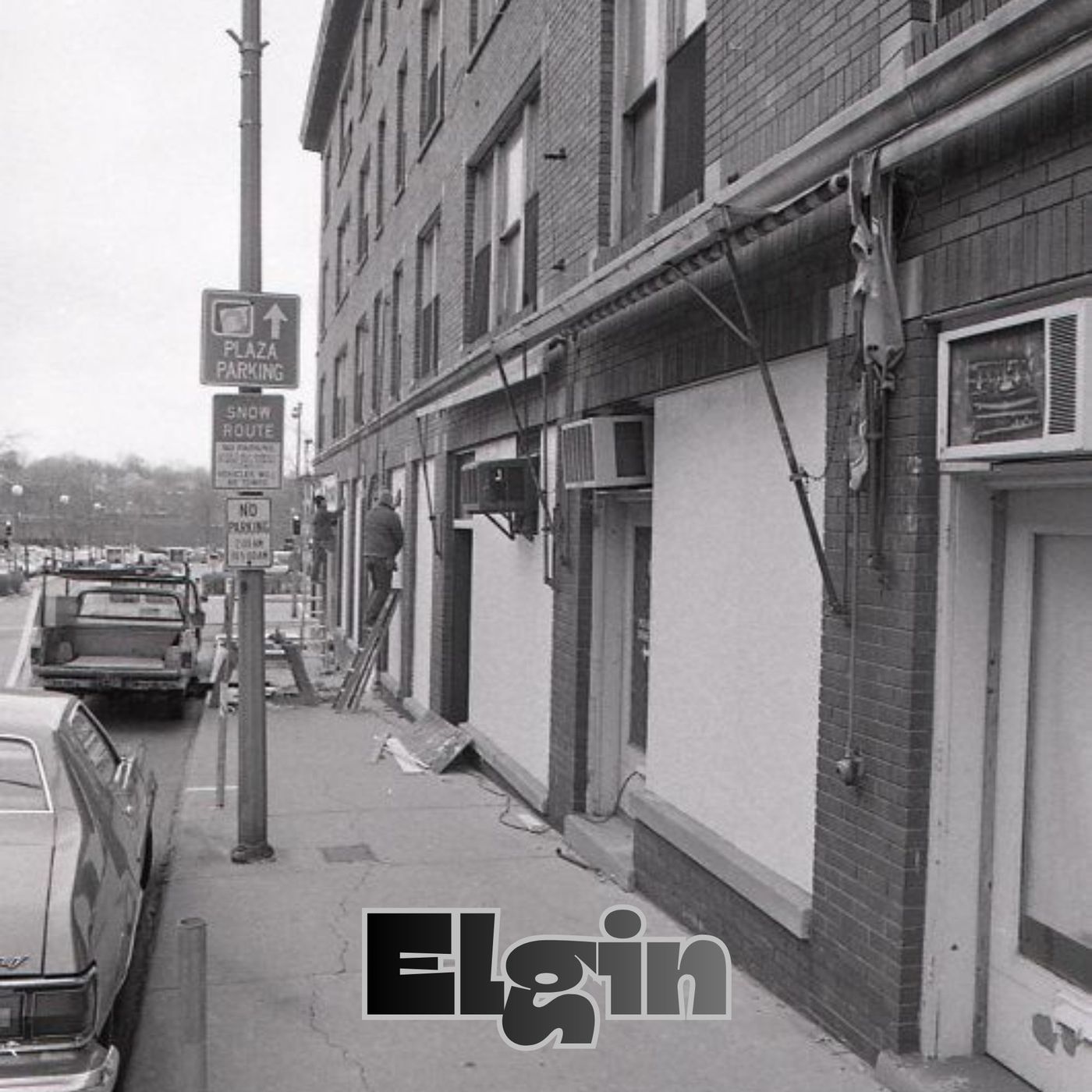
Somebody Knows Something
S3E2: Elgin
00:36:51
In 1982, Wyteria Jones vanished from a rundown Elgin, Illinois hotel where she was living as an outpatient of the Elgin Mental Health Center. Over 40 years later, her case remains unsolved. In this episode of the Elgin Police Department's Cold Case...
Loading summary
Transcript100 lines
- [00:00]
A
I'm Kiana and I leveled up my business with Shopify. Once I figured out that Shopify was a thing, I never turned back. I can create a site with my eyes closed. Shopify thinks ahead of us, you know, and it thinks about the customer more than anything. Every day I'm thinking about some other new business, but Shopify is doing it to me because it's so easy to use. It's like, I can't stop. I'm addicted.
- [00:26]
B
Start your free trial@shopify.com this podcast is based on information sourced primarily from police and media reports, but certain names and other identifying details may have been changed or altered for privacy and security reasons. While the events and cases discussed are based on real investigations, some aspects may be simplified for time and for narrative purposes. Voice actors have been used to read from statements or documents. All information presented is intended solely to inform and raise awareness. Hosts may discuss theories regarding the cases examined in this podcast, but such discussions are not intended to and should not be considered by the listener to be legal. Conclusions all persons discussed are considered innocent until proven guilty in a court of law. Listener discretion is advised.
- [01:31]
C
This is Chief Anna Lally. Welcome to Somebody Knows Something, a podcast from the Elgin Police Department's Cold Case Unit. In this podcast, we will shed new light on cold cases in the city of Elgin by sharing untold details and by encouraging anyone with information to come forward. You will come along with real cold case detectives as they investigate active cold cases in real time and seek justice for the victims and closure for their families. We believe that the Elgin Police Department and our community can work together to bring closure to cold cases because we know that in these cases, somebody knows something.
- [02:14]
D
Hello and welcome to Somebody Knows Something, the Elgin Police Department Cold Case Podcast. My name is Detective Andrew Houghton and
- [02:21]
E
I'm Detective Chris Hall. Last episode, we broke down the original case report for Wyteria Jones disappearance in the fall of 1982. We also detailed that she was seeking treatment at the Elgin Mental Health center, living at the Douglas Hotel in downtown Elgin, and we also explained that there was a huge time delay for this case with a huge gap in time and unlimited information from 1982 to 1983. We will face unique challenges in this case and we do anticipate that this case will take us to other cities outside of Elgin as we continue our search for Wyteria Jones.
- [02:57]
D
In this episode, we will start our investigation here in Elgin with several sites that are related to Wyteria and her disappearance. The first location is the site of the Douglas Hotel, the Same location where in 1977 witnesses sat in the courtyard as Casey cowes was murdered in the alleyway just outside. Could this location be the scene of another crime five years later? Well, we're going to try to find out.
- [03:26]
E
The Douglas hotel was originally a premier private hotel called the fox hotel. Built in 1925, it contained 125 modern fireproof rooms and an elite dining room. It was one of two downtown hotels here in Elgin and. And in his 1984 book Elgin in American History, E.C. alf wrote that the fox hotel was the city's premier accommodation. In fact, the fox hotel predates one of Elgin's most famous buildings, the Elgin tower building, which was not built until 1929 and sits just two blocks to the southwest of the Douglas hotel.
- [03:59]
D
The Elgin tower building is 186ft tall and has 15 stories. In 1929, the Art Deco style building became the city's first so called skyscraper and housed the home national bank and home national savings and trusted. But the fox hotel had been around for four years already it was welcoming guests to the industrial hub that was 1920s Elgin. In the early 1900s, Elgin was growing. The Elgin national watch factory, located near downtown was the largest producer of fine watches in the United states. And the Elgin sweeper corporation was founded when John Murphy, an Elgin resident, invented the first motorized street sweeper in 1914. Other factories like the woodruff and Edwards foundry which was the site of Guadalupe alanis murder in 1971 from season two also employed hundreds of workers. And area railways connected Elgin to major hubs like galena and chicago. In short, business was booming in elgin, so hotels began to pop up to handle that influx of visitors into the city.
- [04:52]
E
The fox hotel enjoyed nearly 50 years of prosperity. But like many other businesses in downtown Elgin, especially after the elgin National Watch Company closed in 1965 and the economy waned, the hotels sadly began to fall on hard times. By 1975, the once elite hotel became housing units for the Elgin mental health center with the once fancy hotel rooms housing over a hundred outpatients for the center. Sometime in 1982, Whiteeria Jones became one of those tenants when she moved into what was once called the fox hotel but was now known as the Douglas hotel on the corner of Douglas and division streets in Downtown Elgin. The U. S. Public Records Index from 1950 to 1993 lists Witeria as a residence at the Douglas hotel address on May 1, 1982. So we do know that at least by May of 1982 she was living there.
- [05:44]
D
Then on October 1st, 1982, the hotel closed its doors for good. I would add that the COVID art for this episode is actually from January 5th of 1983 and it depicts people boarding up the property. An article in the Daily Courier News noted that the hotel closed in September and at that time housed about 40 patients from the Elgin Mental Health Center. It sat vacant for a number of years until the city of Elgin purchased the property and converted it into 45 affordable housing apartments for senior citizens in 1992. The exterior of the four story building looks almost identical to pictures we have seen from the Fox Hotel from the early 1920s, but the interior has certainly changed and updated drastically, especially since 1982 when it closed. As listeners also know, the courtyard outside remains almost identical to what it looked like in crime scene sketches from 1977 when Casey Cowes was murdered there.
- [06:28]
E
Owners of the hotel reportedly searched the hotel just after it closed to ensure that all the tenants were out and police also searched the property for this case. But that search came months after Wyteria vanished in March of 1983. One of Whiteeria's daughters was concerned that Whiteeria could still be in the abandoned hotel and the Elgin police documented her call in a report. Here's the actual police report for that search. The report is edited and redacted for clarity and to protect the identity of witnesses.
- [06:58]
F
On March 28, 1983, youth officer Berg spoke with Wyteria Jones daughter by phone. She has no further information, but expressed the family's concern that Whiteeria was laying dead and undiscovered in the abandoned Douglas Hotel building. Officer Berg advised her that he had spoken with who had inspected the building prior to it being sealed and that he had indicated that was impossible. However, on March 28, 1983, Youth Officer Berg and Detective Gonzalez gained access to the hotel through the BOSO cleaners entrance and thoroughly checked the building, finding nothing. Case remains active.
- [07:46]
E
We decided that even though the property is different than what it was in 1982, visiting the physical building would be useful. We first looked to see if we could visit the hotel with the original owners, just like Andrew Matt did with PM Bentley's in season one. But the original owners, Chester and June Zima, are both deceased. June died in 2001 and Chester died in 2008. However, one of their sons, who was quoted in the original police report as saying that he saw Wyteria around that time when the hotel closed, is still alive, so we reached out to him.
- [08:18]
D
That witness has since retired and moved out of state and while he did remember the Douglas Hotel and told us that he did sometimes work there in 1982 or 1983. He didn't really recall anything about Witeria's case. He did remember that the hotel was closed in 1982 and that a number of tenants were patients from the Elgin Mental Health Center. But beyond that, he didn't really have a lot of new information to provide us.
- [08:39]
E
We also asked about any old records for tenants or any other similar records. But as you can imagine, records that old do not appear to have been retained. And unfortunately, because he didn't recall anything about this case, he also could not recall what bus stop he told police he saw with Tyria at 1982.
- [08:56]
D
It does at least make some sense that he may not recall this incident. It was a random question from law enforcement over 40 years ago. For a family member of the owners, the fact that he didn't recall Wyteria's name or anything about this case is not that shocking to us. It would be nice to know what bus stop he reportedly saw her at and anything else that he might remember. But we are talking about something that happened over 40 years ago, and unfortunately, we don't have the former owner to walk us around the building to see what's changed. Even so, we plan to continue working to see if we can track down records for the hotel from the 1980s, if they still exist. And we certainly are not writing off the theory that something could have happened to Whiteeria at the Douglas Hotel.
- [09:32]
E
As of the date of this recording, we have not been able to gather much new information about Witeria. If she had a roommate, if she planned to go somewhere else when she moved out, or what she was wearing when she left, what bus stop she was at, or what type of belongings she had. So basically, we're still at square one when it comes to her time at the Douglas Hotel.
- [09:51]
D
Yeah, and as we said in our last episode, that's one reason why we chose this case for season three. We desperately need information from the public to try to piece together more information on Wyteria's time here in Elgin. So if you know anyone who lived at the Douglas Hotel, who worked at the Douglas Hotel, who worked at the Elgin Mental Health center, or knew Wyteria specifically in any capacity, please contact us. We'd love to know more about what she was like, any friends she had, relationships that she had, and any other information about her time here in Elgin.
- [10:23]
E
Well, even though we don't have the prior owner available, we decided that going to the actual hotel building would be useful for this case. So this past week, Andrew and I headed over to the Douglas Hotel with Detective Stereker to see the place where Wyteria lived while she was in Elgin.
- [10:39]
D
Well, we came in the courtyard from where Casey Cow's case was and the lobby is a pretty big area.
- [10:44]
G
Yeah, the front desk is down here too. I would assume this is maybe where it was in 1982. 83 also.
- [10:51]
E
Yeah, that makes the most sense. And wait, look at the stairway. It's all marble. It has to be original to the hotel from the 1920s, I would think. I know the Fox Hotel was pretty swanky back then.
- [11:02]
D
Yeah, it was a premier hotel. Why don't we head up and let's take a look at the rest of the building. Alright. So it's four total floors, but the basement was kind of just an electrical room. There's sort of these two different wings and all these walls are drywall. I mean, back in the 20s this would have been plaster. You wouldn't have had drywall back in 1920 when the building was built. We don't know what it would have been in the 80s, but it's certainly been updated since then.
- [11:27]
E
Yeah, we know that they update this place a lot. And there's new electrical, there's new plumbing, and the city converted it completely from multiple hotel rooms into multi room units.
- [11:37]
G
I'm not very tall, but it is a little claustrophobic in here. The ceilings are really low as you come up the steps to each floor. But we don't know which room she was in. Right. We don't even know which floor. I don't think.
- [11:50]
E
Yeah, that's right. Hopefully we can get more records as we keep looking into this. But it would be nice to know which floor she was actually on. And it's pretty important if she had a roommate too. We don't even know if she was by herself.
- [12:04]
G
It definitely is a pretty interesting old building though. You can see small things like the stairway that really show the age and how old this building really is.
- [12:13]
D
Yeah, if you look out the front door, I mean we came in through the the courtyard, but when you come out onto Division street, you're basically right in downtown here. So there had to be a bus stop nearby?
- [12:22]
E
Yeah, I would say it's pretty critical. We definitely need to know where the bus stops were.
- [12:27]
G
Hopefully we can find some more records on that. But at least we got to see the building a bit. I know it's different than it was back then, but I'll keep working on getting some more information about the building, but I'm glad we're able to at least come see it.
- [12:48]
D
Beth will continue to help gather records and information about the building itself. And as we laid out in episode one, one theory is that something could have happened to Whiteeria at the hotel, or maybe she never even left the property. But ownership and police did do a thorough search, and we have at least one witness who claims that he saw Wyteria at a bus stop. While it's possible that something happened at the hotel or here in Elgin, so far we don't have evidence of that. And we feel pretty confident that her remains were not concealed in the wall or the basement or some other area of the actual building. Like you said, Chris, in 1992, the city didn't just throw up some new paint on the walls of this hotel. They completely gutted the interior and renovated. So it's much less likely that some concealed remains would be in the hotel. And if they were, it seems more likely that they would have been located during extensive renovations.
- [13:30]
E
Very true. I had mentioned that it was rehabbed when we were out there, but listeners should know that the property was converted from the 125 total hotel rooms into 45 apartments with new electric plumbing and other updates. So it does seem unlikely that some concealed remains would be missed. And the hotel was close to the main bus stops and train station. So let's consider those options as we continue our investigation here in downtown Elgin.
- [14:01]
D
We've traveled over to the Douglas Hotel, but because a worker from the hotel told police in 1983 that he last saw Whiteeria at a nearby bus stop, we started doing research on the bus stops and the bus station in town. Currently, the main bus terminal on Highland Avenue is the main bus hub for downtown Elgin. But during a recent visit to the Elgin History Museum, we learned that that bus terminal did not open until 1985. So Wyteria clearly did not walk there.
- [14:25]
E
We even looked into the weather for the last week of September and the first week of October as well. It was cool all week with a light drizzle or rain almost every day from Monday, September 27, through Monday, October 4. The day that the owner thought he saw Wyteria was on or about October 1st, which was also a Friday. But we can't be certain that it was exactly October 1st. We only know that that day was the day that the tenants had to be out of the building.
- [14:55]
D
If Wyteria was waiting for a bus near the Douglas Hotel. We also learned from the Elgin History Museum that there was a bus stop at 9 North Grove Avenue, which is near the Elgin Tower building and just about a block from the hotel. So it's possible that she could have walked just down the street to hop a bus.
- [15:10]
E
We also reached out to Beth's dad, who was a retired lieutenant from the Elgin Police Department. He confirmed that the bus stop was on Grove. He said that the buses would drive south on Grove and pick up passengers, then turn east onto Chicago street. That the buses would also come north on Grove and turn west onto Highland Avenue. Both streets are still one way streets, and so that's how the downtown bus traffic was laid out back in the 1980s. We should also note that the train lines were just across the river as well, just a few blocks from the hotel. So we will need to consider train travel as of viable option as you work through this case.
- [15:45]
D
Yeah, I agree. I think that if she was seen outside and was actually at a bus stop or heading to a bus stop and had luggage with her, she likely planned to travel somewhere, possibly home or to Joliet, based on witness statements. Or maybe she had some other place in mind if she did leave Elgin. But there's one more place in town that we want to describe in this episode before we move on to other cities. Because Whiteeria did receive care from a facility while here in town. That location is called the Elgin Mental Health Center. Foreign.
- [16:22]
E
Mental health center began as the Elgin State Hospital and the Northern Illinois Hospital, an asylum for the insane. The state of Illinois broke ground along what is now called Illinois Route 31, just south of what is now Illinois Route 20 in 1870 and opened the first portions of that facility in 1872. The building finally was completed in 1874.
- [16:45]
D
The son of Joseph Smith, the founder of the Church of Jesus Christ of Latter Day Saints, was committed there in 1877, and he actually died there in 1904. Also in 1945, a man named Emanuel Brauner, the founder of an organic Soap company called Dr. Bronner's Magic Soaps, was arrested and committed to the hospital while speaking at the University of Chicago. He reportedly received shock treatments, but later escaped and fled to California. There's all sorts of odd and interesting history around Elgin if you know where to look, and the Elgin Mental Health center is no exception to that.
- [17:15]
E
Much of the original hospital is gone, but the Elgin Mental Health center still operates today, mostly housing forensic patients who have been deemed unfit to stand trial and order committed to the state. This facility is where Wyteria came for treatment in 1982, also receiving outpatient care and ultimately Moving into the Douglas Hotel. So basically the Elgin Mental Health center is the only reason she ended up in Elgin and the only reason she is now a missing person on our caseload. If it didn't exist, Wytiria probably would never have come to Elgin in the first place. So we decided to drive up to the facility just to see the place that brought Wyteria to Elgin.
- [17:55]
D
It can go straight.
- [17:57]
G
So in that little book, one of the books I was looking at, it was called like the Northern Illinois Hospital for the Insane, I think is what it was. Was titled Such a nice.
- [18:09]
D
Yeah, back in like 1870, I think.
- [18:11]
G
It's a building that's old Good sheep.
- [18:14]
E
That's the first time I've seen that building in person now what I mean, that's the first time I've seen that building in person now.
- [18:22]
D
I've never. Yeah, that big Circle Tower. I think I read that the people that built Marina Towers also designed that building.
- [18:30]
G
Same one in the front.
- [18:33]
D
I wonder if that big like theater that we saw the. At the history museum is still out here. If they tore that building down.
- [18:40]
G
I thought one of them said it caught on fire. I don't know if that was the one or not.
- [18:44]
D
Got the smoke stacks. I mean this place was its own city. It had its own.
- [18:48]
G
I think I read it was like 100. I want to say 150 acres.
- [18:51]
D
Yeah, that's crazy.
- [18:54]
G
Maybe I'm reading the wrong thing, but
- [18:58]
D
it's like its own little town. Some cottages in the back end. There used to be other buildings out here too that are obviously gone. Yeah, a lot of these have been closed, it seems like. I know we're still waiting on records from the mental health center, but seems like maybe she got care out here first and then was moved over to the Douglas Hotel. Or maybe she was just at the Douglas Hotel the entire time. It's hard to tell until we get.
- [19:23]
G
I would guess she was getting treatment here initially.
- [19:27]
E
Right.
- [19:27]
G
Well, like my dad was saying that like once they were started releasing out into back into mainstream society. Society, they didn't have a place to stay. She's probably. I would guess she's probably still getting some sort of treatment.
- [19:40]
A
Right.
- [19:41]
G
Or. Right. Yeah, she would have moved back to Aurora, you would think.
- [19:44]
D
Yeah, she was getting the Fox Valley Mental Health center treatment. But hopefully we'll get those records soon. They'll be able to tell us how long she was here and if she was physically out here before she was moved. Just taking a long time to get those kind of records.
- [20:02]
G
Yeah, It's an interesting little building.
- [20:09]
D
Yeah, it's definitely an interesting property.
- [20:12]
E
Yeah, definitely. See, it's seen better years. Still there though.
- [20:18]
D
Yeah. The old Circle Circle building. I don't know what that. That was like a. I think it looks.
- [20:24]
E
It looks kind of like it's abandoned at this point.
- [20:26]
D
Yeah.
- [20:27]
G
Yeah. So that fence around it, it looks like it's.
- [20:29]
E
Yeah.
- [20:29]
D
They talked about tearing it down. I'd seen an article about them talking about tearing it down, but it's such a unique.
- [20:35]
G
Yeah,
- [20:39]
E
I know that. Last season we discussed the murder of Lori Jean Bulger in the summer of 1976. And during that episode we also detailed that William Reinbold, a suspect in her murder, was arrested in 1970 after he attacked nurse Anne Ward, who was. Who was walking back to the Elgin Mental Health center property. Reinbold had followed her from downtown Elgin to the edge of the property. As she walked near a small footbridge, he hit her from behind and dragged her into a culvert under Illinois Route 31 where he stabbed her 45 times with a 2 inch pocket knife. Ann Ward survived and William Reinbold was sentenced to 10 years in prison for that attempted murder case. Unfortunately, Anne's attack in 1970 was not the last case that happened at the Elgin Mental Health center. Through the 1970s and 1980s, in fact, there have been four murders on the property. And one of those murders was in 1982, just four months before Wyteria disappeared.
- [21:39]
D
As Chris said, there were four murders at the Elgin Mental Health center in the years before and after Wytiria's disappearance. To be exact, those four murders occurred between 1976 and 1988. Chris and I thought we would briefly touch on each one as we remember the victims in those cases and as we continue investigating Wyteria's case. The first of the four murders at the Elgin Mental Health center occurred on July 28, 1976 at 7:25am Elgin Police detectives responded to the Elgin Mental Health center for a death investigation. Coincidentally, the lead detective for that case was actually the same detective who handled Lori Bulger's case months earlier and also later worked Renee Tovar's case in 1979. His name was Detective Gary Shaver.
- [22:21]
E
Detective Shaver responded to the death of 58 year old Arnie Swanson, a patient at Whitehall Cottage on the property, who had been found by staff in his bed deceased. There was fresh blood present on his pillow. And by that afternoon, the Kane County Coroner's office had conducted an autopsy for the case. The coroner's office quickly determined that the cause of death was asphyxiation and that the manner of death was certainly not self inflicted. They ruled the case a homicide. As police investigated, they determined that a witness had seen another resident running into a bathroom from the direction of the victim's bedroom. So they interviewed that man, Jerry Hester, to determine if he was involved or witnessed the homicide. Here's what the actual police report says.
- [23:04]
F
Approximately 45 minutes after the interview began, Hester advised that he was going to tell what really happened. But, quote, he was not Jerry. He was just a man in Jerry's body. And Jerry had done the worst wrong. He had killed a white man. End quote. Detective Shaver asked Jerry Hester what he meant by this statement. And at this time he replied to the effect that Jerry had killed his friend Arnie.
- [23:33]
D
Jerry Hester went on to say that he both strangled and suffocated Arnie Swanson with a rope and a pillow. Although these statements were never used in any prosecution, Jerry Hester was later sent to the Chester, Illinois Mental Health Facility and deemed unfit to stand trial for murder. As far as we can tell, based on those records, he was never released.
- [23:51]
E
A second murder occurred at the facility on November 22, 1977, the same day as Wyteria and Wayman's wedding anniversary. That homicide occurred in a bathroom at the Elgin Mental Health Center. The victim, like Arne Swanson, was another name we read in season two when we read all the homicide victims from the 1970s, and his name was Robert Kaye.
- [24:12]
D
The case report for that investigation documented that the offender, James D. Tedford, had attempted to push both Robert Kaye's head and another patient's head into a toilet the Prior Day. On November 21, staff had separated him from those victims and he had been reprimanded. However, on November 22, staff found Robert Kaye with his head in the washroom's toilet, and they observed Tedford in the bathroom as well. Robert Kaye was unconscious and not breathing.
- [24:36]
E
Tedford later admitted that I did it to the man and I'm sorry and advised that he killed K in the bathroom. He was charged with murder and transferred to the Maximum Security center in Chester, Illinois. Just like Jerry Hester. On February 21, 1980, James D. Tedford was found not guilty by reason of insanity and was also committed to the Department of Mental Health for the remainder of his life.
- [25:05]
D
As Chris said, we read both the names of Arne Swanson and Robert Kay in our final episode of season two. But now our listeners have a little bit more information about those 1970s homicides. However, there are a total of four murders on the property in our closed homicide case files. And the next one happened just four months before Whiteeria disappeared.
- [25:38]
E
At 2:13pm on May 25, 1982, 54 year old Robert Lee Anderson was in the day room at the Kilbourne Building on the Elgin Mental Health center grounds. Another temporary patient, Thomas Lee McNeil, began arguing with Robert before grabbing a wooden chair and beating Robert with it as other witnesses looked on. Robert then fell to the floor, had a seizure and later died from his injuries.
- [26:04]
D
McNeil later admitted that earlier in the day he and Robert had an argument and that they had gotten into a physical fight. Staff separated them and put McNeil in the timeout room. As he stood in the room, McNeil told the police that he was saying to himself, I'm going to try to kill him when I come out of the timeout room. And when McNeil was released, he did just that.
- [26:20]
E
McNeil left the timeout room, walked over to the day room, grabbed the chair, and when Robert told him, don't hit me with that chair, and he looked out the door, McNeil struck him hard in the back and head with the chair. McNeil later admitted that it was his intent to kill Robert and he stated, I attacked him with it.
- [26:37]
D
Thomas McNeil was charged with three counts of murder, but in 1983, he was found not guilty by reason of insanity. He, like the prior two offenders from the 1970s, was committed to the Illinois Department of Mental Health for the remainder of his life.
- [26:56]
E
Robert Anderson was not the last homicide victim at the property. One more victim was killed there. On December 1, 1988, Leroy Porter, a 35 year old black man who was receiving treatment at the facility, had gotten into an argument with another patient, Denver Hampton, over some clothing that Leroy was wearing. Hampton accused leroy of stealing the clothing and began hitting him before strangling him with the belt.
- [27:21]
D
Denver Hampton was charged in that case, but like the other three murders, he was never convicted. Rather, Denver Hampton was also transferred to the custody of the Illinois Department of Health.
- [27:30]
E
We know Whiteeria had some connections to the Elgin Mental Health center, and we are still waiting on those records to determine if she was ever actually housed there or had any contact with any of the people involved in any of those cases. While there are no connections between her and those specific cases, Andrew and I wanted to highlight and remember those victims as well. As we worked on this season, we both feel that it's important to get an idea of the history of the facility and remember the four victims who are listed in our homicide files. Arne Swanson was a 58 year old patient when he was murdered and Robert K. Was 63. Both were murdered here in Elgin in the 1970s. Robert Anderson was 54 and Leroy Porter was only 35 years old when they were both also found murdered here in Elgin. Four men, four mental health patients and four murder victims.
- [28:21]
D
The four victims in all these cases were patients at a facility where they were supposed to be getting mental health care and they were killed there by other patients. It really highlights the issues with the history of both mental health and mental health care here in our state. When you read Leroy Porter's case, for example, Leroy was reportedly your average 6 year old child when he started school, but when he was about seven years old, his aunt allegedly caught him stealing money out of her purse and she beat him so severely in the head with a cane that it caused brain damage. Leroy was moved from his general education classroom at school to a special education classroom and showed little to no improvement after his injury. He slipped into a life of petty crime, shoplifting and the like, and then in his teenage years began abusing alcohol and drugs. He dropped out of school in the ninth grade and never held a job before bouncing around and in and out of the criminal justice system. He then spent time at the Audi Youth Home as a juvenile, then the Chester Mental health Center from 1979 to 1983, and was finally sent to the Elgin Mental health Center in 1985 where he remained until his murder in 1988.
- [29:20]
E
Today, mental health care for people like Arne Swanson, Robert Kaye, Robert Anderson and Leroy Porter is different, but it's still not perfect. Many clinics around the state closed in the 2000s, but we do have resources here in Elgin. Here at the Elgin Police Department, we've become a national model for policing when it comes to mental health. We use specially trained officers on our emergency services detail to respond to people in mental health crisis along with trained social workers who respond as well to the scene with us. I myself spent time working in ESD before I became a detective, so I know the work they do on a daily basis. We are leading the charge to change how police deal with people in crisis. We also use crisis negotiators with our SWAT team and partner with area mental health facilities as well.
- [30:07]
D
The Elgin Police Department also created the Collaborative Crisis Services Unit to coordinate with our homeless population and with people suffering from mental illness and to help arrange services like esd. CCSU uses a co response model which pairs police officers with mental health professionals. CCSU conducts follow up visits for individuals who could benefit from mental health or behavioral health services. And they utilize community resources, including our own social services unit, to connect those individuals with services. The goal is simple, to reduce patrol calls for service for those people and to help them get the care that they need. CCSU has three primary areas of mental and behavioral health, substance use disorder services, and homelessness issues.
- [30:49]
E
Many people have come to Elgin to receive care for mental health, and the Elgin Mental Health center has been here in elgin for over 150 years. But we'd like to think that if Wyteria had moved to Elgin today, rather in 1982, she would have received many more services, including assistance with moving her to a new location when the Douglas Hotel closed. Unfortunately, a lot of those services that we now have just didn't exist in 1982 for Wyteria, which is tragic. And the lack of those services might be a part of the reason she disappeared.
- [31:30]
D
Well, we've taken our listeners back to the Douglas Hotel. We've walked around downtown Elgin, where Whiteeria likely would have walked if she had gone to a bus stop. We've identified a potential bus stop, and we've taken a trip up to the Elgin Mental Health center which provided her services. We've tried to cover the grounds that Wyteria covered in her brief time here in Elgin. And while it's possible that something happened here in Elgin, it's also possible that she did leave town. I know our second theory that we laid out in our first episode was that something happened here in Elgin. So far we haven't found any evidence of that. But we will continue looking at that as an option.
- [32:01]
E
Yes, we will. And as we wrap up this episode, we also wanted to address waiteria's mental health and briefly discuss theory number one. And that is that she simply left voluntarily or harmed herself. As we said in episode one, her sole source of income was her state benefits. It doesn't seem likely that she would have left without reaching out to her children. So could she have harmed herself in some way? It certainly is possible, but it's hard to really say that very confidently.
- [32:28]
D
Yeah, it's definitely a possibility. And like you said, we can't say it for certain. Part of the problem is we don't know what Wyteria's exact mental health concerns were in 1982. Beth is helping us still try to get some of those records from the state of Illinois, and we're attempting to speak with counselors and people that knew her in 1982. But so far we're still waiting on those records, and we're still searching for more people to interview that would have known her during her time here in Elgin.
- [32:50]
E
It is difficult to get access to mental health records, and we are currently going through that process. But HIPAA is something that we have to contend with when it comes to records such as that. We are still in that process trying to get access to records for her benefits and, and the services that she was getting. But it is taking time, and tracking down some of the people who worked with her specifically would be extremely helpful.
- [33:12]
D
Yeah, for sure. And even now there's exceptions to hipaa. One of those major exceptions would allow mental health professionals to release information about a person if they felt that the person was a threat to themself or to others. For example, if the person is suicidal or homicidal, police can be notified about that information. I have to say, in Wyteria's case, her counselor that spoke to police did not mention anything about her being suicidal or homicidal. So we feel that that information would have likely been provided to police if she had mental health concerns that were that drastic. Plus, she was apparently outpatient, not inpatient at the mental health center. If she had made suicidal threats or was somehow a threat to herself in that capacity, it's likely that the service provider would have taken steps to protect her and put her in the Elgin Mental Health center as opposed to being out. And it's likely that that information also would have been told to police. But again, we can't say for sure until we have the records.
- [34:01]
E
Yes, I would agree. If Wyteria was suicidal, it should be included in the information that we have in the original reports. And where would she go to harm herself? Why would she still be missing over 40 years later? It seems fairly unlikely. As you said, we can't ever take an option 100% off the table. But the idea that she was suicidal while seeking treatment seems highly unlikely. Hopefully we are able to get more records and track down more people who knew her in 1982 to get a better idea of her state of mind. But for now, we at least feel that the idea that she left voluntarily without telling her children and without arranging to continue receiving her state benefits isn't so likely as other theories for this case. Similarly, the idea that she harmed herself also seems less likely than other options, at least at this point in the investigation.
- [34:52]
D
Well, we have covered theory one and theory number two in this episode. Both Chris and I feel that theory number one, that Whiteeria simply voluntarily left or harmed herself in some way is fairly unlikely, but without additional records and evidence, we can't write that off entirely. Similarly, we haven't found any evidence to support that someone harmed her here in Elgin, and we feel fairly certain that her remains are not located within the old hotel site. But again, we need more information from the public and more records to try to piece together who she associated with in Elgin, who she lived with at the hotel, and what her life was really like when she lived here. Without that background information, we certainly can't rule out anything, including that something happened here in Elgin.
- [35:31]
E
Yes. So again, if you have any information about Wyteria Jones, please contact us. Background on her time here in Elgin, her hobbies, friends, her social activities, those all help us understand more about her and they could potentially help us identify new witnesses to interview and new places to investigate. If you wish to remain anonymous, we can work with that, but we really do need people to help us in this public space. No tip is too small.
- [35:59]
D
This episode we explored options for Whiteeria here in Elgin, and while we will continue to gather records and information about our time here, it is still possible that something happened to Whiteeria in Elgin. Our investigation is about to take us, however, to other places that she might have traveled. Next episode, we will travel to Joliet, Illinois as we continue our search for answers in Wyteria's case. We will work to identify and visit the hotel where one witness claimed she planned to move, and we will seek out similar missing person cases that could be related to her disappearance. So please join us next time as we continue our search for Whiteeria Jones here on Somebody Knows Something.
- [36:38]
C
If you or anyone you know has information about this case or any other cold case in Elgin, please contact the Elgin Police Department Cold case email@coldcasetipslginil.gov or the cold case tip line at 847289, cold. You can also review cold case information on the Elgin Police Department's Cold case page at www.elgincoldcases.com, where every cold case, homicide and missing persons case is listed with photographs and information about each case.