← Somebody Knows Something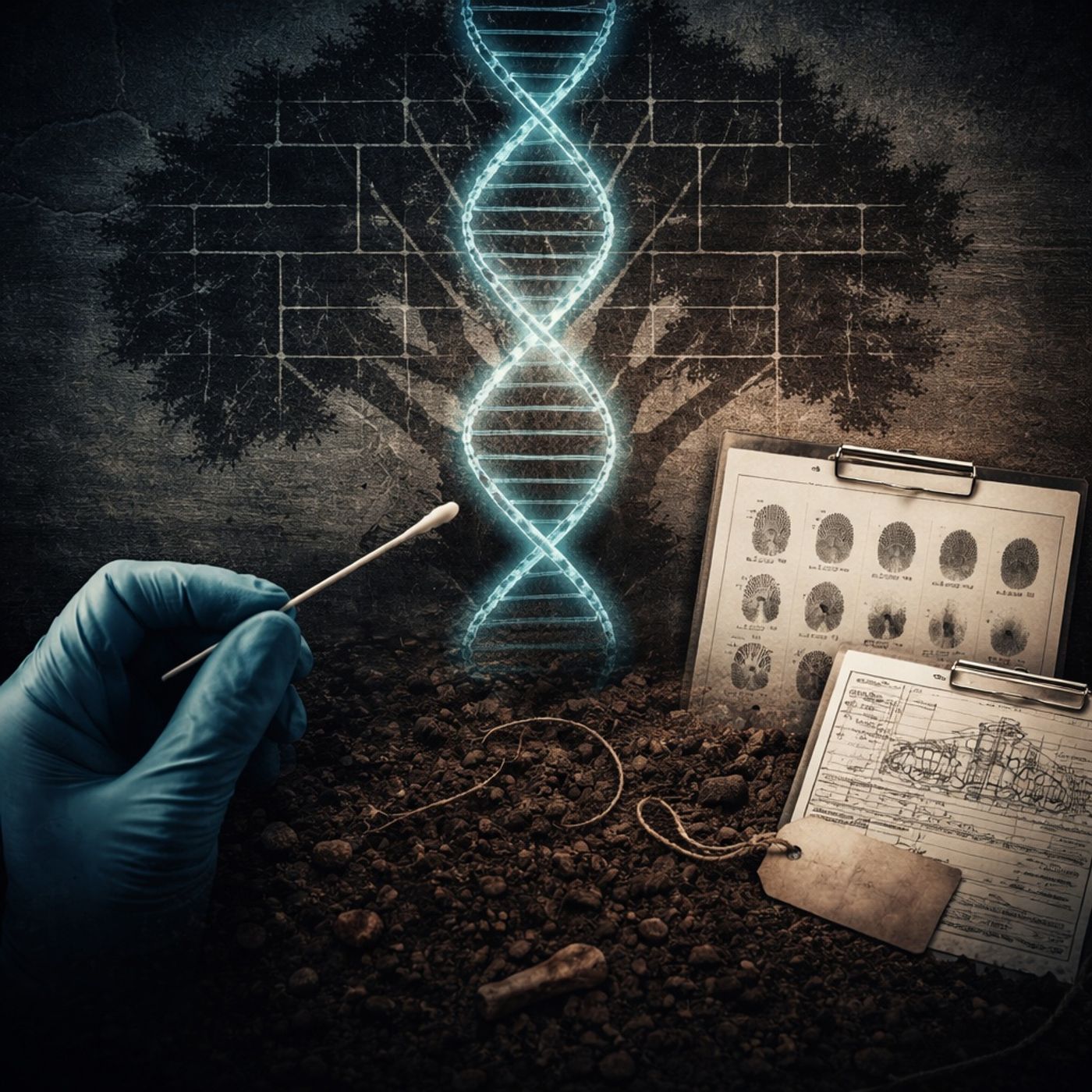
Somebody Knows Something
S3E7: Unidentified Remains
00:23:40
Over the past several episodes, the detectives have travelled to Elgin, Joliet, Aurora, and Chicago as they seek more information in Wyteria’s case. Now, they want to look at the forensic options they have moving forward. For this episode, the...
Loading summary
Transcript39 lines
- [00:00]
A
Keep your wellness routine going strong all summer. Cachava's new travel packs help you stick to your daily ritual even when you're on the go. Just one packet of Cachava's all in One Nutrition Shake provides complete nutrition wherever you are. With 25 grams of protein, 6 grams of fiber, greens, adaptogens and more, simplify your daily ritual. Go to cachava.com and use code podkast for 15% off. That's K A C H-A-V-A.com Code podcast
- [00:30]
B
this podcast is based on information sourced primarily from police and media reports, but certain names and other identifying details may have been changed or altered for privacy and security reasons. While the events and cases discussed are based on real investigations, some aspects may be simplified for time and for narrative purposes. Voice actors have been used to read from statements or documents. All information presented is intended solely to inform and raise awareness. Hosts may discuss theories regarding the cases examined in this podcast, but such discussions are not intended to and should not be considered by the listener to be legal. Conclusions all persons discussed are considered innocent until proven guilty in a court of law. Listener discretion is advised.
- [01:32]
C
This is Chief Anna Lally. Welcome to Somebody Knows Something, a podcast from the Elgin Police Department's Cold Case Unit. In this podcast, we will shed new light on cold cases in the city of Elgin by sharing untold details and by encouraging anyone with information to come forward. You will come along with real cold case detectives as they investigate active cold cases in real time and seek justice for the victims and closure for their families. We believe that the Elgin Police Department and our community can work together to bring closure to cold cases because we know that in these cases, somebody knows something.
- [02:16]
D
Hello and welcome to Somebody Knows Something, the Elgin Police Department Cold Case Podcast. My name is Detective Andrew Houghton and
- [02:23]
E
I'm Detective Chris Hall. Over the past several episodes we have traveled to Elgin, Joliet, Aurora and Chicago as we seek more information in Wyteria's case. Now we want to look at the forensic options that we have moving forward. For this episode we turn our attention to a group called the National Missing and Unidentified Person System, or as we call namus, which is currently the only national repository for missing person, unidentified and unclaimed persons in the country. We are hoping that this system might just be exactly what we need to bring Wyteria Jones home. NAMUS has an online database that has a public facing portion and a law enforcement only portion. The public can use the site to search for information. That public facing portion provides limited information viewable to the public law enforcement section that we can access has much more additional information that isn't public, and it allows police to track cases, update cases, and conduct searches using NamUs. Police can also use case specific information to search for other missing persons cases and unidentified remains cases to coordinate with other law enforcement agencies around the country. From the very beginning of this case, one of our major goals has been to upload DNA for Witeria and and search databases to determine if she has already been found but not identified. And even if she has not been located, we want to have DNA available for future detectives in the event that one day she is finally found.
- [03:58]
D
NAMUS Story begins back in 2003, the National Institute of Justice began funding major efforts to maximize the use of DNA technology within the criminal justice system, specifically in cases of missing and unidentified persons. In 2005, the Deputy Attorney General of the United States, Robert McCallum Jr. Created the National Missing Persons Task Force in an effort to improve law enforcement's ability to access information and solve missing and unidentified persons cases. From that task force, namus, the National Missing and Unidentified Persons System, was born.
- [04:28]
E
NAMUS launched two different systems, the NAMUS unidentified persons, or UP, database in 2007 and the NamUs missing persons, or MP database in 2008. Then in 2009, they combined both systems for automatic case comparisons between the Missing Persons database and the Unidentified person's database.
- [04:49]
D
Since 2009, the database has grown exponentially. NAMUS has also expanded to include analytical and case support fingerprint comparison, and in 2022 they established the FBI Forensic Genealogy Searching Partnership. So NAMUS can and does assist law enforcement in a number of different ways. While we will not be using Forensic genetic Genealogy or FGG in the usual sense, in this particular case we will be using familial DNA in a slightly different way.
- [05:16]
E
Forensic genetic genealogy traditionally involves a case in which there is an unknown offender or victim. Police can use the DNA from the unknown person and upload it to the various genealogy databases where they can search for distant relatives. Then, once they identify distant relatives, she genealogy experts backtrack to try to identify the source of the DNA through extensive family trees. A lot of listeners to our podcast have probably heard about the Golden State Killer case in California and about how police in that case used forensic genealogy in 2018 to identify Joseph James D' Angelo as the serial rapist and murderer who terrorized the state of California in the 1970s and 1980s. But what many people don't know is that the Golden State Killer case is not actually the first case where Police used that technology.
- [06:05]
D
Four years before the Golden State Killer was identified, Police in Phoenix, Arizona were working on a cold case that was over 20 years old and it involved a serial killer the media had dubbed the canal killer. On November 8, 1992, 22 year old Angela Brasso was attacked and murdered as she rode her bicycle along the Arizona Canal in Phoenix, Arizona. Then just under a year later, In September of 1993, 17 year old Melanie Burness was also murdered in the same area. Both young women were sexually assaulted and DNA later connected them both to the same suspect. But police had no idea who that suspect was for over 20 years.
- [06:37]
E
By 2014, police and both girls families had still not given up. So when Colleen Fitzpatrick, a forensic scientist and genealogist, suggested that they attempt to identify the offender using genetic genealogy, the Phoenix Police Department agreed. By January of 2015, they had identified an offender, Brian Patrick Miller, and ultimately confirmed that he was the man who killed both Angela and Melanie. Brian is currently on death row in Arizona for his crimes. But we should add that Miller is also widely suspected of abducting and murdering 13 year old Brandy Myers. Myers had disappeared just outside Miller's apartment in Phoenix on May 26, 1992. If you have any information about Brian Patrick Miller or Brandy Myers case, please contact the Phoenix Police Department at ColdcaseHomicide PPD.
- [07:26]
D
Even before the Golden State Killer case, police also used investigative genetic genealogy in a different way. They used it to identify previously unidentified victims. In the critically acclaimed podcast Bear Brook, which was released in 2018, host Jason Moon walks listeners through the investigation of four people who were murdered and found in barrels in Bear Brook State park in New Hampshire. The first barrel containing a woman and young girl was found in 1985. Then in 2000, a second barrel with two more young children was also found in the same state park. Throughout the season, Moon describes that the four victims identities were unknown until 2019, when investigators identified three of them using FGG technology. Because the case had ties to California, an investigator there began working with New Hampshire on the case. He quickly determined that the same technology could be used to identify unknown suspects as well. So while the Golden State Killer case gets a lot of media credit for being the first time police used genetic genealogy to solve a case, it likely would not have happened without the New Hampshire case, which was coordinated between law enforcement on both coasts. And it also would not have happened without the Phoenix case, which was tied up in appeals for a number of years. It really is a testament to interagency cooperation and police around the country embracing New technology in cold cases?
- [08:36]
E
Yes, it certainly is. And because of this technology and because of the cooperation between the public, civilians and law enforcement, people like Brian Patrick Miller and Joseph d' Angelo are sitting in prison for their crimes. And because of this technology, people like Marileese Elizabeth Honeychurch and her children, Marie Elizabeth Vaughan, Sarah Lynn McWaters and Raya Rasmuss have been identified as the victims found in Bear Brook State Park. Countless other offenders and victims have also been identified as police continue to use this cutting edge technology to solve cases that are decades old.
- [09:08]
D
For our case, we are using familial DNA, but in a different way. In New Hampshire, police had four sets of unidentified human remains and they had no idea who they were. So they collected DNA standards from those unknown victims, uploaded them to databases, and reverse engineered a family tree to help identify them. In our situation, we know that Wyteria is missing and that there are multiple sets of unidentified human remains that could be her, but we don't have any DNA. So we need to build out a family tree on our own to identify potential candidates for familial DNA, collect that DNA and then search for potential unknown human remains that we could link back to her using that DNA standard. The problem is there's a huge number of unidentified remains around the country.
- [09:57]
E
NAMUS website lists that There are over 25,000 open missing persons cases, over 15,000 unidentified remains, and over 21,000 unclaimed remains in the United States. Since its inception, NAMUS has helped resolve over 75,000 cases in total, but thousands still remain unsolved.
- [10:15]
D
The number of cases that NAMUS has helped resolve is certainly impressive, but agencies and other groups should continue to think about NAMUS as an option for cases, because the National Crime Information center notes between 2007 and 2020, an average of 664,776 people are reported missing in the United States each year. And the U.S. department of justice also noted that there are over 4,400 unidentified bodies that are recovered annually. Then you have the 2018 Census of Medical Examiners and Coroner's Report, which documents that There are over 11,000 sets of unidentified remains simply sitting at coroner's offices and medical examiner's offices around the. When you add all those numbers together, you have a really staggering number of both missing people and unidentified sets of human remains around the United States.
- [10:58]
E
Those numbers are truly staggering when you look at NAMUS more closely. They currently have over 400 missing persons cases, over 400 unidentified persons, and over 90 unclaimed remains here in Illinois. Alone. So we have to at least consider that Wyteria could be one of those unidentified people here in Illinois. But because of the huge time gap that we have in her case, we also have to consider that she could potentially be one of the thousands of identified remains in nearby states or even across the country.
- [11:27]
D
The problem is we don't have DNA in the system yet, so we can only look at possible biological sex and race and age and physical descriptions when we filter for potential comparisons for Whiteeria right now. And a system is only as good as the information that's put into it. Some sets of human remains in the system might not be marked as female or as black African American. Instead, many of them are listed as uncertain or not provided or other. While we can at least get a general idea of potential candidates for comparison, it is entirely possible that a set of human remains that's marked uncertain for race or unsure for biological sex could be Witeria. That's why we need DNA to start a more comprehensive search in this case. Well, here in Elgin, we've spent the last year assuring that all of our missing person cases, including our cold cases, are listed in namus because it's the best way for us to track them and determine if there are unidentified remains that have been recovered that might match one of our cases. When we started our investigation, we had five cold cases active in NamUs. Obviously, Whiteeria is listed in there, but we also briefly talked about Franco Loyo, Maynard Escalante Martinez, Chad Smith, and Darren Wood in our bonus episode back in March. We are happy to report that just days after our bonus episode aired in March, Cook County Sheriff's Department and Metro Police located Chad Smith alive in Chicago. Chris helped reunite him with his mother, and we removed him from our caseload and from leads. So our NAMUS cases and our cold case files now include four people as of the date of this recording. Those people are Whiteeria Jones, Darren Wood, Maynard Escalante Martinez, and Franco Loyo.
- [12:58]
E
Other area people that we've talked about in past episodes of our podcast are also included in Namus. There's Deborah McCall, who was 16 years old when she disappeared in Downers Grove in 1979. Andrew Matt talked about her in season one because her disappearance is potentially linked to an area serial kill named Bruce Lundahl. Then there's Barbara Gluecard, whose case we are still working on today with Mount Prospect. And girls like April Rose Zane and Sarah Elizabeth Avon, who we mentioned in episode four. We also listed multiple young black women and girls last episode who were also missing from Chicago in the 1980s and they are listed in names too, along with thousands of other women, men and children.
- [13:37]
D
People like Kiana Galvin from South Elgin and Lisa Stebik and Stacy Peterson, who we briefly mentioned in our Joliet episode, are also included in the missing persons database in NamUs. All three women are pretty well known cases here in Illinois and they're all still missing. I think one staggering thing that both of us have found is that there are just so many people, especially young women and girls, listed in namus. It's truly heartbreaking. And there's one more young woman we'd like to briefly discuss here in our podcast who's an area of Missing girl and is also listed in namus. She also had links to season one of this podcast.
- [14:11]
E
Foreign.
- [14:17]
D
26 year old Kimberly M. Shanders disappeared from Carpentersville, Illinois in 1987. We didn't mention her case in season one, but we had some tips come in during that season which mentioned her and there are some odd coincidences that link her to season one. For starters, Kimberly was a 26 year old white female who was last seen at the Meadowdale Shopping center in april. Just like 23 year old Karen sheepers, only Kimberly vanished in 1987 and Karen disappeared in 1983. Also, just like Barbara Gluecard, Kimberly left her house and planned to go to a concert before she disappeared.
- [14:47]
E
Coincidentally, Kimberly had also traveled to Nashville, Tennessee just a month prior to her disappearance because she loved country music and dreamed of moving to Nashville for the music scene. Being a music fan, she entered a local radio station contest and won two tickets to see Kris Kristofferson in concert in Merrillville, Indiana. Kimberly did not have a car, but she did have $120 in travelers checks when she left to head to Indiana on April 24, 1987. But she never cashed those checks and Kimberly never came back.
- [15:17]
D
Police were never able to prove if she actually did make it to the concert, but they do believe that she likely made it to Merrillville because an employee at the Merrillville Holiday Inn told police that Kimberly had asked about a bus that would go back to Chicago. Unfortunately, he told her that no such bus existed because according to him, the only bus at that time ran on local routes and didn't go all the way to Chicago.
- [15:36]
E
Similar to Wyteria's case, police have never been able to confirm if Kimberly bought a bus ticket in Merrillville, Indiana or anywhere else. The companies back then didn't keep records of passengers. Plus we now know that she didn't cash her traveler's checks. So if she did buy a ticket, she may have paid cash for it and there's no paper trail at all for that purchase. Kimberly, like many other girls in the 1970s and 1980s, just simply vanished.
- [16:00]
D
Kimberly Shanders was approximately 5 foot 1 to 5 foot 2 inches tall, weighed 110 to 115 pounds, and had brown hair and brown eyes when she disappeared in 1987. She also wore glasses and had pierced ears. We encourage our listeners to check out Kimberly's case and other area cases on NAMUS where you can read about the cases, see pictures of the missing people, or you can find contact at the agency working on each case. If you have information on Kimberly's case or any other area missing person case, please contact us and we can help find the right agency for you to talk to for your case.
- [16:39]
E
While our hope is that updating Wyteria's case with DNA could lead to an identification, it isn't a certainty. Kimberly Shanders had familial DNA and dental records in namus and so does Barbara Gluecart and a number of our other cold case missing people as well, but they are all still missing. NAMUS is just another tool, but we believe that updating Wyteria's case and using this tool is one huge step that we definitely need to take.
- [17:02]
D
Yeah, and while it might not guarantee that we find her in 2026, once that DNA is uploaded, it's there for future investigators too. Maybe we won't find Whiteeria during this current investigation, but over the past few months, neighboring agencies have found skeletonized remains in places like Baker's Lake Forest Preserve in nearby Barrington and Raceway woods in Carpersville. As police around the state and country work to identify newly discovered remains, it is entirely possible that remains from around the country or around the area could be found years later, identified as Whiteeria solely because we uploaded familial DNA during our investigation.
- [17:34]
E
Absolutely. And in fact, human remains found in 2012 along I94 and Cicero Avenue were identified in February of 2026 as 64 year old Ronald M. Reicher. Because Illinois State Police were able to get DNA from a relative. This technology can and has solved cold cases and a future set of unidentified remains found even decades from now could be compared to DNA for Whiteeria's family. She deserves to be found and identified and placed at rest. Getting DNA for this case is the best chance to do that moving forward.
- [18:06]
D
Kimberly's case and Wyteria's are the types of investigations that certainly make us think that we should be considering areas outside of Elgin and Kane county for potential human remains for Whiteeria. As we said, she could literally be anywhere in the country because she was missing for four months before she was reported missing, and she had ties to Tennessee, potentially to Texas and other states that we haven't mentioned before. So we have to cast a large net for her foreign. Let's start with Tennessee. We know that Whiteeria had ties there because she was born there, she had family there, and she lived there briefly in 1976. And Tennessee, just like Illinois, has a number of cases involving missing people. With that in mind, when it comes to missing persons, as we've said in other episodes, we want to highlight as many of those cases as we can, even if they're not technically ours. One group that we've met since we launched our podcast is the creators and hosts of a podcast called Missing in Hush Town. They, similar to us, use this platform to discuss missing person cases, but do so in rural Tennessee and a percentage of their revenue goes directly to the family and their cases. In fact, the sister of one of the missing people for their first season actually works alongside the host on the
- [19:16]
E
podcast for season one. Missing in Hush Town discussed the disappearance of a 21 year old Jennifer Wicks and her 2 year old daughter Adriana on March 25, 2004. They were reportedly last seen in Cross Plains, Tennessee, which is a small town roughly 40 miles north of Nashville in the company of Jennifer's boyfriend Joey Benton. Both Jennifer and her daughter are still missing.
- [19:38]
D
For season two, the group covered the disappearance of 11 year old Bethany Murkowski from Jackson, Tennessee area. Bethany was reportedly last seen at Old Hickory Shopping mall in Jackson, Tennessee on March 4, 2001. She is described as 4 foot 8 inches tall, 95 pounds and she was last seen wearing a green shirt, blue jeans and black shoes. The state of Tennessee now honors the children who are missing and the families who are still waiting for answers on Tennessee Missing Children's Day every March 4, the anniversary of her disappearance.
- [20:08]
E
We know that these cases are not our cases, but these are young women and children who matter and who are missing. We've had the pleasure of meeting the host of Missing in Hush Town and Jennifer's sister, and we decided that if we can use this platform to generate some more attention for their case, that's exactly what we should do. So we encourage listeners to our podcast to check out Missing in Hush Town and again encourage listeners to search the nameless database for missing people in your own area. You might just have some Information that could help close some of other cases, even outside of Elgin. And if we can help some other agency or some other family members, we certainly want to do that.
- [20:43]
D
Foreign.
- [20:48]
E
All the way back in 1983, police spoke with Whiteeria's family. But like we've said before, DNA was something that was not comprehendable even back then. Over the years, Elgin police have attempted to get access to fingerprints and dental records for Whiteeria, but we've never been able to locate any of those. And so if a set of human remains were recovered in the 1980s or 1990s or even the 2000s, we'd have no idea. And there's no way to link those remains to Witeria. Plus, this case was never updated with familial DNA over the past few years because, quite frankly, we didn't have a unit doing this full time. Our own policies have been updated to reflect changes in technology and we now attempt to collect DNA within a set time frame. So our hope is we don't have any cases slipped through the cracks and we upload everything as soon as we can with the newest technology that is available.
- [21:36]
D
Yeah, and like you said, with the advent of more advanced DNA technology, there's more options now that we can use to try to link missing people to unidentified remains. But again, for this case, we have a huge problem. Wyteria didn't disappear 40 hours ago. She disappeared over 40 years ago. So we can't get a toothbrush or a comb or some other item to get her actual DNA profile for Witeria. Plus, she had no criminal history and she doesn't have a DNA standard in codis. Not that that would matter because CODIS didn't even exist when she disappeared. That's how old this case is.
- [22:05]
E
For this new investigation, we are left with one option and one option only. We need multiple sources of familial DNA for Wytiria to submit to NAMUS so that we can attempt to link her to any unidentified remains. As our listeners know, Wyteria had five children, but unfortunately, a number of them have passed away. Plus one of her daughters was placed with an adopted family and we are still working to track her down. So our pool of people to provide familial DNA is shrinking by the year. The other issue that we have had is that the type of DNA we need is very specific. So before we can submit any familial DNA to namus, we need to actually find suitable donors and then collect it, which means more investigation and potentially more travel outside of Elgin.
- [22:59]
D
Next episode, we will continue our search for Wyteria and continue our quest to collect DNA on her case. Our listeners will come along with us as we build a family tree and work to obtain DNA standards that could be a game changer in this case. As we end this episode, we again want to ask our listeners to contact us with any information you might have about Witeria or any other missing person case we've mentioned this season, because we know that in each and every one of these cases, somebody knows something.
- [23:29]
C
If you or anyone you know has information about this case or any other cold case in Elgin, please contact the Elgin Police Department Cold case email@coldcasetipslginil.gov or the cold case tip line at 847289, cold. You can also review cold case information on the Elgin Police Department's Cold case page at www.elgincoldcases.com, where every cold case, homicide and missing persons case is listed with photographs and information about each case.