← Something About the Beatles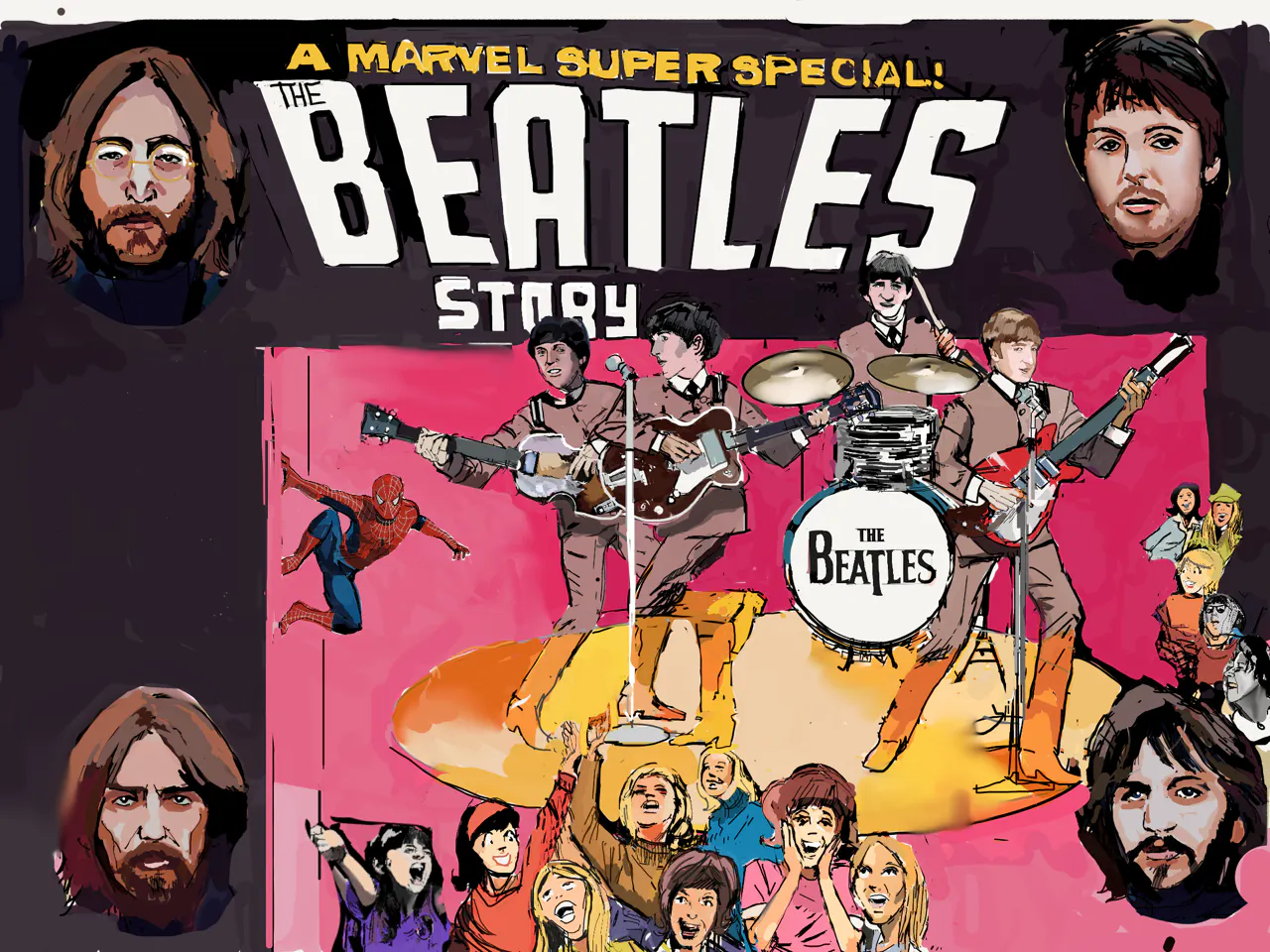
Something About the Beatles
321: Beatles Comic-Con with Glenn Greenberg and Stephen DeStefano
01:34:23
Loading summary
Transcript420 lines
- [00:00]
Robert Rodriguez
This podcast is brought to you in part by Magical Mystery Camp coming to Big Indian New York, just two and a half hours from New York City the week of Paul McCartney's 84th birthday, June 16th through the 19th. Featuring a number of special guests including the Fab Foe, as well as singer, songwriter, musicians Martin Sexton, Gail ann Dorsey, Cindy Cash Dollar and more. For more information, check out magical mysterycamp.com something when you think about businesses that are selling through the roof, like Skims
- [00:39]
Glenn Greenberg
or Allbirds, sure you think about a
- [00:41]
Stephen DiStefano
great product, a cool brand and great marketing.
- [00:44]
Robert Rodriguez
But an often overlooked secret is actually
- [00:47]
Glenn Greenberg
the businesses behind the business making, selling and for shoppers, buying. Simple. For millions of businesses, that business is Shopify, it's home of shop Pay, the
- [00:58]
Robert Rodriguez
number one checkout in the world. You can use it to boost conversions
- [01:03]
Glenn Greenberg
up to 50%, meaning way less carts
- [01:06]
Robert Rodriguez
going abandoned and way more sales going through. To checkout, upgrade your business and get the same checkout Allbirds uses.
- [01:14]
Glenn Greenberg
Sign up for your $1 per month
- [01:16]
Robert Rodriguez
trial period at shopify.com income all lowercase go to shopify.com income to upgrade your selling today.
- [01:28]
Glenn Greenberg
Shopify.com income income.
- [01:41]
Robert Rodriguez
Excellent. Master Robin, your turn at the Boy Scouts Ville show should prove what I believe is called a doozer.
- [01:50]
Stephen DiStefano
Cool it, Ringo.
- [02:05]
Robert Rodriguez
Hello and welcome to episode 321 of Something about the Beatles podcast. Now the topic here today is the overlap of the Beatles in Comic World, which covers an awful lot of ground. Now, I will tell you that I wasn't particularly a comic book fan in my formative years, which is to say that I wasn't into superheroes. I wasn't into Marvel or dc. I wasn't into any of that stuff per se. What I was into was Mad magazine and Classics Illustrated, but the other things weren't really my thing. And I will say that some people think of comics as a genre, something that my guests today push back on. It's a medium. It is a platform for telling stories. And we're familiar, especially now with the big blockbuster pictures coming out of Hollywood these days. That's a thing that has broadened the reach and the exposure of these things. But this was a topic that never would have occurred to me because of my ignorance on the subject till it was brought up by Glenn Greenberg, returning guest to the show, who has been on a number of times. We've done the John and George and Paul and George shows in the past, a few other things. He's a guy that has one foot in comics world professionally. He is a journalist. He's done a bunch of Beetle writing, which is how he came to me as a guy to have a conversation with on the show. But he also used to work for Marvel as a writer and editor. So he had this idea focusing on how the Beatles were depicted in comic world. Everything from certain issues of Batman to the 1978 Marvel Beatles story comic book to Vivek Tiwari's the fifth Beatle graphic novel to Carole Tyler's Fab Four mania. Another favorite guest on this show. So that's an awful lot of ground. And joining me for the conversation is a actual comic book artist and writer, Stephen DiStefano. Now, I have appeared on a show that he does and you can check the newsletter for the link to that or on my socials. It's on YouTube where he has mostly conversations with comic book related people, which I most certainly am not. But there's enough overlap with his Beatle fandom to have made it worth his while and certainly worth my time. It was a lot of fun. But anyway, I thought it'd be great to bring Stephen into the conversation and he certainly, given his background in history and both love of the Beatles and immersion in comics world as well as Glenn, it would basically be a tutorial for me as somebody completely ignorant on this stuff. You'll hear in the talk, I did not know what Silver Surfer was. I'd never heard that before. Apparently it's a thing and a big thing. So for anybody who listens to the show that is already well versed in comics world, good for you. This will be an interesting talk with two people who are creators from that background as well as big Beetle people. If you are like me, somebody completely oblivious to this as an art form, well then you're in for a treat because it's a big exploration of not only how they've been depicted in this medium, but really what it means as a medium, as a way for storytelling, as a way of presenting history and true stories and how it is utterly suited as another way to tell a story, to reach people and to bring an emotional and psychological truth that will resonate with the beholder. Anyway, it's a long, overly windy way of saying what the point of this show is. I do hope you check it out, listen to it all the way through. I think there's going to be some eyes opened with this. I will tell anybody who isn't already a subscriber to the satb newsletter satb2010mail.com I will provide links to a lot of what we talk about the 1978 Marvel Beatles story as well as the 1970 Batman 222 depicting. Well, you'll hear it as we talk about in this show and other stuff. So do check it out. It is worth your while and join the other people who have subscribed to this point and everybody who is a subscriber seems to love it. And that's why I keep doing it. Otherwise it would not be worth my time. Now this episode and this podcast is brought to you by Distrokid, Also by Magical Mystery Camp. Coming up in June this year, the week of Paul McCartney's birthday. And I will tell you that one of the guests here, Steven Disttefano, he and I met at last year 2025's Magical Mystery Camp. He had been a listener in the show. He had heard about the camp on the show and decided to check it out. As a guy who lives in Manhattan, so it wasn't that big a stretch, two and a half hours away. And I think it's safe to say he loved it. But the cool thing for me was he came up to me, approached me and we ended up hanging out all weekend and had a friendship going ever since. I am very gratified to know him, but that's the kind of thing you can expect from Magical Mystery Camp. You meet good people, you're among your people if you are a Beatle person. And I can't recommend it enough for anybody who's able to take it in. And it is, as I said, two and a half hours outside of New York. It's a three day plus event with tons of music brought to you by the Fab Foe and lots of guests. You can check out their site magicalmysterycamp.com for the details. Anyway, here we go with the conversation. Beatles in Comic World, Beatles Comic Con, as I called with Glenn Greenberg and Steven Destefano. I'm here to learn and react. So I will let you guys unfold the story however you want to do it, and I'll just chime in with questions as they arise, representing the audience.
- [07:53]
Stephen DiStefano
Okay, I know. At least even in passing, I know every reference that Glenn's made to the Beatles in comics, but I don't have them in front of me. It's been a long time since I've had like, you know, the Marvel Beatles Super Spectacular in front of me.
- [08:06]
Robert Rodriguez
I did own that.
- [08:08]
Glenn Greenberg
78, 79, 78.
- [08:10]
Stephen DiStefano
Yeah, yeah, yeah. I know that George Perez drew it. I know. I don't know who who wrote it.
- [08:14]
Glenn Greenberg
You couldn't tell by looking at it?
- [08:16]
Stephen DiStefano
No, because. Because Claus Janssen inked it. Yeah.
- [08:19]
Glenn Greenberg
Right, yeah.
- [08:20]
Stephen DiStefano
Who wrote it? Who wrote it?
- [08:22]
Glenn Greenberg
David Anthony Craft. He put the whole thing together. It was packaged the whole thing for Marvel. I don't think it was directly done for Marvel. I think it was directly done for his own little company and he was
- [08:34]
Stephen DiStefano
going to do more. Okay.
- [08:36]
Glenn Greenberg
Yeah. I mean Marvel was loosey goosey back then. You know, it was, it wasn't Disney owned. It was. It was a mom and pop, basically operation. So yeah, Dave Kraft can come in. And I was called Mad Genius Productions, I think it was called. And, and so they were, they were the packager of it. And so, yeah, they were going to do a whole line. They were going to do different rock groups. And I think. No, he, he didn't do the Kiss one. Kiss was an in house. Kiss was an in house too.
- [09:03]
Stephen DiStefano
Oh, okay.
- [09:03]
Glenn Greenberg
That was the first.
- [09:04]
Stephen DiStefano
I was gonna say Kiss was huge.
- [09:05]
Glenn Greenberg
Kiss was the first. You, you must have heard of this one, Robert. They put the blood in the ink. They donated their own blood to put in the ink. You know about this?
- [09:14]
Robert Rodriguez
I've heard that. Is that real?
- [09:16]
Stephen DiStefano
Yeah, yeah. Was it? Because it was certainly publicized. I remember it from being a 10 year old. That, that's what it was. Yeah.
- [09:23]
Glenn Greenberg
First. That was the first rock music magazine really, that Marvel did. And so, yeah, they flew out to the plant and they donated their blood and Stan Lee was, was there watching all this, a big publicity thing. And then about two issues later they did the Beatles. It's called the Beatles Story. And that's what it is. It's basically the history of the Beatles told in comic book form. I just read it again after a long time and I was surprised at how vividly I remembered it, how accurately I remembered it.
- [09:55]
Stephen DiStefano
Oh, interesting.
- [09:56]
Glenn Greenberg
It's basically an illustrated timeline. It really is. And then this happened and then this happened and then this. They had to deal with this and very narrative. And then occasionally they throw in like a word balloon, like oh blimey, now we're at Shea Stadium kind of thing. You know, I think I've told you
- [10:12]
Robert Rodriguez
guys this full disclosure. I was not a comics person per se. I had familiarity with them around the house, where whatever my brothers happened to have, the ones that I personally read MAD magazine, if you call that a comic book. It was drawn and classic illustrated. I loved classic illustrated. But it was at that time in my fandom, late 70s, there wasn't a whole lot of Beatle books you can go to a bookstore and buy. There was A handful. But I was reading Rock publications regularly. Rolling Stone, Circus, Cream, Crawdaddy, when I could find it. There was some independent fanzines. Trouser press eventually came along. But I believe as I'm visualizing this, it was in the pages of either Circus or Cream. That they had as a little news blurb. That there was this Beatle comic magazine coming out. And that's how I knew to look for it and find it. Bought it, probably read it once and put it away like I was with the other stuff I'd find on the newsstand that was Beatle relevant. Like welcome back, Beatles. There was a whole series of those junk things. And The National Lampoon, October 77 Beatles issue. So it was just one more thing for the paper collection. And what I remember, like, right now, I have not looked at it in years. But there was an illustration from it that I think got run in Circus or Cream, whichever I was reading about it. That was George Martin dramatically, this angle, looking up at him holding a reel of tape, like circa 62. So that's mostly what I remember.
- [11:42]
Glenn Greenberg
Yep. Yep. I just looked at it the other day. Okay, your memory is perfectly accurate. The funniest thing about that magazine is it's emblazoned right on the COVID Fully unauthorized, you know, and they really made a big deal that this is, like, unauthorized. We don't have to answer to anybody in terms of telling this story. This is the most sanitized innocent. There is absolutely nothing controversial about it whatsoever. They might as well have sent it to Apple or to the Beatles to get it authorized. Because it was so clean, so innocent.
- [12:19]
Stephen DiStefano
Yeah, it's not even just that, Glenn. It's also very dull. That's the thing that my takeaway from it was. It was really kind of boring, you know. The only thing I actually remember about it is there's like. They always had to do stuff like this, you know, Paul's, for whatever reason, holding up comic books or something. And like, John saying something like, I'm completely making this up, probably. But John saying something like, put down those mags, man. Like, we have to make the Sergeant Pepper or something. And it's like, no, no human being talks like that, you know. But that's all I remember, actually.
- [12:51]
Glenn Greenberg
Yeah.
- [12:52]
Stephen DiStefano
So there is a little bit like that in there. Yeah, I probably. I mean, I. And I love that, like, they had to get like that. He's holding, like, Iron Fist or whatever. Whatever. He was holding the drawing, Paul. But it cracks me up, all this to say, like, I don't Have a structure in my head. I'll just feel it out and go along with where the wind takes us. Because I can be Jimmy the Greek, I can have color, but I don't really have, you know, like I said, even these comics that I mentioned, like, I don't have them in front of me. I couldn't even find my copy of Babies in Black, which is actually a really, really good book. Wow.
- [13:25]
Robert Rodriguez
Okay. Well. To speak to that. So that's my sole sort of acquaintance with anything in Beatles comics. I've learned of things since. But I remember Venus and Mars, when that came out, and Magneto and Titanium Man. I didn't know what the hell that was. For all I knew, it was something he made up. But come to find out. Oh, it's a thing. So for the sake of listeners, go ahead and explain it, if you would.
- [13:47]
Glenn Greenberg
Sure. My understanding is that Paul and Linda took their kids on vacation, I guess, to Jamaica, and the kids were bored, and he found a bunch of Marvel comics on sale at, you know, I guess at the local newsstand or wherever. And he bought the comics for the kids, and they loved them. He kept them occupied. And then Paul read them, and he was like, this is great. Got really sort of jazzed about it. He was, like, inspired. Now, Magneto, for those of you at this point, I think everybody knows who Magneto is.
- [14:18]
Stephen DiStefano
Probably everybody knows who Magneto is. Yeah.
- [14:20]
Glenn Greenberg
You're shaking. Okay, Magneto. Magneto. So you haven't seen any of the X Men movies, I guess. Okay.
- [14:27]
Stephen DiStefano
Wow.
- [14:27]
Glenn Greenberg
All right. Well, Magneto is a villain in the X Men. He's the main villain in the X Men, and he's got magnetic powers. He controls the powers of. He has the power of magnetism and all that. And Titanium man is an enemy. He's like the Russian version of Iron Man. And so he wears green armor the way Iron man wears red and gold armor. And that's pretty much. They're both villains. Yeah.
- [14:53]
Stephen DiStefano
They have nothing to do with each other, actually. It's very strange that Paul actually melded them together because they. They probably never even met in the comics.
- [15:01]
Glenn Greenberg
But one has the power of magnetism and one wears a metal suit. So I guess that's the connection that he made.
- [15:06]
Stephen DiStefano
Right.
- [15:07]
Robert Rodriguez
Well, then tell me this. The lyrics as he depicts them. So we went out Magneto and Titanium man, and the Crimson Dynamo came along for the ride. Does any of his narrative make any sense?
- [15:16]
Glenn Greenberg
The Crimson Dynamo is another villain. The Crimson Dynamo is another armored villain from Iron Man.
- [15:22]
Robert Rodriguez
Okay, so is there an actual story Being told in this song.
- [15:27]
Glenn Greenberg
Not really. It's stream of consciousness, I think.
- [15:30]
Robert Rodriguez
Okay. It's just word salad.
- [15:32]
Glenn Greenberg
The same way in Bungalow Bill, Captain Marvel zapped him.
- [15:35]
Stephen DiStefano
Right.
- [15:35]
Glenn Greenberg
But what does Captain Marvel have to do with Bungalow Bill?
- [15:37]
Stephen DiStefano
Yeah. It's a non sequitur.
- [15:39]
Glenn Greenberg
Yeah, I think so.
- [15:40]
Stephen DiStefano
Yeah.
- [15:41]
Robert Rodriguez
Interesting.
- [15:41]
Stephen DiStefano
It's like a lot of Paul songs, it just kind of, like, happens. It doesn't really seem to have any sense to it. It just sounded good at the time, I suppose, to him, and it just made its way in. But as a kid listening to it, you know, I'm thinking like, well, Crimson Dynamo has nothing to do with Magneto. That's ridiculous. Because I knew. I knew the continuities back then, and I'm thinking, like, well, that's not a thing. They didn't meet. They have nothing to do with each other and their bad guys. Was Paul hanging out with them for, you know, that kind of. Yeah.
- [16:10]
Robert Rodriguez
Did you guys like the song?
- [16:12]
Glenn Greenberg
When I finally got to. I mean, I'd heard about it for years and years, and then when I finally started having, like, disposable income and started buying Wings albums and I finally got to hear it, I was like, it's cool.
- [16:24]
Stephen DiStefano
It's.
- [16:25]
Glenn Greenberg
It's got a nice groove to it, but it's not a great song. It's not one of his best, but it's. It's cute. But I remember reading in the Marvel Comics at the time about the song, and Stan Lee was like, over the moon. That Marvel was getting this kind of publicity that characters that he had worked on was getting this kind of publicity with a Paul McCartney song. And Jack Kirby, who co created at least a few of the characters, I know that he was excited about it. He was actually at one of the Wings shows during the Wings of Over America, when they were. They were beaming the images of Magneto and Titanium man over the. On the stage. Paul actually supposedly acknowledged that Kirby was there in the audience, and they met backstage. And Kirby had drawn a caricature, a picture of Paul and Linda basically confronting Magneto. Somebody gave either Jack had done his homework or somebody gave him reference, but Paul and Linda are dressed in the outfits that they are wearing. You could see them wearing in the Wings Over America album. They're wearing, like, top hats, black top
- [17:32]
Robert Rodriguez
hats, like Venus and Mars. Like the Mardi Gras parade, right?
- [17:35]
Glenn Greenberg
Oh, that's it.
- [17:36]
Stephen DiStefano
That's it.
- [17:36]
Glenn Greenberg
Venus and Mars, probably.
- [17:37]
Stephen DiStefano
Yeah.
- [17:38]
Glenn Greenberg
So somebody, I guess, gave Kirby a picture from that, and he drew them based on that. Paul and Linda confronting Magneto wearing those black top hats.
- [17:48]
Robert Rodriguez
Did Magneto look like Alan Klein?
- [17:54]
Stephen DiStefano
Yeah. It just so happens Alan Klein looks like every villain in comic books. So that's not really that big a deal. But. But just for some context, you know, I think Jack Kirby probably was in his at least 40s at that time. In. In the. In the 70s. Yeah. Maybe in his 50s, possibly. Because you think. Yeah, yeah.
- [18:13]
Glenn Greenberg
Stan was in his 40s, in the 60s, and Jack is a few years older. So Stan would have been. If I do the math, stan was a 1975. Stan was probably about 43, 44. Jack would have been in his early. Early to mid-50s at that point.
- [18:31]
Robert Rodriguez
Just for the sake of clarity, I know the name Stan Lee, and I'm probably gonna sound like an idiot by asking, who did he create? What's his famous characters?
- [18:38]
Glenn Greenberg
Stan co created the Hulk, the Fantastic Four, Thor, Spider man, the X Men.
- [18:45]
Stephen DiStefano
X Men, Silver Surfer, Daredevil, Black Panther.
- [18:49]
Glenn Greenberg
Yes, those characters.
- [18:51]
Stephen DiStefano
Yeah.
- [18:51]
Robert Rodriguez
So he's like the Beatles of comic world.
- [18:53]
Glenn Greenberg
Yeah, to a certain. Him and him and Jack were like, kind of like the Lennon and McCartney.
- [18:57]
Stephen DiStefano
That's a good way to put it, Glenn. Yeah, yeah. Jack Kirby is kind of like. To comic book artists, at least, like myself, Jack Kirby is like the Babe Ruth of comic books. He actually started his career in the 40s, but, like, you know, a lot of us people of a certain age envision like, for themselves, but he really, you know, exploded. I mean, he was really well known in the 1940s, but in the 1960s with the Marvel comics, like, you know, his career went insane. He just exploded. And that's a lot of thanks to Stan Lee. And Stan Lee to this day, gets his name on most everything, and rightfully so. But Stan was a fantastic editor. Stan recognized fantastic talent. And he knew that with Jack, you leave. You basically leave him alone, and you sort of rein it in a little bit. So not to get too arcane, Gwen, you can back me up or not. But, like, essentially what would happen is, back in the Fantastic Four Thor years of the 1960s, Stan and Jack would meet. They would sort of, like, come up with story ideas, and then Jack would go home, and he would, like, come up with essentially the story by himself and draw it all out. And he was a very prolific artist. Then, you know, he would bring it back into. Stan would come in.
- [20:08]
Glenn Greenberg
Stan would come in and write the dialogue and the captions based on the artwork.
- [20:12]
Stephen DiStefano
Yeah, yeah, yeah.
- [20:13]
Glenn Greenberg
And Stan was the editor also, so he had final say over the complete work. So he was the writer and the editor, right.
- [20:20]
Stephen DiStefano
And as a kid, there was this idea that Stan Lee was the greatest writer in comics of all time. Looking back at it, and I think that his. His reputation has changed, although it's still great. You know, my feeling is, is that Stan was one of the best editors of all time. He knew what talent was and he knew how to handle it. And he certainly co created. He was very, very responsible for Spider man in a large way. But Stan was a fantastic editor. He knew talent and he knew how to organize it. And he also knew how to promote it himself and his company. You know, there's a reason why anybody who knows the Marvel movies of the last 15, 20 years or whatever, there's a reason why, you know, you might recognize Stan from those movies because Stan actually appears as an actor in those movies. And Stan certainly deserves his recognition. But at the same time, there are so many artists who really, in some ways, created the Marvel universe around Stan. But Stan knew how to marshal it. Stan knew how to promote it. And he certainly knew how to put his name everywhere on it. He was a fantastic showman. And I have no idea what he thought of the Beatles at all.
- [21:24]
Glenn Greenberg
He definitely saw the Beatles as a way to promote his stuff. You know, the books that he was working on, he recognized them and as a major force. I think I was doing the research and he did a story. He wrote a story in Strange Tales 130. So it featured, if you. If you know, the Fantastic Four. It featured the Thing and the Human Torch together. A team up with just. They're from the Fantastic Four. And the story is called Meet the Beatles. And it's. It's a story that. It's a. It's a silly little. It's a trifle. It's like a 10 or 12 page story. The Thing and the Human Torch have like this silly little adventure. And throughout it sprinkled these references to the Beatles that the Beatles are in town. They're gonna be taking their girlfriends to see the Beatles in concert. The Beatles actually pop up in a couple of panels here and there throughout the story. And then the Thing in the Human Torch end up not being able to get to see them. The concert is over by the time they get there. Okay. Anyway, number one, the fact that the Beatles are in the story is beside the point. It could have been anybody. It could have been Frankie Valli in the Four Seasons and the story wouldn't have been any different. It could have been the Beach Boys and the story wouldn't have been any different. The Only thing that makes it Beatles is there's references to Beatles wigs in the story. And at one point, the Beatles show up, and the artist, I guess, didn't have any reference for them or decided it wasn't important to make them look like the Beatles. If you squint really, really hard, one of them kind of looks like Ringo because of the nose. But otherwise they don't look anything like the Beatles. There's nothing.
- [23:05]
Robert Rodriguez
What year was this?
- [23:06]
Glenn Greenberg
Okay, I'm glad you asked.
- [23:08]
Stephen DiStefano
Probably 64.
- [23:09]
Glenn Greenberg
It came out. It hit the stands Circa December of 64, which means it was being worked on in the summer of 64. So they were probably wrapping up the tour when this story was being worked on, which would make sense. That's why Stan probably had it in his mind is the Beatles are in America getting all this attention. Sure, let's let him in a story.
- [23:33]
Robert Rodriguez
Well, it's interesting that. Cause God knows they couldn't get their hands on an image of the Beatles to work off of at this time, 1964. It makes me wonder who they were pitching this to. Was it to existing comic readers and give them something topical, or were they trying to bring in Beatle fans to start picking up comics? All of the above.
- [23:53]
Glenn Greenberg
Both. Stan was. This is why Stan was such a great editor. He was always looking to expand the readership. So, you know, it was of the moment. The kids loved it. And so, yeah, you know, it says right on the COVID There's a shot on the COVID of the Thing. Who. If you know the Fantastic Four, the Thing is a big, rocky, jagged skinned orange monster.
- [24:15]
Stephen DiStefano
Big orange monster.
- [24:16]
Glenn Greenberg
It's Thing wearing a Beatles wig. Okay. And it says, meet the Beatles emblazoned right on the COVID So, yeah, they were trying to pull in Beatles fans and the audience that they already had.
- [24:27]
Stephen DiStefano
Wow.
- [24:28]
Robert Rodriguez
So is this, like, the first crossing paths of those two worlds?
- [24:31]
Glenn Greenberg
I believe so. I couldn't find anything earlier. I think this was definitely the first time I think that Marvel was making reference to the Beatles.
- [24:39]
Stephen DiStefano
Yeah. And as far as DC Comics goes, I have no idea. I don't know the history. But I do have recollections of seeing, like, Jimmy Olsen in Also in Superman's Pal. Well, yeah, in Help in a Beetle wig. Oh, yeah.
- [24:52]
Glenn Greenberg
There's a shot in Help when Paul's at the piano and there's a whole bunch of DC Comics, like, strewn across the piano where, you know, the sheet music would normally be. So it's issues of, like, Superman's pal, Jimmy Olsen, an action comic starring Superman and All that. So very, very heavy DC Comics presence in hell.
- [25:11]
Stephen DiStefano
Wow. I noticed that, yes. As Robert pointed out earlier, like, there was. There's a schism between DC Comics and Marvel Comics. Anybody who grew up in the last 50 years like I did, and I always noticed it was very strange that Paul had all these DC Comics strewn across his keyboard and not a Marvel comic in sight. Very, very strange.
- [25:33]
Glenn Greenberg
Well, Marvel was still kind of a smaller company at that time. It was on the rise. I don't know how well the Marvel distribution was in England at that point, but dc. I mean, at that point, Superman had been around for 25 years or more. I just think that Superman was just a bigger presence and had greater name and visual recognition. So it makes sense that a movie filmed in England, it would be a bunch of DC Comics, specifically Superman. I don't know if Marvel had really sort of, like, made it made an inroad in England at that point. I could be wrong, but I don't think think so.
- [26:08]
Robert Rodriguez
To ask another stupid question. Captain Marvel, is that a Marvel product?
- [26:13]
Glenn Greenberg
Captain Marvel. Boy, that's a long, convoluted story, but Captain Marvel was a character that was published in the 1940s. And what happened was DC felt that Captain Marvel was too similar to Superman, so they basically sued it out of existence. And then in the early 1970s, D.C. actually bought the character or licensed the character and brought it back. But when John sings. So Captain Marvel zapped him right between the eyes. Well, Captain Marvel, he had to have been referring to the 1940s version that said shazam. And he gets hit by a lightning bolt and turns into Captain Marvel. When he says it again, he turns into a little boy named Billy Batson. So he literally gets hit by a. By a bolt of magic lightning. So that had to have been John was referring to.
- [27:00]
Stephen DiStefano
That's. That's got to be what John. Because John would have grown up reading that stuff. Yeah, yeah, yeah, yeah, yeah.
- [27:06]
Glenn Greenberg
There have been other versions of Captain Marvel published by other companies, because when Captain Marvel got sued out of existence, other companies snatched up the title, including Marvel. So they were able to make a movie a few years ago called Captain Marvel that has nothing to do with Shazam.
- [27:21]
Stephen DiStefano
Huh? Captain Marvel. Yeah, that's what John would have known.
- [27:28]
Glenn Greenberg
There was a TV show in the 70s called Shazam.
- [27:31]
Robert Rodriguez
Yeah, that's what I was wondering. Any connection?
- [27:32]
Glenn Greenberg
Yeah, that's the 1940s. Captain Marvel.
- [27:35]
Robert Rodriguez
Okay.
- [27:36]
Glenn Greenberg
If it's a kid who says shazam, That's Captain Marvel. Yeah. Okay, go ahead.
- [27:40]
Robert Rodriguez
I was just gonna ask when you were Talking about December 64and the Beatles just finished a tour, they're back in England, and the comics world takes notice and decided to exploit that fad of the day. Something that's popping in my head that hasn't anything to do with comic books per se, but it does with cartoons is, as we know, the Flintstones sort of sprung up as a version of the Honeymooners. Of the Honeymooners, Yeah, yeah, that template. And they were always utilizing pop culture from Ann Margrock to Stoney Curtis to the Bow Brummelstones.
- [28:14]
Stephen DiStefano
The Bow Brummelstones, yeah.
- [28:16]
Robert Rodriguez
Is there any sort of. Any convergence you're seeing with Beatles in the cartoon world at that time, before the Beatles got their own El Brodac thing? Or was that strictly Separate worlds as far as, you know?
- [28:27]
Glenn Greenberg
Well, any. I mean, I haven't watched the Flintstones and. Oh, my God, I couldn't tell you how long, but I seem to remember, like a band with Beatles wigs in the Flintstones.
- [28:37]
Robert Rodriguez
Right. I could see that visual.
- [28:39]
Glenn Greenberg
Yeah, yeah.
- [28:40]
Robert Rodriguez
And Rolling Stones would make an obvious sort of cross current there, but, yeah,
- [28:45]
Stephen DiStefano
the Flintstones were making, like perpetual references to the Beatles. I mean, the Beatles in quasi form made a lot of appearances, but it was never like as close as Ann Margrock or Stoney Curtis or something or the Beau Brummelson.
- [28:58]
Robert Rodriguez
Right.
- [28:58]
Glenn Greenberg
It was never so on the nose.
- [28:59]
Stephen DiStefano
It was very interesting.
- [29:00]
Robert Rodriguez
Yeah.
- [29:00]
Stephen DiStefano
It was never so on the nose. But there is a whole episode, and I don't know if it's Pre Al Brodex or Post Al Brodex, where there's a whole thing about bug music, you know, and it drives. It drives this town of Bedrock insane. Because obviously this music.
- [29:14]
Glenn Greenberg
Yeah.
- [29:14]
Stephen DiStefano
Is he say.
- [29:15]
Glenn Greenberg
Yeah, yeah. Oh, my God. You just. You just triggered a memory.
- [29:18]
Robert Rodriguez
Yes.
- [29:19]
Glenn Greenberg
Like you said, it's not so on the nose like Stoney Curry, but. Yes.
- [29:23]
Stephen DiStefano
Right, yes.
- [29:25]
Glenn Greenberg
And this was later on.
- [29:27]
Stephen DiStefano
Yeah. Their manager might have a British accent because of the recognition of the Beatles,
- [29:33]
Glenn Greenberg
but at this point, I think Pebbles was in the series at this point. So this was like a few years down the road.
- [29:38]
Stephen DiStefano
Okay, Right, exactly.
- [29:40]
Robert Rodriguez
That started September of 65.
- [29:42]
Glenn Greenberg
Okay.
- [29:43]
Stephen DiStefano
Okay. Yeah, that makes sense.
- [29:45]
Robert Rodriguez
Because the reason I bring this up with all is because I remember, I think they were. Gold key was the publishing, but it seemed like Hanna Barbera had a newsstand presence in the form of comic book versions of the TV shows.
- [29:57]
Glenn Greenberg
Absolutely.
- [29:58]
Stephen DiStefano
Oh, sure.
- [29:58]
Glenn Greenberg
Absolutely.
- [29:59]
Stephen DiStefano
Sure, sure, sure.
- [29:59]
Glenn Greenberg
Yeah, yeah.
- [30:00]
Stephen DiStefano
I wanted to. I wanted to mention Gold key. And they're there. I mean, gold key in comic book terms, that's a very complex history. And you could say Dell Comics and you're talking about Gold Key and you can say Whitman Comics and you're talking about Gold Key. It's very strange. They did from the. Since the 40s, maybe earlier into the late 1930s, starting with Disney Publishing. You know, they. They did all the licensing comics, which means like they did all the characters that were not owned by Marvel or DC or the Captain Marvel line. I mean, they did Disney, they did Walter Lance, which means Woody Woodpecker, they did the Looney Tunes. So they were all over the place.
- [30:41]
Glenn Greenberg
And you know, comics based on TV shows and movies, right?
- [30:46]
Stephen DiStefano
Yeah, yeah, yeah. All the, all the, like, outer characters. And, you know, in 64 they did a big Beatles story. Or I'm trying to think of what it's called. It's called the Beatles Complete Life Stories. And that was 1964. And interestingly, I don't know. I have no idea. Very complete. Yeah. But interestingly, who drew it was a guy named Joe Sinnott who drew. Who worked with Jack Kirby on the Fantastic Four for pretty much the entirety of the 1960s. He was what they call an inker, which means he would go over Jack's quote unquote pencils, pencil roughs, because those don't print well. So you need an anchor, somebody who will draw in black ink over those pencils. And Joe Simmit was recognized as one of the very best inkers in the business. But he was also just an all round artist. So he actually drew that complete life of the Beatles. He was the artist on that.
- [31:45]
Robert Rodriguez
Were these renderings accurate?
- [31:47]
Stephen DiStefano
Yeah.
- [31:47]
Robert Rodriguez
Did they look like the Beatles?
- [31:49]
Stephen DiStefano
No, they actually did look like the Beatles because that would have been a big job. And so Joe Sinnett was a very, very capable draftsman. Extremely good. And he would have had all kinds of reference in front of them, interestingly, like also going back to Del and Gold Key, you know, and I don't have this. I think I have read it somewhere, but gold key in 67, 68, published the first adaptation of the Yellow Submarine movie.
- [32:14]
Glenn Greenberg
That's right.
- [32:15]
Stephen DiStefano
I don't have no idea who wrote that, but I have a theory, but I know it was drawn by a guy named Jose Delbo who went on his claim to fame mostly was drawing Wonder woman in the 1970s. It's a workman, like kind of job and it's really off kilter. It doesn't really follow the movie. The story is like. I mean, there's like all kinds of crazy lands they Visit that are not like the Sea of Holes, you know,
- [32:39]
Glenn Greenberg
they might have been working from an outdated script, for one thing, because I'll tell you something, I looked at that the other day, and they managed to work in. Not. They managed to work in references to that last bit at the very end, the live action moment where the actual Beatles show up at the very end. And they have. The cartoon version of this is in the comic book. The cartoon version of John does a comic book version of. Basically of John saying newer and blueomeanies have been sighted within the vicinity of this theater in the comic book context. So the weird thing is, they had to have done it fairly close to the. When the movie was finished, because that bit was filmed pretty late in the game, wasn't it, Robert?
- [33:24]
Robert Rodriguez
January 68, right before they went to India.
- [33:27]
Glenn Greenberg
Okay.
- [33:27]
Robert Rodriguez
But they'd seen the rough cut in December 67, and that's when they agreed, wow, this is way better than we thought it would be. So, yes, we will appear in your film.
- [33:36]
Glenn Greenberg
Well, whenever the comic book came out, they were able to make reference to the live action bit that the Beatles filmed at the very end.
- [33:43]
Stephen DiStefano
Wow, that would make sense.
- [33:45]
Glenn Greenberg
On the last page.
- [33:46]
Stephen DiStefano
Yeah. The comics look. The comic art looks rushed to me. And the only thing I realized earlier, as I was looking at it myself, is that I was trying to think. Because there's somehow. I know that it's Jose Delbo who drew it, but I was trying to think of who wrote it. And I realized, like, there's a guy named Jack Mendelsohn who was a cartoonist, who was a writer on the Yellow Submarine film, but he was actually a cartoonist. He had his own Sunday strip. For anybody that remembers newspapers with Sunday strips or comic strips, he was an exceptional cartoonist. But he also. He wrote for Al Brodac. He wrote on the Beatles cartoon. Now, who knows how much of Jack Mendelsohn's work actually made it to the film. Because I understand that it was somewhat rewritten as it got to Britain, and I don't know enough about that. But, yeah, I mean, I, who's a
- [34:35]
Robert Rodriguez
member of Scaffold, and he's also from Liverpool, was one of the guys that contributed a lot to the rewrites and whatever script doctoring went on in that film, which was a lot. Eric Siegel, of course, is the guy that had the biggest name attached to it and that people have said took a larger share of credit than should have been accorded him.
- [34:54]
Glenn Greenberg
No surprise.
- [34:55]
Robert Rodriguez
But I think McGuff to this day says that a lot of the Explicitly Liverpudlian flavored wordplay came from him.
- [35:02]
Stephen DiStefano
Yeah, I can see Jack Mendelssohn writing the Al Brodach's early 60s TV cartoons. But I, I Marvel because it, you know, Yellow Submarine really does sound like the lads. I mean, I know it's not the lads and I know it doesn't sound vocally like them, but you know, in terms of inflections, it's not a bad writing imitation of their speech patterns. And I'm like, I don't know, a dude from the States probably can't write like that. As good a writer as he might be, it would have to be translated into Scouse in some way. So I doubt Jack Mendelssohn, but he was a, he was a prominent cartoonist himself actually, which is interesting. So he may well have written that comic book. I have no idea.
- [35:40]
Glenn Greenberg
I tend to think, I tend to think who put it out? Was it Della Gold Key, which do you know offhand which one?
- [35:46]
Stephen DiStefano
Which, yeah, that was Skull Key, Glenn. Yeah, that was Skull Key. I mean it all, it's a umbrella.
- [35:51]
Glenn Greenberg
But I tend to think they probably gave it to one of their in house writers because that's what they tended to do. Like whoever was, you know, they gave it to one of their reliable freelancers. We'll probably never know because at that point only Marvel was putting credits in the comics in the 60s. So it's, it's tough at this point. If we don't know by now, it would be very tough to find out who. Actually, I'm impressed that you knew that it was Jose Delbo who drew it. That's impressive.
- [36:18]
Stephen DiStefano
Yeah, I have no idea why I know that, but I've heard that somewhere. There must be lore. I mean there's paperwork probably, there's like financial paperwork that probably says this stuff. There was a guy named Paul S. Newman who wrote pretty much everything for Dell or Gold Key and he might have written it. The only reason I think maybe it was Jack Mendelsohn is, you know, having looked at it, it was somewhat clever and I know Mendelsohn did. He had his own strips that was, it was called Jackie's Diary, which was really wonderful. And I know he wrote some stuff for Gold Key, but otherwise. Yeah. And it hardly matters really because it's so anonymous anyway. Really. Who, who wrote it? You know, it feels like, well, so you're not buying it for who wrote it, you're buying it for the Beatles. So. Yeah, I have no idea.
- [37:04]
Glenn Greenberg
Well, the other one from the time when technically the Beatles were Still together, technically, or around the time. That was contempt. Like a major. A major story is. I was telling you about this, Robert, is this issue of Batman, Batman number 222. Now, this would have been. This would have come out around March 1970. Okay. Which means it was probably worked on, I'd say November, December 69. That's how the comics work. Like you're working on the issue and then it comes out about three months later if you're on schedule. That's how it usually works. And then for some reason on the covers, the COVID is like three months after the book comes out. So if it came out in March, it'll probably say June on the COVID
- [37:49]
Robert Rodriguez
Probably to keep it on the newsstand longer, right?
- [37:51]
Glenn Greenberg
Presumably, yeah, presumably. But anyway, it's a story called Dead Till Proven Alive. And it's got this beautiful cover drawn by one of the all time greatest artists who ever graced the comic book business, a guy named Neal Adams. Okay. And it's four guys who look suspiciously like the Beatles coming out of the mist. And it's a very spooky. It's actually a very moody, spooky cover. Okay. And they're walking towards the reader coming out through the mist. And Batman and Robin are in the foreground holding a cover that looks very much like the COVID the back cover for Sgt. Pepper's Lonely Hearts Club Band. And they're saying, one of these people is dead, but which one? Okay.
- [38:31]
Stephen DiStefano
Oh, wow.
- [38:32]
Glenn Greenberg
And it's this mystery story that's completely centered around the Paul is dead mystery. Okay? Now this, to me, works in a way that the. The thing. Human Torch story didn't work because, number one, it is about the Beatles. Although they're not called the Beatles in the story. They're called the Oliver Twists. Okay.
- [38:54]
Robert Rodriguez
Are you kidding, right?
- [38:55]
Stephen DiStefano
Yeah.
- [38:55]
Glenn Greenberg
Yeah. But they look, you look at the COVID there's no mistaking who they are. And even inside, inside, inside, you look at the artwork and you could tell which one is supposed to be who. Okay. Even though they're not exact likenesses, you could tell who's supposed to be who.
- [39:11]
Robert Rodriguez
Anyway, are they roughly modeled on the 1969 Beatles?
- [39:15]
Glenn Greenberg
I would say more like 1967. More like 1967. 68.
- [39:19]
Stephen DiStefano
Yeah. Because again, very much 40s.
- [39:22]
Glenn Greenberg
These are guys in their 40s doing these stories. They're not. They don't have their finger on the pulse of, you know, what's. What's going on. The writer was like in his, like, late 50s at this point, I think. Late, late 40s or 50s. The artist was even, I think, older. You know, I mean, that's what, that's what you're dealing with.
- [39:40]
Robert Rodriguez
But they're hip to the Paul is Dead thing.
- [39:42]
Glenn Greenberg
They're hip to the Paul is Dead thing, and they're able to take it and apply it to. Well, if we're going to do this, story number one, it's about youth culture. Batman's got a kid partner named Robin. Okay, so that works. You make that connection like Robin was, would be the one who would want to sort of solve this. And he pulls back. I'll tell you how the way Batman comes into this. This is hilarious. Bruce Wayne is a major stockholder in the record company that the Oliver Twists record for. So if this whole death thing is a hoax, Bruce Wayne doesn't want to be associated with a hoax. So Batman better, like, step in and figure out what's going on here. So he and Rob is a label
- [40:23]
Robert Rodriguez
named after a fruit?
- [40:25]
Glenn Greenberg
No, it's Eden Records. I don't know what the reference is.
- [40:29]
Robert Rodriguez
Eden.
- [40:31]
Stephen DiStefano
Oh, there you go. That makes sense.
- [40:34]
Glenn Greenberg
Okay, I didn't make that connection.
- [40:36]
Stephen DiStefano
Now it's doubly more clever. That's.
- [40:38]
Glenn Greenberg
Now it really works.
- [40:39]
Stephen DiStefano
Yeah, yeah. Now I. Now I really have a lot of respect for this story. Yeah. Okay, so.
- [40:44]
Glenn Greenberg
So. So the band comes to Gotham City after a year or two where they haven't been touring mysteriously. Not touring, because in that time, the rumors have been starting that Saul is dead. Saul Cartwright. Ok. And so now they're touring again. They come to Gotham, it's all four of them, and they're dismissing all the rumors that Saul is dead. And Bruce Wayne, as a stockholder in Eden Records, invites them to stay at Wayne Manor so he can keep an eye on them and gather all this data and do, like, voice print analysis to see if Saul's voice has changed since his early days. It's really kind of clever. And it makes the case that, yes, this story deserves to exist. Whereas the other one, the Stan Lee Fantastic Four story, but that was a trifle. But it's a lot of fun. I could tell you. Should I reveal the outcome or should we not spoil it for people?
- [41:40]
Robert Rodriguez
No, save it. Tell me this, Stephen. You sent me that wonderful link to my little Margie Beatles. Does this particular issue exist online where the readers can see it?
- [41:49]
Glenn Greenberg
Yes.
- [41:50]
Robert Rodriguez
Okay, great. We'll share it with the.
- [41:52]
Stephen DiStefano
With the readers. Yes. Yeah, there's a certain amount of stuff that's. That's public domain or going under the radar that can be found for the Batman issue that Glenn's talking about. You'd have to buy it or. There are. There are other ways.
- [42:05]
Glenn Greenberg
There are ways to.
- [42:07]
Stephen DiStefano
There are ways to see this. Okay.
- [42:10]
Robert Rodriguez
Newsletter subscribers will get it to you.
- [42:12]
Glenn Greenberg
Yes. Yeah. Take to the high seas, if you
- [42:14]
Stephen DiStefano
know what I mean. It's worth looking at. It's certainly worth looking at. And the interesting thing is, as Glenn pointed out, like, well, you know, we're talking about 1970 versus 1964 in terms of the thing in the Human Torch meeting the Beatles. And we're talking about, in both cases, these are guys in their 40s and 50s, and they are guys. There were very few women back working in comics back then, but they were there. But there were always these guys, you know, balding with, like, ties and stuff, who were writing and drawing this and editing them. And so, you know, we talk about, you know, 1964 idea of the Beatles, which is like, they're a flash in the pan. They won't be here tomorrow, but they're really huge. Let's make fun of them. Let's talk about them to get, like, to sell a couple of extra issues. But by 1970, you know, even. And DC Comics arguably is a much more conservative place in some ways than Marvel Comics, but they would have had to recognize, like, oh, no, this is a cultural force by this point. By 1970s, the Beatles are not a flash in the pan. The Beatles are like, they're part of the zeitgeist. They're part of the culture. It's enough of a mystery to say, like, everybody knows the story about Paul being dead, and let's write a story about that. I mean, that's how much things had changed.
- [43:28]
Glenn Greenberg
And we have this character here at our company who is literally the world's greatest detective. Who better to solve the Paul is dead rumor than Batman? You know, it worked. It's very clever. It's very cute. I read it again within the last couple of days, and it's a hoot. It really.
- [43:47]
Stephen DiStefano
It's.
- [43:47]
Glenn Greenberg
It's silly in ways. You know, the way comic books were not taken as seriously back then as they are now. It's a little cheesy, but there is a charm to it that is undeniable. And the big resolution is pretty damn clever, actually. So I highly recommend people seeking it out and getting their hands on it, and I think they'll enjoy it.
- [44:10]
Robert Rodriguez
That's cool.
- [44:11]
Stephen DiStefano
Yeah, it's a worthwhile. I mean, back. Back then, for sure, you know, the comics were just mostly considered by the people who were working in them. They were craft and you did your craft well. So the writer of that story was a guy named Frank Robbins, who actually is one of the all time great cartoonists, just in comics terms. In the 40s, he started drawing a strip called Johnny Hazard, which was absolutely beautiful, just stunningly beautiful. But he was well known as a writer and he started writing for dc and later on he ended up as an artist at Marvel. But brilliant, brilliant craftsman. I mean, he knew how to craft a story. And mostly it was about like, well, the plot. Everything was about the. And you have to come up with a good plot and okay, this is a mystery. So how are we gonna figure out this mystery? It's well crafted piece of work for young teens. It works really well.
- [45:01]
Glenn Greenberg
And I like his writing better than his art. I liked his writing better than his art. But again, acquired taste.
- [45:07]
Stephen DiStefano
I'm a huge fan.
- [45:08]
Glenn Greenberg
Yeah, yeah. But for a guy in his, again, I think he was in his late 40s at this point. For him to sort of tap into that and be aware of the Beatles hoax and, and that's the other thing. The cool thing is he did his homework in the sense that the story begins. Dick Grayson, Robin is in college at this point. That's where the story begins. And Dick Grayson is in his college dorm with his buddies and they're sitting there spinning the records backwards to listen to the backwards messaging. So this guy did his homework, you know.
- [45:39]
Robert Rodriguez
Well, when you said that the back cover of Pepper on the front cover of this issue, I'm thinking, geez, that's some really good information there. As far as the clues go, like, wow, they clearly knew what they were doing.
- [45:51]
Glenn Greenberg
Yeah, yeah, right. So it's impressive. It's. It is very impressive.
- [45:55]
Robert Rodriguez
This episode of Something about the Beatles is sponsored by Distrokid. Distrokid is a service that distributes music into the streaming platforms and also collects your royalty payments. It enables you to share with collaborators and it also has a feature that will polish up your recordings called Mixia. Basically, it is a way to get your best foot forward out there before a listening audience, making your music shine and get it into all the proper channels and make sure you get paid for your work. As a special offer to listeners of something about the Beatles, and I know there are many who are musicians, you could take advantage of this 30% off their first year subscription by going to DistroKid.com that's-I s t r o k I d.com VIP SATB Good for 30% off your first year of subscribing to DistroKid so check it out if you are music makers and artists out there and make your music shine. The Distrokid app is available. Go to the app or Play Store to download it. This podcast is brought to you in part by Magical Mystery Camp. Coming to Big Indian New York. Just two and a half hours from New York City the week of Paul McCartney's 84th birthday, June 16th through the 19th. Featuring a number of special guests including the Fab Foe, as well as singer, songwriter, musicians Martin Sexton, Gail Ann Dorsey, Cindy Cash Dollar and more. Now, speaking of somebody who was there last year and I will be back again this year. It is a fabulous experience. If you love the Beatles, if you love music, if you love learning about the Beatles, if you play music yourself, it's got it all. Magical Mystery Camp features nightly musical performances, interactive workshops, jam sessions, chance to relax in a beautiful locale, and lots more. If you're a musician or simply love the Beatles and want to learn more, this is a summer event for you. Check out magical mysterycamp.com something getting back
- [48:08]
Glenn Greenberg
to that Marvel super special about the Beatles. The Beatles Story, the ultimate unauthorized magazine, the 78 one is just some of the real stuff that they just got wrong. They said that Stu Sutcliffe had died of a brain tumor, which is, as far as I know, not true.
- [48:27]
Stephen DiStefano
No.
- [48:27]
Glenn Greenberg
They never mention Brian Epstein's private life. They don't even approach that.
- [48:32]
Robert Rodriguez
So did they have him die?
- [48:34]
Glenn Greenberg
He does die. He does die. But I don't. It's not overt that it was a drug overdose. Okay, so again, why even brag about the fact that this thing is unauthorized? I just.
- [48:44]
Stephen DiStefano
I just.
- [48:45]
Robert Rodriguez
Because it sells, I guess. So I want the real dirt.
- [48:48]
Glenn Greenberg
I remember getting it as a kid and just being like, why is this unauthorized? There's nothing, absolutely nothing salacious in this thing.
- [48:54]
Robert Rodriguez
It's interesting because around this time 78, you had a real resurgence. This real spiking in Beatle interest. You had the Pepper film, of course, you had the Ruddles, you had the TV special with Ringo you had in 79, right after you had the Dick Clark Beatles story TV film after the
- [49:15]
Stephen DiStefano
Elvis birth of the Beatles. Holy shit. Yeah.
- [49:18]
Glenn Greenberg
And then the Nicholas Schaffner book came
- [49:20]
Robert Rodriguez
out around that time, as well as Paperback Writer, the Mark Schipper satire.
- [49:25]
Glenn Greenberg
Right.
- [49:26]
Robert Rodriguez
Have you guys read that?
- [49:27]
Stephen DiStefano
No, no, no.
- [49:28]
Glenn Greenberg
Many years ago. So to the point where I don't remember it, but I remember. I remember.
- [49:33]
Robert Rodriguez
Yes, that was that book. I was enough of a fan when that book came out and it's all fantasy, but it was about them getting back together in the age of the Sex Pistols and disco. And it made me fall down on the floor laughing at so many turns in it because it was so knowing and so witty and so unbelievably good. And Mark Shipper, he's gotta be one of these guys that in the 70s you read illustrated record, you read Beatles Forever, of course, and maybe you read Growing up with the Beatles by Ron Schomburg, but these were like the first. If you were a 70s kid getting into the Beatles, these were like the first books available. That one came out. I think it came out in 76, but I didn't read it probably till 77, 78. But I would have loved to have gotten him to sit down for an interview. Because that book is so brilliant. But he's one of these guys that has disappeared off the planet, does not want to talk about it, wants nothing to do with it, but it's too bad. And unfortunately, the way I look at it now, the way I start to perceive it, it was very much of its time. It was brilliantly knowing and funny. But the death of John, just a few years later sort of negated it all. It was like, okay, we can't laugh about certain things that are in this anymore. And it's very much of that last window between the breakup and before John re emerged that the possibility of a story like this happening, however unlikely, could happen. But now the air has gone out of the tires, I think, which is too big.
- [50:56]
Stephen DiStefano
I actually don't know anything about this book, Robert. It's a book and it's fiction.
- [51:01]
Robert Rodriguez
It's a book. Yeah, it's called Paperback Writer. There was numerous editions of it that had different covers. The one that I bought initially had them all in the white suits, like the finale of Magical Mystery Tour. And there's a picture of. Because the guy was some kind of journalist who wrote it, Mark Shipper. So in the preface of the book, he's got a photograph of himself with Ringo circa 76. And the premise is Ringo divulged the Beatles true life story to me. And this is my writing it down and retelling it. I may have forgotten a few things. And so it goes off on this whole wild thing going back to Liverpool, the rise of the Beatles and then into the contemporary era where they reunite. And George is a religious zealot, but not the Krishna kind. He's a hardcore Christian, like, obnoxiously so. And there's a whole subplot involving Sonny Bono and The Beatles end up on this tour, Bill opening for Peter Frampton and the Sex Pistols.
- [51:58]
Stephen DiStefano
Okay. I remember I need to read this. I didn't even know about it. Okay. Yeah, okay.
- [52:04]
Robert Rodriguez
Ye. I recommend the reading at least once. And it's like, the more you know about the Beatles, the more you will appreciate this book because the guy clearly knew his stuff.
- [52:11]
Glenn Greenberg
It had a blue cover.
- [52:13]
Robert Rodriguez
Yes, that's one I've seen. Another one, the red cover, that I didn't see till years later.
- [52:17]
Glenn Greenberg
Well, getting back, you know, continuing with Marvel, and this is one that I think a lot of people will be interested in. I don't even know if you would know about this, Steven, but a couple.
- [52:26]
Stephen DiStefano
It's completely. Yeah, lost on me.
- [52:28]
Glenn Greenberg
Okay. All right, so a few issues because. Because the Beatles story was part of this series. It was a series of magazines called Marvel Super.
- [52:37]
Robert Rodriguez
Okay.
- [52:37]
Glenn Greenberg
That was the name of the. That was the title of the magazine. About three issues later, they did an adaptation of the movie sergeant Pepper's Lonely Hearts Club Band. So you might be asking, they did a comic book adaptation of a musical. Yes, they did.
- [52:58]
Robert Rodriguez
Which itself had been based on a play, a musical stage production.
- [53:01]
Glenn Greenberg
Right, right, right. But it's. You kind of like, you can't really hear the songs when you're reading a comic book, but. And to tell you that the comic book suffered about as good a fate as the movie did.
- [53:14]
Robert Rodriguez
Clearly it was before they knew how the movie was going to turn out.
- [53:17]
Glenn Greenberg
They had no idea. And what happened was they could not get cooperation from the movie. The movie kept on changing the script as they were going along, and they sent Marvel, like, a really outdated version of the script.
- [53:32]
Robert Rodriguez
So it was produced concurrently with the movie being in production? Pretty much.
- [53:35]
Glenn Greenberg
Pretty much.
- [53:36]
Stephen DiStefano
Wow.
- [53:36]
Robert Rodriguez
Huh?
- [53:37]
Glenn Greenberg
They couldn't get images of the movie itself, you know, from. From the movie, so they had to, like, make the set. Any of it. So they had to make a lot of that stuff up, I think. They couldn't get likeness rights, so the characters couldn't look like the actors playing them. It was a complete disaster, and Marvel could not get any cooperation. Oh, and then I believe that the. The release date for the movie got moved up so that the comic book had to, like, get produced very, very quickly. The artist who did. Who had done the previous magazine, the Beatles story, George Perez. George Perez went on to become one of the greatest comic book artists of all time. This was him in the early days of his career. He described working on this project as the nadir of his career. Anyway, Marvel got so fed up and so frustrated that in the end they never released it in America. They released it in France, French speaking areas of Canada and the Netherlands.
- [54:35]
Stephen DiStefano
So Glenn, do you, have you read it? Like, have you seen, do you have a copy?
- [54:40]
Glenn Greenberg
I can't really read it because it's not in English.
- [54:42]
Stephen DiStefano
Okay, but you have.
- [54:44]
Glenn Greenberg
I've. No, I don't have a copy. I've seen pages. I've seen pages. And.
- [54:48]
Stephen DiStefano
Okay, yeah.
- [54:49]
Glenn Greenberg
And again, George Perez went on to become one of the greatest artists in comics. And this is another case where you would not even be able to tell that he drew it because they hired an inker whose style was so overpowering. Jim Mooney. Jim Mooney inked it so it doesn't even look like George Perez. So it was just a disaster. And from Marvel, of all companies, to say we're not even going to release this in America gives you an idea of just how bad they felt it turned out.
- [55:18]
Robert Rodriguez
Wow.
- [55:18]
Stephen DiStefano
Right?
- [55:18]
Robert Rodriguez
Jeez.
- [55:19]
Stephen DiStefano
Yeah. But George Perez, for your listeners, Robert, might be aware that as Glenn said, like, he went on to be considered really one of the best comic book artists in the business. And he's famous. His biggest claim to fame is as the co. Creator of the new Teen Titans, which some of your readers might, might recognize. And. Yeah, and he was the designated Marvel. And he started his career at Marvel Comics drawing the Avengers early on. And he was the go to guy for the Beatles, apparently for Marvel Comics. But it's fascinating because that's not cheap to do an entire book and then to just kind of like put it out in certain areas of the globe. That's very strange. Yeah.
- [55:58]
Glenn Greenberg
I just have to say, on a personal level, it's just weird for me to be talking about like all this, all these, like these, you know, semi legendary comic book stories and we're talking about the people who drew them, some of which was produced before I was even born or I was like a year old. And eventually I got to work with a lot of these people and I got to know them. George Perez and I would hug each other when we'd see each other. It got to that kind of like, level. And it's just very strange for me to be talking about this comic book that came out when I was like 9 years old and I grew up to work with some of these guys.
- [56:27]
Robert Rodriguez
Did you ever have conversations about this stuff with them?
- [56:31]
Glenn Greenberg
You know, it's funny, I worked pretty closely with George for a short period of time and I just don't think it was in my mind at the time to talk about the Beatles book because we were so focused on what we were doing at that moment. The stuff that we were working on at that time. I think it just probably wasn't even like in my head, even in the back of my head. Oh, yeah, he did that Beatles book, you know, I should ask him about that, you know.
- [56:56]
Stephen DiStefano
Yeah, George was incredibly prolific too. I mean, he turned out a lot of pages. I mean, he worked for a really long. He had a long career. He's passed since, but he's. And he put out a lot of work. And I met George a couple times up at DC Comics and yeah, I never would have. I would have been more interested in talking to him about the Teen Titans and frankly. And I was a huge Beetle fan back then, but I never would have thought, like, he's the guy that drew Beetle comic. It's very strange. Yeah. But it is cool to meet your heroes, though. I mean, that is pretty amazing.
- [57:27]
Glenn Greenberg
And to work with them is even. Is even a headier experience.
- [57:31]
Stephen DiStefano
Sure.
- [57:31]
Glenn Greenberg
But yeah, so that was Marvel's last real sort of flirtation in any big way. I think with the Beatles was that sergeant Pepper disaster they shied away. I don't remember when. When the second. They did two comic books based on Kiss and after that. Yeah, yeah, they did it.
- [57:50]
Stephen DiStefano
They did.
- [57:50]
Glenn Greenberg
They did the first one with the blood and they did the second one, which was written by a good friend of mine, actually, Ralph Macchio. He did the second one. And I think after that they. They kind of moved away from rock comics altogether.
- [58:05]
Stephen DiStefano
Although, Glenn, you said that they did an adaptation of Xanadu, the Olivia.
- [58:10]
Glenn Greenberg
They did do. They did.
- [58:12]
Stephen DiStefano
How do they work again? It's like comics and music don't really mix. I mean, a silent visual media just doesn't work with music. So I remember that on the stands, but I didn't buy it.
- [58:24]
Glenn Greenberg
Yeah, I think to some extent, you know, Marvel would seek out movies that they thought were going to be hits and do a. More a comic book adaptation to glom onto what they think is going to be a hit movie. In other cases, the producers or the studio came to us. I can think of one movie off the top of my head where my boss gave me a script to read for a movie adaptation that was. I was actually. It was a movie that was like a comic book style movie, not based on any preexisting property, but it was like it was inspired by comics. And my boss gave me a script to read. Give this a read. Let me know what you think the company's thinking. Of doing a comic book adaptation.
- [59:06]
Stephen DiStefano
I was like, okay.
- [59:08]
Glenn Greenberg
I went home, I read the script overnight, came back the next day. I said, I think this sucks. I said, we shouldn't do it. He goes, well, we are. They'd already made the deal. The studio wanted us to do it. I think they might have even been paying us to do it. Who knows? So a lot of times that's the case too. So it really is a. It's a matter of Marvel thought Xanadu was going to be a hit, or the producers of Xanadu came to Marvel and asked us to do a comic book adaptation as a way of helping to promote the film.
- [59:37]
Stephen DiStefano
Right.
- [59:37]
Glenn Greenberg
Funny thing about Xanadu is it started out they were going to do be doing a movie based on the Silver Surfer. I'm assuming, Robert, you're familiar with the Silver Surfer, at least? No. Okay. Silver Surfer is a very popular comic book character. He got started in the Fantastic Four comic book, and very, very popular. And at one point, a producer made a deal with Marvel to do a Silver Surfer movie which was going to star Olivia Newton John, not as the Silver Surfer, but as the lead female role. They approached Paul McCartney to do the music, and he was interested.
- [60:15]
Robert Rodriguez
So you're talking like, post Greece, pre Xanadu.
- [60:19]
Glenn Greenberg
Post Greece, yeah. Post Greece, pre Xanadu. This would have been in 1980, and there's paperwork that exists. Paul McCartney's representative is trading letters with the producer of the film.
- [60:33]
Robert Rodriguez
He's just back from Japan. He's got time on his hands.
- [60:36]
Glenn Greenberg
You know what? I might actually have. Hold on one second. I might actually have access to the letter.
- [60:43]
Stephen DiStefano
Paul's fascination with being in a science fiction movie just astounds me. I mean, it just really blows my mind.
- [60:51]
Glenn Greenberg
Okay. The letter was dated March 3, 1980.
- [60:55]
Robert Rodriguez
There you go.
- [60:56]
Stephen DiStefano
Wow.
- [60:56]
Robert Rodriguez
He's literally just back from Japan.
- [60:58]
Glenn Greenberg
He's literally. Okay. Is that when he's back? Okay.
- [61:01]
Robert Rodriguez
Yeah, by the end of. End of January. So back in Anglin to tours in disarray. Yeah.
- [61:06]
Glenn Greenberg
Right. So Paul is interested, but only insofar as the idea appeals to him and he finds the concept interesting. Before we could take it any further, we would need to know precisely what you would like Paul to do. For example, if it's the music, is it one song or several, or is it the whole score? We would also like to see some of the film when it is shot, and perhaps you could let me know when this is likely to be. And this was from his manager, Steve Shrimpton.
- [61:34]
Robert Rodriguez
Wow.
- [61:35]
Glenn Greenberg
Yeah.
- [61:36]
Robert Rodriguez
You can tell he hadn't been living at the Asher home for a long time. Why is that the difference from the high culture to the comic book culture?
- [61:43]
Glenn Greenberg
You know, it's funny because I remember Nicholas Schaffner writing about that in the Beatles Forever, which was one of the slams that they made against Linda. I remember Nicholas Schaffner writing about this.
- [61:56]
Robert Rodriguez
Now that you mention it, yes, I do remember that. Yes. Like, she brought him down.
- [62:00]
Glenn Greenberg
Right. You know, with Jane Asher, he was taking in the high culture and high arts at the cusp of everything in London. And with Linda, he's reading comic books. Books. And I remember reading. I remember reading Beatles Forever and saying, what the hell's wrong with comic books?
- [62:14]
Stephen DiStefano
Yeah. It just speaks to my mind, like, what an omnivore, what a cultural omnivore Paul was and probably still is, for all I know.
- [62:23]
Robert Rodriguez
Symphonies, right?
- [62:24]
Glenn Greenberg
Yeah.
- [62:24]
Stephen DiStefano
Well, you know, from John Cage to, like, Jack Kirby. It's extraordinary, Paul's capacity for just taking in culture. I love that Paul just sees it all as one thing. You know, it's like. I mean, there are quotes, whatever him saying, like, he doesn't see the difference between Alma Coogan and the Rolling Stones. You know, I'm making it up. But that idea that it's all culture to Paul and it's all for the taking. And so, yeah, so if he wants to see Ibsen in 1965, that's great. If he wants to read, you know, Black Panther Comics in 1976, that's great. It's all just. All just for the taking. It's all just something for Paul to feed off of. Yeah. I think that's extraordinary.
- [63:09]
Robert Rodriguez
His kids are taking the Magrittes off the wall and coloring on them.
- [63:13]
Glenn Greenberg
Well, I mean. And he clearly had a respect for comics as an art form. He recognized it as a legitimate form of expression or art form, whatever it was. You And I talked one of my previous appearances, Robert, about when McCartney approached Marvel to do a comic book adaptation of Broad street and had no concept of how that worked. You know, same way he didn't have any concept of how you put a movie together. He had no concept of how you put it together.
- [63:38]
Stephen DiStefano
He didn't know you had to have a script. So he had to ask Tom DeFalco, who was a previous.
- [63:42]
Glenn Greenberg
Oh, you know about this?
- [63:44]
Stephen DiStefano
Well, I've listened to this, so. Yeah, I know.
- [63:46]
Glenn Greenberg
Okay.
- [63:46]
Stephen DiStefano
Yeah, yeah, yeah, yeah. I only know because you guys have talked about it. Yeah.
- [63:51]
Glenn Greenberg
I'm just so flattered that anybody, like, listens to me. I'm so flattered that you were able to know that story and repeat it back.
- [63:57]
Stephen DiStefano
But. Yeah, but it's interesting that Paul recognizes though, that when he started as a youth, rock and roll would have been a junk culture. And he knew that it was art, you know, and so for him to recognize, like comic books, which maybe still to this day is considered a junk culture, anal and insipid in some ways. I mean, it's gained in stature for sure since then, but it's still considered in a way a junk culture. But Paul, again, he just recognized. No, it was culture, you know, it's just something. It's art. It's something for you to take in and enjoy it or not, but. And as a guy, like I said, who would have entered into a junk culture and turned it into art, he would have known the potential in art forms. Again, like I said, who the fuck is this guy? His thinking is extraordinary sometimes.
- [64:43]
Robert Rodriguez
Well, you guys saw Beatle 64, right? Yeah.
- [64:46]
Glenn Greenberg
You know who was sitting a few rows behind me when I saw it? I told you that story, right?
- [64:50]
Robert Rodriguez
Oh, remind me.
- [64:51]
Glenn Greenberg
Paul McCartney.
- [64:51]
Robert Rodriguez
Right. Okay. The part about where the reporter is talking about the cultural impact of the Beatles, 2-2-64, and he just immediately runs offended that you even bring it up. We're just having a laugh.
- [65:05]
Stephen DiStefano
Yeah, I think about this often. I actually think about this a lot because that quote comes up often or probably on your show, Robert. But I think Paul is being mildly ingenuous and being genuine at the same time. He would have.
- [65:19]
Robert Rodriguez
I think that's completely on brand. I think you're right that he tried to have it both ways.
- [65:23]
Glenn Greenberg
Yeah. But I also think, I think his appreciation for comics comes a lot with. Clearly, you see in that letter that I quoted from that he's interested in the ideas, he thinks the concepts are. And I think comics are fond of creativity and mind. You know, some mind blowing ideas are done in comics, you know, because you, you're only limited by your imagination. And so you've got guys like Jack Kirby who draw cosmic landscapes with gods fighting forces of cosmic nature and just like the most incredible mind blowing stuff. And I could see somebody like McCartney who appreciates great original ideas, gravitating towards something like that. I could see John Lennon doing it too.
- [66:06]
Robert Rodriguez
Right. Picking up an allegory and metaphor the way that Rod Serling discovered mythology. Comment on topical issues. If you guys in science fiction, oh, it's Martians, not the Soviets or whatever. And tell the stories you want to tell by selecting a genre that to the casual person, oh yeah, it's about that fantastic thing that would never happen even when it's happening here on Maple street or whatever.
- [66:29]
Glenn Greenberg
Right. Well, I know John was, like, blown away by 2001 a space odyssey and a lot of the stuff in the. Com, especially in the late 60s that Marvel was doing, that was basically 2001 A Space Odyssey on paper. You know, like, that kind of, like, really heady stuff. So, yeah, I mean, I don't know how John felt about comics, but I could totally see why Paul would appreciate it as an art form.
- [66:55]
Stephen DiStefano
Speaking of John and comics, though, I will. I will ask, because I mentioned this to you guys earlier in an email about. Does anybody know any more, anything more about the Daily Howl? Because John was clearly a cartoonist. This guy, you know, he wrote and he drew and. And Paul will quote it in the anthology. No, you remember that old joke, Tomorrow Will Be Sunny, followed by Money Tunny, Wendy Thorny Friday, Tomorrow Will be Muggy, followed by Chuggy Weggy Thurgee, whatever it is. So he was a cartoonist. That fascinates me. Are there copies of this anywhere? Like, does anybody have images other than the ones we've seen? Has anybody talked about it? It's fascinating because this guy's a cartoonist. Clearly.
- [67:38]
Robert Rodriguez
I've seen pictures of, like, the COVID of it, but not the contents. And, you know, obviously we have what we have from. In his own right, Spaniard in the works, skywriting by word of mouth. So it is our great fortune that seemingly it's been preserved notwithstanding. And she threw the bastard stuff out, referring to Aunt Mimi and his childhood writings at Menlove. But something seems to exist, so. But you raise a really good point because now you've got me wondering. Well, we know past a certain point with the Christmas messages, when they're starting to get production in these things in 66, 67, where they're riffing on Goon show and a lot of that radio satire that they grew up on in the 50s. What I'm wondering is, at Daley Howell, what was the precedent for that that he might have picked up on that she could be satirical and mocking authority and stuff with drawings and with your wordplay. I don't know that he had Mad magazine or was there some English equivalent to that? It makes me wonder what was he inspired by to do that sort of thing?
- [68:40]
Stephen DiStefano
Yeah, Glenn, do you know that was there. Did they have Mad in the uk? They must have. I mean, it wasn't a small magazine by any means.
- [68:47]
Glenn Greenberg
How old was John when he did the Daily Howl? Do we know that somebody could give
- [68:53]
Robert Rodriguez
an Answer with more precision. But I'm assuming it was before he was 15, when he was still at Cory Banks.
- [69:00]
Stephen DiStefano
Okay, that might be. That might sort of work out. It might not.
- [69:03]
Robert Rodriguez
Yeah, the mad started in 52.
- [69:06]
Glenn Greenberg
52, yeah. And it started out as a comic book. A lot of people don't know that it started out as a comic book before it graduated to the magazine DC Comics. Oh, actually DC was not. DC and Mad were not owned by the same company back then, but DC Comics was making it into England to some extent. I don't know if. If EC Comics because. Because Mad was published by ec.
- [69:33]
Robert Rodriguez
Right? Educational comics.
- [69:34]
Glenn Greenberg
Yeah. Which was anything but educational because they were.
- [69:36]
Robert Rodriguez
Right.
- [69:37]
Glenn Greenberg
They were also putting out like Tales from the Crypt, Weird Science of Horror.
- [69:44]
Stephen DiStefano
It was also entertaining comics. I mean, it wasn't.
- [69:47]
Glenn Greenberg
It was entertaining comics.
- [69:48]
Stephen DiStefano
E covers a lot. So it was educational.
- [69:51]
Glenn Greenberg
They were definitely more entertaining than educational.
- [69:54]
Robert Rodriguez
Did you guys ever read the Mad World of Bill Gaines?
- [69:57]
Glenn Greenberg
I skimmed it.
- [69:58]
Robert Rodriguez
I read that book when I was still in school. Great, great book. And you're making me remember the time he's hauled before some congressional committee during this Red Scare era where they're trying to suppress stuff like that. And they ultimately kind of succeeded. But there's an exchange in there where they're showing a picture from one of the horror comics. Here's a picture of a head being, a decapitated head being raised by. And a knife and it's dripping blood. And he's defending it on about. Well, a tasteless person would have done this, but we did this, you know, that kind of thing. Entertaining as hell. Right, Right. There's an art to this, folks.
- [70:34]
Stephen DiStefano
Yeah, I mentioned this to you guys in an email, but Britain actually has a long history of its own comic. They did get imports from the States. Beano was a huge comic book. And I think it goes pretty far back. Certainly John and Paul reading and the other lads, for sure reading. I mean, it's been around for a long time and it was a humor mag. It had different features of different crazy characters. And it's likely they would have seen that for sure.
- [71:03]
Robert Rodriguez
That's what I was wondering because I know it exists. I've never seen the inside of one. There's the Mayall album cover where Clapton's reading one. But you guys are probably familiar. There's like a picture of Paul, like a grade school picture where there's a whole class and he's the one amidst this row of little young British kid faces. There is unmistakably eight year old or whatever old he was Paul McCarty, making this face and standing out amongst these kids reading a comic book. Do you know the picture I'm talking about?
- [71:34]
Glenn Greenberg
I think so. No, I think so, but I don't remember what comic book it was.
- [71:38]
Robert Rodriguez
I don't either. But it's totally on brand for him. Cultural omnivore. But I'm gonna stand out. I'm gonna try to have it both ways. I'm gonna be the naughty kid, but I'm also going to be the one that people are going to be laughing at this picture decades from now.
- [71:54]
Stephen DiStefano
Good for him. That's pretty cool. It's making me think, though. Now, my day job generally as a cartoonist is as a character designer for television, for animation. And I think I might have said this to you before, Robert. You know, it's interesting to me that Paul was not trained as an artist. John was. And even Paul claims. Go talk to John. He's an artist. Paul clearly has drawn. He paints. But it's interesting. My theory, a lot about the Beatles is visual iconography is imperative to them. You know, just the idea of. You know, I think I might have said to you before, Robert, if I had to design rock stars from space in 1962, they would have to look like the Beatles, you know, because that looks like nothing that you were familiar with at that time. It doesn't look anything like Elvis. It doesn't look anything like Cliff Richards. They don't look anything like Frankie Adelon.
- [72:47]
Robert Rodriguez
They took Clue to the new direction.
- [72:49]
Stephen DiStefano
Yeah. They took a look and they brought it forward. I mean, in a way, they were perfect cartoon characters in the best sense. And to me, that means, like, you
- [72:56]
Robert Rodriguez
know what you're reminding me of right now? Did you guys ever see the American Graffiti satire in MAD magazine?
- [73:02]
Glenn Greenberg
Oh, yeah.
- [73:02]
Stephen DiStefano
No.
- [73:03]
Robert Rodriguez
Okay. You remember how it ends?
- [73:04]
Stephen DiStefano
No.
- [73:05]
Robert Rodriguez
The one character is chasing the blonde and the T bird for the whole of the movie. Well, in the MAD magazine version, he catches up with her right at the end. And he has always been this. The back of the head with the long hair turns around, it's Ringo.
- [73:18]
Glenn Greenberg
Yes.
- [73:18]
Robert Rodriguez
You haven't heard of us yet, but we're going to be big 62, right? Yeah.
- [73:22]
Glenn Greenberg
Yep, yep. Wow. I do remember that now.
- [73:25]
Stephen DiStefano
That's brilliant.
- [73:26]
Glenn Greenberg
It's been so long. But yes, I remember that to what
- [73:29]
Robert Rodriguez
you're speaking of, Steven, is like, this is the future and it's about to hit you. America.
- [73:33]
Glenn Greenberg
Yep.
- [73:33]
Stephen DiStefano
Yeah, yeah, yeah. I mean, and they somehow, instinctively, they knew, like to get those haircuts, those French haircuts. In. When did they get them? 1960. What was it?
- [73:44]
Glenn Greenberg
61.
- [73:45]
Robert Rodriguez
When John turned 21, they went to Paris.
- [73:47]
Stephen DiStefano
Okay, okay. They didn't want to look like everybody else. They were branding themselves and, you know, they were. They were branding themselves in the most memorable way. Yes, we are heirs to Elvis. We are heirs to Cliff Richard. We are heirs to the shadows. But wear something new and we have to look new, you know, even to get into suits. You know, the iconography of the leathers is like, as Paul said, was ridiculous because that wasn't them. I mean, it was them. At a time, it was the thing to wear, to look like Gene Vincent. But after a while, it's like, no, no, no. We have to surpass that. We have to get beyond that. We have to redesign ourselves.
- [74:23]
Robert Rodriguez
Right. They rode that way for as long as they needed to with the stupid pink caps and the cowboy boots.
- [74:29]
Glenn Greenberg
Yeah, well, that was Brian too, wasn't it? Brian was the one who was really pushing.
- [74:33]
Robert Rodriguez
This was up until Brian. Yeah, right. But then it became the next chapter going forward in the future of their cultural development. Again, they're the guys in the crow's nest seeing land before anybody else does. It's like, this is the way we have to go. While people are still doing the matching shadows dance moves and that stuff. That. To your point, Stephen, about visual presentation, they were always about that, even before Brian, and certainly with Brian, they were all on the same page. It always makes me wonder what a Stuart Sutcliffe and the people of that ilk, the Klaus, the Astrid, super visually conscious people and creators in their own right, that they connected with instantly, though they were from a different culture. The influence that they may have had on the Beatles going forward, was it already innate or was it something that got sort of nurtured by these people who were a little bit more advanced than they were?
- [75:26]
Stephen DiStefano
Yeah, yeah, yeah, yeah. And it just makes me think also that if you look at the Beatles separately, Robert, you and I have talked about the Al Brodax cartoon, and I think those are great designs. My peers kind of make fun of them as bad animation. And they are okay, but they're really well designed. And the great thing about the Beatles, again, talking about them visually, is John only looks like John. John looks like a guy that you would design. You know, he doesn't look like. Who knows what Cliff Richard looks like. Elvis is a really good looking guy and really great looking guys are hard to caricature, but Paul is a great looking guy, but he's got these submariner eyebrows that Sort of. Anybody who knows comics knows what I mean. These really strange arching eyebrows that go way, like into his hairline. Ringo, obviously, is someone to look at. That nose is a focal point. You have to look at him. These are like comic book characters, essentially, except that they're humans. I mean, and they look. They just look great. They look at like, the people that you want to look at. The Stones look like people you don't want to look at. The Stones look like people you want to get away from. But the Beatles are people like you want to know. I mean, you're fascinated by just even how they look. And that's a huge part. Portion.
- [76:40]
Robert Rodriguez
And who shared that trait was the monkeys.
- [76:42]
Stephen DiStefano
Right, Interesting. Tell me more about that.
- [76:45]
Robert Rodriguez
I've got a monkey T shirt that's like the sort of equivalent of the Brodx cartoons where they're depicted as cartoon characters, all four distinctive. Davey with the monobrow and blonde, Peter and Mike with the hat, and Mickey with the chin. And all very distinct features and characteristics that lend themselves to those sort of caricatures.
- [77:05]
Glenn Greenberg
Right, yeah, yeah. Which is why when you see the Beatles depicted in comic books, you're justified to be very critical when the artists don't get them right, because they should be able to get them right. They're so distinctive. You should be able to tell. And in some of the stories I told you about, the one from 64 with the thing in this Human Torch where they don't look anything like the Beatles. But to this day I'm still critical when I see them depicted. Sometimes they just don't get Paul right, you know, or they don't. They have trouble, like capturing George. So, yeah, it. You're justified if you're critical of the artist. As part of this conversation, there's a graphic novel that came out a few years ago called the Fifth Beatle, and it's about Brian Epstein and it's. You've had him on.
- [77:48]
Robert Rodriguez
Oh, yeah, yeah. From the fest. Yeah.
- [77:51]
Glenn Greenberg
Okay. Well, I finally got a chance to read it. I've had it since it came out, but it just sat on my bookshelf and I finally got a chance to read it. It's beautiful. It's absolutely beautiful. The artwork and throughout the Beatles are perfectly captured. And this is not photorealistic where the artist tries to make it look like you're looking at a three dimensional image. No. But, boy, he really captures their essence. The faces throughout the entire book, throughout the different phases of their career, throughout
- [78:18]
Robert Rodriguez
the 60s, speak more to that because this is an interesting topic. I had him on the show very early on and it was more in the context of a Brian Epstein conversation rather than about that book. But something that not being a person steeped in that world, apart from the aforementioned stuff that I was into as a kid that I could still enjoy and you guys listening to both of you, I'm a lot way more open to entertaining the idea of immersing myself in comics than I ever was before. Because now I'm recognizing there are levels to this stuff that you can get more into it and appreciate the art and all that stuff.
- [78:50]
Stephen DiStefano
We have a convert, Glenn. That's pretty good. We've sold a couple of issues now. That's great. That's good to know. That's good to hear, Robert.
- [78:58]
Robert Rodriguez
So who gets the toaster anyway?
- [79:01]
Glenn Greenberg
Yeah.
- [79:01]
Robert Rodriguez
What you got me to thinking is that as somebody who clearly, to anybody who listens to this show, puts a high premium on factual accuracy, although what is truth? That's a whole show unto itself. But whenever, certainly you see tellings of the Beatles story or anything that is based on a real life event, and they get things wildly wrong, that critical part of your brain leaps on that and seizes that. So when this came along, it wasn't part of my world. I remember reading it, enjoying it, and recognizing there's a story he wanted to tell. That it's not about getting every data point correct. It was bigger than that. For the same reason somebody writes a novel, a historical fiction thing, a real life occurrence, but they tell it in novel form. And then you've got Jude Kessler who does novelizations of John Lennon's life. So I have absolutely come around to the way of thinking that sometimes factual accuracy as a way to tell a story doesn't suffice for every single need. If you're trying to convey an emotional, psychological truth to something that maybe a graphic novel is entirely a suitable way to present a real life story to somebody that doesn't know anything. This is a way to draw them in. And then of course, they can go read a Mark Lewson book after that if they want to know more. But this is a way to draw people into. So is that in your experience, that seems to be an obvious thing.
- [80:24]
Glenn Greenberg
Well, there's two really acclaimed graphic novels that came out over the past few years. One is called Lenin the New York Years. And the other one is the fifth Beatle about Brian Epstein. And I read them both. I've read them both again this week to prepare for this conversation. I didn't like Lennon, the New York Years. Because I felt that while it's based on fact, it's based on stuff that John has said, expressed, said he felt and all that. I felt like the writer embellished way too much. And so it came off as inauthentic to me in the sense that this is supposed to be John Lennon. He's unloading all of his feelings, his observations, his thoughts about everything to a therapist throughout the New York years. The guy in this book did not feel like John Lennon to me, you know, at least the John Lennon that I grew up reading, seeing, hearing all that stuff. So that didn't work for me. Now, the Brian Epstein book sort of does the same thing. It's not factually accurate in places. There is stuff that's glaringly. And have you read it, Robert? Then you know all this too.
- [81:30]
Robert Rodriguez
Right, right, right. And I guess knowing Vivek, I kind of understood where he was coming from.
- [81:34]
Glenn Greenberg
Yeah.
- [81:34]
Robert Rodriguez
He wasn't there to write the definitive history of Brian Epstein.
- [81:37]
Glenn Greenberg
Right, right. I felt like they got a lot of the emotion right. They got the tone right. And I will tell you that the gorgeous artwork overcame whatever sins there were in the writing. It was a beautiful book to look at. And it captured the 60s. Looked like one of those really stylish movie posters. It had that kind of artwork that you'd see in those really stylish, slick movie posters. Movies that were released during the swinging 60s kind of thing, you know, so
- [82:05]
Robert Rodriguez
it captured the zeitgeist.
- [82:06]
Glenn Greenberg
It captured the zeitgeist. But there's a movie that also, I felt really cap. Made me feel like I was there in London in the 1960s. Last night in Soho.
- [82:15]
Stephen DiStefano
No, I haven't seen that.
- [82:16]
Robert Rodriguez
Okay, me either.
- [82:17]
Glenn Greenberg
You watch it and you really feel like you're there in the swinging 60s.
- [82:21]
Robert Rodriguez
Okay, cool. I will take note of that.
- [82:23]
Glenn Greenberg
And this book was able to do that same thing. So in terms of these graphic novels that, again, the Brian Epstein book got, like, the highest honors in the comic book industry. It won, like, the Eisner Award, which is like, you know, that's like the Oscars. If you're looking for accuracy, if you're looking for, like, the definitive, it's kind of like. I liken it to. There's all these movies that they try to make about Dracula. Try to, like, make all these movies about Dracula. This is the definitive. This is the most faithful version to the novel. And no, they're not. Each one, in its own ways, just gets it wrong. This is the same thing. I liken it more to, like, A Hollywood biopic, you know, which for me, the cream of the crop is Love and Mercy, the Brian Wilson one. And even that didn't get everything exactly right, but it got the tone, it got the spirit. And so the Brian Epstein book I felt did that in a way that the John Lennon, New York Years one did not.
- [83:17]
Robert Rodriguez
Stephen, have you seen the fifth Beatle?
- [83:19]
Stephen DiStefano
I can't. Oh, I'm sorry. Yes, I have. I have it but I can't find it, which is typical for me. I have no idea where most of my books are, but they're all over the place. A few pages of the fifth Beatle is drawn by my old friend Kyle Baker. But yeah, generally the entire book is drawn by one artist. I can't think of who it is. It's really handsome. There are two different. Oh, okay, okay. It's a great looking book. I remember that for sure. And it's interesting because Kyle comes in and draws very, very cartoony few pages. I don't, I don't know, maybe a handful of pages. Yeah.
- [83:51]
Glenn Greenberg
One sequence without 10 pages.
- [83:53]
Stephen DiStefano
Yeah. Which I was a little. Probably more to Al Brodax than anything else.
- [83:57]
Glenn Greenberg
Yes, yes, very much so.
- [83:59]
Stephen DiStefano
Which I thought was very funny for Kyle to do that. But it's a great looking book and highly recommended. I thought it was. Yeah. I don't remember, Glenn, how factual or unfactual it was. I might have noticed if things were off, but it feels right. It was a good feel to it.
- [84:16]
Robert Rodriguez
From my experience with the book, the fact that I concurrently with getting the book, I think I might have actually made the acquaintance of Vivek at the fest, like adjoining tables or something like that, where we got to talk before I actually got to crack open the book. So it was like I was properly prepped for my expectations going into it. He researched the hell out of it, but then he wrote the story he wanted to cause he wanted to convey the essence and feel and times of Brian Epstein. And his motivating thing was that he saw Brian as an inspirational figure for his own life to go into the world that he became successful. He's a Broadway producer and he did this as a way of sort of trying to turn the public onto Brian Epstein's story because he saw him as very much an outsider that made good and brought something that we still talk about to the world. That is an amazing story.
- [85:12]
Stephen DiStefano
Yeah, well, I mean, as you said, or I think you were saying, Robert, it's. It's like to tell the truth, you have to tell a couple lies, you know, I mean, that's art. You want to get to the heart of what the truth is. So you condense it or you make it up. And it's about the truth of the feeling rather than it is the factual stuff. I mean, if you want to read factual stuff, you could read that Dell comic or that Marvel comic that Glenn was talking about before and those facts are wrong anyway, you know, or you could read something that has a factual feeling to it. And I did notice that about that
- [85:45]
Glenn Greenberg
book where I felt like with the Lennon book, I was harsher towards that one just because it's like you're trying to bring John Lennon to life in a certain way. And if you're. If you don't nail it, the whole thing falls apart. And I remember reading the first few pages like this doesn't feel like John. It doesn't feel like stuff he would say or how he would say it or what he'd be doing, like, you know, talking to the psychiatrist and all that. And it was just like it wasn't his voice to me. And so like, I don't, I don't want to spend however many dozens of pages with this guy. So I never really finished it. It didn't work for me. Whereas the Epstein book, I went all the way through. And a lot of it did have to do with the fact it was just a joy to look at. It was gorgeous.
- [86:29]
Stephen DiStefano
Just. It's a good looking book. Yeah, it's a really nice looking book.
- [86:32]
Glenn Greenberg
Yeah.
- [86:33]
Stephen DiStefano
One book I wanted to mention is a book called and again, I can't find it in my collection. So I'm going on pure memory here. I believe it came out in 2010, but it's called Babies in Black. It's about the story Stewart and Astrid Kircher. Kircher, Kircher. And obviously the Beatles are in it. It's a black and white book, but beautifully, beautifully drawn. Actually quite a bit cartoony, but somewhat manga influenced, but more European. Anyway, it's a really handsome book and it's a really interesting story and told very respectfully and it's nice. It's interesting to see the Beatles story, but through that prison of. Well, they're not the main characters, they're just kind of along for the ride. Sort of like Backbeat, I suppose, but actually think it was a little bit better than Backbeat. But, you know, it's a great looking book and yeah, highly recommended. And you know, again, I don't have it. I don't have it in front of me. I haven't read it in a while. But I do remember thinking of it fondly. And if there were factual gaffes in it, maybe I noticed. But it didn't matter so much because it was so well presented, it was so well done. And yeah, I probably said already it's highly recommended. I do encourage the listeners to check that out. I thought it was a terrific little piece of work.
- [87:48]
Robert Rodriguez
That's great to know.
- [87:49]
Stephen DiStefano
It might be a European. I have the name. Other than that, I don't know who this artist is. Is it making sense to you? I mean, like, does it make sense to you as a presentation? I definitely think we should mention our mutual friend Carol Tyler's book, Fat Army.
- [88:04]
Robert Rodriguez
There you go.
- [88:04]
Stephen DiStefano
Which obviously you've spoken to Carol and you've had her on your show and she's a terrific person and a phenomenal artist. And that was 2018. Seemed to be a huge convergence for comics and the Beatles. I've seen, I've noticed there's a few books that came out in 2018 and Carol's was one of them. And it's a great book. It's really beautiful. And Carol has a new book out which is highly recommended. Just really, really beautiful. And Carol's like run out of treasures. Yeah, Carol's one of the treasures of comic books. Comic book, the media, the medium. So that's highly recommended as well.
- [88:42]
Robert Rodriguez
And see, I knew nothing of her or any of that stuff until I landed on a news story about Fab four Mania being written and I had her on the show and we've since, as you know, reconvened a few times since then because I could listen to her talk endlessly and I love the conversation you had with her on your. Not a podcast show on YouTube. And yeah, the Ephemerata is a beautiful book that she just came out and she's getting all kinds of recognition for it, which is amazing. But Fab4Mania, it was revelatory to me. I thought on the surface level, wow, it's cool. Here's a 15 year old, or however old she was, 13 at the time, from my hometown that went to see the Beatles and documented it in real time. This is great. And she's so articulate and her art has such immediacy to it. This is when you're talking about comics and fantasy to this point, this was something real life, a memoir, a visual memoir of sorts. But you know, she's done all kinds of other stuff as well, like A Soldier's Heart about her father's World War II experiences. Amazing to me that there exists this medium that satisfies the need to convey important and real stories, that isn't reliant on fact checkers or data points or all this other stuff. It's the immediacy of the visual presentation that she is so amazingly good at. So it opened my horizons, for sure.
- [90:06]
Stephen DiStefano
That's awesome. Yeah. Yeah. And if, you know, some of your listeners who have not checked it out yet want to do that, and it opens up comics, I guess Glenn and I could probably go on forever about, like, comics. I've heard people say comics are a genre, and that's ridiculous. They're not a genre, they're a medium. It's like film or it's like the opera or, you know, and it's any story that can be told can be told via comics. Whether it's the deepest, most psychological, whether it has psychological depth to it or whether it's, you know, guys fighting each other in their long underwear. You know, it's whatever can be represented as a story or a concept can be told in comics. And, yeah, like I said, Glenn and I could probably go on for several decades about the beauty of the art of cartooning and comics.
- [90:55]
Glenn Greenberg
Yeah.
- [90:56]
Stephen DiStefano
But it's true. And if anybody read comics as a kid, but hasn't thought about them in decades, you know, it might be a good time to revisit them, because some of them haven't aged very well, as I'm sure Glenn and I can attest. But some of them have grown more beautiful as time's gone by. It's a truly wonderful way to express yourself, speaking as an artist who's drawn and written them. You know, it's a great way to express yourself.
- [91:23]
Glenn Greenberg
And it's an art form. It's a medium or art form that has evolved in the same way television has evolved in that, you know, you go back to the 60s and the 70s. What were the big dramas? Gunsmoke, Dragnet, you know, more recently, what are the great TV shows? Breaking Bad. Breaking Bad is not a show that could have been done in the 60s or 70s, and comics has gone the same way. Comics has grown up in many ways. And so I think that that is why it is more accepted, because with the advent of all the movies, gotten people to look a little bit more seriously at comics. And then, you know, you make. You're making movies. The Tom Hanks movie that he made with Paul Newman.
- [92:04]
Robert Rodriguez
Road Perdition.
- [92:05]
Glenn Greenberg
The world to prediction, based on a
- [92:06]
Stephen DiStefano
comic book, basically, that's a graphic novel. Yeah.
- [92:09]
Robert Rodriguez
Ghost World. I don't think I knew that.
- [92:11]
Glenn Greenberg
Yeah. This movie, this great movie, Ghost World, directed by Terry Zwigoff, it was one of Scarlett Johansson's earliest films based on a comic book, graphic novel. So, you know, it's not just guys in tights and capes flying around fighting each other. It is a medium that has its own sub genres. And so you can do biographies about the Beatles or about Brian Epstein, all different topics, subject matter. And it doesn't have to be superheroes. And I think that's why you do get something like that. The fifth Beatle, which again, would. I have liked it to have been a little bit more accurate historically? Sure. Because, you know, in addition to my comic book background, I also have a journalism background. So when you're dealing with historical things, I want it to be historically accurate. So the Brian Epstein book completely leaves out the fact that Pete Best ever existed. You know, it goes straight to Ringo. And so that kind of irked me a little bit because one of the big moments of Brian's career as their manager was he was the one who had to fire Pete. And that's not in there. I'm like, well, it should be. So that's one of my quibbles about it, but boy, does it look good. But stuff like that. So, yeah, end of soliloquy. I should show you. He said yeah, yeah, yeah she said yeah, yeah, yeah we said yeah, yeah, yeah. Buck music. We can't stand buck music.
- [93:44]
Stephen DiStefano
That buck music drives us plum loco.
- [93:50]
Glenn Greenberg
Cease fire. Cease fire.
- [93:56]
Robert Rodriguez
Something about the Beatles created and hosted by Robert Rodriguez, executive producer Rick Way, Title song performed by the Corgis Something about the Beatles is an evergreen podcast.
- [94:20]
Glenn Greenberg
Oh, yippee. It's time for the Beagles, starring Stringer Cubby and their ever loving agent, Scotty. Looking for the Beagles Looking high and low Highest for the Eagles low Is where the Beagles go Riding on a bust of bubble to wherever they that's
- [94:46]
Robert Rodriguez
some trouble that's where the Beagles go
- [94:51]
Glenn Greenberg
Trouble's not a sometimes thing the d bu won't die out Let your make the Beagle sing Trouble makes them shout Looking for the Beagle. I won't go get tonight we met a moonlit night in June who could be home all baby.
- [95:27]
Stephen DiStefano
The Beagles. This portion presented by Topper Toys, makers of Johnny Speed, the big, beautiful, speeding sports car that you drive by remote control. Johnny Speed.