Loading summary
Transcript92 lines
- [00:03]
Podcast Host (Sponsor Segment)
When you think about businesses that are selling through the roof, like Skims or Allbirds, sure you think about a great product, a cool brand and great marketing. But an often overlooked secret is actually the businesses behind the business making, selling and for shoppers buying. Simple for millions of businesses, that business is Shopify, it's home of Shop Pay, the number one checkout in the world. You can use it to boost conversions up to 50%, meaning way less carts going abandoned and way more sales going through. To checkout, upgrade your business and get the same checkout Allbirds uses. Sign up for your $1 per month trial period at shopify.com income all lowercase go to shopify.com income to upgrade your selling today. Shopify.com income
- [01:00]
Robert Rodriguez
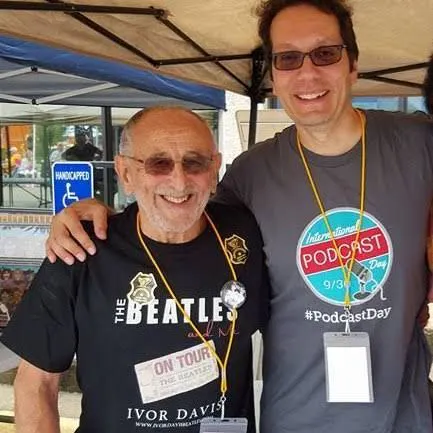
this podcast is brought to you in part by Magical Mystery Camp Coming to Big Indian New York, just two and a half hours from New York City the week of Paul McCartney's 84th birthday, June 16th through the 19th, featuring a number of special guests including the Fab Foe, as well as singer, songwriter, musicians Martin Sexton, Gail ann Dorsey, Cindy Cash Dollar and more. For more information, check out magicalmysterycamp.com something hello everybody. We've just lost a good friend of the show, a good friend to me and a good friend to people in the Beatle community. Ivor Davis, who was a British journalist who initially was attached to the Beatles tours and ghost wrote a column for George and just basically was like a fly on the wall through their 64 and 65 tours, was there when the Beatles met Elvis, was there in 64 when they connected with Bob Dylan at the Delmonico in New York and famously became full time stoners because of that interaction. And later on he was stationed on the west coast based in la, where he was present at the Ambassador Hotel on the night Robert F. Kennedy was gunned down in June 1968. The following year when the Tate LaBianca murders took place, he was the first reporter to go out to Spahn Ranch and interview members of the family, consequently publishing a book, Five to Die, in 1970 on the case before it had been fully litigated. And in 2014 he wrote a book, a memoir on his Beatles experience called the Beatles and Me on tour, which 10 years later 2024 was republished in a 60th anniversary edition. He also published in 2019 a book Manson exposed reported's 50 year journey into madness and Murder on the case, revisiting that and anyway, I had him on the show three times talking about being on tour with the Beatles, talking about The Manson case, and also reacting to Once Upon a Time in Hollywood. So we spent time at Beatle events, hanging out, talking together, and basically anytime I wanted to converse with him about anything, he was amenable. And I remember our last exchange, or at least one of our last exchanges was a couple of years ago where we were talking about the book Chaos, which was about the CIA program involving LSD, mind control stuff in the 60s that I was interested in his take on it, which of course is very thoughtful and observant based on things that he knew. But in any event, he's passed and we're gonna miss him, but we're not gonna forget him. As a way of honoring this friend, I wanted to share with you something that's never been on the podcast before. This was a conversation I had with him five years ago, just talking about the Manson stuff, Beatles stuff and whatever else we felt like talking about in the moment. It's not been in the podcast before, but I figured this is a good way for anybody who hasn't listened to those earlier shows to get a measure of the Ivor experience. We're going to miss you and we'll be thinking about you, Ivor, and glad to have known you.
- [04:22]
Podcast Narrator
Ivor Davis was a London based journalist connected to the Daily Express. When he was assigned to cover the Beatles tour of North America in 1964, he connected with them and was subsequently asked to tour with them again in 1965. He put those memories in a book, the Beatles and Me on Tour a few years back. But he also was around for some really important developments in their history, namely the August 1964 meeting with Bob Dylan in New York. We all know how that turned out, as well as the meeting the following year in Bel Air with Elvis. But after that he became assigned to the States and based in la, where he was at the Ambassador Hotel the night that Bobby Kennedy won the Democratic primary and was subsequently shot. He was also around in LA the following year when the Manson family murders took place in August of 1969, as chronicled recently fictitiously in Quentin Tarantino's film Once Upon a Time in Hollywood. Well, we discussed that film on the show and as it turns out, Ivor was one of the first people to go to Spahn Ranch once the arrests had been made and got the story straight from the followers of Charles Manson themselves of how he indoctrinated them with the music of the Beatles White Album. So you're going to hear his take on everything. He covered the trial and actually wrote the first book on the Manson case before the trial concluded, it was called Five to Die, recently republished and expanded as Manson revealed.
- [06:00]
Robert Rodriguez (Interviewer)
So welcome to ibor.
- [06:01]
Ivor Davis
Great to be on with you. And as I say, let's get this show on the road.
- [06:06]
Robert Rodriguez (Interviewer)
Okay, so just to sort of sum up for the people that might not know your background, you actually published a book, I think, going back now six years or so, on your touring days with the Beatles. And it's called.
- [06:18]
Ivor Davis
It's called the Beatles and Me on Tour. And it was done about in 2012 or 2013. It took me a long time to get round to pulling my memories together. But of course, the book, as you know, but not everybody knows, is about me being so. Oh, lucky man. That's a different. Different singer, Alan Price. Oh, lucky man. Anyway, don't let me go down side street. So back in 64, I was a correspondent for one of the biggest newspapers in the world, the London Daily Express. I was their west coast correspondent in Los Angeles. I got a call literally 24 hours before, and they said, get on a plane to San Francisco, the boys are about to arrive. I said, who are the boys? And they said, well, it's the Beatles. And I knew a little bit about them, strangely enough, but communication back there, as you know, Robert, were not as elite and brilliant as they are now. You know, you sneeze in Nashville and I say bless you in California. So it's that fast on the Internet. So I jumped on a plane. I'd seen the Beatles in February 1964 at the Ed Sullivan show, and like everybody else, I was wowed with them, but I didn't really know them. And when I got on this trip, I got to know them because once they gave me the hello, finally they realized I was going to be part of the family for the next five to six weeks. And we got on very well. And I always say, you know, it was a fabulous ticket to ride. I enjoyed it then and I didn't really appreciate it until years later, but there he goes.
- [08:08]
Robert Rodriguez (Interviewer)
And you were a few years older than them, so maybe they weren't your kind of music necessarily. You didn't know a whole lot about them until you got the meet.
- [08:15]
Ivor Davis
No, I didn't exactly. I didn't know too much about the Beatles. I mean, I knew they were big in Europe, but they weren't big in America, except for the Ed Sullivan Show. And I saw the madness and the insanity of their performances there when, you know, you couldn't hear anything for screaming. And then when I got on the road with Them I discovered the reality was when you were sitting in the front row, you couldn't hear them because the girls were screaming from start to finish. So I wondered what was this all about? But I kind of finally acclimated to the Beatles and they acclimated to me. And we got on very well because the four of them were great fun, a great sense of humor. Somebody asked me about one or two single rock people who had problems. And I said, well, if they had problems, they couldn't bounce it off of each other, the Beatles. And it was a terrific trip, even though, as I said, I had my eardrums blasted mostly by the girls. Anyway, so go ahead.
- [09:18]
Robert Rodriguez (Interviewer)
And that tour started in August of 1964. You happened to be around in one of the more notable episodes of that time, which was when they got to meet Bob Dylan in New York City.
- [09:28]
Ivor Davis
Yes, here's a situation. They met Bob Dylan literally on the night before they left. They had conquered America. They were at this not particularly Idlewild Motel and there was a party because the boys were going back. And everybody was jubilant and they were thrilled to bits because they had really done very well. And then I saw a scruffy looking guy with a backpack coming into the Idlewild Inn by the Idlewild Airport, which then became the John Kennedy Airport. And it was Bob Dylan. And in fact, Bob Dylan then went into the room. We were standing outside the door of the room of the suite and they put little wet towels on the bottom of the door. And I thought, what's going on here? And what happened was, of course, as the world probably knows, Bob introduced them to fine grade marijuana. And the only thing that was very funny, well, it was all very funny. The main thing that was funny was that, I guess Bob gave them a fat, I hate to say it looked like a tampon cigarette. And Ringo smoked the whole thing. He didn't know what the diplomacy was that you take a few puffs and you pass it around the room. And by the time Ringo finished the cigarette by himself, he was rolling around on the floor giggling like a little girl. Anyway, so that was it. And then the rest of them also got high. And then Dylan packed his backpack and off he went. And then, of course, much later, as most Beetle aficionados know, Bob Dylan became very friendly, mainly with John. And John hosted him at his house in England, and they became very friendly. But the Beatles loved Dylan's music. They just thought he was terrific. There was another guy who came, who lived in Memphis, I can't remember his name that they also like, but that's another story. I think you can remember who the guy from Memphis might have been, right?
- [11:44]
Robert Rodriguez (Interviewer)
That was the 65 tour, correct? Yeah. We're speaking about in Bel Air, meeting Elvis at his house.
- [11:50]
Ivor Davis
Indeed, that was 65, but 64 was amazing, just amazing, because even the Beatles were stunned by the reception they got. And unfortunately, part of the problem was they were stuck in their hotel rooms. They did not dare go out. When they went out, they went in a limousine. And when they left after the concert, which lasted all of 26, 27 minutes in those days. And you couldn't get away with that today, in today's marketplace of rock stars, they had to make a fast getaway out of the back, into a limousine, into an ambulance, into a fire truck, into an armored car, and sometimes into a helicopter to get away before the audience left the room or left the stadium, I should say. And that was. That was the craziness of the whole event, the whole. The whole experience.
- [12:49]
Robert Rodriguez (Interviewer)
Did you get a sense over the time you were spending with them over these two tours, of their growing weary as the crowds were getting bigger and bigger and demands being placed on them?
- [12:59]
Ivor Davis
The first year, 1964, I think they were fantastically happy with the turnouts. They filled the stadiums pretty well. Every stadium was full up. I think maybe in. In. In Denver, the Red. Red Rock Stadium. It wasn't quite full filled up, because the stadium was, like, about 20 miles from the main city. And so. But they were happy with it. They were very happy. But when I saw them in 65 and then again in 66, by 66, it had worn off. You know, they were fed up. And John said. John would always say. I mean, he was the most outspoken. As everybody who knows the Beatles history knows, John was the most outspoken. You know, you didn't have to even ask him a question. He hit you with an answer, hit you with an opinion. John said, we're like performing fleas at a circus. Nobody comes to actually hear the music. They come to see us. And they were very upset with that. And also in the same year as again, Beatle fans listening and watching this know, Robert, they were fed up. They'd had enough. They had a bad experience in Indonesia with the President Marcos's wife. They got roughed up there. And so they were ready to call touring quits and stick to work in the studio.
- [14:24]
Robert Rodriguez (Interviewer)
Right. So were you part of that 66 Tour, or was it just the first two?
- [14:28]
Ivor Davis
No, the 66 Tour. Because I knew, because Derek Taylor, I was Friendly with Derek Taylor. I would come to. If they perform the Hollywood Ball, I go to the Hollywood Bowl. But I never went around again. It was kind of a bit deja vu for me and a bit deja vu for my newspaper, who said, you know, you've done it all. So I go to the parties in Hollywood when they were renting a house and see all the guys hanging out, all the movie people, Peter Thunder. And then there was Joan Baez was around and a lot. I mean, everybody wanted to meet the Beatles and the Beatles didn't want to meet everybody.
- [15:09]
Robert Rodriguez (Interviewer)
Right. So you were part of that circle. When they would pass through town, come 66, which of course was a tour where they decided they weren't going to do this anymore. There was the whole more popular Jesus controversy that was dogging them and the bannings and the bonfires and all that stuff. So it definitely.
- [15:26]
Ivor Davis
I mean, that was. Robert. That was almost like it was so different to the 64 because they were scared. I mean, John had made that statement about Jesus that everybody knows about, and it came back to haunt him, particularly in America, where, as you pointed out a minute ago, people made bonfires of their records. There's pictures and they did they. And they, you know, go home, go back to where you came from, all that stuff. And to be honest with you, John got death threat and John was scared. And I wasn't in the stadium at the time. I think it was somewhere in the south. A firecracker went off and one of the roadies said, you know, I thought maybe John would fall down in a pool of blood. And it was. Fortunately, at that time, it was a false alarm. But they were not happy. They were not happy campers in that year.
- [16:15]
Robert Rodriguez (Interviewer)
Right. So that then dealt with the first phase of your being around the Beatles. And then you're in LA, you're an entertainment reporter. 68, you're there at the Ambassador Hotel. Robert Kennedy wins the primary and you're a witness to the aftermath of the assassination.
- [16:30]
Ivor Davis
As it happens, yes. 68, I've been traveling with Bobby Kennedy. He was going to win the nomination for the Democratic Party. He was actually terrific. He worked his backside off. His hands, I noticed, were raw from shaking hands with people. That day. He covered California from San Francisco to San Diego, back to LA. About midnight, 11:30pm we all go to the Ambassador Hotel because Bobby, we hear, is one California, very important state of electoral votes for Bobby. And Bobby makes his speech and I'm standing there and he says, on to Chicago. Terrific. We follow him and I hear balloons popping. 1, 2, 3, 4, 5, balloons popping. And then I hear screaming. And I realize this is not balloons popping. So I push my way into the. Into the pantry of the hotel and look there and I see Bobby lying on the floor. Ethel Kennedy had put a little straw hat under his head. He was bleeding. She was screaming, give him air, give him air. It was bedlam. It was total insanity. People were screaming. And then, of course, he was carted off to the hospital. And then hours later, we discovered. We went to the hospital and Mankiewicz, Frank Mankiewicz, his pr, his publicist, his election PR guy, announced that Bobby had died. When you're a journalist, you realize the awfulness of what took place, but you don't realize the historical significance because you kick into work mode, interviewing people. I interviewed people who were around Bobby the. The time that the guns, shots were fired. And then all of a sudden, hours later, Bobby is dead.
- [18:39]
Robert Rodriguez (Interviewer)
Awful. And so a year later, 1969, and the murders take place in Seattle Drive at the home rented by Sharon Tate and Roman Polanski. And it took some time before people realized who the perpetrators were. There was the murder, of course, the next day of the La Biancas. And it wasn't until December that the arrests actually got made. And that was because of one of the family members, Sadie Atkins, running her mouth to her cellmate. And that was what tipped off the authorities to go investigate the Mansons, because up until that point, they had no clue who was responsible for this.
- [19:17]
Ivor Davis
Exactly as you said. Not until Susan. Sexy Sadie, that's what the Beatles supposedly called her. According to Manson, Susan Atkins spilled her guts. The cops didn't have a clue. And then what happened was as soon as I heard it was Manson, he was the chief suspect, I went to this crappy, rundown, stinking ranch called the Spahn Movie Ranch. It was no longer a movie ranch. It had seen its finest hour. And I saw some of the Manson women and the Manson guys who were still there, but they were not involved in the murders, they were not arrested. And I'm sitting there for three days talking to them, hearing this outlandish story. And the most outlandish of the story is Paul Watkins and Brooks Poston, two of the guys that were Manson's underlings. Tell me. And I sit there thinking, you know, what, what have they taken? Are they on drugs? Or. That's some kind of mind bending madness. They say Charlie used the Beatles White Album and told us, and we believed it, that the Beatles were sending them secret messages in all the songs in Revolution. In Helter Skelter, in those songs. You know them all?
- [20:42]
Robert Rodriguez (Interviewer)
Yeah, Blackbird Piggies, all those songs, Robin.
- [20:46]
Ivor Davis
Yeah. And of course he said that Beatles were sending the secret messages telling him, telling disciples of Manson there was going to be a race war. Because it was all in the lyrics. Stupid. Look at the lyrics, it says that. And I heard this and I knew a little bit about the Beatles because I'd spent time with them and I thought, these guys are bonkers, start raving mad. But I listened because it was an incredible story. And then July 1977, eight months later, I sit in the courtroom and the District Attorney, Vincent Bugliosi stands up and says, ladies and gentlemen, the jury, I'm going to show you in this trial how Charles Manston carrying out these murders because of the Beatles lyrics that he thought there was going to be a race war and he wanted to escape the race. When I heard this, what seemed like I called it a cockamamie thesis. I mean, I thought everybody must be crazy. And yet they used that thesis, they used that motive. And then nine months later, the jury convicted Manson based on the Beatles White Album. Go figure that, right?
- [22:06]
Robert Rodriguez (Interviewer)
So basically they sold the public or Manson sold his disciples on this indoctrination coming straight from these messages from the Beatles through the lyrics of the White Album that in their diminished capacity seemed credible. But that wasn't the real motivation for the murders at all.
- [22:24]
Ivor Davis
No, yes, you're right, I didn't mention diminished capacity. And diminished capacity, as you point out so well means that Manson very cleverly fed most of the young people that were around him with drugs, lsd, other mind bending, every drug under the sun he would give them. He would very carefully not take as many drugs as they did. So they would have believed that the moon was made of cheese. After you've taken three or four acid trips, I mean, you're going to believe anything. But in my opinion, based on my reportorial efforts, I think that Manson did the murders and set the murders up as a ploy. He had a friend who was in jail, Bobby Boselle, Bobby Beausoleil was in jail for another murder. And Charlie wanted to put the cops off his scent and set up these crazy murders so that the police would say, hey, this is very similar to the murders a musician, an actor, Robert Bosley had been charged with. And the cops would say, well, if these murders happened after he was in jail, Bobby Bosley must be an innocent man. Let's let him go free. I mean, it's insane, that reasoning as we talk half A century later makes absolutely no sense.
- [23:50]
Robert Rodriguez (Interviewer)
Right, but it's very pragmatic on his part to want to get his friend freed for this murder and throw the police off the scent by committing similar atrocities. And that murder was Gary Hinman, Was that the victim?
- [24:03]
Ivor Davis
Yes, it was a murder of a musician called Gary Hinman who'd been murdered 10 days before, two weeks before the Sharon Tate murders. But I think once you and I talked about this, and I would ask you, I mean, look at the lyrics, you know, the lyrics so well of Helter Skelton and all that stuff. I mean, even if you twist it, Robert, if you twist it, can you perceive those lyrics as being an exhortation to kill? An exhortation, there's going to be a race riot.
- [24:36]
Robert Rodriguez (Interviewer)
There's nothing at all sinister in any of those words that he was pulling out and using as the indoctrination of these people. But what it speaks to is this. I don't know, that was unique to the times, but certainly 1969, we've got these people pulling together these random facts to make the case that Paul McCartney secretly died. And here are the clues that the Beatles were sharing with us through their songs and their album covers to make this compelling case that Paul died was replaced by a lookalike. And here's the Beatles trying to tell us that. So I guess if you're a receptive audience, and maybe this speaks to your earlier experiences with the death of Bobby Kennedy and before that his brother Jack, that when you've got the public being sort of groomed, that whatever the official version is, we're being told and it's not true, it doesn't ring true at all, they're covering something up and that makes you question everything. When you're a hammer, everything looks like a nail. So if somebody presents this alternate reality to you, of course it's going to want to resonate because you know, the official explanation can't possibly be true.
- [25:46]
Ivor Davis
Robert, we are in the year 2021, and alternate realities and lies and fictions and stories are not uncommon that are absolutely based on nothing times. They are not a changing, or maybe they have a change. It's insane when you think back 50 odd years and then you look at the way people are and some people want to believe what they want to believe. Even though, I mean, the Paul McCartney stuff is a perfect example. I mean, wasn't there something about, well, if you play one of the record backwards and you're standing on your head, you're going to hear him Say Paul is dead. I mean, I'm exaggerating. Sure, sure.
- [26:26]
Robert Rodriguez (Interviewer)
Yeah.
- [26:26]
Ivor Davis
It's kind of crazy. And there it is. That's life, right?
- [26:30]
Robert Rodriguez (Interviewer)
Well, it's unfortunate for the Beatles legacy that here you have these horrific, these atrocities committed that forever are going to be linked to their benign, utterly unsavage music on the White Album. Because that case got sold by Bulloci, who then proceeded to write a book using the title of a Beatles song, Helter Skelter, which then gets made into a made for TV movie that everybody loves at the time and is drawn in by. So it's become this, this inextricable connection that is so undeserved and unwarranted and
- [27:07]
Ivor Davis
I must tell you. And the beat goes on because I was in a documentary, a terrific documentary made on the Manson family by the Epics Network. Six hours. It was well done. And they decided to call the series Helter Skelter.
- [27:25]
Robert Rodriguez (Interviewer)
Oh boy, it won't die.
- [27:28]
Ivor Davis
There it is. But look, you know, and I know and when I spoke to the Beatles, when I spoke to John about the connection, he just, I mean, he was just absolutely upset. I mean, they were all upset. Each one of them thought, why do people believe this clap trap about our music? But I'm sorry to bring it to the political arena of today and you look at some politicians and I don't want to get too politically involved, but when you read what one or two or three or four politicians are saying about satanic worship, you know, the kind of stuff that we've been reading about for the last 12 months, you see and you look at it and you say, this is rubbish, absolute garbage. And yet there are people out there who will retread it, who will vomit it back to you as the gospel, right?
- [28:25]
Robert Rodriguez (Interviewer)
And then will act on it.
- [28:26]
Ivor Davis
There you go.
- [28:27]
Robert Rodriguez (Interviewer)
Yeah, yeah, there you go. So I guess it speaks to a part of the human psychology that at least has been around for the last 50 years, probably a lot longer. But for our purposes, we can trace a lot of it to the way people were interacting with the Beatles. Taking their work, receiving it, and then reinterpreting it to whatever ends. So much so that on the aforementioned White Album, John writes that line in Glass Onion. Here's another clue for you. All the walrus was Paul way before the Paul is dead stuff started. Just in response to recognizing that anything being put out in their music, people were going to take a message that was never there, never intended, and spin it their own way. And you know, what are we supposed to do with this. You know, we're making music, we can't control what you're going to draw from it.
- [29:18]
Ivor Davis
Yeah, the whole mythical thing is blown well out of proportion. And as you pointed out, if you were to say, well, I'll tell you what we'll do. We'll do a program on 35 myths about the Beatles. And you will start presenting them and you will find if you examine them closely, that 35 of them, probably 34 of them, are rubbish. A total fiction. And maybe one has some kernel of truth to it.
- [29:46]
Robert Rodriguez (Interviewer)
Right, exactly. So in recent years, in the last couple years, when the Tarantino film came out, that stirred renewed interest. It was the 50th anniversary of these murders and. And that coincided with your publishing of Manson Revealed, which was sort of an updating of the book you'd written before the trial had even concluded back in 1975, to die. And if you talk about that a little bit, what the new book contains as a sort of update 50 years on from the original book.
- [30:16]
Ivor Davis
Yeah, my book. I finally got around to writing it. Manson Exposed A Reporter's 50 Year Journey into madness and murder. And I took the opportunity to talk about my involvement from day one until the way things are today. I had written the very first book about the Manson family called Five to Die. And I must say, and I've heard this repeated, Vincent Bugliosi got the book and read it and I had the Beatles made me do it thesis, I use that as a looser description.
- [30:48]
Robert Rodriguez (Interviewer)
Yeah.
- [30:48]
Ivor Davis
In class and I was told, I was told actually Robert, that, that he decided he saw this in the book, in my book, and he decided to use that as the blueprint for the prosecution. Now it sounds like I'm blowing my own trumpet, but I've got nothing to gain by saying that. But I was told by Aaron Stovitz, who was Vincent Bugliosi's boss until he was fired from the case for talking to Rolling Stone magazine and a few other things. So I think that the whole thesis was taken, as I say, completely out of context. And my first book came out before the trial began. The judge looked at the book because Irving Canary, who was Charles Manson's rather inept lawyer, said this is very anti my client. We want a change in venue. And therefore if we want to change the venue because the book is out. And he looked at me, the judge looked at my book and said, no, same old rubbish. Motion dismissed. Let's get on with this trial. And that's exactly what happened. They got along with the trial. So that was my first book. And my new book, the one I've written, is a much more richly detailed story because I talk about my conversations with Terry Melcher. And Terry Melcher had lived in the house where Sharon Tate was murdered. And there's all sorts of little extra angles about Melcher supposedly going to give a recording contract. Terry Melcher, for those of you who know the music business, was a terrific producer. The son of the actress Doris Day. He got the Birds big hits, he very successful producer and Manson wanted to become a rock star. And I must tell one other thing which is also fascinating and is in the book and a lot of people know about it. Manson wanted to be a rock star and he by pure chance, by pure fluke, managed to meet Dennis Wilson. And when he met Dennis Wilson, Dennis Wilson ended up inviting him to stay in his house, his mansion in Sunset Boulevard. And Manson and the girls. This is again, it's true. Manson moved in with his scruffy girls and lived in Dennis Wilson, the drummer of the Beach Boys house on Sunset Boulevard for six, eight months. Destroyed the place, borrowed money to pay for all sorts of things because Charlie Manson was a shrewd ex con who thought, ha ha, I'm going to get to know Dennis Walsh. And Dennis Wilson has a salon of rock and roll people. And indeed he invited John Phillips of the Mamas and the Papas, all the rock stars of that 60s era, late 60s era, to his house. And who was the star performer? Charlie Manson on the guitar. So there's so many tentacles to this story and they're all in my book,
- [34:00]
Robert Rodriguez (Interviewer)
to backtrack a bit about Manson when he's in prison in the early 60s, as the Beatles are hitting, that's his first sort of sense of they're what I want. That's where the, the desire to be a rock star starts. When he sees what's happening with them, that command of an audience, that adulation. He's this career small time criminal to that point and he sees that and it stokes this messianic complex he's got. I want that for myself. I'm going to learn to play guitar, I'm going to write songs. And that sets him on the path to, once he's out of prison in 67, to aspiring to be a rock star and then going about seeing how he can make it happen.
- [34:41]
Ivor Davis
Yes, and that is exactly right. And he is very suspicious of Dennis Wilson. Although they are bosom buddies, Dennis thinks he's God's gift to music. And as you know, Charlie Manson gives Dennis Wilson One of his songs. And all of a sudden the song with a name change and I've got a mental. I can't remember. You can probably remember. As we end up talking, Charlie Manson gives Dennis Wilson the song, and Dennis Wilson changes the title and then claims credit for the song. And Manston is somewhat upset.
- [35:19]
Robert Rodriguez (Interviewer)
Yes. Never Learn not to love. And it was on the 2020 album in early 69.
- [35:24]
Ivor Davis
Exactly, exactly.
- [35:26]
Robert Rodriguez (Interviewer)
Yeah. I found kind of interesting. I can't remember if you mentioned your book, but I had come across it was that the demos he produces in the studio, I think, on the behest of Melcher, were recorded like a year to the day before the killings in August of 68. And I'm sure that's pure random coincidence, but those were the songs that I think, once he was in custody, were then pressed into vinyl and released using that Life magazine cover. But they took the F out and was lie. And that was a Manson album that finally got issued.
- [36:00]
Ivor Davis
It finally did get issue. It did bad business. But if anybody out there has that album, hang on to it because it's a collector's item. And. And in that series on epics, they played some of Manson's songs. And maybe it grew on me, but I thought that each time I saw it, they were actually not too bad. They were terrible. Although a few of the rock people would say that Manson is a singer and a composer. Was Pratt terrible? But it kind of grows on you. And he wasn't that bad. But as you said, he learned to play the guitar in jail. He came out and decided this was the road he was going to go. But I must add this. Charlie Manson never became a rock star, but he became a TV star. Because while he was in jail, everybody wanted an interview. Diane Sawyer, Tom Snyder, Ronald Reagan Jr. They trotted to jail to have Mr. Manson on their show. And didn't he love it? Just look at Charlie Manson strutting his stuff in jail for Diane Sawyer and niggling her and, oh, it's great watching, I must say, even today. And so Manson was the performing bear, but somewhat dangerous bear.
- [37:28]
Robert Rodriguez (Interviewer)
Yeah. Certainly the hype. It was the little guy, he's five foot two. But there was something he projected that got magnified through the media that made him into this terrible, monstrous menace. And certainly the things that were done at his behest were horrible, horrific crimes. But he himself was not an intimidating figure, yet he became the stuff of nightmares for a generation after these crimes went down.
- [37:56]
Ivor Davis
He did. And you know, Robert, what happened was the people who would Normally be scared. You know what? By seeing Manson, invited Manson into their living rooms on these shows. And again, if you watch Manson before, he was actually a very good entertainer. He knew what they wanted. He became angry, he became solemn, he became poetic on these shows. I mean, it's like a, a performance. And he did very well. But unfortunately, he was in jail. And of course, that's where he died, in jail.
- [38:34]
Robert Rodriguez (Interviewer)
Right, right. A degree of sociopathy to him that probably made being any kind of genuine reality star a non starter. The stuff that he was capable of doing that gave him the infamy that earned him the cachet he wanted, after all, which was to be this big, menacing public media figure out there. You know, even if he's behind bars, he's still getting off on it.
- [38:59]
Ivor Davis
Robert. He played it to the hilt. And I want to tell you, I spoke to the warden, one of the guards that got friendly with him, and he always got friendly with the guards, with the people that kept an eye on him. And when people came around from the prison system, all they wanted to do was meet Manson. I mean, it was crazy. They would say, let's meet Manson, the star attraction in prison.
- [39:22]
Robert Rodriguez (Interviewer)
Right.
- [39:23]
Ivor Davis
It just is insane. But the public can be a bit insane, can't they?
- [39:28]
Robert Rodriguez (Interviewer)
Yes. Yeah. The cults of personality, they build and then follow. Unbelievable. So in your book, you update in the ensuing decades since the trial and trace the fate of these people that were involved in the case. They're just a couple that are still alive now in jail. Right. Of the original convicted Manson followers, here
- [39:50]
Ivor Davis
are the people who are still alive talking about those convicted of murder. Right. Leslie Van Houten, who was very young, 19 at the time of the killing, she only got involved in the RoseMary and Lino LaBianca murders. Leslie Van Houten is in jail trying to get out of jail. So is Patricia Krenwinkel, who was involved in both the Sharon Tate and the LaBianca killings. Also, Charles Tex Watson is still in jail, is still trying to get parole. They're all trying to get parole. And what happens is with the girls, with the ladies, with the old women, now, the older ladies, even ladies, they get the parole board to say yes. But in California, there's no governor who wants to be responsible for turning the key and letting them loose. I mean, I don't think they're a danger to society. They're notorious for who they are. So there's still a lot of them in jail trying to get out on parole. And who knows? I mean, Beausoleil, for The killing of Gary Hinman, the musician. He's still in jail and they haven't let him out. So there it is.
- [41:06]
Robert Rodriguez (Interviewer)
Right. You'd referenced John Lennon before his comment on what do these songs have to do with what went down. There was a time during the trial that they were actually trying to bring him in as a defense witness.
- [41:18]
Ivor Davis
I mean, that was the most. Irving Knarick, who, as I said earlier in our conversation, was not the most. Well, he was an obstructionist lawyer. He would interrogate a client for five days when they could have done it in one day. But he didn't know that John Lennon, at the time of the trial, was actually living in LA with Yoko, because Yoko and Lennon had come to LA to do some primal therapy. And primal therapy was done by a doctor called Art Yanov, in which the idea, as you may know, but the idea is that you get reborn in therapy and you come out a new person. And that's what happened to John. And the big advantage of that for John was if, you know, the Plastic Ono album where he sang Walking Glass Hero and some of the other very. Mother, Mother. Perfect, perfect. There you go. So the ironical thing was they sent texts and whatever, the communicative thing, to try and get them to come from England, but, you know, they weren't gonna come from England. But they didn't know that John and Yoko were in LA at the time. And John kept a very low profile at the time.
- [42:36]
Robert Rodriguez (Interviewer)
Right, right. And even had they reached out and gotten in touch and connected with him, I don't know what value they thought he would be putting him on the stand other than showbiz showboating.
- [42:47]
Ivor Davis
That would have been a purely. Can you imagine? We're going to call the Next witness, Paul McCartney. Wow. Everybody's going to stand up and listen to what Paul has to say. And then Paul would have been grilled by Irving Kuderick for three days. Ended up rather annoyed, put it mildly. And nothing would have happened. It was purely window dressing.
- [43:10]
Robert Rodriguez (Interviewer)
Yes. Spectacle.
- [43:12]
Ivor Davis
Ridiculous.
- [43:13]
Robert Rodriguez (Interviewer)
Yes. Right. As the actual author of two of the songs invoked in those murders, Helter Skelter and Blackbird.
- [43:20]
Ivor Davis
Yes.
- [43:20]
Robert Rodriguez (Interviewer)
Yeah. And John had nothing to do with them, so it would. But it's kind of pointless.
- [43:24]
Ivor Davis
Yes. Yeah. So, I mean, it would have been great publicity to bring a beetle in to interrogate them about. What did you mean when you wrote it's coming down fast. Right? Fast.
- [43:39]
Robert Rodriguez (Interviewer)
Yeah. So you think you've talked about this before, but the way that Tarantino depicted the Spawn Ranch was pretty spot on. As you remembered it.
- [43:47]
Ivor Davis
I tell you, the thing about Tarantino was it was a fascinating movie. It was, and I've said this before, that it was a fairy story because the ending was the way it was. But one thing that struck me as brilliant of Tarantino was he recreated the Spahn Raj in all its crap house, splendor, decay. And when I saw that film, I thought he did a terrific job, because that was the way I remember it. An eerie place full of demented people, almost like the Village of the Damned and the children in the Village of the Damned feeling. And he did a good job from that point of view. It was an interesting film. And I knew something was afoot when I heard that Sharon Tate's sister, I think it was Debbie, had approved the script. Wow.
- [44:41]
Robert Rodriguez (Interviewer)
Wow.
- [44:41]
Ivor Davis
Really? And then we saw the movie. We all saw the movie.
- [44:45]
Robert Rodriguez (Interviewer)
Right. Well, it was cathartic. I think it's the ending that everybody would have wanted to have had happen.
- [44:50]
Ivor Davis
Yes. Yes. There you go.
- [44:52]
Robert Rodriguez (Interviewer)
Right. It must have been unbelievable for you, knowing the Beatles as you did, to have that story laid on you when you showed up there and then chapter and verse, pointing to the lyrics and hearing them describe this as an incitement to terrible mass murder.
- [45:10]
Ivor Davis
You can imagine. But as a reporter, you don't say to people telling you this fanciful, ridiculous story. You are full of, you know what, right? You just listen, you pay attention and you nod. You don't want to get into an argument because they're unloading to you. When they unload to you, Robert, you listen, because that's what a reasonable journalist does. You don't get into a debate. You don't say, I've just heard the biggest load of rubbish I've ever heard there, Paul. You must be zonked on whatever aote or mescaline or whatever the drug of the week was. And you go away and you think, I'm going to go back tomorrow because I'm not sure I actually heard what I heard. And then you go back and you say, now, when you said the Beatles song Piggies was actually about the rotten police department. No, you just want to make sure that what you heard was true. And you go back again and you listen, and indeed, the fanciful, ridiculous story is the same, right?
- [46:20]
Robert Rodriguez (Interviewer)
They were indoctrinated. It's unfortunate, because I don't know if there's going to be any point when we are going to be able to separate out and recognize that the Beatles White Album really has nothing whatsoever to do with what went down. And it was Just a vice. It was a MacGuffin, to use a Hitchcock term.
- [46:40]
Ivor Davis
It was, it was. And. But I want to tell you we are in 2021 and I tell you three weeks ago, I'm friendly with. I'm not going to tell you who it is, strangely enough, with one of the Manson girls. Now, she was very young when she was recruited by Manson. It's a horrible story. But she again repeated how they believed. We sat there and we believed what Charlie told us. She told me that weeks ago because I'm going to try and get her onto one of the programs I do for my local museum. But I want to tell you, hearing it 50 odd years later from a middle aged lady who's a grandma, it's sort of wow.
- [47:32]
Robert Rodriguez (Interviewer)
So have you talked with Ringo or Paul in recent years? Do you see them when they come through?
- [47:38]
Ivor Davis
Well, I did. I was very fortunate. I went backstage in the days when audiences were allowed in stadiums to see Paul. It was about 18 months ago at the Petco Stadium in San Diego. And I went backstage and I got a chance to talk to him and he introduced me to his newish, which wasn't that new wife. And we talked about the old days and the fun thing was I said the story I like. I said, well, you know, when you started out, Paul, I mean, you had this beaten up old car with no backseat and there was Mal and Neil driving around the country and it was not that comfortable when you went on tour in the UK back in the old days. I said, now it's a little bit different. I said, how do you get around? He said, well, we've got a jumbo jet. And I said, you have more than two people? He said, yeah, we have about 92. So that was slightly different. And the other thing that I got a kick out of Paul and he was great. I must tell you, he's as smooth and relaxed for a big concert with 65,000 people. I said, well, you performed for less than 30 minutes in those days. How long do you perform now, Paul? He said, wait and see because I saw him before the show, backstage before the show and then I sat down and Paul McCartney sings for three hours and 15 minutes and does not leave the stage. So a bit longer. 3 hours, 15 minutes, 25 minutes. Slightly different. And of course Ringo does a good job with his all star band. I don't know if you have you had a chance to see Ringo?
- [49:20]
Robert Rodriguez (Interviewer)
I have, yes.
- [49:21]
Ivor Davis
Yeah. So would you concur with my thought that Ringo is very clever? He realizes he can't hold the whole show together as a Ringo star show. And he steps aside, he even leaves the stage and lets the other younger artists in his all star band do their stuff.
- [49:42]
Robert Rodriguez (Interviewer)
Right.
- [49:43]
Ivor Davis
But the audience doesn't mind that because they've all come to see Ringo. And so there's a nice balance there. Paul does 3 hours and 15 minutes. Ringo does probably 2 hours and 30 minutes, but he's off stage maybe for 30 minutes or so. You did the time watching.
- [50:02]
Robert Rodriguez (Interviewer)
Well, what it speaks to is the professionalism of these guys knowing their audience, knowing very well what they came for and delivering it.
- [50:08]
Ivor Davis
Exactly, exactly. So it's a fun visit and I must say, they're doing their thing. I mean, Paul doesn't need to stop I just for fun doing a program about the Beatles and money. Because in the early days, the Beatles and money was a disaster. Disaster. We won't go there. I think everybody knows that the they made a lot of money, but they didn't get paid a great deal and all the music was a mess and they finally got control of it. But the Beatles are earning good money. So I happened to just check for fun and I saw that Paul is worth maybe 1.3 billion, which is not bad. But Ringo is pretty poverty stricken. He's only worth about 400 million. So, you know, I'm sure it paid for whatever. But they're both looking terrific. Ringo looks sensational. He has a trainer visiting him every day. Paul looks very good and it's amazing that these were the guys that I first met in 1964. Sa.
- [52:06]
Robert Rodriguez (Interviewer)
Something about the Beatles created and hosted
- [52:08]
Robert Rodriguez
by Robert Rodriguez, executive producer Rick Way,
- [52:12]
Podcast Narrator
title song performed by the Corgis
- [52:17]
Ivor Davis
Something
- [52:17]
Robert Rodriguez
about the Beatles is an evergreen podcast.