← Something Positive for Positive People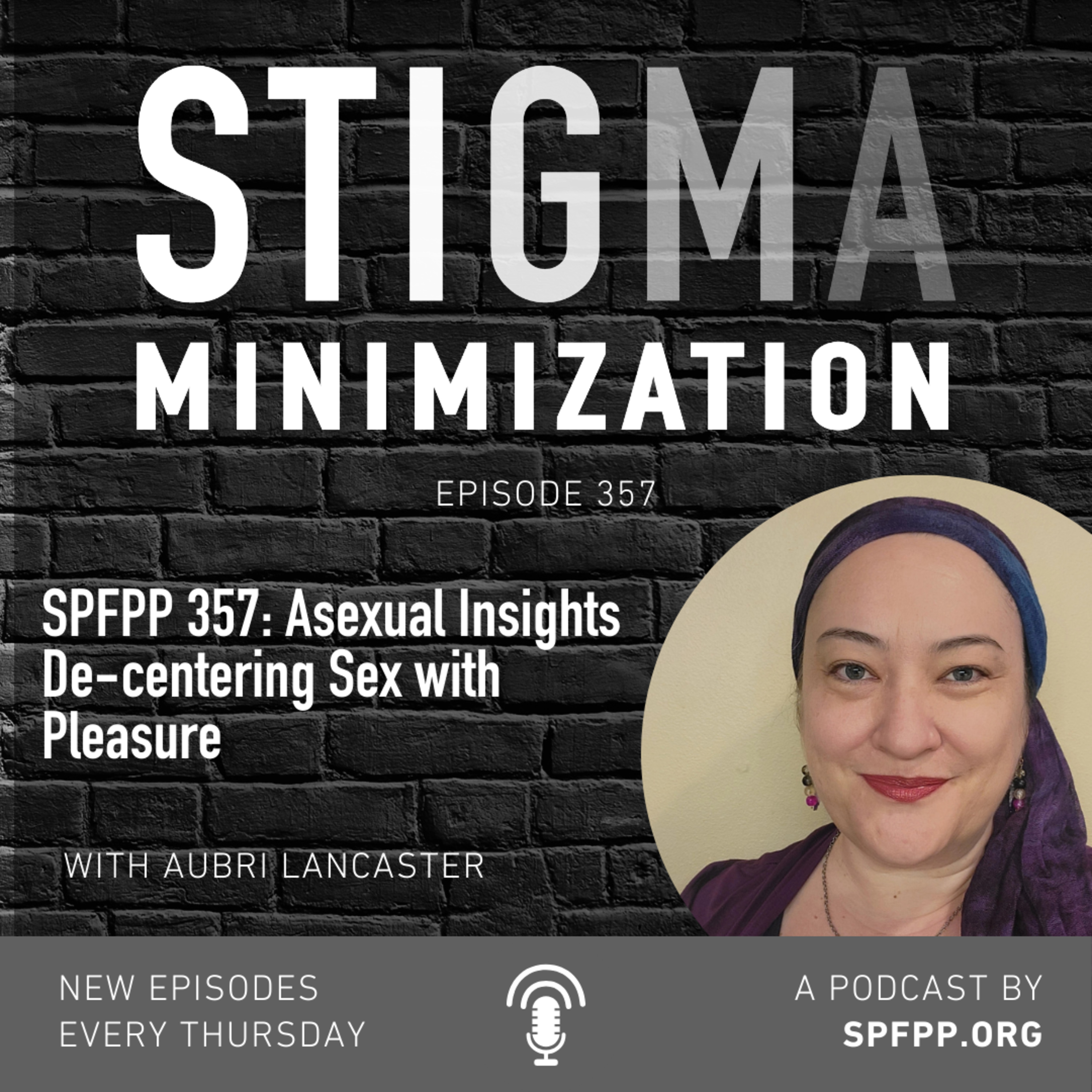
Something Positive for Positive People
SPFPP 357: Asexual Insights - De-centering Sex with Pleasure
00:55:59
Loading summary
Transcript67 lines
- [00:03]
Courtney Brain
Hello, welcome to Something Positive for Positive People. I'm Courtney Brain. Something Positive for Positive People is a 501c3 non profit organization supporting people who are navigating herpes stigma. And today's podcast episode, just an FYI, for anybody who's coming here looking for herpes specific support, this is not going to be that. This is different. And what's different, but still relevant is that it encompasses this idea of minimizing stigma, stigma, minimization. Whenever I'm offering support to people, I always try and bring them back to their identity and who they are, aside from their herpes diagnosis. Because far too often we get very interconnected with that aspect of ourselves and we neglect the parts of ourselves that are intangible, those aspects of our character, our personality, our hobbies, our interest. Right? So if you're someone who maybe likes to sing, or if you like to dance, or if you like to draw, create art or anything like that, Right. It is so easy to just completely lose sight of your identity and association with these things that bring you life, that bring you joy, that spark passion within you, all because of a herpes diagnosis. So this is one of those episodes that just kind of pulls us a little bit out of that, into a different space space, so that we're not so exclusively locking ourselves into this sexual aspect of ourselves. And the timing of this is really good because just two days ago, September 29th, we had our Something Positive for Positive People Safe Sex expo. And the idea about this was to support people in practicing, identifying, naming, and then communicating their safety and pleasure needs. Now where we get into the pleasure, this is where I was telling you before, like, why I was so excited about this episode specifically is because oftentimes people associate the word pleasure with sex, even when you Google the word pleasure. I think sex was something that came up for me when I did the search. Maybe people's algorithms are different, but that's generally what pleasure is associated with. And I'm excited to have a conversation with you because we're going to talk about asexuality, we're going to talk about aromanticism, and really looking at pleasure outside of that scope. So, yeah, with that all said, like, the event went very well. We had four workshop presenters who facilitated practices and techniques and skills to help people with just communicating about their safety and pleasure needs. And it was in a fun way. It was engaging. We had about 30 people come. We had people take surveys. Everybody took the survey. So we have an idea and understanding of what people's definition of you know, what their needs are, being able to identify those, etc. So all that said, like, that's what you all are going to sort of get out of. Today's podcast episode is a discussion about this. So this is not a herpes support episode. If you need that, go to another one. All right, so today I'm here with Aubrey. Aubrey, I will let you introduce yourself and then just share how we met, and then we'll just go into the conversation from there.
- [03:34]
Aubrey Lancaster
Yeah. So thank you. I'm Aubrey Lancaster. My pronouns are Bri, she, and I'm an ASEX certified sexuality educator with a focus in asexuality and aromantic. And. And we met through the intimacy pros group, I believe.
- [03:52]
Courtney Brain
Yeah, we did. So this is. And I. I describe things differently. I think I hear one thing and I always say something else. But to me, I think that what I get out of the group is a sense of, like, it's different than sex positivity in the sense that sex posit. This is maybe a part of sex positivity, or perhaps sex positivity is part of it. And hearing some of the discussions about intimacy, I'm learning more about, like, the spectrum of intimacy in this group because of some of the topics that come up. I like to just kind of co work, listen in, and, you know, hear what people have going on. And it really broadens my perspective and my own ideas of what intimacy is, what ways people are expressing and experiencing pleasure, especially in a professional sense. Because there's sort of a. A line as an intimacy professional between, you know, this is business, it's also pleasure. It's pleasure for the other person. But we're doing some healing. Right. So I'm, I'm thankful that we were able to connect because I'm very interested in uncoupling pleasure from sex in a way that can be healing and supportive to other people.
- [05:26]
Aubrey Lancaster
Yeah, definitely. And certainly the way that social media has us really policing our own language in order to not get shadow banned or have our accounts turn taken down, you know, sexuality professionals and intimacy professionals have other language that ends up getting used, such as intimacy and pleasure, to kind of be placeholders for those purposes, and then that has this kind of backlash effect of putting those terms further into that sexual context and losing some of the other ways that we can relate to that language.
- [06:07]
Courtney Brain
And language is important, and it's impactful, and some of us may not have psychological accessibility to some of the language. So for us to not be able to use the word sex when we're talking about sex as an example or to be able to name the body parts that we're speaking to when we have to. You know, let's say I'm looking at a hashtag for something on social media because I want to become more informed about said thing that is under the umbrella of sex or sexuality. I won't think to replace the A in the word pleasure with an AT sign or to spell out sex like eggs with an S in the front. Right. But these are the kinds of things that we unfortunately have to navigate in order to continue to. It's not just, you know, operating and running our business, but it's also. It's activism, it's advocacy, it's. It's. It's healing.
- [07:02]
Aubrey Lancaster
Yeah. The word sex, if you go to hashtag, especially on Instagram, where I do most of my creation work, there's you. You click any hashtag that has sex in the word and it won't pop up with anything.
- [07:17]
Courtney Brain
Wow. Yeah. And one of my biggest hashtags is sexual health is mental health. Right. And so much of the entertaining aspect of sex and the educational aspect of sex are just lumped together and shadow band. And I'm. I'm curious to know how this affects, like, STI prevention organizations or sexual health organizations that have messaging to put out there. I imagine that it doesn't affect them, but if it doesn't affect them, why isn't that same sort of layer of protection, at least in the educational sense, extended to the sex education sexuality professionals as well?
- [07:57]
Aubrey Lancaster
Yeah, it's. It's this disconnect in communication and more and more walls that are getting built up to separate the sexual from everything else. And as much as I work within the idea of recognizing that pleasure and intimacy can be more than just sexual just being such a loaded word. But that separation can come through our conversation, and instead it's coming from these companies that are just putting these walls up.
- [08:39]
Courtney Brain
And while we're on. Well, I think this is a smooth transition into your work. So let's talk about your work. Ace. Sex education. Is that right?
- [08:50]
Aubrey Lancaster
Yeah.
- [08:51]
Courtney Brain
And Ace, what is. Let. Let me let you. I'll let you talk to me about a sex education because there. There's some terminology that I'm not fully familiar with. I actually had a very interesting set of conversations with some people because I included asexual on my survey as an. Is it an orientation? Sexual orientation. Okay. So I included asexual there, and then we got into some conversation about, like, a romantic. I think that was it. I'M saying more, but can you start with just what is asexuality? And we'll begin there.
- [09:29]
Aubrey Lancaster
Sure. So within a sexual orientation context, it's an orientation that isn't oriented in any outward direction. So some people are sexually attracted to people of the same or similar gender, some to people of different genders or two or more genders, or all genders, regardless of gender. And yet we seem to kind of forget that some people aren't attracted to anyone and gender may or may not even be a factor in how they connect to other people. But not experiencing sexual attraction or rarely or only under certain circumstances is kind of a, an invisibilized experience.
- [10:12]
Courtney Brain
How do we experience sexual attraction? So that I have a reference point for what not experiencing sexual attraction is.
- [10:20]
Aubrey Lancaster
That's, that's kind of the million dollar question. And how everybody relates to asexuality is a little bit different. I really appreciate Sharonda J. Brown's definition or way of speaking of asexuality as a refusal of compulsory sexuality. That in a society that assumes that everybody experiences some kind of sexual attraction and that everybody wants or needs sex, the idea of not experiencing sexual attraction or not wanting or needing sex is its own point of resistance to how we are envisioning our society and how we understand ourselves.
- [11:07]
Courtney Brain
And that made me think, when we talk about, I see Maslow's hierarchy of needs and I believe sex is one of those. But for someone who may not feel, I guess, driven by the need to procreate because I think the conversations always drive to survival and like passing on genes. If we look at it from the science standpoint of oh, we're all run by a survival, right? So we want to make sure that we eat, we have to drink water, we want to avoid danger, and then we need to reproduce. Right. So it's interesting to hear that now after having been exposed to this, this way of existing that is normal for some people, where there's no need for that, that doesn't apply. Like it's not, I need to have sex, I need to reproduce, right? Like that, that's not there.
- [12:04]
Aubrey Lancaster
And it's going to show up differently for different people. So there's a lot of different elements that different people will relate to asexuality through differently. So the idea of sexual attraction for some people, that simply finding another person sexually appealing, you know, if you think about going to a buffet, you may be really hungry, but if none of the food is appealing, you know, you're much less inclined to want to eat any of it. Even if you're super hungry. So an asexual person with a libido, an active libido saying, hey, sexual engagement is needed here. But none of the options present are appealing. That libido may be self directed. So some asexual people with an active libido may prefer solo sex or they may choose to engage in consensual sexual practices with another person because of other reasons. There's so many different reasons people have sex than just sexual attraction. So you know, there could be deep feelings of love, it could be romantic love, it could be care. There's other practices of negotiating consensual sexual activity. So there's a lot of different reasons. Somebody may still engage in the interpersonal sexual activity. And then you have people who are non libidoists who really don't have any feelings of sexual need, or they find it very easy to ignore and may never wish to engage in solo sex or interpersonal sex. And we have to make space for the full range of the spectrum.
- [13:44]
Courtney Brain
The buffet comment made me think about like someone just being picky, right? Like, you know, yeah, I'm hungry, but none of this was good. I, I know where I need to go to get what I want. So maybe that person, you know, is an expression. I want to ask. This is an expression of asexuality. Maybe just like, okay, you may have friends that enjoy going out, socializing at a bar, and your friends might press you like, oh, that person is looking at you. Oh, that person's hot, right? And you're just like, ah, this isn't my vibe. But if someone were to go to salsa dancing, right, the atmosphere and the common interest, this may create an environment that might make someone a little bit more receptive to potentially being attracted to someone. Is that kind of like a little bit how it works? I have another analogy that might also bridge the gap. But this is how I want to try and like understand. And hopefully my questioning allows for other people to maybe connect some dots that may not be.
- [14:52]
Aubrey Lancaster
We also have the terminology of gray sexual.
- [14:56]
Courtney Brain
Tell me about this.
- [14:57]
Aubrey Lancaster
All of that kind of in between space. So somebody who identifies as gray sexual may experience sexual attraction rarely, weekly, or only under certain circumstances, such as demisexual, where a person needs an emotional bond in order to access sexual attraction. So I think your analogy is apt. And there's going to be some people who, it doesn't matter what the setting is, they are still not going to want to go down.
- [15:25]
Courtney Brain
All right, so when I think about the word A in front of something Like, I think not. Right? So when we see asexual, it doesn't mean not sexual 100 of the time, always. You never want to have sex. Is that, can we say that here?
- [15:43]
Aubrey Lancaster
So the asexual community has language to speak to these issues a little bit better. So the terminology that can help with that is sex favorable, indifferent, averse, or repulsed. Some people are sex favorable and they're favorable to the idea of sexual engagement regardless of whether or not they're experiencing sexual attraction. Some are indifferent. You want to have sex, we have a good relationship, okay, we'll have sex. And some are sex averse. Like, I just, I don't want to. That's not appealing at all. And some are repulsed. There is a visceral response to the idea of engaging in sexual activity or sometimes even sexual content in movies and TV and conversations.
- [16:30]
Courtney Brain
Now this, this feels like a very offensive question to ask. And I want to just preface this with that, because I can see someone assuming like, oh, you don't like sex. What's wrong with you? What happened? And I want to preface this with, I use drinking as an example, right? So I, I stopped drinking, but I've had alcohol since making that decision, and it's just been like, I still don't need this. Like, oh, I'm not, My behavior is not changing. And people are like, what happened? Like, they think that something happened to make you stop drinking. When one day I just woke up and was like, you know, this isn't serving me anymore. And since doing that, right. Like, I noticed the pressure and I noticed alcohol is everywhere. And it's like the core thing of what community engagement is and socializing. If you want to socialize and, you know, it's 7:00 on a Friday, what's everyone doing? Everyone in your circle might want to go out for a drink, right? Even at meals, right? It's, it's drinking alcohol is sort of the party favor for us. A lot of social engagement and entertainment. So as someone not drinking, people look at you like, well, what's wrong with you? And then you might be pressured to engage because this is what everyone else is doing. So, oh, yeah, you know, I'll have a drink and just socialize. And like, the environment is not really set up for someone who doesn't drink to really be successful socializing and making connections with people because everyone else is drinking. So I can't imagine what it's like to be an asexual person in a world where every, seemingly everyone is like, well, why aren't you Having sex. What's wrong with you? Did a traumatic thing happen? Like, were you blank, insert word of thing that might, we might assume, happen to a person to make them either indifferent, averse, or repulsive by the idea of sex?
- [18:33]
Aubrey Lancaster
Yeah, absolutely. I think that's a fantastic analogy because the more our society focus on an activity or experience, the more we feel othered if we don't share that experience or desire or interest. So that, that is a huge part of the challenges that asexual people face in just, you know, the constant expectation that this is something that we're supposed to talk about, is something we're supposed to want. And if you don't, there is that what's wrong with you? I spent so much of my life trying to figure that out because I only came to my asexuality understanding when I was 39. I got into the sexuality field when I was 23, in part to learn how to enjoy sex. I started out doing adult toy parties, and I very quickly found the products that helped me kind of hack the arousal process and access that in my body. But I never really understood why it still wasn't as interesting to me to be drawn to activity, especially in an interpersonal context.
- [19:55]
Courtney Brain
Now you mentioned before the call that you had a child.
- [20:02]
Aubrey Lancaster
Yeah.
- [20:03]
Courtney Brain
How does asexuality and parenting or the desire to parent, how do these two things intersect? I. This is a vague question statement, so I want to, like, kind of just tease that out. If you're asexual, how do you have a kid? That. And that feels like such an ignorant question, but I imagine that this is like the default to a person's thought process.
- [20:28]
Aubrey Lancaster
Yeah. So I've been with my spouse for 16 years, and when we. We actually had our child through ivf, but it wasn't for a lack of trying that. And that was a very difficult process because, you know, suddenly you're on. You're on a schedule and you have to have sex on a. Within a very small window of, you.
- [20:53]
Courtney Brain
Know, oh, my God, what? You have to have sex. I don't think I've ever heard anybody say, oh, no, we have to do this.
- [20:59]
Aubrey Lancaster
All right, well, you know that when we think about sex education for teenagers. I know when I went through it, I was basically told that I could get pregnant at any point in my cycle, even when I was menstruating. And it wasn't until that I started to try to get pregnant that I discovered there's actually a very small window of ovulation between when the egg is released and when it's no longer viable and how long sperm is viable. So you really only have a couple of days within the cycle that pregnancy is even possible. The breadth of within the cycle, when they say, like, you can get pregnant anytime, is really more speaking to the fact that your. Your cycle can change without notice. Like, it may not be as predictable as you expect. So you may ovulate sooner or later than you thought you were going to, but you can't get pregnant when you haven't ovulated. And so tracking my cycle and knowing exactly when you know that window is coming around, it becomes, okay, this is it. We need to have sex tonight.
- [22:14]
Courtney Brain
Yeah. Thank you for sharing that. Is it difficult to navigate, like, all right, if we wanted to have children, I guess, like, being in a relationship. How is finding a relationship as someone who is asexual?
- [22:34]
Aubrey Lancaster
Well, you know, when we're teenagers, we are fulfilling our societal expectations of not pursuing sexual activity with other people. So there. There can be this feeling of, you know, well, why is that hard? You know, you see our friends who are getting into trouble with sexual activity, and we're sitting there going, okay, but that doesn't seem to be a problem for me. I can just not do it. And then once a relationship hits that point where sexual activity is expected or begins, and that's when this constant struggle of, why don't I want this? Why am I not enjoying this? Why is this not everything I was promised it was going to be? And there's many, many people that deal with that who aren't asexual. And it's a matter of learning about pleasure and, you know, all of the different ways to connect sexually. But for an asexual person, there's that added layer of not being driven by that sexual attraction that is so pervasive in our culture of how we understand sexuality, especially when we look through what is otherwise. That patriarchal lens and the assumption, especially of, you know, people socialized as men that being sexual and wanting sex is innately tied to how their masculinity is seen and perceived. Whereas people socialized as women are expected to not want sex until they have a partner that blooms them into sexual adulthood and all of that.
- [24:23]
Courtney Brain
Yeah, thank you for that explanation. What. When sex is sort of the expectation for relationships by society, it's like, all right, well, we're in a relationship and we have sex or whenever, you know, if. If this is what we are supposed to do. What do you do in a relationship when sex is not on the table? Right? Like, what do to asexual people in the relationship do, how do they connect? What is pleasure to them if sex isn't on the table?
- [25:01]
Aubrey Lancaster
And that is where so much of my work relies because we see this idea of, well, if you're not having sex, this is the pinnacle of intimacy within a relationship. And how is it even a relationship? Because there's so many other forms of intimacy and pleasure. What are you doing in your relationship when you're not having sex? Of sex? You know.
- [25:24]
Courtney Brain
I was gonna try and answer that, but think about having sex, right? But I, and I asked that because I think that a lot of people are still even under the pressure of feeling like they have to have sex. Sometimes it can be performative and it's not really for pleasure, but sometimes we don't even know what pleasure is for ourselves. And that kind of goes back to what I mentioned with the safe sex expo is the importance of being able, identify and communicate pleasure needs. But if we're unable to recognize or identify what's pleasurable to us, then how are we, you know, if, especially if it's only locked into sex, we're not taught or we're not given the freedom to explore what pleasure is. I guess I'm, I'm trying to find the language here, but go ahead. Yeah, it sounds like you. Okay, we there, Go ahead, go ahead.
- [26:28]
Aubrey Lancaster
I, I personally love the work of Emily Nagaski. Her new book come together.
- [26:33]
Courtney Brain
Spell that for me please. Emily Nagaski.
- [26:37]
Aubrey Lancaster
Yeah, let me go ahead and put that in the chat because I am terrible at spelling out loud. So E, M, I, L, Y, last name N, A, G, O, S, K, I. There we go.
- [26:53]
Courtney Brain
Thank you.
- [26:55]
Aubrey Lancaster
So Emily Nagoski wrote the book come as you are, which was a very helpful tool for people to understand especially women centered sexuality. And I say women centered because it was very specific about women and women with vulvas. In her new book come together, she does bring in a lot more gender diversity. And this book is more about how to connect in a long term sexual relationship, how to get a to that sexual connection for those people who want sexual connection. And the language that she brings in that I find really useful, useful within the asexual conversation is differentiating between pleasure and desire. That pleasure is enjoying, desire is wanting, pleasure is satisfaction, desire is dissatisfaction. And my favorite analogy for that is think about scrolling on your phone. You know you're looking for that cat video. You're scrolling, you're scrolling, you're in that desire state, that anticipation and then you find it. Pleasure, enjoyment, cute cat, wonderful. It's over, you move back to desire. You're in that seeking again. And maybe you come across another video that. A lawn mowing video. Oh, that's really satisfying. Oh, I like that too. And now you've got a little bit more on your pleasure menu that you're seeking, but you go back into that desire. You're looking, you're looking. And we have this kind of back and forth and there can be this conflation of pleasure and desire. There can be this continuous state of desire and dissatisfaction without ever really recognizing when we're in enjoyment and satisfaction and pleasure. So I think understanding that differentiation can be really helpful to begin with. And then I like the alternative terminology, the words of enjoyment, satisfaction. What in your life do you enjoy? What brings you satisfaction? And that can come in so many different realms. It's interpersonal, it's personal, it's nature, its creation. You know, what are the things that bring you into that state of enjoyment in the present?
- [29:34]
Courtney Brain
That last word, present? I think that presence is such a big deal here. I'm very immersed in the work of David R. Hawkins. He has a book called Letting Go, and he talks about the scale of emotions and desire being a negative emotion. And in the state of desire, it's. It's wanting, it's longing. It's like we. We want. And the thing about desire is that we often want something that we're hoping to get a feeling from based on the glamour of it, right? So from the state of desire, it's kind of like you, you want this. He uses this example of shape climbing the corporate ladder. You want this vice president position, you get it. And only to be met with competitiveness, other people coming at you. You're not really able to enjoy it because now you're working more, right? So the glamour of the title being what you're drawn to. But if you look at that state of desire that you're in and the thing that you desire, when you can untangle it from the glamour of the desired thing, you objectively see, here's actually what it is. Now you can ask yourself if you want it. So when we look at this from the place of pleasure, being, enjoying, and desire is wanting, right? Or if we're looking at satisfaction versus dissatisfaction, this is a really good roadmap for navigating what pleasure is for you. You. So you can go from desiring a pleasurable experience to, you know, okay, well, I want this. And then be able to differentiate between if this is actually what you want or if you're wanting something. That you hope to get from that. And then you can decide, okay, well, maybe, you know, I'll just go eat a cheeseburger because, like, I'm, I'm wanting that experience or whatever. Right? So I like that definition because it's about presence and when you can be present, you can identify the real undercurrent of that thing that we're hoping to get or what we are choosing for ourselves.
- [31:58]
Aubrey Lancaster
Yeah, absolutely. And then we can also start to really recognize all of the different ways we experience satisfaction and enjoyment in our life and step a little bit away from ranking them. You know, I encourage people to create a pleasure menu, you know, start to a little list in your phone of different things that bring you satisfaction and enjoyment. And it could be foods, it can be experiences, it could be, you know, TikTok channels, I have some of those on there.
- [32:35]
Courtney Brain
Can you talk to us about non sexual intimacy?
- [32:40]
Aubrey Lancaster
So intimacy is closeness and connection. Sexual intimacy is one of many different kinds of intimacy. So we can also have emotional intimacy, that connecting of the heart, somebody to feel seen and heard by, to vent to, to cry to, to laugh with. We can have intellectual intimacy. You know, having those conversations that just open your mind to new possibilities or where you're sharing in a fandom or, you know, info dumping or sharing a special interest. You know, there's many different ways that we can share intellectual intimacy. You know, what we're doing right now is a form of intellectual intimacy. There's nobody else here with us. This conversation will never be repeated exactly as it is. The, the things that we're learning from each other are, are going to become part of our knowledge base. But that moment of learning and that aha moment that can be shared as the moment of intimacy. Sensual and affectionate intimacy with touch. That doesn't have to be a precursor for sexual activity. You know, the concept of skin hunger, wanting to physically connect with another. I can go on, but it looks like you want to have something to say here too.
- [34:11]
Courtney Brain
No, no. I wanted to jot that note down about touch that doesn't have to lead to sex. I hosted a men's emotional wellness symposium and one of our speakers was Cam Fraser, who's men's sex coach and he's a sexologist in Australia. And he spoke to this experience where he was at an event and they were told to ask the person across from them for something, right? And the ask was to just hold. He's like, yeah, I just want to hold you. Right? And the facilitator came by and asked, you know, Was that for you or was that for her? Because oftentimes we may, especially if out of fear of rejection, we may ask for a thing that we think the other person wants so that we don't get told no. But the, the way that my thought process went when you said that, I was kind of like, well, wait, what was, why did they ask you that? That was messed up. That was wrong. But objectively it was just kind of like a check in. Like, hey, is this actually what it is that you want? Because even on the other end of that someone the expectations on men in men, women, heterosexual in relationships, right. It would be expected that, okay, if you can ask for anything you want, wouldn't you want something sexual? Right. That is where I think my head went in terms of that experience. Like they might have expected you to not ask for cuddling because what men don't cuddle? And he was like, I wanted to just cuddle. That is all I wanted. And that makes me think about what you said earlier with just sex, because that's not what it is. Like what might just be sex, as in only this one thing could be so much more to another person. And we really minimize it when we limit our, not even just language, but our perceptions of the words and what it means. And that's the same thing with touch. Like it doesn't, oh, we don't have to have sex, we can just cuddle, we can just touch each other. But it's almost always assumed that these kinds of touch will lead to some form of a sexual encounter, sexual engagement, even if there's no intention for it. You mentioned skin hunger before and skin hunger is a real thing. Right. And for aromantic people, I imagine that because of society's expectation on any kind of pleasurable touch, it supposed to lead to sex that may make someone averse to even that. And this can cause, you know, even more of a resistance to, you know, not even just like sexuality, but maybe like loneliness and isolation because you're unable to get your needs met in a society that while they want to meet your needs, there's conditions that come with it from the general population and conditions that you. That don't align with what it is that you want for yourself.
- [37:29]
Aubrey Lancaster
Yeah, and, and I think really being more aware when we're using the word just. And obviously I still use it, it still comes out, but I am very conscious every time that it does. And you know, within a relationship where one partner may be asexual or may just not want frequent sex presenting touch that is Non sexual as an option that can be equally fulfilling, I think can be such a great way of bringing that into the conversation and offering it. So, you know, you could say, hey, would you like to cuddle tonight? And if they say yes, you can bring in that question of would you like to leave the door open for sexual activity or would we like to make cuddling the focus of our night? You know, what other ways can we talk about it?
- [38:27]
Courtney Brain
Talking about it, that's, that's what we are not equipped with the ability to do. And it's my hope that we get there. It's my hope that we are able to just more confidently and comfortably express or identify our own needs both from a lens of pleasure and safety, and then be able to communicate them. And then to be able to communicate them. So much of our interactions today, there's, there's a lot of. And I think that this is kind of what we learned after Covid as well. Like not being able to be around people for so long. The threat of what hap. What could happen if you were around a person to a lot of things becoming automated and AI. You can't talk to a real person to pay your bill anymore. So we, we're really disconnected from a lot of just humanity and humanness. Not just physically, but also even verbally. In places where there were normally humans, there just aren't humans anymore. So a lot of small, seemingly small fragments of connectedness are disappeared. Hearing. And it's becoming more and more difficult to connect and be connected with people. So when we do give ourselves these opportunities, there's a lot more at stake here. Because not only are we not getting those hints of human interaction from where we would expect it. Like you go to McDonald's, you got to order at a screen now you know, it. It puts so much more pressure on the, the people around us who can in fact meet a need that we have. And there's this risk of being rejected for making an ask and there's this risk of missing an opportunity if we don't ask. So now, you know, someone may be a lot more awkward to a person when trying to just express interest or even to start a conversation. Right. And I can go on about how just disconnected we are, but the, yeah, the, the need for just human connection, whether that be through touch, through connecting in this way. Mental, you said mental intimacy. And there's all these kinds of intimacy. I'm glad that you were able to speak to those because I think people need to know that these are real and valid. I Don't want to call them issues or concerns, but it's a need.
- [41:07]
Aubrey Lancaster
It's, it's about expanding how we look at the way we connect. And you know, like I, I named a few, but there's, there's so many more ways that we can talk about intimacy. And you know, I, I also, within many of my workshops, I talk about aesthetic intimacy and spiritual intimacy and social intimacy. You know, there's, there's so many different places we can go with it. And it can be a moment. You know, intimacy can be in a moment. There's, I find a lot of times there's this assumption there must be some sort of deep bond for intimacy to be possible. And I think you can have intimacy in a flash. You know, you could be on the dance floor and you're moving and you're feeling the music and somebody else comes up and they're just moving to it in the same way you are, and you just have this intense moment of intimacy where you're both just in this space and you're moving together and then they move away and you never even get their name. But that moment can stick with you for the rest of your life because there was that connection.
- [42:10]
Courtney Brain
And I guess here's where I can tie herpes into that, if anyone did happen to stick around and listen, is we deprive ourselves of that with fear of being rejected for our herpes status. We miss out on these non sexual sexual moments of intimacy and connection because we are so locked into the, the pressure of needing to have sex, of thinking that this is what the other person wants. For me, this is what I'm supposed to want. We don't open ourselves up for that expansive sense of connecting. Right? And somebody might be listening, like, I don't want to hear that, but the reality is it's real. Like this is how we connect and it does not have to lead to sex. So many people I know who have herpes, they don't even put themselves in position to experience platonic pleasure or non sexual enjoyment even because they fear not being able to keep it from escalating into a sexual format. Right? And again, like I think you defined asexuality at the beginning here as a refusal of compulsory sexual attraction. Was that the definition you gave a.
- [43:26]
Aubrey Lancaster
Refusal of compulsory sexuality as Rhonda J. Brown, who wrote Refusing Compulsory Sexuality, which is a fantastic book. But the idea that we have, we are necessarily defined by what we don't experience. So understanding where that positions us within society and societal expectations I think speaks a lot more to what it is we do experience than focusing on what we don't experience. Because we can spend a lot of time talking about what is sexual attraction. And you're going to get a whole lot of different answers. And at the same time that is still not going to help an asexual person envision a fulfilling and happy life for themselves by simply knowing what they don't experience. All that does is focus on this concept of lack. And unfortunately a lot of times asexual people, that definition is a lack of sexual attraction rather than experiencing little to no sexual attraction and focusing on non sexual forms of intimacy and pleasure. And I think that in moving forward and envisioning that beautiful life that we have the potential to have, it's really in focusing on all of the things that we do enjoy that we can center in our lives and any relationships that we choose to have because we can decenter sex and romance and still have so much else to fill our lives with that.
- [45:03]
Courtney Brain
I bit my finger because you were on a roll. But there I needed you to repeat something that you said that I wanted to write down. And I don't remember what it was. It was like something that should be on a T shirt. But it was around when I, I asked you to define the refusal, the asexuality again. And you said something along the lines of like not being defined as what we don't experience versus can you, can you, can you try and say that again?
- [45:33]
Aubrey Lancaster
We are necessarily defined but what we don't experience. Instead of focusing on all of the beautiful ways that we have to connect to intimacy and pleasure and other people in our lives.
- [45:43]
Courtney Brain
Thank you so much. I think that was it. That was very beautifully said and I want to make sure that that point is driven home because even asexual people and what I'm experiencing with people who are diagnosed with herpes, there's sort of this like assumption, like I think that people who are newly diagnosed with herpes throw themselves into I'm not having sex. And now they don't know how to live their life. But I think that from our conversation about asexuality, right, like we might actually be able to find much more fulfillment and pleasure in life when we can decenter sex as the focus. And we can, rather than defaulting to these compulsory, compulsory sexuality acts and practices and the performance there, maybe we find a better relationship to ourselves and our sexuality if we can just take a page out of the book of asexuality. Emily Nagaski. And you mentioned someone else. I forgot their name.
- [46:52]
Aubrey Lancaster
Deronda J. Brown.
- [46:54]
Courtney Brain
Can you please write that name in the chat too so I can have this to put into the show? Notes. Thank you so much.
- [47:02]
Aubrey Lancaster
And you know, when it comes to engaging in adult physical pleasure, I think there's so much we can learn from kink communities because there's so many ways of connecting and having intense physical experiences that may not involve any sexual arousal.
- [47:23]
Courtney Brain
I can't believe we didn't even make it to that point up until now. But yes, and I speak about psychological inaccessibility and I'm working on like making this a thing. But for me, as a cisgendered heterosexual black man, I was diagnosed with herpes 11 almost 12 years ago and then stumbled into the world of sex positivity, the STIs and stigma advocacy, the kink world and non monogamy world. And in being able to immerse myself in this space and these experiences, I've developed communication skills, understanding language that I would have never envisioned myself acquiring because these spaces have been so psychologically inaccessible to me. I think about even where you go to get tested at HIV organizations because HIV is on the door. I think that isn't for me because all of the messaging for HIV is revolving around men who have sex with men. I think about the conversations as a cisgendered heterosexual man about safe sex, right? It's wear a condom. All of the media, the music that I hear, it's strap up, wear a condom, protect yourself. And there's no talk about. Well, there's also alternatives to that form of safety. And sex, it's communication or sex has to be. There has to be a hard penis involved with sex in order for it to be sex. And that's not always true. And it's having entered into these spaces where no one was telling me, hey, Courtney, you should come here and check this out. I had to stumble into this space to find these things. So I'm glad that you mentioned the kink world being something like that because that is something that I've tried to explain to people and express in a way that allows for them to experience and explore their sexuality. As, you know, aside from the, the one dimension or two or three dimensions of intercourse, because I think that that's where a lot of people are and they just don't know any different because it's just that anything different is just psychologically inaccessible to them.
- [49:43]
Aubrey Lancaster
Right. And because we assume that there are specific acts that are always going to be on the table and that kinky acts are othered, we have all of this great language coming out of pink spaces about negotiation, consent, safe words after care, all of that that we are assumed to not need within a vanilla sexual activity. And yet it's all relevant. And especially for people who are navigating this through asexuality or some sort of other experience, there is that value in looking at, not making assumptions of what's going to happen. Let's negotiate what we both want to experience. Let's make sure that we have those safe words in case we're heavily activated or we come to an activity that just isn't right for us so that we don't feel, you know, heavily rejected or unable to stop the activity for fear of the other person feeling intense rejection. You know, non verbal safe word. And then the aftercare, when you hit that point, either you finished whatever it is that you have been experiencing with that person or you safe word and being able to move into that space of care rather than immediately going to the defensive, what did I do wrong?
- [51:17]
Courtney Brain
What's wrong?
- [51:17]
Aubrey Lancaster
Why don't you like that? Why don't you want me to do that? It's what do you need? Do you need a glass of water? Do you need some food? Do you need to cuddle? Do you need to go in the closet and cry for a minute? How can I help you?
- [51:29]
Courtney Brain
Beautifully said. So, Aubrey, we are, we came up on time very, very quickly. So I would like to first off, thank you. Thank you for reaching out and, and being open to being on this platform. But I also want to allow for you to share or speak to anything that you would like to, if there's anything you want to leave listeners with, as well as how people can connect with you.
- [51:58]
Aubrey Lancaster
Yeah, I think one of the biggest messages that I try to leave as a takeaway is, you know, it's okay to not want sex, it's okay to not want romance, regardless of orientation. You don't need to identify any particular way to not want to engage in sexual activity or particular type of relationship. And you know, the more that we have that language to negotiate those experiences and find alternatives, you know, the more that we can find pleasure and intimacy throughout our entire lives with all the people. You can find me@ace sex education.com feel free to join my newsletter. It's only once a month. I will not bombard you with a ton of emails and that keeps you updated on what's going on with my workshops and all of that. Or you can follow me on Instagram at a sex education and that's where I have My free infographics and additional information about my work.
- [52:57]
Courtney Brain
Thank you so much, Aubry. Yeah, I appreciate the once a month newsletter. That's what I do. It's easier on me as the creator of it because it's like, okay, I had this, I've got this coming up. This is what happened. This is what people need to know. Rather than trying to force myself to think, oh, what should I put in today's newsletter? Some people do this every day. Every other day. I can't do it.
- [53:21]
Aubrey Lancaster
It is now AI. It just gets deleted. I start. I've started to actually test it. I'll copy it and I'll put it into an AI checker. And if it's all AI, I'm like, unsubscribe.
- [53:33]
Courtney Brain
Wow. Yeah, I need to be careful with that myself because, like, I'll. I'll be like, yo. All right. I want to say this thing, but I want to say it in a way that people understand because I think we're excited and sometimes we just need the words rather than like the intensity of the passion and the, the typos and the grammar and everything. So I appreciate AI for what it is and what it does. I'm working on not abusing it too much.
- [54:01]
Aubrey Lancaster
Very useful tool, especially as a sounding board. But I think some people just will punch in, you know, create this article for me. Copy paste.
- [54:10]
Courtney Brain
Yeah, that, that I'm, I'm not a fan of. All right, Aubrey, thank you so much for your time. If you can just stay on for a little check in afterwards, I'm just going to close this out. That concludes this episode of Something Positive for Positive People. Please like, rate, review, share, subscribe to this podcast and you can join our monthly newsletter as well just by going to the website, if you haven't already joined. We are working to get funding for more of the Something Positive for Positive People Safe Sex Expo. This is just a day of workshops giving people practice identifying and communicating their language. So if you're listening to this and you have the ability to fund such a thing, listen, the expenses were about $5,000. We had 30ish people come, they took surveys, we had raffles. We. We were able to do a lot with a little bit. Right. So for a little bit more, we might be able to make this a reoccurring thing. Presenters get paid, the venue gets covered, and we're able to organize and organize, orchestrate this experience that is very supportive to STI prevention. So I'm looking for opportunities to connect with anybody, individuals, people who are part of grants and funding opportunities who can make this thing happen. I want to thank our sponsors from that event, pornhub Sexual Wellness center, as well as the American Sexual Health association, as well as all of our vendors, all of our participants, the workshop presenters, because this is the thing. This is going to be our form of STI prevention, giving people the skills to talk about sex from the lens of pleasure and safety. All right, Till next time, stay pleasure positive.