← Something Was Wrong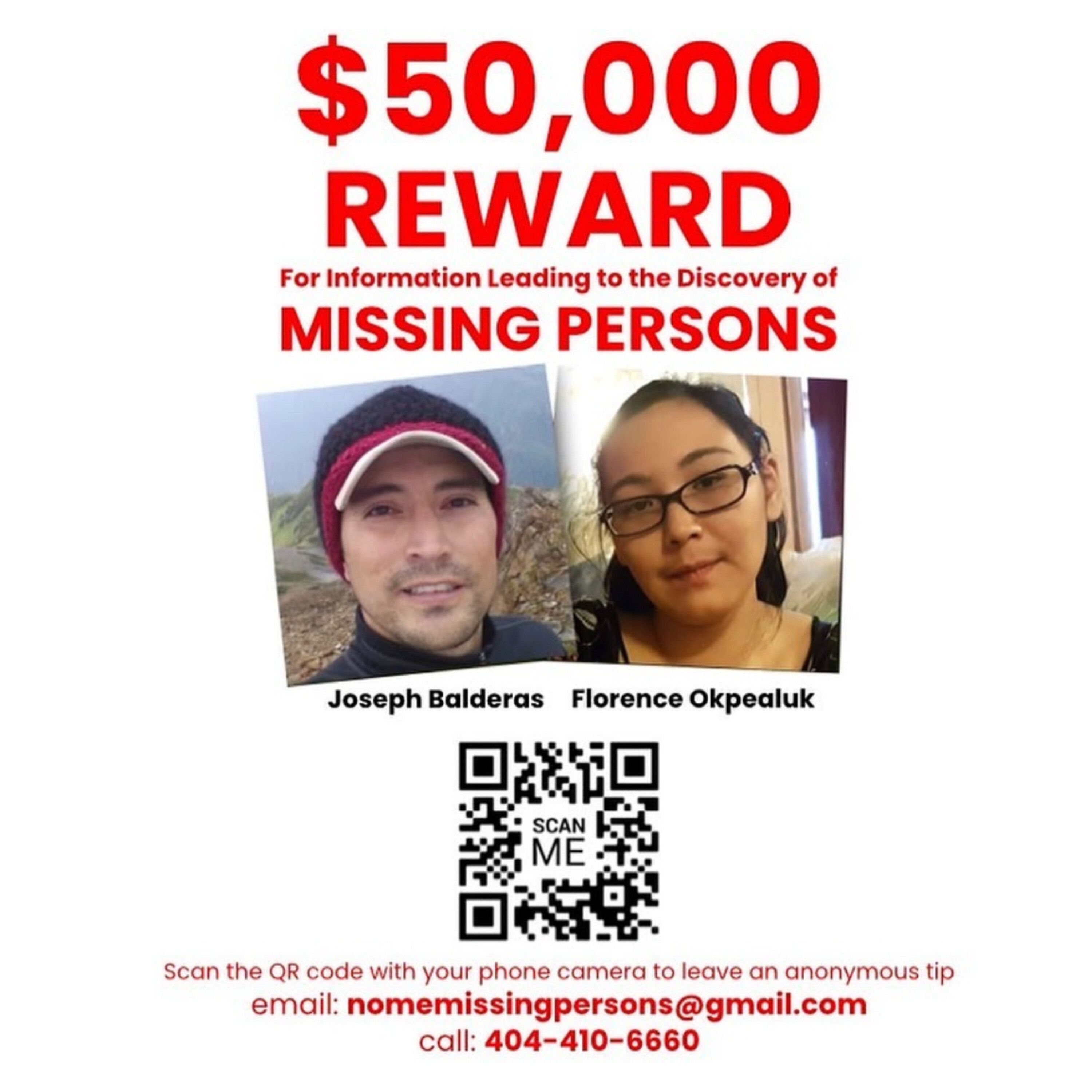
Something Was Wrong
S21 Ep19: Searching for Florence Okpealuk and Joseph Balderas with Payne Lindsey of Up and Vanished
00:53:26
Loading summary
Transcript100 lines
- [00:00]
Tiffany Reese
Wondery subscribers can listen to Something Was Wrong early and ad free right now. Join Wondery in the Wondery app or on Apple Podcasts. Listening to Audible helps our imagination soar. Whether we're listening to stories, motivation, expert advice, any genre we love, we can be inspired to imagine new worlds, possibilities and ways of thinking. Audible has the best selection of audiobooks without exceptionall in one easy app. As an Audible member, I get to choose one title a month to keep from their entire catalog. This month I selected Evil Thoughts, wicked deeds by Dr. Chris Mohandi. Take Audible with you through your week. Listen while doing household chores, going for a walk, commuting, you name it. Audible makes it easy to be inspired and entertained as part of your everyday routine. New members can try audible free for 30 days. Visit audible.comSWW or text SWW to 500500 that's audible. Or text SWW to 500500 this episode is brought to you by Progressive. Most of you aren't just listening right now. You're driving, cleaning and even exercising. But what if you could be saving money by switching to Progressive? Drivers who save by switching save nearly $750 on average and auto customers qualify for an average of 7 discounts multitask right now quote today@progressive.com progressive casualty insurance company and affiliates national average 12 month savings of $744 by new customers surveyed who saved with Progressive between June 2022 and May 2023. Potential savings will vary. Discounts not available in all states and situations. Something Was Wrong is intended for mature audiences as it discusses topics that can be upsetting such as emotional, physical and sexual violence, rape and murder. Content warnings for each episode and confidential resources for survivors can be found in the episode notes. Some Survivor names have been changed for anonymity purposes. Pseudonyms are given to minors in these stories for their privacy and protection. Testimony shared by guests of the show is their own and does not necessarily reflect the views of myself, Broken Cycle Media or Wondery. The podcast and any linked materials should not be construed as medical advice, nor is the information a substitute for professional medical expertise or treatment. Thank you so much for listening.
- [02:44]
Payne Lindsey
You think you know me?
- [02:46]
Tiffany Reese
You don't know me well at all.
- [03:22]
Payne Lindsey
I am super excited to welcome Pain Lindsey to our show this week. I have been a longtime follower of your work Payne since 2016 when you launched, which is crazy to me that it's been that long. The world was a different place then. You referenced that going into the fourth season that you're coming into this season Eight years later, right?
- [03:43]
Dr. Chris Mohandi
I think so. I feel old when you say that.
- [03:46]
Payne Lindsey
I know. It's like me having a 15 year old now. I'm like, I can't hide my age now.
- [03:50]
Dr. Chris Mohandi
Yeah, it is what it is.
- [03:51]
Payne Lindsey
Yes, it is what it is. What I loved about your style of what I classify as like, audio documentaries is that it really brings people alongside you in the journey. And you have such a natural ability for your writing, really lends to it, and you're very likable, easy to follow. You break it down in a way that's just really approachable. And I think that it makes even the most brand new person to these sorts of investigations feel like they might be able to help in some way. Is that a active choice that you made from the beginning to like bring listeners along your journey?
- [04:29]
Dr. Chris Mohandi
I think I just naturally started doing it that way because in August 2016, which is forever ago, as we know, I really only knew of a true crime podcast in the narrative way, in something like serial. Sarah Koenig did the same thing in her own style. I felt like a fish out of water investigating an unsolved missing person's case. I felt compelled to share that part of it that, hey, I don't know what I'm doing here. This is crazy because I felt that way. I've always written from a first person narrative. My favorite movies have narrators, like an overarching narrator in some way. I just like that style of storytelling. And I've always made up and Vanish and every other podcast I've made into something that I think that I would want to listen to. Not that I want to listen to myself, because I really don't, but in the way of, like, hold my hand a little bit and let me be a fly on the wall to this insane investigation and not feel like I'm so distant from it and gently remind them how real this is and in the best way possible without conjuring up some fake true crime suspense. Show them the stakes and the real life part of this, whether that's insight into my own experience or everyone else's. If we show that across the board, it can feel like a real thing. And it should, because they're real people and they're real problems.
- [06:04]
Payne Lindsey
Yeah, absolutely. Leading up to 2016, what were you doing in life? Like, what sort of led you on this path and made you get into this kind of work?
- [06:13]
Dr. Chris Mohandi
It was definitely a, like, fuck it decision. Where I had been doing music videos for years, since I was a kid, I was always writing, creating, singing, dancing, I was that kid as I grew up. In my 20s, I was in a band and I was rapping. 2000s rap, white boy. Silly, stupid shit.
- [06:38]
Payne Lindsey
It's honestly pretty good, I'm not gonna lie.
- [06:41]
Dr. Chris Mohandi
Well, thank you. We had a lot of fun and we were doing videos on YouTube. It started out with parody songs, and then we did original music. And I got burnt out on being the starving artist and decided to take my video skills more seriously. So I made my own company and started directing music videos professionally for other artists, which it did not start out that way. I say professionally eventually, because I think my first client was for like 300 bucks, and it was some random rapper from Craigslist. I sort of hit pause on my career as an artist in the sense of trying to be a music artist for the rest of my life. Not that I would never do that again or explore that. I was trying to make better career choices. And I was tired of being broke, so I was doing that.
- [07:34]
Payne Lindsey
Can I use this creativity for others to have at least something to count on, so to speak?
- [07:39]
Dr. Chris Mohandi
Yeah. So at that point where I'd done that for years now, and I was, I think, 27, 28, I wasn't fulfilled doing what I was doing. I felt like I was just making content for everyone else and not really reaping the benefits of it and always chasing a check. And I wanted to go back to my childhood dreams of making my own content and being sustainable doing that, which is really, like, all I've ever really wanted was to be able to create and then pay my bills with that. I've always been into true crime, like Forensic Files, Unsolved Mysteries. As a casual viewer, that was always my sham, always into suspense stories, True Detective, that kind of stuff's my favorite. And I was just sitting in my house one day, I was like, how does one become the person who does that? Like the guy who made the jinx, did he just decide that I'm going to go do an investigative documentary? It was amazing to me that I was so gripped by a documentary in that way, and they had a real influence on the case. And then I binged serial and I was like, okay, what if I set out to do a documentary on a cold case that I pick and find in my home state, and then the podcast will be like a proof of concept for something bigger. At the time, I didn't even know that you could monetize a podcast or that would even be a business at all. So that's really how it started, was just me jumping headfirst in and trying to solve a missing person's case in South Georgia. Terra Grinstead, Oscilla, Georgia. And making a podcast up and vanished around that. And in my mind at the time, it was really a stepping stone or the first step into doing something bigger than that. And then it became what it is today through the months and years.
- [09:31]
Payne Lindsey
You ended up having a huge role in that case. Where is that case now?
- [09:37]
Dr. Chris Mohandi
So after years of just pushing it back because the government is good at doing that, Ryan Duke, who was originally charged with Tara Grinstead's murder, he was found not guilty of the murder. That was really because the state did pretty much fucking nothing during the five years that they had to build a strong case. There was a lot of animosity, I think, towards the podcast in a way that maybe even clouded their objective goal.
- [10:10]
Payne Lindsey
Because everybody was like, what's a fucking podcast? Still in 2016?
- [10:14]
Dr. Chris Mohandi
Totally. Yes. I myself was like, I don't know how to answer that. Like, I don't know either. But during season one, we unearthed a lot of new information, even, like, town secret type stuff. And people, not really the local law enforcement, but, like, at a state level, the Georgia Bureau of Investigation, were at odds because they didn't want to share anything. And they seemed to be getting more active all of a sudden because of the podcast. That was cool to me. That was progress or momentum. I wasn't really setting out to take claim or ownership of solving anything. I just wanted to make some sort of difference. They eventually made two arrests, and essentially they just kind of bungled the whole thing and turned a blind eye to some strong information that was definitely out there from the podcast. I think that ultimately hurt them because his defense did not do that. They brought in everything and was able to paint a picture that at least made more sense to the jury.
- [11:13]
Payne Lindsey
Has anyone been convicted of Tara's murder?
- [11:16]
Dr. Chris Mohandi
No. It's a shame.
- [11:18]
Payne Lindsey
It's hard to do this work, working on cases and putting your absolute all into it. And then still, at the end of the day, we're at the mercy of this system, which is, unfortunately, in my opinion, a very broken system. And something that stood out to me that you said in season four is, I'm paraphrasing, but it's like, I can do my job. I can present these people with the facts of this case. I can present them with all the interviews I've collected, all the information I've collected, and I can't make them do their job. And I feel like that's the wall that I run into all the time is I can literally create 70 page docs, pass them off to detectives with every interview, like gatekeeping, nothing, absolutely nothing, and still have no movement on a case. How do you navigate that frustration as you're going through these cases that are so cold and often neglected?
- [12:07]
Dr. Chris Mohandi
I honestly just go into every case knowing that and thinking that if I'm already there, it's probably because of some version of that.
- [12:18]
Payne Lindsey
That's true. That's why people are reaching out to us, because they're already desperate and it's already gone cold, so to speak.
- [12:24]
Dr. Chris Mohandi
I'm going in assuming that they're not going to cooperate with me, not that I'm not going to try. I always hope that there's some sort of decent relationship or a relationship at all with me and us who are covering a missing person's case. But a majority of the time that just does not happen. I think there's a lot of ego involved sometimes, and it's not their desire to talk about a case they weren't able to solve. I think a lot of people are just offended by someone else coming in there. And really it's not a competition to us. And I think if professionals view it that way, it speaks volumes as to what the hell their problem is in the first place.
- [13:03]
Payne Lindsey
Something that I hear a lot from, whether it be police or FBI agents that I reach out to, is they claim, like, a lack of resources, a lack of staff. And I know that's something that you often run into on your cases. How do you think we would address that problem? Is it a matter of staffing? Is it a matter of training?
- [13:21]
Dr. Chris Mohandi
It's such a vague thing to say, like lack of resources. What do you mean? Like, what do you need to get paid more to have more officers, to have a detective, a cold case unit? I think it just depends on specifically where and what. But I think it just takes people who care, like the right people, not the people with egos who became a cop for the wrong reasons. I've talked to some good cops and some bad cops, and all the good ones acknowledge that there's a lot of shitty ones. And I've talked to some good cops who really care and will go out of their way to assure the family that something's being done or try new things and not be as. As Gatekeepy or stuck in the 1960s or something like pre Internet on how things work. I have a little bit of hope, but, like, in a place like Nome, Alaska, they're not there yet.
- [14:15]
Payne Lindsey
I was recently following up on this car accident that happened related to season 20, when I reached out to the police, they were like, honey, we have one cop car. Basically, like, your expectations are insane that you expect us to have a functioning website or that we actually have an officer that's hired to do that job. Your assumption is insane. The more variety of states and things that I look into, the more you see the difference. In season four, as well as season three, you focus on the missing appearance of multiple indigenous women. Can you speak to the importance of those types of cases and how do you select the cases that you decide to move forward on?
- [14:54]
Dr. Chris Mohandi
Mmiw, missing and murdered indigenous women, it's been a problem for years, and it's been largely under the radar. In the past couple of years, it's picked up more national attention in general. Hey, this is happening. But for a long time, generations, they've been overlooked. And this was just brought to my attention over the years of doing True Crime podcast. I mean, that's how I learned even the term MMIW is because people would leave it in a comment or they would say, hey, please go look at this case. It's a missing and murdered indigenous person, and they're not being looked into. And I'm like, okay, that's a problem. I made a conscious decision to use up and Vanished, specifically the platform as a tool in the ways that it's worked in the past in getting new information. If I could apply that in any way to move the needle on a case that would otherwise normally get less coverage, then it feels like I can make some sort of difference. Even if it's just mainstream platforming the case and putting it before other people's eyes and showing the community and family and friends and other people that there are people out there who care and that this is a problem. For the last two seasons, that's been a theme because it is a problem. And a lot of these cases go unnoticed or unsolved strictly because they're indigenous. And there's been a long history of that. So I consciously was like, the next season needs to be a story about a victim who would otherwise not get as much coverage. And that's how I can immediately start helping in some way.
- [16:53]
Tiffany Reese
If you've ever worried about the safety of your home and family, there's no better time to act. Right now. You can get 60% off your new Simplisafe security system, their best deal of the year. SimpliSafe is the home security system I trust. I've been using it for years and I love the peace of mind it brings knowing my home is protected 24. 7 my listeners can get 60% off today just by visiting simplisafe.comSWW I love that Simplisafe is a new way to protect our homes that stops intruders before they break in. Old school systems take action once someone is already inside your home and it's too late. But SimpliSafe's Active Guard Outdoor Protection changes the game by preventing crime before it even happens. If someone's lurking around or acting suspiciously, those agents see them in real time, talk to them directly, set off your spotlights, and even call the police before they've had a chance to break in. Plus, there are no long term contracts, no cancellation fees, and it's about a dollar a day for all of that protection. Simplisafe is offering my listeners exclusive early access to their Black Friday sale this week only. You can get 60% off any new system with the Select Professional Monitoring Plan. This is their best offer of the year. Head to simplisafe.com SWW that's simplisafe.com SWW there's no safe like Simplisafe. Spark something Uncommon this Holiday with just the right gift from Uncommon Goods, the busy holiday season has already started. I can't believe it. Whenever I'm looking for a one of a kind gift, I always head to Uncommon Goods. What I love about Uncommon Goods is they scour the globe and curate the most beautiful, original, handmade, absolutely remarkable things. They have something unique for all the hobbyists in your life, like a pickleball paddle snack tray, choose your own dog breed, salt and pepper shakers or a hand painted floral flap candle. Many of their handcrafted products are made in small batches, so shop now before they sell out this holiday season. And with every purchase you make at Uncommon Goods, they give back a dollar to a nonprofit partner of your choice. They've donated more than $3 million to date. To get 15% off your next gift, go to UncommonGoods.comSWW that's UncommonGoods.comSWW for 15% off. Don't miss out on this limited time offer. Uncommon Goods were all out of the ordinary.
- [19:37]
Payne Lindsey
That's really what I appreciated hearing that in season four and why I wanted to have you on the show. Especially as listeners, you feel compelled. You want to try to help. Is there a way for listeners aside taking in the content and learning about the details, is there things that they could be doing to help support your efforts or help support the families I.
- [19:58]
Dr. Chris Mohandi
Think that just awareness in general is number one. It's the easiest thing that anyone can do is spread awareness of the issue. In certain cases, like season four, a lot of people are listening in the actual town, and there's people who are involved in the case and are friends or family of persons of interest, and they've heard things. And when they start to hear people they know or themselves on the podcast, I would like to encourage more people to come forward. And I think that it starts to create this sort of shift in momentum, tilting the scales where you have all these people talking, who's not talking. That's just kind of like a natural human observation that I don't even have to assert. People can just pick that up on their own. You'd be surprised. Sometimes people from far away can connect the dot that we couldn't or the police couldn't, or offer a new perspective or have some little piece of information that breaks something wide open. So in a real way, up in Vanish, especially this season, that's actively going on, if you're a listener, especially if you're someone who is closer to the case or in Alaska, you can most certainly help because you're either from there or have resources or people that you know and information that could be helpful, no matter how close to it it is or not.
- [21:24]
Payne Lindsey
What kind of things are you doing to keep yourself safe when you're working on a case like this?
- [21:29]
Dr. Chris Mohandi
Really, we just try to think 10 steps ahead, being ahead of the curve. We worked on both of these cases for almost a year before we did anything, before we told anybody, before we made any sort of announcement. So we were in Gnome multiple times, where people didn't really know who we were unless we told them why we were there. And we had a general cover story for why we were there for people that we didn't want to know. I think we said we were doing some sort of like National Geographic thing, like a documentary on the wilderness or something. We did stand out a little bit. And we didn't want to say outright to at least certain people that we were there on behalf of these families trying to solve these missing persons cases because we didn't know who to trust. We didn't want that cat out of the bag. And if our goal was to actually solve this, which it is, that would not be of any benefit to us. But eventually it comes out and people do know, and now they really know. And from Gnome, at least they're on the lookout for that, or they're aware of that and they have an opinion about that. My friend Cooper had first pointed out Florence's case, and she went missing in 2020. For weeks I was looking into it and just reading what I could online, which there wasn't very much. And from what I could find, it just looked like it was very suspicious. And she did not just walk off on her own or something. It looked like there was probably foul play involved. They weren't getting a proper investigation. At the same time, there was another unsolved missing person's case, Joseph Balderas. And in my inbox, I had an email from both families kind of near the same time from years ago. And they had reached out, basically knowing what up in Vanish was and having listened to it and asking if we would cover their case in the podcast. And it's the first time that's ever happened in that way for an official season of the show, where they knew what this was and reached out and said, hey, will you cover my family's story? Immediately, we were able to establish a strong relationship with the families and friends and get some good insight from the community itself who has been experiencing the lack of investigating. We wanted to raise the stakes a little bit, too. If we're going to go to Nome, Alaska, we weren't just going to try to solve one case. There's 3,000 people here. It would be odd, I think, to neglect one of those cases. It's such a small place where the same names start to resurface because, you know, it's the same police department, it's the same court system, it's the same person at the bar. So eventually the lines kind of started blurring in our own internal investigation, which will become a lot more apparent down the line as you see these cases kind of merging together, not in the sense of same persons of interest or same things that happen to them, but the same problems affecting different people, the.
- [24:38]
Payne Lindsey
Same patterns in the case, and also, like, how they're investigated and how word travels. I was, like, puffing on my inhaler, listening to the episode where you go to the bar as your fake Facebook self with your buddy Cooper, who was also, I think, using a pseudonym to meet up with Oregon John. First of all, Oregon John's voice, the second I heard it, my skin literally crawled. There's just an essence to what I believe psychopaths feel like when you talk to them. And it was definitely giving that for me. And then Kim sending you completely insane videos of him, like, shooting guns and stuff. You're just like, this guy is a live wire to Say the least. How did you stay calm in that conversation? Were you internally losing it? Because you did a really good job of being like, fuck no, man.
- [25:22]
Dr. Chris Mohandi
I'm not with them to date. To me, it feels like the craziest thing I've ever done, catfish a suspect in a murder case. There was a lot of self doubt and anxiety about whether or not he really believed my story, that I was not Payne Lindsay and I was this other guy. I was really concerned about that. But over time, I just became convinced that I really, truly think that he thinks I'm this other guy. And for whatever reason, he definitely just wants to talk to a stranger or at least is willing to. As crazy as it sounds, maybe I should keep proceeding as this fake guy, which was not like the plan in the first place, per se. It was more so to figure out where he was. But we just made an entire backstory and there was two of us. I, as much as I could in the moment, wore my hat low, we're wearing winter gear, and it's a darker bar. If he had googled me or something, maybe it would take a minute. Also, like, we knew that there was a chance that in the first 10 seconds he could be like, you're paying Lindsay, and the whole thing's over. So we had a plan for every possible outcome. We did not know what to expect at all, but we got there probably like three hours before he was supposed to meet us and set up and talked it over, every detail that we needed to match and creative ways to steer the conversation back to Gnome and the case or even get there at all in the first place without seeming suspicious. Because that is weird when you hear in the podcast, I think it ends up being like 23 minutes or so. And there's some more that we didn't put in there, but it was a two and a half hour conversation we had. And obviously we did not talk about the case for two and a half hours because that's not what he was even there meeting about. We were completely floored at just how open he was talking the way he did. And he brought up Gnome on his own within the first five minutes. He brought up Gnome. That was our entry point, right? Oh, no. Oh yeah. We know where Gnome is and we start talking about it and then we can get to why'd you leave Nome? He starts telling us this story about Florence and people accusing him of murdering her. And I think in an attempt to change the subject, he says some really crazy stuff about how he knows that she was murdered. By some other guy and she's put in this barrel. And very specific things that he should not be saying if they're not true at all in the moment. He does not think he's being recorded. Just for clarity. Like in the state of Alaska, you're allowed to do that. It's a one party state. I'm not afraid to go talk as me to somebody. But I debated this one for a while and I just knew in my gut that if I said who I was for real, that he would say fuck off. And that's all we get and we wouldn't learn anything.
- [28:22]
Payne Lindsey
This was your one chance to do it.
- [28:24]
Dr. Chris Mohandi
Yes. So like we became convinced. I didn't know what was going to happen at all, but we all left that bar. Like, holy shit, man.
- [28:33]
Payne Lindsey
You had to be fucking looking at each other when you like, just. Are you kidding me? Did that just happen? Like the fact that he brought it up. Every time he would say something, I would get goosebumps all over my arms.
- [28:43]
Dr. Chris Mohandi
That moment I will never forget. Because he's kind of got a weird dead eye stare a little bit sometimes.
- [28:49]
Tiffany Reese
Yeah.
- [28:50]
Payne Lindsey
Where they just like study you when they're talking.
- [28:52]
Dr. Chris Mohandi
Yeah. Where you can't tell what they're thinking. It just feels weird. He was looking at me and he brings up that I thought that you might be this podcast guy. And for a brief moment there I thought, holy shit, he knows who I am. This is all like microseconds. And I'm like, okay, react the exact opposite now. And I go, what? Like kind of playing dumb? And I'm like, fuck that. I just kind of go into complete 180hard the other direction with no hesitation. Then he brings it up again and I think on the second time, he had become convinced within the hour or so that I wasn't that guy. And that's when I knew. Holy shit. Okay. He actually does not know who I am and does not think that podcast guy is me. And the only reason he doesn't is because he simply didn't Google it. Someone had tipped him off and told him about me and this podcast and he just didn't take the time to type in my name or the show. And if he had anytime in the previous 24 hours, he would have known who I was. But he didn't.
- [29:56]
Payne Lindsey
Who had her daughter when Flo went missing that night?
- [30:00]
Dr. Chris Mohandi
That night, I believe it was her ex who's been talked to and pretty much cleared for the most part, but I believe that that's who had her daughter.
- [30:12]
Payne Lindsey
Yeah, I Was trying to put myself in her shoes. She's a 33 year old mom, she's going out for a weekend. It was just her birthday, so this was probably like her big celebration weekend. So I was just thinking the person who always knows where I am if I'm not with my kids is the person who has my kids. I was just curious if he had any insight of where she was going and whatnot or was able to confirm that. Yeah. Her plan was to be at West Beach.
- [30:35]
Dr. Chris Mohandi
Yeah, I mean, I think it wasn't really a plan, but as they pieced it together by talking to people in her last movements, it was very clear that that's where she went to this west beach of Nome where a bunch of gold miners and random travelers like to set up camp and pretty much party. So she was going through like a troubled time in the moment and she was out there with some objectively sketchier individuals. Then she disappeared. That's the last she was seen. And her stuff was found in and outside of this guy's tent, the guy that I catfished. And he has no good story as to why that is the case. As far as we know, no one's seen her since then.
- [31:19]
Payne Lindsey
Do you know if at any time, if the police checked shelters, either domestic violence shelters or shelters for the unhoused, for either Flo or Joseph?
- [31:29]
Dr. Chris Mohandi
Nome is so small that there would only be one place and they're not there.
- [31:36]
Payne Lindsey
And if they were around, people would see them.
- [31:38]
Dr. Chris Mohandi
Yes. It's not a place that unless you get super lost in the wilderness and fall down a hole or something, which people like to theorize may have happened to Joseph. Despite all the suspicious circumstances, there's not anywhere to hide in Nome. There isn't that many places to go look for somebody.
- [31:59]
Payne Lindsey
So when did you first physically land in Nome? You mentioned you guys worked on this for about a year before you went public with any information. I think that's important. A lot of people might not realize, us creators, how much time we're putting in before we go public. Because like you said, there is sort of that magic invisibility cloak that you have until you start taking things public and then it's like your job is twice as hard. Now.
- [32:29]
Unknown
Creating really great retail experiences is tough, Especially with multiple stores, teams of staff, fulfillment centers, separate workflows. It's a lot. But with Shopify Point of Sale, you can do it all without complexity. Shopify's Point of Sale system is a unified command center for your retail business. It brings together in store and online operations even across 1000 locations. And let's face it, acquiring new customers is expensive. With Shopify pos, you can keep existing shoppers coming back to your stores with consistent tailored experiences and first party data that give marketing teams a competitive edge. Want more? Check out@shopify.com wondery all lowercase and learn how to create the best retail experiences without complexity. Shopify.com Wondery Ryan Reynolds here from Mint.
- [33:19]
Dr. Chris Mohandi
Mobile with the price of just about everything going up during inflation, we thought we'd bring our prices down. So to help us, we brought in a reverse auctioneer which is apparently a thing Mint Mobile Unlimited Premium Wireless 30 30B to get 30 better get 202020 better get 2020 better get 15151515 just 15 bucks a month so give it a try@mintmobile.com Switch $45 upfront payment equivalent to $15 per month New customers on.
- [33:44]
Payne Lindsey
First 3 month plan only Taxes and.
- [33:46]
Dr. Chris Mohandi
Fees Extra speed slower above 40G Detail I want to say I first landed in Gnome late 22 or early 23 and we really made a serious effort to be as incognito as possible just about what we were doing because we knew that it would eventually impact the case in some way and that once the cat's out of the bag, we can't take that same approach anymore. So preserving that for as long as we could, and we did. For a majority of this season it's been that. Until obviously when the podcast came out. And then once people realized that we were actually for real covering Joseph's case too, and it wasn't a tangential story, it changed everything forever because now the entire town knows that the two unsolved cases here of missing persons are being covered by this podcast and these people. And everyone's talking and we're hearing everyone inside the story that people had never heard before. Interviews from people eight years ago that no one even knew occurred and they're sitting back and piecing together their own version of events. That's when people start reaching out to us and say, hey, having known this now, this doesn't make sense. We're able to kind of, in a way, thanks to the private investigators in Joseph's case and the family who spearheaded the whole thing. Look at what was transpiring eight years ago and what people were saying that no one has ever heard, even them, and compare it to what they're saying now. I would not remember what I said eight years ago, especially if I was lying about something and I was not too sure about it so there's a lot of big, big holes from people who are related to each other and in weird places in this case. And it's, like, irrefutably weird. It would be crazier if he got eaten by a bear. And the bear ate his cell phone and his boots and his backpack, too, if that's what happened, which I don't believe. That's like getting struck by lightning twice or three times in your life. And so at what point are you like, okay, why are these people lying? Because it's not just misremembering. It's not just, like, a little detail here and there. It's big, big things that when you zoom out, you go, oh, it looks like they're painting a story here and all these things can't be true. That's what we're leaning on, is answering that question and less of the assertion of involvement. More like, why did you lie in the first place? And if you lied to the police, which we have proof that some of y'all did, the police should be doing something about that. When I watched Forensic Files back in the day, if you lie to the cops, they take you to the station and they, like, put you in the room. Good cop, bad cop. One comes out with a Diet Coke and the other one's grilling you for two hours.
- [36:49]
Payne Lindsey
Why do you think the police gave you the runaround? Maybe because they didn't do their job. But are there any other reasons?
- [36:57]
Dr. Chris Mohandi
My gut instinct is that that case file is like 200 characters of words. I don't have any proof of them really legitimately interviewing anyone in a real, real way. So I think that the case file, if there even is a real case file in that way, is so lackluster and so nothing burger that they're going to hold on to. This is an open investigation. That's really why we don't want to show it to you. Because not only are we not doing anything now, we didn't then either.
- [37:32]
Payne Lindsey
What was also so valuable in the season is hearing those recordings that you mentioned between the different PIs and Christine and her family. And what's obvious as you're hearing those interviews back is that these stories aren't adding up. And there's different perspectives on were Christine and Joseph having more than a friendship. You're also wanting to represent Megan, his fiance, and be respectful to the family. How did you navigate those pieces?
- [38:01]
Dr. Chris Mohandi
It's really difficult because you have to really look at it objectively and remember what you're doing this for and what the goal is. And not to fall down the rabbit hole of trying to make things fit. Or just because you feel like somebody did something doesn't mean that they did. I can remember back, like, listening to some of the tape a year and a half ago in the way that I hear it now is so different. There are things that I would have never picked up on as odd just because of how much we've learned in the process since then. And so in terms of the podcast this season, we've been unfolding it to you in the way that we learned it, because that's how you, as a listener would be able to also point out different oddities, different strange anomalies, or plot holes in their story by hearing what's said then and now and what doesn't fit and how that might be suspicious. I think that in both Joseph and Florence's case, they died, and people know that they died or they died in front of people and people hid that. I don't know if they were outright murders or if they were accidents or if they were something even more malicious, but I think that people knew they died and felt they were close enough to this or responsible enough to go out of their way to hide the truth. And that's what the families firmly believe. It's not like any other theory has been proven to be true or more true. You could sit there and say, hey, Florence walked off into the ocean. Well, that would be weird. And why didn't she wash back up? That's a theory, sure, and maybe that did happen, but there's no proof of that. There's no evidence to support it. Or there's definitely less evidence supporting that. Where does this other guy fit into that whole picture? At what point do they go beyond being coincidences or taken seriously? These things don't add up. And when things don't add up, you got to re comb it and say, okay, why is that? And sometimes weird shit does happen, but when it happens in a pattern and it's still an unsolved case, you got to start looking at what's right in your face and call it for what it is to at least get to the bottom of that.
- [40:32]
Payne Lindsey
One thing that also came up a lot as suggestions in both Florence and Joseph's cases was bear attacks. You did a great job including those statistics, but it made me curious, so I wanted to do some independent research as well. And the statistics really would point to she's more likely to have been harmed in, like, an ATV accident that's so much more common in the state of Alaska, even a dog attack is much more common than a bear attack. Do you think some of that is almost like lore in small towns or spread so frequently that people think they happen more often than they actually do?
- [41:11]
Dr. Chris Mohandi
I think in terms of the police ever making that kind of assertion is more of a. This is the vaguest conclusion we can come to that you can't prove otherwise unless you find a body. It's almost like saying the boogeyman got him in the woods. Okay, A bear got him in the woods. Okay. But there's no signs of that. How far could he have theoretically walked from his truck? Reasonably like that's got to be under like a five mile radius. I don't know. How far could he have possibly gone? And they searched that place up and down. Biggest search they've ever done in that city. And they found nothing. That in itself is just really weird. The way his truck was parked is weird. Those facts alone don't support a bear attack. You can't rule that out because you don't know where he is. But when you combine that with everything else and all the other people who are lying about where they were and trying to create alibis for different days and nights, and digging deeper and finding out these different relationship dynamics that Joseph had with people, there's more questions. And if they really cared about him in the way that they showed themselves to eight years ago, then where are they now?
- [42:28]
Payne Lindsey
Yeah. One thing I found really compelling was that you guys literally put up flyers in Gnome. You had a tip line, you had a reward. And then there was sort of this robot woman who came into the picture who started essentially like feeding you information. And in, I believe, the latest episode, episode 15, we hear the robot voice melt and her voice sort of becomes this young woman's voice. Because of the age we live in with AI and the Internet and how insane and unhinged people can be. How do you vet those sorts of claims and how serious do you take them?
- [43:03]
Dr. Chris Mohandi
To get to any truth or fact, you're going to go through a lot of bullshit. So you got to be on the lookout for false information, misinformation, not fall for the crazy rumor mill town shit.
- [43:18]
Payne Lindsey
Yeah. And most unreliable people will tell you they're unreliable in the conversations that I have with them, without even speaking to the ev, you can start to track that. Like the things that this person says are not aligning with reality.
- [43:30]
Dr. Chris Mohandi
And the facts I have, yeah, that's a telltale. But if someone's telling potentially the truth or there's some meat on the bone. It's usually because they say something that only they would know. We haven't ever said that. How do you know that detail? And so now we're listening in terms of the creepy AI voice that you've heard thus far. I'll say this. It's more than one person. It's actually like a lot of people.
- [43:56]
Payne Lindsey
Oh, shit. It's a whole squad of robots.
- [44:00]
Dr. Chris Mohandi
Yes.
- [44:01]
Payne Lindsey
Have you been able to fact check some of what they're saying and it seems credible?
- [44:05]
Dr. Chris Mohandi
Absolutely. Yeah. I've heard the same story from different people who were both in the same place, both having no knowledge of the other. I have Snapchat data proving where people were. I have video proof of people being places with timestamps and exif data on the photos of them being where they said they're not. To pretty much everyone, except for anyone who would be hiding something or lying about something, they're just now realizing that what they witnessed at one point in time was something that mattered because it was just a normal day or night for them. But then in hindsight, when you know that this has been happening behind the scenes when you were there eight years ago, you're going, Holy shit, that dot connects to this. It meant nothing then because there was no context. But that's what's been happening, is that that summer, not everyone who was there that summer is still there. At least 60% of the information that we've been getting stuff from have been people who were there that summer who that was their only time there. And they have no ties to it anymore. They just happen to be around and close to some of the people who come up in this story.
- [45:24]
Payne Lindsey
Wow. Something that's come up more recently is this Alaska Airlines threat. Can you break that down for me? Because I want to make sure I'm understanding this correctly. Essentially, there's one plane in and one plane out, right?
- [45:38]
Dr. Chris Mohandi
Yeah. If you want to book a flight to Nome, you're going to go through Anchorage first, and then you'll fly from Anchorage to Nome via Alaska Airlines. That's the main airline to all the small towns in Alaska. Because Alaska is enormous and there are tons of small airports and they have all these different flights to different airports. There's other airlines, but in terms of no Alaska, the main one that runs from Anchorage to Nome, which is the only one that I can take is Alaska Airlines. About two or three weeks ago, I had a flight booked to go to Nome. I had one night in my sleep, decided on a Whim that I was going to pop up in Nome and ask certain people some questions while the podcast was coming out. And I was banking on that element of surprise. There were some people that I wanted to approach a few days before my scheduled flight. Like, I canceled everything. And there was a series of at least three other flights that I canceled, but I was just being stupid and I literally forgot to cancel my last flight, which was from Anchorage to Nome, and I never checked in. I've flown enough, I know how it works on the consumer side, enough to know that if I didn't tell anybody this and I didn't check in, I'm not going to appear on your app as like, P. Lindsey in some upgrade list. They're not calling my name out at the desk. I know that those things aren't how somebody knew I was coming to know it had to be from someone who can look that up the day of the flight. It was as if people knew the flight I was going to be on specifically. I decided because they were so certain that I was coming, that I'm just going to pretend like I was there. So if anyone was trying to keep tabs on me, at least for a moment, they'd think, holy shit, how do you get past this? Or simultaneously try to figure out, is there anything to this? Am I reading into it too much? And turns out I wasn't benign or not. Multiple people had looked up to see if I was coming, and without any hint that I was going to be there, I can only assume that somebody was monitoring it, checking frequently. My name. I don't work for Alaska Airlines. I can't go into their computer system. I can't prove who did what. Only they can do that with some form of internal investigation. And obviously we don't feel safe flying commercially via Alaska Airlines to Nome anytime soon if our information can't remain private. And that's a major safety concern when in a town that small, we're basically here to investigate two unsolved murders. It could be a vacation. And I don't want you to know where I am.
- [48:40]
Payne Lindsey
I don't even post my location until I leave somewhere for sure.
- [48:43]
Dr. Chris Mohandi
Yeah, I don't have to make any big claims here other than I don't like that. I don't want you to know where I am at all times. And I think everyone might feel that way. So nefarious or not or a combination of all the above, I'd like to know where that came from. And I'd more so like to know that it won't happen again. Obviously, I'm not going to take their airline anymore. And we'll find other creative ways to get there.
- [49:08]
Payne Lindsey
Are there other routes that people take in?
- [49:11]
Dr. Chris Mohandi
You can get there by boat. But now it would have to be something that we're really creative on, who we're telling who, what we cannot be. The names, the real names of ourselves on that thing, which we know some people who could help us with that, but that would have to be what it is.
- [49:29]
Payne Lindsey
So essentially, they may have looked at the flight manifest and saw that you were supposed to be on this flight.
- [49:35]
Dr. Chris Mohandi
Yeah. Someone who works at the airport and or airlines who has access to that. I do know that it's federally regulated because of terrorism. It is a federal crime to access and disseminate private information like that. It could have been one person, two people, three. Out of curiosity, whether it was nefarious.
- [49:59]
Payne Lindsey
Or not, you still deserve your privacy.
- [50:01]
Dr. Chris Mohandi
Yeah. And I think that with as many ties to certain individuals who have been aired on this podcast to the airline and could be somebody who could be privy to that information or also have access to it, it just makes it feel even less safe. You don't have to connect a whole bunch of dots for you to understand why we would be uncomfortable or feel like something should be done about it.
- [50:26]
Payne Lindsey
What comes next in this case? How many episodes are you anticipating and where are you at in the investigation?
- [50:34]
Dr. Chris Mohandi
We have one coming out this week, episode 16, and then we have episode 17 coming out next week. Then we're taking another small break and we're going to come back in conclusion with eight more episodes. And just like in the first installment, it was mostly about Florence's case, and then it became about Joseph's case. And then part two has been about Joseph, mostly. The third installment will be both cases more evenly covered. And now that you're caught up on what there is to know, pulling out everything we got in the box and showing it to you, what has it.
- [51:14]
Payne Lindsey
Been like to have that support from Florence's family and from Joseph's family? Have they listened to the podcast?
- [51:22]
Dr. Chris Mohandi
I can't imagine what it would be like to hear the podcast. I know some of them listen to it. Some of them choose not to, which I also understand. Some people have listened to certain parts because they were told by other family or friends that they should hear this part. But I think that overall, it's felt to me and them too, I believe, like a sense of camaraderie. That feels pretty nice in the sense of us collaborating to get Answers and.
- [51:55]
Payne Lindsey
Attention for their loved one.
- [51:56]
Dr. Chris Mohandi
Yeah. And other people care. And they can see that. People have done beautiful, like oil paintings of Joseph and Florence and stuff like that to the family. Like, that's amazing. They're not forgotten. I'm sure it's simultaneously the hardest thing on earth to relive it and go through all that and for it to be spotlighted again. And unfortunately, that's kind of what has to happen to solve it. Unless the police do something different. But I think for the most part, what they've believed happened or didn't happen to their loved ones has been more and more validated. That matters more than people consider it does. Sometimes I can't arrest anybody. But knowing that they weren't crazy and that that person did say this or that, my own objective investigation found what they thought was weird too. That validation is also something that's helpful in just moving forward in some way and not being alone on an island and the only one thinking and talking this way about it.
- [53:09]
Payne Lindsey
I'm sure it would instill hope. More eyes is always better, especially on missing persons cases. And so I imagine that for them it would bring such a sense of comfort that somebody's actually working this, especially after waiting so long. What is one of the more common misconceptions that people have about missing persons cases?
- [53:31]
Dr. Chris Mohandi
This is just my opinion, but I feel like most people never go missing. Missing means they're dead. Now. There are cases where people have been found and they were alive or they were kidnapped or they ran away and started a whole new life. But when years go by, a lot of those things become less likely. And I tend to believe that a majority of year old unsolved missing persons cases, they're basically just unsolved homicides without a body, Especially if the evidence points to that circumstantially.
- [54:05]
Payne Lindsey
It's very infrequent that somebody would actually have a mental break or choose to vanish themselves. Essentially.
- [54:15]
Dr. Chris Mohandi
Yeah. Choose to go missing on their own account in accord and still be alive and well somewhere. That is, in my opinion, the lowest on the list. It's not the most common thing that I think is a common misconception. It's too broad of a look at it. You got to zoom in some more and say, okay, they're not hiding somewhere. Maybe someone hid them somewhere.
- [54:40]
Payne Lindsey
What is the most common misconception that people have about you?
- [54:44]
Dr. Chris Mohandi
I think there's a lot of misconceptions. There's a level of staying objective that I do. I think because of the way I Like to tell the story from a first person perspective. I get a lot of people saying shit like, he's always making it about himself. Of course he's going to find a way to bring himself back into it and pat himself on the back. And I'm like, I get that take. It's a bad take because you'd also have to be saying, why do all these other people trust him enough to talk to him? I'm really this sort of silly, goofy, laid back dude 90% of the time when I'm not investigating a unsolved disappearance.
- [55:27]
Payne Lindsey
Well, it's really more about your investigation, which of course you're a part of because you're. You're investigating. So, yeah, it's just one of those things you can never win. That's what I've learned with some people. They're determined to misunderstand you and that's what it is. I relate a lot to your story. Like, I was a creative and really wanting to get more in the work. Listening to up and Vanished was definitely one of those shows that inspired me to get into podcasts because I love documentaries. And if I would have had my way, I would have gone to school, if I could have afforded it to study film and become a director. And so audio was the way I could afford to do the work that I wanted to do. Especially the way you, like, brought people on the journey, the humanness of it, it makes you realize that all jobs are worked by humans, right? I appreciate so much the work that you do, not only as a listener and somebody who has been a fan of yours for a long time, but also just as somebody who's lost a family member to murder. I've always said I'm so grateful for independent journalism and quote murder podcasts or true crime podcasts, because I used to feel seen in that work before I worked in this genre. It brought me comfort to know that other people were giving a shit about people's murdered loved ones. I can relate to those victims and relate to some of the sentiments. Even within season four, I didn't have a missing person, but I could relate so much to the family and their words. I'm happy and thankful that you were able to make time to come on and I certainly appreciate the work that you do and where can we go and support you?
- [56:56]
Dr. Chris Mohandi
Well, thank you for all those kind words. That was very nice of you. I feel the same way about you. You're doing amazing things. It's been awesome to see you grow. And I, for a while didn't even know that you had even listened to up in Vanish and then to learn like later that you were like a real fan of the work. And what I'm doing was. I was flattered. So thank you.
- [57:18]
Payne Lindsey
It's like a given to me. It's like serial up and Vanished. You know, there was some, there was definitely those shows that paved the way for a lot of us.
- [57:25]
Dr. Chris Mohandi
Well, I appreciate that. It means a lot to me. But yeah, up and Vanished Season 4. It's called in the Midnight sun is the subtitle of it. If you haven't heard it. Just dive right into episode one of season four and just binge the first 16 or 17 right now and you'll be up to speed. And we have a whole new installment of episodes coming out in a more final way around the corner.
- [57:51]
Payne Lindsey
I personally listened to all of it in like a day and a half. I was like, nothing in this world exists. Shout out to you and your team for all of the work you've put into this season thus far. It is incredibly done and I appreciate the sensitivity that you bring forth and the education you bring forth. Definitely five stars. Highly recommend. And we will link it in the episode notes too on the major platform so you can just click through and go listen now.
- [58:19]
Dr. Chris Mohandi
Thank you so much.
- [58:31]
Tiffany Reese
Thank you so much for listening. Until next time, stay safe, friends. Something Was Wrong is a Broken Cycle media production created and hosted by me, Tiffany Reese. If you'd like to support the show further, you can share episodes with your loved ones, leave a positive review or follow Something Was Wrong on Instagram omethingwaswrongpodcast. Our theme song was composed by gladrags. Check out their album Wonder under. Thank you so much. If you like Something Was Wrong, you can listen early and ad free right now by joining Wondery plus in the Wondery app or on Apple Podcasts. Prime members can listen ad free on Amazon Music. Before you go, tell us about yourself by filling out a short survey@wondery.com survey.
- [59:38]
Luke Lamanna
Did you know that after World War II, the US government quietly brought former Nazi scientists to America in a covert operation to advance military technology? Or that in the 1950s, the US army conducted a secret experiment by releasing bacteria over San Francisco to test how a biological attack might spread without alerting the public? These might sound like conspiracy theories, but they're not. They're well documented government operations that have been hidden away in classified files for decades. I'm Luke Lamanna, a Marine Corps recon vet, and I've always had a thing for digging into the unknown. It's what led me to start my new podcast, Declassified Mysteries. In it I explore hidden truth roots and reveal some eye opening events like covert experiments and secret operations that those in power tried to keep buried. Follow redacted Declassified Mysteries with me, Luke Lamanna on the Wondery App or wherever you get your podcasts to listen ad free. Join Wondery plus in the Wondery App.