← Jung On Purpose Podcast by CreativeMind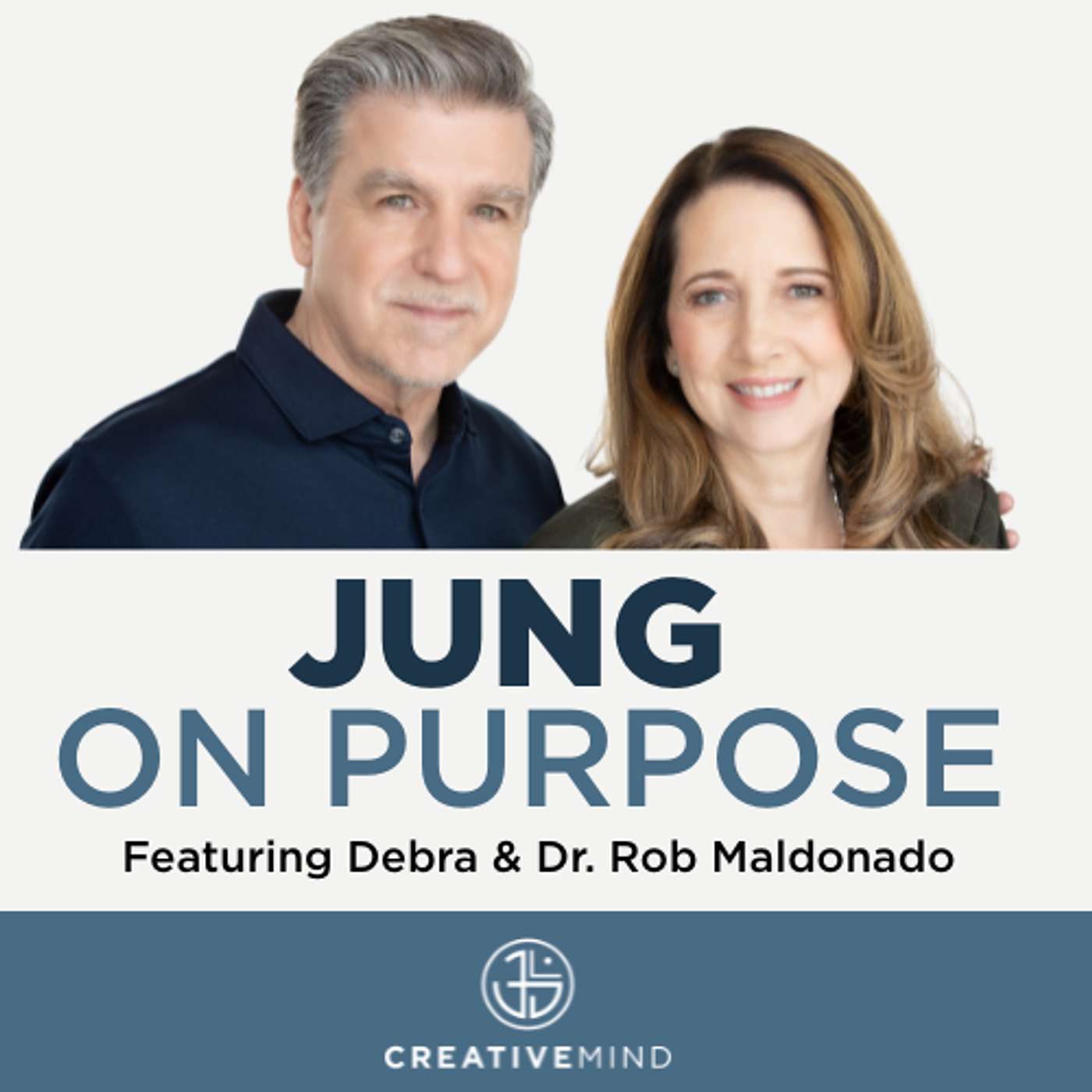
Jung On Purpose Podcast by CreativeMind
How Openness Impacts Coaching: The Big Five Personality Traits
00:24:34
Loading summary
Transcript70 lines
- [00:01]
Podcast Host
Welcome to Creative Mind Soul Sessions with Deborah Burndt Maldonado and Dr. Rob Maldonado, founders of Creative Mind. Explore personal growth with us through Jungian psychology, Eastern spirituality and social neuroscience in a deep but practical way.
- [00:18]
Deborah Maldonado
Let's begin. Hello.
- [00:22]
Podcast Host
Welcome to another episode of Soul Sessions with CreativeMind.
- [00:25]
Deborah Maldonado
I'm Deborah Maldonado.
- [00:27]
Dr. Rob Maldonado
I'm Dr. Rob.
- [00:28]
Deborah Maldonado
And today we are talking about personality. And for the next five episodes, we're going to go through the big five personality test and talk about how that applies in young and coaching.
- [00:43]
Dr. Rob Maldonado
Absolutely.
- [00:43]
Deborah Maldonado
And. But before we begin, I do want to ask you if you can do us a favor. Subscribe to our podcast so you can listen to each episode when it's released every week. And it helps us get more listeners and more people to this content.
- [00:57]
Dr. Rob Maldonado
Yeah. So welcome.
- [00:58]
Deborah Maldonado
Yes.
- [00:59]
Dr. Rob Maldonado
Yeah. So we wanted to talk about personality because it's a really important construct in psychology in coaching, and it helps us determine who is a good coach. Right. And, and how can we define a good depth coach so that people can make the right choice when they're looking for a training, a coach training program?
- [01:23]
Deborah Maldonado
Yeah. A lot of people say, am I meant to be a coach? But also I think personality related to young in a broader sense. There's a lot of personality tests out there. There's the Myers Briggs, the big five, all these different types of tests that archetype tests and, and things like that. And then we, you know, they're used in many different ways. So we want to kind of really hone in on the young and coaching model of working with personality. And the most important thing is that our personality isn't who we are, it's who we're expressing ourself as in that moment. But it's not a fixed concept. So if you take a test and you think, I am this personality, you're limiting yourself. So we're going to open your mind to seeing beyond just the labels and create your own design of who you are. That's what individuation is, right?
- [02:15]
Dr. Rob Maldonado
Yeah. So it's a, it's a big construct, the whole idea of personality. And there's a lot of different models of personality, a lot of different tests as well. So we figured we'd look at the big five personality test. Now, Big five is pretty well established as the. One of the gold standards for personality assessment. Right. It gives you an idea of what your personality is like. What kind of traits do you have, what kind of approach do you have to learning to social interaction, those kind of things.
- [02:46]
Deborah Maldonado
So you may take that test to apply for a job, to team motivation. Executive sometimes have, like their executive trainings looking at their personality. So let's start with the big picture. What are the big five? What are the big five personalities?
- [03:01]
Dr. Rob Maldonado
Okay, so number one is openness. All right. Number two is conscientiousness. Number three is extroversion.
- [03:11]
Deborah Maldonado
A little young in there.
- [03:12]
Dr. Rob Maldonado
Yeah. Number four, agreeableness. Agreeableness. And number five, we'll leave this to, towards the end, neuroticism.
- [03:21]
Deborah Maldonado
Yeah. So we're not going to cover them all today. We're going to start with the openness. Yeah. Because it's. It really is a. One of the key parts of if you're going to be a coach and being a coach and being coached is all about. And changing your life, being open to new experiences.
- [03:42]
Dr. Rob Maldonado
Absolutely. So a good way to think about openness is.
- [03:45]
Deborah Maldonado
It's.
- [03:46]
Dr. Rob Maldonado
What's the opposite of openness? It's that fixed, closed, closed mindset. Right. That you think, I'm never going to change. This is the way I am. This is my personality. I'm done.
- [03:57]
Deborah Maldonado
Or my life is never going to change. There's no new new experience coming in for me. This is my lot in life and.
- [04:07]
Dr. Rob Maldonado
Might as well get used to it.
- [04:08]
Deborah Maldonado
Get used to it, cope with it. And, and you're really not open or. And it doesn't mean you're doing it on purpose, but you just don't have that capacity to see possibility.
- [04:17]
Dr. Rob Maldonado
Yeah, that's right. And also it's important for coaches because that means you don't believe others can change. If your mindset is limited or closed or rigid, you believe, well, people are who they are and that's the end of the story. What's the point of changing them? Right. Or. Or helping them change.
- [04:38]
Deborah Maldonado
Another point too is that when you are a coach and you're interviewing clients, they need to have a little bit of this openness to experience. And sometimes people are just. They call it uncoachable because they're not open to experience. And even if you're the most fabulous coach in the world and have all the great skills and experience, if you have a client that's not open to new experiences, they're not going to get results. So it's a very important for the coach and the client to have that ex. To have that openness to really facilitate change.
- [05:13]
Dr. Rob Maldonado
Yes. And all of these are their scales. Essentially. They are spectrums. In other words, everyone has some. Some level of openness right there because they're learning. They're willing to learn and grow and Expand. The question is, to what degree do you have this trait?
- [05:35]
Deborah Maldonado
Yeah.
- [05:36]
Dr. Rob Maldonado
Right. How open are you to learning, to changing?
- [05:40]
Deborah Maldonado
Well, and it's. Yeah. Even think about, I mean, in all areas of life, religion, being very rigid in your religious beliefs and not open to be curious about other. Other systems or other parts or being so firm and you know what your problems are and you know how to solve them, and you're not open to learning something new about yourself and you're just kind of stuck. And that's like the extreme. And then the other extreme is that openness. Like you're always having new experiences that almost like there's no balance in a way where you're always on an adventure.
- [06:17]
Dr. Rob Maldonado
Good point.
- [06:17]
Deborah Maldonado
Yeah. So you could have that extreme.
- [06:20]
Dr. Rob Maldonado
That's right.
- [06:21]
Deborah Maldonado
So how can it enrich a Jungian coach?
- [06:23]
Dr. Rob Maldonado
Yeah.
- [06:24]
Deborah Maldonado
So their ability to navigate this. Other people like to help the person work with other people.
- [06:31]
Dr. Rob Maldonado
Yeah. So the, the, the associations with this openness can help us understand that question. Curiosity, creativity, and symbolic thinking. These are the three, three primary ones that we can talk about in a, in the, in the depth Jungian coaching kind of paradigm. Right. So curiosity means you're curious about the world. You're. You want to learn more of how things work. Also, of course, your human nature. You want to understand how your mind works and how your client's mind is working and how you can help them as a coach through that curiosity that you bring to, to the sessions as.
- [07:17]
Deborah Maldonado
Opposed to, as Walt Whitman would say, be curious, not judgmental. And it's like we tend to want to. The rigid personality wants to just judge others instead of be curious of, like, why would they think that? Why would they act that way? Why. Why are my parents so hard. Were so hard on me as a kid instead of thinking they were just bad, you're open to and be curious about. Well, maybe they're. There's a new way I could see this situation. It's just so important in relationships.
- [07:45]
Dr. Rob Maldonado
Yeah, absolutely.
- [07:45]
Deborah Maldonado
And even judging a person I know in a lot of personal development, there's labels thrown around of, you know, I'm this or I'm that fixed diagnosis. And to be open and curious about. Maybe there's another. Another aside to you or another aspect of you or a potential in you to have that curiosity and open to experience that. And don't you think that a lot of people, because of the ego, it stops them from having those. That openness that the ego wants more predictability and, and more, you know, more of the same than anything new?
- [08:21]
Dr. Rob Maldonado
Well, that's a good point. Right. From the Jungian perspective, the, the ego wants or creates the Persona which we would call personality in order to predict and to manage the predictability of life. In other words, it wants to be able to predict what's going to happen tomorrow, what's going to happen the next moment. And that quality, there's nothing wrong with it, right. It's, it serves as well for survival, for social interaction, but it can also limit us if we're too rigid with it. If we want to control our life, we know we, we get neurotic, right. We get anxious, we get up upset or when, when things are uncertain, we feel uncomfortable and we can't go go there. Right. So curiosity is associated with that openness because it gives us a sense of how open are you to kind of.
- [09:26]
Deborah Maldonado
Questioning the status quo a little bit.
- [09:28]
Dr. Rob Maldonado
To question the status quo, to experience new things and new ways of doing the same thing that you've been doing. And without that, there's very little chance of growth.
- [09:39]
Deborah Maldonado
Well, when you think about, we talked, we both worked in big companies and you worked in the healthcare field and the bureaucracy. Well, why do you do that? Well, because we've always done that and how many times have we have we approached, you know, our life that way? It's like this is what I know works and I don't know, it feels very scary to do something else, change careers. Like a lot of our students come to our training because they are not happy with the status quo. They want to go to that a new and inspiring career, but there's still a little hesitation. And I think there's two ways to live your life. One way is to live in like, do things as you always have done and have the predictable ordinary life. And then the other is to have comfort in knowing that you can be creative in the moment and that you can handle whatever. Like unpredictable things happen in life and you can handle them. And you'll notice that people that have that like rigidness or that non openness when crisis happens in their life, they almost fall apart where someone else who has that curiosity and creativity, they're like, okay, well let me see what I can do with this and let me make the best of this. Let you know. During COVID was a perfect experience. Some people shut themselves down. A lot of coaches just stopped. We're doing their business because we're like, well no one's going to want coaching now. And the people that survived and thrived are people that said, well, how do we make this creative? We started doing Videos instead of audio. We changed the way we did our business and we adapted. And that openness to new experiences is really the key. So you can rely on your own creativity, or you can rely on the past and your conditioning.
- [11:21]
Dr. Rob Maldonado
That's right. And creativity, of course, is another one of these important constructs of openness. Creativity in the Jungian sense comes from the unconscious, in particular the collective unconscious. So it doesn't come the way we perceive it to come from our ingenuity or our.
- [11:43]
Deborah Maldonado
The fancy writing.
- [11:44]
Dr. Rob Maldonado
Yes, real creativity for Jung comes from trusting in the contents of the collective unconscious, which arise through dreams, through intuition, through active imagination.
- [11:59]
Deborah Maldonado
Can you describe the collective unconscious for people who are new to that term?
- [12:03]
Dr. Rob Maldonado
Not really, but I'll give it a shot. So if you think about your personal unconscious, you can think of it as a storehouse, like maybe your garage or a closet where you put stuff that you don't need, or you, you need it for later, but not in the moment. And so it's a place to store your memories, repressed emotions, repressed wishes, conditioning your past, conditioning, past, learning those kind of things. Right. So you, you store it for a later date more. Or, or perhaps like most of us, we forget about the stuff that we store in the garage and years later we might go, why did I hang on to this? Yeah, and we carry it around for, for a long time. So that that's a kind of a, a simple, simplified image of our personal unconscious mind as opposed to our conscious mind, which is our everyday waking mind, like with what we use to solve problems and to navigate the social world.
- [13:07]
Podcast Host
Are you looking for a satisfying career as a life coach? If you are seeking a deeper path of training and growth, Creative Mind University offers an ICF accredited life coach training program that goes beyond surface positive thinking and into a powerful process of real transformation. You can start your new career as a certified life coach trained in a unique methodology based on Jungian theory, Eastern spirituality, and social neuroscience. Get the tools to become your true self, change your life and the lives of others. Visit creativemindlife.com click on apply and speak with one of our team members today to discuss your future and possibilities of becoming a certified life Coach coach. That's creativemindlife.com.
- [14:03]
Dr. Rob Maldonado
The collective unconscious. Jung says, think of it as a repository of humanity. All the generations that have come before us have contributed to that collective unconscious. Millions and have stored and, and contributed to the content that is in the collective unconscious now. He says we as individuals have access to that if we do our inner work. In other words, if we integrate our shadow and we understand, I'm not just this individual personality, but I'm connected to something deeper. I'm connected to something deeper which we he called the psyche, which translates as soul, which means it's a collective experience of our humanity, our connection to nature.
- [14:52]
Deborah Maldonado
So if you think about like the personal unconscious would be like wisdom light, where you are getting like you're making decisions based on past experience. So there is like a little wisdom there. Like don't put your hand on the hot stove, you know, watch out for people with this facial expression. Don't risk this, don't risk that, Go for this, go for that. You know, kind of small. But when we're going into the collective, we're having more access to wisdom that's beyond our personal experience and we're getting a generational humanity wisdom that's much more best.
- [15:25]
Dr. Rob Maldonado
That's right.
- [15:26]
Deborah Maldonado
So it's really hard to acc. Access that. Like you said, until we do our shot, which is the first stage in young and coaching and what we teach our clients and our, our, our students.
- [15:37]
Dr. Rob Maldonado
Yeah. So the question, can curiosity, creativity and symbolic thinking enhance the Jungian coach's ability to navigate the complexity of the psyche? Of course. Right. These, this openness trait, if you're open, if you're curious, if you're creative and you're able to think in symbolic terms, it gives you a great advantage in working with the depths of the psyche. Because otherwise you're going to want to stay in the predictable realm which is the conscious mind. And there's nothing wrong with that, but you won't be able to access this deeper, rich aspect of the psyche.
- [16:23]
Deborah Maldonado
So the million dollar question is why do we need to navigate the complexity of the psyche? Like why, why would someone need that? Why do we need that in our life, in our world? What, what impact does that have on our lives when we do that? When we're open to new experiences, we're open to this symbolic type of thinking. I could say one thing and I'd love to hear your input, but for me it's the symbolic thinking. Their symbolic life has been so profound because instead of looking at even like things that seem like bad luck or weird, you know, things that are happening that are not going your way, instead of thinking, oh poor me, you know, and how to navigate or cope with these difficult situations, if you can look at symbolically or pay attention to your dreams and see that there's some bigger picture here than just this little event that's dictating your life, you start to see your connectedness to everything. And then you realize that the outer world and the inner world are one and you start to regain power. And that's really where you get to be really creative. Talking about creativity in life, then you, you are able to feel this confidence that you can enter new experiences because you have all these inner resources versus depending on just your conditioning and then what the world is going to give you and the chance that maybe things will go good or bad.
- [17:44]
Dr. Rob Maldonado
Yeah. From the Jungian perspective, symbolic thinking is the opposite of what we do in our waking life. So in our waking life, our thinking is very linear because that's the way we experience the world. Space, time is linear to us, meaning it goes from past to present to future. And we kind of figure things out in that kind of logical, linear way. Symbolic thinking goes beyond that and it's irrational, intuitive, emotional, symbolic. In other words, a symbol doesn't have a clear definition. It can mean a lot of things. It can mean it's opposite at some point, therefore it's irrational. When you're able to think in symbolic terms, you're going beyond the rationality of your conscious mind and you're tapping into the unconscious that's paying attention in your life, but you're unaware of it. It's like it's hidden in plain sight. It's always conscious, it's always paying attention. But our conscious mind only focuses on what we can see, feel, touch, kind of talk about those kind of things, which is the conscious experience.
- [18:59]
Deborah Maldonado
And so a depth coach compared to an ordinary coach. An ordinary coach would work on that. Conscious level, would be very externalized, would very be like, well, let's look at what the, what the, what the options are here. Well, you can do A or B, you can keep your boundaries. You can commute communication skills, change your behavior, maybe even think positive. But on the conscious level.
- [19:23]
Podcast Host
Right.
- [19:23]
Deborah Maldonado
I could think positive and have a different attitude toward things. I could work with my emotions to be, you know, not angry all the time, all those things, but adept coach, that, that deeper experience of symbolism and you're not just rearranging the furniture, you're actually being maybe a direct participant in your own destiny versus just trying to navigate life through the external.
- [19:51]
Dr. Rob Maldonado
Yes. So if you're interested in becoming a debt coach and you want to cultivate this ability of openness or this personality construct, you can practice by engaging in art. Art almost immediately takes us out of linear forms of thinking into that more open, creative, intuitive, symbolic way of thinking.
- [20:24]
Deborah Maldonado
Yeah.
- [20:24]
Dr. Rob Maldonado
And so it's a, it's a great practice.
- [20:26]
Deborah Maldonado
Well, it's also communicating with your unconscious beyond the conscious. When you're looking at art, you're taking in so much more than just a thought or reading a book. You know, just reading like a. Not an imaginary book. You know, reading like facts is very different than having like, even a fiction book and having that imagination and that art in that literature.
- [20:48]
Dr. Rob Maldonado
Yes, literature, of course, is an art form, but it includes language so that it, it really kind of engages the whole mind because you have to, in order to, to understand and process language, you have to use your left brain. But to, to understand the meaning of what you're reading, you engage the right brain. And, and of course, the whole kind of construct of them together gives you that beautiful experience of understanding the story that takes you on a journey. And so it's a great way to cultivate the, the mind and your ability to go deeper in symbolic forms of thinking. And of course, the coaching skills that we teach even take you further in the. Into this, because then it teaches you how to apply this openness in working with your clients. Jung himself said, learn everything, all the techniques, all the theory, but then forget it. Yeah, drop it. Don't read scripts and just be with your client as two souls collaborating on, on a creative journey.
- [22:05]
Deborah Maldonado
I know. You know, I always tell our trainer people in our training that they're like, what do I do in my first session? What do I do in my second? It's like, every client's going to be different and you're taking the journey with them. You're not, you're not designing the journey for them, which I think a lot of people feel like they have to, like, create a curriculum for their clients. And it's like, you don't have to, because the client will always bring to the session their stage that they're at and the thing they need to work on, even if they're not conscious of it. You know, I would have clients, like, show up on a call and they would say, you know, something happened. And I'm like, oh, well, let's look at it with curiosity. Let's think about it in a symbolic way. And if this was a dream, what would all these, all these elements point to? And then usually what comes through at the end of the call is the wisdom from the client because they're able to answer their own questions by you asking them the right questions to be curious and open instead of just saying, you know what, oh, yeah, that person is bad. And let's talk about communicating differently and dictating to the client what they should do or nudging them to do some take some kind of behavior change. You're actually getting curious and creative with them. And it's such a profound tool that the client uses because they can use this type of thinking for the rest of their life, really changing the way they think, actually encouraging them to be more open to experience.
- [23:33]
Dr. Rob Maldonado
Yeah. So openness to experience definitely gives us a sense of this personality quality or characteristic that depth coaches need to be a depth oriented coach. The next one that we'll be talking about is conscientiousness, the structured and ethical coach.
- [23:55]
Deborah Maldonado
Okay, we'll see you next time. Thank you for joining us. Don't forget to subscribe to our podcast on itunes, Spotify and all those great podcast services. And we'll see you next week with another episode. See you soon.
- [24:08]
Dr. Rob Maldonado
See you soon.
- [24:10]
Podcast Host
Thank you for joining us. And don't forget to subscribe to CreativeMinds Soul Sessions and join us next week as we explore another deep topic where you can consciously create your life life with creative mind. Soul Sessions. See you next time.