Loading summary
Transcript72 lines
- [00:00]
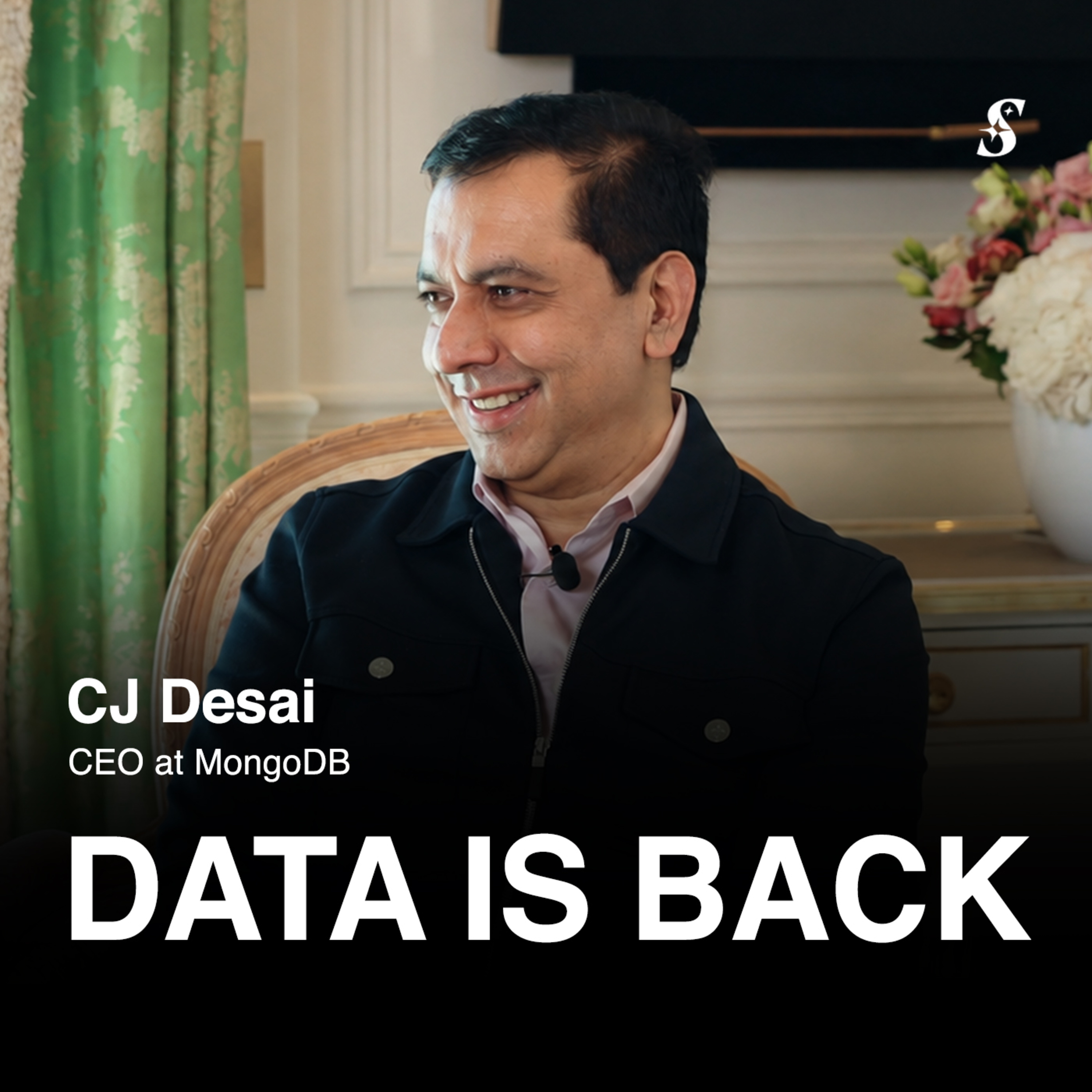
CJ Desai
What is happening right now, Molly, is that you see these hyperscalers, some of them are running out of capacity. So this large customer in Texas speaking to them, they have really good partnership with one of the hyperscalers. They wanted to move more workloads in cloud, public cloud, and also some AI workload. And the hyperscalers said, sorry, we don't have a capacity. And they are one of the top 50 customers for that hyperscaler. So now they are saying, we were decommissioning this data center. Cj we can do that. So we are going to now run workloads on Prem and we are going to run some AI workloads. Whether it's data privacy issues or other issues, we are going to run those workloads. Frontier Labs are using us for a multitude of use cases. We cannot disclose which. What use cases?
- [00:42]
Molly
There's only a handful. I wonder who they could be.
- [00:44]
CJ Desai
Because a lot of AI native startups, whether it's Emergent Base, 44, Metal AI, specifically 11 Labs, when we look at the 11 Labs story, they have north of 50 million agents, depending on when you look at it all running on MongoDB. Data is the unsung hero and data is that foreign.
- [01:13]
Molly
Cj, welcome to Sorcery.
- [01:16]
CJ Desai
It is fantastic to be here with you, Molly.
- [01:18]
Molly
All the way in Paris.
- [01:19]
CJ Desai
All the way in Paris.
- [01:21]
Molly
It's really funny. I was telling people about everyone that we're interviewing this week and it just like, okay, where can you interview all the top Silicon Valley CEOs? It's in Paris. It doesn't make sense.
- [01:32]
CJ Desai
That does not make sense. At Scott, at Cognition. And we were talking and we said, next week, should we meet in California? He said, yeah, that would be a good idea. Rather than always meeting in Paris or other places. So I am with you. Yes.
- [01:47]
Molly
Scott was one of the first interviews that we did and it was funny because we were talking about Devin and the comeback of Devin and the first task that Devin did was spin up MongoDB.
- [01:59]
CJ Desai
I was so proud. Scott said he couldn't sleep at night, that Devin could set up MongoDB and he felt that was a great task by Devin.
- [02:09]
Molly
Okay, so we again, we're here at Raise. You were on the stage earlier with Laura from OpenAI. So what were you guys talking about?
- [02:18]
CJ Desai
Just, you know, Laura is very focused on from the startup ecosystem founders, what OpenAI does, how do they work with the founders and specifically what is the approach MongoDB has taken? Because a lot of AI native startups, whether it's Emergent Base 44. Both are wipe coding platforms built on MongoDB. But then you have also metal AI, specifically 11 labs that is currently running all agentic workloads on MongoDB. So we talked about how do you truly partner with founders, how do you stay close to them as they are scaling their enterprise or they're scaling just the hyper growth era. And how do you, what are some best practices in working with them when they need you the most? So that was basically the focus and the data layer is typically the unsung hero. But we feel that models and data both are needed to create a great agentic application. And we talked about that.
- [03:25]
Molly
Everett Randall had just tweeted out something on the token economy and how much tokens and agents are creating more data. And then I tweeted underneath it. I don't know why I'm talking in tweets right now, but I tweeted beneath it. Data is back. And he said big data, big data. So you are a winner, a downstream winner of everything that's happening in AI. And I think it was like a little unexpected too because people were just so focused on the models. But guess what? All these models and all these agents are creating so, so much data. So where does MongoDB fit in with the AI super cycle and all the agentic economy?
- [04:03]
CJ Desai
Yes, I would say the way I see the world is pretty simple. So many people say it, but they are truly not behind it. And here's what I say, like people like to say companies, they like to say, oh, we are truly customer obsessed culture or we care about customers, customer focus. But I am really, really customer obsessed. And in a typical week, Molly, I feel it's not a good week unless I have spoken individually to 10 to 12 customers, sometimes even more, even if it's a short week. So I'm constantly learning from customers on what they are trying to do do with AI specifically. And when you look at MongoDB today, so MongoDB, Mongo stands for humongous, which most people don't know. So humongous database that as you scale you should feel comfortable as an AI company that you can scale with MongoDB. Right? That is the whole idea that it is a scale out humongous database that can store lots and lots of data. Now in terms of customers, we have seen on the AI Super Cycle, three classes of customers specifically to AI. 1 Frontier Labs are using us for a multitude of use cases. So that's Frontier Labs. We cannot disclose which what use cases.
- [05:34]
Molly
There's only a handful. I wonder who they could be.
- [05:36]
CJ Desai
Yes, but it's labs as in plural. And we are very proud of that, that they use us and really work closely with them. Then you have AI native companies, whether they are wipe coding companies. I met couple of robotics companies in the physical AI world who are using MongoDB. Every robot is generating data as they sense things, as they act on things and then all that data gets stored in MongoDB. So you have digital AI or software AI and physical AI companies are also using MongoDB. And then you have enterprises who are creating agentic workloads. And that's where we feel we are still early because I have not seen agentic applications. Whether you look at airlines, right? You look at your banking applications, whichever bank you use, you don't see lots of agents on your app, on your phone. So not seen that transition. But it's still early and there is a lot of tinkering, prototyping going on. So those are the three classes of customers that I speak to and learn a lot on how they are using MongoDB. Because we do unstructured data really well. We are scale out architecture, we work in multi cloud and we also can work on prem. So we are here in France. Yesterday I was with a customer and they said hey, I just want to tell you we are not and it's a large customer based in Paris. We are not going to move our workloads to public cloud. We are not. We are going to run it on Prem Data sovereignty is highest priority. French regulations forces us to have that as the highest priority. And MongoDB has to work within our on Prem environment for a lack of better term, which we do. So that's the classes of customers that we speak to.
- [07:26]
Molly
It's really interesting that you mentioned that use case on PREM has made a
- [07:30]
Sorcery Host
bit of a comeback.
- [07:31]
Molly
Comeback that is 100% sovereign AI is like, I mean Alex Karp, you know, rang true about this the other week on cnbc. But. But he did say something that a lot of people were kind of thinking and a lot of CEOs and enterprises see when they're working with these labs is you have to be careful with your data and your proprietary information. But it did ring to like a larger conversation on on PREM and owning that data. So what is going on with sovereignty there?
- [08:01]
CJ Desai
Yeah, I would say, I mean if you look at the second half of the first decade of this century, right. That's when AWS started making inroads both in enterprises as well as in digital natives. 2008, 9, 10 ish. Then you look at the whole 2010 to 2020, it was all about public cloud. Which applications are moving to public cloud? Are you cloud first? What's your cloud journey? These are the conversations that will be top of mind for the CEOs, CIOs, CTOs and so on. And now most people, they don't get this right. What is actually happening today is that when you speak to enterprises or even actually AI native companies like one of the frontier labs that we are working with, they chose MongoDB because we work in multiple clouds. We are not just a database that works in only one cloud. And they really like that for resiliency purposes. But what is happening right now, Molly, is that you see these hyperscalers, some of them are running out of capacity and they're running out of capacity. So this large customer in Texas speaking to them, they have really good partnership with one of the hyperscalers. They wanted to move more workloads in cloud, public cloud and also some AI workloads. And the hyperscaler said, sorry, we don't have a capacity. And they are one of the top 50 customers for that hyperscaler. So now they are saying we were decommissioning this data center, cj we can do that. So we are going to now run workloads on Prem and we are going to run some AI workloads. Whether it's data privacy issues or other issues, we are going to run those workloads. And this is not a regulated industry customer, they're just a large customer in Texas. So this phenomena, whether it's this particular firm which is Fortune 100 in Texas, or whether they are banks or healthcare data centers are back. Nobody is now saying hey, especially in the Fortune 500. And most people get that wrong because everybody thought, hey, all the workloads are just going to move to these hyperscalers. So hyperscalers running out of capacity and making sure that the proprietary data stays within your own premises is driving the data center and on prem demand.
- [10:32]
Molly
I didn't know that. I didn't know people were getting pushed out.
- [10:35]
CJ Desai
Yes, that is correct.
- [10:36]
Molly
Holy crap. What else is happening? What else do you know?
- [10:39]
CJ Desai
The other, you know, large telecommunications company in United States was also similar. They had one particular hyperscaler and they said this hyperscaler refused to give them additional regional capacity that they needed. So they signed with the second hyperscaler and now they have to manage across multi cloud, their application real estate, which adds complexity for them.
- [11:04]
Molly
That sounds like a nightmare.
- [11:05]
CJ Desai
Yeah.
- [11:06]
Molly
So for people who Are not familiar with MongoDB, which I'd be very very surprised. How is what is your differentiation between the likes of Snowflake and Databricks and the other people out there?
- [11:19]
CJ Desai
So MongoDB is a operational database or a real time database. So credit card transactions or anything real time, that's what we do. The category is called online transaction processing or oltp. But we are a document database, modern database that was created in 2007. So we are 19 years old. Database industry Molly has existed for 60 plus years. Okay. And regardless of the Internet era, mobile era after iPhone, now the AI era, you always need a data layer. So if you want real time data layer or online data layer, that's MongoDB and some other databases. If you want analytical data layer where you can ask a question, a business analyst internally will ask a question. For those kind of use cases you use those other companies databases. They are called online analytical processing. So they are not real time and we are real time.
- [12:21]
Sorcery Host
This episode is brought to you by Brex. My favorite you become what you spend on and I refuse to spend my time on work that shouldn't exist. Expense reports, receipt chasing and manual closes the the companies building. What's next from Vercel OpenAI, Anthropic Granola and Deepgram all made the same call. They all run on Brex. Brex is the intelligent finance platform that combines cards, expenses and banking into a single stack with agentic finance built in AI agents that handle expenses, automatically enforce policy before spend happens and close your books in minutes. That's why Sorcery runs on Brex so I can spend time on building and not busy work. It's time to get Brex AF. Learn more at brex.com sorcery that's B-R-E x.com s o u r C E R Y Bye.
- [13:19]
Molly
What excites you most about what's happening in AI right now and how you come up as the leader?
- [13:25]
CJ Desai
Yeah, so when I see the Frontier Labs using us for different use cases and they are creating agents. So one of the Frontier labs, they use us for inference, they use us for certain voice products they have. They have also video and image creations going on. So they use us for that. That gives me a lot of confidence that we have the right architecture, that we can save all this unstructured data very efficiently. Real time. We can act as a memory layer. So Frontier Labs is like I would consider the holy grail for us that really we understand because their scale and how fast they are growing is like not even linear in some of the cases. When I see weekly active users or daily active users, it's almost literally a vertical spike like this. Right. So that's one. But even when we look at the 11 lab story, I mean it is a lab, so, so you could argue that say Frontier Lab, great success story out of here, in Europe, out of London and they have north of 50 million agents depending on when you look at it all running on MongoDB. So that also gives us a lot of confidence that we have the right architecture for agentic workloads and then coming back to Fortune 500 or Global 2000, of course we have the right architecture, we have embedding pieces, vector pieces, lot of cool technologies in our Atlas database or on prem. And that's where it's still a lot of experimentation. But I have not seen end customer facing agentic applications run at scale. So very positive optimism nowadays is in short currency from my perspective. And when I see how things are moving fast, you know that you always will need that data layer. And we are very well positioned for this AI era.
- [15:23]
Molly
What do you think of the data labeling companies that are doing all the reinforcement learning behind the scenes?
- [15:29]
CJ Desai
I mean those are great companies. We don't compete with them. They have their own market for it. Our use cases tend to be typically whether it's a AI native company or whether it's a Frontier Lab or whether it's an enterprise customer facing agentic applications or just customer facing application. If you're a telecommunications company, whether you look at your online app, see the usage, whatever the case might be, that's where we get used. Food delivery places like Zomato in India uses MongoDB, Atlas. So we have variety of use cases from travel, entertainment. Many media companies use us as well. And those labeling companies is just complementary.
- [16:17]
Molly
They grow very, very fast.
- [16:19]
CJ Desai
They do also grow very, very fast. Yes, yes. It's exponential growth. Correct.
- [16:23]
Molly
So you have a very interesting background and story and career progression, which we'll say we're going to say something else but we're going to go with career progression.
- [16:31]
CJ Desai
Sounds good. Yes.
- [16:32]
Molly
Could you share a little bit more on your story and how you became CEO?
- [16:36]
CJ Desai
Yes, of course. So I started at a different database company. So when I graduated from college in Illinois I started with Oracle. And Oracle was super high growth company, really cool company to work for, a very technical company, very technical products and so on. So throughout my career I have always focused on products and engineering. That has been my job. Either software engineering, running engineering teams or creating products or Sometimes doing both. Over time I got involved in go to market teams and understanding the product market fit and how do you scale products in Global 2000 or sometimes create new products and understanding customers pain points so that you can create the right products for them where we feel we have a right to play. So that's been my career throughout my career always been product engineering infrastructure. MongoDB was the first time I became a CEO, which was a few months ago in November. David Tacharya was there for 11 years, went through cloud transition and they did a really good job. And he said, C.J. make sure that now you go through the AI transition properly. Well, but Dave and the team did a phenomenal job. So first time CEO, but I have not changed a lot of things that I used to do in the past, which is what I shared. Whether it's meeting customers all the time, really understanding how they are using the product. If they don't use some of our features, why not? If they use our features and they love them, why do they love them and what other pain points that they are dealing with right now so that we can really help them. So from a career progression standpoint, now CEO for eight plus months, Absolutely enjoying the job and being with customers who are driving innovation. Like even just today we talked about cognition, but just talking to Scott and understanding what's his vision and how he's helping with migrations with financial services company, whether it's database migration or software migration or software upgrades, and the potential for MongoDB and cognition to really work well together, those are very exciting opportunities. The same thing with Frontier Labs. So the transition has, from my perspective into the CEO role has not changed. What I really value, being close to the customers and building great teams.
- [19:19]
Molly
I mean you picked, I don't know if you picked it, but you joined as CEO at one of the most chaotic times ever, which I would assume is one of the most fun and energizing times. So how do you, like, what is your strategy? Like how do you come in every week and like, do you have a plan? Do you work on a plan? Like what is the roadmap look like for you?
- [19:43]
CJ Desai
Yeah, you know, one of the advice I got from somebody who was a great CEO before told me, CJ make sure that things that you do, only CEOs can do. Don't try to spend time on things that others can do. But there are things that only a CEO can do, right? Whether it's spending time on strategy, working with the partners, making sure you stay close to the customers largest Customers, fast growing customers and so on. I would say the pace of innovation and the compounding change that is happening with customers. I have seen the Internet transition, Internet applications that got developed late 90s, early 2000s, then the mobile era, cloud era, now the AI era. I have never seen a pace like this. And customers have a lot of questions. And as you see Molly, over last eight weeks, lot of announcements from hyperscalers on forward deployed engineers. They are using Palantir's Playbook from my perspective, right? And the reason is because customers are going through so many changes, they need help and that's what they are realizing and they see that as an opportunity. Every hyperscaler made an announcement in last I think eight weeks to do that. So what I'm seeing is I have never seen, it is truly unprecedented in terms of changes happening with customers. But even the innovation speed, when software writes software, the incremental cost of innovation has gone down, right? Because software is writing software. It's kind of crazy that people don't have to write software and machines can just write software. And then number two, the cost of experimentation is also very low because you can say, hey, let me figure out, I should create a product in this area or should I innovate here or can I create an agent for this? I am personally creating a few agents so that I can do a better job of managing my own calendar, my own time, where I shouldn't be spending time, things like that. So this level of change with our customers is unprecedented and companies are trying to move fast and I think the speed is paramount right now. And so every day I wake up and I said, yes, I'm not going to plan. Okay, what is our three year roadmap? What is our two year roadmap on product innovation? But even customers are pivoting really fast. Like one of the large banks I was with couple of weeks ago in New York City we saw agents. So I said can you share with me your agentic architecture? How are you building agents? Right, show me all the way from hyperscaler, databases, agents, runtime models you are using. So they showed me this particular picture had I want to say 55 different boxes for the agentic architecture, different type of LLMs, frameworks, databases, vector databases, whatever it is, embeddings, this, that and so on. I'm like wow, that's a lot. And I said how would this picture would have looked a year ago? They said half of these boxes would have not been there. Because we realized in trying to create agents, observability, security, how you do eval, how you move things in production, guardrails, whatever the cases are. And I said do you expect this boxes to change or you may add boxes? And they said absolutely. I mean this is what we are dealing with in terms of AI adoption in the enterprises. And then once all those things are figured out like happened with Cloud in 2010, 2012, 2014, then you will see inference take off.
- [23:45]
Molly
So this is the slowest it'll ever be.
- [23:47]
CJ Desai
This is the slowest. I think it is going to get even faster, right? Yes, 100%.
- [23:53]
Molly
So taking the operator mindset into one of the fastest moving positions, what did you kind of have to shed and how do you help the team navigate that speed?
- [24:07]
CJ Desai
Yes. One of the things that I would say, Molly, is that you really have to at the end of the day, customer driven innovation, it doesn't really matter. You can't come and think of if I build it, they will come. That era is gone. So you really have to understand what customers want. We sell to enterprises, we sell to AI native companies, we sell to Frontier Labs. And when they tell us either their pain points or scaling points, whatever issues they are having, I'll give you an example. One of our large customers, they are in prediction market and yes, interesting. Yes. And they because of World Cup Soccer, obviously they're doing very well. Lots and lots of predictions happening every minute. And the CEO reached out to me and he said, CJ it looks like we may be out of capacity in few days on MongoDB and the world Cup Soccer is still a couple of weeks away, meaning from finishing. We really need help because we can be down. Right. And you understand. And then when he gave that feedback saying can you help? So the team got formed within minutes and we said, yes, of course, we know you guys are doing really well. And this is CEO, he's also a founder who reached out and I said to him, okay, let's figure out how we can help you. And he's like Molly, stressed out about like disk space. I need this much this many terabytes, otherwise we are going to be down and telling me all those specific details via text. And I said, okay, we got it, we'll figure it out. But in that process you learn a lot that for somebody scaling at that level, we also sometimes see that with Frontier Labs. Frontier Labs, as they release a new version and if they are building on mongodb they will tell me, hey, I thought I had more capacity, I want to scale out. Oh, I'm running out of capacity in AWS. So I want to move some of MongoDB to GCP. How do we make it easy for them? And what I noticed, Molly, with all these folks, whether it's production market or AI native companies, or they just do not have people, actual people to deal with infrastructure software because they are so focused on their models, rightfully so. Or the actual prediction market software, the infra software, which is the foundation on which they need to scale. Whether it's the hyperscalers, whether it's us database providers, they are like, can you just make this thing auto scale? Or why am I calling you and telling you that I'm going to run out of capacity? Why couldn't you see it? I said, hey, you are going through unprecedented growth that we have never seen, whether it's World cup soccer or whatever the case might be. So there is only so much we can do, but that's what you learn. So then you also need to innovate super fast and make it super easy for customers.
- [27:12]
Molly
So what's the solution?
- [27:14]
CJ Desai
There is no solution. You constantly have to pivot or change the roadmap. Right? You have to say this is becoming a priority. Customers do care about this particular thing. They do not have. You know, in database world, when I was at Oracle, the most expensive person you can get is called Oracle DBA Database administrator. And they were the most expensive people that you have to hire when you're running Oracle. And now these AI companies are saying we don't have time to hire these people. If we are using your software, it should have its own machine based database administration. So the point being, the solution is you learn, you pivot fast and you figure out how do you really help them auto scale, be proactive in how you tell them what's going on and make a decision for them. Because you cannot rely on this expensive human being that they will hire and have somebody manage that.
- [28:19]
Molly
It's really cool and also very interesting that you go so deep with the customers that you learn how they build agents. What are the biggest lessons that you learn from their agent architecture?
- [28:32]
CJ Desai
Yeah, so one of the things that what I'm seeing is first I had a very simple viewpoint of the world from a customer perspective. Oh, are you standardizing on this particular model? Okay, from say OpenAI or Anthropic or whoever it is. And then as you really understand their architecture, you find out for certain use cases they may have domain specific large language model. For certain use cases, they may have open source models. For certain use cases they have small language model. For certain use cases they May use cloud or OpenAI 5.5 or whatever the case might be. So I learned that there is no like the one thing, there is no like standardization even when it comes to these models. Right. It goes anywhere from open source to closed source, small to large, horizontal to domain specific based on the use cases. So that was a big learning. Second is, do you get deterministic outcome? I was with a large insurance company that's a MongoDB customer. And first I said, hey, it must be really annoying to the CIO that people talk about agents and the first insurance agent was a thing that your industry created. So it must be really confusing when you guys talk about agents. And he said, yes, it's really confusing and very annoying. And then cj, you are stating the obvious. That's even more annoying. So I said, I get it. So he said to me that for insurance industry, when you give a quote or a policy, they have to do state by state. In United States, they have a lot of regulation. They have to make sure these agents don't give something, there is no bias involved and give a deterministic outcome. And do you need human in the loop that if I want to add real story, my son who just started learning driving, if I want to add policy in my policy, add my son as a dependent and a new driver, how does that work automatically? And if agents can make the decision and say, C.J. okay, your son just started learning you're in state of California. Here is how much would it cost? Can I audit that? And can I have still human in the loop so that we are following all the regulation for state of California that agents didn't have bias or this agent was competing with the other agent. So when you really try to understand what they were solving for, like, wow, okay, this is a lot more complex than just some prototype that you can do in agentic world.
- [31:19]
Molly
Wow.
- [31:20]
CJ Desai
Yes.
- [31:22]
Molly
That's crazy. I mean a lot of the main chatter and debates right now are on the open and closed source topic. And the one thing that we're hearing over and over again is the increased use of open source. Because as these things get standardized, they realize they don't need the fanciest model beneath them. And so it'd be really interesting to see a. I don't know if like, you know, you're like tracking the kind of conversations that you're having of like how that changes over time and what model they're using.
- [31:56]
CJ Desai
Correct. I would say it is still a very mixed world in terms of that. Like, I don't get this strong opinions from customers that we must use open source everything when it comes to models or databases or the software infrastructure, Linux versus all the way from operating system to the top of the layer. And the other thing is, what are the true building blocks? And if you are using open source, how do you get support for it? Do you not get support for it? Like for coding agents? Okay, you have cloud code, you have codecs, there is a groq build, many options, Cursor has other options available. So what you find is in those scenarios you almost always use see or hear close models. Not open source models, proprietary models. But in certain cases people will tell me, customers will tell me, hey, we are using something from hugging face and this particular open source model which was very domain specific or use case specific. So it's still a mixed world out there. I have not seen a complete pivot towards open source or a complete pivot towards proprietary.
- [33:11]
Sorcery Host
If you're building what's next in AI, you need to know MongoDB, the database platform developers love and built for the agents you're running. MongoDB stores searches and reasons over your data in real time with vector search and embeddings from Voyage AI all in the same system. No separate pipelines, no stitching together 10 different tools. It's why 75% of the Fortune 100 and leading AI native startups run on MongoDB. Build and scale from your first user to billions of vectors. Go to mongodb.com AI to learn more. That's mongodb.com AI to learn more. Bye. Assembly AI is a voice AI infrastructure layer millions of developers build on. They build the industry's best speech to text. Voice agent and speech understanding models that serve as critical infrastructure for companies like Granola, heygen Ashby and ClickUp. Their speech to text models lead the industry in accuracy and quality. And their speech understanding models help you go beyond transcription by uncovering insights, identifying speakers and highlighting key information from voice data. You can get started today@AssemblyAI.com sorcery and get $50 of free credits to start building Voice AI products. That's AssemblyAI.coms o u r C R
- [34:35]
Molly
Y okay, before we have like a couple questions left. Okay, but we haven't talked about this yet. What is your view on data centers in space?
- [34:50]
CJ Desai
Okay, so first time for transparency. First time I heard it, I'm like this is crazy and not possible. And then as I try to learn more, not via chat GPT, just try to understand what does it really mean. And then when you go into the next level of details. Right. Sunny skies versus cloudy. Then I thought of solar panel at my home in California that okay, during the day you can have all this energy source like a solar panel but at night it's not functioning. Now you take that to the next level and if truly energy is the constraint for the world of AI. Right, because that's what it boils down to. Your question behind the question is if energy becomes the constraint. I think we have physical space there, but energy is the constraint. How closer do you go to the sun to get as much sun as possible and have that as an energy source for a long time. So physics wise, at least from what I have read, it seems like it is there is a non zero chance of it succeeding. Meaning it will succeed once you put enough attention resources focus on it. And like we saw some of the frontier labs, you saw that SpaceX said we'll make this available to anthropic from a capacity perspective. They were building data centers right now on earth as in Mississippi and Memphis, Tennessee. But can you do that in space? I think physics wise it seems possible from what I read. We'll see how it gets be executed but I'm not bearish on it.
- [36:44]
Molly
Okay. Yeah, that's a very academic. Yeah answer.
- [36:48]
CJ Desai
Yes.
- [36:50]
Molly
So as we close out I like to end on a positive note. And so one of our long term partners is Brex and they're all about performance, spending smarter, moving faster. And I believe a large part of performance is who you surround yourself with. I mean you have quite the career and you've been surrounded by industry legends. But I'm really curious from your standpoint, who are some of those people that have mentored you or inspired you along the way?
- [37:19]
CJ Desai
There are quite a few. Right. I go to different mentors or leaders for different type of advice because I started my career at Oracle. What I saw with Larry Ellison and the team that he had at the time, very focused on always creating the best product and also very focused on having the best go to market teams as in how do you sell, how do you serve customers? Top notch. Like they would have this bar on talent or you should only hire software engineers from these colleges in the United States or in the UK or wherever the case might be, that's what they would do and that's how they would operate. So you learn quite a few things on how they would do communication in the company and so on. So that was my first learning. I also learned a lot when I was at Symantec. Great CEO, his name was John Thompson and legendary CEO. He had a very storied career at IBM and then became a first time CEO at Symantec. And how do you work with customers? How much do you listen versus how much do you talk? Because every but he wants to pitch their products and he definitely had a way with customers that I learned. He also dressed really, really well. And so because he's like, hey, if I'm showing up in front of customers, I want them to know I respect them and I'm going to show up with my best self, right? So that was John Thompson and then ServiceNow founder Fred Luddy who created ServiceNow. And it was not one of those things. ServiceNow is now closer to $15 billion revenue company. But he created that company when he became bankrupt at age of 50 just few days before 50. And he was obsessed with being hungry and humble and understanding customers pain points on how you create a product. So these are some of fantastic people that I have been fortunate to work with, including John Donahoe and others.
- [39:29]
Molly
That's incredible. By the way, I didn't mention this, but I think it's between the conversations I've been having throughout the Raise conference and just being in SF like pretty much every week, all I hear over and over again the quality of talent that's coming out of MongoDB and that's at MongoDB. So I don't know what you guys are doing there, but you seem to be creating a really great density of talent.
- [39:55]
CJ Desai
I am not excited about that point in the story because even Mati at ElevenLabs said, hey CJ, everybody told me we should hire salespeople from MongoDB because you guys do a really good job of training them. Same thing with our engineers because they understand distributed systems and data really well. So on one hand, really proud of our leaders that they have. We have the best go to market teams and great engineering teams. But yeah, I have mixed emotions when people say that we want to go after mongodb people.
- [40:28]
Molly
Oh boy. Well, amazing. Okay, so what excites you right now?
- [40:34]
CJ Desai
There are a lot of things that excite me. I would say if I have to just summarize, number one is about customer focused innovation and making sure we are the foundational layer for for all AI applications and agentic applications. So that's number one. Number two, making our customers really successful as they roll out AI and there is clear ROI that they can see and they have a peace of mind when they use us as the data layer. So that's really exciting. And third is just the pace of innovation. We want to move fast for our customers. We do these things called local conferences that are very local, hence the name Doc Local. Next one is in San Francisco, we want to make many announcements there. After that one is in New York, we want to make announcements there. Then it's in Mumbai, we want to make announcement there which are all related to innovation. So the pace of innovation in service of our customers really excites me.
- [41:36]
Molly
I have to ask you a very difficult question. Yes, what is your hottest take in AI right now?
- [41:44]
CJ Desai
My simple answer, which I believe to be true is Data is the unsung hero and data is back. You cannot create an AI application without a great data layer and your AI application is as good as your data.
- [42:02]
Molly
As the kids would say, facts.
- [42:04]
CJ Desai
Yes, facts. And it tracks well.
- [42:07]
Molly
Great. So you heard it here. Big Data is back. Thank you cj.
- [42:12]
CJ Desai
Thank you very much.
- [42:14]
Sorcery Host
Huge thank you to the entire Rays team for an incredible event. And thank you to Brex, MongoDB and Assembly AI for making this trip and series possible. If you enjoyed this conversation, you're going to love the rest of the Raise series with Tony Kim from BlackRock, Scott Wu from Cognition, Andrew Feldman from Cerebras, Rodrigo Liang from SA Nova, Michael Hurlston from Lumentum, CJ Desai from MongoDB and many, many more. Like our hot takes that we did at a secret location that you can find on X, YouTube and Instagram. Subscribe to Sorcery on YouTube for more conversations with the people shaping AI and join the free newsletter. You can also do paid at Sorcery VC for weekly insights on AI, robotics, enterprise software, consumer semiconductors. Did I say AI? AI again. And everything that's coming next, like funding announcements and all big things in tech. Thank you. Bye.