← Sourcery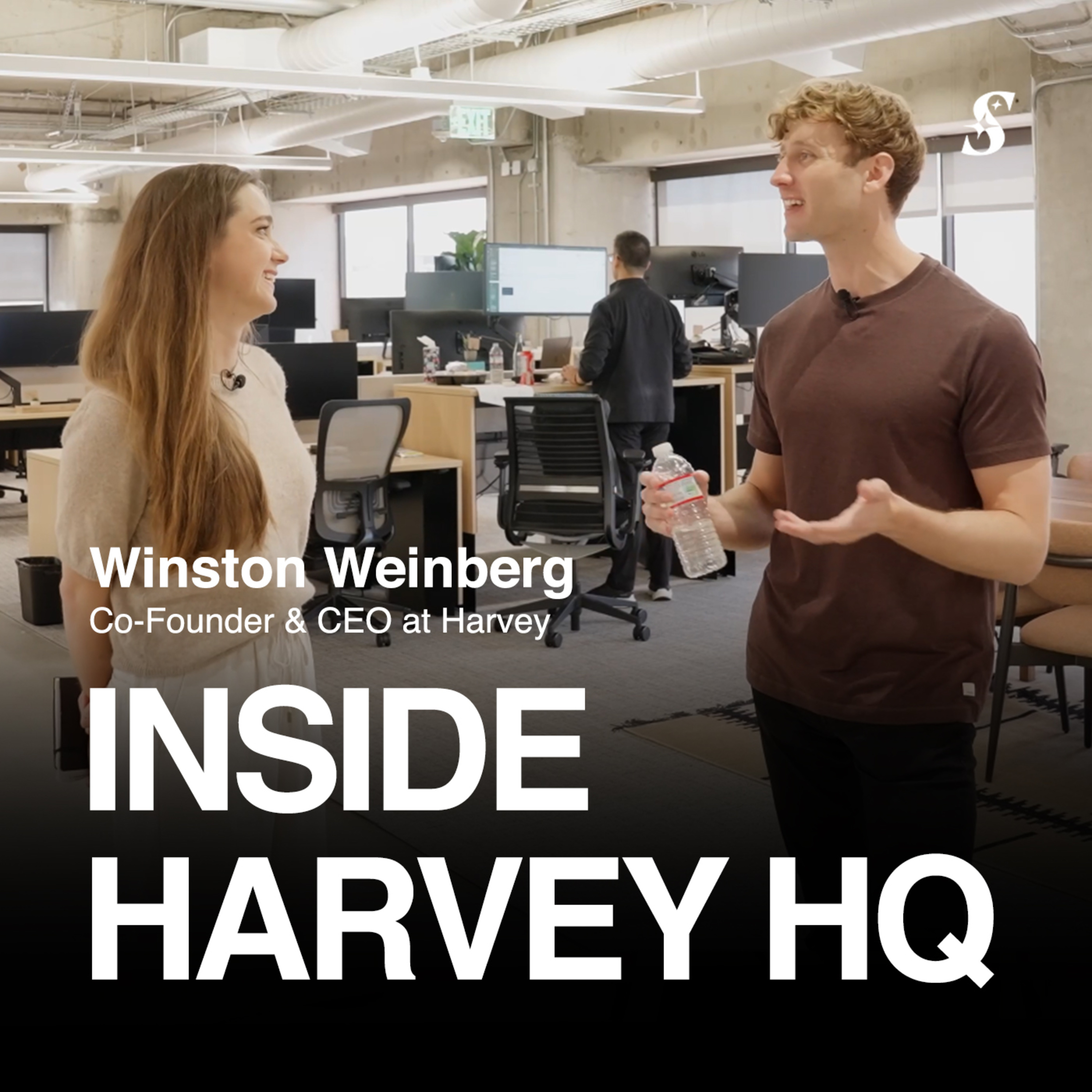
Sourcery
Inside Harvey AI: $11B, $300M ARR, 960 Employees, 12 Offices, 13 Trillion Tokens a Month
00:38:04
Loading summary
Transcript221 lines
- [00:00]
Jason Boehmig
The purpose of Harvey, Harvey AI. Harvey AI, if you're reviewing a million documents, is how do you check that its work is accurate?
- [00:07]
Host (possibly a tech or legal industry journalist)
So you were at 100 million in ARR last August, and now you're nearing 300 million. What's been driving that?
- [00:13]
Jason Boehmig
It's 100% product. Our token usage in January was 1 trillion. And this month it'll probably be like 12 or 13 trillion. Our DAU over MAU at the beginning of the year was around 36%. Right now it's like 51, 52%. And then this year, most recently, the main switch we did is just went over cloud agents. We switched our entire infrastructure to that. And once we did, that usage really just started double and quarter to quarter.
- [00:46]
Host (possibly a tech or legal industry journalist)
You. You asked about a sword. We could start with this.
- [00:49]
Jason Boehmig
We could start with this. So I actually. This is probably the best thing. I also personally have a replica of Frostmourne, but that's in my apartment.
- [00:57]
Host (possibly a tech or legal industry journalist)
I don't know what that is.
- [00:58]
Jason Boehmig
It's. It's Arthas's sword. World of Warcraft.
- [01:01]
Host (possibly a tech or legal industry journalist)
Got it.
- [01:01]
Jason Boehmig
Wrath of the Witch King.
- [01:02]
Host (possibly a tech or legal industry journalist)
Anyway, of course. My bad, my bad.
- [01:04]
Jason Boehmig
It's an awesome sword, but I've seen too many people do sword things, and so I didn't end up doing it, but I do have it. It's great. You guys can. Okay, well, that works too. You can come through this way. It's totally fine. But, yeah, this thing's fantastic. We've actually. We had a really small one. There was a. Kind of like a running joke when we were all in an Airbnb that we had this, like, little tiny gavel. And one of the biggest problems with the product was just, like, latency. And so whenever we tested, like, a new feature, we would basically just like, hammer the gavel and be like, make it faster, make it faster, make it faster. Which I think annoyed that a lot of people, but we've stopped doing that now. Oh, my gosh.
- [01:42]
Host (possibly a tech or legal industry journalist)
Wow. Okay, we got a bunch of places to start. Yeah, yeah.
- [01:45]
Jason Boehmig
We got a bunch of books, got
- [01:47]
Host (possibly a tech or legal industry journalist)
some sculptures, and you handpicked all of this stuff. Just for reference, we're on a tour of Harvey right now. This is Winston. And what are we going to see today?
- [01:58]
Jason Boehmig
We're going to see the floor that's been renovated. So we have three floors here in San Francisco, and then one, the one we're on now has been, like, fully renovated.
- [02:06]
Host (possibly a tech or legal industry journalist)
Okay.
- [02:06]
Jason Boehmig
And then we're doing the sixth and the seventh.
- [02:08]
Host (possibly a tech or legal industry journalist)
And the significance of this painting.
- [02:10]
Jason Boehmig
Yeah, so there's no significance of this painting, but I mean, I think like one thing about this floor in general is we've tried and we'll take you up to the speakeasy after. We've tried to do like a combination of kind of like tech plus also like classic. And so you'll see like a lot of sculptures. We have a lot of like books related to law. This is kind of funny because it's John Grisham, but it looks like it's
- [02:37]
Host (possibly a tech or legal industry journalist)
like, oh my God.
- [02:38]
Jason Boehmig
Ancient text, like Hammurabi's code or something like that.
- [02:41]
Host (possibly a tech or legal industry journalist)
How did you find them?
- [02:43]
Jason Boehmig
I actually don't know for these particular ones, but in general we've kind of tried to do like a combination of. When we were actually doing our brand in the beginning, we were basically like, could we do a code copy of like the best tech companies and then succession, like a show succession. My point was like kind of a combination of like an ode to, you know, like classics, like Greek first orators, things like that. Plus like, hey, we're a tech company and we've definitely tried to do that a lot with our brand and we've tried to do that throughout. The office too.
- [03:14]
Host (possibly a tech or legal industry journalist)
Seems to be working. It looks amazing.
- [03:16]
Jason Boehmig
Thanks.
- [03:17]
Host (possibly a tech or legal industry journalist)
Okay, so we're going to cover a lot of different things today. For starters, on this tour, I want to talk about the evolution of the company. So you've been around close to four years now?
- [03:32]
Jason Boehmig
Yeah, it'll be four years in August.
- [03:34]
Host (possibly a tech or legal industry journalist)
Congratulations. Happy birthday.
- [03:36]
Jason Boehmig
I don't know.
- [03:38]
Host (possibly a tech or legal industry journalist)
You have nearly a thousand employees.
- [03:41]
Jason Boehmig
Yeah, close. It's like 960 something.
- [03:43]
Host (possibly a tech or legal industry journalist)
And this office is one of how many?
- [03:46]
Jason Boehmig
12.
- [03:47]
Host (possibly a tech or legal industry journalist)
Wow.
- [03:48]
Jason Boehmig
So we opened up offices pretty quickly, but the, the office here and then New York are by far the largest.
- [03:53]
Host (possibly a tech or legal industry journalist)
How many employees are at those?
- [03:55]
Jason Boehmig
So in this one, I think it's around like 350. And then New York is around like 300. Something like that. Yeah. And then the vast majority of EPD is here, but we are growing out the other offices too.
- [04:09]
Host (possibly a tech or legal industry journalist)
It's really cool vibe. Okay, so when you build out globally, you have 12.
- [04:16]
Jason Boehmig
Yeah.
- [04:16]
Host (possibly a tech or legal industry journalist)
How do you figure out which cities to go into first? Is it like you have your customers and then you build around them?
- [04:21]
Jason Boehmig
Yeah, so it's actually. Yeah. So we did it first based off of just like reacting to like big customers. So like we'll sign like Deutsche Telekom and it's like, oh, wow, we need an office in Germany. Right. Things like that. There's actually something really interesting that we had a problem of in the beginning, which is because we process sensitive data. A lot of the countries, we actually needed, like, an Azure instance in each one. Right. So, like, in Australia, you can't process financial data outside of the country. And so we would set up these offices, and then we'd set up, like, Azure instances, too. And it was almost like we set up an Azure instance, and then that would be like, a pretty good indicator that we'd have to set up an office pretty soon afterwards just because, like, customer demand.
- [05:02]
Host (possibly a tech or legal industry journalist)
Yeah.
- [05:04]
Jason Boehmig
But another way to look at it is kind of like the legal TAM overall, too. And so we kind of base it off of, like, you know, how many lawyers are there in each country, etc.
- [05:16]
Host (possibly a tech or legal industry journalist)
And there's. How many lawyers in this company?
- [05:18]
Jason Boehmig
Yeah, in this company, we have over 200. Yeah. And so. And then on a commercial side, like, actually, I guess doing what a normal lawyer would do is only about, like, 25.
- [05:31]
Host (possibly a tech or legal industry journalist)
Really. Yeah.
- [05:32]
Jason Boehmig
And then the rest. I mean, obviously we use Harvey internally for a lot of stuff, so we're trying to scale that up. And then the rest of folks, either they work on product or they, like, help with, go to market and things like that, too. We don't have this anymore. But you used to. If you would have visited us like, a year or two ago, you would have been able to tell who's a lawyer and who isn't, because. Why?
- [05:55]
Host (possibly a tech or legal industry journalist)
Because they would dress differently.
- [05:56]
Jason Boehmig
Yeah, so there was, like, a phase.
- [05:58]
Host (possibly a tech or legal industry journalist)
Should we play a game right now?
- [05:59]
Jason Boehmig
Yeah, we won't be able to, actually. I don't think anyone on this floor, actually. But basically, like, the first week, they would wear a full suit and a tie, and then about, like, maybe the next Monday, the tie would come off. And then like, three days after that, it's like the suit came off, and then it would eventually be like, hoodie and sweatpants.
- [06:20]
Host (possibly a tech or legal industry journalist)
Yeah, yeah, naturally.
- [06:22]
Jason Boehmig
And you. But you would be able to tell, like, basically, like, which lawyer had been here for which amount of time. And you could always tell, which is kind of funny.
- [06:30]
Host (possibly a tech or legal industry journalist)
So as we walk through this, like, how did you set up this new office? Like, there's obviously a lot of conference spaces, desks. This is a huge communal area. Do you guys host lots of.
- [06:41]
Jason Boehmig
Yeah, we. We host a lot of host, like, customers and things like that. We also. I mean, it's a little bit past lunch, but we were talking about this earlier. We have, like, an insanely loud lunch culture.
- [06:51]
Host (possibly a tech or legal industry journalist)
Yeah. We walked in at, like, 12:30, and
- [06:53]
Jason Boehmig
I was like, yeah, this might be a really good.
- [06:55]
Host (possibly a tech or legal industry journalist)
It's.
- [06:55]
Jason Boehmig
It's crazy loud, like, to the point where I don't schedule Meetings to. During the lunch hour. Like, I. Or I don't do customer meetings during the lunch hour. Like, it's literally like a band, like, from 12 to 1:30. I just will not do external meetings because it is so loud and you can't. It's loud everywhere, so people will eat lunch here, but it's, like, loud throughout the whole thing. I think we just have always had that. We started in Airbnb, and then whenever we moved from office to office, like, we'd always eat lunch together. And it's somehow, like, spread out to the, you know, hundreds, almost a thousand employees. And so we want to keep that, I think, forever. I don't know. I think, like, you need, like, a couple of those instances where, like, everyone gets together.
- [07:36]
Host (possibly a tech or legal industry journalist)
We've done a handful of these office tours so far, and you might have the most employees in office.
- [07:42]
Jason Boehmig
Really?
- [07:43]
Host (possibly a tech or legal industry journalist)
Yeah.
- [07:43]
Jason Boehmig
Well, don't tell them that. I mean, I think, like, it's something we care about a lot of. I think that if you have to try to force it, you're probably in trouble.
- [07:55]
Host (possibly a tech or legal industry journalist)
Right.
- [07:55]
Jason Boehmig
Like, it's not going to work that well. But I think, like, the thing that does it the most is stuff like this where it's just like, you get to meet everybody. From, like, if you go to here during lunch. And again, you wouldn't have been able to hear anything. So maybe not as helpful, but you. You can't be like, oh, that's the team that works on this. That's the team that works on. It's like everyone is all mixed together. And so I think people like, coming into the office because we have a very, like, culture of everyone working together and people are really good friends that are, like, across functions. So we have people like, like, you can come here on the weekend and there will be people in the weekend.
- [08:30]
Host (possibly a tech or legal industry journalist)
Really?
- [08:30]
Jason Boehmig
Yeah. All the time. Yeah. And it's. It's funny because no one works in offices, and so people usually work in, like, a corner. And then you'll have, like, just a small group of people in a corner. But, like, I notoriously lose, like, my card 24 7. I think I have mine with me right now, but this is, like, my 19th. Like, I just constantly go through them. And so I know that there's people on the weekend all the time, because I'll come on the weekend and I'll post into SF General, like, yo, can
- [08:56]
Host (possibly a tech or legal industry journalist)
someone let me in? Yeah.
- [08:57]
Jason Boehmig
And there's no one to.
- [08:58]
Host (possibly a tech or legal industry journalist)
Maybe they think that's a test.
- [08:59]
Jason Boehmig
Exactly. And so every single time so far, I've been able to get in. Yeah.
- [09:03]
Host (possibly a tech or legal industry journalist)
Okay. So what's your favorite room?
- [09:05]
Jason Boehmig
Oh, yeah, good question. Okay, favorite room is definitely a speakeasy, and I'll show you that in a second. I'd say my second favorite is I really like to work actually on the couch. Like on the couch when people come in. And I think part of that is I used to travel a lot. I travel a little bit less now, but last year I almost entirely didn't work out of an office. I just worked on the couch. And it's because I get here early and then I like, like saying hi to everyone for a couple hours and then I have meetings. But in terms of actual room, it's a speakeasy, so I can show you that. It's up here, actually.
- [09:36]
Host (possibly a tech or legal industry journalist)
Oh, cool.
- [09:38]
Jason Boehmig
I'm surprised by the. In office. I'll take that, though.
- [09:40]
Host (possibly a tech or legal industry journalist)
It's. I mean, it was a good compliment, but.
- [09:42]
Jason Boehmig
Yeah, no, no, I want that.
- [09:44]
Host (possibly a tech or legal industry journalist)
I'm trying to think. Like, the only other company that has was applied in tuition.
- [09:52]
Jason Boehmig
Oh, yeah, yeah, they were packed. They're young, though. They're like 40 people, right? No. Oh, no. Applied intuition. Not applied compute. Not applied compute. I think applied compute. Gabe was just there like last week.
- [10:04]
Host (possibly a tech or legal industry journalist)
Okay, so what's the biggest floor here?
- [10:07]
Jason Boehmig
Biggest lore of this office? Yeah, this office actually doesn't have. The Airbnbs have, like, way more.
- [10:13]
Host (possibly a tech or legal industry journalist)
Oh, I would imagine.
- [10:14]
Jason Boehmig
Yeah.
- [10:15]
Host (possibly a tech or legal industry journalist)
Sketchy as is.
- [10:16]
Jason Boehmig
It was. I mean, so Airbnbs, we went through, I think 8. So basically what we did is.
- [10:23]
Host (possibly a tech or legal industry journalist)
At what point did you realize you
- [10:26]
Jason Boehmig
needed to get 20 people? Okay, so we. What happened is we basically kept getting like a larger Airbnb each month when we just added more people. And then it got. We got to a point where it was like, okay, this is definitely a problem at like, 20ish.
- [10:44]
Host (possibly a tech or legal industry journalist)
What is the deal with people in SF startups getting, like, townhouses and houses to build. Yeah. Out of.
- [10:54]
Jason Boehmig
I would like to say that there's like, some beautiful reason for this or some smart thing to be 100 honest. It's just easier.
- [11:01]
Sponsor/Announcer
Really.
- [11:02]
Jason Boehmig
It's just like, I can go personally book an Airbnb.
- [11:05]
Host (possibly a tech or legal industry journalist)
Okay.
- [11:05]
Jason Boehmig
And then you just don't think about it because you're doing so many other things.
- [11:09]
Host (possibly a tech or legal industry journalist)
Legal.
- [11:10]
Jason Boehmig
What to. Yes, it is legal to do that. Yeah. And then, I mean, you basically just like, personally book a new Airbnb each time and it's like, then you don't have to worry about what's the most
- [11:20]
Host (possibly a tech or legal industry journalist)
illegal thing that you've done.
- [11:22]
Jason Boehmig
I'm not going to say that I don't care nothing. We're a bunch of lawyers.
- [11:25]
Host (possibly a tech or legal industry journalist)
Are you kidding me? Okay, cool.
- [11:29]
Sponsor/Announcer
Sorcery is brought to you by Brex, the financial stack trusted by more than 30,000 companies, including one in three venture backed startups in the U.S. nearly 40% of startups fail because they run out of cash. Rex is literally built to help founders avoid that. Unlike traditional banks that let your money sit idle chipping away at it with fees, Brexit's designed to help you spend smarter and move faster. Their all in one solution combines checking treasury and FDIC protection into one powerful account. You can send and receive money globally at lightning speeds, get 20 times the standard FDIC coverage through their partner banks, and even high yield from day one with same day and even same hour liquidity. Access your funds anytime. Companies like Scale AI DoorDash, ServiceTitan, HIMS, Anthropic, Flexport, Robinhood and Plaid Trust and use Brex. Start today@brex.com Sorcery that's B R E X.com Sorcery. Turing is training the next generation of AI with tasks that require real expertise and real world judgment. That's why companies like Nvidia, Anthropic, Salesforce and Gemini partner with Turing. Turing builds realistic reinforcement learning environments and data systems based on real operational traces. The kind of infrastructure Frontier Labs need to train superintelligence. Visit turing.coms o u R C R
- [12:58]
Host (possibly a tech or legal industry journalist)
Y We just did a little walking tour of the office. Now we're going to go deep into the business. Are you ready?
- [13:04]
Jason Boehmig
Yeah, let's do it.
- [13:05]
Host (possibly a tech or legal industry journalist)
Okay. So where is Harvey at today? Give me the full stats.
- [13:10]
Jason Boehmig
Yeah. So we're about four years old. August. That'll be the birthday I think it is. Birthday.
- [13:15]
Host (possibly a tech or legal industry journalist)
What's the day?
- [13:16]
Jason Boehmig
August 4th.
- [13:17]
Host (possibly a tech or legal industry journalist)
Yeah, it's a Leo.
- [13:19]
Jason Boehmig
Wow. Actually, I didn't think about it that way.
- [13:21]
Sponsor/Announcer
Yeah.
- [13:21]
Jason Boehmig
Huh. Well, that puts like everything into perspective for me. I gotta like take like 20 minutes to have like deep thoughts on that. I'm a Capricorn, so I don't know if that works.
- [13:29]
Host (possibly a tech or legal industry journalist)
Oh no.
- [13:30]
Jason Boehmig
Is that a problem?
- [13:31]
Host (possibly a tech or legal industry journalist)
No idea.
- [13:32]
Jason Boehmig
I don't either. I have no idea. Leo's like a lion, right? Yeah.
- [13:35]
Host (possibly a tech or legal industry journalist)
Fire sign.
- [13:35]
Jason Boehmig
Fire.
- [13:36]
Host (possibly a tech or legal industry journalist)
Jesus Christ.
- [13:38]
Jason Boehmig
So, yeah, about four years old and we're around 900 folks. 950 people. 960, something like that. We're at around 2,000 customers, somewhere around 300 million. So we're going really fast. I think like it's. It's mostly just a crazy experience like how much the product has grown. I think that in the beginning, like we had this product roadmap and our product roadmap has actually like weirdly been pretty consistent. The main thing that's collapsed is just like how long it takes to build these things. And so I think the, the thing that's actually moved the fastest is how much we are starting to basically build a platform for all of these different pieces of the product.
- [14:20]
Host (possibly a tech or legal industry journalist)
So you were at 100 million in ARR last August, now you're nearing 300 million. What's been driving that?
- [14:28]
Jason Boehmig
It's 100% product. I mean, like, I'll give you some metrics. Our token usage in January was 1 trillion, like for the month of January and this month it'll probably be like 12 or 13 trillion.
- [14:40]
Host (possibly a tech or legal industry journalist)
Oh my God.
- [14:41]
Jason Boehmig
Yeah. So the usage is getting pretty insane. Our DAU over MAU at the beginning of the year was around like 36%. Right now it's like 51, 52%. Our queries per user have basically been doubling quarter over quarter. Hours spent is doubling quarter over quarter. I think that's better than queries. The problem with queries is as you build a more complex product, you're going to have these outputs that are like crazy long. And so you might have people querying less, but the output is like 100 page document. And so they're like in your system reviewing it and collaborating on it, but everything is just product improvements. I think last year we had some moments where we just kind of had to rebuild a lot of our product. And then this year, most recently, the main switch we did is just went over to cloud agents. We switched our entire infrastructure to that. And once we did, that usage literally just started like doubling quarter by quarter.
- [15:36]
Host (possibly a tech or legal industry journalist)
And you've raised over $1 billion now. So have you used most of that capital? Whereas are you using it on tokens? Like what is.
- [15:44]
Jason Boehmig
Yeah, yeah, now we're using the Office, now we're using on tokens. No, we actually, we haven't used a lot of that money. I think like the interesting thing that we always wanted to do was actually do a lot of post training on the models and there's a couple problems in legal that makes this like really hard. One is the data isn't available. So like if you went online, you're like, I want to go find a bunch of documents that are related to like a random fund formation by Blackstone. They don't, they don't exist. Like you'd have to go to Blackstone for those documents. Right. But the thing that happened with like the last Generation of coding models is you can actually take sets of documents and create synthetic docs that are so good that the lawyers can't tell the difference between whether they're created, you know, by an actual lawyer or they're created by the coding models. And so with that, we've now actually created basically like a pipeline for creating synthetic data sets across, like, every single legal use case. And because we have that now, now you can start actually post training models. And that's gonna be expensive.
- [16:45]
Host (possibly a tech or legal industry journalist)
Wow. And so what are the main categories of your customers now? I think you said it's four. 42% is in house corporates.
- [16:52]
Jason Boehmig
Yeah, 42% is in house corporates. It's growing faster than the law firms technically, because I think we're. We're at like almost 70% of the.
- [17:00]
Host (possibly a tech or legal industry journalist)
Is it easier for them to adopt? Is that why.
- [17:03]
Jason Boehmig
No, they're just slower to adopt. Yeah. So the corporates adopted like, they started like a year after the law firms. And so. And then our fastest growing of, like the, of the verticals in general is financial services is number one for sure. So like banks, private equity, asset management, and then pharma is actually growing pretty fast too. And what we're starting to do is actually like, we're going to verticalize our product too, where we have to actually, like, have different parts of Harvey that are different for each vertical.
- [17:31]
Sponsor/Announcer
Right.
- [17:32]
Jason Boehmig
Because, like, the compliance and legal needs of a bank are very, very different than even private equity.
- [17:36]
Host (possibly a tech or legal industry journalist)
So I want to go into deeper building the company out today. Like, what does it take to build an AI forward company? So I reached out to Pat Grady and he said the one thing that he emphasized was, was that you've been able to reinvent the company over and over again. So what was it like from the beginning to now? And what do you think was like, what are the key unlocks along the way that you think are critical?
- [17:58]
Jason Boehmig
Yeah, I mean, the key unlock is hiring for sure. Like, that is it. And when I say hiring, I don't just mean hiring new people. I mean, like, also development. Right. And like, promoting people, putting them into different roles, things like that. Or, or honestly, in some instances they get outscaled and like, figuring out a better role for them. But every six months, I'd say I start to get like, this weird feeling of, like, things are just breaking.
- [18:24]
Host (possibly a tech or legal industry journalist)
Right.
- [18:25]
Jason Boehmig
And I feel it's like a pressure that, like, builds up and then usually hope. So far what has happened is every time that has happened, there's been like, three big changes that I need to make. And I realize I need to make them, and then I make them. And then, like, the pressure, like, flows up off. And that happens, like, literally every six months. I'd say maybe three to six months, something like that. And it feels like if you do not constantly change, you are just going to get so behind that you die as a company right now. And I think a lot of that is actually, like, who do you decide to promote? Who do you decide to hire that is more important than anything else? Because a lot of people can't do that. That, like, it is really hard for every six months for someone to, like, massively change how they operate. Um, it's even simple stuff. Like, when I see somebody, like, mass starting to really break, the first thing I do is I'll go and we'll do like a calendar audit of just, like, really? Yeah, seriously, that's like the first thing. It's. I know, it's so stupid and it's so simple, but you go in and you do a calendar audit and you come up with, like, really good ways to be like, do you have to do any of these things? Tell me, what is the main Prio this week? Are any of these related to that prio? And you will start seeing people. And I do it myself. You just come up with so many excuses for why you're doing stuff. And at the end of the day, it's like, no, that's not relevant. That's not relevant. That's not relevant. And I think that finding people that are really good at doing that themselves, and I think there's a decent amount of people at this company now that have learned how to do that. That's how you scale. That is how you scale at this crazy rapid pace that normally, you know, companies need to, like, reinvent themselves. Maybe every, like five years, 10 years, something like that. I think you have to do it every six months.
- [20:10]
Host (possibly a tech or legal industry journalist)
So what's your framework for prioritization? How do you determine if you should cancel something or not?
- [20:15]
Jason Boehmig
Yeah, yeah. So, I mean, for me, I have, like, a bunch of different rules. One of the really simple rules is, like, my chief of staff, whenever she sends me something, I have to write a paragraph for why I would do it. Not kidding.
- [20:28]
Host (possibly a tech or legal industry journalist)
Like, literally use an AI for this.
- [20:30]
Jason Boehmig
No, it's actually, it's really important because if you start for the stuff that, like, is really, really, really important. And again, this is outside of, like, ordinary. Like, there's like, I don't do this for, like, product reviews. Right. That we do weekly. If you sit down and you can write an entire paragraph about why you're going to do something. You definitely are going to do it. If what happens is you go, that's so annoying that I have to write this down. Like, why would I ever need to do that? You probably don't need to do it. It's not that important. Right. And then what I've found is the stuff that is really important. I could write like a hundred pages about why I'm doing it.
- [21:03]
Host (possibly a tech or legal industry journalist)
Right.
- [21:04]
Jason Boehmig
And I know it's, it's like kind of a small, silly thing, but it helps a lot. Massive unlock for just blocking things.
- [21:11]
Host (possibly a tech or legal industry journalist)
So you have a quarter of your company as previous lawyers, former lawyers, how did you convince them to come to a tech company? It's completely different than a traditional career path.
- [21:22]
Jason Boehmig
It was really, really hard in the beginning and now it's like, I think quite easy.
- [21:28]
Host (possibly a tech or legal industry journalist)
You show them equity. What, what works? Yeah.
- [21:30]
Jason Boehmig
Oh my God. It was most, it was difficult to explain equity in some instances. Right. Like, what is the value of equity and things like that. I think really, like we hired, in the beginning, we hired a lot of people who I think really wanted to, like, they love law, like they love the practice of law, but they didn't love working in big law. And so they wanted to do something adjacent. And I think that was really, really attractive. And then over time, like we have so many lawyers that are now just full time PMs. Like literally they just like transferred in other PMs. We have so many different, like, career opportunities that I think that now it's a really attractive place to be because you could have a legal background and then you end up doing something else. Right. Like you don't actually have to be practicing law or anything like that here.
- [22:15]
Host (possibly a tech or legal industry journalist)
What's the biggest complaint of people leaving law firms?
- [22:19]
Jason Boehmig
Oh, I'll tell you. By far the, like, the biggest thing that they need to get used to here is. And maybe that's your question. If it isn't, I'm going to answer that one anyway because I think this is actually super interesting. Law firms very rarely fire people. Very rarely.
- [22:36]
Host (possibly a tech or legal industry journalist)
Okay.
- [22:37]
Jason Boehmig
And so actually I think one of the most interesting things to get used to is that like, tech is very fast moving and it is a, like, I try to make it a meritocracy. And so if you aren't doing well, like, we're going to have to let you go. And I think that's really hard for some people that have been in a situation where like you get promoted every single year. And that's how it works in big law. You get promoted like every single year to exactly the same level as everyone else, despite your performance, and you don't really get pushed out. Right. And I actually think that's one of the weirdest things. And I remember in the beginning we like, there were a couple people that we had to let go and things like that, and people freaked out and it's like, you know, from the tech world, that's like, very normal. But I remember that being like a huge issue in the beginning.
- [23:27]
Host (possibly a tech or legal industry journalist)
Thinking of how fast you're growing the company. I don't know, maybe you. You still have a billion dollars in the bank. How are you thinking about buying or, sorry, building out the company itself or buying. There's like a. Now there's like an onslaught of M and A within all these AI companies and buying up smaller startups for talent and all this kind of increased competition. How are you thinking about that?
- [23:52]
Jason Boehmig
Yeah, devalue, like higher value on team and lower value on what they've built in terms of like, I do not believe that it is a good idea right now to go around and buy legacy technology. Like, I don't. I think it is a much better idea to buy like, really, really good teams regardless of if they worked in your space. Doesn't matter. Right? And so that's like, if you look at the Aqua hires that we have done, they actually haven't been in the legal AI space or like legal tech. They've been outside of it. But they're really, really good teams that could work on a problem that we have. Right. And that doesn't mean that I won't do legal tech acquisitions in the future. But I do think that right now, if you are making an acquisition, like, the number one thing you should be looking at is just talent because you can build things so much faster now. Right. That it should literally just be talent. Like, are you buying a team that is really, really good and are they going to align with your cultures? Because the other problem is like, worth four, not even four years old. If we go and absorb a bunch of teams, like, our culture is still being built. Right. And so you're gonna just like collapse yourself. Right. And so I think it's a really bad idea to go out and buy like a bunch of companies and then they end up being like half of your company. Is that. That's a terrible idea. I do think it is a good idea to go out there and like Aqua Hire or acquire some companies for really good talent.
- [25:14]
Sponsor/Announcer
Today's episode is sponsored by VCX by Fundrise, the public ticker for private tech, allowing investors of all sizes to invest in venture capital. Learn more@getvcx.com Some of you may not have heard this yet, but our sponsor Public just launched something called Generated Assets and it brings AI into investing in a way I've honestly never seen before.
- [25:37]
Host (possibly a tech or legal industry journalist)
Here's how it works.
- [25:38]
Sponsor/Announcer
You type in an idea like AI powered supply chain companies with positive free cash flow or defense tech companies growing revenue over 25% year over year. Publix AI then dispatches a swarm of agents that scan every single US stock, evaluates them, and instantly builds a custom index around your thesis. What really stands out is how clearly it explains why each stock is included. And before you invest, you can even back test your idea against the S&P 500. So you're making decisions with real context, not just guessing. And beyond Generated Assets, Assets Public lets you invest in stocks, bonds, options, crypto all in one place. They'll even give you an uncapped 1% match when you transfer your investments over from another platform. If you want to build a portfolio that actually reflects your thesis, visit public.com Sorcery paid for by Public Investing Full disclosures in the Description Enterprise AI runs on Merge, the AI infra platform for integrations, agent tooling and model orchestration. So your teams ship product, not plumbing. Mistral, Dropbox and Drata already trust merge in production. Start building at merge.dev. founders scale faster on deal, Set up payroll for any country in minutes, hire anyone anywhere, get visas handled fast and get back to building. Visit deal.comsorcery that'S-E-E-L.com sorcery so you started
- [27:00]
Host (possibly a tech or legal industry journalist)
this company post Covid, it's nearly four years old and it was AI native from the start. So I just want to know what is fundamentally different about building a company today in the AI era versus the SaaS cycle.
- [27:18]
Jason Boehmig
I think PACE is really important and one thing with PACE that I think people struggle with is you have to just assume that most things are two way doors and people really hate hate this. They really like to kind of think about a decision, get to 90% certainty and then make a decision. The reality is you're probably going to have to make a bunch of decisions at 51% certainty which means you'll be wrong. And can you deal with being wrong and then quickly pivoting? I think you have to do that way more than you used to in the past. A B I think there's a huge difference on M enterprise like Massive difference on enterprise, which is you cannot get away with, like, going in a room building some product and then selling it and then never improving the product over the next, like, XYZ years. The users matter so much. Like, the alternative is quad chat, GPT, these other things. Like, those are great products too. And so I think that the product bar for enterprise is astronomically higher than it used to be, where, like, you 100% have to be constantly innovating and creating the best product for the end user. And I think in the past you could kind of get away with doing some things like really long sales cycles and things like that.
- [28:40]
Host (possibly a tech or legal industry journalist)
And token usage is compressing margins.
- [28:43]
Jason Boehmig
Yes.
- [28:43]
Host (possibly a tech or legal industry journalist)
So how are you financing 13 trillion tokens?
- [28:47]
Jason Boehmig
Yeah, I mean, so there's a lot of. Okay, a couple of things. One, I think every single company is going to sell intelligence. Like, that is going to be the core of the company. And so, like, eventually, like, we are selling legal intelligence, we're selling legal intelligence to lawyers. Right? But it's still like selling intelligence. And so what I mean by this is, like, we need to get to a point where we have models that perform as well, if not better than the frontier models, but cost significantly less. Like, I basically think of this as like an intelligence allocation problem where if you look at, like a model, you know, the new model's coming out, it's like mythos, like 5.6, all these guys, right? Those models come out and they're incredibly expensive and they're general. And if you use them across every single legal task, like, maybe they do decently well. Although on our benchmarks, like, a lot of them fall apart, but they're insanely expensive. And so the better thing is, can you actually create models that like, do diligence, do change, a control, review, do contracting, do these different things at the level, if not or better than the frontier models and they cost 100 times less. Right. And so I think that every single company is going to sell tokens, and I think that they are basically going to be selling intelligence. So you'll have like the product layer and everything like that. Double up your data and then you're going to be selling intelligence as well.
- [30:05]
Host (possibly a tech or legal industry journalist)
How do you compete with those large models? They're offering competitive services. Like, what is the thing about Harvey
- [30:12]
Sponsor/Announcer
that you cannot copy?
- [30:13]
Jason Boehmig
Yeah, I mean, the, the best way to think about this is like, there's the product side and then there's the intelligence or model side. And. And you could say on the product side, it's like the harness side. I think that's like conflating things a little bit too much on the product side, you just go very vertical.
- [30:28]
Host (possibly a tech or legal industry journalist)
Right.
- [30:28]
Jason Boehmig
So you build solutions that are really good at, like, diligence in a particular space, like all of those things. And I think it's gonna be hard for the. The Labs to get to that level of specificity on the product side. On the model side, you actually do a similar thing, which is you basically build a bunch of models that are really good at specific legal tasks and then you optimize them for cost. Right. Like, there's a world in which GPT10 is more expensive than a lawyer. There's a. That's like a very possible world. Right. And so where we have is basically, you can think of like the frontier models here, commoditized models here. I think a lot of the economy is actually in between these things. Right. Because the frontier model might be too expensive to basically put in terms of every single piece of work. And so you have this massive space that is like all these vertical companies.
- [31:18]
Host (possibly a tech or legal industry journalist)
In terms of other competitors, Ligora is fast moving behind you. How do you think about. I mean, you are global from the beginning, but they are dominating Europe. So how do you close that gap?
- [31:29]
Jason Boehmig
Yeah, I mean, I would say in Europe, I think our win rate is like over 70%. So I don't think it's as much dominant there, to be honest. I think like, our main competitor is the Labs. I mean, you saw Cloud for Legal. There's a rumor that, like, Codex for Legal. Right. I think that the reality is, like, the Labs have an incredible amount of resources. Right. And so it is a race for how quickly can we build the best product that is verticalized and then how do we build the best vertical models? Right. And I really do think at the end of the day, it is a race against the Labs. And I think every single company on earth is competing against them.
- [32:03]
Host (possibly a tech or legal industry journalist)
Do you think they're going to start
- [32:04]
Jason Boehmig
acquiring, like, in this space? I think that they will start acquiring in any space where they see a significant amount of traction. Like, one thing.
- [32:15]
Host (possibly a tech or legal industry journalist)
Have they tried to acquire you?
- [32:17]
Jason Boehmig
One thing that, like, I think is, like, crazy. I'm not going to answer that. One thing that I think is
- [32:23]
Host (possibly a tech or legal industry journalist)
that
- [32:23]
Jason Boehmig
people forget about is the more success that any of these verticals have, they'll just keep entering them again and they'll re enter them. And so I think, like, people, you know, Cloud for Legal came out recently and I think a lot of people were like, oh, okay, well, it was this release and now that's kind of it or whatever. The better we do, the better other companies do, the more the labs will be like, oh, okay, we're going to put more resources into that. And so it's not like a one and done thing. It is like a constant competition.
- [32:51]
Host (possibly a tech or legal industry journalist)
What do you think the biggest question right now is that people are not asking by far?
- [32:56]
Jason Boehmig
I think the biggest thing that people are not paying attention to is what I was talking about earlier, which is, do you need Frontier intelligence for every single task? I mean, this is the best example of this is like what happened with Uber recently. Right. And it's like, we are going to get to this point. This is actually a weird situation where I'm sure you know what the billable hour is, because people, like, talk about that a lot, right?
- [33:16]
Host (possibly a tech or legal industry journalist)
Yeah.
- [33:18]
Jason Boehmig
Weirdly, the billable hour problem is the same problem that I think the entire world is about to run into. Like the billable hour for those that don't know what it is. It basically is when you get a bill from a law firm, it says in six minute increments what people did and then the hourly rate or the six minute increment for that for that task. Right. Why do they do that? It is because they're trying to show Roi. They're like, hey, your legal bill's 100 grand. We're going to break it down into six minute increments. Right. This is kind of like the main problem that I think the entire world is about to hit, which is, I just spent a billion dollars on tokens. Where's my roi? Right. And I actually think that, like, there aren't enough companies that I know of that are stuck starting to think about how do I actually show ROI in every single vertical use of these things. And I think that vertical companies are gonna have a huge advantage here where you can start to get to the point where you basically can show every single token and what the ROI was of that token for your particular task in a vertical.
- [34:23]
Host (possibly a tech or legal industry journalist)
So before we started recording, I asked you what you're most excited about and you said benchmarks.
- [34:28]
Jason Boehmig
Yeah.
- [34:28]
Host (possibly a tech or legal industry journalist)
We're going to be interviewing Gabe after this. What quality question do you think I should ask him?
- [34:35]
Jason Boehmig
I think that the best question actually is why are benchmarks? Like, why are. Why are the current benchmarks for most verticals bad? Right. And if you look at like the benchmarks that have existed for legal for a long time, I mean, half of them are like, can it pass the bar multiple choice questions on like, community property law and things like that. Right. And I think that we haven't actually, until now, had. Here is a very, like, very good set of data that doesn't. Illegal task from end to end. And we're missing this in most verticals. Other than coding, basically, coding is the only one that has, like, a good saturated benchmark.
- [35:14]
Host (possibly a tech or legal industry journalist)
Wow. Okay. When are you going to do a collaboration with Kim Kardashian?
- [35:18]
Jason Boehmig
Soon. She didn't pass. She gave up.
- [35:20]
Host (possibly a tech or legal industry journalist)
I think Kanye passed it. Or maybe that was some joke. I don't know.
- [35:23]
Jason Boehmig
I think it was a joke. I think it was a joke.
- [35:25]
Host (possibly a tech or legal industry journalist)
Damn.
- [35:25]
Jason Boehmig
I think it was a joke.
- [35:26]
Host (possibly a tech or legal industry journalist)
I think it was.
- [35:27]
Jason Boehmig
I'm not sure.
- [35:28]
Host (possibly a tech or legal industry journalist)
Well, thank you so much.
- [35:29]
Jason Boehmig
Yeah, of course. Thank you. Because it lives.
- [35:32]
Host (possibly a tech or legal industry journalist)
Why do you have a hippo?
- [35:33]
Jason Boehmig
Well, because they both live on land and in the water, so they see both sides of the world.
- [35:39]
Host (possibly a tech or legal industry journalist)
Oh, my God.
- [35:40]
Jason Boehmig
That kind of works. Ducks fly, and then ducks fly.
- [35:43]
Host (possibly a tech or legal industry journalist)
Ducks do fly.
- [35:44]
Jason Boehmig
And then hippos eat people.
- [35:46]
Host (possibly a tech or legal industry journalist)
Hippos have eaten a few people, so that's not.
- [35:49]
Jason Boehmig
I don't know why you'd want Runaway Jury. That's legal. John Grisham.
- [35:54]
Host (possibly a tech or legal industry journalist)
How many? I've noticed you have over 1200 books in this office. Have you read all of them?
- [35:59]
Jason Boehmig
Every single one of them, from front to back. And I could recite any part of the book.
- [36:03]
Host (possibly a tech or legal industry journalist)
Even the culinary cookbooks?
- [36:05]
Jason Boehmig
Mostly those. Actually, I'm, like, more well versed than that. It's been a long time since I've cooked. I am really bad. I'm a chicken rice door dash guy, and it's actually the same. It's the place called Cholita Linda, and it's around here. And I. There was actually a time I was interviewing someone and I asked them, like, hey, do you want lunch? And I pulled out my phone to do doordash and they'd seen that I ordered it 467 times. Yeah, it said, like, the. Like the little number.
- [36:32]
Host (possibly a tech or legal industry journalist)
Do you order multiple times a day?
- [36:33]
Jason Boehmig
Yeah, twice. Lunch and dinner.
- [36:35]
Host (possibly a tech or legal industry journalist)
Oh, yeah. So you're one of those types. You just eat the same thing every day?
- [36:38]
Jason Boehmig
Well, so. And then breakfast, there's a blue stone on, like, Folsom. And I get there exactly when they open, like, it's 7:01. And I get. It's like this keen green smoothie that's really good with extra almond butter. And I look like a psychopath because I'm like. I have a spoon and I'm literally eating.
- [36:56]
Host (possibly a tech or legal industry journalist)
You eat it with a spoon?
- [36:57]
Jason Boehmig
Yeah. It's kind of terrifying.
- [36:58]
Host (possibly a tech or legal industry journalist)
I eat, so I try to be a cheese with forks.
- [37:00]
Jason Boehmig
So you're okay, how do you even do that? Wait, wait.
- [37:04]
Host (possibly a tech or legal industry journalist)
Actually, I'm literally not even kidding.
- [37:06]
Jason Boehmig
How?
- [37:07]
Host (possibly a tech or legal industry journalist)
Well, I like to put, like, granola on top, so I eat it with a fork.
- [37:11]
Jason Boehmig
But then you. So is it like you fork out the granola? So it's like granola doused in smoothie. Okay, so it's granola doused in smoothie, and you do that with the fork and then you put a straw in.
- [37:22]
Host (possibly a tech or legal industry journalist)
It's like a smoothie parfait.
- [37:23]
Jason Boehmig
Yeah, that actually kind of makes sense. You know, that's not that bad. The spoon seems like it would work better though.
- [37:27]
Host (possibly a tech or legal industry journalist)
But I'm making you feel less bad about the whole spoon.
- [37:31]
Jason Boehmig
I guess that makes sense. All right, we welcome or. What are we doing here?
- [37:34]
Host (possibly a tech or legal industry journalist)
Yeah, let's. Let's start. Okay.
- [37:35]
Jason Boehmig
So I like the duck, though.
- [37:37]
Host (possibly a tech or legal industry journalist)
We do. The duck was great. I mean, might as well.
- [37:41]
Sponsor/Announcer
Hey, it's Molly. If you enjoy our interviews, check out our newsletter, Sorcery vc, where we deliver a once a week top deals and tech headlines. Email and also go deeper on our podcast interviews. Subscribe to Sorcery Today and don't forget to subscribe to the podcast on YouTube, Spotify, Apple, or wherever you listen. Link in description to sign up.