Loading summary
Transcript113 lines
- [00:00]
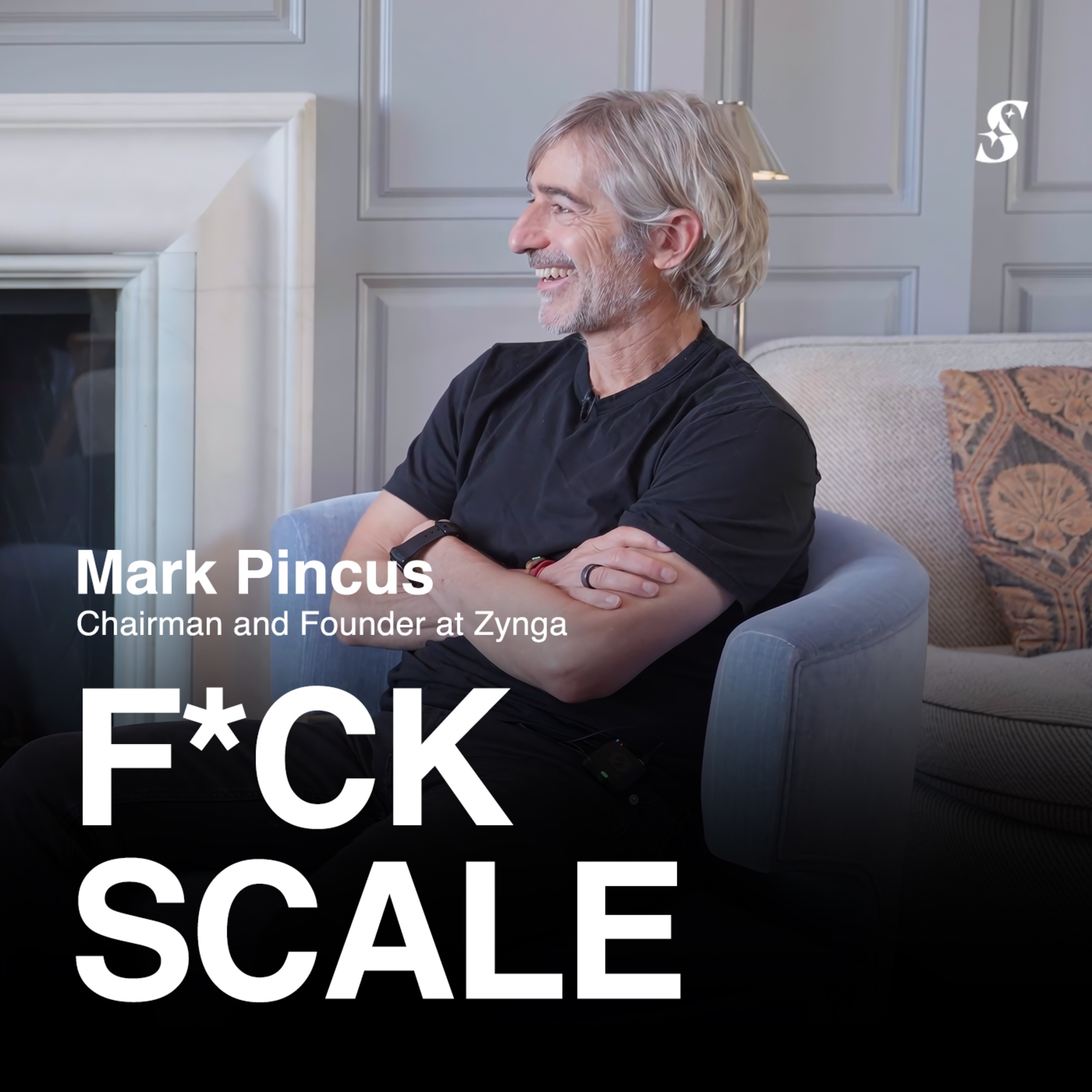
Mark Pincus
I went to Fred Wilson, who's backed everything I've done. Said Fred, give me a million dollars, I'll give you 25% of the company. Said Mark, you know I love you. I'd back anything, but I just have a tough time believing that you're really going to, like, go back to work. Your number one job as a founder is to be right. My goal in writing this book was I hoped it could be referenceable on the level of 0 to 1. I reread Peter Thiel's book after 10 years, and I was amazed that the points still resonated. I hosted this Think Weekend. Peter Thiel and Reid and Zuckerberg and Sean Parker, the smartest group people I knew who were all kind of interested in these topics that nobody else was. Consumer, Internet, macro, investing. It was like, in a way, we were all outsiders. I know now it seems like the insiders that was in 06. And then I launched Zynga in the spring of 07. I'm an AI maximalist. I think it's going to be bigger than we can imagine. These two to five trillion dollars companies are going to be ten to twenty trillion dollars companies.
- [01:08]
Molly Wood
Mark Finkus, welcome to Sorcery.
- [01:10]
Mark Pincus
Thanks.
- [01:10]
Molly Wood
We're here today to talk about your new book, Life at the Speed of Play. How long did it take you to pull this together? Because I watched this interview you did with Kleiner Perkins. I think it was like four years ago. And you were talking about it.
- [01:23]
Mark Pincus
Yes. Yeah. It's embarrassing how long and how much time it takes to write a book. It's like building a house. It's like you can't justify the time you're putting into it. But then at some point in the process, you're just so committed. Once you know you're going to do it like you have a book contract, you're just like, okay, I got to at least make something that I would read. And that's such a high bar. So, yeah, it took a long time.
- [01:52]
Molly Wood
What was really interesting to me, and I'm so curious of if this was intentional or not, was you started the book. You literally started the book with Elon. He's very hype in the news cycle right now with the space.
- [02:06]
Mark Pincus
He didn't need more press. He didn't need more press.
- [02:08]
Molly Wood
He didn't need more press, but you started the book with him. Why do you think Elon is so emblematic at the speed of play? And then also like, what was the process of putting that in first?
- [02:19]
Mark Pincus
Well, the process was it just made Sense to me, it just every time I came back to like, what did I wanted to get across the essence of life at the speed of play of this concept. Why did I put those words together? And why is that? Why does that resonate so much for me? And I thought, if I want people to picture it, I'd like people to picture the kinds of crazy things that Elon can go do that none of us can do. And crazy from one hand, like putting Fart Mode in his car, which no responsible corporation would ever allow a founder to do. To serious things like deciding he wanted to create a tunnel boring company while he was stuck in traffic in la. And we all have those thoughts, those moments. I don't know about Fart Mode, but some version of it. And none of us can actually do anything about it, or if we do, we have to devote our lives to that one thing. If you want to create a tunneling company, maybe you or I could, but it wouldn't just be a tweet. We would have to do our homework and go and research that industry and possibility and create a business plan and blah, blah, blah, blah. All the things that are not fun. And he's just having fun. You can tell watching him. So that's. That was the first part of your question, why I wanted to start with that. And then process wise, it actually wasn't easy because I don't live my life at Elon's speed of play. I have a book co author and a publisher and a chief of staff, and they all kept coming back to Mark. Don't, don't go there. Elon's controversial and you shouldn't just call him Elon. You should say Elon Musk. And there's a whole weirdness, I think, that we're kind of breaking down around books and podcasts and it's like, why can't we just talk the way we were just talking before we started this? Right? Why can't we just be fucking normal? Why do we have to be something else the minute that we have a camera on or we're publishing? And I just think we can do that now on Twitter and social media, and it's fun. And I also had this theory, writing the book, that whatever I had fun writing had a better chance that people would have fun reading and whatever felt dry and necessary would feel dry and necessary. And so I was like, this just is fun. I want to just. I really believe it. I'm like, I might as well. It's like, if you're gonna write a book you might as well just be in your own voice, as quirky as it is, and that'll make sense to some people. I don't know. Did it make sense to you?
- [05:15]
Molly Wood
Yeah, that makes. I mean, we were literally just talking about this with X. It's like we were both sharing how we've built really niche but, like, engaged communities on X. And for you, you were locked up for a little bit and you couldn't post the way that you'd want to post. And now you're posting the way you want to post, and you're getting 4000 likes on single things. Like, so I guess, like, you've experienced that in multiple directions. And I think X is probably one of. Not to, like, talk about Elon too much, but I think X is, for me, at least one of the most interesting testing grounds because you get immediate feedback.
- [05:51]
Mark Pincus
Yeah, it is. Yeah. In fact, I can't remember if I put this in the book, but I've felt. I think I did. I don't remember, but I've felt for a long time like, the only place that we actually can experience life at the speed of play is posting something on Twitter X. Because you can take 30 seconds and take an idea and put it out there, and then it could resonate with people. Like, and I never know what's going to resonate, but in retrospect, it's the things that I have the most emotional charge around. And I think my most viral post ever was I was in a hotel late night, and I was so frustrated, I got in late. It was a really nice hotel. It was a Peninsula in Chicago. And I got to my room and I was so annoyed that I had spent like, a half hour at the front desk that I didn't want to spend. And I just said, why is it that the nicer the hotel is, the longer it takes them to check us in? And it feels like they didn't know I was coming. And they're furiously typing, and I want to look at their screen. I'm like, what's going on back there? Like, are you shocked that I came? Because I guarantee this on my credit card. And why do you need to see my ID now? Like, I could do this online. I can do anything online. I can go to a Motel 6 on a road trip and they'll text me a lockbox combo without, like, why do they give me a better experience? Anyway, so that was my most viral tweet ever. I just posted that. I think Elon might have replied or retweeted or something. But, you know, just because I felt so much emotion, I think it got like 30,000 likes or something.
- [07:29]
Molly Wood
And then are you seeing that with the companies that you work with, like literally putting out products and testing ideas that way?
- [07:36]
Mark Pincus
Well, to the point about, like life at the speed of play and filling that emotional charge. The fact you can check and you could have Grok look for you, but anytime anyone posts about the hotel, check in experience in a nice hotel, it blows up. So. So really? Yes. So many people. So that is market research. Not just the number of likes, but there's a charge, an emotion that we feel that because we know this is wrong. And that's. That's an instinct that we all have. And you can see that played out. So that just tells me there's a big unexplored opportunity there.
- [08:16]
Molly Wood
Well, you're involved with Airbnb, so.
- [08:19]
Mark Pincus
Well, yeah, Airbnb probably. It's a good question. Like Airbnb probably gets around that because you're doing everything online and you're just showing up. So they probably, you know, I can't say that's why they do well, but there's this Airbnb experience and then there's a hotel experience and they don't seem to ever meet each other. You know, there's not that I want like a community host when I show up at the Peninsula or something, but there is just this weird inversion of service that so often, I think lots of times the service we want is. We just is to not. Not have to. Like, not have to be. I hate to say it, but not have to be nice to a human. Like, not have to sit there and smile and have a conversation when you just want to go to your room.
- [09:15]
Molly Wood
Well, we are now all very comfortable and very spoiled by how immediate we get anything. Like we were doing this interview yesterday and this to sound so bougie for most of the audience, but we were doing an interview yesterday on a charter coming up here. And the number one thing people don't want anymore in a charter when they're flying private is. Is flight attendants. And they don't want catering.
- [09:42]
Mark Pincus
Yeah, they just.
- [09:43]
Molly Wood
They would rather order the food that they want.
- [09:45]
Mark Pincus
Yes.
- [09:45]
Molly Wood
And they would rather get up and do it themselves.
- [09:48]
Mark Pincus
Yes. That's perfect example. I mean, this is high class problem. We're getting to that. I don't know. This is a real business opportunity. But. But yeah, it's amazing on private flights that the catering is so bad and very expensive and it's. And it kind of feels bad. I know this will sound even more tone deaf. Sorry. But. But it's also bothersome that it comes in, like, hard plastic, and you're just. I know you're on a plane already, but there's just something. It feels unhealthy, and it feels like, what am I gonna do with all this, like, hard plastic? And I don't know. It's just bothersome. And, yeah, what I started doing is just ordering Uber eats. I'm like, oh, my God, I can have, like, a great steak dinner or something. Or Sushi. Yeah. And it's. It's. It is. It's that inversion again. And. Yeah. And flight attendants just feel, like, kind of awkward. Like, it's just, like, oddly, this is random, but it's random connection. But at one point at Zynga, I did this. I started doing this annual tradition where I'd try to prank the entire company for April Fools.
- [11:06]
Molly Wood
Oh, my God.
- [11:08]
Mark Pincus
And I worked, and. But they all knew about it, so I had to, like, get craftier and deeper. And so at one point, I got this idea, actually, from my life coach. It was not a good idea to bring in clowns from the San Francisco Clown School and have them just start roaming the hallways and going to meetings. And I did it for weeks before April Fool's. I did it in March, and I thought it'd be funny, and it wasn't. A lot of people have, like, clown nightmares.
- [11:39]
Molly Wood
No.
- [11:39]
Mark Pincus
Yeah. A lot of people have, like, a weird trauma around clowns.
- [11:42]
Molly Wood
Really? Yeah, there's trauma around clowns.
- [11:45]
Mark Pincus
But the reason I'm bringing this up now, it oddly relates to this flight attendant thing, is that it turns out, a clown just walking around your offices, it's kind of awkward. It's like, it's a person that is supposed to have attention, and they're just standing there juggling or looking weird, and you're trying to not make eye contact with the clown, and the clown is really trying to engage you, and it's just this weird awkwardness that you don't want to have to be a fan to the clown if you don't want to be. And it's a little bit similar with a flight attendant. Or if at one point, Airbnb, when they were launching experiences, had. The original idea was that you'd have, like, Michael Minna come cook in your home and all these amazing experiences. And I said to Brian Chesky, you know, I don't want Michael Minna, with all due respect, to come cook in my home, because I need to show him a lot of attention, and I need to like, I can't just. It's not just a chef. You're not just gonna be like, thanks.
- [12:56]
Molly Wood
You're doing that to like hang out with him.
- [12:57]
Mark Pincus
And yeah, you, if you really want to hang out with him and like be his friend and go to his restaurants, like that's one thing. But if you just wanted him to come and cook you a meal and get a better meal, it's not going to be that. It's going to be this experience. You got to be up for that.
- [13:13]
Molly Wood
Yeah. It's just, I mean you would know of all people, it's like it. But like a lot of this has like psychologically shifted after Covid, when we were all cooped up at home for a while because we came became so self sufficient and like just kind of like all of our consumer behaviors changed a ton.
- [13:29]
Mark Pincus
Yeah. Yeah.
- [13:30]
Molly Wood
So when you were writing this book and I wanted to ask this in the beginning, a lot has changed since you started writing it. How did you keep it so evergreen?
- [13:40]
Mark Pincus
Well, my goal in writing this book, you know, I had. We all have ambitious hopes and dreams and, and mine was I hoped it could be referenceable on the level of 0 to 1. And I reread Peter Thiel's book after 10 years. I think it just passed 10 years. And I was amazed that the points still resonated. I still found it really engaging. And it was like a three hour dinner with Peter. And so I wanted to try to focus on core lessons and philosophies and things that when I, during the pandemic, I was teaching a math class to my girls who were in fifth grade and all their friends on Zoom and I called it Daddy Math. And I knew nothing about teaching math, but I wanted people to build a math brain. I wanted these kids to have a math brain. And so I tried to come at so many different angles not to give them math knowledge, but to give them a way of approaching math. And similar with this, I wanted to give people like a product brain. So it's like I try from lots of different angles from stories or philosophies or frameworks to like, okay, could you by the end of this book actually just have your own product brain? Like your get in touch with your own sense of products and the craft and so that hopefully is. Is timeless.
- [15:07]
Molly Wood
So one of my favorite parts is when you're deciphering between ideas versus instincts, could you lay out that framework and maybe some examples?
- [15:16]
Mark Pincus
Yeah. And that's. So I created this course at Stanford Business School on product management. It's still running after 10 years. There was only two really core points that I wanted to get across in the class. And even then it was like I found out how hard it was to be a teacher because I was only, like, mildly successful because they didn't always get it at the end of the course. One, I believe the most foundational thing we need to get good at as founders, product founders, is separating our winning instincts from our losing ideas. That was the core point. It's the core point of the whole book. And then on top of that, I have this framework Proven Better New, which is so important. We originally titled the book Proven Better New. I was like, that's going to be the thing. But I was like, that misses the gestalt of life at the speed of play. So this idea of instincts versus ideas that I'm still working on, I think you're working on it in the way you described launching sorcery. Is that just like I gave you the example with a hotel that we tune into this thing, whether it's looking at, like, your emotions, the kind of emotion you get back on Twitter, and there's like an X and a Y to that. Like, I got 4,000 likes for this, but then, oh, I got comments and the comments are really heated, you know, good and bad, or it's really hit a vein. So it's like we're looking for a vein. Like a good drug addict. We're trying to find a good vein. Um, sorry.
- [16:53]
Molly Wood
Or a peptide addict.
- [16:55]
Mark Pincus
Yes. Right now it's not drug addicts, it's peptides.
- [16:58]
Molly Wood
Well, I guess they don't put them in their veins, but maybe they do. I don't know. Most of them are subcutaneous. I'm in LA way too much.
- [17:03]
Mark Pincus
Wow. You know this? Yeah. It's amazing. I can tell who all my friends are on this GLP1 because they, they do look better, but they also just look, like, oddly skinnier, but really in a way that, you know, doesn't always look, like, super healthy.
- [17:22]
Molly Wood
You have a good GLP radar.
- [17:24]
Mark Pincus
Yeah, I do. So these instinct veins are. They're like real kind of usually emotional veins, but they're things in our human experience that are just broken or wrong or could be so much better. And my best example is remembering in, you know, early Internet days, but even when we were using SMS on phone that I was like, we ought to be able to order a taxi through our phone. So I registered smstaxi.com and built a whole business plan, but didn't pursue it because it just wasn't that good a business plan. So my instinct was right, obviously, that eventually we would order cars through our phones. But that one idea I put on, it was wrong. And the power of that, the power of getting that your instinct might be an A and your idea might be a B plus, why is that so important? It's like, how often have you had friends, friends who are dating somebody and they're just trying and trying and trying, or they're in a failing relationship and you're like, he's just not that into you, right? And. And you kind of want to have an intervention. We similarly have friends who are founders, and they're just stoically, heroically sticking with something, and it's just not that good. It's like a B. And B is the enemy of an a B. Often if we stick with the B is taking up space, it's distracting us from unlocking the A. And to fail or to call the ball that that idea isn't that good in itself is really powerful. And not many people do it. But when you commit to that intellectual honesty and you say, okay, it's just not quite right, it's either really not right or it's not quite right. It frees you up to now look around like, is someone else pursuing the this instinct in a better way? Or is the world not ready for this yet? Or can I at least try? Four other versions. And my worst story of this was my company, tribe.net I managed to start one of the first social networks. I mean, like, months, like, basically a month or two after Reid launched LinkedIn or started pursuing LinkedIn, you know, before Facebook, before MySpace. I launched a point that everything worked. I mean, like, you would get an email saying, mark wants to be your friend. You'd be like, oh, what is that? You click on and open it, you know? So, like, virality worked, Everything worked, and I still failed. And it was because my idea was wrong, you know, but all these underlying instincts were obviously right. Like, tribe became like three different industries but one failed company. And that really burned in for me, like, just, wow, if I could go back to Mark 2003 and shake myself and say, dude, you're on the right path, but this one idea isn't it. So that's why I just felt like if I could just get one thing across to founders or aspiring founders, it's that. It's write down what is the instinct and separate that from this one particular product idea that you're going after.
- [21:01]
Molly Wood
How do you know when you have the right instincts? And do you think your instincts got better over time?
- [21:08]
Mark Pincus
I don't think my instincts. It's a good question. I don't have any real evidence that my instincts have gotten better over time. They probably do. And I don't know if my ideas have gotten better either. They probably have. But what I know has gotten better is my ability to calibrate. My ability to both separate the two and then recognize that idea just isn't it. And to your question, how do you know it's. You said you have a boyfriend when. It's similar to finding your person. I think that when you find the right person, you just know. When you feel that love in your heart, I think you just know. And when you don't, you don't know. So it's a weird thing. When it really is it, you just know. But when it's not quite it, you walk around unsure if it's it. And if you're asking like, is this it? Could it be it? It's definitely not it. And from a product standpoint, when it works, everything works. Like anecdote. It works for you. Anecdotally, it works. Like you said, your podcast just started taking off. It just started working. Right. It's not this feeling of pushing a rock up a hill. It's not this feeling of, oh, this is really hard. If it's really hard. You know, one of my life philosophies is life is too short to struggle. You're better off struggling. You're better off not struggling, but spending 10 years trying to get to your lightning in a bottle and then have it just all work magically. Then 10 years pushing up a rock up a hill.
- [22:50]
Molly Wood
I want to talk deeper on this point of ideation and just coming up with more ideas and failing and testing things out, because I think it is the number one place that people get stuck, and a lot of people will also rest their laurels on. They've got really good ideas and that kind of thing. But we've seen time and time again, and there is a humbling moment that occurs with this. Your idea has existed before, and maybe it's the execution, maybe it's the timing, but there is something to that. And so how do you advise companies, founders? How have you done this in the past of pushing through ideas and experimentation and. And just trying more and then just getting rid of the old ones fast?
- [23:31]
Mark Pincus
Well, it's a perfect lead into my framework, proven better new. I like to say that we should be like scientists with white lab coats. And there's so many paradoxes in this that we want to follow our passions and emotions and we want to go innovate. And then I'm telling you, okay, to be really successful at that, you have to be dispassionate about your ideas. You need to feel no attachment or connection to your ideas, have a white lab coat and just do science experiments. Right. Which doesn't sound fun. So these are paradoxes that pull in different directions. But I also think that they keep us in bounds. And I think that if you can use a framework like proven better new or invent your own or stick steal it and make it better, I think you'll massively increase your odds of success and you will decrease the odds at least that you waste so much time on B pluses that. And so what I'd say is this. The idea of proven better new is you have this instinct and you have an idea. Okay, great. Let's now deconstruct what it is that you want to do. And I use games. They're a perfect example because there's so many mechanics that that make up a game, but that's the same as features or the pixels that make up this exact experience. I try to get people to do as an exercise is to say, okay, let's really look at what it is you're trying to do and look out in the world first at where has someone done this before and failed? That's great learning. Is there any example of what you want to do that's proven? So you are building a hit new podcast. Great, that's been done before. Let's deconstruct the podcast that you admire the most. I don't know all in or Joe Rogan or Lex Friedman, whatever it is. But who's done the closest thing to what you're doing? And now let's deconstruct every single thing about it that's made it successful. And let's also think about is that the same audience that you want? Because if it's a different audience, it's not great data for you. It's not a great proven because we need it to be proven for this exact product and use case against this exact audience, then I'm going to say better. Is there anything I can do that 10 out of 10 of the existing audience would say, fuck yeah. Then what you think is better is new, which we're not at yet. What they think is better you and they think is better. And it's usually really little micro parts of the experience. It's usually in products that it's now free or half price or no download or fairly mundane things, better music soundtrack, but it's something that everybody notices is better. And then new is like what is the novel thing that you're doing that's new and different and a reason to try it? And we have to accept that the new will probably fail. It'll be a reason to try it and it will probably fail. But if we do proven and better really well, it gets you two things. One, you're not going to fail for the wrong reason. And then we're isolating what is actually your novel new idea. Okay, maybe your show is like we said before you started, okay, an engaging, smart woman who can go deep with tech founders, but maybe is more accessible to a broader audience that includes women and younger people or whatever it is. Great, okay, that might be your new. You don't know if that's if that variant of your new is going to work. So you're like, maybe. What if you found out that that might be right but it needs to be two women. Okay, that would be another idea that you would test. You're like, okay, I'm going to make four different versions of this show and one is just you one on one interviewing founders. Another one is TBPN style and it's copying them and it's you and another woman playing off each other and I'm in the middle. But that's the idea of proven better new. It's just, can we take that instinct you have of a more accessible tech podcast but give you four shots on goal or 10 shots on goal and not just stick with the one shot where you're like okay, is it working? I don't know.
- [28:09]
Podcast Host/Announcer
Sorcery is brought to you by Brex, the financial stack trusted by more than 30,000 companies, including one in three venture backed startups in the U.S. nearly 40% of startups fail because they run out of cash. Brex is literally built to help founders avoid that. Unlike traditional banks that let your money sit idle chipping away at it with fees, Brexit's designed to help you spend smarter and move faster. Their all in one solution combines checking treasury and FDIC protection into one powerful account. You can send and receive money globally at lightning speeds, get 20 times the standard FDIC coverage through their partner banks, and even high yield from day one with same day and even same hour liquidity. Access your funds anytime. Companies like Scale, AI DoorDash Service, Titan Pims, Anthropic Flexport, Robinhood and Plaid Trust and use Brex. Start today@brex.com sorcery that's B R E X.com sorcery Turing is training the next generation of AI with tasks that require real expertise and real world judgment. That's why companies like Nvidia, Anthropic, Salesforce and Gemini partner with Turing. Turing builds realistic reinforcement learning environments and data systems based on real operational traces, the kind of infrastructure Frontier Labs need to train superintelligence. Visit turing.coms o u R C E
- [29:38]
Molly Wood
R Y yeah, that's really fascinating. It's really fascinating to hear you break it down from your brain because you clearly look at the world with this framework and just dissect each company you see in terms of like how they're going at it differently, what they change slightly. Like I can see that. Like you look at the world and like these very small nuances and you're like, oh, well, that's different. And they did this and it's scientific.
- [30:03]
Mark Pincus
Yeah. In fact, I think for all of us to get good at this, we almost need to. Or we not almost. We need to look at ourselves in the third person. Because you get a focus group of one with yourself and the more that you start to be a student of what resonates for you and why and what doesn't, then the more you'll actually get amazing data from that. So every time I try a new mobile app, I'm noticing like, what's the onboarding experience? Ooh, I don't like this product. But this onboarding experience was so much slicker and better. And those things really, really matter with mobile. Right? You, you lose people with every click. So the whole off of how are they going about having you set up an account and off you in the account is it's evolving and it's getting better and smoother and if you go backwards and now you're like, oh shit, they want me to like create a password and go back and verify my email. Like, forget it. Like, you've lost me. I'm never going to see your innovation because your first time user experience your fatui sucked and that could be an opportunity. What if they have a really good innovation? You can learn so much from a failed product that has a great idea buried in it because they didn't do proven better news. So they had a shitty onboard. The founder of TBH had that experience. They interview him in the book that he said there was an Arabic language product that was doing this honesty box, like get your friends to anonymously.
- [31:42]
Molly Wood
It was Nikita.
- [31:43]
Mark Pincus
Beer, Nikita? Thanks. Yeah. And he was a Perfect example of proven better new because he actually found a proven concept. I mean it had heat for him and he saw it in the reviews, but it was buried in a very, very narrow niche product. And he said, great, I'm just gonna take that idea, copy it and make it front and center.
- [32:05]
Molly Wood
So I'm so like. So I think there's, there's like a couple there. There's so many questions.
- [32:12]
Mark Pincus
I'll also add from my phone that I really am a student of, of like myself. Sounds very self involved, but I'm doing it in order to create products for other people.
- [32:31]
Molly Wood
It's okay to like yourself.
- [32:32]
Mark Pincus
Yeah. And you know, get more self aware. And my experience is that any app that makes it to the front of my iPhone.
- [32:44]
Molly Wood
Oh, this is one of my favorite parts. Yeah.
- [32:46]
Mark Pincus
So that's my iPhone homepage.
- [32:48]
Molly Wood
That's it.
- [32:49]
Mark Pincus
Yeah. And I'm very careful to only put apps that I really use every day and so I really, really pay attention. And so very few apps make it to the front of my phone. But when they do, I notice that and say, okay, I used to say I had a stick value of a billion dollars. Now I think maybe 5 billion or something or more. But that's in this world, such important information for you. If you also can tell who do you represent? And I seem to represent the early majority 18 months later. And so I've just figured out, okay, if I'm using this every day, a huge percentage of the early majority in the world are going to be using this in 18 months. And I've just calibrated that and seen that that's true over time. And we should all do that. Like, who do you represent? You know, we kind of do it in our minds. The new movie, you're like, I loved it. Was it a hit or not, you know, or a new song and you know, whatever products you're into. And that's what I love about consumer. You could start to do the same thing. And I've even invested off that. I think I mentioned the book I was using Raya when I was single, after I was divorced and, and I found myself really having fun with it. And dating apps are so painful. My experiences are so painful. And Raya actually made it kind of fun and interesting. And they kicked you out. They'd only let you look at 25 profiles a day, then you're done. And so smart and so well done and different that I just cold mailed the company and then I invested and put up most all their money.
- [34:36]
Molly Wood
Wow.
- [34:37]
Mark Pincus
I didn't know that. Oh yeah.
- [34:39]
Molly Wood
I'm curious because there are like a couple different angles on this because we're just in such a weird period of time right now. So Dylan Field, actually he reposted this post a couple days ago, which will be a while from when we release this. But Dylan Field recently posted. Because right now, you know, like Figma is battling the headline wars of Anthropic's new model releases. But like, if you look at Figma's earnings, they're doing just fine. They're doing great. Like, people love their product. And so one of the posts that he reposted was this chart of new app launches and like actual adoption and they were just like, they were just completely separated.
- [35:25]
Mark Pincus
Yeah.
- [35:25]
Molly Wood
And so we're in a moment in time right now where you can create literally anything you want, whenever you want. So like, how do you determine and how do you actually create something that sticks and then secondary to that, I know this one will be like a real good one for the audience. How do you make sure it's a business?
- [35:43]
Mark Pincus
Yeah, it's, you know, it's the best of times and the worst of times. It's so often that it's just so true today that on the one hand AI, like you're saying, is just magical. And I do talk about in the book that that are compressing the time to get to something you can test with people is amazing. It's so much less capital at the same time. What's so hard from a consumer point of view is that AI itself isn't a new platform. So when you think about new platforms that used to be new mobile game consoles, but the web and the web in a browser was a new platform and mobile was a new platform. We all move into a place of discovery where we're talking about the new apps and services and we're downloading them. And now we don't download new apps. I mean, we download an average of 0 new apps a month. So that to start with just makes it brutal. On top of that, we don't stick to anything new when we do try it. Like you said, I believe last year there was 40,000 games launched in the App Store and 0% of them sustained a top 25 position. Some might have made it to top 25 for a minute and left. And the top 10 games and probably top 10 apps haven't changed in probably five years because we're not waking up looking for something new. And it's why I think we have to have a mentality investing in consumer and building that is around the day365 retention. And it's thinking. It's really hard, but it's thinking, what can I build that? Not only can I imagine my users using a year from now, but they, when they first try it, can picture themselves using it a year from now. Think about when you try a new TV show, but you're watching the pilot. Even if you're thinking about the pilot, you're not just thinking, am I gonna like this one episode? You're like, is this a show I could get into? Like, is this a book I can make it the whole way through. And it's kind of the same mentality when we think about our apps or digital services. Does it fit in your digital life stack? It's very hard to get people interested in a new behavior. So all these things make it very difficult. And even if you get to something that does fit in the digital life stack, it turns out we need something that you're going to use every day and frequently or you're going to forget to come back to it. And so you have to do all those things or the way that I built Zynga was find a place that people are already hanging out. Like everyone was hanging out on MySpace and Facebook today. Everyone's hanging out on GPT or hanging out on X Twitter. If you can create a service that is core to that experience, where they're already hanging out, then they'll be reminded to keep using you every time they see it. The core point of this is that you have to be thinking about this distribution and mindshare lockstep as you try to invent your product. The idea that you're just going to make a better mousetrap and the world is just going to like come to you. It might work. It's just extremely low odds.
- [39:18]
Molly Wood
Just to be clear, you did this extremely well at Zynga. Can you explain some of the cohorts and what you did with each game? Like, they had crazy record setting, retention and growth.
- [39:30]
Mark Pincus
Sure. What we figured out trying to survive in this, in a lot of ways, this app ecosystem, these app ecosystems that evolved on MySpace and Facebook and the other social networks were a precursor to what mobile is today. So there was an app economy and you were trying to live and survive on someone else's platform as just an app, and it was fleeting. And what all our competitors at the time, like Max Levchin, who was on, had slide. They were the big dogs on these social networking services and they had huge virality and games weren't viral, okay. And in fact, I remember Dave Morin sat down with me before they launched their app platform. He and I had coffee in Coley and he said, mark, anything but games, they're just not viral. And there's so many viral things people are launching on our platform, pokes and wall apps and. But I want to see you succeed. Just don't do games. I was like, well, I had a feeling based on my failure of tribe that everyone's hanging out at this cocktail party with nothing to do with. So I had this instinct that people wanted something more fun to do while they were having their social networking. And then I put this idea of a variant of a social game. What I quickly realized was games were not viral. We couldn't keep up with the virality of these apps that we're doing. They were doing hundreds of thousands of installs a day. But we had the chance to have better retention and there was a reason to come back where the other ones there wasn't. So we built every game against this retention idea and we used the social loops to remind you to come back. And that was core. And the way we thought about it is on the one hand we wanted to innovate on how could we help you improve the relationships in your life? How could the social interaction in farmville make you more likely to cross the street and say hi to somebody that you just knew online? Were there real acts of friendship like gifting or heroism that we could do in a game? And then on the other hand, we thought, how do we build game mechanics that remind you and your friends to come back through these other channels, the feeds and requests and things like that. And so we got better and better at that. And yeah, so we had huge day 365 retention. And that's why our original games, like Zynga Poker and a couple years later, Words with Friends, are still some of the biggest games at Zynga, the company. However many years later, it's getting close to 20 years, 19 years later, and every new genre of games we built, what we did was we built new social gaming mechanics. And I had a whiteboard. Originally, I just leaned against a wall in one of our studios and I just wrote the name of every game mechanic I'd ever heard of. And I just would try them and cross them out as we did them. And every single one of them worked. And then we. But we didn't just do a game mechanic. Like there's XP achievements, co op play, there's all these things that are in like MMOs and like a World of Warcraft, we would turn it into a social game. So we wouldn't. I like to think of it that what we are doing, and often we're doing with consumer and even enterprise apps is we're kind of in the candy business and in the hoop jumping business and it's kind of go to Dave and Busters or whatever the variant of Dave and Busters is to do your market research, which my four year old wants me to take him to these arcades where we play these games, put $50 into these games to win tickets and then we go to a vending machine and we can buy junk like a bouncing ball, a whistle. It's not worth $50, but he's excited about these things. And so on the one hand we're trying to come up with candy. Like what are things that people want? And we're evaluating those rewards. And the highest reward for most people is social status. So can I actually move your social status? And in a lot of ways the biggest reward socially we could get to in a game was a marriage. So we counted the number of marriages that happened through our games. That's like real life candy.
- [44:09]
Molly Wood
That's wild.
- [44:10]
Mark Pincus
Yeah. So we had strangers who met in like Words with Friends or Poker farmville and built relationships online and then met and got married. There was a couple with a woman in England and a man in America and they eventually met in person and got married. But so that's like the best candy. And then we have hoops. Like what do you have to jump through in order to get that candy? And the key is that the jumping hoops should feel fun if it feels like drudgery and not fun. So that Dave and Buster's like the skeeball and the games you play should be fun, but we're giving them more purpose and reward because you're trying to earn these tickets and you can actually do those same principles in any. Maybe you can do this with this podcast.
- [45:00]
Molly Wood
I want to ask this because so you do both building and investing. You see many categories over and over again. I've been an investor my whole career. There are categories we will not touch. Like and firms that I've worked with who like that's not a viable business model and they just kind of shun it and that's kind of a thing. Is that similar for you? Like, do you. Are there certain categories you just won't touch? Is there sometimes always an anomaly. Will you where you're going to take a chance because you know, dating apps like they do have, some of these have life cycles and certain points where they do peak. I think Nikita is a really good example of this. He knows how to build things to a peak user max and like good thing. But like how do you, how do you think about that?
- [45:49]
Mark Pincus
Such a good question. So at a, at a really high altitude, like 100,000 foot level, I think kind of enterprise versus consumer or B2B versus consumer. And I always start with consumer. It's just what I know and what I'm passionate about. But a few times I've founded enterprise companies by mistake. One support.com went public the last week of the dot com IPO window. But it was like a hardcore enterprise software company. But I started it originally trying to do something for consumers. But then the tech we built really applied and had core value in the enterprise. So it wanted to be an enterprise company. So I just went with it. I just recently co founded an enterprise AI company called HiveMind. Again I was trying to pursue what I call the social membrane and just thinking like how will we do social NETworking in an AI agentic world? And I teamed up with Reid Hoffman and with a really brilliant ML engineer and founder, Ratankar Das. And Ratankar said these ideas that you want to do for consumer apply right now in the enterprise. And he said are you cool if we brainstorm and go that direction? And I was like okay. And so he ran with it and we founded this company that now is in four or five enterprises and is delivering a lot of value because really it was getting to the messiness of the human part that the first and last mile of AI in your enterprise is a human. And anyway we could go deeper on what that company is doing but it there aren't good solves in enterprise software and in AI and LLMs for the human part and the fact that the human still has these edge cases and this judgment and you just can't ever get it into your system of record fast enough for it to work on its own. As we realized you needed a continuous learning system that is, it's dynamic in living and it's actually always interacting with everyone else in your company. And so that was Hive Mind which is shockingly doing well really quickly. I guess not shocking because everything AI is selling now but. But that was 100,000 foot level. When I go deeper like how do I think about things? I'd say I personally there's like another, another paradox is that on the one hand I really my north star is I want to create an Internet treasure A service we can't remember life before or imagine life without. Like, it's part of our life. Stack indispensable. It's like the iPhone or Google. That's really, really ambitious. And I know you can't start with that ambition. You have to start with a really narrow use case. And so how do you do both? It's really hard, but so I'm willing to start with really small ideas. Like Zynga started with a really small idea of one poker game, but it pointed at a huge iceberg of can we get the mass market to play games like busy adults to play games? And can we do it by playing on a different dimension that we're making these games? We're letting you justify it more in your life because it's not empty calories, because it's social, and it's a better use of your time than just pure entertainment. And then also Emmett Shear told me, I interviewed him for the book, that it's good to be a little twitchy, you know, that the idea of just. Am I into this idea? Because the other thing that happens to us so often on this founding path is that we get. We're so excited, the team's excited, but then we go into kind of the despair or the just painful part where you're working on this product and it's like this death march and it's not fun, and you kind of lost the excitement. You're not even that into your product. You finally produce the prototype and it just isn't that good. And you're just. Now what do I do? I've got investors and a team. And I like to think that I love the concept of Founder Mode. And for me, the real gestalt of Founder Mode is can you have enough faith in yourself and your instincts to take these really hard positions that are really unpopular, not just with your investors, but how about with your team? I mean, I think one of the most courageous things Jeff Bezos did was in that book. It was so good. Brad Stone's book was called, like, the UN Store, the UN Anyway, but Bradstone had a great book. Everyone should look it up and read it. But the most courageous thing the story from that was when he had this instinct to launch Amazon prime. And he wanted it to be this. This subscription service, but his CFO and everyone said it doesn't make sense. Like the numbers don't work. But he had this instinct, which he built by seeing the way people were addicted to Costco. And he said it was a leap of faith for Him. And he had to go against, really, his whole company just based on his own instinct. And I think that's actually the hardest thing for a founder to do. Like, you can have a $2 stock, you can have your board disagree, your investors disagree. But I think actually going against your team, your own team, don't believe in this, but you do. I think that might be the absolute hardest thing. And so a lot of this is about the courage to stand by your own conviction and go with your commitment to intellectual honesty. And it's. So what do you do when you come in on Monday and you're not that into this podcast and it's not. And it's the second Monday and you're not that into it? You're like, I'm just not feeling it. Like, I'm not having fun anymore. Or I'm watching the versions come back and they're not that great. You know, you don't have a big team, but if you're building a product, you're supposed to convey confidence to your team. And, you know, you don't want to feel like third grade soccer, that every Monday you flip the board and go a different direction. And at the same time, I think the power of the best founders is the willingness to, like Elon, I think, just lost, like, his whole founding team from Xai. Right. Probably because he. I think it is that he went in and said, we built this wrong. We got to start over. That's really. That's founder mode to me. That's really powerful. And so I think your number one job as a founder is to be right. What do you do with it, though, after you're right, after you see the truth about your product, that it's wrong, what are you going to do? Are you going to take a month to try to, like, slowly bring your team there and let them spend the month building a product you know is going to fail, and then you're going to slowly tenderize the meat to this idea that there's a new product we should do? Or do you build a culture with them saying, you know what? Until we lock on, we're going to go through a lot of painful disruption. That's just our normal.
- [53:40]
Molly Wood
And you have to set that culture ahead of time because otherwise your team will just leave.
- [53:47]
Mark Pincus
Yeah, they'll probably still leave even if you set that culture well.
- [53:50]
Molly Wood
Well.
- [53:50]
Mark Pincus
Cause they'll get worn out. And that's happened to me. And that's part of people's complaint about working with Mark is he changes his mind all the time. And often that's been true. And I change my mind as often as I think I need to for us to win. And I'm just, we have to be a heat seeking missile and we have to be guided by this pursuit of the truth and this intellectual honesty. And that ultimately matters more than just team cohesion. And do you want to be most efficient execution or do you want to navigate to the right place? They're often at odds. Your factory running most efficiently means you don't change it very often. No change orders, but it doesn't mean that it's producing a winning product. And so I like to say, hopefully your mission doesn't ever change and your vision maybe rarely changes and your strategy changes as often as it needs to, and your tactics probably change every day in order to win. And that's. That amount of variation is just a lot higher before you've gotten to product market fit by necessity. And I almost would have less faith. It's kind of like going to doctors. Like, I have actually two children who have rare medical conditions. And my son was born with a gene deletion. And my daughter, my fifth child's baby, she was born with a rare gene mutation. And the odds of both of those happening de novo are like impossible. So I think, okay, I'm meant to, I don't exactly believe in fate, but I do believe to like, listen to the, what you see going on in the world and like, okay, I want to do more things for people with neurodivergence. My experience going to many specialists for both of my kids, is that I learned the more confident the specialist was in the diagnosis, the less I trusted them.
- [56:11]
Molly Wood
Oh, wow.
- [56:12]
Mark Pincus
And the original doctor, the just general practice, you know, pediatrician for my son, this amazing Dr. Chin, his diagnosis, the very first diagnosis I got was, your son is on a slower train. He's going to hit every station. You just don't know when. And that's been true. And that's the only thing that's been consistently true. But the doctors who just had this deep conviction that they knew what it was were just wrong. And the same was true with my daughter that we finally figured out that she has this rare mutation. But up until then, every doctor that confidently told us what it was, you know, was wrong. So similarly, when people are that confident in their product, but they don't have product market fit, your bullshit detectors gotta be higher, like, okay, this is hope. There's a difference between hope and belief, right? Belief is rooted hopefully in something. I hope hope is just rooted in Hope it's Hope is just Hope is not a strategy. Hope kills a lot of companies and founders. Until you have kind of built a legal case, a factual case, that beyond any reasonable doubt you have product market fit, you need to be open to a lot of possibilities.
- [57:41]
Podcast Host/Announcer
Today's episode is sponsored by VCX by Fundrise, the public ticker for private tech allowing investors of all sizes to invest in venture capital. Learn more@getvcx.com Some of you may not have heard this yet, but our sponsor Public just launched something called Generated Assets and it brings AI into investing in a way I've honestly never seen before. Here's how it works. You type in an idea like AI powered supply chain companies with positive free cash flow or defense tech companies growing revenue over 25% year over year. Publix AI then dispatches a swarm of agents that scan every single US stock, evaluates them, and instantly builds a custom index around your thesis. What really stands out is how clearly it explains why each stock is included. And before you invest, you can even back test your idea against the S&P 500. So you're making decisions with real context, not just guessing and beyond generation Generated Assets Public lets you invest in stocks, bonds, options, crypto all in one place. They'll even give you an uncapped 1% match when you transfer your investments over from another platform. If you want to build a portfolio that actually reflects your thesis, visit public.com Sorcery paid for by Public Investing Full disclosures in the Description Enterprise AI runs on Merge, the AI infra platform for integrations, agent tooling and model orchestration registration so your teams ship product, not plumbing. Mistral, Dropbox and Drata already trust Merge in production. Start building at merge.dev. founders ship faster on deal. Set up payroll for any country in minutes, hire anyone anywhere and get visas handled fast so you stay focused on scaling. Deal takes care of onboarding, hr, it, EOR benefits and compliance so your team can grow without border. It's why more than 37,000 fast growing companies trust deal to move fast. VisiT-E-E-L.com sorcery that'S-E-E-L. Com S O U R C E R Y this is
- [59:38]
Molly Wood
like slightly tangential, but it is definitely on the topic of as a CEO, you must be right. When we were having breakfast earlier, we were talking about technical assistance and there was one particular one who you said was hitting some speed bumps over and over again, but you were really like you had faith in him and so I Could you talk about that story with Ian Cinnamon? And could you also. What I thought, okay, so this was my favorite chapter in the book. It was fuck scale. You had so many great principles and so many fun stories in that one. So I definitely want to talk about that one first. But could you just like, like lay out what technical assistance are and how it's happened over history and then how it leads to Ian Cinnamon.
- [60:23]
Mark Pincus
Yeah.
- [60:24]
Molly Wood
Who now is Apex and just crushing it.
- [60:26]
Mark Pincus
Yeah. So tech assistants. I think the first CEO to have a tech assistant, I think was Andy Groves. I've never actually fact checked myself, but then Bill Gates did it and then Jeff Bezos did it. And I got this as a hand me down secondhand because Bing Gordon was on the board of Amazon and he would give me all of these great management principles secondhand that he saw Jeff Bezos do. Another one was never have one on ones with anybody. And I would hear them and say, oh shit, that's right. And then I would just adopt them immediately. And then luckily, at some point I got to sit down with Jeff Bezos and he spent a couple hours generously talking me through his whole approach to this. And the entire C staff at Amazon had started his tech assistant and Andy Jassy, the CEO now was. And it's. It actually, it's one of these examples of a totally non leveraged idea that gives you leverage down the road. And what it is is that the idea is that you pick someone from the ranks who you think has high potential and is motivated. And usually it's not their first year in. They actually have already been trained on a bunch of stuff. And you just have them follow you around and shadow you and just go to every meeting you go to and mostly listen and learn and take notes. And what you're really doing is transferring your vampire blood. So there's something that got you to your unique mix of, right, like write for this exact product and business and customer and time in the world. And it's almost impossible to write that down and to just train that into people at an institutional level. But what you can do is train one person and have them get it. Like just get it. And they're just following you around, just taking notes, doing things. But they're a product of tech assistant, they're not a chief of staff. Their job is not to manage your schedule or manage you or anything. But as you go, you start to hit places that you wish you could spend more time on but you can't. Like maybe you see, you know, Clawbot come out and you're like, ah, if I had an extra 40 hours, I would just go deep on that and build my own and play with it. That's your tech assistance for you. Give them these projects and let them go deep on them. And what happened at Amazon is Bezos ended up giving. I think it might have been Andy Jassy who it might have been Andy Jassy that he had just go off and do Alexa. And so after this tour of duty as tech assistant, they're actually trained to go be a mini CEO like you of a project. And Jeff Bezos said, I also loved, I don't think it was in my book, I stole a lot of his ideas, not 100% of them, but he said the way he thought about a manager, he said, the number one job of a CEO is they have to be right. And he said, this is what he said to me, he said, I'd like to think that if this was the 1600s and I was the king of Spain, I'm handing a chest of gold and silver to this captain and they're going to go off and explore the world for a year and I believe they're going to come back with a ship intact and more bounty than the gold I gave them. And so the point is, this relates also to fuck scale is how do I get people to do the right thing when I'm not in the room? Like that's, to me, the whole point of management tech assistant is one of the scalable, non scalable ways to do that, because you're passing your vampire blood, you're hopefully taking someone who has huge potential and you're teaching them how to be right the way that you're right. And then you're sending them off in the world with the confidence that they get you. They get like, what would Mark do, what would Reed do, what would Jeff do? And then they have their version of that over time, but they're doing your right over time. And so Ian Cinnamon, I had a whole bunch of amazing tech assistants who all went on to have gone on to amazing things. Ian was a star recruit. He was graduating from MIT early, he'd already built a successful mobile app or game and everyone was recruiting him. And my recruiter said, we'll never get this guy. He's going to be a top recruit for Meta or Google. And so I personally recruited him and I said, if you come, I'm going to manage your career personally at Zynga. I'm going to make sure that you're challenged and that you grow more than any other company you could go to. And he said, great, I'm on. I'm signing on. I put him in poker, which was like the best training grounds in the company. And within one or two quarters, the poker team was pipping him out. So they were marking him as a low low, like low value, low potential. And usually that's also the sign you want to look at people who are low lows, because there might be organ rejection, like there was with Ian. And sometimes you can find this real gem in the rough there. Even if they're failing in your organization, it might be for good reason or it might be for completely wrong reasons that you need to know about. And that was the case with Ian. I talked to the team. They said he's too entrepreneurial. He just wants to do what he wants to do. He won't do what we tell him to do. And I talked to Ian. He said they're doing dumb ideas, right? So he was what I call an expert witness. The person who's closest to the data and the answers and furthest from the decision. It sounds like you were an expert witness. I was an expert witness. Most of us working for other people have that experience, and Ian did. So I plucked him out early, much earlier than I would normally, made him my tech assistant. And I said, great, they don't know what they're missing. And he just followed me around and worked on everything I did, built cool shit. Then I left being CEO, started Incubator. He worked there. Then I came back as CEO. I think he came back with me. Or maybe at that point he ejected and started founding his own companies.
- [66:59]
Molly Wood
Before we leave this chapter of the book, there's one section that I brought up earlier as well, and you were like, oh, this happens with every cycle. And that was, don't be a fake CEO. And I was saying, it seems like there's a lot of fake CEOs right now, but could you distill what that means?
- [67:17]
Mark Pincus
Yes, I would say there probably are a lot of fake CEOs. I also think we have more real CEOs. Real, what I'd call real close to the metal product CEOs. I think with every cycle, we get more of both. And I think when we hit. I'm not saying that I don't believe AI is a bubble, but I think that when the financing spigot gets turned on, we do get bubbly things. There are lots of bubbles, meaning lots of times that we see things getting funded that shouldn't or things getting funded at much higher valuations than they should. And we always live in the age of nuance. We're just not very good at spotting the nuance. And so it gets really hard. And this is what happened in the first bubble, by the way. The first.com bubble. It always starts with something real. And there was ebay. And ebay was a phenomenal business. And it was massively profitable and growing and went public. And that made investors believe in the dot com boom. And then we got pets.com, then we got spa.com, then we got stupidass.com.com right? And we got Amazon.com, right, which wasn't stupid, but was seen as stupid. So. So it's just so hard to be discerning in the middle of these things. And again, now we have amazing, amazing, breathtaking businesses, right, that are getting 100 million arrs faster than we've ever seen in history. And that also creates an investor froth wanting to find the next one that funds dumb business. The idea of a fake CEO, Bing and I started saying it to each other early on with Zynga. It was. I said it was a mantra. Don't be a fake CEO. And to me, I had to keep reminding myself what my job was like. Okay, my job is to work with great product teams on great products that our users love. That's my job. Nothing else is my job. It's not my job to talk to investors. If I do the first thing, the product team and customers, well, it turns out it doesn't matter if I do any of the other things. Well, it's not my job to go talk at conferences. It's not my job to talk to the press. It's not my job to be a beloved CEO and manager of people. Those might help, but that's not my core job. And literally, Bing and I would have my assistant track my calendar and say what percent of my hours went into my real job versus all the fake shit. And so I tried to really stay grounded. And I always wanted to be at least 50%. And it's amazing that it's a struggle to be 50% on the real shit that takes. It's a real act of will. And the more successful your company gets, the more you're invited to Davos and everything else. And so often when I'm sitting in the audience and I'm listening to a CEO or I'm watching a podcast like this, I'm thinking, what's this person's agenda? Why is Mark on this podcast right Now I'm trying to sell my book, and I'm trying to. I want my book to, you know, hopefully a lot of people to connect with it. I think I have a clear agenda. But if I wasn't, you say, well, why is Mark on this podcast right now? Why is he spending the time doing this versus other things? And I remember the MySpace founders. When MySpace got hot, just doing the worldwide circuit. I remember Jack Dorsey and Evan Williams. When Twitter got hot, they were all sudden on the world circuit. And I thought, okay, this is fun for them. And this is the first time in their career they've been recognized this way. I doubt that that relates to their product and their customers. I don't think they're getting more users from this PR tour that they're on. And so it's a great thing to always ask yourself, like, am I being a fake CEO right now? And fake CEO is just. I like to think. I don't mean to dish on anybody, but when I hear people giving talks about culture, especially when they're currently CEO, my fake CEO meter goes up. My alarm bells go off because I'm like, okay, if you're out lecturing about culture to people, I kind of doubt that you're actually doing things that are actually working on and helping your culture. I also think culture is one of those things that's like fight club. Like, you don't talk about it. I'm really skeptical of people who are intentional, scientific and intentional about their culture. To me, that's kind of a fake CEO thing. Having a strong culture is a real CEO thing. Trying to manufacture a culture, to me, is a fake CEO thing. That makes sense.
- [72:15]
Molly Wood
Yeah, that makes sense. So before we close out, I really wanted to talk about this and go deep because I think it's something that I missed, but it is still so core to the Silicon Valley culture. You also on the Silicon Valley show, which I learned about. But what was it like when you first founded Zynga in 2007? Like, who were the characters that were around? Were you guys all going to lunch together? Did you never see each other? Like, did you bump shoulders? Like, what was it actually like? Did you have spies?
- [72:49]
Mark Pincus
I love it.
- [72:49]
Molly Wood
I don't know.
- [72:50]
Mark Pincus
It was. I would say that there was this period from, like, 2002 to 2008, at least 2007, that was the first part of it, for sure. I call the nuclear winner for the Internet. I mean, here in San Francisco, it was like they'd burned the boats and there was like, it was a ghost town. Even more. I mean, on the level of like Covid. But it was, there was just nobody left. Like all the MBAs and VCs came and they left. Like this town was the consumer Internet capital. And then it was just, you know, the post Gold Rush, sad, dark, empty place. And it was in that period that a small group of us realized we still carried the flame. Like so many of our friends actually got out of the industry and went into real estate or other businesses completely. And I was like, really? Like, it's not over, folks. Like the dogs are still eating the dog food. They're just not eating pet.com dog food. And it was in the fall of 2002 or the Q4 of 2002 that I remember Reid Hoffman and I looked at Amazon's numbers. They printed and we're like, holy fuck. They just grew everything 25% year over year. I'm like, this shit is not over. It's just starting to happen. And I always try to remind people and myself we got to look at the underlying what are the consumers doing? That's what matters, not what does Wall street care about? I was there for the beginning of the mobile phone industry. I'm that old. And I saw the price per pop. The valuations of the companies went like this, but the usage went like this. And the Internet was pretty much the same thing. It was a little slow and it had some. But then the Internet was like this at a consumer level and it just E commerce. Took a while to figure out how to do it profitably and realized it didn't have to give it away for free. But we really saw it first in the numbers from Amazon. But there was a small group of us kind of centered in San Francisco. There was Evan Williams and Jack Dorsey, there was Reid. And we still were all passionate and. And we would get together, especially Reid and I started hosting brainstorms in. I had this one bedroom house in Cole Valley and I would put these. I lived there alone. I'd put these sticky white 3M sheets on the walls from each brainstorm and I covered all the walls and we would have these brainstorms. And Reid came up with the term Web 2.0 and it came from this. You've heard of that, right? I'm like, I don't know if that's still a thing. So it came from these fundamental beliefs. We had principles like rules of the Internet, like if it can be free, it will be free. Especially around data. And we said data at the time was locked up. And we said there was A new concept to APIs. We said, wow, the data can be free. The data wants to be free. It's the business model at the time was pay for access to a database. And this idea that led to the start of a Napster and led to Friendster and LinkedIn and Facebook and Twitter was, okay, what would it look like if we just enabled all of the people to connect to each other directly? And even if there's a database involved, the friction just goes away completely. There's no business. There's no hard gate or Paywall, Monster.com or dating apps because it can be free. It is free.
- [76:37]
Molly Wood
Were you also investing in these companies at the time?
- [76:39]
Mark Pincus
Yeah. Yes. So Reid and I put up all the original money for Friendster as like a science experiment. We didn't think it would work. I put up all the original money for Napster because Sean Parker worked for me as an intern when he was 16. But what was great about that moment, like 2005, 2004 to 2007, was that even though by 2006, Facebook was clearly kind of breaking out and getting hot. Hot, meaning it was worth $100 million, that was hot. It still was kind of inside baseball. And around that time, In March of 2006, I hosted this Think Weekend at my ranch in Colorado. I say ranch loosely. It's like a ranchita, it's three acres, but it was this beautiful, broken down old Colorado ranch. And I hosted this Think Weekend and I had Peter Thiel and Reed and Zuckerberg and Sean Parker. Basically, I just had the smartest group people I knew who were all kind of interested in these topics that nobody else was. Consumer Internet, macro investing. Peter Till gave a presentation on the housing bubble that he had bet his whole hedge fund clarium on too early. He ended up doing fine. It turns out in that fund he had Palantir, which was a stub that he gave out to everybody at the end. But there was like 35 people. And it was our own little, like, Think weekend UN conference. And it was just, you know, all of us just sharing big ideas and stuff. But I wouldn't say that was the industry, but it was, you know, it was like this kind of club, but it wasn't an exclusive club. It was like, in a way, we were all outsiders. Like, I know now it seems like the insiders, but, you know, none of us were part of, like, a brand adventure fund. None of us were like part of a Sequoia Koretsu or Kleiner Perkins or none of us were like, at the Allen Conference or it was just like we were all turned on by these same ideas and we all believed in consumer Internet at a time that nobody else did. And that was in 06. And then I launched Zynga in the spring of 07 just as a project. I was living in an apartment in New York City and nobody believed I was going to go back to work. I was like retired rich guy, kind of rich, you know, not like by these standards, but I'd had a bunch of successful companies. I was in what I call the abyss. And, but, but I wanted, I deeply, I had a passion, a hunger for these consumer products and I wanted to get back to it. But I needed to, I needed to get to product market fit. It's like, which comes first. I start things as projects and then once they catch on and I dive in. But it was funny because when I went to VCs in the beginning, I went to Fred Wilson, who's backed everything I've done. And while I was in New York, I said, fred, give me a million dollars, I'll give you 25% of the company. Said, mark, you know I love you. I'd back anything, but I just have a tough time believing that you're really going to like go back to work. I'm like, okay, all right.
- [80:06]
Molly Wood
And damn.
- [80:07]
Mark Pincus
And then I met with Josh Koppelman and they had this deal at first round that they would give any second time founder, 250k bridge note with a $10 million cap, sight unseen. And I met him at Penn Station. I said, I'm here for my money. Can I have my 250K? He's like, Mark, I just have trouble believing that this will be like your company. Like, you know, I just don't think you're going to do this.
- [80:32]
Molly Wood
And so it's literally their mandate.
- [80:34]
Mark Pincus
Yeah, Nobody, nobody was, you know, no one. I was 41 and they kind of were like, you're still doing this. Like, why don't you go be a vc? Why don't you have any self respect? Like you're just, you're making dumb little apps on Facebook. Like it was me and Max Lufchin and a bunch of college kids and people in China. Yeah. So it just seemed so flaky, the whole thing. Consumer, I think, always seems uninvestable. You know, it was like that then. It feels like that again now.
- [81:04]
Molly Wood
Damn. Well, as we close out, thank you so much for sharing everything. I, I understand now why we should, we should probably have blocked off the whole day because I could keep on asking you questions and you just have deep answers for all of them and it's really fascinating. And I have a lot more questions.
- [81:23]
Mark Pincus
But to be fair, you're a good interviewer because I have to say, like, sometimes I get kind of bored with my own shit.
- [81:31]
Molly Wood
Oh, no.
- [81:32]
Mark Pincus
And sometimes I'm like, oh, you know, I don't know if I want to like, go into these stories again. But you keep it kind of fresh. And I wanted to keep going, so that's a good sign.
- [81:43]
Molly Wood
Good, good. Okay. Well then, as we close out, one last question. What is your hottest take about AI right now?
- [81:51]
Mark Pincus
Hmm. Well, it's nuanced. I'm an AI maximalist and I'd say this. When we lived through the dot com bubble in 2000 99, 2000, none of us thought it made sense. We all thought that it had lost touch with fundamentals. These companies were dumb. They had no business plans. And we were like, this is going to end badly. That's not happening now. For better or worse, I'd say all my smartest friends believe. And we're seeing AI deliver. It's not dark fiber. These GPUs are burning hot and people are getting real value out of it. So I'm an AI maximalist. I think the LLM companies are phenomenal and I'm bullish. I'm an investor in Nvidia, a bunch of the AI companies. And I think on a public market point of view, I love the trade because they're at a peg ratio below a 1. And when do we get that? The memory companies, I mean, I own those. I just think you just have to believe that this is going to keep playing out. And clearly investors, the market doesn't believe it. That's why they're trading below their peg. I think it is going to play out. I just think it's on a level that we have a tough time imagining. I think there's so many companies now that are building real legit businesses, getting to huge arrs. I think consumer AI still feels uninvestable. There's no obvious distribution. There's been like two companies that make sense, like Sumo and Midjourney. There's like this prosumer place, but I think that the whole environment is amazing. But I also think it's like fraught with danger, like investor beware. I'm sure that there'll be a lot of carnage, but I really have this feeling like we're early in a cycle and, and I think it's, I think it's going to be bigger than we can imagine. I think these two to $5 trillion companies are going to be $10 to $20 trillion companies or more. It's just hard for us to. The numbers are too hard for us to imagine.
- [84:17]
Molly Wood
Yeah, it was crazy. We, we talked about, we both watched the all in Liquidity summit with Thomas Lafon and there was one slide where he said the rate at which you are going to grow more after a certain point increases substantially. And I think it was like, after maybe like $100 billion, you're 30% more likely to continue to scale. Something crazy like that. And now it's like, all right, you see the trillion dollar company. Sure. Put your money in it.
- [84:46]
Mark Pincus
Yes. However, the danger of looking backwards at those charts is that that's what was true in the last 10 or 20 years and it just doesn't. So you can go to 20, 21. And he's right about that. It just doesn't mean that it's going to play out the same way. But the idea that scale right now is a real asset is getting rewarded does, does make sense. But on the other hand, you know, this belief that the LLMs are going to eat up every possible business, I just, I don't think is true. It's, I mean, cursor flies in the face of that.
- [85:26]
Molly Wood
Yeah, we were just at Harvey too and that one was.
- [85:28]
Mark Pincus
Yeah.
- [85:29]
Molly Wood
Really obvious.
- [85:30]
Mark Pincus
Yeah. People have predicted the death of Harvey. I mean, so I, I think that, that, that what's happened is these wrapper apps found product market fit, made it into legitimate use cases and enterprises and then they can go deeper and deeper and find more value. And I think that's just going to expand. So I'm not worried about those companies investments and I have to say I'm not getting sent and pitched a lot of dumb ideas. I mean like signal seems pretty high.
- [86:06]
Molly Wood
Yeah, well, Mark, I have to stop us, but let's see.
- [86:11]
Mark Pincus
We can do a part 2 if this gets good numbers. Let's watch and see if we get good numbers.
- [86:16]
Molly Wood
Let's see if we get good numbers. If not, we can also make part two make it spicier. Yeah, it started pretty spicy.
- [86:24]
Mark Pincus
Yeah.
- [86:24]
Molly Wood
But getting back to the start. So if you haven't bought Mark's book yet, it's Life at the speed of play. It's a wonderful read and thank you so much for taking so much time to create this book and do this podcast.
- [86:37]
Mark Pincus
Yeah, it was fun.
- [86:38]
Molly Wood
Thank you. Hey, it's Molly.
- [86:40]
Podcast Host/Announcer
If you enjoy our interviews, check out our newsletter, Sorcery VC where we deliver a once a week top deals and tech headlines. Email and also go deeper on our podcast interviews. Subscribe to Sorcery Today and don't forget to subscribe to the podcast on YouTube, Spotify, Apple or wherever you listen. Link in Description to sign up.