← Sourcery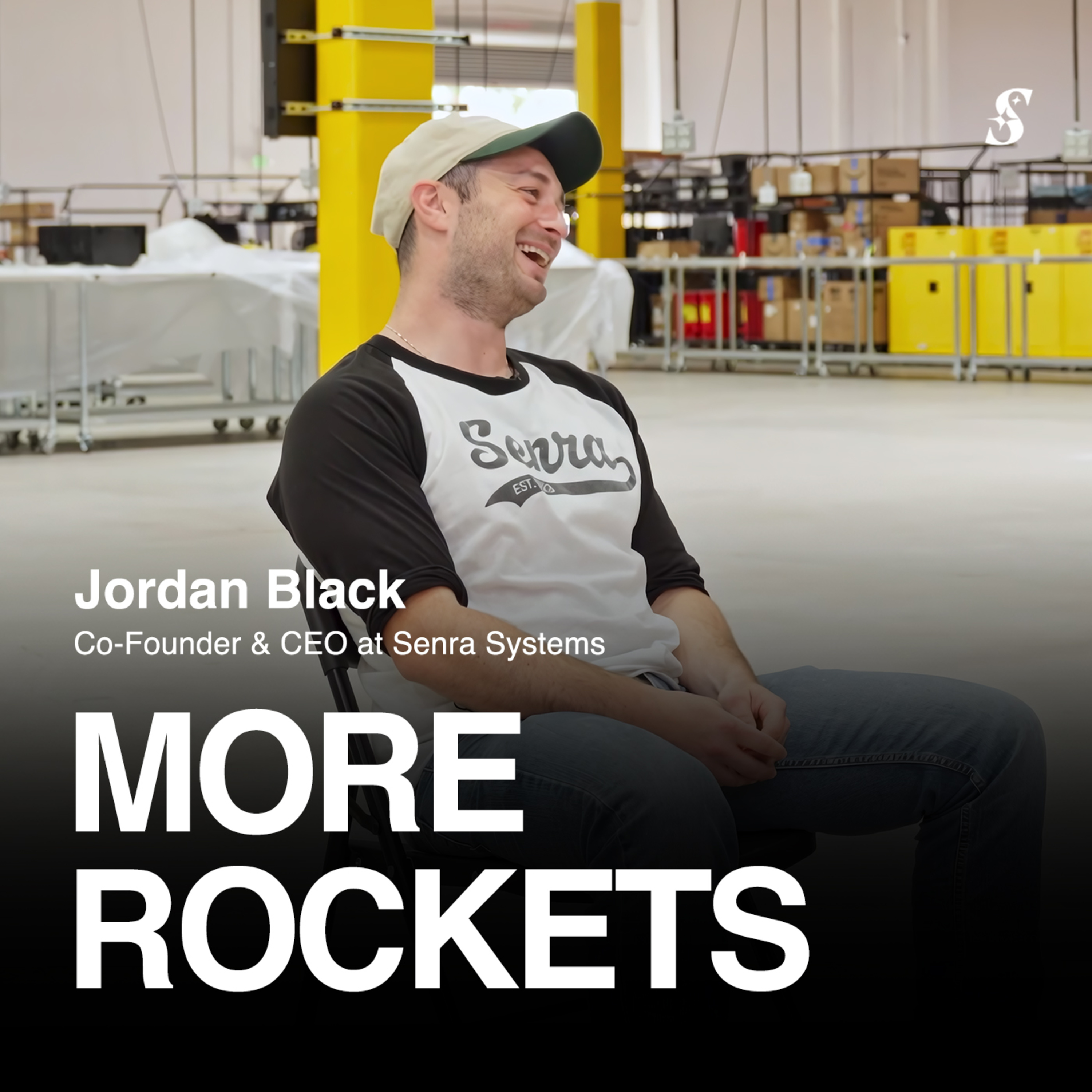
Loading summary
Transcript204 lines
- [00:00]
Jordan Black
People need more rockets, people need more missiles, people need more cars. Everything in the hardware space is booming right now and the center of all of it's wire harnessing. I saw this firsthand at SpaceX where wire harnessing was the bane of our existence.
- [00:10]
Podcast Host (possibly Justin or another interviewer)
You started about three years ago and today is completely different.
- [00:13]
Jordan Black
Center Systems officially closed our Series B fund raising for $65 million. We had lower Carbon Interlagos leading the round. A lot of our existing investors coming into the mix, such as Sequoia Founders Fund, General Catalyst abc, Andreessen Horowitz.
- [00:27]
Ken Vener
Cable Harnesses is such a large, unautomated business and yet it's the backbone to everything that's being built today.
- [00:33]
Podcast Host (possibly Justin or another interviewer)
You have a legendary career. You were at Broadcom, then you were at SpaceX, then, you've done a couple of space companies since then.
- [00:40]
Ken Vener
Elon had hired me because he wanted to build the digital nervous system for the 21st Century Rocket Company.
- [00:45]
Jordan Black
The world needs more wire horses and I want to build every one of them.
- [00:54]
Podcast Host (possibly Justin or another interviewer)
Foreign. Jordan Black, we are here at Senra Systems today. Thanks for joining Sorcery.
- [01:05]
Jordan Black
Absolutely, thanks for having me.
- [01:06]
Podcast Host (possibly Justin or another interviewer)
So you have a big announcement. What's going on?
- [01:09]
Jordan Black
Yeah, absolutely. Senra Systems officially closed our Series b fundraising for $65 million. We had lower Carbon Interlagos leading the round with a lot of our existing investors coming into the mix, such as Sequoia founders fund, General Catalyst 8 VC, Andreessen Horowitz. And we're really excited for kind of the next few years as we kind of start hyperscaling into this hard tech boom that we're all seeing around us.
- [01:37]
Podcast Host (possibly Justin or another interviewer)
So for people who don't know what Senra Systems is, can you explain that a bit? And then I want to definitely go into the funding environment because you started about three years ago and today is completely different.
- [01:47]
Sponsor/Advertisement Voice (possibly Molly)
So.
- [01:48]
Jordan Black
Yeah, absolutely. So Center Systems is supercharging the skilled assembly workforce. And we're starting with this thing called a wire harness. And what it is is like the nervous system of anything that requires electricity. So it's what sends power and data in your rockets, in your cars, in your generators, in your planes and everything. And the whole thing is done by hand today because it's flexible wire, all custom made and it's pretty much arts and crafts. What's really difficult about it is there's hundreds of miles of wire harnessing in your plane. Miles and just even your car. And it's really expensive. It can be 25% of the cost of your vehicle in any given moment too. And so what Happens is people need more wire harnessing because the world's getting more electrified. People need more rockets, people need more missiles, people need more cars, people need more generators. Everything in the hardware space is booming right now, and the center of all of it's wire harnessing. The difficult part is demand's going like this, but the supply chain is drastically decreasing because it's a skilled assembly workforce that's doing this for 20 to 50 years all by hand. And they have all the tribal knowledge and they are the machine. At the end of the day, they are truly the backbone of this entire workforce. And if it's Bob and Judy building in the corner and they leave, we don't build more wire harnesses for this product line or this company or anything else too. I saw this firsthand at SpaceX, where I was the manager of the research and development team for electronics. So I did a little bit of everything that went into a rocket and a satellite. And wire harnessing was the bane of our existence. And we outsourced 95% of it for Falcon and Dragon back in the day. And it was a really painful process because everyone hasn't changed the process since the Cold War era. And what Senra is really trying to do is like, how do you kind of bring this industry into the 21st century with software, technology and robotics as well.
- [03:45]
Podcast Host (possibly Justin or another interviewer)
So in terms of miles of wire harnesses, how are you measuring success and scale here? I know there's a certain target you want to get to with the build out of this facility. So what will that facilitate and what are you trying to accomplish?
- [04:03]
Jordan Black
Yeah, so there's just this ever growing demand of wire harnessing, and it's all around us. It's literally in the microphone we're wearing today. And success for us is just continuing to scale with our customers and making sure they're not only, you know, happy with us, but that we're meeting the demands of any of their business needs too. So when people need more satellites or people need more missiles, or people need more rockets, like harnessing is not becoming the bottleneck. Harnessing is actually becoming the least of their concerns. At the end of the day too, we hit our, you know, exceed our revenue targets. I think the main milestones for us are filling out this entire factory, supporting all the major platforms that we're currently on or continue to grow into, and then making sure harnessing is the least bit of worries for any of our customers too. We have some big accomplishments that we actually completed our software system amp from start to finish. So anyone can Go quote a wire harness to getting it shipped in our end to end software system. So similar to the software system that SpaceX had warp drive that power the entire ecosystem of manufacturing, we essentially are doing the same thing of how do you build this custom made manufacturing system for a very bespoke and unscalable process to be able to scale this factory through that too.
- [05:19]
Podcast Host (possibly Justin or another interviewer)
So you have two facilities here in Southern California, you have one in Redondo and you have this one in Cyprus. What's the difference between the two facilities? And I guess even behind you, like if you could explain like how the teams are sectioned out.
- [05:32]
Jordan Black
So in the wire harness world, customers have a whole plethora of different problems that they work with. And one of the biggest ones is how do you go into the prototype phase as quickly as possible, where I design a new satellite bus, I design a new defense system and wire harnessing is the last thing to get designed, but one of the first things that's needed for them to actually turn it on and build it. So we built Redondo to be a really great prototype, new product introduction factory of getting onto all these platforms and really helping the customer for their problems. Today we built this factory to be able to say, great, we solved your problem today, how do we solve it for tomorrow? Which is like the scalability aspect of being a very cost effective supplier and that embedded partner throughout the whole journey. So this is where we're actually going from prototype to production and doing it in real time. And that's where the split is. So the future of Senra is, is to just build more factories close to our customers where they kind of have this embedded engineering partner from the early prototype phase. And we're giving them manufacturing advice, we're giving them supply chain advice, and we're really going anywhere from the napkin sketch into like a real product with them as close to possible or as quickly as possible. And then the other aspect is building more factories for scale because the current US industrial base cannot keep up with the amount of demand that's going to see. And if we have hundreds of miles in planes and we need to go 3 to 4x that every single year, we can't keep up with it by just having no official training programs, no real scalability. On the software side, taking a step
- [07:01]
Podcast Host (possibly Justin or another interviewer)
back, looking at the broader macro picture, Reindustrialization of America is super hot right now. There's conference around it, shout out to re industrialize and Hillen Valley Forum and all these kinds of things. So what are the industries that you're going after to help reinforce and bring back to the US and then are there any newer ones you weren't expecting that are kind of growing really fast?
- [07:26]
Jordan Black
Yeah, you're absolutely hitting on the right trend. I think the US is now being reactive of like we have a need. There is a huge supply chain gap between what products we need to build in the US that are critical and like what the industrial base can support, specifically wire harnessing because it's such a manual assembly task. It's not like you can just go buy more machines and run them or get more factory space. You have to go find more skilled workers in this niche environment that there's no official training program for, no official instructions of how to do. Some tell someone to do it. It is all tribal knowledge. And so I think the biggest fact is like Senra is being reactive to the problem or proactive for the problem, which is we know we're going to have to 3 to 5 extra demand in all these defense systems. How do we start building up the supply now so that we're ready to go ahead of it too? In the other aspect of it is we're seeing a lot of the demand coming from these scaling companies like the Andarells of the world and the SpaceX of the world that are moving very rapidly into their production phase and they need to have that agility with suppliers today versus the 800 plus mom pop shops that exist all over the US that are not just not only growing or not only are they not growing, they're actually going away and either private equity is buying them or they're being absorbed into other companies or anything else. And it becomes a very scary moment of if this one company in the middle of nowhere state goes away, we don't build more of this fighter jet or more of this missile or more of anything. So Senra is really being proactive on that portion of working with our customers. Say how do we make wire harnessing least of your problems? How do we digitize the whole thing so that you and I can go build a wire harness versus this bespoke a process too.
- [09:09]
Podcast Host (possibly Justin or another interviewer)
What is the split between commercial and government customers? Like, has government become a big customer of yours?
- [09:15]
Jordan Black
The government knows that wire harness is a big issue and we've been working very closely with some of our folks on the Hill on not only policy improvements but government relations on how do we work not only with the government but with also the people they're buying from, which is mainly the Primes and the Neo Primes. And they've been extremely helpful into like figuring out kind of that narrative. But most of ours is in the defense space because that is what's like is hyper growing right now. We do plan to go more into the commercial market, but a lot of these primes that are also are going to be both on the government side and on the commercial side too.
- [09:53]
Podcast Host (possibly Justin or another interviewer)
If you could just go back to the beginning, the origin story of co founding it with Ben, a trip to Mexico, a piece of pizza, robot, like what happened then and how hard was it to start up?
- [10:04]
Jordan Black
So I saw this problem firsthand at SpaceX where I owned so much of this manufacturing that went into the R and D environments for all these different programs within SpaceX. And harnessing was the bane of everyone's existence there. And it wasn't getting better, it was just getting worse. And I went to go to Mexico and Puerto Rico and Costa Rica and all over the country to find wireless factories and it was all very similar of just wooden tables. A process changes the cold war and just this really fragmented market and companies like SpaceX were really struggling. I went to Mexico to see how they did wire harnessing for automotive and spoke to the production floor and was like can I hop on the production line? And I've been doing harnessing at this point for like five plus years. At SpaceX I like to think I'm one of the experts in it. I've seen it from design manufacturing on the supply chain side of it and I couldn't even build a harness down in this like very high rate environment. And it would really kind of open my eyes to is like if someone like myself who has like studied this process and has really gotten in depth of it, can't even go build a harness, then something's fundamentally broken which like we're not giving the right tools to the technicians. We have the right infrastructure, we don't have the right systems in place, we don't have the right everything and there's a death by a thousand paper cuts. And I describe harnessing as kind of like the TSA of manufacturing which like there's just so many things to fix but it's like this never ending process on that side of it too. And so quit my job with Ben, my co founder who is also at SpaceX and helped write a lot of the application software for starlink that helped scale their production from day one. And we started my apartment building harnesses on our carpet floor. And so from quitting SpaceX to quit two weeks later, we started building harnesses for a Company called Stellar Pizza that does automation for pizza making. And I just went to all the startups in the El Segundo area and back then there was a lot less of them around and said like, I'm a wire harness startup, I love to just go build for you and just whatever price you want, whatever lead time, I don't care. I'm just trying to get my foot in the door and it's really eye opening just to start getting our hands dirty on. In my apartment, on a table, all hand tools and figuring that out too. And the fundraising environment is definitely very different than now, which is explaining why hardware is very important, showing the growth of it, showing why software and technology can make a big difference. SpaceX obviously paved that path before me of like where I got to see it firsthand, but now like kind of convincing the entire capital market of like this is a very old industry, that's all done by hand. We will adopt the best technology to make it the most streamlined harness manufacturer in the world and as automated as possible. And so I flew all over the country with this wire stripping machine which is about the size of like a printer to different investors. And what I did was I took a 600 page book of how to build a wire harness today and I took this machine and I said, here's the old process, manual tools, a lot of documentation, here's the new process, configured machines and one button that you press to kind of be able to do the entire manufacturing process. What do you prefer? What do you think is better? And it was really kind of putting it in people's eyes of like the fix is simple but we need to have the time and effort to be able to like implement this across an entire industry too. And so a lot has changed since then. Whereas like now we've just seen companies grow so fast. Just even the startups that I even knew that were in WeWorks and their apartments as well to now, they're multi billion dollar companies today and we support a large amount of them. And it's been very exciting to actually be part of this industrial based growth of like we have the companies that are growing today, the new ones, we have these industry primes that are working with us of like getting into their supply chain because they'd see how broken it is today. And it's just kind of like yeah, we're building, making history and we're actually being part of all of it too.
- [14:05]
Podcast Host (possibly Justin or another interviewer)
It is crazy because even three years ago El Scuna was like really just starting to take off and to Your point? They're now multibillion dollar companies that have raised hundreds of millions of dollars each. Even from like Hadrian to Rebel to Nominal and Shinka Jay's new company, like, and then you can go down to like, I don't know, like Rainmaker and Range View and all these other types of companies that are here. It's just wild to see that. But I'm really curious between the lines of all those and these new companies that have kind of started with vertical integration at its core thanks to SpaceX, from your perspective, and you obviously know this because you had to outsource. When should you vertically integrate and when should you not? Like, how do you know the line?
- [14:47]
Jordan Black
Yeah, maybe it's like a simple economics question of like, does it make you profitable in the long run or not? And so something like making your own custom work instruction software is better for us to do this long term because it will make us more effective company or a lot of these other companies as well. Vertical integration makes so much more sense because either the industrial base around them can't support it or it's just better off because they can go maximize the output too. I think what's like very interesting with wire harnessing is nobody wants to do it internally because you'll never be as good as maybe someone like Senra. We're like, we're the industry experts. We have our own training program, we have our own custom operating system for wire harnessing and we have our own custom automation for this entire process. So if you want to bring it internally, you have to go be the industry expert overnight. And it's very difficult to do it. And it's not something you can go learn on Google or YouTube or go take a class. Class. You kind of have to like be entrenched in it and also be as obsessed as maybe I am about the world of wire harnessing today too. So I think vertical integration is like incredibly important. We do a ton of it here. That's why we built our own, you know, manufacturing operating system. That's why we built our own custom machines. That's why we're building our own automation backbone. And we're continuing to figure that out. But other times, like we are partnering with companies, like, we don't plan to be this, you know, AI modeling company. We plan to like partner with companies in the future or even on the robotics center, like the jury's still out. But like, if there is a company that meets our goals of a low cost robotic arm that can do the dexterity work of A wire harness technician. We should absolutely be exploring that option too, versus trying to reinvent everything ourselves too.
- [16:28]
Podcast Host (possibly Justin or another interviewer)
It's hard. This is a little side note, but I was out to lunch with two friends and one of them is Saurav from Star Path. And we were out to lunch. I think it was like a Sunday. And he was like, I gotta go back to the. To the shop and meet deadline. And we're like, oh, well, we were kind of joking. We're like, oh, we'll help. Like, what do you need to do? And he's like, well, I need to clean batteries and I need to make wire harnesses. And we're like, cool, okay, like, let's help. Like, how long would that possibly take? So my friend Justin and I went with Saurav back to Star Our Path. And I think it was like a Sunday. We got there probably at like 7, and we probably left around like 11pm and we were just like. At that point, we were just like. We were just like. So we were really competitive with ourselves that we wanted to complete it. Like, we had to make like maybe like 100 or 300, like some ridiculous amount of wire harnesses. And we're just like sitting there tinkering. I took pictures. Cause I'm a girl and it was just really funny. But like, you're doing it and you're like, this is so repetitive. I could totally see a robot arm doing some of that work. But to your point, like, you're one trying to help train people in the industry to do this faster. I think you said that your program takes like a two year thing, a two year training kind of window down to four weeks. And then in Southern California. Right. Like, there's just so much talent around here. So that's why you have these facilities here. How much of the talent that you bring in are you bringing through that training program?
- [18:02]
Jordan Black
Yep. So on the training program itself, we're actually the only U.S. department of labor certified training program for wire harnessing. And then this is something we vertically integrated. So we are training people in four weeks versus like the two year time frame that happens. And that two year time frame is truly. You take someone, you have them shadow very skilled people for one to two years and then you hope they pick it up. And it's not a very established way to do this. And I always describe it as kind of like a Cheesecake factory, which is like, imagine there's no culinary school and there's no recipes and you have to look at the menu and go figure out how to make any of the things on there. It's incredibly difficult. And so for us, we're actually training, like, really the new workforce. And so when you look around here, it's actually not so much of the older workforce, which is, you know, typically the average age of a wire harness technicians, between like 48 to 55 years old. It's this new workforce, people who want to work with their hands, who want to get the industry expertise and break into the aerospace defense market. And we're absolutely being able to do that because we hire based on attitude and aptitude of, like, can you use your hands? Can you read instructions? Can you build their way too? But it's only possible not only with a training program, but, like, the operating system around it. Because when you were building harnesses with many are of like, it probably been impossible to be like, here's a box full of wires. Go figure it out. You would have spent days or weeks figuring what to do, but someone had to, like, you know, grab by the shoulder, do this, this and this and this. And that's the really hard part. And so for us, like, the stages of Senra is really like, figure out how to standardize the unscalable, which is when you take all the inputs in making it so simple that you're creating that recipe for the technicians and then the training program for the technique too. We're optimizing every single step of the process by removing all the little depth by a thousand paper cuts. That has to happen whether it's moving material or finding a tool or staring at a drawing for two hours, because you're trying to figure out what the hell to do next. That's the optimization standpoint. And the last thing is the automation portion of it, which is like, I am doing this repetitive task over and over again. How do you get the human removed as much as possible? And what's really great about Senra is like, both the technicians and the entire engineering team are all in the same boat of, like, how do you automate this as much as possible? How do you bring as much technology into. So we're doing a multitude of things of, like, we are gathering all this data of, like, what a wire harness looks like in the digital world, but doesn't really exist today. What does a wire harness build look like in the digital world, which also doesn't really exist today. And then we're actually putting all these camera systems to start gathering all the data of, like, someone physically doing these parts. So in theory, we can actually say we're the first ones to automate this because we're gathering all the data and getting ahead of the curve too. And I look at it as solar back in early 2000s which is converting a photon to electron wasn't fiscally responsible for anyone to go move into that direction. But now it's incredibly cheap. So this is why you see solar farms and you see solar energy on housing and everything too. And similar with harnessing or automation, the dexterity and the movie models might not be at the caliber we need today to go automate this, but we are getting ahead of the curve right now that we'll be the first ones to say we're ready to go automate this almost completely because we are gathering all this data for the next generation of like scalability too.
- [21:14]
Sponsor/Advertisement Voice (possibly Molly)
This episode is brought to you by Brex. My favorite you become what you spend on and I refuse to spend my time on work that shouldn't exist. Expense reports, receipt chasing and manual closes the companies building what's next? From Vercel, OpenAI, Anthropic Granola and Deepgram all made the same call. They all run on Brex. Brex is the intelligent finance platform that combines cards, expenses and banking into a single stack with agentic finance built in AI agents that handle expenses automatically enforce policy before spend happens and close your books in minutes. That's why sorcery runs on Brex, so I can spend time on building and not busy work. It's time to get Brex AF. Learn more at brex.com sorcery that's B-R-E x.com s o u R C E R Y Bye. Turing is training the next generation of AI with tasks that require real expertise and real world judgment. That's why companies like Nvidia, Anthropic, Salesforce and Gemini partner with Turing. Turing builds realistic reinforcement learning environments and data systems based on real operational traces. The kind of infrastructure Frontier Labs need to train superintelligence. Visit turing.coms o u R C E
- [22:40]
Podcast Host (possibly Justin or another interviewer)
R Y Do you imagine humanoid robots working within here? Are you just going to have armed like arm robots? Not armed robots, but arm robots with guns. They'll have asp. Are we going to see optimuses and figures around here or what's the standard?
- [22:56]
Jordan Black
Will always adopt the best technology to make sure we are building a high quality product at a very high throughput as well. So whether it's humanoid robots, robotic arms, custom machines, the answer is still, I think a little bit unknown. But we're dabbling in all those different aspects today.
- [23:11]
Podcast Host (possibly Justin or another interviewer)
How do you do R and D on that? Are you going to these robot companies and seeing like how are they selling you? I'm really curious.
- [23:18]
Jordan Black
So Ben Shanahan, my co founder, is leading up kind of this AI and robotics team and he's going to all of the robotics companies, whether it's on the software side, whether it's truly on the hardware side or the modeling or anything too. And we're kind of getting this glimpse of the puzzle of like we the most manual manufacturing assembly portion of any single product line and seeing what works out there, what are the biggest differences or biggest gaps in this sector and then figuring out who are the right partners to. So for example, like our first step is like creating vision systems for the entire company to start gathering the data and also figuring out like utilization of the team too. So if someone says how efficient is your technicians? It's actually impossible because as I have hundreds of technicians, I can't go stare at each one and figure out who's sneezing at one point, who's going to the bathroom at another point, who's talking to their friend another point. It's impossible. So we actually created this vision system in the factory to start almost tracking all the little things that everyone's doing, but doing it automatically. This wouldn't have happened three years ago. It's doing it today because of the technology we have. And then it's going to be maybe another few years. There's Dexteris robots that say I can go put in, you know, makeup on my face and it's like that's actually very similar dexterity thing. You're finding a very complex feature to go build off of. And it's like we're going to keep going down into the direction too. But ultimately the future of American manufacturing is not just automation, it's configuration. And so we're putting a lot of effort into how do we configure all these systems in the future versus just programming once calling it aid. Because out of the hundreds of miles of wire harnessing that's on a plane, there's still hundreds of unique wire harnesses. And that's also just one company in one vehicle and center wants to go build for everyone.
- [25:07]
Podcast Host (possibly Justin or another interviewer)
So let's talk a bit about the talent on the team. Obviously you and Ben founded the company. You came from SpaceX. We're in the, I don't know, is this a Valley of SpaceX? We're in like literally wherever. Everybody in aerospace and defense is really kind of congregating it now. But you recently Just brought in an industry legend, Ken Vener, who was the chief information officer of SpaceX. How did you bring him into this and what else are you hiring for?
- [25:35]
Jordan Black
Yeah, so we are incredibly lucky to have Ken and he is a breath of fresh air of like what we need to go build over the next few years. But Ken built the operating system that helps scale SpaceX from hundreds of people to thousands of people and did the same thing at broadcom in the 80s. And so he's just like the legend of how do software systems enable scale and enable this new type of efficiency for manufacturing companies too. It was really important because we were hitting a wall on so many of our different operations of like, we need to give everything has to be in our digital system for buying parts, to tracking inventory, to even working with a customer, that it wasn't actually the building the software is the hard part. It is like knowing what to build and like what direction we need to go build that product line into. So Ken just saw the vision instantly of like, this is a company that will be 10x its throughput based off an operating system, not just 1 to 2x. Kind of how it happened was one of our recruiters reached out to Ken and was like, there's this wire harness company. Would you be interested in just being an advisor? And I met Ken on like a Tuesday. We had a lunch in Newport beach that weekend and then signed the offer. And the next week he was hired. And it was a really quick process, but we were very gung ho, or maybe that's not the right word. We were very confident in his abilities from not only just being a legend in the space, but also like he saw the vision day one, which is like you see all these people working around us and you can just see how efficient they are and how they're always having hands on Harness is what we like to call it, where they're being incredibly efficient with their time based off of the operating system that like you won't necessarily see in the physical world, but it has this huge effect on the physical world too. And I kind of always look at, go back to like the culinary examples of like making pancakes is really easy, but the hard part is finding like the recipe and the ingredients and the setup of the pan and. But flipping the actual pancakes is not that bad. It's just everything that surrounds it's the hard part. And that's kind of what harnessing is. It's like, it is still a very difficult process per se and complex. But if you can fix, figure out how to get all the inputs simplified into a very streamlined process and making it so like can me and you can go build a harness? That's really the ultimate goal.
- [28:10]
Podcast Host (possibly Justin or another interviewer)
And so what roles are you going to be hiring out for?
- [28:13]
Jordan Black
We are going to be hiring more software engineers, continue to build the operating system. Technical program managers is a really big one too. Someone who's going to be the interface between the customer and the manufacturing site. And, and this is really one of our value adds is like you get to go talk to someone who is an extension of all these companies and their teams of. You need to harness. I don't care if you need it faster than your current supplier, it's half broken. I need to go fly to wherever you need to, to go talk about the manufacturing process. Like, we are going to be the most white glove service in this industry. As much as possible, we're hiring more technicians, manufacturing engineers. So we have a whole plethora of whether you don't know what a wire harness is. And you're hearing this podcast for the first time and you're just like, this seems like a cool company. I love to get my foot in the door, come build harnesses. Four weeks later, you'll be building harnesses for all the big aerospace defense companies. If you are working at a Prime or an OEM or anywhere else and you're like, I would love to be on the other side, on the supplier side, but really seeing kind of that new age portion of it which is not just built appropriate, it is working as this extension of these engineering teams and being this embedded partner, that's really what we're going for too.
- [29:23]
Podcast Host (possibly Justin or another interviewer)
You obviously knew this when you were at SpaceX, but when you started the company, obviously there's like a lot of, there's a lot of adrenaline involved. Were you just looking at everything and being like, wire harness, wire harness, wire harness. Like, how was that? And are you, are you noticing that with your team too or are they just like, like, except excited about this or seeing how, how wire harnesses are literally in every product we use?
- [29:48]
Jordan Black
I think so. I think it's. I think two things. One, I didn't grow up being like, I want to. I'm obsessed with wire harnessing. I grew up being starting my career off as a technician at the Santa Monica Pier fixing roller coasters and then also as a bartender and a bouncer and like on the customer service side. So those companies kind of the, the best of both worlds, which is like, I love customers and I love kind of delivering some product and then I also love manufacturing and what I kind of fell into at SpaceX was a little bit of everything, which is here's harnessing. I got to go move into a little bit of a broader scope where I got to see a lot of the supply chain that went into it. And what kind of got me obsessed with harnessing was it's so difficult to change this entire industry to make it 10x better because there's so many little things that have to happen to make this kind of like raise the entire ship at the entire time. But the other thing, portion of it too is like, it's all doable, it's all in my head. And I kind of have the like the master plan either in my head or an investor text or some board meetings or anything else like that. But it's like we are going to be the ones that really change this entire industry because we're going to be constantly raising the ship or every single time there's a paper cut, we're gonna put the band aid on it, we're gonna fix it for the long term ride. And then yeah, I think it's really cool to see wire harnessing everywhere. When I'm on a plane, you'll see it when you're seeing a generator, when you're being mic'd up, when you're in the car, anything else like that. I even had a rat eat through my wire harness in my car and the Toyota dealership was, this is gonna be $5,000. I'm like, you're talking to the wrong guy. I will go fix this myself. But like everybody has a wire harness story, which I think is really funny. And when we're like going talking to the government or going to talk to even these primes, it's really a simple case of raise your hand if you ever been hurt by a wire harness. And most people are like, yes, it's done X, Y and Z to me. And our problem is to go fix all of that too.
- [31:46]
Podcast Host (possibly Justin or another interviewer)
With $100 million in total capital race, to date you have collected some of the biggest names in Silicon valley. From Sean McGuire of Sequoia to Paul Kwan of General Catalyst to Delian at Founders Fund and now Lower Carbon and Interlagos. But there's one name that I find so interesting that co led your Series A or did he lead it? Co led it, he co led it. And this name, it's very interesting, keeps on popping up with these companies in L A. One of them was Revel as well, it's Dylan Field. So how did he get involved in Senra and what was the investing process like?
- [32:26]
Jordan Black
Yep, I got connected through Dylan Field through one of our investors and I have always been a fan of him personally because he's like the dream CEO that I want to be, which is so level headed. An amazing operator has been through so many different storms and processes of like building a company for 13 years and this is just the beginning for figma2 and like this is just the start of it, which is crazy to think about. So just as an operator, like I'm a huge fanboy and then got to meet him, share the vision of like this is why I'm obsessed with harnessing. And we were talking about making the Figma wire harness design and this was two years ago when we want to digitize a lot of the inputs into our factory. So I spent a lot of time with him on this is how we're building the manufacturing side, this is how we're building the software side. And we went on some long walks, we spent a lot of time in the factory and then one day I was like, I'm going to go out to fundraise and he's like, I would love to put in some type of allocation in the round. And then long story short, ended up co leading it with Civ, which is another really great investor of ours who's been incredibly helpful throughout this whole process too. And I think the advice I got early on was choosing the right investor is really important, but also choosing the people you really want to build this company next to and you respect all of the lessons they have learned or all the things that they've built in the last few years or the path they've taken is incredibly important. And like, as much as I can learn from great operators like Dylan and great investors that we have on our cap table, the more successful Senor will be.
- [34:12]
Podcast Host (possibly Justin or another interviewer)
Yeah, he's the coolest.
- [34:14]
Jordan Black
He's the best.
- [34:15]
Ken Vener
Really cool.
- [34:15]
Jordan Black
Yeah.
- [34:17]
Podcast Host (possibly Justin or another interviewer)
Speaking of cool, how did you come up with the name people? There's some rumors around here you're a big fan of a podcast.
- [34:25]
Jordan Black
Sadly, I've never actually listened to the David Senra podcast, but maybe I have to. Senra is just the word harness backwards. We just took out the H and the S because we're deleting the horseshit of harnessing.
- [34:37]
Podcast Host (possibly Justin or another interviewer)
Oh my God. Seriously?
- [34:39]
Jordan Black
Yeah.
- [34:43]
Podcast Host (possibly Justin or another interviewer)
Were you high when you came up with that?
- [34:46]
Jordan Black
No, we went back and forth actually with Jay was a really big component of coming up with that name. So Jay was our first investor in Senra and Me and Ben and Jay spent a lot of time trying to figure out the name and it was just went through so many wacky names. And then my personality is I like to keep things simple. Like, you know, from the dinners I eat to the manufacturing floor I build. So what's like a very simple name and it's like, well, the company also has very simple philosophy of like, take a really fragmented and bespoke process and just use common sense to make every single part of it better. Or delete the horseshit. The phrase I always say is like the horse, the bullshit's over. Like, and that's kind of something we always have here. It's like, if it takes 20 minutes to go do this thing, how do we do it in one minute? How do we do it even faster? And like, that's how my mind will always work. So it comes from the name. Delete all the horseshit. Whether it's in a wire harness or anything else, we go build.
- [35:51]
Podcast Host (possibly Justin or another interviewer)
That's hilarious. Also, you guys should like, sponsor the wires that he uses for his podcast.
- [35:57]
Jordan Black
I would love to.
- [35:58]
Podcast Host (possibly Justin or another interviewer)
So there needs to be some sort of integrated strategy there.
- [36:02]
Jordan Black
I'll give him the shirt.
- [36:04]
Podcast Host (possibly Justin or another interviewer)
Yeah, that works too. Okay, as we wrap up and thank you so much for letting us in here. I know you're building out an 80,000 square foot facilities facility. This is insane. I can't wait to see what it looks like in like maybe a month or three months. We have active construction going on behind us the whole time. We've cut a couple times, a lot of patience. So thank you very much. But what are you most looking forward to in the next 12 months?
- [36:31]
Jordan Black
I'm most looking forward to where we build factory number three and all of the growth we were going to have in the manufacturing and the customer sector too. I just want to build. The world needs more wire harnesses and I want to build every one of them.
- [36:50]
Podcast Host (possibly Justin or another interviewer)
Do you think with the SpaceX IPO, more people are going to be throwing money at you?
- [36:55]
Jordan Black
Possibly, but I also just think it makes it where people worked at SpaceX, including me for the mission and want to work on a really challenging problem. And I think now with the SpaceX IPO, people will have be more liquid and I think people are actually more scared of like, oh, people are going to retire this, this and this, and you'll talk to Ken. But like, I think it actually makes it more. Do you have an interesting problem to solve and can you go bang your head against the wall to actually solve it too? I think that's going to be the exciting thing. So whether it's the capital markets open up more or the talent pool opens up more, I'm excited for both of it.
- [37:35]
Podcast Host (possibly Justin or another interviewer)
So AI harnesses are so hot right now and you're in the middle of it. So how do you choose between anthropic or OpenAI?
- [37:46]
Ken Vener
What?
- [37:48]
Podcast Host (possibly Justin or another interviewer)
It's the biggest thing everyone's talking about AI Harnesses.
- [37:51]
Jordan Black
AI Harnesses?
- [37:52]
Podcast Host (possibly Justin or another interviewer)
Yeah. You're creating a all the AI harnesses, right?
- [37:57]
Jordan Black
All of them, yeah. Every single one of them.
- [38:00]
Podcast Host (possibly Justin or another interviewer)
What's the most popular one? Are you bullish or bearish?
- [38:11]
Jordan Black
I'm incredibly bullish. That AI will go build the harnessing. The company should shut our doors and we. We'll have OpenAI build our harnessing system soon.
- [38:22]
Podcast Host (possibly Justin or another interviewer)
Okay, so you're Team OpenAI.
- [38:23]
Jordan Black
I'm Team OpenAI. I like to support the OGs, so
- [38:27]
Podcast Host (possibly Justin or another interviewer)
I know we covered a lot and I made some dumb jokes, but is there anything else that we miss?
- [38:33]
Jordan Black
I think the one thing is what drives me every day for this company is people just need more wire harnessing. The world's becoming more electrified. We need more of everything that requires power and data. And I think we're one of the only companies there that is taking a really strong stance into making this entire industry better, from the manufacturing, the design to the engineering services we provide. And if center doesn't exist, I think it'll be very difficult for us to scale not just the industrial base, but any of the critical systems we need
- [39:07]
Podcast Host (possibly Justin or another interviewer)
to go build here to wire harnesses in nuclear facilities, in data centers, in space stations, data centers, in satellites, in cars, in. What else?
- [39:18]
Jordan Black
Coffee makers, in generators, in hair dryers. And hair dryers. Yeah. Without wire harnessing, nothing turns on wire harness.
- [39:26]
Podcast Host (possibly Justin or another interviewer)
It's life.
- [39:28]
Jordan Black
It's life.
- [39:29]
Podcast Host (possibly Justin or another interviewer)
Okay, thank you so much.
- [39:30]
Jordan Black
Yeah, absolutely. Thank you. This is great.
- [39:32]
Podcast Host (possibly Justin or another interviewer)
Ken, thank you so much for joining.
- [39:34]
Ken Vener
Oh, my pleasure. I'm so excited to be here.
- [39:36]
Podcast Host (possibly Justin or another interviewer)
We just had an amazing sit down with Jordan. We went through the company, we talked about you joining the team. You have a legendary career. You were at Broadcom, then you were at SpaceX, then you've done a couple of space companies since then. So just like, I think it would be really interesting to maybe let's start first with why did you join Senra Systems?
- [39:58]
Ken Vener
Yeah, I was really excited about Senra Systems because cable harnesses is such a large, fragmented, unautomated business and yet it's the backbone to everything that's being built today. There isn't an autonomous vehicle or high tech piece of Equipment that doesn't have sensors, actuators and computers that all need to be connected together through a cable harness. And most engineers, it's the last thing they think about and the last thing they want to build. And yet Jordan looked at this and said, this business is ripe for consolidation and improvement, and he's just making the right investments to scale up and scale out of business. And scaling up and scaling out are my core skills. So, like when I was at Broadcom, I joined them and there were a thousand people, 400 million in revenue, and the goal was to scale. And we, in the 11 years I was there, grew to 10,000 employees and 8.6 billion in revenue, did 52 mergers and acquisitions. So it's all about finding markets and growing reliable, repeat, repeatable, scalable businesses. And I think we can do that again here.
- [40:59]
Podcast Host (possibly Justin or another interviewer)
What's going to be your playbook?
- [41:01]
Ken Vener
Playbook is get it defined, get it working consistently and reliably in such a way that you can now replicate it, and then go out and replicate it multiple times, and then every time, look for ways to improve what you're doing, make that improvement and then move it across the entire organization. That's exactly how we did it at Broadcom, and it really worked well. And it was very similar to how we did SpaceX, which is bring automation to the table to help people do the right thing at the right time and have the system provide them the right information at the right time and then scale the company without scaling all the employees learning to how the company's growing.
- [41:41]
Podcast Host (possibly Justin or another interviewer)
So Both Broadcom and SpaceX are having a bit of a moment right now. I guess if we look back at Broadcom to your point, you help space scale that company up and it reached a massive inflection point. So what were the biggest lessons that you learned there?
- [41:59]
Ken Vener
Yeah, the biggest lessons are each size you are, as you grow, requires a different behavior from the company. When you're 10 people, it's a network of us just talking to each other. I need very little process or systems. It's smart people just doing the right thing. You get to 100, you need a little more process, but not too much, and then you get to a thousand. And you need more process, but again, not too much, because you can like constrain a company by putting too much process in too early and stunt the growth. So you always have to assume smart people, stupid systems, let the right people do the right thing in the moment, but track them, how they're doing it, what they're doing, and make sure they're accountable for the actions they're taking. And then you get to 5,000 times 10,000. It's like everyone knows the piece they know, but they don't understand how a whole business works. But bringing that information together and presenting it to the top level people so they can understand how the whole company is operating together is kind of the focus. And that was both Broadcom's growth path and When I joined SpaceX, it was again about a thousand employees producing about one booster a year. And through the years of growing up, Warp Drive, the custom platform platform we built there, we scaled it up to 40 boosters a year and 9,000 employees across multiple locations. And it was just that continuously look at how people do what they do and then collect and present the right information at the right time.
- [43:21]
Podcast Host (possibly Justin or another interviewer)
How did you make the decision to go to Broadcom to SpaceX?
- [43:26]
Ken Vener
Broadcom to SpaceX. So Broadcom to SpaceX was a pretty simple one. The company had gotten big enough that it wasn't really innovating anymore. It was kind of just operating. And I get bored in those situations. I'm not really a true just run the system about continuously improving the system. And the CFO at Broadcom was, at SpaceX was an ex Broadcomer that I knew. He invited me up one day to just do a tour of the factory. I wasn't looking for a job, but he invited me up. I did this tour of the factory, which is in Hawthorne, downtown la ish. And here they are building big metal objects, supposedly cheaper than anyone else in the world in downtown la. And I'm like, well, this is crazy, but I have manufacturing in my blood. My entire career has been in manufacturing. I'm like, this is pretty interesting place. No idea who they are. I don't know what they do for a living because SpaceX wasn't a name back in those days. And they're an hour at least away from where I live. So he offered me a job and I'm like, I don't know, I want to drive an hour up to this place. But it was such an interesting story that Elon was going to save humanity from itself by colonizing and another planet because we're going to screw this one up and we need to keep humankind going. And it was another scaling opportunity. So I thought about it, talked to my wife and in the end decided to bite the bullet. Take was a great move.
- [44:40]
Podcast Host (possibly Justin or another interviewer)
And so you're a chief information officer there.
- [44:42]
Ken Vener
Chief information Officer working for Elon and Gwen. Yep. So I built all the systems and IT technology that drove that business.
- [44:49]
Podcast Host (possibly Justin or another interviewer)
What was the day to day like?
- [44:51]
Ken Vener
I just day started at five o' clock in the morning. Morning. Driving up to Hawthorne, trying to miss the crowd, getting in by six and then working with all the various groups in the organization to define how they were operating and making sure we were not only collecting the information but we were presenting like design changes they were making up front and their impact on operations and making it very apparent very early what was going on so that you didn't get to a certain point and go like that design change just cost us $5 million to implement. They knew as was going through. So it was a very tightly coupled system that kept everyone working together and then just trying to scale the business. And Elon had hired me because they had visual a purchased application. He wanted to build the digital nervous system for the 21st Century Rocket Company. And I'm like, I started that way at AT&T early, early in my career building because no purchase software existed and the opportunity to build it again. I'm like this is either the same smartest thing or the stupidest thing we've ever done. And I have no idea right now whether this is smart or stupid. And I'd say for the first two years I didn't think it was such a smart idea. By year three, when we really had the software working well and the company was really using it, I'm like this man is a genius. He figured out what we needed to do, how we needed to get done. It became one of the major differentiators for how could, how SpaceX could scale and keep all the information together and connected with each other.
- [46:11]
Podcast Host (possibly Justin or another interviewer)
Other. What do you think the key components of Elon's magic is?
- [46:16]
Ken Vener
Number one is first principles thinking eliminate before automation is clear to what he's saying and remove before automate is an activity. And then just holding people really accountable and driving them. The whole concept of a responsible engineer is what I learned there. And that person owned that part from first requirements all all the way through to post flight. There were no handoffs, there was no finger pointing. Either you got it done or you are no longer employed and like that kind of accountability and that everyone else is serving you getting your part through the process really created ownership. Like and the people there worked 10, 12 hours a day and didn't think about it. Like it wasn't like we were required. It's just like you're looking around at 7 o' clock at night and like nobody's left yet. Like, well I'm not going to leave yet. I need some still finish the thing I'm working on and so long hours, but really committed to the mission. And Elon was really good about keeping the mission as a forefront focus for what we were doing and just kind of energized everyone to get it done.
- [47:16]
Podcast Host (possibly Justin or another interviewer)
I know Elon is obviously a big spotlight of SpaceX, but I haven't heard many stories about Gwen and what it's like working with her.
- [47:24]
Ken Vener
Oh my God.
- [47:25]
Podcast Host (possibly Justin or another interviewer)
What was it like? And what are the biggest lessons that you learned from her?
- [47:28]
Sponsor/Advertisement Voice (possibly Molly)
So.
- [47:28]
Ken Vener
So Gwen was to Elon what Henry was to Nick at Broadcon. Like Nick was the aggressive make it happen, drive people to the very last ounce of juice they had and Henry was pick up the mess that gets created. Help people figure out really what they're trying to do, make sure everyone's safe as they go forward. I'd say Gwen is exactly the same thing for Elon. Elon is just very driven, very focused, very motivated, very hard to work for. Never worked harder in my life than when I worked for him. And Gwen was as driven as Elon, but in a nicer way. That helped the company keep moving forward and not just burn everyone out as they went, but brilliant, knew where to focus, what to do, kept things going. When Elon would go up and focus on Tesla, the boring company and that kind of activity, and she was like the glue that held it all together.
- [48:25]
Podcast Host (possibly Justin or another interviewer)
With such a strong culture like that, how does that impact scaling it? Does it make it easier or harder?
- [48:32]
Ken Vener
Yes, it depends how strong it is and replicatable. I'd say for the time that I was at SpaceX, they were able to sustain the culture as it grew up. So they hired, promoted, trained to keep that accountability culture in place and that outcomes based culture in place while we're going there. I've been at other companies that did it really well when they were small. And as it scaled up, it didn't scale with the company. And then the company became much more corporate ish in its behaviors and characteristics where the outcomes weren't as important as the PowerPoint that you created or the people that you know.
- [49:12]
Podcast Host (possibly Justin or another interviewer)
Because SpaceX is now reaching critical stages stage with the IPO for wealth creation and kind of the benefit back to the employees. I know that this has happened over time with secondaries and tenders, but this is one of the largest wealth creation events ever. Why are you still motivated to keep working?
- [49:31]
Ken Vener
What would I do if I wasn't working?
- [49:33]
Podcast Host (possibly Justin or another interviewer)
I don't know.
- [49:34]
Ken Vener
Right. That's the question. I don't have to work. Having left Broadcom, I didn't have to work anymore, left SpaceX, really didn't have to work anymore. I like interesting problems with interesting people trying to make a change that benefits mankind. And so Semra was just that unique opportunity for me to come in and take a dormant market that I think is critical to what's about to happen in the US economy or the worldwide economy and really make a transformational change. And Jordan gave me that opportunity. And I've been here six weeks and friends ask and I'm like, every day is a great day at work. I feel blessed to be working with this group, creating what they're creating. Like, to me, this is the second example of building what they built in Redondo. And until you built it three times, you don't know if what you've built will replicate itself. So number two is just the beginning of all the things that worked at Redondo that don't work down here. Say that model doesn't really work because it was locationally oriented. So now we got two, we got something. As soon as we build the third one, I think we'll have a rinse and repeat model and then game's on. Like, we're just going to go into this industry, increase the speed, reduce the price, up the quality. I think it's just a very exciting time.
- [50:47]
Podcast Host (possibly Justin or another interviewer)
This is obviously a little bit of. A little bit of a reach, but maybe it's not. When we had. We just recently had Tom Mueller on.
- [50:55]
Ken Vener
Yeah.
- [50:56]
Podcast Host (possibly Justin or another interviewer)
And we were doing a tour and he was like, oh, yeah, it only takes three versions of an engine to get it right. And so maybe it's the same with the manufacturing facility.
- [51:04]
Ken Vener
It could be, I mean, the law of threes. It could just be the third time you got it and they're in different locations, forces. And as I think Tom would, to the engine, it's like three different versions of the engine. The first one just got you going. The second one you learn from the first, but not enough. And then third one, it's like, all right, I fixed, finished fixing this. And then just incremental tweaks from there. I think in what we're doing, it'll be the same thing here because the
- [51:29]
Podcast Host (possibly Justin or another interviewer)
industry has significantly changed with AI and automation. The way you scale businesses now is dramatically different than before of throwing more headcount at it, but now we're throwing really talented headcount at it and then also automating some of that backend with, you know, technology, AI, all this kind of stuff that's happening. So how do you imagine companies now scaling up with this new mix versus just purely people?
- [52:02]
Ken Vener
Yeah, something like SpaceX and Broadcom, AI didn't exist and so it just took longer and it was harder to build the systems and the documentation and figuring out where the automation opportunities were and to digest the data to figure out where the trends were. Like at SpaceX, I had grown up to having a team the size of about 175 building the core platforms. I got a team of six here. I don't really think it's going to scale much more than maybe one or two more people. And I think I'll be able to do exactly what I did at SpaceX with only six. Because AI drives most of what we're doing and AI is now starting to enable things we weren't even capable of doing where it's SpaceX. So that's one of the areas. And then you just look at machine automation or robotics and the ability to cost effectively apply it. Like AI is just driving the cost down and the speed up associated with finding unique ways to apply technology to help humans do what they're great at and getting the mundane, boring tasks out of the work that we do.
- [53:08]
Podcast Host (possibly Justin or another interviewer)
What do you think of the name Senra?
- [53:11]
Ken Vener
I have no opinion one way or the other. I don't know how Jordan came up with the name, so he just told us. Oh, so like you should tell me that story cuz I actually don't know the story.
- [53:20]
Podcast Host (possibly Justin or another interviewer)
They took the, the word harness.
- [53:22]
Ken Vener
Okay.
- [53:23]
Podcast Host (possibly Justin or another interviewer)
They took off the H. No, this is what they did. They took the word harness. They flipped it backwards. They took the H and the S off because they don't like horseshit and all that.
- [53:33]
Ken Vener
And that's the name, so. Wow. Yeah, I had never heard that story. Good way to come up with a name. Names are so hard to come up with. Like I've got a winery and getting the name for the winery was incredibly difficult. No way.
- [53:44]
Podcast Host (possibly Justin or another interviewer)
Where's the winery?
- [53:45]
Ken Vener
Up in Sonoma. So if you're up in the area, please come visit. It's a tour wines. So we're both in Healdsburg and in downtown Sonoma.
- [53:52]
Podcast Host (possibly Justin or another interviewer)
What kind of wine is it?
- [53:53]
Ken Vener
Pinot, Chard, Rose of Pinot and sparkling.
- [53:57]
Podcast Host (possibly Justin or another interviewer)
That is so fun.
- [53:58]
Ken Vener
It is such a great business. Business to be in.
- [54:00]
Podcast Host (possibly Justin or another interviewer)
How long have you been doing that?
- [54:02]
Ken Vener
Since 09.
- [54:03]
Podcast Host (possibly Justin or another interviewer)
Oh my God.
- [54:04]
Ken Vener
For a while. And we're just starting to scale right now, so it's a great time. It's both a great time and a terrible time to be in the wine business. Like it's a shrinking market, but we're growing share in a shrinking market.
- [54:15]
Podcast Host (possibly Justin or another interviewer)
It's a good side project.
- [54:18]
Ken Vener
That's the other reason I work. Wineries are not cheap, and I need some money to fund the winery.
- [54:22]
Podcast Host (possibly Justin or another interviewer)
I guess people always find something to do.
- [54:24]
Ken Vener
They find some side hustle to go do well.
- [54:27]
Podcast Host (possibly Justin or another interviewer)
Awesome. Okay, so as we close out, what are you most looking forward to in the next 12 months working with Sunra?
- [54:34]
Ken Vener
I'm. I'm looking towards the scalability of the company and the simplification of it and the ability to show how a dormant business can literally apply technology to be a transformational change in this particular industry.
- [54:49]
Podcast Host (possibly Justin or another interviewer)
Amazing. Well, Ken, thank you so much for walking through your legendary experience, why you decided to join Senra, and of course, really excited about your winery. So everyone go check that out.
- [55:00]
Ken Vener
Please do.
- [55:02]
Podcast Host (possibly Justin or another interviewer)
Thank you.
- [55:02]
Ken Vener
It was a pleasure. Thank you.
- [55:04]
Podcast Host (possibly Justin or another interviewer)
All right, Jordan, what's the plan?
- [55:06]
Jordan Black
So I'll show you part of our production facility. This is only 25% built up, so everything around us will start having more tables, more machines, more automation over the next next few months to really fill out the space. And we plan to be almost at 100% capacity by the end of the year too. So starting off here is a dedicated production line for one of our defense customers. We're building actually 4,000 plus of a unit weekly. And this is where Senra did the prototyping early on, stepped into production, and be able to scale very quickly after that, too.
- [55:40]
Podcast Host (possibly Justin or another interviewer)
Are each one of these bays a different, different customer? How do you organize it?
- [55:44]
Jordan Black
Yeah, what's really nice about the center method is that each one of these maze is a different customer. Different harness harnessing, because it's so high mix in the sense of like, you have a SpaceX rocket and has thousands of unique wire harnesses. And now not only do we build for maybe one of those companies, but hundreds of them. In the future, we need to be able to say we can go do a production run and spend a week, a month, a year on that production line and configure the whole thing. Thing in a few hours versus, you know, weeks or years of be able to do it too. So that's why a lot of harness production is you find a few people who do it, they just do it over and over again, and it's hard for them to go switch to a new product line because all of the tribal knowledge and setup takes so long too. So when you see all these different product lines around here at different bays, we're constantly changing what we're building based off of what the customer needs are too. So it's being as agile and configuration or configurable as possible for the customer.
- [56:38]
Podcast Host (possibly Justin or another interviewer)
Seems like such a satisfying job. You know, back in my day I, I made some wire harnesses. I told you in the interview.
- [56:44]
Ken Vener
Yeah, yeah.
- [56:47]
Jordan Black
So you can see different bays, different groups of automation, but they all look very similar. Which is like if you come back here in two weeks, you'll see an entirely, completely different harness being built and will, you know, ramp up their rate of how we build it and then change a lot of the tooling, fixturing, harnessing programs. But everything's being built on the operating system. So you look around, most people are building everything with their hands. But the biggest secret sauce is that they're not looking at a drawing. You're trying to find a tooling or anything too. They're incredibly efficient because the operating system is giving them that perfect recipe and that silver platter instructions every single time too. So most other companies you might see which actually be here's a piece of paper or the printed out email from a customer and you're kind of pushing the technician to go figure it out and build it without the actual proper resources to do it too.
- [57:35]
Podcast Host (possibly Justin or another interviewer)
How are the assembly lines organized? And then in terms of the talent here and the training, do you start with simpler ones and then work up to more complex ones? Because we're, I mean I'm looking around and some of them look super complex.
- [57:50]
Jordan Black
Yes. Typically when people start here, we get them on more of the simplified systems to get their reps in. But everything is all different shapes and sizes too. In the harness world, what's pretty incredible is that most of the people around us have never seen a wire harness a few months ago and now they are ramped up building high quality harnesses with our different systems and manufacturing platform we built today. So what's really great about all this too is that it's a very configurable system of like they might start on some simpler ones in the beginning, but then they're building really complex things, you know, very shortly after too to kind of after they got their reps in. And most of the people here are trying to build that 10 year career of going from apprentice technician to more senior technicians over time too.
- [58:31]
Podcast Host (possibly Justin or another interviewer)
So what are we doing here?
- [58:32]
Jordan Black
All right, so this is called a wire crimp. And this is all done by hand today. And one of the hardest parts is visually inspecting it. So you have to look at this, this really Tiny thing, smaller than like a fingernail and figure out does it look good or bad. And this is all done by hand today by very skilled inspectors who've been doing this for 20 plus years. So one of the things we've been spending a lot of time on is like this like AI and robotics sectors, like how do we also get rid of this kind of inspection portion of it? Because harnessing is incredibly critical for turning things on, but also the quality output of it and to be like a little morbid, like the reason why the astronauts died in the Apollo 1 mission was like a small nick on a cable jacket of a wire harness. So like even the smallest nick or cut on the wire harness could be very detrimental for the whole system itself too. So what you see here is we built kind of our own system of this is a very high rate production order for a defense company. And if you look on the screen, I'm putting in this thing called a wire crimp and you can see it's measuring what it looks like. And instead of visually inspecting, every single time I come over here, I hit capture. And then it actually will tell me if it failed or not. And I don't actually have to have anyone inspect this thing anymore. It could be the operators and technicians on the production line saying, do I have good or bad quality? And this is really important as you continue to scale of how do you not just scale with people, but better process and more efficient manufacturing methods too.
- [60:04]
Podcast Host (possibly Justin or another interviewer)
And so what is it actually? Is this like a thermal camera? What is it looking at?
- [60:08]
Jordan Black
This is a 2D vision system looking at a picture of one part of a wire harness and saying this does not meet the inspection criteria or the design intent of the company itself. Thus we need to fail this. And then along alerts the technician, we can go throw it away, we can rework it, we can go do more training. But this forces us to say we have less human error in the process for such a manual manufacturing method too.
- [60:35]
Podcast Host (possibly Justin or another interviewer)
And where do you and how do you keep the standards for what each one of these different harnesses you're looking for?
- [60:41]
Jordan Black
And this is, that's a great question. The reason was really important for us to build this manufacturing operating system for the get go. So when we, if we started just kind of down this path, it wouldn't have been helpful because we would have done it and then we would have went back to the old methods because it's just been faster to have someone else manually inspected. Now once we create these programs, it's in our custom manufacturing system. So we can just rinse and repeat this every single time. And so we're taking all this data of good and bad wire harnesses that we build and have this kind of giant library of. We are training a model to say, this isn't good, this isn't bad wire harness. And so whether it's a wire harness from, you know, an airplane company to a missile company to a automotive company, they're all sharing very similar data of like, what a good wire harness is, what a bad wire harness is. And we're the ones really collecting all that data to actually make a perfect quality output every single time.
- [61:33]
Podcast Host (possibly Justin or another interviewer)
Okay, so we'll go through each of these different sections and see how it's made.
- [61:37]
Jordan Black
Yeah, absolutely.
- [61:38]
Sponsor/Advertisement Voice (possibly Molly)
Today's episode is sponsored by VCX by Fundrise, the public ticker for private tech allowing investors of all sizes to invest in venture capital. Learn more@getvcx.com Some of you may not have heard this yet, but our sponsor Public just launched something called Generated Assets. And it brings AI into investing in a way I've honestly never seen before.
- [62:01]
Podcast Host (possibly Justin or another interviewer)
Here's how it works.
- [62:02]
Sponsor/Advertisement Voice (possibly Molly)
You type in an idea like AI powered supply chain companies with positive free cash flow, or defense tech companies growing revenue over 25% year over year. Publix AI then dispatches a swarm of agents that scan every single US stock, evaluates them, and instantly builds a custom index around your thesis. What really stands out is how clearly it explains why each stock is included. And before you invest, you can even back test your idea against the S&P 500. So you're making decisions with real context, not just guessing. And beyond generated assets Assets Public lets you invest in stocks, bonds, options, crypto, all in one place. They'll even give you an uncapped 1% match when you transfer your investments over from another platform. If you want to build a portfolio that actually reflects your thesis, visit public.com Sorcery paid for by Public Investing Full disclosures in the description Founders scale faster on deal. Set up payroll for any country in minutes, hire anyone anywhere, get visas handled fast and and get back to building. Visit deal.comsorcery that'S-E-E-L.com sorcery so you mentioned
- [63:08]
Podcast Host (possibly Justin or another interviewer)
when you started the company you would travel around with machine with you and a big book. Was the selling process harder then? What is it like now?
- [63:19]
Jordan Black
Selling customers is maybe not the most difficult process in the sense of like. Like we built our. Our. A lot of it's word of mouth, so I didn't have A sales team until four months ago. And.
- [63:32]
Podcast Host (possibly Justin or another interviewer)
Oh, my God, y. Really?
- [63:34]
Jordan Black
So we didn't have a sales team until four months ago because it was, one, people just hate wire harnessing. But two, it's like, if you build a good product, like, people will know about it and you need to, oh, if you build a good product, people want more of it too. So that is part of the sales process also. It's like they come here and looks very different than your typical factory where, like, there's a lot of automation, there's very organized, big buckets and bins of material. You have people who are technical experts like me and the manufacturing team that they can go call at any given moment of the day. So with customers, I think it's more about like hearing them and putting your money where your mouth is. But in the beginning, it was, I would knock on these people's doors and say, give me your worst harness and I will build it for you. Versus give me your biggest program and biggest production volume. And let me go jump into that because I want to grow with them as well too. It's a good strategy.
- [64:34]
Podcast Host (possibly Justin or another interviewer)
What is, what is the difference between this area over here?
- [64:38]
Jordan Black
So this is all inventory management.
- [64:39]
Podcast Host (possibly Justin or another interviewer)
Okay.
- [64:40]
Jordan Black
So with harnessing, it's of kind of like Legos, where you need, you know, either tens or hundreds of unique parts that go into it because it's an assembly process. And so what we do is that we have as parts come in and we do all the ordering and management of material here. People are kidding. Every single last piece that goes into a harness. And because our systems are so critical, everything from the, you know, fastener and washer to the connector and wire has to all be tracked versus just one part that we kind of mold together too. All right.
- [65:13]
Podcast Host (possibly Justin or another interviewer)
We got a nice fan action here.
- [65:14]
Jordan Black
We do, yeah. Got to get the face.
- [65:18]
Podcast Host (possibly Justin or another interviewer)
So if you didn't have your role as CEO, what role would you want here?
- [65:28]
Jordan Black
That's a great question. I think the. My dream role would either be purely on, like, sales and business development. I love talking to customers. I love helping them. I love having them call me in the middle of the night and we go figure out their biggest problems or something more on the operating side of it of like really focusing on the technology to make the manufacturing team more effective. And like, it's a never ending problem because we can always do better, build faster, make more technology to speed every single part of the process up to
- [66:03]
Podcast Host (possibly Justin or another interviewer)
what is on this table.
- [66:06]
Jordan Black
This is 120 foot long harness that goes into a defense system. And we got called in the 11th hour to go build this thing in two months because they are blocking a multi billion dollar program. And then we are building it today. So harnesses will be as long as this long table to as small as fitting in the palm of your hand.
- [66:29]
Podcast Host (possibly Justin or another interviewer)
Wow.
- [66:29]
Jordan Black
So all different shapes and sizes.
- [66:31]
Podcast Host (possibly Justin or another interviewer)
We'll make sure to blur that out.
- [66:33]
Jordan Black
Yeah.
- [66:35]
Podcast Host (possibly Justin or another interviewer)
Okay, so the 25 that's built out is obviously over here. I mean, you have a lot more room to go. We'll go look over here. Is it going to be like kind of the same structure of where the different bays are and then spread out? Are you going to have like, are they going to be pods? Like, how does it work?
- [66:56]
Jordan Black
So manufacturing is all common sense. And what we want to do is like get all the material management along this kind of one row right here where it's easy for material to flow in from the bay doors and then goes immediately to production over these bins too. So on either side of these pillars will just be more manufacturing footprint for what we build today. And then the real goal is to be able to scale in different sectors, get even more shifts of people going through this too. But one of the biggest learning lessons I have for building this company is like, we continue to run out of space. So started my apartment, ran out of space there, started in a smaller factory in Torrance, ran out of space there. Within a few months of being in Redondo, we were, we ran out of space. And so we really built this for kind of all the demand we're seeing. And also we want to be able to scale with our customer growth too. We want to be able to tell them if they need a 10x their throughput in the next few months, we are right there with them to do it as well.
- [67:55]
Podcast Host (possibly Justin or another interviewer)
When we talked to Ken just now, it was funny because we were talking about Tom Mueller too. But he said it usually takes three tries, rules of three. So once you get to the third factory, you'll figure out if, if this really will scale and hit the road. And then. And Tom, you know, he was talking
- [68:12]
Sponsor/Advertisement Voice (possibly Molly)
about the different versions of engines.
- [68:14]
Podcast Host (possibly Justin or another interviewer)
He's the Merlin engine man. And he said it took three tries and they got to a really good engine and now it's all over the place. But yeah, so that's my little analogy.
- [68:25]
Jordan Black
Yeah, I think it's something similar where like the initial factory build in Torrance was like just trying to brute force and make it, it work. The second factory was like in Redondo. How do you standardize the system? And like this factory is like, can you truly scale it? And then once you figure out how to truly scale it, then it is copy and paste. And like, how do you kind of make this a copy and paste model of like manufacturing Skilled assembly.
- [68:50]
Podcast Host (possibly Justin or another interviewer)
So how are you dealing with air conditioning?
- [68:53]
Jordan Black
We were planning to put a company in called Big Ass Fans.
- [68:57]
Podcast Host (possibly Justin or another interviewer)
Seriously?
- [68:58]
Jordan Black
Yeah, that's what it's called. Like these giant fans that go over overhead too.
- [69:02]
Podcast Host (possibly Justin or another interviewer)
Well, at least you're not in the Valley.
- [69:04]
Jordan Black
Yes, exactly.
- [69:05]
Podcast Host (possibly Justin or another interviewer)
I don't know what. There's a lot of facilities over there. I don't know why.
- [69:08]
Jordan Black
It's super hot.
- [69:08]
Podcast Host (possibly Justin or another interviewer)
It's really hot. Yeah, it's like always 100 degrees.
- [69:13]
Jordan Black
I, I think was a manufacturing company part of the secret sauce? That's not actually that secret is like, can you make a good working environment for the people who are here? So, you know, the air conditioning, the snacks, the records on the wall, things like that that just make people feel comfortable. Like this is my home and I want to be able to come in here and feel comfortable. Versus the bathrooms aren't working. Or there's, you know, you don't have coffee and you're tired that morning, like, it really becomes like, how do we give them the best tools with technology and the best workplace environment too?
- [69:44]
Podcast Host (possibly Justin or another interviewer)
I will say you have a really good selection of snacks and beverages over there. I did take a bar and, and a piece of gum and I had a coffee.
- [69:53]
Jordan Black
So satisfy customer.
- [69:55]
Podcast Host (possibly Justin or another interviewer)
I'm very satisfied to be working in here today and I'll be here until midnight. Well, thank you so much. I'm excited to see the 75% get billed out. Maybe we come stop by when that happens and check in on quality control, you know.
- [70:10]
Jordan Black
Absolutely.
- [70:12]
Podcast Host (possibly Justin or another interviewer)
I'm watching.
- [70:13]
Jordan Black
Yeah, you're an expert now.
- [70:15]
Podcast Host (possibly Justin or another interviewer)
I'm an expert. And if you have not checked out our sit down version yet, we did a sit down interview with Jordan and then we also did a sit down with Ken who just recently joined. But thank you so much.
- [70:29]
Jordan Black
Yeah, thank you.
- [70:30]
Podcast Host (possibly Justin or another interviewer)
Cool.
- [70:31]
Jordan Black
Amazing.
- [70:32]
Sponsor/Advertisement Voice (possibly Molly)
Hey, it's Molly.
- [70:33]
Podcast Host (possibly Justin or another interviewer)
If you enjoy our interviews, check out
- [70:35]
Sponsor/Advertisement Voice (possibly Molly)
our newsletter Sorcery vc where we deliver a once a week top deals and tech headlines email and also go deeper on our podcast interviews. Subscribe to Sorcery today and don't forget to subscribe to the podcast on YouTube, Spotify, Apple or wherever you listen.
- [70:51]
Podcast Host (possibly Justin or another interviewer)
Link in description to sign up.