Loading summary
Transcript132 lines
- [00:00]
Molly
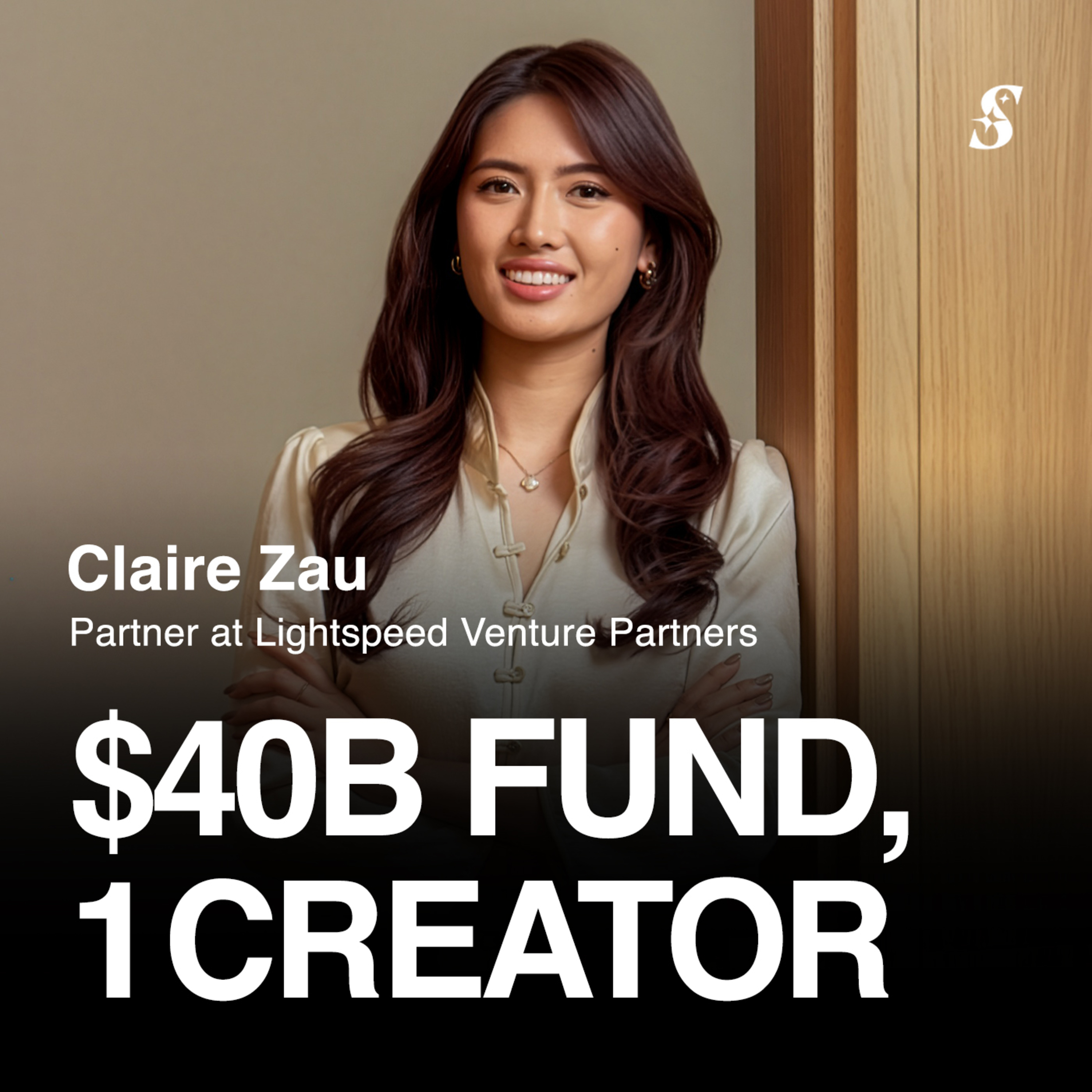
Claire Zhou, an investor who's also a creator.
- [00:03]
Claire Zhou
I've taken the most productized, techy approach to building content. When I first started, I told myself, I can just build this to like 10,000, 20,000 people who care deeply about tech and innovation. I'll be happy. I think across all platforms. I reached 350,000 plus people across all platforms, getting 10 million impressions monthly. I had brands like Vanta, Perplexity, Meta, like, all of them knocking my door being like, please can you share what we're building with our audiences and, you know, formal partnerships with them.
- [00:29]
Interviewer
So are you going to keep doing Zowie Talks?
- [00:31]
Claire Zhou
It wasn't honestly even a point of discussion. They're like, oh, obviously you'll continue to have your own platform in the same way that I think Fred Wilson at USV continues to have their own blog. Or Bill Gurley and BG2 and the army of A6Z. Yes, and that too. Yeah.
- [00:44]
Interviewer
Yeah. Well, that was a dramatic reveal.
- [00:56]
Claire Zhou
I know I felt bad cuz I was like, what if it is underwhelming? But they were like, we want. We want to capture what it's like when someone sees it for the first time. And it's about. It's been fun. So it's so fun.
- [01:07]
Interviewer
I feel like I could look at everything for like an hour.
- [01:10]
Claire Zhou
I know. I feel like this could be Lightspeed's little museum of toy room. Yeah, yeah. And everything. I mean, they have all. I actually think we have little bits and pieces that are nods, the portfolio company. So, yeah.
- [01:23]
Interviewer
Does anybody call you Zowie Wowie?
- [01:26]
Molly
Okay.
- [01:27]
Claire Zhou
You're not the first person. The whole name actually started because in middle school, that's what people would call me.
- [01:33]
Interviewer
Really?
- [01:33]
Claire Zhou
Yeah. And then I just kept it as Zowie. And like, I would. You know, when you're in middle school, you have your jerseys and it would be Zowie. And so that was my handle on Instagram for my personal account. And then I started posting in Spill and I was like, I don't know what to do. I don't want to put like Claire Zao Talks or like Claire Zao Tuck. So I use Zaoian. Yeah.
- [01:53]
Interviewer
I just hear the song in my head, like Maui Wowie. Zowie Wowie.
- [01:57]
Claire Zhou
Maybe that should be my. My theme song.
- [01:59]
Interviewer
Yeah, make it your theme song. Okay, so we have to talk about what we're doing in here. So what is going on right now?
- [02:05]
Claire Zhou
You are one of our first external guests in the Lightwork podcast room. And we've actually been teeing this up For a while, Josh, who you met a couple weeks ago, had joined Lightspeed and he kind of wanted to introduce this next generation, what lights we would look like. And part of that was having obviously a new media presence. So a big part of that was this podcast. And in order to have a podcast that represented all the things Lightseed was working on, the tastes behind it all, we have this space now.
- [02:38]
Interviewer
So why and how did he manage to bring you in?
- [02:43]
Claire Zhou
Yeah, it's funny because he found me through TikTok, I think, which is actually was one of my earliest platforms. I started posting in March of 2025 and then it on Instagram in June of 2025 and then that's it.
- [02:59]
Interviewer
Yeah, I feel like you've like completely just dominated this baseball.
- [03:05]
Claire Zhou
Yeah, I don't know, I mean, part, part of me sometimes feels like it's just this like Internet side quest that I have and it's not real. Like I'm like, oh, that's just my like fake side job. But yeah, through it. In the fall, I got an email from Josh and he had just joined Lightspeed and I'd, I think seen him on tvpn and I was like, oh, this is cool. Obviously a lot of noise around new media and I thought he just wanted to chat about the space, like exchange notes. I thought he was thinking about building out TikTok and Instagram and I was like happy to yap about it. You know, there are not that many people who are thinking about short form who are thinking as deeply about new media as Josh does. And so had the conversation and that kick started our discussions of what this could look like. And yeah, that's how I got brought into all this.
- [03:52]
Interviewer
Yeah, Josh is a legend.
- [03:53]
Claire Zhou
Yes. Yeah, yeah. And I had obviously seen all of this stuff at redpoint and had been entertained by a lot of the Redpoint content. And so when he came to me, there was this interesting opportunity to think a lot about what, how we could extend Lightspeed's brand beyond the tech and venture ecosystem. Because it does have a really strong brand. Even for me as someone who started Venture six years ago. Obviously new Lightspeed, as I was just starting, has followed a lot of its journey over the years, but I think really recognizing that for the mainstream, figuring out who is kind of the go to source for tech and startup content, I still feel like there's, there's a lot of white space there.
- [04:35]
Interviewer
This is why I'm so excited to talk to you.
- [04:37]
Claire Zhou
Yeah, I was like really like fangirling
- [04:39]
Interviewer
over this because there are not many people in venture that join this like kind of like new media cult or whatever that aren't, you know, like as independent or build out a platform like that. And then you built it out on Instagram and TikTok, which is really rare. But also it's like there is a huge difference in people with the expertise of the industries coming on and making stuff and explaining it out. And so I guess before I keep on trying to, you know, explain that further, but could you just share like how and like what Zowie Talks is and like why you bring this differentiated perspective and like again, I'll stop but
- [05:18]
Claire Zhou
yeah, yeah, I think I, you know, I've obviously been in the venture space for a while now. Started as an associate six years ago. I was at a firm called GSV and so have been a consumer of a lot of venture content. I think I'm swallowing sorcery. Since 2023 I've been, you know, just in awe of what you've been able to build, in awe of what people like Jorkesh and Lex Freeman, the like high quality content that is being put out in the space. Seeing TVPNs rise, I'd been observing all of this, but time and time again, every time I would have conversations with my friends and family or my younger brother who's in college, it just felt like a lot of what I was seeing in this, you know, this unique window to into the future, which I feel very privileged to have access to through my day job, wasn't being translated elsewhere. And so I was thinking a lot about where I could meet people. I've always been Dagon writing. I have a substack that I wrote and my previous firm grew that to about 15,000 readers and that was great. I loved building community. I've always loved doing that actually. Fun fact. Before I started all of this, I was big on Tumblr. That was like my first foray into community building. I think I, as a middle schooler built a Tumblr following of like 20,000 people.
- [06:37]
Interviewer
What?
- [06:38]
Claire Zhou
Yeah, and that was like my other, I think my other side job. So I've always been very digitally native, thinking a lot about how you build community even in digital spheres. And so was taking all of those lessons, was seeing all of this in venture and I just felt like there wasn't a place for people who wanted to understand what was happening in venture and startups. I felt like having had conversations with people who were maybe more outside of the traditional tech sphere. They only hear headlines or they see the funding announcements or they see, you know, AI is going to take your job, or they see content that's like, here are 10 prompts to make you a million dollars overnight. And so I just felt like there was a massive discrepancy in all the high quality stuff that I was seeing from you, from Garkash, from tbtn, and none of those insights being translated to people who are outside of tech. And I don't, I think people are genuinely curious and people are genuinely excited about innovation, about startups. They just don't have like an easy entry point to that. So yeah, about a year ago decided to just try posting once a day. I honestly thought when I first started I told myself if I can just build this to like 10,000, 20,000 people who care deeply about tech and innovation, I'll be happy and I can yap at them and share my thinking. And yeah, it's just now slowly grown to what it is we now reach, I think across all platforms. I reach 350,000 plus people. We do like north of across all platforms, getting 10 million impressions monthly, which is just insane to think about because when I first started I was really, the goal was like, I don't know, 20,000 people and maybe getting in front of a hundred thousand eyeballs a month.
- [08:23]
Interviewer
So what are the top performing types of content that you have? Is there like a specific kind that just always works?
- [08:30]
Claire Zhou
I have a series that I do called Hot Startup Rounds that has done really well, I think contrary to like what we know as our daily jobs and you know, it feels like we live and breathe this stuff. A lot of people actually don't feel like they have visibility into startup fundraises and where money is going. Like they'll hear about the open AIs and anthropics of the world raising large rounds or you know, pre IPO stories, but actual visibility into the earliest stages of building. I realize that a lot of people are actually very interested in that, right? I, I think in what's being seeded, early stage ideas and oftentimes it's actually interesting. I'll get comments like, where do you hear about Serpent fundraising? I'm like, it's a no brainer. TechCrunch, like PitchBook, Crunchbase, it's all stuff that feels very intuitive to us. But I started externalizing a lot of that and so once a week I would share two to three startups that I think were notable. They didn't necessarily have to be, you know, the largest fundraisers. It could be interesting tech, it could be interesting stories. Those videos have done really well because I think people care about genuinely what's being funded, what type of technologies are emerging. And then I do a lot of content around breaking down general tech news. I would say usually with the angle of what is this? Why does it matter? And you know, where this world move from here? I think oftentimes people get the headlines, but they don't really have the venture or startup context. Yeah. And so I try to bring that context and I try to make it accessible in a way where I think oftentimes in the VC world there's a lot of VCs talking to VCs or startups talking to startups and recognizing that there's this opportunity to make sure that that narrative expands beyond the circled out we got access to.
- [10:19]
Interviewer
Yeah. Going the route of Instagram, TikTok is totally different. And yeah, and it is a completely. It's a more mainstream audience. Meanwhile, like there is a lot of people in tech that do watch TikToks all day and maybe Instagram reels all day. But like, what, like what part of that aspect of talking to that audience has also like increased your perspective on like where we are in tech? Like, what do you see? Because there's obviously lots of headlines saying AI is horrible, blah, blah, blah, blah. But like, what, what are you like kind of seeing between the lines?
- [10:53]
Claire Zhou
Yeah, I feel like when I immediately when I started, it was actually pretty humbling because I was like, oh, this is very. The reaction to these things are very different than what I'm seeing on Twitter. I mean, it just felt like I was navigating two different universes. I think good examples are, you know, when I talk about AI or when I consume information about AI on tech, Twitter, it's obviously very techno optimist. We're excited about it. With anything being blasted to mainstream, there's always a lot of skepticism around big tech, A lot of skepticism around whether or not these technologies actually work. A lot of anger around this. You know, big tech is just coming in and taking all of our jobs. And so it was interesting navigating both because I think for a while I was very insulated in this world. And you know, by default being in this job, you have to be optimistic about the future. You have to be like, I think you have to be protected to be in venture to believe in the promise of this technology leading to a collective net benefit for humanity. And so I was sitting in this world. But then in the comments, I think recognizing that that excitement didn't necessarily translate or spread because every Headline they were seeing was very doom and gloom or like the most extreme versions of it. And so I think there was an interesting opportunity to basically try bringing some of that nuance and that excitement and that techno optimism into the mainstream. And also I think recognizing that when I was in college, I felt like the general atmosphere around tech was this opportunity to improve society with technology. It's idea that you can go tinker and build stuff in your garage. And I felt like that was my view of tech and it still is. But I think some of that has been lost in the mainstream now. It's like a lot more about these AI overlords and jobs being taken and data centers. And so, yeah, I felt like there was an interesting opportunity to intermediate and hopefully translate some of those stories into the public sphere.
- [13:02]
Interviewer
So are you going to keep doing Zowie Talks in this new role? Like, how is this being set up?
- [13:07]
Claire Zhou
Yeah, that was a really important point for me was that I think as even an investor generally, like you should always have an opportunity to hold your views independently and have editorial control of, you know, what you say and how you think about the world. And I think most venture funds, and even at a place like Lightspeed, having differing views is welcome. Like it's what makes us all better. And so I think for me it was really important having Zowie talks as a space that I could continue to refine my ideas, continue to interface with the public sphere in the same way that I think when you have in the VC ecosystem, a lot of people have independent X accounts or they have independent blogs. Like those are places where they can share their independent thinking. And that in turn, actually I think enriches the overall firm's collective understanding of nuance and also understanding of different opportunities and I think nurturing of healthy discussion. And so it wasn't honestly even a point of discussion. They're like, oh, obviously you'll continue to have your own platform. In the same way that I think if you look at a Fred Wilson at usv continues to have Aaron Blog or the various X accounts of investors in the ecosystem or like Bill Gurley and BG2 or sorry, Brad Gerstner and formerly Bill Gurley on BG2, this idea that like you can still have an outlet where you share ideas and it doesn't have to be absorbed into the
- [14:39]
Interviewer
firm and the army of a 16Z.
- [14:41]
Claire Zhou
Yes, and that too. Yeah, yeah, yeah.
- [14:43]
Interviewer
I am very envious of your role because you pulled off something no one thought could be achieved ever before. Yeah, you have a Split role between investment team and media team.
- [14:54]
Claire Zhou
Yeah.
- [14:55]
Interviewer
How does that work?
- [14:56]
Claire Zhou
Yes, I think it, I'm so grateful that Lightspeed is a place where they kind of take bets on new ideas like this. I think when I was having conversations with Lightseed team, actually there wasn't that much convincing that that needed to happen because it felt very intuitive when I had these conversations with the team that this idea that you have investor, like the role of an investor is very narrative oriented. You are often selling a startup, you are selling investors in your fund, you're selling partners on why they should pick you. And so I think this idea of storytelling, this idea of narrative driving is core to the job. But people, it's just never been, I think formalized I guess. And you see it with like previous generations where investors have always been writers, they've always been podcasters. There's a reason why so many investors put their ideas out into the world because it in turn brings them interesting opportunities, it builds their brand. Founders know what they stand for. And so I think in this sense when I had conversations with the LightSV team, there wasn't ever a tension or you have to pick one side. It actually felt quite intuitive to have this role where especially if you are the person that is driving a lot of new media, thinking a lot about the brand and reaching people, even as their pre founders and converting them and activating them into this ecosystem, then it's sort of a no brainer to actually be also investing in those people as well. And so I think of really my role as building that massive wide net top of funnel into the Lightspeed community. How do we get people, even when they're a college kid thinking about AI and tech? How do we get Stanford PhDs who might not have ever been exposed to the VC commercial world, but are still interested in tech and AI and can learn from the Lightspeed community. How do we get operators who similarly haven't been exposed to how to be a founder and so really targeting these pre founder archetypes and then my job is to build that out and then think deeply about how we can systematically make sure that we're converting that talent density into interesting opportunities, especially at the early stages and precedent seed stage.
- [17:19]
Interviewer
Well, we have to talk about the show.
- [17:22]
Claire Zhou
Yes.
- [17:23]
Interviewer
So what does the show entail? Are you going to do it every day? Are you going to be live streaming? What is it going to be?
- [17:30]
Claire Zhou
I mean there's so much interesting stuff happening in the ecosystem with like MTS and tvpn. I feel like they're that Space has been filled with a lot of high quality content. I think you have really in depth interviews from folks like Darkesh, you the ability to see the behind the scenes of some of these startups and spaces. I think there's opportunities there, but I really think of this as again a space where we can recap what's happening in the ecosystem. I really felt like my where I've had success in the space has been playing translator for people who are just starting to think about tech and AI and startups and make sure that all those stories that we're seeing in Silicon Valley get told to these audiences. And so I think of Lightwork as our opportunity to introduce all those people into Lightspeed sphere. We're not only going to cover lightspeed stuff, I think there's an immense opportunity to just be this place where people can digest what's happening in startups, what's happening in deep tech, what's happening in AI. And what we'll do is cover a couple stories every week, try make sense of the world. Josh and I will probably riff on our takes on these things. We'll have guests from Lightspeed, we'll have guests from portfolio companies, we'll have guests even outside of our portfolio experts who are building in this space and hopefully that will allow some of the mainstream audiences to have this sort of entry point into the Lightspeed universe and what we're thinking about. And in turn, not only just the Lightspeed universe, but also the venture startup ecosystem.
- [19:13]
Molly
Sorcery is brought to you by Brex, the financial stack trusted by more than 30,000 companies, including one in three venture backed startups in the U.S. nearly 40% of startups fail because they run out of cash. Rex is literally built to help founders avoid that. Unlike traditional banks that let your money sit idle chipping away at it with fees, Brexit's designed to help you spend smarter and move faster. Their all in one solution combines checking treasury and FDIC protection into one powerful account. You can send and receive money globally at lightning speeds, get 20 times the standard FDIC coverage through their partner banks, and even high yield from day one with same day and even same hour liquidity. Access your funds anytime. Companies like Scale AI DoorDash, Service Titan, HIMS, Anthropic, Flexport, Robinhood and Plaid Trust and use Brex. Start today@bre.com sorcery that's B R E X.com sorcery. Turing is training the next generation of AI with tasks that require real expertise and real world judgment. That's why Companies like Nvidia and Anthropic, Salesforce and Gemini partner with Turing. Turing builds realistic reinforcement learning environments and data systems based on real operational traces, the kind of infrastructure Frontier Labs need to train superintelligence. Visit turing.coms o u R C E
- [20:42]
Interviewer
R Y so what are the biggest things that people are watching right now other than the Elon Musk Sam Altman trial?
- [20:50]
Claire Zhou
There's that I think a lot of people are very curious about this idea of an AI bubble. I think there's. People have kind of seen the rise and fall of crypto as this life changing technology and haven't really seen that tangibly reach their lives. And so I do think there is this interesting moment where a lot of people have skepticism about whether or not AI is actually going to tangibly change our lives for the better. And I can go into that whole narrative issue there. I think people are curious about just the OpenAI, anthropic XAI, Google, who's going to come out of this, what happens to these big models. I think there's a lot of discussion around geopolitical tensions. I think a lot of discussions around the even like deep tech, I think there's excitement about robotics, excitement about autonomous vehicles, about space. So those are probably the things that are kind of percolating in my mind right now.
- [22:01]
Interviewer
Well, what are you most excited about?
- [22:05]
Claire Zhou
I think for my role as playing translator, I've had to cover everything. But I am most excited about telling stories really about the startups in the ecosystem. And honestly a lot of the innovation happening, I think a little less. I think there are a lot of people on the ground, for example, covering Elon vs OpenAI trial. I think there are a lot of people covering the politics of it all. But I think what I would like to inject into the space is what I frankly feel, which is this optimism around innovation and tech and startups and this idea that we are in this unprecedented moment where we have never seen this sort of step change in technology and we're really just accelerating in ways that we've never seen before. And so how do we make sure that we're sharing those stories that what does AI unlock in healthcare, in medicine and climate? And it feels like in a world where all the headlines are centered around AI, is going to take her job. Elon and Sam are fighting AI data centers are going to ruin everything. Hopefully not ignoring those stories, I cover those often, but also recognizing that this is a very exciting time for humanity and for builders and for people who are curious about the future. This is truly just a once in a lifetime moment. And so hopefully making sure we tell those stories so that people can feel like they can be part of it too and not necessarily locked out in, in the permanent underclass, if you will.
- [23:40]
Interviewer
One of the things that I find really interesting about the AI narrative is that Stanford study on Gen Z, like hating AI, which I just think makes no sense because they actually don't know a world without AI. They would be going into investment banking. I don't know if they've changed and be like, you know, doing ridiculous menial types of tasks over and over again. All this like repetitive work.
- [24:02]
Claire Zhou
Yeah.
- [24:02]
Interviewer
Like it's, they're technically like the most jobs that are being replaced or they're, they're getting more efficient. Like, or the ones that you wanted to bang your head against your desk. Like it was funny. Cause like we were, we were talking about this yesterday even when I was doing my newsletter. Like I thought this was like beneficial to me, but I just can't keep up with it anymore because it's so manual. I would go in every week and I would take all of the top funding announcements and I would put them in a newsletter, I would organize them, I'd make sure the links work. Like all this stuff, it would take me like three hours. I still don't know how to do it. But like there's jobs like that and jobs especially in investing where it's like you would have to pull from so many different sources to find actual information and data. But now you just click these buttons, you type these things and it's like ready to go.
- [24:57]
Claire Zhou
Yeah.
- [24:58]
Interviewer
So I don't know, I just, I, I just think like one, I think those like narratives on like Gen Z is, they're just so lucky that even if they are saying that, I don't think it's true because they just don't know a world without it. And two, like it's only getting better. Like it's getting a lot better.
- [25:16]
Claire Zhou
Yeah.
- [25:16]
Interviewer
And the jobs that were once before, like they just, you don't, you don't want to be doing repetitive work. That's what it's replacing.
- [25:24]
Claire Zhou
Yeah, I have a, a lot of thoughts on this because I also, you know, having been at a firm where we covered a lot of like workforce tech and labor changes, I mean my, my thoughts on this are that it's very easy to overestimate the short term impact of technologies and, and very difficult to actually remember the, the potential long term. And I think if you really zoom out to Your point? There were, if you look at like 100 years ago, people had to go
- [25:56]
Interviewer
to libraries and read books.
- [25:58]
Claire Zhou
Yeah. Which I, I still recommend but no,
- [26:01]
Interviewer
but like to get like any sort of information, any sort of financial information, you'd have to like read.
- [26:06]
Molly
Yes.
- [26:07]
Claire Zhou
Physical information. But I'm just thinking even to your point around like the menial tasks that have evolved. Right. Like we had people who were literal door knock, like alarm clocks, human alarm clocks, like they would walk around. But this was before we, the invention alarm clock. We had people, their jobs were to wake up in the morning and go to door to door to wake people up. And so yes, that is a job. But that person now 150 years later is probably doing something a lot more fulfilling and interesting than being a human alarm clock. I think when I think about computers, we literally had women plugging wires in and out to process compute. And so I think jobs will always evolve. I think it's easy to look at today and see this technology and think that they're like. I don't even think there's really a true. Maybe for certain roles like coding, contact center work where you do see one to one replacements but most times you see that labor being abstracted to like a higher, more useful level. I think for example the banking analogy. I did a video a couple of days ago on cloud finance agents and you know, obviously a lot of fear around this is going to take Walter analysts. What happens to analysts? And I'm like when analysts were staying up till 2am moving logos around and like manually typing notes, was that a fulfilling task for them? Probably a more fulfilling task is learning the judgment and storytelling around how to pitch or how to tell a story around an ipo. That's a much more interesting task for an analyst to do than manually moving logos, which AI can do now at 2am and so I think there's a little bit of a tunnel vision when it comes to this labor story. And I also do 100% agree. There's just, and maybe this is where I feel like a strong passion about is just this whole idea that tech is often misinterpreted. AI itself is just this encompassing thing that people, they don't recognize the ways that it's used already. We've already had AI for Siri facial recognition. And so this idea that you can now suddenly be like I'm anti AI is just to your point, so foreign to me and hopefully through the content that I can put out, people can build that nuance and understanding that like yes, AI can be used for personalized cancer vaccines. It can be used to create really cool Disney animatronics. And it's not just like, better search engine or, you know, AI girlfriend, AI boyfriend, which I feel like right now in people's heads, that's what AI represents.
- [28:50]
Interviewer
Because you have such a strong
- [28:54]
Molly
pulse
- [28:55]
Interviewer
on how people perceive their things in the mainstream through these different social channels. Given that you are an expert in this, it's your job. How do you think these big companies that are receiving, like, lots of backlash, how do they curb that. That image?
- [29:13]
Claire Zhou
Yeah.
- [29:13]
Interviewer
Whether it's OpenAI anthropic, you know, like. Yeah.
- [29:16]
Claire Zhou
I mean, I think generally the AI world has an issue around, like, expectations versus delivery of the. I think when we have these very dramatic statements about white collar work going away or, you know, we will see, we will have AGI by 2027. Like, I think you feed into this frenzy and people are confused. They're trying to make sense of the world so they fall into this frenzy. But then time and time again, at least over the last few years, it hasn't turned out that way. So I think there's almost like a boy who cried wolf dynamics coming out of the AI world sometimes where if you're deep in it and you're following it the way that we do, I'm excited because every single thing feels like a step change. And we're continually seeing the privacy. Like, this technology is evolving faster than ever. I'm seeing the capabilities that get unlocked. But then I think if you're a person outside of tech, you're basically hearing like, this thing's going to become super intelligent and we're going to reach a singularity. And then every time you see a new release, it's like, oh, wait, there are still hallucinations. Oh, wait, this thing actually can't do a lot of things. What are these tech bros saying? And so I think that's a dynamic at play here is the tech industry, I think, can do a better job of inviting people in. I think there's a lot of. To what we were discussing, this, like, permanent underclass discussion is probably not very conducive to people feeling excited about technology and innovation. I think there's opportunities where people, especially when I've done videos breaking down the technology, people have been like, wait, this is actually really cool. Or this is how AI should be. Where I'm like, guys, this is how AI has been. When I think about Isomorphic Labs or what Demis and his team are doing with Alafold, because these stories are not told. The mainstream's conception of tech and AI is limited to the very scary headlines and less so the optimistic, exciting step changes that we're making in all of these important fields. So yeah, I think often the work to be done here is real or the job to be done here is to really hopefully externalize some of the. The progress that's being made in tangible ways. Because I think if you go to an average person and you say look like whatever new model has now achieved XYZ on what benchmark that doesn't mean anything to a person on the street. And so how do we make sure that we tell those stories and we make sure that it's known that people in the tech space. I think a lot of people in the Texas genuinely believe in a better future. I don't think everyone is in this industry because everyone's trying to be a super villain. And so how do we make sure that there is some sort of leveling between these two spaces?
- [32:16]
Interviewer
Who do you think tells the story best?
- [32:19]
Claire Zhou
I think Dwarkash does a really good job of CEOs. Oh, CEOs. I actually, I was having a discussion about this a few days ago. We had Robbie had a book talk discussion with Sebastian Malaby. He recently wrote the Infinity Machine on demos. And I think of the prominent AI leaders, I think Demis does a pretty good job of actually translating the technology into more quantifiable and tangible ways for your everyday person. Because I think there's a lot of focus on benchmarks and a lot of focus on unlocking. And you see the unlocking capabilities in certain deeply technical spaces like coding. But I think the work that Google and Demis has done around storytelling around AlphaFold, around what they can unlock in games of AlphaGo and AlphaZero, I think that has been helpful because it's tangible for people to see the step change in gaming versus I think when you just put a benchmark in front of a person, they're not really. They don't know even how hallucinations work. So it's hard to make them care about this technology when it doesn't really impact their daily life. So I don't know. That's probably my answer. But I think Dario does a good job of really prioritizing the safety aspect of all of this. I think that's definitely on top of people's minds. That's when I think about comments from the mainstream. One of the top concerns is that we're kind of moving fast, breaking things. And so I think Dario does a pretty Good job of really making sure that safety is top of mind in anything that they're putting out there.
- [34:15]
Interviewer
Joining the mega fund that is Lightspeed, you have a whole new portfolio to learn off of. What portfolio companies are you excited to dig deeper into?
- [34:26]
Claire Zhou
There's a lot. It's so fun because, you know, when I was covering startup rounds there were so many Lightseed portfolio companies and now I have, I'm like on the other side of that. I think there are a couple even just more recent interesting ones. Like I think there's so much happening in this new layer of infrastructure for agents that's completely new. And so you have companies like Sycamore Labs that Lightspeed just invested in. Raindrop just released something new. This idea that around this ecosystem of agents you have to build audit trails, you have to build harnesses for them. And so there's all these different opportunities or build SIFI for agents. There's all these new, with this new paradigm you have this new opportunity for all these, this tooling to support agents, which we've never had before. I think that's interesting seeing what the team is doing in investing in even like mainline services, places where AI or tech traditionally hasn't touched. So they recently invested in a company called Modis, which is doing a lot in the audit space, which traditionally like dominated by small medium businesses or like the KPMGs of the world. Now you have an opportunity to build like an AI native audit service and in that case they actually bought an actual audit firm. So that's interesting to see. I think seeing kind of the AI roll up play even play out internally. And then obviously companies like Anthropic which are, you know, Lightspeed has played such an important role in the anthropic journey. And so being able to kind of see side by side the ways that Lightspeed is collaborating so closely with Anthropic as it kind of enters its era. I don't know, it's just so fun. Like every day I go back and I'm just so energized by the conversations and the rooms I get to be in and the insights that I even just get by osmosis of being in the room with some of the investors on this team.
- [36:29]
Interviewer
Yeah, that's amazing. That's a lot of it.
- [36:31]
Claire Zhou
Yeah. No, it's like truly a dream, you know, dream role where this is the, if you want to talk about like the frontier and where things are happening, these are rooms to be in. And my passion of being able to translate all that into making it more inviting for people to to be. Feel like they're part of it. There's just like, not a better place to. To be able to do that.
- [36:55]
Molly
Today's episode is sponsored by VCX by Fundrise, the public ticker for private tech allowing investors of all sizes to invest in venture capital. Learn more@get VCX.com Some of you may not have heard this yet, but our sponsor Public just launched something called Generated Assets. And it brings AI into investing in a way I've honestly never seen before.
- [37:18]
Interviewer
Here's how it works. You type in an idea like AI
- [37:21]
Molly
powered supply chain companies with positive free cash flow, or defense tech companies growing revenue over 25% year over year. Publix AI then dispatches a swarm of agents that scan every single US stock, evaluates them, and instantly builds a custom index around your thesis. What really stands out is how clearly it explains why each stock is included. And before you invest, you can even back test your idea against the S&P 500. So you're making decisions with real context, not just guessing. And beyond generated assets, Public lets you invest in stocks, bonds, options, crypto, all in one place. They'll even give you an uncapped 1% match when you transfer your investments over from another platform. If you want to build a portfolio that actually reflects your thesis, visit public.com Sorcery paid for by Public Investing. Full disclosures in the description Enterprise AI runs on merge, the AI infra platform for integrations, agent tooling and model orchestration. So your teams ship product, not plumbing. Mistral, Dropbox and Drata already trust merge in production. Start building@merge.dev founders scale faster on dealership. Set up payroll for any country in minutes. Hire anyone, anywhere, get visas handled fast and get back to building. Visit deal.comsercery that's D E L.com Sorcery.
- [38:41]
Interviewer
Is there anything we haven't covered yet that you want to talk about?
- [38:44]
Claire Zhou
Not really. I'm curious, like, your thoughts on all things new media. I mean, you're like, truly a pioneer in this space. I distinctly remember when you had been starting sourcery. I've been leveraging it. It was like so useful for me. And then when you went full time, I was like, I love that. I cannot wait to see it grow. And, you know, grow. It did.
- [39:05]
Interviewer
I know. I mean, it's a lot of work.
- [39:09]
Claire Zhou
Yes. Content is. I think that's one of my takeaways is content is a lot of work.
- [39:14]
Interviewer
Every time I think I've cracked it, I have not. And something changes. And I Got to redo it. And like, it's really awesome because I've gotten to the point now where I've, I have a team around me. I have like two people that I pay pretty much full time.
- [39:28]
Claire Zhou
Yeah.
- [39:28]
Interviewer
Very nice. Full time salaries. Thank you to Brex. And like, it's just, it unlocks so much more when you take and. Okay, so I think this was my biggest realization that would have benefited my investing experience early on. People always say, like, invest in someone who is not doing this part time that is full on, locked in, no writ, like all, all risk. Like, no, like, hesitations. Once I went full time on it and I saw the roi, I was like, holy shit, this is insane. Like it went boop. And then all of a sudden I'm getting Alfred Lynn and Alex Karp and Andrew and all these people. And I think, I think the fact of like building these arcs too is important. Like my arc, my story has been similar to you. Like, I, I've been in investing for like six, seven years. It's like my whole career. I started right after college and I started the newsletter like a year after just like starting work. And so just like, I've just like been building that for a while. So I had some people that knew about me maintaining relevancy like once a week through the newsletter, which is really cool. And then I did become known for that. And then I realized, oh, wait, if you market something, it grows.
- [40:45]
Claire Zhou
Yeah.
- [40:45]
Interviewer
And so I tried more things. We did the podcast and like, it wasn't until. Yeah, it wasn't until I got my Brecht sponsorship that I was like, oh my God. Like, this is a real thing.
- [40:58]
Claire Zhou
Yeah.
- [40:59]
Interviewer
And maybe I could do both.
- [41:00]
Claire Zhou
Yeah.
- [41:00]
Interviewer
Right now, like, I'm really 100% focused on sorcery. I can't handle brain on this because it's like, it's me. It's all on me.
- [41:09]
Claire Zhou
Like, if it fails, it's my fault.
- [41:11]
Interviewer
But like, one day I, I'll get back there. I know a lot of people are always asking me, like, when I'm going
- [41:16]
Claire Zhou
to start a fund. Yeah.
- [41:17]
Interviewer
And so to be continued.
- [41:20]
Claire Zhou
But I don't know.
- [41:21]
Interviewer
So. Yeah, but it's, it's just like so much fun and it gives you so much of a more, a greater perspective on things than being just so insular.
- [41:28]
Claire Zhou
Yes.
- [41:29]
Interviewer
So, like having this like, exposure to the outside world. I'm building much better relationships with everyone. I'm having my own relationships with people. I, um, it's not just, you know, under the guise of being an employee, like I have like, I'm texting most of my guests, like we become friends afterwards. Like they're excited to come on. Like it's a really cool unlock that I just was not expecting for sure.
- [41:54]
Claire Zhou
Like, I think there is, it's such a helpful way to build relationship, like scale building relationship with people in a non transactional way. Because I do think in Metroid it's
- [42:03]
Interviewer
like it's the most transactional place on earth. Like especially in San Francisco.
- [42:07]
Claire Zhou
Exactly. And so like with media, I found it to be like, how do you reach people? How do you build trust and credibility even before you've actually like met them in person? And a lot of people know what you stand for and I think similar to you, I had this unlock when I thought I was only going to reach 20,000 people. And now it's grown to what it is. And then I had brands like, brands like Vanta, Perplexity, Meta, all of them knocking on my door being like, please can you, you know, share what we're building with, with our audiences and you know, formal partnerships with them. And so that's when I was like, oh wow, these are all these companies that I've been tracking in the space and now like my little window is what you want to. Like I'm realiz. That's kind of when I realized that tech has a good job of. Does a good job of marketing to each other, but they really have a tough time, I think, spreading that, that narrative outside. So that was like kind of the, the moment for me. But yeah, I think there's. It's just been so fun building media platforms. I'm inspired by what you're doing. I'm excited for. Hopefully you're fun. I'm sure you're seeing so many interesting opportunities out there. So like, you know, I view you as someone in many ways who's like also pioneering this kind of hybrid role of someone who can build a brand, who can build a community and then translate that into very interesting opportunities and people that you come across.
- [43:26]
Interviewer
Yeah, my bank account can't really survive many more of these angel investments.
- [43:29]
Claire Zhou
Yes. Yeah, yeah.
- [43:31]
Interviewer
Do you get recognized on the street?
- [43:33]
Claire Zhou
I. So it's so weird because in my head this is literally a side Internet thing.
- [43:39]
Interviewer
Yeah.
- [43:39]
Claire Zhou
And then yeah, I've been recognized in my building before In SoHo and SF and politics, I would say, like where there are tech people.
- [43:48]
Interviewer
Yeah.
- [43:49]
Claire Zhou
Sometimes I will. Weirdly, this is like when I'm like, oh my God, I'm actually perceived as a human and I, you know, I walk around and exist in the world as a normal human. And I don't think people recognize me. And so the other. Just two days ago, I got a DM that was like, where are you? In Shaq 15? Taking a conference call. I think that was you. If so, I'm a fan. But I was like, that's so nice. But also, oh my gosh, I probably was like, so I think there, there are moments like that where I'm like, oh, wait, I probably can't walk around. Like, you know, I have to sometimes realize that. That people are watching you. Yeah, yeah. But, you know, for the most part, I'm like, I am such a small person in the. It's not like I have multi. Millions of people following me. And for the most part, it's just a lot of fun being able to connect with people who are in tech, who are interested in tech. Like, everybody that I've met through this has been so kind, so cool. And yeah, it's just for the most part, I'm still very much a regular person who is just excited about tech and excited that I get to tell these stories.
- [44:48]
Interviewer
Yeah, it's funny visiting San Francisco. I think that's when I get the most. Oh, my God, you're famous.
- [44:54]
Claire Zhou
I know. And I'm like, wait, really? I just feel like I'm just a person who's like, Honestly, most days I'm like, oh, this is just. I think, like I see the numbers grow, but I'm like, you're just like
- [45:04]
Interviewer
posting stuff on the Internet. So it's hard. It's so. It's so weird to me because I like, I think similarly to you, it's like I'm constantly just like online. I don't think people actually. And I do see who's liking it and all this kind of stuff, but like, it doesn't, it's like not real.
- [45:19]
Claire Zhou
Real at all. It doesn't feel.
- [45:21]
Interviewer
Yeah, it just, it feels like some weird thing. And then I go to events and people are like, oh, my God, you're Molly. I'm like, yeah, that is. Yeah, me.
- [45:29]
Claire Zhou
I know. And then I'm like, oh, wait, so they actually watch something and I get a little embarrassed, but.
- [45:33]
Interviewer
Or hopefully now they watch something because sometimes I think people just say that, but they don't actually watch anything. Maybe they're just scrolling. So I'm hoping that converts some more listeners.
- [45:42]
Claire Zhou
Yeah, Yeah, I love that. Okay, well, cool.
- [45:45]
Interviewer
As we wrap up, what are you most looking forward to in the next 12 months? I'm not going to say this Year because it's like kind of halfway over
- [45:50]
Claire Zhou
but so much we have a lot of things in the works. The team here is amazing. Just again so energized by being in the room of investors, by our marketing team, being able to work with Josh, with Ravi Bajal. Everybody is just like operating at such high clock speed. And so from an investment standpoint this is you know again the most exciting time to partner with some emerging builders in these ecosystems. So I'm excited to continue to meet people. I before was mostly investing in ed tech and workforce tech and now I get to really expand beyond to my interest in AI and Frontier. So meeting people there that very excited for that. I think on the new media front there's a lot of different initiatives we're, we're hoping to drive I think building more, productizing and operationalizing a lot of that, that funnel from like how do we make sure that every investment or company we're interested in goes through kind of this, the, the Lightspeed or lightwork marking machine and how do we make sure that their stories are being told to the mainstream, to the tech world. And yeah, I think there's just a lot of low hanging fruit. One of the things I've realized with Lightspeed is you have this cohort of just very intelligent, so thoughtful, so intellectually rigorous people and I think they're so non promotional as humans and I've had, I walk away from every discussion, I'm like oh my gosh, I wish you would just write or I wish you would share what you have in that brain of yours because 18 year old me in college would have loved and died to just like have access to some of these insights. And so I think one of the exciting things I'm hoping to unlock is the fact that you have this density of just big thinkers on this team in the portfolio, in the spheres around Lightspeed who because they think it's just normal for them to be doing the things that they're doing, hopefully externalize all of that and make it accessible and recognize that these are really category ecosystem shaping insights that hopefully will continue to nurture the ecosystem.
- [48:09]
Interviewer
It's amazing. Yeah. Well, welcome to your new home.
- [48:12]
Claire Zhou
Thank you. I hope to have you on for more conversations. Josh and I love you. So we're going to hopefully have you on for more episodes in the future.
- [48:20]
Interviewer
Cool. Thank you so much clutter and hopefully
- [48:23]
Claire Zhou
we'll get to collab more.
- [48:23]
Interviewer
I know and I can't wait for your, your new music ringtone.
- [48:28]
Claire Zhou
Zowie zowie wowie.
- [48:30]
Interviewer
It's gonna be good.
- [48:30]
Claire Zhou
Yeah. Thanks.
- [48:32]
Interviewer
Thanks.
- [48:33]
Molly
Hey it's Molly. If you enjoy our interviews, check out our newsletter Sorcery VC where we deliver a once a week top deals and tech headlines. Email and also go deeper on our podcast interviews. Subscribe to Sourcery Today and don't forget to subscribe to the podcast on YouTube,
- [48:49]
Claire Zhou
Spotify, Apple or wherever you listen.
- [48:51]
Molly
Link in Description to sign up.