Loading summary
Transcript33 lines
- [00:00]
David Kraus
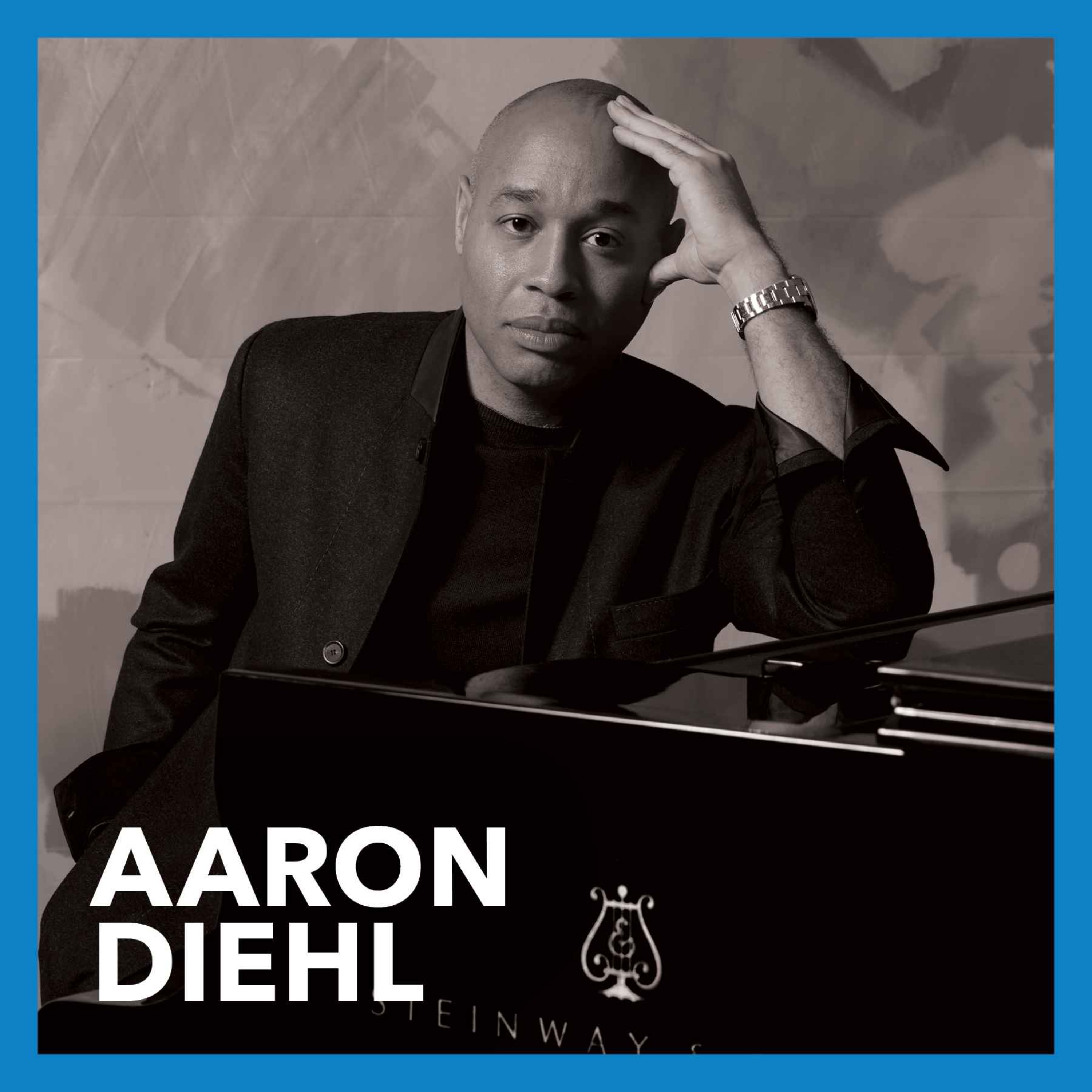
Hey listeners, be sure to check out slippeddisc.com for the latest inside information on classical music. Now looking for world class performances at an accessible price point? See yourself at Lincoln center presents free and choose what you pay performances. Where else in New York City can you experience contemporary flamenco, mental health, inspired choral works, experimental jazz, and an interactive family dance performance all in the same week and for less than the price of lunch? Explore the full calendar of events today@lincoln center.org presents. Now, since you're here and already a fan of Speaking Soundly, I want to tell you about another podcast that I think you're really going to like. It's called Tacit no More, hosted by Joseph Conyers and Yumi Kendall. You may remember Joe from his episode here on Speaking Soundly. If you haven't heard it, you have to check it out. He is a force of nature. Together on their podcast, Joseph and Yumi are giving voice to what really needs to change in the classical music world. Like advocating to open up pathways for black orchestral musicians, envisioning new ways to support arts education, and young professionals who are charting their own course in the classical music industry, Tacit no More is a podcast that asks the tough questions and speaks the truth about classical music. You can listen to Tacit no More wherever you get your podcasts. Oh, and one more thing. Before we get to today's episode, you can support Speaking Soundly by doing one simple thing. Follow it. That's it. It's pretty simple really, and it's free. Just click the Follow or Subscribe button on whatever podcast app you're listening to right now. And if you already follow the show, thank you so much. But there's actually still something you could do. Click the Share Podcast button and send Speaking Soundly to your friends and relatives that also like listening to candid and inspiring conversations with some of the best musicians on the planet. Okay, well, thanks for your continued support. We really appreciate it and I hope you enjoy this episode of Speaking Soundly. American pianist Aaron Deal is known for his extraordinary fusion of classical and jazz styles, making him one of the most versatile and creative musicians of his generation. Having mastery in both genres, he actually finds inspiration in losing control.
- [02:29]
Aaron Deal
Some of the greatest musicians are the ones who kind of abandon those principles of controlling everything, feeling like there's no real safety net, but we're going to play anyway, even at the risk of falling to our demise. That's scary, but it's important.
- [02:50]
David Kraus
You're listening to Speaking Soundly, a backstage pass to today's biggest stars of the music world. I'm your host, David Kraus, principal trumpet of the Metropolitan Opera. During each episode, you'll hear me speak with inspiring performers about their creative process and the personal journey that led them to the stage. I can listen to you play just about anything on the piano, whether it's a jazz standard, a concerto, one of your original compositions. I just love your playing, but I'm especially captivated by how you take a classical piano work, whether it's Mozart or Philip Glass, and reinterpret that through a jazz lens, transforming it into something completely new. What inspires you to take on that kind of musical transformation? And how do you find that perfect balance between honoring the original composition and making it your own?
- [03:48]
Aaron Deal
Well, thanks, David. It's really nice to hear. I'm glad someone's enjoying my music. I'll have to start by talking a little bit about how I grew up. Music was always a part of my early childhood, not just jazz, but my parents also had this record collection, CD collection, I should say. Stevie Wonder, Quincy Jones, jazz CDs, like Mel Jackson or Miles Davis. But then there was. They had a collection of classical music. It was like some box sets that they had. I remembered one was of all of the Beethoven piano concerti, and another was the Bach Brandenburg Concerti. I remember putting on the Bach, and this is before I started playing. So I started playing when I was around 7, and I remember hearing this Bach, like, whoa. I mean, I didn't really understand what was going on at her time. There's something about that really moved me. And then when I started playing piano, I played in a church. Starting When I was 8, we went to African American Catholic Church in Columbus, Ohio. It had a Mass that was more traditional, and then it had a Mass that was geared more towards black American gospel music. And for some reason, that always was interesting to me. Gospel music is such a critical part of the black American music identity. Right. So taking this sound and then applying it to the Catholic liturgy and something about that was always appealing to me, where it's not so much. It has to fit squarely in one thing or another.
- [05:32]
David Kraus
Well, you started the piano at a very young age. What's your earliest memory of the instrument and what drew you to it?
- [05:39]
Aaron Deal
You know, I remember my parents having a book of Christmas music on the piano. I was probably like five or six at this time, and I hadn't really had any formal training yet. And I saw get the Halls. I knew how it sounded. And so I was trying to learn how to read music by How I knew this ratoon sounded in what was written on the page, I remember very zenidly, see. And I was trying to figure out what that symbol meant, the one accidental note and the key signature, that B flat. I was trying to figure out, like, what that meant, and I was trying to associate what that was with what I was praying on the keys. And I remember just being perplexed, like I couldn't make the connection.
- [06:37]
David Kraus
So wait, time out. You're five years old. You could barely read, much less read music.
- [06:43]
Aaron Deal
Yeah, I couldn't read music for sure.
- [06:44]
David Kraus
Right. And you're reverse engineering reading music through Deck the Halls.
- [06:50]
Aaron Deal
Yeah, I did. I don't know how, how I did it. And I was lucky. I talked about church. I mean, one of the earliest musical experiences was hearing the oring at church and hearing the choir and really just being mesmerized by the sounds. And so when I started playing piano, the choir director, she approached me, she said, I know you learn piano. If you want to play for the choir, why don't you come up and play for the church masses? Through that experience, after starting formal training and learning how to read and everything, what I learned most of all was that when we're playing music, it's not about us. It's about being in service of whatever the function of the music is. It's not necessarily about going up and showing what our abilities are as an instrumentalist. Like, what is a function of the music in this particular time, and how do you serve that function through church playing? I thought that was a very important lesson that I still try to apply today.
- [07:51]
David Kraus
You know, it's interesting. Most kids start out with really basic exercises, build up the acumen needed to play more and more challenging music. But you started in the church playing the music and kind of figured out your technique and coordination from there. That's the opposite of what most kids go through, their experience learning the piano. Right.
- [08:15]
Aaron Deal
Well. Well, it was actually a problem for me later on because my piano teacher, of course, she wanted me to go through repertoire, to be able to develop a certain technique. But she would have to rein me in a little bit where I would try to play something like Liszt, Hungarian Rhapsody Number two, I mean, which is you, Jones. Incredibly virtuosic. And my teacher would be like, no, you can't play that. And the reason why I wanted to play something difficult wasn't necessarily because it was hard, because I didn't know it was hard. It was just like, I like this music. How can I play it? And I think that's always been. My approach was like, well, this sounds good. This makes me feel a certain way. What do I have to do in order to recreate that sound that I'm hearing?
- [09:07]
David Kraus
To that end. As you were progressing on the piano when you were younger, was there a moment when you felt like all the practicing you had been putting in led to your fingers somehow feeling liberated, like they just knew where to go on the keyboard?
- [09:22]
Aaron Deal
You know, that happened much later, I would say, because that's a. Well, that's a psychological thing. I have to give credit to the pianist Fred Hirsch. I remember going to see him maybe about 10 years ago. He said, I can tell you like to be very precise about what you want to play. Well, when you're improvising, you don't necessarily have that luxury, because by the time you figure out what that is, you're already 20 bars ahead, you know. So the mindset that I've learned through studying with Fred is how to, like, loosen up a little bit of that and being a bit more adventurous. Not premeditating the things that you want to play in the moment, but letting the moment happen. And for me, that still is very scary, like simply abandoning all the things that I sort of been trained to do. Being in the moment and just going on instinct. You've done the work in the practice room, then once you're on the bandstand, just letting go of that. And that's. That's very hard because when one is on stage at Village Vanguard or Carnegie hall, it's easy to be like, I've got it. It's got to be so great. And I. But in order for it to be great, I have to be able to control what I'm doing. And I think some of the greatest musicians, to me, are the ones who abandoned those principles of controlling everything and really being risk takers. I think it's an important lesson in how we can approach performance. The idea of playing in the moment, feeling like there's no real safety net under us, but we're going to play anyway, even at the risk of falling to our demise. That's scary, but it's important.
- [11:21]
David Kraus
Like many young students, you spent the summer attending Interlaken, which is an arts camp in Michigan for classical training. But for you, it was a turning point toward jazz. How exactly did your interest in jazz develop during your time there?
- [11:40]
Aaron Deal
There's this kid, probably 10 or 10 or 11 at the time. His name was Eldar Jangiro. I remember I saw him on CBS Sunday morning. The late Dr. Billy Taylor interviewed him And I remember he had that Russian training, right? I mean, his facility was impeccable, but his interest was really in jazz. He loved Art Tatum, he loved Oscar Peterson. So I remember hanging out with him a little bit and I told him that my grandfather was a jazz musician and blah, blah, blah. And we kind of struck up a little bit of a friendship. That was a big turning point for me in terms of delving into the jazz language. And my grandfather also encouraged me to sit in some jam sessions. And I was always very shy about it. I never really wanted to do it because it's very intimidating. You know, when you have a piece of music that's predetermined for you, it's easier because you don't have to worry about anything other than like interpreting what the music is telling you to do. But when you have a clean slate in front of you and you have to use this very expansive language, you got to figure out how to use that language, make it individual, and then play with other people in real time. That's hard. It's very intimidating. So when I was at Interlocking and I heard Eldar, I said, wow, that's okay. I can't let this little kid outplay me. It was very inspiring. And so that was my beginning of my journey into being more of a competent, proficient jazz musician.
- [13:29]
David Kraus
After Interlocking, you got a spot in the Columbus Youth Jazz Orchestra, where the director of the ensemble, Todd Stoll, recalls you practicing six or eight hours a day and would just amaze people with your playing. I talked to him recently and he wanted me to have you recall a time that he took you to play for one of the elder stride piano masters in Columbus named John Ulrich. You were the 16 year old kid when you showed up. He came out in his boxer shorts. His house was 90 degrees inside and the place was a mess. And you played this unbelievable striped piano and you were clearly focused on the music and not the surroundings.
- [14:12]
Aaron Deal
Yeah, you know, it's funny. Yeah, it was. Was very hot in that room. I forgot about that. I have to say that when I have music in front of me, in my surroundings, it's like all else is irrelevant. And I think that's why I continue to entertain the idea of making a career as a musician, which is this. You know, it's a crazy profession from a business standpoint. But I think for me, what's so motivating is when I hear musicians and they make me feel a certain way as a listener, and I think to myself, well, I would love to make People feel like that when I play, I don't necessarily want people to say, oh, Aaron was impressive. I want a feeling of like, that was beautiful. That's what I want when I play.
- [15:02]
David Kraus
What happens next in your life is just crazy to me. You're 16. You go to New York City to compete in Jazz at Lincoln Center's essentially Ellington competition. You win outstanding soloists and catch the attention of the one and only Wynton Marsalis, who, after hearing you, offers you a spot in his band for their upcoming tour of Europe and you turn him down. What in the world were you thinking, turning down the great Wynt Marsalis and the gig of a life?
- [15:31]
Aaron Deal
Well, I mean, the answer is simple. I had a previous engagement in Aspen for their Jazz Snowmass Institute. And they had called me to do this two week summer camp, if you will, and I said yes. And Wynton had called me to do this tour with him.
- [15:46]
David Kraus
Well, that's like turning down pitching for the Yankees to play Wiffle ball, you know, with your friends.
- [15:52]
Aaron Deal
Yeah, but you know, I don't know, it just, it just seemed like you have a commitment and you honor the commitment. So I said, I can't do it, sorry. And then Wes Anderson, the alto Satoponist, played with, with Wynton for many years. His wife called and was like, he crazy. He turned down Wynton Marsalis here. And I said, okay, well should I take the gig? And I called Aspen and I asked, I said, well look, I, you know, I got this offer. Is this okay? They're like, oh yeah, there's no, no problem. So I ended. I mean that was a, that was a, that was an interesting experience, you know, because I was 17, I was playing with grown men who were played by that point for like 20 years together. You know, I didn't know anything. You know, it was very scary. I mean there were some points where I, I just wanted to go home. I was like, this is hard. The music was hard. You know, not to mention the fact that we were doing one nighters across Europe and I had never done anything like that before. The rigors of actually traveling on the road, plus trying to keep up musically. I mean, the only explanation, and maybe you have to ask Wendy, maybe you wanted to give me like a sneak preview of how hard it was going to be playing music like that at a very high level and the kind of dedication that is required and all of the challenges that come along the way in pursuing the vocation of music. I mean, it's hard.
- [17:24]
David Kraus
It sounds stressful. To be thrown into that situation. But you were there for a reason. I mean, Wynton heard something in your playing that made him think that you could do it. So at any point during the tour, were you able to step up and bridge that age and experience gap through your piano playing?
- [17:42]
Aaron Deal
Well, I tell you, there was one. I never will forget this. Maybe in the middle of the tour, we were playing at the London Jazz Cafe. I remember being so tired of feeling as if I had nothing to contribute. And I remember saying, you know what? I don't care anymore. I'm just gonna play. I'm just gonna let go. And sure enough, when I did that, Winton turned around and looked at me. He said, man, you sound good. I was like, wow. Maybe if I don't think so hard about it, maybe there's a path to where I could feel a bit more comfortable when I was able to let go and just immerse myself in whatever was happening on the bandstand and not caring so much. Am I playing this in the right register? Am I playing too loudly? Am I playing too sloth. Whatever it is, something came out. I don't know what, but something came out of me. That was a very memorable moment in time. Like one of the few specific memories I had of that tour, because everything else, I suppose, was sort of like a flight of fright.
- [18:59]
David Kraus
I would have thought that this was the official start to your professional career, but you'd go straight from the end of that tour to college at Juilliard. What was it like going from the top of the world to being a student again?
- [19:15]
Aaron Deal
Honestly, it was a relief. I learned so much at Juilliard just playing with my peers. I remember Victor Goins, the director of the program at the time, he said that it's important that you forge solid relationships with the people in the program with you, because these are going to be the same musicians that you played with for, like, 30 years. And he was so right about that. I was very fortunate to go into the program at that point in time with so many great musicians and develop over the years, musical connections and relationships.
- [19:51]
David Kraus
Well, it's clear that you took full advantage of just that because while you were still in school, you were working professionally. Since then, your career has taken off. And speaking of taking off, I apologize for the pun, but you're also a pilot with a passion for flying airplanes. I'm curious if there's any similarity between flying at altitude and flying through chord progressions on the band handstand.
- [20:21]
Aaron Deal
I mean, I think there are. I went up with an instructor some years ago, and he said, you know, in my experience flying, I've noticed that musicians are some of the best pilots and engineers are some of the worst pilots.
- [20:38]
David Kraus
Interesting.
- [20:39]
Aaron Deal
And he kind of explained that. He said, you know, when you're flying an airplane, you're not thinking, well, how does this work? Why does this work? If you get fixated on those kinds of technicalities, I mean, you'll be behind the airplane, because airplanes moving, you've got to be focused on how to get the plane from point A to point B and what we say, being ahead of the airplane, like, knowing where it's going to be in like 100 miles and being ready for that, ready to descend or going to land or whatever. So I think with performers, we're used to being in situations where we have to react in real time. Not everything is going to go right all the time, and we have to figure out how to adjust to make sure if we get off somehow to get back on. And you have to be able to do that. In flying, you have a lot of variables. You have weather, you have traffic delays. God forbid you have some kind of mechanical failure or some kind of emergency. You have to be able to figure out how to deal with those events under pressure, keep your head cool, and find a way to get the plane safely on the ground. One of the great benefits about playing jazz, too, especially when you're improvising with other musicians on a bandstand, is like, you just. You really don't know what's going to happen, and you have to be able to react quickly. That certainly can be applied in operating an aircraft.
- [22:07]
David Kraus
Well, Aaron, it's been amazing talking to you, and I want to end with a personal note of thanks. My dad was a huge fan of the modern jazz quartet, and their music was the soundtrack to my childhood. So when you perform their compositions with your band, it allowed me to relive the sound of John Lewis's piano playing. And you really captured that sound just perfectly. What does it mean to you to have this ability not only to imitate, but to collaborate and communicate with great artists through great music?
- [22:44]
Aaron Deal
I don't know. It's just indescribable, that feeling. I guess that's why I keep coming back to it, to have that feeling on stage where I'm sharing this experience with not only other musicians, but with listeners at the same time. I mean, my only wish, I suppose, in continuing to do this in my profession is to have opportunities, opportunities in creating these kinds of moments, because it's very, very special.
- [23:11]
David Kraus
I hope you enjoyed this episode of Speaking Soundly. If you liked what you heard, please tell your friends about it. Help spread the word. Be sure to subscribe, rate and leave us a review in your podcast app and follow us on Instagram Eaking sndly. For more information, you can Visit our website artfulnarrativesmedia.com if you're new to the show, you can go back and check out earlier episodes feature featuring Wynton Marsalis, Regina Spector, Joyce Didonato, Emmanuel Axe and Rufus Wainwright, just to name a few. And tune in two weeks from today on October 29th to hear the passionate operatic tenor Michael Fabiano Speaking Soundly.