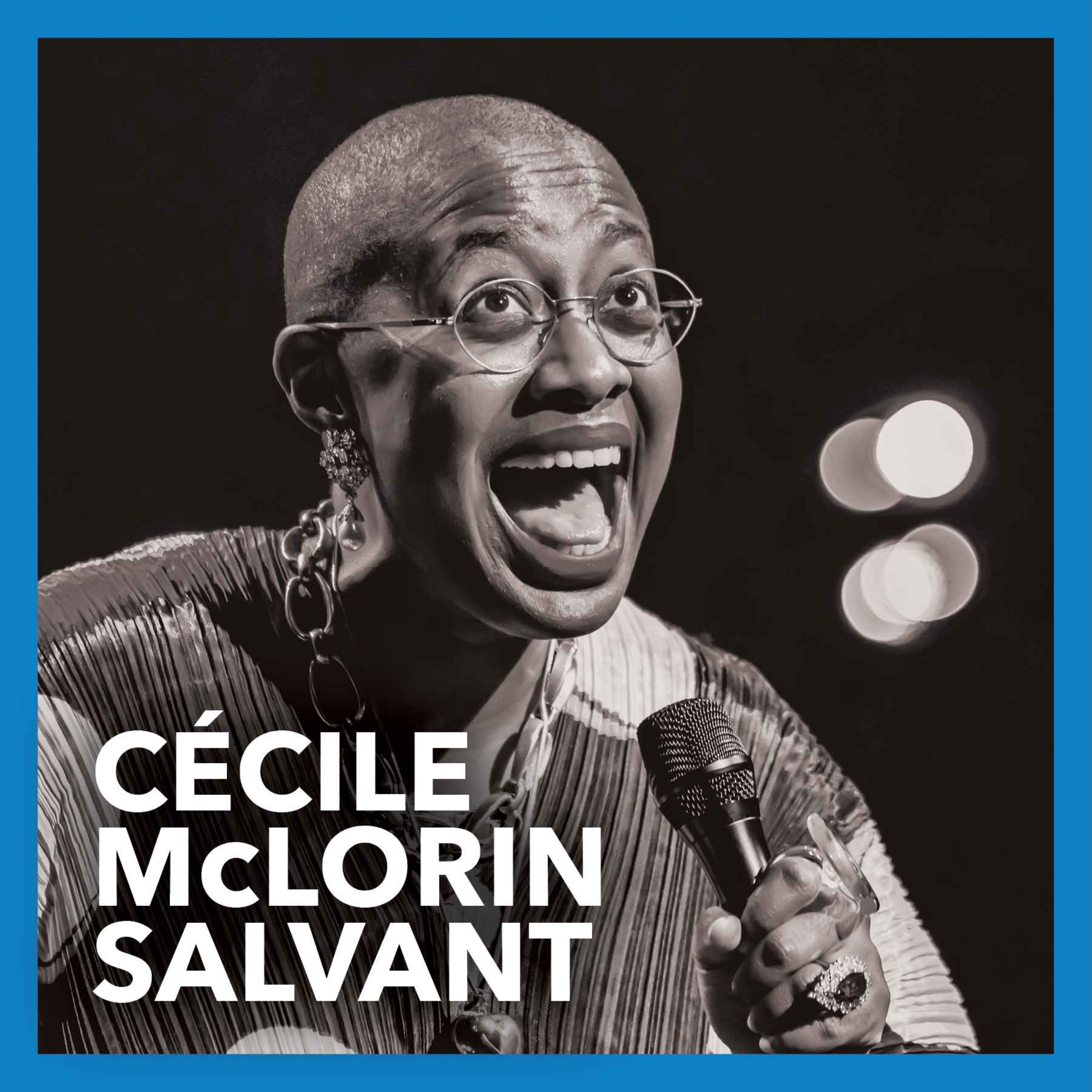
Loading summary
Transcript73 lines
- [00:00]
David Krause
Hey listeners, thanks for tuning in. If you're enjoying speaking soundly, please consider supporting our work with a tax deductible donation. You can easily contribute on our website@artfulnarrativesmedia.com donate click the link in the show notes of this episode or you can follow us on Instagram peakingsndly and get all the information there. Every donation, no matter the size, helps us keep bringing you inspiring conversations with remarkable artists. Thank you so much for your continued support. We really appreciate it. Looking for world class performances at an accessible price point? See yourself at Lincoln center presents free and choose what you pay performances. Where else in New York City can you experience contemporary flamenco, mental health, inspired choral works, experimental jazz, and an interactive family dance performance all in the same week and for less than the price of lunch? Explore the full calendar of events today@lincolncenter.org presents. Did you know that 3rd street is on 11th Street? That's right, 3rd Street Music School. They're celebrating 130 years as the go to for downtown music lessons. Mention code speaking soundly and get four 30 minute instrument or voice lessons for $130. Always enrolling. Learn more at 3rd Street NYC. Be sure to check out slippeddisc.com for the latest inside information on classical music. Now. Multiple Grammy Award winner, MacArthur Fellow and this season's Carnegie Hall Perspectives artist Cecile McLaurin Salvante is one of the most captivating voices in modern jazz. She's an undeniable tour de force, blending vivid storytelling with brilliant virtuosity. But her musical journey started off in an unexpected way as she first set sang for family.
- [01:56]
Cecile McLaurin Salvante
I must have been 17. I wanted to be a classical singer. I was learning arias that were for a 40 year old woman and I sang one of these big arias and my aunt was so shocked that she started to laugh uncontrollably because getting hit with hard opera by a child, it's a lot. It's haunting. I mean, eventually she calmed down and she was like, you have a pretty voice. But like initially it was cackles.
- [02:24]
David Krause
You're listening to Speaking Soundly, a backstage pass to today's biggest stars of the music world. I'm your host, David Krause, Principal Trumpet of the Metropolitan Opera. During each episode you'll hear me speak with inspiring performers about their creative process and the personal journey that led them to the stage. A couple years ago I took my daughter to see you perform at the Blue Note. During your set, I looked over and saw the expression on my daughter's face and she was completely transfixed. As a parent, you hope that the things you love somehow get passed down to your kids. And that night, when I saw her completely captivated by your voice, I felt like I shared something meaningful that I love with her. And it's a night we still talk about to this day. So thank you.
- [03:14]
Cecile McLaurin Salvante
Oh, my gosh, thank you. That is really so sweet.
- [03:18]
David Krause
When you perform in an intimate setting like that at the Blue Note, where the audience is practically in your lap, can you feel the connections that you're making with audience members like my daughter? Does the vibe in the room affect your performance?
- [03:35]
Cecile McLaurin Salvante
It totally affects it, actually. Sadly, too, because sometimes you have a really rough night or, like, a really cold audience or an audience that needs. Needs more from you, and it's kind of a chicken or the egg situation. Cause, like, is it that they're not a fun, exciting audience, or is it that I'm just really, really boring? And most of the time, I go, oh, it's me. It's not them. It's me. I'm doing something wrong. And then I try to fix it, but I don't know how to fix it. And then I get desperate. And then sometimes getting desperate means getting loud or singing fast or singing high or trying to do something, like trying to make anything happen that might just shake us all out of our stupor.
- [04:24]
David Krause
Does that work?
- [04:25]
Cecile McLaurin Salvante
No, it doesn't work. It doesn't work. It doesn't work. You know, it's the thing of, I think, any performer or any artist, it's like that basic desire that we all have when we play. To be loved, right? And to feel that slipping away. You go, no. Like, what can I do? Maybe I should just scream into this microphone really loud. And it never works. No.
- [04:54]
David Krause
That night, it was just incredible how you commanded the stage. In contrast to that, when I perform, I do it from the back row of a giant orchestra among a huge brass section, which I actually kind of enjoy because it's anonymous. In a way, it's great. But as a singer, you're always front and center with all eyes on you. Do you enjoy being in that spotlight? I mean, does it feel natural to you? And when you're off the stage and return to daily life, do you find yourself craving the attention, or do you welcome that solitude?
- [05:31]
Cecile McLaurin Salvante
It's a strange, contradictory thing, because a part of me loves it, because otherwise, why would I do it? Like, there's a part of me that feels very at home, like I'm a fish swimming. To be on stage, to have all These people looking at me. And then when I'm off stage, I actually really. I'm fine being invisible. I love not having any attention. It's wonderful. Yeah. I. Sometimes I remember in music school looking at orchestras and being like. I wonder what it would be like to just be, like, cello three and just be in the middle of sound. It must be glorious.
- [06:15]
David Krause
Yeah. But you know what they're thinking?
- [06:17]
Cecile McLaurin Salvante
What?
- [06:18]
David Krause
I wonder what it's like to be the soloist in front of the orchestra, playing in the spotlight.
- [06:23]
Cecile McLaurin Salvante
Yeah.
- [06:23]
David Krause
Probably, you know, talking to you now. It's reminding me of one specific thing that I truly love about your voice. In that it's. When you sing, it mirrors your speaking voice very closely. Like there's a conversational inflection that feels so natural and full of color. When you sing, do you think about the closeness between your spoken voice and your singing voice in performances?
- [06:51]
Cecile McLaurin Salvante
I think about it all the time. I mean, it's. It's. I feel like this. The spoken voice is one of the many different voices a singer has. And I've even been told I have many speaking voices because I sound different when I speak French. I sound different when I speak to my family. We all, I think, have many different speaking voices. So I think it's exciting to play with all the different colors. And I think it creates this intimacy. I mean, I've always thought of my shows or when I'm singing, I want it to feel like I'm telling people a secret. Not like I'm singing a story, but like I'm really actually telling them a secret that I shouldn't be telling them and that they're not really allowed to know. But I'm just letting you know that this is the gossip, this is what's going on. And that can only happen if you're not in declamation mode. But if you're in, like, speaking mode and even sometimes whispering mode. I do find it so, so, so fascinating to hear classical singers. It's like an elevated Persona. The speaking voice is there, but it's all the way in the back. It's like underneath this enormous kind of creature that is their operatic voice. And I think that also comes from just how huge that damn hall is. There's that if they could get some mics in there for the singers, they'd be able to.
- [08:21]
David Krause
I don't know if they're gonna play.
- [08:22]
Cecile McLaurin Salvante
With their speaking voice. That will not happen. But, yeah, I think with opera, you really just. You gotta push through volume wise. I have so many questions for you about the opera. I look obsessed.
- [08:35]
David Krause
Really.
- [08:36]
Cecile McLaurin Salvante
I'm completely obsessed with Puccini. I have printed wood barrettos. Yeah. I'm gonna prove it. I believe you. I'm proving it. This is literally printed librettos with the translations at arm's reach. You have this of Tosca, of Butterfly.
- [09:00]
David Krause
We just did Tosca last night.
- [09:03]
Cecile McLaurin Salvante
I want to scream. I want to scream. I want to scream. I think I always sort of wanted to be a classical singer, but I have recently become completely obsessed with Puccini. I'm actually. We're gonna do in Questa Regia at Carnegie. This next gig that I have at Carnegie, we're gonna do that song. I translated it into English like a crazy maniac. We're gonna play it with the trio. This is how much I'm obsessed with Puccini.
- [09:32]
David Krause
Anytime you want to come to the opera, I'm your guy. Please text me.
- [09:38]
Cecile McLaurin Salvante
Interview over. Podcast over. I'm jumping out the window. I'm flying. I'm so excited.
- [09:44]
David Krause
Okay, that'll happen. You had mentioned speaking French, and I know that you grew up in a multilingual home, exposed to music and art from a very young age. Can you tell me about your early experiences with music and how your family's cultural background influenced you?
- [10:04]
Cecile McLaurin Salvante
You know, it was a different time. I hate to say it, but now I'm seeing it. I just feel like music was around more. We used to listen to music all the time. It was always on, I guess, because there was no Netflix. So music was always on. All kinds of music. There was always dancing and music from all over the world. It was just a constant presence, and it was really important. And we'd have dinners with family and with friends, and it would always devolve into, like, a dance party at the end, and everybody would dance. And it was like you were weird if you didn't dance. It was just a part of life. Music had a big, big presence and all kinds of music. And it wasn't just jazz or just classical. It was like everything. I mean, not everything, but most, most things.
- [10:53]
David Krause
Your first instrument was the piano, which you started. Started at 5. Did you take to it right away, and did you enjoy practicing? Because that's such a huge part of any musical instrument when you're a kid.
- [11:05]
Cecile McLaurin Salvante
I took to it in the beginning, but I hated practicing. I hated it. I would be really, really last minute. I'd practice, like, the day before the lesson. I was not ambitious at all with the piano. I did not care. But every now and again, I'd get excited about, like, Learning of Chopin Nocturne or something, and be like, this is beautiful. Look at. Take a look at this. I think there's something really wonderful about the piano that's. It's not the same with other instruments. It's that relatively quickly you can get, like, a masterpiece under your hands. You're not gonna sound incredible. It's not going to be the best version of it, but you can get it in your hands after a few years. A masterpiece. Right? And so there was something fun about being able to be like, listen to this beautiful thing that I'm able to play awkwardly. But, like, listen to these harmonies and these melodies are so pretty. You're appreciating the piece more so than your performance of the piece. Right. And so. So there were moments like that of. Of enjoyment. But most of it was a struggle. And I tried to quit a few times. I. I said, I'm. I'm quitting. I don't want to play anymore. I'm done. Because all my friends started quitting when they were 13, 14. One by one, they quit. I was like, oh, great, I can quit too. And my mom said, no. She was like, no, you're continu. You're moving on next. We're doing it again next year. He'd be like, okay, fine. And then I did it until I was 18. So I did it for, like, 15 years. 15 years of no practicing. So you get something in the hands.
- [12:45]
David Krause
Isn't it kind of almost harder work, though? I mean, I assume you did piano recitals along the way and all that.
- [12:51]
Cecile McLaurin Salvante
One recital a year.
- [12:52]
David Krause
Okay. So that's the way I was as a student. Like, I wouldn't study. And then the test was just that much harder. I was just grinding my gears, just trying to get a passing grade. And it would have been easier if I just studied a little bit along the way. So had you done a little bit of practicing along the way, would have that paved a way toward the piano? Just made it just that much easier.
- [13:17]
Cecile McLaurin Salvante
Yes. Can you imagine? And I'm sure someone told me that, listen, if you just did a little bit every day, just do 10 minutes every day instead of your frantic hour the night before. And I remember the worst one for me. So I would do piano recitals every year, and then I was part of this piano guild thing. I don't remember what it was. Where you have an exam every year, and you have to prepare a certain amount of pieces. It's like nine pieces or something memorized. You have to have scales, and the scales get harder and harder as the years go by. And you have to do each of these exercises in front of a judge, and you get graded and you get A's. And it's like an SAT of the piano. And I had to do that every year at the end of the year. So by June, you know, every year I was get that stress of like, I haven't memorized any of these pieces. I'm not ready. And one time I was on the way there, I was still young enough that I had to be driven by this woman. I guess my nanny, kind of. Her name was Nancy. And she drove me to the exam. It was at University of Miami, Frost. And I was on the way, and I did not know any of the pieces memorized. There is nothing I can do to save myself now. And so this is bad. I don't recommend it. But on the ride, I was kept going. Car accident, car accident, car accident, car accident, car accident. And I was like, please. Nothing crazy, like no injuries, but just a little fender bender. Just like a little accident. And would you believe that it happened?
- [14:52]
David Krause
No.
- [14:53]
Cecile McLaurin Salvante
We hit something. We hit a car. Everyone was fine. We had a small enough fender bender that we had to wait for the cops. It was a perfect excuse to not take the exam. And I got an extra week. And let me tell you, that week was a Glen Gould, Glenn Gould practice. Crazy week.
- [15:16]
David Krause
That's unbelievable.
- [15:17]
Cecile McLaurin Salvante
And I got great grades the next week. I did great. They were like, this is great. You really practiced. You really prepared. You did a good job. I was like, yeah.
- [15:28]
David Krause
Did you ever fess up to your thoughts in the backseat preceding that action?
- [15:32]
Cecile McLaurin Salvante
I'm not sure. I'm not sure I did. I don't know if I did or maybe I did. And they were, you know. Well, you got lucky.
- [15:41]
David Krause
That's amazing. Well, when did you start singing? Like, when did you turn your musical attention to singing from the piano?
- [15:52]
Cecile McLaurin Salvante
The musical attention to singing was sort of always there. But the thing that made me say, I want to take lessons, I want to take singing lessons was seeing Charlotte Church on tv.
- [16:04]
David Krause
The little girl, right?
- [16:05]
Cecile McLaurin Salvante
That little girl who was singing classical, like, easy, easy listening, sort of classical, pop, Ave Maria. I remember, yeah, I saw her sing, and people were crying. And she was pretty much my age, maybe a couple years older. And I was like, I want to do that. I want that to be me. I want to be an opera singer. This is it.
- [16:28]
David Krause
Because of the attention she was getting and people were crying or because the music took you?
- [16:33]
Cecile McLaurin Salvante
Um, the crying took me. And that feeling of like, oh, this is a moment. This is an emotional moment right now. This is heavy. There's something heavy happening, you know, because I guess the attention. I should have reached higher. I should have looked at, you know, Destiny's Child or Spice Girls. Like, I wanted to do that, but no, I wanted that sort of melodrama and I suppose probably the music, something about that music, there was something appealing, I guess.
- [17:08]
David Krause
When was the first time you sang and you realized that you had affected someone with your voice?
- [17:15]
Cecile McLaurin Salvante
Wow. I must have been 17. I wanted to be a classical singer. I was learning arias that were for a 40 year old woman, for like a 40 year old mezzo soprano. And I was a 17 year old little child soprano, but I was singing all these big arias and I loved it. And I was having a good time and I think my aunt was in town and we were like, oh, I like to sing. And she was like, oh, you like to sing? And I was like, yeah, I kind of want to be a singer. I don't know. And I think my mom was like, well, you should sing something for her. And I sang one of these, like we put on a karaoke track, one of these opera karaoke tracks that you can find. And I sang one of these big arias with the biggest voice I could sing with. And my aunt was so shocked that she started to laugh uncontrollably. She was like, what? What the hell is going on in this house? Because she was. You have to think about that, like opera, like, just like getting hit with hard opera by a child that you never even knew was interested in music at all is. It's. It's a lot, it's haunting, it's scary. You're like, what are you doing? What is going on? So that is a reaction from my singing that I still think of like the la. Just laughing, laughing, laughing. I mean, eventually she calmed down and she was like, oh, I love your voice. You have a pretty voice. But like, initially it was cackles.
- [18:48]
David Krause
Well, you stayed on this path of studying classical voice throughout high school, and then after high school you moved to France to study law. And it was during your time abroad that you really started thinking about a career in jazz, right? I mean, what or who persuaded you toward that path?
- [19:10]
Cecile McLaurin Salvante
My teacher, Jean Francois Bonnell. He's a saxophone player. He said I should try it. I didn't want to do it. Like, I just felt like music as a profession was a scary and bad idea. I didn't like it anymore. I was like, I think that this is horrib. Because you're. You're so alone. You're so left to your own devices. I don't trust my own devices. I want my briefcase. I want to go to an office. I want to staple something. I do not want to be in this creative vacuum of, like, what should I do? Like, it just. There was something that felt so nebulous about it. So I thought, no, I don't want to do this. And he. My teacher, Jean Francois, was really encouraging and basically was like, you should just try it. Just see what happens. If you really tried this, you could actually be good. Like, I'm. Don't say this to many people. Like, just. Just go for it. And I. I sort of didn't really believe him at all.
- [20:06]
David Krause
What do you think he saw in you?
- [20:08]
Cecile McLaurin Salvante
I don't know. I don't know. But there was something in the urgency with which he would tell me these things that I just thought, okay, maybe there's something here.
- [20:23]
David Krause
Was the transition from classical to jazz difficult, or did your classical vocal training help the development of your jazz?
- [20:35]
Cecile McLaurin Salvante
I decided very early on, as I was doing both things, that I needed to make sure that I didn't sound like a classical singer singing jazz. That if anything, sounding like a jazz singer singing classical would be okay. It would be better, but the opposite would just be just. I did not want that to happen. So I really, in my mind, started to think of them as totally different things, almost as if it was different instruments, because I just didn't want that bleed over. I was so scared of what that would do. So the decision was no crossover, no bleeding into each other.
- [21:18]
David Krause
At the opera and in most classical singing, voices are expected to sound pristinely consistent. But in jazz, the beauty often lies in the imperfections. I think your voice taps into the best of both worlds. Sometimes it's clear as a bell, and other times diffuse and airy in the best way. You have such command over these sounds now. But was it difficult when you were separating the classical from the jazz? Was it hard to navigate that?
- [21:51]
Cecile McLaurin Salvante
It was really hard. And it was really hard to accept my voice for what it was. I think it's still kind of hard to accept my voice. But at the time, I remember there was this thing, and my teacher kept saying, you have a hole in your voice. You have a hole in your middle. Register your passages. Like, there's no sound. It's all air. And it was such a disaster. I just. I couldn't figure out how to fill this hole. Like, it was just making me crazy. And now I think That I exaggerate the flaws? What if I just lean into all of these strange things about my voice? And then also, what if I just try to make even stranger sounds than I naturally do? And then actually recently. Or not recently, 10 years ago, I went to the New School for a semester, and I studied a little bit of baroque voice at Manus. And my teacher there, she said to me, you know, we do exaggerate the extremes. Like, that's what it's all about, is we do, like, the uneven, irregular. So she sort of reconciled me with that, because I didn't realize that it was possible to think of any music from before 1900 with that sort of looseness and that idea of, like, yes, let's exaggerate these uneven aspects of it.
- [23:24]
David Krause
Playing with that looseness comes from a real knowledge and basis of music itself. In fact, I remember walking down 59th street with Wynton years ago. Maybe it was about 10 years ago. He mentioned that he had just come from working with you, and he said that you two were analyzing a Bach corral and the progressions in it. Does that ring a bell?
- [23:51]
Cecile McLaurin Salvante
That's so funny. I remember exactly when that happened. I met Win, and I was really nervous and scared. And one of the things he told me after I sang for him was, you need to, like, have you. Have you read through all the Bach corrals? And I was like, no, I haven't read through all the Bach corrals, no. And he's like, you need to buy the book and read through all of them. And maybe that's something that he says to people and doesn't like and doesn't expect them to do that. But I was. I was like, okay, I'm buying the baccarat. I'm reading through all of them. And then he was like, if you. You know, anytime you want to talk about music, whatever, you let me know. And I think I texted him, and I was like, okay, I'm reading this chorale. Like, I don't know how to analyze it. Would you help me? Which I, looking back, insane to ask to do that. Like, he's busy. But he was like, okay, what do you see? What is this chord? What's going on? And we went through a chorale together for, like, an hour. And it's, to me, the most insane thing that I've experienced with Wynton. Like, that's crazy.
- [25:02]
David Krause
Your artistry extends far beyond just your voice. You're also a visual artist, and your artwork, ranging from textile drawings to embroidery, seems to share themes with your music. Complex emotions, cultural storytelling, and the beauty of imperfection. How do you feel your visual art influences your music? Or is it vice versa?
- [25:28]
Cecile McLaurin Salvante
My visual art is what influences. It's definitely in that direction that it. That the influence is coming. Because I'm not a trained artist. I didn't go to school for art. I don't know any of the rules. And so when I draw, I tap back into the original impetus for music making. This playfulness, this. This totally intuitive, almost dreamlike state that I don't have when I sing that I have gotten so far away from because of so many years of doing it, because of audiences watching you do it, because of all the different, many very different things that happen when it becomes your quote, unquote job. Right. Making things with my hands reminds me of a mind state that I think is super necessary in music making and actually in life. Actually in life. Just sort of a light on your feet, kind of laughing at everything, trusting your gut, not worrying, you know, being a little bit shameless. Yeah, that's. That's through drawing and through. And not only drawing, making things with the hands.
- [26:51]
David Krause
In a way, is it easier to do that through visual art because you create something, it hangs, and you don't have to be there when other people experience it, but when you sing, you're front and center. Do you think there's a difference in that way for you?
- [27:06]
Cecile McLaurin Salvante
Completely. You're completely right. I mean, that's exactly it. It's like music is totally social. The way that I make music has been social. Almost like I'm hosting you in my home, and I want to make sure that you feel good first before I even know about whether I feel good. Right. Making a drawing, no one gets hurt. No one even sees it. No one cares. There's a delay, and that delay is wonderful. That delay allows for so much more freedom, but also the immediacy of the connection with people when you are making music is. There's nothing like it. It's so incredible.
- [27:50]
David Krause
You're one of this season's perspectives artists at Carnegie hall, which gives audiences a unique insight into. Into your inspirations as a performer and as an artist. You'll be performing on Carnegie's stages throughout the season. What themes or ideas guided your choices for this series? And what are you excited to be sharing with audiences?
- [28:11]
Cecile McLaurin Salvante
It's almost like an overview. It's not a retrospective. I'm too young for that. But it's like, I guess an overview of the different projects that I have going. So one of them is Ogress, which Is this murder ballad, opera, cantata musical. I don't know. One woman show about an ogress who lives in the woods. So it's like, it's story time. That's one of them. Then I'm also gonna be singing ballads with an orchestra with the knights. It's really coming from that tradition of jazz singers with orchestra, like, with strings. And then I'm singing with my trio. There is no set. I could have decided to make a set because, hey, it's Carnegie Hall. You should probably have a set. But then I thought, let's be real and honest, and the real presentation of this band is to not have a set and feel it out and see what happens. And I'm really, really excited. I think I'm the most excited for that because I'm going to treat Carnegie hall as if it was a jazz club. I would say the challenge of making Carnegie hall into a small jazz club, that is what I'm the most looking forward to. And we'll see if it works. I don't know if it'll work. Yeah, it's big.
- [29:36]
David Krause
Well, thank you so much for your time. Speaking to you has been an absolute joy.
- [29:40]
Cecile McLaurin Salvante
Thank you. Wow. Oh, I have to tell you one thing that I forgot to mention. I have a recurring met nightmare.
- [29:48]
David Krause
Me too. What's yours?
- [29:51]
Cecile McLaurin Salvante
Mine is I'm backstage, the lead soprano is dead, or, you know, something happened to her, and I need to fill in. Fill in for her. I don't know the opera. And I'm on now, and they're, like, dressing me and getting me ready. They're putting the wig on. They're like, you've got to sing this. And I'm like, I don't know it. And then I wake up in a cold sweat. In a cold, cold sweat. That's it. That's the nightmare.
- [30:23]
David Krause
Well, anytime you want to come to.
- [30:26]
Cecile McLaurin Salvante
The opera, I'm gonna scream, I'm coming.
- [30:28]
David Krause
Okay, we'll set this up.
- [30:30]
Cecile McLaurin Salvante
I'm texting you. I'm texting you and like, yes, I'm coming.
- [30:34]
David Krause
I can't wait to tell my daughter that Cecile McLaurin Salvante is gonna text me.
- [30:40]
Cecile McLaurin Salvante
Of course.
- [30:42]
David Krause
I hope you enjoyed this episode of Speaking Soundly. If you liked what you heard, please tell your friends about it. Help spread the word and follow us on Instagram at speakingsndly. For more information, you can Visit our website, artfulnarrativesmedia.com if you're new to the show, you could go back and check out earlier episodes featuring Wynton Marsalis. Regina Spector, Joyce Didonato, Emmanuel Axe and Rufus Wainwright, just to name a few. And tune in two weeks from today on February 18th as we hear pianist Ann Marie McDermott speaking soundly.