Loading summary
Transcript23 lines
- [00:00]
David Krause
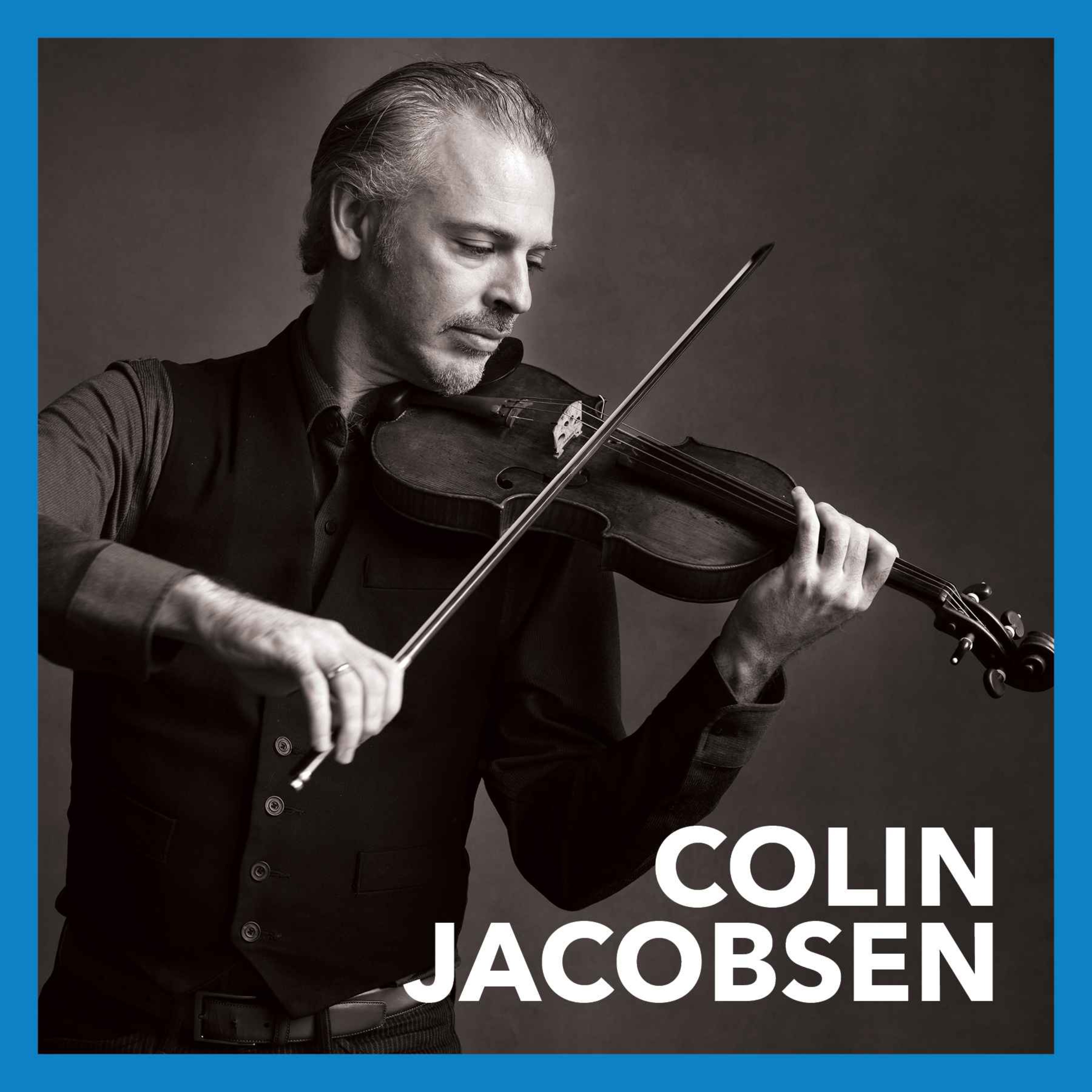
Hey listeners, thanks for tuning in. If you're enjoying speaking soundly, please consider supporting our work with a tax deductible donation. You can easily contribute on our website@artfulnarrativesmedia.com donate click the link in the show notes of this episode, or you can follow us on Instagram eakingsndly and get all the information there. Either way, every donation, no matter the size, helps us keep bringing you inspiring conversations with remarkable artists. So thank you for your continued support. We really appreciate it. Be sure to check out slippeddisc.com for the latest inside information on classical music. Now, violinist, composer and Silk Road Ensemble member Colin Jacobson is transforming the classical music landscape. As a founding member of Brooklyn Rider and the Knights, he continues to push boundaries, making the art form fresh and relevant, a vision rooted in his early studies.
- [01:03]
Colin Jacobson
It was a rebellion, I would say, against what I saw as the values of the generation right before us at Juilliard, which was to slam dunk that lick in that Paganini concerto. And that was the value, you know, and that seemed like a dead end to me.
- [01:22]
David Krause
You're listening to Speaking Soundly, a backstage pass to today's biggest stars of the music world. I'm your host, David Krause, principal trumpet of the Metropolitan Opera. During each episode, you'll hear me speak with inspir performers about their creative process and the personal journey that led them to the stage. Among classical music circles, the Jacobson name is pretty well known, not just because of your success as a violinist, but also because of your brothers as a cellist and a conductor and the fact that your dad was one of the associate concert masters in the Metropolitan Opera Orchestra and your mom was a flute player and a teacher. Having grown up in such a prominent and successful musical family, did you feel like it was a badge of honor and something that you were proud of? Or was it like, all right, no pressure, just don't be the Jacobson that isn't a great musician?
- [02:15]
Colin Jacobson
Both. Yeah, I would say. I mean, you know, part of it is like the atmosphere I imbibed growing up was our living room filled with musicians, many of whom in the Met, colleagues of my dad's who would come over and read chamber music all night pretty frequently, as I recall. Or at least they were exciting enough events that they stand out in my mind. And so that felt like the joyous part of what my dad and mom did and the social aspect and being allowed to stay up late in that atmosphere if I was reasonably well behaved. And then. Yeah, and then also of course, like, regularly picking up my dad backstage at the Met. And I remember being, you know, outside of the pit at the end of some dramatic opera where all of a sudden a giant chord clapped like a sound of thunder jumping high in the air. And then seeing people running past in costumes and all of that, you know, it seemed exciting. And, you know, I think I did love music and playing the violin from day one, as far as I can remember. Of course, there are, as you go, the day in, day out struggle to practice. And I would be looking out my window practicing, while my friends would be in the street playing baseball. And I'd want to go out there. So there'd be a day in, day out struggle at times. But I think my mom particularly was really good at organizing my time, such that if I practice an hour before school, an hour afterwards, then I could go out and still play baseball or whatever it was that I wanted to do. So at the times that they felt like I wasn't doing what they thought I should be doing, it was never a yelling session or like a forced thing. It was more the guilt trip. It was like, you have talent. Now's the time to put in the work and develop it, and you can't do that later in the same way. So if you want to do this, this is what you need to do.
- [04:18]
David Krause
So I guess you never felt the need to rebel against the family business and that you were all in on being a musician from day one. In fact, you were so in that your form of rebellion was that when your parents left the house, instead of throwing a raging party, you threw chamber music parties where you had your friends over to read string quartets. Was this your form of rebellion?
- [04:42]
Colin Jacobson
Well, I think my dad is actually more of a rebel than I am. So he was fully in support of those parties as long as they were reasonably focused around music. And he was happy to party, too. He was there playing. And I think some of those parties were true multigenerational affairs with his colleagues, mine and my brothers. I guess that's something I've always loved about music, is it works across generations in that way. I mean, I will say this. My. My mom unfortunately passed away when I was about. When I was 14 and my brother was 10. I feel like if she were around, those parties would have been a little tamer, perhaps, but she would have approved nevertheless. Yes.
- [05:27]
David Krause
Well, music is obviously at the heart of your family and has clearly shaped your outlook and career. Everything from Brooklyn Rider and the Knights, both founded by you and your brother and close Friends to the Silk Road Ensemble, which is kind of a global musical family. And now Santa Fe Pro Musica. You've infused every project you do with a deep familial sense. Do you feel that connection between all these ensembles? I mean, what drives you to keep family at the core of all your musical endeavors?
- [06:00]
Colin Jacobson
Yeah, it's an interesting thing, the way things developed, because I was on this track that seems cliched of growing up playing music at a high level at a young age and thinking that you were either a soloist or you had an orchestra job like my dad, or a few people played quartets. But mostly that was something you did for fun. It was less professionalized. Those were sort of the paths. So maybe my rebellion was eclecticism or really looking for a very wide world of music out there. So when I was in school, I had a big influence in that direction, was a girlfriend who really opened my ears and eyes up to so much in the world. And so I was listening to all kinds of music from many different cultures. And around that time, then a few years later, when I graduated from school, Robert Mann, my teacher at Juilliard, said, don't be a lemming like all these other violinists. Do something different. Do you do your thing? And actually threatened to fail me for not writing my. It was like, you're going to study the Beethoven concerto with me, and I will fail you if you don't write your own cadenza. And then he, being such a busy performer, forgot that he ever said that. I did pass the class without writing it at the time, but he was saying, you know, maybe go to Europe, play for a bunch of teachers there. And that seemed attractive to me because I had grown up in New York. I had this life that was already happening with many chamber music colleagues, festivals, my dad's world. I felt maybe that I needed to take a moment and live with what I had learned over many years and get away from everyone. So I did go to Europe, and that was around the time that I got the call to be a part of Silk Road. That yo yo was starting at Tanglewood in the summer of 2000. And that just hit at the time when I felt that greatest openness and wanting to be a sponge. And then, you know, going to lots of concerts in Amsterdam or shows. One night I'd go to a classical Indian show, the next I'd go to a modern dance show. The next I'd go to an out improv show. It was all happening, so I was soaking in. And then that summer, Silk Road started. And you Know, met these people, Yo Yo Kehan Calhor, this incredible Persian musician, Wu Man, a great pipa player. I was just wide eyed, like soaking it all in at that point. And that was also around the time that Brooklyn Rider and the Knights got going. So much of my music life was starting outside of school and I felt like I had a whole other education for about five years that included Silk Road and my colleagues in Brooklyn Rider. And just the feeling that in a way it was a rebellion, I would say, against what I saw as the values of the generation right before us at Juilliard, which was to slam dunk that lick in that Paganini concerto. And that was the value, you know, and that seemed like a dead end to me at the time. And as soon as I was awakened to other cultures way of looking at music and hearing other ways of expression, it was like, oh, there's such a wide world out there. And so Silk Road was such a big part of that. And I feel like it started this idea for me, which has been primary, is of finding connection between seemingly unconnected things and that being constant search, because it's a search of curiosity and discovery that was a primary value. And I saw that in terms of why yo yo started Silk Road was his own curiosity and it burned brightly and inspired all of us around him.
- [09:42]
David Krause
He's a perfect example of an artist who is open to all sorts of musical ideas, but he could pull them off only because he has the technical brilliance to do so. Whether it's nailing a tricky lick in the Paganini concerto, as you just mentioned, or exploring non classical music in some of your ensembles, how do you balance being open to new ideas while maintaining the technical proficiency needed to actually pull it off?
- [10:12]
Colin Jacobson
I mean, I think life is always a balancing act, musically and otherwise. So one thing that we thought of in terms of this question with Silk Road and that yo yo felt, and I think others, is that if you have a firm enough ground to stand upon and you are confident in that ground, but not possessive and not afraid to take a leap, it isn't just a wash of just try this, try that. But actually you have a spine behind what you know, but you are not afraid to leap off from that place and take a zip line into another world. In a way, you know, anyone who's.
- [10:53]
David Krause
Ever met you knows that you're a super nice guy and you've got this reputation of being a great collaborative musician. Does that go hand in hand, do you think? Like, do you have to be a nice guy to be a good person to work with on the stage.
- [11:08]
Colin Jacobson
Good question. I mean, I prefer to collaborate with people who are nice, you know, But I would say that there are people who have a ton to offer, but can be complicated, for sure. I would say collaboration just. It comes in many different shapes and sizes. And what I like to do is to meet the situation. And what does it need? In one case, it might be that it needs a lot of leadership. In another case, it might mean passing the baton and everything in between. I don't really like conflict. I don't enjoy it. So actually, for me, it's been a process to learn when you do have to hold your ground and actually not be a nice guy in a certain way, because that's not my mouth. But I think that clarity is very good in collaboration. And some people might be overly clear, meaning not so nice. But actually, that can be really helpful for a musical situation. So I just think it comes in all shapes and sizes. But I would say that a lot of people are great musicians out there, great instrumentalists, but there are those who lift those up around them and make them sound better than they would otherwise and make them feel better about what they're doing. And so those are the ones I naturally gravitate towards. And that's like, Yo. Yo was always a great example of that. When he steps in the room, he's there to make everyone else around him feel the best they could be. And then, therefore, they deliver the best performance they could through that goodwill. And I think that's my main model, you know, growing up. So. Yes.
- [12:55]
David Krause
And of course, you've been collaborating with your brother Eric now for decades. I would imagine that no matter how much you might argue or fight in rehearsal, at the end of the day, you're still brothers. So when you perform in ensembles with people who aren't related to you, is it hard to recapture that resilience that you might have with your brother?
- [13:17]
Colin Jacobson
You know, we're brothers. We can say stuff that we wouldn't say to other people in the same way. But I think there's been collateral damage around when we speak to each other in that way, and people are like, whoa. But then we just pass right through it. So I think we've learned to tame that down around each other a bit. I think that at this point, there is a shorthand, I would say, developed over years of playing together in my quartet in Brooklyn Rider or In the Nights, so that we can hopefully get to the heart of the musical matter faster than we did. You know, they're natural Cycles to any family, any ensemble, any close group of friends, where sometimes things are easier than others. And I think there are natural growing pains. So I feel like actually when we were in our 20s, there was such a passion for everything that things were way more heated. You know, it was like whether that Beethoven 7 symphony starts up bow or down bow was a thing of great turmoil and conflict. But in those heated debates, there's a forging of some sort of common language and a shorthand that allows you to get to the heart of the matter quicker later. And you realize that not every hilltop is worth fighting the battle over. So I think we also learned to tame that over the years. Yeah.
- [14:45]
David Krause
I want to ask you about your orchestra, the Knights. It's a fantastic ensemble. I've seen you guys many times and it's co founded by you and your brother. You're both artistic directors of it and you couldn't be busier right now. In fact, you have a three concert Carnegie hall residency this season. But it had pretty humble beginnings, right?
- [15:06]
Colin Jacobson
Yeah, I mean, I think of the night sort of in three phases. The early years, circa 2000-2005, was a string orchestra of about 20 people and would get together maybe two, three projects a year. But those were like all in affairs where we would rent a house out in Long island somewhere off season that was big enough to accommodate 19 people or so and all live there, cook and basically be a retreat, a commune for a week and rehearse all day and, and cook and eat dinner, whatever, together. So in a way, it was an extension of the living room chamber music reading situation. And there was such good energy around those experiences that then, I don't know if you remember, in Long island, there used to be a Beethoven festival in Oyster Bay. We got an ask to put together a program there and it had a real budget attached. And it was. It just proved to be very, you know, illuminating, like, because in a way part of that was claiming that music for it felt like, for us and our generation, rather than everything that had been inherited from school or from teachers or this is the way you have to do it. Well, here's an exploration of possibilities then. There was sort of a feeling my brother and I had is this is something special both internally and the feedback we're getting from the outside world. If this is going to keep happening, we need to do those things, I guess that one needs to do, form a board, a nonprofit, and actually fund it. That is around 2006, 2007, that we incorporated the Knights. And so that was yet another phase, I'd say, in the group's development.
- [17:01]
David Krause
Wow, that's such an impressive success story, especially given the fact that, that the ensemble started as an experiment to expand the boundaries of classical music. What did it feel like in those early days when you looked out in the audience and realized your experiment had worked and you were able to connect with audiences in a completely new way?
- [17:24]
Colin Jacobson
That's what I live for, is that sense of connection between each other. And if it happens between the musicians on stage, I believe it happens for the audience. So you're preparing for those moments always. And when they connect, when you can feel it in the room, it gives you a lot of energy to then do all that other work which is less glamorous organizational stuff or fundraising or all of those things. When I first started playing out in the world, whether it's a guest soloist with an orchestra or playing at a chamber music festival or whatever, somehow you grow up thinking that these things, the Met Opera, these are institutions that have been around forever and will always. And you have no idea the work that goes into making any of those things happen. As a kid with musical blinders on. And so I think the nice thing about these self propelled groups is a total empathy for all those who work behind the scenes to make any of this happen. You know, they don't get the glory in the same way. So I just have a lot of admiration for those who have chosen that path and dedicate themselves to making it all happen for people you know.
- [18:36]
David Krause
So in addition to your work as a violinist, you're also a composer? I've been a musician my entire life. Never felt the urge to write a single note or had the talent to do so. What inspired you to start composing in the first place? And given your busy performance schedule, when do you find the time to do it?
- [18:56]
Colin Jacobson
I think it was really that year in studying in Amsterdam, where I actually just had lessons. I didn't have any other coursework at the conservatory there. And so I was going to so many things and I was feeling like this idea of is this a living tradition that we're in or is it a museum piece? And I want it to be a living tradition. And I think of like rock bands, many jazz musicians. If you have a band, you write for it. And then the experience of being in Silk Road, opening my ears to a number of things. And, you know, a stumbling block for me was that you have to do something that no one else has, has ever done before, otherwise it's not worth doing. Which I think was the mentality for a lot of post World War II music in some sense, or it was the modernist ethos. But actually what I think got me over that was the sense that writing music is what do you want to hear in the world. And then somehow that opened a gate. And really it was work with this guy, Kahan Kalhor, Iranian musician, Persian musician who plays the Comanche. And the music that he was writing and I was playing somehow also linked up in this way with what I was learning from my teacher at Amsterdam. He wrote a bunch of pieces for Silk Road, for Brooklyn Rider, and then I returned the favor and wrote for him. And it opened a gate. And so then it goes on in terms of balance. I mean, part of me feels guilty that I don't do what a composer who only does that does, which is have a very regular practice, get up in the morning and write from 6am to 10am Whatever it is, and do that every day. So for me it fits in the cracks of a busy performance schedule. And it happens often on planes and in hotel rooms or at home when my daughter's at school. And it happens when there's a deadline and I have a project. So it's project based. But actually I think my whole life is project based. So it's a way of thinking about everything. I'm looking at the project and the deadlines that I need to do to meet that project.
- [21:07]
David Krause
Well, whether you're composing or playing the violin, it's clear that your love of music and the joy of collaboration is something that really drives you when you're on the stage making those lightning fast musical connections, whether with a string quartet or a full orchestra or whatever. Does anything in the world give you more joy than that?
- [21:28]
Colin Jacobson
No, that's it. The only, only thing that has made that better in recent years is my daughter being in the audience. But otherwise, no, there isn't a better feeling.
- [21:39]
David Krause
I'd say that's a pretty definitive answer. I hope you enjoyed this episode of Speaking Soundly. If you liked what you heard, please tell your friends about it. Help spread the word and follow us on Instagram Instagram speakingsndly. For more information, you can visit our website artfulnarrativesmedia.com if you're new to the show, you can go back and check out earlier episodes featuring Wynton Marsalis, Regina Spector, Joyce De Donato, Emmanuel Axe and Rufus Wainwright, just to name a few. And tune in two weeks from today on February 4th, as we hear the amazing jazz vocalist Cecile McLaurin Salvante speaking soundly.