Loading summary
Transcript45 lines
- [00:00]
David Krause
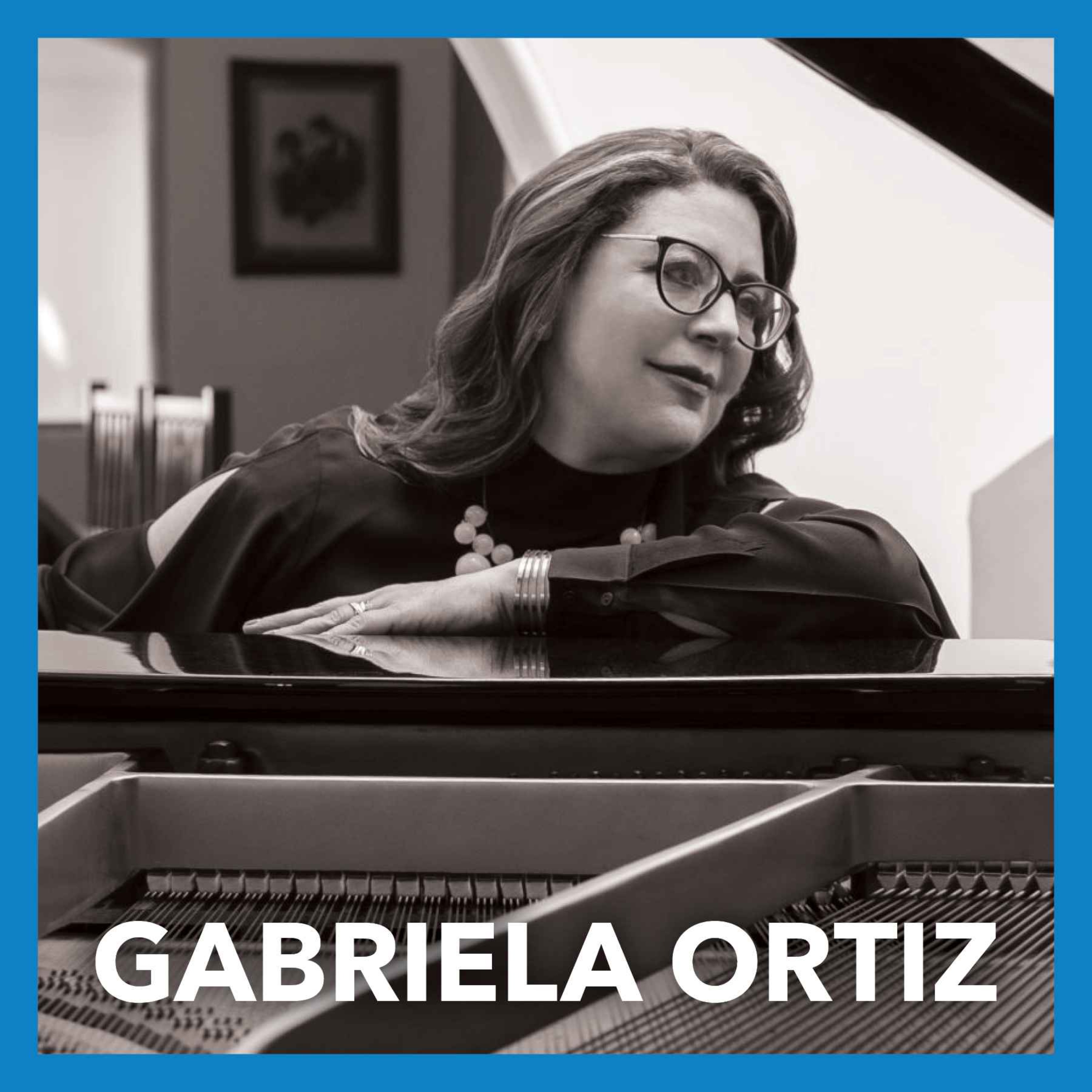
Hey listeners, thanks for tuning in. If you're enjoying speaking soundly, please consider supporting our work with a tax deductible donation. You can easily contribute on our website@artfulnarrativesmedia.com donate click the link in the show notes of this episode or you can follow us on Instagram peakingsndly and get all the information there. Either way, every donation, no matter the size, helps us keep bringing you inspiring conversations with remarkable artists. So thank you for your continued support. We really appreciate it. Be sure to check out slippeddisc.com for the latest inside information on classical music. Now. Grammy nominated Mexican composer and this season's Carnegie Hall DEBS composer chair Gabriela Ortiz is renowned for her vibrant compositions that celebrate and transcend musical traditions. Her creative process is guided by trust and intuition.
- [01:03]
Gabriela Ortiz
I trust in my ear and my ear is my tool. So I know that, okay, I want to take this risk, but I think I'm gonna get it. Even if I don't know where I'm going, I know that I'm going to arrive safely.
- [01:22]
David Krause
You're listening to Speaking Soundly, a backstage pass to today's biggest stars of the music world. I'm your host, David Krause, principal trumpet of the Metropolitan Opera. During each episode, you'll hear me speak with inspiring performers about their creative process and the personal journey that led them to the stage. It's great to be speaking with you here at Carnegie hall, and I'm so excited to finally get to play one of your pieces here on stage later this season with my orchestra, the Met Opera Orchestra, which will be the last of, I think, seven performances of your work here at Carnegie this season. It's always a thrill for me to play something new alongside works that I played a lot. And your works are often programmed side by side of masterpieces by Dvorak and Mendelssohn. What's it like for you as a composer to juxtapose your new compositions with repertoire that audiences know and have grown to love over time?
- [02:24]
Gabriela Ortiz
You know, at the beginning of my career, it was overwhelming. I remember once, you know, one of my pieces was Per with Beethoven and Wagner and the publicity was, you know, my photo along with Wagner and Beethoven. That was really, my father said, oh, really good company in this concert. So it was really hilarious to see my photo with Wagner and Beethoven. But now you will have audiences that probably you're going to listen to Beethoven, but suddenly they have a new piece on the same program, which gives you opportunity to build new audiences and get more interest in New music. So I think it's really good when you combine a new piece with a very famous piece.
- [03:07]
David Krause
Familiarity with any piece of art tends to deepen the experience over time. But nothing can replace hearing something for the first time. What do you hope audiences come away with after the first hearing of any of your pieces?
- [03:23]
Gabriela Ortiz
Get more interested in new music. Be open. I mean, when you're gonna go to a concert and you know that it's going to be a world premiere, wow. Nobody has heard the piece before and you're going to be part of that. Every time I think about what would you like to do if you have the chance to live in the past. For me to be at the premiere of the Rite of the Spring, I mean, that really complicated and controversial premiere, that everything didn't understand what they were listening to. So I think that what I expect from the audience is to get something from. From the experience by listening my music. Just to feel, just to enrich your spirit, just to enrich your soul. If someone is touching you, even if you don't understand that it's important. It's about feelings.
- [04:15]
David Krause
I love speaking with composers because I'm fascinated by your abilities or any artist's ability to make something out of nothing. An idea will pop into your head and from that you can build a symphony. What inspires you to compose and how do you go about organizing those thoughts into notes on a page?
- [04:37]
Gabriela Ortiz
It's a very interesting question because every piece, I mean, the process is very different. In my case, sometimes I want to explore something really musical. I want to try this musical idea. But sometimes I get inspirations from a poem, from a painting, from a novel. So it really depends on the project. But something that it's very magic is that I also use my intuition a lot. Even if I don't know where I'm going, I know that I'm going to arrive safely. I don't know how to explain that feeling, but I trust in my ear and my ear is my tool. So I know that, okay, I want to take this risk, but I think I'm going to get it. Even if I don't know exactly how I'm going to do it, I know that I'm going to get it there.
- [05:35]
David Krause
Was that trust built up over time as your technique as a composer grew, or was that always innate within you, that kind of self assuredness?
- [05:44]
Gabriela Ortiz
I think it's a combination of everything. Normally, you know, the beginning is extremely important. When I start a new piece, I mean, if the beginning is solid, then I know that I can keep going, but if the beginning is not solid or I'm not really sure about it, I better leave it.
- [06:05]
David Krause
So let's say you're on the beach and you see a sunset. That inspires you. That's kind of cheesy. Let's say you read a poem and that really speaks to you, or you're wherever you are, whatever. When you're struck with inspiration, practically speaking, what happens? Do you write something down? Do you?
- [06:25]
Gabriela Ortiz
No, no, no, no. What I do is to think a lot. I think a lot when I'm doing exercise, when I'm walking, I'm always thinking about something, oh, that could work, that could be something that could be. You know, I dream sometimes. I dream with sounds. So basically, when I'm going to start a new piece, I already think a lot before I go to the piano. I already have, like, an idea or a mood or an atmosphere that I want to try.
- [06:56]
David Krause
Wow. When was the first time you realized you had this ability to transform a thought into music?
- [07:04]
Gabriela Ortiz
When I was 11 years old. You know, I studied in this elementary school, which was very, very interesting, by the way, our new president, Claudia Schoenbaum, she studied at the same who Loves Me. So that's to give you an idea that this school was very experimental, very open mind. And I had a teacher. This teacher was a chemist, but also a musician. I remember that once he told us, oh, this music lesson is going to be about creativity. So I'm going to give you some instruments, and you're going to organize a team of students and you're going to produce a piece of music. So for me, I remember that they gave us, like, a little xylophone and then, you know, the maracas and some bongos and little things. And immediately for me, that was like, okay, let's play this melody and you're gonna play. And immediately I was the boss of the whole thing. I mean, I was organizing, like a little orchestra. Like, you're gonna play this rhythm and you're gonna play this melody, and you're gonna do this, and you're gonna sing this. And then I realized how fun it was. And then I realized that I was able to create a melody out of the blue. And I love it. I simply love it. And then this is really. During high school, I start playing Bartok. You know, Bartok was very interesting composer to me. I mean, I like his music a lot. At the time, I was just playing, you know, the normal repertoire, which is amazing. I mean, Mozart, Schumann, Bach. But suddenly, Bartok, wow. Sounds different. And then I think that I felt a connection with Bartok immediately. That's how it started. Really?
- [08:54]
David Krause
Wow. It doesn't surprise me that you have this cosmic connection with Bela Bartok because his music is based in Hungarian folk music. And you grew up in a musical environment full of folk music because both your parents were members of.
- [09:12]
Gabriela Ortiz
Yeah, that's right.
- [09:13]
David Krause
Los Folkloristas. Am I saying that right?
- [09:15]
Gabriela Ortiz
Yes.
- [09:15]
David Krause
Los Folkloristas, it's a Mexican musical group dedicated to the research, execution, and dissemination of traditional Latin American music. What was it like growing up the daughter of two folk musicians? Was it just assumed that you would be playing an instrument as soon as you were old enough to hold one?
- [09:33]
Gabriela Ortiz
Well, yes. My father is always saying that since I was just even a baby, if they play sad music, I start crying. But if they play something fun, I would start laughing. I mean, he said, I'm not really sure about it, but he used to tell me that I was always very sensitive to music, always reacting immediately to something. And then, of course, I heard this music, and I wanted to play the guitar and I wanted to play the bombo. And that's really how I started. But then my mother also studied piano. And then my mother told me, I've seen that you really like music. Why don't you start really learning how to read music? And then I start playing the piano. Classical training. But obviously my first contact with music was just playing folk music, and that was really incredible. However, my brother hate it. My brother wanted to have an electric guitar. And we always have this big discussion that, you know, the Beatles and the Rolling Stones, and I don't want to play folk music, and I don't want to play the folk music from Latin American. So there is always someone in the family that it's, you know, we say the black sheep of the family. And my parents were like, we have to learn our language and sing in Spanish and Latin America. No, I want to sing in English. I want the Beatles. He was always, like, getting the opposite. So if my father says, okay, I prefer chocolate, he said, no, vanilla. I mean, that sort of thing. So, yes, we have these discussions in our family.
- [11:08]
David Krause
It sounds like a really rich musical environment to grow up. And as you said, you were exposed to Western classical music early on and studied the piano. Who sparked your interest in classical music, and how did you balance or reconcile these two distinct musical worlds from your childhood?
- [11:28]
Gabriela Ortiz
It was very normal, because I have to say, this is something important for the New Yorkers, probably because my grandfather, he was a doctor but we are talking about 19th century and the beginning of 20th century. He came from the north of Spain, from Pais Vasco, and they arrived in Guadalajara. Their family started a tequila company. They were very cultivated family. So they sent my grandfather to study medicine at Georgetown University. And my grandfather came to New York and he saw Mallard conducting the New York Philharmonic in that famous concert he conducted. Yes.
- [12:10]
David Krause
No way.
- [12:11]
Gabriela Ortiz
Yes, yes, that's the story. And then he came back, obviously, as a doctor, he was a very cultivated person. He always loved classical music a lot. My father was also an absolutely fan and a very cultivated person of classical music. He used to work with the National Symphony Orchestra, doing the broadcast, you know, the concerts and everything. So classical music was very normal. So it was very normal in my house to hear Beethoven and then to hear something folk and because music was always there. But classical music was also very important in my house.
- [12:52]
David Krause
You were also a very serious flamenco dancer as a child. Did you ever think you'd pursue that instead of.
- [12:59]
Gabriela Ortiz
At some point, yes.
- [13:00]
David Krause
Really?
- [13:01]
Gabriela Ortiz
It was like, for a couple of months that suddenly, you know, there was this movie by Carlos Sauradi, it's called Carmen and everything. It's about flamenco. And Antonio Gaddes was a really famous, important flamenco dancer at that time, and he had a school. So I said to my father, this is it. I'm not going to finish my high school. I want to move to Spain, and I want to be part of the company of Antonio Gades. Obviously, my father looked at me and said, over my dead body.
- [13:33]
David Krause
I bet it sounds better in Spanish, too, that.
- [13:36]
Gabriela Ortiz
Si, sobre mi cadaver. That's, you know. No, you won't do that. Why not? I mean, are you totally crazy? And then what's gonna happen with your music? And I thought, oh, that's a good question. Yes, I love music, too. So basically, yeah. I mean, I didn't. But at some point, I remember having this conversation with my father, and he was like, what?
- [14:01]
David Krause
Well, thankfully for all of us, your formal music education did continue at the National Conservatory in Mexico City. How did that time shape you? And did you ever struggle to find your voice?
- [14:14]
Gabriela Ortiz
No, I think my voice was always there. But it was a difficult time, and I will explain that to you. After the Mexican Revolution, for the first time, we had this nationalistic, very strong movement in art in Mexico and in Latin America in general. This is when Villalobos, Orginastera, Carlos Chavez, Silvestre Revueltas, all these composers and all these major painters, like Frida Kahlo. Diego Rivera, Orozcono. So this nationalistic style was very strong. But then in the 50s and in the 60s, we have again, this modernism came to Mexico. And a lot of painters seriously broke with that style, became abstracts or, you know, became very different. That happened also in music, those, you know, composers that suddenly they decided, no, I don't want to sound Mexican. I don't want to. Or those painters, I don't want to paint sandias or watermelons and pineapples and, you know, indigenous people. You know, I want to become universal. So they broke with that. So the European influence was very, very strong in my country. So I grew up, like many of my colleagues, were, trying to imitate a lot of European composers. And then I never, I have to confess, I never fit into that aesthetic. Never. So it was complicated because I was trying to do my own thing. And for the Latin Americans, I sounded too Latin American or too Mexican. I was criticized for that. And then I went to Europe. I mean, I remember going to Germany and had a very difficult time there because most of the people, they didn't take seriously someone that was writing with rhythm, for example, that was too easy or that was too literal or that was too simple. And it was hard for me, but. But I always decided, well, this is me. I mean, I cannot write like a German composer because I didn't grow in Germany. I never ate sausages, I ate tortillas and tacos. I mean, for God's sake. I mean, it's totally different. We drink tequila, they drink beer.
- [16:39]
David Krause
As an instrumentalist, the process I went through to become a professional musician wasn't easy, but it was somehow a clear path. You practice a lot, you enter competitions, you take auditions, and you hope for the best. But I'd imagine the path toward being a composer is less defined and somewhat more perilous. What was your path like and what was the biggest challenge you have faced so far along the way?
- [17:07]
Gabriela Ortiz
I have. I have faced many challenges in my whole career. It's very difficult to say one challenge, economically speaking, I think I did it well because I resolved that problem by being full time professor at the Mexican University. That's something that I have to say because it was important. Well, it is important. At least I was not worrying to have a commission or not at the beginning of my career. At least I have a stability, a steady salary, and that somehow it helped a lot. But to build a career, I mean, yes, it was very hard in many moments of my life, and especially because you really need good performers. This is something very Important for any composer. And sometimes that is not very easy. I mean, especially in Mexico. That was very hard. I mean, just, you know. My first orchestral piece, and I was a student when I wrote it. Every time I went for a rehearsal with an orchestra, oh, we have one oboe and three clarinets, two trumpets and three strings. Okay, and the next week, oh, we have three flutes, one trombone. It was always, like, so chaotic and never having, like, a full orchestra. So I was not able to hear my piece. So I went to a professional orchestra. I approached the Mexico City Philharmonic without any appointment, and I stayed there and I asked, I want to speak with the maestro, Herrera de la Fuente. And then do you have an appointment? No, I don't. Well, you have to wait because he's in a rehearsal right now. I will wait. So I stayed there for, I don't know, two hours or three hours, me with my score. And then the maestro came and. What? Do you not have an appointment? Yes, but I've been waiting for, you know, to speak with you. Okay, how can I help you? And I said, maestro, I'm Gabriela Ortiz. I wrote this piece and I wanted to hear it. That's what I want. I need to hear this piece. He saw the score and he said, okay, we'll call you. That's all he said. He didn't say, I like it or not or something, it looks nice or not. He didn't say anything. He said, okay, we will call you. Three months later, they called me. They programmed the piece.
- [19:30]
David Krause
Oh, my goodness.
- [19:31]
Gabriela Ortiz
But I did it in the tough way. You know what I mean? I mean, just by sitting there. And I was terrified. But I decided I have to trust myself and I have to be there, otherwise I won't be able to hear this piece. And then because of that recording, then when I applied for a scholarship to go to England, I was accepted in the major schools. Royal Academy, Royal College, GitHub. Then I decided to go to GitHub. But I got a place in the three major important schools based on that, I think. Yes, because that was my presentation score. So you know how important it is to have a recording when you are a young composer. It's extremely important.
- [20:14]
David Krause
Do you still have that recording?
- [20:16]
Gabriela Ortiz
Yes, I have. In a cassette. I think I have to make a digital version of that. But, yes, I still have that.
- [20:24]
David Krause
You are this year's Carnegie Hall. Richard and Barbara Debs, Composer Chair. Your music will be featured across the Carnegie hall season. Where are you when your pieces are performed? Will you be sitting amongst the audience or backstage or somewhere in your hotel.
- [20:42]
Gabriela Ortiz
Room sitting among the audience. I want to hear the music. I want to hear the piece. Yes.
- [20:47]
David Krause
When you're in the audience, is there a greater feeling than seeing that transformation from a concept in your head to music that can actually affect and move people?
- [20:59]
Gabriela Ortiz
It's great. This is the most important moment of any artist. When you see that people is moving through your music or people is saying something, you know, this piece changed my life. Or thanks for writing this music. Wow.
- [21:14]
David Krause
Wow.
- [21:15]
Gabriela Ortiz
It's so important. It's a big journey and you never stop. It's a non stop learning journey. And sometimes I'm very depressed because, for example, if I sit in my studio sometimes I'm totally like, I don't know, I can't, I can't compose or my brain is like, shut down or, you know, that sort of feeling. And then I start getting nervous or getting depressed. It's a complicated process for any artist, but it's so grateful when you have that kind of experience. And then I start reading like it's working. I did my job.
- [21:51]
David Krause
I hope you enjoyed this episode of Speaking Soundly. If you liked what you heard, please tell your friends about it. Help spread the word and follow us on Instagram. Instagram speakingsndly. For more information, you can visit our website artfulnarrativesmedia.com if you're new to the show, you could go back and check out earlier episodes featuring Wynton Marsalis, Regina Spector, Joyce Didonato, Emmanuel Axe and Rufus Wainwright, just to name a few. And tune in two weeks from today on January 21st as we hear violinist Colin Jacobson speaking soundly.