Loading summary
Transcript37 lines
- [00:00]
David Kraus
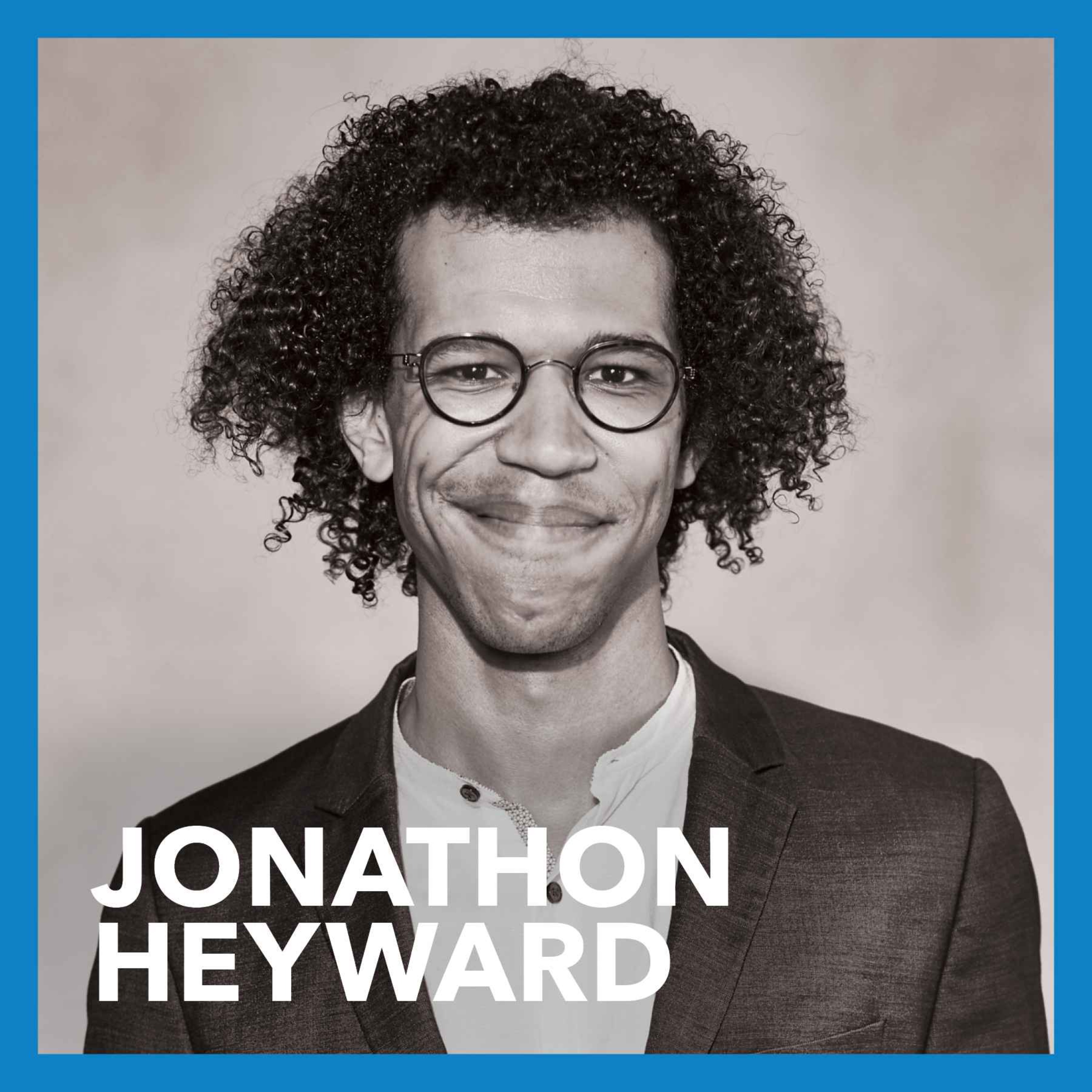
Hey, listeners, be sure to check out slippeddisc.com for the latest in classical music. Now, before you hear this episode, which is our season finale, I wanted to say thank you for your continued enthusiasm and support of speaking soundly. This was a big season for us. We brought you 15 brand new interviews and a live show held at Lincoln center, and we couldn't have done any of it without you. So thank you. Over the summer, we'll be working on some new episodes with guests I know you're going to love. In the meantime, can you do me a favor? Click on the follow button right now in whatever podcast app you're listening to so you don't miss new episodes when we return this fall. And if you're new to the show, well, you can go back and listen to some of my earlier conversations with people like Emmanuel Axe, Alisa Weilerstein, Rufus Wainwright, Winton Marsalis, Regina Spector, Yannick Neza Segan, Terrence Blanchard. I mean, there's so many great artists to listen to. You'll love them. So thanks again. I'll see you this fall, and I hope you enjoy our season finale with Jonathan Hayward. American conductor Jonathan Hayward is the music director of the Baltimore Symphony Orchestra and the Festival Orchestra of Lincoln Center. At just 31 years old, it's remarkable that he's achieved such prominent positions which fulfilled his childhood dream.
- [01:19]
Jonathan Hayward
When I was 14 years old, I was asked to do an interview about conducting, and one of the questions was, where do you see yourself? And I said, I hope that I will become a music director of a major symphonio in the United States. I think it's always been on the back of my mind that this is always really where I wanted to end up, and I'm very grateful to be here.
- [01:42]
David Kraus
You're listening to Speaking Soundly, a backstage pass to today's biggest stars of the music world. I'm your host, David Kraus, principal trumpet of the Metropolitan Opera. During each episode, you'll hear me speak with inspiring performers about their creative process and the personal journey that led them to the stage. Recently, after a really long week of playing very long operas at the Met, one of my colleagues in the orchestra told me that he was coming back to Lincoln center on his day off for a photo shoot with you and and your newly named orchestra, the Festival Orchestra of Lincoln Center. How did it feel to be surrounded that day by a group of musicians who you would soon lead on the podium as music director?
- [02:28]
Jonathan Hayward
It felt great. I mean, we only meet during the summer, so to be able to Kind of meet beforehand and just see each other. And particularly post announcement of the season and the sort of new vision that we have. It's so wonderful to see them. And they have musicians from some of the top orchestras around the United States and beyond. So it was an amazing moment and now it just is a bit of a tease. And now I have to wait until July to see them all, which I'm a bit sad about. But I'm so looking forward to seeing them again very, very soon, making music with them.
- [03:01]
David Kraus
Well, it must have been great for the musicians as well to be there with you. You have this reputation of being a very nice and affable person. Are the days of the tyrannical conductor completely gone? I mean, I couldn't imagine Arturo Toscanini for Picture Day with his orchestra.
- [03:18]
Jonathan Hayward
Yeah, what a wonderful question. I think it is. I think those days are gone and I'm quite relieved about that. I like to think that the art form is now more focused on the art at hand. You don't need the sort of, I don't know, idea of a figurehead like that. And maybe it just worked in the past. Maybe that was just, you know, this sort of natural evolution. But where we are now is such an interesting place. I mean, I was a cellist in an orchestra, you know, before I was a conductor. And I really, in that sense, I feel still like one of the musicians. And the way that I conduct and I, I approach conducting is very much of one that is filled with collaboration and that idea, nuance of being, being one with a musician. So that separation, you know, dictatorial kind of conducting just wouldn't even sit right with me. But yeah, it's, it's interesting how the evolution of that has come to fruition, isn't it?
- [04:16]
David Kraus
Well, yeah. And nothing typifies that more than the fact that you wear high top sneakers, Converse high top sneakers on the podium when you conduct. In fact, it's one of your trademark looks. You have to tell me how that came about.
- [04:29]
Jonathan Hayward
Yeah, yeah, I'll give you the story. First and foremost, it all started I was the assistant conductor the HAR Orchestra in Manchester, the United Kingdom. And a lot of my job as the assistant conductor was to conduct most of all of the school concerts we performed thousands upon thousands of school students, which was probably the best part of my job. And we were on performance 10 at the end of the week. And so I was rushing out the door and I asked my darling wife to throw my shoes in the bag really quickly. And then I ran out the door and got to the hall and noticed that the shoes weren't there for that reason. And I had my red high top trucks on. And it was two minutes before the show and I said, I went up to the education director and said, I'm so sorry, but I, I, this is, this is all I've got. And he said, we'll just go on. There we are. About a week later, I got. We always get mail from the kids, you know, afterwards. And there were cards upon cards of just my red Converse. And then sort of explaining the sort of musical journey and experience that they had. And I thought to myself, isn't it amazing that somehow there was a connection, a deeper connection perhaps with just wearing a relatable pair of shoes? And so it stuck. And, you know, I think it's sort of my ethos as a leader, musical director, conductor in general, that I will do anything to make this art form feel more relatable. Because I think that's what's missing sometimes. It's this divide that somehow exists. And I'm so curious about what we can do as musicians, as artists, leaders, to kind of break down that barrier. And if it means wearing a, you know, a relatable pair of shoes, so be it. Why not?
- [06:30]
David Kraus
So, of course, your musical journey didn't start with you wearing sneakers on the podium, conducting. You're a cellist. When did you start? That was, I assume that was your first instrument.
- [06:41]
Jonathan Hayward
I began singing in fifth grade. I was in an elementary choir. And that was sort of my real entrance to music. After a terrible kind of memory slip of a solo in choir, in a concert, my mom very kindly thought it would be a good idea to try something different. So we went to the string department.
- [07:03]
David Kraus
Well, time out. How terrible. I want to hear about this.
- [07:06]
Jonathan Hayward
I mean, I think, I think embarrassingly enough, it was like a patriotic song. And I just forgot the lyrics, like, just completely blanked, just blanked and just kind of mumbled and rambled like what felt like an hour, but probably was only two minutes. So we decided to go to the string program, which I was probably, I was pretty happy with anyways, and, and that's where.
- [07:29]
David Kraus
And that's where you pick the cello.
- [07:31]
Jonathan Hayward
Yeah. Intentionally, actually, I was supposed to pick the violin. A lot of serendipitous moments in my musical career. But I, everyone, all my friends were like, oh, we'll pick the violin. And said, okay, I'll pick violin as well. Came there, came down to the day of picking up our instruments and there was a line out the door like really long. 30 people long for the violin. And no one was in the cello line. I wanted to get home, so I just popped over to the cello and picked a bigger instrument. And my mom was completely perplexed by this much bigger violin. And it wasn't the plan, but it stuck.
- [08:07]
David Kraus
So this was around the age of 10? Yeah, yeah. So 10 sounds like a really young age to start an instrument. And that's the time that many kids start in public schools. But to be competitive in it and some sports as well. 10 is already kind of late. Right. Did you find yourself having to play catch up for a while because you didn't start a string instrument when you were three or four years old Consistently.
- [08:33]
Jonathan Hayward
I mean, from, from the first, you know, the beginning. I mean, I knew I was in love with it, you know, in sixth grade, and I knew I wanted to take it seriously, but I'd only been playing for three months. And I auditioned for the Charleston County School of the Arts, an art school which is normally attached with an elementary school that was an art school. So their sort of regular pipeline was just go to that elementary school, that art school, and go to the middle school and high school. But I was an outlier, and I came in three months, hardly being able to play anything on the instrument was wait listed. And then two weeks before school started in sixth grade, I got a call and said, they said, oh, well, we just had a chalice cancel in, you know, wanting to go somewhere else. Do you want to, you know, go on? And. And so that was I. That was my. Another very serendipitous moment that wasn't really supposed to happen in a way, but did. And yeah, there we are.
- [09:32]
David Kraus
So you play the cello for just three months, and I assume at that point you're also learning just how to read music. Where did you get the fortitude and direction to say, this is what I'm doing. I don't even care if I can play the instrument yet.
- [09:48]
Jonathan Hayward
You know, I really, I really felt that I found my place. I. I was interested in sports and, and things like that, but I wasn't really. It wasn't my place. It was very much my brother, he's, you know, he's. We couldn't be more polar opposite. And now we get on like a house on fire. But we didn't when we were younger, but, but you know, it's. It's so interesting. He found his place in sports very, very quick, actually. And I'd never had anything, you know, I really didn't have that thing that that sort of space. And the music gave me. Gave me that space. Cello gave me that space. Being in. Being in an orchestra gave me that space. And it felt right. And I can't really explain it other than that. And I sort of instantly knew it, you know, I wasn't one of these kids that, you know, my mom had to tell me to practice. I was just so amazed with the idea of playing this instrument and having access to an instrument, you know, and things like that was just such an amazing thing. And so, yeah, when. When time came and, you know, it was like, what do I do next? I was like, of course. I just wanted. I want to keep doing this because it was my space, you know.
- [10:55]
David Kraus
And when does conducting happen? I mean, I'm a trumpet player. My whole life, I've never felt the urge to pick up a baton and get up on a podium and lead an orchestra. How does that idea even get into your head?
- [11:08]
Jonathan Hayward
I think it really, again, just came back to this moment in eighth grade when I had the opportunity and the substitute teacher sort of put me on the podium and I was there. I am stirring up this piece of music, trying to understand the plus, connecting with my friends. And I think, again, what still amazed me was this unified idea of creating something bigger than one person. And I remember making that decision because it was then time to go to high school. And I went straight up to the high school music director and I said, look, I really am interested in doing this. I really want to conduct. And she, Ms. Sarah Fitzgerald gave me once every week, a little bit of time of rehearsal and then a piece on every concert that we had throughout the season, throughout the school year. So from the age of 14 to 18, I was conducting a full orchestra and, you know, again, didn't know what I was doing probably at all, but was given that access and given that opportunity by Ms. Sarah Fitzgerald, who I always name because she allowed that she, you know, a lot of. Where a lot of teachers would probably not even consider that at all.
- [12:31]
David Kraus
Right, so you'd go on to study cello and conducting at the Boston Conservatory. Was it challenging to do both?
- [12:41]
Jonathan Hayward
Well, I made a conscious decision in my first two years to really focus on celloplane, because I knew whilst, you know, eventually I knew I wanted to conduct, it was really important to get at the highest possible level as I possibly could before leaving Boston. And so I really stopped conducting actually for two years, for the first two years, and did a lot of gigging as well and just being in orchestras. And during that time, I would kind of had my score open whilst being in rehearsal to understand what was going on. And learning from that side, of course was a huge moment to learn from the other side of the podium was really helpful in a lot of ways. And then junior year, whilst I didn't necessarily study, but I, I got, essentially got a job that I sort of made up myself actually. I, I saw my first opera ever my junior year at the Boston Conservatory of Music and it was happened to be Mozart, Don Giovanni, which, you know, it's not a bad one to start off with. And I was amazed by it. I was amazed by the art form. And so I went straight back to my dorm room and emailed the music director and I said, hey look, if you ever need an assistant conductor, let me know because I'm fascinated with this. And essentially just created a job for me as an assistant conductor of the Boston Conservatory Opera department. And that's what I did. Balancing my cello duties with this job of being the assistant for the last two years at the Boston.
- [14:16]
David Kraus
So essentially you just throw yourself into these musical situations and see what happens. Do you ever find yourself in a position where you're overwhelmed by what you've gotten yourself into?
- [14:28]
Jonathan Hayward
I mean, of course it's the answer, but I'm always thinking back at why I'm doing what I'm doing and it's just to, to make more music, to, to connect with more people. And yeah, I've always, and my wife probably always thinks that sometimes it's always that one step too much. But in a way I think I've grown so much from as a person, as an artist, as a musician, from taking those kind of extra steps and to really understand my boundaries and to understand also where I want to go. They've always shed light to that direction actually. And you know, for instance, that opposite position. I mean I, I learned the art of napping for 20 minutes because I would have to do late night rehearsals and then I worked because it wasn't a paid position. I had to work at a diner waiting tables during the grave night, graveyard shift. And then I'd come back at like 5:00 in the morning, like maybe sleep for two hours and then do you know, classes for cello, my degree, starting at 8. So I, you know, the art of, of 20 minute naps was something I still use, but. But yeah, I, yeah, was it a lot properly, but, but I learned so much about where I wanted to go and my love for opera and et cetera, et cetera. It's great.
- [15:54]
David Kraus
It just makes me so Happy to hear that a conductor was working a graveyard shift at a diner.
- [16:01]
Jonathan Hayward
Well, I grew up in a diner because my mom was a waitress in Charleston. And so I essentially kind of grew up in a diner. So a diner always felt like home to me. And I always just worked in diners because I knew. I knew the pace and everything of diners and the sort of family orientation of a diner as well was what I loved. You know, I knew everyone there. And my mom was sort of manager as well at the diner that I grew up in in Charleston. And I did like every. Like every role you can imagine. I was like a. I was like line cook. I was a fry boy. I was a dishwasher. You know, I wash the dishes, host, waiter, you name it. And it was. I think it taught me a lot about people, actually. And what was an amazing connection now that I'm just kind of putting. Realizing actually amazing connection to conducting. I mean, because I. I was sort of forced to understand, you know, people and, you know, when you get it done in a community that you get regulars and it becomes this really wonderful sort of family. And it's funny that now I just sort of putting that connection together. But, yeah, connecting with people sort of through that as well, is a fascinating thing that I think happened in my life as well.
- [17:15]
David Kraus
Your conducting career so far has been remarkable because you were appointed music director of the Baltimore Symphony Orchestra when you were just 29 years old. That would make you the youngest music director of any major symphony orchestra in the United States. Did you ever think you'd have so much success so quickly?
- [17:38]
Jonathan Hayward
The short answer is no. But I think what is very interesting, and I look back at a lot, is that when back to my high school self when I was 14 years old, just getting into conducting and being fascinated, I was asked to do an interview about conducting, actually in the high school paper. And one of the questions was, where do you see yourself? And I said, I hope that by the. I don't know, 20. I said something like 2018 or 2020. I was very specific about the year that I will become a music director of a major symphonyocracy in the United States. And it's imprint, it's like there. And I. It's funny because it's always been my dream. You know, I've got my dream jobs, literally. I mean, and I wrote it down when I was 14 years old. And so whilst I think it's certainly been meteoric in a lot of ways and very quick, I think it's always been on the Back of my mind that this is always really where I wanted to end up. And I'm very grateful to be here, you know, in this position, in these dream jobs.
- [18:46]
David Kraus
That's amazing. Baltimore is a city of many musical firsts. Your predecessor, Marin Allsop, was their first female music director. Now you, their youngest, and the first African American to lead the orchestra in its 106 year history. As amazing as it is that both you and Maren are groundbreaking conductors, it's also really sad that it took so long for that ground to be broken. Do you feel an added responsibility just because you're the first to have been given that opportunity?
- [19:22]
Jonathan Hayward
Well, I think that there is certainly an a responsibility that I have on my shoulders, but that responsibility didn't start with me. You know, I am often thinking about the wonderful African American conductors before me and wonderful musicians and artists like Dean Dixon, James Dupree, just these incredible artists who paved the way. And you know, what I always find very interesting is that they often had at that time really felt the need to go to Europe and then come back, which is in a very odd way what I did. And it's probably why I've got this action. But it's fascinating to think about their journeys. And I often think about their journeys because I stand on their shoulders in a lot of ways. And I'm hoping that just to continue this trailblazing moment where we don't have to talk about the first anymore. Because whilst, yeah, you're absolutely right, I'm honored and flattered to be the first and the youngest, etc. Etc. But that just means that we've got a lot of work to do, doesn't it? And, and I'm excited about that work because I think people are starting to listen and we're starting to be aware and I think that's the first step and I'm excited about where that takes us.
- [20:46]
David Kraus
You've said that classical music could be for everyone and that if a 10 year old boy from Charleston, South Carolina, with no music education background, with no musicians in the family, can be enamored and amazed by classical music, then everyone can. And you've set out to do just that to prove that that's possible. How do you implement that and get that message out to audiences and to communities?
- [21:13]
Jonathan Hayward
Yeah, I mean, it's amazing to kind of try and implement that, particularly in Baltimore and even New York City, which are completely two different markets in a lot of ways. And I use the word markets because we have to think about our communities and our social. What we can give to our communities. And so this idea of authentic intentionality and relatability is something that really leads the way that I want to lead an organization and an orchestra. And I think that starts by simply listening and not insisting that you know what people need or you know what people want, but authentically listening and understanding what they need from you. And my entire first year at the Baltimore Symphony Orchestra has been basically sitting on my hands and listening, because I really want to understand what the community needs from us, what the musicians need from me, what the administration expects from me. So then I understand with great clarity how to make decisions in a way that is so aligned with everything. Our community, our orchestra, our board, you know, our executive team. So that it really feels like it's steering in one direction. And it feels good because I, I, I feel, I think now getting to the end of my first year, I really feel confident with that, you know, taking that time to really, truly listen and hardly really do too much as far as sort of making bigger decisions.
- [23:01]
David Kraus
Well, your appointment to the Festival Orchestra of Lincoln center really comes at this time that you're describing, this shifting musical tide. The group was formerly named Mostly Mozart, and they did just that. They played summertime standard repertoire that everybody knew and loved, and it was. Well, it was Mostly Mozart. The renaming of the orchestra signifies a real change in programming and represents the audience's expectations for what an orchestra concert should be. It sounds like an extremely exciting time to come on board. Can you talk to me about this shift in the musical ethos and what you're most excited about?
- [23:43]
Jonathan Hayward
Yeah, for me, it's less of a complete change and more of a natural evolution, I think, of where the festival, where the most emotional orchestra was and where its future is. And I think that that's really an exciting time and exciting developments and evolution to be a part of and to steer. That has been a real great honor and privilege, actually. And again, it comes from understanding the past of this wonderful, you know, years upon years of the Mostly Mozart Festival and the Mostly Mozart Orchestra. I spent a lot of time really sitting with all of the repertoire that they've done before, which was, of course, Mosimoto, but also very really sort of, you know, of a sort of pushing the envelope feel. I mean, Louis. Louis did a lot of wonderful new commissions and introduced a lot of wonderful voices of our time within the festival. And so it's interesting because I think it's been coined as this idea of, like, a completely new thing. And it's really not when you kind of look at the nitty gritty of what's been going on. It's just a natural progression. And being able to do that side by side with Lincoln Center's sort of view and vision and passion for performing arts has been really thrilling because I think as a campus, what's going on is also really, really, really exciting. So, yeah, I'm honored to be a part of this wonderful sort of evolution and very excited to see where it goes.
- [25:32]
David Kraus
Whether you're conducting in New York City or in Baltimore or wherever you happen to be conducting, you're in the business of giving music. You give it to those who love it, you give it to those who don't know that they love it yet. But what does the process of music making do for you?
- [25:50]
Jonathan Hayward
Oh, besides bring me complete, pure joy. I can't really think of anything else. I mean, it connects with a part of me that nothing else can, you know. And it will always be that. It will always. There will always be that sort of, dare I say, first love in a lot of ways. Being able to connect with music on that level and it feels, it just feels such a part of my very being and to be in this art form and this field and it just feels right again. It goes back to sort of that, you know, 10 year old Jonathan, where I felt so in the right place and I think when I'm conducting an orchestra and creating music, I always feel like I'm in the right place and that, that's just an incredible feeling.
- [26:41]
David Kraus
I hope you enjoyed our season finale. Be sure to subscribe, rate and review us on your podcast app and follow us on Instagram peakingsndly. You can also find show notes and plenty of other information on our website. Artfulnarrativesmedia.com Tune in this fall for more inspiring artists speaking soundly.