Loading summary
Transcript59 lines
- [00:00]
David Kraus
Hey listeners, if you're enjoying speaking soundly, please consider supporting our work with a tax deductible donation. You can easily contribute on our website@artfulnarrativesmedia.com donate click the link in the show notes of this episode or you can follow us on Instagram peakingsndly and get all the information there. Either way, every donation, no matter the size, helps us keep bringing you inspiring conversations with remarkable artists. So thank you for your continued support. We really appreciate it.
- [00:34]
Leif Ove Andsnes
Be sure to check out slippeddisc.com for.
- [00:36]
David Kraus
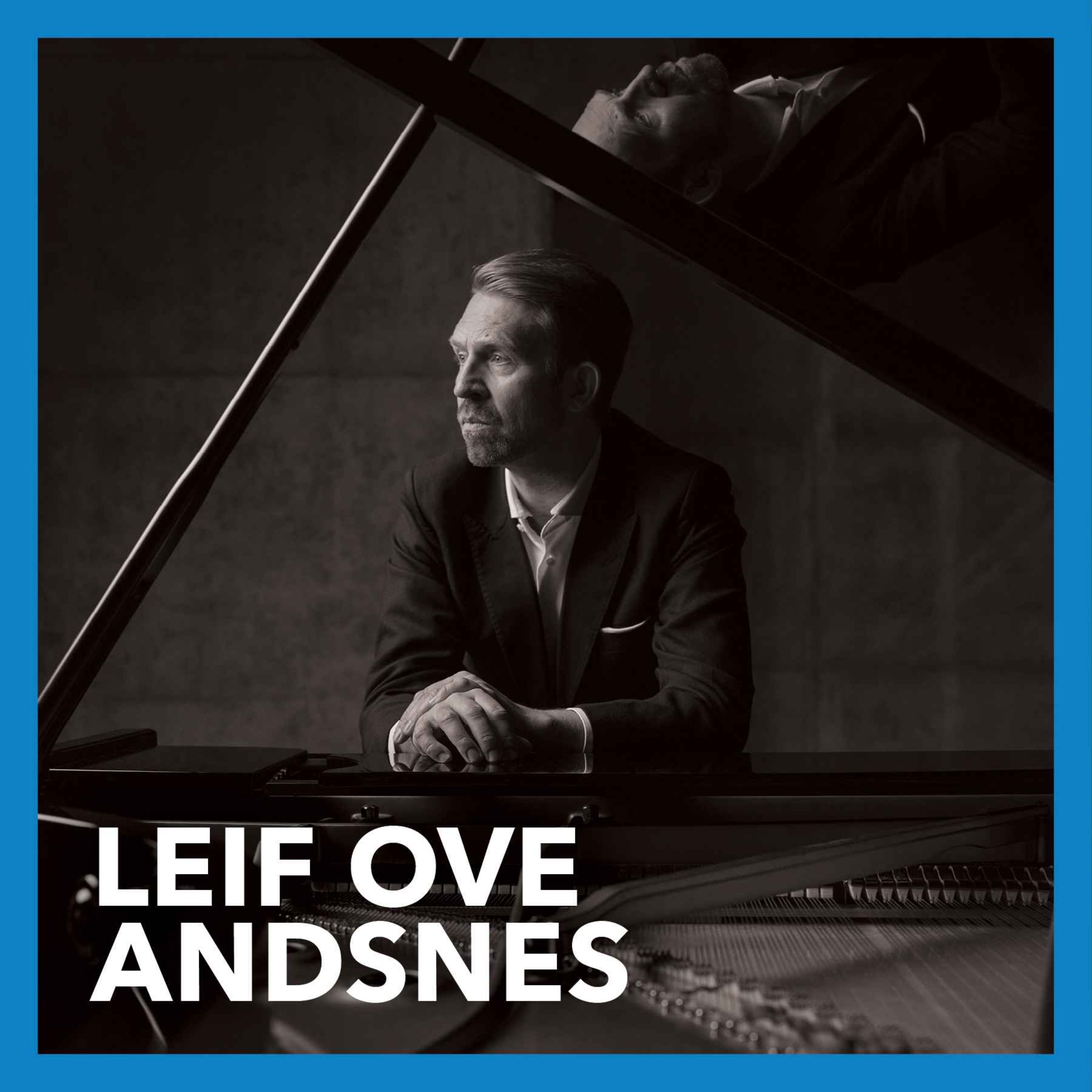
The latest inside information on classical music now. World renowned Norwegian pianist Leif Ova Ansnes is regarded as one of the most gifted musicians of his generation. Long before his celebrated career brought him international acclaim and thunderous applause, his spark was lit in a quiet moment of childhood discovery.
- [01:01]
Leif Ove Andsnes
I see myself being 9 or 10, sitting alone. Not with my parents, not with my piano teacher, but sitting alone, discovering music and thinking what a world this is. And also that this is my language. I can communicate with the world in this way. And I think that's ultimately why I play the piano.
- [01:21]
David Kraus
You're listening to Speaking Soundly, a backstage pass to today's biggest stars of the music world. I'm your host, David Kraus, principal trumpet of the Metropolitan Opera. During each episode, you'll hear me speak.
- [01:33]
Leif Ove Andsnes
With inspiring performers about their creative process.
- [01:36]
David Kraus
And the personal journey that led them to the stage. You have an amazing career. You're beloved by audiences worldwide with more than 50 award winning recordings. You've collaborated with the world's greatest orchestras.
- [01:50]
Leif Ove Andsnes
Received honorary doctorate degrees, and you're a.
- [01:53]
David Kraus
Commander of the Royal Norwegian Order of St. Olaf.
- [01:56]
Leif Ove Andsnes
Beyond all of these amazing accomplishments, there's.
- [02:00]
David Kraus
One thing that for me sets you apart from any other pianist, living or dead.
- [02:05]
Leif Ove Andsnes
You grew up playing the euphonium.
- [02:09]
The euphonium brings me back to childhood. Of course, my father still is with us, but he was very much a band conductor. Brass bands are a very big part of Western Norway and I was really into this and I played euphonium until I was about 17. Then I stopped playing because the piano was really taking over. But I would say when I was 13, the euphonium was almost as important as the piano playing. And also because it's a social thing, you know, when you're 13 years old and you, you have to practice alone. The piano, it's a bit lonely. And I loved the. We were quite ambitious. The little school band that I played in and we participated in competitions and was really into the sound as well. I listened Lots to brass band recordings.
- [02:56]
Being a trumpet player myself, I know that playing a brass instrument especially is a social instrument, because from grade school through college, and even professionally, as I go to work now, I've always felt as if I'm part of a team. But as you mentioned, being a pianist.
- [03:11]
David Kraus
Is a much lonelier pursuit from day one. Did you experience that contrast early on, doing both instruments?
- [03:18]
Leif Ove Andsnes
Of course. And I think there are really advantages to be part of a group. I mean, my childhood, in fact, is also full of different music. I mean, I was part of a choir, and there was music in the church, and my parents were engaged in many things. And I think there are really advantages to feel how important it is to breathe the music together. I mean, for pianists, you know, we don't. Well, we need to breathe to live, but, you know, not really to play an instrument. But when you play the euphonium and play in a band, of course, the feeling of breathing together, also when you sing in a choir, I am really in despair at the moment to see that in schools the kids don't sing anymore together. And I think it's so important because when you sing together, you breathe together and you feel a kind of community which is unique.
- [04:08]
You grew up on a small island in Norway called. Sorry, Carmoy. Is that how you say it? Karmay Carme.
- [04:15]
Perfect.
- [04:16]
What was your early musical development like there, especially considering its rural setting? Were there many opportunities there to engage with music locally? Or did having parents who were music teachers steer you toward that musical life?
- [04:30]
Yes, I mean, I was lucky. My parents are music teachers, and they both had piano as their main instrument. But I wasn't surrounded by any professional musicians. You know, it was actually not until I was 14 that I had a piano teacher that also was living from being a pianist and piano teacher. So I had no idea what it was to become a professional musician. I didn't hear orchestras. I was not surrounded by that sort of professional environment. But I felt from very early age that the music touched me and how it became serious for me. And I started playing when I was four and a half, and I had a talent, and my parents saw that. And I'm coming back to this. Very often when I think about why I play, I see myself being 9 or 10, sitting alone, not with my parents, not with my piano teacher, but sitting alone, discovering music, reading through some easier pieces by Grieg or Chopin, and finding the harmonies and doing all this myself and thinking what a world this is, and this enormous feeling of discovery, and also that this is my language, my space and my way I can communicate with the world in this way. And that was extremely strong. And I think that's ultimately why I played the piano and why I'm a musician today.
- [05:45]
What was it that drew you to the piano initially? Was there a particular moment that sparked your interest in it?
- [05:51]
Not really. It came very naturally because there was a piano in our home, though I listened to some recordings. Apparently we had a recording of the last two symphonies by Mozart and. And there was a drawing of the God Jupiter on front of this Deutsche Gramophone recording. So when I wanted to have the Jupiter Symphony, I said, I want to hear the man. I was 2 years old, or something like that, and the man was the Jupiter, of course. And when I went to number 40, I said, I want to hear music. Which is interesting because still for me today, if I think of one piece of classical music, it's G minor, number 40 by Mozartz, a piece I always want to hear. I can never get tired of it. Maybe it has to do with that childhood memory or there's something so universal about it.
- [06:38]
In this time of development. Can you recall the first time you performed for someone and truly felt like your piano playing had moved or touched them, that you were able to communicate beyond words?
- [06:52]
I remember the age of 13, 14, that something happened. I was in a youth competition and quite famous pianist in our country, Eva Knardal, she was in the jury, and people said after I played the Chopin Bakker role in the final, that she was crying.
- [07:12]
Oh, such a beautiful piece.
- [07:14]
You know, it's a beautiful piece. And I remember that piece as how much it touched me and that I suddenly felt that there was something larger, there was something greater than I had sort of experienced before. I was communicating something that was much bigger than myself and there was something going on. And I think that's when I realized that this will be my life.
- [07:37]
What was your relationship to practice when you were younger, during these early years of musical development, Was it something that you considered to be somewhat of a chore, or were you just driven to practice because of your connection to music and your passion for it?
- [07:51]
Actually, I didn't practice very much. There was a period When I was 11, 12, I found it much more interesting to play football or, you know, do social things. I mentioned the brass band and I had. I had several interests. I was really interested in sports. And something happened around the age of 13, 14, and I became more serious about practice. I. I started seeing where it was going and I was very lucky to meet an inspirational teacher when I was 15, Czech piano professor who lived in. In Bergen. And I had planned to maybe go to music high school when I was 16. And he said, no, no, no, you. You cannot go to normal school anymore. You need to come to the music conservatory. I will be younger than the other students there. Most of them started when they were 19. But he said, Your most important years are from 15 to 20. And I've thanked him very often for that because I can see that those years were absolutely crucial for me. And my parents said when I was 16 and I came home every second weekend, they could hear that I had improved every time because suddenly I practiced six hours a day. It was something completely different.
- [09:04]
This was Giri Linka. Yes, you've said that he taught you that life and death is to be found in every single note. How do you even attempt to interpret a bold statement like that? And how do you bring it into your piano playing as a student?
- [09:23]
Well, for me, it was very important because as I mentioned, I was from the province. I felt this passion inside me, but it hadn't really, you know, I wasn't surrounded by passionate people like that. And then this volcano of temperament, you know, that Mr. Linke had came and told me these things and showed me the contrast in the music and the sort of storytelling in all these big pieces and what you can do. It was a revelation. Tension and relaxation and everything. I mean, it was something so new and exciting. And he also had answers to technical difficulties and challenges. And I was completely inspired and really into music in a very new way. But he always said to me, when I come, when you start playing in the lesson, it takes you a while to warm up. You're not used to this. You have to communicate immediately. And he got me heated up.
- [10:26]
Speaking of those challenges, every musician, no matter what their level, encounters challenges in order to improve their technical and musical development. What would you say was your biggest musical or physical hurdle on the piano and how did you manage to navigate around it? I realize I'm speaking with the pianist that sounds like he has no barriers to his playing. So.
- [10:53]
David Kraus
No, that, that I don't blame you.
- [10:54]
Leif Ove Andsnes
For thinking about it for a while.
- [10:55]
That's not true at all. I mean, actually, I'm very surprised when I see how much repertoire I've played through my life because I consider myself a slow learner. I mean, when I. When I started my career, I needed really time to learn things and that I didn't really understand. When I saw other colleagues that had played, you know, Bartok 2, Rachmanin of 3. All these huge pieces and I was looking at the scores and thinking, I'm never going to learn this. It's going to take such an effort. So maybe that was the biggest hurdle to understand that this was possible. So I played rock mining of third when I was 22 and it took me one and a half year to, to be confident to it to. To actually go on stage. I mean I. I studied it for one and a half year and it's of course an enormous piece to learn. But I did it and when I'd done that, I think that was really hurdle and I understood, okay, there are lots of pieces I actually can do.
- [11:47]
David Kraus
Well, your career really took off after that. When you made your debut at the Bergen International Festival at just 19 years old, you were already performing on an international stage. Since then you've taken some huge artistic projects on. For example, your Beethoven journey, which you did with the Mahler Chamber Orchestra. It was a project where you spent four years of your life focused entirely on Beethoven's five Piano concerti and his choral fantasy.
- [12:14]
Leif Ove Andsnes
You really don't do things halfway. What was your life like during this period immersing yourself entirely into these six pieces of his?
- [12:23]
Well, I have to say it was absolutely an epiphany in how far one can go together with an orchestra and forming a common ideas and being absolutely conscious about what everybody's doing in the score. And because we revisited again and again these masterpieces. And by the end of this journey we did the piano concertos in 10 cities, complete all five of them. And I felt the kind of freedom in performances and spontaneity that is just impossible in a week's project with an orchestra somewhere. It was tremendous. Of course, it was also a huge challenge for me because I was leading the orchestra myself. I decided to do this without conductor, which is a bit of a stretch when it comes to Beethoven because Beethoven is very symphonic and needs energy from somebody in the middle. But it was also very rewarding because I got to know the orchestra part so well and how the piano is integrated and, and getting to know so exactly where there is dialogue and where I have to be a strong soloist, so almost opposed to the orchestra, all these kind of things. So I will never forget how that project developed and how much potential I therefore see in playing with an orchestra. I had never experienced that before.
- [13:49]
Taking on both roles as soloist and conductor seems like a herculean feat. What inspired you to take that on initially and at what point in the process did you Start to feel at home doing both simultaneously.
- [14:04]
The advantage with leading myself is that I'm sitting inside the orchestra. I'm sitting with the back to the audience with the lid off the piano, which means that the musicians around me, they see me extremely well and they hear me extremely well. And there were places I remember when we did. There's especially a place in Beethoven's First Piano Concerto in the last movements, which is complicated. And the winds play this kind of theme and the pianist plays scales. You know, it just has to be freely together. And every time with the conductor, I found this so difficult because you had this distance. The winds wouldn't hear me enough and I wouldn't hear them. And even if it was an expert conductor and it was very difficult to fit, and the first moment I sat inside the orchestra and we were so close to each other, it was no problem. And I thought, oh, this is it. We can solve these things. It feels so natural. And it's so much about just listening, isn't it?
- [15:13]
When you conduct while performing, your back is to the audience. Normally when you're a piano soloist and there's a conductor there, you are out in front of, of the orchestra and of course the audience sees your profile. And when you're playing alone on the stage, it's an entirely different dynamic altogether. How do these different settings affect your performance? And do you feel somehow a deeper connection with the audience with one scenario over the next?
- [15:40]
Well, you can't get away from the fact that it's a bit of a disadvantage not having a lid on the piano when I, when I, you know, play with the cheap orchestra and sit in the middle. But also, you know, our balance in the classical concertos, like Mozart concertos, if you compare with, with the old instruments, I mean an old forte piano from Mozart's time, it's so much smaller sounding, it becomes so much more part of the orchestra resonance than it's not, it's not this big monster like a Steinway is and which resonates and projects over the orchestra. It's completely different. So I would argue that in a way it's maybe more authentic to sit inside the orchestra, but I also love to be able, you know, if you play in Carnegie hall, it's nice to have a lid to feel that the sound communicates to the upper balcony and to get the resonance from there to, to feel, to feel how the, the sound develops in the whole. And that's a bit more difficult, I have to say, when I, when I.
- [16:51]
Play without the lid, you've Performed at Carnegie many times over the years. Do you ever get used to the legendary acoustics of the hall? Is it unlike any other place?
- [17:03]
It's absolutely magical. And I. For me, Carnegie hall shows itself maybe at its. Its most magical, just with the piano on stage, you know, with. With one musician on stage that you have is a whole like that with a capacity of. Of 2,800 seats. And. And that you feel, strangely enough, that there is some intimacy here. Well, you know, what, what, what is that? You can draw people in to sound. I don't feel in Carnegie hall that I have to project for the sake of it. There's an enormous beauty of sound on stage, but you can play as intimately as you want. People are, you know, audiences attracted to you because of the sound of the ambience there. That's the strength of Carnegie hall for me, even more than the blends when you play with an orchestra.
- [18:02]
In many ways, performing at Carnegie hall represents a milestone in a musician's career. Do you remember how you felt after your debut performance there?
- [18:11]
Yes. It was a concert where I was never really at ease, to be honest. I mean, I was. I was naturally nervous. I'm always nervous when playing in Carnegie hall, but. But there was. There was tension in the. Throughout the concert. And I. So I wouldn't. It went well, but I wouldn't say it's a concert that I enjoyed so much. I mean, the big moment for me was my second recital at Carnegie hall because I expected it to, again, be a concert full of tension and concentration and focus. But actually, after like seven or eight minutes in that concert, I felt, oh, I feel like home. I mean, there's such a freedom here. I'm now really enjoying it in a different way. And that was a revelation for me. And after that, I felt that, you know, it's incredibly exciting to go on that stage and play. And there is, of course, tension, but it can also feel like you are in your own home and just playing for friends.
- [19:08]
Whether you're performing at Carnegie or any of the great stages around the world that you frequent, you consistently provide audiences with profound musical experiences through your artistry. Throughout this lifetime spent making music, what does the act of performance give you? What are you feeling on stage as you communicate in a language that you.
- [19:32]
David Kraus
First discovered you could use at 9 or 10 years old?
- [19:36]
Leif Ove Andsnes
I mean, I look at the world and I feel there is. There's a lot of division and hatred and narcissism out there. And I feel our music, with the greatest music, there is such a Understanding of human nature and of. Of longing and compassion and empathy. And I recently heard a string quartet concert, and they started with a Mozart quartet, and they played so well. And there's something about the string quartet which is not about exposing your own feelings. It's so much about sensitive. About being sensitive to the others and. And to fit in and. And, yes, give voice to your part and your opinion, but also to listen in the most sensitive manner. And Mozart's music, I mean, what an understanding. It's like he's up there and he just looks at us and understands all our love and longing and pain. And it's so human. We feel this through our music. That's what I, again and again, feel on stage when I perform. I'm not sure the music gives answers, but it opens up a world and a connection between us as human beings, which nothing else does.
- [20:53]
David Kraus
I wonder if you'll also feel that the next time you sit down to play the euphonium.
- [20:59]
Leif Ove Andsnes
Do you still have one?
- [21:01]
No, I don't. My parents had a wedding anniversary a few years ago, and there was a tuba in a place, and they forced me to try to play together with my sisters, and it was a disaster.
- [21:12]
I mean, yeah, but knowing you, after.
- [21:15]
David Kraus
Dedicating just a few years of your life to it, I'm sure you could become a virtuoso euphonium player.
- [21:21]
Leif Ove Andsnes
I very much doubt that. Yeah.
- [21:25]
David Kraus
I hope you enjoyed this episode of Speaking Soundly. If you liked what you heard, please tell your friends about it. Help spread the word and follow us on Instagram at speakingsndly.
- [21:36]
Leif Ove Andsnes
For more information, you can Visit our.
- [21:38]
David Kraus
Website artfulnarrativesmedia.com if you're new to the show, you could go back and check out earlier episodes featuring Wynton Marsalis, Regina Spector, Joyce de Donato, Emmanuel Axe, and.
- [21:50]
Leif Ove Andsnes
Rufus Wainwright, just to name a few.
- [21:52]
David Kraus
And tune in two weeks from today on May 13, as we hear the legendary pianist Evgeny Kissen speaking soundly.