Loading summary
Transcript47 lines
- [00:00]
David Krause
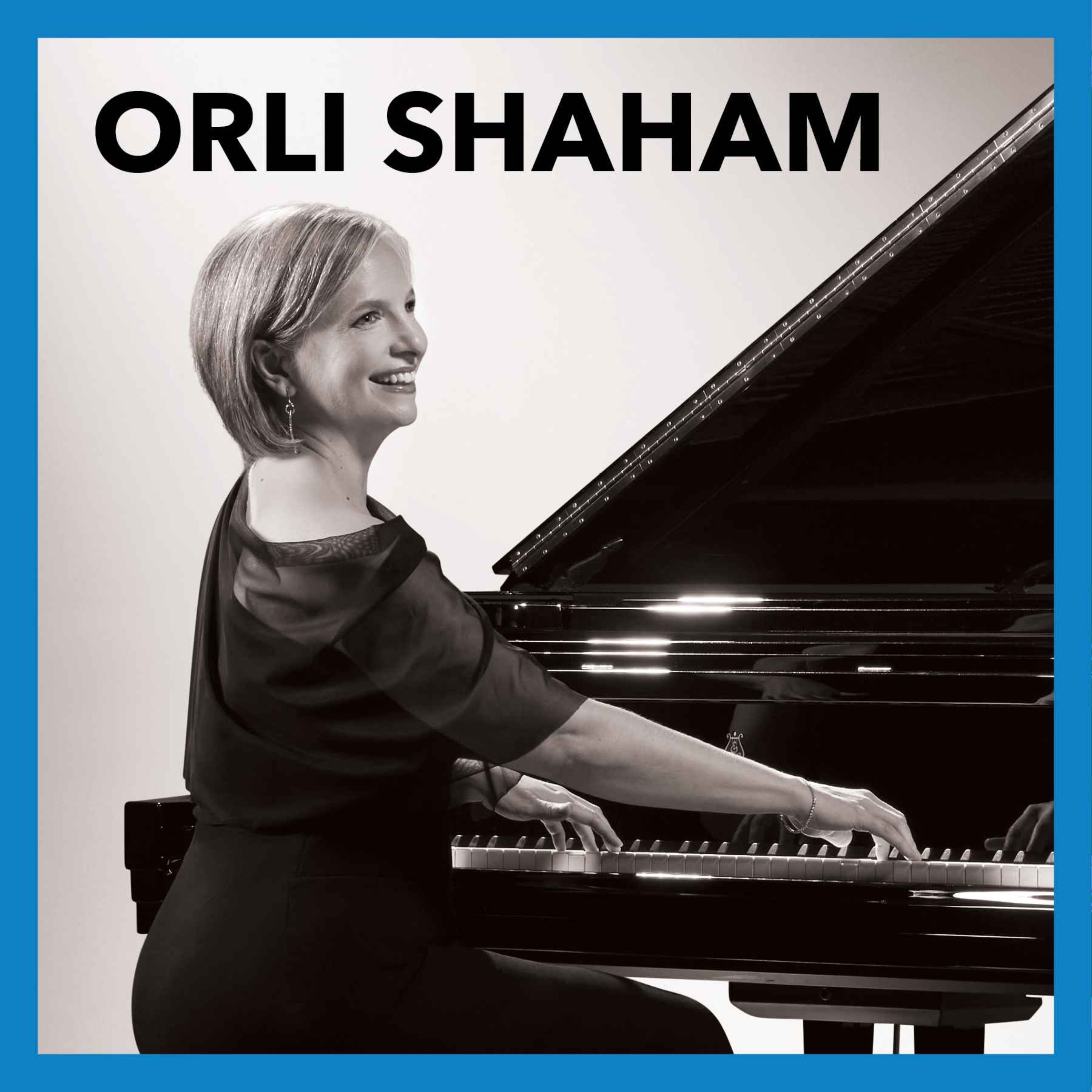
Hey listeners, be sure to check out slippeddisc.com for the latest inside information on classical music now. And before you hear this episode, which is our season finale, I wanted to take a minute to say thank you for your continued enthusiasm and support of speaking soundly. This was another big season for us. We brought you 18 brand new episodes featuring musicians across multiple genres and we're going to take a break over the summer and recharge. In the meantime, do me a favor and click the Follow or Subscribe button in whatever podcast app you're listening to us in right now so you don't miss anything new in the future. And if you're new to the show, go back and listen to some of my earlier interviews featuring amazing artists like Yannick Nezeh, Sagan Winton Marsalis, Emmanuel Axe, Regina Spector, Joyce Didonato, Rufus Wainwright, Christian McBride, Maren Allsop, and Ray Chen, just to name a few. Lastly, on a personal note, this podcast has been a real joy for me to work on. Getting to sit down with amazing artists week after week to talk about what they do and what they love has been a true privilege and I'm deeply inspired by it. I sincerely hope it sparked something meaningful in you as well. A huge thank you to my fantastic podcast producing partner, Jessica Handelman at Artful Narratives Media. This podcast would not be possible without you, so on behalf of Jessica and myself, we hope you enjoy this season finale episode Featuring Orlie Shaham Acclaimed Israeli American pianist Orli Shaham is a compelling performer, educator and recording artist. A recipient of the Avery Fisher Career Grant, she earned degrees from Juilliard and Columbia University. At the same time, fueled by the focus and curiosity she gained growing up the daughter of two scientists, the discipline.
- [01:56]
Orli Shaham
That'S required in both the sciences and in music, there's no faking it. Either you understand and you're getting it, or you don't have it yet. And there's a very clear truth moment that you know for yourself. Do I have this or don't I?
- [02:13]
David Krause
You're listening to Speaking Soundly, a backstage pass to today's biggest stars of the music world. I'm your host, David Krause, principal Trumpet of the Metropolitan Opera. During each episode, you'll hear me speak with inspiring performers about their creative process and the personal journey that led them to the stage. I just saw you a few weeks ago at Juilliard during an intermission of a concert where a piece composed by your 17 year old son was featured, and after hearing it, I was struck by two things. First, how could this complex, emotionally wrought piece come from the mind of a kid still in high school? And second, how his mother could seem so cool after just hearing it played by a huge orchestra? Was this just a normal Saturday night for you? Because I was totally blown away.
- [03:03]
Orli Shaham
You know, it was incredible. And it's been incredible watching his whole journey like that. He has this command of musical languages that kind of has blown me away the whole time, you know, so as a musician, I'm going, oh, wow, that's, you know, deep analysis. And then as a mom, I'm just going, how does my kid know all this stuff?
- [03:22]
David Krause
It's funny to think that we were in that same concert hall together as students decades ago.
- [03:28]
Orli Shaham
Yeah.
- [03:29]
David Krause
Your career has been incredibly diverse. When you were at Juilliard as a student, did you ever imagine that your career would be as multifaceted as it's become?
- [03:40]
Orli Shaham
No. You know, I didn't have the slightest clue. And probably that's a good thing. It's probably good that all I thought I needed to do was to, you know, practice my piano and get better at it. And on some level, that's actually still all I know how to do. But it has lended itself to all these different careers, and I think. I think that's true for pianists in general. I think there are very few pianists who really just play the solo recital or whatever. You know, one thing, you know, you. You learn to play as a soloist with orchestra, you learn to play as a chamber musician, you learn to be an accompanist to other soloists. You learn to put together concert series and. And think about all these different things and educate and teach and all that stuff. Really, the one skill I have still is playing the piano.
- [04:26]
David Krause
When I was at school, I was struggling just to pass the basic music theory and music history classes. But while I was struggling, you were busy getting a second degree from Columbia University. What motivated you to take this challenge on with all the practicing you had to do as a pianist? How did you do it?
- [04:45]
Orli Shaham
I was exhausted at the end of that degree, I must say. I think I slept the entire summer after I finished that bachelor's. But, you know, I went to Juilliard Pre College for 10 years. You and I had taken a lot of classes by the time we left pre college, and I felt like I had had so much of that experience. So when I went to Columbia, Juilliard, I decided that I really wanted to spend the majority of my time at Columbia and take all these courses. And it was like this last chance to have Somebody who really knows what they're doing and who has prepared a syllabus and who has spent a lifetime becoming an expert in something that might not end up being my career and just that I could learn from them. I think the majority of the courses I took, I thought would somehow change me as a person. And the further I am from that experience, the more grateful I am that I did and the more I feel like it has impacted who I am as a musician. So when I. When I do curate a series or when I do put together programs or. Or teach, I'm drawing on all these other things that I never would have known about if I had really. You know, there's. There's sort of one school of thought about musical studies that is, okay, put your blinders on and just do your thing. And there is definitely something to be said for that blinders on version. But on some level, because I started so young, I had kind of already done that by my undergrad, and so I was able to open up a little bit and also see the greater world. And I feel like, you know, 30 years out from that education, it's probably those other things that have impacted me even more.
- [06:15]
David Krause
Well, your intellectual and musical aspirations make total sense, considering that you grew up in a family of scientists who also had a deep love for music and the arts. How did science and music coexist in your household?
- [06:32]
Orli Shaham
Oh, that's a fascinating question. I mean, Gil and I always joked growing up that we took science courses just to try to keep up with dinner table conversation. Astrophysics and human cytogenetics and molecular biology. Like, the conversations were way above my head most of the time. But at the same time, there was. First of all, there's the kind of the discipline that's required, I think, in both the sciences and in music. There's no faking it. Either you understand and you're getting it, or you don't have it yet. And there's a sort of a very clear truth moment that you know for yourself. Do. Do I have this or don't I? So that discipline was certainly part of the whole thing. And then, you know, my dad would talk about sound waves and vibrating strings, because that's how he spoke to Gil about the violin before I was even old enough to start playing an instrument.
- [07:23]
David Krause
Did your parents play an instrument?
- [07:25]
Orli Shaham
My mom was a pianist, my dad was a violinist, and they would play a particular Beethoven sonata, the eighth sonata together that my brothers actually remember hearing them play.
- [07:35]
David Krause
And your two older brothers, Gil, on the violin and your Brother Shay on the piano. So when it came time for you to choose an instrument, were you torn between the two, or was there something that immediately drew you to the piano or for that matter, to one of your older brothers?
- [07:53]
Orli Shaham
Oh, yeah. It's an interesting question. No, I think I admired them both so enormously, and I was so jealous of all the things they could do. And on some level, I actually think I may have wanted to play a string instrument. And I've revealed this to Gil before. I would sneak into his rooms when he wasn't home sometimes and unlock the violin case and kind of play it like a cello. But I knew I wasn't supposed to touch the violin. And the piano was just out there in my dad's study. And, you know, for sure I could go up to it whenever I wanted. And my brother Shai was working on the Mozart K466, the D minor piano Concerto. This would have been when I was around three years old and he would play that opening. And I have a vivid memory of standing in the corner in the doorway while he was playing and going, I have to play that. That is the piece I have to play. And I was, I've been so lucky that that was actually the first piece I ever played with orchestra. And it's probably been the piece I've played most with orchestra through my life.
- [08:56]
David Krause
Wow. I'm curious, what was practicing like for you as a child when you were first developing on the instrument? Did it feel like a chore? Or because your brothers practiced regularly, did it just seem like something natural to do?
- [09:10]
Orli Shaham
Yeah, I think I was so lucky to have those role models, you know, that they would come home and practice and, and they both did this forever. But it was especially Gill, even as we got a little bit older during those, you know, those, those years where, where your parents kind of stopped telling you to practice or stop practicing with you, and you, you need to own, own it a little bit more, take a little more responsibility. During those years, I had Gill as this sort of tremendous role model. He would wake up first thing out of bed. He was, I wasn't even awake yet. He was already practicing and clearly just loving it. And I, I, I definitely learned a lot from that.
- [09:47]
David Krause
Well, you obviously had a natural talent for the piano because by the time you were just eight years old, you were already performing at places like the Aspen Music Festival. Do you remember what that experience was like at such a young age? And if so, how has the act of performing changed for you over the years?
- [10:07]
Orli Shaham
Oh, I love that. Question. There's a photo of me. This was at a. I played at a children's concert, and I can't even reach the pedals, but, yeah, I've seen the picture.
- [10:16]
David Krause
You look like a rag doll sitting on a piano. It's amazing.
- [10:19]
Orli Shaham
And okay. To me at the time, the most important thing, if you've seen that picture, was the incredible French braid that somebody gave me for that concert. I was so excited by that. But I do remember that experience, and I remember being surrounded by the kids. They were so close up, and they would talk even while I was playing, because, of course, it's kids, but there was this energy, and they were clearly connected to that music. And I don't think I could have articulated that at the time, but I. I still remember that feeling, this kind of connection to them through the music. And I think that that part has stayed with me, really, throughout my career now. You know, there's so many other aspects, like, at that age, honestly, I think I was just worried to get it right, you know, sort of thinking about the notes and didn't want to make a giant mistake. At this point, I'm ready to make a fool of myself on stage in a very different way than I think I was when I was. When I was younger. It's important for us to be obsessive as musicians in order to get to the levels that we want to get to. But there's a moment at which you have to check that obsession at the door and. And play for the moment. At that age. I was able to do both without even realizing, because I just. I was both aware of wanting to be right and also not aware of what it would really take to be right.
- [11:37]
David Krause
So do you find yourself now wishing that you had that abandon that you had when you were eight?
- [11:43]
Orli Shaham
Yeah, absolutely. I have to remind myself to have that abandon. It's not difficult to do, but it is something I have to be aware of. I have to say, a number of things through my adult life have made me better and better at it. The first thing was having kids. And I remember when my kids were infants, I remember talking to a whole lot of fellow new parents, moms especially, you know, in orchestras that I would play with. And they, you know, we all talked about, how do you juggle the this and the that? And we all said the same thing the minute we got on stage. It was like, oh, finally, me time. You know, and there's. There is something about that that focuses you. It reminds you how much you love doing that, how important that is. To who you are and to how you kind of define yourself. It's both harsh, but in sort of the most wonderfully enlightening way. It just. It loosens you up completely.
- [12:39]
David Krause
Every musician faces struggles as they confront musical and physical plateaus on their instrument. Were there specific challenges that you wrestled with along the way? And if so, how did you manage to overcome them?
- [12:53]
Orli Shaham
Well, there were so many. And I think the first. The first thing for me is that I actually remember looking at my hands when I was about 19 years old and going, oh, my God, this is it. They're not growing anymore. I. I don't have a big hand, and I play the piano. And you kind of need a big, big hand to play the piano.
- [13:12]
David Krause
That's a concern.
- [13:14]
Orli Shaham
And then I met Alicia de la Rocha right around that age, and we actually put our hands up against each other and we matched hands, and they were literally exactly the same size. And she was very famous for having small hands. And so that was both really reassuring. I thought, okay, great. She has this career. I can have a career.
- [13:32]
David Krause
It's clear that performing has come naturally to you since you began playing the piano, but teaching is also a huge part of what you do. Have you always had a passion for teaching?
- [13:44]
Orli Shaham
It's funny you ask. I think I. I have, but I don't think I realized it until I was maybe in my 30s. My dad was a teacher, and he had a show on TV on Israeli television that was like a show about science for lay people. And it was hugely popular. I mean, I don't know if you remember the TV show Dallas in the early 80s.
- [14:07]
David Krause
Sure, yeah. Yeah, I remember the theme song.
- [14:09]
Orli Shaham
So Dallas was ranked number two in Israel, and my dad's show was ranked number one for a particular season.
- [14:15]
David Krause
No way.
- [14:16]
Orli Shaham
His show was on Wednesday nights at 8:30, which was past my bedtime at the time. That's how little I was. But Wednesdays I was allowed to stay up to watch it because it was live, of course, in. In those days. And I think that aspect of things was so foundational to how I think, you know, if something is exciting to you, of course you want to share it. So, you know, fast forward 30 years, I have kids. Actually started my own concert series for that preschool age. And as I was doing that, I suddenly realized I have this amazing gift that I've been given, which is music in my life. And I want everybody else to know that they could have it too.
- [14:59]
David Krause
So that program that you develop is called Backyard. I love a good pun, but it also Sounds like an amazing way to introduce young kids to classical music. Can you tell me about how the program came about and what the basic tenets of it are?
- [15:16]
Orli Shaham
Yeah. So, I mean, essentially, as my kids were around three years old, I started to ask every musician I would play with in every orchestra, and I would say, what age were you first exposed to live acoustic music in one form or another? And inevitably, somewhere before the age of six, I took that, and I thought, gosh, you know, if all of these musicians already knew about it before second grade, what are we doing? You know, when we talk about we don't have enough audience. Great. To try to bring them in their 30s and 40s and 50s, but we should be bringing them in in their threes and fours and fives. And so that's what I was. A big part of my motivation was that I wanted to bring them in. And basically, the message was two things. Music exists, and it exists for you. That's it. And that they're allowed to have access to it. Right. So that. And that. That takes so many different forms. So with the kids, we always made sure things were short enough that they wouldn't lose attention. We would talk to them about the pieces. I always had them playing instruments before the show and kind of not only getting all that physical energy out, but also meeting the musicians they were about to see from stage and specifically touching instruments, making sound in a particular way before the show even began. So that by the time we get to the show, I could reference all of that.
- [16:35]
David Krause
You've worn so many hats over the years, curating chamber music programs as an artistic director, serving as a board chairperson of the Kaufman Music center, and being involved in countless other initiatives, ensuring opportunities for others to enjoy and to participate in music. Does that rival the feeling you get when you perform, or does it complement it in a totally different way?
- [17:01]
Orli Shaham
Yeah, I think. I think it complements it. You know, I do all these things, and I love all these things, and I get sucked into all of them in a way that feels great and so rewarding. You know, when I'm teaching, I could just teach all day. I love that. And I love communicating about the music with the kids. And some of my students are not kids at all. They're. You know, I'm learning is more from them than they are from me, which is an incredible thing, too. But then I go out on stage, and I. I do think, still, that's where I belong. You know, that's where I've always been. I'm very comfortable, despite all despite all the discomforts, I'm very comfortable out there.
- [17:43]
David Krause
That's your home base.
- [17:45]
Orli Shaham
Yeah.
- [17:46]
David Krause
Your husband, David Robertson, is a great conductor known to orchestras worldwide. And I've been recently enjoying the recordings of your Mozart piano concertos that you recorded together with him and the St. Louis Symphony. I love these recordings, not just for the great performances on them, but because there's this added element of hearing a husband and wife making music together.
- [18:10]
Orli Shaham
We're so lucky with this relationship. So our first meeting was actually with the St. Louis Symphony, and our first connections to each other were totally musical. And that has. That has remained. You know, it was one of those things where we played together, and we both immediately called our managers and said, I want to play with that person again.
- [18:32]
David Krause
That's an endorsement for our marriage. Just trying to keep a marriage together is complicated enough. But both of your travel schedules, that must have been tough. How did you balance a family life with these two demanding musical careers?
- [18:47]
Orli Shaham
You know what conservatories should teach is they should teach a class in logistics. Yeah, I got really good at logistics, and it was difficult because especially when the kids were younger. So before the kids were born, we played together a lot, and we loved that. And we traveled together a ton after they were born. And once they were in school, we tried to make sure one of us was home all the time. So we would travel together in the summers, but during the year, it was often like, pass the baton and like, oh, I'm back for my gig. You go off to yours.
- [19:17]
David Krause
Yeah. In each of these amazing facets of your career that we've talked about, it seems like the through line is your desire to create an environment where music can benefit those around you. But I'm curious, how is a life in music affected you? Like, what does the act of performance do for you personally?
- [19:40]
Orli Shaham
You know that that question runs so deep. I can't imagine a life without music, and I can't imagine a life where it isn't sort of the main focus. You know, when I get swept up in, as everybody does, the goings on of the world around us, all sorts of things that are outside of music, and there almost always comes that threshold where I think I can't anymore. But that never happens with music, and I've been so lucky to have that as part of my life. And I think when people talk about meaning, I feel like this is meaning. This is a way to access another side of this incredible, precious gift of life that you can't talk about in other ways. And, of course, music's not the only art form where you can do that, but it's the one for me where I feel the most connected.
- [20:36]
David Krause
I really hope you enjoyed our season finale. Be sure to subscribe, rate and review us on your podcast app and follow us on Instagram at speakingsndly. You can also find show notes and plenty of other information on our website artfulnarrativesmedia.com we hope you've enjoyed all the the episodes over the years featuring artists speaking soundly.