Loading summary
Transcript33 lines
- [00:01]
David Krause
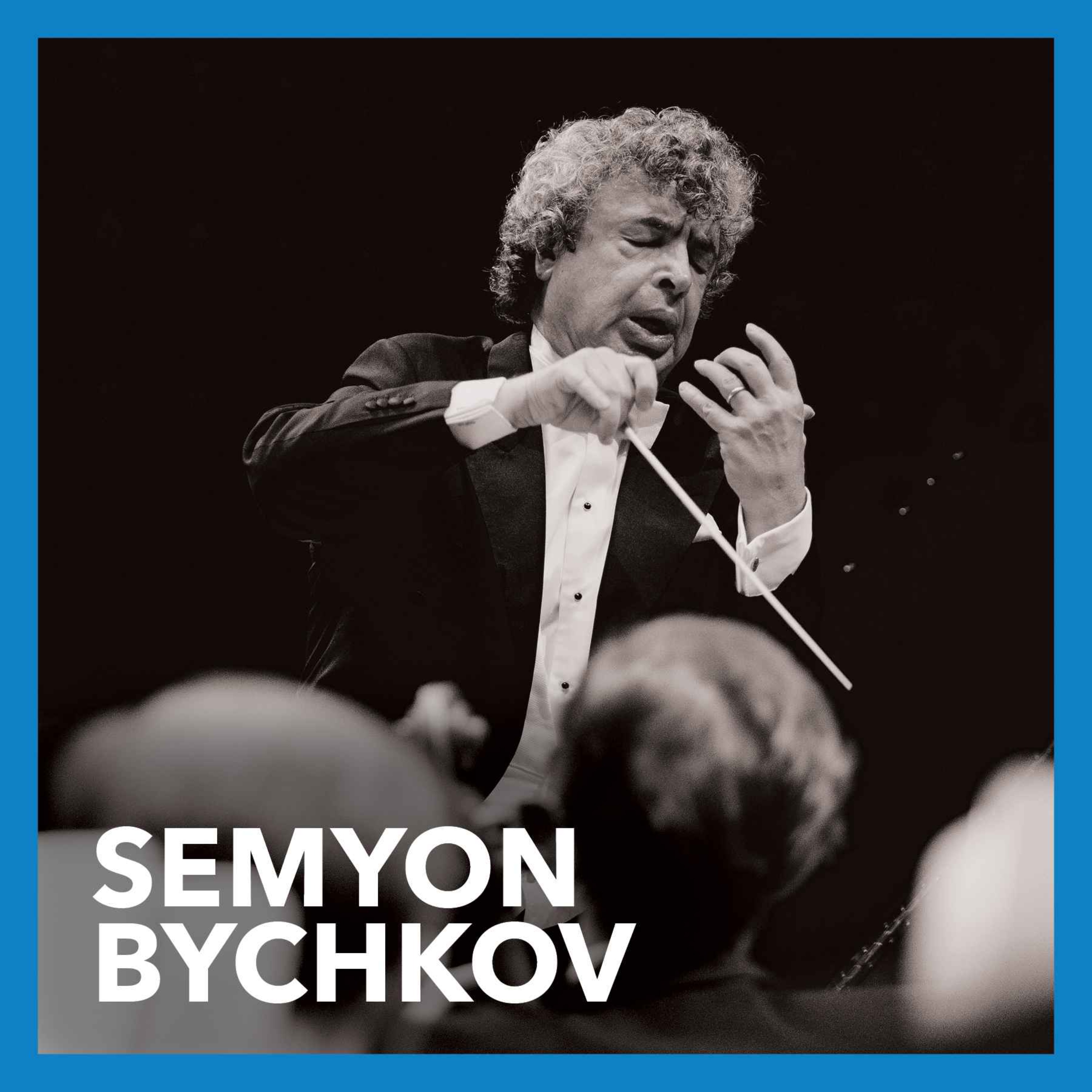
Hey listeners, thanks for tuning in. If you're enjoying speaking soundly, please consider supporting our work with a tax deductible donation. You can easily contribute on our website@artfulnarrativesmedia.com donate or just click the link in the show notes of this episode. Every donation, no matter the size, helps us keep bringing you inspiring conversations with remarkable artists. Thank you so much for your continued support. We really appreciate it. Be sure to check out slippeddisc.com for the latest inside information on classical music Now. Want to know more about your favorite composers, masterpieces and instruments of the orchestra? Check out Weta Classical's podcast, Classical Breakdown, your guide to classical music to discover more about the music you love. You can find Classical Breakdown wherever you listen to podcasts or online@classicalbreakdown.org our partners at the Brooklyn Conservatory of Music host over 250 concerts and events annually and on December 7th at 3pm, the Brooklyn Conservatory Community Orchestra will perform Tchaikovsky's triumphant Fifth Symphony at the Brooklyn Museum. Learn more and purchase tickets@bkcm.org BCCO24 Chief Conductor and Music Director of the Czech Philharmonic, Semyon Bichkov is a Grammy nominated artist who's led orchestras from Paris, France to Buffalo, New York. Throughout his distinguished career on the podium, he's found that the key to leadership lies in something simple and profound.
- [01:38]
Semyon Bichkov
You know, it's very interesting about us, the humans Imagine I'm walking down fifth Avenue and I stop in the middle of the sidewalk and start staring at the very top of that high rise building. I guarantee within couple of minutes they will be crowned around me looking to see what I'm seeing. And the same with musicians. When we make music, when they see from someone who is meant to lead, they see the commitment, they see the passion, they're happy to join in.
- [02:09]
David Krause
You're listening to Speaking Soundly, a backstage pass to today's biggest stars of the music world. I'm your host, David Krause, Principal Trumpet of the Metropolitan Opera. During each episode you'll hear me speak with inspiring performers about their creative process and the personal journey that led them to the stage. I've played under a lot of conductors and every so often one of them will leave an indelible imprint. Like you did back in 2004 when you made your Met Opera debut and I was lucky enough to be playing under you in the orchestra. The performances were amazing, but what I really remember was you coming in with this unwavering vision of how the opera was going to go and somehow you managed to get everybody on board with that vision, from the chorus to the orchestra and the soloists on stage. What does it feel like when you're conducting and the music that comes out matches the vision you had in your head? It must be satisfying, to say the.
- [03:08]
Semyon Bichkov
Least, when that happens. And it doesn't always happen, but when it does, it is deeply satisfying because you're not alone. You know, every interpretation is dream that you would like to bring to life. And when it does, and it means that the colleagues you're doing it with, they are as convinced as you are, they're as committed as you are, and then sometimes can be realized. That period of time at the Met was one of those. But may I correct you with one thing you said just a little while ago when you referred to this project that you played under me. It's a very common expression, and it always makes me laugh when musicians would be playing under this or that conductor. We made music together. And the whole point is about the atmosphere in which people live together, in which they make music together. And everyone who participates in it needs to be able to express himself or herself. That's the determining factor. And to do that, one must feel first convinced. Secondly, given opportunity. Thirdly, be in the mood to express oneself. So all of that, in a way, dictates in which environment music is to be made.
- [04:36]
David Krause
Yeah, but in my defense, you're on a podium, so everybody is underneath you. I get what you're saying, but conductors are on podiums for a reason. I mean, you have to be above everybody else because you have a very difficult job to do. You're faced with 100 people looking at you for leadership and direction and inspiration. Every time you get on that podium, it could be pressure filled because most times you have complicated music to get to, complicated people to deal with, and there's not very much time to put it all together. So in those moments, have you come up with tactics along the way for getting the job at hand done? Do you find yourself having to transform into, like, a larger personality than, say, who you were at home or even in the. In the taxi cab on the way to the hall?
- [05:27]
Semyon Bichkov
You know, first of all, I would like to hope that I'm the same person when I'm on the podium as I am when I'm speaking to a taxi driver or a person who waits the tables in the restaurant I'm eating. I don't actually see any difference. I will treat people with equal respect, and I don't care what they do. I will expect them to give the best of themselves, as I would expect the same from myself. But essentially it means just elementary courtesy, human education that we would call it, and respect. That's the basic starting point. It doesn't really matter what you do. I tell you. People are very sensitive. And musicians are as sensitive as animals. Because without knowing anything, they feel. And what will they feel? They feel that I'm in a pressure cooker. I don't want them to feel that. They should never get that feeling because that will not improve the situation. But what they will feel is that I'm obsessed with the object in front of me, which happens to be the score I will conduct and they will play. And when they see this kind of obsession, which is backed by study, reflection, experience, if you will, they will join in. Because in the end they want absolutely the same thing as I do. You know, it's very interesting about us, the humans. Imagine that I'm walking down fifth Avenue in Manhattan and I see a high rise building. I will stop in the middle of the sidewalk and start staring at the very top of that high rise building. I guarantee within couple of minutes they will be crowned around me, looking to see what I'm seeing. Why? Because they see that something is so important that I'm so transfixed by that. They want to know what it is. And so it is contagious. And the same with musicians when we make music, when they see from someone who is meant to lead, they see the commitment, they see the passion, in a way, I would call it obsession with the object to be worked with, which happens to be the work of art. And they're happy to join in. And yet they have their own ideas, their own aspirations, their own need to express themselves, their own musicality. If something connects them to the whole, they're happy because in the final analysis, it is not about me, it's about music. We will play together.
- [08:02]
David Krause
You grew up in the former Soviet Union, Leningrad, specifically known today as St. Petersburg. I know you were musical from a very young age. Do you recall your earliest musical experiences?
- [08:15]
Semyon Bichkov
You know, it was something that came in a way, so naturally. I was 5 years old when my mother brought me to a house of scientists, which was kind of a club of scientists. My father was member of it, being scientist himself. And she studied piano in her childhood. Then the war started and she stopped playing piano. But she loved music and it sort of remained with her her whole life. And so she brought me to this house of scientists because she wanted to see if I would have musical gift. I was tested and diagnosed with perfect Pitch, what they call absolute pitch and a sense of rhythm. That is the basic things one can say about a five year old child, if they're there or not. And so my piano lesson started like that with my first piano teacher, a very, very dear old lady who became sort of like a grandmother to me. And as she was also teaching piano at the Glinka Choir school, she recommended to my parents to try and enroll me in that school that goes back to the days of the Tsars. With that enormous tradition, only boys were allowed to study there. Competition was fierce. 500 kids in that year, 1960 were auditioned and 20 were accepted. And I was one of those 20. And so this is how it started. But I. I don't think I can identify that particular moment when I would say, oh, music means everything to me somehow it always did. But I never was conscious of that specific moment.
- [09:59]
David Krause
Well, I suppose that's because music, I guess, was just always with you.
- [10:04]
Semyon Bichkov
It was always there. Yes, there are moments in life that can happen, very specific moments, where suddenly comes realization of what you felt and believed. But here comes a confirmation that you were born for it. One of them was conducting for the first time in orchestra. When I was entering Leningrad Conservatory, one had to pass through series of exams and there were 78 of us applying for orchestral conducting. And only one person could be admitted. And little by little the group of 78 is reduced to. And that final round is conducting an orchestra. And here I already have conducted a choir in Glica Choir school, so that I have experienced but conducting an orchestra note. And as I was waiting to go on that stage, the other candidates, some of them have been trying for years to enter the conservatory to study conducting, and they already had some experience. And they said to me, and of course I was 17 years old, the youngest ever, because that was not the way normal way, and they were much older. And they would say, you know, when you start conducting there, don't be surprised because the sound is so different from what we're used to hearing from the audience. You will really hear nothing, you will understand nothing, you just conduct. So I went on that stage thinking that what was going to happen? And I started conducting Brahms first Symphony. And suddenly I realized that I heard everything. It didn't sound strange at all. I heard all the instruments, I heard the sound, whatever. And suddenly you realize, yes, you were born to do that. It's a confirmation. So from believing to having it confirmed, those moments you do remember.
- [11:53]
David Krause
So you were comfortable the first time you ever conducted. I want to know what it's like to be born to do something, to have this natural ability toward it. Do doubts, nerves or fear ever creep into your conducting?
- [12:09]
Semyon Bichkov
Doubts have never left me. Never, ever. As far as nerves are concerned, I would say that there is more tension, pre performance tension, as I grow older than less. And the only explanation I can find is that I want so much more today to express through music than I knew at the time when I was starting. So, yes, there is that tension, and everyone has a different way of addressing it. But the joyful moment comes when the tension is not of a paralyzing negative nature, when it's not the stress that prevents you from opening up. The happy moments come when that tension, which is necessary, does not prevent you from opening up and expressing it. You know, I have played volleyball for Dinamo Leningrad for eight years. That was in parallel to studying music. I was never planning to become a professional athlete, but it's something which I loved and which was very important.
- [13:22]
David Krause
How old were you when you played volleyball?
- [13:24]
Semyon Bichkov
I played between the age of 10 and 18. It is a separate subject, but there is something very interesting. We would have a match, championship match, and before the game we were very tense. And that was necessary because he wanted to go and win that match. One day I was asked to go on the rugby field in Bayonne, in the southwest of France, and kick the bull. It was an honor. As the rugby match would start and I found myself in a tunnel leading to the field amongst the players of both teams, I saw the tension. They were in enormous tension. It's the same for the artists. It has to be. Otherwise you go empty, you're flat.
- [14:18]
David Krause
So hold on. You're playing volleyball for eight years while you're training to be a pianist and a conductor. I couldn't imagine a more finger breaking activity you could possibly partake in than volleyball. Were you not worried about busting a finger open and what that might do to your future plans as a conductor or pianist?
- [14:38]
Semyon Bichkov
Well, conducting, of course, is not in danger. Piano could have been. And my piano teacher was furious when I would come to have my late evening piano lesson after a training session with the Dinamo Leningrad team. Somehow I have never injured my fingers. I don't know why. My coach, he explained it by the fact that, you know, I had to wear glasses, but I couldn't play wearing glasses. It was not possible because of sweat, whatever, because of my eyesight. I saw ball coming later, which forced my reaction to be faster. Maybe that was the reason, maybe it was not. But I've never had a hand Injury playing volleyball all those years.
- [15:26]
David Krause
Wow, that's pretty lucky. I'm glad to hear that. Like so many first generation immigrants, you have an unbelievable story about your journey. And for you, it all started when you won the prestigious Rachmaninoff Conducting Competition while you were still in school. How old were you during this very pivotal moment in your life? And can you describe the circumstances under which that competition eventually led to you being able to escape the Soviet Union?
- [15:56]
Semyon Bichkov
Well, the competition was in 1973, which coincided with the centennial of Rachmaninov. I was 20 years old, I would say since about the age of 12. I became very conscious of the life that we were leading. And it was my father who one evening, he was a Communist Party member, he was a war veteran. He took me one evening, winter evening, for a walk on the dark streets. And he explained to me the reality of life that we were leading. And he just showed examples of what we were told and what the reality was. And of course, the two never connected. So he opened my eyes after that. With the following up years, I saw his own fate of being denied important opportunities to work because he was Jewish. So in the years that were coming up, I was already very conscious of that. And then came this Rachmaninoff Conducting Competition. I won the first prize, and as a result of that, I was invited to make my debut with the Leningrad Philharmonic Orchestra at the age of 20. It had never happened in their history. Some months before that, I was trying to arrange to receive an invitation from someone in Israel that was necessary in order to immigrate. It was called affidavit. Somebody who would be leaving the country would take your information, most basic. Name, address, age, whatever, and. And then the invitation would be sent from Israel. By then the doors have become closed because clearly, KGB intercepting the affidavits. They knew perfectly well where my mind was. And that of course, immediately was communicated to the conservatory people, so I could tell that the clouds were getting darker and darker. I was summoned to the KGB office of the Conservatory and was interrogated, let's say, at great length about everything, about my views, about the views of my friends. They knew everything. And then my teacher gets a call from the Leningrad Philharmonic Society, and they tell him that they received very clear instructions from the government that the concert should not take place because I'm politically unreliable. This is a quote. Everything was clear from there. On the day before, when I returned from conservatory, I was told that there was a very strange phone call where a man's voice said, courier has arrived. Wait. And Hang up. And the next morning the postman has delivered this affidavit letter. So in January 75, I applied for an exit visa. Thirty days later I was given permission to emigrate. It happened on Friday at 4pm and Fridays, 4pm were reserved for people to be refused. The KGB, they called the day before, said, tomorrow you come for an answer. And tomorrow at 4pm so it was clear that there would be a refusal to my application. And instead of refusal, I was given an approval. It was very shocking. And three weeks later I was gone and found myself in the free world.
- [19:43]
David Krause
I feel like I've just watched a movie. And actually, to add to that, you leave Russia at 22, bound for New York City. You don't know a Soul. You have $100 to your name and the phone number of Rachmaninoff's distant relative who happens to share an apartment with Tchaikovsky's godd daughter. And these are the people that you find yourself surrounded with on day one in New York City. It sounds like I'm making it up.
- [20:08]
Semyon Bichkov
But no, no, it's absolutely true. It so happened that before coming to the States, I arrived in Vienna. Then I was transferred to Rome. And during that time there were some people that I met and one of them happened to be a composer, Alexis Haef, who was of Russian origin. And I said to him, you know, I'm going to New York, I don't know a soul. He said, here is a phone number of Kiriana Zilotti and Oksana Ziloti. They were nieces of Rachmaninov. And one of the two, Oksana, her godfather, was Tchaikovsky. And here I find myself in the environment of those who were my gods. As I was growing up, both Tchaikovsky and Rachmaninov and these two ladies became two more grandmothers that I would have in my life. And everything sort of started a little bit like that.
- [21:04]
David Krause
Is it true that you inherited Rachmaninoff's briefcase and some of his scores as well?
- [21:09]
Semyon Bichkov
Yes. Very beautiful leather on which it is engraved Sergei Rachmaninoff in gold letters. And there was a pile of scores on the floor in the apartment 73rd street, just off Amsterdam Avenue. And I wanted to grab those scores, but they tell me it's a little bit too late, because just a week ago they have agreed to give discourse to the National Library of Congress. But they could give me three absolutely gorgeous scores. And those ones together with a briefcase I had. Plus they gave me a piano because I had no instrument. They gave me a piano on which he Himself played Rachmaninoff, played that piano, stayed with me while I lived in New York for five years, and then I returned when I moved on to Grand Rapids, Michigan, where I was able to buy my own piano.
- [22:06]
David Krause
During this time, while you were living in New York City, you would further your conducting education by enrolling yourself in the Manus School of Music, where your talent was quickly recognized and your career takes off shortly thereafter. In fact, your first big job was leading the Buffalo Philharmonic. Now I'm born and raised in New York, and I still feel like Buffalo is this far away, cold place of chicken wings and football. What was it like for you coming from Russia, going to Manhattan and ending up in Buffalo?
- [22:40]
Semyon Bichkov
Well, first of all, it was the musicians of the Buffalo Philharmonic that were the first ones with whom I came in contact, and they were phenomenally warm. And so started that relationship. Soon after that, I have discovered the chicken wings, original chicken wings at the Anchor's Bar that originated in Buffalo. And I have discovered the winters in Buffalo. And I have discovered maybe sometimes the harsher the climate, the warmer the hearts. And that was the community in which I discovered myself. And so that was a new chapter in my life.
- [23:24]
David Krause
And of course, since then, you'd go on to have chapters with the greatest orchestras all over the world. And for the last five years you've been the chief conductor and music director of the Czech Philharmonic, and you're performing with them at Carnegie hall this December on three amazing concerts. Concerts. I'm so excited for these programs. What went into creating them? And can you tell me what I'm going to hear?
- [23:48]
Semyon Bichkov
You know, as we discussed these programs with the Carnegie people, it became obvious that for different reasons, presenting three evenings of Czech music is logical. One reason, which is very simple to guess. Well, if you're a Czech orchestra, people want to hear Czech music from you. Yes, of course that is true, but why? There are two reasons for that. One is because Czech music, for example, music of Vorak is beloved everywhere in the world. The other one is the Czech Philharmonic being the kind of artistic institution with the tradition going back to the days of Dvorak. After all, he himself conducted. The first concert of the Czech Philharmonic when it was created, will somehow give people a feeling that they will receive an authenticity of spirit of Vorak's music, which would be difficult to expect from others, however wonderful they are. For my musicians, when they played Vorak, it's funny, they played all their life. It's something that they breathe by. It makes them vibrate to this day, no matter how Many times they played the New Roll Symphony or any of the others. But then there is Mahler, and we will be performing his Fifth Symphony. The world thinks of Mahler as the Austrian composer and conductor. Mala was born in the Czech Republic. That's where his roots were. And as I mentioned earlier, roots is something one cannot change. And of course, then there is Janacek, another oddball of Czech music. But not just Czech music, all music, because the uniqueness of this man's creations is so phenomenal. And finally, Smetnis Mavlast. And that is the holy Bible of the Czech people, Mavlast. In those three poems, there will be one that will be recognized by absolutely anyone who ever heard one note of classical music. And that happens to be Moldau.
- [25:53]
David Krause
Wow. Well, it sounds like it's going to be three pretty magical nights at Carnegie hall, especially from the audience perspective, because you don't get to hear the same orchestra play back to back to back, three different programs. Carnegie hall is not home to any one orchestra. Instead, it's a destination for every orchestra and every musician. So tell me about your first experience at Carnegie Hall.
- [26:19]
Semyon Bichkov
My first, experience, in fact, was in 1986 with the Buffalo Philharmonic, with the Shostakovich Fifth Symphony. It was one of those concerts one never forgets because of the whole itself. We are all very conscious once we enter the building. We are conscious of the vibrations from the walls, as we call them. They mean something before you play the first note. We all know that. And what is very interesting, what you just said is that it doesn't belong to anyone, but it belongs to everyone. And I think that's very touching when one thinks of all the artists that come to perform there, as you call it a destination. Yes, it is.
- [27:05]
David Krause
You know, it seems like whether you're conducting at Carnegie hall this December or when you were just 8 years old starting out at the Glinke Choir School, that music has had a real and profound impact on your life. As you're conducting, can you also feel the impact that the music you're creating has on others? And do you hope that audiences get even a fraction of the amount of beauty and inspiration that you've experienced through music all of these years?
- [27:36]
Semyon Bichkov
You know, you're raising a very fundamental question, and I've been thinking about it actually in the last year. Very often I'm asked a question. Do I think that music can change the world? It's extremely relevant today. And I have to say that I don't believe that for a moment. If it could change the world it would have done so by now. This is way beyond those thousands of people that come to the performances in which I'm involved or anyone else is involved and moved by that. But the world is billions of people. It doesn't mean that it's unimportant. It's incredibly important because two hours of living with beauty that gives you the strength, gives you the hope, gives you a certain sense of security from the harshness of life of so many people. Two hours is very short and there is a whole lifetime to live. I'm thinking of those people, not the ones that we managed to touch with our performances. But without any doubt, it can be a transformational experience in the life of some people. And how many times do I hear that it was a life changer for them? Yes, and nothing makes me more grateful than hearing that, that's for sure. I just happen to care about the other billions.
- [29:08]
David Krause
Well, I couldn't imagine a more profound and wonderful place to leave it. So thank you so much for your time. It's just been great speaking with you and I hope soon to get another chance to play. Well, not under you, but please don't play.
- [29:24]
Semyon Bichkov
You can play over me, but never under.
- [29:26]
David Krause
Alright, it's a teal I hope you enjoyed this episode of Speaking Soundly. If you liked what you heard, please tell your friends about it. Help spread the word and follow us on Instagram peakingsndly. For more information, you can Visit our website artfulnarrativesmedia.com if you're new to the show, you could go back and check out earlier episodes featuring Wynton Marsalis, Regina Spector, Joyce De Donato, Emmanuel Axe and Rufus Wainwright, just to name a few. And tune in two weeks from today on November 26th as we hear the incredible soprano Angel Blue speaking soundly.